← The Goal Digger Podcast | Top Business and Marketing Podcast for Creatives, Entrepreneurs, and Women in Business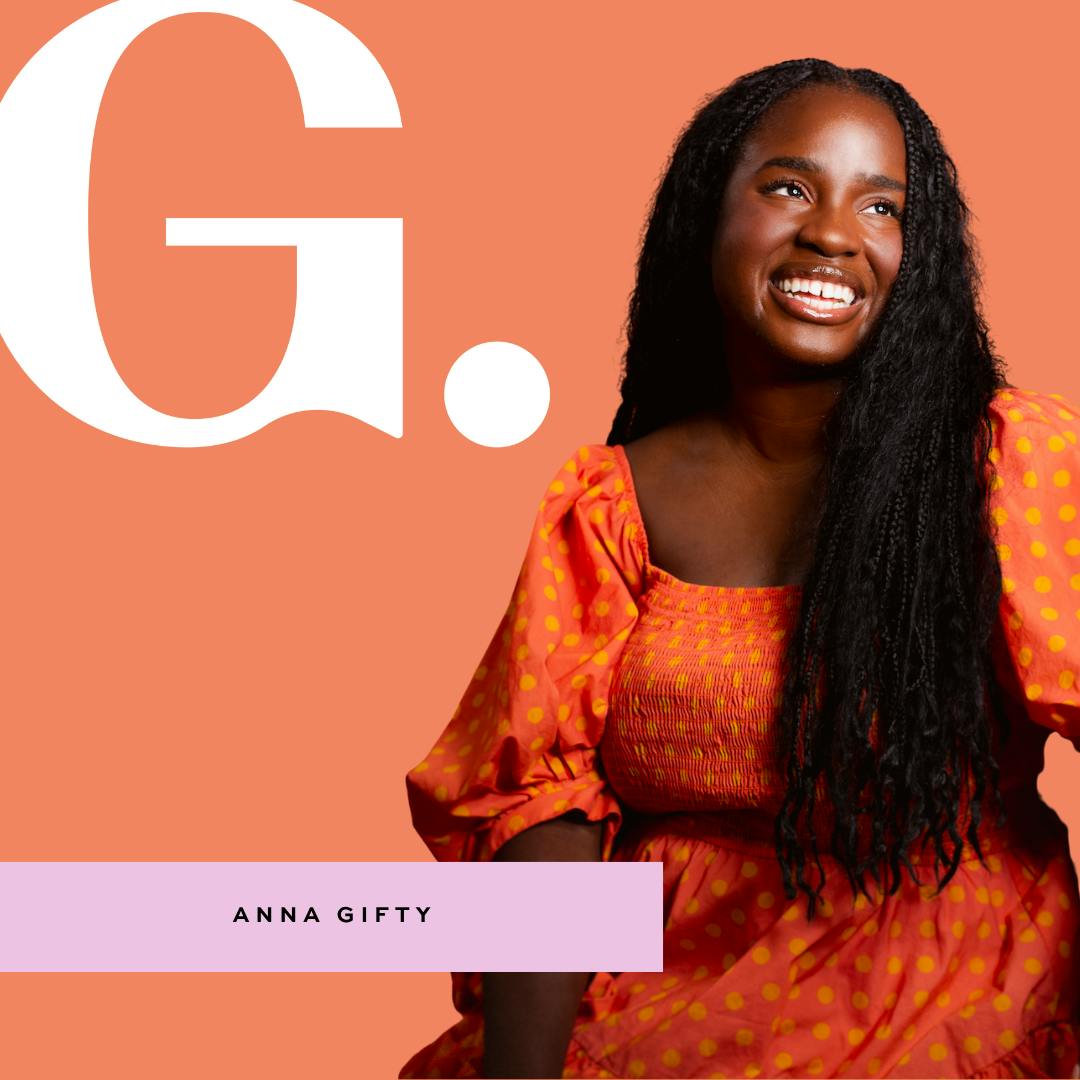
The Goal Digger Podcast | Top Business and Marketing Podcast for Creatives, Entrepreneurs, and Women in Business
907: The Hidden Price of Being a Woman in Business (And Why You’re Not Imagining It)
00:53:33
With Anna Gifty and Jenna Kutcher
Loading summary
Transcript236 lines
- [00:02]
Jenna Kutcher
Nothing makes me happier than doing work that energizes me and I've always been committed to that, not just for myself, but for my entire team. That's why I'm so excited about the Working Genius Model. It's a powerful tool that helps you discover your natural strengths and where you thrive in your work. When you tap into what you're naturally good at, work becomes more rewarding and you get so much more done. Honestly, I wasn't sure what to expect when I took the Working Genius assessment, but it blew me away with how accurate and insightful it was. It it affirmed that I am naturally gifted at using my intuition and instincts to evaluate and assess ideas or plans. And it also confirmed my love for self starters and the fact that I can get frustrated if I have to be the main source of motivation for other people to get results. The assessment only takes 10 minutes, and it's great for solopreneurs and teams alike. Imagine with me how effortless your teamwork will be if you understand the working geniuses of those that you're working with. Working genius is different from everything else out there because it's 20% personality and 80% productivity. Simply put, if you want to transform your work life, this is it. Get 20% off the 25 Working Genius assessment, head to WorkingGenius.com and enter the promo code Gold Digger at checkout. That's Working Genius.com promo code Gold Digger this episode is brought to you by Bitdefender, a global leader in cyber security. Now let's be real. When you run a business from your laptop like I do, everything matters. Your clients, your calendar, your passwords. It's all digital. And if you're like me, you don't have an IT department waiting in the wings to fix things when they break. The truth is, small businesses are some of the biggest targets for cyber attacks, and most entrepreneurs aren't prepared. With so much riding on our digital tools, protection isn't optional. It's essential. That's where Bitdefender Ultimate Small Business Security comes in. It's it's designed for small teams of up to 25 people and gives you powerful protection without needing IT or cybersecurity skills. It helps safeguard everything from your devices and inboxes to your digital identity and customer data. It also gives you a password manager and even watches for viruses, scams, and fraud attempts. Plus, there's a VPN and scam assistant to help your team stay sharp online. The setup is simple, and there's even 247 expert support if you ever need help, keep your small business safe with Bitdefender Ultimate Small business security. Save 30% when you go to Bitdefender.com Golddigger that's Bitdefender.com Golddigker for 30% off. Have you ever wondered why it feels harder to build a business as a woman? Well, it's not just you. And Anna Gifty has the stats to prove it. This conversation will explain exactly why it feels that way and what we can do about it. Jenna I'm Jenna Kutcher, your host of the Gold Digger podcast. I escaped the corporate world at the age of 23 with nothing more than a $300 camera from Craigslist and a dream. Now I'm running a seven figure online business that feels even better than it looks.
- [03:05]
Co-host or Producer (possibly Christy)
All from my house in small town Minnesota.
- [03:07]
Jenna Kutcher
With my family Here, we value time as our currency. We mix the woo and the work. And we are in the pursuit of building businesses that give us the freedom to live lives that we love.
- [03:19]
Co-host or Producer (possibly Christy)
I've always loved turning big.
- [03:21]
Jenna Kutcher
Go to reality and I'm here to help you do the same. This isn't just a peek behind the curtain. Come along with me and my guests as we tear the whole curtain down. Every week we tackle practical no fluff marketing strategies and host honest discussions on what works and what doesn't. Join me and my expert guests for actionable insights to help you grow your dream business with confidence. Pull up a seat and get ready to be challenged, inspired and empowered. This is the Gold Digger podcast.
- [03:52]
Co-host or Producer (possibly Christy)
Ever feel like success seems a little.
- [03:54]
Jenna Kutcher
More expensive for you than it does for everyone else? Like you're doing everything right. You're building the business, juggling the roles, playing the game, and yet you're still coming up short. Well, that's not in your head.
- [04:05]
Co-host or Producer (possibly Christy)
It's actually real.
- [04:06]
Jenna Kutcher
And today's guest, Anna Gifty, is here to prove it. Anna is a Harvard trained economist and the author of the Double Tax, a bold new book that breaks down the invisible cost women, especially women of color, pay to just to participate in society. But what makes this conversation essential for entrepreneurs? Well, Anna shows how these taxes sneak into your business, your brand, your funding, your time, and what you can do.
- [04:32]
Co-host or Producer (possibly Christy)
To push back from the cost of motherhood to beauty standards in the workplace.
- [04:36]
Jenna Kutcher
To why generational wealth building still feels out of reach.
- [04:39]
Co-host or Producer (possibly Christy)
This episode is a masterclass in economic empowerment and oh my gosh, Anna is giving it. This is not just theory. Anna actually gives you the tactical tools to change things. If you are building a business and Wondering why it still feels this hard.
- [04:55]
Jenna Kutcher
Or you want to be a part of rewriting the rules. This conversation is your permission slip.
- [05:00]
Co-host or Producer (possibly Christy)
Anna Gifty. Here's the warmest welcome welcome to the Gold Digger podcast. Anna, you studied public policy and economics at Harvard, so you are literally the.
- [05:12]
Jenna Kutcher
Perfect person for me to ask this question.
- [05:14]
Co-host or Producer (possibly Christy)
What is one hidden double tax that entrepreneurs listening are likely paying without even realizing it?
- [05:22]
Anna Gifty
Yes. So, first of all, thank you so much for having me on this podcast. I'm extremely honored to be in community with you, in sisterhood with you, and just talking about the cost that women face. And so let's maybe kind of level set for a second. What is the double tax?
- [05:38]
Interjecting Affirmations (possibly the same as B or a moderator)
Right.
- [05:39]
Anna Gifty
So the double tax is the compounded cost of racism and sexism.
- [05:44]
Interjecting Affirmations (possibly the same as B or a moderator)
Right.
- [05:45]
Anna Gifty
So this idea that there's costs that come from being a woman, there's costs that come from being a racial minority, and then there's women who have those experiences simultaneously. And so I want to go ahead and address what you said first and foremost, which is how do we think about a hidden cost that affects entrepreneurs? And one thing that we know about business owners is that we need capital.
- [06:08]
Interjecting Affirmations (possibly the same as B or a moderator)
Right.
- [06:08]
Anna Gifty
In order to build a business, you need money. And so what we have seen in the research is that the folks who make decisions about who gets money is oftentimes reflective of what the double tax ultimately gets at. So I'm going to throw some numbers at you because, you know, I'm a numbers gal, and I think that facts are important. And so according to Forbes, we know that white men make up 30% of our national population.
- [06:36]
Interjecting Affirmations (possibly the same as B or a moderator)
Right.
- [06:37]
Anna Gifty
But they make up 58% of venture capitalist investors. So let me translate that for folks who might not be familiar with sort of finance speak. This idea of the individuals who actually decide whether or not you get those dollars into your business are disproportionately white and disproportionately male.
- [06:56]
Interjecting Affirmations (possibly the same as B or a moderator)
Right.
- [06:57]
Anna Gifty
Now, the other thing that I want to add here, this is like the first part of the double tax. So thinking about sort of gender inequality, yeah. White women make up the same amount of individuals who are part of the national population, 30%. However, they make up 11% of the venture capitalist investors.
- [07:18]
Interjecting Affirmations (possibly the same as B or a moderator)
Right.
- [07:18]
Anna Gifty
The people who decide who gets the dollars sent to your business. So this idea of whether or not you prioritize a business's offering or product.
- [07:29]
Interjecting Affirmations (possibly the same as B or a moderator)
Right.
- [07:30]
Anna Gifty
It might be determined by whether or not you see value in it at all. And I think a lot of times people think this stuff is objective. They're like, well, you know, objectively speaking, you know, I'm a man, and I must know that, you know, what a woman wants is this and what a woman wants is that. And I'm far away from that. So I can make an objective calculation of what's going on. But the gag of the matter is our lived experiences inform whether or not we place value on certain things. And so if 11% of the venture capitalist investors are white women, that means that things that white women value may not be served, may not be funded, and ultimately may not be produced. Which means that there's a huge missing market here that businesses are not even being able to tap into because they can't even get the money to start building products for that market. And then the gag of the matter is the double tax says, well, the take gender inequality, add racial inequality, and what we end up with is 7% of venture capital investors are women of color. Across the board, that's combined. We're talking about Asian women, we're talking about black women, we're talking about Latina women, native women. In total, we make up 7%. So now think about it. If we're missing a chunk of the market for white women, and we then take it to women of color or missing another chunk of the market, money is being left on the table not just by the venture capitalist investors who could be making a buck, but also by those who hopefully will be served by the products that are created by these women entrepreneurs, by these women business owners. And so that's why it's extremely important to think about how does the double tax show up in business? It shows up in business by the underrepresentation that shows up and who gets capital and why, but also shows up and how that underrepresentation has a domino effect on who gets served and ultimately what gets produced for society. Wow.
- [09:34]
Co-host or Producer (possibly Christy)
I mean, I have heard those stats.
- [09:36]
Jenna Kutcher
Thrown around, like you said.
- [09:38]
Co-host or Producer (possibly Christy)
And when it's broken down, you not only think about the top end. Right.
- [09:43]
Jenna Kutcher
Who's making the decision.
- [09:44]
Anna Gifty
That's right.
- [09:45]
Co-host or Producer (possibly Christy)
But you also think about the actual product market and what's even born. Right. Like, how is a product in a business born? And it's interesting, too, because then it just is. It is that domino effect of, like, there aren't even products created for people who need them that could be successful businesses. It's like missed opportunities across the board.
- [10:07]
Anna Gifty
And one thing I want to give an example for.
- [10:09]
Supporting Affirmations (possibly the same as B or D)
Yeah.
- [10:09]
Anna Gifty
Is let's think about, you know, when you're going into a building, there's steps sometimes, and then there's ramps. Ramps were Created with disabled people in mind. But let's say you have a limp in your leg one day. Are you taking the steps or are you taking the ramp? So this is an example to illustrate that something that was created with certain groups in mind actually serves everyone at the end of the day. And ultimately, that is the point of the double tax. This idea that if you actually address the benchmark of progress towards women and women who are definitely underserved, you actually end up solving problems for all other people. Because we are targeting those who are experiencing the most marginalization.
- [10:55]
Co-host or Producer (possibly Christy)
I was at lunch the other day with a friend, and we got into this discussion about how it's really interesting that oftentimes women are taught to admire and respect men and women, Right?
- [11:09]
Anna Gifty
Yeah, yeah.
- [11:10]
Co-host or Producer (possibly Christy)
But men are often not taught to respect and admire women. And we were talking about it because it was fascinating. And I see it a lot of times in different business rooms, even a business book. I was listening to a business book the other day, brilliant book, not going to name it. And every example they gave was a white man. And it was just interesting to me. It's like, you don't even see the gap. Right.
- [11:37]
Jenna Kutcher
And it was just a really interesting.
- [11:39]
Co-host or Producer (possibly Christy)
Discussion that I had with my friend of like, isn't it fascinating that we don't raise boys to look up to women as leaders and thought leaders and innovators and inventors.
- [11:50]
Anna Gifty
Right.
- [11:50]
Co-host or Producer (possibly Christy)
And it is. The gap is. Is everywhere. In funding, in ideology, in admiration. It's just fascinating.
- [11:58]
Jenna Kutcher
How did you start studying this?
- [11:59]
Co-host or Producer (possibly Christy)
Like, what was your path? Because you're so passionate. I'm like, tell me more.
- [12:03]
Anna Gifty
Thank you so much. Well, I wanna address what you said really quickly before I jump into the path. You know, that's kind of why I found it odd when we started hearing conversations about we need more male energy in the workplace. Because as someone who has just written a book about the cost that women face, I said, more male energy.
- [12:23]
Co-host or Producer (possibly Christy)
We got enough of that.
- [12:24]
Anna Gifty
We got enough of that. You know what I'm saying?
- [12:26]
Supporting Affirmations (possibly the same as B or D)
Yeah.
- [12:27]
Anna Gifty
We know from the stats that the top 10 paying career paths are disproportionately white and male. We're talking at least 52% of the individuals in the top 10 paying career paths are white men. So when I'm looking at small incremental changes that are happening for women, for women of color, for other groups that are marginalized, my immediate thought is, so, because you had to share a crumb of your success, now everybody's crashing out. That's crazy. You know what I'm Saying. So I wanted to just note that I think what you're making a point about is very true. This idea of who's the face of leadership and how does that trickle down to the kind of decisions that we make, not just in our everyday, but across society. So to your point about, your question about how did I get into this?
- [13:17]
Supporting Affirmations (possibly the same as B or D)
Yeah.
- [13:18]
Anna Gifty
So I'm gonna take it back a little bit, if you don't mind. If you'll indulge me.
- [13:23]
Co-host or Producer (possibly Christy)
Yeah, yeah, let's go.
- [13:24]
Anna Gifty
So I grew up in, you know, low income housing, kind of like a rent stabilized neighborhood in Maryland. But I was in the wealthiest county, right. So it's like low income housing, wealthiest county. And this meant that I was eligible for Head Start. So for those who don't know, Head Start is a program for low income families, children, it provides like pre K, kindergarten preparation, et cetera, et cetera. An opportunity of a lifetime started knocking on our doorstep shortly after. So right around the time I was getting ready to graduate, the county instructed a new private school that was being built that they had to award a single full scholarship to a student at Head Start. There was an interview process. They met with the families, they met with the children, and my family and I were selected for that full scholarship. What that meant is that I had the opportunity to go from a very familiar background of, you know, people are dealing with the same problems, people are dealing with the same economic reality, to a completely new experience where I heard the word cul de sac for the first time. I saw a lot of folks right with the playgrounds and the playsets that I saw on TV in their own backyard. This idea of people having soccer practice and being able to go on vacation, that was very foreign to me. And so from a very, very young age, it became very clear that depending on who you are and depending on where you come from, you might have a very different experience with the way that you lead your life. And a lot of that is heavily influenced by what you have economic access to. My parents were working multiple jobs, whereas my classmates parents might have had one really well paying job. And understanding that these differences make a huge impact on the children of the folks who are, you know, trying to make a living and make a life.
- [15:17]
Supporting Affirmations (possibly the same as B or D)
Right.
- [15:17]
Anna Gifty
Kind of became salient to me almost immediately when I was younger. And of course, as I went through my experience, I still stayed in these private schools. The kids just got richer. I remember there was a kid that rented out a clubhouse at the Ravens stadium, the Baltimore Ravens stadium, and we had access to the stadium and it was a level of wealth that I hadn't comprehended. I did not know that we could just walk into a football stadium for somebody's birthday party. My family certainly couldn't do that. And there's folks in my community that couldn't do that. And then, of course, now being at Harvard, seeing that wealth even to another level, where people are taking private jets to other countries for the weekend and coming back and doing classes on Monday. So I think for me, the inequality that I've witnessed both here in the States, but also in Ghana, where I'm from, kind of made it clear to me that if we want a world that's more fair, if we want a world that's more equal, we have to be on the same page about the facts. And a lot of times these facts are scattered, right? So as an academic, it's my task to ask and answer questions. So I'm on a treasure hunt for the answers to the questions that I have about inequality. But I also recognize that there are people in my life, people in your life, that deal with inequality every day, but they don't have the luxury of time to look for the answers for why the inequality that they're facing is happening to them, but also how do they begin to address things that are unequal to them. And so for me, this book really was born out of how do we bring all of the information that we know into the forefront into one place so that people have one place that they can refer to and say, actually, that is my experience. And here's the data to back that up. Here's what we need to do to move things forward. Hey, I'm about to have a kid. Have we thought about a paid family leave? I read about it in the double tax that it does this X, Y and Z. So giving people the tools at their doorstep to advocate for themselves, to advocate against inequality, and to push for things that are more equal to them and that helps their life get much better.
- [17:31]
Co-host or Producer (possibly Christy)
That is. I mean, it's just amazing and incredible. I feel like you were a kid with big questions. Were you like the kid that was like, the other day? My 6 year old was like, so, like, how do the clouds get? I was like, that's a dad. Like. But I. I can imagine you as a really curious child and I just, I don't know, I feel like you still have that energy about you, which I love, because it's pushing you to find the answers to those big questions.
- [18:01]
Anna Gifty
That's foreign.
- [18:02]
Jenna Kutcher
Let's pause here to thank our sponsors who make these impactful conversations possible. Now, while you wait, take a moment and ask yourself what systems might you be navigating that weren't built with you in mind? When we come back, Anna's going to share what we aren't being told about wealth building that we need to know. It is so juicy. So stay with me and we'll be right back. This podcast is brought to you by Mercury Banking that helps Entrepreneurs do More with Their money When I first started taking my business seriously, I remember feeling stretched thin. I was juggling invoices, tracking payments and managing cash flow across different tools. It was messy and I thought banking had to be that way. That's why I was impressed with Mercury. Unlike traditional banking, that feels clunky and outdated. Mercury is designed to make managing money effortless so that you can focus on what actually grows your business. Everything you need is in one intuitive product. Banking cards, spend management, invoicing and more all in one place. Plus, Mercury flexes to fit all types of businesses, so whether you're a funded startup agency or e commerce brand, it can be tailored to you. Visit mercury.com to join over 200,000 entrepreneurs who use Mercury. Mercury is a financial technology company, not a bank. For important details to check the show.
- [19:22]
Co-host or Producer (possibly Christy)
Notes.
- [19:25]
Jenna Kutcher
You ever get served an ad and think how the heck did this end up in my feed? Like the other day I got one for a luxury penthouse concierge in Manhattan. Guys, I live in small town Minnesota. Our version of valet is a teen in Crocs handing you your iced coffee at the drive thru. Unless that penthouse includes mosquito spray and a Tater Tot hot dish, I'm out. But here's the thing. It's not just funny, it's frustrating. Not only as a consumer, but for the business wasting ad dollars on the totally wrong audience. That's why when it comes to reaching the right professionals, the olution is clear. LinkedIn Ads with over a billion users on LinkedIn today, your message stands the best chance of reaching the people who actually matter. And that's where it stands apart from the other ad buys. LinkedIn lets you target by job title, industry, company role, seniority, skills, even company revenue. Basically, all the professionals you need to reach are right there in one place.
- [20:17]
Co-host or Producer (possibly Christy)
So stick.
- [20:17]
Jenna Kutcher
Stop wasting your precious budget on the wrong audience and start connecting with the right people only on LinkedIn ads. LinkedIn will even give you a hundred dollar credit on your next campaign, so you can try it yourself. Just go to LinkedIn.com goal that's LinkedIn.com goal. Terms and conditions apply only on LinkedIn ads.
- [20:38]
Co-host or Producer (possibly Christy)
Let's talk about capital, because I think this is really interesting. One of my friends, Arlen Hamilton, is amazing.
- [20:45]
Anna Gifty
She's amazing.
- [20:46]
Co-host or Producer (possibly Christy)
She's amazing. And she has just been doing such big things with backstage capital. I love it. And so I feel like I've learned so much from her about this. But I want to talk about, like, access to capital because it's a huge challenge. We've touched on it.
- [20:59]
Jenna Kutcher
But what do we need to know.
- [21:01]
Co-host or Producer (possibly Christy)
About wealth building that we're not being told? Like, how does this actually impact nervous show who is trying to start a business or wants to start a business or sees a friend struggling to start their business? What is that about?
- [21:13]
Anna Gifty
So I love this question. I think it's such an important question. So thank you so much for asking it. What we're not really having an honest conversation about when it comes to wealth building is that people have different wells of wealth that they're pulling from. So what do I mean by that? I mean that my well of wealth that I can pull from is different from your well of wealth that you can pull from. And of course, like I said, I'm a numbers person. So I'm going to go ahead and lay out some numbers, and then I'm going to connect it to an actual visual of what this means. So according to the Federal Reserve bank of St. Louis, okay, this is part of our economic ecosystem that makes sure that our economy is healthy. What they found in 2022 is that for every dollar of wealth a white guy has.
- [22:01]
Interjecting Affirmations (possibly the same as B or a moderator)
Right.
- [22:02]
Anna Gifty
And by the way, we don't hate white guys here. We're just, you guys are the benchmark right now. So we're comparing everything to you. White women have 78 cents. Huge drop. We're talking, you know, around, you know, 22 cents drop. Hispanic women have 14 cents. Black women have 8 cents. Okay? So when we talk about different wells of wealth that people can pull from, right. When they're starting their business, when they're starting a venture, when they're even starting a nonprofit. Right. There's certain industries where if you don't have a well of wealth to pull from that is deep and expansive, you can't survive. Right. Like in life.
- [22:49]
Co-host or Producer (possibly Christy)
Good luck.
- [22:50]
Anna Gifty
Yep, good luck.
- [22:52]
Interjecting Affirmations (possibly the same as B or a moderator)
Right.
- [22:53]
Anna Gifty
And so the visual I want to kind of give people here is, let's say that we're on a racetrack. Okay? We're on a racetrack. Before the gun is fired. And the guy says, ready, set, go. He says, hold on. I want lanes two, three, and five to move up two steps. I want lane five to move up an additional five steps. Lane six move up two more steps.
- [23:18]
Interjecting Affirmations (possibly the same as B or a moderator)
Right.
- [23:19]
Anna Gifty
And then right before he says that, he said, okay, let's let the race begin. Ready, set, go. Tell me, who's going to win that? The person who's closer to the finish line. And that is the point around wealth building. This idea that there's people who are closer to wells of wealth, to opportunities to build wealth than other people. And unfortunately, that is tied up in the history of this country.
- [23:46]
Interjecting Affirmations (possibly the same as B or a moderator)
Right.
- [23:46]
Anna Gifty
One of my most favorite pieces of research has come out in the last five years is by a dear friend, Dr. Allure Darrencourt, and and her wonderful co authors. And they call this paper the wealth of two Nations. Essentially what they do is they document what we call the racial wealth gap, the difference in wealth between black folks and white folks from 1860. That predates, by the way. Yeah. The abolition of slavery all the way to 2020. So right before the COVID pandemic. And essentially what they find is that in 1860, the wealth ratio, how many dollars of wealth white folks have to how many dollars of wealth black folks have was nearly 60 to 1. What does that mean, y'?
- [24:34]
Supporting Affirmations (possibly the same as B or D)
All?
- [24:34]
Anna Gifty
It means that for every dollar of wealth white folks had, black folks had almost 2 cents. Almost 2 cents. Now, I just told you 20, 22 numbers, did I not? Who was closer to that? Black women. They've only seen an increase by about 6 cents since then.
- [24:58]
Interjecting Affirmations (possibly the same as B or a moderator)
Right.
- [24:59]
Anna Gifty
It's progress, but like.
- [25:00]
Co-host or Producer (possibly Christy)
No. Yeah, you know, it's laughable.
- [25:05]
Anna Gifty
Hundreds of years.
- [25:07]
Interjecting Affirmations (possibly the same as B or a moderator)
Right.
- [25:08]
Anna Gifty
And so then the question of how does that trickle into other parts of your entrepreneurial journey, your journey as a business person? Well, if you don't have a lot of capital to start with, capital begets capital. How then can you invest $0 to make more money?
- [25:28]
Interjecting Affirmations (possibly the same as B or a moderator)
Right.
- [25:29]
Anna Gifty
And what they find in their paper is that what has kept the racial wealth gap fixed at about 6 to 1 is that capital gains entered the picture. This idea of people making money off of stocks, passive income off of investments. I remember I spoke to a dear friend of mine. I said, you know, what do you do now that you're retired? And he said, I just manage investments. And I said, I love that for you.
- [25:54]
Co-host or Producer (possibly Christy)
Yeah.
- [25:55]
Anna Gifty
But the gag of the matter is women in general are not positioned to do that.
- [25:59]
Supporting Affirmations (possibly the same as B or D)
Yeah.
- [26:00]
Anna Gifty
And women of color, especially black women, are definitely not positioned to do that. Because of the historical nature of wealth building opportunities in this country. A lot of folks will say things like buying property, buying homes. If we're talking about, you know, personal wealth. But we also know that the laws that have come into place that allow women to actually be active participants in society when it comes to wealth building, we're talking 50, 60 years old. They just got here. So this idea that, you know, there's certain people who've had hundreds of years in terms of a head start, and now certain people are now getting their footing, that is 100% going to impact whether you can get capital, whether you can be trusted with capital.
- [26:43]
Interjecting Affirmations (possibly the same as B or a moderator)
Right.
- [26:44]
Anna Gifty
There's people who have years on you that have shown time and time that they can invest the capital and make it, make money back. And it also means that your proximity to capital is still very limited.
- [26:58]
Interjecting Affirmations (possibly the same as B or a moderator)
Right.
- [26:58]
Anna Gifty
And so I think there's a lot of people who beat themselves up of, oh, my gosh, why am I not able to, you know, make a million dollars in revenue or have $100,000 in profit? Perhaps it's because of the well of wealth that you even get to pull from. Folks forget, like, folks like Jeff Bezos and, you know, Bill Gates have parents who had wealth. That is what allowed them to take time from their jobs and build their business. So the antidote to that, in my opinion, is to get in community. If you can't get individual wealth to push you forward, get collective wealth, start pushing into that, pull resources, use that as a catalyst. Because no one is self made here. And that's probably gonna be the last thing I mentioned on our podcast today. But no one is self made. Everyone started from something. So if you feel like you have nothing to start from, try to link arms with somebody who might and move things forward.
- [27:56]
Co-host or Producer (possibly Christy)
Yeah, I love that. And I. I think there are some amazing pioneers out there who are helping that process.
- [28:04]
Anna Gifty
Absolutely.
- [28:05]
Co-host or Producer (possibly Christy)
Like ushering it in with love and resources, which is exactly what we need. You kind of touched on this, and I want to go even deeper on it because one thing that I love that you're passionate about is this role of caregiving and how beyond capital, caregiving also disproportionately impacts women's earning potential. And so, you know, I'm a mom. I'm juggling motherhood. I have a lot of support with my sweet husband, but a lot of business owners are juggling all the things, right? So motherhood, their caregivers for their elders. I mean, all different things. So what are some ways that people could set realistic boundaries that actually protect their time and income? Because again, this is another way that the race car stays back while other cars move forward. Right?
- [28:53]
Anna Gifty
That's right. So let's maybe contextualize motherhood for a second.
- [28:58]
Supporting Affirmations (possibly the same as B or D)
Yeah.
- [28:59]
Anna Gifty
I'm not a mom, but I am friends with mom. I'm talking to a mom. I have a mom. My sister's a mom. And I want to first and foremost acknowledge that motherhood is really, really hard. It's harder than anybody is willing to say out loud. I'm going to say it out loud to all of the listeners. If you're a mom, this is me applauding you. Because it is a task, Right. That society puts on women and then simultaneously punishes women for.
- [29:32]
Supporting Affirmations (possibly the same as B or D)
Yes, yes.
- [29:33]
Anna Gifty
And so this idea that, you know, I say it like this, women are punished for choosing motherhood and also for not choosing it, right? And this idea of protecting your time as a mother, it's a real thing. So if you feel like motherhood is extremely demanding on your time, you're not crazy. There is evidence that folks have their days disrupted, right, because you're mothering and you get punished in the workplace because you're running late to work.
- [30:06]
Interjecting Affirmations (possibly the same as B or a moderator)
Right?
- [30:07]
Anna Gifty
And if you decide to become a mom, you're paid less, you're promoted less, you're hired less. And so I just wanted to make room a little bit before we get into the solutions of the fact that the motherhood is so hard and you all are doing an exceptional job of just navigating it in a society that is not graceful towards y'.
- [30:31]
Supporting Affirmations (possibly the same as B or D)
All.
- [30:31]
Anna Gifty
And so I just wanted to make space for that before I talk a little bit about how do we protect our time. I think one of the things that, you know, I'm a policy person, right? So I study economics and policy at the Harvard Kennedy School. And so I'm going to talk about policy for a second and policies that I think you really should push for. And then I also want to talk a little bit about how you practically individually, in your life and alongside your friends can also protect your time. The policy that doesn't exist, that should exist, and it exists across a bunch of other countries is paid family leave. We need it. We've been needing it, okay? Paid family leave says you have a child, you have an elderly person or someone you love that is sick or needs to be taken care of, you get paid, right? You don't lose income from being a good human to your loved ones, right? And so paid family leave is something that is not federal. So that means that, you know, across the government, they don't have to do it. They have something called fmla, which is this idea of, you know, you're off for A couple weeks. It's like, usually, like, you can let me know, like, maybe like eight weeks or so. I might be wrong about that number. But you're not paid.
- [31:52]
Supporting Affirmations (possibly the same as B or D)
Yep.
- [31:52]
Co-host or Producer (possibly Christy)
I think it's up to 12 at least. It was when I was in corporate, but I'm not sure if it's still 12.
- [31:57]
Anna Gifty
You're exactly correct.
- [31:58]
Supporting Affirmations (possibly the same as B or D)
Yep.
- [32:00]
Anna Gifty
This idea of paid family leave oftentimes varies from state, state to state, sometimes from business to business. So here's how you protect your time. You push for that policy wherever you are, even if you decide that you don't want kids. Because ultimately, paid family leave will translate to when your parents are aging or when you have family members aging. If you decide to have a child, or even if you don't decide to have a child, that's something that could be, you know, eventually redeemed in other ways. But ultimately, paid family leave protects your time and protects. Protects your income. And so this idea of that not existing anywhere across the board, like being mandated, specifically because it does exist, but it varies in time, it varies in how much of your income you get, et cetera, that's a problem. And so pushing for that policy and who you vote for and what local leaders you elect and what policies in your workforce that you actually push for, that is critical. So that's the first thing I wanted to say. The second thing I wanted to say is that there's also something called the child tax credit. So we're now talking about protecting your income. So the child tax credit, depending on how much you make, you can get up to $2,000 per child. And there are some other states that will even add on to that.
- [33:28]
Interjecting Affirmations (possibly the same as B or a moderator)
Right.
- [33:29]
Anna Gifty
So this is part of an incentive for people to have kids, of course. But in other countries, this is actually just part of the national policy. If you decide to have kids, the government will give you money to help raise those kids.
- [33:43]
Interjecting Affirmations (possibly the same as B or a moderator)
Right.
- [33:44]
Anna Gifty
So we're talking about income being protected here because I don't know if people know this. Child care is wildly.
- [33:55]
Co-host or Producer (possibly Christy)
I was like, $2,000 does not go far, even in a grocery bill. You know, it's crazy.
- [34:01]
Anna Gifty
It's great. So when I was looking at the child care numbers. Yeah, I think the numbers vary between, like, I want to say it's at least. It can be up to a third of your income is what I'll say.
- [34:13]
Supporting Affirmations (possibly the same as B or D)
Yeah, yeah.
- [34:14]
Anna Gifty
And that's the base quality. So if you want, like, really good quality childcare, we're talking upwards of 40% of your income. We know that for a lot of single Mothers, this eats up their income. For partners of, you know, people who are partnered, for women, it eats up their income a substantial amount. And of course, that varies depending on race and class. But I think what people need to realize is you need to vote for individuals who are going to push for something like the child tax credit. You need to ensure with your community how you can collectively come together to help each other out. Let me maybe share a personal story. Here in Ghana, where I'm from, when we say it takes a village, we literally mean that. So I think a lot of times, you know, in Western countries, there's a lot of emphasis on the individual. You know, as an individual household, I'm taking care of my kid and this is my kid. I understand. But if you go into other parts of the world, amongst the global majority, it's aunties, it's uncles, it's neighbors, it's sometimes religious leaders, depending on how involved you are with a particular religion.
- [35:25]
Interjecting Affirmations (possibly the same as B or a moderator)
Right.
- [35:26]
Anna Gifty
It's older kids.
- [35:29]
Supporting Affirmations (possibly the same as B or D)
Yep.
- [35:29]
Anna Gifty
And this kind of translated, even when I was growing up, my parents would drop me off at aunties and uncle's houses, they would feed me, they provided free child care because they knew that if they were in a similar situation, they could do the same.
- [35:42]
Supporting Affirmations (possibly the same as B or D)
Yeah.
- [35:43]
Anna Gifty
I think another way to protect your time and your income is to get in community with other women who are also business owners.
- [35:54]
Supporting Affirmations (possibly the same as B or D)
Yeah.
- [35:54]
Anna Gifty
And to say, how do we share this responsibility of not just being business owners that understand, you know, what revenue is, what capital is, etc. But also understand the demands of motherhood as we're navigating the business landscape? So I would say those are some things practically both from a policy standpoint, but also from an individual standpoint that I believe can really help people protect their income and protect their time.
- [36:23]
Supporting Affirmations (possibly the same as B or D)
Yeah.
- [36:23]
Co-host or Producer (possibly Christy)
I think it's so powerful. And I. My dream.
- [36:28]
Anna Gifty
Yes.
- [36:28]
Co-host or Producer (possibly Christy)
Is for people to get back into community. I feel like we have gotten to be so separate.
- [36:34]
Anna Gifty
Yes.
- [36:35]
Co-host or Producer (possibly Christy)
That it is like we're all on these little islands, and I don't think that's how it's meant to be. I don't think motherhood is meant to be that way.
- [36:41]
Jenna Kutcher
I don't think entrepreneurship is meant to be that way.
- [36:44]
Co-host or Producer (possibly Christy)
So I. I love that example because it's when you see it in motion and what it really represents.
- [36:52]
Anna Gifty
Yes.
- [36:52]
Co-host or Producer (possibly Christy)
I believe that's how humans are meant to do. Life is like together. Right, Together. Exactly.
- [37:00]
Anna Gifty
Is always more powerful than the individual. And one African proverb that I know off the top of my head is they say that if you want to go fast, you go alone. But if you want to go far, you go together. And the intuition behind that is other people in the group might have a better way to get to the destination that you're trying to get to. So having that wisdom around you, having that support around you may get you further than you even thought was possible.
- [37:28]
Supporting Affirmations (possibly the same as B or D)
Yeah.
- [37:28]
Anna Gifty
Okay.
- [37:29]
Co-host or Producer (possibly Christy)
Yeah, I love that. I just want to say a quick.
- [37:32]
Jenna Kutcher
Thank you to our sponsors for supporting this show. And hey, if this conversation is resonating, consider sending it to a friend, a fellow business owner, or really anyone who needs to hear that they're not alone. Coming up, Anna shares powerful ways we can move from surviving inequality to actively solving it together. This message is sponsored by Green Light. I grew up hauling a cooler down our Minnesota dirt road to sell lukewarm lemonade for 50 cents a cup.
- [37:59]
Co-host or Producer (possibly Christy)
I didn't know it then, but that.
- [38:00]
Jenna Kutcher
Was the start of my entrepreneurial journey. Now I've got two little girls asking questions about money and I want their learning to feel fun.
- [38:07]
Co-host or Producer (possibly Christy)
So when they asked to do their.
- [38:08]
Jenna Kutcher
Own lemonade stand, I went all in. Logo check. Compostable cups? You bet. And that's when I realized we could use a little help making money lessons Simple. That's why we use Green Light. Greenlight is a debit card and money app that helps kids learn how to save, spend wisely and even invest together as a family. We love the chores feature where you can assign tasks like clean the junk drawer or pick toys to donate and reward them with an allowance. Everything is tracked so you can watch them grow their money smarts in real time. Greenlight is the easy, convenient way for parents to raise financially smart kids and for families to navigate life together. Maybe that's why millions of parents trust and kids love learning about money on Greenlight and the number one family finance and safety app. Don't wait to teach your kids real world money skills. Start your risk free Greenlight trial today@greenlight.com golddigger that's greenlight.com goaldigger to get started greenlight.com golddigger I wear a lot of hats in my day to day life. Mom, wife, entrepreneur, friend, sister. The list goes on. So I'm always looking for ways to make things simpler and more efficient and and I bet you are too, if you've ever breezed through checkout with just a click, you've likely used that little purple shop pay button. It's fast, it's secure, and it's super convenient. But here's what you might not know. That button Means the store is powered by Shopify. And Shopify doesn't just make shopping easier, it makes starting and running a business easier too. Shopify is the commerce platform behind 10% of all e commerce in the US from household names like Mattel and Gymshark to brands just getting started, you get stunning ready to go templates to express your brand style and built in marketing and email tools to spread your brand's word. Plus, with Shopify, you can manage your business in one place. And yes, that iconic purple shop pay button. It's used by millions. And it's why Shopify has the best converting checkout on the planet. Your customers already love it. If you want to see less carts being abandoned, it's time for you to head over to Shopify. Sign up for your $1 per month trial and start selling today at shopify.com golddigger go to shopify.com golddigger shopify.com golddigger.
- [40:28]
Co-host or Producer (possibly Christy)
So here's my big question for you because I, I subscribe and understand everything you're saying. And I think that people that are listening, it's like, well, now what? Right. We see the numbers, the writing's on the wall.
- [40:40]
Anna Gifty
Yeah.
- [40:41]
Co-host or Producer (possibly Christy)
How do we help solve it, not just survive it? Like, what are some tactical ways that we can come together in community? That white women can support black women and vice versa? Like how. What does that look like lived out, I guess is my question.
- [40:56]
Supporting Affirmations (possibly the same as B or D)
Yeah.
- [40:57]
Anna Gifty
I think that there are a couple ways that that can take place. And what I want to start off with is one, when we say get into community.
- [41:08]
Supporting Affirmations (possibly the same as B or D)
Yeah.
- [41:09]
Anna Gifty
What we don't mean is post black squares, right?
- [41:14]
Supporting Affirmations (possibly the same as B or D)
Yeah.
- [41:15]
Anna Gifty
Not saying that solidarity is bad or anything or showing that you care is a bad thing, but showing that you care and actually caring are two different things.
- [41:30]
Interjecting Affirmations (possibly the same as B or a moderator)
Right.
- [41:31]
Anna Gifty
So I think a lot of times people try to overcomplicate it. They say, you know, am I supposed to do this and that and this and that. It's actually a lot simpler than that. I always tell people it's about just being a good human being. To your fellow human being, it means leading with empathy and understanding that in some cases your experience is not going to be the center of attention. And sometimes it's not even the best benchmark for how we should progress. I think a lot of times when we have conversations about gender equality, you'll notice that a lot of the women who will be on these stages will come from a certain background, you know, will look a certain way, they'll go to a certain school, and it misses all the other stories that are needed in order of us to better understand the depths of the inequality that we face and the solutions that lie, namely, in our lived experiences.
- [42:34]
Interjecting Affirmations (possibly the same as B or a moderator)
Right.
- [42:35]
Anna Gifty
It's not beneficial to only have Harvard grads on stage when people go to community colleges or don't even go to college at all. We need those stories as well. And so I think when we talk about solidarity, that's a great place to start. It means showing up for the women in your neighborhood. And it can be as simple as just checking in. You go to your neighbor, hey, how are you doing? How's everything going? How are the kids? Is there anything I can help you with?
- [43:05]
Interjecting Affirmations (possibly the same as B or a moderator)
Right.
- [43:06]
Anna Gifty
Is there any way I can help support you? I also need some support. Asking for support. I think a lot of times women are really afraid to ask for help, and a lot of that is because of the way that society has told us that, you know, asking for help makes us look weak.
- [43:21]
Interjecting Affirmations (possibly the same as B or a moderator)
Right?
- [43:22]
Anna Gifty
It makes us feel like, oh, like we weren't able to do it ourselves. But as you just noted, were we meant to do it ourselves? Right. Like, no, I actually don't think so.
- [43:33]
Supporting Affirmations (possibly the same as B or D)
Yeah.
- [43:34]
Anna Gifty
So I think that, you know, first and foremost, getting into community begins with really making sure that we hear everybody's story. And then the next step there is to actually act based off of the stories that we're hearing. So in the double tax, at the end of every single chapter, I have a section called Closing the Gap. I think it's kind of reckless to tell people a bunch of problems, right? And then not offer solutions.
- [44:05]
Co-host or Producer (possibly Christy)
I'd fire you if you were on my team, Anna. I'd be like, don't come at me with all the problems. Let's figure this out.
- [44:11]
Anna Gifty
Let's figure this out.
- [44:12]
Co-host or Producer (possibly Christy)
I love that.
- [44:13]
Interjecting Affirmations (possibly the same as B or a moderator)
Right?
- [44:14]
Anna Gifty
And so, you know, one thing that I want to note is there are a lot of solutions that are on the table right now. I'm going to name a couple of them because I have to sort of dig into what we can do. One thing that I want to note here is for career paths, right? I'm talking to women who are in business, and what we need right now are people who donate and support programs, right. That increase access to job opportunities. So what do I mean by that? I mean, if you know that there's a woman foundation in your state, I would donate some money towards it, right? Because these women foundations, what they're doing is they're taking all the money that you are bringing to them, and they're doing it out to smaller entrepreneurs, people who are just getting started.
- [45:06]
Interjecting Affirmations (possibly the same as B or a moderator)
Right.
- [45:07]
Anna Gifty
As seed funding to get them on their feet. So when we talk about sisterhood, that's a great tangible way to demonstrate that. Let me give you another one. The other thing that has been happening across the board is you're seeing a lot of anti this policy, anti that policy, and a lot of those anti policies are directly targeting people like yourself.
- [45:30]
Interjecting Affirmations (possibly the same as B or a moderator)
Right.
- [45:32]
Anna Gifty
About 78% of the diversity seed funding that was awarded recently went to white women, actually, contrary to popular belief. And so that means that if they're attacking diversity funding, it's not just hurting me as a black woman, it's also hurting you or also hurting other groups of women. And this is kind of what we're talking about, how what happens to one group of women actually matters for all groups of women.
- [45:59]
Interjecting Affirmations (possibly the same as B or a moderator)
Right.
- [46:00]
Anna Gifty
They're targeting one group of women, but you end up being the one who also doesn't benefit from that policy being cut. So fighting hard to ensure that those policies stay in place, that can be through your vote, but that can be through direct advocacy, funding, and supporting and volunteering at organizations that are directly fighting this. That's one way to also tackle it. The other thing that I want to note, too, because we're talking about entrepreneurs, we're talking about business owners, is that we talked earlier about the venture capital space and how underrepresented women are. And how underrepresented women of color are. Transparency is your best friend. Okay. What do I mean by this? Talk to one another. I'm begging you. Yes, right. Because you might have been getting one deal.
- [46:49]
Supporting Affirmations (possibly the same as B or D)
Yeah.
- [46:51]
Anna Gifty
But that might have gotten you out of another deal that you could have gotten.
- [46:55]
Interjecting Affirmations (possibly the same as B or a moderator)
Yeah, right.
- [46:56]
Anna Gifty
And a lot of times this does vary across racial lines. It does vary across class lines. A lot of times, you know, I'm telling a friend of mine this recently, decisions get made on the margin.
- [47:08]
Interjecting Affirmations (possibly the same as B or a moderator)
Right.
- [47:08]
Anna Gifty
Based off of relationships. I know that's so cliche, but I'm.
- [47:12]
Co-host or Producer (possibly Christy)
Telling you, it's real.
- [47:13]
Anna Gifty
It's very real. Real.
- [47:15]
Co-host or Producer (possibly Christy)
Very real.
- [47:16]
Anna Gifty
Very real. When we talk about admissions at Harvard.
- [47:18]
Supporting Affirmations (possibly the same as B or D)
Yeah.
- [47:19]
Anna Gifty
Admissions at Ivy Leagues, it boils down to, you know, these two candidates are alike. Which one is more familiar to me?
- [47:27]
Interjecting Affirmations (possibly the same as B or a moderator)
Right.
- [47:28]
Anna Gifty
Either in where they went to their institution, you know, what kind of clubs they were a part of in high school. Was I part of the same high school clubs? And then when, of course, when you get to the career ladder, that's pretty much the same thing that perpetuates. Transparency is your best friend. Because if you're able to be in community and talk to people about the kind of deals you're getting, the kind of funding you're getting. One, you now have a pool of support that you can draw from. There's things that you might have not even known existed. Now you know it exists. But two, you actually lift up the tide for everyone. Right. The rising tide that lifts all boats because you've now set a new benchmark that everyone now has to abide by. If I say, for example, this is Jenna and I, we're both, we're both entrepreneurs. I got a million dollars in my deal. And she says, I got 5 million. And we exchange that information. The next time I go and say I'm pitching, I heard Jenna got 5 million. My product is actually quite similar to hers. Why are you benchmarking me at 2? Suddenly that information becomes critical to the transaction.
- [48:36]
Interjecting Affirmations (possibly the same as B or a moderator)
Right.
- [48:38]
Anna Gifty
And more importantly, because that information exists. The folks who are making decisions about what resources you get have to adjust. They have to. Otherwise they look what, discriminatory. If you don't want to suffer in silence, you got to talk.
- [48:56]
Supporting Affirmations (possibly the same as B or D)
Yeah.
- [48:57]
Anna Gifty
At least in the business world, you have to talk. And so I would say these are a couple ideas that I would suggest. There's plenty more in the book, of course, to check out, but for those who are in the business world, transparency, community, and making sure that you are sharing the wealth and not only centering your experience is critical to your success. From what I've seen, this is from one entrepreneur to another.
- [49:23]
Supporting Affirmations (possibly the same as B or D)
Yeah.
- [49:23]
Co-host or Producer (possibly Christy)
Oh, I love that. I think the transparency piece is so huge. Like, I am an open book with so many people. And it does it. It paints the four minute mile over and over and over again of what's possible. Because you're like, wait a minute, like, I remember one of my friends sharing her keynote fee. And you're like, wait, what? That's possible. You know, and.
- [49:43]
Anna Gifty
Right, right.
- [49:44]
Co-host or Producer (possibly Christy)
Like if we can keep painting the four minute mile, we can all run it together. Right. Like, so I, I think that's so huge. And it's, I think people that make you feel like you should be quiet with that are the people that are winning because you're being quiet with it.
- [49:57]
Anna Gifty
You got it.
- [49:58]
Co-host or Producer (possibly Christy)
You know, Bingo.
- [49:59]
Anna Gifty
Yeah.
- [50:00]
Co-host or Producer (possibly Christy)
Okay, we have time for one last question. And this is a goodie. You have seen, seen behind the curtain of both power and policy. Right. And so what is one truth about success, wealth or equity that has changed everything for you, but nobody talks about.
- [50:16]
Anna Gifty
I love this question, and I love it because it gives me an opportunity to be very, very real. I mean, I'VE been real this entire time. But to be even more real, anybody who says, anybody successful who says, I did this on my own is a liar. And I need you to, I need you to hear me when I say that they're lying to you because, you know, I see self made X, self made Y. Let me tell you why that's impossible. In order for them to have gotten on that cover, there needs to be an assistant that booked that meeting. There needed to be editorial, there needed to be makeup artists, there need to be crew on site photographers. At minimum, the coverage alone is not self made. And so what I've learned is that there are people who will tout that lie because they want to take sole credit. They want to elevate their status. They want to say, oh, you know, like, you can't do what I just did. But I'm telling you right now, you get the right community around you, you might surpass them in my experience. Right. You know, I'm 29 years old. A lot of people look at me and they're like, what is going on here? They're like, who is this person? I get it a lot, right? I just came from Essence Fest and, you know, I've done a couple opportunities here and there. I spoke at the US Embassy in Germany a couple years ago and I got to bring my dad, which was really fun. And people will look at my life and they say, how on earth are you doing this? And I said, I'm not. We're doing this. It's a huge community that's backing me right now. I'm the face of it. But you will never see me on this God forsaken earth or whatever saying, I did it by myself. It's a lie. Even someone like, we're going, we've been talking about, like Jeff Bezos and Bill Gates, they have teams, they have engineers, they have people who, you know, they might be saying the idea, but the people who construct it, who tinker with it, you don't see.
- [52:23]
Supporting Affirmations (possibly the same as B or D)
Right.
- [52:24]
Anna Gifty
You know, even with influencers, I always say this too. You're not seeing the crew behind the camera. There's somebody filming. You know what I'm saying? Even if they set up a filming thing, they had to get advice, they had to talk to somebody. That is what I have learned, that anybody who I thought might have arrived on their own actually did it. And it actually speaks to your character and I would argue to your future how much credit you give your community, the community that got you here.
- [52:56]
Interjecting Affirmations (possibly the same as B or a moderator)
Right.
- [52:57]
Anna Gifty
I wanna give a huge shout out with that in mind. To the team that made this book possible. We're talking about Adeline, we're talking about Aisha, we're talking about Alexa, Kayleigh, the literary team, the publicity team, the marketing team, the editorial team, my parents, my family, my support system, my advisors who said, yo, why is she putting out another book to graduate? All of my friends and people who have just supported me, folks like yourself, Jenna, who have seen the value of this. Thank you. Because this would be impossible if not for y'.
- [53:35]
Supporting Affirmations (possibly the same as B or D)
All.
- [53:36]
Anna Gifty
And I think that that is really what I've learned about the journey to success. If you allow yourself to be a vessel for other people to succeed through you, that success is just going to keep on coming. It's the moment that you start to say, well, this is all me, and you start shutting yourself off as a vessel for other people to thrive. That is when you start to see the problem. And I hope that I never see that.
- [54:05]
Co-host or Producer (possibly Christy)
That is so beautiful. It reminds me of writing the acknowledgments in my book. And, like, I left it till the very last minute because the fear of forgetting just one person. Like, it was what would keep me up at night, right? Like, I could write anything else. But that piece of, like, every. Yeah. Oh, that's so beautiful, Anna. Where can everybody find you, connect with you, get your book, like, learn from you? I have to say, I feel like you are just getting started.
- [54:33]
Anna Gifty
I mean, girl, thank you.
- [54:34]
Co-host or Producer (possibly Christy)
Done a lot, and that's not a discredit to any of the incredible work. But, like, I see you on a freaking rocket ship, not the one that Elon Musk is flying. I'm screaming, that is going into another world.
- [54:48]
Anna Gifty
Thank you so much. Once again, I want to just thank you for this platform, for their sisterhood. If we're just creating a community where conversations like this can thrive. And so I just want to give you your flowers before I go ahead and close out. So if folks are interested in what we talked about today, a lot of what we touched on is in this book called the Double Tax. So the Double Tax digs into how much it costs to be a woman, why that bill runs highest for a lot of women of color and what we can do as a community, as a sisterhood, to start bringing those costs down. And for folks who want to engage with me on social media, feel free to follow me on Blue sky or Instagram at its Afronomics. So its aphrodomics. And then if you're just interested in the kind of work that I do, anagifty.com I have my research on there, I have my book stuff on there, but I'm also just always down to have a chat with folks who might want to learn a little bit more. We're going on tour as well, so I know this is coming out closer to when the book comes out. So we'll be on tour, we're going on a nationwide tour and then of course, if you're international, we'll be headed to the UK soon as well. So thank you so, so much for this platform, Jenna. Thanks so much, Christy for being behind the scenes. And thank you so much to everybody who's been listening to our conversation. I hope that it really touched you and hopefully it leads you to support another woman who's nearby.
- [56:10]
Co-host or Producer (possibly Christy)
Let me say I have had a lot of guests on this podcast and Anna and is one of my favorites. She's exceptional.
- [56:19]
Jenna Kutcher
She's incredible and the way that she.
- [56:22]
Co-host or Producer (possibly Christy)
Breaks things down really helps you not.
- [56:24]
Jenna Kutcher
Just to have information, but to have useful information that you can take action on.
- [56:29]
Co-host or Producer (possibly Christy)
I want you to go support her book, I want for you to go buy it and consume it, and I.
- [56:35]
Jenna Kutcher
Want for us to come together in community.
- [56:37]
Co-host or Producer (possibly Christy)
Let's talk about the double tax and.
- [56:39]
Jenna Kutcher
What we can do to help alleviate it.
- [56:42]
Co-host or Producer (possibly Christy)
Let's talk about how we can change the rules that everybody's playing by, and let's continue conversations like the one Anna and I had today.
- [56:49]
Jenna Kutcher
Thank you so much for listening to.
- [56:51]
Co-host or Producer (possibly Christy)
This episode of the Gold Digger podcast. Until next time, keep on digging your biggest goals.
- [56:57]
Jenna Kutcher
Thanks for pulling up a seat for.
- [56:58]
Co-host or Producer (possibly Christy)
Another episode of the Gold Digger podcast.
- [57:00]
Jenna Kutcher
I hope today's episode fueled you with inspiration, gave you information that you can turn into action, and realigned you with your your true north in life and business. If you've enjoyed today's episode, head on over to gold diggerpodcast.com for today's show, notes, discount codes for our sponsors, freebies to fuel your results, and so much more.
- [57:20]
Co-host or Producer (possibly Christy)
And if you haven't yet, make sure.
- [57:22]
Jenna Kutcher
You'Re subscribed so that you never miss a future show. We'll see you next time. Gold Diggers.