← The Goal Digger Podcast | Top Business and Marketing Podcast for Creatives, Entrepreneurs, and Women in Business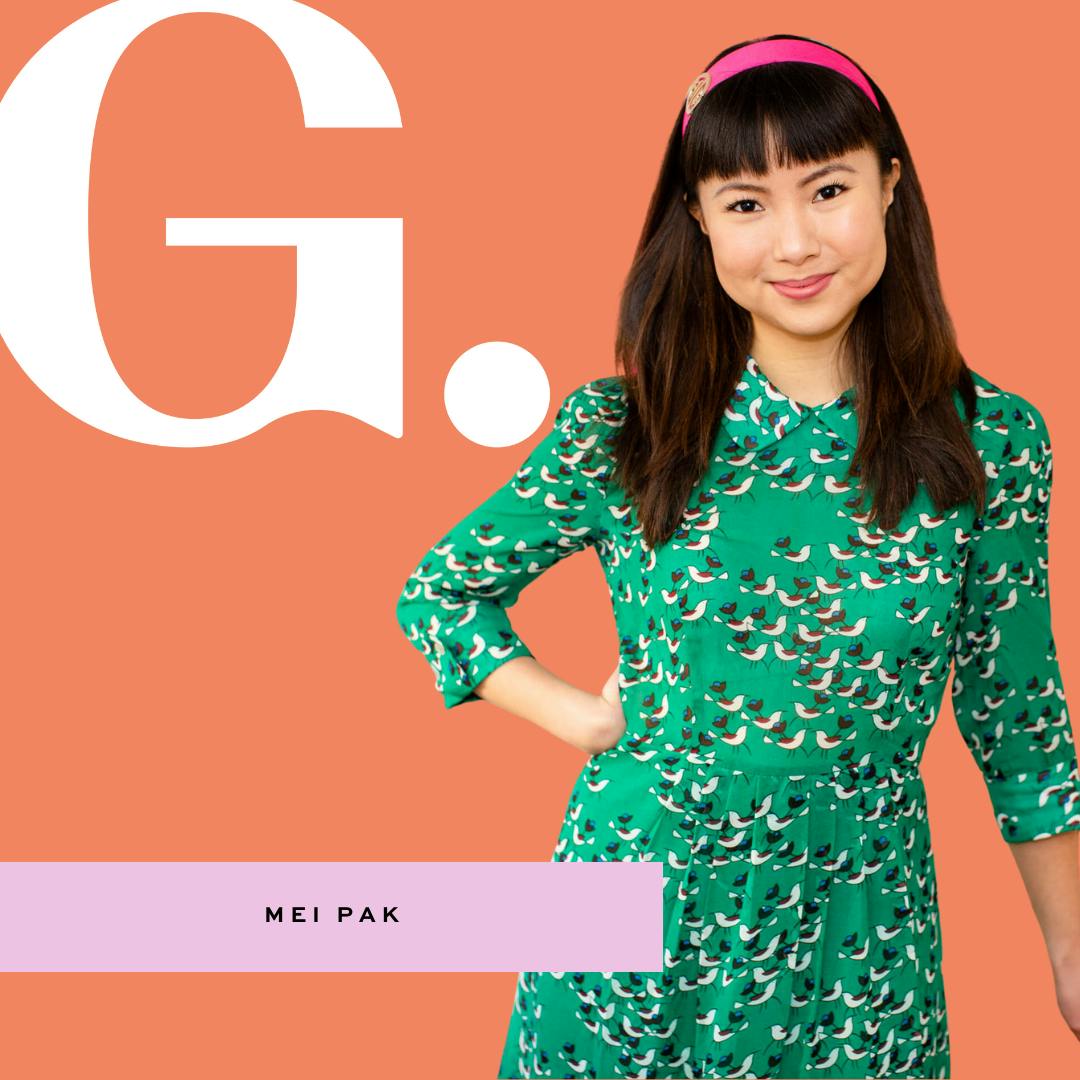
The Goal Digger Podcast | Top Business and Marketing Podcast for Creatives, Entrepreneurs, and Women in Business
925: The Sale-a-Day Strategy That Doesn't Require Social Media
00:53:01
With Mei Park and Jenna Kutcher
Loading summary
Transcript117 lines
- [00:01]
A
Imagine this. It's 30 days from now and your podcast is live, your voice is out in the world, and you're building an audience that chooses to tune in every week. That's not just possible. It's waiting for you inside of the podcast lab. And enrollment is officially open@teachmetopodcast.com this is my step by step program that walks you through how to plan, produce, publish, promote, and profit from your show. And even if you're starting from scratch, whether you've got a big brand, a small business, or just a powerful story to tell, your podcast could become the most impactful part of your week and your most scalable content channel yet. So if you've been waiting for a sign, this is it. Go to teachmetopodcast.com to enroll in the podcast lab today. You can get started for as little as $39. Today, let's make your podcast dream real@teachmetopodcast.com that's teachmetopodcast.com.
- [01:03]
B
All you need is a simple shift of choosing the right thing to invest your time in. And I think that the most powerful thing you can do is to do an audit of where your time is going in your day in your business and maybe consider changing strategies.
- [01:24]
A
I'm Jenna Kutcher and I help you trade hustle for purpose and build a business that gives you the life you actually want to live. From a $300 Craigslist camera to a seven figure business I run from home, I've learned that success isn't just about what you do. It's about how you live. Here, you'll get strategies that work, systems that give you your time back and steps that turn your effort into results. And if you're ready for clarity, confidence, and a business that feels as good as it looks, you're in the right place. This is the Gold Digger podcast.
- [02:02]
C
Have you ever felt like the only.
- [02:03]
A
Way to succeed in your creative business.
- [02:05]
C
Is to be everywhere? Posting constantly, pitching relentlessly, showing up on every platform until you literally burn out? We have all been fed this idea that more is more when it comes.
- [02:17]
A
To growing your brand.
- [02:18]
C
But what if doing less is actually the key to unlocking your next level? My guest today, May Pack, is living proof that it is. May is the founder of Creative Hive, and she has built a multiple seven figure handmade business while completely ditching the hustle mentality. She started out just making $3 an hour in her first year of business, but after shifting her strategy and simplifying.
- [02:42]
A
Her approach, she went on to build.
- [02:43]
C
A thriving business without relying on Etsy or social media. And get this, her work has been featured in buzzfeed, In Touch Weekly, Radio, Rachael Ray Magazine, and even on Parks and Rec, which you're going to die.
- [02:55]
A
When you hear that story.
- [02:56]
C
In today's conversation, we're pulling back the curtain on what it really looks like to grow your handmade or product based business without burning out. You'll learn how to streamline your marketing, get visible in ways that actually work, and finally let go of the pressure to do all the things. We also talk about May's one sale a day strategy, which if you want to learn more about that, you can go to jenna kutcher.com forward/creative. So if you've been stuck in content creation chaos or spinning your wheels trying to get noticed, this episode is literally your permission slip to simplify and still succeed. Take it from me. Without further ado, May, welcome to the Gold Digger Podcast. Okay May, I'm gonna dive us off the deep end. I wanna know what is the biggest lie creative entrepreneurs believe about growing their brands and what is the truth that you wish more people knew?
- [03:51]
B
This is the story of my life, but I feel like you do not have to do things a certain way or be a certain way to do well in business. As someone who I'm learning, I'm pretty neurodivergent and having gone through so many of my own mindset changes and growth and reframing and all of those things, I always carry with me this philosophy that if I can do it, anyone can do it. Like going through all of that struggle and the anxiety and this journey of having low self confidence and still having low self confidence but at least, you know, having more confidence in the things that I really do truly believe in, that if I can do it, anyone can do it. So for example, I never excelled at social media. I just did not get it. And yes, I have a large following. If you look at my profile on Instagram or on Facebook and YouTube, I don't really consider social media per se, but that was all a result of sheer effort and elbow grease of posting, posting, posting over a decade. And I think the followers do follow from that. But it was never something that really brought me meaningful results. It was never something that brought me joy. I was never really passionate about it. Even though I learned. I tried to do it well and I tried to learn it, but it was just never my thing. And to this day I'm still trying, but it's still not my thing personally. So. But Everyone else is doing it and everyone says that social media is where it's at. And there's this inherent pressure that we put on ourselves. At least I did for myself that if I don't do social media, I'm going to fail. And that's just one example. There's so many other examples of what we perceive to be the path to success. I have to look a certain way, I have to be a certain way, I have to be charismatic and magnetic and I have to be white. And this is even a thing like have. Seeing other people that are of color succeed has been very not something that I grew up with, with my business, you know, so that was my experience. And the message that I want to impart to everyone is that you don't really have to be this or that in order to have success. So going back to the social media example, yeah, instead of using that as my primary vehicle to get traffic and make sales, I instead got my work in magazines and placements on blogs and websites and using other people's platforms instead of trying to build my own up one at a time and trying to like maintain the engagement for that which has been so hard. And for me, media outreach and partnering with other people, collaborating with other people, that has been way easier. And it uses my strengths as a personal one on one communicator that I'm much more comfortable doing than trying to talk one to many, which is a lot of what social media feels like. And the results have been better and they've been longer lasting for me they've been more impactful because as we all know, social media is such a short lifespan. Once you create your post, it lives for 12 hours. If you're lucky, it goes viral for exactly. If you're lucky, it lives for a little bit longer than that. But then you have to go back to the hamster wheel and create new content again. So for me, this was just very anti my personality and my DNA. Of course I will say that there are some non negotiables that we simply cannot escape in business. Just like death and taxes, business fundamentals and human psychology, they don't change. But I think it's in knowing what the rules are of the business game and then learning how to color within and around those lines to make business your own. Do things in your own way, not how someone else did it and just figuring out what will work for you.
- [07:45]
C
I love that. I love that. You know, it's so funny because a few things you said I think are just so true. So one Is like you get good at social media by putting in the reps, right. Of like showing up when you do not have something really profound to say, or showing up when your voice is shaky. And I feel like a lot of people aren't willing to put in the reps. Like they're like, okay, if I had that platform, here's how I would use it. And it's like the platform grew because I was showing up when none of this existed. Right. The other thing that I think is so important, and you note on this, is like social media is one lever. It is one path into the business. It is not the only lever to pull. It is not the only way. And if it is so against how your brain works, how you creatively flow, how you want to show up, there are other things, levers, and other ways to do it. And I think there's been this almost lie of like, I have to be there, I have to be seen, I have to be posting consistently. And it's like there are a lot of other levers that entrepreneurs are pulling. Whether you're recognizing it or not, I think you see what you're looking for. And I think a lot of people are looking for evidence that social media is the only way. And it's like you're not even knowing where to look to see the other levers that are being pulled behind the scenes of many successful businesses.
- [09:02]
B
Exactly, exactly.
- [09:04]
C
So one thing that I love about your story, and I want you to kind of break it down for us a little bit is like you went from making $3 an hour to building a multiple seven figure business by doing less. Okay, so walk us through like the exact moment that you realized that hustle was actually keeping you broke and then what you did differently when you woke up the next day.
- [09:25]
B
Okay, I think we have to flash back all the way to. I think it's around 2011 at this point. It's been so long that all the years blur together, but let's just say it's around 2011. So my husband and I, Peter, we just graduated from college. Really close to you, by the way. Wisconsin. Eau Claire.
- [09:43]
C
Yeah, yeah.
- [09:45]
B
We like spent a lot of time.
- [09:46]
C
The Blue goals.
- [09:47]
B
He grew up there. Yes, exactly. There you go. You know. So we graduated from college in 2010 as 2011 was when we started our new life. We moved to Minneapolis and for that first full year I was. No one would hire me out of my. With my degree, which was an actuarial science. But I was so introverted and so shy and meek. That I was such a poor interviewer that I just really struggled to secure any jobs. So then I decided I'm gonna just work on my business full time while I maybe find some other job that I might be able to do part time or whatever. And my husband got a really good paying job, but he had to do the whole commuting for an hour each way and then coming home being super tired and office politics. And that really drained on him. He came back, not a full, whole person every time from work. Right. And after a full year of doing that, and so I made for that first full year in business, $9,000, which sounds like, okay, that's not bad. Especially in 2011, that was like meaningful income from craft shows and some Etsy, doing some of my own website sales. I was able to actually get by with about $9,000. So. Amazing. But I was also working 40 hour weeks, if not more.
- [11:09]
C
Yeah.
- [11:10]
B
And when you do the math on that, that does not compute. And so my husband and I, we're very, we work very well together. We're, we're so in tandem and we're always sitting down to talk about goals and where are we headed, what do we want, what's happening, what needs to change? And so one day, kind of unprompted, as was towards the end of the year of 2011, he sat me down and he was like, what's. So what are you doing? And he asked, yeah, and he asked me this in the kindest, most nonjudgmental, like he was just genuinely curious as to what was going on. You know, he was going off to work every day and coming home, and he doesn't know what I was, what I'm doing, what I spend my time at home doing. So it was that question alone was the first domino that kicked off everything else, because I didn't even have to answer him. It was more like, oh my God, like this realization of like, you're right, what am I doing? And then all the emotions kicked in, like the guilt and the shame of that he had to go to this work and he had to do all of this sacrifice. And obviously he paid for most of the bills and feeling like, no, I'm better than that. I can pull my weight too. And I want it to contribute and I want it to make a bigger impact than I had been. And so the next day I was like, okay, let's very methodically go through what I've been doing, what has been working and what hasn't been working. And prior to that, I think it was literally the year before, right before, Right as we were graduating from college, I had my first media mention in a now defunct website. But that was like my first five figure.
- [12:59]
C
What were you doing? Media was mentioning about you. Like, what were you doing? What were you getting mentioned about?
- [13:05]
B
It was just my products. They just wanted to feature my products. Yes. And it was just the products that I made that were, I guess, cute enough that someone wanted to feature them.
- [13:14]
C
What were the products?
- [13:16]
B
Oh, I don't even remember anymore. I want to know what the first ones were. I don't even remember. I feel like it must have been some generic product and if I dig it up, I can probably find a screenshot of it. But yeah, and that was the very first time. And that was. It was complete happenstance. It was by accident they found me, they featured me. And it was such a great holiday season that, you know, we're all in college. My family was visiting from Malaysia, my parents. And we're all in this basement of this rented property and we're all. The biggest surface that we had was our bed and we were packing orders. And it was so cute because we have this one photo of me teaching my mom how to tie ribbons on the gift boxes. And my husband was helping out as well. And it was. It was just such a cute part of my experience anyway, so that was one thing that really worked for me and everything else I was doing because I really gave social media a good effort. I posted so much on social media, and this was back when social media was not as competitive as it is now. So I did see some results. You know, I was able to get some engagement and grew my following, made some sales, but it just, I mean, it was like three to the tune of $3 an hour. So something was still broken, so something had to change. And then I think just methodically thinking that what worked, what didn't work, and let's just do more of what was working. So rather than investing in all the things that were producing a low return on an investment for me, I went all into pitching my work instead to blogs, magazines, websites. So instead of waiting for it to happen to me too, I learned how to do it myself and how to command getting my own priority.
- [15:06]
C
Yeah.
- [15:07]
B
And that was when it did. I want to say it happened pretty quickly, but quickly relative to the business.
- [15:14]
C
Entrepreneur quick plans.
- [15:16]
B
Exactly. Quickly in entrepreneur speak is like a couple years. And that was when I. The next year I doubled my income and then doubled it again. And then it was, I think the third year following that of repeating this same media outreach that I made my first multiple five figure. Sorry, six figure year in business selling scented food, polymer clay jewelry that I made with my bare hands. I got into so many placements, but the most notable was I got my waffle necklace on the TV show Parks on Recreation. And Amy Poehler, the amazing comedian actress, wore my necklace for almost the entire episode. And it was like a part of the whole episode story. It was the Galentine's day episode, but. And then that was like my first multiple five figure month in sales. Yeah, but that was how my. That was my Cinderella story. Jenna.
- [16:15]
A
You know, I only share stuff I'm genuinely obsessed with. And so when I kept seeing bowling brand sheets all over Instagram, I was like, okay, are these actually worth the hype? Drew and I have been using their sheets and duvets for over a year now, and honestly, our bedroom feels like a completely different space. Space. The moment you touch these sheets, you'll get it. They're incredibly soft to start, but they literally get softer every time you wash them. They're made from 100% organic cotton, so they're super durable and they're breathable, which is perfect for piling on cozy layers without turning into a furnace at 2:00am this is Hands down the best bedding I've slept on, and I am so genuinely excited for you to try it. Start building your sanctuary of comfort this fall with bowl and branch. For a limited time, get 20% off your first set of sheets, plus free shipping@bolandbranch.com gold digger that's Bowland Branch. B O L L a n d branch.com Golddigger to save 20% and unlock free shipping, exclusions apply. Okay, can we talk about bras for a second? Because honestly, for the longest time, I just accepted that being uncomfortable was just a part of being a woman. Like those underwire digs, the straps that leave marks on your shoulders. Spending half of your day readjusting everything, I thought that was just life. But then I kept hearing about the skims fits everybody collection everywhere, and I finally gave in and I tried it, and I totally get the hype now. The fabric is ridiculously soft and stretchy, but not in that cheap way where it loses its shape. It literally feels like it was made for your body specifically.
- [17:51]
C
And I'm not even kidding when I.
- [17:53]
A
Say I forget I'm wearing anything half the time. It is one of those things where you don't realize how uncomfortable you've been.
- [18:00]
C
Until you finally experience what comfortable actually feels like.
- [18:03]
A
Now, trust me on this one. You just need to try it. Shop Skims Fits everybody collection@skims.com. once you place your order, make sure to let them know we sent you. Just select podcast in the survey and choose the Gold Digger podcast in the drop down menu that follows.
- [18:19]
C
You know, one thing that you talk about that I think is so real is that there are so many entrepreneurs listening to this, and they're like, I am working so hard and I have nothing to show for it. Right. Like, that is. That is not a unique experience. If you are listening to this and you think I am the only one who is spinning everything and dropping all the balls and nothing is happening. Okay, welcome to entrepreneurship. I hate to tell you that that is a common and shared experience, but the second thing that I think is really powerful is I think Pareto's principle is at play in every one of our businesses and in our lives. Right. Where it's like a small amount of our actual efforts are leading to the majority of our results. And if you are sleeping on this fact or you're not investigating, where are these actual results coming from? And how do I just do more of that one thing? You are literally, like, in bondage to all the things that everyone says you should do. Right? Like, yes, you should do all of these things, but guess what? You are one human who is trying to get results. And so I love this idea of, like, looking at, like, well, okay, what is moving the needle and how do I do more of that? And I don't think enough entrepreneurs take the time to get off of the hamster wheel to actually inspect that. And so I feel like that's a huge piece of your story of, like, wait a minute, what am I doing with my precious time? Like, when you start to see, like, time is money, not in the way of, like, I need to go out and make more money, but in the way of my time is my life. You start to, like, really want to invest it in the right places. So what worked for you then and what works for you now? Like, paint us the picture, because we're talking about, like, you know, almost 15 years in entrepreneurship.
- [20:05]
B
Yeah.
- [20:05]
C
And so what was the strategy then and how has that changed to now?
- [20:13]
B
So media outreach is, I think, still the best way to start and grow your business and get traffic and sales, especially if you don't have a huge budget. Because all of the media placements that I got, all of them except one. Because out of curiosity, of course, I had to experiment and test. All but one were free.
- [20:33]
C
Yeah.
- [20:34]
B
Completely free, except aside from the cost of sending, making products and then shipping it to the editor or the blogger. So I still highly recommend it to this day. And in fact, like so many more people are doing it, so it has become more competitive. However, there are still some different strategies that you can employ. So for example, rather than just hitting up Instagram influencers, which is what everyone does when I say influencer outreach, it is the most competitive on Instagram as well as TikTok. What I do recommend instead for today is how do you show up to influencers that are not used to seeing your type of product or not used to getting pitched as often as the typical influencer that you know is getting pitched thousands of pitches every single day. There are so many influencers who may not appear immediately to be like influencers, but have amazing influence and have a huge platform and not just in their profile or their personalities, but also in the types of products that they might be recommending. So I always like to tell my students that if you're pitching to influencers these days, number one, think outside the box in terms of platform. Don't just reach out to Instagram and TikTok influencers. They will most likely want to charge you money for it, which, I mean, it is their prerogative. They need to make money too. So I get that. But there are also a lot of influencers, like on YouTube and bloggers still, and websites like Buzzfeed, Huffington Post that are always looking for products to feature and mention and that will not charge you money. YouTubers, I'm finding, is probably the next space for us to move into that is still a lot less competitive. And Substack was actually another platform that one of my students was like, maybe we should all reach, like, get on substack because that's the new blogger. And I'm like, that is an amazing idea.
- [22:28]
A
Yeah.
- [22:28]
B
And can you. It's so much less saturated on there. The. The writers that are writing there are not getting pitched to as often. So.
- [22:37]
C
And the content lives on on Substack versus, like, if you send an email out, if you weren't on the list on Tuesday, you're not going to get Monday's email. Right. Like, so it's exactly interesting.
- [22:48]
B
Ooh, yes.
- [22:49]
C
I love that. I love the idea too of like, how do you get in front of people that I have a cult like following, but it might not be massive. I actually think micro influencers move the needle ten times more than the macro. People who are so used to this life and lifestyle and getting pitched and products and all these different things. To them it's just another day, right? To them it's just like a Wednesday. But to the person who is like coming up and this is brand new and they're going to take every opportunity and really just like feel so proud and excited by it, that energy is so contagious. And I think those are the people that others want to follow and trust. Like honestly, I am somebody that has a large platform by all scopes of the imagination and I like miss the good old days. Like I miss like when I felt like I knew every single follower and I had that. You know what I mean? Like there is a different energy there. And so I think that brands that are only going after big followings are missing like the actual gold of what influence means and how it's truly leveraged.
- [23:57]
B
Yes, yes. And so I just mentioned one way to think outside the box as in diversifying on platforms. You just mentioned another way and there are at least two other ways that I can think of.
- [24:06]
C
Yeah.
- [24:07]
B
Do you want me to talk about give them.
- [24:08]
C
Oh, girl.
- [24:09]
B
Yes.
- [24:09]
C
Yes.
- [24:10]
B
Okay. So another way to quote unquote, think outside the box is don't just pitch to influencers that are in your niche. So if it feels obvious, yeah. There are probably so many other of your competitors that are pitching to that same influencer. So I sell jewelry. I could be pitching to all the jewelry influencers or fashion influencers and I can guarantee you that it will be impossible to stand out in that influencer's inbox.
- [24:38]
C
Yep.
- [24:39]
B
So instead I'm looking into other angles. Okay. My jewelry is food themed. I have cupcakes and waffles. I am going to pitch my work to foodies, to bakers and chef influencers. I'm going to pitch myself to the mom bloggers or the mom vloggers that also have kids that appear on their platform and do an unboxing video there. So you want to think about the non obvious angles and different types of people. So here's it just popped in my head. But I. One of my friends is a crayon artist. Her name is Nicole. From art to the extreme and she makes amazing custom crayons. She melts them down and it turns into like these rainbow colors and then you and you personalize them to your name, which is so fun. So they make great gifts. But she even goes above and beyond to create custom crayons in the shape of say a dog, which you may not normally have carried something like that before because she would do initials and letters to Your name. But she made this dog crayon so that she could pitch her products to a pet magazine.
- [25:48]
C
Wow.
- [25:49]
B
And like you normally. Yeah, normally there would be no connection between her crayons and a pet magazine, but she knows that her customers probably have pets and our families with pets. So she thought outside the box. And I think that is so freaking clever.
- [26:04]
C
Yes, Yes. I think in nowadays, I think with like, marketing, like, you have to be.
- [26:11]
A
Really curious and willing to accept, experiment.
- [26:15]
C
And like step outside of the box. Like, what is obvious is not getting engagement any longer. Right. And so it's like the challenge and it's like you have to enjoy the game of it. I was literally telling my friend the other day, I was like, entrepreneurs that are surviving right now are people that genuinely enjoy the game. And with a game, you have some wins, you have some losses, but you keep showing up. And I think that for people that are not used to putting in the reps or losing or not having like a sure bet, the game is not fun. Right. And so it's like, how do you, like, make it fun again? So one thing I'm curious about, we kind of touched on this, but I want to like circle back on this is you have landed features on things like buzzfeed and Rachael Ray and like Parks and Rec. Right. What an insane, awesome experience. So what is the pitch strategy, like, for Parks and Rec? Did you send them a necklace? Like, how do you do this? What is this? Like, not the theory, like, how does this actually work?
- [27:12]
B
Okay, yes. And that wanted to very quickly segue into the fourth way of how to think outside the box. And then we'll get to the pitching strategy. And what, like, how do you even send them an email? The fourth way is to not just reach out to so called influencers on social media, but think about wardrobe stylists. Like, TV constantly needs products if not for like their set. So if you sell art, if you sell home decor products, pillowcases, those are all things that can be used for a TV show production or a movie production. If you sell any, like, accessories that can be worn on the body, jewelry, hair clips, hair ties, clothing, all of those things can be used and worn by an actor. Yeah. So this was. I lucked out on this. But the reason that I got onto Parks and Recreation was because I was featured on a blog and the wardrobe stylist happened to be a reader of this blog and she saw that I sold food shaped necklaces. And because in the Parks and Recreation show, Leslie Knope loves, loves, loves Obsessed with waffles.
- [28:19]
C
Yep.
- [28:20]
B
And so she has me shipped overnight, shipped to her a whole bunch of different jewelry. And I. I'm like, I don't. When I got the email from, like, hey, I'm the wardrobe stylist of Parks and Recreation. I don't watch a whole lot of tv.
- [28:33]
C
Yeah.
- [28:34]
B
And so I thought, what does the Parks and Recreation department want with my jewelry? Had no idea it was a TV show. But once I figured it out, I was like, oh, my God, drop everything we're doing now and get this package out asap. However, the way to do it is a lot simpler than, in my opinion, doing social media. So the very first step of how to pitch your products to other people, I would say talking about Pareto principle. Right. The 8020 really lies in the research of it. So if you know your business really well and you understand all the different angles and think outside the box of who you would be a good fit for and really spend the time to make sure it's a really good fit as opposed to, like, ah, you know, I'm not sure if they would like my product. Don't even bother with that because then you're gonna have to try so much harder in your email to try to get their attention. But so spend a lot of time doing the research, making sure it's like a sole match, made in soulmate match, made in heaven type of match, which will take more time, but you will see that your pitches are going to get more opens, more responses, more yeses from these editors, which I find to be more worthwhile. And then if the research is good, everything else is so much more forgiving as well. Like the email pitch that you send out to these people don't have to be perfect, so you don't have pressure on you. But now when it comes to the actual email, I like to start with a genuine comment that I can make to the editor or the other person. And this does two things. And of course, in order to make this genuine comment to them, I do have to spend that time researching, getting to know the other person and understanding what they like, what they don't like, their preferences, their philosophies and things like that. So that I can make a comment on that to say, hey, I am the same way, or I like the same thing. And isn't that so fun? But this does one of two. Well, it does two things. One, it builds that instant connection, and two, it shows them that this email you sent them wasn't just one of a hundred that you email blasted to a thousand other editors and influencers. So they're going to pay much more attention to the rest of your email. So that's really only one sentence. And then the next sentence, one or two sentences, I briefly tell them about who I am and what I do do.
- [30:57]
C
Yeah.
- [30:57]
B
So again, it's very important that you're very clear on your business. And I like to look at this as like your elevator pitch. So, for example, for me, I would say, hi, I'm Mei and I make scented food jewelry in my shop, Tiny Hands. Period. That's it. Simple, to the point, full stop. I'm not trying to tell my whole life story here. If unless it's relevant to the story that I'm pitching. If not, that's the end. A lot of people make the mistake of spending way too much time talking about all the this is my origin story and this is why I make all this stuff. And no, no, no, no. Okay, then you want to segue into why you're emailing. So for example, for me, I would say I'm reaching out because my jewelry makes really great gifts. For foodies or for blank, you know, for kids of eight years and up. For blank. If you're working on a gift guide for the holidays, I'm happy to send some free samples to you before the call to action. Embed a couple of photos, the best photos that you can find. You want something that's very, very lifestyle y, so very desirable to represent your work. Because most likely the way that people are going to scroll, they're probably going to see your email. If the photos are there, they're going to look at the photo first to see if, is this something I even care about? Is this something that I even like? Is it up my alley? And then they're going to be like, oh yeah, this is really cool. Then they're going to start reading from the topic in the rest of the email. So it is important that you embed photos, not attach them, because attachments often get sent into spam. And then embedding also makes it so that you can precisely position your photos within the email as well. So it's not just at the very bottom of the email. But then, yes, include a couple of photos. So if you don't have really good photos, I do recommend investing, partnering, collaborating. Get a professional to take a few shots that you just have on hand that you always use.
- [32:53]
C
I feel like with AI too, you could probably get good photos of your stuff.
- [32:57]
B
Yeah, I don't know. There you go. Yeah, yeah. But it is very important that you have those good photos and then you end the email with a strong call to action. I personally like to make this a question. So, for example, this is my website, www.blah blah blah blah. What items catch your eye?
- [33:15]
C
Oh, yeah.
- [33:16]
B
That way there is a direct, specific task that you want the other person to take and they're not confused and not questioning, what does this person want from me? Why are they emailing? It is so clear and it is so simple. And that is it.
- [33:31]
C
I love it.
- [33:31]
B
It's like less than a hundred words.
- [33:33]
C
Yeah, well, I, I mean, as somebody who gets pitches every day for random things, I love this. I think it's so smart. It is super simple. And you know what's interesting, May is like, you're throwing me back because like, we're similar age, similar life stage.
- [33:48]
B
Yes.
- [33:49]
C
And it reminds me of like when I first became a wedding photographer. I was submitting two magazines and it was back in the day where you literally had to send in a disc of like the top 30 images from the wedding. And it was like this, you know, submission guidelines. And I was literally telling my friend today about like, when I was a wedding photographer and I was like, the Wisconsin bride, top wedding photographer in Wisconsin. Like, that was all free because I put myself out there, right? And I kept pitching and every year I would just keep pitching and pitching and pitching and it was like, yeah, people can either pay to take out an advertisement or you can submit your work and get attention and free advertising in terms of full spreads and magazines, like. And so I think that it is a secret sauce. And I think that a lot of people do not consider themselves to be their own PR person. And when you are an entrepreneur and you're starting, you are your own PR person, there's nobody that's going to talk about you more than you talk about yourself. And so when you learn how to do that and put yourself out there, man, I think it opens so many doors.
- [34:54]
B
It is magic. It is such a high impact thing that any entrepreneur, business person can do for their business, even today. When I started my coaching business, I used the same strategy, but instead of pitching products, because I am the product. Yes, I pitched my expertise. I appeared on guest posts, on other people's blogs, on their websites, I did podcasts, interviews. Same thing.
- [35:17]
C
Yes.
- [35:20]
A
When we were young, we dreamed of castles in fairy tales. And as we grow up, those dreams might shift into building something real, like starting a business. You need a website, payment systems, a logo, and a way to reach customers. It can all be overwhelming and confusing, but thankfully that's where today's sponsor Shopify comes in. Shopify powers millions of businesses around the world and 10% of all US E commerce. From big brands to folks just getting started. They offer beautiful ready to go website templates so you don't need design skills to look professional. Their AI tools help with product images, descriptions, discount codes and more. Shopify also makes it simple to run email and social campaigns so people can find you. And if you ever feel stuck, their award winning 24. 7 support is always available. Turn those dreams into and give them the best shot at success with Shopify. Sign up for your $1 per month trial and start selling today at shopify.com golddicker go to shopify.com goaldigger shopify.com gold digger.
- [36:28]
C
Anyone who knows me knows that.
- [36:30]
A
I'm all about creating spaces where people actually want to be. So when we started hosting on Airbnb, it honestly felt like the most natural thing in the world. And it's turned into one of the best decisions we've ever made. Over the years, we've hosted hundreds of couples in our little spaces. We've had so many repeat guests come back and we've created this incredible community not just with our guests, but also with the people who help us care for our space. Whether you've bought properties as an investment or have unused rooms waiting to be shared, hosting on Airbnb is a practical and profitable choice. And just think about it. If you've put a ton of time, effort and work into your home, someone out there probably would love to experience it while they're traveling. So next time you're planning a trip or want to make some extra income from your spaces, you should definitely host on Airbnb. Your home might be worth more than you think. Find out how much@airbnb.com host and I.
- [37:24]
C
Think what's interesting too about this is that so many people are burning out trying to build their own platform when there are other established platforms out there. Like I call it like opp. Other people's platforms, like yes, opp. Yes, like get out there. Because I feel like if you are just starting these days, the best way to get the word out is to leverage other people's established platforms to build your own. It's not to like build it brick by brick. It's almost near what feels impossible these days. Right? And so, okay, so talk to me about this framework, because you have a framework that's a sale a day. And so I'm guessing this is when you started teaching your expertise and you were the package. Walk us through. Like, what should an entrepreneur that's listening to this show do in their first 30 days to set this up? Like, talk to me. If somebody's making zero sales right now and they want to learn how to make a sale a day, what do they do?
- [38:20]
B
Okay. It all starts with research. So start with market research in a niche that you are passionate or knowledgeable in. And it. It should be a niche and not just, I want to sell to everyone because it's so competitive these days that that does not fly very well anymore. Very hard to stand out that way. And once you do pick a niche and you're starting your research, you want to pay attention to see what products are dominating that market. And then the next step from there is see how you can add your own spin to what already exists. And that is so, so, so important. So don't just make more of what already exists. You want to add some variation to it.
- [39:05]
C
Yeah.
- [39:06]
B
So one example with another shop that we started recently in 2019, that my husband now runs and has made, like, in the first full year of business, made seven figures in annual sales. We were selling products that already existed in the personalized wall art space market. But one thing I noticed about that market was that it was very monochromatic. It was very, very simple, very subtle. Lots of black and whites and grays and blues. And that is beautiful. Yeah. I personally am a very vividly colorful and love my bright colors and rainbows and saturated colors. And so I thought, I don't see this represented right now. And I'm sure there are other people that are like me. And so it was such a simple, slight shift. So I'm not completely inventing something entirely from scratch, but adding on my own unique take to this. And then that business really took off.
- [40:02]
C
Yeah.
- [40:03]
B
So if you know what you're doing, this shouldn't take more than a few hours over a few days. It's more thinking strategy work and not actual elbow grease work. Because I'm really trying to think about the constraint that you gave me. 30 days is all we've got. Right. For a beginner. Start with the research. The next step from there is once you have figured out what products you want to make, it's time to make them. And if you get really creative and you're using DIY methods, and if you're making digital products even easier, you can make your products in one or two days.
- [40:39]
C
Yes.
- [40:40]
B
The goal here, though, is to make an mvp, a minimum viable product line and the number I like to give, it's not like a set in stone number, but just sometimes people need a goal. I like to recommend between 6 to 12 different products to start your shop with. Now the goal is not to make the perfect product. That is a representation of what your product will be when you've made your 1000 sale.
- [41:05]
C
Right. Get something out there.
- [41:08]
B
Just get something out there as fast as you can so you can take photos of it. Put it out there into the world to gauge interest. So this can be the most time consuming part because if you are making a physical product, you have to shop for something, supplies, you have to wait for them to come in. But again, the point here is not to find at this stage the best supplier that can give you the cheapest rates or they can make the product the best. It is to make your first prototype and if it's super expensive for you to make this first prototype, that is okay. The goal at this stage is not profitability but speed in getting your work out there so you can get feedback and real data and be able to move from there as opposed to creating an entire 100 product line in isolation, not knowing if any of it will sell. Right. That is the, the thing that I see happen more often than I wish is happening, but it's something that people do. So we're trying to avoid launching to crickets.
- [42:09]
C
Yeah.
- [42:10]
B
Once you've designed your products, this can maybe take one, two weeks. While you're waiting for supplies to come in for your product to be made, you can also start branding and building out your website and all of the tech admin stuff. So think of your business name. This one trips up. A lot of people go for easy words people can spell and recognize. The recipe I like to use is combine two existing English words together. If you're in an English speaking market for creating fresh names, fresh brand names and obviously that are relevant to your niche, grab the domain name for it, start building up your store. So if you are on a budget, I like recommending Hostinger because they are so cheap and so easy to start up with. Yeah. If you are, if you have more of a budget and you want to just start with the best option that you can grow into, then I personally like to use Shopify.
- [43:06]
C
Yeah, same.
- [43:07]
B
And then get a logo done. You can use Canva. Again, there's so many AI tools that you can use and we're not aiming for perfection here because all of these things can be changed. Believe it or not, even your brand name doesn't have to be perfect because two years down the line you're like I this was not the vision that I envisioned all this time you can change it and do all this redirect stuff. It is really not a big deal. I have gone through all that myself.
- [43:34]
C
Same, same girl, my Jenna Kutcher course like I couldn't even come up with the name. So yes, like done is better than perfect I think.
- [43:44]
B
Yes, yes. And I think people get so scared that it's all set in stone that they perfectionism kicks in and they feel like I have to make the right decision. But please, please, please it's all of these things can be changed. It is not set in stone at all. And then you see if your logo, you have your website, all of that again. Also if you know what you're doing, if you're resourceful and you're watching tutorials and you're following knowledge bases for Shopify and all that stuff, you can get all of this done in a week. Week. In addition to that also set up your email automations. So Klaviyo is what a lot of e commerce physical product sellers like using. It is free up to the first 250 subscribers. So you want to be setting up your email flows and they make it so easy for you. Literally in two clicks you can set up your welcome sequence into because they've templatized everything and it's all pre made so easy but you can set that up. That's going to really help you convert traffic into sales. And so all that should be about a week, all that website stuff. And then you want to take photographs once your product is made then you can photograph your products. This I would anticipate takes a few hours one afternoon. Edit the photos, use AI if it serves you and then you want to create the product listings again use AI to help you come up with product descriptions and titles. It does not have to be hard, it can be easy. And then that can all just take a few hours or one day if you're really gung ho about it. And then now we're going to start talking about the outreach and the marketing and the traffic. Then we're going to research influencers. So research influencers on YouTube, TikTok, Facebook, etc. Remember all the strategies that we shared earlier? Start with smaller influencers like you said Jenna, because they are more likely to respond and it also feels less scary for someone who is totally new. As a beginning business owner I know there can be a lot of pressure in thinking like oh my goodness, I, I'm. And it's so emotional when it is thinking about pitching to like the really big influencer. But no, you can start small and you can build up your confidence from there. So build a list of like 10 to 20 good influencers for your product. You can do this in a few hours. And then using the script that I just shared with you, send each of those editors or magazine editor or influencers, send each one of them an email offering them a free product. So that can maybe take another day that you do that and then that's it. Then you rinse and repeat the influencer outreach. Eventually you will start getting sales when your products are featured by other people and from there you have your MVP product line. When you get the sales, you will start to see which product is doing better than other products. And so the next step from there is to expand more on that product that's doing well. Create variations, spinoffs, different colors, different shapes, sizes of that item and then you want to start culling and removing the rest. And that's how you build up your business. That's it.
- [46:49]
C
Again, I think we over complicate everything. I think that people hold themselves to impossible standards.
- [46:56]
B
Yes.
- [46:57]
C
I also think we've lost the magic in iterating in public. I think that that has just been a lost art of like people being willing to show up, mess up, change, evolve. Like it's just a lost art. It's like people nowadays are like, it has to be perfect before it goes out into the world. And so many people are sitting on amazing ideas, amazing businesses, amazing platforms that they're just holding so tight to their chest that it's like it's not serving anybody. And so there has to be this level of like experimentation and curiosity and willingness to just show up that if I think that is like the secret sauce of what's missing for so many people these days. And it's like when you look back, like we did so many idiotic things that gave us the data to move forward with confidence. And if you're not willing to do those things, you're never going to know what do to what's actually going to be sticky and what's going to work. Because oftentimes it's not what you assume it will be. Right?
- [47:57]
B
Oh, it's never, it's never, never what you think it's going to be.
- [48:00]
C
Oh, so I love that so much. Okay, so if you were going to talk to one person today who has this dream, who's maybe recognizing after this episode, like, wow, I'm probably making $3 an hour if I do the math. What is your one piece of advice for them to take action on today? What what should they do? After listening to this episode, I'd like.
- [48:24]
B
To go back to my comment from the very beginning. If you're making $3 an hour, something is clearly not working. But you're, you're spending considerable effort. You are investing and you have this good faith of putting in this effort, so you want it and you're doing the good work. But something isn't working because all you need is a simple shift of choosing the right thing to invest your time in. And I think that the most powerful thing you can do is to do an audit of where your time is going in your day, in your business and maybe consider changing strategies. Because also what I want to reemphasize and highlight is that are you doing those things because you are pressured into doing those things because everyone says that's what you have to do?
- [49:15]
C
Yeah.
- [49:15]
B
And I'm not just talking about social media, but clearly in my mind's eye, I'm talking about social media. But it doesn't have to be just social media. It could be anything else that you're spending all your time on, but that it's not giving you an ROI back. And that is a practice that I carry with me to this day. And any time that I spend my time on anything in my business, it has to be for leveraged income. It has to be for building assets and equity into my business. If it's just doing the grind and hamster wheel stuff, I am so allergic to that these days. So I do highly recommend being very cognizant and start collecting the data of where your time is going. And if it's not working out for you, you have to start exploring what, what can be better for you and to start expanding your perspective on. Just because everyone seems to be doing social media doesn't mean that that's true. A lot of who I know to be the most successful business owners that are making so much money and living their greatest lives have a hundred Instagram followers, you know, so it doesn't have to be what you think it is. And start challenging yourself to think and look outside the box, because I think once you start opening your mind to the idea and possibility that there could be something more and that there are other ways to get traffic and make sales, you will start to see the evidence that that is true.
- [50:43]
C
A hundred percent. Oh, I love that. May where can everybody find you and connect with you and learn more from you. Give us all the places.
- [50:53]
B
Yes. So my website is creativehiveco.com on Instagram. We do. That's I love Instagram just because it is such a community driven space. As opposed to YouTube. It's more of a content platform. Even though YouTube is my my bread and butter. I'm Creative Hive Co on all of the platforms on Instagram. Feel free to DM if you want to start a conversation, if you want to chat, we respond to all of our emails and all of our DMs. And if you want to email, I'm amay meireativehiveco.com as well. Feel free to email questions. We're happy to give you free coaching or give you send you in the right direction of whatever challenge you're facing right now.
- [51:34]
C
I love that. May thank you for coming on the podcast. My little Midwestern buddy. Such a joy to look at business through a different lens and to just see that every marketing strategy is merely a lever that can get you closer to your results. And so when you know what levers feel natural to you and what levers are available to you, it can absolutely transform the way that you show up and the way that you look at marketing your business, your products, your audience offers in a way that feels authentic.
- [52:06]
A
And exciting to you.
- [52:07]
C
So I love it. Okay. I love just talking to other entrepreneurs, especially entrepreneurs in different industries than I'm in. I feel like May is someone who has really found the key to analyzing and simplifying in order to turbocharge her.
- [52:25]
A
Growth and her results.
- [52:26]
C
Sometimes it just takes a minute for us to pause and evaluate what is actually moving the needle here and how can I leverage other people's platforms versus spending all of my time and energy and bandwidth trying to grow my own. Feel like there is so much goodness inside of today's episode. And if you're curious about May's one sale a day technique, go to jennacutcher.com forward/creative she set up a special offer just for our audience. That's Jenna kutcher.com forward/creative I think that it's an amazing way to have the framework and structure to keep you you outside of analysis paralysis and to help you move forward. Because at the end of the day perfectionism is really just a fancy form of procrastination. And I think for so many of us we're afraid to iterate to show up imperfectly to get a minimum viable product and MVP out into the market. And that is the way to succeed. Thank you so much for listening to this episode of the Gold Digger Podcast. If this episode reminded you of someone in your life, take a minute to share it with them as your free gift to them. And of course, until next time, Gold.
- [53:31]
A
Diggers, keep on digging your biggest goals. Thanks for listening to the Goal Digger Podcast.
- [53:37]
C
I hope today left you inspired and.
- [53:39]
A
Equipped with something you can put into action as you build a business that truly supports your life. If this episode resonated with you, here's how you can help this show reach even more entrepreneurs. Hit follow. Share it with a friend who's building something meaningful, and if you're feeling generous, leave us a review. Those reviews help other listeners discover these conversations when they need them the most. This show has become so much more than I ever imagined, and it's because of listeners like you who show up and share. You are helping build something that will inspire entrepreneurs for years to come. For show notes, links and resources, head to gold diggerpodcast.com keep digging your biggest goals. The world needs what you're building.
- [54:22]
D
Please note this episode may contain paid endorsements and advertisements, and individuals on the show may have a direct or indirect financial interest in products or services referred to in the episode. Your support through affiliate links or sponsored content helps us continue to bring you valuable content. Thank you for being a part of the Gold Digger community.