Podcast
The Good Builder Podcast
Hosted by The Good Builder · EN
This week in home building news! Catch up with Az and a colourful array of guests, to hear about who's killing it, who's innovating, and who's getting into strife in the world of new home construction.
33episodes
Episodes
Newest firstAll episodes
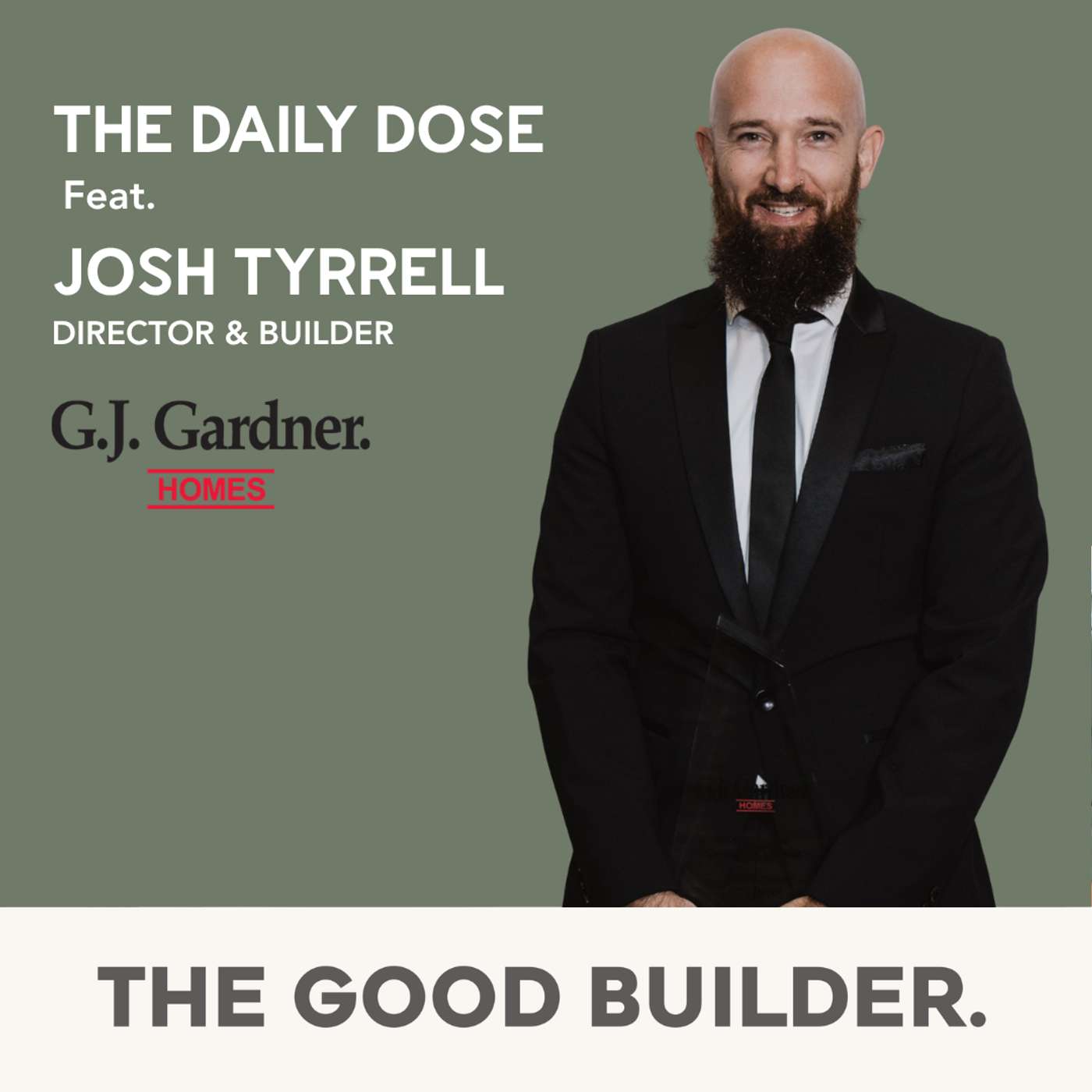
The Daily Dose #328 | Josh Tyrrell: Ten Years, 250 Homes. The Journey From Builder To Businessman
Yesterday01:01:02Tap to summarizeJosh Tyrrell signed with GJ Gardner Homes at twenty nine, opened in October 2016, and has since built around 250 homes across Warragul, Drouin, Morwell and Traralgon. Today he has 18 staff, an average contract price near $800,000, and a second office about to open in the Latrobe Valley.He got there by chasing the work the big builders avoid. Flat greenfield sites are a brutal fight against Metricon and Simonds. Ten metres of fall is not. Josh set out to be the volume builder for difficult builds, and now the competition sends those clients his way.He takes Az through all of it. The shift from builder to business owner. Bringing accounting inside the business and what tighter cashflow reporting exposed. Why he hires before he needs to. The year twenty five of thirty jobs triggered planning permits and he wore the hole rather than lay anyone off. Why nobody on his team quotes a price without standing on the block first.The Good Builder has recorded more than 300 episodes. This is the first time a guest has answered the question with a single word. Responsibility.Josh's own podcast is linked below.https://open.spotify.com/show/53fZLgWHZwu35jQwf3tIDeProudly brought to you by The New Home Electrical Specialist: https://tnhes.com.au/
Transcribe →
The Daily Dose #327 | Xero Economist Louise Southall on Productivity, Cash Flow and Why Construction Is Holding Up
3d ago00:45:14Tap to summarizeConstruction is one of the strongest performing sectors in the Australian economy right now. Louise Southall has the data to prove it.Louise is the Xero Economist. She joined Xero in 2020 and brings 30 years across economics and business advocacy, working with business organisations, councils, government agencies and charities. Her focus is Xero Small Business Insights, a program that uses anonymised and aggregated data from the Xero platform to show what is actually happening inside small businesses. Real sales, jobs and wages figures rather than survey responses. The Australian data set covers more than half a million small businesses.In this episode she joins Az to unpack the June quarter for construction. Sales up more than ten per cent on a year ago. Employment up more than five per cent. Wages up around three per cent. She explains why the sector is outperforming most of the economy, what is cushioning it against cost of living pressure, and why Queensland keeps showing up near the top of the table.The conversation goes well past the numbers. Louise makes the case that productivity is not one big step change. It is small changes at the margin. She talks about the red tape sitting inside your own business rather than in Canberra, the friction between quoting, doing the work, invoicing and getting paid, and why the Christmas shutdown conversation with your accountant needs to happen months before December.Her answer to what makes a good builder is worth the listen on its own, and it comes from three decades of watching small businesses succeed and fail. Most builders serve a trade apprenticeship. Very few serve the second one. Businesses rarely fail because the trade work is poor. They fail because the cash does not come in fast enough.Also covered: skills shortage as the sector's main headwind, why the five to twelve staff bracket is the hardest place to sit, what technology adoption actually looks like when you are running quotes from the ute, and what the New Zealand experience shows about a construction sector under pressure.Hosted by Az.This episode is proudly sponsored by MyConstruct, built by Australian builders for Australian builders. Get a 30 day trial at myconstruct.com with your CODE: GOODBUILDER
Transcribe →The Daily Dose #326 | Marketing for Builders: Where to Actually Start | Paul Viva Digital
5d ago00:57:38Tap to summarizeMost builders were never taught marketing. For most of the last decade they did not need to be. Orders came in, the phone rang, and whatever budget existed went to whichever sales rep called first.That market has tightened. New franchises are landing in established patches, buyers are researching harder than they ever have, and the builders who cannot be found are losing work to the ones who can.This is episode one of the Monday Marketing series. Az sits down with Paul from Viva Digital, an agency the industry does not hear much about but whose work sits behind some of the biggest names on the Sunshine Coast. Paul does not sell. If a builder does not need an agency, he tells them so and sends them on their way with the advice to do it themselves.In this episode:The three pillars of marketing spend, and why builders reach for the wrong one firstWhy the website is the only digital asset a builder actually ownsThe three second rule, and what a prospect decides before they read a single wordWhat a builder's website should genuinely cost, and where six figure quotes lose the plotThe apple tree analogy: Google Ads catches the fruit, Meta shakes the treeFacebook or Instagram, and the age where the audience splitsSEO explained without the jargon, and the one metric to demand from any agencyWhere AI search pulls its answers from, and why citations now matterLead tracking, and why almost no builder in the country can say where their work came fromChoosing an agency, and why Paul treats it like a marriagePractical, logical, and free of the usual agency noise. If marketing is the part of the business that has been sitting in the too hard basket, start here.Hosted by Az.This episode is brought to you by Viva Digital. vivadigital.comDownload the episode resource: https://leadtracker.thegoodbuilder.com.au/downloadSubscribe for a new episode every week, and follow The Good Builder for independent reporting on the Australian residential construction industry.#thegoodbuilder #constructionindustry #buildingbusiness #australianbuilding #marketingforbuilders #digitalmarketing #buildermarketing #constructionmarketing
Transcribe →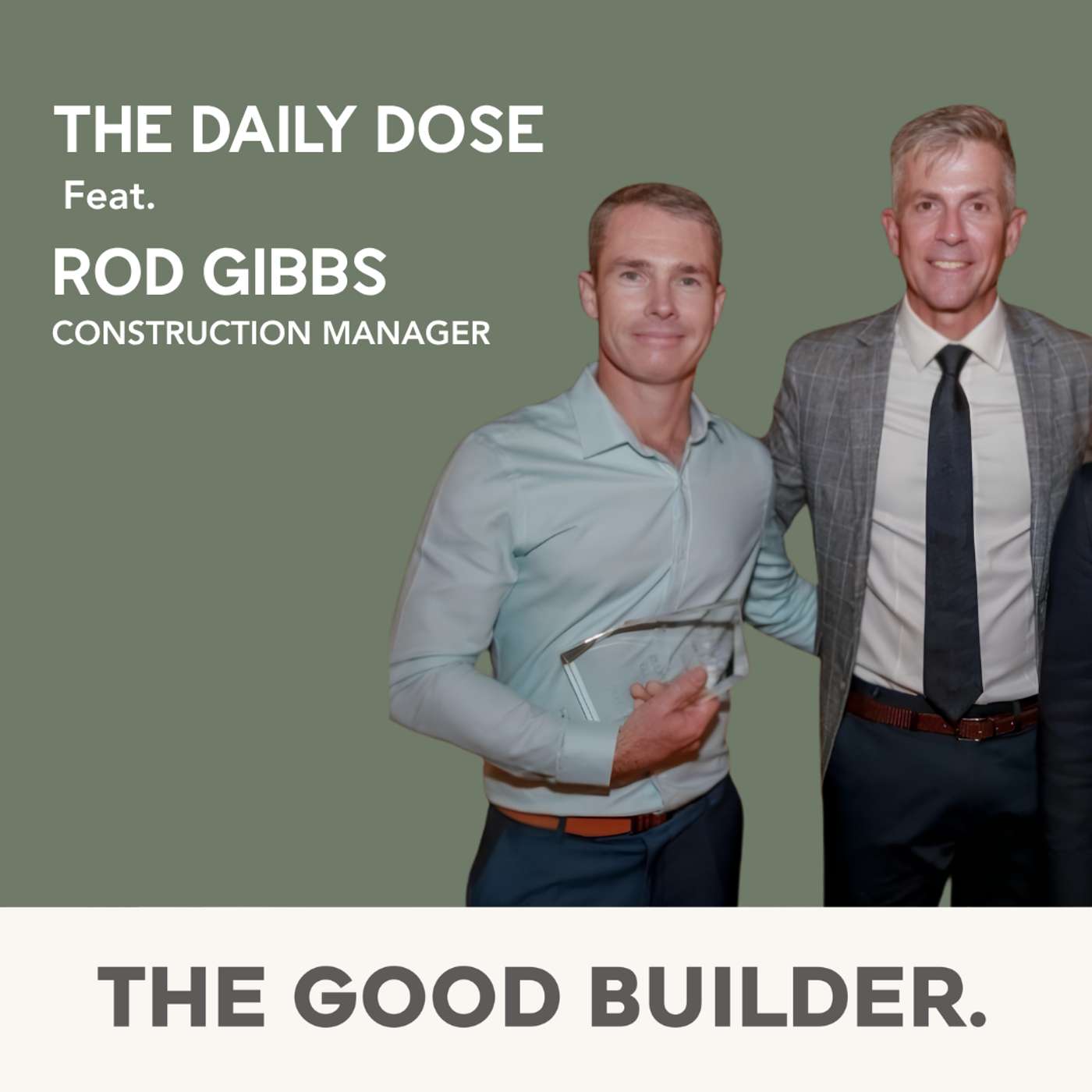
The Daily Dose #325 | You Can Teach Anyone to Build a House with Rod Gibbs from Bold Living
1w ago00:57:09Tap to summarizeRod Gibbs has had three jobs in construction. He has done almost everything inside them.He started out tiling, switched to carpentry, and served his apprenticeship at Glover Building Group before becoming a partner in the business. Then thirteen years at Plantation, moving from supervisor to construction manager to building manager, running volume at a scale most builders never see. Fifty to sixty slabs a month. Fifty to sixty handovers. Supervisors carrying fourteen to sixteen jobs at a time.He has just been appointed General Manager of Construction at Bold, and he unpacks the move in this episode.The move is not the reason to listen. The reason is the hour of practical detail on how a building business actually runs when the people side is done properly.Rod covers why the five out of tens hold a team together better than the A graders. Why complacency in a good market shows up two years later as a problem you cannot fix. Why the supervisor is the most important link in the chain through the customer's eyes, and why that workload has roughly doubled since 2016. How to pass the baton between departments without dropping the customer at handover. What he looks for when he hires, and why a bloke who got knocked back twice is now a construction manager.There is also six years on the HIA technical committee, and what that taught him about getting ahead of code change instead of pulling bathrooms apart after it lands.Then the standing question. What makes a good builder? Rod's answer comes back to three things. Quality across every department, the customer journey, and communication that happens face to face.Hosted by Az.Sponsored by The New Home Electrical Specialist, the experts in new home electrical. Visit https://tnhes.com.au/ for more
Transcribe →
The Daily Dose #324 | Care Factor is the Whole Job With Phil from WD Constructions
1w ago00:40:20Tap to summarizePhil runs WD Constructions in Melbourne. He started in 2018 with one week of work at a mate's house and a first child on the way. Six years on he has never spent a dollar on advertising. Every job has come through word of mouth.He has also built a serious following on Instagram by showing what most operators keep off camera. The mistakes. The rectification. What sits behind the plasterboard.Az asks him why he spoke up about prefab, and what the public is actually being sold when a home gets promised in a month. Phil walks through display home finishes and lands on one word. Disappointing.The conversation turns to what the trade stopped teaching. Carpenters who have only hung doors and glued on skirting. Apprentices pushed through with modules missing. His trade school teacher's line that roofing is the difference between a carpenter and a handyman.Phil finished his apprenticeship without ever seeing a purchase order. He argues quoting, invoicing and basic business skills belong in every trade qualification.He also gives a straight read on Melbourne. Plenty of work about, a hard twelve to twenty four months ahead for anyone who rode the COVID wave, and renovation and extension work about to run hot as investors sell up and spend on their own home.His answer to what makes a good builder is two words. Care factor. Treat it like your own, or don't take it on.Hosted by Az.Sponsors:Head to MyConstruct for your 30-day FREE trial with code: GOODBUILDERLearn more about Phil and WD Constructions: https://wdconstructions.net/ | https://www.instagram.com/wdconstructions_/?hl=en
Transcribe →The Daily Dose #323 | Your AI doesn't know your business. The 10-minute solution for you.
2w ago00:12:16Tap to summarizeMost builders open an AI tab, type into it like it's Google, close it, and get back the same generic content everyone else is posting. Hard hat emojis. Crane emojis. Transforming spaces, one build at a time.Builders are publishing it, and audiences are picking it straight away. That does not just waste time. It chips away at trust in the brand.The tool is not the problem. The setup is.In this solo episode, Az walks through a one time setup that takes ten to fifteen minutes and improves everything the tool produces after it. Four things go in:Who you build for, and what they are actually scared of. The three things you post about, plus the one thing you never post about. How you actually sound, pulled from writing you have already done rather than a voice someone invented for you. And your rules, the never dos.Then he covers where each of those things goes. In Claude, that is Projects, and the two boxes you will find inside one. In ChatGPT, it is either custom instructions in your settings, or a project. No verdict on which tool is better. Just where things live.Do it once and you are done. No more hunting for the thousand best prompts.The free Setup Sheet that goes with this episode is at https://aidownload.thegoodbuilder.com.au/downloadAlso in this episode: the Milwaukee giveaway, and the State of the Land reports for Queensland and Victoria.Coming up this week, Phil from WD Constructions on Wednesday and Rod Gibbs on Friday.
Transcribe →The Daily Dose #322 | Zoning, Pathways And Pipelines: Reading The State Housing Targets
2w ago00:09:30Tap to summarizeAz runs through the week that was.Every state is quoting a big housing number. Queensland says 100,000 homes. New South Wales says 150,000. Victoria says 300,000 unlocked. South Australia says 50,000. Add them up and they clear the 1.2 million National Housing Accord target. The problem is that none of them are counting the same thing.Victoria's figure is zoning capacity measured out to 2051, and nobody has proposed those homes yet. New South Wales is counting projects handed a faster assessment pathway, which is permission to apply, not permission to build. Queensland is counting land where water, sewer and road capacity has been funded. New South Wales is the only state that published what happened next: 484 projects granted the faster pathway, and 14 approved after 18 months.Also in this episode. New published guidance on artificial intelligence and digital tools in the workplace, and why job management apps, automated scheduling, site cameras, fatigue wearables and anything that drafts your quotes now sit inside your safety obligations. The risks flagged are psychological, not physical. New South Wales has legislated first and Safe Work Australia has asked other states to follow. Az gives three things to do about it this week, including the one most builders get wrong: buy the software from a supplier and the obligation is still yours.Work has started on the first homes at North Harbour in Burpengary East, about twelve months after the priority development area was declared. That is quick by Queensland standards. The site runs to 3,700 homes across two precincts, one residential and one an investigation area where housing is not permitted until the development scheme is finalised. Anyone working the Moreton Bay corridor should plan against 250 lots for now.Plus the first winners of the Milwaukee heated jacket giveaway are announced, and week two is open.And the first two State of the Land reports are live, covering Queensland and Victoria, built on land data from Terralytics. They track blocks that actually sold inside active estates across six and a half years, twelve corridors in Queensland and seven in Victoria, with an outlook across the next six years. In Queensland, 97 percent of remaining blocks are titled and ready. In Victoria it is 46 percent. Where you are moves the numbers more than which state you are in. Logan and Brisbane are forty five minutes apart and they do not look the same.Most people tell builders what happened to the land after the land is gone. These reports do it beforehand.Get the report: https://stateoftheland.thegoodbuilder.com.au/This episode of The Good Builder Podcast is proudly sponsored by MyConstruct, built by Australian builders for Australian builders. Thirty day free trial at myconstruct.com. by using code: GOODBUILDER
Transcribe →The Daily Dose #321 | State of the Land: Queensland Doubled, Victoria Didn't
3w ago00:08:39Tap to summarizeTwo states. Same data. Same method. Queensland doubled and Victoria did not. That is the headline from the first State of the Land reports, and it is close to the least useful thing in either of them.In this episode Az walks through what is actually inside the Queensland and Victoria editions, section by section, and what to look for when you open them. The reports are built on 26 straight quarters of real lot sales inside active estates. Not building approvals. Not median house prices. Every release and every unsold lot is counted and sorted by frontage and area, which is why these reports can tell you what a lot format costs instead of what a suburb costs.The six things to look for:Median lot price, and the direction and pace behind itMonths of supply, and whether you can buy land at allAbsorption rate, the early warning sign for where the work is headingTitled stock, the number most people skip and the one that wrecks a programThe corridor breakdown, 12 corridors in Queensland and seven in VictoriaThe lot itself, frontage, format, and what you pay per square metreQueensland is sitting at 1.6 months of supply. Victoria is at 5.4. Same country, two completely different markets.Builders, suppliers and trades usually find out what the land market did after it has already done it, and usually from someone with something to sell off the back of it. This is the benchmark instead.State of the Land is produced in partnership with Terralytics. Links to both reports are below.Hosted by Az. The Good Builder.
Transcribe →The Daily Dose #320 | The biggest problem with communication is thinking it happened
3w ago00:42:51Tap to summarizeMost builders treat a communication breakdown as a people problem. Dan Okart says it is a clarity problem, and it starts at the top.Dan from A Thousand Feet Deep is back with Az for a third Monday in a row. The brief was simple. What does effective communication actually look like inside a building business. The answer went a long way past a five point checklist.Dan opens with the line that frames the whole conversation. The single biggest problem with communication is the illusion that it has taken place.From there, three things to do about it.First, a communication agreement. Not a vibe. A written set of non-negotiables that says this is how we communicate around here. How fast an internal email gets answered. How quickly a client call gets returned. One builder built theirs around the word BRAVE, because they knew their team had to get braver about asking questions. Dan's own rule was that bad news never goes to a client on a Friday. SpaceX bans abbreviations. Different rules, same principle. If it is not a non-negotiable, it is flexible. Anything flexible is sporadic.Second, know who you are talking to. There is always a communicator and a comprehender, and both carry responsibility. Dan uses DISC profiles to map how people take in information, because the bloke who wants three words and the person who needs the full picture will not meet in the middle on their own.Third, paint the picture and keep painting it. Dan's rule of thumb is seven. People need to hear something around seven times before it lands. Say it once and you have not communicated it. You have mentioned it.Then Az asks a question neither of them planned. What about the way we talk to ourselves. Dan calls it the most important thing the two have ever covered. He tells the story of his young fella coming home from footy after an adult on the sideline had torn into him, and what it takes to put context around words before they set. Take your thoughts captive, or they will take you captive.The conversation lands where these ones always land. Culture is how you do what you do. Leaders build people, and people build homes. And when a building business goes under, the mind usually finishes before the numbers do.Also in this episode. Master Builders workshop nights across northern New South Wales. Why men and women hear the same conversation differently. And a champion of the 1980s who played an entire career carrying doubt nobody knew about.Hosted by Az.For more head to: https://www.1000feetdeep.com.au/
Transcribe →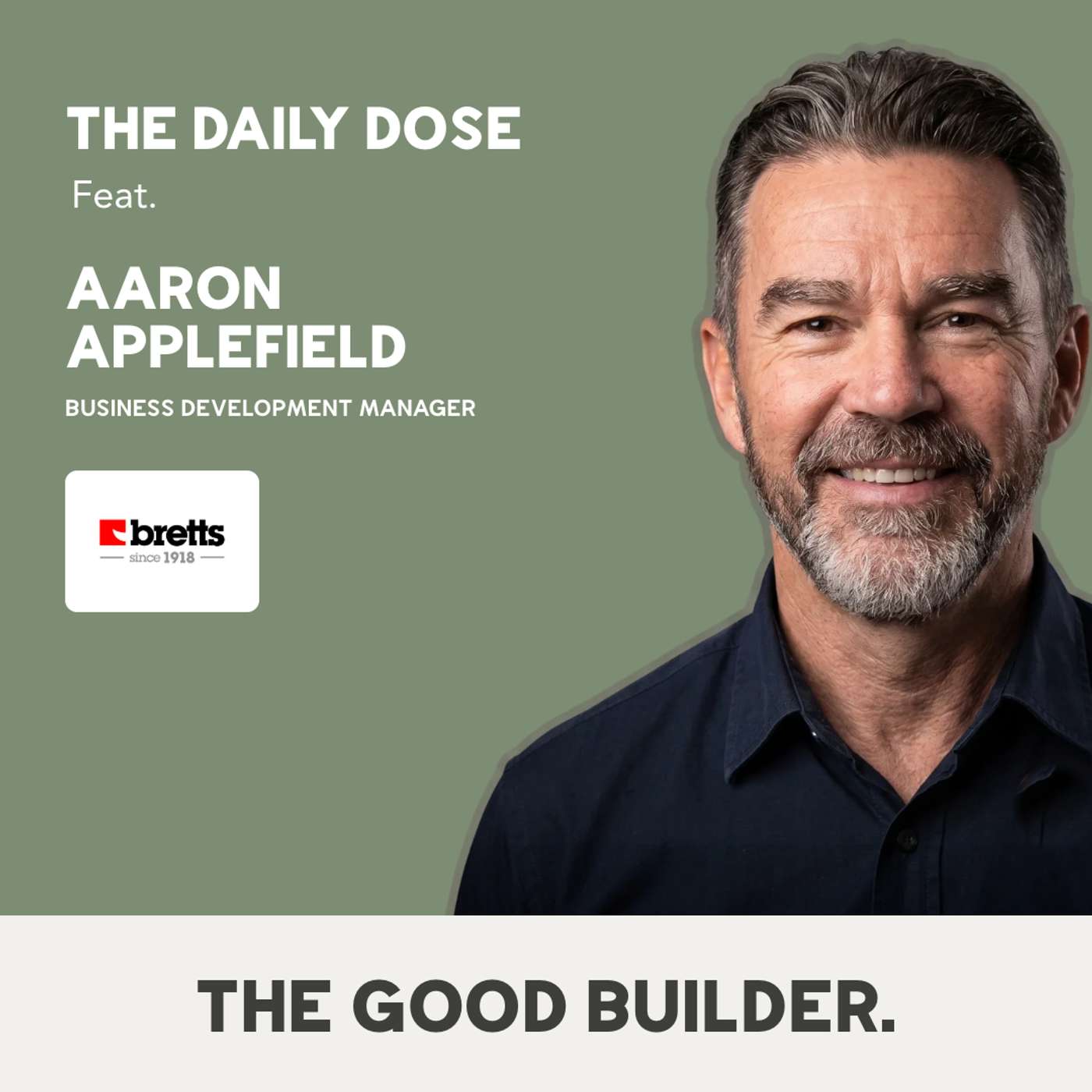
The Daily Dose #319 | Aaron Applefield: Mindset, Stoicism and What Actually Makes a Good Builder
3w ago00:52:12Tap to summarizeAaron Applefield has worn nineteen different hats in twenty years at Brett's. Ask him what he does and he reframes the question. His core, he says, is simpler than any job title. He is a coach.In this episode Az sits down with the man they call Apps. Business Development Manager at Brett's. Baseball coach. Mentor with Live Life Build. It is a conversation that runs well past building.They get into stoicism and the daily practice of it. Kaizen, and why direction matters more than the size of your steps. Reframing anxiety as excitement, and the language we use on ourselves. Harmony over balance, because a scale only holds two things and life throws more than that.And the one answer Apps gives to our signature question. What makes a good builder is communication. Not build quality. It matches what builders keep telling us. They think clients care most about the build. Ask the clients, and it comes back to communication.A rare Good Builder episode about the foundations under the foundations.Hosted by Az.This episode is proudly sponsored by MyConstruct. Built by Australian builders for Australian builders. Get a 30-day free trial at myconstruct.com with your exclusive code: GOODBUILDER
Transcribe →