← The Great Detectives of Old Time Radio| Daily Mystery Dramas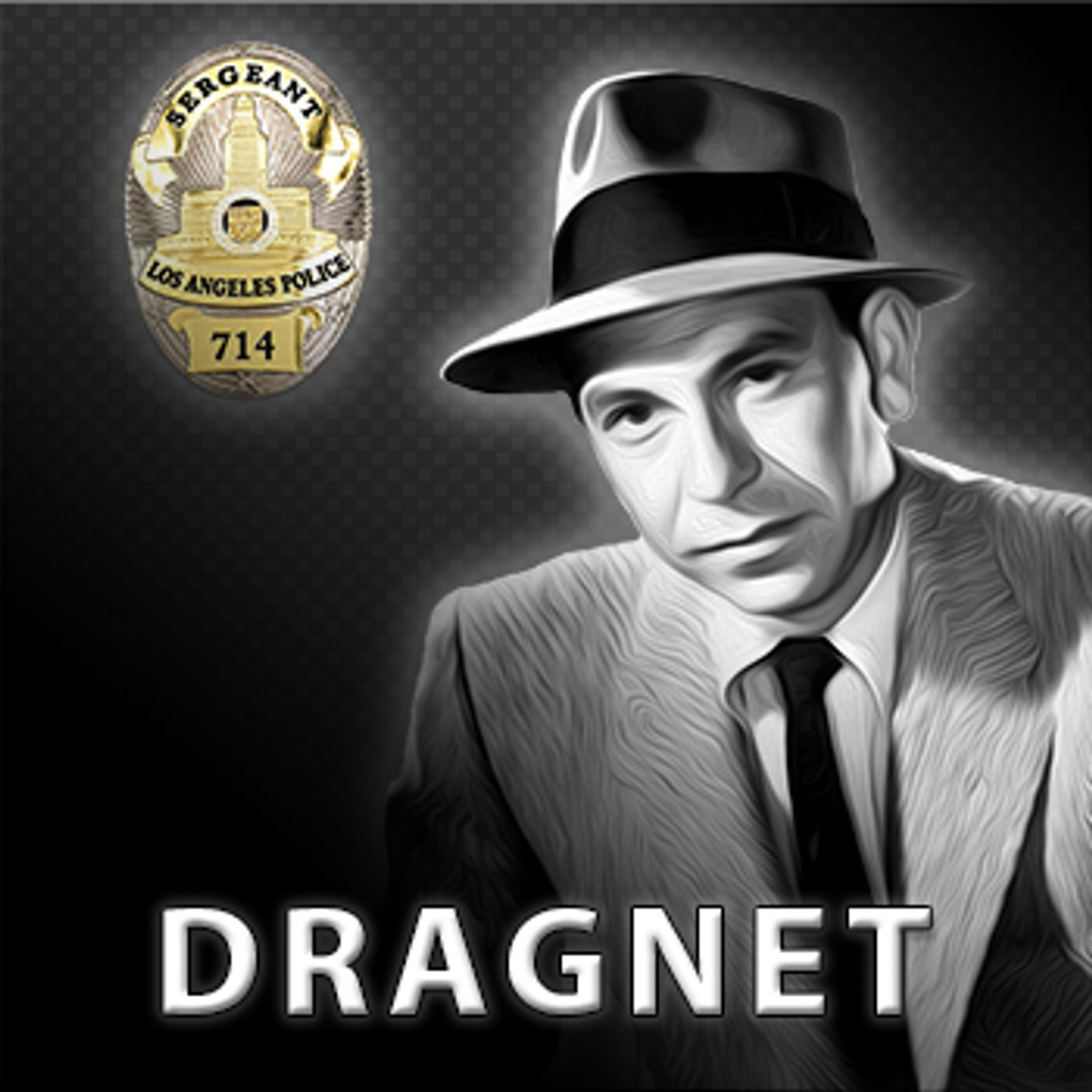
The Great Detectives of Old Time Radio| Daily Mystery Dramas
Dragnet: The Big Screen (EP4824)
00:33:04
Today's Mystery: Joe Friday and Ben Romero investigate a an epidemic of crooked TV repairmen. Original Radio Broadcast Date: August 9, 1951 Originating from Hollywood Starring: Jack Webb as Sergeant Joe Friday; Barton Yarborough as Sergeant Ben...
Loading summary
Transcript342 lines
- [00:00]
Jack Knett
Limu Game Oo and Doug Limu and.
- [00:04]
Adam Graham
I always tell you to customize your.
- [00:05]
Sergeant Joe Friday
Car insurance and save hundreds with Liberty Mutual. But now we want you to feel it. Cue the emu music.
- [00:10]
Adam Graham
Limu Save yourself money today. Increase your wealth.
- [00:16]
Dick Saunders
Customize and save.
- [00:18]
Adam Graham
We save.
- [00:21]
Sergeant Joe Friday
That may have been too much feeling. Only pay for what you need@libertymutual.com Liberty Liberty Liberty. Liberty Savings Very unwritten by Liberty Mutual Insurance company and affiliates. Excludes Massachusetts and Doug.
- [00:33]
Jack Knett
Here we have the Limu Emu in.
- [00:36]
Jack Webb
Its natural habitat helping people customize their.
- [00:39]
Jack Knett
Car insurance and save hundreds with Liberty Mutual.
- [00:44]
Sergeant Joe Friday
Fascinating. It's accompanied by his natural ally, Doug.
- [00:48]
Jack Webb
Limu is that guy with the binoculars watching us.
- [00:51]
Dick Saunders
Cut the camera.
- [00:52]
Jack Webb
They see us.
- [00:52]
Sergeant Joe Friday
Only pay for what you need@liberty mutual.com Liberty Liberty Liberty Liberty Savings Fairy underwritten by Liberty Mutual Insurance Company and affiliates. Excludes Massachusetts it.
- [01:29]
Adam Graham
Welcome to the Great detectives of Old Time Radio from Boise, Idaho. This is your host, Adam Graham. In a moment, we're going to bring you this week's episode of Dragnet. But first I want to encourage you. If you're enjoying the podcast, please follow us using your favorite podcast software. And today's program is brought to you in part by the financial support of our listeners. You can support the show on a one time basis using the Zell app. Do box 13@greatdetectives.net or become one of our ongoing Patreon supporters for as little as $2 per month by going to patreon.greatdetectives.net but now, from August 9, 1951, here is the big screen.
- [02:23]
Dick Saunders
Ladies and gentlemen, the documented story you will hear during the next 30 minutes is not a subject commonly discussed. It is a criminal problem that is not yet nationwide. But it's a problem which is growing rapidly. We present it now so that you may recognize it for what it is if and when it invades your city. The story you are about to hear is true. Only the names have been changed to protect the innocent. You're a detective sergeant. You're assigned a bunco detail. You begin to receive reports of a vicious new racket growing in your city. The television repair racket. The repairmen lie, overcharge bill you for work not done, for parts not needed. For parts they don't install. Your job.
- [03:21]
Sergeant Joe Friday
Stop them.
- [03:32]
Dick Saunders
Dragnet. The documented drama of an actual crime. For the next 30 minutes, in cooperation with the Los Angeles Police Department, you will travel step by step on the side of the law through an actual case transcribed from official police files from beginning to End From Crime to Punishment Dragnet is the story of your police force in action.
- [03:56]
Sergeant Joe Friday
It was Monday, January 19th. It was overcast in Los Angeles. We were working the day watch out of bunco detail. My partner's Ben Romero. The boss is Captain McCauley. My name's Friday. It was 9:15am when we got to the third floor of the Los Angeles Daily News. The assistant city editor's office.
- [04:14]
Jack Knett
Hi, Friday.
- [04:14]
Jack Webb
Come on in.
- [04:15]
Dick Saunders
Sit down.
- [04:15]
Sergeant Joe Friday
Morning, Jack. Like you to meet my partner, Ben Romero. Ben, this is Jack Knett, staff writer for the Daily News.
- [04:21]
Jack Knett
How are you, Knitt?
- [04:22]
Jack Webb
Glad I know you, Ben. Sit down, fellas.
- [04:23]
Jack Knett
Thanks.
- [04:25]
Sergeant Joe Friday
We just left the skipper over at the City Hall.
- [04:27]
Jack Webb
Did the Captain brief you on this thing?
- [04:28]
Jack Knett
Yeah, he gave us a partial fill in. We've been working on it from our end about two weeks now.
- [04:32]
Jack Webb
Oh, Paul Price. He's our radio TV editor. Paul and I had a long session with Captain McCullough yesterday. And I guess now we're all ready to move on this thing, huh?
- [04:40]
Sergeant Joe Friday
We'll do everything we can. Would you like to fill Ben in on what you told me yesterday on the phone? Yeah.
- [04:44]
Jack Webb
Well, Price was the one who began getting the first complaints here at the paper. Tremendous number of his readers wrote in. Complaints about being victimized by crooked television repairment.
- [04:52]
Jack Knett
About being charged too much for repair?
- [04:55]
Dick Saunders
Partly, yeah.
- [04:55]
Jack Webb
Some of the people even sent in receipts with their letters. Said they felt the guys who fixed their sets were dreaming up unnecessary repairs, charging them for work not done. Some of them said they knew they were billed for parts not even replaced or installed in their sets.
- [05:07]
Sergeant Joe Friday
Ben, Jack told me yesterday about a letter he got from some man. Said he felt he'd been overcharged and he just started to belly ache about it.
- [05:12]
Jack Webb
Yeah, a fellow by the name of Vincent said he just put up an old fashioned squawk about it and repairman brought the price down at least one third.
- [05:18]
Jack Knett
That doesn't sound very good, does it?
- [05:20]
Jack Webb
We kind of figured operators like that must have too many repair sets on hand that their customers can't afford to bail out. That's why they cut.
- [05:27]
Jack Knett
Sounds like a clear case of a two bit jip, doesn't it?
- [05:29]
Sergeant Joe Friday
Well, something's got to be done about it.
- [05:30]
Jack Webb
We're ready to give it. Big plan our paper. Expose the fraud for what it really is. Captain McCauley says Chief Parker's okay at our plan and we can count on full police cooperation.
- [05:38]
Jack Knett
That's the way we got it, Jack. We were told to work with you people till we broke this thing.
- [05:42]
Dick Saunders
Fine.
- [05:42]
Jack Webb
We dug up a little ammunition to start with, I think went around and interviewed about 15 different television repairmen in various neighborhoods. And about three out of five gave me the same pitch.
- [05:51]
Sergeant Joe Friday
Did they know you were with the newspaper?
- [05:53]
Dick Saunders
No.
- [05:53]
Jack Webb
I told them I was a factory representative for a new kind of rosin core solder company and I was taking orders. Naturally, I dropped in the different stores, shot the breeze with them, and they didn't seem to get wise. A couple of them even placed orders for the cider.
- [06:04]
Jack Knett
Well, what'd you find out?
- [06:05]
Jack Webb
Well, I just wanted to try and get the general attitude of some of these jip artists, and I really got an earful. One of the last places I hit was a tiny little hole in the wall out near Canoga Park. As I say, about two out of five are honest, hard working repairmen. This fellow was one of them.
- [06:19]
Sergeant Joe Friday
What are you getting at, Jerry?
- [06:20]
Jack Webb
For a while, this fella worked for a guy that employed about five men in his shop.
- [06:23]
Sergeant Joe Friday
Yeah.
- [06:23]
Jack Webb
Finally quit him because he didn't like the way this big operator did business. Fellas in the next office, I want you to hear it from him. Just as I got it. Excuse me, Hank, will you come in, please?
- [06:35]
Sergeant Joe Friday
Sure.
- [06:35]
Jack Knett
Mr. Benath.
- [06:38]
Jack Webb
This is Hank Coulter. Sergeant Friday. Sergeant Ben Romero, Police department. Hank, I wonder if you'd tell these officers a little of what you told me about Kilgore, TV specialist.
- [06:47]
Jack Knett
All right.
- [06:47]
Jack Webb
Now, suppose I'm a customer and I come in to Kilgore's. I don't like the size of my repair bill. What were you instructed to say?
- [06:53]
Jack Knett
Well, we generally tried to talk him out of any complaint.
- [06:55]
Jack Webb
Suppose I complained about all the multiple charges. I want an explanation of the work you did.
- [06:59]
Dick Saunders
What then?
- [07:00]
Jack Knett
He just tell you that? It wouldn't do any good to explain. You wouldn't understand all the technical stuff anyway. Mm.
- [07:04]
Jack Webb
Tell us Kilgore's attitude with the customer.
- [07:07]
Jack Knett
You mean about the loose wire stuff?
- [07:08]
Jack Webb
Yeah, please.
- [07:09]
Jack Knett
Well, Kilgore used to tell us that if we only charge $0.50 for fixing a loose wire, the customer wouldn't believe we really fixed his set. So we used to charge quite a lot more.
- [07:17]
Sergeant Joe Friday
Well, how much more?
- [07:18]
Jack Knett
For example, for a nickel's worth of wire, we'd usually charge $4.75. Pretty fair profit. It's a real rob. What else can you tell us? Eh? Well, we never let a customer watch any of the TV repair jobs. For example, if a customer calls and says he thinks the tube's blown out and it'll only be a simple Replacement job in his home. We'd tell him the parts are getting hard to get and we'd have to take his set into the shop and charge him a higher rate because we had to pay black market prices for the tube.
- [07:44]
Sergeant Joe Friday
Was there any truth in that? I mean, about the tubes being hard to get?
- [07:46]
Jack Knett
Not much. Some of them are getting a little hard to get. But we never paid any black market prices at Kilgore's. We just slugged the customer, that's all.
- [07:52]
Jack Webb
Tell me about how you used to swap parts on a new set, Hank.
- [07:55]
Jack Knett
Well, we lots of times part a new tube for one not so good. One not so good. We'd put in a set with a bad tube. Yeah. Then the bad tube we'd exchange at the factory under a one year guarantee.
- [08:05]
Sergeant Joe Friday
They don't miss an angle, do they?
- [08:07]
Jack Knett
Well, that's it.
- [08:07]
Jack Webb
You've heard it from a man who couldn't stomach such practice and quit. Went into business. Little bit of a shop isn't doing too well, are you, Hank?
- [08:14]
Jack Knett
No, but I think I can build up the business. I don't make quite as much profit as Kill Gore's, but I don't chisel my customers either.
- [08:20]
Jack Webb
Thanks a lot, Hank. I wonder if you'd wait in the next office for me.
- [08:23]
Sergeant Joe Friday
Sure.
- [08:23]
Jack Knett
Hope I've helped a little bit to crack down on some of these guys.
- [08:26]
Sergeant Joe Friday
Well, we think you have, Hank. Thanks a lot.
- [08:28]
Jack Knett
Nice to match.
- [08:28]
Dick Saunders
Right.
- [08:29]
Sergeant Joe Friday
See you later. See you later.
- [08:32]
Jack Knett
Seems like a nice fellow.
- [08:33]
Jack Webb
There he is. I've checked on him and I've talked with some of his customers since I met him. He's honest.
- [08:37]
Sergeant Joe Friday
It's a pretty vicious racket, isn't it?
- [08:39]
Jack Knett
Yeah.
- [08:39]
Jack Webb
It ought to be stopped now. Television's a wonderful medium of entertainment. A lot of the country doesn't have it yet, but when the cable goes through and it finally opens up, the people should know about the swindlers and crooks who try to jiff them.
- [08:49]
Sergeant Joe Friday
Yeah, that's right.
- [08:50]
Jack Knett
It's the same way when radio first came in. Always seems like when anything new comes along, anything a little complicated, maybe a little too involved for the average guy, a few smart punks victimize him. Rob the consumer blind.
- [09:01]
Sergeant Joe Friday
Well, naturally we gotta have some positive evidence before we can file a complaint with the city attorney on this thing.
- [09:05]
Jack Webb
Yeah. You fellas, any ideas where to start?
- [09:07]
Jack Knett
Well, the best way to crack down on is to catch them red handed with evidence that'll hold up in court. Yeah, we think maybe we've got an idea.
- [09:15]
Sergeant Joe Friday
We were talking to Dick Saunders over in our sound lab and he says that he can bungle a new TV set and we can mark it and photograph it before it goes out to be repaired.
- [09:24]
Jack Webb
When it's returned or after it's fixed, we'll have what we need to go to court on.
- [09:27]
Jack Knett
Huh?
- [09:27]
Sergeant Joe Friday
Yeah, that's it.
- [09:28]
Jack Knett
We can operate right out of one of our own homes.
- [09:30]
Jack Webb
And all we have to do is hope the repairman overcharges us or tries to gyp us.
- [09:34]
Sergeant Joe Friday
Yeah, that's right.
- [09:34]
Jack Webb
Let's hope it works.
- [09:35]
Sergeant Joe Friday
Well, from what we've heard, it's got to 10am the staff writer, Jack Canet. Ben and I drove back downtown. On the way, it was decided that we'd use Kinet's home as the place from which to operate. It was centrally located in an average neighborhood. When we got back to our office, we contacted one of the local television dealers and asked for the loan of one of their sets. They recommended Kay Halbert because the chassis is easily accessible and any trouble could be located quickly because parts are visible. A 16 inch K. Halbert console model was sent to our sound lab. 10:18am we met with Dick Saunders, our police lab technician.
- [10:16]
Dick Saunders
Here's the set. 16 inch console model, serial number C2817901.
- [10:22]
Sergeant Joe Friday
What have you done to it, Dick?
- [10:23]
Dick Saunders
Well, first off, I tested the set and it performed perfectly. It's a good set. Brings in a fine picture. See?
- [10:29]
Jack Knett
Plenty.
- [10:33]
Dick Saunders
Test pattern's fine, huh?
- [10:35]
Sergeant Joe Friday
Yeah, it's good.
- [10:36]
Dick Saunders
Tested all the tubes. All. Okay.
- [10:38]
Jack Webb
How are you marking this up here?
- [10:40]
Dick Saunders
I'll show you. Get a tube out of here. Now, if you look closely here at the base of the socket. See it?
- [10:49]
Jack Webb
What's that?
- [10:50]
Jack Knett
This is it, isn't it, Dick? Little tiny dot of green paint.
- [10:53]
Dick Saunders
Yeah, that's right. Ben, I'm marking every part of this set with this tiny green dot.
- [10:57]
Jack Webb
Looks good. If I didn't spot it, I doubt anyone else would, Especially if they didn't know about it.
- [11:02]
Sergeant Joe Friday
Yeah, that's what we're hoping.
- [11:03]
Dick Saunders
In addition to this type marking, we've taken all serial numbers off the tubes in various parts. Anything that carried any form of coating, we took down. All major components have been marked. Transformers, coils, condensers, tuning units, so on.
- [11:17]
Sergeant Joe Friday
Did you get any pictures of it?
- [11:18]
Dick Saunders
Yeah, we did. Took photographs of the set in and out of the cabinet. Took them from four different angles just to be sure we were well covered.
- [11:25]
Jack Knett
Well, how did you bungle it?
- [11:26]
Dick Saunders
Well, here's what I did to put the set out of commission. I burned out the filament of the 5U 4G low voltage rectifier tube.
- [11:33]
Jack Webb
What's the cost of that particular tube, Saunders?
- [11:35]
Dick Saunders
Well, this tube ordinarily retails for $1.65.
- [11:39]
Sergeant Joe Friday
What does that do to the set? I mean, burning out the tube?
- [11:42]
Dick Saunders
By burning out that filament, we cause the sound and picture circuits to be completely inoperative.
- [11:46]
Sergeant Joe Friday
It won't work at all until that particular tube is replaced by a good one. Isn't that it?
- [11:50]
Dick Saunders
That's right, Joe.
- [11:51]
Jack Knett
Well, how big a job would it be to trace the trouble?
- [11:53]
Dick Saunders
Could easily be detected by casual observation or by noting that the tube, normally.
- [11:58]
Jack Knett
Very hot, is cold.
- [11:59]
Jack Webb
How much time would you say it'd require to make a repair like this?
- [12:02]
Dick Saunders
Oh, I'd estimate not over half hour would be required to place this set in operating order.
- [12:06]
Sergeant Joe Friday
Half hour. Okay, thanks a lot. Dick, are you gonna take care of getting a set out to Connect's home right away?
- [12:11]
Dick Saunders
Yeah, we have his address right here. We'll get it right out.
- [12:14]
Sergeant Joe Friday
All right, fine.
- [12:15]
Dick Saunders
If you can try to get whoever repairs this set to give you an itemized bill of all work done and parts installed.
- [12:20]
Jack Knett
Right.
- [12:21]
Dick Saunders
In case you call more than one outfit today, here's an extra bad 5U 4G tube.
- [12:27]
Jack Knett
Thank you, Dick.
- [12:28]
Dick Saunders
Anything you'd like to know?
- [12:29]
Sergeant Joe Friday
No, I think that about covers it for me. Jack, One more thing.
- [12:32]
Jack Webb
I was just wondering. If somebody spots the trouble right away and replaces the tube, what do you think they ought to charge Dick? Labor and all.
- [12:39]
Dick Saunders
I checked through RTA on that this morning. They said to make a house call and replace the defective tube. Should not exceed $4.50.
- [12:46]
Jack Webb
Okay, thanks.
- [12:48]
Dick Saunders
That does it for now, huh?
- [12:49]
Sergeant Joe Friday
Yeah, I guess so.
- [12:50]
Dick Saunders
Well, you're all set then. Think we'll get what you're after?
- [12:54]
Sergeant Joe Friday
Well, we should. The odds are all on our side. 10:30am Monday, January 19th. We left the sound lab on West 1st street and walked back to Bunco division. We met with Captain McCauley and filled him in. We gave him the newspaper man Jack Cannett's address and told him he could reach us there. The console model television set was delivered to Connect's home and properly install. When we arrived at his home, we started going through the yellow classified section of the phone directory. We made a list of several TV service stores just picked at random. We chose a wide variety. We picked stores that were listed with large boxed in ads. Stores that carried no ads, just a listing. Ben called two places and staggered the call so that the repairman would arrive about one hour apart. It was 11:30am when the first man made his service call. Bart's TV Experts on Hollywood Boulevard. It took him 45 minutes. It was 12:15 when he left Jack Cannett's home.
- [13:54]
Jack Knett
Must have been one of the two out of five, huh?
- [13:56]
Jack Webb
Yeah, he seems okay.
- [13:57]
Sergeant Joe Friday
I wonder if I could see that bill, huh?
- [13:59]
Jack Webb
Oh. Here you go, Joe.
- [14:00]
Sergeant Joe Friday
Thanks. It looks okay. Replace 5U 4G tube, $65 service charge, $2.50. Total charges $4.15.
- [14:10]
Jack Knett
That kind of bears out Kanette's thinking, doesn't it? Remember when we asked him how many men worked in his shop and said he's alone?
- [14:16]
Sergeant Joe Friday
Yeah.
- [14:16]
Jack Webb
I think you'll find that's a pretty good barometer. All the servicemen working alone aren't like this guy. But the bigger percentage of the honest ones are.
- [14:22]
Sergeant Joe Friday
When's the next one due to arrive, man?
- [14:24]
Jack Knett
Any minute now. Called a place by the name of Chaney's Video Repairs. They're over on Beverly Boulevard. Had a big ad. Looks like a pretty big outfit.
- [14:31]
Sergeant Joe Friday
Oh, here's that other defective tube that Dick gave us.
- [14:34]
Jack Knett
Yeah. Better get it in the set.
- [14:35]
Sergeant Joe Friday
Yeah.
- [14:40]
Jack Knett
Let's see. Here we are. 5U 4G.
- [14:43]
Sergeant Joe Friday
Okay, here you go.
- [14:44]
Jack Knett
Thanks, Jill. Here's a new one the guy put in.
- [14:46]
Sergeant Joe Friday
Got it.
- [14:47]
Jack Knett
Okay. Get this back on again.
- [14:56]
Sergeant Joe Friday
Okay?
- [14:57]
Jack Knett
Yeah, fine. Better turn it on to make sure it's not working.
- [15:00]
Jack Webb
I got it.
- [15:03]
Sergeant Joe Friday
How about the tube, Ben? Can you see? Is it lighting up?
- [15:05]
Jack Knett
No, not yet. I pushed the set back against the wall.
- [15:08]
Sergeant Joe Friday
We better leave it on for a while, Jack, just to make sure, huh?
- [15:10]
Jack Webb
Yeah.
- [15:12]
Jack Knett
There we are. I gave you the other tube.
- [15:14]
Sergeant Joe Friday
Yeah, I got it right here in my pocket.
- [15:16]
Jack Knett
Right.
- [15:16]
Jack Webb
I'd like to try something if you fellas think it'll be okay.
- [15:19]
Sergeant Joe Friday
What's that, Jim?
- [15:19]
Jack Webb
I got a good little camera. Leica 3F. You know, Candid.
- [15:23]
Jack Knett
Mm.
- [15:23]
Jack Webb
I think maybe if I turn all the three way lamps up to full, use a AAA fast film. It's in the camera now. Maybe we can grab some shots of the guy while he works. What do you think?
- [15:33]
Sergeant Joe Friday
Well, if you're careful. Don't let him get wise. Maybe you ought to shoot some of all of us just so he doesn't think anything about it.
- [15:38]
Jack Webb
Yeah, that's what I figured out. Just sit down on that chair over there by the set. Make him think I'm or something other guy can bring it off without arousing any suspicion.
- [15:46]
Sergeant Joe Friday
Okay.
- [15:46]
Jack Webb
If I get anything, the guy's out of line. We'll run the shots in the Daily News.
- [15:49]
Jack Knett
What are you figuring on doing Jack, you're going to run a series on the TV repair racket?
- [15:53]
Jack Webb
Yeah, that's the plan. Lee Payne, he's our executive editor. He thinks it's high time somebody exposed the swindle in the paper.
- [15:59]
Jack Knett
That'll be the next service man. I'll let him in.
- [16:01]
Sergeant Joe Friday
Right. Better turn off the set, huh?
- [16:03]
Adam Graham
Yeah.
- [16:05]
Jack Knett
Television repair. That's right arm from Cheney's and Beverly Boulevard. Oh, yeah, come on in.
- [16:10]
Jack Webb
Thanks.
- [16:12]
Jack Knett
Oh, what seems to be the trouble? We don't know. Sets right over here. Oh, thanks. Kay Halbert, huh? 16 inch. Nice set. Well, what seems to be wrong? Don't know. If I know something, nothing seems to work. How do you mean? No picture at all. How about sound? Nothing. Uh huh. It'd be all right to pull the set away from the wall?
- [16:35]
Dick Saunders
Sure.
- [16:35]
Jack Knett
Go right ahead and give you a hand. Oh, no, it's all right. I can handle it. Well, I got some tools out. How long you had this set? Oh, about two, three months. Dark in here. I wonder if we could have a little more light.
- [17:00]
Jack Webb
Sure. Let me get these lamps up for you.
- [17:02]
Dick Saunders
Well, thanks.
- [17:06]
Jack Webb
How's that?
- [17:08]
Jack Knett
Oh, fine, thanks. Say, it's a nice little camera you got there. What kind is it?
- [17:13]
Jack Webb
A Leica 3F15 lens. Been experimenting with some new indoor film. You mind being a guinea pig?
- [17:19]
Jack Knett
Nah, it's all right with me, Shane, to waste good film on me, though.
- [17:23]
Sergeant Joe Friday
Think you're gonna get anything in this light, Jack?
- [17:25]
Jack Webb
Maybe. Worth a try anyway.
- [17:29]
Jack Knett
I don't know about this set. What do you mean it looks bad? Hard to tell without getting it down to the shop. Looks to me like your blocking transformer's gone.
- [17:37]
Sergeant Joe Friday
What's that mean?
- [17:38]
Jack Knett
Well, I'll have to take the set in. Can't fix it here, huh? No, I'm afraid not. You see, parts are getting a little hard to get these days. The set manufacturers are having a tough time getting quality parts. And sometimes we have to spend several hours just tracing the trouble.
- [17:51]
Sergeant Joe Friday
Well, I guess that knocks out the ball game tonight, huh, fellas?
- [17:54]
Dick Saunders
Hmm?
- [17:55]
Jack Knett
Sorry. Take a couple of days at least. Want to really check it over?
- [17:58]
Dick Saunders
Sure.
- [17:59]
Jack Knett
It's not a tube. We kind of thought just a tube blew out. No, that's what most people think every time their set goes out. It's definitely not a tube. Boy, there might be some bad tubes, but your trouble's a great deal more than that, I think.
- [18:10]
Sergeant Joe Friday
Have you got any idea what it's going to run us?
- [18:13]
Jack Knett
It's hard to say right off hand. Four or five dollars? No, it's Going to run more than that. I'll take the set in with me now and I'll get it back to you as soon as possible.
- [18:21]
Jack Webb
You going to take the whole set?
- [18:22]
Jack Knett
No, I'll just pull the chassis out of the cabinet. Leave the cabinet here. Oh, say, by the way.
- [18:27]
Sergeant Joe Friday
Yeah?
- [18:28]
Jack Knett
If everything turns out, I'd sure like to see those pictures.
- [18:30]
Jack Webb
Yeah, if everything turns out, you will.
- [18:43]
Dick Saunders
You are listening to Dragnet Authentic Cases from official police files.
- [18:55]
Sergeant Joe Friday
Thursday, January 22, 9:30am The TV set was returned to reporter Jack Knet's home. After having been repaired by a servicing company called Cheney's Video Repairs. We found that the man who had come to Connect's home to make the service call was Robert V. Cheney, the owner of the service outfit. Well, as soon as the set was returned, we called the sound lab and had it picked up and taken downtown. Sergeant Marshall Zeno, who was working with us out of Bunco Detail. Called and said that Dick Saunders had finished his investigation and wanted to see us right away. 10:30am we went down to West First street, the police sound lab. Saunders went over his findings with us.
- [19:38]
Dick Saunders
Here are the photographs before and after. Before we go over these, let me show you what we found out about your repair job. Okay. Over here. Here's that receipt Cheney gave you when he returned the set.
- [19:51]
Sergeant Joe Friday
Yeah.
- [19:52]
Dick Saunders
Here's what the repair bill states. Replaced vertical blocking transformer. Replaced 5U 4G tube, 6 AU 6 tube and 12 AU 7 tube. And the charge was $32.50 plus $0.98 tax. For a total of $33.48.
- [20:08]
Sergeant Joe Friday
How does that break down, Dick?
- [20:09]
Dick Saunders
Well, it appears that the $0.98 tax was for $28 worth of material used in the repair.
- [20:14]
Jack Knett
Did they really put in all that stuff?
- [20:16]
Dick Saunders
You got yourself a prize package in that outfit. All they did was to replace the 5U 4G tube.
- [20:22]
Jack Webb
That's all they did, huh?
- [20:23]
Dick Saunders
Yeah. Here's the capper. The 5U 4G is a war surplus tube, but it works. Okay.
- [20:28]
Sergeant Joe Friday
What else did you find?
- [20:29]
Dick Saunders
According to the photographs and coding system, no vertical blocking transformer, 6 au 6 tube or 12 au 7 tube were rebu placed. Let's get back the photos.
- [20:39]
Jack Knett
Here.
- [20:42]
Dick Saunders
You can take these along for your package.
- [20:44]
Sergeant Joe Friday
Thanks, Dave.
- [20:44]
Dick Saunders
You can see in the set here.
- [20:46]
Jack Knett
Yeah.
- [20:47]
Dick Saunders
Let me show you. See, this tube is the only part mentioned in the receiver. Otherwise, it doesn't carry our green paint coating system. Let me turn the set around here. Joe, try the channel selector here.
- [21:02]
Sergeant Joe Friday
This?
- [21:02]
Dick Saunders
Yeah. That's the tuning knob to bring in the stations Channel selector, they call it. Turn it.
- [21:07]
Sergeant Joe Friday
Okay.
- [21:09]
Dick Saunders
Falls off pretty easy, doesn't it?
- [21:11]
Sergeant Joe Friday
Sure does. Here, Dick.
- [21:13]
Jack Webb
Thanks.
- [21:14]
Dick Saunders
They left out the spring clip in here. It should have been put back in because that's what holds the knob secured to the shaft.
- [21:20]
Jack Webb
I've had that happen on radio sets.
- [21:21]
Dick Saunders
Yeah, sometimes they're a little stubborn to put back in. But a good repairman would never leave it out.
- [21:25]
Jack Webb
Yeah.
- [21:26]
Dick Saunders
Something else here. Trying to sit around in the back again?
- [21:29]
Sergeant Joe Friday
No, I'll get it, Nick.
- [21:30]
Jack Knett
Oh, thanks, Ben.
- [21:33]
Dick Saunders
See here? See how loose the chassis is in the cabinet now?
- [21:37]
Sergeant Joe Friday
Yeah, it sure is.
- [21:38]
Dick Saunders
Wasn't that way when we got it from the K. Halbert dealer. Any more than the channel selector was faulty.
- [21:43]
Jack Knett
In perfect shape from the guy.
- [21:44]
Dick Saunders
Look at the size of that chassis. It's pretty heavy.
- [21:46]
Sergeant Joe Friday
Yeah, it is.
- [21:47]
Dick Saunders
Originally, there were four screws used to hold the chassis in the wood cabinet. Cheney's repair outfit only put one back in One screw to hold that heavy chassis.
- [21:55]
Sergeant Joe Friday
It's a pretty sloppy job, all right.
- [21:56]
Dick Saunders
You know what they'd probably tell you if you asked them about this?
- [21:59]
Jack Webb
That only requires one screw.
- [22:00]
Dick Saunders
Yeah, that's it. The bed repairman can always improve on factory standards, Usually for his own convenience. Certainly doesn't improve the product.
- [22:07]
Jack Knett
Well, looks like we got what we were after.
- [22:09]
Jack Webb
Think we got enough, Joe?
- [22:10]
Sergeant Joe Friday
I do. Let's see what the city attorney thinks. We collected all the evidence in the case against Cheney's video repairs. We met with Captain McCauley and took it up to the second floor of the City Hall. We met with Assistant City Attorney Boyd Taylor and showed him our findings. He issued a warrant for the arrest of Robert W. Cheney, charging him with Violation of Section 484, PC1 count. 11:30am Thursday, January 22nd. Ben and I drove out to make the arrest. Jack Knett went along with us.
- [22:42]
Jack Knett
This is it. Chaney's Video Repair.
- [22:44]
Sergeant Joe Friday
Yeah. Come on, Jack.
- [22:49]
Jack Webb
There's Chaney behind the counter.
- [22:50]
Sergeant Joe Friday
Yeah.
- [22:51]
Jack Knett
Hello there. Hi. How's the set working? All right. We did a good job on that one. Gave you a better break on the price than I thought we could.
- [22:58]
Sergeant Joe Friday
Yeah. Police officers. You're under arrest.
- [23:01]
Jack Knett
Are you kidding? What for?
- [23:03]
Sergeant Joe Friday
Petty theft. Come on, let's go. Petty theft?
- [23:05]
Jack Knett
Well, I don't understand. You're the fellows I fixed that set for up on Crescent Drive, aren't you? That's right. Your bill was a little high, wasn't it? Oh, now, wait a minute. If that's all that's bothering you, let's talk it over. Come on, let's go. Look, I can fix that up with you guys. Just tell me how much you want to pay and we'll work out something.
- [23:20]
Sergeant Joe Friday
That seems to be the way you worked our repair deal right from the start. Only you didn't consult us about it till now.
- [23:25]
Jack Knett
Well, look, you know how it is in this business. If you don't charge some customers a little money, they don't think you did anything to their sets. You ought to try charging them for just the work you do. Can't we get together on this thing? Let's just forget the whole deal. You don't owe me anything now.
- [23:37]
Dick Saunders
Here. Here.
- [23:39]
Jack Knett
I'll refund all your money. We'll call it square. Never mind. Just leave the money in the cash register and get your code. Can't prove anything anyway. We think we can just step around the counter this way. Look, mister, you're not a cop, are you?
- [23:53]
Jack Webb
No, I'm not.
- [23:54]
Jack Knett
Well, then tell him. Isn't that a fair deal? I'll give you back your money.
- [23:57]
Jack Webb
Afraid it's a little late for that, Jenny.
- [23:59]
Jack Knett
If all this gets in the papers, I'll be ruined. He'll run out of business.
- [24:02]
Jack Webb
That's the way we got it figured.
- [24:03]
Sergeant Joe Friday
How many men you have working here for you?
- [24:05]
Dick Saunders
Four. Why?
- [24:06]
Sergeant Joe Friday
This right here. You ever read this?
- [24:12]
Jack Knett
What is it? Oh, the thing from the rta.
- [24:15]
Sergeant Joe Friday
Here. Read article two, will you?
- [24:19]
Dick Saunders
Two?
- [24:20]
Sergeant Joe Friday
Yeah, that's right.
- [24:22]
Jack Knett
I will conduct myself and my business in an honest and straightforward manner. Meriting and inspiring the confidence of my customers. Yeah, I know about this.
- [24:30]
Sergeant Joe Friday
You're a member of the RTA Radio Technicians association, aren't you?
- [24:34]
Jack Knett
Yeah, I am.
- [24:34]
Sergeant Joe Friday
Read Article 4, will you?
- [24:37]
Jack Knett
I propose to charge a just and fair price for all professional services rendered.
- [24:41]
Sergeant Joe Friday
Now read this. Article 7.
- [24:44]
Jack Knett
I will engage only in fair and ethical practices recommended and approved by the Radio Technicians association as being conducive to public confidence. Yeah, I read all this before.
- [24:55]
Sergeant Joe Friday
It's too bad you didn't remember it.
- [25:04]
Dick Saunders
The story you have just heard was true. Only the names were changed to protect the innocent. On April 15, trial was held in Superior Court Department 82, City and County of Los Angeles, State of California. In a moment, the results of that trial. And now, here is our star, Jack Webb.
- [25:20]
Sergeant Joe Friday
Thank you, ladies and gentlemen. In the few remaining moments, we'd like to take this opportunity to thank you once again for your many kind letters of encouragement that come in from week to week. And also we'd like to answer a few questions about our program which seem common to many of the letters that we receive from you. Many of you have inquired why, at the end of the program. In recounting the punishment of the criminal involved in the particular case. We generally refer to the sentence received as the term prescribed by law. Well, we use this reference for the following reason. In the state of California, the length of a convicted criminal's prison term. Is not set by the court. But by the state adult authority. Most of the time, a criminal is merely found guilty by the court. And then sentenced to the state penitentiary. After he serves a year in prison. The convict has a hearing before this state adult authority. At which time his actual sentence is set. So you can see why we can't give you the actual sentence in many cases. Now, other questions common to many of your letters. Concern some of the authentic technical police terminology. Which comes up from time to time on Dragnet. With the help of George Feniman. We'd like to explain some of the more common ones for you, if we may. First, you've heard us use the term or the letters. Apb.
- [26:46]
Dick Saunders
Apb that's an all points bulletin. A communication dispatched to all divisions and law enforcement agencies throughout the state.
- [26:54]
Sergeant Joe Friday
And then we feel sure that you remember the term mama sheet.
- [26:58]
Dick Saunders
A mama sheet is the master information form on a criminal in a police department file. It contains his complete description. His habits, relatives, acquaintances. Everything about him known to the police.
- [27:10]
Sergeant Joe Friday
Thank you, George. And thank you, ladies and gentlemen, for your very fine letters. From time to time, if we may, we'll take this opportunity. To explain a few more of our authentic police terminology. Thank you.
- [27:31]
Dick Saunders
Robert W. Cheney, owner and operator of Cheney's Video Repairs. Was tried and convicted on several counts of violating section 484pc petty theft. He was fined $200 and received the sentence as prescribed by law. Petty theft is punishable by imprisonment in the county jail for not more than six months. Ladies and gentlemen, Dragnet wishes to thank the Los Angeles Daily News. And its feature writer, Jack Knett. For their valuable assistance in preparing this case for presentation. It is our combined belief and knowledge. That not all television repair servicemen Are dishonest and unscrupulous in their practices. A great percentage of these technicians are forthright. And conduct their business in strict compliance with the code of ethics. It is these men who, when informed of the unfair conditions that exist in their trade. Will drive the dishonest and crooked from their profession. You have just heard, Dragnet. A series of authentic cases from official files. Technical advice comes from the office of Chief of Police W.H. parker, Los Angeles Police Department.
- [28:44]
Jack Webb
It's the Silver Jubilee on NBC For 25 years, NBC has been bringing you the very best in radio entertainment. Listen now to another exciting story on Counterspy coming up on NBC.
- [29:00]
Jack Knett
Every now and then I rinse it.
- [29:02]
Sergeant Joe Friday
Out and I need downy wrist tonight.
- [29:06]
Jack Knett
And I need it more. My kids are dead and the smell never leaves. I don't know what to do. I'm always in the dark.
- [29:17]
Adam Graham
The sweat and dead.
- [29:23]
Jack Knett
Downy rinse fights.
- [29:24]
Sergeant Joe Friday
Stubborn odors in just one wash when impossible odors get stuck in.
- [29:31]
Adam Graham
Welcome back. Well, this was definitely important episode for its time. Television was still in the process of adoption. In 1950, only 9% of American households had a television series set. This would expand to 23% by the end of 1951. So there were going to be far more television set owners who could be victimized. So it was vital to get this warning out. The timelessness comes back to one comment that Romero made that something very similar happened when radio came out and that it happened with every new technology. And while it's not exactly the same, every new technology, and we have seen so many over recent years, comes with a new type of scam. It was also kind of surprising they used the actual name of the reporter as a character in the story. They do that often with police, but kind of different. But I understand why they did it. I also enjoyed the Jack Webb Answering Listener questions segment and I don't think they did anymore, which is kind of a shame because it would be great to have those around because sometimes there are unanswered questions or things that we don't know about or we just have to kind of guess. And so it's great to have something a bit more authoritative that you can cite to alright, listener comments and feedback now. And we go to Spotify and we have a couple of comments on the big Sophomore dawn writes, wow, this one had Johnny Dollar level sorrow. I'm pretty sure people listening to the original would have turned off the radio, turned to each other and said just happened. It would be interesting to figure out how listeners reacted to this particular episode. It's not one of the ones that's frequently talked about, but it is kind of a pattern of Dragnet and you can see it going into the 1960s TV series as well, of talking about issues that are generally not dealt with or were not generally dealt with at the time, particularly when it comes to kids and their plot. And so calling to mind this sort of reality that could very well have been going on in the listener's own communities, I think it's a challenging thing and certainly Some listeners might not have quite known what to make of it. And then Harrison wrote the big sophomore.
- [32:18]
Dick Saunders
Indeed.
- [32:18]
Adam Graham
The things he had to deal with and will have to deal with psychologically for the rest of his life are herculean for anyone to deal with, let alone a teenager. Very true, Harrison. Alright, well, now it's time to thank our Patreon supporter of the day. And I want to go ahead and thank Todd. Todd has been one of our patreon supporters since January 2022, currently supporting the podcast at the shamus level of $4 or more per month. Thank you so much for your support, Todd. And that will do it for today. If you're enjoying the podcast, please follow us using your favorite podcast software. And if you are enjoying the podcast on YouTube, be sure to like the video, subscribe to the channel and and mark the notification bell. We'll be back next Thursday with another episode of Dragnet, but join us back here tomorrow for yours truly, Johnny Dollar Ware.
- [33:18]
Jack Knett
Well, Johnny, we fixed this place up real nice since you've seen it. You know, we spent a lot of dawn. So. So we want to buy a lot.
- [33:24]
Adam Graham
Of new insurance on it.
- [33:25]
Dick Saunders
Oh, well, then hop on over to.
- [33:27]
Jack Knett
Georgetown and see your old friend Joe Picatello about it.
- [33:30]
Adam Graham
Old friend?
- [33:31]
Jack Knett
After all, he's your insurance agent. Yeah, Is he? Well, sure, of course he is. Didn't he send you all the other insurance? You. Lefty. Has something happened to Joe?
- [33:41]
Adam Graham
Yeah, only I don't know what it is.
- [33:43]
Jack Knett
What do you mean? Well, it's just.
- [33:45]
Adam Graham
It. I don't know. I talked to him on the phone.
- [33:48]
Jack Knett
Asked him to come out here. He says okay, but he don't come. You think somebody's knocked him off?
- [33:52]
Adam Graham
Then I call him again.
- [33:53]
Jack Knett
He says okay, again, he'll be right over. But he still don't come. Well, have you gone over to Georgetown to see him? To see what's the matter? Five, six, maybe even half a dozen times, but every time he ain't there. Lefty, I don't get it. That's what I'm trying to tell you.
- [34:07]
Adam Graham
There's something wrong about it, Johnny.
- [34:09]
Jack Knett
And if I was you, I'd come down here and find out.
- [34:13]
Adam Graham
I hope you'll be with us then. In the meantime, send your comments to box13greatdetectives.net Follow us on Twitter radiodetectives. Check us out on Instagram instagram.com Great detectives from Boise, Idaho, this is your host, Adam Graham, signing off.
- [34:34]
Dick Saunders
What's that sound? That's the sound of Downy Unstoppable scent.
- [34:38]
Jack Webb
Beads going into your washing machine and.
- [34:39]
Jack Knett
Giving your clothes freshness that lasts all day long.
- [34:42]
Jack Webb
There it is again.
- [34:44]
Jack Knett
It's like music to your ears.
- [34:46]
Dick Saunders
Or more like music to your nose.
- [34:48]
Adam Graham
That freshness is irresistible.
- [34:51]
Jack Knett
Let's get a Downy Unstoppables bottle shake.
- [34:54]
Adam Graham
And now a sniff solo.
- [34:57]
Jack Knett
Nice.
- [34:58]
Dick Saunders
With Downy Unstoppables, you just toss wash. Wow. For all day freshness.