← The Great Detectives of Old Time Radio| Daily Mystery Dramas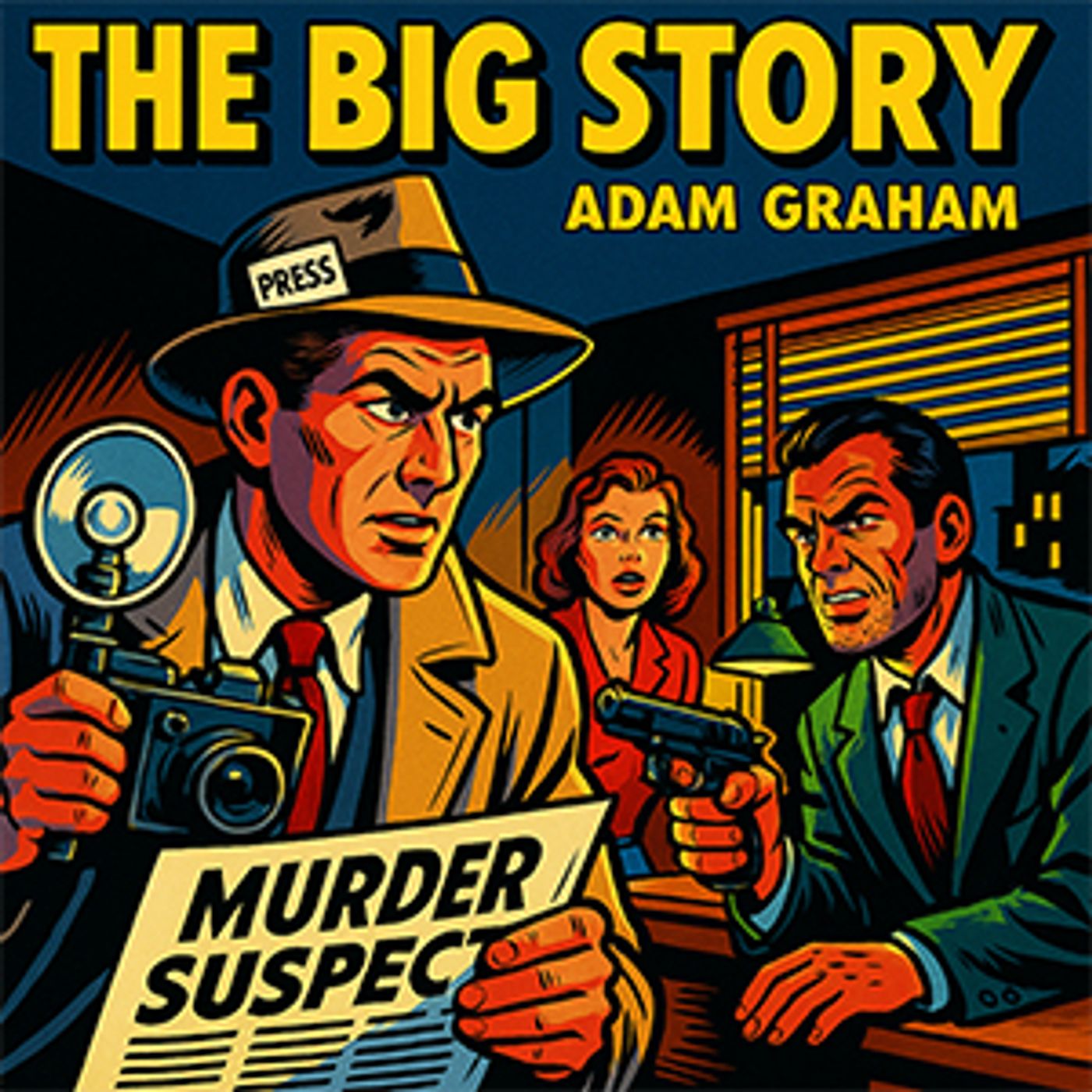
The Great Detectives of Old Time Radio| Daily Mystery Dramas
The Big Story: Manhunt in Manhattan (EP4887)
00:40:02
Today’s Mystery:A reporter searches for a robber who provoked a police officer into killing a bystander. Original Radio Broadcast: January 7, 1948 Originating from New York Starring: William Quinn; Whit Vernon; Francis De Sales; Everett Sloane;...
Loading summary
Transcript20 lines
- [00:00]
A
At pluralsight, we don't just teach skills, we are building the tech workforce who deliver results fast, accelerated by top tier content.
- [00:08]
B
Lead with confidence, lead with expertise.
- [00:11]
A
Visit us@pluralsight.com to tap in and learn more.
- [00:16]
B
If you're an H Vac technician and a call comes in, Grainger knows that you need a partner that helps you find the right product fast and hassle free. And you know that when the first problem of the day is a clanking blower motor, there's no need to break a sweat. With Grainger's easy to use website and product details, you're confident you'll soon have everything humming right along. Call 1-800-granger. Click granger.com or just stop by Granger for the ones who get it done.
- [01:14]
A
Welcome to the Great Detectives of Old Time Radio from Boise, Idaho. This is your host, Adam Graham. In a moment, we're going to bring you this week's episode of the Big Story. But first, I do want to encourage you to check out our other podcast. And in particular, I want to highlight the great adventurers of Old Time Radio. Every week we bring you two great adventure stories from the golden age of radio. We went through a couple of great series in Flash Gordon and Oaken Dagger, and we started, as you may have heard, this week on Tarzan. And in a few weeks, we're going to be bringing you episodes of counterspy. And if you love adventure, it's a great place to be. Check out the great adventurers of Old time radio@greatadventures.info or wherever you get your podcast from. Now, from January 7, 1948, here is Manhunt in Manhattan, the Big Story.
- [02:25]
B
Okay, let's. Moose. Now you all know what to do. Let him in. Hiya. Hiya. Joey. Sit down. What's the matter?
- [02:36]
A
Hey.
- [02:37]
B
Hey, put that gun down. Joey, what's the matter? Huh? Nothing. Not a thing. Just ratted. He just went and sang to the cops. I didn't. Shut up. Shut up and start to die because here it comes. Oh, don't, Joey, don't. Just a gag, Moose. It wasn't loaded. I was getting bored, so I thought I'd have a laugh. Okay, now let's get to work. I got a nice job all lined up. The Big Story, another in the thrilling series based on true experiences of newspaper reporters. Tonight, to Ted Prager of the New York Daily News goes the Pell Mell Award for the Big Story. Now the authentic and exciting story of Manhunt in Manhattan. You are Ted Prager, night reporter for the New York Daily News. And murder is almost old hat to you. You've covered the doings of Vincent Mad Dog Carl, Dutch Schultz, Oney Madden and Murder Incorporated for your paper. You know your underworld. You know robbery, arson, burglary and homicide almost inside out. The way an insurance man knows statistics. Yes, you know your business. You're even a little blase about crime. Until one night, about one in the morning, you're in a friendly bar on East 7th street and the conversation is small talk with Sandy the bartender. Oh, football's not football anymore. You're too professional, Sandy. Give me those college teams. I agree with you, Mr. Prager. You take that old Notre Dame team. I'd rather watch them than. Hey, Mr. Prager, you see that? What? That guy just walked in, the one with his hair all slicked down.
- [04:56]
A
Yeah.
- [04:57]
B
Looks like there's four or five wood of it. Say, I know that face from somewhere. Some small time mug or other. What are they spreading out like that for? I don't know, Sandy. It looks like a stick up there's a smart man. Cute, too. Give that man a cigar. It's just what it is. All right, everybody, quiet. And you people haven't figured it out yet. This is what we call a holdup. Get your wallets out. Rings, jewelry from the ladies. My boys will pass among you. Bakke, you, me. Open up that register and empty it on a bar. Now make the rounds, boys. And you don't have to leave none of these good people carfare. Let them walk. What are you looking at, cute guy? Nothing. Let's see what you got. Here's my money. $40. I'll take your pen to. And your wallet and that ring. Okay. What do you think you're looking at my face? Don't you like what you see? Maybe you want to remember me. Is that it? Here, Moose. Yeah, give me a blackjack. This cute fella here has given me the once over. Chief, we're all set. We got everything cleaned it out. Good. Let's go. Okay, okay, we go. Too bad, cute guy. And I was just gonna give you something to remember me by. So long, dopes. Then something incredible happens. Five crooks walked in, but only three leave. Two of them are still standing in the bar, looking bewildered, not knowing what to do. Then you realize that they're not armed. Maybe you can stop them. You move and pandemonium breaks loose. All right, stand back there, you two. Stop. All right. Okay. Good shooting there, Officer. Thanks. Well, you couldn't get them all, but at least you got two of Them? Yeah. A dead officer? I don't think so. Say, who are you? You look familiar. Ted Prager of the News. Oh, yeah, sure, I remember you, Mr. Prager. Excuse me. I gotta call the ambulance. Nice work, officer. I'd like to write you up. What's your name? Matt Gaines, 22nd Precinct. I could use the story, Mr. Prager. You could say it's too bad I only got two. Too bad I only got two of them. Ain't that the funniest thing you ever heard? That's terrific, Joey. Listen, when Joey Rice does it, it gets done. Too bad I only got two of them, said the policeman. Listen, from the paper, get this. It was not until after the shooting that the officer discovered his fatal mistake. The two men who had entered the bar with the gang were not part of the mob. I like that. Not part of the mob. Go ahead, finish it. Hoojah Horses. Not part of the mob. Instead, they were two innocent taxi drivers that the leader of the mob had forced to stay behind to act as shields so that the actual robbers might escape under cover of the violence directed against the taxi drivers. Boy, is that the payoff. Those dopes stand in there, you know. I can just see them. Jeez, imagine what they'd done. They start beating up those taxi drivers, and a cop comes and bang, bang. Law and order. Lays them out cold and says, too bad I only got two of them. They dead, Joey. Nuh, nah, nah. Only one. Here. Listen. One of the drivers, George Beaver, age 51, died instantly. The other, Edgar Benedetto, 34, is in city Hospital where his condition is listed as critical. Boy, I ask you, ain't that the best scream you ever heard? Yeah. Sit down, Gaines. Why don't you sit down? If he dies, Mr. Prager, I. I don't know what I'll do now. Why blame yourself? You. You made a mistake. Any cop might have a mistake. That's right. Anyone could have done it. No one blames you. I killed a man, an innocent man. And there's another one inside there in the operating room, and he may die, too. I murdered two men. You didn't murder anyone. You accidentally shot two men in the line of duty. Look, I saw the face of the man who really murdered Beaver, the leader of that gang. It was a cruel face and a vicious one. He's the murderer if anyone is. I tell you, if. Then a deado dies. Mr. Gangs, I'll make you a promise. I'll find that man. I know his face from somewhere. I don't care how long it takes or what I have to do. But I'll find him. That man, Benedetto, in the operating room. I checked up on him. He's 34. Been driving a cab since he was 21. Got a wife and two kids. A girl, seven, and a little baby, 21 months. I killed their father. I made a widow out of his wise dobbit gains. You've got got to stop it. In the first place, Benedetto's not dead. No. Only one of them's dead. Only Beaver's dead. Only a 51 year old man's dead. That's not so bad, is it? Why do you torture yourself? Yeah, maybe I ought to just go outside, sit down and just wait, man. Try it. Maybe it won't be so bad. Yes, what is it, Dante? I'm sorry, gentlemen. Mr. Benedetto died on the operating table. Gaines, are these all the pictures in your rogues gallery? That's right, Mr. Prager. Well, let's get started. That batch there'll do. I'll know that face when I see it. You turn him, Gaines. I'll call if I see anything. All right. Uh, nope, nope, it's none of those. Let's see some more. You aren't gonna find him. Keep going, Gaines. Just keep going. No. What did you do that for? Why'd you throw him down? What's the use? We won't find him. What's the use of anything? Look, I told you before, you've got to get that crazy idea out of your head that you're responsible for the death of those drivers. I killed him, didn't I? Gaines, try to listen to me. I'm going after the man who led that holdup. The man who's really responsible for the death of those drivers. That's gonna be dangerous, Mr. Prager. If it gets around your hunting a crook, you'll lose all your contacts. You won't be able to get the inside on anything. I'll take that chance. I can take care of myself. You won't even be able to get a byline on these stories. You won't dare let anyone know who's doing the job. That's not the most important thing in the world. And you get too close to this guy, there's no telling what might happen to you. I can still take care of myself. Now pick up those pictures and let's finish looking at them. And get rid of the idea you killed anyone. Yeah, okay, sure. I'll just forget the whole thing like it never happened. Only what do I do when I see a Kid on the street. And he reminds me of Benedetto's kids. What do I do at night to make me forget so I can go to sleep? Tell me that. And you, Ted Prager of the Daily News, you look at his eyes as he says these words and you realize that this is a lot more than a story for your paper, important as that is. Yes, you want to help catch that crook with the patent leather hair and the steely eyes. But a man's sanity is at stake as well. The sanity of a nice Irish patrolman named Matt Gaines. That's also at stake. And you watch his big open face as he listlessly turns the pictures in front of him. And you know you've got a job on your hands. A big one. We'll be back in just a moment with tonight's big story. Now we return you to our narrator, Bob Sloan, and tonight's big story. You, Ted Prager, night reporter for the New York Daily News, get moving on your search for a smooth haired bandit who held up a bar and caused the accidental death of two taxi drivers. And though you know what you're doing is dangerous, may cost you your job or maybe even your life. And even if you get anything, you won't be able to write it with your byline. You start making the rounds. You start combing through those smoke filled bars where crimes are hatched and dips meet to talk over their successes. And you know what she did? She went right up to him and scratched her initials in his cheek. What did he do to her? Me. Tell him that I'll drink your beer, Holy maid. What do you want, buddy? Nothing. Just looking. We don't allow looking in here. Scram. Hello, Matt. Ted calling. No, nothing yet. Don't give up, fella. I've only been to about a dozen places. I'll. Beer, please. Right, One beer. Ah, you never should have done it, using a couple of taxi drivers for chills. Why not, Mexie? Because it makes it tough for us. They double the cops in this area. I watch them every minute of the day for him. Yeah, but meantime, it makes it tough on us. Oh, never thought of that. Well, I did ask Millie here about him. She was there when it happened. Right in a place. No kidding. That's right. Right in the place. When he walked in the bar on East 7, did he take you for anything? Got $20 out of my bag and a ring that Maxie gave me worth $80. No kidding? Sure, and he didn't have to do that with the drivers. I tell you, I'D like to make it hot for that wise guy. I'd like to sing a little tune. Shut up. He won't sing no tune for anybody. Can't you see there's people around? Hi. I'm interested in what you said there, Millie. I don't know you. I didn't say a word. Beat it. Look, if you want to make a little money. I said to beat it. Okay, okay. Only if you change your mind. My name is Ted Prager. There's people around can tell you where to find me. You don't exist. Well, boys, like I always say, another day, another eight grand. Oh, Joey, you're really in there. We've been quiet now a month. I think it's time we stop being quiet. I even hear people stop talking about me. A job I pulled with the taxi drivers. So what's a caper, Joey? You like this one, Moose? You'll like this special because this one is more my style. Listen, Bre is speaking. Ted, this is Benson on the city desk. Can you get down the east side hall? Sure. What's up? Just got word for about a big holdup. Some girl was being confirmed. Big party and all that. Three men did the job. Who can I see? You can see the girl herself. She was only a kid, too. 14. Right. Give me the address. I'm on my way. They came in, Mr. Prager, and they just took everything. I see. What did the leader of the gang look like? He was terrible. He had his hair all smoothed down and oily. And a smile on his face. Did he. Did he laugh? Out loud, I mean? Yes, sir. Especially when he. When he came after me. What'd he do to you? Well, I had my ring. My father just gave it to me for my confirmation. It was a ring with diamonds, Mr. Prager. So I. Well, to keep him from getting it, I put it in my mouth. Yes? Well, he came up to me with that smile on his face and he put his thumb on one side of my cheek and his fingers on the other. Why did that. And he squeezed until I couldn't see. Stand it anymore. He's back. So he's back on the job. Don't you worry. I'll find that man. You can't park that car here, Mr. Matt. Matt. Oh, it's you. I've been driving around looking for you. Can you get in? What for? He's back at it again. The guy we're looking for, he's around town. Can you come with me? Well, yeah, I'm off duty. But what for? Because I'M going hunting for him. For that patent leather hair and the smile. I want company. Now. We've been driving around three hours. What do you expect to find this crook just standing on a corner? Maybe. You never can tell. He might, Matt. Want some other? Right there. Where on the corner wouldn't he be? Right on the corner of Essex and Hester in broad daylight. That one. The one talking to the girl as if he didn't have a care in the world. You mean it, Ted? Take him, Matt. Yours? Oh, brother, will I take. Ted, I. I just saw Mr. Dennis. The prosecuting attorney? Yep. He says he needs a positive witness. Our friend denies everything, of course. Never was in the 7th street bar. Never held up anybody. Used taxi drivers as shields.
- [20:55]
A
What him?
- [20:56]
B
Joey Rice do a thing like that. Oh, so that's his name. Joey Rice. Slick as they come. Smooth. It'll be tough to pin it on him. Okay, Matt. I'll go in and see Mr. Dennis. Oh, no. You can't identify Rice. Why not? Because it would finish you as a police reporter. Cut off all your contacts. And that's not all it might cut off. I'll take a chance. No, no, Ted, don't. I'll tell you what I'll do. Get Rice before me on a one way screen. I'll identify him. Then let Mr. Dennis prepare his case. If he needs me in court, I'll testify. Now you're talking sense. So are you, Matt. All right, Rice, that way. Walk that way. What is this? Just a little matter of identification. Rice as prosecuting attorney, I thought it might be a good idea to identify you. Get over to those chalk marks now and just stand still. Light on him. Okay for you, Mr. Prager. That's fine, Mr. Dennis. Well, that's the man held up the 7th street bar. You sure? Yes, Mr. Dennis. I'm absolutely sure. Okay, sergeant, take him away. Thanks for the identification. I needed that. Next time you see him, he'll be in court on trial for robbery and criminal assault. Look at him. Look at Joe Rice smile. He met. Yeah, but what are we gonna do? I don't know. Maybe Mr. Dennis has an idea. He looks plenty worried. Oh, here comes the judge. Hear ye, hear ye. The honorable Judge Bernard Smith presiding. Court is in session. There goes Dennis. Your Honor. Mr. Dennis. Yes, your honor. As prosecuting attorney, I must protest the appearance of the defendant. If it please the court, it is obvious that the reason the defendant, Joseph Rice, came into this courtroom today wearing a full beard is to make absolute identification of himself impossible. Your honor, we allege the Defendant committed the crimes he's charged with with a clean shaven face. And consequently, he must, in the interest of justice and equity, be ordered to shave off the beard he has grown, which is a patent dodge and a roof. Your Honor. Your Honor, the attorney for the defendant. Your honor, my client, Joseph Rice, likes to wear a beard. He thinks a beard becomes him. And I say that every man has the constitutional right, if not the God given right, to shave or not to shave, to wear a beard or not to wear a beard. Order, please. Order. This is a very complicated question, gentlemen. We'll have to rule on that. Court is adjourned. It's never been decided before. It could go against us and we'd be licked before we start. He can't be ordered to shave, Mr. Dennis. It's never been decided before. Prager, what are we gonna do, sir? I wish I had an idea. Gaines. Mr. Prager. Millie, can I talk to you a minute? Why, sure, mister. I seen what happened, what he pulled. I'd like to get up on that stand. You would, Millie. It'd be a pleasure, mister. Can you positively identify Joey, even with his beard, as the man who held up the 7th street bar? I could do it if he was standing upside down. Okay, Millie, the prosecuting attorney's right over there. But what changed your mind? That little trick he pulled on the girl being confirmed, remember? Sure, I remember. That little girl is my kid cousin. And she testifies that beard or no beard, it was Joey Rice who held up that bar. You look over at Patrolman Matt Gaines as the trial winds up. And for the first time in months, the man's smiling. He's a human being again. And you've got your big story. Yes, but nobody knows it. Nobody knows it until now, this very night on a radio program called the Big Story. Not until now can you say, well, this is the job I did. This is the role I played. Ted Prager, night reporter of the New York Daily News. In just a moment, we'll read you a telegram from Ted Prager of the New York Daily News with the final outcome of tonight's Big Story. Now we read you that telegram from Ted Prager of the New York Daily News. Hold up. Man in tonight's Big Story was quickly convicted by jury. But while awaiting sentence, he became violent and was officially declared to be insane. He was therefore transferred to the asylum at Matawan, where he is still confined. Many thanks for tonight's Pall Mall award. Thank you, Mr. Prager. The makers of Pall Mall famous cigarettes are proud to have named you the winner of the Pall Mall $500 award for notable service in the field of journalism. Listen again next week, same time, same station, when Pell Mell Famous Cigarettes will present another big story. A big story from the pages of the Pittsburgh Press byline, William A. White. A big story that began when a taxi meter ticked off moments of waiting for a man who didn't return. The Big story is produced by Bernard J. Proctor and directed by Harry Ingram with music by Vladimir Zielinski. Tonight's program was written by Arnold Pearl. Your narrator was Bob Sloan and William Quinn played the part of Ted Prager. All names in tonight's story, except that of Mr. Prager, were fictitious, but the dramatization was based on a true and authentic case. This is Ernest Chappell speaking for the makers of Pall Mall Famous Cigarette. This is NBC, the national broadcasting company.
- [28:23]
A
If you're the purchasing manager at a manufacturing plant, you know having a trusted partner makes all the difference. That's why, hands down, you count on Grainger for auto reordering. With on time restocks, your team will have the cut resistant gloves they need at the start of their shift. And you can end your day knowing they've got safety well in hand. Call 1-800-GRAINGER Click grainger.com or just stop by Grainger for the ones who get it done.
- [28:53]
B
If you're an H Vac technician and a call comes in, Grainger knows that you need a partner that helps you find the right product fast and hassle free. And you know that when the first problem of the day is a clanking blower motor, there's no need to break a sweat. With Grainger's easy to use website and product details, you're confident you'll soon have everything humming right along. Call 1-800-GRAINGER clickgrainger.com or just stop by Grainger for the ones who get it done.
- [29:25]
A
Welcome back. In addition to William Quinn, the cast included Whit Vernon, Frances DeSales, Everett Sloan, Jerry Lewis, Eileen Heckart, Stephen Chase, Evelyn Custer and Will Kulova. Once again, we refer to the great story behind the Big Story website. And this event actually was based on something that happened in 1958. And the actual place that was robbed was a speakeasy which made it a lucrative spot to hit because fundamentally they're forced to be an all cash business. The robbers made off with $8,000 and that would be around or more than $100,000 in today's money. And in the confusion, the police officer shot the two thought to be accomplices. The robber in this case was named Frank DeMarco. The incident is one that does really rub up against modern expectations. Today. A police officer shooting two armed civilians who weren't direct threats and without trying to give any commands would likely be viewed as a trigger happy cowboy cop and be subject to criminal and civil prosecution. However, it was a different time when this incident occurred and even in 1948. And it's not necessarily the same thing, because part of the reason that we would tend to view the officer as some irresponsible cowboy is that doing something like that is contrary to the way the police officers were trained. And instead of following that training, they decided to do their own thing and people died as a result. And since whenever this happens, someone will mention this today, a one choice, witness identification as opposed to a lineup would be constitutionally iffy at best. It might be excluded or the judge might end up allowing it, but with some jury instructions warning about the risk of it, or with an expert witness testifying about the unreliability of eyewitness testimony. Again, a really huge difference in either 1928 or 1948. And the one really curious incident about the episode didn't have much to do with the focus of the series, which is the action of heroic reporters. But the whole thing with our man growing a beard in hopes of avoiding identification, that wasn't a colorful invention for this episode. DeMarco did actually do that and the judge did have to order him to shave. So yeah, that was actually a very real detail of this case. Listener comments and feedback and we have some comments regarding the case of the Cornered Cat and we start out over on Spotify. Mechanic66 writes moral of the don't turn yourself in if you're facing the electric chair. Not sure why he did or if his co conspirators actually helped him. Seems like it would have been against their interests to have him in custody and possibly cooperating. Well, thanks for the comment, although I think a better moral might be not to start your own murder ring in the first place. But maybe that's a bit too narrow minded and old fashioned. Now in terms of why Louis Lepke Buchalter, who was the person that episode was based on, why he turned himself in. Daniel Meyer riding on the website the Internet index of Tough Jews chronicles the fact that was key in the establishment of Murder Incorporated, which was an organization of contract killers who eliminated problems for the rackets. Like other gangsters, he got convicted on some lesser charges, antitrust violations, and then he got himself Indicted for narcotics while he was essentially on the lam for the antitrust. And he also started having his men wipe out those who might be able to testify against him. And there was a nationwide hunt for him. There were reports of him being lots of places in the us, overseas, even in Poland, but he was actually hiding out in Brooklyn the whole time. There were a couple of things that probably contributed to his surrendering. One is that Tom Dewey, the district attorney, really wanted him. About a month before he surrendered, Dewey was trying to get the city of New York to put a $25,000 reward out on him, which in 1939 was a substantial sum of money. But the big thing was the syndicate or combination, or as Meyer wrote, whatever you want to call them, ordered Buchalter to turn himself in because all of the publicity and all of the law enforcement focus around the world was making it hard for so many of these criminal organizations to function. And there's a theory that he was double crossed, as some people told him, that he would only have to face the federal narcotics charge, get off with a license for that and not have to face charges. And I don't know about that. I mean, I don't know if you can get to that level of organized crime being that naive. But he got 14 years for the drug crime. Then he got another long sentence on top of that for some extortion. But his road to death row didn't start until members of Murder Incorporated decided to cooperate and help solve murders, including one that A. Bareilles would go ahead and testify that he overheard Buchalter ordering a hit, which was carried out. But thanks so much, appreciate the comment. And I have to admit that I had to actually go back through the transcript for this comment. Harrison wrote that anyway was a hard tonal shift, Barry. And I have to admit that I didn't catch what Harrison had talked about. But I went through the transcript and I found the portion of the episode. Now, I could replay it, but I think I'll just give my own interpretation of the reading and how it reads because I missed it. But we'll focus on isolation. You, Walter Winchell, have a date. You've got a date with Public Enemy Number one at a theater in Yonkers at seven tonight. And this may be the end of the nation's biggest manhunt since the Lindbergh case. Or it may just be the end of you, New York reporter Walter Winchell. You could very well end up looking like a human sieve in some gutter or at the bottom of The east river wearing concrete shoes. You don't know. Anyway, before you go, you have another dog with Jet J. Edgar. I mean, that is. It's like you could end up a human sleeve anyway. I mean, I guess when it comes to writing narration in and I in terms of transition, the ideal way to follow that up is you state that and then dramatic musical cue and you go right to the conversation. One of the challenges with narration is we don't actually need to be told everything. We can as an audience gather what's going on. And this is just such a great example. Harrison called out of less is more when it comes to narration. I appreciated that. I could definitely use the laugh. And then we turn to our listener survey where Pastor Lisa Martin in Boston writes, this is the best old time radio to play detective podcasts ever. I listen to your main podcast and volume three. I'm really enjoying Richard Diamond, Rex Saunders, Boston Blackie, and of course Johnny Dollar. I love the casebook of Gregory Hood on Sundays. I also enjoy your commentary at the end of each episode. Keep up the great work. I've been listening since 2011. Well, thank you so much. Appreciate you taking the time to leave the comment. And I have been had some issues getting the rest of volume three finished, but hope to get back to that soon. Well, now it is time to thank our Patreon supporter of the day and I want to thank Rick, patreon supporter since March 2020, currently supporting the podcast at the shamus level of $4 or more per month. Thanks so much for your support, Rick and that will do it for today. If you're enjoying the podcast, please follow us using your favorite podcast software. And if you're enjoying the podcast on YouTube, be sure to like the video, subscribe to the CH and mark the notification bell. All those great things that help YouTube channels to grow. We will be back next Tuesday with another episode of the Big Story. But join us back here tomorrow for Broadway's My Beat where he's holed up.
- [39:57]
B
On the second floor. Danny. Empty apartment. Ready? Let's go. All the other tenants cleared out? Uh huh. Had a little trouble with the people in 2B. How come? People named Morgan? Her grandmother died. Her funeral got all the mourners out. Apartment right next to one. Our killers in 2A. You sure he's in there? Probably him. Danny. Description fits. Let's find out. Open up. Open up. This is the police. Mugavan.
- [40:37]
A
Yeah.
- [40:48]
B
Hey, those windows over there. Danny. Open screen's been kicked out. Come on. The killer left this apartment in a Hurry. These windows lead to a fire escape. You could have gone out this window onto the fire escape into the next apartment. Danny. Let's find out. Yeah. Must have done it this way. The screens on this apartment have been knocked out too. Let's go see, huh? This is the Morgan apartment, Danny. We're the Morgan grandmother. Want me to look around for appearances? McAvan? I'm guessing our man walked out with the mourners and got lost. Must have made him happy.
- [41:26]
A
I hope you'll be with us then. In the meantime, send your comments to box Thirteenreatetectives.net Follow us on Twitter at radiodetectives and check us out on Instagram. Instagram.com greatdetectives From Boise, Idaho, this is your host, Adam Graham signing off. If you're the purchasing manager at a manufacturing plant, you know having a trusted partner makes all the difference. That's why, hands down, you count on Grainger for auto reordering. With on time restocks, your team will have the cut resistant gloves they need at the start of their shift and you can end your day knowing they've got safety well in hand. Call 1-800-GRAINGER Click grainger.com or just stop by Grainger for the ones who get it done. If you're the purchasing manager at a manufacturing plant, you know having a trusted partner makes all the difference. That's why hands down, you count on Grainger for auto reordering. With on time restocks, your team will have the cut resistant gloves they need at the start of their shift and you can end your day knowing they've got safety well in hand. Call 1-800-GRAINGER Click grainger.com or just stop by Grainger for the ones who get it done.
- [42:48]
B
If you're an H vac technician and a call comes in, Grainger knows that you need a partner that helps you find the right product fast and hassle free. And you know that when the first problem of the day is a clanking blower motor, there's no need to break a sweat. With Grainger's easy to use website and product details, you're confident you'll soon have everything humming right along. Call 1-800-GRAINGER clickgrainger.com or just stop by Grainger for the ones who get it done.