Loading summary
Transcript50 lines
- [00:00]
Caitlyn Dirksen
Sam.
- [00:29]
Brandon Dirksen
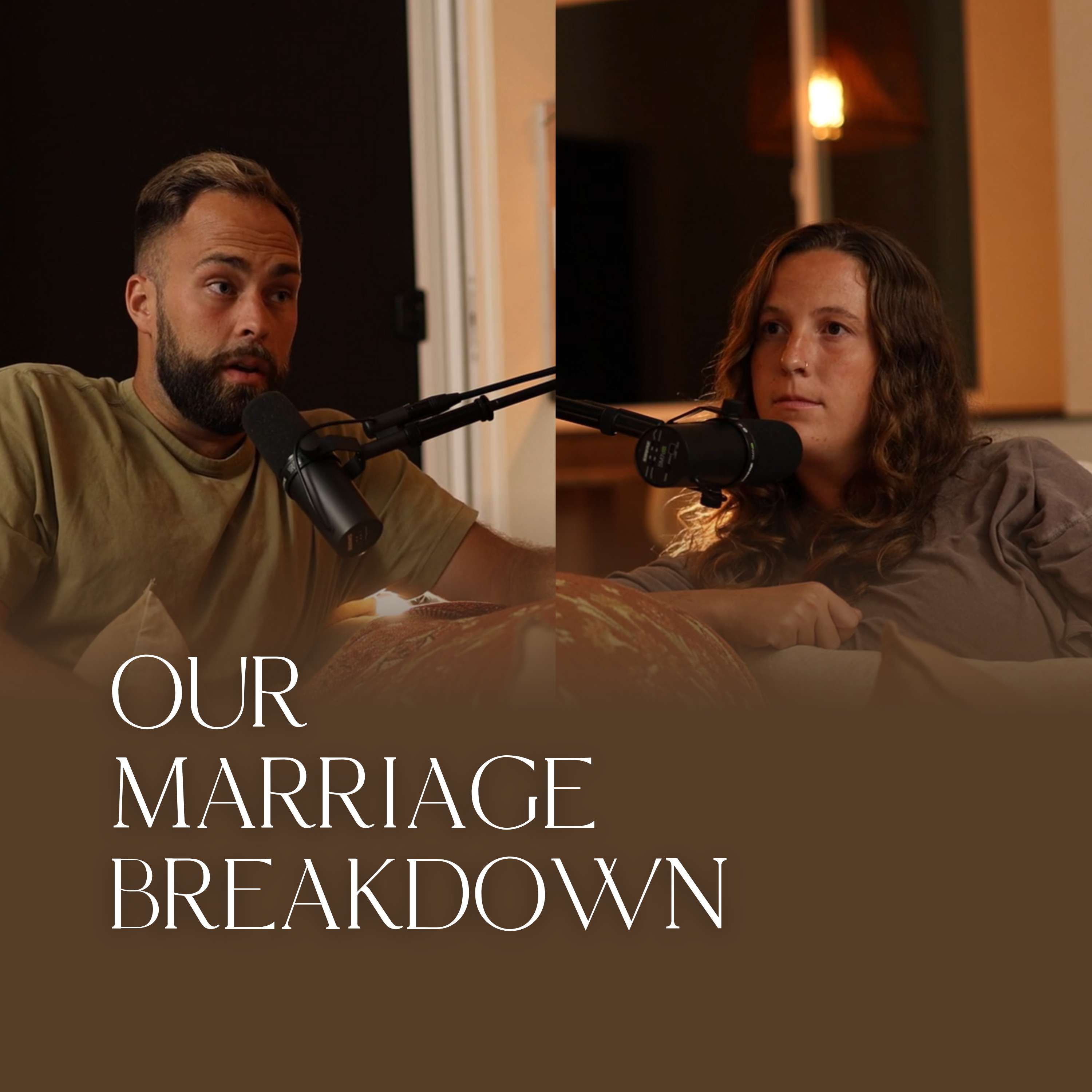
Welcome to the Grounded Union podcast. Caitlyn and Brandon Dirksen here. I'm Brandon, this is Caitlin, and this is our first episode. We're going to be sharing our story with you, and if you're like, man, I, I don't know if I'll relate to your story. There's pain in every marriage story, and so we're going to share the pain of our story. And I want to encourage you, as you listen to the details of what we went through, to recognize there are going to be similarities to your story and there are going to be differences. And so what we want to do is we want you to honor your story, where you're at in your marriage right now, and let that be true for you. And what we want to do is give you context to where we're coming from as you listen to these first few episodes and get to know us, get to know our perspectives, to hear what we've been through.
- [01:11]
Caitlyn Dirksen
I like that. Well, we got married nine years ago from the date that we recorded this podcast, and we were married for many years, I think five, when we do the math, before we hit our kind of like, breakdown moment that we talk about a lot, which was in 2019. And for those initial years of marriage, we were very young, I'll say. Actually, we got married at. We met. I was 18, and I was 19 when we got married. Brandon was 21. So we were babies. We still, in a lot of ways, are babies. And so very young when we got married. Very naive to a lot of things. I mean, we went through the traditional paths of marriage counselor, a premarital counseling with Christian counselors. We had mentors. We did all. We checked all the boxes, you know, before we got married, to make sure we were a good fit. And in. In a lot of ways, I just thought when we get married, that means we love each other and we would never do anything to hurt each other. Right. And obviously, knowing that we would continue to grow and to grow up, but we would never consciously decide to do something to hurt each other. That's because kind of what I went into marriage with. And so I was abruptly shocked when I found out less than a year into our marriage that, Brandon, that you were looking at inappropriate content on.
- [02:38]
Brandon Dirksen
On.
- [02:38]
Caitlyn Dirksen
On your phone. And I think for the purpose of the podcast, we talk about this a lot on social media and in short form, clips and even in posts. I think a lot of people think inappropriate content. So that must mean pornography. And pornography is actually never been a part of our marriage as what most People see pornography as what we classify as pornography is maybe different than what everyone classifies pornography as. But Brandon was looking at inappropriate content that was not pornography. So it could have been swimsuit models, it could have been stuff on just social media. There was lots of different avenues, but that's kind of the field of the categories that he was in. So as with his religious paradigms, he didn't want to look at full nudity content online.
- [03:33]
Brandon Dirksen
I think for. For you, for those of you listening who are thinking, you know, say you just caught your husband looking at, we'll call it hardcore pornography or had an emotional or physical affair, you're like, well, this young couple's not going to understand me. And I wanna. Before you turn off the podcast, before you kind of discredit our story, this type of inappropriate behavior and content was actually the ugliest it got because I had played so many mental games with Kaylin, I had lied in such intricate ways, and I had shut down emotionally to make it all possible while all being in ministry.
- [04:09]
Caitlyn Dirksen
Exactly.
- [04:10]
Brandon Dirksen
And. And trying to keep the facade going. So what you need to understand is if there's a facade going, it's excruciatingly painful. So our story has the uniqueness of that component, that hardcore pornography was not the crux that caused the pain, but it was the heart and it was the root. And that is the similarity that's spread across all relational trauma when it comes to broken trust around a sexual. Sexual integrity and sexual commitments within the marriage. And the reason we want to just start off podcast one with that is because what we believe about sexual healing and we believe about trust and marital intimacy is far different than what the mainstream society. If you're part of the Western church, you maybe have been taught different things about how men and women are wired and what's possible when it comes to healing. And so we have a very high standard for what that looks like and what that feels like in relationship. I didn't share that standard when we got married because I had a lot of shame. I experienced.
- [05:14]
Caitlyn Dirksen
You thought you shared that standard?
- [05:16]
Brandon Dirksen
I thought I did, but I.
- [05:17]
Caitlyn Dirksen
Deep down, you didn't.
- [05:18]
Brandon Dirksen
But deep down, I thought that I was fundamentally flawed. And I thought that Caitlin's desire for me to be whole and for us to have the intimacy that she craved was out of reach simply because I was a man and that men, as I was told in the church, were designed to look at women a certain way and that they would always struggle with how they looked at women. They'd always sexually objectify Women, they'd always feel lured to look at porn as though it's this scary world or whatever your porn is, it doesn't really matter. And for us, we needed that change to happen. So in 2019, what happened was I had convinced Caitlin for the previous two years, so 2017, 2018, that I had made a covenant with God with my eyes, that I would no longer lust after other women. Now, for those of you listening, maybe, maybe you're from a Christian background, maybe you're not. This podcast is not necessarily going to be us convincing you of a certain Christian or denominational belief system. This is just our story. So again, if you come from a Christian background, we're going to say things that will challenge you. If you are not from a Christian background, this isn't your invitation to leave the podcast. We are going to deconstruct a lot of things that the church has taught people, and therefore Christianity has impacted the entire world, whether or not you are a part of a Christian church. So I just wanted to make that disclaimer. We are going to share about faith topics, but this is not a. We're going to go line by line in the Bible to tell you how we heal this. It's going to be a deep process. So for us, we hit that, that breaking point because of the lines I had drawn in my mind around what healing was and what sexuality was that brought us to a dead end.
- [07:05]
Caitlyn Dirksen
So the first year of our marriage, back to that story, I was. We were laying in bed together, we had no kids at this time. We have four kids now. And I. We were talking about something and there was kind of this image came up, and it was a very appropriate image, like, to my standards, but I just had this thought of like, wait, Brandon looks at inappropriate images on his phone. And I was just like, wait, what? It was kind of like this thought that just kind of came in. And I asked him, do you look at things on your phone like inappropriate images? And he's like, no, you know, just like, so offended that I would even ask that. And I hear the thought again, ask him again is what I heard in my head. So I'm like, I asked the same question a second time, just right after it. And he doesn't respond this time. There's just a pause. It's like, oh, wow, I'm caught. And that was the beginning of a five year cycle. So that was the initial story. And I don't need to share every story because a lot of you have lived this story and you know, the cycle where you catch your husband doing something, and you find out a little bit, and then you find out more, and then he says, I'll never do it again. I promise. So Brandon said, I'm gonna heal. I'm gonna read the books. I'm gonna do the things. I'm gonna go to the counselors. We're gonna heal.
- [08:31]
Brandon Dirksen
Tell the men's group.
- [08:32]
Caitlyn Dirksen
Yep, I'm gonna tell the men's group. I'm gonna get my accountability. I'm gonna tell my mentors. Everything's gonna change, you know? So I heard the stories, and again, I'm 19, and I went into marriage thinking, I love you. I'm not gonna choose to. Harris Hughes, you love me. You would never choose to hurt me. So I'm. I'm so little. I'm like, of course he means this. Of course he wants to do this for our marriage. That's why we got married, right? And so then we go through the same cycle where it's another thing happens, and I'm like, that doesn't quite feel right for me. Or I see something on a stone, or I catch him, or I hear the voice again, or I'm like, I think I need to ask you this question. So we go through five years of this extremely toxic cycle where he's committing to something, not keeping his word, lying. There's betrayal. There's all of it. There's all of these little things. And I think Brandon brings up a good point, too, because we see this come up a lot online. What's like, oh, well, it wasn't porn or an affair or strip club or these things. So you can't relate. And to some degree, I can't relate, and to some degree, he can't relate to. To the specific details of those stories that you may have in your marriage. At the end, though, at the root level, which is what our passion is, the reason why we're starting this podcast, the reason why Brandon has his page, the reason why we have our courses in the community, is that at the root level, a lot of this is actually all the same. It's unhealed traumas, it's mindsets and belief systems that we have that specifically, that men have as a culture, that keep them broken, that keep them repeating, that cycle. So the cycle that we're talking about, where there's the hiddenness, the lying, the betrayal, the deceit, all of it cycling and cycling and never actually changing, how many men have been in support groups for years, maybe decades, and are still relapsing. We know the Word relapse. Because there's this system, this cycle, and nobody's able to actually get through it and get to the other side. They just keep relapsing. Well, that's why we. We looked at the foundation of everything. We went deep, deep, deep into the root systems. And so whether or not you had a physical affair, an emotional affair, you looked at porn, or did what Brandon did, which is what I think a lot of men do, even if you look at porn and had these affairs, you probably still also, to some degree, you know, have justified your minimal behaviors of objectifying women on your phone through swimsuit models or whatever the case is. If you're doing all those things, you have to look at the root systems to be able to get rid of everything. So everything that we went through, the processes and the stories that we have, are really to dig up everything that's in the garden, because the garden is dead. That's why we're listening to this podcast.
- [11:30]
Brandon Dirksen
A lot of weeds.
- [11:31]
Caitlyn Dirksen
There's a lot of things that need to be completely taken out of the garden, so. So that we can have fresh new soil laid and plant new seeds. And so wherever you find yourself in your marriage, whatever chaos that you're in, ultimately, all of us need to weed out everything, lay fresh new soil, and plant new seeds. And so 2019 was when it was like, I am done with this. I'm absolutely done with you lying to me over and over again, with you betraying all of our boundaries, with you saying you're going to do something, saying you're going to heal, and never actually doing it.
- [12:10]
Brandon Dirksen
And what also brought the intensity for 2019 of the year for us is the cycle had been too many times, but there's also other life circumstances, family emergencies, you know, a growing family where the cycle couldn't continue any longer. So, as I alluded to earlier, I had convinced Caitlin to no longer ask me the deep questions, to no longer question me. I had used. Some people call it spiritual bypassing, but I had used my commitment and my faith and our faith as the reason she didn't need to feel concerned anymore. And so anytime she did, I was like, hey, how you doing online? How you doing in person? I'm doing good. I'm following my covenant I made with God. So how would you question God? I already made that covenant with him. And that had gone on for two years. So 2017, 2018, and then we get into 2019, and we repeat that same cycle where Caitlin says, what are you watching on your phone? And I was Watching the car video, and she's like, how do you know it's appropriate? And I. Something I said triggered, oh, he's lying. He's hiding more. And what was scary about this moment for me, all of it had been scary for Caitlin previously, but was scary for me in this moment, was the previous two years, I had been numbing myself out because of my ability, my lack of ability to deal with stress and anxiety. And that was from our relationship, our circumstances. And I had dug my heels in deeper to say, I'm going to numb out, to try to avoid my pain. That was pain in our relationship and our circumstances. And I knew in that moment when she was confronting me, I didn't have the ability to cry, to do a big show and say, I'll do the stuff and put in this false effort. I actually knew that I was looking at my weeping wife and I couldn't feel a thing. And I was terror. I was scared because it was like, I'm looking at this woman crying. I know she. She wants what's best for our relationship. I want it, too. But now I'm at this place where I don't actually have energy or emotional capacity to try to change because I had tried so many times and I was exhausted. I had fasted for 40 days. I had done the spiritual things, I had prayed. I had sought spiritual mentors. I had gone to counseling. And we have plenty of counseling stories. We'll share on this story on this podcast. And I was hopeless, too. So I was. I had. I had no other place to be except for, I wonder if Caitlin's standards are too high. And that was a big piece of our journey, was me in the back of my mind wondering, is what she wants possible? And so in 2019, she had caught me lying again. I actually had just become the children's director at a growing, thriving church. And within a month, I had to step down. And this was the first time in my adult life where I was no longer in ministry and I was face to face with no job. We had been a part of nonprofit work our whole marriage, and I was no longer the go to guy for anybody. I have my two daughters who are both with a baby and a toddler and a wife that was looking at me saying, I can't repeat the cycle with you again. We aren't going through the ringer again. I need to know that you're willing to go to the root this time. And I could see the sincerity and the desperation in that season. But I was hopeless because I hadn't been successful at sustaining change except for trying harder and harder and harder, seeking out more voices, more mentors. And ultimately nobody could give me a sustainable framework to work with, to be healed for the rest of my life, to actually build and mature in my marriage, and to experience sexual wholeness. So in this podcast, that's what we want to bring hope for, is that you don't just have to be spinning for years and years and years. It's time to go to the root. It's time to see what, what caused the behavior. What, what? That's a symptom. The behavior is a symptom of a deeper wound. If you don't find those, you will repeat the cycle year after year. And your wife, or if it's the reverse, your husband, if the wife is, is acting out. An addiction only has so many cycles. They can go through it. And so this is the time to break the cycle. And that's what we want to dive into at a high. The 30,000 foot view for the rest of this episode is what breaking the cycle look like for us.
- [16:36]
Caitlyn Dirksen
I think too, some people look at our marriage now and the stories that we share and just assume, oh, so yeah, when Caitlyn caught Brandon, he must have just been super ready to heal. He must have just snapped into this Brandon that we all see now, that we see online, this Brandon that hears and validates and understands where we're coming from as women. It's like, absolutely not. Like, I am here to say that Brandon is not the Brandon that's here on this podcast.
- [17:08]
Brandon Dirksen
I did not have a passing grade at that point.
- [17:10]
Caitlyn Dirksen
It's actually, like, shockingly different because the Brandon that I confronted in that story when he was looking up videos on his phone, well, first of all, Brandon would never be looking at random, what I call, like, risque. I was going to use the word stupid, but, like, it's a waste of our time. Like, why would we spend our time watching things that serve no purpose to us on our phones when we could be connecting like this?
- [17:37]
Brandon Dirksen
Sure.
- [17:38]
Caitlyn Dirksen
This Brandon right here wouldn't choose to do that. That's the first thing. And so how did the Brandon from there respond? Let's just say initially, in the first couple months of that, it wasn't actually this eagerness to heal. To some degree, he said he was eager to heal, just like for five years he had said he was eager to heal. But truly, deep down there was a desire. And also deep down there was a denial structure. Because when he shares that story of those two years where he's kind of saying, yeah, I'm good. Yeah, I'm good. Yeah, I'm good. I'm not doing anything. I'm not doing anything. That's a denial structure building up. So a lot of you have spouses, have husbands primarily, probably, if you're listening to this, that have built up years of a denial structure. And a denial structure is different belief systems that keep us safe, that keep these different wounds and parts of us hidden so that we don't have to bring it to our spouse, bring it to our family, bring it to our community. We probably, in a lot of ways, people with denial structures are hiding it from them themselves.
- [18:48]
Brandon Dirksen
Yeah.
- [18:49]
Caitlyn Dirksen
And a lot of ways, that's what we discovered with your story, is you kind of wanted to heal, but kind of didn't. And there was things you were lying to me about, but you had lied to yourself first, and then you had believed that. So the branded who was confronted in 2019 wasn't instantly healed or instantly this man. There was actually a journey and a process and a lot of tension in that phase. And so I think a lot of women kind of jump to this conclusion of, well, yeah, I caught my husband and I keep catching him, and he doesn't want to heal. And it's like, well, my husband didn't look like that in the beginning either. But look at you now, you know? And so it's. It's. Is your husband saying, I'm committed to this marriage and I'm committed to healing. I am committing to growing, I am committing to changing. And does that actually look like something? Because if all those things are true, even if it's shaky for the first couple months, it's going to be shaky for the first couple months. But if he's truly committing to doing those things, then we believe that there truly can be healing and can be a change. And we have lots of stories and steps of how we actually embarked on that. But I think it's good to note that in the beginning, it wasn't just like Brandon's, like, I'm caught, I'm done. We're doing this, and you're just instantly changed. No, there was a whole process to breaking down the denial structure, healing the childhood trauma, the childhood wounds, looking at all of your story, looking and breaking down spiritual beliefs, that was huge. Like a huge, huge part. Just like childhood wounds, we had to look at the spiritual story that we had grown up with, the religion that we had grown into, and all the boxes that had been put in. We had to look at denial Structure. Don't know if I already said that. And then we. We had to look at everything that you've been hiding and lying with your sexuality. Like, what was the sexual. Like the sexual story, the sexual brokenness. So I piece all those things together, and you had an openness and willingness to look at it. That's how we begin to walk into what we've created now.
- [21:02]
Brandon Dirksen
Yeah. So with Caitlin gave such a beautiful snapshot of what that process looks like. And I think taking a step deeper into what denial is and how it functions is it's the ability to live in two realities at once. One that if you. If your spouse or those that you love or anybody knew about, you would be ashamed of, because it's not in congruence with your beliefs or your morals. So, for example, if you made a commitment in your marriage that you two are both deciding to not view pornography or to not have outside partners, which I think is a smart decision, and then one of you decides to step outside of that commitment, you're going outside of your commitment and your morals. And so you either have to face reality, which denial is pretending reality is not real. Denial protects you from seeing what is. And so you're able to then be. This is how you can make sense of pastors that have had affairs, spouses that have cheated emotionally, physically, how to lie at such a deep degree because they separated the two. And so what denial does is it does come at a cost, and it shuts down your entire being. Where there's denial, there's anxiety, there's depression, there's self hatred. And so as you guys look at this healing journey for both husband and wife, the husband has to go. If he will assume. The husband is my. The role I'm. I'm at, the one that broke trust, the one that broke commitments, will have to go on a journey of loving and accepting them and everything that they've done. Then the wife is going on a healing journey to find love and belovedness in herself, to go on this journey of being in a car crash when she wasn't the driver and what healing looks like for her and then what that looks like for you as a unit, which we believe very strongly in healing as a unit. Easy analogy for how to look at this was what our first counselor, which we'll talk, we'll reference him from time to time. He sat me down, my first sex addiction therapy session, and showed me this picture of an iceberg and basically told me, all you can see right now after getting caught is the tip of the iceberg. And if you haven't seen a picture of an iceberg, 90% of it's underwater. And he said, this is this 90% you've hid from yourself. And so that's the denial. That's the denial is everything that you've kept hidden from your conscious awareness to protect yourself from the pain of the reality that you have gone against your commitments to your beloved and to those that you love. And my good news for you, if you've gotten to this point in the podcast so far and you're like, okay, Brandon, this is all heavy stuff, is if you're willing to face reality, not only can it yield deep healing in your relationship, it's actually the only potential route for healing. If you stay in denial, if you choose to believe that the things you did are not that bad, and you minimize and rationalize and deny them away, you're guaranteed to suffer and ultimately die yourself and for your relationship to end. So really, what I'm. What we're inviting you into is to face reality with your beloved. And we call this podcast Grounded Union. Because when you chose to get married, you didn't just agree to a church view on marriage. You didn't just agree to tell the state that you got married. You stepped into a union in inter. Inter. Intertwining, interconnected relationship that will last for the rest of your life. You're going to face shadows. You're going to face things that you came into that union with that you were aware of and that you weren't aware of. It's time to face them. And in 2019, it was time for me to finally face the parts of me I didn't think I could bring in deep connection with Caitlin, which ultimately led to these behaviors that didn't bring me life and didn't bring our relationship life.
- [25:08]
Caitlyn Dirksen
And a lot of people ask, well, how do I get. How do I convince my husband to change? Like, how did you convince Brandon to change? And sadly, I didn't convince Brandon to change. I don't have. Well, not sadly. Sadly, initially. Maybe that comes across because it's like, ah, I want this, like, easy, quick solution of like, if I do this or say this or, you know, threatened divorce, then maybe I can convince him to change. And that's not really going to be the solution. The solution is your spouse, your husband. Brandon had to want to change for himself and for the marriage, for his purpose here on earth, for everything. Like the healing that you chose, that men get the opportunity to choose is literally to change their whole entire Life like and lineage. Who wants to exist here living in dark shadows and brokenness and hiddenness? None of us actually want to live that way. Living in disconnection from the ones that we chose and committed to living close with. Even, like, thinking about your kids, your lineage, like, you're saying, it's like, if you're living this life with all of this hiddenness, all this denial, this 90% underneath that nobody can see, you're not able to be your full potential. And so you're healing. You're choosing for your. Your wife, your kids, your kids. Kids. And on and on and on. And for yourself, like, for you to have true joy and purpose and fulfillment in life here on Earth, for you to actually step in to what you were created to do and to offer and to feel. VI Hybrid and so Brandon had to come to the place of choosing that himself. And that's why I say it was rocky in the beginning, because there's a lot of shame that you had to even battle. There's a lot of shame that those who have stuffed and have denial have to face to be able to be like, yeah, you know what? This is actually worth it. It's actually gonna be to my best benefit into our marriage's best benefit that I look at this, that I face this, that I go through the pain, and that I really come out to the other side. Like, I want to do this for me and for us, and I'm at the same time, as a wife, staying very true to my standards, to my boundaries. Yeah. So this is kind of the tension that you find yourself in, where it's kind of rocky. It's like, I'm not, like, saying. I'm not, like, throwing out anything. I'm saying, you know what? This is what I'm okay with, and this is what I'm not okay with, and I'm staying right there. I'm not changing my mind. You're not making me budge. You're not going to make me feel crazy. I'm not like. It's like, you're either coming up to my standards, which is, there's no other women in our marriage. It is me and you and nobody else. Like, I don't want anybody on the phones. I don't want anybody outside. I don't want you thinking about anybody looking at anybody. Like, nothing. There's no fantasies. There's no real. It's just me and you. And same for me. Same exact standard goes for me. And if there's anything that comes up that involves the opposite sex, for either of us, we bring that to each other. Everything is fully disclosed between each other. Intimacy is into me, you see? And so if we're going to have a truly intimate marriage, into me you will fully see, and into you I will fully see.
- [28:34]
Brandon Dirksen
Yeah.
- [28:34]
Caitlyn Dirksen
So you actually cannot live with that avalanche. 90% hidden. If you have intimacy, if you have anything hidden, you don't have intimacy in your marriage. And that is where we differ from a lot of people, because a lot of Christian counselors, a lot of counselors, mainstream counselors, a lot of you name it, Everyone would tell you that. There's a couple of things where it's like, you just share that with the men's group, you share that with the women's group. It's going to hurt way too much if you tell your wife that. Don't tell your husband that. It's kind of like, these are the things for the ladies, these are the things for the men. And for me, I'm like, wait, what? That's not intimacy then? Because then into me you don't actually see there are parts of me you don't know. And I can tell you from this point right here, there's nothing I don't know about Brandon, and there's nothing he doesn't know about me. And that's the way it'll always be. And our connection and intimacy is so deep because of that, because we truly know each other. We truly see each other. We can, like, literally know what the per. What. What each other's going to say. We know what we're even thinking. I can tell by the look on Brandon's face if he's feeling overwhelmed. I can tell when his shoulders hurt by the way he's standing, by the way. It's like, we literally know everything about each other. We're so close and connected, and that's what actually getting everything out and being fully seen and fully into me, you see, you can have. Is this, like, wow, we really are madly in love. We really are best friends. We really are deeply connected. And so that's me holding to my standards, and that's him looking at everything on the table and saying, you know what? That looks really hard. When I look at everything on the table that looks. I remember Brandon used to say all the time, like, this sounds impossible. Like, when I would lay out my standard where I'm like, this is where I'm at, you meeting me here. Are you leaving? Because it's not like, hey, I'm leaving and I'm getting divorced. It's like, you, you choose. You're the one that's breaking all the boundaries. So you're deciding. You're either coming up here and meeting me at my standards, or you're choosing that you don't want to do this. You're leaving the marriage. That's, that's your choice. You didn't want to come up here to this place of wholeness and intimacy, and that's what you're ultimately deciding. So then he looks at everything on the table and goes, wow, this is looking really hard. This is looking really impossible. You used to say. And then ultimately fighting that tension and getting to the place where it's like, this looks impossible, but I want what you're talking about. I want that intimacy. I want that true connection. So I'm here to journey together, to heal and to vet and to develop and to go on this process with you.
- [31:12]
Brandon Dirksen
I think what a lot of women there were in the same position of you as you maybe right now are thinking, okay, you said don't, don't threaten divorce. And okay, I've tried setting boundaries. It doesn't work. What do I do if he doesn't listen? I want to make it. I want to like, expound upon what you already shared, which was so valuable, which is the clearer you are on where you are and what you stand for in the relationship, the easier it makes, like you said, the decision for your husband to make. It's not like you can be messy if you've been lied to, if you've been cheated on, if you would be messy, be whatever you need, be what you need to be. And that's always what we'll say is if you've been wronged, go through the experience and the process you need to, to feel through that. And that's, that's, we're always going to validate that. Yeah. And the more clarity you have as the wife, if you, if you were the betrayed party, the more clarity you have on what you want the relationship to be and what you are okay with and what you're not okay with. And choosing to drown out the noise of any other voice that would question that, even if that's a well meaning pastor, a well meaning counselor, a friend, even a mentor. And you're willing to say, you know what, that's not going to be a part of my marriage. Because we literally went through all of that. Caitlin held the, the masculine frame that I would have had, that I now get the potential to share. And in partnership, we hold that frame together. But at this point, I was Trying to break down the relationship. Say, look, look, she wants too much. Like, I had a lot of people convinced that Caitlin was codependent. Even if you're listening, you're like, wow, you guys sound like you really, really like each other and know each other. Like, that's really deep. Like, that's too much. Well, it's not too much if you actually enjoy each other. It's only scary if you're keeping secrets. If you're wanting to be like, look, you know, I like. I like watching TV with you, but I don't want to, like, talk about my childhood or talk about the co worker I flirted with last week. I don't want to look in your eyes. Like, let's kind of keep it at a surface level so it's safe. I'll put you at a distance. And the reason our marriage broke down so early, in years, maybe broke down earlier, maybe it's been going on for 20 years. But Caitlyn was so clear on how close she wanted to be and what connection felt like that it was. The sirens were going off when it was like. Like, look, you want to be intimate, like, back up. And. And I didn't have the. The luxury of putting it in Cruise control for 15 years, 20 years, because she was like, hey, like, I'm dying over here, and you're. You're neglecting me, and this doesn't work. And so if you have been that betrayed spouse, like, hold to your vision. And I know you've cried many tears. I know you've said many prayers, maybe, and you've. You've sought help, you've sought answers, and you're desperate. Caitlin was there. And I'm not just saying stay that way in hopes that your husband changes. I'm saying this is for you. It's. It's a cruelty that this was done to you, to the betrayed spouse, but it would be even cruel for you to lower your standards. So if you're listening to this and you're losing hope on what you believe, keep that standard. If your husband's gonna. He's either gonna choose to rise to it.
- [34:23]
Caitlyn Dirksen
Yep.
- [34:23]
Brandon Dirksen
Or it's gonna be with somebody else. And. And again, Caitlin said you don't need to threaten divorce, but divorce is an option. And if you're in the church most. Most time, you're not gonna be consulted that divorce is a good option. We're not actually pro divorce. We're pro reconciliation. But when one party is unwilling to step up to the plate, it's actually just the clearest Next step. Caitlin said, look, if you're not coming with me, divorce is the only route we can go.
- [34:50]
Caitlyn Dirksen
It's either we're together or we're not. You know, so.
- [34:52]
Brandon Dirksen
Yeah, it wasn't used as a threat, though. It was used as a. Yeah, okay, so you're not marrying me because you're.
- [34:58]
Caitlyn Dirksen
Either choosing marriage or you're choosing separation. You cannot be in the middle. There is no middle in this. It's either you're choosing to heal and come together with me.
- [35:06]
Brandon Dirksen
Yep.
- [35:07]
Caitlyn Dirksen
And we're going on this journey for real this time. Like, no more pretending this is real, or we're separated, and I'm not choosing. You can, if you want to have the third option, if you can choose to live as pretty much separate beings in one house. I think a lot of people actually are married and literally just watch separate, separate TV shows in separate rooms, sleep in different beds. Like, you can play the house game and not actually be married and not actually really even know your spouse, but still pretend like you're married. But that, to me, sounded miserable, so I wasn't going to choose that. So it's, we're together, we're connected, we're married, we have this intimate union.
- [35:44]
Brandon Dirksen
Yeah.
- [35:45]
Caitlyn Dirksen
Or we're separated. So. And you can choose, because I'm choosing that I want. I chose when I got married to you. I used to say this to him all the time. I chose when I got married to you on our wedding day that I want togetherness forever. That's what I committed to you.
- [35:59]
Brandon Dirksen
Yeah.
- [35:59]
Caitlyn Dirksen
You've made it clear. Or that's what I used to say. It's like you've made it clear that you didn't want togetherness.
- [36:05]
Brandon Dirksen
Yeah.
- [36:05]
Caitlyn Dirksen
You wanted by. By your actions. You told me you wanted separation. So now, line in the sand. Your actions need to commit to me that you want togetherness.
- [36:16]
Brandon Dirksen
Yeah.
- [36:16]
Caitlyn Dirksen
Or you are choosing that you want the separation. And that's. That's where the line in the sand is for me. So, yes, you can be firm and loving and just be like, you don't have to keep going with the cycles. And I think that's a big part of our story. Like, the word relapse is really interesting because if we actually get to the roots, there is no relapse. I hinted at that in the beginning. It's like, you know, a lot of people, there's a lot of porn, free courses and get help with porn things out there. And I think that's incredible. But at the same time, are we looking any deeper than porn? Are we going any. Like, it's not just about, like, getting the, you know, those things that are really popular, like, all the things you put on your phone where it alerts people if you look at porn, it's just like, wait, this isn't like a game that we play. So we accidentally look at porn and then it alerts Bill over here and he calls Nancy, and then we, like, get a little pow wow together. It's like, no, we got to go deeper. Why are you looking at porn? Where, like, what type of porn are you looking at? Where did this all stem from? Where did it all start? Start? Most people don't even look at when they were first exposed to anything sexual, and they don't even connect where that all goes. And I listed a lot of things like denial, sexuality, spirituality, childhood wounds, and actually the. The upcoming episodes. We're going to do the whole season one on our frameworks on these. On those topics. Yeah, because those are the exact topics and will tie into all of our story on how we actually healed. And these are processes that we went on on our own because we can share our coun stories here in a second. But we went and sought lots of help. So we hit that. That breakdown moment. We talked about where I'm, like, catching and looking at cars. We have this whole thing where I'm like, wait, you're still lying to me. And then. So we try to go the traditional route, right? So we. We grew up in the church. We're Christians. We still love Jesus now. Like, we consider ourselves Christians at the time. We're even going to church. And so we're like, okay, well, of course we hit our breakdown point. So we will go see a Christian counselor that specializes in, you know, sex therapy. And so we find this man through vetted, you know, other people. And then we're even at the same time seeing another relationship, more like mentor and coach who's giving us, like, marital counseling on communication and all that kind of stuff. And both of these people are incredible people. And at the same time, they were not, like, they. They were not great fits. But also, I'm thankful because it really shaped this part of our story. But we going. And we're seeing this. This sex counselor at first, and he shared that great analogy of the avalanche. He's initially very validating of me and my pain, which was really incredible. At that point, he's kind of calling Brandon out. And then we kind of hit this point where it's like, where we started to hit this point with a lot of people where he's kind of sharing stories. Like, you know, he said this. This counselor had had a lot of addiction with porn. I think lots of other things. I don't remember all the details of his story. And now he was, in his words, free. And then as he would begin to share more stories, I'm like, wait, your definition of free is not my definition of free. Because one of the stories he was sharing is him and his wife at a restaurant, and they noticed that the. The. The attendant had. The waitress had a large chest. And I'm sitting there thinking, I'm like, wait, wait. Like, my standard, where I'm head with my. Both laughed about it, and they both laughed about it. Kind of like, okay, this isn't a big deal anymore to us kind of a thing. And me. And for me, I'm listening to the story. I'm like, wait, my standard for my husband and I is like, why would he ever notice that the waitress had big breasts? Like, why would we ever be looking at her chest? I'm not looking at her chest. Why would you be looking at.
- [40:03]
Brandon Dirksen
Why is it a talking point?
- [40:04]
Caitlyn Dirksen
Why is it a talking point? Why is it anything? Wouldn't we see her eyes? Wouldn't we see her face? And so that kind of was like, for me, like, wait a second. Like, he. He had freedom in the sense, because he wasn't looking at porn anymore. But there was still something there that made him think that women with certain body parts.
- [40:25]
Brandon Dirksen
Dangerous.
- [40:26]
Caitlyn Dirksen
Are dangerous. Have a lure, have a temptation, have something to offer him. That's kind of what you and I started realizing is. Is there's this. This exchange where you think that other people have something to offer you that you need or that you don't have unmet needs. And what we begin to look into is, wait a second, let's go deeper to the root levels like I'm talking about. And then all of that is not a part of the story anymore. We'll dive deeper into that and the. Into the sexuality part. But so then we kind of dive deeper in with the pastor, the counselor. And I didn't even say anything confrontational to him. I'm just telling the counselor that I would like, as a standard for our marriage, that we always talk to each other about everything. And he looked at me and he said, well, you can leave my office. Then we're done here. And I was like, wait, what? Wait, why is that?
- [41:19]
Brandon Dirksen
Because up until that point, that a bad thing. She had defended the pain Caitlin had experienced from finding out I had been lying to her. And this flip. This switch flipped in him and Mike. I was still emotionally numb. This is like 30 days right in the map. Right. Right in the beginning of the mess. And I was emotionally numb. And I see him snap at Caitlin and say, instead of protecting her, he shifts to attacking her and saying, get out of my. You can get out of my office now. And before I share the rest of the story, I want to invite everybody listening, because I think this is where we'll kind of wrap up to today's episode is this is what was a decision point. And this was, I had the decision to defend my brokenness and a man that would affirm that I could do a little work and get some band aids and talk about some things that would make me feel better and maybe buy me a few years before I relapsed or maybe give me a little bit of, like, I'm not as bad as those guys going to the strip clubs with a little ego boost that I wasn't as bad as them. And still using a paradigm that would keep me bound to a certain degree. I didn't have language for it then, but I knew in that moment, I'm either siding with this guy who's still defending an addiction or basically defending a point of view that keeps men bound sexually, and it's causing him this healed man from eight years of no longer in addiction. He's a sex addiction counselor. What's causing him in this moment to attack my betrayed wife verbally? I either had to side with him or to come over to my wife's side and say, I don't know what's about to happen. I don't know what healing looks like, but I know I'm actually jumping on board with you because I believe that we can heal together. And so if you're listening tonight, whether your wife sent this to you, you're listening together. I want to invite you into a journey of the unknown, but I want you to be. I want it to be clear. There's really only two paths. Are you going to defend your addiction, your brokenness, your immaturities, and say, you know what? I'm taking that side, or would you be willing to venture with us because we're not leaving you alone? Would you be willing to venture with us through this podcast, that there is potential, that your wife's desire for safety and connection is actually rooted in love and. And the potential for what your marriage union can become? That's the decision point, and we're going to ask you to make that tonight. The decision I made in that. That counseling office that day was. I looked at him and realized, I said to him, you're not going to talk to my wife that way. And it was the first time I felt emotion and I was able to break down and weep. And so you guys ask, you know what. What was the breaking point? For me, it was seeing how ugly I looked in the face of another man who actually stood for healing. I saw me, pastor me, defending a broken narrative through that man. I was like, I can't keep doing this. Like, I don't know the way forward. I don't have all the tools today, but when I look at that, it no longer was an attractive standpoint belief system for me, regardless of how numb I was in my pain, in my numbness with my hurting wife next to me, I said, you will not talk to my wife that way. We had an awkward exchange with him. That was our last counseling session with him. And I remember walking to the car, weeping and sitting with Caitlin, saying, I don't know what this looks like, but I know something shifted in me today where I don't want to come against you anymore. The stance you're choosing to take for our marriage is the stance I want to take. And there were many days where I wavered in that, where I still contracted back into lying and hiding because I was afraid to see the magnitude of how much time I had wasted in our marriage, lying and hiding and keeping things from Caitlin. And that's where I want to leave you, is that you can make the decision to step into the unknown. Because as the days and weeks and months progressed, the tools came, the conversations came. God's love and direction guided us into a process, a way of interacting, of going to the root level, of looking at the stories and the patterns where brokenness and despair and denial weren't the friends anymore. We were finally able to work through the childhood wounds, the paradigms, and look at each other and reflect and mirror back and forth to each other to create a union that was finally safe. And that's what we came to experience near the end of 2020, 19. Going into 2020, when the whole world shut down, we were already in lockdown mode ourselves. All we were focused on was, how do we make it to the other side? Everything stopped for us. Ministry stopped. Trying to help others stopped. It was time for us to work on our marriage. And we want to share with you those tools and in the episodes that are ahead. We want to thank you so much for listening to this very first episode on the podcast. Whether you listened when we first released it, or if it's a few years from now and you came back to start at the beginning. We want to welcome you on this journey, and we invite you, husband and wife, to make a decision today, right now, as you're listening to this, to step into the unknown and the possibility of healing your marriage in ways you never thought possible. We look forward to going on this journey with you, and we will see you in the next episode.