← The Grounded Union Podcast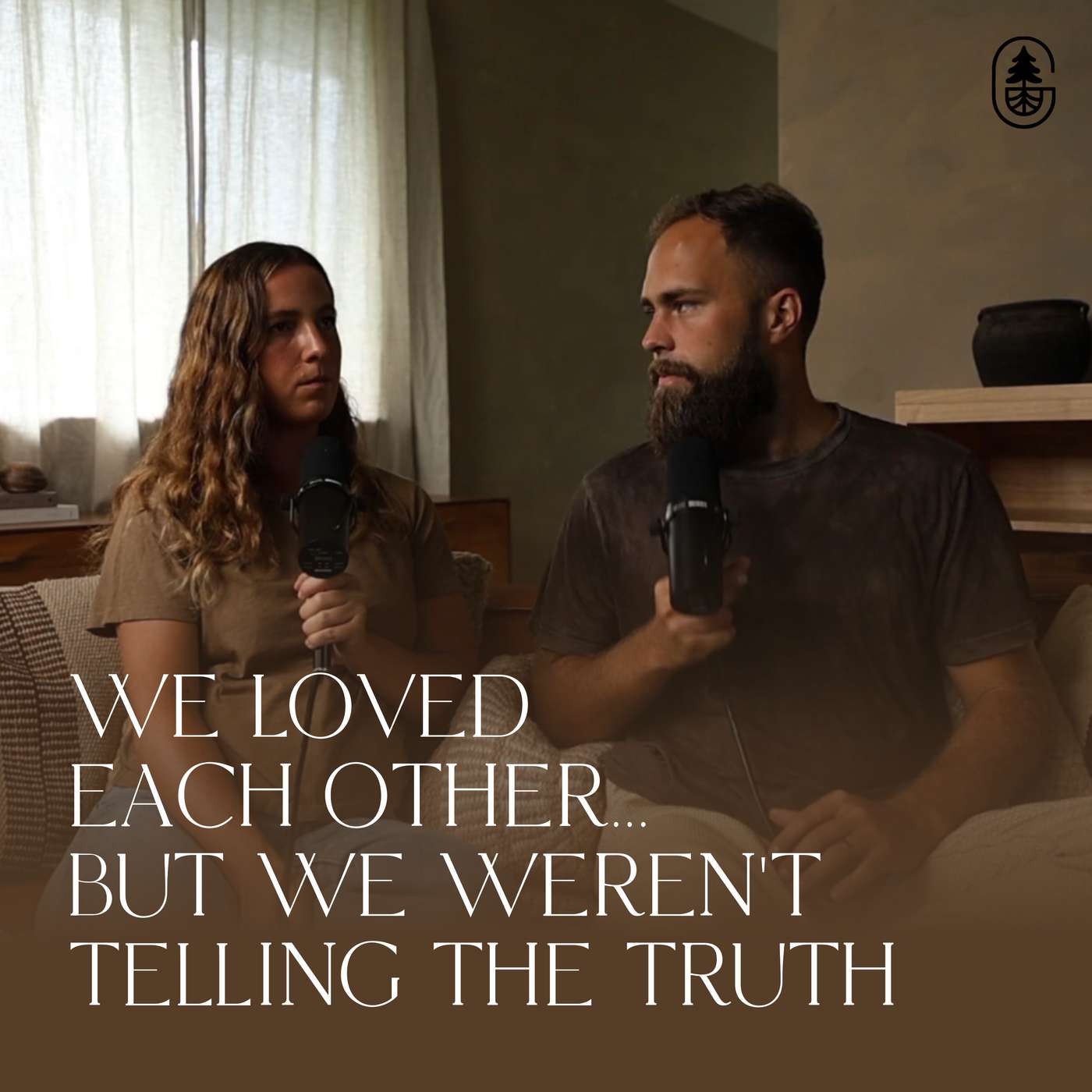
Loading summary
Transcript98 lines
- [00:00]
Bri
I thought that we were on the same page. We were engaged for about seven months. We quickly fell in love and got married. When we first got married, we only love each other. We only have eyes for each other. This is what marriage is supposed to be. There was a lot of heavy expectation going into marriage, and then once we were in marriage, if those expectations fell a little flat.
- [00:21]
Brandon
I want to welcome you guys back to the Grounded Union podcast. We're here with Bri and Robert to talk through their story and what they're working on right now. If you're new to season three, the last seven episodes have been these zoom call ins where we're talking directly with another couple and pouring into them. Everybody has a different story. So if you haven't started with, well, listen to season one and two and then dive into season three. And I hope you get something valuable out of today's conversation. Bri and Robert, thank you for hopping on. Where are you guys at in your process and your healing? What are you working on right now?
- [00:50]
Bri
Hey, Brandon. Hey, Caitlyn. We are one so excited and so honored to be here with you guys. We would not miss this call for the world. We know that you guys have been helping and healing couples for so long, and we're just so grateful to be here. We decided to come on the podcast today to discuss some things that have been going on in our marriage for the past five years. Our stories are actually similar in a few ways. So Robbie and I have been married for six years this past September, and we got married right at the tail, right before the pandemic, so 2019. And Robbie is actually my first relationship, my first everything. He's my first boyfriend, the first serious guy I've ever been with. I was raised incredibly, incredibly religious and strict. So like, no dating until you turn 18. And then I turned 18 and met Robbie. So it was very fast. We were engaged for about six, seven months. Six, seven months. And then we quickly fell in love and got married. When we first got married, I thought that we were on the same page of, okay, we only love each other. We only have eyes for each other. This is what marriage is supposed to be.
- [01:57]
Caitlyn
So.
- [01:58]
Bri
So there was a lot of heavy expectation going into marriage. And then once we were in marriage, of course, those expectations fell a little flat. We did a lot in the span of four years. We moved, we bought our first house, we had our first child. We switched churches from my home church to a new church. Just a lot of changes and a lot of growth. We switched jobs, lost jobs, and Then of course, add on a pandemic that and it was a very just hectic time of constant moving pieces. So I was four months postpartum with our first child when I discovered that Robbie had a porn addiction. Now, previously, whenever we would talk about porn or it would come up or we'd discuss another couple or anything like that, like he would always say, oh, I don't struggle with that. That's not something I struggle with. That's not something I deal with. You know, like, you don't have to worry about that. And I believed him. So four months postpartum, I was woken up in the middle of the night by, once again, I'm religious, so by what I say is the Holy Spirit that woke me up at 2am and told me to check Robert's phone. And sure enough, there it was. But unfortunately in the photos was a woman from our church. Not sexual pictures or anything like that or anything of her nature, but just pictures of like her Instagram and stuff. But this was someone that we both knew and would see often. So that was devastating. After that, this is just a short version, of course, after that we had multiple relapses throughout the time where, you know, I would catch him and it would just kind of repeat. And then shortly after this actual past year, I engaged in an emotional affair with another guy from January to July. And we would start and start over, Robert and I in our marriage. And we would confess and find each other and catch each other and it would go back and forth for a really long time and. And then we finally decided, okay, clear slate, like let's just start over. Let's, let's do something new. Clear slate. We forgave each other. You know, we discussed everything. Clear slate. And then there was one more relapse where this time it was pictures of my sister. Once again, not sexual in nature or anything like that, but there were pictures of her that he had taken without her consent. And that was kind of like the death blow. So after that I told him, you know, we're separated, we're done. I don't want to be with you anymore. I'm tired of the lies, of the going back and forth, all of that kind of thing. Then I ended up getting a new position and I've been a stay at home mom for the past four years. So I have two young children, I have a daughter and a son. And so I've been taking care of them for the past four years. But I got a new position where it would allow us to not only have extra money, but I could bring the kids with me. It was just good news all around. It was the best of times and the worst of times. And so I accepted the position in August. And this was a position. It was a position at church where I can't really be separated. Like, not that I couldn't be, but it would just be frowned upon. So I took a step back, and I was like, okay, if God's putting me in this position, then it must mean something. And so Robbie fasted, and you prayed, and you had a few dreams that were a little prophetic, in our opinion, and we ended up staying together. And then, of course, the kicker was I came across you guys on TikTok, and I was like, oh, my gosh. She's like me. You know, like, Caitlyn is like me. She had the expectation beforehand, and then it, you know, fell apart. I was like, you see, I'm not weird. Like, it's okay to just be attracted to your wife. And so we found out, of course, he had a podcast. And so we started listening to the podcast religiously. And it was transformative. Like, we worked through everything. We invested everything we did, all the steps. There was no secrets. Nothing went, you know, unspoken about the.
- [05:47]
Robert
Podcast was the shortest part of the night. We'd listen to the podcast, and you'd probably talk for two or three hours after, right?
- [05:52]
Caitlyn
Amazing.
- [05:53]
Bri
And it was amazing. It was great. However, as time had just gone on and life had gone on and, you know, two kids and all the things, we would stop listening to the podcast. And so there grew this gap where I felt like, okay, is change really happening? Are we going to have another relapse? Is something going to go wrong? You know, just that kind of fear started creeping back in. And so we separated again for a.
- [06:19]
Robert
Little over a week, for.
- [06:20]
Bri
For like a week, because I. I was frustrated with the lack of change that I was not seeing. Not that there was a relapse or anything like that, but just lack of change to me. And so we separated for about a week and then came back together. But the thing that we have been dealing with now is we're just trying to figure out the balance between loving one another and trusting one another again. I feel like I'm having trouble getting back to the place that I had always been in before all this had happened, where, oh, it's blind trust. It's unwavering love and devotion and dedication. And now it feels like we'd called it. Like, there's a green. There's a green area, and Then there's a yellow and there's a red. Neither one of us are on these like total opposite spectrums anymore, thankfully. But also we're not in the green yet. So I just feel like there's a lot more healing work we need to do and just wanting to know how to rebuild trust and have faith after betrayal like that. And even though we've reconciled and there are no secrets anymore, how to still keep the bond there without having to depend on season three.
- [07:28]
Caitlyn
Yeah. Really, really good. Robert, I'm going to give you a chance in just a second to kind of share from your side, kind of where you feel like you guys are at. I just had a couple of questions. I think that would be great for understanding. Can you let us know when was that one week long separation?
- [07:45]
Robert
Not even a month ago.
- [07:46]
Caitlyn
Okay, so that's pretty recent. So pretty recently, within the last month, you guys have had a separation?
- [07:52]
Robert
No, it was early or it was late November.
- [07:54]
Bri
Late November.
- [07:55]
Caitlyn
Okay. And then also with that, when was. We can use the term relapse. When was. Or we could just say when was the last time that you looked at pornography? So, Robert, you'd be answering that one.
- [08:06]
Robert
Well, the last time I looked at pornography was at least. Yeah. At least August, because it was summer.
- [08:13]
Bri
Yeah.
- [08:13]
Caitlyn
Okay. August was the last time that you have looked at pornography or the last time you've mentioned that you looked at pornography. Is that right? Okay, August. Perfect. Okay, awesome. Now that helps me kind of complete this story if you want to kind of take it from there and share with us a little bit.
- [08:30]
Robert
Yeah, she. She summed it up pretty succinctly. Right. Because we've talked about this. And then with the, with the last separation for a little over a week, you know, we had that come together meeting where we talked about it and kind of got caught back up and relatively recent, so nothing, monumental events have really happened since then.
- [08:50]
Bri
Right.
- [08:50]
Robert
You know, as far as what either of us have done. But I will say one thing that I think is important, you know, is what, what ended up kind of leading her to come back together with me from the separation was she was speaking with a friend of hers who struggles with alcohol addiction. And because of that alcohol addiction, her partner had split up with her. And while she's reassuring her friend, you know, you can do this, you can kick it. You're going to be good, you're going to be everything he needs. She realized that she could have that same faith in me too, you know.
- [09:26]
Brandon
Yeah, yeah.
- [09:27]
Robert
But yeah, like she said, all the, all the Ups and downs between. And I'll. I'll preface with this, too. Like, growing up poor, you know, money's money was a big trigger for me when it come to it. So a lot of the ups and downs, you know, losing jobs, getting laid off, you know, slow weeks depending on the job, and a lot of the stresses that come with, you know, buying a house and having to buy new vehicles or.
- [09:49]
Bri
Right, yeah.
- [09:50]
Robert
Because I'd gotten an accident. It's never really been easy until we found the podcast. Right. And. And I say easy relatively, because it has helped tremendously, seeing you guys speak with each other, you guys deal with each other, because everybody can sit and listen to the person who did something wrong, say, I'm not doing anything wrong anymore. This is what I did. Anybody can listen to people who've been wronged so they can understand and reflect on how it hurts the person who was offended. But to see the offender talk to the offended person. And, you know, like, sometimes you'll have a doubt in the back of your mind listening to somebody who's going over how they don't do what they used to do. You're just kind of thinking, are like, are you being honest? I've never felt that watching you guys podcast.
- [10:32]
Bri
Yeah.
- [10:33]
Caitlyn
Wow.
- [10:34]
Robert
So it's. It's been good to see a genuine reflection on what we could be. If I'm taking the proper steps and precautions. She's taking the. The proper steps and precautions. We're having the proper lines of communication. And ironically, like, I work on stuff for a living, and the one thing that I've struggled to keep fixed is my marriage.
- [10:53]
Bri
So, yeah, you are the mechanic. But I will say this. It's not for lack of trying or effort. There are a lot of unfortunate testimonies, of course, where the partner is not sorry, doesn't want to change, doesn't feel remorse or anything like that. And to those women, I applaud because it couldn't be me. I fight, but. So he has always been repentant. Just doesn't have the tools.
- [11:19]
Robert
Yeah.
- [11:20]
Bri
So, yeah, one thing good way of.
- [11:22]
Robert
Putting it, made it not as easy for me, is we did come from a church where a lot of people had infidelity, infidelity, and kind of stories that are reminiscent of ours. And I would try and reach out to some of these men and just never be able to converse with them about it. I never felt like I could go through somebody else's experiences to try and understand how they're reformed. Right.
- [11:45]
Bri
But it was also the combination of what they Talk about where they were still dealing with it. Like they had not recovered, they had infidelity in their lives still, or they were still porn addicted. They were. If we sat in a counselor's office, they were giving us the same message of, well, it's just always going to be this way. So sorry, you know, so it was largely unhelpful. I feel like once we found your podcast, this was the first help we had actually gotten where it enacted actual change that lasted. Like, it's. Even with this earlier separation, the change is still there. It just wasn't where I thought it should be. Not necessarily that it wasn't happening.
- [12:26]
Brandon
It's very encouraging for us to hear. I'm grateful for where the first, like, we'll call it out, like, doses of hope led you, which this is the wakeup call that, that you had from what you heard us sharing in the. In the first few episodes you listened to of the podcast. It's. It was inspiring to see us do it. But what it did is it unlocked something in you that said, we can do this too. This is our birthright. I think some of the discouragement that you probably experienced, you know, looking around your spiritual community, which I've been a missionary, I've been a pastor, we've done that. It's discouraging when you're around people that say they're like, fully surrendering their life to Jesus and he's our peace and our Savior and our Lord, all these things, and then there's no peace. There's no act of salvation, of healing. And it's like, this is as good as it gets. And it's like, we gotta. We gotta go a few steps further or this. The message doesn't make sense. If our spiritual community is just about, like, getting together and pretending that we believe in this concept that does not in this person that set us free, and then we're still left in bondage. It's not. I don't think anybody's having a good time. I like that you guys have been willing to kind of rub up against that. And I also feel that there's not, like, a sense of, like, bitterness or frust or like, hatred in you. A lot of people find that and they're like, screw the church, or like, this is stupid. You're saying we want more. We're curious about more. And I think what. What's going to be so encouraging? I heard you guys say, like, you both are. I think, Bri, you'd mentioned you, like, you want to have more faith in Robert, what he can be. And almost like there's this feeling of if I could believe strong enough for, like, for what he can do and in him for you, that we could get to the other side. And I think it's actually not like the individual belief in each other. I think it's the unified belief in what you want to create. Like, if you're going to go build something together, you guys are like the. The contractors, the general contractors, and you're working on the same project. It's like, not like, what do you think he's capable of doing in of himself or what you can. It's like, what do we want to build as far as a relationship? And then you define it. It's like we're only attracted to each other. We have. And that's just like some of the foundational pieces around sexuality. But it's like we experience sexual bliss in our union. We have a blast together. We laugh together, we explore together. We're walking in financial abundance as a family. Our kids feel safe and nurtured. And you have this vision because that will always lead you to the direction you want to go. So that's where I first wanted to say was mostly that as much as I'd love to, we're going to give you ideas and tools. As much as I love to say we have the solution for you, the solutions inside of you, I think it's you both living more alive. I can see there's like a heaviness. Like, can we live this way? It's like, yes. Like, everything you're hoping is true about how good your relationship could be, it's true. And it's like, there's no. There's no, like, limit to why you can or cannot have the relationship you want to have. So I think you've already done the big step of having these really, we'll call it curious conversations about your sexual past. The type of conversations you've had to have, you know, in hearing about, you know, the pictures on the phone, the emotional affair breather you spoke to. Like, you guys are talking through some of the really nitty gritty details and which you guys will see inside of the app. Part of the process we talk about is not just seeing what has been, because that's huge. Most couples say, I didn't sleep with her. It's like, well, we have video evidence you slept with her. It's like, well, okay, maybe I did. You guys are having those conversations where you're looking at the mess and now you're saying, what do we want to create next? And I think that's the powerful piece is not just looking at what happened, but rewiring that impact of. We'll call it the porn. The dissociative, like the checking out behaviors, even the fear of like the financial well being. It's like you're probably, Robert, coping a little bit out of the fear of providing for your family and breeze wrestling with wanting to be maybe, you know, take on this position to be accepted in her community. But she also wants to be honest with herself and like, separate. So there's all these pieces that as you view your story, you take the time to rewire each piece into that new version to the new relationship that you're creating.
- [16:55]
Caitlyn
Yeah, I wanted to ask a little bit if you guys could clarify or dive deeper into the aspect I like to explore. You guys had said within the last month, you know, there was another separation, and that one was mainly due to Bri. You had said kind of like this, like, oh, do I trust you? Mainly due to the fact that it doesn't look like much has changed is kind of what I was hearing. And then, you know, there's. There wasn't a relapse in there, or so we've discovered. Can you explain a little bit more about kind of where the, where the gap, the tension, the disconnect is in like the last month, per se. You guys could both take some time to describe it if that feels right.
- [17:34]
Bri
So part of the disconnection was one of the things that we were doing with the most recent relapse was we were coming together to talk, to communicate, to do all the things. We were having deep conversations, we were intimate, we were doing all of those things and we were intentional with our time. And then as time kind of went on, those things stopped happening. And I was told he would, like, these are some of his personal goals. He wanted to lose a little bit more weight, change his diet up, just pretty much better himself. Not just on the inside with what he was consuming, but just on the outside too. Those things were not happening at all. Like, he would start and stop, start and stop. And I tried to be as patient as possible and be like, hey, you said you wanted to do this. How about you do this? But I didn't want to be the catalyst for our change. I wanted him to want to change and want to do those things for himself and for our kids and for our family, our marriage. And it just wasn't happening. So part of the separation was, okay, I need to. I needed to decide If I wanted to do this for another 5 years, 10 years, 20 years, like, did I really want to go out to dinner with one of my friends in the next six months and have to tell them, same old, same old, he had a relapse. Even though it hadn't happened yet, but, like, he had a relapse, we're still dealing with it, that kind of thing. I just didn't know if I wanted a repeat of the next. Of the past five years. And so for me, because I am in a good transition in my life where I'm. I'm working again, I'm raising my kids, they. They're not needing me as much. I'm doing new things. Like, my life isn't at a standstill. Did I want to be with someone whose life seemed like it was at a standstill and where it might regress into something worse, where I've seen the worst, but, you know, there's also the potential it could be better, but do I want to sit and wait for it to be better or for it to regress? If that makes sense. So that was the main motivation for the separation. I really wanted him to figure out what he wanted to do with his life and how he wanted it to look and if marriage was part of that, once again, not out of the fault of anything that he did. There was no relapse. There was no, like, huge confrontation. But I had wanted to separate originally in August, and then that felt like an emotional decision. But in November, it felt like, no, no, no. This is. This is what I feel like we should do for this span of time.
- [20:12]
Caitlyn
Yeah. Robert, from your perspective, where do you feel, like, the lack of initiative to keep moving on with your kind of. I want to change. I want to heal. I. I like the word change. I like the words like heal, grow, transform those ones a little bit more. What do you feel like kind of fizzled out your trajectory?
- [20:34]
Robert
I think that in the first couple of months that we were watching the podcast, that I did make a lot of growth internally, a lot of change, a lot of difference. One thing that I think was phenomenal was, you know, when you see something Brandon, like, when you're checking somebody out, pointed out Sam doing that because I. I feel like that really helped kind of bring a light to it kind of being a creepy behavior, you know, and it kind of makes you feel not. Not shame and like, oh, I shouldn't talk about this kind of shame, but shame and like, a. Who would do this kind of way? So I genuinely. My thoughts and behaviors yeah, genuinely, my thoughts and behaviors have changed. I feel like. So I feel like inside of me there has been a difference. There have been a growth, there hasn't been a relapse and not necessarily if that was good enough. But at the end of the day, like, it's excuses, you know, it's I'm tired, it's I work a difficult job. It's, you know, I've been up since 4 o' clock and I just want to chill on the couch. You know, maybe we can watch a movie or something or I'm dozing off at 8 o'. Clock, let's just go to sleep. Even though I probably could fight through a conversation to stay awake. So I feel like a lot of the lack of initiative was I reached the point where I did feel like I am better. I'm not where I want to be, but I am better. Sure. And so it just kind of stemmed from that kind of getting lazy really.
- [22:03]
Brandon
Well, one of the things I wanted to touch on would be the, the entertainment component. What does entertainment look like, Robert, as far as social media, YouTube, TV shows, movies, what. What's your daily usage of. Of end of your. Of screens, Video games? Video games, anything of that nature.
- [22:22]
Robert
I don't have any social medias anymore. I don't use any of them. YouTube. I will listen to podcasts or something, but I, I use it in a browser so I can lock it, not watch it because most of the time I'm working or something. So I'll just be listening to it in my headphones while I'm working. So throughout the day I might listen to either something on YouTube or Spotify. Okay, I'll play video games, but really it's not unless it's something I've been excited for and waiting on. Realistically the last few months, I might say I'm going to play video games, but I might just sit here and listen to another video because I'm not feeling the same. And this is a kind of phase that I go through every now and then if I'm not feeling the same kind of entertainment value from it and I'll look at what I've got available and nothing really seems to pull to me. So it's really just if I am playing a game, it's something kind of menial. Right. I don't know for copyright reasons if I should say like the titles or whatever, but.
- [23:20]
Brandon
No, but I want. Let's get. Not that you're. I'm gonna disempower you. This is not like to nitpick you. You're minimizing it, which means it. Whatever reason you're doing that, it's more of a. We usually do that to protect ourself or because we. We don't like the answer. We're like trying to say we're uncomfortable.
- [23:37]
Caitlyn
With our own story, you know, or what we're about to share. So then we'll kind of try to add some cushion around it, you know.
- [23:45]
Brandon
So let's try to get more specific. How many hours of video games would you say you play on a weekly basis?
- [23:51]
Robert
I wouldn't say it's more than five or six.
- [23:54]
Bri
Robbie is not an addict with video games, let's put it that way. However, he did used to do it professionally. Like he used to go to tournaments. He used to, like, if he swiveled the camera. It's all video game stuff. He's got a nice monitor. Video games is to him what scrolling is to me. So it's the way to unwind. It's the way to get entertainment. It's the way to, you know, if, if, if it's at the end of a hard day, the thing he's going to do is play a game. Regardless of whether he enjoys the aspect of it or not, he'll still pick it up. Now for me, once again, I'm personally. My poison is Instagram, TikTok, that kind of thing. Or I'll put a show on or something like that if I want to watch.
- [24:42]
Brandon
That's a strong word you chose. You called it your. Well, I just want. I wanted you to think of it because we are. We haven't like. That's a very strong word. You called it your poison. That's really intense.
- [24:53]
Bri
Well, because.
- [24:54]
Brandon
Why do you say that?
- [24:55]
Bri
No, it's not good for me. But I will say this. We listened once again to you guys entire podcast and we nodded our heads, we shouted a few amens. But the one episode that offended us the most was y' all screen episode of don't, you know, turn everything off. You know, just connect with one another. That was the one I was like, ah, perfect.
- [25:19]
Brandon
Okay, this is great.
- [25:20]
Caitlyn
That's good. That means we found the unlocked here where everything lies.
- [25:25]
Brandon
Robert, it sounds like you work long days. How many, how many hours are you working? It sounds like some weeks.
- [25:30]
Robert
Things are really slow around holidays. It could be 40 hours, but I've had hours over 60, close to 70 weeks a lot of times.
- [25:37]
Brandon
And this is like mechanic, like you're using your hands, like moving. Okay. And you guys have two kids. Yes, so this is something that really bothered me when we got married was. So during my missions work, I had committed to not playing or not watching movies. I still scroll on social Media Some watched YouTube and watched a couple TV shows here and there. But I tried to. Like, I knew screens had consumed my life, so I tried to make it consume my life a little less, but it was still consuming my life. In high school, I played an abundance of video games, probably four or five hours a day. When we got married, I started playing pubg on my phone. Kind of like. I forget what. It's even Minecraft. What's the other one? It's like a survival game. And I would play, like, this random, like, candy crush games while rocking our daughter to bed. I felt like it was something that helped me curb my anxiety. And I just found more and more I was playing, you know, two or three hours a day, lying to Caitlin about when I would be playing it, trying to get friends to play other. Like, even Caitlin's dad and dad's friends. Like, just trying to get people to play with me because it felt like it was my time to regulate or decompress, whatever we want to use the word. And what happened was it. It. It came at a cost that I didn't realize, which it. It actually kind of kept me up. Like, it kind of kept me elevated. Like, when I'm trying to win, like a game, like a shooting game, like, I want to win. So it's like I'm exerting more energy that I don't have, saying it's helping me rest. We can go all the routes of, like, screens are addicting. The dopamine level. What I want to hone in on for you guys, which will be the big unlock. You don't have very much margin in your schedules. Like, when I got married, I was like, oh, I have to be aware of, like, the time we spend together. Like, that's less margin where I can just do whatever I want. Then we had kids, and I was like, oh, my gosh. Now I. I care for a child, so I either need to play video games with them in their face, or I have to have Caitlyn watch the kids. Me play video games. Now you have four kids. And I'm like, I don't. I don't. Most hours of the day, one or both of us are caring for the needs of our children. So we probably have, like, after the kids go down, an hour to an hour and a half. That's just us. And so the unlock for you and everybody Listening is if you're in a season of like radical healing, really any season. Especially if you mentioned, you know, I know you've played professionally a little bit. Especially when you're in a season where you're looking at your, your income sources, entertainment, video games, what, what happens is it, it feels like an insignificant part of our life, but when it's the, we'll call it the three to four hour window, when we're like no longer working and we're at home. And it's like those hours can be the hours that you actually put pause on everything and can let your, your body regulate, can let your emotions regulate. These are the, the moments where you guys get to connect together. It also is where your mind settles enough where you can get the new direction to the work you want to do. Whether that's starting a business and your, your financial clarity. All those things come in the, in between space. And so I think for, for our modern era, we have, we're so plugged into technology that we, we don't even know how to think for ourselves. Like how many people are having conversations with, with AI to try to navigate their life circumstances not working. So my encouragement, Robert, would be as you're in this very delicate space like this a month ago, Bree's saying like, hey, like I need you to, we need to separate. If you're not taking this seriously, I think that this is your opportunity to get very clear on the manual to become and also for your schedule to reflect that. So I would take a complete break from, for both of you, from consumption of entertainment. Just because you don't have time or energy to put towards it, it's not going to yield what you're looking to have happen. Have you heard us talk about the, any of the embodiment work of like breath work or mindfulness, any of that, Robert, for you to really step into the man that you want to become for you and I, I want you to do it for you. And I know you really want to do it for Bri, but you're not going to do it long term for her because it's just not going to be enough motivation. Only when she's really upset will it motivate you to do the work. If you start taking 10 to 15 minutes and you can incorporate it with your, with your spiritual or devotional practices, it's not rooted in like a one world religion or another, just the act of activating your nervous system. If you do some breath work, just some simple body movements and you take those 10 to 15 minutes in the morning, in the evening, to be in your body the whole rest of the day, you're going to notice a difference. At work, you're going to be more present. And then in your relationship, when Brie comes with an emotion, you're gonna be like, I know I'm already in my body. This is connecting. And she's gonna be like, what's going on? And not that you don't have, like, work to do, like, emotional work or, like, work to rebuild your relationship, but most of the work is just coming back home. It's just coming back home to your body and being like, I really like this place. I like who I am looking in the mirror and liking who you are. So I think the entertainment piece keeps you spinning, and the embodiment piece drops you into your body, where all of this really takes root, and you're able to get that. That progress.
- [30:53]
Caitlyn
What I always like to say, too, with the conversation around, to call it screams, or we can call it entertainment, it means something different for everybody is what you guys kind of already stated, what your poison is, you know, and what I like to bring people back to, because sometimes it doesn't. It doesn't quite make sense until it does, is right now, at your current state, this is a leading question, because I already know what your answer is going to be. But at your current state, do you both feel really alive, vibrant, connected, fulfilled in your union and in your life?
- [31:24]
Robert
No.
- [31:24]
Caitlyn
No.
- [31:25]
Robert
There's glimpses of it that come and go, Right. Depending on what we're doing together.
- [31:29]
Caitlyn
Exactly. So there's like, there could be glimpses or moments. And at the core, the reason why there's even the separation a month ago is because there's something that feels missing. Right. And I even remember you, Bree, saying you guys had this kind of pivotal point where you're like, let's clear the slate, right? And there's been a level of clearing. And what I want to enlighten is that if you're actually wanting to, like, you guys were headed this way in your marriage, right? And then you have this moment of like, okay, let's clear out everything, and had a new way. You can't head that way, bringing with you all of your same patterns, right? So what's happening is you guys are like. You're kind of like one foot in, one foot out, right? It's like, okay, we'll do. We'll. We'll try heading that way. But I want to bring with me all of my same old patterns, and it's like, what you're sensing that. That tension of, like, I'm not really able to fully make the. The commitment to healing and transforming and moving in this way. What's happening is you're trying to bring with you all of the same ways you were already doing your life. Right. So what we like to. To invite people into is, like, that might not mean. It might not mean that you might not use screens forever. And I always like to put a little asterisk. I guarantee you will orient your life around screens in a completely different way, because what happens when screens and entertainment are removed for a season? Let's just say you guys are gonna actually. We're doing 30 days without screens inside the Grounded app right now, and so you guys will get to join in on that is what happens when there's the removal of all of that noise. There's a lot of things that happens, but you're actually able to fully come alive. And even as I listen to you guys and I hear things, it's kind of like. It almost sounds like a life where you go through the motions. Right. So it's like, I wake up, I go to my work, I do my job to make money. We try to connect with people at church. We try to have friends. We try to be close together. There's a lot of trying. Right. And then it's like, okay, I'm so. I'm tired. I think I even heard you. It was kind of hard to fully track because there was some minimizing in there. It sounds like you come home and maybe you guys. It sounds like. Do you go kind of some separate ways for entertainment and screen time?
- [33:42]
Robert
Not normally. Normally the few hours after I get home is spent, you know, in the living room watching movies with the kids or literally running in circles for.
- [33:51]
Brandon
We get.
- [33:52]
Robert
That feels like hours, but might be 10 minutes at a time. Yeah.
- [33:55]
Bri
We eat dinner, shower, you know, get the kids down. Yeah.
- [33:59]
Robert
Generally, if I. Yeah. If I find time to, like, go a separate way, it would be, like you said, Brandon, once the kids go to bed using our time. So I did try to limit that to normally one night a week.
- [34:10]
Bri
Right. And so we did decide, okay, Fridays will be the day where we can.
- [34:16]
Robert
Yeah. Then it can be more social. Right. Because that's when I might be playing with someone. So it was. It was a lot more frequent until a few months ago when it was brought down to Fridays. And then depending on how Saturday was going, maybe I'd hop in and out a couple of times if someone else was on to play with. But yeah. So it's generally after work, we are together, but we might still be in front of a screen watching movies.
- [34:42]
Caitlyn
Yep. Okay. So what we're essentially saying, I also.
- [34:45]
Bri
Have my phone, right?
- [34:48]
Caitlyn
Yep. Well, we're inviting you into. And I recognize that we always sound really crazy and I could throw a bunch of money on the table and I know I'd get it all back in 30 days. You would be like, absolutely. You won the bet. You're right. I feel so much more alive, so much more vibrant, so much more connected to my children, to my spouse, to myself. Like, when I talk about screens, I like to always equate it to, to how, how alive we feel. Right. And so it's like the more screen time, the less alive we feel. And sometimes you actually don't know the contrast until you see it. So the, the less screen time, the more we come alive. Because the screen interaction, even if you're playing with a friend, it's not actually real. And it's. I'm not here to say that I hate social media and I don't use social media. You guys found us like you said on TikTok. We don't even post those videos on Tick Tock. We have a team of people. We have optimized our screen usage. People would probably be shocked at my screen time on social media. I actually am shocked sometimes because I'm like listening to 15 minute audios from people and my screen time on Instagram is like within 30 to 40 minutes for the day. And that includes the fact that I work on Instagram. And so what happens here is when you ramp up screen time, you lessen the life, the aliveness, feeling within yourself and within your actual life. And when you bring that down and clear it out, you can actually come back to life. And when you're at that alive state, that's when you decide what I want to bring in. So don't decide right now, like, okay, we'll just clear out a couple of things here and there. Because you're not fully alive yet. So it's like asking your zombie self, like, what should we do to wake up? And it's like, well, I'm still a zombie, so I don't really know. It's like, ask your alive self, the part of you that's a whole and vibrant and connected. Ask that self when you get to that phase, like, okay, now how much screen times do it? How much screen time do I want? Because the answer is going to be wildly different. And what, what I'm proposing Which I want to explore something else too. What I'm proposing, what we're proposing is that the removal of the screen time is a big massive key to unlock that change. And that, that, you know, you called it laziness or excuses. You could call it that. And what I would actually call it by observing your story is not laziness or, excuse me, excuses. It's, it's a. You're allocating your time to video games and movies and scrolling when your time could be allocated to connecting together, connecting with your kids and spending a lot more time out in nature, some time in community. Those are the elements that actually bring you back alive. So it's not that you're lazy, you probably aren't actually lazy. If you work 70 hour weeks, you're not lazy at all. Like nobody that's lazy works that much. Sure, you might be doing it to pay the bills, but somebody who's lazy is going to find a much different way to do that, right? So you're not lazy, you're working hard, you're working hard on your relationship. So you're, you need to reorient to how you're allocating your time. So if you spend all of that time going introspective, working on yourself, connecting together and connecting with your kids, your entire life is completely transformed and completely changes. And the last thought, and then I'll kick it back to you that I have that I always. I'm not saying that I, I think that it's the case here. It's that I always like to bring this up whenever somebody says that they, that they've essentially disclosed information, let's just say about the porn addiction. It sounds like there was some photos. I'm not sure if those photos link to masturbation or what the specific key story or element was there, but there's some sexual brokenness in the story and then there's the statement of, you know, like we shared all of that. And then there's still the lack of, of what I would call like healing or transformation. Sometimes what's happening is there's what we think is the disclosure of everything when there's actually still elements that need to be surfaced and be brought to life that are key components that, that bring bring about some elements of the story that need to be seen. So as you guys have this time, the reason why you clear out the, the entertainment is because that silences all the noise. So if there's still elements of the story that need to be shared, what happens is you actually can see it and hear it clearly. So let's just say, I'm not saying this is true. Let's just say there's other times that you looked at pornography that haven't been disclosed. Let's just say there's other times you receive text messages or had relationships with other women that haven't been disclosed. Or it could go vice versa. There's things that haven't been shared. Right when we get home from work and we're really busy with the kids and then we put them to bed and then we flip on the TV or even when you're with the kids, the TVs on, there's always this background noise. There's a podcast you're listening to when you're at your work. Like see how your brain doesn't have to really do much. It's just, it's being fed information. Even if it's good information, it's just constantly being spoon fed something. So your brain's not sitting there going, how can I help Robert understand that there's still parts of his story he doesn't see? Your brain's not going to do that. It's like Robert's really happy right now because he's listening to this and watching this and playing this video game. I'm not going to interrupt him. I'm just like playing the brain. And so when you say silence, all of that and there's no sounds, there's no distractions, there's nothing on the screen, there's no video games, it's just you with yourself, with your spouse. Your brain goes, oh, this is a really good time to remind him about this childhood story that he forgot about. That actually is a really key missing element to him understanding himself. Or your brain might go, this is a really good time to remind him that he's actually minimized and hidden these key stories that he needs to bring out for them to have true intimacy where you fully see into each other. Do you see what I'm saying? Like when you live a life of consumption, you live a life of noise. And when you live a life of noise, you're not at home with yourself. And if you're not at home with yourself, then you don't have motivation to heal and you don't have the space in your brain, in your body to actually see. I always say, like healing is seeing clearly. To be able to see clearly, you have to be able to quiet the noise. And we, we say this inside the app, like the seven step process. We, we put it into seven steps. It's really? Like, a whole package. Like, I only know that it works by doing the entire package. And for some people that they may be like, that's so extreme, Caitlyn. Like, how dare you say that? And I'm, like, living a life of getting separated multiple times in one year. That's probably pretty extreme, right? Yeah, that's extreme for both of your hearts, extreme for the kids, extreme for life. Like, so much goes into trying to figure out if you're gonna stay together. Like, is not playing video games not scrolling and not watching movies extreme? Like, the more you kind of weigh it out, you're like, wait a second, I picked that one. That's way less extreme than getting separated and not knowing if we're going to be together. So it's like, initially it hits the nervous system as, how dare she? Or how dare they recommend this? And then secondarily, the more you sit with it and you're honest, it's like, whoa, this path is actually way less extreme. And the benefit I reap from walking down this path is I come alive. My marriage comes alive, my children's lives come alive. Like, the fruit of that is really, like, it's undefinable, really. So our encouragement is that the moment this ends, really, you guys get clear on. Okay, what does this look like to take 30 days. Thank you. To take 30 days where there is no more consumption. And so, you know, that's movies, TV shows, scrolling social media, that's news, sports, video games. Like, this is just a list of a couple things. I would even encourage you to remove the listening to a podcast, which is like, again, that might sound so extreme because it's like, these are good, and I'm just at work. But right now you're saying you're in this place where you want transformation, Right? And transformation will come to you if you can be with yourself. So if you're at work for 10 hours a day and you're just with your own thoughts and in your own body, oh, my gosh, try it. One day you're going to be like, whoa, I just learned so much about myself, so much about my spouse, so much about my kids, so much about my life, because everything will unpack and unravel and reveal, and maybe one day you'll go back to work and you'll listen to a couple podcasts. Right now, though, you need to wake up. Like, that's the. You know, it sounds, like, so dramatic, but it's like you're waking yourself up. So the. The silencing of everything is the the upping of your aliveness, of you being able to come back home to yourself and come back alive.
- [44:15]
Brandon
Another way to frame that too is it's, it's more about like speed. Like the speed at which you guys want to have that transformation. I like. And also that muscle of like, you know, like, well, we. It's Friday night. Like, not to like, I think we're like. Because we, we, for time's sake, we, we're like, not like nitpicking what you said, but more of like, it's Friday night. Bree's gonna go scroll social media, Robert's gonna go play a couple hours of video games with some friends. Like, that's an okay thing. But it sounds like you guys are actually wanting, like, if it's Friday night, like, babe, Friday night's our night. Like, this is when we connect the deepest, especially in this season. And so one of the things I looked it up, I didn't. I don't know what the weather's like in Atlanta, but it looks like it's, it's. It says sunny all week and it says that Saturday the highest.61. So I would begin to. Or. Yeah, it's great news.
- [45:08]
Bri
40 degrees today.
- [45:11]
Brandon
So you get a high of 61. That's the high. But when we lived in Idaho, we have the privilege of living in Hawaii right now. But we, we went outside and it was 20 degrees. We went on walks in the snow with the kids once or twice a day. And Caitlyn's last pregnancy with our fourth, and we just lived out. We lived outside as much as we could around the schedules that we, that we had for ourselves. And then we made fires inside. I would. Because this, this life of like, okay, if I'm not on screens, but I'm in this climate controlled box of a house with bright light, like, like, what do we do then? What do we do for five hours at home? Like, I think that's a question a lot of families ask. Like, well, what do we do? And you know, Robert, you mentioned you guys do some running around and playing that takes place as much time, even if it's like, even if it's a little dark and you guys drive to a neighborhood where there's Christmas lights and you go for a walk and look at the Christmas lights for 45 minutes. Like that. That could take up an hour and a half in the evening. And then the kids are like, they're chill, they're ready for bath time and they're ready to go to bed. Well, and, and you guys feel Good. You might even Robert, you might even start working out a little bit, like, or you might work out, you might get up earlier because you're going to go to bed on time. All these things become possible when you have that margin back. So it's like getting married, you lose some margin. Having kids, you lose some more margin. Being a big boy doing, you know, working full time, you lose all this margin. But you can get it all back when we don't give it away to entertainment. So I would say live outside as much as possible on a daily basis. I would get outside as much as possible. That is like nature's way of regulating your nervous system. Like, it's very hard to feel stuck when you're walking with a, with a winter jacket on, through some brisk air, seeing the trees, seeing your kids run off. Like that invigoration, that stimulation is what, is what the body's seeking. So I'd pursue that as much as possible. And because what you spoke to Bri is that you're wanting this sense of feeling really alive and you're wanting to see Robert feel really alive. So I would take time to define, like, what is it? What versions of yourselves look like fully alive? What does fully alive me feel like? Define it, write it out. And then what does that person do on a daily basis? How does that person take care of themselves? How does that person act and behave? Because we don't, we aren't anti entertainment because we want people to live boring lives. It's actually the opposite. We want people to be so full of like, like I'm like so full of things I enjoy doing that I don't know when to just to like check out. Like, I don't, I don't, I don't want to live a life I need to check out from. And I'm not saying that video games is solely to check out, but for the most part there's, there's such a rich. It can be. It's because you even said there's like, as you preface, you're like, there's not really any games I'm that excited about. But I, I go play if I have to, basically. So it's like, it's almost like you're convincing yourself to get excited about something you're not excited about. And that's kind of the key parameters of like, dissociation, using something to distract ourselves. So I kind of wanted to shift gears as we, we probably have like another like 10 or so minutes. I wanted to shift gears into not what's going to make it or break it. But, like, Bri, what are you. What's. What are you really hoping for? You know, a month ago, you were like, we need to separate. But, like, what are you hoping to see? And, Robert, I really want you to, like, lean into this. Like, what are you hoping to see happen in the short term that continues on? What's the hope?
- [48:38]
Bri
I want us both. At first, it was just him, but I want us both to be unrecognizable. I want us to be in the best shape of our lives. I want us to have energy. I want us to have a great, intimate life. I want us to be able to keep up with our kids. I want us to be plugged into our community and have both of us have good, strong friendships and relationships. I want us to be intentional with each other. We were, like, maybe seven episodes in with you guys, and Robbie said to me, he was like, how have we been doing marriage so wrong for the past six years? And I was like, I don't know, but I want to do it right now. Like, I want us the next six years, 10, you know, whatever, to be the best years of our lives. I want us. I like how you said alive. Like, that really, really does speak to me, because it's true. It's what I want. I want us to feel alive again, Caitlin. You know, pregnancy and postpartum and raising kids is one of the most gratifying, amazing things you can do, but it really takes it out of you. And, like, I'm starting to finally feel like me again. And what I want for that next version of me is to be an amazing present. Mom, wife, friend. Like, I want it. I want it all, and I want it before I turn 30.
- [50:01]
Brandon
Awesome. Robert, can you speak to. What's. What's your desire right now? Similar to what bridge is here? What are the. Define it for me.
- [50:11]
Robert
I want to feel just more thrill in general. Right? Like, I want to feel more thrilled about plans that we have. I want to feel more open to ideas she has that she thinks are going to be fun. That to me, being a bit more introverted than her, like, never like a crowd, never want to be in a room where there's more than 10 people. Realistically, I want to be more open to those kind of things because I do find enjoyment in her enjoyment. And I do, really, when I do actually step out there and do the things that are, you know, fun, I do actually end up having fun.
- [50:49]
Brandon
I like the. For those of you. You can't see his screen, but he gave us some air quotes. Robert, do you have. I feel like. Do you have a sense of humor you haven't let out in a while? Is there, like. I feel like there's, like, a lighter side.
- [50:59]
Robert
I think I've got a phenomenal sense of humor.
- [51:00]
Brandon
I think that's where the.
- [51:01]
Robert
Where the quotes come from.
- [51:03]
Bri
Dry humor.
- [51:04]
Brandon
Good. Dry humor.
- [51:06]
Robert
Yeah, it is pretty dry, but it makes me laugh.
- [51:10]
Brandon
Good. I feel like I'm seeing you guys laugh right now, but I think that that's a big component is you feeling. There's a lot of. There's a lot of pressure. I can feel. There's, like a pressure to just. Life feels very pressurized. Sounds like with all the moves, with all the jobs, this, that, and the other. And I think you guys are going to kind of push the pressure release button and laugh a lot more. And it's because you're choosing into the present moment. So I would. I would really lean into that. Do you guys have any questions for us that have been, like, racing in the back of your mind, you know?
- [51:43]
Bri
Okay, my first question. How do you not feel? Haunted. That's kind of the word that, like, makes the most sense to me. But unfortunately, I will always have a reminder of the betrayal. So no matter what I do, no matter where I go, the betrayal's not going anywhere. You know, we all live in the same area. We're all close. They come over, that kind of thing. How do I move forward without it? Constantly? You know, we'll take two steps forward and it's two steps back. Like, how. How can I. What are practical ways I can move on from the anxiety and the pain, which I. I'm not adverse to exercise. I. I have started exercising more. I move my body. I make sure that, you know, we will incorporate outside. But for me, grass doesn't do much. Grounding doesn't do much. Are there any other tools, things that helped you? Something that a nice old lady said to you that might help me? Is there anything you've got and to not feel haunted?
- [52:58]
Caitlyn
And is this because the images. You're saying that you're always around the betrayal because the images were with a friend and a sister. Is that right?
- [53:07]
Bri
Yes.
- [53:08]
Caitlyn
Okay. And so this friend is still a part of both of your guys's life?
- [53:12]
Robert
The friend?
- [53:12]
Brandon
Not really.
- [53:12]
Bri
The friend, not really.
- [53:13]
Caitlyn
Okay, so the friend is out of the picture. The sister is a part of the life. And then, Robert, is there still any sort of attraction or attachment to the sister?
- [53:24]
Robert
No. No, there's really not. I think that Kind of was squashed in a big fit of shame. Honestly, realistically, taking a long reflection on myself, it's like, how could you even feel that way, even for a brief second, to mishandle this situation and kind of shatter her whole expectation, her whole security on an entirely different level? And, and so realistically now, no.
- [53:57]
Bri
Okay.
- [53:58]
Brandon
I wanted to just speak real quick to that. I think that inside of the app, you guys will see the grounded intimacy program. It'll basically walk you through, through the sexual brokenness piece, like, understanding the story. I think I'd like for you to explore together beyond just. I was ashamed of objectifying women and ashamed of objectifying my sister in law, but we're actually understanding the underlying contributors to what that was rooted in. Like, out of curiosity, be like, okay, like, you know, when I was a child, like, you know, this was the porn I was exposed to or even exploring, like, what type of porn you watched and what were the unmet needs of your soul? Because we'll call it like inter familial attraction. There's, you know, sticking, like, it's very clear, like, you, you. Now that you know you got caught and what, whatever happened, like, you're like, I, that's not, that's not who I want to be. So we got, we got that. Like, Bri knows that you're not wanting to continue in that. And now you need to see, like, how did that become an action I took of, you know, taking a photo? So maybe like, that type. How did that, how did, like, what was the sole need I was trying to fulfill? Or why was that? We'll say, why was that arousing? Again, this is why you can, like, look at it now because you're not continuing in the behavior. So you can look at it with more curiosity, with more clarity. Shame will actually keep you from seeing it because you can grit your teeth and be like, I'm not doing that. That's what shameful men do. It's like, wait, we gotta open it back up first. You gotta see it first. Okay. I did that because maybe I was abused as a child or I had this situation where like, there was these sisters I had, I had a crush on growing up, and neither of them gave me the time of day. And now I'm married and I'm close to my, you know, wife, sister, and it feels like this like, thing that never got fulfilled in me. Like, there's all these reasons and it's not like you have to judge them. It's more just you want to understand them. Be like, oh, and you basically have that release of like, that makes sense. Instead of saying, I won't do it again, you seem to say, why did I do it the first time? Well, not for the first time, for the hundredth time, for the thousandth time. That is what closes the loop, is really understanding it.
- [55:59]
Caitlyn
Yeah, Bria, I'll answer your question. And first, I'm glad you brought that up, because you. You've shame. There's so many avenues we can go, and we only have an hour. You have used the word shame multiple times to describe different sexual experiences. And so I think what's happening here is exactly what Brandon's saying. And I think what's going on is I think there's a lot more to explain, explore to your sexual story, which I commend you both, that you've listened to the podcast, you've had deep conversations. Incredible. Some people don't even choose to go that far. And I think there's another step further. You're going to get tools inside the app through the Grounded Intimacy program. I think there's more to the story here, because when there's the shame piece, it's kind of. And you guys have even stated, which we've also grown up as Christians, that's kind of what happens in the church is like, oh, bad boy. You're bad. You did something bad. You did something wrong. Like, it's kind of like, okay, hopefully if I feel really gross and bad, then I won't do it again. You know, that's the whole, like, tension of the sin nature is like, oh, if I. If I recognize that I'm like, a really, really sinful human, then I won't sin anymore. Right? And it's like, well, whatever we focus on is actually what we will then create. So if you just focus on kind of this like, I'm bad, I did something wrong, I did something shameful, then the fear of relapse is there because your focus is so much on, I'm bad, I did something wrong, and not on who you are, what you are exploring why you did that. Because if you know why you did that, you can clear that and never create that again. If you just go, that was bad. I'm never going to do it again. We don't know why you did it. So then we don't know the warning signs. We don't know how to clear any of that. And so I think what I want to say, and then I will get to your question, is I think that what I'm sensing and picking up on intuitively is I think there's more to the sexual story that you guys have to explore. And the reason why there's always. There's always a direction our podcasts go when we've been interviewing people. And I believe that there's a extreme purpose to that. And your guys's direction ended up being really heavy towards the screens. And I think that screens is the unlock to understanding your sexual story completely. So I don't think you'll actually understand your sexual story and be able to move from shame into, you know, like, episode, I think it was the last episode of season one is going from powerless to powerful. For you to make that transition, you're going to need to be able to quiet all the noise and remove the screens. And that really, actually answers even your question. Question, Bri. And that is that the more at home we are with ourselves in our pain, the more. And I always love it. It sometimes always works out this way. Whenever someone's asking, like, the situations of pain within the. The haunting. I love that word. The haunting feelings. There's always the when will I be able to move on? And I talk about this. There's a whole section on betrayal and trust, and I have videos in there inside the app that will dive a lot more deep. And I talk about this in there because it's the number one wording in all of the questions. And I like to say it's not about moving on. It's really about moving through. So these emotions, these haunting emotions that are coming up and coming in, you know, getting surfaced, that might be. When you see your sister, it might just be randomly about all the other things about the porn, what other people, what other situations came up. Maybe there'll be more that's shared as these things surface and arise. Then you can feel the emotion and move through the emotion, as opposed to feeling an emotion and then having the screen time. Right? So. And even the component I wanted to touch on is this isn't a motherhood podcast, although that topic is really passionate. A passion of mine is when, as mothers or anybody in general, when we first feel. You'll recognize it a lot more as you transition to the other side. When we feel. Feel this pull of like, okay, here's. Here's my phone. And on this phone, I know there's really, like, a lot of dopamine hits, right? There's exciting things I could post. I could see people's stories, really exciting lives, whatever it is. When this is sitting, like, really close, and then we have these beautiful children of ours. There's then this tension of, like, I want to be with them, but then I need this dopamine fix for survival, right? And a lot of times we don't even put language to it. So then it makes motherhood feel draining because it's like instead of being able to be present fully in this moment, there's a part of us, even if it's small, there's a part of us that's like, ah, but I want to do this, but I want to watch this show, but I. I want to engage in this way. And when this isn't on the table anymore, when that's out of the picture, the presence that we can feel in motherhood is like, whoa, I'm fully here, fully present, fully engaged, fully alive. There's nothing else pulling or tugging for me. So then, now there's not that drain anymore in motherhood, right? And it's actually the same with betrayal when, when there's this sense of betrayal, you know, because you're saying that putting your feet in the grass doesn't work. Well, I would say in a. In a somewhat challenging yet loving way is if you put your feet in the grass but then spend the last hour of the day scrolling, we're almost counteracting the healing benefits and putting the feet in the grass. It's like, you know, there is a bunch of science to how that grounds and connects us to the earth. And the reason why we give examples of connecting to the earth is in. Inside the app, people are doing this is if you were to write out your values, which you guys could do this. If you were to write out what you value most in life and you were to give a name to it. So, like, for us, it's health, right? Or family. And nature is a huge value of ours. Our union is a huge value of ours. Then in each of those, I write different. I write different, like, activities. So for health, that might be the food that we eat, the meals that we choose to make together, that might be sitting around eating together, that might be working out. So then I have these activities in nature that's actually spending time outside. So then when there's these moments where we want to go to the screen or we want to go to the video games, or we, we have this pull, it's like, oh, how can I come back to what I say I actually value most in life? Because nobody's actually going to put on the value right there. They're not going to put screen time as, like, their top priority and value in life. Yet most of us spend a significant amount of our time in that category. So when you're feeling these, these emotions, these hauntings, this, these sense, the sense of betrayal, you're coming at home to your body. I have, I think I said this on every episode, but I have like 400 journal entries from that season of our life. Because when I felt an emotion, most of them I'll never read out loud. Some of them I read inside the app. When I felt something, I'm just taking my pen and I'm just writing it out. It wasn't pretty. Most of them I'll never read because they're horrible. They're horrible towards Brandon, towards life in general. Because life felt really dark and grim in the beginning, right? Especially when you can't. It's like, you know the light at the end of the tunnel, when you can't see it, you're just like, you feel like you're trapped inside the tunnel. You're trapped inside the cave. And so when you're feeling these emotions, you're journaling, you're going outside a lot more. You guys can go outside. All that time that was spent on the screen with the kids, like go outside for that hour to two hours before bedtime, go sit on a blanket, go bundle up and go for a walk. Go explore, explore, go adventure. Like, I think you guys are like an hour long flight to 30A. Like the Florida, the Florida area. Like plan a trip and go to the beach. Like spend a couple days at the beach. Like, you know, whatever it looks like you're orienting your life about, around the things that matter most and make you come alive. And so it's the same. And that's the same for all of life. And in the acute betrayal process, it's like, how can you nourish yourself? How can you get enough sleep? How can you get sun in your eyes, your feet on the earth? How can you go for a walk? Like you're already, already implementing movement? How can you create time where you're able to journal, let yourself cry? Brandon said this on the last episode. Sometimes we're like, oh, I'm in pain. That means I'm doing something wrong. Like, oh, I feel betrayal. I feel like I'm haunted. I feel overwhelmed, like I'm doing something wrong. And it's like, no, that's the feelings. That's your real, true emotion. There's nothing wrong or right about that. That just is what is. So a lot of society is like, oh, pain, run. And what we suggest is pain. Feel it Let it move through your body and then look at your list of things that you value and what can you do right now? Like I used to sometimes he would share something and I'd be like, I just, there's nothing else I could do right now but go for a run. Because like, if I don't run and like let this move through me, I'm going to be haunted for the rest of the day. So instead of moving on, you're gonna let it move through and that almost, it completes, it completes that part of you instead of like moving on. To me, that imagery is kind of like here's these parts of me that are haunted that are almost like that have been betrayed. It's kind of like leaving all these open wounds over here. I'm just gonna leave them all right here and then I'm gonna just try and turn and go this way and forget about them, right? And for me, letting things move through is like looking at the wounds from the betrayal and tending to them. Like, I'm going to actually look at them, I'm going to tend to them, I'm going to take care of them. I'm not going to move on. I'm going to let it move through. And there will be a day there. I live in a day, a day to day existence where I'm not haunted at all by anything that he did that doesn't live in my subconscious or my conscious. Like, we go outside, I've said this already, to the beach almost every day and there's people in thongs, people and barely anything. And I'm not haunted. I don't care. That's the number one thing he looked at for our entire marriage was bikini models. Like, I don't have any charge or any haunting because I actually felt all of my emotions moved through all of my emotions completed that part. And then he was healing and rebuilding trust. We're transforming and healing together and creating an entirely different story. So I believe that you will live a day where even seeing your, your family isn't going to bring about any emotions. And it's because you're going to see a completely different man. Like you said, you're both going to be unrecognizable. So it's like, whoa, that was the old us. We burnt them down and recreated something new and something beautiful that, that aligns with your true authentic selves. And so that I hope answers a little bit of the question and gives you guys also some direction of where. Where I think your, your clearest path to healing really Is.
- [67:10]
Brandon
Thank you for sharing that. It's beautiful. I think, as well, to. To kind of close this out here. Robert, as you witness Bri feeling her pain. And you had also Bri mentioned, you know, there was, like, your emotional connection you made with another guy like Robert, when you feel your pain and you guys are witnessing each other. The most healing things, too, was Kaylin bringing her emotion up to me and me being receptive to her. And I think a lot of men think, oh, my wife's sharing her pain. I need to absorb it, and it needs to become me. I need to feel exactly what she's feeling. I don't know how to feel what she's feeling. Your job's not to feel what she's feeling. Your job is to be a curious observer of what she's feeling, of what she's sharing, and being engaged in that process. So every time your wife brings up this big emotion or memory or trigger and you're just like, please tell me more. Please tell me more often, is that happening to you? Yeah. I haven't been sharing this week how hard this. Please open up and share that with me, because I want to be there for you. The more that happens, it loses its sting, but it doesn't have to. And that's the whole point is you don't need to feel the pressure of, like, when does it sting less? It just the more you share, the more raw you are, and the more you receive validation in your pain, the more you will heal. It is all about healing and maturity and growth. So, guys, thank you so much for coming on the show with us. We look forward to seeing you guys in the app and thank you for those of you that were tuning in with us. If you'd like to join us inside of the Grounded Union app, you can see the link in the show notes, and we would love to support you on your marriage journey as well. Stay tuned for the finale season finale of season three next week.
- [68:50]
Caitlyn
Sam.