← The Grounded Union Podcast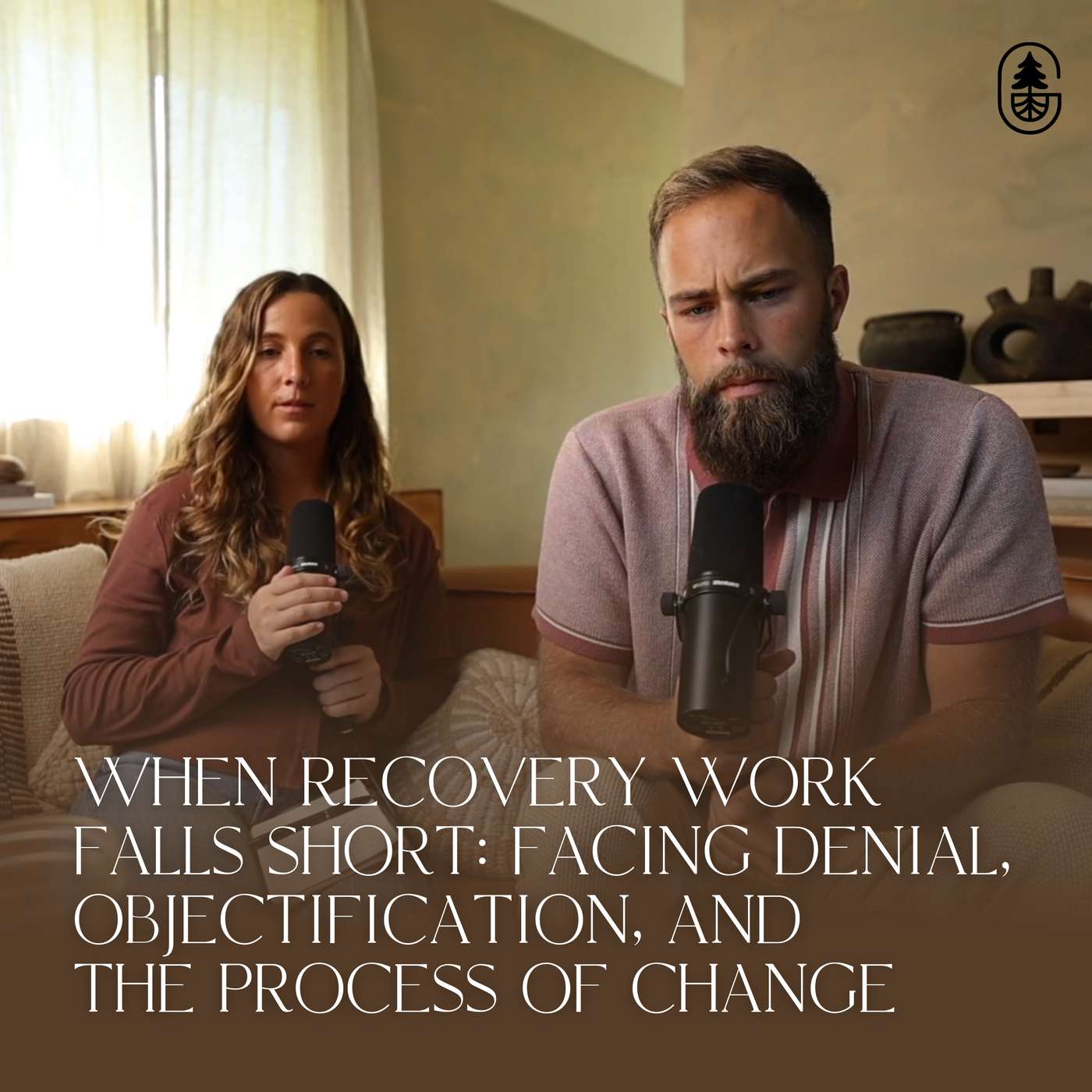
The Grounded Union Podcast
When Recovery Work Falls Short: Facing Denial, Objectification, and the Process of Change
00:52:38
Loading summary
Transcript63 lines
- [00:00]
Evan
I have a history of sex and lust addiction and I've been a part of SA ToI program for quite a while. So when Kelsey and I Met in early 2023, I was going to meetings. I was kind of assembling some sense of recovery and a lot of what we bonded about at that time was our mutual priority for healing in our lives, in our hearts, in our pasts. As the relationship progressed and the engagement then progressed, I became complacent and stopped going to meetings. And so now from working with you guys, what I've identified is there was a massive amount of denial structures that were in place and at work in our lives.
- [00:38]
Brandon
We wanna welcome you guys back to the Grounded Union podcast. On season three, we are talking with Collins live call ins. So right now we are actually talking with Kelsey and Evan on a zoom call and they are gonna be sharing their story with us and we're gonna be going back and forth with them. That's all of what season three is about. So if you haven't already listened to the last two episodes, go ahead and listen to those and hopefully you can glean some encouragement from our con, Kelsey and Evan. So, guys, welcome. Thank you so much for, for hopping on with us. What is front and center for you two right now? We just talked off air that you guys have been married for a year. Why is it crucial that you guys work on your relationship right away? What's going on?
- [01:11]
Evan
I guess I can start and jump in. So I have a history of sex and lust addiction and I've been a part of SA to program for quite a while. So when Kelsey and I Met in early 2023, I was going to meetings, I was kind of assembling some sense of recovery and of what we bonded about at that time was our mutual priority for healing in our lives and our hearts and our in our pasts. And that's really a thing that we bonded over. And to be frank, just from my end, as the relationship progressed and the engagement then progressed, I became complacent and stopped going to meetings and I was not really in touch with my essay fellowship and not really doing any step work or anything like that. And so now from working with you guys, what I've identified is there was a massive amount of denial structures that were in place and at work in our lives. And so we were married in October of 2024, just end of December 2024. So about a year ago, I just had some realizations about the nature and reality of my behavior and things were coming to Light from my subconscious that I was really frankly gaslighting myself about weeks before the wedding. I was finding unconventional ways to masturbate, looking at naked pictures or videos on Instagram and gaslighting myself into thinking that that was not an issue because I had this chronic history of acting out, watching lots of porn, hooking up with lots of women. And so in my brain I thought, this is fine, it's not a big deal. I'm just going to kind of wash my hands. We're Catholic, so I'd go to confession right away, kind of rinse clean of it and then kind of forgive and forget and just let it go. In December, I just kind of decided to have a full confession. So I was like, here, Kelsey, here's all the things that I've been hiding. And that was a big rupture. And at the time we hadn't found your guys material. And for me it was a commitment to the program. So I was like, I'm going to go to meetings every week and not miss. I'm going to like get a sponsor. I'm going to start working the steps. And so I kind of started this journey. But there was a lot of things lacking because frankly I feel like I was not getting to the root of the problem with the program come full circle. Probably about spring, March, April, May time. Kelsey found you guys on Instagram and would send me videos. And I was just not processing what it was. I was like, oh cool, whatever. Like we didn't dive until season one of your podcast in June on a trip. We were both in California for a work trip of mine, but we both kind of went together when she was pregnant. On the drive back, we put on episode one season one and that really started to just kind of be the seed that planted it. And I was like, well, now that now we're talking about it, you know, there was a girl at the airport that I felt this thing right? And then it was became basically from June till now, every month as we've consumed your guys content has been slowly dissecting every denial structure. It was oh like I feel like I noticed that person. It reminded me of how I used to look at women. And then it was, oh, I felt my body kind of like lean towards looking at that woman. But I didn't lust like it was all things except the actual sin itself. It was like the action of the thing and then it wasn't the actual thing. And then it became okay as I released this anal structures. I just was able to admit over time by Consuming your content and say, I'm objectifying these women. And it's happening all the time. So I guess now where we're at is something that. That we are struggling with is there are times that I've objectified Kelsey herself, and this has happened within our sex life. This has happened throughout our dating engagement. And even recently, like, I've made comments about her postpartum body because I wanted to be upfron front about what I was feeling or what was arising in my heart. It's been a great challenge recently just because I've had. That's been the most difficult thing in the past two or three months. I felt like we've been doing a lot of four hours together about women in the. In the world, Women I see at the gym, women I see at the store. But I was that last analysis. Structure is the. Is the last thing that I felt like we finally are starting to attack in the. In the most recent weeks is the reality of what the framework that I built up in the past is such that Kelsey is not the exception. And I was really wanting to feel like that was the case. But the way that I've built my brain over the years is just to pick apart people's bodies and make judgment calls based off how attractive they are. And the things that I feel like I gained gratification from. And I feel like that's been happening a lot recently of just like, that's been coming up. We've been trying to process that, and we're sitting in this new season of deep pain.
- [05:21]
Caitlyn
So that was.
- [05:22]
Kelsey
That was really good. I think that's definitely kind of what we're trying to work through. That's been the hardest is I feel like as you started taking more responsibility and ownership, like, of this happening towards other women, in my head, I was like, okay, this really sucks. But maybe, you know, I can handle this because, you guys, I think I've talked about before, like, the betrayed spouse will go to great lengths as long as the spouse that is, you know, doing these acts is, like, really putting in the effort. But I feel like I really hit my breaking point when now it's happening towards me. And then there's still, like, maybe, like, a day or two of, like, consistency, and you'll step into your power. And then there's slides back through to this, like, lying and hiding. And I will. Sometimes I used to try to prompt him and be like, how did the day go? Is there anything you want to share? And he was like, nope, it went great. And then it Was like a week or two would go by, and he was like, yeah, actually, that event, you know, I was looking at this woman's butt, or I did see her boobs, or I was looking at that, or I was attracted to her. That was really hard. And even so, I was like, okay, we can work through this. And now it's starting to happen towards me of like, oh, I think your butt's flabby. Or, you know, oh, when you bend over, you have a fold in your stomach. I don't know that I'm attracted to that. And I'm like, I mean, I'm postpartum, but I'm also like, it was a really hard pregnancy. I had hyperemesis. So I feel like every bite of food, every sip of water drink was like a fight for my life and our baby's life. And making it through to postpartum felt like the greatest achievement of my life. And I feel like I have so much honor and respect for my body, especially after all of that. So it. Whenever he tells me this stuff, it doesn't necessarily affect the way that I see myself. It just affects the way that I see myself in the relationship. And it makes it really hard to heal and feel safe and feel like I walk around or be in my pajamas or anything, for that matter, and feel safe around him, I think.
- [07:10]
Brandon
Well, Evan and Chelsea, thank you for both sharing that. Kelsey. Sorry, Evan. One thing I wanted to affirm was as I hear you talking, I don't hear a weak man talking about his story. So you've done a lot of work to already kind of peel back the layers of shame and be like, what is my. Like, you don't seem super surprised by what you've been walking through. You've. You've spent some time in it, and that. That's very evident. Kelsey, I also like that you're. I can tell. We can by body language. You're obviously like, you guys love each other. Kelsey, you want Evan to find freedom, deeper freedom. You guys want to create the safety. And it's also evident that you still have your standard for and hope for what that feels like. And you'll kind of. You'll know what that freedom really, really feels like. So you're definitely in the right trajectory. One of the things I wanted to hone in on in the realm of if. If Evan is taking responsibility, which it sounds like, there's times where you kind of go in and out, because, let's be honest, this. This process of kind of identifying the way that the mind was trained to perceive women or men in our environment. It's pretty shocking, like, when you. When you, like, start opening up the subconscious, it's kind of like, whoa, like, how did I live life this way? And I think a really helpful, like, tipping point that will help it continue to be a connecting experience, like, for you, Evan, and feeling empowered and a desire to bring things to Kelsey would be knowing that you've already drawn a line in the sand. Like, we're not. You're not going back to porn. You're not going back to Instagram por. You're not. It doesn't sound like you were wanting to. To build a moat in that. That realm anymore. So now it's not like, the struggle of, like, am I going to relapse? It seems like, how. How long has it been since, like, active use of digital porn or any of that. What's. What's. How long has that been?
- [08:52]
Evan
Probably right around before, like, so right before the wedding. Okay, the last time. So that's probably been like, a year and a quarter. But then, like, as we dissect that analysis structure, it's like, even, like, we did the big Instagram purge, and I went through all the different followers of. I've object. This girl. This girl, right? And we've unfollowed and done all that. Like, besides those types of instances where it's like, okay, I'll flip. Flip open Facebook. Haven't had Facebook on for a month. We're trying to find a new car now. There's, like, stories coming up, and then we have to do four hours on that kind of stuff. But besides, like, the people or the. Those types of things, nothing like, no nudity, no, you know, naked models for.
- [09:26]
Brandon
A little over a year. Awesome. And I say awesome, not, like, to give you, like, a gold star. Like, good, you made it a year. More of, like. That affirms what I'm saying in the sense of, like, I think some people, when they start looking at all of the history, it's like, oh, my gosh. Like, there's the sting of, like, Kelsey finding out, like, all the things you've started doing. It sounds like you guys have gotten over that hump of, like, she's seen pretty. In depth of what the behavior was. So I like looking at it. When you're using the. The four R's of recognizing. For anybody listening unfamiliar with that, we've talked. I think we talked about it in season one or two. It's the process of rewiring the mind, which I want to break that down. For a minute. The reticular activating system. I'm not a neuro scientists, but basically the part of our brain that picks up the data that's important to us, the raz, it's like the, the purple jeep thing or the pink jeep. Like if I say pink jeep, then your brain will tell you you're looking for jeeps, or if you guys are shopping for a certain car, you'll start seeing it everywhere. Basically what happened through our adolescence and early childhood for a lot of men in middle school, like when the first playboy came out, or when, when, when your friend started showing you naked pictures and you started just looking at women and training the brain of like, look at her butt, look at her breasts and then maybe look at her face and make a judgment. Like, that's just like what, what we trained the RAZ to do was to pick up this sensory information. It's responsible for what we smell, hear, taste, touch, see. It's, it's just, it's just telling us the data that's coming in. So one of the things that happened for us was there were certain things that I began, I shared in that season that were definitely uncomfortable, but most things were not shocking anymore. It was just when Caitlin saw me really leaning into saying, you know what, I just want to see what else is there. Like absolutely everything. Because I just want to clear out my reticular activating system so that nothing else is. There's no debris left. And I honestly, I didn't believe, I didn't even believe it was going to work. I literally just did it because I was kind of tired of us having a nightly conversation and this stuff going.
- [11:13]
Evan
On in my mind.
- [11:14]
Brandon
I didn't even really think it was going to work. But there's this shift that happened where it didn't feel like I was concerned about what was going to be found. It was more of like, I know there's a bunch of debris. I'm going to clear it out until it's gone. And it took me like five months of like kicking and screaming and like hiding. Like, I don't want to do this. I'll do this. Caitlyn's like, did you have any thoughts or any memories? No. What we've encouraged couples to do is basically make a commitment that they are going to have a nightly conversation. Sounds like you guys have had a lot of conversations, but almost just saying like, what else is there? And it sounds like you're doing that. What I want you to get to the point now is where it's not, like, shame inducing or, like, where you're, like, judging it, but really going into, like, let's just. I'm just going to continue to clear this. Like, this is how it was trained. I'm retraining, and I'm replacing it with. With this new thing. And you could even, you know, even with the very sensitive element of you talking with Kelsey and, like, being like, hey, you know what my mind is. Is making a judgment about your body, and Kelsey can feel her pain from how that lands for her. And you and your conscious mind, you're not really making that judgment. Like, you trained your mind to do it. So almost like, you take responsibility and you don't. I wouldn't beat yourself up and wallow in shame for a long time to be like, I can't believe I had this thought of my wife's stomach not being flattering postpartum. Like, take it. So you know what? I'm going to. I'm going to replace that pathway. That's actually not how I would see my wife's body. Like, and I would just replace it. Like, that's the. The stomach that stretched and groomed with my child and that she fought for and just. I would just kind of continue to take the empowered stance of being a man that has done the work that is healing. It sounds like you're going in the right. Right direction.
- [12:44]
Kelsey
Yeah.
- [12:44]
Caitlyn
I would say you're actually the first couple we've talked to that's like, listen to what we're saying and is doing it, like, honestly. Well, I mean, there's a lot of couples that are. I'm just meaning the first one we've been able to interact with in this close of Proxim. I think that's really inspiring. I actually wrote down same thing as Brandon. I love your language. Because a lot of men, when we're talking to them, it's like they understand that they've got their stuff that they're working on. And even, you know, the last podcast episode, we helped. We helped the man discover, like, the way he was describing the events he chose to engage in. He was describing them as if he had no choice to be texting with his ex girlfriend. You know, like the languaging of that, where you hop on and you're like, this is what I've done. This is it. Like the. Essentially the tool that we teach is magnify it. Instead of trying to be like, oh, it's not that big of a deal. You're just on here. You're like, I looked at nude Women, I did this, this, this. It's like I'm here to call it for what it is. And I think when I see that, as even Kelsey saying when I see that, I'm like, well, you're going in the right direction. Like, the end for you guys is so, so good. Because when the one who's caused the betrayal and the brokenness is willing to take that much radical responsibility, the only way you can head is towards freedom. The second thing I wanted to note too, confirms our belief. You essentially decided to become aware of the fact that there's a lot more underneath the tip of the iceberg. You know, like you knew you're looking at porn, you're looking at nude women, you're masturbating. That's the iceberg part that we can see, right? You chose to believe the truth that there's a lot more underneath that. Once you get into the denial structures that you could see. And then with that, your addiction's breaking off. Right? Like you're not struggling to look at pornography anymore. Now you're just wanting to actually rewire what you've wired in so that you can live in your day to day without objectifying women, without having judgmental thoughts about your wife. You know, all of those, those other categories. You're in kind of the secondary phase is what I would almost see it as, is like you cut all power source to the main addiction. Now you're rewiring, essentially. This is what got you to the place of addiction. This all probably started in childhood, you know, the way that you view and see women. So this, it's almost like we're going back to childhood and going, okay, I'm going to rewire how I think and see and engage with the. And so I think those are the first two things. Yeah, add that.
- [15:09]
Brandon
I just wanted to add in that secondary phase. One of the things that I was not prepared for that was pretty unexpected was I had cut off the addiction. I had gotten off all social media. There was like, no, like I wasn't trying to find my way back in. I'd been doing that for years. Like, oh, I'll look at raunchy videos on YouTube by going in through some backlinks in the Bible app. Like I could figure out any way to get to, to seeing something. So that had stopped. And we're doing the work. And as I'm clearing out my subconscious, when we were doing emotional exercises together, when Caitlin would go to share something like affectionate towards me, I was seeing these images of naked women in My mind, or if we were going to go be intimate, it was like these drop ins of these things I had seen in the past, all this debris. That's why I like calling it debris, because it's just like. And I couldn't quite figure out. I'm like, why is this happening now? I, I, we took like the spiritual. I'm like, is the devil attacking me for trying to take us? I'm like, no, he's like, he's gone. Like, he's not, I don't feel his, I make him this intergalactic struggle. But what was going on was really leaning into the emotion. So I would encourage the feeling that you're feeling when certain things come up. So, for example, in that moment, I was seeing the breasts of other women and I was like, what is going on? Like, why am I seeing other women when I'm in this intimate moment with my wife? And what I realized was anytime I was feeling, I was feeling the emotion of affection, which I never felt. Like in our relationship, I had never, like, allowed myself to feel that and I was allowing myself to feel again. I was like, oh, affection. I sought out affection and affirmation when I was sad and lonely by just looking for a cute, smiling face on the Internet. Now I'm in the present moment, I'm in my body, my wife is smiling at me and expressing affection. And my mind saying, you want us to pull up these images, right? I'm like, no, like, that's not it. So we'd pause, go through the four Rs and clear all that out. And that did stop after a few weeks, I think it was. Yeah, about a month of that. And then that did clear away too. So I just wanted to share that. There's surprises along the way where you're like, I thought it was just quitting porn. And then you're like, wait, now I'm tapping into my body and I'm feeling affection. And it's gonna be different for every person's story.
- [17:03]
Caitlyn
So, yeah, yeah, I think this ties in. Well, I was gonna say I don't think we've actually ever shared this live, but you saying that sparked this memory of when we were in the very, very first initial phases of practicing our own framework, which at the time we didn't know it was a framework and we had no idea if it would work. And I remember there was a couple times it was about, for a week, weak stint where I was like a very, very upset with you and I would like leave to go for a walk or Something. And you. He was tapping into. Sounds like what you're tapping into, where he's like, I'm done lying and hiding, keeping anything from you anymore, so I'm gonna say everything out loud, and it's not really going to be very pretty. And he. You had like a whole week stint where he would have thoughts of like, you're fat. It would just like, go through his head, speaking of me. And he would say that he was like. And he would preface it, of course, of like, I don't actually think that you're fat. My mind and body is trying to communicate this to me, though, which ties into what he's talking about. It's like, then you can access what am I actually feeling right now? Then you can access. You can even. Like you said, you. You learned from a young age to judge women and to almost critique what's attractive, what's not attractive, what do I like, what do I not like? You know, and it's like, this is the gift you get to offer yourself, is you're clearing the slate of all of that. To clear it out, though, it actually has to come up. So even though it's ug and it doesn't feel good or sound good coming out, it actually has to come all the way up. And I like to equate it to, you know, when we get like an actual stomach bug or a virus, the body starts making us throw up because it's like, oh, I'm going to help you get this virus out, right? So essentially, you've digested a virus from a young age, this belief system of how you are supposed to or how you're wired or created to view women. And so now your body's like, oh, let me help you. I'm going to help you throw up this virus and get it out. And so this was a part of the face for us too, which he. He found is linking to similar. As you're saying, it's linking to a judgment of all women. Almost as if you've become the judge of who's attractive and who's not. And then it was also linking to a sense of feeling powerless or powerful. It was like, you know, because if you are the judge, you do start to feel powerful, right? And so then when you can look at like, oh, of course you're my wife. Of course I think you're beautiful. Here's what's coming up right now, and I'm going to clear it out as opposed to like, oh, my gosh, how am I having these thoughts again? And it doesn't sound like you really have that type of languaging anyways. It's just, that's the contrast of like, oh, woe is me. How is this happening to me? To I have these thoughts about you and I'm going to take 100% responsibility. I'm going to figure out why is this coming up? Like, why am I thinking this about you right now? What did I train myself to? You know, even if it's a specific memory, let's just take the stomach memory or the that thought that's coming up. It's like, when do I remember? I always love. And we talked about this on the last couple episodes. When do I first remember, like, judging a woman by her appearance? Like, when do I first remember looking at a woman's stomach and thinking, oh, that's attractive. When do I first remember thinking, oh, that's an unattractive stomach? Because sometimes these things come up and out because they want to help you link back to when it all began, you know, so it's like a puzzle piece you can piece together. Like, I remember when we started going through a lot of his thoughts and memories that would come up, it was like, oh, here's this very specific memory that you would have. And she looked a very certain way. So that's why this tracks over to the exact type of woman you're trying to have an emotional connection with now. You know, it linked all the way back to that first memory when you saw a girl in the bikini at the water park and it felt very sexually charged and you're kind of like, oh, I'm not supposed to be seeing this, but I am seeing this links all the way to 20 years later when we're married and there's the same type of woman. You know, it's like our story paints a really clear picture for us. So every time something's coming up that's excruciatingly painful. Embodiment is key, which you guys have heard us talk about in the, in the previous podcast seasons and because the embodiment piece helps you to understand, what am I feeling in my body now? What do I want to feel in my body? What does this link to from my past? And then continuing, like, even if it's a non sexual thought, as this one is, it's, it's somewhat sexual in the sense of, it's, it's making a judgment of an appearance. This is the exact thing that you're doing the four hours through, so you're clearing out, you know, when you're Looking at someone outside, you're clearing out. When you're on Facebook and you're seeing something, you're clearing out these thoughts that are coming up. And there will be a day when everything literally is. Is cleared and cleansed out. And it sounds like you guys have been doing it for a while. How long have you guys been practicing the elements of, like, getting out your full story and doing the. Four hours? Yeah.
- [21:47]
Kelsey
We took our baby moon to Maui actually at the end of July. So I think that was when I had. When I put on the podcast episode in June on the way home from his work trip. He was like, that was a lot. I need some time. And then I, like, you know, put it out there again. I was like, what if we make this baby moon, like, a time to connect?
- [22:05]
Evan
Like, the denial structure was like, I.
- [22:06]
Brandon
Don'T know if I agree with all.
- [22:07]
Evan
That, you know, like, it's. Now I can identify what it was. Right.
- [22:11]
Kelsey
So probably end of July.
- [22:12]
Caitlyn
Okay. So when you did the baby moon, you listened to it all over again, or you just redigested what you knew you had heard?
- [22:19]
Kelsey
Kind of both. So in June, we had only. I had only played one episode for him, and he was like, that was a lot. I need a break. And we never. I didn't try to, like, push him too much on it. I would just kind of plant the seeds and bring it up from time to time. Like, I think there's really something here. But then we were doing the Road to Hana on our baby moon, and I was like, we have a lot of driving. Like, what if we just listen to these amazing.
- [22:41]
Evan
Yeah, yeah. And then I think it was basically from July to now, it's been a combination of out in the world. You know, I was, you know, at Sprouts. I saw this girl, objectified her. And then we do four hours, and then, like, there's been, like, memories that come up.
- [22:56]
Brandon
Right.
- [22:57]
Evan
Particularly even, like, something very interesting, too. Like, you mentioned how there's a connection to the very beginning with my objectifying thoughts towards Kelsey. Even with our baby, like, things come up because she is so innocent and so pure and so beautiful. My body just is bringing up, oh, this is like a pure, beautiful human being. Let's just, like, bring up, like, these deep memories of porn videos that had. That I was watching when I was in sixth grade and seventh grade, and I'm like, wow, I didn't even. I haven't thought about that for 20 years. I had no idea. So then it's like different fetishes, different things. I would look at and say, hey, I remember this really affected me when I was in seventh grade. And then even doing the work of like, let's make. Trying to make a connection about. And thanks be to God, I think we've been making a lot of connections about my home life. Some abuse with my mom. There's some triangulation and mesh. There's a lot going on that like, I was just like my mom. So she passed away a few years ago. My mom's a saint, you know, like, and really just kind of only speaking positively about her, but trying to find the line of like I'm able to honor but also be honest about the reality of my home life was very rough and there's no wonder that I was really clinging to porn.
- [24:00]
Brandon
Yeah. At that time, it sounds like this is again a friend of mine that's like a trauma therapist. He helped me identify too that a lot of the thoughts we have have, we can shift basically those. Their existence in our mind through the. The like their root emotion. So like you said, you know, like, it's not that your daughter is like a turn on towards your pornography, but what it is is it's maybe like an unknowing of how to feel a sense of innocence in your body. And you, you, you even trace it.
- [24:26]
Evan
You did.
- [24:26]
Brandon
You. My brain said, hey, this is. I remember feeling innocent back in sixth grade or this type of porn that I was first exposed to when it felt the most innocent. And then something was, this is how your mindset, this is what that feeling feels like. Because you maybe hadn't have felt that in 20 years because you maybe it, it really num. Desensitized you and you're in this like state of innocent like vulnerability or maybe even the. The ability to process what Kelsey's body went through in pregnancy and delivery. And you're like looking at her and you're like, I actually don't even know how to like process with you what that experience is like. So your body goes to. Let's make a judgment or let's like compartmentalize this to what we understand. So I would really. I think that what would bring a lot of ease to this season you guys are in now where you're really like fine tuning would just be be getting comfortable feeling the emotions you want to feel and not shying away from like the, we'll call them vulnerable emotions. Like the ones that make you feel like weak's not the word, but like seen, like really like exposed. It's like watching my, My wife Give birth. Like, very vulnerable because it's very out of control. Seeing the innocence of my child, like, that will bring up fears, like, how do I take care of this child? How do I love this child? How do I protect this child? Like, and it's. These are all, like. I think the thing that gets stolen a lot from years of addiction for a lot of people is the. It's just the ability to feel the full spectrum of emotion. So it's kind of what's happening because. How old are you?
- [25:43]
Evan
I'm 32.
- [25:44]
Brandon
32. So now, like, 32 after, you know, we'll call it, like, maybe it's, you know, 10. We'll just say 10 for easy math. Like, you know, 20 years of being pretty desensitized to life. Now it's almost like you're seeing the full spectrum of color, and it might be a little bit, like, unsettling. So your mind's like, where's our anchor? It's like we went to porn when we processed difficult things, when we were lonely, when we were frustrated, when we got rejected, when we didn't have sex or we had sex. And we're trying to process this experience we had. So it's. You're essentially finding a new filter to process life through which you're doing it. I just want to encourage you that the root emotion that you're feeling to really step into a season of labeling it. So, like, when you think. When you know, you see your daughter and. And you've already worked through the four hours of what came up, you're like, what was the root emotion? So you. You've got. You seem like you got some clarity, but I'd say, like, to encourage and affirm, like, that clarity. Now unlo. For you to feel the innocence of being a dad with a newborn and all the beauty that that is. And now there's no more clutter in your closet. Because what happens at a subconscious level is. Let's just take. Let's take Evan that didn't decide to get sober. Kelsey, you and. You and Kelsey have a baby. You have that same moment where you feel overwhelmed looking at the baby. Kelsey puts baby to sleep. You decide to stay up late and binge watch porn because you don't know how to process everything going on in life. Like, that was what you would have done, and it would have been subconscious. You wouldn't even know why you're doing. You're just like, I'm just overwhelmed. Like, I'm kind of maxed out. Like, we're missing sleep. Sleep like, this is a lot to process. I don't know how to care for this child. But you're not even thinking. You just go numb out now. You're like, this brings up. This is confusing. And then you're sitting with it and you're refraving it and you're healing. And I think that's. The implications of that for your children's children is so massive because you're not going to have an enmeshed relationship with your kids because that's what your mom gave you or your dad or whatever was there. And I just think that even though it can feel uncomfortable and weak, I would look at the significance and the strength. Strength that this. The daily decisions you're making in. In clearing out that debris. It's huge.
- [27:37]
Caitlyn
Yeah. This is essentially the. Which you know this because you're practicing it and embodying it. This is the fourth R, the replacing of it. So it's like when that emotion, when you felt the innocence and then you had a different association. It's like what Brandon said. Whenever we would go to connect, in the beginning, it was like anything connecting was always other women's breasts. It was just no matter what we were doing to connect, it didn't matter if it was talking sex, doing it like an exercise, like from a counsel, whatever it was, it was just breasts, breasts, breasts, breasts. All different types of breasts from movies, from porn, from whatever he had seen. And it was so fatiguing because I'm just like, can we not just have one conversation without someone else's boobs? Like, I literally have journal entries where I'm just like, can we talk without anyone's boobs coming up? And for him, it was like when he was able to realize, oh, for, you know, 15, 20 years of my life, I related connection with breasts because if you think about it like, you guys have a brand new baby. We have four babies. It's like, how does a child.
- [28:37]
Brandon
Our babies are a little spaced out.
- [28:39]
Caitlyn
Yeah, we don't have four babies all together, but we have four beautiful children that I've nursed. And so it's like, how does a child feel? Connected? They feel connected through the breast. Right. And so we've distorted that. It's like it was essentially, it was an innocent perspective for a young male to. To associate connection with breasts. And then it gets distorted through media, through porn, through culture, through conversations with other kids, all of that. And it becomes this very sexual, erotic, almost dark energy type of a thing. So when Brandon would. When he recognized, oh, this is How I related connection my whole life. I'm going to replace that through the four hours, that last four r. I'm going to replace connection with. With being here in the moment with my wife being. That could even be. I'm going to be connected to the earth. Like, I'm going to take in, like, look at the trees, they're blowing. I'm going to hear the sound of the wind. Like, you can make it really tangible. Like, connection now is the bond that I have with my child. Like, it's this whole replacing of. And it might take a couple times. I always like to tell people, if you had two decades of telling yourself this certain emotion needs to bring up these certain images or. Or this certain emotion needs to lead you to seek out those certain types of behaviors or images, then it might take a couple weeks of rewiring in what the emotion of connection or innocence. Or we could. It could even be closeness. Like, your body. I don't know your full story, but like, your body, your mind, when you get close with Kelsey could be like almost having repelling thoughts. Because being close to someone into. In that. That close of a way where you're actually seen through intimacy, which I always say, you guys know, this intimacy is into me. You see, it's not sex. Sex is the byproduct of that. So if you're coming into close proximity now for the very first time in your marriage where it's like, oh, whoa, I'm fully seen and fully known right now because I'm choosing to expose all that's true, your mind and body and subconscious might be going, let's throw some darts, because I'm scared to be clear close here, because maybe it was scary if you were close with your parents or close with somebody else. You see how it really all begins to track the more you get to the root of, why am I feeling this way? What am I feeling? Okay, this feeling is associated with these types of behaviors and scenes and images. Now I'm going to replace it with what I actually want that emotion to be associated with. And all of this, what we're describing is really what we call embodiment. It's you coming back home to your body, body to your emotions, to that awareness. And most people, we're just trying to get them on step one, which is that they recognize that they have a denial structure in their lying. Like, our last two episodes are just like, you're still lying, right? And I'm not here to say I think you're lying or not. I just think Similar to. Even as Kelsey was already saying, there's a Persona that comes with someone who's carrying a bag of lies. It's really hard for someone. Someone who's still carrying a lot of lies, to speak with a lot of responsibility and to take a lot of ownership, because the denial structure cuts in our language says a lot. So it's like the denial structure starts to cut in and starts to add in a couple other words to where sitting on the outside, it's like, oh, that's nice that you think that you've gotten out all your lies. I can hear, though, that you've got a whole big bag over here.
- [32:03]
Brandon
She's not saying that.
- [32:04]
Caitlyn
No, I'm not saying about. About you guys. I'm saying about other people when their denial structure starts budding in. So it's like for most people, they're trying to grasp the idea that it's safe and a good idea for their marriage to bring everything out into the open. You've grasped that idea. Now you're doing that. You're now into the phase two, where it's like, okay, you're coming back home to your body, and you're clearing everything out. And so six months. It's about five, six months that you guys have been doing this, which is a long time. I don't like to give any timelines on anything. I just like to say, like, if you want to add a little more fuel, which you can answer this, I would say turn up the. The knife knobs on how much you want to clear out, because it's. It really is. Once it all gets cleared out, it's actually leaving you. That's why with the four hours is an actual process where it's like, it's gonna. It's gonna be gone and replaced with something else. So since your denial structure is breaking down and you're willing and open to see clearly, if you turn up the dial and go, okay, keep pouring it out. Keep pouring it out. And you sit down together every single day, and it's like, here's what's pouring out. Here's what's coming out. Here's the four hours. Here's what I'm replacing it. Then the timeframe of how much longer you need to be in this season is gonna dramatically cut down.
- [33:20]
Brandon
Yeah. Evan, have you had any experiences doing the embodiment work?
- [33:25]
Evan
Yeah. So when I had the app for those two weeks, I got the morning and night routine, and then I recently added embodying what it feels like to be sexual with Kelsey and Then we just started doing. Because we, we just finished phase two of our course, so we started doing daily Achilles and then affirmations and going through those emotions. So I will just say that like the five months, I feel very kindred to you, Brandon. And like it was a lot of kicking and screaming because every month it felt like a progressive, deeper sense of like, okay, here's another denial structure and another down structure and I'll speak on Kelsey's behalf that like these things hurt right now, recently, because it feels like even still there's like this little, that last little tower of denial structure about how I see her, how I've seen her in the past past. I was kind of like tucking away of like, okay, well that feels a little bit too scary. That feels way too painful. And so then when it comes out, it's like Kelsey's feeling. And I can, you know, correct me if I'm overspeaking how you're feeling, but just like it hurts so much more because like, we've been on this for five months and it's been consistent. So the, the theme for, for the, the our journey has been the lack of consistency and the lack of commitment to what you're describing, which is. And, and the past three days, it's just been a tumultuous season of okay, I really want to own this for what it is and non negotiably incorporate the bodyman exercises. And even furthermore, the replace has been the most challenging thing for months because I do the 4R and I could easily admit, yep, I checked her out because it used to be in July, August, it was. I noticed something or I maybe saw. And I'm like, I have the capacity to check somebody up and down from the periphery of my eye and I want to take ownership of that, that that happened. And then I go through the four hours, right? And then when I go and I want to replace it with. And then I feel like I just like I'm out of air because I'm like, what? What is it? Because, Because. And that's where I feel like the lack of embodiment has emotionally, I've been waking up in little snippets and I've, you know, we've had some breakthroughs of like deep cries and things have been really released. But now I'm like, okay, there's a sense of curiosity that I really want to embody where everything. There's nothing random, everything can be traced to something, and so I can replace it with something if it's the. If it's the child Evan. If it's a memory, like, if it takes all night to try to get there, or even when I do the floor in the. In the moment of the memory coming up and jot it down. So that's kind of where we're at. Do you want to add anything, Kelsey, to that?
- [35:38]
Kelsey
No. Yeah, I think that sounds pretty good. The only other thing maybe I would add, if you guys have any advice, is I think the longer we're on this journey, the more difficult it's getting, I think, for me to keep staying regulated. Like, well, now that I know that, pretty much like anytime we drive down the road or we go to the store or we go to church or we go downstairs to get the mail, like any. Anytime we go anywhere, if there is a woman, he's looking at her. So I think now I'm. We're noticing developing this like, hyper vigilant vigilance. And then it's like as soon as we, like, get back in the elevator, I'm like, did you check her out? And he's like, yeah, I did.
- [36:11]
Caitlyn
Yeah.
- [36:12]
Kelsey
And I guess I don't know how to cope with that or if you guys have.
- [36:16]
Caitlyn
Yeah.
- [36:17]
Kelsey
Any advice on that?
- [36:18]
Caitlyn
Yeah.
- [36:18]
Kelsey
Because I hate that. I hate that hyper vigilance. But I guess. I don't know, I guess maybe it's.
- [36:22]
Evan
Where like Kelsey before had never noticed anybody, but now she's noticing body parts of women.
- [36:27]
Kelsey
There's a blonde body parts of men's.
- [36:29]
Evan
Like, I'm noticing that because it's like. Is that. That's kind of. Now she. It feels like she's trying to bring on my framework. I feel bad because it's like without that you would have. Maybe so now you know what I'm saying? Like, now it feels like it's very.
- [36:40]
Brandon
Talking about the replacing piece, you're saying it feels difficult to choose the new. Where do you feel like there's the hesitancy on what the new. Like, because that's like if you're gonna go through all of the. The hassle's not the right word. But if you're gonna be courageous to look at everything and. And recognize it, receive peace in your body to release it. Like you've done like the heavy lifting. The like. Cause most people never even recognize it. But once you get to the replacing. This is like. This is like not like the. The easy part, but like, this is the part where you get to now craft your new experience. So I guess I was just curious what's. What's felt like a roadblock from getting to, to feel strong in, in that place.
- [37:16]
Evan
I. I don't know, I just feel like maybe it doesn't feel. Maybe. Maybe there's like a. There's a lack of embodiment or lack of emotional awareness to where I will just say the thing that I know to be true. Right. So I could say I replaced it with the idea that I don't objectify people, that I'm creating a life of healing, that I, when I feel dysregulated or unsafe, that that's not an option for me, that I can look at people and, and, and recognize who they are as human beings. And I can create this for me right now. And I say that most of the time, but I just feel like sometimes it feels like I want to make a deeper connection with the emotion.
- [37:48]
Brandon
Yeah.
- [37:49]
Evan
Of like, yeah, I checked somebody out and I felt. I felt something tangible. Of like, wow, I looked at that person and I felt something. But then I'm like, I don't feel what I should be feeling. Like, you know what I'm trying to say? Like, when you went. We were talking about the emotions embodiment. And sometimes I'm like, okay, I want to try to figure out the connection, but I don't know. I can't even name the emotion. I just feel lust. I feel like that was something that maybe is important to me. When I do the four R's, I'm like, what is the thing that I'm feeling? And I guess to your. I'm guessing your answer might be that to do more, Even more emotional grounding, do even more emotional work. Because I feel emotionally inept, like across the board. Yeah. It just feels like it's so new to me that I can't even identify, I can hardly identify what emotion is behind. Most of these times I'm looking at people.
- [38:32]
Brandon
Well, you're definitely still thawing out. And so in the replace piece, I want to encourage the language that I wanted to upgrade for you was you're kind of talking about the things you will not do. Kind of like you said, I'm not going to do this or I will not do this. The replacing is actually something you will do. So I want you to make it about like a. Instead of like a. I'm not going to turn around or I'm not going to backpedal. You're actually going to have to walk towards something. So a simple example is if you looked at a woman's backside, you recognize is it. You receive peace, you release that way of seeing her. You already released the old way. The new way is when I noticed her, I saw her face, and everything felt neutral. So that's. I want you to actually make the. There's action. There's an actual action that you would picture yourself taking the action you want to take and define it. So instead of being like, I didn't do that again. Because unfortunately, Evan, you can't not, like, exist in that moment, in the next time or in the future, in the past. You have to actually make it. You have to rewrite for your mind to. To, like, pick up new data. It's like, oh, Evan said he looks at people's faces and sees people as neutral. Sees people as just another person passing by. And there's. And I saw them as. As this another person. And you could say, and I didn't judge them or I. I saw them as a. I try to not use certain language because some people go, like, I saw them as a beautiful daughter of God. And you should see some of the weirdest comments, like, God's. God's beauty. Like, so not, like, getting weird with it, but more of like, I avoided.
- [39:52]
Evan
That on purpose because I'm like. Because I. We grew up that way, too. You know, it's like, I blessed. I almost said I blessed her. I'm like, I don't want to say.
- [39:58]
Caitlyn
That, you know, neutral human being, that's just like another human.
- [40:03]
Brandon
This is how this is. This is how I picture it. And this is why I tell people when they are like, well, being or being attracted. Seeing attraction everywhere is normal. It's like, will my subconscious pick up my adult daughters out of my peripherals and say, that woman's attractive when she's in her 20s? It won't. So. Because there's something that it knows. And we have some stories we've never shared on publicly just because they're. They're so intricate and complicated to share. But I had many experiences where there was certain people that my subconscious did not pick up regardless of what they were wearing. But it was only, like, a few people. And I was like, I didn't. I didn't have to try. Like, I've been trying so hard. I walk outside, I'm trying, and if I, like, let my guard down, I'm, like, seeing things. But there was something about where this person was categorized in my mind that my raz said, we don't need to pick that information up. So for you, what I would just say is what you're basically doing is your brain is still waiting for you to put Everybody in the category of neutrality. The reason I like neutral is because we don't need to hate them or be like. Like, there's another whore walking by. I'm not going to look at her. It's. It's actually, it's very positive. It's just there's another woman that I would look at as if she was my daughter. Now, not like you're her father and she's your daughter, but it's just. It's neutral. It's respect. But it's also like the. This, like, attraction piece that we wrestle with is. Is primarily about the desire to have an orgasm or relationship with somebody. You're not seeking to stimulate yourself or have an orgasm through masturbation through the concept or the idea of any of these women. I think that's true. You're also not desiring to have any form of relational connection with this person. So if your brain's still trying to tell you that, all you're saying is, oh, thank you for. I almost like, that's what they're recognizing is almost like, ding, ding, ding. Thank you, Brain, for bringing that to my awareness. I actually am. We're good here. Like, kind of like. It's kind of like after you've been at a buffet, it's like, I actually don't want any more food. I'm. I'm good. I actually only see other women's faces because I found the one that I love. So I know I told you to tell me. Like, Brain. It's almost like telling Brain. Thank you. You actually told me the information. I asked you to. Now I'm telling you, please, next time just show me her face, the back of her head, and just let me know that there's another person in proximity. If I'm driving, please just continue to tell me when there's a car that I don't see. But there's no like. So I would just make it more about what you want. So the same thing with some of the things you've been walking through with. With. With Kelsey and how you. How you're, like, wanting to see her body differently. Just like Brain, thank you for telling me the. The changes I've seen. These are. These are the beautiful signs that my wife has bore a trip child to. To us and let that build a deeper affection and love in my heart. So it's just more of a simplicity of what you want. That's the replace. So I think it's not. That's like your time to hit the home run is like, what do I want to. What do I want to see going forward? I want to see people for who they are and from a neutral place. And I want to feel empowered in. In my emotions. So just be the architect of your.
- [42:41]
Caitlyn
New awareness, and I'll answer your question. Kelsey, I wanted to add one more thing about the replacing aspect. What I saw, brand, body, and what I think is worth noting is that that replacing element is also coming back to the present moment, because your whole life, you've actually been escaping the present moment because it's been uncomfortable, right? So it's like there's all these negative emotions, anxiety, you know, it sounds like you were raised in a somewhat tumultuous home. Most of us were. And, you know, maybe there was chaotic experiences at school, sports, whatever, with friends. There's all this stuff. And so you essentially learned for most of your life to escape the present moment. Right. And so that replac element, I like to see it as like, whoa, I'm coming back to the present moment, like you said. So it's like, it's hard to figure out the emotion that links to all that. So it's like, pause for a second. What do I want to feel right now? Like, even looking at. Like, sometimes we forget to just, like, look around. Like, maybe, like you said, you're getting an elevator to go down. It's like, where are you going? Are you excited about where you're going? Okay, you're with your. You're with your wife. Like, okay, I'm coming back to this present moment, which is that I'm with my wife. I love my wife. I'm with my daughter. I love my daughter. We're on this elevator. Elevator. Going to, I don't know, going to dinner, going to the store, going to run an errand. Like, oh, I love my life. Like, see the difference of, like, I'm coming back to my body, to the present moment. I'm feeling my feet on the ground. I'm taking in, like, actually, I always bring this back. It's like, coming back to what matters most. Like, I'm digesting what actually matters most to me because I told my brain that this random lady over here is supposed to mean something to me. Now I'm saying that doesn't mean anything to me anymore. And so now I'm saying, brain, this is what sense makes matters to me. The trees that are beautiful, the sun on my face, the grass touching my feet, my hand holding my spouse's hand. Like, my eyes seeing my baby. Like, see the difference of the life here and it's like, now I'm home at my body, I know what I'm feeling, and it's like, this is like exercising a muscle, right? So it's like, you're not gonna get it tomorrow. Which will loop to Kelsey's question, which is essentially this hypervigilance that we feel as a wife. And sometimes I read my journal entries, and because I have 400 journal entries from this time, just because I remember a lot of what I went through, and I want to remember it deeper because now, five years out of that, which is also the beauty of what I can bring and share is like, five years out of that, people are like, why do you cry on the podcast? Is it because you're still sad? It's like, no, because I know I have so much hope. Like, I just want to scream. I'm like, get it, get it, get it. Because it's so good. Because five years, I'm like, pretty much what I want to say is, buckle up. It's so good right here, now. And I want to remember, like, oh, I remember the day when nobody looked me in the face and said, caitlyn, it's worth it. Everyone said, absolutely. Do not listen to those things from your husband. Never have him share those things. Counselors kicking us out, people telling me I'm controlling, people telling me I'm codependent. Nobody thought it was a good idea. And I'm just like, I'll die in a marriage with this much secrets. Like, I would rather be. I remember telling myself, I'd rather be single for the rest of my life if this, what it is, what it's supposed to be, coexisting with another human and I. And it's like, I just remember that the pain and the vigilance of, like, okay, remember every single night we put the kids to bed, and it's like, okay, I'm just already crying because I know it's going to feel so painful. And it's like, now fast forward, I want to offer the hope of, like, I see Evan, and he's choosing into this. And you'll know he's choosing into it because he's going to do his embodiment. He's going to show up and say, hey, here's what I'm rewiring. And I guarantee you, I know it, because it's our live story, that there is a day where you walk out and all that matters matters is the. The true things that matter most to you. Your relationship, the children you're bringing into the world, the life that you're creating through your legacy. The nature that you're exploring and experiencing, like life becomes so abundant and so good. And we, we talk about this a lot in the community, which you guys will be able to have access to. It's like the practicals as a woman who's been betrayed is like this is self care element. Like putting your face in the sun, getting outside, going for walks. It's almost like you're training for a marathon in some sense. And people always like, I feel like I have to always explain myself. You're like, you're freaking psycho lady. Like that you would want people to go through this. And I'm like, I want you to go through it because the other side is so good. Because if you don't walk through it, then you live with a husband who objectifies women every single day. That doesn't feel good. Even if you don't know it. That doesn't feel good to him, that doesn't feel good to you. Right. The pain in knowing it is that you get to the other side where there's a day where you wake up fully intimate. Like, I know everything about Brandon. He knows everything about me. I feel 100% safe to go to the beach every single day. When there's women with their, their breasts hanging out and thong bikinis. Neither of us have a care in the world. I wasn't going to live that existence if we didn't check through this. I was going to live having no idea that he was looking at everyone's butts on the beach. And I think we're connected, but we're not right where now we're forged through. I said this yesterday in the podcast. It's like we forged through that dark forest of everything we need to clear. We cleared it all out. And we live in this beautiful, abundant meadow. Right? So you guys are in the forest right now. You're clearing it out. The gift is that Evan is willing to clear it out. That doesn't make it easy for you. That's so excruciatingly painful. I have 400 journal entries. Like, I recommend grabbing a pen and pouring out your heart, like writing every. Everything that's painful. It sounds like he's willing to even sit and validate and hear your experience. The more he gets in his body, the more he's going to be like, that must have hurt. I want to hear how that made you feel. Like, I want to reflect that back to you. I want to sit and hold you. I want to hold space for what you're feeling you might not want to be held. Like, these are the things that bring about. Sometimes we can hear some of the most devastating news and actually feels extremely connected afterwards, because that's the byproduct of into me, you see, is like, whoa. You thought that sharing all of that out loud would, like, wreak havoc, and it actually only brought deeper connection because now everything is out and everything's fully seen. And that's how you get to the day where it's like, there's bliss and connection in your union. And so what I'm saying essentially is take care of yourself, journal, go outside, sleep, eat all the foundational elements of nourishing you, and take my token of hope of, like, there's a day where it's so good and so beautiful, and you're not right there right now yet. You're really, really close because you guys are both 100% ready to trek through this, and you're going to blaze down that entire forest. You really are. I guarantee you, six months to a year from now, your marriage looks completely different. And you'll stand back and go, whoa, that was worth every day that I cried and every night I didn't sleep and every pain my heart felt because now the rest of the years of our life and our marriage are so good and whole and complete. It's so worth it.
- [49:54]
Brandon
Yeah. Thank you, babies. The final thing I wanted to leave you guys with was Evan. It might feel really disturbing, uncomfortable week to be on this process of kind of the unraveling. And I want you to be really excited is not the word, but determined to recognize, like, what you plant now will be the man you become for the decades to come. So, like, I want you to picture like. Like, if you're like a. Like what you write when you replace the old with the new, like, that will become.
- [50:25]
Evan
You.
- [50:26]
Brandon
You're also letting go of. It Sounds like you might have your own business and. Or what you work with some. Some business and like, everything you'll touch now as you are fully embodied, as there's nothing dragging you down or competing for your mental space besides your beautiful wife and kids. Like, that's. That's not even competition. It's just an integration. Your whole life opens up. So as. As weak and vulnerable as this process feels, you're actually building something, a foundation that's very strong. So that's. That's where I want you to really see yourself. Every time you replace something that's old, that's the strength position. It's like, oh, that's who I was. That's what was modeled for me. I want something even better for my family. I want something in Bear for how I interact with my wife. I want to know intimacy. I want to know what it feels like to feel connection. And again, it's uncomfortable, but it's. It's removing everything that is for everything that you want to have happen. And so I'm inspired by you guys.
- [51:13]
Evan
It's.
- [51:13]
Brandon
It's a.
- [51:14]
Caitlyn
It's inspiring both of you.
- [51:15]
Brandon
Yeah. For those of you listening, if you've been like, I don't. I don't know if I want to start this journey. Evan jumped into it, and Kelsey's been brave to support, and also Kelsey, to stand for what you know is yours to have. Because a lot of women and men think, well, here's. Here's as good as it can get. And you said, you know, I know there's. There's more. I know there's more for us. I know there's more for me. And for any man that would want to go that deep means there's a woman, and vice versa, that says, here's the type of intimacy. Here's the type of connection I believe we can have. Here's the value that my body holds. Come meet me here. And so I think for every couple, like, never lower the standard. If what you're experiencing isn't hitting your standard, just remove the old and invite the new. So, guys, thank you so much for being. Being on the show, and thank you for listening. Be sure to subscribe so you don't miss any episodes. We're on Spotify, Apple, YouTube, and anywhere you stream your podcast. If you would like to join the Grounded Union app, you can see the links in the show notes. Thank you so much.
- [52:31]
Caitlyn
Sam.