← The Grounded Union Podcast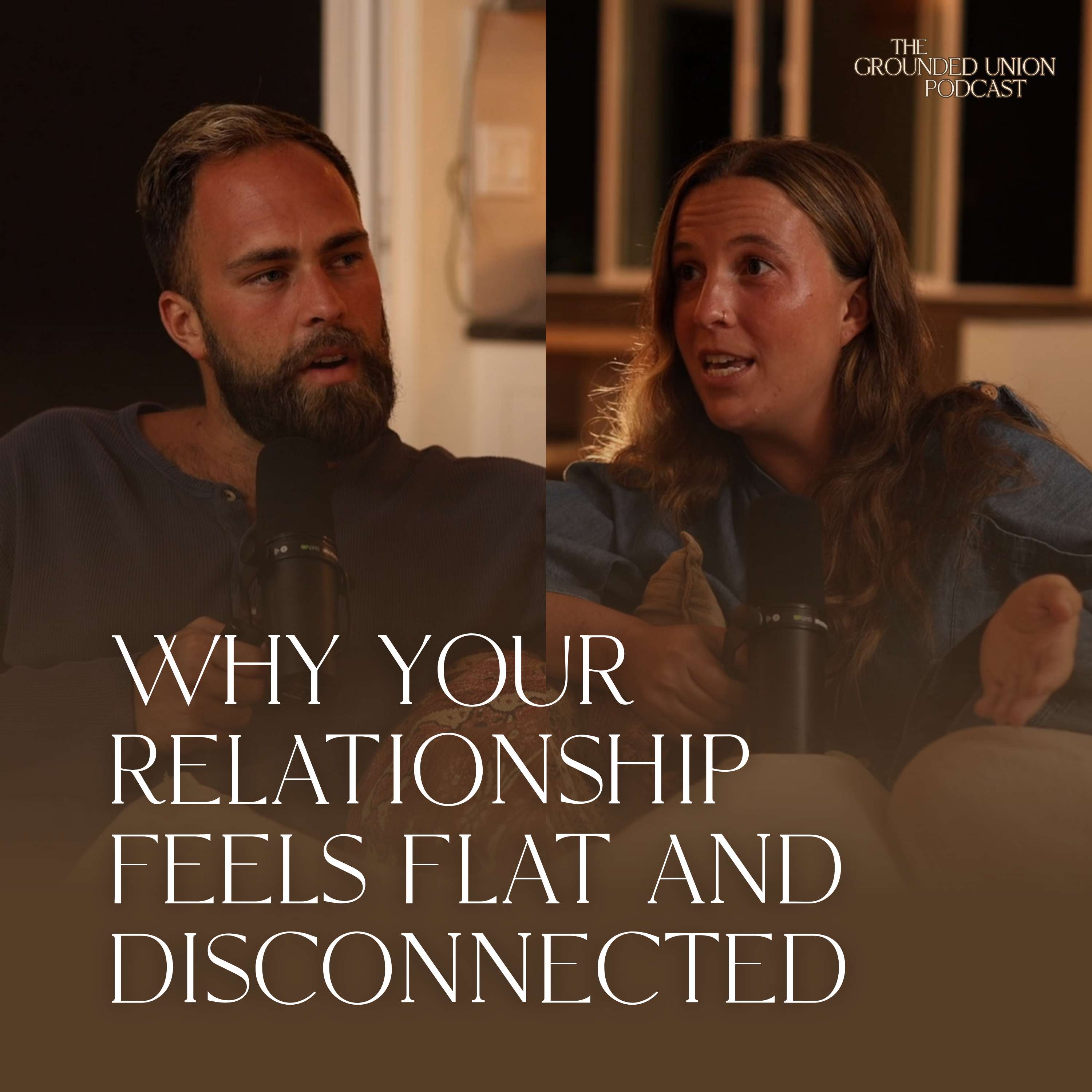
Loading summary
Transcript31 lines
- [00:00]
Caitlin
Sam.
- [00:29]
Brandon
Welcome back to the Grounded Union podcast. Tonight we're gonna be talking about why your relationship could feel flat and disconnected and share with you some of the things that we did when we were at rock bottom and needed mental clarity and some things that we still do today that we implemented from that season during our marriage breakdown. We actually just got back a week ago from our Arizona workshop. Thank you guys. For those of you that listen to the podcast that were there in person, it was incredible. We are hosting another workshop in June in Portland and we still have space that workshop as well as San Diego in August and then we will be here in Maui for a three day marriage intensive. If you would like to apply for that, all the info is in the link or the the show notes of this episode. There are no sponsors and there are no ads for our show. So if you get value from these these episodes, please share it with a friend so we can get the word out. When we were at rock bottom, I was stuck emotionally, which we talked about in the last episode. If this is your first episode, go back and start. That started our marriage breakdown, the very first episode of this podcast. And we kind of go in order of our story. One of the biggest things that keeps most couples stuck and KE me stuck was the incessant need for entertainment and have a artificial screen in my face. So that for me that was video games, social media times, and growing up, that was movies, TV shows. For a lot of people, they get confused when they're stuck, when they can't seem to make progress in their marriage. And a lot of people say, a lot of couples say, when are we supposed to have all these deep conversations that you and Caitlyn are suggesting we have like we have no time, we have no money to invest in these programs to do any of these things. Where is all of that creative energy to change? And I think what's crazy to me, as most couples and myself included was unwilling to look at the three to four hours a day that I was giving to social media, to entertainment. And what happens is when you are stuck on your phone and we're going to give you the alternatives that you can use instead of being stuck to media outlets, is you cannot think for yourself, you cannot think differently than everybody else. You have no additional capacity to grow and to heal because all you can see in your mind is the two hour movie you just watched, or all of the bad news you saw, or all of the lives that other people are living through social media, or all the things that you wish you hadn't seen that was also screwing up your mind. And so one of the things we are just going to just call out is it's not that there's like a. An addiction or an issue in this. It's just it reveals us as a society. We would rather see somebody else's life being lived in a movie or on social media than actually create the life that we want to create for ourselves. And when you as a man, are constantly looking to have your life look like somebody else, you end up hating your own life. You end up being jealous. You ended up being envious. And that's where you fall into a lot of ways of objectifying women, sexualizing everything around you. Because it's an object world. It's just this. This chess instead of reality. Because when it's hard, when things got hard for me all throughout my childhood, all throughout our early married life, it was, I'm going to distract myself with a screen, whether that was video games or social media. And the price I paid for that was huge, which was I could not do the deep work. I had no time, I had no capacity. And when I needed it the most, I was numb. When we finally hit rock bottom in 2019, I was completely numb because of the way I had engaged with social media and I had engaged with my phone. So we're going to talk about giving you some insights into how big of a role your phone, computer, your tv and light. We're gonna talk about light in this episode. Artificial light, natural light. How big these things play the role in your healing process.
- [03:46]
Caitlin
Yeah. And backing up a little bit almost ten years ago now. We got married at the time of this podcast, when it's being recorded. We got married in 2015. And we actually, when we were getting married, had this great idea that we were gonna try the first year of our marriage is what we told ourselves without having any tv. And that was actually before watching TV and movies was really big on the laptops. But essentially, we just eliminated for the first year, the concept of we finish work, we make dinner, and we watch TV together. And that's our way of relaxing or entertaining ourselves, or even to go as far as to say that's our way of connecting. And so we just thought we would do this fun adventure and see what else we could do. And so we bought board games. We were very young at the time. We bought board games, had no kids, and we just would finish work, we would make dinner together. And this is obviously, if you guys listened to the first episode, which I hope you did, this is when we're just doing our cycle. So it's like we're not even at our fullest connected capacity that we're at right now. We're still living in a lot of brokenness. And at the same time, not having TV in our home, like, not having a giant TV on our wall as like the centerpiece of our house, made a huge impact in the first couple years of our marriage in being able to connect deeply. To get home from work, we made our din together, we sat down and we would play cribbage. I don't know if any of you have ever played cribbage before, but we would play cribbage sometimes, like for like two hours every single night. And it wasn't just always deep talking, it was sometimes just laughing and being together and playing and just enjoying life together. So we made it a year. No tv. Then by that point, I was pregnant with our first baby girl. And we're like, let's just keep going. We're about to have a baby. Like, why would we put a giant TV on our wall? Again, like, let's enjoy the first couple years of our baby's life. Then we make it no more tv. So then we have another baby. And here we are now 10 years later, and we have actually never owned a TV. We have never put a giant TV as a centerpiece. We've never used our computers, our laptops, our phones to watch TV shows, to watch movies. If you wanted to make a movie or TV show reference, you would have to make one from 10 years ago. Because we literally have no idea what movies have even been released. Because we jumped right in to experiment with that and realized, whoa, look at the connection we can create. Even though we hadn't even done the foundation, foundational work which we've talked about in all the episodes, we still, on the outside, most people thought we had an incredible marriage. And I think a huge part of that is because we didn't spend every waking moment on our phones watching tv, watching movies, doing all those things that lead to massive points of disconnect.
- [06:26]
Brandon
Now, what Caitlin didn't realize and what I hadn't chosen into was when there was stress in our life or difficulty, I still needed my screen time.
- [06:34]
Caitlin
Yep, true.
- [06:35]
Brandon
And so this is a major theme in our marriage was I was, when I was clear headed and emotionally regulated, I wanted the same things Caitlin did. And so I made the same commitments internally and verbally. Hey, you know what? I don't want to. We're not going to watch movies. And let's just be together. Then the habits came in of I'm going to play. Start playing mindless games on my phone.
- [06:56]
Caitlin
Video games.
- [06:57]
Brandon
Video games, random things. And that started coming back when we had our first daughter, and I'd be rocking her to sleep, and it would take a long time, so I'd start playing a game on my phone, which kept her awake longer, so none of it made sense. And then when things were more difficult, especially at the early parts of our marriage, in different phases, would start going to social media. And we had made a very clear decision and commitment, both of us, that we wouldn't get on our phones after either of us had fallen asleep, especially if we went to bed upset with each other or frustrated. I felt incredibly justified to get on my phone and scroll on social media. And that was the predominant time when I was exposed, or exposed myself to suggestive, provocative content, which pushed me further and further away from Caitlin. And so for a lot of you, you might be thinking, you know, entertainment's how we connect. This is how we, you know, we watch our shows together, we talk about. We've heard this in lots of comments. We watch our TV shows together, and then we talk about the characters in.
- [07:49]
Caitlin
The show, gives us conversation because we don't know what else to talk about.
- [07:52]
Brandon
Yeah. With the TV show, what we would suggest and what we're going to offer in this episode is there's so much richness that you can create in your relationship and in your reality, which means what's like outside of your home, what's available in nature around you. We're going to give you some alternatives to just turning on a screen with somebody else's life story, with somebody else's narrative, with somebody else's agenda to push on you. Especially if you are in a season right now where your marriage is at rock bottom, it's time to let go of entertainment as your medicine. I'll say that again. If your marriage is at rock bottom right now and you feel like you need your TV time, your decompression time, what you need to do is take a cold shower and do some breath work instead of turning on a tv, hoping that it can regulate your emotions and keep you from feeling the pain you're in, whether you are the. Whether you were in a situation where you are a betrayed spouse, you don't need to be numb right now. You need to feel through it, and you need to let that pain process through your body. Or if you were an addicted spouse and you were the one that caused pain you don't need to be distracted right now. You need to live to the fullest. You need to see with clarity. And so what we're going to suggest is that media, social media, movies, TV shows, mindless use of the Internet stops you. It holds you right where you're at, right where you are, as well as exposing you to things or ideas, they may or may not be what you want to fill your mind with. And so we're not just talking about inappropriate content or things that are not conducive. It's literally just a distraction. If you are crying out for connection in your relationship, it's not going to be found with both of you on opposite sides of the couch with a phone in your face in two different worlds. You're going to have to put the phones down and actually face the elephant in the room, which is, we're keeping things from each other. We don't know each other. We don't know how to connect with each other. It's awkward, it's uncomfortable. You get to relearn those things. And when you do, you'll never want to go back to living through an artificial reality.
- [09:35]
Caitlin
A common phrase we heard a lot, or even an empowered narrative that a lot of people have is, we talked about this in our previous episodes. The sexual brokenness ones is, oh, my gosh, we live in such a sexualized culture. And Brandon loved that narrative in the first couple years of our marriage because it kept him spinning in that cycle and it enabled and empowered that belief system. And he realized. We realized, oh, my gosh, no, we don't live in a sexualized culture. We put ourselves into a realm of media that is sexualized. But we are selecting it. We are choosing it, we are asking for it. We are putting ourselves into a position where we could accidentally. I have quotation marks. Marks. If you're not watching the video, we could accidentally stumble upon something sexual. And oh, my gosh, who posted this? Who put this there? Who put this sex scene in the movie? Oh, my gosh, this risque image on this ad and, oh, this pop up on this video game that I'm playing. It's like as if we are victim to these things. And we began to realize, oh, no, we are not a victim to this. Brandon is not a victim to this. Brandon is choosing this because he is choosing, like he's saying, when he's in pain, when he's uncomfortable, when he's anxious, when he just know what to do with this time when he's tired. I feel like that comes up so much for people. When I'm just tired, I don't want to do anything else. I'm just going to get on my phone, I'm just going to turn on the tv. I'm just going to open up my laptop and we're choosing into, entering into a realm. Like Brandon said, it could be, you know, a sexual realm, or it could just be a dissociative realm. It could just be. I'm going to open up my laptop and I'm going to work some more because I'm tired, I'm uncomfortable. I don't want to connect with my spouse, I don't want to engage with my kids. I came home in, the house is a mess, my wife is stressed, my kids are screaming, oh, wow, this is a really convenient time for me to say, I have a lot more work to do, or I need to go call this person or play this video game or watch this TV show or, oh, my gosh, the sports show is on. I have to watch this. This is my favorite team. It's only on at this time. You know, it's just a once a week thing. We kind of head down this path where we give ourselves this enablement to enter into a realm where we're not. Not fully grounded, we're not fully present, we're not fully alive in the moment. Like, if we step back for a second, do we. We were talking about this at our. At our Mesa event in Phoenix. Do we actually really want to just live our lives mostly consuming media? Like, when we're just going through the motions, we just kind of start doing it. We're just like, yep. Get on Instagram. Yep. Get on Facebook. Yep. The TV show. Yep. The thing. But if we take a step back, is that even fulfilling our soul? Do we really feel good having that much screen time every single day? I'm gonna guess the answer for me is absolutely no. And I'm gonna guess that for most of us, if we actually paused and took a step back, just like I say in every episode, we took a step back and we look at it, it's like, oh, my gosh, I don't feel good. Because, you know, what feels really good is being connected to the ones that we love most, experiencing real life together with the ones that we love most. Making eye contact, holding hands, hugging our children, being out in nature, laughing together, creating memories. All these things that I'm listing off get stolen when we just keep going through the motions and adding in a ton of screen time and a ton of media and a Ton of dissociating. Dissociating from what is real, what is present. And you might think, well, how am I supposed to laugh with my wife? We hate each other. Other. We're just roommates. How am I supposed to have this connection with my kids? They're so disobedient, they're so entitled, they're so this. They're so that. It's like, yes. And you know what's blocking you, like we talked about in the very beginning of this, you know what's blocking you from getting to the other side? Is the fact that you keep showing up and turning on the TV instead of showing up to the moment to clean up whatever mess there is, relay a new foundation and step into a whole new way of relating to your spouse, to your children, to your friends, to your community and to your entire life.
- [13:45]
Brandon
So, Brandon and Caitlin, what are you suggesting we do then? We want to work on our relationship. We want to take this seriously. What are you suggesting? Media. What role does media play in our life? Before we give you our suggestion, I want you to think about this. I've said this many times before. If you look at the economy and finances, nobody ever complains about the cost of media. Streaming services are 10 bucks a month. Social media is free. Most of the things that you have access to on your phone are not a burden financially to you. And here's the reason why is it runs off of attention. That is the currency of social media. That is the currency of media is it's your attention which is the value to that business, because that's how they can advertise to you, market to you. And so what you don't realize is the cost that you truly are paying by giving away four, five hours of your day, every day for 60, 70, 80 years to these devices, to these shows, to these places, is that you are giving away endless amounts of value. And your attention, your attention is the currency that the world wants, that big businesses want. And so you need to be aware, these apps, these shows, they are not meant for you to spend 10 minutes on them. It is meant to be spent four or five hours on it. It's meant to consume you. It's meant to get you into a hypnotic state so that when you're scrolling, you end up clicking on an ad and buying something. That is, if you didn't know this, social media is run on ad traffic. So that's why you see friends post from your friends and then you see an ad. That's how those platforms make money. And so it doesn't mean that they're evil. It just means you need to be aware of why you're picking up the phone to begin with, why you're turning on the show to begin with. If it is to fill a void in your soul, it will not do that. It will actually just delay the pain and keep you or worsen the state you're in in your relationship. So your attention is the most valuable thing you have. So the fact that you're sitting here listening to us tonight, we are incredibly grateful and we promise to deliver more than what you would just find scrolling on social media or aimlessly watching shows. So we hope to give you that value. Our suggestion and how we navigate our age is with wild intentionality. So for us, we don't watch any movies. We just, we don't watch any. We have four kids, eight, six, three and one. I think two years ago was the last time we watched a movie. We watched the new Grinch movie and we were going to watch it this year, but we just ran out of time. So we usually watch one movie. You're the Grinch. And what we have found is children, if you just want to think from a child development standpoint, their brains actually function really well in a calm environment. They actually don't need entertained. Our kids up until now have not told us they are are bored. That's right, our kids do not tell us they're bored. We just got off a six, six hour flight back from Arizona. Our six and eight year old are not fidgeting. They don't have a tablet, they don't have a screen in their face. We don't give them their phone to watch a video. They're just in the present moment. So we've experimented for the last eight years with all of our kids. They're not familiar with using a screen. They are very present, they are very calm, they are very regulated. And we think one of the primary reasons is we have not shoved the screen in their face. Now for those of you parents like, oh, they're just judging me. They don't know my life. We are not here to judge you. We're here to invite you into if your kids are, if their behavior is not something you love, it's probably modeling something that you do. So if you're just giving them a screen so that you can have screen time, what if we were to rework that? So we don't do screens for our kids. They're not missing out, they're living a great life. We don't watch any shows when the kids go to bed. So we don't have a tv, but we also don't flip open the laptop. We don't have a show that we watch after the podcast is done recording, we go to bed. Bed. And guess what? Before we go to bed, we sit and talk with each other. We do work online, obviously. Here we are talking to you online. I've checked Caitlin's screen time from time to time. She spends like 17 minutes a day on Instagram. 17 minutes. And so yes, we do use social media to be able to give value. I don't consume any visual media just because, not because I'm afraid of seeing something, but just because the passive state I got into consuming media wasn't advantageous for me. So I don't consume any social media just for the sake of. I just don't have time or capacity to do it. I choose to give on those apps. But I've watched Caitlin. Caitlin, maybe you could speak to it. She only uses social media to learn something and to follow and engage with accounts that she really feels connected to. So you don't have to just aimlessly, you don't have to use these apps in a passive way. Use them as a tool and a resource. And that's what we do. We don't watch shows, we don't watch movies, and we are not exposed to garbage. We actually have to find out from other people if there's big news events going on because we're not inundated with news. We actually live in a world. Our world that we live in and we travel around is a very positive place. It's filled with very good news. It's filled with a very. We wake up in a very neutral place. If you pick up your phone and turn on the news and see what bad thing the president did or another country is going to kill us. And you flip open to social media, see a half naked woman, you see somebody that has something you don't have. Your data started off really bad. And so what you can do is by eliminating that noise that static is, you can actually begin to create the environment for yourself and for your relationship that is outside of what everyone else is experiencing. And that's the ecosystem we've created. And I had stepped outside of that when our marriage was broken down because I was spending two or three hours after Caitlin went to sleep numbing out on social media and it was killing me. And you're not missing out on anything. Let me tell you that you're not missing out on a single thing when you choose to invest in your relationship instead of putting a phone in your face.
- [19:03]
Caitlin
Yeah. You get to create the world that you want. Want. And that's why we often phrase this as creating versus consuming. Because you can create whatever you want. If you want to choose to stop consuming what everyone else is having. You can have your own experiences, create your own life, and give yourself the relationships, the experiences that you want to have if you want to choose to stop consuming. And so we've talked a lot about what we're doing right now, and these are a lot of the things that we begin doing in our marriage breakdown, because like Brandon said, we already had been many years without a tv. And that was not necessarily the cure, because you cannot have the TV on the wall. You can still have your TV going with you everywhere. And so I didn't know this because a lot of this was done in secret and in lying and behind my back, which is topics we address in previous episodes here. But Brandon would wait till I'd fall asleep, and then he would get on his phone and listen to podcasts. Not all the time was it even sexual. Sometimes it's video games, podcasts. Sometimes it was scrolling and seeing sexualized images. It could have been anything. But essentially, he was breaking our boundaries, our established standards, which is that we don't get on our phones when we are supposed to be sleeping. And these are things that we had set up because they were a part of our value system as a union, and then also for our family, what we wanted to reflect to our kids. And so when I caught Brandon in 2019 with this whole world of secrets he had been keeping, that is when we began embarking on what we now coin as creating instead of consuming. And that is the concept of removing, like Brandon saying, removing all of these forms of consumption. Yeah. And so we're not necessarily saying you need to be exactly like us to have a healed and connected marriage. We're not saying that at all. We're not even saying you'll never be able to watch TV again. Delete all of your apps, never be on social media, never do all these things. It's not black and white like that. We are going to invite you into a season. We said this in our. In our event. We invited everybody into a season. Season. If you. Especially if you are on the brink of divorce, if your marriage is in the pits, if you've hit rock bottom and you've nowhere to go, please, I invite you to try this for 30 days. Unplug your TV if you have to sell it Put it in the garage, put it somewhere else, take it off the wall and put up some art. We put up images of our family. So when you. This is our couch right here. You guys are facing it this way, but on the other side is a wall, has three images of our kids. Kids, we don't have any TVs on the wall. So if you need to, for 30 days, take it down. If you have self control, you can unplug it. Delete your services if you need to, from your computer, pause your subscriptions, whatever you need to do, commit to yourself into your union. Okay, we're going to take a break. We're going to take that. We chose a year when I first got married. If you want to start in tiptoeing, take 30 days. Okay, we'll take 30 days. And I'm going to get off social media. You're not going to die. Die. You're literally not going to die. You're not going to miss anything. Someone's not going to post something that you're like going to be so sad that you missed. Take 30 days, stop watching the news. Get off of all your social media. Get off of YouTube. Guess what? Our podcast. You can stop listening to them. You can come back in 30 days. They're all still going to be here. You can stop consuming for 30 days and you're most likely, even as I'm talking and I feel really panicky and that's a great ding, ding, ding for. There's something, there's an attachment here that we have and you're not the only one. It's actually, I think they say nowadays that all of us are addicted to our phones. Like there's just no way around it because of the way that they are made. The lights, the flashing sounds, the noises, everything, all the apps, the stimulus, the access that we have to anything that we want at all times. It's addicting by nature. That's why we all need to take breaks. That's why we need to have boundaries and standards and a value system for our family. So unplug your TVs, pause all of your subscriptions, get off of social media and pour into your. Pour into your marriage, pour into your kids, pour into your community, pour into your family. Sit and be with yourself and you'll find your creativity come back alive. Some of you probably love painting. Some of you probably love drawing. Some of you probably love writing. Some of you probably love hunting, fishing, riding your bike, walking, exercising. Name anything that you have inside of you that you want to create we found in this time we, we got rid of all of that median consumption. I already had been abiding by our value system and our standards. Brandon was reawakened to the ways that he had been breaking all of those and committed to actually upholding our values and getting rid of all of consumption. This is a crucial component to why we believe he experienced sexual wholeness. Because you have to get rid of it to rewire your brain like what we talked about in the, in the sexual two episodes. If you want to embark on rewiring how you see people, you're going to have to take a 30 day break, if not longer from getting online like you just are going to have to. Because you need to rewire how you're relating to everybody, how you're seeing people, how you're using technology. All of these things need to be rewired. And in that and in our season in 2019, we found so much purpose in what we were here to create in the world. Because like I said, nobody actually feels like their soul is coming to life when they sit down and just scroll and scroll or just watch TV and watch other people playing sports. You don't feel alive in that, but when you remove all of that and come back to what you were created to bring to the world, you feel alive again. We're not only talking about your marriage feeling alive, we're talking about you feeling alive and your purpose here on earth. And that's exactly what we tapped into is this is what we're here to create in the world. This is what we're here to bring, what we're here to offer the love that we have to give each other to our kids and to everyone around us. You come back to life when you stop numbing out and stop turning to screens all day long. So take a 30 day break and in that time evaluate how you want to re enter. Like Brandon said, I use social media in a very specific way and I don't feel controlled by it. I don't feel like this is this thing that I'm bound to like. Oh, it's so tempting and alluring that I, that I have to create all these restrictions for myself. No, it feels like a great way to use the app. It feels like the most blissful, inviting way for me to use it. I follow. I don't even know. I think it's 22 people that changes in ebbs and flows. I don't follow hundreds or thousands of people. There's some people on the apps that follow 4,000 people. That's so many people to be like when you open your phone, that's like, can you imagine being in a room with 4,000 people shoving their opinions down your throat? Whoa. You would run like, that is so overwhelming. I have it narrowed down to friends that I genuinely spend time with that I'm relating with in life, and people that I might not actually have a personal relationship, like somebody who might be even following, like Brandon or I. People that I'm learning from in this season of life, people that I feel like has something valuable to teach or to offer or to model, or people who are experimenting with something that I would like to experiment with with my family. And so I have it very narrowed down. I could walk into a room with 22 people that I value and respect and want to glean from and want to do life with and not feel overwhelmed. See, I've created an experience online where I'm not dissociating, I'm not numbing out. I'm creating the experience that I want and I'm even making it. It's not real life. It never will necessarily be, but I'm trying my best to create the most real life experience in my online world. And I also don't watch tv, I don't watch movies. These are things that we both do at the same time. We both don't watch endless amounts of YouTube videos and we actually don't really consume any podcasts ourselves. We have a couple friends who have incredible podcasts and we'll listen to those as support. But we're not just just pounding ourselves with non stop information. And this gives us the time and space and availability to connect deeply with each other, with our kids, and to create what we want in the world, to do things like this, to offer our heart and soul and to give back.
- [27:20]
Brandon
That all sounds great. People are thinking, that sounds great, Caitlin, but my spouse, I don't feel connected to. And that's the whole premise of this episode, is if you feel disconnected and stuck and it's dull and it's painful, getting off all these platforms, getting away from all these distractions will make the pain louder so that you can face it. Because it doesn't appear as painful if you're both distracted next to each other, but when you put the distractions down, you have to face each other. And so this is one of the reasons that we healed at such a young age, is I will get you guys. Like, why, why do you always give Caitlyn so much credit? Oh, she just is incredible. Caitlyn was Willing to like stare at me and say, hey, are you, is anybody home? Are you here with me? It was so clear that Caitlyn wanted a present, authentic, real relationship. And I was just like, can you like, can you numb out a little bit or can you just play dumb dumb, or can you not want connection? I don't have that thoughts anymore. But you will face discomfort if you both are off of your phones and not distracted and you're sitting on the couch and you have secrets and you have pain that you haven't dealt with. It's going to hurt, it's going to be uncomfortable. The whole point is if you ever want to get to the other side, you can't just ignore it because you just get to face it again tomorrow and the next day and the next day. So by not distracting yourself with media, you're actually saying, you know what, healing starts now. And so we're not saying just by getting off media that you're going to have a whole marriage. It's going to open up the capacity and the time and the energy for you guys to work on yourselves. So what working yourself looks like is. We recommend getting out in nature as much as physically possible. A lot of people work from home these days. You might not work from home, you might work 9 to 5. We recommend making your schedule revolve around nature as much as possible. We do live in Hawaii now and people are like, well, that must be easy there. We did in Idaho for nine years first and we did it growing up too. We started, you know, whether you live in a warm climate or a cold climate, go on a walk, bundle up. If you're in a cold climate. What we found was in Idaho would, we would go on two walks a day. We would get our young kids bundled up, it would be 10 degrees, 20 degrees, snowing. And we were still out there twice a day going on walks, exploring the foothills. And then what I've told people, if you live in a when, if you get the, the sads when you're in and it's gray and it's cold outside and you're like, well, it sounds a lot better to watch a movie than just to sit in a dark, cold house. If you have a fireplace, a wood burning fireplace, make a fire, light some candles, make it special inside, you don't actually just have to entertain because you're uncomfortable. And if you don't feel like where you live is conducive to your mental health, move somewhere else, move to Arizona, move to Florida, move to, move to places that have more sunshine if you need that. If you like being in the cold, build a fire, do something with your hands. What we forget is that we're going after a feeling. That's what life is all about, is you actually want to feel something. You want to feel connected, you want to feel alive. And so out of fear of feeling negative emotions, we try to distract ourselves from feeling anything. And so often what you're trying to create in your media consumption is a feeling, is a end result. And you can actually have that with a much, much simpler activity. Going on a walk. We've had so many healthy, constructive conversations walking together. So in this season, where you're rebuilding trust, where you're rebuilding communication, go on a walk, just be with each other. It doesn't have to be fancy, it doesn't have to cost a lot of money. Just go on a walk. It could be raining sideways, get an umbrella, go on a walk, be outside. And when you come inside, you don't have to rush. You can slow down. Even if you work a high paced job, slow down when you get home, make your home tidy. If you're like, well, Brandon, I have to face the junk room that we just had. Throw everything, clear it out. Start the art Caitlin was talking about, start a craft, start something that you actually want to create. Write the fiction novel you've always wanted to do, write your the memoir, start the side project, start the business that you've always wanted to start. There is so much creative potential when you stop consuming and you start creating within your marriage by going out in nature. And then when you come home, you can actually re, we can restart your life. I actually don't have a lot of compassion for people that are frustrated with being, being broke. If you just swapped out this time, I understand you probably already worked your day job. Maybe you both worked your day job and you were exhausted and you're still hardly able to make your bills. To get clarity, it's not going to be through consuming media. It's going to be slowing down long enough saying, what are we here for? What am I uniquely talented at? And how can I give that to the world? Few people do that. You can start a business, you could start a lawn care business. You can start your window washing business. You can start whatever it is you already do and do it your on your. I'm not saying you have to go quit your job and start your own business, but I would be suggesting that if you got rid of the media, you would have far more earning, earning capacity than you could ever Imagine and fulfillment. So we're just saying you're not turning off the TV and turning off the shows and getting off of consumption so that you can live a boring life. This is so you can start living life. You can start living it together.
- [31:51]
Caitlin
Yeah. And this is also the time that you have all these conversations that if you've listened to the past, you know, couple episodes, we talk about talking through your childhood, talking through. Through how you were raised, the people that were around you, the. The narratives, the paradigms, talking through your spiritual paradigms, what churches did you grow in, what belief systems do you have. Talking through your sexuality, talking through lies that you've been keeping, talking through the secrets you've been holding, talking through the things you thought you would sweep under the rug and take through the grave. Like, these are the things that come up when you silence all the noise. You sit down with your spouse and there's now nothing else between you. And things start to come out, things start to pour out. The conversations begin, the questions you can begin to ask each other. You start to see each other, to understand each other. It's almost as if you might even feel, this is how we felt. Like you're getting remarried, birthing a new marriage. Almost like that one's done and old. And here is a whole new marriage, the one that. That we thought we were signing up for when we had our wedding, that we didn't have because we chose into all this hiddenness in this dark. So it's like you have this underground area of all this hiddenness and darkness, all the secrets that we keep. And then up above, right here in the surface, we cover and hide all of that with our dissociative tendencies and our screen time, it's like, oop. So when you remove this screen time, it's like, oh, now we can peek into that dark hole of all that stuff I've been hiding with all the screen time time. So it's like they really go hand in hand. Normally, if you have a lot of secrets and hiddenness, you're keeping all of that behind in that dark hole with all your screen time. So when you remove all your screen time, you can see all that clearly. You can start to talk together. So it was crucial for us to remove that, to get to a place where we could heal in our marriage. And then, guess what? When we got to the place, when we healed in our marriage, we really realized we don't actually want any of that anymore. We didn't actually want to add that back in. I'm not Saying that you get done with your 30 days and you want to add some of that back in that you're doing something wrong. Because I don't think that everybody, not everybody might not want to have their TV. I'm just saying, take that 30 days. And for us, what we found is that was crucial for us healing and getting back connected again. Getting all the secrets out, intimacy into me. We see into to meet, you see? And then it's like, whoa, look at how much we're creating. Yeah, look at how much we see each other, how much we know each other. Like, oh my gosh, we put the kids to bed. I don't want to watch a movie with you to connect. That's not connecting.
- [34:25]
Brandon
Yeah, sure.
- [34:26]
Caitlin
We might be snuggling. Why don't we just snuggle without the TV on?
- [34:29]
Brandon
Yeah.
- [34:30]
Caitlin
You know, so many couples are like, well, that's our time to come together. Can't you come together without that? Well, that's how we, we talk about the characters in the TV show. Do you have anything else in life you can talk about? Like, not to be blunt, but if all you can talk about is characters in a TV show, what kind of a marriage even is that? Like, you have nothing else better to talk about in your marriage? There's nothing more life giving and soul fulfilling that you can talk about? What about what you want to create together? Yeah, sit down and talk about that. What do you guys want to create in the next year? What do you want your life to look like five years from now, ten years from now?
- [35:02]
Brandon
Next week?
- [35:02]
Caitlin
These conversations, like, what makes you come alive? Do the, those things. Does watching TV make you come alive? No. So have less of that and have way more of all the things that make you come alive.
- [35:14]
Brandon
Yeah. I think with this, a, a, a really powerful way to think about this is not just what you're consuming, but the impact of the light that you're putting in front of your face. So artificial blue light. There's a lot of studies on it. You can look into it on an artificially blue lit screen. A lot of people are wearing more red or blue light blockers. So you've seen, you've probably heard of blue light blocking glasses. If you work behind a desk, you're probably staring at a screen a lot. The image impact, the artificial blue light, which mimics what comes from the sun during the brightest hours of the day. During the afternoon, it messes with our circadian rhythm. It messes with our body's natural production of different hormones to either wake us up or calm us down. So our bodies are very out of whack with when we see these artificial lights. And so when you wake up and you put a blue light in your screen, in your face, it automatically spikes your cortisol where your body's like, whoa, we're in fight or flight. We got, we have stuff to gotta do. When you keep a blue lit screen in front of your face space right before you go to bed, it makes it so much harder for your body to wind down. And so instead of using artificial light to try to regulate your nervous system, actually use less and less blue light as possible. We love trying to see the sun rise with our eyes. So if you have the opportunity, depending on the time of the year, go outside and make the sun ray sunrise an occasion. Even if it's cloudy, even if it's cold, if you can see the sunrise with your eyes, it just reminds you that you're a freaking human being that lives on a planet and you can, can just take it in. It's coming back into your body, coming back into being a human, coming back into this, this experience that we have right now. Instead of trying to escape it, you turn your phone off and you go look at the sunrise. And there's so many health benefits to that. And then when the day is winding down, if you can, if you have the opportunity to turn off your phone and if you can see the sunset in a beautiful location, maybe drive the five minutes down the road to the forest area, to the hilltop lookout or to your backyard and just noticing the colors changing in the clouds. The benefits from seeing the sunrise and the sun sunset are so huge. And trading that from just looking at the non sunset of a blue screen and it reminds you, it triggers to your body, oh, it's time to start winding down. So instead of turning on this podcast, we're going to change our light setup for the next season. We are going to lower the light just for our podcast because we actually don't even use lights at night. We use some incandescent bulbs. They can have a non red light setting and we'll use, oh sorry, non blue light setting and we'll use red light lights that we use to brush the kids teeth and we keep the lights very, very low. No big led, LED flicker lights that basically are like strobe lights like you're in a club. So leds keep you alert, keep you awake. Fluorescent lights are the same way. We like incandescent bulbs and it allows your nervous system to be calm, it allows your kids to fall asleep early. It allows you at 9 o', clock, instead of just getting worked up, you're actually ready to. Oh my gosh. You know what you should do when you, when you're tired? Everybody that's listening to this is maybe rev. This may break your paradigm. If you're tired, go to bed. There's nothing good that's going to happen in your life from nine to middle midnight, ten to midnight. If you have to wake up early for your job, or if you want to have that extra time to get up and take care of yourself and work out, have some time to read, go to bed at nine and wake up at five. Do you know how many hours that's. That's eight hours of sleep. Go to bed at nine, wake up at five and you're going to have an abundance of time. And this might take some rewiring. You're like, well, Brandon, I'm a night owl. No, you're not. You've been on your phone for years and years and years and you've trained yourself to stay up late, turn off.
- [38:36]
Caitlin
The light lights when the sun goes down and then come back and tell us if you're still a night owl. Because oftentimes we think we're a night owl because we just flip on all the switches in the house. And of course, yeah, you'll stay awake if you keep all these lights on because it's triggering to your brain and your body. That's daytime. It's really hard to go to sleep when you think it's daytime. And so what we've been doing for three, four years now is when the sun goes down, there is no lights on. And so it's just red in our house. It looks hilarious if you're out. If you're outside looking in, it's like, why is their whole house red? Our favorite is natural fire. So we've had houses in Idaho that had wood burning fireplaces. So no lights on in the house when the sun goes down and we light a big beautiful fire and we all sit by it and we come together or Kindle kids will. If you have kids, oh my gosh. And your bedtime takes forever. Turn the lights off when the sun goes down and your bedtime will go like this. I guarantee it. It will go so fast because you're. Your kids are ready. They'll probably begging to go to bed. They'll be crawling to the bed. They're going to be so ready. So we love a fire. We also, we don't have a fireplace in our House now. So we will have all the lights off, the kids are in bed, and we'll just light a couple candles and we'll snuggle on the couch and we'll talk. And you cannot keep yourself awake. You just can't. Like, if you're a spouse who has an addiction to your phone and you're looking at pornography when your spouse goes to bed, if you had all the lights off and a candle on, that just. That scene doesn't even go together. Like, you're not looking at pornography while you have a candle on next to you. It's just not how it goes. You are doing that because you have your blue light on. You have the blue lights on in the house and you're staying up and you're staying wired, stimulated. And you're. Essentially, what we're breaking down is we have all of. I think somebody left this hilarious comment about me that I'm a hippie or something and Brandon's like a dude, and how do we even. How do we even click or whatever. And what we're presenting is a. What most people would think is a hippie way of living. And it's actually not hippie at all. It's just actually the way we were created to live. We weren't created to live looking at a screen with all this blue light dissociating and staying stimulated. We were meant to live in our union, experiencing life outside the actual sunlight, not the LED lights of our house. Getting our bare feet into the earth. I always tell women that are in their seats season of hearing all these massive secrets revealed or dealing with all of the breakdown of their marriage. It's like, how do I survive all of this? Well, you need to put your bare feet in the ground. You need to get your. Your eyes in the sun. You need to go for walks. You need to be out in nature. You need to be getting plenty of sleep. Don't stay up late watching tv. Get lots of sleep. You need to nourish yourself with meals. These are the fundamentals, pills that help lay the foundation for your own life, for your marriage, and for the legacy for what you're passing down to your kids and your kids kids. And what trickles down like this is what you get to begin to think about creating in your life. When you take out all this stuff, that's counterfeits. You know, we talked about all the. The sexual counterfeits. This is like the counterfeits of being fully alive is all of this stimulus. And so when you break it back down to some of the basics. Basics and the simple joys and beauty of life. You lay this beautiful foundation to build upon and to pass down to all the generations that come after you.
- [42:03]
Brandon
And if you want a really practical example of how taking media out of certain parts of your life plays out, here's a TMI too much information example. It used to take me 30 minutes to take a poo because I had my phone with me and you might be thinking, oh, my husband's like that or my wife's like that. I've tested, we've tested this with multiple people. I won't name names, but when I stopped once we were in our season of brokenness, I committed and agreed to not taking my phone in the bathroom. And this crazy thing happened. After a couple weeks. My bathroom time taking a poo went from 30 minutes to one minute. And it's never gone back. And so if you're like, man, it just, you know, takes me 30 minutes to you to go number two. That's because there's a phone in your hand and that's not sanitary and it's not beneficial. Your body, if you need 30 minutes to yourself, go on a walk, move your body. Body.
- [42:48]
Caitlin
Exactly.
- [42:49]
Brandon
So if you want a crazy experiment, stop taking your phone in the bathroom. Stop responding to work, emails, texts, social media, whatever it is you do on your phone, leave it out of the bathroom and doing your business will take place in 11 minute to 2 minutes. Your body will literally relearn how that process works. So there's a TMI example. That's what I experience. I've seen other men experience that, other women experience that if you leave your phone out of the bathroom, it won't take you 30 minutes. And so there are endless health benefits to using social media, to using your phone as a tool and not as entertainment. When you are looking to be entertained, when you are looking to, to have your mood shifted by something randomly, it will happen and you may or may not like the results. And if you are in a season right now where you need big changes in your relationship fast, cut out all the distraction and you'll face each other. And when you don't know what to do, move your body. Yep, Go outside, don't move your thumbs, don't pick up a phone, don't set your thumb to scroll, put your phone down, move your body, get in some water. If there's a river near you or a lake or an ocean, wherever you can get into nature and let yourself unravel, let yourself break, let yourself be uncomfortable, let your Body, let your body lead you. What does your body need? We've been so trained. If you grew up maybe in a Christian home or a secular home, whatever home you lived in, most of us don't have a good relationship with our body. It's like my body. We don't know what our body wants or needs. If you sat with it, even just right now, we'll do this exercise. You can close your eyes. What do you feel like your body needs? You might think, oh, I'm kind of thirsty. My hips are kind of tight. If you just started tuning back into what your body needs, you would move more. You would eat whole food foods. And you create experiences for yourself that revolved around relationship with other people, starting with your spouse, starting with your kids, and starting with the people that really matter to you. Social media and your phone, they confuse you and they make you think you want things you don't want. They make you afraid of things you didn't know you could be afraid of. They make you distracted. They make you fearful of a life around you or envious of somebody else's life. You can create the environment in the world that you want. You just have to to put the screens down, go back outside and be around the people you love. It will empower you to do way more than just being numbed out.
- [44:55]
Caitlin
Yeah. So to summarize, you can create the life that you want. You get to create that. And we're inviting you into creating that. And so if you're listening to this by yourself or with your spouse, we're inviting you into 30 days. Start today. Start today with your 30 days. And if you are brave enough to listen to us and to embark on 30 days with removing Consumption, please send us a message on the Ground in Union podcast page or send us an email and let us know that you're embarking on this and then come back to us 30 days from the day that you start and let us know. We want to hear your experience. What took place in your life? What took place in your marriage? What did you create? What came along alive?
- [45:39]
Brandon
Yeah.
- [45:39]
Caitlin
What was birthed in you? What was birthed in your marriage? Because I can guarantee you, if you're brave enough to do it, things will transform. And if you pair this with all the previous episodes, oh, my gosh, 30 days from now, I can guarantee you your whole world will look so different.
- [45:57]
Brandon
Step into that abundance. Let go of everything, all the limiting beliefs that your life isn't good enough, it's not worth facing. You can create the beauty you don't need to be distracted. You just need to step into the reality of where you are and who you're with. We want to thank you so much for listening to this episode about what to do when your relationship feels flat and disconnected. Unplug from all of the distractions, all the media, get back into your body, get back into nature and be intentional with how you use light in your home and you will experience shifts in your mood, shifts in your perspectives, and it will unlock the capacity to do the healing work we've been telling you about. You have the time, time. You have the capacity. You just don't need to be distracted anymore. We hope you guys enjoy this episode and we will see you next week.
- [46:57]
Caitlin
Sat.