
Podcast
The Growth Network Newsletter
Hosted by Resourcing teachers and leaders to make schools where people grow · EN
A 3 minute weekly newsletter to enable school leaders to keep up with the most important issues and events in schools right now
thegrowthnetworkuk.substack.com
thegrowthnetworkuk.substack.com
10episodes
Episodes
Newest firstAll episodes

Connection, Commitment and Excellence?
Apr 2300:04:53Tap to summarizeJoin the Linkedin group for School Middle LeadersFind out about Steps to ResilienceRead / listen to ‘The Five Dysfunctions of an SLT ‘Form or join a Resilience Community* Phones will be banned in schools. As the government said they would not do this, this headline was a surprise. The reason was that they were forced by other political parties to include it in the schools bill. Pepe Di’Iasio, of the leaders union ASCL, said it “doesn’t really change much”. What the legislation is likely to do is support schools in banning phones. Rather than making it illegal for students to have phones in school what it will probably do is make it the duty of schools to control their use. That is what 98% of schools are doing already, mostly by telling students phones should be switched off during the school day. Di’Iasio says that funding schools to buy lockers or pouches would make much more difference but that is unlikely to happen in the current financial situation. Therefore this is one headline that is probably not worth getting too excited about.* Every teacher who burns out is one fewer person who might have “unlocked” a student. This, on the other hand, is a headline I was very excited about. Ben Gomes, Google’s Head of Learning, argues that the key issue in education is not technology but motivation. A motivated student can learn pretty much anything they want where information is easily available, the question is, do they want to ? The Difference identified 176,000 children missing at least half the year at school whilst Teacher Tapp found 68% of secondary schools running exam booster classes (mostly paying staff) and Teacher Support shared the Story of one teacher called Sean under the heading, ‘I sometimes feel guilty that I can’t fix everything.’ The truth is that even where the resources are available the motivation to access them is not evenly distributed. Gomes argues that technology has a part to play in this with a huge impact on the mechanics of learning but the desire to learn, ‘…remains stubbornly, beautifully human.’ Technology can do nothing to help a student who does not want to learn, for that the student needs a dedicated and available teacher. In spite of that Gomes does still work for Google and sees hope in technology, not to motivate students but to free up teachers to ‘unlock students’. He cites a Google study of AI implementation in Northern Ireland which saw savings of 10 hours per week per teacher. In turn this means teachers are able to focus on what they came into education for, helping students, and prevents burnout.* Schools should be communities which inspire connection, commitment and excellence. Arthur Brookes also argues that the growth of AI, taking away many white collar jobs could be an opportunity to refocus on people centred jobs like teaching. With 56,300 fewer students in primary schools in 2027 some argue that this is an opportunity to do just that, reinvesting the £288m saved into reduced class sizes. Yet Teacher Tapp reports that the number of job adverts for teachers is at its lowest level in 10 years as schools save money by not replacing leavers. At the same time only 32% of secondary and 25% of primary teachers would recommend teaching whilst 37% of senior leaders aspire to be headteachers, down from 55% in 2017. Amongst all this bleak news, in a more uplifting post Kris Watson reminds us of what we could achieve if schools are able to take advantage of these changes. After a visit to Sunderland Football Club he observes that like great community football clubs, schools operate best when they are communities which inspire connection, commitment and excellence. Cathie Paine was similarly inspired by her the coherence and stability she found in schools during her visit to Singapore. This, she observes, enables leaders and teachers to act as professionals focused on the needs of young people. Whilst that may feel far off right now perhaps, Cathy suggests, this may be more attainable than we think.Thanks for reading. For more information about how to put these ideas into practice for yourself and your school visit us at thegrowthnetworkuk.org or subscribe to our newsletter on LinkedIn This is a public episode. If you would like to discuss this with other subscribers or get access to bonus episodes, visit thegrowthnetworkuk.substack.com
Transcribe →
More beans, less setting and time off for teachers
Apr 1600:04:15Tap to summarizeThis newsletter is brought to you by The Growth Network UK. For more information about how we can help you grow resilient leaders, improve wellbeing and prevent burn out for yourself and your school go to thegrowthnetworkuk.org.* Fruit juice will be banned in schools. The DfE has announced new standards for school meals designed to increase nutrition and reduce salt and fat content. The standards include; limits on cakes, cheese and fried goods like chips, an increase in high fibre foods, vegetables and pulses, as well as a ban on juice and nuts. For the first time all standards will also apply to school breakfasts and menus and prices will have to be published online. These standards will be especially challenging in the ‘grab and go’ format in which food is generally served in secondary schools and consequently there will be a phased roll-out. Meanwhile, a review of the free school meals programme in London found no impact on attainment but very positive impacts on family income and stress as well as more students eating healthily and together. The report identifies positive peer pressure encouraging students to make healthier choices about what and how they eat. This is encouraging but the new standards will challenge schools to provide food that students will eat in spite of the gap between what is served and what is familiar. * What if we banned setting? Writing in the TES last term, David Hatchett, CEO of Anthem Schools Trust argues that, based on his research with students, setting has a very negative effect on the self esteem and the progress of students in lower sets. James Marsh concurred that the positive impacts of a no setting policy in schools in the south west of England was very significant. Hatchett concedes that setting helps teacher workload, an important consideration in any decision, but argues that this is not a good enough reason to set when weighed against the negatives. But this is an issue which presents very differently according to where you are. Ben Christophers identifies the compounding of disadvantage for some students, e.g. economic disadvantage, low social capital and low expectations influenced by family or geography. Meanwhile, Charlotte O’Regan of the Sutton Trust shares, ‘Best performing schools have the fewest disadvantaged pupils’ meaning that schools experience a wide variation in the range of students they educate and therefore a wider variation in the complexity of issues to address. * Teachers do not get time off for running trips. When Teacher Tapp asked teachers whether they got the time back from taking trips outside schools hours, over 90% of secondary and 70% of primary teachers said no. This is probably not news to most people but perhaps the real concern is the compounding of expectations and impacts this is having on different parts of the system. A survey into Initial Teacher Training says providers are struggling to find mentors because teachers cannot cope with the additional work. As we have discussed previously, AI may help in this but Kornferry suggests that there are issues here too, the adoption of AI has not reduced workload where companies are not hiring and learning to use AI is creating additional work. Based on his own experience, Paul Collin suggests that one solution is to share simply the fact that you are facing challenges without passing on the details, may be enough to relieve stress simply because you have shared your burden. This chimes with Louis Valentino’s suggestion that in a time when teachers are very aware of trauma informed practice for students, healing leadership of staff may be necessary to take account of their trauma too.Thanks for reading. For more information about how to put these ideas into practice for yourself and your school visit us at thegrowthnetworkuk.org or subscribe to our newsletter on LinkedIn This is a public episode. If you would like to discuss this with other subscribers or get access to bonus episodes, visit thegrowthnetworkuk.substack.com
Transcribe →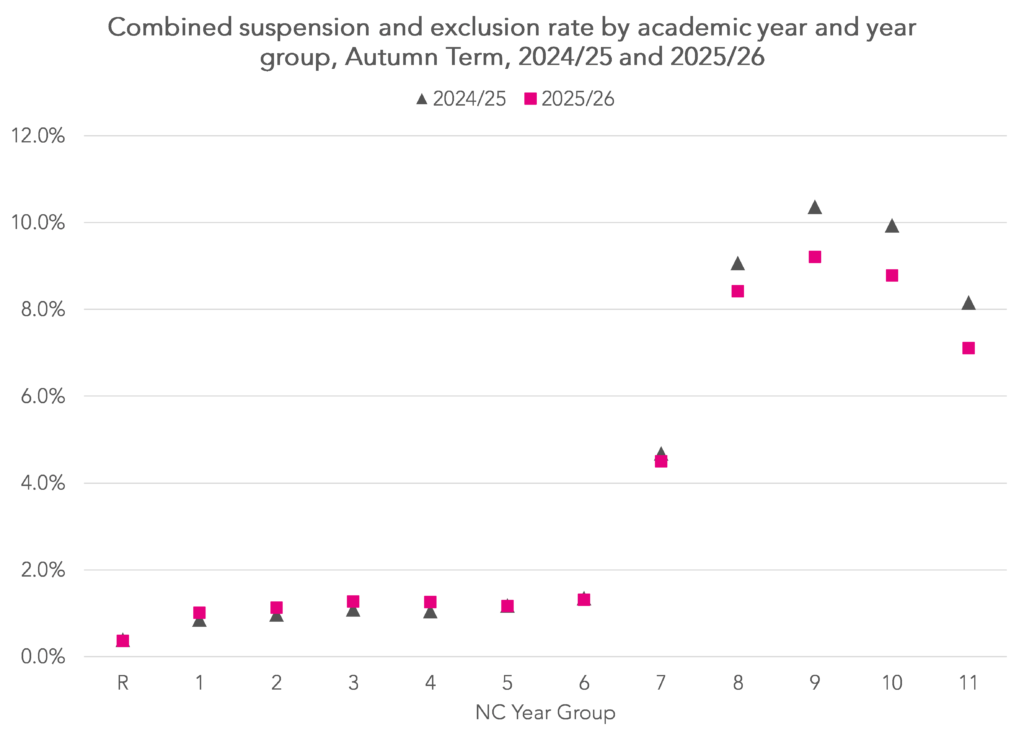
AI in a time of stress
Mar 2800:05:01Tap to summarizeThis newsletter is brought to you by The Growth Network UK. For more information about how we can help you grow resilient leaders, improve wellbeing and prevent burn out for yourself and your school go to thegrowthnetworkuk.org.* School exclusion numbers are falling. FFT has got ahead of the DfE in looking at exclusion data from the autumn term 2025. The headline is that exclusions are declining. However, there continue to be differences between primary and secondary schools with primaries reporting an increase in exclusions in years 1 -4 and little change in 5 and 6. Secondary schools excluded less students with decreases of about 1% from 10 to 9% of students in year 9 for example. What should really concern schools though is who is being excluded. For example, about 5% of all 9 year students were excluded during that term, that is 1 student in 20. That figure rose to over 9% for disadvantaged students (almost 1 in 10) and over 10% if they had SEND needs. Conversely non disadvantaged students were at around 2 - 2.5% compared with SEND or disadvantage (closer to a 1 in 50 chance of being excluded). In that respect little has changed. Attendance is showing similar trends. Overall it is improving but the gap between disadvantaged students and non-disadvantaged students is actually widening. According to Schools Week, students eligible for free school meals are now absent 5.19% more than non FSM students. The gap is also growing for SEND students and, if you are a secondary pastoral leader it may also be worth noting that the biggest jump in absence is between years 7 and 8. So, if you are responsible for behaviour or attendance it is worth considering what is happening with your disadvantaged, SEND and year 8 students* The DfE has published its inclusion expectations. That issue is becoming more prominent as the government publishes its expectations for inclusion. Each school will have to publish an annual inclusion plan by December 31st this year. They will then be eligible for a share in £400 million of funding to support implementation. The expectations look very similar to the expectations around pupil premium funding, they include references to leadership, evidence based practice and high quality teaching. The more significant elements relate principally to expectations around enrichment, culture and home school relationships as well as the physical environment. What this means for leaders is that you will need to consider the needs of individual students and groups of students, ensure that the curriculum and culture of the school meets their needs in terms of content, delivery, opportunities and the engagement of families in the process. All this represents sound ambition but the challenges will arise in implementation, how will schools meet growing needs at a time of declining resources?* AI can reduce stress. Perhaps the other theme we keep returning to is AI which does offer some helpful solutions. Betty Johnson shared that the main cause of stress is workload but less the number of hours taught and more the supporting activities; planning, reports, emails, resources, adaptation and documentation. She argues that AI can help here but that the real value is in learning how to prompt it to get the best impact possible. She offers her top 10 AI prompts covering everything from adapting lesson resources to summarising school policies (see below). Finally, she reminds us that AI should reduce workload but that teachers must still apply professional judgement. I recently asked an AI to give me a model answer for an exam question, it got it wrong. AI is helpful but not infallible, remember that you are the professional and what you share from AI will reflect on you, whether it is good or bad! * Lesson planning: “Create 5 retrieval practice questions for a Year 8 history lesson on the Industrial Revolution. Include one stretch question.”* Adaptation: “Create three versions of these maths questions: • support level • core level • stretch challenge.”* Parent communication: “Write a supportive email to a parent explaining that their child needs additional support in reading comprehension.”* Knowledge checks: “Create a 5-question multiple choice quiz for a Year 9 biology lesson on photosynthesis.”* Report comments: “Write a report comment for a student who works hard but needs to improve organisation and written explanations.”* Policy summaries: “Summarise this safeguarding policy into the 5 key responsibilities for classroom teachers.”* Model answers: “Write a model GCSE English paragraph analysing Macbeth’s ambition.”* Adapted reading texts: “Rewrite this text for a lower reading level suitable for Year 6.”* Lesson activity ideas: “Suggest three engaging classroom activities for teaching fractions to Year 5.”* Meeting summaries: “Summarise these meeting notes into key decisions and action points.”Thanks for reading. For more information about how to put these ideas into practice for yourself and your school visit us at thegrowthnetworkuk.org or subscribe to our newsletter on LinkedIn This is a public episode. If you would like to discuss this with other subscribers or get access to bonus episodes, visit thegrowthnetworkuk.substack.com
Transcribe →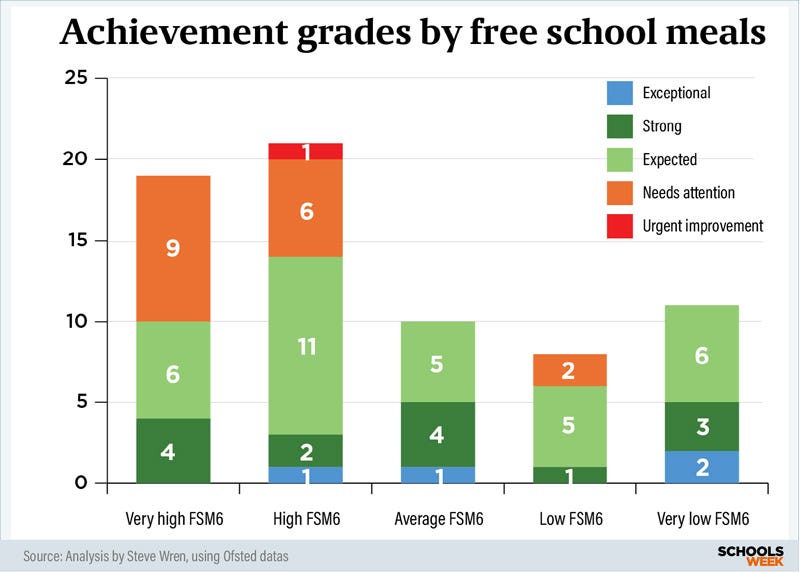
Your greatest weaknesses can also be your greatest strengths
Mar 2100:03:56Tap to summarizeThis newsletter is brought to you by The Growth Network UK. For more information about how we can help you grow resilient leaders, improve wellbeing and prevent burn out for yourself and your school go to thegrowthnetworkuk.org.* The head of Ofsted has upset headteachers. Sir Martin Oliver thought that the best place to tell headteachers what he thought was, at a conference of headteachers. Needless to say, when he seemed to imply that they had low expectations, they were not best pleased. The issue is context. Ofsted appear to be grading schools with higher levels of deprivation more harshly by judging their outcomes against national average (see below). Oliver says that is all about having high expectations, the headteachers say it is unfair on the schools with the biggest challenges. Of course not everyone will agree but it may explain why your senior team is concerned. It also poses some interesting and complex questions around the central idea of inclusion. Does Ofsted comparing school outcomes support or hinder schools in difficult circumstances serving students with the greatest challenges coming to school and taking advantage of the opportunities school presents them with? That is a question which impacts on every teacher in every classroom and every leader in every school and again asks how much leadership is about accountability and how much it is about the needs of the communities we serve. * AI can now do school for you. A new AI package launched last week is able to review course materials, write essays and make contributions to discussions on your behalf. It means that, in theory, a student could complete a degree without ever showing up. That in turn would beg the question, what is the point of doing a degree in the first place? The obvious answer is that it would get you a qualification but surely at some point people will get found out if they did not learn anything. That leads us back to the role of AI and people in education which Dan Fitzpatrick resolves with a focus on process rather than product. Perhaps, he suggests, we need to identify ways to test individual learners; spoken exams, Socratic questioning or peer review tasks. AI can then, says Betty Johnson, move from threat to support, supporting student learning and enabling teachers to complete tasks like planning lessons and creating resources, saving time whilst enhancing learning and wellbeing. * Your greatest weaknesses can also be your greatest strengths, according to Justin Bariso, emotional intelligence coach. If you are someone who is so deeply empathetic that you feel everyone’s pain you have the potential to build strong connections and loyal relationships. If you are someone who finds you often disagree with people you may be good at saying what everyone else is afraid to say. The trick is to move from being overwhelmed by your traits and learn to focus on goals. Benjamin Parnell applies this to giving up alcohol based on his desire to compete in triathlons rather than just giving up. If your goal is to become a better leader, friend or parent it might be worth asking yourself how traits which at times seem to let you down might become some of your greatest strengths. Thanks for reading. For more information about how to put these ideas into practice for yourself and your school visit us at thegrowthnetworkuk.org or subscribe to our newsletter on LinkedIn This is a public episode. If you would like to discuss this with other subscribers or get access to bonus episodes, visit thegrowthnetworkuk.substack.com
Transcribe →
Act your expectations
Mar 1400:04:08Tap to summarizeThis newsletter is brought to you by The Growth Network UK. For more information about how we can help you grow resilient leaders, improve wellbeing and prevent burn out for yourself and your school go to thegrowthnetworkuk.org.* Schools will stock allergy pens and train staff to use them. Following the death in school of a 5 year old boy from an anaphylactic shock in 2021, schools will be required to stock two spare allergy pens and train staff to use them. This is a good thing but it will have an impact in terms of time and money. Neither is significant in itself but it does reflect the increasing complexity of schools as the range and number of responsibilities grows. Teacher Tapp asked teachers about a number of tasks like bulk photocopying or putting up classroom displays which were ‘outlawed’ by the DfE’s workload guidance in 2024. Yet since these rules were introduced there has been virtually no change in the percentage of staff saying that they are doing them most likely because schools do not have the resources to pay for someone else to do them. Teachers do them either because of commitment e.g. putting up attractive displays, or because not doing them would make their jobs harder e.g. photocopying. As with the allergy pens, this relates to the insight from Professor Francis Green at UCL who identified intensity caused by the range of tasks and responsibilities as one of the drivers of stress in teaching.* A packed professional development schedule is not the same as a learning culture. Luis Valentino suggests that leaders who want to develop in their roles should consider their own objectives and plan their own learning cycle by; identifying what they need to grow, setting goals, seeking partners to work with, reflecting and adjusting for the future. His first steps are:* Building a learning network by connecting to other educators* Attempting a solution to one problem in your own practice* Reflecting in writing* Setting one learning goal per termAll of this can be done in a Resilience Community with The Growth Network. Click here to find out how you can join.* The most significant influence on any employee is their line manager. Alex Atherton describes different generational expectations of line management. For example older colleagues are more likely to be compliant and prefer communication by email whilst younger ones are more likely to prefer to speak face to face and ask questions. The point is to understand how each member of your team (including yourself) seeks support and build relationships accordingly. Allied to this, Sahil Bloom reminds us of the power of expectation. He talks about the Pygmalion Effect which came from from a study which found teachers displayed unconscious micro-behaviours like increased eye contact and offering more detailed feedback, towards students, who they had been told, had greater potential. The study leader wrote: “When we expect certain behaviours of others, we are likely to act in ways that make the expected behaviour more likely to occur.” What it means for leaders is that we need to seek out those who have high expectations of us and be the people who have high expectations of those we lead whether they be students or staff. Thanks for reading. For more information about how to put these ideas into practice for yourself and your school visit us at thegrowthnetworkuk.org or subscribe to our newsletter on LinkedIn This is a public episode. If you would like to discuss this with other subscribers or get access to bonus episodes, visit thegrowthnetworkuk.substack.com
Transcribe →
To be happy at home is the end of all human endeavour
Mar 600:03:30Tap to summarizeThis newsletter is brought to you by The Growth Network UK. For more information about how we can help you grow resilient leaders, improve wellbeing and prevent burn out for yourself and your school go to thegrowthnetworkuk.org.* To be happy at home is the end of all human endeavour For those of you who wonder why you are doing what you are doing, James Clear says, it is all about creating the circumstances for ordinary life. He quotes C.S. Lewis who said: “To be happy at home is the end of all human endeavour. The sun looks down on nothing half so good as a household laughing together over a meal, or two friends talking over a pint of beer, or a person alone reading a book that interests them; and all economics, politics, laws, armies, and institutions, are only valuable in so far as they prolong and multiply such scenes.” If you think about that in terms of what you do at school it means that helping a student learn something which will enable them to earn a wage, enjoy reading, make a contribution to society or enjoy healthy relationships are hugely valuable. You probably knew that already but it never hurts to be reminded!* Ask what instead of why. Don Martlett suggests that the reason some schools (and therefore, departments, teams etc.) do not move on when something goes wrong is that they ask why instead of what. Imagine the students in your subject just got poor results in their test. Asking why they did badly might reveal insufficient knowledge of the topic and whilst that is an important thing to know, stopping there will only allow us to apportion blame. Going on to ask what we can do about it means seeking ways to ensure that it does not happen again. What we do next may not make things perfect but it might begin to move in the right direction. Maybe next time the students will only get one more mark but that will be a sign that things are improving, one step at a time.* The weather might be the cause of poor behaviour. Laura McInerney notes that the first half of the spring term had the worst behaviour since Teacher Tapp starting asking about it in 2019. 54% of primary teachers and 43% of secondary said their lessons were disrupted by poor behaviour. This half term also had some of the worst weather we have seen in recent years, as did the same period in 2019 and 2024, the second and third worst years recorded. The theory certainly makes sense, if students are unable to get outside the building all day it removes one of the key ways to release pent up energy. However, covid means that there is not enough data to show that this is anything more than a hunch. After a few more years we should be able to get a better idea of the relationship but with that why question answered we then we have to ask what we are going to do about it!Thanks for reading. For more information about how to put these ideas into practice for yourself and your school visit us at thegrowthnetworkuk.org or subscribe to our newsletter on LinkedIn This is a public episode. If you would like to discuss this with other subscribers or get access to bonus episodes, visit thegrowthnetworkuk.substack.com
Transcribe →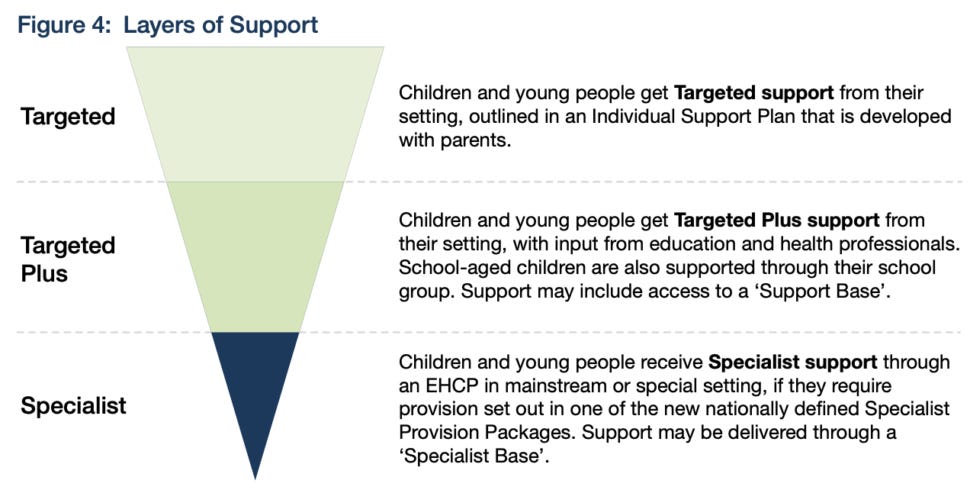
Inclusion at the centre
Feb 2700:03:33Tap to summarizeThis newsletter is brought to you by The Growth Network UK. For more information about how we can help you grow resilient leaders, improve wellbeing and prevent burn out for yourself and your school go to thegrowthnetworkuk.org.* Inclusion is at the centre of the DfE’s plans for education published this week. Schools will be expected to publish an annual inclusion strategy as well as being measured against a new inclusion accountability measure. A very significant part of this is about special needs but also attendance (still not improving), enrichment, parental engagement and a particular focus on the needs of white working class students as one of the lowest attaining groups in English schools. At the same time the government is considering offering extra money for headteachers to work in areas of high deprivation in the North East of England and coastal areas with two initiatives modelled on the London Challenge which revolutionised outcomes for students in the capital 20 years ago. The challenge in all this will be, as usual, whether the greater demands are also matched by greater funding. Resources are promised but there is not much information about how much or which schools will receive it. * £3.4bn extra will be spent on special needs. Special needs however will be receiving a very significant increase in funding along with changes to the system. Again, the emphasis is on inclusion with the system focused on students, wherever possible, remaining in mainstream schools. Support will be will be divided into three tiers;* Targeted - students will receive support in mainstream classrooms* Targeted Plus - students will be educated in mainstream schools with an Individual Support Plan and receive additional external support * Specialist - students will have an EHCP supported by mainstream and / or specialist schools according to need. Schools will receive an average of £26,000 per school to support inclusion as well as access to an average of 160 days per year of local expertise in areas like speech and language. A significant emphasis will also be placed on staff training. * One third of graduates are now working in non graduate jobs. According to Alex Atherton, graduates are increasingly likely to go into trades like plumbing whilst school leavers are increasingly likely to look for apprenticeships rather than going to university. Reasons include; * the cost of studying * student debt* a lack of graduate jobs * AI taking entry level jobs * the greater security of jobs, like plumbing, which can only be done by a human beingSo if you are talking to students about their futures it might be worth mentioning these options. Alternatively, they might consider teaching as another profession offering greater security from the threat of AI. Thanks for reading. For more information about how to put these ideas into practice for yourself and your school visit us at thegrowthnetworkuk.org or follow us on LinkedIn This is a public episode. If you would like to discuss this with other subscribers or get access to bonus episodes, visit thegrowthnetworkuk.substack.com
Transcribe →
Innovation Grows Out of Tension
Feb 1300:04:41Tap to summarizeThree things worth knowing this week if you are a school middle leader. This newsletter is brought to you by The Growth Network UK. For more information about how we can help you grow resilient leaders, improve wellbeing and prevent burn out for yourself and your school go to thegrowthnetworkuk.org.* The DfE expects all secondary schools to have ‘inclusion bases’ in a statement which has ignited much debate, the DfE has announced that all secondary schools should have an inclusion base. This is an aspiration rather than a policy but the idea is that there will be a “dedicated safe space away from busy classrooms where pupils can access targeted support that bridges the gap between mainstream and specialist provision”. We have talked several times about inclusion and this is another example of what the DfE are talking about. Instead of students with special educational or behavioural needs being moved to alternative schools, the vision is that provision is available in the school they are in. There are many advantages to this, not least that it is far easier to move a student between provisions internally than from school to school and that it maintains consistency for the student. However, there are concerns about the resources required not only to create such spaces but to populate them with trained staff who can ensure that the provision makes the intended difference to those students. * February’s behaviour was the most disruptive since 2019. Whatever you may think of this particular solution, if Teacher Tapp is right then behaviour is something that needs our attention. They reported this week that their behaviour survey returned the worst results since they began in 2019. Teacher Tapp regularly ask the question, '‘In the last lesson you taught, was there any time when you felt teaching and learning largely stopped because of poor behaviour?’ The result this time was 54% in primary and 43% in secondary, compared to a low of 34% in 2019. This reflects an upward trend since 2021 and is disappointing as things seemed to be improving in 2024/5. The worrying part is that the growth is greater in primary schools suggesting that this problem may be growing as younger children move through the school system. However, it is also worth considering that primary schools are currently educating students who were born and began their education during the pandemic. Perhaps this is the new normal or maybe just part of a post pandemic phase. * AI has moved from being a toy to a tool. One thing often blamed for the increase in poor behaviour is technology. Dan Fitzgerald, educational AI guru, continues the debate about the opportunities and threats of AI in education. He reports that over Christmas there was a transformation in the way that people were using AI. Prior to that it was conversational now it has become agentic. In case that makes no sense to you, he explains, we have become used to asking AI questions to work through problems but now we are learning that AI can just do things for us. His examples include the ability to write programmes in 10 minutes which would track student progress across several data sets and email a member of staff to flag up concerns. Imagine a programme which could review your MIS, Seneca, Maths Watch etc. and tell you when a student is falling behind. Another example is AI identifying and differentiating teaching resources. As an AI enthusiast Dan can see AI, ‘handling all the logistics that currently chew through a teacher’s evening’ meaning that, ‘The teacher gets to do the thing they actually got into teaching for. The conversations. The relationships. Those weird, messy, beautiful moments of connection that are what actually move the needle on learning.’ Ivana Brnovic Ogbu sounds a note of caution around AI reminding us that ‘innovation…grows out of tension, not knowing, and the willingness to stay present’ all things that technology can work against if used in the wrong way. If our concern though, is to find ways to make education sustainable for staff and students this might represent a powerful opportunity open to anyone with access to a computer. Thanks for reading this newsletter. For more information about how to put these ideas into practice for yourself and your school visit us at thegrowthnetworkuk.org or follow us on LinkedIn This is a public episode. If you would like to discuss this with other subscribers or get access to bonus episodes, visit thegrowthnetworkuk.substack.com
Transcribe →
Review your Progress
Feb 1200:04:02Tap to summarizeTeacher Tips is brought to you by The Growth Network UK. For more information about how we can help you grow resilient leaders, improve wellbeing and prevent burn out for yourself and your school go to thegrowthnetworkuk.org.This week presented two interesting challenges. The first was a question from a leader, ‘What do you do to maintain your focus on Wednesday morning when all the pressure is on?’ The second was a quote from Georgia O’Keefe, ‘Whether you succeed or not is irrelevant, there is no such thing. Making your unknown known is the important thing.’ They each offer different challenges. The first asks if all this thinking really works once reality kicks in, the second questions the value of success criteria. Both remind me that failure is baked in one way or another. What we do may not work at all, work partially or only work until we leave, retire, get bored or something gets in the way. Therefore, we are left asking ourselves whether what we are doing has any value. When things are not perfect, i.e. almost always, the temptation is to doubt ourselves and fold. But a resilient response would be to return to the mission, values and objectives we set and know that we do not need perfection to be successful. Who we are matters at least as much as what we do.Which brings us to this week’s teacher tip which is to review your progress or, compare what is happening with what you intended. Begin with what is working. Suppose your mission is to teach great lessons and your values include kindness and contentment. Think of your best lesson, an occasion when you were kind and another when you were content. By recalling each of these you will be reminded that you do all these things. More accurately, you are kind, content and teach great lessons. The question is how to be like that more frequently and consistently. Remember your dignity and integrity. Your dignity says that you are valuable, your integrity says that you bring something valuable to other people. Allow that to shape what you do. Try to balance the desire to teach a great lesson every time (integrity) and the desire to be content (dignity). You will never make every lesson great and you will not always be content. But you can be more content when you accept that not every lesson can be the best and enjoy those that are as well as those that are not. This is being kind to yourself and the consequence of doing that is that you will be kinder to other people. The same applies no matter what your mission, values and objectives are, start with the positives and focus on your character. Ultimately, this will make the greatest difference to you and to the people you work with.In this episode, the headteacher reviews his progress quite publicly. It is high stakes but we need others to hold us accountable, support us, challenge us and let us know when to make a change. To deny your mission, values and objectives is a surefire route to failure. In his case via burn out or being replaced by the governors. Reflecting and refocusing, alone is good but even better is to reflect with a supportive community who remind you that you are not trying to be perfect, you are trying to grow, one step at a time in a particular direction. The fundamental question is, did I take one step forward and how do I do it again?Thanks for reading Teacher Tips. For more information about how to put these ideas into practice for yourself and your school visit us at thegrowthnetworkuk.org or follow us on LinkedIn This is a public episode. If you would like to discuss this with other subscribers or get access to bonus episodes, visit thegrowthnetworkuk.substack.com
Transcribe →
ECTs might have something to teach all of us
Feb 600:03:03Tap to summarizeThis newsletter is brought to you by The Growth Network UK. For more information about how we can help you grow resilient leaders, improve wellbeing and prevent burn out for yourself and your school go to thegrowthnetworkuk.org.Three things worth knowing this week:* Teaching and curriculum remains an Ofsted focus. After the first 33 volunteer schools were inspected the results show some early patterns. These include slightly more positive outcomes for inclusion, which is the core of the new framework but slightly less positive outcomes for curriculum and teaching which might be surprising given the input this area in recent years. On the other hand, Paul Ainsworth wonders if perhaps inspectors have not yet fully got to grips with this element of the new framework. However, middle leaders looking for something to focus on might consider that, in spite of all the talk about inclusion, we should not forget curriculum and teaching. * The NEU is balloting teachers about further strike action at the end of February. Daniel Kebede, the general secretary says that this is because of their perception that education continues to be underfunded. The government has granted a 6.5% pay rise over three years but this has to be funded from existing budgets. What this means is that if schools are to increase salaries they will have to save money elsewhere. In light of previous cuts this will be a challenge for school leaders which will inevitably impact on things like class sizes and access to resources even more than has already happened. At the same time an NAHT survey reported that 65% of headteachers said they were either unlikely or very unlikely to recommend school leadership. This reminds us of the pressures at all levels of the school system and that middle leaders must be very aware of the need to secure their own wellbeing. The image below is one helpful reminder from one school leader. * 24% of ECTs are making use of AI to plan lessons, compared to 13% of non ECTs (Teacher Tapp). This does not necessarily represent a problem but an evolution and possibly an opportunity. Why do people use AI? Because it is more efficient and represents one way to reduce the burden of planning. Perhaps this is an opportunity for new teachers to help their more experienced colleagues to find new ways of planning. There are risks though, as someone said, ‘the one who does the thinking gets the benefit’. AI can increase efficiency but we need to use it in a way that most benefits learning both for staff and students. Thanks for reading. For more information about how to put these ideas into practice for yourself and your school visit us at thegrowthnetworkuk.org or follow us on LinkedIn. This is a public episode. If you would like to discuss this with other subscribers or get access to bonus episodes, visit thegrowthnetworkuk.substack.com
Transcribe →