Podcast
The Headless Banking Podcast
Hosted by Jeff Forkan · EN
Traditional banks and how we interact with banking services will be obfuscated by software, crypto, & technology platforms in the next 5 to 10 years. Our children will wonder why we ever visited a bank branch or logged into an online banking portal.
headlessbanking.substack.com
headlessbanking.substack.com
11episodes
Episodes
Newest firstAll episodes
Revolutionizing Open Banking with Unified APIs
Apr 1600:36:01Tap to summarizeIn this Headless Banking Podcast episode, Jeff talks with Ruben, co-founder and CEO of Quiltt, a unified API for open banking that provides access to multiple account aggregation and enrichment platforms through one integration and contract. Reuben shares his background in financial data (including S&P Capital IQ), how building a consumer budgeting app on Plaid revealed how messy and hard-to-use aggregation data can be, and how COVID and fintech demand led Quilt to pivot into an API-first platform. Quilt partners with providers like MX and MasterCard and normalizes data while preserving raw transparency, aiming for higher connection success via multiple “paths” to institutions—especially for underserved B2B and business banking use cases. They also discuss PDF bank statements for reconciliation and fund accounting, the challenges of licensing and minimums, continued reliance on screen scraping, and careful, compliance-driven use of AI in engineering.00:00 Welcome and Guest Intro00:19 Ruben’s Founder Journey03:55 Budgeting App to API Pivot06:49 Killing Products and Focus08:35 AI in Fintech Engineering14:01 Why Quiltt vs Plaid16:14 PDF Statements Use Cases18:47 Coverage and Multi Aggregator Strategy23:38 B2B Connectivity Gap29:10 Screen Scraping and Open Banking Reality32:49 Competition and Partnerships Moat35:53 Wrap Up and Thanks This is a public episode. If you would like to discuss this with other subscribers or get access to bonus episodes, visit headlessbanking.substack.com
Transcribe →
Revolutionizing Stablecoin for Cross-Border Payments with Conduit
Jul 23, 202500:21:40Tap to summarizeIn this episode of the Headless Banking Podcast, Jeff interviews Kirill, CEO of Conduit, to discuss the company's journey and the evolution of the stablecoin market. Kirill shares his background in financial services and fintech, including his experience and frustrations with outdated banking systems. He details Conduit's pivots, from providing DeFi APIs to focusing on stablecoin payments, particularly in emerging markets. The episode explores the unexpected high adoption of stablecoins for payments, challenges of liquidity, and the shift towards bank partnerships and local stablecoins for smoother cross-border transactions. Kirill also highlights the regulatory landscape and the potential of instant payments to transform trade financing.Chapters:00:00 Introduction and Guest Welcome00:32 Krill's Background and Journey01:22 Challenges in Traditional Banking Systems02:34 Entering the Crypto World02:54 Founding Conduit and Initial Product03:28 Market Changes and Pivot to Stablecoins05:11 Adoption and Use Cases of Stablecoins10:38 Liquidity Challenges and Solutions15:47 Future of Stablecoins and Final Thoughts16:52 Regulatory Landscape This is a public episode. If you would like to discuss this with other subscribers or get access to bonus episodes, visit headlessbanking.substack.com
Transcribe →
The Future of Global Treasury: Stablecoins, Blockchain, and AI
Jul 9, 202500:27:26Tap to summarizeIn this episode of the Headless Banking Podcast, we welcome back Jared Slivers from Fireblocks to discuss the current state and future of global treasury management using crypto and stablecoins. They explore why corporate treasurers have been slow to adopt these technologies, considering factors such as regulatory barriers, technology readiness, and the need for better local liquidity solutions. The conversation also touches on the impact of AI in managing global treasury operations and how the evolving stablecoin infrastructure can facilitate smoother cross-border trade. The episode concludes with a discussion on the potential mainstream adoption of Bitcoin for corporate treasuries and the implications for global trade.00:00 Introduction and Welcome00:24 The Future of Global Treasury: Crypto and Stablecoins01:11 Fire Blocks and the Current State of Blockchain02:27 Stablecoins: Dollar Access and Cross-Border Trade05:33 Stripe Sessions: AI and Stablecoins09:18 Challenges and Opportunities in Adopting Stablecoins10:17 Building a Corporate Treasury with Stablecoins13:27 The Role of Banks and Exchanges20:25 The Potential of Stablecoins and AI in Treasury Management22:55 MicroStrategy's Bitcoin Strategy27:12 Conclusion and Final Thoughts This is a public episode. If you would like to discuss this with other subscribers or get access to bonus episodes, visit headlessbanking.substack.com
Transcribe →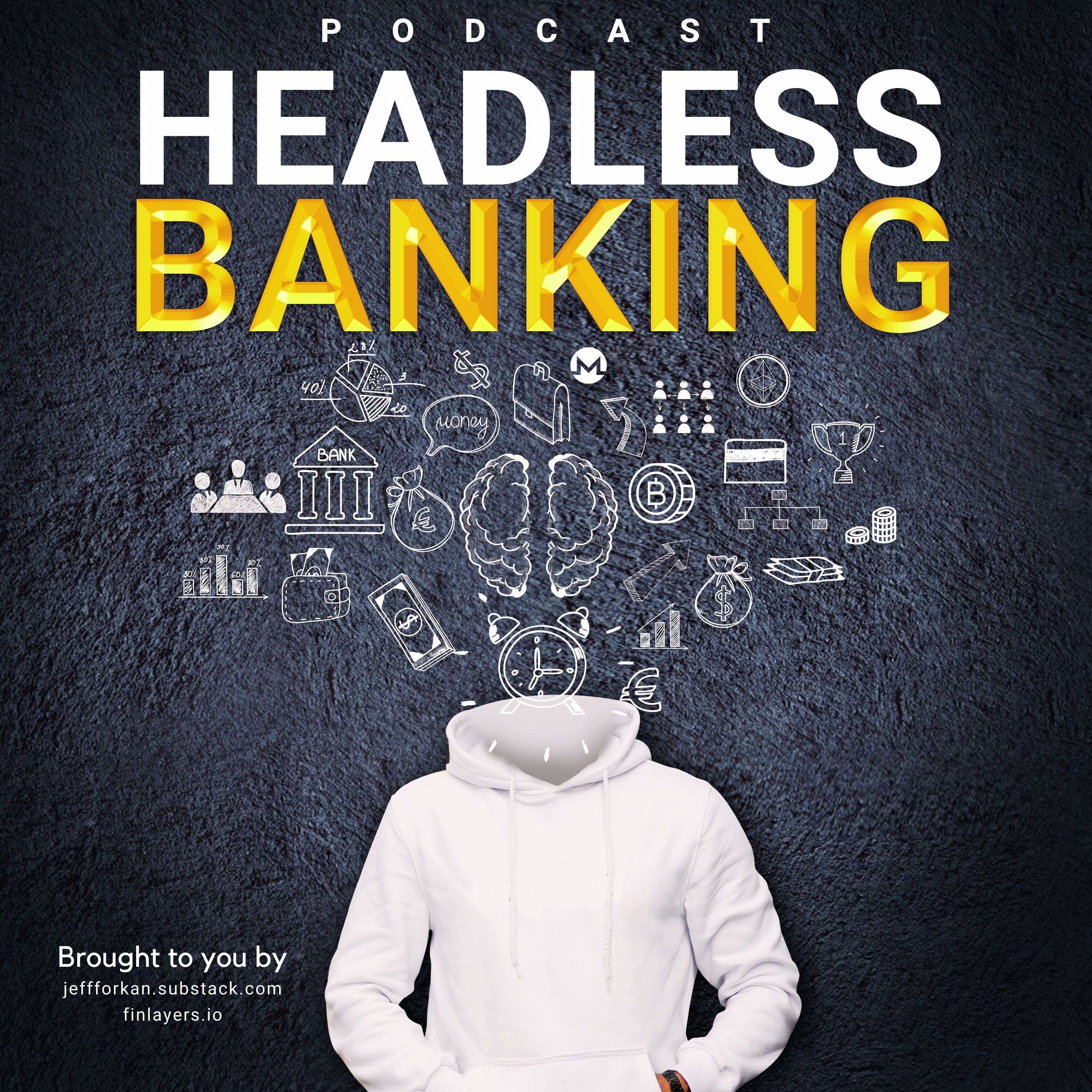
How Clair Built Earned Wage Access
Sep 21, 202300:27:14Tap to summarizeNico is a wizard when it comes to building fintech solutions, understanding regulation, and navigating difficult partnerships with Sponsor Banks. It was a joy to have him on and to hear how Clair was built from the ground up. Hope you all enjoy the episode. This is a public episode. If you would like to discuss this with other subscribers or get access to bonus episodes, visit headlessbanking.substack.com
Transcribe →
Global Banking for LATAM Startups
May 10, 202300:25:49Tap to summarizeIn this episode of The Headless Banking Podcast, Chris interviews Bernardo Brites, co-founder and CEO of trace financial, a company that provides international payments, FX, and multiple use bank accounts to help globalize LATAM businesses. Bernardo talks about his journey through FinTech, starting a money transfer business, and the evolution of their products.This episode was recorded at a very interesting time when SVB had sounded the alarm. Bernardo and his team worked around the clock to help businesses that were stuck during this time. Interestingly enough, SVB banked 90% of LATAM businesses holding USD accounts.Tune in to hear how they accomplished this and much more! This is a public episode. If you would like to discuss this with other subscribers or get access to bonus episodes, visit headlessbanking.substack.com
Transcribe →
Unlocking Payroll Data
Apr 13, 202300:46:32Tap to summarizeIn this episode of The Headless Banking Podcast, Jeff interviews Brian Karimi-Pashaki, Head of Partnerships at Pinwheel, a company that provides income verification, direct deposit switching, and payroll data connectivity for FinTech & banks. Brian talks about his background in FinTech, starting at Goldman Sachs and buying third-party technology to build a Marcus. He also discusses the challenges of building new products inside a larger company, as well as the importance of AI assistants in the future of the financial industry.Diving into Pinwheel, Brian explains that the company is an API layer that sits in front of payroll systems, similar to Twilio and Plaid for telecommunications and banking data, respectively. By making payroll data accessible through their API, Pinwheel enables developers to build products and services that utilize this information. Examples include early access to wages, income and employment verification for loans and apartments, and more efficient and secure data sharing between employers and landlords.Overall, Pinwheel is changing the way payroll data is accessed and utilized, opening up new possibilities for the industry and beyond. This is a public episode. If you would like to discuss this with other subscribers or get access to bonus episodes, visit headlessbanking.substack.com
Transcribe →
Globalizing the Investment Infrastructure
Mar 30, 202300:25:07Tap to summarizeHow do international entities allow their customers to get access to the US market? With the uncertainty of markets and currencies, Alpaca is facilitating the pipes for companies to expand their offerings by stretching out their technology globally to give access as they were located in the US.I sat down with Yoshi Yokokawa, Co-Founder and CEO of Alpaca, to discuss how they set this up and tirelessly on the grind to expand into new markets. We discussed why this is important and their vision of globalizing the US market into new regions. Tune in to also hear about the awesome event they threw down here in Austin that included real life Alpacas!Thanks Yoshi! This is a public episode. If you would like to discuss this with other subscribers or get access to bonus episodes, visit headlessbanking.substack.com
Transcribe →
The Rise of eToro: A Social Trading Platform
Mar 17, 202300:28:53Tap to summarizeIn a world dominated by traditional brokerage firms, eToro stands out as a disruptor in the financial services industry. Founded in 2007, eToro offers a unique social trading platform that has attracted millions of users worldwide. The company's co-founder, Ronen Assia, has been instrumental in shaping eToro's vision and growth. eToro's rise is a testament to the power of disruption and innovation in the financial services industry. By putting the user experience at the forefront and making trading a social experience, eToro has transformed the way people invest and trade. It was a joy to speak with Ronen in this episode, hope you enjoy it! This is a public episode. If you would like to discuss this with other subscribers or get access to bonus episodes, visit headlessbanking.substack.com
Transcribe →
Joseph Akintolayo | Founder, Deposits
Mar 1, 202300:22:39Tap to summarizeI had the pleasure of speaking with Joseph Akintolayo, Founder and CEO of Deposits, the turn key solution for banks and brands to deliver experiences to customers without the need for technological expertise. Building personalized user experiences do not need to be massive cost and take a year to build. Joseph and his team are helping programs and FI’s get to market quick without breaking the bank (pun intended)! We get into how FI’s can leverage Deposits tech stack, brands can get to market with a partner bank, or not, and the path forward for banks to compete with other Fintech competitors.Tune in and enjoy! This is a public episode. If you would like to discuss this with other subscribers or get access to bonus episodes, visit headlessbanking.substack.com
Transcribe →
Sardine | Changing the Foundation of Fintech
Feb 16, 202300:37:49Tap to summarizeIf you haven’t yet heard of Sardine or you have but you aren’t sure what they do then you need to listen to this episode where I chat with Aditya Goel, Co-Founder of Sardine. Essentially Aditya & team have built the one-stop shop for creating the foundation of a Fintech company. They are tackling the most difficult problems that many folks consider boring but are absolutely foundational to the success of a Fintech. The key pillars of any great fintech are Onboarding, Risk, Fraud, and Payments Ops. Rather than building these all yourself or blending together 2, 3, or 4 partners a founder can get a rapid start by just using Sardine.Hope you all enjoy it! This is a public episode. If you would like to discuss this with other subscribers or get access to bonus episodes, visit headlessbanking.substack.com
Transcribe →