← The Hidden Third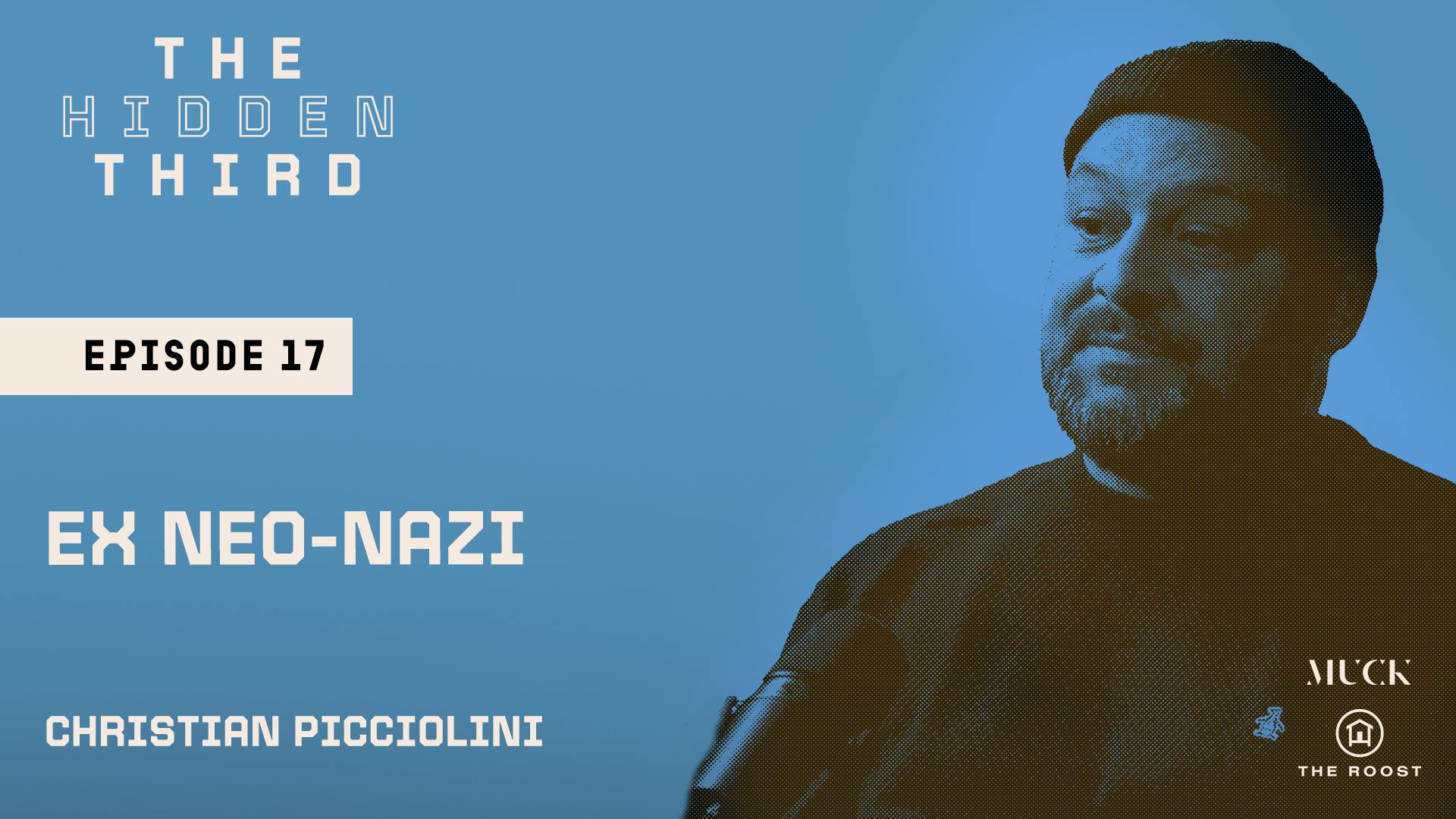
Loading summary
Transcript254 lines
- [00:01]
Christian Picciolini
Taxact can think of a million things more fun than filing taxes. TaxAct is going to name some now. Sitting in traffic, folding a fitted bedsheet, listening to your co worker talk about his fantasy team digging a hole, digging an even larger hole next to that original hole. Unfortunately, TaxAct's filing software can't make taxes fun, but TaxAct can help you get them done. TaxAct, let's get them over with. But we are also using a strategy of trying to blend in to try and recruit more people. So we told people, don't get tattoos. They mark you. Don't shave your head, because everybody knew what a skinhead was at the time. Don't wave swastika flags, wave the American flag. Because that allowed us to penetrate areas of America where we could blend in and we could start to recruit people who were racist, but who were racist and were afraid of, you know, the swastika or afraid of the Confederate flag and things like that. And, you know, we told people like, go to college, recruit on college campuses, become law enforcement officers, go to the military and get training. Now you've got people who are dentists and doctors and politicians and, you know, the strategy works.
- [01:17]
Mariana Van Zeller
Christian, so good to see you again.
- [01:18]
Christian Picciolini
Mariana, it's wonderful to see you.
- [01:20]
Mariana Van Zeller
What was it like four years ago that we.
- [01:22]
Christian Picciolini
Has it been that long? The world was such a different place.
- [01:25]
Mariana Van Zeller
How much has changed? We are talking. We're going to be talking about similar subjects, but so much has changed, Sam. So I want to give a little intro for our audience. Christian Picciolini is a former neo Nazi skinhead, one of the most prominent US extremists of the late 80s and 90s who later renounced extremism and founded several nonprofits that help people disengage from hate groups. You also recently wrote your second book called Breaking Hate, and welcome to the Hidden Third.
- [01:50]
Christian Picciolini
Thank you for having me.
- [01:52]
Mariana Van Zeller
Let's start from a little bit about yourself and where you grew up and what your childhood was like.
- [01:58]
Christian Picciolini
I spent my whole life on the south side of Chicago. I grew up there, and I was born in 1973. But by the time I was 14 years old in 1987, I had been recruited into America's first white power skinhead group. I was 14 at the time, and I'd come from a family of Italian immigrants who had come to the United states in the mid-60s. So racism wasn't really something that I was brought up on, but because my parents are Italian immigrants, they had to work a little bit harder, I think, than most people. And they were never home. They were gone. Running a small business seven days a week, sometimes 14 hours a day. So growing up, I was a pretty lonely kid.
- [02:38]
Mariana Van Zeller
Were you an only child at the time?
- [02:40]
Christian Picciolini
I was an only child. I was 10 years old when my brother was born. So for the first 10 years, I was alone.
- [02:47]
Mariana Van Zeller
And that would mean sort of your parents would arrive home very late, go out to work very early, and you were just trying to fend for yourself.
- [02:54]
Christian Picciolini
Yeah, I was raised by my grandparents. You know, somebody would pick me up at school and whisk me to a different neighborhood, the Italian neighborhood that my grandparents lived in. And because of that, I didn't really have an opportunity to make friends from school because I didn't hang out in the same neighborhood that my schoolmates did. And I didn't go to school with this and, you know, with the kids in the neighborhood where my grandparents lived. So I was pretty lonely kid.
- [03:14]
Mariana Van Zeller
Growing up, did you feel different from other kids?
- [03:17]
Christian Picciolini
I did. I didn't know who I was. You know, I didn't know if I was Italian, because Italian was almost exclusively spoken at my house growing up.
- [03:24]
Mariana Van Zeller
Really? So you grew up speaking fluently Italian. Do you still speak Italian?
- [03:28]
Christian Picciolini
I do. Probably not as fluent as I'd like to be, but, yeah, I think I spoke Italian, you know, before I even spoke English.
- [03:33]
Mariana Van Zeller
I was going to test you.
- [03:35]
Christian Picciolini
Don't do that, because I know you're fluent.
- [03:37]
Mariana Van Zeller
I lived in Italy for a year. Yeah, but many years ago. So, okay, so you grew up speaking Italian, but you spoke. Obviously you spoke English, you were born here, you spoke English perfectly well. But you just always felt like you were different from other kids.
- [03:49]
Christian Picciolini
Yeah, I felt, you know, really kind of isolated from everybody that I wanted to be, you know, connected to, and I didn't have a chance to do that. So at 14 years old, you know, I was already starting to become a little bit of a delinquent, you know, trying to figure out who I was. And I was standing in an alley one day. I was smoking a joint, and a guy came up to me. He had a shaved head and tall black boots. And he pulled that joint out of my mouth, and he looked me in the eyes and he said, that's what the communists and the Jews want you to do, to keep you docile. Now, of course, I was 14. I didn't know what a communist was. I didn't know if I'd met a Jewish person. I didn't even know what the word docile meant, to be honest with you. But it was like the first time that somebody paid attention to me, he was twice my age. He was in his late 20s at the time. And it turns out that that guy, Clark Martel was America's first neo Nazi skinhead leader. And he was recruiting me at that moment and I didn't know what the heck he was talking about.
- [04:44]
Mariana Van Zeller
Was he from that neighborhood?
- [04:45]
Christian Picciolini
Yeah, he was from my grandparents neighborhood. He lived there. You know, he had started just a few years earlier, America's first white power skinhead group. And you know, he was a very charismatic, very bright, very troubled individual who was an amazing recruiter. He knew how to identify kind of the brokenness in people. And he saw that I was a lonely kid. He saw that I was, you know, looking for a place to belong. You know, he understood that I didn't know who I was and that I probably had something in me that wanted to be more than I was. And he was spot on because even though I didn't understand, you know, what the hell he was talking about in terms of the politics, I bit because I wanted a connection, I wanted camaraderie, I wanted a group. And suddenly I had this family that I didn't have at home.
- [05:33]
Mariana Van Zeller
Were you the youngest person in that group at the time?
- [05:35]
Christian Picciolini
By far? Yeah, by far. I was 14. And I'd say probably the next person was maybe 18 years old.
- [05:41]
Mariana Van Zeller
And you just started hanging out with them every day all the time?
- [05:44]
Christian Picciolini
Yeah.
- [05:44]
Mariana Van Zeller
And dressing like them physically. How did you start changing your looks?
- [05:48]
Christian Picciolini
I mimicked. I didn't know what I was doing, but I started to want to fit in. So of course, you know, I'd go from this kid who was bullied for 14 years to suddenly, you know, hanging around with bullies, I was protected. The bullies that had picked on me for 14 years, they avoided me now. So the minute I shaved my head, the minute I started to, you know, I put on combat boots, you know, I started to wear T shirts with slogans on it. My whole world changed because suddenly I was what I thought was respected, but I was feared because of the group that I was hanging out.
- [06:18]
Mariana Van Zeller
Do your parents notice any of this happening?
- [06:21]
Christian Picciolini
I think not at first. I think that, you know, I did a good job of hiding it at 14 years old. And it probably wasn't until I was, you know, 14 and a half or 15 when I started to become a little bit more bold around my parents. But I think I did it to throw it in their face because I was angry at them for feeling like I had been abandoned by them. So I Think I did it to really try and get their attention at first. And I remember the first time my mom saw me, you know, with a shaved head. I had like, you know, this. This beautiful kind of Scott Baio Chachi haircut when I was a kid and I come home a shaved head, and she flipped out. I mean, she was so sad. She started crying, you know, and. And that was nothing compared to the first time I came home with a tattoo that she tried to scrub off with an SOS pad.
- [07:03]
Mariana Van Zeller
What was the tattoo?
- [07:04]
Christian Picciolini
It was on my ankle, which was a very innocuous place to get it, because I was even afraid when I first got it. But it just said made in Italy, you know, And I thought, you know, my parents are going to like that. And for me, it meant something different. It meant I was European. I was a white European person. Right. That was my statement with it. But I thought, my parents are going to like it because they were made in Italy, right? No, they didn't like it so much.
- [07:24]
Mariana Van Zeller
But when they saw. When your mom saw you with your shaved head, she didn't immediately think skinhead. She just thought, oh, this is now cut his beautiful hair.
- [07:31]
Christian Picciolini
Yeah. No, I don't think anybody in America knew what a skinhead was in those days. There were so few. And it wasn't something that was an issue that I think she just thought, you know, where. Where is this kid going with this new look? But I think eventually, you know, they figured it out. And by that time, I was so pissed off at them that there was nothing that they could say or do to pull me out.
- [07:51]
Mariana Van Zeller
It's interest back then, that was sort of the symbol of neo Nazis, right? It was the skinheads. And I don't. I don't think. I wonder if even kids these days know, associate skinheads to sort of extremist.
- [08:04]
Christian Picciolini
Yeah, I mean, it's definitely a passe thing, but that's intentional. I mean, in the late 80s, we made it kind of our mission to fade away the skinhead image because we saw that it was drawing attention to us. You know, law enforcement started to pay attention to us. They started to crack down on skinhead groups. But we are also using a strategy of trying to blend in, to try and recruit more people. So we told people, don't get tattoos, they mark you. Don't shave your head. Because everybody knew what a skinhead was at the time. Don't wave swastika flags, wave the American flag. Because that allowed us to penetrate areas of America where we could blend in and we could start to recruit people who were racist, but who were racist and were afraid of, you know, the swastika or afraid of the Confederate flag and things like that. And, you know, we told people like, go to college, recruit on college campuses, become law enforcement officers. Go to the military and get training. Now you've got people who are dentists and doctors and politicians. And, you know, the strategy worked in the 80s and 90s.
- [09:02]
Mariana Van Zeller
Yeah. And we're seeing the fruits of that labor right now.
- [09:07]
Christian Picciolini
Yeah. I never thought it was going to work, but here we are.
- [09:10]
Mariana Van Zeller
Hey, everyone. So real quick, before we keep going, if you're enjoying this conversation, which I really hope you are, take a second to subscribe, like, or leave a review on YouTube.com Marianna Van Zeller or wherever you're listening to this podcast, the Hidden Third, and share it with your friends. This show doesn't have a marketing budget behind it. It grows because of people like you. And this means everything to me. So thank you so much. Obrigada. I remember when we met. So we met. I was doing a story about white supremacy, as, you know, back in 2020. And obviously your name came across immediately when we were doing research and we went, Chicago, where you live, and we interviewed you. And you were telling us at the time, guys, this is because at the time we were doing stories about these very fringe groups at the Atom Waffen Division that then became the National Socialist Order, and all these sort of very fringe groups with just like, you know, a handful of members. But you were telling us, look, this is gonna become mainstream, and we're gonna start hearing a lot of these ideas out coming from the, you know, the depths of the underworld and the underground into the light. And. And this is what's happening now, right?
- [10:26]
Christian Picciolini
Yeah, I. I had seen at that time, first of all, I knew the strategy in the 80s and 90s was to do just that. But I had started to see and hear some of the same things that we were talking about in the 80s and 90s now coming out of the mouths of mainstream politicians, you know, mainstream influencers. The Internet, you know, made it a place where it wasn't the fringe anymore. You know, the Internet made it mainstream. It's. It's almost like a 24 hour, all you can eat hate buffet, the Internet. And, you know, unfortunately, I was right. Unfortunately, it caught on like wildfire. And here we are in a country and in the world, really, because this isn't just limited to the United States, where these ideas are now starting to become very prominent and scary.
- [11:05]
Mariana Van Zeller
Yeah. All around the World. There was a. The guy that you mentioned, Eric Martel, right? He's a guy, Clark Martel, the guy who recruited you. So he was. He had to go up and down the streets to find kids like you to be able to recruit. Right. Nowadays you can open your computer, right? And there's like you said, all day, 24 hour hate buffet. There's like you, all these chat rooms. You can go all. Recruiting has become so easy, right?
- [11:28]
Christian Picciolini
Well, it's become, you know, robotized AI is doing it now. It's not even people like Clark Martel. It's technology like Clark Martel who was, you know, Clark used to go, you know, to punk rock shows and stand out front and look for the kids who he thought, you know, probably didn't have a great home to go back to or to a skate park where, you know, he could see kind of the same thing, or even to a mall. You know, nowadays, you know, it goes into our pockets, into our bedrooms. The Internet can reach us anywhere. And there are vulnerable kids online all the time. And video games is really a place where these days recruiters or chatbots are starting to go to, to identify kids or anybody really. It's not just kids anymore to identify people who are vulnerable, who are looking for a sense of identity, a sense of community and purpose. And they're offering them this propaganda that pulls them in deeper and deeper and deeper until they're so deep that they don't even know what the outside looks like anymore.
- [12:21]
Mariana Van Zeller
Yeah, I mean, you're so. It's so scary right now, and I want to get to that more in depth, but I also want to hear sort of what were your first experiences with the group and when was the first time that you realized that there were certain things that you had to do to be a part of the group that didn't exactly make you feel comfortable or you didn't think were right, but that didn't make you leave yet.
- [12:43]
Christian Picciolini
I would say on day one, I didn't feel right. Yeah, I mean, it was so foreign to me because I'd come from a really wholesome home. Even though my parents weren't really there because they were working, you know, it was a. They were good people and it was a good home where, you know, racism wasn't an issue. It wasn't something that, you know, they had, they had known people from all over the world, from other cultures. I'd always had exposure to that. So from the first day that I was involved, I felt that I was acting different intentionally. It wasn't natural to me. It was very unnatural, as a matter of fact. And it was unnatural the whole eight years that I stayed involved. But there was a period where it felt more comfortable to me to say those things and to do the things that I said. I did become a true believer at one point.
- [13:26]
Mariana Van Zeller
What was it that you believed in?
- [13:28]
Christian Picciolini
You know, I believed I was more superior than people who weren't white, even though I wasn't. You know, I felt that I had a right to more things in the world because of my heritage, which, of course, is not true. I felt stronger. I felt more entitled. I felt as though. As though I wanted to burn the world down and start it over in this vision of, you know, this white kind of purity. Right. Which, of course, doesn't exist. So I. You know, the first couple of years, Mariana, I didn't know what I was doing. Like, I mimicked. I said things I wanted to believe because it kept me a part of this group. So I definitely was hungry for it, but it didn't sit well with me. And then at some point, it did. Once I started to receive power from it, once there was a reward for me because, you know, Clark Martel went to prison, and I eventually ended up taking control of that very famous group.
- [14:20]
Mariana Van Zeller
And you were 16 years old, right? Or something like that?
- [14:22]
Christian Picciolini
16 years old. And everybody else had gone to jail or had run away because there was a series of violent hate crimes that I wasn't involved in. But I suddenly was the last man standing. You know, at 16 years old, here I am, you know, one of the only people left of this famous group. And by that time, I'd learned how to become a propagandist. I started a band that traveled to Germany and performed in front of thousands of people. I was using music at the time, without the Internet, as a tool to recruit other young people and to spread our message.
- [14:50]
Mariana Van Zeller
Who had this. Is this something that was happening already or who realized that this was a great tool, a great way to, you know, it was.
- [14:56]
Christian Picciolini
I was in one of the first American bands to do it. There were maybe only a handful of American bands, but what was it called, by the way? I had two bands. One was called White American Youth, and the second band was called Final Solution. Not, you know, really great names.
- [15:10]
Mariana Van Zeller
What was the Final Solution in your mind?
- [15:12]
Christian Picciolini
The Final Solution, I think in my mind was the same as it was in, you know, Nazi Germany or Hitler's mind. It was the elimination of all Jews and all people who weren't white white to, you know, essentially PAVE a way for white, white Europeans to rule the world. And you know, I. It was a form of intimidation. You know, the lyrics that I use, even the band names and the way we looked, it was all intimidation. And it had been really pioneered by bands in Europe, bands in England and bands in Germany which had been doing it since, you know, the 70s, really. But in America in the late 80s and early 90s, there really only were a handful of bands. And here I was, this 16 and 17 year old kid who was traveling around the. Into thousands of people releasing records. There was power. You know, I was kind of a celebrity, you know, in this small little fringe world. And that reward kept me in and it kept me blind until my life started to change and I started to see rewards elsewhere.
- [16:09]
Mariana Van Zeller
Were there really thousands of people going to these concerts at the time?
- [16:13]
Christian Picciolini
Yeah, they were. It was our Internet. Those were our pep rallies. It was the way they were our chat rooms and our social networks because we would meet, you know, four or five, six times a year, and hundreds and thousands of people would come from all over the country and all over the world to gather at a concert where maybe seven or eight bands would play.
- [16:30]
Mariana Van Zeller
What were you seeing were the differences at the time between the US and Europe in terms of Neo Nazis movement?
- [16:36]
Christian Picciolini
I think the Europeans were much more sophisticated. They had been doing it longer. They were tied in more with the mainstream. So in England, it was organizations like the National Front that the skinheads were tied in with politicians. And that really hadn't happened in America yet. So I think we really took a cue from the Europeans and Eastern Europeans on how to organize and how to recruit. And by the time it really started to catch on in the United States, we had learned that we needed to make connections and partnerships outside of these skinhead groups. So we started to connect with the Klan, we started to connect with militia groups, we started to connect with local politicians and even sometimes senators and congresspeople who were very much in tune with what we believed.
- [17:24]
Mariana Van Zeller
Huh. That is insane. There was a moment also while you were part of the group where you guys got contacted by a very famous international leader, Muammar Gaddafi, right?
- [17:39]
Christian Picciolini
Well, we thought we did. So what it ended up being was a Canadian sting operation that they were using the idea of Americans and Canadians meeting with Muammar Gaddafi because he wanted to fund a revolution against the Jews in the United States and in Canada. So I was contacted by a group in Canada, skinhead group in Canada, to see if my organization wanted to participate in that meeting. Well, what turned out Happening was that it ended up being a Canadian sting operation by the federal government, and the people who did get involved ended up being. Being arrested by it. By the skin of my teeth.
- [18:16]
Mariana Van Zeller
And you had actually received bait, contacted you asking if you wanted to go to Libya and meet with Muammar Gaddafi and be part of this group. Right.
- [18:24]
Christian Picciolini
I had been invited by a Canadian skinhead organization. At that point, I had merged my organization into a group called the Hammer Skin Nation. Hammer Skin Nation, even to this day, is the most violent skinhead group in the world.
- [18:34]
Mariana Van Zeller
They still exist.
- [18:35]
Christian Picciolini
They still exist. And we see kind of vestiges of them and groups like the active clubs, like the fight clubs that are popping up around the world.
- [18:43]
Mariana Van Zeller
Yeah. Nowadays, they're everywhere.
- [18:45]
Christian Picciolini
Really is kind of like the next wave of what's happening in the white nationalist.
- [18:49]
Mariana Van Zeller
Remember we spoke. When we did my white national, white supremacy story, we talked about Robert Rondo, remember?
- [18:55]
Christian Picciolini
Oh, yeah, sure.
- [18:55]
Mariana Van Zeller
He was. He had started a group which was called Something against the ram. It was called RAM here in California. Rise. Rise above movement. That's right. And he was hiding at the time in.
- [19:07]
Christian Picciolini
He was in Eastern Europe, I think.
- [19:09]
Mariana Van Zeller
Yeah, that's right.
- [19:09]
Christian Picciolini
And he brought him there.
- [19:10]
Mariana Van Zeller
Yeah.
- [19:11]
Christian Picciolini
And they extradited him back to the United States.
- [19:13]
Mariana Van Zeller
That's right. And he did. Or he was sentenced to two years in prison, I think, and I'm not sure if he ever did anytime, but that was it. Yeah, but he started one of these first sort of active groups, and the idea was like, let's all get together and create this image that we're, you know, strong white men with a purpose.
- [19:30]
Christian Picciolini
Well, they're playing on, you know, kind of white men who feel like they've been sidelined, who feel like, you know, they're. They. They want to be alpha males, but they're really kind of beta males who want to be tough. And they tell them people like Robert Rundo and these active clubs, you know, tell them you need to train, you need to be a strong white man. That's how women will like you. You know, pulls in a lot of the incel kind of community as well. It's how women will be attracted to you, and that's what you need to do to train for the revolution that's coming. Because there is a revolution coming. That's what they say.
- [20:02]
Mariana Van Zeller
Right. Have you read Scott Galloway's recent book?
- [20:06]
Christian Picciolini
No, but I'm a huge fan of his. Yeah, you should.
- [20:08]
Mariana Van Zeller
I mean, I haven't. I've heard a ton of his interviews. I've started reading his Book, but haven't finished. But one of the interesting things, it's called Notes on Being a Man, where he. That there's nothing more dangerous than a lonely, broke young man. Right. Which is exactly. You're sort of the prime example of that. Right. Back when you were 14.
- [20:27]
Christian Picciolini
Sure.
- [20:28]
Mariana Van Zeller
And that ignoring young men creates this vacuum that essentially leads to extremism and conspiracy theories and eventually violence. It's so interesting and it's so much about your own story and then what you're trying to combat now. Right, Yeah.
- [20:41]
Christian Picciolini
I mean, I think I listen to Scott and Kara Swisher probably every week when their podcast comes out. And I found it very interesting when he was talking about his book because it really, really is in line with so many of the concepts that I've written about where young men are being preyed upon because they're searching for a sense of identity, community and purpose. And they have what I call potholes in their lives. We all have potholes. Right. It's the traumas, the abuse that we experience, the adverse childhood experiences that we all have that some of us are really lucky to have a support group to help us navigate around. But those potholes, if we're not careful, can really detour us to the fringes. And on the fringes, there are some very, very loud voices who want to try and pull those broken people and try to fill those voids with narratives that are hateful, that point their pain towards somebody else. Because really hatred is self hatred. Right. Most times people who hate have never met the people who they claim to hate.
- [21:34]
Mariana Van Zeller
Yeah, right. Yeah. It's not a face, it's just like a.
- [21:37]
Christian Picciolini
So it's projection. It's projection of your own self hatred onto other people many times so you don't have to feel that pain yourself. And I thought it was fascinating. One day I was listening to Kara Swisher, who does the podcast with Scott Galloway that said at one point she actually dated somebody that she found out was an ex neo Nazi or you a Nazi. So I want to talk to her about that some bit.
- [21:55]
Mariana Van Zeller
Wow. In your case, you were able to pinpoint exactly what that vacuum was that Scott Galhoy talks about. And in your case, it was very much sort of, you felt like your parents were never home, you didn't have much of an identity, you didn't feel like you have much purpose. What do you think is the vacuum happening with young men right now? Because I think he does definitely have a point that this exists and this is what's pulling so many kids out there to these extremist ideas.
- [22:20]
Christian Picciolini
Well, I think the world is equalizing finally, right? I think, you know, know, we're, we're finally in. And I'm not saying that we've reached equality yet, but we're starting to understand that for many, many decades and, and centuries, you know, white men have had the privilege. Right? And now we're starting to recognize that other people deserve that privilege as well. Where women are starting to find equality, where, you know, other races are starting to kind of start to experience some of the same things that white men have experienced forever. So I think that equalization is to white men seeming like loss. Right. Where they've been kind of elevated for centuries. Right. Since the beginning of time, white men. And now things are starting to finally, you know, level out. And they're, they're not experiencing it as a leveling out, they're experiencing as loss for them. So it's a lot of fear.
- [23:08]
Mariana Van Zeller
Yeah, it's, yeah, you say that as a woman myself, it's like I'm not going to look at men as, you know, poor white men. I feel so bad for them. But at the same time there is, is I'm constantly trying to sort of empathize and try to understand why people feel the way they do. And I think one of the points that Scott Gallery makes in his book, and there's so much, so many people talking about this now too, is the fact that, yes, I mean, we should give more rights and opportunities to people who haven't had them, but we cannot certainly ignore completely that there's a large population out there and that if they feel disenfranchised and if they feel like they don't have a community and that becomes dangerous for everyone.
- [23:50]
Christian Picciolini
Listen, every person on earth has the potential to fall in those potholes and we can't forget about any segment of the world community because it could very easily happen that white men could become disenfranchised. I think it's going to take a lot of work for that to happen. But that's not to say that young people, 14 year olds, 15 year olds can't feel that way for a certain period and then be attracted into these groups who suddenly are promising them a reward for who they, when, you know, they may have been bullied or they may have been, you know, kind of ostracized by their peer group or, you know, they could have been come from a broken home or something like that. And suddenly these groups, whether, you know, it's extremism or whether it's Drug culture, whether it's gang culture, can say, hey, you deserve better and I want to take care of you, because, you know, we all kind of want to belong somewhere.
- [24:38]
Mariana Van Zeller
In your case, when you were deep, you became a leader of the Hammer. What was it called? Hammer.
- [24:44]
Christian Picciolini
It was the Northern Hammer Skins. That was part of the Hammer Skin name.
- [24:48]
Mariana Van Zeller
And you were super young. Were you ever violent?
- [24:51]
Christian Picciolini
Yeah, I got in a lot of street fights, sure.
- [24:53]
Mariana Van Zeller
With whom?
- [24:55]
Christian Picciolini
Mostly with other white people. You know, there were a lot of anti racists, now that we're calling, you know, antifa. A lot of anti racist skinheads at the time that we would fight with on the streets, you know, punk rock kids. We'd also fight with some of the street gangs, the Latin Kings and, you know, Vice Lords, you know, coming from the southwest side of Chicago, there was a lot of gang activities, so there were a lot of street fights. You know, luckily, I think maybe there was some foresight on my part or maybe, you know, a solid upbringing. I wasn't one of those people that hunted for people on the street because of who they were.
- [25:27]
Mariana Van Zeller
But there were people that were like that.
- [25:29]
Christian Picciolini
Absolutely. Yeah, absolutely. There were people who were on a daily basis going out and searching, you know, to commit a hate crime on people, you know, And I'm not saying I was never involved in things like that, but it was, you know, we. We were mostly involved in. In. In a lot of street fights. We'd go out, we'd get drunk, we'd, you know, go to, you know, the White Castle at, you know, midnight or something like that, and there'd be somebody who, you know, would give us a dirty look, or we'd give them a dirty look and fight. And that was kind of really, you know, the level of violence that we had. But I'm not making excuses because all, you know, I think it's. It was all terrible, but, you know, my focus was propaganda. We were really propagandists. The band was really. My primary focus was how can we recruit more people and how can we intimidate people with the things that we're saying.
- [26:14]
Mariana Van Zeller
Just a note to say that I only had White Castle once, but it was delicious. Is it a Chicago thing?
- [26:18]
Christian Picciolini
Well, no, it's not. It didn't originate. I think it's Kansas or Wichita. Kansas, I think, is where it started.
- [26:23]
Mariana Van Zeller
But, boy, reminded me that I want to try it out again.
- [26:25]
Christian Picciolini
I can't eat it anymore. I hope they don't sponsor your show.
- [26:30]
Mariana Van Zeller
What do you think was the worst, if you don't mind me? Asking, but what was the worst thing that thing? I mean, I know you regret a lot of what you did. What was the worst thing that you think you did at the time?
- [26:39]
Christian Picciolini
Time? I regret so much of it, you know, the violence, obviously. You know, anytime I'd hurt anybody else through violence, through words, you know, because I think words land just as. As hard sometimes as. As fists. I also regret what I put my family through. You know, I know that there was a point where they were really terrified for me, and I put them in a really bad position where they wanted to love me. But I also knew that they were standing up for a person that they never would have associated with otherwise. I also feel bad for, you know, the hundreds, maybe thousands of young people who I recruited through my music. You know, music that's still out there in the world Today, you know, 25 years later, you know, music that eventually got into the hands of somebody like Dylann Roof, you know, who murdered nine people in, you know, in South Carolina.
- [27:31]
Mariana Van Zeller
How do you know that? I mean, how do you know he was listening to that music?
- [27:34]
Christian Picciolini
Because he posted it on a message board. He had seen a documentary that was playing that had my song as its. As its soundtrack, and he had posted the lyrics to my song in a message board before he committed that act. And, you know, I still, to this day, and it gives me, you know, shivers when I think about it even now, that somehow maybe I contributed to what he had done.
- [27:54]
Mariana Van Zeller
How did you find out? And what was your reaction when you found out?
- [27:57]
Christian Picciolini
Yeah, it was a journalist, Kira Phillips, who I was doing an interview with at my home in Chicago, and she printed out these lyrics. And I don't even know that she knew at the time what she was showing me. She knew that I was in a band, and she was doing a piece on Dylann Roof and trying to get some feedback on that. And she had had this printout, and it was his post in the message board, and he had written the lyrics down. He said, hey, I just saw this documentary. Can somebody tell me who this band is? And she handed it to me. She said, hey, can you read this and tell me what you think of it? And I was reading it. I read the whole thing and didn't really click with me. And then I read it again, and I realized that it was my lyrics that I was reading. And I can tell you that I felt physically ill and I felt very responsible. And I still do to this day. I still feel at least partly responsible for putting those ideas into the world that somehow radicalized him or radicalized maybe thousands of other people who still to this day I find it on ebay, you know, my record or on Amazon. And I asked to take, have it taken down. And it's still kind of a lifelong process to make sure that that doesn't reach anybody else.
- [29:09]
Mariana Van Zeller
But I think you've done so much work on de radicalization. We're going to get there that you're, you know, the scale tips heavily more towards the good that you've done in the world and less towards the bad. Can you. There have been so many, and this is such a horrible thing to say, but there have been so many mass shootings. Can you remind me again? Dylan Rufus. I know that name. What was exactly what was, was his.
- [29:30]
Christian Picciolini
So Dan Roof walked into the Mother Emanuel church, I believe it was 2014. Yeah, that's right. And murdered nine innocent people in Charleston, South Carolina. They asked him to pray with them. He was sitting in the back of the church and he murdered them.
- [29:47]
Mariana Van Zeller
Yeah, that's horrible.
- [29:49]
Christian Picciolini
And this was somebody who was recruited based on conspiracy theories online. Black on white fake crime statistics that groups like the Council of Conservative or Conservative Citizens had posted to try and lie to people to get them to believe these conspiracy theories, to try and persuade them to go into this movement that they want to grow.
- [30:12]
Mariana Van Zeller
Yeah, I mean, that's the danger right there. Okay, guys, so imagine going to a public bathroom and not closing the door behind you. That's what it's like to go online without ExpressVPN. Even if you think you have nothing to hide, why give random folks a chance to invade your privacy? You want to know something totally crazy? In the United States, your Internet provider can see every single site you visit because all your traffic passes through their servers. And they're actually legally allowed to sell that data to advertisers. It's completely bananas. Which is why I use ExpressVPN. ExpressVPN routes 100% of your traffic through secure encrypted servers so your online presence isn't being watched, tracked, and sold to the highest bidder. It's ridiculously simple to use. Just fire up the app and click one button and it works on all my devices. My iPhone, my laptop, my iPad, Seriously, everything. So I can stay private even when I'm traveling. Right now, ExpressVPN is offering their lowest price of. However, plans start at just $3.49 a month. That's about 12 cents a day, guys. It's a no brainer. As a journalist, I've been using it for years and can't recommend it enough. I know that with the work I do, it's kept me safe numerous times and I tell everyone around me to use it too. Secure your online data today by visiting expressvpn.com hidden third that's es s s v p n.com hidden third to find out how you can get up to four extra months. Expressvpn.com hidden third your little one grew three inches overnight.
- [31:58]
Christian Picciolini
Adorable. Also expensive. Sell their pint sized pieces on Depop and list them in minutes with no selling fees because somewhere a dad refused refuses to pay full price for the clothes his kids will outgrow tomorrow and he's ready to buy your son's entire wardrobe right now. Consider your future growth bird budget secured and start selling on Depop where taste recognizes taste. Payment processing fees and boosting fees still apply. See website for details.
- [32:27]
Mariana Van Zeller
What was the point then that you were involved in the group that you said you started realizing, oh, this is not, this is not good, this is not where I should be?
- [32:35]
Christian Picciolini
Yeah. You know, like I said, I think I had doubts from the first day that I was there. And then after a while it became very comfortable. But when I really started to realize that it wasn't a place that I wanted to be was in 1991 when I got married as an 18 year old. And in 1992 I had, we had our first son and in 1994 we had our second son. And I'd gotten out by the time 1996 rolled around, I think January 96, 6. And it was the first time in my life that I had, you know, something to love instead of something to hate. It challenged my sense of identity and community and purpose, you know, because I had to ask myself, am I a father and a husband or am I a hate monger? Right. And my community, you know, was either this group that was intent on destroying the world or it was creating a, you know, a safe place for my children to live in. And they didn't coexist. And it really was, I wish I could say it was easy to leave because it wasn't, it was scary. You know, I didn't have anything outside of that movement because it really was everything that I knew at that point. And you know, I had my family, but I didn't leave the movement fast enough. So my wife and my children left me when they were 3 and 1.
- [33:46]
Mariana Van Zeller
Because your wife had been trying to get you out?
- [33:47]
Christian Picciolini
She'd been trying to get me out. She was somebody who never was involved in the Movement. You know what's interesting too, Mariana, is I never brought it home to them. I was a leader at the time, time. And most people in the movement indoctrinated their families. They were part of the movement. I never wanted to bring it home because I knew that there was something dirty and ugly about it. I thought, I'll go do the dirty work. But at home, I was a different person. So I was living two different lives. My wife knew what I was involved in and she tolerated it because she loved me and because we were young and married with a young family. But eventually she couldn't tolerate it anymore and she left. And I think that that, that gave me an opening, as devastating as that was to me, it gave me an opening to say, you know what? I don't want to lose my family. I want to be a good dad. I want to be a good husband. And even though they had left and I couldn't get, you know, my wife back, I wanted to be a good dad. And I knew that I couldn't continue down the path that I was on.
- [34:39]
Mariana Van Zeller
And how. And then what did you start doing? Were you working at the time, by the way, because you were a leader, but that wasn't your full time job, right?
- [34:45]
Christian Picciolini
Yeah, no, I was working in construction. I was driving a truck for a construction company doing highway construction. And, you know, I had this whole life outside of the movement and I didn't hide who I was, but it was. It was also before the Internet, there wasn't a lot of, you know, what we're calling canceling. I eventually canceled myself. Right. So it was difficult. It was really scary when I left because I had to not only fear, like the whole idea of isolation from a community. I had to deal with potential harm that was going to happen against me or my family for. Because I was a race trader. When I left, everybody, you know, in the movement considered a race trader the worst possible thing. They hated race white race traders even more than they hated Jews or. Or blacks. So here I was, a race trader who now had to try and rebuild my life.
- [35:36]
Mariana Van Zeller
It's a little bit like the rats and the, you know, gangs and drug trafficking, right? The people that like, they're the worst traders. Yeah, exactly.
- [35:43]
Christian Picciolini
So I spent five years after I lost until, like 1999 running. Basically. I didn't run physically. I stayed in the same house in the same town. But I kept making excuses of why I couldn't go back. Right. One excuse was, you know, I need to work on my family. I need to, you know, Find a new job. I'll be back. I'll be back. And in the meantime, I was very lucky that I was a selfish leader, that I didn't train somebody to kind of take over after me. So there was a lot of infighting that happened to try and get leadership of the group, that they kind of forgot about me for a little while. It gave me enough space to really find myself. And in 1999, my life completely changed. And that was when I decided that what I had doing had been the absolute wrong thing. Even though I'd left the movement five years before, I met somebody who put everything into perspective for me on what I had done. And it was a black man who I had hurt in my past was the security guard at my old high school. And when I. I met him again, just random chance.
- [36:43]
Mariana Van Zeller
Where did you meet him?
- [36:44]
Christian Picciolini
So if I. When I tell you this, it's going to be like an incredible story. So in 1999, this was five years after I'd left the movement. I was in a really bad place. I, you know, I was depressed. I didn't know who I was. I had withdrawn, you know, from everything. But I had one friend who really cared about me. And she said, you know what, you know, I'm worried about you. Worried, you know, that you're not going to be around much longer. And she had started working at a company, a tech company, and she said, hey, you know, go apply there. Because I was looking for a job at the time and I thought she was crazy because I didn't have any experience in tech. I didn't even own a computer. It was stupid, it was a waste of time. But she was a good friend. And I said, you know what, I'm going to go do this. And then I just figured, you know, there'd be no follow up. Well, I went and applied for this job and it was an entry level position, just installing computers. And the company was IBM. You've heard of IBM, right? Yeah, small company. They didn't know anything about my past. And I'm sure I lied. You know, I kept it from them at the time, but I got the job. And the first place that they put me, I was so thrilled. It was like the one thing that was going to, like, raise me up right. It's going to be a good dad. I was going to be a good person because I had this good job. And the first place they put me on the first day of work was to go back to my old high school.
- [37:56]
Mariana Van Zeller
Oh, wow.
- [37:56]
Christian Picciolini
To install the computers for them. I was part of a team of five people who was going to go to my old high school, the same one I'd gotten kicked out of twice.
- [38:03]
Mariana Van Zeller
You got kicked out of high school twice?
- [38:06]
Christian Picciolini
Well, I went to six different high schools. That one I'd gotten kicked out of twice. I gotten kicked out of all of them, but that went twice.
- [38:11]
Mariana Van Zeller
For violence or what?
- [38:13]
Christian Picciolini
Yeah, for violence, for, you know, staging sit in white student union, sit ins, picketing outside the school, fights in the hallways, things like that. Well, I got kicked out of this school. You were jerk. I was a jerk. I was a real dick. But, you know, I was terrified. I thought, for sure I'm going to go to this place. Out of all the millions of customers that they have. They put me at my old high school. They had no idea about my past.
- [38:35]
Mariana Van Zeller
And you were afraid because you thought they're going to recognize me until IBM, who I really am, or whoever it was.
- [38:41]
Christian Picciolini
Yeah, they're going to find out. They're going to remember who I was because it's impossible to forget what I had done there. And IBM is going to fire me. My life's going to be over. I thought, you know, everything was over. But I went to work that day and I walked in the hallway my first day and I kind of had my head down and I was trying to like avoid everybody. I was going to be there for three months. There was no way I could avoid everybody. First 15 minutes I saw the black security guard that I'd gotten in a fist fight with that got me kicked out that second time. Mr. John Holmes.
- [39:09]
Mariana Van Zeller
How did you get into a fist fight with him? I mean, I'm sure it wasn't his idea.
- [39:13]
Christian Picciolini
No, it certainly wasn't his idea. I had gotten in a fight with a black kid in my art class and they brought me down to the principal's office. I think it was like a junior in high school. And in the principal's office was the security guard and the black principal. And I had had, you know, I was hot. I'd had words with him. I had said things to him that I wish had never, you know, come out of my mouth. And, and this was a guy who was very respected in the school. He'd been the security guard, you know, for a decade. And everybody loved him except for, you know, people like me. And I'd gotten in a shoving match with him and the police came and they escorted me out in handcuffs and I'd gotten kicked out the second time. Well, he's the person that I met my first day at work, at IBM, in the hallway of my old high school. And when I saw him, I was. I didn't know what to do. You know, I was, like, shocked. I was afraid. I was sweating. And he didn't recognize me at first because, like, five years had gone by. And I decided that I was gonna go up to him and introduce myself. And. And the minute he recognized me, he took a step back. You know, he was afraid. And I told him I was sorry for what I'd done. And, you know, to his credit, he looked me in the eyes and he said, I'm saying sorry ain't gonna do for me, pal. He's like, that's for your benefit, not mine. He said, if you're really sorry, you're gonna repair the harm that you caused. And of course it was. There were a lot more words. There was a lot of tears. There was some hugging and some handshaking and no way and a lot of lunches. And, you know, after that, every day, he became my mentor. And this was a person who I'd hurt, who forgave me for what I had done to him and knew what I was involved in at, you know, years before. And he's the one who showed me the roadmap of what I needed to do to fix what I had broken, to do the work, to repair the harm that I'd caused. That it wasn't just about saying sorry and moving on. If I was serious, I had to invest myself in doing the work.
- [41:05]
Mariana Van Zeller
And this guy was a security guard at the school. He wasn't somebody who was involved in any sort of movements or any groups or organizations. He was just. It was kind.
- [41:12]
Christian Picciolini
He was an activist. I think, in his heyday as a young man, black activist. So he had seen his fair share of. Of, you know, toughness and activism in his life. He was a tough guy. He was. He was no slouch. And I thought I was a tough guy. I was no tough guy compared to him. And, yeah, he forgave me. This was a guy who didn't have to forgive me. You didn't have to even spend two minutes talking to me. But he did. And, you know, he. He. This is a guy who's probably changed thousands of lives of young people that, you know, he'd watched over for. For decades. And, you know, I'm proud to say he's still my friend. I still in touch with him. You know, we send each other Christmas cards, and, you know, still this, you know, 25 years later, does he know.
- [41:55]
Mariana Van Zeller
How important he was? For you in your life.
- [41:57]
Christian Picciolini
I hope he does. I've told him many times. And. And I hope he. He knows how much he means to me and how important he was to. To my change. Because I think that had that not happened to me, I don't know how much longer I could have gone on. You know, I was really lost at the time. And although I was. Was disengaged from a hate group, it was really easy for me to have gone into something other, you know, terrible subculture, because that's what most people do. They may leave those types of hate groups, but they'll go become a biker in a biker gang or something like that, or they'll, you know, get into drug culture or something else if there's not support when they want to leave. Because inevitably everybody who's in a hate group sometime at some point in that time recognizes that it's a dentist. But most people stay because there's nothing else for them. And they just go deeper and deeper and deeper.
- [42:45]
Mariana Van Zeller
And. And you also. You started a record. You. You owned a store, right? A record store. Was that before or after that? That IBM? I guess it was before, yeah.
- [42:54]
Christian Picciolini
It was 1995 and 1996, when I was still in the movie.
- [42:57]
Mariana Van Zeller
Right. And can you tell me about that experience? Because something happened there too, right? When you started meeting people that you'd never met before.
- [43:02]
Christian Picciolini
Yeah, so it was my first time that I. So I, first of all, I opened a record shop back when there were still records and, you know, CDs, and I opened a record store primarily to sell white power music because, you remember, I was in a band and I was importing music from all over the world. It was a very kind of niche underground thing that people had to send in, you know, a money order for overseas and hope that you get a record six, you know, months later. Well, I started to import this stuff. So people were coming in from all over the country to buy this music. But I also sold other music. I sold, you know, hard rock and heavy metal and. And punk rock and hip hop, even kind of as a cover, to be honest with you. I wasn't really expecting people to come in to buy that stuff, but people did. People who were black, who were Jewish, who were gay, would come into my store. Most people probably didn't know anything about what I was or other music that I was selling behind the counter. And they would come in and I would have, for the first time in my life, these meaningful experiences with people who I thought I hated. And suddenly, after some time I started to realize I had a lot in common with these people that I thought I hated.
- [44:10]
Mariana Van Zeller
They weren't labels, they were human beings.
- [44:11]
Christian Picciolini
They were real people with some of the same issues that I had experienced and feelings and, you know, pain. And I remember one in particular, one meeting, and I'd met all sorts of people, but one young black man who'd come in, he came in every week. Tuesdays were the day where new music would come in. So every week he'd come in and he'd look through the shelves to see what, you know, new hip hop was coming out. And he never bought anything, he just would come in. He was young. He was, you know, probably 16 or 17 years old old. And I'd see him every week come in, come in. He was suit funny and you know, make jokes and I didn't really talk to him, but, you know, I'd listen to him. And one day he came in and he wasn't his like happy self anymore. He was like really sad. And I noticed it and I, you know, I kind of went up to him, I said, hey, what's wrong? You know, you don't seem like, you know, happy anymore. And he started to cry and he said, you know, my mom was diagnosed with breast cancer and I don't know what to do. And at that point my mom had also been diagnosed with breast cancer. And suddenly I found myself like in deep conversation with this kid just about family and life and feelings. And I forgot who I was at the time and I forgot who he was. And I just felt very connected to this young man and reminding me again, he was black. He was like a black 16 or 17 year old old. And I still to this day don't even know his name. But, you know, we connected. And he would come in after that and, you know, it was different every time he came in after that. And we had connected and, and, and it was really the first time in my life I had any sort of a meaningful interaction with somebody like him. And it really forced me to question who I was and what I felt and how I treated other people because I saw that there were feelings on the other end when I hated people. There was never, I never envisioned the outcome of that, that until I started to actually see that there were people with feelings who hurt, you know, like.
- [46:01]
Mariana Van Zeller
I did in Isola Wilkerson's book Cast. One of the things that I remember that stayed with me was this idea that it's so. It's much easier to hate an unknown group of people like a label that you put on these people than it is to hate a human being that you meet and that you know and you have a face to face encounter with. Right. And it's only once you start, you know, individualizing and creating connections with individuals.
- [46:34]
Christian Picciolini
Well, and that's part of what I do when I work with people to pull them out of hate groups. You know, once they get to a certain point and they start. And I don't ever debate people, I never tell them that they're wrong. I want to tell them that they're wrong because I know that they are. But I listen for those potholes that I talked about and I. And I become a pothole filler. Right. I find services like therapists and job training and education to help fill those things in so that they have a firmer ground to find their way on. But part of it is introducing them to the people that they think that they hate. And inevitably when they meet these people, they, they have a connection with them. They realize that they're not the same people that were in their minds that they hated. Because hatred for them is not, like I said, it's not about somebody else. They think it's about somebody else, but it's really about protecting themselves. It's about projecting their own, you know, know, self hatred, their own self esteem, things like that, that suddenly it's some. They make it somebody else's fault.
- [47:28]
Mariana Van Zeller
Tell me about you before. I also want to get there, but you, you start, you basically at one point after the IBM experience, after meeting the security guard, you decided you wanted to sort of write a book, right? Yeah, it was that the big transformation for you was that when you, it all sort of came clear what the journey you were on.
- [47:47]
Christian Picciolini
Yeah, I think that really is about the time when I started thinking about writing and I think it was at Mr. Holmes's encouragement. He said, you got to tell the world what you've done. Because I think he was very prescient at the time. He thought like if people heard what you'd been through and what you've experienced, they may reach other people. I hadn't done the work at the time yet, but I spent the next 10 years writing that book and doing the work. And I wrote a book that, you know, my memoir, White American Youth, where I basically was very candid and very transparent parent about who I was at the time and what I think led me in and certainly all the things that led me out. And it was very important for me to be open and honest about who I was. I don't sugarcoat it because I didn't want to protect myself from anything. You know, I didn't think I. At that time, I didn't think I deserved forgiveness. First of all, I wrote it to, you know, kind of as a cathartic way for me to tell the world what I had done, hoping that it would make me feel better. It didn't make me feel better because I found out as I was writing it that I had done worse things than I even remembered I had done done. And I treated people so poorly that, you know, I didn't think that I deserved to be forgiven. But eventually, you know, from the grace of other people, you know, I think I've, you know, found ways to earn a little bit of that forgiveness back.
- [49:03]
Mariana Van Zeller
I mean, and also through your. Your. The groups that you've created and all your work and de. Radicalization. When did that start?
- [49:09]
Christian Picciolini
So that really started in like, 2000, kind of unofficially. The organizations were. Were founded in, you know, like, 2006, 2007, and. And other organizations later on where we started to formally do that work. And we didn't set out to do that work. We started out by writing our story. So me and my partner at the time had a blog, and we wrote about our stories, and we were very honest about our stories, and our intention was just to share those stories with the world. Well, what started to happen was people from all over the world started to write us and say, hey, your story is my story. I went through the same thing, and I've never told anybody or I'm still involved, and I don't know how to get out like you did. Can you help me? And we didn't know what to do at the time. We'd only known our own stories and what we had done. But really what we decided was kind of the universal thing was you had to build your empathy. You had to show compassion for the people that you had hurt so that eventually you could show it for yourself. And then we started to kind of take on a caseload of people from all over the world, like hundreds of people at one point. I've worked with probably over 800 people to pull them out of hate groups in my life in the last 25 years. Years. And it really kind of boils down to, you have to be accountable for what you've done. Right? Because I think redemption without accountability is just privilege. You have to be accountable for what you've done. There's no escaping it. There's no saying I'm sorry and moving on. There's no hiding from it. If you really want to win back that forgiveness, you have to do the work and you have to put yourself out.
- [50:38]
Mariana Van Zeller
Take ownership of your mistakes, Take ownership.
- [50:40]
Christian Picciolini
Of it 100%, good or bad, whatever happens, happens. And first of all, you don't deserve forgiveness. If you get it, great. If you do the work, great. But you can't go into it saying I deserve to be forgiven because I'm not that person anymore. You have to work for it.
- [50:54]
Mariana Van Zeller
Right. And I remember when I met you in Chicago, you at the time, I mean, you still probably, you still are still active in this. You're still receiving all these emails and messages from all around the world. That day you actually showed me some of the messages and it was from like, parents. I remember there was a message from a mom who said, my son is being pulled into this group and he's changing. And I see so much hate. And can you please help me? Can you talk to me a little bit about that and what kind of messages you receive? Yeah, I mean, and what do you do when you receive these messages?
- [51:21]
Christian Picciolini
Yeah, they're, you know, some of them are really sad because, you know, parents and I think most people don't know what to do when this happens. Right. You know, we tend to think that a lot of these people who are in these movements, they were raised that way. Right. Their parents were the same way. It's. It's usually not true. What I found anything anyway. Most times their parents are the opposite. They're good people, they're compassionate, they're empathetic, they're anti racist. And the young people are rebelling against that kind of in a way that young people rebel against their parents and try to be the opposite of them sometimes, but eventually becoming hopefully the same in some cases. In some cases, hopefully. And it's heartbreaking. I think sometimes these parents feel so lost because they can't understand why. And I think most people think that it's an ideological thing that draws people and it's not. Ideology isn't the draw. The companionship, the camaraderie, the community, the identity, the strength of identity and the sudden purpose that somebody feels is the draw. The ideology is just the glue that keeps people together once they're there. So using the ideology to try and get them out is the wrong approach. Debating somebody to try and get them out, telling them they're wrong is the wrong approach, in my opinion, because I can't tell you, millions of times people told me I was wrong and did nothing, but it was the one Time where I suddenly felt as though I was connected to somebody that allowed me to envision a way out, you know, somebody on the outside. And I was able to envision what it might be like to be connected to the world instead of just a small group.
- [52:51]
Mariana Van Zeller
Yeah, that's what you're so right. I mean, even when all the reporting that I've done on extremism and when you're debating these people, you know, obviously the instinct is to, when they say horrible things about people, other people, is to say, what are you talking about? No, no, this is not true. This, you're wrong, but you're right. It's not, it's not. We're not gonna be able to change their minds in terms of ideology. What you can do and try to do is try to create a connection and to fill that vacuum like Scott Galloway talks about, right, with, with love and empathy and, and connection.
- [53:27]
Christian Picciolini
Right. And I'm not suggesting we absolve these people of what they've done. Right. They have to have accountability. And there are limits, I think, to this. There are, in this movement, I think in, in any kind of negative movement, there are predators and there are the ones that have been preyed upon who maybe become predators at some point. And I think that, you know, they don't deserve to have what they've done thrown out the window. We don't forget that. But at the same time, if we ever hope, hope to kind of shift their perspective, we have to do that by making a connection with them on a human level. We all experience some of the same things, whether you're a neo Nazi or, you know, an anarchist or, you know, drug dealer. A drug dealer or a mother or a father or, you know, whatever. We all have experiences in our lives, sometimes things that nobody else in the world knows about. We all have. We're all dealing with something. And I think that if we can find a way to connect on a human level with people, we have to kind of bear bury, you know, dig underneath all the stuff that's buried, all that suit of armor that they're wearing. But eventually, if we can make a connection with people and they understand that we're experiencing life in some of the same ways, there's an opening there.
- [54:31]
Mariana Van Zeller
This is why I love the work that you do and why I love you so much is because it speaks to so much to the work that I do as well. Because you're, you're basically. One of the things that you say constantly is that nobody is born wanting to be a part of the Hate group. Right. You say something like this, it's like, nobody is born an extremist.
- [54:48]
Christian Picciolini
None of us are born a hater.
- [54:49]
Mariana Van Zeller
Right. None of us. Born. Yeah, exactly. You learn it. That's exactly it. And I say that constantly in my work in black markets, with all the people that I meet around the world, is that nobody's born wanting to be a criminal or, you know, they don't. They're not. Criminality isn't born inside a person. Right. They learn it and. Or they don't have other opportunities and they're trying to fill their vacuum, whatever it is, and they end up that person. But that there is redemption possible. And that doesn't mean. Like you said, said people think that by saying this, you're being too soft. No. That doesn't mean that you're forgiving this person or there's no accountability or the. Or that you even condone any of the past or the acts or the things that they do. But it does mean it's just a much smarter strategy if you're trying to build a safer, better world. Right.
- [55:31]
Christian Picciolini
I mean, what's the other strategy? We kill each other. Right. Like, I mean, we eliminate each other because we don't agree with it. Right. Which is exactly what they want and what they're doing, trying to do, or what they're at least trying to get people to believe. I've never. Mariana met a terrorist, an extremist, a neo Nazi, filled with joy. Never. That's saying a lot. Right?
- [55:52]
Mariana Van Zeller
Yeah.
- [55:52]
Christian Picciolini
So if we can maybe find a way to connect with them in a way that brings a little bit of joy into their lives again, I'm not saying that they deserve it, but I'm saying if we could find a way to do that, there's such an opportunity for change there that debating or arguing or. Or punching them in the nose will never do.
- [56:09]
Mariana Van Zeller
No. And, yeah, ultimately it's better for all of us. Right? Yeah. I mean, you're so right. Spot on. I talk about this all the time, and I get shit all the time for being too soft and too empathetic. There's a new thing that people are saying out there, which is toxic empathy. Have you heard this? Which is. This is the thing with. Part of this. Everything is political these days. Right. So if you say anything like this, immediately, you're going to be labeled as a crazy liberal bitch, which I've been called many times, who's got this toxic empathy and who just wants to understand and extend a hand to the worst of the worst people. When I Don't think people realize that this, like you said, what's the other strategy? Is it. Are we all going to kill each other? No. The best way to actually remove those people from those underworlds and from these hate groups is trying to connect with them. And that doesn't mean being soft. That means being smart and creative, creating, you know, more safety for all of us.
- [57:04]
Christian Picciolini
And I think also part of what I do is, is, is telling people what I know so that they can understand it, so it can eventually be defeated. It's exactly what you do. Nobody else goes into the spaces that you go into. And we need to do that to understand how they exist, why they exist, and what we can do to, to really combat it. Right. If we don't understand it, they're just this big bad, you know, kind of.
- [57:29]
Mariana Van Zeller
That's another thing I say all the time. Time.
- [57:30]
Christian Picciolini
Yeah, they're, you know, the boogeyman. Right. And they are, you know, they do bad things. But if we understand that understanding is the first thing to, to breaking it down.
- [57:39]
Mariana Van Zeller
Right, yeah. And, and, and for prevention too. Right. If you're trying to prevent this from continuing to grow and happen around the world, this is the best that's. We have to understand in you to understand the problems. You have to understand how the problems started and what created them. Yeah, you're absolutely right. Tell me, what have you seen has changed in these hate groups and the way we talk about, about these, these themes since you were part of a skinhead?
- [58:01]
Christian Picciolini
Well, I can tell you the Internet changed everything.
- [58:03]
Mariana Van Zeller
Yeah, apart from. Yeah, I mean, the Internet, obviously. Yeah, we've talked about that.
- [58:07]
Christian Picciolini
Well, the Internet made it a way for them to, you know, propagandize easier, better and faster. The ability to build networks overseas and globally. We were doing that in the 80s and 90s, but the Internet really made it so that these groups were, were all connected. It also gave them an opportunity to hide. Right. So they're not skinheads with swastika tattoos. Some of them still are, but in the majority, these are people that look like you, look like your camera people, look like the average person on the street in their normal lives. So you don't know that they're part of these movements. So that's changed. I think the idea of blending in and mainstreaming their ideology has changed. Their language, languages changed. They don't always say, you know, Jews or, or, you know, the N word or anything like that. Now they're saying, you know, the globalists and, and, you know, talking about immigrants and, and they're not using the, the typical buzzwords that, that racists and these hate groups would use.
- [59:03]
Mariana Van Zeller
Yeah, they don't call it white supremacy anymore. They call it white nationalism or Western chauvinism. Right. Which is what the proud boys would call themselves.
- [59:11]
Christian Picciolini
Western chauvinists, which is what white power. Right. If you translate Western chauvinism, Western world is the white European world and chauvinism is power. So it's white power. They've learned to make these words more palatable, but they mean the same thing.
- [59:26]
Mariana Van Zeller
And this whole idea that I've been hearing about, I mean for the past like eight, nine years, which is the great replacement, which is this idea that the white race is being replaced, it's.
- [59:39]
Christian Picciolini
At birth rates from anybody but white people is increasing while white birth rates are going down and non whites are replacing white people.
- [59:46]
Mariana Van Zeller
This was found in a manifesto of the New Zealand guy that ran into a mosque and killed dozens of people. And it's been used in hate crimes all around the world, but it's been.
- [59:55]
Christian Picciolini
Used by the President of the United States, as a matter of fact, on the Internet. He spread the same conspiracy theories that open neo Nazi groups are spreading.
- [60:04]
Mariana Van Zeller
So talk to me a little bit about that as somebody who spent your life trying to sort of talk about what hate did to you and work in de radicalization and try to show people how dangerous this was in the sort of fringes and now you're seeing it in the mainstream and all the way up to our president. Talk to me about how that you.
- [60:29]
Christian Picciolini
Want me to expose my ptsd, that I feel every time I see the person with the most power in the world say the same things that a 14 year old me would say, saying, sure, let's do that. It's, it's terrifying to be honest with you, because some of the people with the most power in the world are calling for the same types of actions that, that a really stupid, ignorant 14 year old me was calling for.
- [60:54]
Mariana Van Zeller
Give me examples.
- [60:55]
Christian Picciolini
Well, you know, the, the rounding up of what they're saying are, you know, illegal immigrants, of, of deporting anybody who basically who's not white. Of targeting people on the street just based on the way that they look, of allowing only white South Africans to be able to emigrate into the United States legally. Of policies that every neo Nazi, every white supremacist, every racist is applauding behind the scenes because it's exactly in line with their agenda.
- [61:28]
Mariana Van Zeller
Right. They just didn't know it was going to come.
- [61:30]
Christian Picciolini
There's a Muslim ban that was Talked about the banning of people from other countries coming into this country, the deportation of people who don't look like, you know, white Europeans from, from this country.
- [61:43]
Mariana Van Zeller
Calling, calling Somal, wasn't it Somalis that he said they were all trash.
- [61:46]
Christian Picciolini
Yeah, that they were trash. That, you know, that Mexicans are rapists, that, you know, people are vermin, are. And this is language that was used by the Nazis, you know, in the 1940s. And now we're seeing organizations like DHS using slogans that are Nazi slogans, you know, on their podium, it's says one of ours, all of yours. Which to me, and I think the most people who understand what that slogan means is it's based on a Nazi slogan. It says, if you take out one of our people, if you go after one of our people, we're going to take out all of your people right now. Is that something that a responsible government should be promoting in my book? No. This is an authoritarian play. So the policies that we're seeing, they're scary for a lot of Americans, a lot of people in this country. Country. And what I think white people need to understand too, is that it will eventually target them. Because this is more than it is racism. It is capitalism. This is people with billions of dollars who want to maintain those billions of dollars and grow those billions of dollars at the expense of everybody who doesn't have those billions of dollars. And that includes me, that includes you, that includes millionaires, and that includes poor people. Right. This is something a, a control play by them. And, and that doesn't benefit anybody. But the, but the very, you know, few people who have all the money.
- [63:05]
Mariana Van Zeller
Did you ever think this was going to happen in the halls of power this way?
- [63:09]
Christian Picciolini
You know, I think I hoped that it was going to happen when I was, you know, from the time I was 14 until I was 22. But I never, I think in those years ever once thought that it could happen. Even in those days, I never believed that we would have been so influential as to, you know, know, have the ear of the President of the United States. And I say this because he literally has sat at the table with open neo Nazis and anti Semites, right? He's met with them, he's had dinner with them. There have been people in his cabinet who've been exposed, people who work for the State Department, who've been exposed as white nationalists, who secretly run, you know, these racist blogs. This is, this is not just some, something that I'm saying to intimidate or scare people. This is actually Proven fact where people have been exposed and he's had dinner with these sorts of people. And of course, there's always the, you know, plausible deniability where he says, well, I didn't know, or whatever. Well, you know, person in his position of power should know these things. And I think that, you know, when he starts to echo what they say, there's a responsibility that comes along with that.
- [64:08]
Mariana Van Zeller
Have you ever received any pushback when you say these things? Because I know you go on other podcasts and you talk a lot about the work that you do. Have you received pushback on this?
- [64:15]
Christian Picciolini
Yeah, I think that in 2016, I was the first person sanctioned by the Trump administration. My organization at the time, one of my nonprofits, had won a $400,000 grant from the Obama administration during the transition. It was December of 2015, just before January 2016, and the position changed to Trump. Well, In December of 2016, during that change, I had posted something on social media that was critical of Trump.
- [64:44]
Mariana Van Zeller
What was it? Do you remember?
- [64:45]
Christian Picciolini
Yeah, I said, fuck you, asshole hole.
- [64:47]
Mariana Van Zeller
Okay?
- [64:47]
Christian Picciolini
And I. And I. I tagged him. So maybe I deserved it.
- [64:50]
Mariana Van Zeller
Not.
- [64:51]
Christian Picciolini
I don't know. But he withdrew. He pulled that $400,000 grant within a week. And there were all sorts of emails going back and forth with the State Department and Kathy Gorka, who was, you know, helping run DHS at the time, where they specifically called me out by name and called out my organization and said that they would not fund people who were anti racist.
- [65:11]
Mariana Van Zeller
What was the group that you were doing at the. The time?
- [65:13]
Christian Picciolini
It was Life After Hate.
- [65:15]
Mariana Van Zeller
Yeah. So it was a de. Radicalization group.
- [65:17]
Christian Picciolini
Yeah, we were the only group out of. I think it was 40 grant winners who was focused on white supremacy. Everybody else was focused on jihadist terrorism. And we were the only organization focused on, you know, combating white supremacy, and we were the only organization that was defunded.
- [65:34]
Mariana Van Zeller
Huh. There's a. I remember when we talked last time, there was this. We spoke about how. How it's really hard for people to look at white supremacists as terrorists. Right. Because you don't like to think as a white American as being a terrorist. You like to think as a foreign foreigner, brown skin, who doesn't look like you, as being somebody who's intent on killing Americans. But it's much harder to actually admit that these people, what they're doing are terrorist acts.
- [66:00]
Christian Picciolini
Well, the reality is, as more white. White males in this country have murdered people than any other, you know, terrorist group combined. Combined, white men kill more people whether they're extremists or murderers or serial killers than anybody else. So why don't we focus on them as a threat? And reality tells you that these mass shootings are done in the name of white supremacy in this country. Aside from 9, 11 and some of the other smaller attacks, white supremacist attacks outnumber them almost exponentially. They don't want to target their base. They don't want to go after the people who.
- [66:38]
Mariana Van Zeller
I mean, it's not all of them. I think it's important when we talk about the questions and paint them all, because it's not. And that's.
- [66:43]
Christian Picciolini
There are people in my family who I know are great people who are Trump supporters, who are Trump supporters, who voted for Trump. They're not domestic terrorists, they're not extremists. But, you know, for whatever reason, they've been, you know, fooled into thinking that that's his agenda, is their agenda. And I think it's far from it. But let's face it, statistics don't lie. I think overwhelmingly, it's safe to say that far right white domestic extremists have committed more crimes, have killed more people in this country than anybody else. Yet we've not made it a priority, and in fact, we've actively deprioritized it. It's not that we just won't make it a priority. It was a priority, and it became deprioritized with this administration. Groups that were focused on it were disbanded. People who were in positions at the State Department, friends of mine, people I knew who were. Whose primary focus was to eliminate and understand white supremacy so that we can confront it and keep people safe, keep Americans safe, have been fired, their groups have been disbanded, their funding has been withdrawn. I mean, my organization had its funding pulled. This is something that, you know, this administration will absolutely not focus on and not admit is an issue until the.
- [67:53]
Mariana Van Zeller
Next attack happens or.
- [67:54]
Christian Picciolini
But even then, they won't. Even then they won't, because it's happened. It's not like it doesn't happen every night. It happens all the time.
- [67:59]
Mariana Van Zeller
Time.
- [68:00]
Christian Picciolini
And what they keep doing is shifting the blame on, you know, Somali Americans or Venezuelan Americans or immigrants or, you know, you name it. It's like it's just a shift because it takes our eye off the ball.
- [68:14]
Mariana Van Zeller
Yeah. It's much easier to blame the others for the problems that are happening in your life. Right.
- [68:18]
Christian Picciolini
Welcome to extremism, Arianna. That's. That's what extremism. You just defined what extremism and racism Is. It's the otherization of. Of the. Your problems onto somebody else.
- [68:29]
Mariana Van Zeller
That is what Isabel Wilkerson's book, which, if you haven't read it, I have it.
- [68:33]
Christian Picciolini
It's on my shelf.
- [68:34]
Mariana Van Zeller
Yes, but it's. That's what. It's the otherization. It's all about how easy. It's much easier to hate the other if. If it's faceless than it is to actually hate person, person face to face. Which is why the Internet has been such a great place for the spread of. Of hate and violence, right? Because it's. You're not. It's faceless, right? You're. You're. The hate that you have is geared towards a person or even more than it's faceless is.
- [68:55]
Christian Picciolini
Is. Is the way that we make it beastial. Like we call them vermin or trash or garbage. It's. It's dehumanizing is what it is. It's not only just taking the face away, it's making them less than human. So it makes it easier to hate people even.
- [69:11]
Mariana Van Zeller
Even myself. I have the instinct sometimes when I get, like, nasty comments or ignorant comments on my social media, my initial instinct is like, oh, I want to send, like, a message and show them that I'm annoyed and show them that they're wrong. And. And. And then I think, wait, I don't know anything about this person. For all I know, this person, you know, can have some sort of mental illness, can be, I don't know, can be going through a horrible day and just decided to write a hateful comment.
- [69:35]
Christian Picciolini
So I guarantee you they're not happy when they do that. You know, my friend Sarah Silverman, the famous comedian, did something really great. She gets a lot of trolls online. You know, being a woman and being somebody who, you know, is smart and, you know, know is really great at what she does, she gets a lot of haters online. And at one point, she had gotten somebody who was trolling her pretty badly, and she decided to flip the script on that person. She started to communicate with them and ask them, you know, about their life, like, hey, you know, tell me more about you. Well, she ended up building, you know, kind of a social media relationship with this person and understood a lot about them. And I think at one point she even tried to help that person because she figured out what his problems were. And I think, you know, we shouldn't all do that because, you know, it certainly isn't always safe to do that. But I think it tells you that these people, when they do it to you when they do it to me, they're looking for attention. They want something from you. Right. They want a reaction.
- [70:31]
Mariana Van Zeller
Yeah. It's happened to me where I get these messages from people saying, you are an idiot. You did all these horrible things, calling me all these names. And then I write back and I say, I'm so sorry you feel this way. I'll tell you the reason why I disappear, decided to tell the story this way, or whatever it is, and I'm kind. And the message that I usually receive back, obviously not always, and actually probably not the majority of times, but sometimes it's. I. I really appreciate you writing me back. Now I see what you. Where you're coming or, you know, it's like suddenly they bring me. That's exactly right. Yeah. It's. Yeah. Can you. Yeah. So we've talked a little bit about how things have changed. What do you think? What's the best that we can do in terms of prevention, apart from what's happening at the government level? What can we do as human beings to prevent this and how can we help?
- [71:23]
Christian Picciolini
Yeah, I mean, I think when we look at the problem, we think it's like, unsolvable. Right. Because it's such a big problem. But the reality is we all know people. Every single one of us comes into contact with people every single day. Family members, people we go to the grocery store with. You know, the person who, you know, checks you out at, you know, the mall or whatever. We all come into contact with people, and all we can really do is show compassion on a regular basis because you never know who you're going to be connecting.
- [71:52]
Mariana Van Zeller
Yeah. It goes back to even people that you're commenting on, your social media. Yeah.
- [71:56]
Christian Picciolini
Or what that person is dealing with or how you can just, in your interaction with them, can change their. Their trajectory. Right. It doesn't take much. It just takes a little bit of a nudge. Those potholes that I talk about, they kind of nudge people to the fringes. Sometimes all it takes is us being kind to each other to kind of nudge them on a different path. Now, that might seem a little bit pie in the sky, but the reality is, first of all, we all know somebody who's struggling. So if we. And we don't know who that person is, many times all we can do is just be better people ourselves. Right. I think also what we can do and what the far right does very good is, is we tend to want to argue with the people we don't agree with. They tend to bait us to argue. But what they're doing is really going after the people that don't have an opinion because they want to win them over. If we would focus more on trying to connect with the people who maybe have sat in the middle, maybe who don't want to voice their opinion and just kind of connect with them, be kind with them, we will win over more people than we ever thought we could. Because we are not going to win over everybody who we see as an opponent opponent all the time. What we need to do is just have more people in this world who have a little bit of joy in their life, who have a little bit of an outlook of positivity, who are willing to show compassion and have some empathy and who are willing to someday, if we can connect with them, speak up about what they see. Because it's a really important time to not close our eyes right now. And instead of wasting our time trying to change the minds of a small minority of people, maybe 25% of the country, maybe we should focus on the other 30 or 40% who's in the middle, who maybe hasn't chosen a side yet.
- [73:30]
Mariana Van Zeller
Yeah, absolutely. I also think there should be more building of community spaces for community, right. I see it even in my son, I have a 15 year old son growing in LA and we get to the weekends and there's no place for him and his friends to hang out because before there was perhaps where we would meet at a church on Sundays or, or you know, there was much more, there was the Boy Scouts. And I mean that still exists, but it's just there's a lack of places.
- [74:02]
Christian Picciolini
And groups and yes, I think that that's the answer. But if we look at Europe, right, Europe has always had these communities. Their cities have been built around community spaces and squares and town squares and they still, you know, when I go to Italy to visit family, you go to Rome and there's still like, you know, people gathering around the fountains or in the squares or sitting on the steps. They still do that, but they still have the problems. What I think is happening is unfortunately, the Internet has made it so we're all really connected to the Internet and then through the Internet to other people. And it's caused that otherization, that dehumanization to become easier because we don't always see the effects of our actions. I don't know what the answer is here, to be honest with you. I think, yes, I agree with you. We need to be more connected and have things for young people to do. I think Covid was a really bad era for us because it caused so much disconnection in so many ways. But I think we need to understand that we have much more in common with each other than we like to think about.
- [75:02]
Mariana Van Zeller
Oh my gosh. Amen to that. One other thing just that I want to talk about is everything. It's very hard to have a conversation these days without it becoming political, as we know. But I did a story recently for the last season of Trafficked about militias and the growth of militias in the United States. States. And although we spent time with a group on the border that is sort of trying to fight against undocumented immigrants are coming to the US they're actually trying to catch them and give them into the authorities and all that. But I also thought it was very important to talk to left wing militia groups and left wing militias. And it was so interesting. And I think that sometimes when we have these conversations that's left out. Right. We, we. Because there are a lot more right wing extremist groups out there. And you know, according to the statistics, there's more violence perpetrated by them. But there is also a growth of left wing militias out there. And I think the right loves to talk about antifa. If it's an actual movement or an actual. It is a movement. But if it's an actual group with sort of a structure and organization, I don't think that actually exists from, at least from my report. But there are groups like the one I met with. They were called Black Cat Rifle Group. And when we met them, met them in Texas, not far from where we had filmed the group on the border, the right wing group on the border actually. And they were training militarily, they were learning how to use guns and weapons and how to prepare for what they called, they thought was an incoming civil war. But the language was very similar. And they came. Can't see. They, they can't sort of see that. Right.
- [76:43]
Christian Picciolini
Yeah. Nobody's immune to the fear mongering. Right. I mean, but I think luckily this is a small percentage of people. You know, I don't think we're seeing millions of Americans, you know, training in paramilitary camps to go to civil war with each other. But that's also not to say that it can't happen because let's face it, it did happen at one point in our history. Right. You know, I don't believe it will, but I think that, you know, you can't write anything off. But it's all, it's, it's an eye for an eye and it's all fear mongering and that we need to learn to de. Escalate these situations by finding some logic on either side. Right? The truth is most people will never be able to pull the trigger to kill a fellow American. It's just. They just can't do it. And I think that, you know, we're in scary times and it's that, that fear is being promoted by propaganda. It's being promoted by, you know, news organizations, mainstream news organizations that say, say, you know, that they're being over their cities are being overrun by immigrants, that crime is happening at unprecedented levels when the reality is it's not. I come from Chicago, right? How many times have we heard about Chicago being like the most dangerous place on earth from the far right? I've lived there my whole life. Honestly, it's probably the safest city that I've ever been in. I've never felt unsafe in Chicago. And now, sure, there are neighborhoods that nobody wants to go to because the levels of crime there are often charts. But that's not to say that the whole city is like that or that apartment buildings are being overrun by criminals. And you know, like, this is all fear mongering and conspiracy theories being promoted to keep people controlled. And I think we all need to be cognizant of that because it doesn't benefit any of us to fall for these lies. All it does is keeps us afraid and it keeps us going at each other. So, you know, listen, there may be groups training on the left, there may be groups training on the right, right? Historically, the ones on the right have been the ones who've followed through with what they've said because we've seen organizations like the Covenant, the Sword and the Arm of the Lord, you know, in the 70s and 80s who were planning things. We've seen people like Timothy McVeigh, who did, you know, blow up the Murrah, you know, federal building in Oklahoma City. We have seen them follow through on that. We have to take them seriously because of that.
- [78:59]
Mariana Van Zeller
Have you met with any or have you spoken to any of these left wing groups or any members of the left wing groups?
- [79:03]
Christian Picciolini
You know, I haven't, just because that's not really my wheelhouse. But I would venture to say that the same tactics that I use with the far right would work on people who are extremists anywhere. I've worked with former ISIS members, I've worked with former gang members, and the same tactics work.
- [79:18]
Mariana Van Zeller
What are your tactics, by the way?
- [79:20]
Christian Picciolini
It's listening. It's Connecting with them to listen about what their real issues are, forgetting about what they say, but filtering out all the noise of their ideology to what lays underneath. And those are the problems, the fears, the insecurities, the uncertainties that they feel as human beings and understanding what I need to do to help them feel more stable in life. Because once there's more of a stable ground under their feet, they can see the world more clearly. And it's usually not the people that they think it is that's causing them pain. It's usually something that they can control in their own lives.
- [79:54]
Mariana Van Zeller
So does it feel sometimes when you have these meetings that it's a little bit like the NAS or the aas, where you're going and you're sharing your own experience and hoping that it can help others?
- [80:06]
Christian Picciolini
Yeah, I mean, it's a lot less religious, I think, than some of those organizations, but it's a lot of listening. Right. Like, I. I do a lot of listening, and again, I. I don't listen to. To the ideology. I listen for the words underneath that they often don't even say. Right. The things that they can't even communicate is what I'm listening for.
- [80:25]
Mariana Van Zeller
And can you give me an example of a recent case that stuck with you?
- [80:28]
Christian Picciolini
Yeah. I mean, I'll just give you a generalization where they'll talk about, you know, the blacks or the Jews or the immigrants or whatever taking their jobs. And what it really is is their inability to find a job themselves because of, you know, maybe some of the traumas that they've experienced in life or some of the. The things that they've not had access to, like education or job training, or maybe they just live in a rural area where those types of things aren't, you know, accessible. So it's easier to blame somebody else for the fact that you can't get a job and support your family than it is to admit that, you know, there are certain things in your life that you haven't been able to, you know, surpass.
- [81:05]
Mariana Van Zeller
So in the work that you do, it seems that, you know, finding humanity in everyone. Right.
- [81:11]
Christian Picciolini
Try.
- [81:13]
Mariana Van Zeller
A lot of people ask me if I have a very dark vision view of the world because I spend so much time in sort of the worst of the worst corners of the world. You do, too. What, what is your viewpoint of human beings, of the state we're in right now?
- [81:28]
Christian Picciolini
Yeah, I mean, there's definitely some darkness out there, for sure. I do sit across the table from some, you know, some pretty troubled people a lot of the time. I've worked with hundreds of people, and none of them have a fun story to listen to. You know, there's a. There's a lot of secondary trauma involved from my part, but I've also met a lot of really amazing people, a lot of people with, you know, a lot of joy in their lives, a lot of hard hope, a lot of goodness. People who, for, you know, decades, even before we started talking about these issues, have worked to educate people, have worked on equity, you know, people who've. Who've not thought of themselves and they've thought of other people. And doing this work. And that, to me, brings me a lot of hope. I know that there's more good in this world than there is bad. It's just that the bad has a really loud voice. And it's not to say there's not a lot. Lot of people, you know, working for. To hurt other people. There are. But I also know that there's a lot of really good people doing a lot of good work. That brings me hope.
- [82:28]
Mariana Van Zeller
Yeah, I mean, you bring me hope. Your story brings me hope.
- [82:31]
Christian Picciolini
You too. You're. You are like the bravest person I've ever met.
- [82:35]
Mariana Van Zeller
I have not. I do not do the work that you do, which is incredible work in trying, in looking for redemption in people. I do it till small, much smaller extent than you do, where you're actually talking to people and trying to get them to see the light and fill their hearts with love instead of hate.
- [82:51]
Christian Picciolini
But I would argue that you've touched and probably changed the trajectory of just as many people as I have, and you don't even know it.
- [82:58]
Mariana Van Zeller
Well, thank you. But it's that idea of redemption. Right. I always say that for me, it's been such a privilege filming on Traffic and the work that I've done in black markets for the past 20 years, which is going around the world talking to people and still finding on the edges of our society that we can still find people who are redeemable and relatable. And that gives me enormous hope in the world. And you are the prime example of that. And the work that you do is a prime example of that, too.
- [83:29]
Christian Picciolini
Thank you.
- [83:30]
Mariana Van Zeller
And so that's why I'm such a fan of the work that you do, and I'm so happy you exist and that we're friends and that I can give you this platform. And I hope that you keep doing the work, because the work you do right now is more important now than ever.
- [83:43]
Christian Picciolini
Yeah, I think. Thank you for that. And it means a lot to me, I think everybody can do the work that I do. Right. It's just about finding a way to be compassionate maybe to the people who we think least deserve it, because I guarantee you, oftentimes they're the ones who probably need it the most. And I know it's not easy work. It's probably the hardest work I've ever done. And I'm not going to lie to people and say it's all fun and rainbows. It's not. It's hard work. Um, but I think ultimately we have to do it, because what's the other option? You know, either we're going to go down together or we're going to find a way to come together. And I'd rather find a way to come together. And that doesn't mean meeting in the middle on ideas. That means meeting in the middle in humanity.
- [84:25]
Mariana Van Zeller
Yeah. Yeah. That's beautifully said. Yeah. Fuck those people who say toxic empathy. What is that even about? It's like, is there too much empathy? Is there too much kindness?
- [84:35]
Christian Picciolini
Yeah. I think those are people who are probably jealous that other people can feel compassion and empathy, and maybe they struggle to. To do that themselves. It's projection.
- [84:43]
Mariana Van Zeller
Right. And we should be. We should empathize with those people, too. Try to understand where they come from. Yeah, exactly. And. And just to finish this off, can you talk a little bit about your latest book, Breaking Hate? Oh, good.
- [84:55]
Christian Picciolini
Well, thank you. White American Youth. My first book was my memoir. It was my story. Breaking Hate is really the story of. Of the people that I work with, the people who I've helped disengage from hate in there. There are stories of young people who've been radicalized online. There are stories of former ISIS members who, similarly to me, were recruited in many of the same ways. Even though we think it's a completely different culture, the similarities are striking. And there's the stories of redemption of some of the people that we typically wouldn't think can be redeemed. But it outlines my strategy, it talks about my process of how I work with people. People. And again, it's not easy. It shows that it takes work to do, but it also shows that it's possible. And like I said earlier, I've helped hundreds of people, you know, come from the worst position in their lives. You know, some things that we couldn't even imagine, you know, that they'd be involved in to becoming really productive members of society. People with families who end up becoming good fathers and husbands and mothers and wives and sons and daughters and. And change the world around them in. In some small way. Wow.
- [86:05]
Mariana Van Zeller
What an amazing legacy to have for you. I mean, not that you have the end of your life, by no means, but how incredible it is, the impact that you've had around the world.
- [86:14]
Christian Picciolini
Thank you. Well, you know, it's part of my own redemption journey. I, you know, I'm never stopping to try and repair the harm that I caused.
- [86:22]
Mariana Van Zeller
Yeah, and that's what I said at the beginning too, that this idea that I think, think the scale is tipped much more towards the goodness you've done in the world versus the I find.
- [86:32]
Christian Picciolini
It hard to say that myself because I don't think I can tell myself.
- [86:35]
Mariana Van Zeller
I'll say it for you.
- [86:35]
Christian Picciolini
Thank you.
- [86:36]
Mariana Van Zeller
Christian Picciolini. It's such a pleasure to talk to you again. Such a fan of yours.
- [86:40]
Christian Picciolini
You're my friend.
- [86:41]
Mariana Van Zeller
Thank you. You're my friend too. Thank you for coming on the podcast.
- [86:43]
Christian Picciolini
My pleasure.
- [86:45]
Mariana Van Zeller
Take a second to subscribe, like or leave a review on YouTube.com Marianne Van Zeller or wherever you're listening to this podcast, the Hidden Third, and share it with your friends. This show doesn't have a marketing budget behind it. It grows because of people like you. And this means everything to me. So thank you so much. Obrigad. Foreign. This podcast is brought to you by Carvana. Car shopping shouldn't feel like preparing for a marathon of paperwork. That's why Carvana makes buying and financing your car easy from start to finish. Search thousands of vehicles with great prices, all online, all on your time. And when you're ready, your new car shows up right at your door. It doesn't get better than that. Buy your car the easy way on. Delivery fees may apply.