Loading summary
Transcript280 lines
- [00:00]
A
And for so long, that dress wasn't just about a garment. It was so much more. It's like I had the scarlet letter on me and I didn't know how to set it free. And it held me captive in ways I would have never imagined. It's like I remember being born. I remember having those dreams and desires to be a mom and to have a house and to be an aerospace engineer. And I felt alive. And when that happened, it's like I didn't feel the sun anymore.
- [00:44]
B
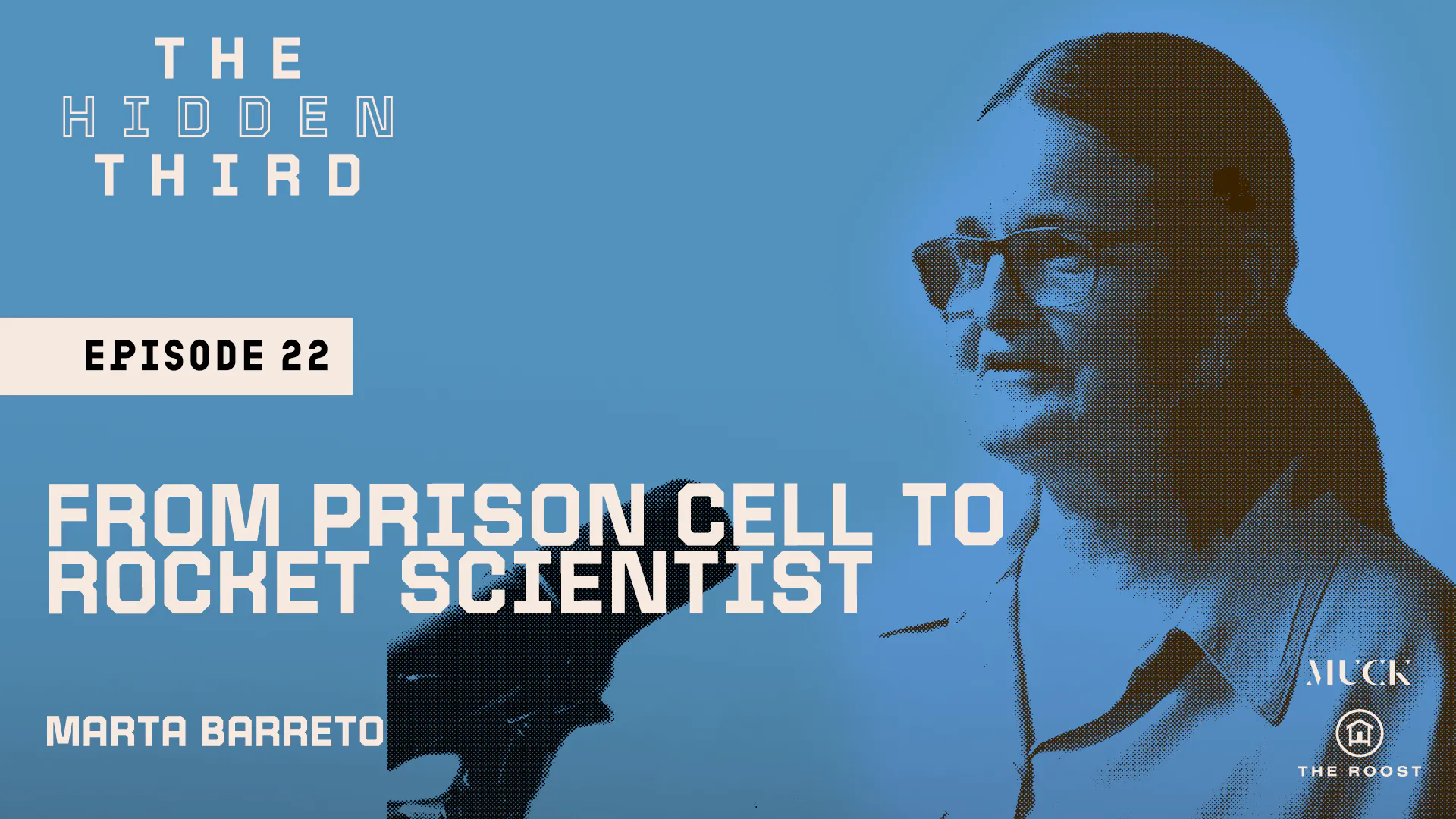
With me here today is an amazing woman with an inspiring story of resilience, hope, and the possibility of a life completely reimagined. Martha Barit survived sexual abuse when she was nine years old, trauma that sent her down a path of addiction and eventually landed her behind bars with a 24 year prison sentence. But that's not where the story ends. After prison, Marta became a propulsion technician at Virgin Orbit, which means she helped build space rockets. From a prison cell to building rockets. Pretty incredible. Today she's an engineer at a biotech company and she uses her story as a speaker and advocate, walking back into the very places that once held her captive. California's prisons. Marta, welcome to the Hidden Third.
- [01:29]
A
Thank you so much.
- [01:30]
B
So, Marta, let's go back. I'll call you Marta, even though I know the English way or the English pronunciation is Marta. Marta's great, but you say some people. So again, you were born in the United States, but your parents were born in Portugal and you grew up in a very Portuguese household, right?
- [01:47]
A
Oh, yes.
- [01:48]
B
So tell me a little bit about growing up.
- [01:50]
A
Well, growing up, it was awesome. It was like any little girl, you know, I had dreams. I wanted to be a mom. I wanted to have seven kids.
- [02:01]
B
Seven, which is crazy.
- [02:02]
A
Seven kids. And I wanted to be an aerospace engineer. The reason? Because I loved airplanes. I would fly to Portugal all the time on vacation. So I fell in love with aerospace. And I loved being a girl. Loved it. And I loved being Portuguese. I loved playing outside and just doing the normal things that girls did.
- [02:22]
B
Your family is Catholic?
- [02:24]
A
Yes, very Catholic.
- [02:25]
B
Much like a lot of Portuguese families. And you grew up here in California, correct?
- [02:30]
A
Yes, I grew up in Norco.
- [02:32]
B
And so can you tell me what happened when you were around? You were nine years old, right?
- [02:36]
A
We were going to Portugal to spend time there at Christmas. I was really excited. And I remember we were at my grandma's house and all the kids, the grown up kids had went to a cafe. And I wanted to be a big girl. And I asked a family member of Mine to take me. And after going there for so long, you know the roads, you know how to get there. And we didn't go to the cafe at first. We went down a road into a forest.
- [03:14]
B
Who's we?
- [03:15]
A
A family member. And it was the beginning of a really dark time for me. I was really excited to be there. And then when we went down that road, it became really dark to the point where I just wanted to leave. And like any little girl, I was yearning to go and, like, tell my mom. I wanted to tell her. I wanted help. And I remember very vividly, you shouldn't have worn the dress.
- [03:50]
B
Oh, wow.
- [03:50]
A
And I remember I was still wet from that still. And I sat in there thinking to myself, I shouldn't have worn the dress. And what was crazy is that Christmas continued, vacation time continued. So it was the first time I ever experienced anything sexual. And you know how it feels. It feels good. But then it felt bad because I didn't want it. Does that make sense?
- [04:22]
B
Of course.
- [04:22]
A
And you don't know what to do at that time. So I was left with, I shouldn't have worn the dress. And everyone continued on. And so I just wanted to be amongst my family members and be loved. So the rest of the time, I went to the houses and had dinner and continued on. And I just wanted to get on the plane and come home.
- [04:47]
B
There's usually a lot of guilt associated with sexual abuse, where the victims themselves feel a lot of guilt. Sometimes misplaced guilt. Obviously. I mean, in your particular situation, I mean, the fact that your mom even told you that it was because you were a dress, that must have been so difficult for you.
- [05:06]
A
It was extremely difficult for me because I wanted her to say, like, you know, let's go. We're gonna go home, or, we're gonna take care of this right now. Right. And what I was told is that this person was spoken to. And I thought, okay. But I was still left with that shame. I didn't know what to do with it. I felt so dirty. And then that played in my head. I shouldn't have worn the dress. After that, I didn't really want to be a girl anymore. And that was a really hard time to navigate because I kind of stopped wearing dresses. And if I did, like, we'd go to the Portuguese gatherings here. I have to wear them, but I want to take them off right away. And that's when I started feeling more like just wearing normal clothes, like, no more dresses. And I didn't want to really look like a girl. And I was made fun of at school. The boys didn't want to be with me at all. And then I was called a homo. A lot of things at that time because I dress differently.
- [06:20]
B
What do you think was going through your mother's mind? Because you guys are close nowadays, right? You have a good relationship with her. What do you think was going through her mind back then, do you think? Why was her first impulse to blame you instead of try to protect you and confront the person that did this to you, who was a family member? Right?
- [06:40]
A
Yes, I think at that time, I think that's the only way she knew how to respond. Because after years passed by, I finally had a conversation with her, and she said that they were raised to, like, not talk about it, basically, like, it's the woman's fault. So she didn't really know how to, you know, help me. And I. She doesn't even remember saying, you shouldn't have wore the dress. But I remember, like, it was yesterday. And for so long, that dress wasn't just about a garment. It was so much more. It's like I had the scarlet letter on me and I didn't know how to set it free. And it held me captive in ways I would have never imagined. It's like I remember being born. I remember having those dreams and desires to be a mom and to have a house and to be an aerospace engineer. And I felt alive. And when that happened, it's like I didn't feel the sun anymore. Yeah, you're living, but you're not living. And it's like the darkness took over, but yet you still have to keep going. Because I still wanted to be loved and I wanted to be seen. So then you have to kind of conform. Yeah.
- [08:10]
B
You break all sort of trust with the world and the people around you. Right. It becomes a broken world and it becomes a scary place to be in. A place I'm sure without a lot of light and hope.
- [08:24]
A
Absolutely. Absolutely.
- [08:26]
B
Hey, everyone. So real quick before we keep going, if you're enjoying this conversation, which I really hope you are, take a second to to subscribe, like or leave a review on YouTube.com Marianavan Zeller or wherever you're listening to this podcast, the Hidden Third, and share it with your friends. This show doesn't have a marketing budget behind it. It grows because of people like you. And this means everything to me. So thank you so much. Obrigada.
- [08:53]
C
Quick interruption. Here's a helpful tip. Thinking about updating your home. TikTok is full of simple DIY and decor Ideas, small changes, big results. All in quick, easy videos. Download TikTok now.
- [09:09]
A
Yeah.
- [09:10]
B
And then. But that wasn't the last time, right?
- [09:13]
A
No. And then. So years passed by, and then another family member heard about it, and I guess it excited him. So I had a battle that. And I was sexually assaulted.
- [09:30]
B
Sexually abused by this other family?
- [09:33]
A
Yes, Multiple times. And once again, I told my mom and I wasn't believed. I was a teenager then. I was going to junior high, and I wanted help. I was in so much pain. I was in really dark time. And a friend, supposedly a friend said, well, why don't you try methamphetamine?
- [09:56]
B
Was this a friend who was using methamphetamine at the time?
- [09:59]
A
And she said that it would help me, you know, because I had a hard time sleeping, a hard time just forgetting about it. And she said it would take all that away. It would, you know, help me feel better. I would be numb. And then that's when that started.
- [10:13]
B
Can I ask you a question, Marta? When you were during the junior high years, when you were being abused by this other family member at the time, did you ever think of going to the police or reporting this to court?
- [10:24]
A
I went to CPS at my junior high, and they came to my house, and at that time, my mom. And they said that I was on drugs, that I was a liar and not to be believed. And CPS left me there.
- [10:42]
B
When you. I know it's a sort of sensitive subject because that family member is still in your family and still very much present. So we're not going to say who that is. But do you. How difficult is it then, for you? Because I know that telling your story is important for you, and you've done incredible work by telling your story in prisons, and you've helped so many people. How do you navigate that? Do you have conversations with your family about what you're going to be able to talk about or not? Do they ask you not to talk about this particular thing that happened in your life?
- [11:21]
A
Yes, they've had conversations where, you know, it's like they protect them. But when I go in the prisons, I just. I share my story the best I can, and I do speak on, you know, what took place and what they did to me. And I won't let my voice be muffled anymore. And I'm trying to navigate it the best I can, but it's hard because I feel like here I am healing and trying to survive and just to be a voice for others, but yet I feel like sometimes that's not Enough like somehow they're still winning because there's
- [12:05]
B
been no accountability for them, either of these family members.
- [12:09]
A
None. But there is. But there's been for me. And that's what's. It's so hard, because that itself is what almost took me out. I almost committed suicide.
- [12:24]
B
When did that happen?
- [12:25]
A
After all the years, Like I told you, I was the junior high. I started doing drugs, and then I started to be. I wanted to feel love, so I started dating women. And then I was told I was a homosexual by your family. I was never going to inherit the kingdom of heaven. I was a sinner, so I was wrong there, too. But I was only trying to feel loved in some way. And that was a hard thing to navigate. And I tried the best I could every single day just to walk on that fine line of, you know, being me and trying to survive. But they were always on me about, it's against God, you're not going to inherit the kingdom of heaven, you're a sinner. They tried to bring teas to make me drink teas from witches, but they would go and said that they were going to cleanse my impurities. I felt like it was never enough. And I was almost. I was beat up pretty bad when I came out as a homosexual at that time, too, because people weren't so welcoming in that. I almost didn't make it from that either.
- [13:49]
B
Can you tell me, can we go back to when you started using drugs? And so you were friendly, you had a friend, a woman who was also using drugs. Right. And you guys became friends, and this was one of the first people that you sort of trusted.
- [14:02]
A
Right.
- [14:02]
B
And you had a relationship with this person.
- [14:04]
A
Yes.
- [14:06]
B
And then one day she says, I have something for you that's the best that will help you with your life. And that was methamphetamine?
- [14:13]
A
Yes.
- [14:14]
B
Did you know what meth was at the time? Had you tried any other drugs before then?
- [14:19]
A
I tried it because I was tired. I was tired of feeling the way I was feeling, and I wanted it to go away, to numb it. And for a minute it's like, oh, my God, I don't have to sleep. It's going to take it all away. But once you do one line, one line's not enough. There's 2 lines, 3 lines, 4 lines, 5 lines.
- [14:44]
B
How often did you take. Did you use drugs?
- [14:46]
A
Every day.
- [14:47]
B
So you started immediately. You got hooked immediately on Matthew?
- [14:50]
A
I hooked immediately, but I still managed to go to junior high, go to high school, and still tried to navigate. And then I Had my family members that were constantly coming and saying, you know, how good and beautiful I was. I had another family member that had gone to visit Portugal and came back, and this person said, I heard that you're so good and really beautiful. And that's when that person began sexually assaulting me. And he started sharing me with his friends. And that's when it kind of felt like I needed money for drugs, and they would pass me around and sell me and provide the drugs and to keep me high, as long as I gave them what they wanted, sexual favors. And then. So you were just. I shared that as well, and no one believed me with that either. So I felt, Mariana, that God must have put me on this earth to service my family members, to do that, because it always felt like it was my fault.
- [15:58]
B
Just so I get this, right, the family member that you do not want to name or explain the association you have to this person, he was the one who then was sort of passing you around to other people.
- [16:08]
A
Another one.
- [16:10]
B
Another person also in your family member?
- [16:12]
A
Yes.
- [16:12]
B
Family
- [16:15]
A
that I can name. He was my uncle.
- [16:17]
B
And he also lives here in California.
- [16:18]
A
Yes.
- [16:20]
B
So your uncle had learned about your previous sexual abuse by other family members, and he thought, well, she's had sex with these people. I'm just going to exploit her.
- [16:33]
A
Yes.
- [16:34]
B
Was that.
- [16:34]
A
Yes.
- [16:35]
B
And so he started passing you around, and was he making money from it?
- [16:40]
A
Oh, he was making money.
- [16:42]
B
So he was sort of.
- [16:43]
A
And he was giving money for drugs.
- [16:45]
B
He was giving you some money for drugs as long as you kept having sex with the people that were paying him. So he was sort of like, pimping you, essentially.
- [16:53]
A
Sort of. But I didn't. You know, you don't know what that is because you know what they're doing is wrong. But then at one point, you feel like, well, that's the only time that I'm being told that I'm loved and beautiful, because even though other times people are telling you they love you and you're beautiful, you associate love with what, the first experience that you had. Does that make sense?
- [17:20]
B
Yeah.
- [17:21]
A
And for me, it's like after that, I started searching for it. Yeah. And that became like, something that gripped me because no matter what, I felt so ashamed after. And no matter what I did, no matter how many showers were, it couldn't be scrubbed off. Right.
- [17:43]
B
In many ways, I think it's the idea that your worth becomes associated with that abuse. Right? Yes. You're only as worthy as the attention that you get from your abusers.
- [17:54]
A
In a way,
- [17:56]
B
what happened to that uncle, by the way, has he been charged with anything?
- [18:00]
A
No, they all protected him.
- [18:03]
B
Did you ever go to the police about him?
- [18:04]
A
No, I didn't go to police because when I went the first time, no one believed me. And then I got really addicted to drugs and I didn't really think anyone was going to believe me. And then when it's time to go to the police, now it's time. Last time I came to prison, came home from prison, I just decided that to save me and for me to save my life and be a better mom and just to move forward and forgive.
- [18:34]
B
You know what's funny? I spend my days trying to get access to criminal networks and underground economies. And yet the thing that consistently defeats me is getting a real meal on the table for my family after a day at work. That's why I use Factor. They make healthy eating really easy with fully prepared meals designed by dietitians and crafted by chefs. Lately I've been obsessed with their Tuscan style Italian herb chicken with roasted green beans and creamy risotto. It tastes like something my mom would spend a full day making, not something that took me two minutes to heat up for February. When I'm heads down on new episodes and running on deadlines, this is exactly what I need. Real, healthy and delicious food that my family actually gets excited about. Here's what I love about Factor. Their meals are built with quality ingredients. Lean proteins, colorful veggies, whole food ingredients, healthy fats, no refined sugars, no artificial sweeteners, no refined seed oil, and there's always something new. Over 100 rotating weekly meals with options like high protein calorie Smart Mediterranean Diet, GLP1 supports and and their new MusclePro collection for strength and recovery. Plus ready to eat salads when you want something lighter. Always fresh, never frozen. Ready in about two minutes. No prep, no stress. I use this and you should too. Head to FactorMeals.com/IDDEN3rd50OFF and use code hidden3rd50OFF to get 50% off and free breakfast for a year. Eat like a pro this month with Factor New subscribers only. Varies by plan. One free breakfast item per box for one year while subscription is active. And leave all that behind.
- [20:29]
A
Yeah.
- [20:30]
B
What point did you become a mother?
- [20:32]
A
It was in 2006.
- [20:34]
B
Were you?
- [20:35]
A
That was amazing.
- [20:38]
B
Can you tell me about that? Were you? Were you? So 2006 you were. This was after. Were you still using drugs at the time?
- [20:47]
A
I was using drugs, but there was a time that I stopped using drugs. I joined the United States Navy and I thought, you know, Mariana. I loved airplanes. And I thought, I'm going to join the United States Navy. I know that this is going to give me an opportunity to be set free. And I joined the United States Navy, and I met this man there. And I thought, man, I might be able to finally be married and have that, you know, house, picket fence, and. And we started a sexual relationship, and I just couldn't do it. And he made me sick. And I had told him, like, a little bit of my story that I had been sexually abused and harmed, and it was really difficult for me. And what he did is he took that as and used it against me because he wanted to be sexual with me. And I remember we were in Virginia, and he knew about my meth addiction, and he went and found some cocaine. And he said, maybe this will help, because he thought if he had me high that I would feel more at will and free to be with him. And for a while, it worked. And then I got addicted to cocaine. And then I finally said, I can't do this no more. I just can't be with you. I'm not. Okay. I'm not comfortable. And he went and he turned me in, and he got to stay in the United States Navy, and I got kicked out.
- [22:11]
B
So you got kicked out of the Navy. He turned you into the Navy because you were using drugs. That's how he turned you in.
- [22:17]
A
They tested us, and he got to stay in a program. And I got it, other than honorable discharge. And when I came home, I wanted to commit suicide. I was so distraught because I loved airplanes. I served in two wars. I was on two aircraft carriers. I traveled the world. I was where I wanted to be. And I remember I was crying in my mom's lap, and my mom didn't know what to do. So they bought me a truck and were trying to help me get back on track. And I was so broken inside. I was so lost. I didn't. Sorry. I didn't want to live. And I met this girl. I remember we got together, and I thought, okay, this is it. We're going to be together. And we started doing a lot of drugs. And then that's when these other traffickers got involved. So I met this guy that wanted certain items. He wanted guns, he wanted jewelry. He wanted all these things. And he would give me the. All the drugs that I want and he would sell me. I was trafficked there for years, and I started breaking into houses, committing residential burglaries. I didn't care. In broad daylight. I was carrying guns in My pillowcases loaded. I didn't even know they were loaded. I was so like, I'm tired. And she turned me in because I wasn't giving her enough drugs. And that was the first time that I got in trouble with the law.
- [23:58]
B
And so you were breaking into these homes, and what were you stealing from these homes?
- [24:04]
A
Just whatever he told me to get.
- [24:06]
B
Did he know what was inside the home or he just said, go inside and get whatever is valuable?
- [24:11]
A
Yes.
- [24:12]
B
And so what did that include? Can you give me some examples?
- [24:14]
A
Do you remember guns, jewelry, Rolexes, diamonds, Anything that was on his list?
- [24:22]
B
And then you'd bring it out and he would sell it, and then he would provide you drugs?
- [24:25]
A
Yes.
- [24:25]
B
And then. So then you ended up. Did you go to prison at the time?
- [24:29]
A
Well, no. They. My mom and dad and my cousin, who I love so very much, asked a judge for mercy. And I remember one person that I came, I broke into her house, and she came and spoke on my behalf, like to give me another chance. And I told the judge that I was sorry. And at that time, I told him, look, I've been sexually abused. I have a drug addiction, I'm broke, I need help. And I went to. They said, okay, we're going to give you a joint suspension, six year joint suspension, and we're going to send you to these rehabs. It was a rehab. It was like a 90 day. And I had been to rehab before, but with these rehabs, you go in for 30, 60, 90 days, and then they ask you to speak about everything that you've gone through, and then they kick you out, right?
- [25:15]
B
As if 30 or 60 or 90 days is enough to get you.
- [25:19]
A
To me, it's like, what do you do with that? Because after you start opening up and all those wounds stuck, oh, you got to go. And it's difficult because I didn't get the therapy that I needed. I didn't get the help that I needed. And I had asked the courts, I asked them for drug court. Drug court. Mariana is a longer court program, but you have to apply, you have to go to an interview, and only a selected few get it. And I wasn't chosen. And so I went to this rehab, and that's where I met this amazing woman that I thought, I'm going to spend the rest of my life with her. And I thought, man, okay, I have a chance. And we fell in love and we moved to Crestline and we began. We got a place and I was working, I was doing really well. And I remember telling her I Said, you know, if you don't want to be with women, you just let me know. I want to be with women. I'm not comfortable with men. She said, no, no, no. This is what I want. And we were doing really well. And I came home one night, and she said, let me back up. I wanted to have a child with her. Yeah, yeah. But I had gone through a lot of things. Like, I had endometriosis, and I had some things that weren't right in there. And so the doctor says, you only have. I'll give you six months. And I'm thinking to myself, where am I gonna get. How am I gonna get pregnant in six months? I don't sleep with men. So I was working at this auto auction, and a friend of mine said, well, I have this guy. He's willing to give you his sperm. So I used a turkey baster, and I got pregnant with triplets.
- [27:05]
B
With a turkey baster.
- [27:07]
A
I got pregnant with triplets.
- [27:08]
B
I didn't know you could do that.
- [27:09]
A
Yeah, it's crazy. And we would go to this guy. First of all, he asked his mom, and his mom said, what a gift that you could give to her. A child. Absolutely. Do it. So we'd go to his house, and he would do his thing, and then he'd leave it in a shot glass and leave the room, and I'd put it, like, in a. Like a syringe. Turkey in 20 minutes, and then leave the house. And I got pregnant, like, right away.
- [27:36]
B
No way. And, I mean, doctors are charging thousands of dollars for this medical procedure that you do in the house.
- [27:41]
A
Absolutely. And it's crazy.
- [27:42]
B
For free.
- [27:43]
A
We had friends that were trying. Two girls that were trying to get pregnant at the same time, but they were paying because they had the money, and they were paying, and then it wasn't working, so they were spending a lot, and they. I got pregnant right away. And I remember I was in Crestline. I was in the morning, and I got up, and I got a pregnancy test. I was so happy that I was pregnant. I went and bought seven more just to make sure.
- [28:08]
B
Seven? Seven tests?
- [28:09]
A
Yes, seven tests. And I was so happy.
- [28:11]
B
Seven is your lucky number. I can see. Which is also Cristiano Ronaldo's.
- [28:15]
A
Absolutely.
- [28:16]
B
Soccer player's T shirt number. It is also the day I was born, really? May 7th. And it's also my lucky number.
- [28:23]
A
It's our lucky number together. And that was such a gift. So I. So excited. And I lost two right away, and that was really devastating for me. But I always believe that God knows what he's doing. And so Madison, my daughter, was born 4 13, 2006. I was in labor for 26 and a half hours, and I remember holding her. And I thought, man, this is it. I finally. I'm going to have my house, someone that I love. I'm finally gonna have all my dreams come true. But what people don't understand is if you don't get help for all the carnage up to there, it doesn't go away.
- [29:08]
B
Yeah, there's not one thing that's gonna erase everything.
- [29:11]
A
And that didn't really register with me. I just. Because you just want to keep going. So I was really, really happy. And so Madison was born, and we were living the dream. We had our house in Crestline. I was working, I was clean, and I came home, and she said, I feel like our sex life needs to be better. And to me, sex. I associated sex with love. So I panicked. I said, okay, what do I need to do? And she said, I think that we should start using methamphetamine, like, with the needle.
- [29:44]
B
Because until then, you hadn't really used it with a needle when you were using it.
- [29:50]
A
And I said, okay. I gave her my arm. And I didn't realize at the time that what she was doing, she would make the serum. Because when you put meth in the needle, once you do it, if you flip it over, the longer it takes to come up, it's. The thicker it is. So I remember the first time, I was, like, blurry. My eyes were just. It wasn't right. And then I remember her closing all the drapes. And then I remember feeling him. What do you mean, him? She would get me high, so she would bring him in the room so they would have sex with me. And I would be so high and be like. I kept telling her, I feel him. She's like, you're crazy.
- [30:44]
B
But who was he?
- [30:45]
A
It was a friend of hers. Oh, wow. She wanted to be with a man, and she didn't want to tell me that, so she just decided that, or they decided to get me high and keep me high. So every time we would do the needle, she would close the drapes wherever room we were at. Because the needle makes you, like, sexual experiences, you know, off the chain. And I thought that she wanted me. And it went on for a year. And they used foreign objects, handcuffs. Things in me I can't even begin to describe. I almost overdosed three times. And then I got so addicted on the needle. I remember one time I said, I feel like he's in the room. And she said, you can't do the drugs anymore. And I remember wanting to be so high. I wanted the needle. I needed the drug so bad. I said, fine, I'll just do the drug myself. And I remember my daughter. Sorry. She's so little, and she loved me so much. And she came in the restroom. She kept looking at me with that. Those eyes. And I just kept trying to. Every spot in my arm and my legs, trying to get the needle in the vein because I didn't know what I was doing. There was blood everywhere. And she just stood there and wouldn't help me. And then finally someone came in. Sorry.
- [32:23]
B
I'm sorry, Marta. Take your time.
- [32:35]
A
She's telling me, have you watched how she's making your. Your dose? I'm like, no, she's like, she's making it so strong that she's going to kill you. And if you. If you notice, she's making hers less weak. So she's taught me, like, the difference. And I started watching, and that's when I started getting really mad at her and saying, I can't do this no more. He's in the room. We gotta stop. And then so she turned it around on me, and she said that, oh, you can't handle the drugs. And so we started going through our money. And she said, I think it's time that you start committing residential burglaries because your daughter needs food and my son needs food, and you need to be a better mom than this. So him and her started writing the houses. They wanted me to go burglarize, and they would drop me off, leave me there, and I would commit residential burglaries. And in the meantime, I didn't know this, but he was with her in the hotels with my daughter. And one time they left me. And she said, just call me on the walkie talkie and let me know when you're ready to come. So I did. And they set me up because she had packed the car up with all their suitcases and he was driving. It's the first time I saw him. And they came to get me, and they told me to come out when the alarm came out. So this neighbor saw and he got behind us and they chased us. And they were driving on the freeway and they got off Day street. And I remember she. Because I was laying flat on the suitcases. I had nowhere else to go. She opened the door and grabbed my arm and threw me out of the car and kept going.
- [34:27]
B
And that was the last time you saw Her?
- [34:29]
A
No. After that, she was gonna go towards the freeway. They thought they were gonna go get away and then go get my daughter. And the police came. I had a gun in my face and there was a chase and they got them. And so I had to finish my joint suspension. I had to go to prison for three years. And I had to go to rehab again, the same rehab. And CPS went and got my daughter out of the hotel. And that's when they took her. And they came to the rehab for me to see her. And they told me, you need to stay clean. You just need to do all these things. And I did. And I relapsed once and that's all it took. They said that I couldn't keep my daughter and that someone had to adopt her. And my mom and dad stepped in and adopted her. Yes. And that was so hard for me because everyone was saying, you know, this is the best thing. You're still going to be able to have her. My mom and dad are like, we're never going to take her from you. You're still her mom. But I wasn't. And it felt like, first is the dress, and then it's because you're homosexual. And now it's be my can't be a mom. I just kept losing. And when it was time to go, my daughter, I went home to my mom's house and I hugged her and she said, mom, why are you going? Don't you love me anymore?
- [36:07]
B
Take all the time you need, Marta.
- [36:13]
A
So I went to prison for three years. It's the first time.
- [36:18]
B
What happened to that man who was coming into the room and doing those things to you?
- [36:22]
A
He went to jail and I've never seen him since.
- [36:24]
B
But he went to jail for the burglary?
- [36:26]
A
Yes.
- [36:26]
B
Not for doing those things to you?
- [36:28]
A
No. They didn't believe me. It's so hard to get people, district attorneys, lawyers, they think that you're saying that because you want less time. And I just wanted help. Can you please send me to a. I asked them for a year long rehab, give me therapy, and they weren't having it. They thought I was trying to make excuses. And so I had to go do three years and they got six months. And I remember going into prison and I was in Chowchilla and I was on the yard and she was on bee yard. And we met at the yard one time and she said, I just want to come and meet you and tell you that one. You were right. He was always there. And I should have never done that to you and I should have never put a needle in your arm. And that's the last time I saw her.
- [37:26]
B
This was the first time you were in prison? Three years. Were you in prison after that? More time because you were sentenced at some point to 24 years, right?
- [37:33]
A
Yes, I was in prison for three years. And I came home. I came home and I think it was 2011, and I was adamant about turning my life around and becoming the mom that my daughter deserved. And then, most importantly, I just wanted to be free. But not free from prison, just free from the internal damage. And like I stated before, Mariana, I really speak on this a lot. No matter what you're trying to do or where you're trying to go, if you do not get the help from that pain and seek professional help and work through that, all it takes is one little thing in your back where you were that day, that moment. And I didn't really realize that. I just wanted to keep going, and I wanted to be seen and I wanted to love, and I wanted to be the mom that God blessed me with. I mean, my daughter is like my hero, my best friend. She was a miracle to me. So I went to school, and it's funny, because I went to college and I was doing so well. I have 4.0 GPAs. They put these billboards in me. I'll send you a picture, a big old billboard of a picture of me most likely to succeed and become an aerospace engineer.
- [38:50]
B
Wow.
- [38:51]
A
All over this college. Wow. And I thought, man, this is great. I'm doing awesome. I won scholarships, awards. I was being a mom, but I was still living the life of the chameleon there. The people that abused me were still there. And it's like people ask me, even my mom asked me, will you. You let them come over. You open the door. It's your house. I lived with you. They would come there and I'd have to see them. I just wanted to be loved and be free from that. I was just trying to survive. So I went to. I got accepted at Cal State San Bernardino. I was doing amazing. And that's when things became really dark. This family member did it to another family member of mine, and they believed her, and they believed everything that took place. And I felt like, how come you didn't believe me all these years?
- [39:55]
B
So one of your family members who had abused you, abused somebody else in your family. And finally they believed it was your
- [40:00]
A
same uncle that abused me. Abused her.
- [40:03]
B
Yeah.
- [40:03]
A
And they believed all got this family meeting. They had this huge family meeting at My house and this, this and that. And they believed her, which I'm glad that they believed her because she deserves that. She deserves that. And. But I was. Why don't you believe me? I was so angry. So angry. And I kept asking them why you didn't believe me. And I was so angry to the point that my grades started falling. And then I gave up. You know, I went back to. The only thing I knew was using drugs. And sooner or later I was using drugs. And out in the streets, I ended up in a park. I was almost beat up, almost died. And the two people, family members came to see me. They didn't come to save me. They came to get their sexual favors and left me. Wow.
- [40:55]
C
Your little one grew three inches overnight. Adorable. Also expensive. Sell their pint sized pieces on Depop and list them in minutes with no selling fees because somewhere a dad refuses to pay full price for the clothes his kids will outgrow tomorrow. And he's ready to buy your son's entire wardrobe right now. Consider your future growth. Bird budget secured. Start selling on Depop, where taste recognizes taste. Payment processing fees and boosting fees still apply. See website for details.
- [41:26]
A
Left me there.
- [41:26]
B
This is crazy.
- [41:27]
A
Die just left me there. And I just. I remember my daughter messaging me and email and text, mom, come home. Mom, come home. And I just couldn't. I didn't want her to see me that way. But I didn't know that harm that I was causing by not being present.
- [41:42]
B
Right.
- [41:43]
A
And I don't afterwards she spoke on it, that she had to pretend like I was dead just so she could survive herself. So I went on this crazy rampage. I sold myself on Craigslist. I said, you know, God, this must be what you've called me to do. I've had. And so I had Orange County Sheriffs, Rivers County Sheriffs, Los Angeles County Sheriffs by me.
- [42:08]
B
So you would basically put your services on. You would say, I'm open for prostitution and come.
- [42:16]
A
You can open to whatever they want.
- [42:18]
B
Sex, whatever you want.
- [42:18]
A
I didn't want to live anymore. I just like, I just. I thought if this is my purpose. I was so numb and so angry because I felt like, what did I do? I wore a dress. And no one's ever believed me. And I told the truth and I was broken.
- [42:35]
B
And you actually had law enforcement coming
- [42:37]
A
and paying for sex on the Craigslist? Most of them were them.
- [42:42]
B
What year? When was this? More or less.
- [42:44]
A
It was in 2016.
- [42:45]
B
15. Craigslist was still very popular.
- [42:48]
A
Yeah. And it was. I did Things with them that I. I didn't care. They did things to me. I just was so numb. And I remember, like, you know what? Thinking, I don't want to live anymore. And I had met someone that a girl that also had been through, been trafficked and her mom sold her when she was 9. And I, that time, we were doing drugs together. I remember one time she was in a hotel room and she was showering and she was crying because it was, you can't scrub it off, but it's all, you know. And she knew that I was struggling. And she'd taken me to the airport over here in LA to see the airplanes. And she kept saying, marta, you can't give up. You can't, like, take your life. You're such a good human being. You got a good heart. You know, you can do this. Your daughter needs you. But all I saw was dark. And I ended up going to a hotel room. I called a friend, so called friend. They brought me a loaded gun. And she's the one that came to the hotel and found me and took the gun away. And the drug started to run out. And I did the only thing I knew what to do. I started to break into houses. And I didn't care. I started doing, you know, crazy, promiscuous stuff, like going to houses broad daylight. And I was chased by the helicopter. I jumped up a wall and I finally, it was like the last time. And they came and got me at my house. And I remember being outside and my daughter was looking in the window. They put handcuffs on me and she was banging on the window. Mom, don't leave me. Please don't leave me. Please, please don't leave me. And there's nothing I could do. I didn't want to leave her, but I was so. I was numbing. And then I was the bad guy. And my mom was so angry at me. And once again, it was my fault. I wasn't believed. And so I went to jail. And the first thing they offered me was 40 years to life.
- [44:50]
B
40 years to life for burglar, for
- [44:53]
A
how to have strikes. 40 years to life. And I said, but I've been sexually abused, sexually trafficked. I've had. I've had objects put in me. I've been sold by strangers, family members. I had to have a hysterectomy because I was. I had. Was damaged inside. I need help. And the district attorney is like, that's not going to help you.
- [45:15]
B
Was like, we're not going to help you. We're just Going to give you time and prison, basically.
- [45:19]
A
And it was funny because I went. I've always believed in God. I've had this amazing connection with him. But I was always like, where are you? And before all this happened, I remember being at a park, and I wanted to die. It was so cold, and it was freezing, Mariana. And I thought, okay, Lord, I'm ready. I want to go home. I'm just. I wanted to be with him.
- [45:43]
B
As in, you want to die?
- [45:44]
A
Yeah. I didn't think I was going to survive. And I woke up to this. Someone patted me on the back, and it startled me. I woke up, turned around, and there was nobody there. And in front of me was two cups of coffee, two Egg McMuffins, and two hash marks.
- [46:02]
B
Wow.
- [46:03]
A
And not a single person was there. And I totally believe that was God. And then there was another time when I was getting all that stuff for him, and this trafficker came. He was in a suit, he was built, and he came to size me up, and he kissed me, and he said, okay, follow me. And I did. And then he pulled over, and he just looked at me at the back of the window, and he took off. And I believe that if God hadn't saved me, I probably wouldn't be here today. I probably would have been taken into, like, a trafficking ring, because I was a man that was very known for that.
- [46:47]
B
So the man who initially. Who. Explain that again. So the man approached you in the park?
- [46:52]
A
He. He approached me. And he was a trafficker, right?
- [46:56]
B
Well, a person that you knew was a trafficker, well dressed.
- [46:59]
A
You said, yes, and he was well dressed. And he wanted to size me up, because I guess they said that was good. And he did. And he. Something didn't like. He didn't like the way I kissed him or. Or whatever. So he left you and he just left me. But I believe that was a God thing, because I don't think I'd be here today, because people that I know that had gone with them, never. They disappeared. And that's an instance that God had his hand on me. So when I went to jail, facing this 40 years to life, I had a pastor come to visit me. And I'm like, why are you visiting me? I didn't ask you. And he said, you know, God's calling you to serve him. And I said, you're crazy. Why would he call me? I'm a drug addict, a whore, sell myself. I went down this list, and he said, have you read the Bible? And I said, no. He said, do you know that God's greatest apostles are you. I said, there's no, like, there's no way. And he says, I know all the things that you've done, but you're anointed and God is calling you to serve him. He left me a Bible, and I read that Bible like every single day. And I fell in love with the word. So I went to. When you're in jail, you got to go to your court dates. So I went to one of my court dates and they said, Nope, still 40 years to life. And there was this black lady in the cell afterwards. You're put into a cell and you gotta wait for transportation to come get you. And she goes, you know, you're only gonna do two years. And I said, you know you're on drugs because you were just with me. They said, I'm doing 40 years life. She goes, you're gonna remember me. God is calling you to serve him. I said, what is wrong with these people? Why would God call me? Because I carried that guilt of the dress. I was a homosexual. I sold myself. I chose drugs over my daughter. I broke into people's house and had no right to do that because I was so broken. So moving forward, they, the DA met in this big meeting in Riverside. All the DA's to talk about my case, and they came up with this 24 and a half years. And what it was is they gave me 15 years prison priors and I went to prison.
- [49:31]
B
Which prison did you go to?
- [49:32]
A
Chowchilla. And when I got there, I received a letter right when Prop 57 began. It says that you're eligible for Prop 57. And I said, you got kidding me? It removed 22 and a half years off my sentence.
- [49:49]
B
22. So you went from 24 and a half to 22?
- [49:51]
A
Do you know how many years I did?
- [49:53]
B
How much? Two. Oh, my God. That's incredible.
- [49:57]
A
Exactly what that lady said. I would do two years. And that's. And when I was going to be released, August 19, 2019, and my dad came to visit me. He surprised me and he said, me and your mom have been told that you've been telling us the truth. Sorry. All these years. And we want to do whatever we can to help you.
- [50:30]
B
What did that mean to you?
- [50:33]
A
Sorry.
- [50:34]
B
That's okay. Take your time.
- [50:43]
A
I was finally seeing and I felt like I would have finally gonna have a chance to turn my life around. And with reading the word, I fell in love with the word of God. And you know how God says to forgive? And I went home and my Daughter was sitting at the door, and she stared at me like she didn't even know me, right? Because she didn't really understand what took place. And my mom kept saying, I can't believe. I can't believe you went through all that. I can't believe you were sold. I can't believe that you had objects put inside you. I can't believe what you went through. And I saw how much she carried that blame. And I told her, I said, mama, I forgive you. I forgive you, because I think it's important to. I didn't want her to carry the same weight I did all those years. So I came home and I went to a rehab, and I went to three years of counseling. Had the best counselor, best therapist in the world. And we worked through everything. And the one thing I had a hard time working through was the guilt, the anger and the shame. And she would have me write all these things, like, you know, write it and then read it to me. And she's like, no, no, Marta, you're still angry. I said, no, I'm not. And something happened at home, and I came the next day, and she goes, you're angry. And I was. And I let it out. And because that lady showed me how to let go of the broken pieces within me, I was able to set that free. And I received the freedom that I didn't think existed in this world. I finally felt like the rays of the sun were hitting my face, like there was hope.
- [52:44]
B
And you haven't touched drugs in 10 years? You said no since you went to prison the first time. I mean, that last time. And you haven't been in trouble with the law sentence?
- [52:54]
A
No, I've been. As a matter of fact, I've turned it completely around. I went to therapy also with the Pro bowl board. And the therapist there was just. She thought I was just incredible. Like, my resilience to get rid of the shame, to forgive and to become a better person. I did whatever I could. I worked so hard to let go of that shame and that guilt. I didn't realize, Mariana, that that guilt and shame and unforgiveness kept me imprisoned even before I went to prison.
- [53:28]
B
Yeah, a different kind of prison.
- [53:29]
A
Yeah. I didn't know it kept me captive. I wasn't able to, like, move forward.
- [53:36]
B
Marta, do you think that the fact that your mom and dad finally believed you, how important was that for where you are right now? Do you think if that hadn't happened, I mean, it's such a small gesture, right? Being able, believing a Person believing your daughter. It is a small gesture, but it was so incredibly important for you for obvious reasons. Do you think that if they hadn't said those words and if they hadn't actually believed you, that you would be on the journey that you are on right now?
- [54:07]
A
I don't know if I would or not. I know that I would try. I think that really, really helped me because I speak a lot about seeing people through the eyes of Christ and the value of second chances. When my dad came to me and finally said that, I felt like I was finally seeing. And it was a feeling like. I can't explain it to you. It felt like I was finally able to breathe.
- [54:35]
B
Yeah, it's. It's like removing of the guilt from you, right? Almost. You know, finally somebody else believes me. And you can shed away the shame in a way, right?
- [54:47]
A
Yes.
- [54:48]
B
Is that how we would say it?
- [54:49]
A
Yes. It felt like I could get rid of that. I didn't have to carry that dress anymore. I didn't have to carry that guilt and anger anymore. And I started to reflect, like, wow, those things really held me captive. I didn't even do any time before that. But they were keeping me from living all those years. It wasn't just the sex traffickers or the. The family members that did that to me. The objects that I had inside me, all that I went through that kept me in prison. It was the guilt and the shame, the inability to let that go. And so that's why I chose forgiveness. I forgave my mom, I forgave my traffickers. I flew to Portugal, I forgave my family member. And now I go inside and I in the prisons and I talk about the power of forgiveness. Everybody deserves that. And we have such a hard time as human beings dying on the cross for one another. But yet God died on the cross for us and didn't even think about it.
- [55:55]
B
We talked a little bit about how therapy was important for you and how without it also you think that obvious that you wouldn't. That it was crucial for where you are right now. And I think the reason why I went to the acts from your parents and what they did and how that helped you is because so often victims of abuse are not believed, you know, and that it can make such a huge difference in what happens after the abuse. Right?
- [56:25]
A
Absolutely. That's what kept me out for so long, is that the fact that no one believed me. I was this. I was this liar. It was my fault. I wanted it. It was the dress. And you carry that with You. I didn't wear dresses for so long. I didn't feel like. I didn't feel like a woman. I didn't feel like a girl. I didn't feel like I had a right to live like that. Does that make sense?
- [56:48]
B
Absolutely. I think it also comes sometimes, even if they do, if people, family, if your loved one believes you, it's almost like they want to. They prefer to live in a world where that stuff doesn't happen. Right. And they. Let's just pretend this never happens. So let's, you know, tell her that we don't believe her and just sweep this under the rug because there's so much shame that comes with it. And sometimes I think that's why I say all the time how shining the brightest light in the worst things that happen in your life is so incredibly important to actually get rid of them. Right. And get rid of the shame that is attached to it.
- [57:28]
A
Absolutely. But.
- [57:30]
B
Yeah, but therapy was also incredibly important for you.
- [57:34]
A
It wasn't just a therapy. It was a therapist, too, because I had gone to therapists before where they would just, like, hold a clipboard and write things down, and then they'd ask me the same question they just asked me two seconds ago. It's as if I wasn't human. It felt like I was a job, like, okay, next. It was such a detachment. And this therapist, Betsy, she fought for me. She cared, and she wanted me to survive. And I trusted her. And it was the hardest. The hardest thing I ever had to do was those three years of therapy. To let go of that and let go of the guilt and anger and the shame and to start living. I wasn't living before. Even though people were like, yeah, but you go to their houses, you were doing things. It was, to me, the only way I can explain that. It's like you're a chameleon, right? You. You want to be loved, so you're going to conform.
- [58:36]
B
You're going to become what that person wants you to be.
- [58:38]
A
Yes. You're searching for that. And then the biggest thing, that also I want to share with you and I. Every time I share this in prison, they say it's a big. It's valuable because a lot of them feel the same way. The traffickers and the people that harm me had such a hold on me that I could not have an orgasm unless I thought of them hurting me. And that guilt of that was the hardest to put on the table. I always thought people were going to think I was this crazy person. And my therapist, like, you need to let that go. It's not for you to hold. And I go in these rooms, Mariana, and speak in the prisons. And the amount of men that have that shame, some of them come to me and whisper when I leave and hug me and say, I've held that same feeling. And for you to speak it so openly, because it's not. It's so not okay. Even today's society to speak about those things. No one wants to have a conversation about that. They look at you like, what do you mean? You didn't. You did that. You need to be institutionalized. No, this is how they manipulated you and how they kept me captive. They made me feel that I cannot feel loved or have that kind of euphoria unless it was them.
- [59:57]
B
Yeah. The power that exists over a person, consensuality, or what's consensual and what's not, is very much a gray area, right?
- [60:08]
A
Yes, it is. Yeah.
- [60:10]
B
But, yeah, it's interesting that you're talking about that. About the orgasm part. I don't think most people are aware. And it's definitely something that's never talked about. No.
- [60:21]
A
And that's why I talk about it so freely, because I think it's important. I want to help as many people be set free from that and be able to have productive lives. Be able to come home and be fathers and mothers and be able to receive forgiveness and mercy and grace. I've talked to a lot of people, and they've been sexually abused. One individual told me for the first time, because I shared. I was so open about what I shared. Told me that since he was 6 years old, until he's 17, his dad raped him. What do you do with that?
- [60:57]
B
And this was somebody in prison.
- [60:59]
A
Yes. But what do you do with that? Like, people are so quick to say,
- [61:03]
B
what do you do with that?
- [61:03]
A
I'm a felon. I'm a. I sold myself. I'm this. I'm no good for society. Well, how would you handle that? I mean, some people drink coffee, some people take drugs, some people commit suicide
- [61:17]
B
crimes or of suicide.
- [61:18]
A
Yeah, there's no. There wasn't a map for me. I didn't know how to handle the pain. I didn't know how to navigate life. I just knew that I was lost.
- [61:33]
B
And how did you end up helping to build rockets? Because that's pretty incredible.
- [61:39]
A
It is pretty incredible. It was once I came home and I was with my mom and we were healing. She would go to her yard and be in the collards.
- [61:52]
B
Cause she has a collard Garden with
- [61:54]
A
collard greens, Portuguese tomatoes and collard greens and everything. And I spent a lot of time with her, and that's where the forgiveness came.
- [62:02]
B
And by the way, collard greens are used to make caldo verde, which is one of my favorite soups ever. Portuguese soup.
- [62:07]
A
It's my favorite soup as well.
- [62:09]
B
So good.
- [62:09]
A
So amazing. And that became an opportunity for my mom and I to become close. Like, we're really close now. It's like I finally have a mom, and it's an amazing feeling. And I was going to Cal State San Bernardino, and. I don't know, Mariana, if you've heard of Project Rebound.
- [62:28]
B
No. Can you tell me about it?
- [62:29]
A
Yeah. Project Rebound's in all the Cal State San Bernardino, Cal State Fullerton, Cal State Long beach, and I believe, also up north, Cal State Sacramento. And it was created to help those that are formerly incarcerated. And it helps you navigate the school system, gives you degrees that you will be hired for, and they help you with food and housing. I was going to. When I came home from prison, I wasn't going to go back to school. And a professor called me and said, marta, you need to come back. And I'm like, I can't. I owe all this money from school, and what am I going to do now? I'm a felon. He says, who cares? Get back in school. So I got back into school. They helped me get my financial aid. I won scholarships. And then I got involved with Project Rebound. And I got this email one time on my. Sent to me, and it was from lady of Hope Ministries. And they were doing this cohort. And if you finish the cohort, you could apply for this job being a propulsion technician or at Virgin Orbit. And I was going to delete it because I didn't think, no one's going to hire me. I'm a felon. And we went through this process. I went through the cohort. I got interviewed by Virgin Orbit, the human resources, and I got interviewed, like, three times. I went there three times to see my skills. I didn't have many skills with engineering, but it was okay. And then I finally got that call that I got hired as a propulsion technician for Virgin Orbit.
- [63:59]
B
Wow. Which is something you always wanted to do. I mean, you always wanted to work in aerospace, right?
- [64:03]
A
It was the greatest day of my life. It was my mom. I cried, My mom cried. And I'll tell you, at the time, my mom had told me that my mom, my daughter, really didn't want to ask for money because she felt bad that I was applying to jobs, and no one was hiring me. But the minute I got hired at Virgin Orbiter, that went out the door. She finally was able to ask me for shoes and all these other things, and she was so excited for me. And I worked there for, I believe it was almost two years, a year and a half. I got to work on rocket engines, and there's a rocket that went to space, and then there's one that didn't make it. But I was a part of that. And I didn't know that Richard Branson was about second chances, that he valued that so greatly. And in the meantime, when I was at Virgin Orbit, his daughter asked to interview me. And I didn't know I was the. The first person she approved to interview. Everyone had tried, and she finally said yes to me. It was Holly Branson. Oh, wow.
- [65:07]
B
And she wanted to interview as part of the Virgin Company and as a story of sort of success and redemption.
- [65:14]
A
Yes. And they also. When I got interviewed by her, Topeka Sam and Virgin Orbit flew me to New York, and I got to speak and share my story and share the value of second chances and how when you see other people through a different lens, what a difference it makes in their life. How you.
- [65:35]
B
When other people see you through a different lens. Right.
- [65:37]
A
You bring hope and strength and encouragement to them that they don't really have. When you come home, there's not much for you other than you're a felon and no one wants to hire you. Right? Yeah.
- [65:51]
B
So often the only thing that you really need is when you don't believe in yourself, is for somebody else to believe in you. Right. And that helps. Can help with everything. Can make such a difference.
- [66:02]
A
Absolutely.
- [66:03]
B
And so you ended up working there for two years, and then they closed. You weren't. Right. They virgin or. But closed.
- [66:11]
A
They closed. But before they closed, Sterling Thomas works with lady of Haute Ministries. And she was. So when I had flown to New York and spoke, she was so intrigued by my story.
- [66:23]
B
So she came and. She's a filmmaker.
- [66:24]
A
Yes, she came to Long Beach. She filmed me in front of Virgin Orbit. And we got to film the airplane, and then we went to a studio, and I believe it was like five hours, seven hours filming. And she's creating a documentary that's called From Darkness to Orbit. And it really just breaks down, like, everything that I went through. And she even went to my house and filmed my mom and dad, interviewed them. And what was surreal was she filmed my daughter. And when she found my daughter, I asked my daughter, do you want me to be in there. And it was really hard to be in there because I had to hear for the first time. Sorry.
- [67:07]
B
That's okay.
- [67:07]
A
I had to hear for the first time what my daughter went through while I was gone. She had thought when I went on that drug, rampant rage, before I was arrested, she would email me and text me and want me to come home. And I would ignore her because I didn't really want her to see me that way. But I didn't understand the value of just me being present with her. And so she said that on that interview, she said that she had to basically pretend like I was dead. And then Sterling asked her, what was it like to find out why your mom went to prison and how your mom was sexually abused and why she did drugs. And my daughter said that it helped her understand what I went through and also like, what some of her friends were going through that in their household. And then she said, what do you think of your mom now? And she said that I'm her hero. I believe she's my hero because I keep fighting for her.
- [68:10]
B
Oh, now you're going to make me cry.
- [68:11]
A
My. Well, it's the truth. She's the most incredible daughter anyone could ever have. And I fought for her because I wanted to show her that no matter what, if you fall, you can get back up. And throughout those. The therapy, it was the hardest time in my life. But every time I went, I fought for her until I finally started fighting for myself. And it took a long time before I fought for me, but it was for her. And so I call her my hero. She's my best friend.
- [68:44]
B
That's amazing. And nowadays you work at another company, also a biotech company, right? As an engineer.
- [68:50]
A
It's a medical company. It's a molex company. I was a process engineer technician. And what's crazy about that? Mariana, It's. Have you heard of the Koch Industries?
- [68:59]
B
Yeah, Koch.
- [69:02]
A
Yes, they are also. They care about second chances. And I didn't know this. I just took a chance, went and interviewed. Before that I went and interviewed at SpaceX for Elon Musk. And I interviewed there. I didn't think. I called my. I remember I called my mom. I said, mom, that interview was so hard, I am not getting that job. And they called me like 20 minutes later. When can you start? So I went there and I started a process engineer technician. And then now I'm a maintenance administrator there as well. And throughout this whole process, I began working on expunging my record.
- [69:41]
B
Oh yeah, I've heard About this expunging my. Yeah. Where you can actually get your record expunged.
- [69:46]
A
Absolutely.
- [69:47]
B
Even if you're a felon. And that's new. That was a law that was introduced in California recently.
- [69:52]
A
Yes. And I didn't think it would work. I thought, they're not gonna. They were gonna give me 40 years to life. And I finally. I got together with Root and Rebound. Have you heard of them?
- [70:04]
B
Yeah.
- [70:04]
A
And they said, tell us what you've been doing. Get us some support letters. And it's basically, you know, since I've been home. I not only have one degree, I have three. So I have an associate's in Manufacturing Automation technology, a bachelor's in career and technical education, a master's in Business administration.
- [70:22]
B
Oh, my God.
- [70:23]
A
I've gotten scholarships. And then I wrote a paper about social justice, and they, in turn, have a scholarship, like, in honor of me at Cal State San Bernardino now. So if you're doing something to give back. It was a professor of mine that was really, like, amazed about my story, and she was amazed that I go and speak and want to share and help others. She was really intrigued by that. So she put me up for that award. So I won that award. And I just think it's valuable to give back and be a light to others.
- [70:56]
B
Absolutely. And so you're going into Californian prisons now. And what is your message? What do you say? And is it mainly. It's not only female prisons. You go to men's prisons as well. Tell me about that work.
- [71:09]
A
I go first. Before I tell you about that work, I want to let you know that I got my record in Riverside and San Bernardino expunged.
- [71:17]
B
So it completely went into the same
- [71:19]
A
courthouse that wanted to give me 40 years to life. And the judge. Judge Smith said she'd never seen anyone turn her life around like I did. She got off.
- [71:28]
B
Oh. She said that she had never seen anyone.
- [71:30]
A
Oh, wow. She got out of her seat and came and hugged me. My mom was behind me, and I said, judd Smith, you're gonna expunge my record? I was so shocked. I was in shock. She goes, yes. And she came and sat with me, and I got to talk to her and share with her a little bit of, like, how what I went through. And after they expunged my record, San Bernardino expunged mine. And I have one more left that's in the process right now, and I'll have nothing to be completely sponged.
- [72:03]
B
And this is so important because it helps with job prospects. It helps with everything. Right. Having a felony conviction on you, it makes it really hard for you to go on with your life.
- [72:17]
A
Absolutely. And then within that process, I wanted to get involved. I said, you know, mom, I want to share my story. I want people to know that second chances matter. I want to be a voice for the voiceless. And I got involved with this nonprofit organization called Higher. And Megan got me working as a mentor. So I began mentoring the youth at the jails at Dlace, and I started there. So I basically go in and, you know, share hope and light with juveniles that are, you know, fighting to stay in the juvenile court, not go to adult prison. The adult prison. And I kept saying, I just. I just want to speak. I just want to speak. And so she invited me to speak at a Restored justice event. And that is the day that I spoke. And I shared, like, what I overcame. And I met Rebecca Weicker, which is. She's the head of Men Collaborative. And she said, would you like to go speak at RJ Donovan? RJ Donovan is where, you know, the Menendez brothers are.
- [73:24]
B
Oh, wow.
- [73:25]
A
Okay. Which was interesting. And I said, absolutely. She goes, but you're going to be speaking in front of, you know, sex traffickers, rapists, and child abusers. And I said, okay, you're willing to do that? And I said, absolutely. So I remember driving there, and it was about 15 men, and I shared my story, sharing my story in front of them. And then I gave them also the platform to share their story with me. So they kind of basically shared what they did to women and children. And then I took a pause, and I felt like the Lord was guiding me. And I said, you know, for the first time, I feel safe in front of you guys. Can I get up and give you guys a hug? And I got up and gave every single one of them a hug and shared that they have value, that they made a mistake, but that mistake doesn't need to own them to find them, and that there's room for forgiveness. I said, but most importantly is accountability, because accountability also sets you free. So this is where I share how I had to take accountability for selling myself on Craigslist. And they're like, well, what do you mean? Because if I hadn't put my picture there, they wouldn't have bought me. I had to take responsibility for me. And then I had to take responsibility for choosing drugs over my daughter. I had to take responsibility for going in those houses and committing residential burglary. I had no right to make those people fearful and take people's stuff. And when you take Responsibility for that, you gain a freedom that I can't even share to begin to express what that freedom is like, because it no longer imprisons you, it sets you free. And that's like a beginning of healing. And the way I can't make a direct amends to all the people that I went into their houses, but I feel the way I'm making amends is by going into the prisons and speaking about the value of second chances, the value of accountability, the value of forgiveness.
- [75:38]
B
And this is probably right time for me to share. You brought to the studio today. You brought a letter that somebody wrote to you in prison. And I'd like, if you don't mind, can I read just the last few lines? This was somebody who just three months ago, right. That you went to visit this prison and you spoke to a bunch of inmates there. And he says, you proved and show me that we can overcome and make anything possible. Keep visiting every prison you can and spreading the message. You have made a considerate, considerable. Sorry. You have made a considerable difference to every person in my tribe. We will never forget how you have touched our hearts and our humanity. Thank you, Marta, and God bless you and your loved ones. This is amazing.
- [76:29]
A
It is amazing.
- [76:30]
B
And you get letters like this and you get people telling you this. Absolutely.
- [76:33]
A
And I've made a commitment to hopefully expand my speaking ministry. I want to go into every prison in California and go into these dark places and share the simple touch of humanity with these men. And it's not about being crazy. It's about being a reflection of the light and hope and grace. I feel like everyone deserves to know that they can be forgiven, that they can lay their sins on the cross, that there still is hope. And yet in this society, we have such a hard time doing that for others. We're so condemning, we're so hateful, we're so bitter. It's like what you and I were talking about. When things happen to us, it's your fault. You're not believed. A felon. It feels like the word felon is a scarlet letter that you have to carry for the rest of your life. But yet there's people that are not. That are our felons, but they didn't go to prison. It's that they've never been caught.
- [77:33]
B
I mean, yeah, the US Is full of them.
- [77:36]
A
I mean, I'm speaking as frank as.
- [77:37]
B
I mean, particularly now.
- [77:38]
A
They've never been caught.
- [77:39]
B
We still have people that have not been held accountable.
- [77:42]
A
Absolutely.
- [77:42]
B
As we have seen from the Epstein files, you're Absolutely right. One of the reasons why I really wanted to have you on the show today, Marta, is because I think your story is so powerful. I mean, for so many people. Like this letter. This man writes in this letter for so many people believing that there's a way out of prison and that there's a way to turn your life around when you're in your darkest moment is. It's sort of like a pipe dream. They don't think that's possible. So the power of your story and being able to show that even after everything you went through, the resilience and the strength that you have to come out the other way is really, really inspirational, and I hope, a huge message of hope for everybody out there.
- [78:26]
A
Thank you so much. I hope that I can do justice. I really want to be able to go into all those places because I think we lack that in society. And I think that, if I may say so, it's not just us that's harmed. There's children that are out here without their father and mother, that are in jail and prisons that deserve them to come home. And not only to come home, but they deserve them to come home with hope and rehabilitation. And it just keeps going in circle. If we don't help those, how are we supposed to help this? The children that are out here with their mom and dad?
- [79:04]
B
Yeah. Yeah. You are the living proof that having somebody believe in you and that having. Being given second chances is incredibly important and that redemption is possible.
- [79:17]
A
Absolutely. I think it's totally possible.
- [79:19]
B
Yeah. Well, thank you, Martha. Your story is so powerful. I really appreciate you coming here.
- [79:24]
A
Thank you for having me.
- [79:24]
B
You're a big inspiration for me, too. Now.
- [79:26]
A
Now you're my inspiration. I'm just. I just want you to know that I'm really honored, and I think that you do amazing work. I think there should be more people like you, and I look forward to every episode.
- [79:36]
B
No, there should be a lot more people like you.
- [79:39]
A
You're making a difference.
- [79:40]
B
You're the hero here. Thank you, Marc.
- [79:42]
A
Thank you, Marianne. Thank you so much, Sam.