← The High Performance Podcast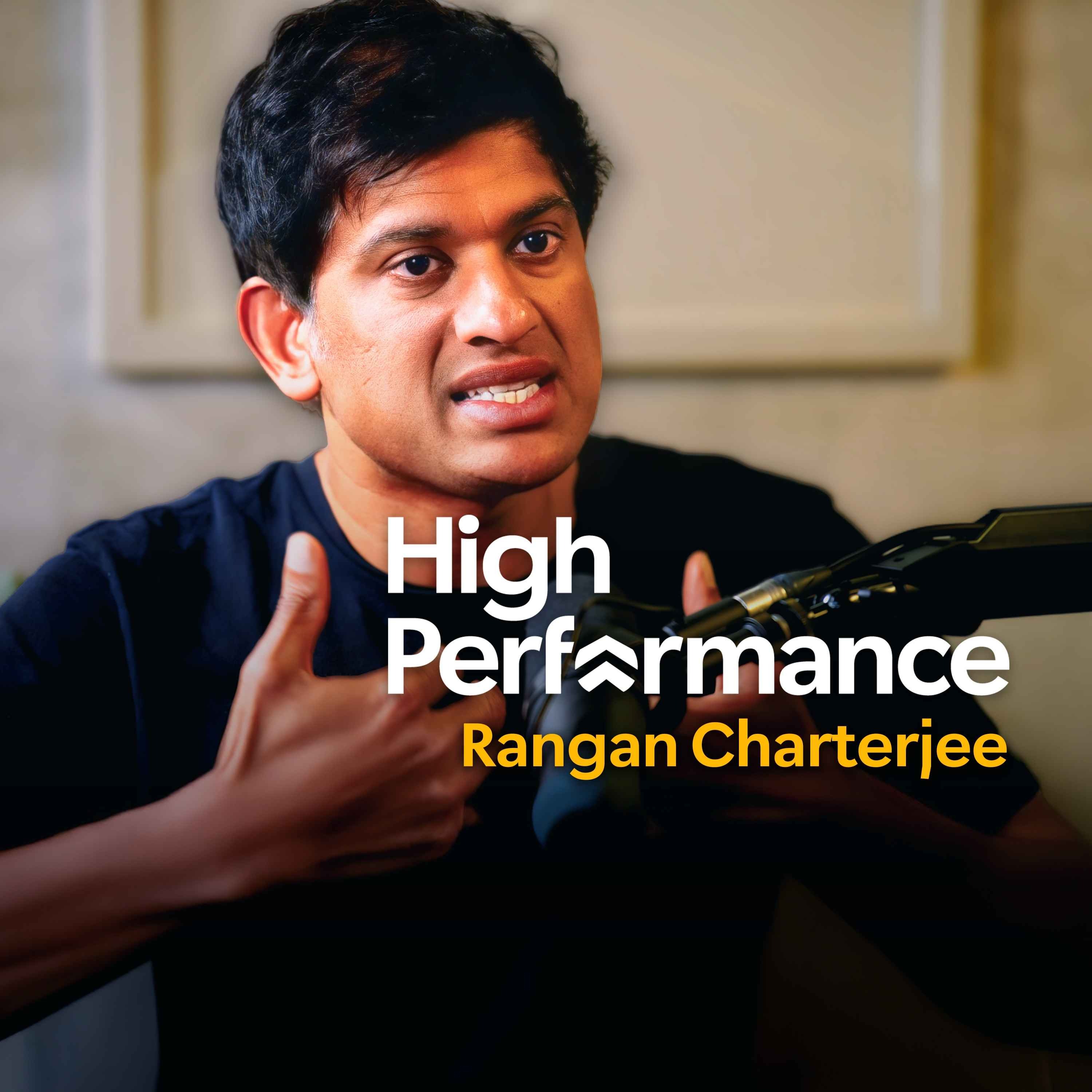
Loading summary
Transcript97 lines
- [00:02]
A
We are bombarded with information all the time. We've got more knowledge than we've ever had before, yet physical health is declining, mental health is declining. I think one of the reasons why many of us are so busy is because we don't feel important enough. And I would say as a medical doctor, I honestly believe the biggest disease in society is a disease of. More it's such a simple question, but I think it's one of the most powerful questions anyone can ask themselves each day.
- [00:29]
B
That is Dr. Rangan Chatterjee, who after two decades as an NHS doctor, is now one of the most popular podcasters in the world, as well as authoring five Sunday Times best sellers. You're listening to High Performance. I'm Jake Humphrey and along with our expert Damien Hughes, we explore the mindset, ideas and experiences behind the world's greatest high performers.
- [00:51]
C
January is a time of year when lots of us are are looking to make changes in our lives. And as you're going to hear Rungen point out in this episode, it's really easy to get overwhelmed by information and ideas. And sometimes the best thing you can do is to focus on progress rather than perfection. I really enjoyed this excellent conversation about how you have to find your own version of high Performance, how comparison can often hinder our self esteem, and you're also going to hear Rangan reveal the biggest disease that he believes is affecting our society today.
- [01:24]
B
We're delighted to welcome Rongan back to the show. Not the first time with us, of course, but the first time that he shared these fresh ideas and a new perspective that I know you're going to find so valuable. As you search for your own version of high Performance, I hope you find them as eye opening and as interesting as we did as we welcome Rongan Chatterjee to High Performance. Rongan, welcome back to High Performance.
- [01:52]
A
Jake. I'm very much looking forward to having our conversation, mate.
- [01:55]
B
How can we all start this year by making a change that lasts.
- [02:00]
A
The way we make change that actually lasts beyond January is by making sure we're focusing on the right things. I know that sounds obvious, Jake, but the reality is most people are getting change wrong. The reason they can't make change that lasts in the long term because everyone can do it for a few weeks. That's not the issue. But everyone who wants to make changes in their life wants it to be transformative. They want it to be for a few months, for a few years. They want it to be a part of who they are. And I think the problem is that we focus on the wrong things. I'll give you one example. Many of us, especially in January, think that what we need is more knowledge. We think that if I get a little bit more knowledge over what sugar is doing to me or alcohol is doing to me, I'm going to be able to make changes that last. But I would argue, Jake, that most people who are trying to, let's say, reduce sugar or alcohol, the two behaviors that people are often trying to reduce, already know the damage that those things are doing on their health. Do they really need more information to say, oh, sugar's bad for your teeth, or it's, you know, helping you carry excess weight or whatever it might be? So a very simple way of looking at this is, let's say, for example, you drink alcohol as a way of managing stress, which is very common.
- [03:33]
C
Yeah.
- [03:34]
A
You can actually stop alcohol for 30 days and think you're actually making progress. And I'm not saying you're not. You can learn a lot about yourself, but so many people, Jake, end up back to where they were previously. Why? Because they've not addressed the underlying cause. Right. So if stress is up in your life and you're using alcohol to manage that stress, you'll only change that behavior in the long term if one of two things has happened. Either the amount of stress in your life has to have come down so you will have less of a need to drink alcohol in the first place, or you need to find an alternative behavior to alcohol to manage that stress. Now, I think when I say it like that, it sounds quite obvious, but I don't think we apply that principle when trying to make changes. We. We focus too much on the behavior without understanding the role that that behaviour plays in our life. And that's where the gold lies. Another thing I think that people get wrong is overly focusing on what I call external knowledge. And I opened this new book of mine, which is called Make Change At Last with a very powerful story, which is a GP friend of mine. A few years ago, I suddenly got a text from her one evening saying, hey, Rongan, have you got any time to chat? And it was quite unlike the texts I usually would receive from her. I said, yeah, yeah, no problem. So we arranged to chat at the weekends. And what she said to me is, in that week she was in her practice and she had a patient in front of her who was newly diagnosed with type 2 diabetes and she was doing her job and explaining to this patient the damage that excess sugar and too many ultra processed foods were having on the patient's Health. The patient just said, stop a minute. Why should I listen to you, doc? You're fatter than I am. Now, obviously she was pretty upset, okay? And you can argue whether it was an appropriate thing or not for that patient to say. And of course I think most of us would agree it's probably not the best thing to say in a professional consultation. But actually my friend didn't view it like that. She said to me, rongan, you know what? The patient was absolutely right. I am fatter than he is. And whilst I'm counseling him on the problems with his diet, in my drawer next to me I've got a big packet of Cadbury's giant buttons. That's a really key point in this story, Jake. External knowledge is not enough in and of itself. Yes, we need it. We need to be educated on what kind of things we should be doing. But I'm arguing that the reason many of us stroke most of us can't make changes that truly last is because we're still searching for more knowledge. We've got enough knowledge. We've got enough external knowledge. What we need is more internal knowledge, more insight, more self awareness, more. Why do we go to these behaviors right when we know that they're not helping us? And that's basically what this entire book is about, Jake. It's about trying to help people understand the root causes behind their behaviors. I've been a medical doctor for over 23 years now and I have seen time and time again that when you help people get to the root, that's when they make those transformative changes in their life.
- [07:18]
D
Hi, it's Sarah Gibson Tuttle, the founder of Olive and June. Can I tell you the one thing that always makes my day better? A fresh manicure. But here's the thing. Who has the time or budget to go to the nail salon every week? That's why we created the Olive and June gel mani system. It gives you that same glossy long lasting mani you get at a salon for so much less. It comes with everything you need. A pro level LED lamp sleeve, salon grade tools, our damage free gel polish that lasts up to 21 days. Just prep, paint, cure and you're good to go. And the best part, it's so easy and super affordable. So skip that $80 salon appointment. Get that salon quality look at home on your schedule. Head to oliveandjune.com DIYgel20 and use code DIYgel20 for 20% off your first gel mani system. That's oliveanjune.com DIYgel20 code DIY GE GEL20 for 20% off. Your first gel mani system.
- [08:17]
A
If you're a maintenance supervisor at a manufacturing facility and your machinery isn't working right, Grainger knows you need to understand what's wrong as soon as possible. So when a conveyor motor falters, Grainger offers diagnostic tools like calibration kits and multimeters to help you identify and fix the problem. With Grainger, you can be confident you have everything you need to keep your facility running smoothly. Call 1-800-GRAINGER clickgrainger.com or just stop by Granger are the ones who get it done. Most security systems react after a break in begins. That's too late. Simplisafe is different. It's proactive. Active Guard Outdoor Protection uses AI powered cameras to spot suspicious activity before criminals get inside. Live monitoring agents can see, speak to and scare off intruders in real time, quickly calling police if needed. To get 60% off your new system, go to SimpliSafe.com podcast. That's SimpliSafe.com podcast for 60 off. There's no safe like SimpliSafe.
- [09:23]
B
So if someone's heard that and thought, right, I've got all the knowledge I need, but I'm still struggling in the same way I always have. And you say you have to get to the root. How do they begin?
- [09:32]
A
Well, I would say the very first thing you need to do is understand where you're at. One of the concepts that I write about is this concept called minimal reliance, which underpins this entire book, right? And I think if I could just spend a couple of minutes trying to explain this concept, because then I think everything I say afterwards, then I can refer back to this. I think many of us are overly reliant on things in our external world to go a certain way in order to feel good, right? So very simply, many of us feel that, yeah, I can feel good when everything goes right. When my wife treats me nicely, when the kids leave for school on time, when there's no traffic on the way to work, when my email inbox is manageable, when my boss says nice things to me, yeah, I can feel good. I feel internally calm and I make good choices. But a lot of us don't realise that a lot of the time when those things don't happen in the way that we want, which is quite often, Jake, we then don't feel good in ourselves, right? Because we're overly reliant on those things in order to feel good. And when we don't feel good in who we are, we start to engage with all of these behaviors. All of these behaviors that a lot of us are trying to stop. Let's say alcohol, sugar, online pornography, doom scrolling on Instagram for three hours or whatever it might be. Those behaviors are downstream. So often we're using those behaviors to change our internal state. We don't feel good because we're overly dependent on these things. And therefore we can't change those behaviors because as soon as something goes wrong in our external world, your email inbox is overflowing, you have too much traffic on the way to work, you get really annoyed and frustrated, and that's why you have a bit of extra sugar, a bit of extra caffeine. They're downstream, right? So minimal reliance is this idea that we have to become less reliant, not zero reliance. We're not looking for zero reliance. And I'll explain maybe later on in this conversation. We're looking to be less reliant on those things. So I mentioned a few everyday things in our lives that we often need to go right in order to feel good. But there are some big picture things as well. And each one of those big picture things is one of the chapters of this book, right? So I'm saying there's lots of big reliances that we have that we don't realize we have that are keeping us trapped, right? So a lot of our behaviors come from our beliefs. And if you don't change your beliefs, you'll never change your behavior. So let me give you, I hope, what is a relatable example. Chapter one is called trust yourself, and it's all about an over reliance on experts. And I think this is arguably the most important point that I want to make. We're now living in a world, right, where we are bombarded with information all the time, right? Podcasts, like yours, like mine, books, online articles, Instagram posts, whatever it is, we're getting all of this information. But do we ever, let's say through the health lens. I'm a medical doctor. Have you ever wondered why it is that we've got more knowledge than ever before, yet our health is declining? Because everyone says knowledge is power. I just need more knowledge. Well, we've got more knowledge than we've ever had before, yet physical health is declining, mental health is declining. I thought what's going on here, I think what's happened is that the balance has gone too far where we are outsourcing our own inner expertise to external experts. And I think we need to be less reliant on External experts and more reliant on ourself. Now let me be really clear here. I am saying this as a so called expert myself. I've got an immunology degree, I've done my special exams, my GP exams, I'm a professor at Chester Medical School. I've got all of these qualifications, but I can still say I cannot possibly know for certain what is the best thing for anyone who's listening to this right now. I can give you guidelines and frameworks, but I can't tell you for sure. And a way I like to explain this is this has happened. This is a real life example. Okay. I spoke a little while ago to a medical doctor from Harvard Medical School, right? Cause people will say you've got to get all your advice from experts. That's the way you navigate the online world. Well, here's the problem with that. I have an expert from Harvard Medical School, brilliant psychiatrist who tells me that actually there is evidence that a ketogenic diet can be really helpful for some people with psychiatric problems like bipolar. And he'll present research to support what he says and clinical case studies. Okay, sounds amazing. Then I can also talk to another expert four weeks later who's also got the credentials from a proper institution and is also a medical doctor. And they will also say a whole food plant based diet is best for your mental health. And they'll present to you research and clinical case studies. So the problem is now people will then contact me on Instagram and say, Dr. Chachi, listen, both of those experts sounded great. They both got the credentials, they both support what they're saying with research. I don't know which expert to trust. The case I'm making throughout this book is in 2025. I don't think the most useful question is which expert should I trust? I think the more helpful question is why do I no longer trust myself, Right? And I think we have to get back to tuning into our own body. I will say to people, hey, what? You know what? Why don't you try what this doctor is suggesting for four weeks? And whilst you're trying it, pay attention. Pay attention to your energy, your vitality, your sleep, your relationships, your focus, your guts, your bowels, right? Pay attention. And then try the other one for four weeks and pay attention to those same things. You will know at the end of those four weeks, at the end of those eight weeks, which one is probably the right diet for you at that moment in time. Now, I just want to make one point really clear. I'm not saying ignore External experts. I'm saying the balance has shifted too much. Where now we're walking around confused all the time. We don't know who to trust and we need to get back to trusting ourself.
- [16:28]
C
You use a lovely analogy about being a thermostat or a thermometer to explain this. Wrong. And would you just expand on that?
- [16:35]
A
Yeah, look, we've all got these things in our houses, right? So the thermometer tells us the temperature, right. It can read the outside world. Right. That's great. But it can't do anything. It doesn't have the power to actually change anything. For that you need a thermostat. The thermostat. We can move the dial, right? And now we can actually influence something that changes the thermometer. And I kind of see that as the difference between insight and outside. Right. We think we need more external knowledge. Right? That's outside, that's the thermometer. We're reading what the outside world is telling us. But that's not going to lead to change. To change, you need to develop your own insight. What is it about me? Which one of these things is suitable for me? Which practice do I need? For me, you need to become the thermostat. And the way you become the thermostat is with insights. So you can start to move the dial. Oh, I want to get healthier this year. Why is it that I keep saying this every January and nothing seems to change, which is very, very common, because you haven't got to the root. You're still focusing on the behavior, not the energy behind the behavior. And I think that's where the gold lies.
- [17:55]
C
And you mentioned a concept I hadn't heard of before about interoception. Would you explain that? Because I think that was really illuminating.
- [18:04]
A
Interoception is your ability to experience what's going on inside your body. Right. You can think of it as a sixth sense. We all have this ability, but we've all untrained that ability by our constant focus on the outside world. This is why I strongly believe that the most important practice for any one of us these days is a daily practice of solitude. I really believe that with all my heart that actually if you wake up and the first thing you do is consume from the outside, social media, emails, even good quality podcasts like yours or mine, right? You're still consuming from the outside and we need to start consuming from the inside. We need to stop sometimes in the day from getting stuff from the outside so we can start listening to the signals that our bodies are telling us they are. Our bodies are always sending us signals. The question is, are we paying attention? So interoception is that practice. It's that ability to read what's going, oh, my heart rate's going a bit faster today. Or I can feel something in my gut. Those signals are always there. But when we get up and we jump straight onto our devices, we've lost a very, very powerful opportunity. So we can start developing this skill through. You know, it can be anything. It can be meditation, it can be breath work, it could be journaling if you want. Right. It could even be sitting in silence with your morning cup of coffee and not also scrolling email and Instagram at the same time. I know, revolutionary.
- [19:48]
B
But it feels like lost time, though. That's the. That's what we've ended up.
- [19:52]
A
Exactly. But I'm arguing in that chapter and I'm arguing today that actually you will gain so much more those 10 minutes. Right. Let's make it really easy because sometimes people go, I don't want to learn meditation or breath work, whatever. Okay, fine. A lot of people. I imagine many of your listeners like a morning cup of coffee or tea, I would imagine. Let's make that assumption that they do. I'm going to assert, Jake, that If you spend 10 minutes, let's say, for seven days, right. Maybe this is a challenge to you guys, right? For 10 days, drink that morning hot drink if you're able to. I understand people might have kids or other things going on, Right. But if you're able to, can you drink it in silence and not consume something else at the same time? A, your experience of drinking that coffee will be different, I promise you. Because I've tried this. Like, you start to feel and get flavours that you never knew were there because we don't realize how distracted we are. We're slurping the coffee while also, you know, sending a few emails or whatever, you're not really tasting the coffee. I mean, we talk about mindfulness and I'm sure you've covered this on your show many times, the benefits of mindfulness. And we think, oh, it doesn't apply to me. Oh, it's complicated. I need to go to Japan and learn how to make tea. No, just try and have your hot drink and not be distracted. And not only will you taste that coffee differently, you'll start to experience things. You'll start to go, wow, I'm a little bit overworked at the moment. Actually, you know what? There's a difficult conversation I need to have my wife that I've been putting off, but I better have it. When you don't do that, those things build up because you're distracting, you're onto email, you want to things. And so the way we start trusting ourselves again and becoming less reliant on these external experts, not non reliant again. I'm not saying ignore people like me or you guys, Right. I'm saying listen, but then put it through your own filter.
- [21:51]
B
Yeah.
- [21:51]
A
And I'll be honest with you, right? After 23 years of being a doctor, when I reflect on the people who have truly changed their lives for good, not just for January or a few months, somewhere along the way, they became their own experts. They became, like, in charge. They're like, hey, Doc, you know what? I know you said that, but actually, I feel better when I do this. Right? There's that real agency over their health. Hey, you guys talk to a lot of high performing sportsmen. I bet you it's the same for those guys. Like, there will be things that their coaches say to do, but they'll all know. Actually, you know what, for me to get in the zone, to perform on the pitch, or, you know, Formula one, let's say those drivers, I would bet. And you would know better than me, Jake, because you've hung out with these guys. I would imagine that these guys know themselves really, really well in that one hour before they get in to start their race. I imagine they know what they need to do to get in the zone. I imagine Cristiano Ronaldo knows what he needs to do to make sure when the whistle goes, he can perform. That's a real trust in yourself. And I really feel that we've lost that over the last few years. Does that make sense?
- [23:04]
B
It makes perfect sense because there was a time where elite sports people were working on their own. And the answer was, well, they know what they need, but actually they do need help as well. So, for example, the last Formula one season, just gone. George Russell had a day where he woke up, and I saw an interview where he said, I knew when I woke up I was gonna win the race. And the first thing I did was ring my psychologist and say, why do I feel like this? Cause I need to try and feel like this every weekend. So it's about understanding yourself and knowing yourself internally, but then also having not too much from the outside. But I think they go to the outside when they feel it's of benefit. And that's a really good.
- [23:40]
A
Yeah, I'm just saying that there's a sweet spot. We want, we want to balance internal expertise with external expertise. I think that we very much got the balance wrong. Now it's, you know, everything swings in roundabouts, doesn't it, in life and through generations, people are walking around confused. I don't know what to do for my health anymore. Every expert's disagreeing with each other. They all sound convincing. So I'm going to do nothing. And I'm like, no, that's no way to live where you've only got one life. You need to take ownership of that life. Listen to those experts, but also listen to yourself. And the way you do that, in my view, is with a daily practice of solitude, whether it be meditation, breath, work, journaling, walking around the block for 20 minutes without anything in your ears, just some way of letting those inner thoughts start coming up. Very good.
- [24:33]
C
So what are your views on these apps and devices we have then to measure sleep or our heart rate or all these other kind of internal mechanisms?
- [24:43]
A
Yeah, so there's a section on this, actually that I wrote and it's something I've really been thinking about for actually 10 years or so because often we're talking about these wearables, right? You've got one on Jake, I've got one on at the moment. And people assume that they are always a good thing. But let's go to an old fashioned kind of health tracker for me to make this case. A blood pressure monitor on your arm. Right. These have been around for many, many decades. Right. And I remember patients would come in to see me and they'd say, hey, doc, should I get one from the local pharmacy? Do you think I'll be helpful? You know, if a, if a patient has high blood pressure, will this be helpful? And initially I would think, yeah, this is great, you know, more, more knowledge, right. It's going to help people. And what I soon realized is about half. I mean, this is not a scientific study. This is just my perception. About 50% would find it really, really helpful. They'd check it maybe once a week or twice a week if it was starting to creep up. It would encourage them to make positive changes in their life. Like I must go walking every day or go to the gym, whatever it might be, I must eat healthier. But the other half, oh my God, they'd get stressed out. They check it four times a day. They'd keep phoning the practice. If one reading was slightly up, I thought, wow, it's not the device, it's our relationship with the device. That's the issue. So I think some people like myself really benefit from wearables like this. And you can look at it through the lens of reliance, the state of minimal reliance. If you are using it for a specific purpose for a discrete period of time, and it helps you get to know yourself better. I think that could be the most powerful tools in the world. I feel since I've been wearing this for the last three months, it's helping me tune into my body's own signals. I'm going, oh, wow. Yeah, I wasn't feeling good. Oh, My heart rate variability is also tanked as well because I was traveling yesterday, whatever it might be, and I'm starting to now really understand myself better than I probably ever have done before. And I think this device has helped me. But if this device is stressing you out, you can't function without it. And you know it's making you feel worse about yourself because they can often do that. It's probably not the right thing for you. So we want black or white, don't we? Is it good or is it bad? Well, you know what? It kind of depends. It's the same point about personal autonomy. You have to ask yourself, is this wearable helping me or is it actually getting in the way? And actually, there's a lot of science on this, right? So there's some studies which have shown us, because some of these wearables will measure your sleep and they'll spit out what's called a readiness score in the morning. And some are more accurate than others. But there was a study which really showed us how problematic these things can be. A group, these two groups of people were put into a laboratory. One group slept for five hours. The other group slept for eight hours. But here's the kicker. The group who slept for five hours were told they slept for eight hours. And the group who slept for eight hours were told they slept for five hours. There's so much in this study. But the key point I wanted to make here is if you slept for eight hours and were told you only slept for five hours, you started to have performance decline in the day because your score was low. You start to feel tired earlier, your focus went down, your productivity went down because you read that score. And so I think we have to ask ourselves, I can be very detached from my morning score. I don't even always look at it. But if it's going to really weigh you down, you've got to be very, very careful, because the mind is important. And actually, I don't know what you guys Think of this. But one of the favorite conversations I've had on my podcast over the past years was with Eliud Kipchoge, who is the Kenyan marathon runner. The only runner we know to have run under two hours a marathon in under two hours. It wasn't in a race setting. It was done in a very specific way with Nike. But nonetheless, he did it. And I spoke to him a couple of years ago, one week after he broke the world record in Berlin, and he has a sleep tracker. And I said, hey, do you look at it on the morning of a big race? He said, never. He says, never. It doesn't matter. Cause I said, do you get anxious? He goes, yeah, I get anxious. Cause it's easy to think. These guys are chilled and they're superhuman. He goes, no, I'm up checking the clock, feeling a little anxious. Will my training pay off all these sort of things? He goes, I never check it on the morning of a race. It won't help me. It won't help him to know that he had an awful night's sleep. So he doesn't look. So I think we just need to examine our own relationship with them. For some of us, I think they're amazing. For some of us, I think they're problematic.
- [29:44]
B
Let's move on to some of the other really interesting topics in the book you write about. We need to expect adversity. How do we do that?
- [29:53]
A
A simple way to ask yourself, are you someone who expects adversity or gets surprised when the inevitable adversity comes? It's to ask yourself, how much do you complain? Or ask your wife, because it's more accurate. It's possibly more accurate, right? To ask our partner, we. We think, I don't complain. And then you ask someone close to you, why is this so important? Right? Of course, there can be really valid reasons to complain in life. But if you're someone who complains a lot, I'm arguing in that chat, sir, that you are constantly being disappointed by the natural order of life. The natural order of life is that things aren't going to go wrong, right? It fits in with this idea of reliances, right? We cannot expect everything in our life to go right all the time. And actually, business gets this. Have you heard of the concept shrinkage? Shrinkage is a concept that businesses truly understand. So let's look at it through the lens of a supermarket in the uk. They're not surprised that every year some of their stock is going to get shoplifted, some of their stock is going to go off they factor into the business plan, it's shrinkage, right? They know adverse events are going to happen. They're not surprised by them. That is woven into their projections. Oh, we're going to lose 5% or whatever it might be. You know, I'm not a supermarket owner, so I don't know what that percentage is. We can apply the same principle to life. Things are going to go wrong. If you're constantly complaining, it means, oh, there's traffic today. Oh, my boss sent me that email. Oh, this is. No, no, that's going to happen. Right. So the way I describe it in the book, it's quite an extreme example, but I like to test all my ideas at the extremes of life because I think if they work there, they work everywhere. So I share another story of a colleague of mine in the book, a GP who a few years ago was. She was the subject of a negligence claim. Now, if you look at this rationally, the latest statistics suggest that a UK medical doctor will be sued four times in the course of a 40 year career. Okay, so those are the stats. If you practice for long enough, if you see enough patience, it's going to happen. It's like if you drive enough miles, doesn't matter how good you are, you're gonna be involved in some kind of a prank at some point, right? It's gonna happen. Here's the problem. She got dragged into this cancer misdiagnosis claim. And I wanna be very sensitive here and be really clear. I understand that a cancer misdiagnosis is extremely concerning. I have no issue with the family and why they decided to bring this claim. Right? Just to be really clear on that, it had nothing to do with my friends, but she got dragged into it for the two years while this was going on. Her life was awful. She started drinking every evening, she'd get drunk at the weekends. She basically got decimated by the stress of that. And yes, after two years had got thrown out her part in it, nothing to do with her. But she had two years where she really, really struggled. Now you can say that's understandable. Of course it's understandable. But you can also look at it through another lens, which is bad stuff is going to happen. Let's look at the stats. Oh, it's going to happen. Oh, you can train yourself to get to the point where, oh wow, it was bound to happen. This is just one of those three times. I'm going to have to go through one of those four times, right? And it sounds ridiculous, but it really isn't. I'll give you a more practical example, Jake, from a few years ago. I still live in the town where I grew up, okay. I live five minutes away from my mum, who's pretty elderly now and needs a lot of help. And for many years mum has had an emergency alarm in case she falls. Okay? And I'm the first, there's five numbers on there for the team to phone. I'm the first one. A few years ago I'd gone to bed in the evening, I was asleep and suddenly my phone started ringing, right? So in my sort of half asleep haze I picked up the phone and it was the call center. They said, hey, your mum's had a fall. We'd just spoken to her over the intercom, she can't get up. Are you able to go and help her? I said, yeah, sure. So I in my pajamas, went down the stairs, got the keys, went in my car, drove the five minutes to my mum's house, went in, checked mum was okay, helped her get back into bed. When I was confident that everything was okay after about an hour I said, okay mum, look, I'll come back in the morning. Phone me if there's any problems, but I'm gonna go home now. I went into mum's drive, I reversed out straight into the parked car, the car that was parked behind on the streets. The older version of me, the version of me who did not expect adversity, who thought that life would always go that the way that I wanted to and would be constantly complaining and disappointed when it didn't, that version has changed through a lot of these practices, right? And I was really happy when this happened. I wasn't happy that I'd crashed the car, but the way I reacted to it was actually really powerful for me because it made me realize, wow, these practices are really working. I remember I hit the car and instead of going into this voice of self pity which I would have done in the past and I imagine most people listening would go into which is, I can't believe it. On top of all the work I've got to do, all the stress I'm under at the moment, I'm now got to sort out the car, I don't have time for this, blah blah, blah. And why is this relevant to making changes? It's because that's emotional stress that we have created by our reaction to that situation. And then that emotional stress needs to be neutralized. So the next day we feel a bit sorry for ourselves. We justify a sweet treat, another coffee, another beer, whatever it might be those things again. They're downstream from the emotional stress we generated by the way we interacted with that situation. So I didn't do that in that moment. What I did was I was like, oh, wow, well, no harm done. No one's hurt. I'm not hurt. I've got insurance. And actually, if I think about it, if I'm going to keep coming round to help my mum up from the floor when I'm half asleep, it was only a matter of time. That is so powerful, guys, right? That is what I call an upstream lever. You get that, right? And the consequences, the downstream consequences on your life are profound. You just feel calmer a lot of the time, right? You don't need to compensate for that stress with all of these problematic behaviors. And a very simple practice that I can maybe share with you, audience, that might help them is every time you complain, if you complain, if you're someone who doesn't complain, this won't apply to you. But maybe if any of you guys or your wives think you might complain, right, I would say every time you complain, either turn it into an action or into a moment of gratitude.
- [37:18]
C
Well, that leads us then on to the next chapter, which is around reclaiming your time. This need that we feel to constantly be busy. I mean, you report one UK survey that suggests 88% of people have suffered burnout in the last two years, which was a real eye opener.
- [37:33]
A
I mean, what do you guys think that says about the state society? It's pretty worrying, isn't it?
- [37:38]
B
I don't know whether it's the decisions that we're making leading to burnout or whether we live in a society that is equipped to burn us out.
- [37:46]
A
Let's unpick that because I think that's a great way of looking at this. Okay, so there's external stress and there's internal stress. Yes, it may be true. Some of us have got too much on our plate, right? We're being asked to do too much in our jobs and society at large. And that's why we're burning out. Because actually, you know, we feel out of control. We've got to do all these things just to exist, to pay the bills, to pay the mortgage. So, yes, I accept that is an issue. But a huge part of burnout is also the internal stress that we're generating. Like what I said about by being surprised by adversity, that's internal stress. We're generating that by our response. So let's go to business for a minute and then let's try and connect it. Okay. So again, each chapter deals with a reliance, right? Which is, I think, quite a fresh way to look at this issue. Right. Because I really want to help people make those changes. And again, as I say, I don't think they just need more external knowledge. They need more internal knowledge. So that chapter about reclaiming your time is all about this over reliance on busyness. Sometimes busyness is actually a sign of laziness.
- [39:03]
C
Go on, say more on that.
- [39:05]
A
I say that with compassion, genuinely. Right. I understand. Some people have no choice but to be busy. Let's take an example of a single parent who's maybe trying to work two jobs and also look after their kids. Right? I'm not at all saying that they're being lazy. I'm saying for some of us, our busyness is a sign that we actually haven't taken a moment to understand what our true priorities are. I can definitely say that for me, when I'm overly busy, it's usually because I haven't adequately prioritized what is truly important in my life. So that's one of the reasons I end up being so busy. That's taking ownership. Instead of blaming the external world for all the things that are going on in my life, it's like, no, what am I contributing to this? Actually, you know what? Yeah. I maybe said yes to too many things. There's many things I've contributed to this situation. I think one of the reasons why many of us are so busy is because we don't feel important enough. Right. Let me share what I mean by that. There's this brilliant author called Will Storr who wrote the book the Status Game. You may know it. Right. And Will states really beautifully in that book that status is a universal driver in all qubits. Right? We all have a desire for status, but when we're talking about status, what we're not talking about is money followers on Instagram, podcast downloads. Right? We're not talking about that. The status that he's talking about is that feeling that we are of value to the people around us. That's real status. That we actually provide value to the people around us. Now, in our old hunter gatherer community days, we used to get that. It was obvious to us every single day what value we offered. You know, oh, I'm the person who goes and forages and brings the sweet potatoes. I'm the person who goes out and hunts. I'm the person who actually makes sure we're safe at night. You knew the value you offered and this kind of fits in with what you said before about society, the way we're living now, Jake, where many of us have moved away from our homes for better opportunity, for better jobs, for better prospects, whatever it might be. A lot of us are living these quite isolated lives and we don't feel we're of value. So we get that feeling of value from our work. Right. So a lot of the time, if you're away from your tribe and your friends and your community, you're trying to get that feeling that's driving you of status through your work.
- [41:45]
B
Well, my wife gets judged all the time for not working and being full time with the kids. And I say this to her often. I'm like, what's more valuable than connecting with the kids, being with the kids. I understand some people don't have a choice. But this idea that society makes you feel that staying at home with your children is the kind of. Is the easy option or the unambitious option, I think it's so toxic.
- [42:06]
A
It is. And it comes back to what I said at the start. It's a belief that then drives your behavior, Right. You'll never change the behavior unless you change the belief. If you feel, as a, let's say in that example, if your wife feels that actually I'm a failure for not working. And yes, you've acknowledged that not everyone can do that. Right. So you're in a situation where actually your wife can choose not to work and look after the kids. Right. But if she believes that that's being a failure, she'll be driven to behaviors constantly to compensate for that until she actually gets to the root and goes, actually, who the hell says this is a failure?
- [42:47]
B
And she doesn't. But she certainly feels that people will judge her. But I love this idea that connect to your family, connect to your children, connect to your house, connect to your parents, and you'll feel huge value. You'll feel you're of huge value rather than just thinking, well, if I'm not working, I'm not valuable. I think that's powerful.
- [43:03]
A
Yeah, 100%. And so there's lots of connections.
- [43:05]
B
A real issue, isn't it?
- [43:06]
A
It really isn't. And again, it all, it all fits together, which is if you're constantly busy and rushing around a, it affects your stress levels, Right. And it affects your nervous system. And the way you see the world is hugely influenced by the state of your nervous system, right? So if someone's listening, guys, and they are thinking, yeah, I'm always a bit reactive. I Always see the worst in people. I'm really, really competitive. Well, actually, that could just simply be a reflection of the fact that you're too busy. It's normal if your body is under chronic stress, right? And you think there's a tiger there, which is ultimately what stress is. It's this idea that actually I'm not safe and your nervous system was on high alert. You're gonna see threat where it doesn't exist. You're gonna see the world as dog eat dog. I've gotta compete, I've gotta get what's mine, right? You're gonna be reactive. Whereas if you can calm that nervous system down by being less busy, and I'll give a super practical tip for that, in just a moment, you're going to see the world differently. You're going to see the best in people. You're going to be calmer. You're going to want to lift people up and go, no, I don't need to be competitive. I can lift others up. It's no reflection on me. It's the state of your nervous system. So I think it is a very toxic idea that we have in culture that if you actually have any time off to do nothing, somehow you're failing. It's utterly ridiculous. I mean, I relish now Sundays where I have nothing to do. I try and create a Sunday where I'm like, yeah, I've got actually nothing to do today.
- [44:39]
B
Well, you've got everything to do. Live.
- [44:41]
A
Exactly. That's the point. Right. But there's a question I ask myself every morning in the book. I call it the anti business question. I'd love to share it with your audience. I ask myself three questions every morning. Okay. But the second question applies to this chapter here. What is the most important thing I have to do today? It's such a simple question, but I think it's one of the most powerful questions anyone can ask themselves each day. Because it cuts through the noise, right? We're living in a time now where our to do lists are never done and because our brains have a negativity bias, you know, we're wired to look at the negatives for very good reason. That's what's kept us alive for thousands of years, hundreds of thousands of years that's now working against us. So you can finish your day. Like, I didn't do that email. I've got those three people to get back to these whatsapps. Like your mind is always focusing on what you didn't get done. So you never feel as though you're winning, you always feel as though you're losing. And again, that affects your behaviors. But that's why you go to alcohol or pornography or whatever it might be, because you feel less than. You're not able to do the things that you want. So you have to neutralize that feeling of discomfort with your behaviors. Right? What this question does is it really addresses the issue of priorities. And remember what I said before, busyness is sometimes a sign of laziness, right? Not always, but sometimes. Did you guys know that when the word priority came into the English language in the 1500s, you could only use that word as a singular I. E? You couldn't have multiple priorities, you could only have one priority, right? Whereas now we're all drowning in our 20 priorities that we have to do each day.
- [46:33]
C
When did it change?
- [46:35]
B
I think capitalism, America, 1970s. Gotta be.
- [46:39]
A
I think, I think I read some. It was in the 1900s, which is probably, you know, reflects of what you're saying. And what this question does is it makes you choose each morning, what is the most important thing I have to do today? What is it about today that would make it a win? And it's so powerful. Sometimes I'll put down, I must make sure I go for a 30 minute walk at lunchtime. Sometimes it will be a work thing. I must get back to that email sometimes and maybe you guys can resonate with this as fellow fathers sometimes. What I'll put down, I'll probably put this down at least once a week at 4:30pm when my kids walk in from school. I must make sure my laptop is shut, my phone is in another room. So I'm present for what they have to tell me. This question will change people's lives, guys, I promise you. Because if you do it for seven days, right, for seven days, if anyone's skeptical, I'm going to put a challenge out to them. Answer this question in the morning for the next seven days and do what you said was the most important thing. After seven days, you will have done seven really really important things. Do it for 30 days, you will have done 30 really really important things. Do it For 365 days. You get the picture and it changes how you view each day. You're like, wow, I'm winning at life. I'm getting the most important things done. Because the problem today, guys, it's that we often only get to the important stuff when everything else is done, but everything else is never done.
- [48:15]
B
Are you a trailblazer, a risk taker? Maybe someone with countless tales of epic adventure. Well, I'm not quite there yet, but I'm working on it. Even the boldest among us started off small, right? Daring themselves to reach greater goals every day. And if you're looking to take on a challenge like that, the Defender is too. Now, I've driven a Defender for a few years. It's the best car I've ever owned. It's a vehicle built for drivers capable of great things, whether they're heading towards uncharted territory or just fancy a weekend getaway. Defender was engineered to meet challenges head on so you can explore with confidence. It's the legendary icon of adventure, reimagined through modern design, fit for a new generation of explorers. My kids love it as much as me. It also has a tough, rigid body tested to the extreme, a modern functional interior built for comfort. It's a vehicle that, like you, is capable of great things. And with next gen technology, from 3D surround cameras to clear sight ground view, it will help you embrace the impossible. Explore the full Defender lineup@land roverusa.com if you're still overpaying for wireless, it's time to say yes to saying no. Because at Mint Mobile, their favorite word is actually no. No contracts, no monthly bills, no overages, no hidden fees and no bs. Look, for me, switching was a no brainer, okay? I was fed up with ridiculous bills and endless small print. With Mint, I now get premium wireless for just $15 a month and honestly, the quality just as good as my old provider, if not better. All plans come with high speed data and limited talk and text and it runs on the nation's largest 5G network. You can even keep your own phone and number. So the switch is quick and painless. So if you're ready to say yes to saying no, no to contracts, no to overpaying, make the switch@mintmobile.com HPP that's mintmobile.com HPP upfront payment of $45 required equivalent to $15 a month limited time new customer offer for first three months only. Speeds may slow above 35 gig on unlimited plan taxes and fees extra. C Mint Mobile for details.
- [50:17]
D
Who here loves when their nails are done perfectly? Me. I'm Sarah Gibson Tuttle and I started Olive in June because let's be real, we all deserve to have gorgeous nails. But who wants to spend a fortune or day at the nail salon? That's why I created the Gel Mani system so you can have that salon quality gel manicure right at home. And guess what? The best part? Each mani only costs two dollars? Yup, you heard me. Two dollars. No more 60, 70, 80 dollar salon trips that eat up your day. Now you can paint your nails whenever you want, wherever you want. And trust me, you're going to be obsessed with your nails and everyone is going to ask you where you got them done. And here's a little something extra. Head over to oliveandjune.com and get 20% off your first gel mani system with code DIY GEL20. That's code DIY GEL20 for 20% off your first mani system at oliveandjeune.com DIY GEL20.
- [51:11]
E
Hey, I'm Paige Desorbo and I'm always thinking about underwear.
- [51:14]
A
I'm Hanna Berner and I'm also thinking about underwear, but I prefer full coverage. I like to call them my granny panties.
- [51:20]
E
Actually, I never think about underwear. That's the the magic of Tommy John.
- [51:25]
A
Same. They're so light and so comfy. And if it's not comfortable, I'm not wearing it.
- [51:29]
E
And the bras? Soft, supportive, and actually breathable.
- [51:32]
A
Yes. Lord knows the girls need to breathe. Also, I need my PJs to breathe and be buttery, soft and stretchy enough for my dramatic tossing and turning at night. That's why I live in my Tommy John pajamas.
- [51:44]
E
Plus they're so cute because they fit perfectly.
- [51:47]
A
Put yourself on to Tommy John.
- [51:49]
E
Upgrade your drawer with Tommy John. Save 25% for a limited time at tommyjohn.com comfort See site for details.
- [52:04]
C
There was a line in your book Rongan that jumped out at me, given your rich experience in terms of helping people. But you said if I could offer one magic pill to the world, it would be to get people to take a fan slice.
- [52:17]
A
This might be my favorite chance set. I know I said trust yourself once, but they're all my favorites. Right. Cause I'm really passionate about the content in this book. Okay, so chapter five is called Take less offense. A reliance on being right. Why am I bringing up taking offense with making changes that last? Because I think that's what I hope is the uniqueness that I'm trying to bring with these concepts is the reason you can't change your behaviors in the long term is because you don't realize why those behaviors are there. We're now living in an era where people are walking around taking offense to everything. Would you agree with that 100% right now? What you have to find it's so.
- [52:59]
B
Offensive that you'd assume that.
- [53:03]
A
Don't be offended by that. I'm not offended, mate. I'm not offended. I would have in the past, but I'm no longer offended. Chapter five.
- [53:08]
C
Chapter five, yeah.
- [53:09]
A
Right. The key point to understand is nothing is inherently offensive. No comment from somebody else, no action from somebody else is actually offensive. How can I say that? Because if that comment was offensive, it means every single person who read that comment would also find it offensive. The fact that not everyone does means it's not the comments that's giving the offence, it's something within you that's been activated by that comment. Once you get that, you get life. And I really mean that. Once you stop blaming things outside of yourself for your own internal responses. I think that's the secret to life. That's why. That's why, honestly, like, I've never felt this good, guys, like genuinely at 47, I just, I feel good these days, like really good and calm. And it's because of all of these practices, right? And the story I give in that book, maybe it's the best way to illustrate it. I start off that chapter talking about the George Floyd death, right? From a few years ago now, to set the scene, that happened at a time when many countries around the world were in lockdowns, right? So the whole world's changing, people are already feeling a lot of stress and then we all see this man die, get murdered on television, right? And it caused a huge impact around the world. So I generally don't tend to comment on political issues on my public platforms. I tend to try and talk about things that I know about and have an expertise about, right? That really affected me like it did for many people when we saw that. And I decided, you know what, I am going to add my voice to the public conversation. So I waited two or three days. I waited till I felt a bit calmer. Then I put out a well thought post explaining some of the things that my wife's family had experienced, which is when my wife was a young girl in North Manchester, on a weekend where they were just watching tv, the British National Party threw a brick through their window, right? So they're just watching telly and a brick comes smashing through the window, which is of course very traumatizing and scary, etc. Now I got a lot of support for the posts that I made, but there was quite a few people who were taking offense at what I'd written. So I got quite a bit of pushback saying, that's offensive. This is not an Asian issue, this is a black issue. You have no right to talk about your experiences at this time. And you know what it's like, initially I was like, oh, man, have I done something wrong? Have I caused the, you know, you start to panic? And then I thought about it and I thought, well, hold on a minute. I've never signed up to any code of conduct that determines how I should or should not react to the killing of another human being 3,000 miles away. I haven't. I'm perfectly entitled to react and share my view in a way that feels right to me. And I know this sounds like quite an extreme point, but I think it's really, really important. A, we love to judge others for what they're doing, which I don't think helps us, but it's this whole idea of taking offense. If you're walking around taking offense at everything or everyone, you see you're only harming yourself. And actually there's a little bit of arrogance needed to take offence. Again, let me, let me try and be really clear what I mean by that. We're living in a world of 8 billion people. I think it's a little bit arrogant to think that every single person is going to have the same view as you on the world, right? And if you train yourself to not take offense, I'm not saying, Let me be really clear. I'm not saying that everyone's comments are beautiful and really nice. I'm saying that if you train yourself to not take offense and go, wow, I wonder why that person thinks like that. I wonder why they have the beliefs they have about the world. And I think last time I came on your show, guys, I mentioned a phrase which has really helped me over the past few years, which is, if I was that other person, I'd be behaving in exactly the same way as them. Basically. If I was that person with their childhood, with their parents, with the bullying they had, with the friends they had, et cetera, et cetera, I would almost certainly see the world in the same way as them. Your experience of life just becomes a lot calmer. You're not getting triggered every moment by, oh, that person shouldn't have said that. That person did that. You know, not everything is for you. And it's kind of nuts these days. And I really think about that when I'm posting content now online because I want to help people. And sometimes this fear of being offended or being offensive to others stops us because we're like, oh, no, what will people think? I realized for me, and this is a really. I would say this is a key to happiness and health, is the way I judge myself each Day is, at the end of the day, I want to be able to look in the mirror and ask myself, did you behave today in accordance with your values? If I did, that's a win. That's all I can do. I can't control what other people think of me, Right? But I can control if I'm behaving with integrity, with curiosity, with compassion. And that's what I try my very best to do.
- [58:43]
C
So would you mind expanding on that, then, Rangan, and tell us one of what I thought was the most moving story in your book. The conversation you had with your wife when she was going off to a training course or a treatment in Berlin.
- [58:58]
A
I think this is probably one of the most powerful conversations I've ever had in my marriage. Certainly one of the most adult conversations that I've ever had. So when my wife was a young girl, she grew up in Kenya. I don't know how much you know about Kenyan history, but there was a coup in Kenya in the 1980s, so the government got overthrown overnight. And basically her family can still remember that day very, very clearly because it was huge, right? My wife can still remember being asked to stay still in a cupboard, right? So basically, there were gunmen at the door. There was gunmen going around. They were raping women, they were looting houses, and they turned up at their door. So she's a young girl, and her mom said, guys, get the cupboard. Pull the door and be quiet. I mean, can you imagine the trauma as a young child? You just happened to go there. You know, what your parents are going through, what you're going through. And it's become clear over the last few years that this experience that her family went through is having and has had some quite major implications. Right. A few years ago, my wife decided to actually go and process some of this. So she was going to go to Germany to go on a course where to look at your past traumas and actually learn how you can forgive and let go. Right? So I won't speak too much about that, but the question you're asking me is about the conversation I had with her before she went. And I'd very much grown up with this idea, like many of us do, that actually. Oh, you know, love. When you meet someone, you know, you know that person's gonna complete me, right? You know, we're two halves, and when we get together, we're gonna make this complete one. And, you know, I bought into this Hollywood myth for years. It's complete nonsense, right? In my view, it's complete nonsense. We don't complete each other at all. I complete myself, she completes herself. And then we come together and can add value to each other's lives. And I remember saying to her before she went, I really think this is something that you have to do for you. If you doing this and going through this process means that you change so much that we can no longer be together, I'm okay with that. I think you need to do this. And the reason why I think that was so powerful because she, you know, she gave me a big hug, she. She started crying. But the reason why that was so powerful is because I didn't have this dependency anymore on. I need vid in my life to feel good. I understand that we're two people that are whole, that are coming together consciously to spend time together and be together and be married and bring up families together if I needed her not to go. And I think this is, you know, this is again, quite an extreme case, but I think we've all got many versions of that in our own relationships. Right. We all meet our partners with all of their life experiences and their traumas. And I actually believe that the job of my wife and I is to help each other grow. I want her to go and process her childhood and break free from anything that's holding her back. She supports me about doing similar things in my life. But there is a risk. You meet people with all that trauma, with all those behaviors, there is a risk. If you start changing that, actually that dynamic starts to shift. So I'm actually really proud of myself that I actually managed to do that. I really felt that was a really adult thing to do. To go, wow, actually, yeah. And I think it's. Yeah, I think, I hope by sharing that there's some kind of practical take home for people.
- [62:52]
B
You have a whole section of your book about learning to be yourself, and I think it's fundamental to everyone's happiness. Being yourself, understanding yourself. Yet we live in a hero worship culture, so how do we manage to be ourselves in this modern world we live in?
- [63:10]
A
Chapter two used to be called, when I was writing it in the early stages was called kill your heroes. I've softened it to give up your heroes. That maybe it's a bit off brand. Right. It was pretty, but that's how I felt when I was writing it. I am someone who I think has been very insecure for most of my life. And I would put people on pedestals. I think it's natural for children to put their parents on pedestals when they're young. I Think that's, you know, we need guidance in the world. We need people to look up to. But I think hero worship can become problematic for a variety of different reasons. The heroes that we're presented with today, in one sense, they're not real, right? We only see one small part of their life. We don't see everything. So as I share in that chat, so, you know, When I was 14, I was a huge Bon Jovi fan. I had a big poster, I think life size, from recollection of Jon Bon Jovi on my wall. And I thought, oh, my God, I want to be Jon Bon Jovi. If one day I can be Jon Bon Jovi, my life is going to be perfect, right? Which as a teenage boy, seeing someone who looks great, he's got great long hair, he's performing in front of all these people, he's going to parties, it looked amazing, right? But as I've got older, I've realized that actually hero worship is problematic for many people, and it was for me. When we put people on pedestals, what we don't realize is that we're judging them. We think judgment is only when we look down on someone. But hero worship is judgment, but just the other way. We're still judging them. We're judging one part of their life. And as I sit here today, I now got a lot more perspective. I can go, well, it all looked great from the outside, Jon Bon Jovi's life. But now as a father, as a husband, I'm like, what must that have been like on the road for 300 nights a year? What was that like for his wife? What was that like for his relationship with his children? What was it like sleeping on a tour bus with sweaty bandmates for 250, 300 nights a year? Again, I don't know. I'm not criticizing. I'm just saying I was presenting one small sliver of his life, and I wanted to be that. But you can't just be one aspect of someone. You have to be the totality of them. You think you want to be Tiger woods, but you don't. Because if you want to be Tiger and have the 15 majors, what comes along for the ride is also the painkiller addiction and the public humiliation. You can't just take one aspect, because the mentality that you needed to become that damn good and that damn focused is the same mentality that takes you to those dark places you think you want to be. Michael Phelps with the 28. I think it's 28 Olympic gold medals. Well, what about the suicide attempts that came along with that. You guys have had Johnny Wilkerson twice on your show, right? You will remember, like I do, from my conversation with him, he says, as soon as that ball left his foot in the World cup final, right? The dream, right? The little boy goes, wow, I wish, I hope I can score a goal for England the final minute of the World Cup. As soon as it's left, he starts to go down. You can't have that World cup win or certainly the mentality Johnny had without the 10 years of struggle afterwards. So the case I'm trying to make in that chapter is hero worship is problematic. You need a much more realistic relationship with your heroes. And there's some practical exercises in that chapter which I think are really helpful. I'm not saying don't have a hero, I'm saying make your relationship realistic. So for example, I say, if there's someone you really idolize, there's a reason. Try and identify the reason. There's probably a quality you see in that hero that you kind of think you have in you. Identify what is that one quality and then write it down and figure out how you can develop that quality in you. You remember last time I came on your show, I spoke about Edith Eger, the 93 year old lady who was in Auschwitz when she was 16. And the way she reframed her whole experience through the power of her mind is something that changed my entire life and how I live, right? Because I thought if she can reframe in Auschwitz, I can reframe in my life. But I can apply that hero worship to Edith. I don't know what Edith is like as a mum, as a sister, as a friend, as a mother. I don't know those things. What do I know? Oh, well, I like the way she can reframe even the most horrible and adverse experiences in life. So instead of worshipping the whole of her, I'm like, no, that's the quality I like in her. That's the quality I'm going to work on in my life. So it's a much more realistic relationship with our heroes. And also they actually drive us to think that we can be perfect, which we can't. If you only see one aspect of Michael Phelps's life go out, 28 Olympic gold medals, an amazing swimmer, you can start to feel inferior that, God, I'm kind of no good in what I do. Like, look at all these people achieving so much. We know that rates of perfectionism have gone up in the UK since the 1980s. It's never been higher. And perfectionism as a trait is associated with all kinds of poor mental health outcomes, including suicide. And there's no question social media has made it worse. No question. And I know it's a cliche now to talk about this, but it's worth reminding ourselves that there's something called perfectionist presentation online, that people are putting the best aspects of their lives online. I'm not blaming people who do that. I do that. I don't show you my dirty washing on my Instagram page. Why would I? I'm not trying to deceive anyone, but that's what the platforms are there for. You share the good moments. The problem is, is that if you're constantly on these things, your conscious mind knows that these are the good moments. But your unconscious mind, your subconscious, keeps picking up this idea that I'm not good enough. Everyone's got a better life than me. Let's say money is your metric of success. I don't mean you. Anyone's. Right. Because it is for many people. Because you can measure it. Right. Which is one of the problems. Like, it's those unmeasurables in life which are where the gold is for me. You know, the quality of your relationship with your partner, with your children. How do you feel about yourself? We don't have a scorecard for those things, but we do for money. The problem is, though, if money's your metric, I think this really illustrates the point of perfectionism. Unless you are Jeff Bezos, there is always someone else who's got more than you. I think he's the richest guy in the world. It could be Elon Musk or him, whoever. The point is, is that you're comparing yourself to 8 billion people. Now, you are never, ever going to win. And that's one of the reasons we feel less than. And we engage in problematic behaviors because we constantly feel like we're failing. Your wife feels as though she's being judged for doing something that mothers have done since the birth of time. Right. But it's just in the modern capitalist world, some people think that that's being a failure. And so I think we need to reset our idea of heroes. Have a much more healthy relationship with our heroes. And I would say that you guys do a great job of that on your show. Right? Cause you get these high performers in who have achieved so much, and then you guys unpick their stories, show you the cost. The cost. Because everything's got a cost. But we often don't want to pay that. We Often we don't see that cost, like going back to target. If you want to be Tiger woods, you're going to have to pay the same price that he paid. And I'm sure many of us have Tiger as a dream guest. You know, I'd love to interview him at some point on my show. I doubt that will ever happen. But, you know, if I did have Tiger on my show, the one question I'd want to ask him is, was it worth it? Was it worth it? Would you trade everything you have for a stable, happy marriage, great relationship with your kids, time off every weekend? Would you trade it? I don't know what he'd say. Maybe not. But it's an interesting thought experiment. Did you guys watch the Last Dance? Michael Jordan.
- [71:36]
B
Yeah. Brilliant.
- [71:37]
A
Brilliant. But also, I don't know if you guys felt this. I'm like watching Michael going, oh, wow, that's a costuming Michael Jorni. He didn't look happy.
- [71:46]
B
Have you seen Unbreakable, the documentary of the 2003 England Rugby World cup winning team?
- [71:51]
A
No. No.
- [71:52]
B
Well, they're all, you know, so many of them are broken. And it was the cost of what they did on their physical health and their mental health.
- [71:58]
A
There you go.
- [71:59]
B
It's everywhere.
- [72:00]
A
I mean, in the chapter on business, in the book, I say that think about a successful life as a broad life, right? Not a narrow life. And I have this concept of five buckets. Family, friends, work, passions and health. Now, that's just my framework, right? People can use other frameworks if they want, but for me, it's been very helpful. Let's look at these five buckets. Are these buckets all being topped up now to take the pressure off people? I do think in the modern world, in this capitalist society, it's pretty damn hard to have all five buckets topped up at all times. And I think that's okay as long as it doesn't go on for too long. So it may be at certain points in your life, like in your 20s, you're sacrificing maybe your health a little bit or your friendships while you're trying to make your way in work and make your name. I think that's okay as long as you're still not doing that at 40 or 50. And the big question I'm always asking myself is, I don't know if I mentioned this last time or not. One of my favorite quotes is from the Tao Te Ching, the Chinese philosophy text. True wealth is knowing what is enough. For me, that's the big question that we all need to ask ourselves. High performers need to ask themselves, what is enough? And if you're not asking yourself that question regularly, you will very quickly find, as many people do, that whilst they kept pushing for more, they sacrificed the most important things in their life. And I would say as a medical doctor, I honestly believe the biggest disease in society is the disease of more. More money, more followers, more holidays, more cars, more whatever is going to bring us more contentment and joy. Sure, you need more something at some point in your life, you know you have to make your way in the world. I get that. You've got to ask yourself regularly, at what cost am I still pursuing these things? Maybe the approach that worked for me when I was 30 no longer works for me when I'm 40. And that's why in this book I've got loads and loads of practical exercises for people to ask themselves these kind of really important questions. Go. Oh, that approach was working, but it's not working anymore.
- [74:18]
B
Well, the book is brilliant and we're going to finish now with some quick fire questions. The first one is that normally we start with our three non negotiable behaviors. But as you've told us, you no longer believe in non negotiables. So in a couple of sentences, why don't you believe in non negotiable behaviors?
- [74:39]
A
Because everything in life is negotiable. Nothing is non negotiable. I could tell you that I value kindness and non violence. I'm not a violent guy, right? So I could say that's a non negotiable for me. But I would be lying because if I was somewhere where my children were under threat and someone was trying to attack them, could I imagine a scenario where I might get violent to protect them? Yeah. And I actually realized nothing is non negotiable in life. Now I know you said two sentences, but I really want to land this point. I think non negotiables can be helpful at a certain point in your life if you're stuck, if you are struggling to move forward or you're unmotivated. Saying I have a non negotiable can be really helpful because then it can drive you to keep pushing every day. Start making these changes that change how you view yourself. I used to have non negotiables. The reason I don't now is because they drive me back towards these perfectionistic tendencies. If I miss, I then start to beat myself up. So for example, meditation, Right. Meditation is something I really believe in. Five years ago I would my approach to meditation Five years ago would be this, right? I've read the science. It's going to help me with my focus. It's going to help me with my moods, right? It's really, really good for me. Lower my stress. I'm going to meditate this year. This is the year I'm nailing meditation. And January 1st to January 17th, I'd nail it 20 minutes a day. I'd miss on January 18th and I would beat myself in my head. I'd be like, oh, you're a loser. You're absolutely loser. Wrong. You couldn't do it this year, could you? You kept saying you were going to do it. Just like last year, you couldn't keep it up, right? So I realized that those non negotiables, because that wasn't non negotiable for me. It was starting to harm me. Whereas now I do meditate, but I don't every day. Like, if I miss, I'd be like, oh, wow, I'm actually a better human being when I do meditate. I think tomorrow I'm gonna get back to it. It's a very different relationship. So that's what I say for me at this moment in my life. Because I know myself. Cause I do the work and I sit with myself every day. I've realized that non negotiables are no longer helpful for me. Very good.
- [76:51]
C
What's high performance for you in 2025?
- [76:55]
A
Inner peace.
- [76:56]
B
We have a feature on our app called Habit Reminders. So you can watch a clip from this show, you can be inspired by it, and you can create a reminder for yourself. And every single day it will appear on your phone. And it's a really good way actually of taking the lessons from this podcast and having them in people's brains five, six, seven days a week, whatever you choose on the app. If you were to recommend one habit to our audience that's been helpful for you, what would you recommend?
- [77:22]
A
I think the most important practice is to have a daily practice of solitude. I don't think there's anything more important. Everything good in our life comes from our ability to sit with ourselves and experience our emotions and our discomfort. If you're constantly distracting yourself away, you're missing the gold. That's where the gold is. That's where you're going to learn. That's when you truly are going to become a high performer and gain that inner peace is when you actually have that time with yourself each day. So for me, that is the number one practice for all of us.
- [78:00]
B
Great.
- [78:01]
C
We started this Interview, talking about transferring knowledge to action. What's the one thing you would want our audience to do when they finish listening to this?
- [78:10]
A
I'm hoping that this conversation has got people reflecting and making them think about their lives. Maybe looking at those five buckets again. Hmm. I wonder how many of these buckets I'm neglecting at the moment. But the one practice I'd say is that second question I mentioned before. Right. I'm going to challenge every single one of your listeners for the next seven days at least, to ask themselves every morning, what is the most important thing I have to do today? And do it and just watch how your life starts to change.
- [78:52]
B
Damien Jake, the big thing for me in that conversation that I want people to really think carefully about is something we've spoken about many times before. But I think the Wronggan shared it in a really understandable and clear way, which is so much will happen outside of us, but our reaction internally is always going to be the key driver. Yeah.
- [79:09]
C
Being a thermostat, learning to recognise when the temperature's changing internally and knowing how to fix it was. Was brilliant. And he gave us so many lessons on how we can do that.
- [79:20]
B
I like as well this place that I think he's in at the moment, which is a real place of freedom, you know, not being triggered by other people's success, not worrying about comparison culture, not feeling that we have to do certain things cause other people do. Realising that if you've got a hero, then that comes at a cost that you might not want to pay. This kind of feeling that I got from Rongan, that he's in a really. He's in a really cool place at the moment. And I hope that came across in the conversation.
- [79:44]
A
Yeah.
- [79:44]
C
It reminds me of that story that's often attributed to Desmond Tutu that says about the guy standing by river and somebody is drowning, so you jump in, save them, and then another person goes and you jump in again. And eventually he says to them, what's going on here? And they said, well, somebody upstream is throwing people in the river. And it's almost that idea that what Rongham is talking about, we need to go upstream in our life rather than react at the moment, we need to work out what is it that we're relying on that's causing these things. And then we start to address them. And I think the master classic Ava's there's was on how we can recognize it and all go upstream to be happier, healthier and more content in 2025.
- [80:24]
B
Well, I hope people made some great notes and they're ready to use their notes to get where they want to go. Thank you mate.
- [80:29]
C
Thank you mate.
- [80:30]
A
Loved it.
- [80:32]
B
And that's it for today's episode. Huge thanks to Rongan for joining us. His new book, Make Change that Lasts is out now. And if you're looking to make change and you're picking up new habits, then why not think about using the High Performance app? We've got a brilliant new feature that actually allows you to save habits that you hear in High Performance episodes, then set reminders for yourself so you can stay accountable every single day. It's also the place you can hear and watch all of these episodes.
- [80:57]
C
First.
- [80:58]
B
Thank you so much for joining us and we'll see you again soon for plenty more from High Performance.
- [81:25]
E
Jennifer Lawrence and Robert Pattinson star in Die My Love, a ferocious portrait of a woman engulfed by love and madness. Lawrence and Pattinson play a passionate couple who, after moving to an isolated house in the the country, find their relationship unraveling following the birth of their first child. Vanity Fair hails Lawrence's performance as astonishing and Time calls it the kind of performance you go to the movies for. From director Lynne Ramsey. Die My Love is now playing only in theaters.
- [81:51]
A
Rated R. Why choose a Sleep number.
- [81:53]
E
Smart bed Can I make my sight softer?
- [81:55]
A
Can I make my sight firmer? Can we sleep cooler? Sleep number does that cools up to eight times faster and lets you choose your ideal comfort on either side your sleep number setting. Enjoy personalized comfort for better sleep night after night. It's our Black Friday sale, recharged this season with a bundle of cozy, soothing comfort. Now only $17.99 for our C2 mattress and base plus free premium delivery price is higher in Alaska and Hawaii. Check it out at a Sleep number store or sleepnumber.com today. Dear Career Ladder, you've had your moment. Your linear and one dimensional ambition doesn't just go up anymore. It zigs and zags and squiggles where CEOs, executives, founders. We're advising companies, launching side hustles, taking breaks, defining our next act ambition on our terms. The possibilities are endless. Chief Lead on join us@chief.com.