← The High Performance Podcast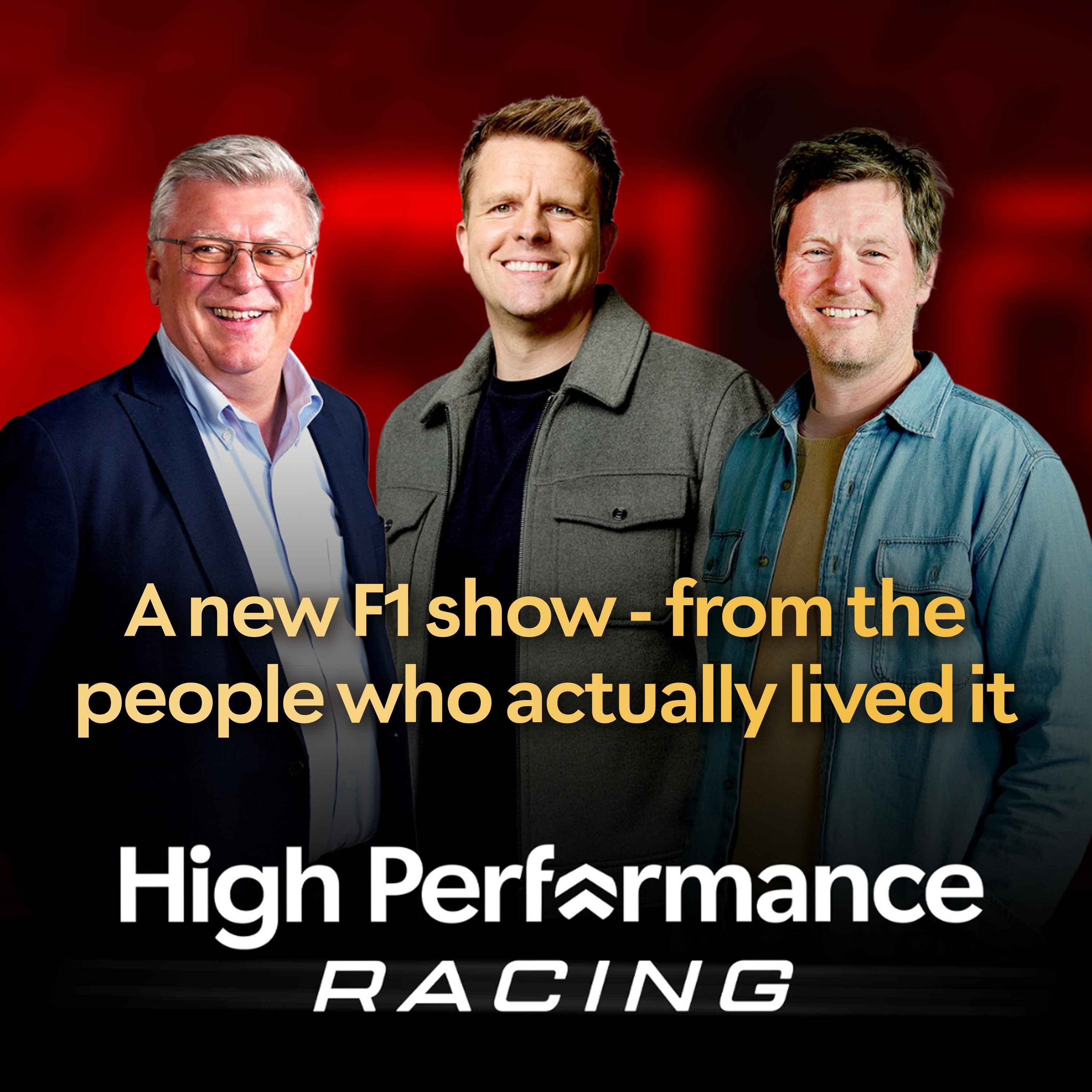
The High Performance Podcast
High Performance Racing is here! With Jake, Rob Smedley & Otmar Szafnauer
00:51:52
Loading summary
Transcript347 lines
- [00:03]
A
Hi there. Welcome along to another episode of High Performance. I'm here alongside my co host, Damian Hughes. Hello, Damien.
- [00:09]
B
Hi, Jake. How are you, mate? You all right?
- [00:11]
A
I am very well, thanks. I've just got back from a few days in Madrid. Before we go any further though, let's tell everyone that you've just got back from Japan. How was that?
- [00:20]
B
Absolutely amazing. What a culture. What a culture it is. You know when you see all the things like that, it's always the small things, isn't it, that stand out? You know when you see World Cups where like the players tidy the dressing room afterwards and the fans do it on the stadium. Like, nowhere in Japan do they have public bins. Because you're just expected to take responsibility for your own rubbish, take it home and recycle it. It's small things like that stand out to me as a sign of a healthy society.
- [00:48]
A
I remember when I used to go to Japan often for the Formula one, the thing that stood out to me was when you're sitting on the train and the ticket inspector walks into the carriage to check your tickets, the very first thing they do is bow to the carriage and everyone bows back to them. It's like this. It's. There's a level of respect in Japan for other human beings that I think we've lost a bit in other parts of the world. Do you know the phrase sonder and what it stands for, Damien?
- [01:16]
B
No, go on.
- [01:17]
A
So sonder is a neologism coined by a guy called John Koenig in 2012 for a project he was doing called the Dictionary of Obscure Sorrows. And if I was to define it, I suppose it is this kind of profound realization you have at some point in your life. Every random passerby is living a life as vivid, as complex, as chaotic as your own, right? They've all got their own ambitions, their own friends, their own routines, their own worries. And this understanding that kind of we're just a background character in their story in the same way that they're a background character in our story. And this kind of mindset that we need to stop treating everyone in 2D because they all live a life in 3D. And I think that's something in Japan that still exists. There's still this respect, care, understanding for each other that I think other parts of the world have lost. Did you sense that?
- [02:09]
B
Yeah, definitely. Like, even, like on the first day we landed in Tokyo, we met up with somebody that took us around and sort of introduced us to some of the customs. And it was like when you're on the train or in a lift, you're not expected to be talking, just to just respect people's silence. And again, so you see it and like how quickly it takes you to adjust to it and then just enjoy it. Like no road rage, you know, even one of the biggest capital cities on the planet. It was just a sense of order. Yeah, the whole thing was just really, really special and the kids enjoyed it. We. I spent two days stood outside clove shops in Tokyo watching the world go
- [02:50]
A
by while they, they were, you know, your job, mate. You know, your job. I spent a lot of time standing outside clothes shops as well, because Florence is now 13. So we've reached this point where Florence and Harriet can go to the same clothes shops and not just buy the same clothes, but the same clothes in the same size. My wife and my teenage daughter are wearing the same clothes. So like we went to the gym one day and Florence just wore Harriet's gym stuff. And for me, like, I still see a two year old sitting on my lap, you know what I mean? Like learning how to eat. And it's very strange.
- [03:24]
B
How does it feel about it?
- [03:26]
A
I think she kind of likes it. I think we both, we're both mourning the fact that we, like, we both mourn the babies we no longer have. And I think that's probably a common thing for parents of older children. But equally, this is just as magical, if not more magical than any other stage of childhood, I think.
- [03:41]
B
Yeah, of course, it just keeps getting better, doesn't it, that. I think so. The sort of challenges maybe are not as physical, they become more emotional than mental, but yeah, it's a, it's a blessing.
- [03:52]
A
Absolutely. Well, I obviously mentioned Formula one and my time traveling the world and that's today's big announcement. People can for the first time right now listen to episode one of High Performance Racing, our new podcast focused on the world of Formula one. It's an exciting moment for the, for the High Performance brand, I think, you know.
- [04:10]
B
Oh, I think it's incredible. But I'm interested in why have you, like, I know how passionate you are about it and I know how much you love that time you spent really immersed in the world for it. But why have you chosen to do this now?
- [04:23]
A
Well, I think in many ways it's driven by the audience. You know, when we release episodes of High Performance, it's guest led stuff. Right. So it's all about the guest who's joining us. And, you know, if we have footballers on the reaction's Kind of cool. If we have psychologists and writers and visionaries, then we get a great reaction. If we have people that have, you know, been in the heart of something incredible, like Bear Grylls as an explorer or, or a member of the military, you know, we get a great reaction and good numbers. But when we talk about Formula one and High Performance, it gets numbers and a reaction like nothing else. And it's. It's very interesting how much the Formula one community have lent into what we've done, how much the Formula one world, in terms of the drivers and the team principals and the people working in the sport, have enjoyed the content and the coverage that we've offered. Because I think we look at the sport in a way that no other, no other podcast does. And the audience really just wanted more Damien. So this is definitely a departure for us because if you look at our other shows, like Untapped and On the Mend and the Room Where It Happened, all of them are based around helping people to find their own version of high performance. Whereas High Performance racing is basically a pure Formula One podcast, all about that world of F1. And I'm excited, you know, to go back into having those conversations that, to be honest, I've missed.
- [05:37]
B
And you've got two, like, fascinating guests that we've had on the High performance podcast that are joining you. Tell us, who are they and a bit about why you've chosen them.
- [05:47]
A
Yeah, good question, actually. Well, look, if you're listening to this conversation with myself and Damian and you don't know what High Performance racing is, it launches today and it's not me on my own, it's me alongside a guy called Rob Smedley and a man called Omar Safnau. Now, the reason why we've chosen these two, Damian, I guess there's a couple of reasons. The first one is they've been there and done it, right? Rob Smedley was the guy who was the race engineer for Felipe Massa when he was challenging Lewis Hamilton for the world title. And when I was doing the Formula one, Rob became our go to guy, actually, for interviews about what was happening in the sport from a technical perspective. Because he's from Middlesbrough, he's got a very sort of grounded and simple way of describing a very complex and challenging sport. So Mark Wilkin, who was my producer on the BBC F1 coverage, no matter what the story was, if it involved technical regulation conversations, we were like, let's get Rob Smedley on actually to the Point, right, Damian, where Ferrari were getting a bit Annoyed because Rob Smedley was getting more airtime on the BBC than, like, the Ferrari team principal or the Ferrari chairperson. And sometimes they were like, well, do you want to speak to other members of our team? And partly Rob Smedley's a Brit and it was a British broadcaster, but, no, I've never met anyone that can explain the complexities of F1 in such a simple way. So Rob Smedley is our kind of technical expert. And then there are very few people who've ever been team principals in Formula One. You know, there's probably as fewer team principals as there are drivers. Not many people have done the job. To actually run a Formula one team, which is operating across various countries with hundreds of people, it's a real big challenge. And while I was working in Formula One, if you wanted a warm welcome, and not everywhere gave you a warm welcome, if you wanted a warm welcome, you went to Force India. And the man who was the Force India team boss was a guy called Otmar Safnaur, who, again, has been a guest on High Performance. And every time you went in there, there was a cup of tea, there was a hug, there was. There was warmth from that team. And that was created by Otmar. And he then went on to work for Alpine and for Aston Martin. He's done some of the biggest deals in the sport. I mean, this is a guy, Damian, who, when his team was struggling financially, he paid the wages of the staff for two consecutive months, and that ran into the millions, and he was never sure whether that money would even come back to him. That's the kind of guy he is. So I always wanted to do a Formula one podcast, but it had to be done with the right people, with nice people, with genuine people, with interesting people. And Robin Otmar are those two people. And of course, they're brilliant friends, a bit like you and I are on High Performance, like you have to get on with each other and they're great mates and I think that makes a difference.
- [08:14]
B
So, in a world, then. So if I'm a listener now thinking I've got infinite choice when it comes to Formula one podcasts and getting my content from that world, what is it that makes High Performance racing unique and different?
- [08:28]
A
Well, there's no show that has an engineer and a team principal on it. There's lots of podcasts with drivers and ex drivers and lots of podcasts with journalists, but no podcasts with people who have actually sat there on the pit wall giving instructions, as Rob Smedy did to Felipe Massa. To pull over, to let a teammate through. There aren't people who've had to. To sit at the very forefront of those big, big deals in Formula One like Otmar has. Otmar's a guy who's hired a lot of people. He's also a guy who's lost his job. He's a guy who knows how ruthless Formula One can be as much as how brilliant Formula One can be. So no other podcast really brings people Formula one in this way. But the other thing, mate, is. And we recorded our first episode a few days ago, it is so much fun. Honestly, I really hope that when people tune in and we'll play a little clip now, is that they just enjoy it. Like Formula One, it's such a fascinating sport, but it's an entertainment sport more than anything else, and I want it to be entertainment. You know, I think our podcast is quite deep and quite heavy. Sometimes people message us that, and they're like, I loved it, but I had to pull the car over and start making notes or I had to listen to it again after my dog walked to actually work out what was being said. Whereas, this is just gonna be light, it's gonna be fun, but it's also gonna be informative. So I think people are gonna love it. Should we play a clip?
- [09:44]
B
I think that'd be brilliant. I'd love to hear it. And I'm excited to start being a weekly subscriber to it, as well as a novice to the world of Formula one. I think anyone that can explain the nuances in, like, say, a simple way that Rob's able to do, I think it'll be a game changer.
- [10:01]
A
Well, here it is, then. Let's sit back and enjoy together some of the first episode of High Performance Race.
- [10:09]
B
Close your eyes. Listen to Monday.com. feel the sensation of an AI work
- [10:14]
A
platform so flexible and intuitive, it feels
- [10:17]
C
like it was built just for you.
- [10:19]
A
Now open your eyes, go to Monday.com, start for free, and finally breathe.
- [10:24]
D
Hey, honey, it's Mom. Did you know if we switch to Verizon, we can get four phones for $0 plus four lines for $25 a line. Call me back. Me again. That's just $100 a month for four lines on unlimited welcome. Plus four phones. No trade in needed. Call me. It's Mom. America's best network. Verizon. That's the one we're talking about. I'll send you text.
- [10:46]
E
America's best network based on root metrics. Best overall mobile network performance, US second half, 2025.
- [10:50]
C
Four new lines on a limited.
- [10:51]
E
Welcome and autopay. See verizon.com for details.
- [10:55]
A
Okay, caller one wins courtside seats to tonight's game.
- [10:59]
C
What?
- [11:00]
A
I won floor seats.
- [11:01]
C
You did?
- [11:02]
E
I've been calling for 13 months.
- [11:04]
C
Wait.
- [11:04]
E
Chris.
- [11:05]
C
Yes.
- [11:05]
E
I finally did it. What are you gonna wear?
- [11:07]
A
Men's Wearhouse.
- [11:08]
E
They've got today's looks for any occasion,
- [11:10]
C
and I need to look like a celebrity. They'll want to stick out. Exactly. They've got Chill Flex by Kenneth Cole, Joseph Abboud, and a tailor at every
- [11:17]
E
store for the perfect fit.
- [11:18]
C
Congrats. You can stop calling now.
- [11:20]
E
Not a chance.
- [11:20]
C
Hit any look for every occasion at Men's Wearhouse. Love the way you look.
- [11:27]
A
We should start by the fact that this is our first ever show and we've launched on a week where there's no Grand Prix. That wasn't the plan. What's. What's sort of going on behind the scenes on a week like this where Formula one will feel that they should be racing and they're not, from, like, an organizational perspective, from a financial perspective.
- [11:48]
E
I remember just when I started at Force India, Bahrain had some fuss and nearly canceled that race, but we got through it. And our first race in Saudi, all the drivers got up in arms because the Houthis were. There were some missile that.
- [12:09]
A
There was unrest, wasn't there?
- [12:10]
E
There was unrest and you could.
- [12:11]
A
And the driver depot or something got attacked.
- [12:13]
E
Exactly. Which wasn't far away. And the smoke from the oil depot, the drivers had to drive through. And they all got up in arms and said, we shouldn't be doing this. But that went through as well. So I think this is the first time this kind of unrest has stopped a Grand Prix. A big break for everyone.
- [12:31]
A
Yeah. Is that what they'll be thinking?
- [12:33]
C
Yeah, I. I think it. So. So the last time I remember this. This happening when we had a break was Covid. Obviously huge. And that was. That was much more indefinite than this is. Right. So this is kind of. We know that there's two Grand Prix cancelled. The one after will not be cancelled. So you kind of know where the break is. That was much more, like, uncertain. But I think it kind of upsets. If you take how a Formula one team operates, a good Formula one team, it kind of operates on rhythms, and it upsets the rhythm a little bit. So definitely the guys who are at the front, if you take Ferrari and Mercedes, they'll just be wanting to get on with it because they know that they've got an advantage. And you're never guaranteed an advantage in Formula one. Guys who are at the back will be looking at this as a golden opportunity to try to, you know, can they recoup some of the performance? Can they bring forward some of what, what, you know, where they would have been in this cadence of racing. They've now got some development time. So I don't know. I mean, I can't see it changing anything fundamentally. But I can remember when this happened in Covid, it does kind of upset your rhythm because you're expecting like a certain cadence and a certain. Like, what's the best way? Like, the pressure changes, you know, you're
- [13:53]
A
in a real rhythm as a Formula one people. I mean, we've all done it for years and years of our lives.
- [13:57]
E
Yeah. And there's upgrade rhythms as well, you know. You know, when you're in the tunnel, you see what comes out of the tunnel, what you gotta do next. Do you put the. Especially now with cost gap, do you actually put the parts on the car or do you wait, you know, do you package a bigger upgrade before you go? But I think you're right, Rob. What this will allow is a big enough break for the teams at the back to bring even bigger upgrades. Next time they go racing, they will look at this as an opportunity to close that gap. And the gap is huge this year. 2, 3 seconds a lap. I've never known it to be that way in my 30 years in Formula One.
- [14:36]
A
So what goes on then? Like when we say the teams at the back, right, we're basically talking Aston
- [14:40]
E
Martin and Williams and Cadillac.
- [14:42]
A
Yeah, Yeah. I guess I sort of see Cadillac different because I just think, like, will they be looking for, like performance or just reliability?
- [14:50]
E
I remember my first year in Formula One with British American Racing. Brand new team. There were three people in February of 98 and 225 in March of 99. When we started racing, and although we had reliability issues, we were performing, we were qualifying top six. And in our second year, we finished fourth in the championship. Tied out, tied fourth with Jordan. In year two, year two of a brand new team, British American Racing had three employees. Like I said, in February of 98 and two years later, two years later in Australia, we finished fourth and sixth in that race with a Honda that was 20 horsepower down.
- [15:35]
C
What year was that? 99.
- [15:37]
E
No, 2000.
- [15:38]
C
2000. Yeah.
- [15:40]
A
I remember EJ saying a similar thing. There was what team was new to F1 when I was working with him in 2009 or 2010. Virgin.
- [15:48]
C
Oh, yeah, Virgin. Marusha. Marussia.
- [15:50]
A
Mammoth Virgin. All those different name changes. He used to slate them. Ej, because he's like, I don't know what they did in their first season, but I think he says, like we finished third in a race or fifth or something.
- [15:59]
C
Don't forget that was.
- [16:00]
E
EJ was really good too in his first year. The seven up car.
- [16:02]
A
Yeah, that's what he was saying.
- [16:03]
E
Yeah. EJ's right. British American racing did the same. Stuart did the same.
- [16:08]
C
Yeah.
- [16:09]
A
So what's changed then? Like, why is it okay?
- [16:12]
C
I think it's hard to get to a finish. It is harder. There's no doubt about it. And don't forget, like just going back those Marussia, they came in on the promise of a rule set that never actually materialized. Because if you remember when there was all the Argy Baji back then, you'll probably. Oh my. You remember this?
- [16:29]
E
I remember this.
- [16:30]
C
But there was a lot of like there was this almost a breakaway formula happened and there was the Formula One. What was it called back then? Formula One Constructors Association. Was it foca?
- [16:39]
E
I think it was, yeah. Or no there fota.
- [16:42]
C
Fota.
- [16:42]
A
And then it became foca.
- [16:44]
E
No and no. But there's also GPMA grown Pre Manufacturers Association.
- [16:50]
C
That's right.
- [16:51]
E
That's, I think what you're talking about.
- [16:52]
C
Yeah, so, but, but Max Mosley had promised that there was going to be basically a, a twin tiered formula and all these new teams that rushed in on the back of that was if you spend below a certain cost cap then you get like more horsepower and like it's a different rule set in terms of the aerodynamics and all of this. So like you spend a wind tunnel. Yeah, so but what happened was that never materialized. So all these teams rushed in without the infrastructure to do anything. Who was the team that said they were going to develop the car just on cfd.
- [17:24]
E
Yeah, that was Nick Wirth. That became my Russia.
- [17:27]
C
Yeah.
- [17:27]
E
That was no wind tunnel.
- [17:29]
C
Yeah, exactly. So all of this stuff, like it never materialized. That's why those teams are at the back. But I think that, yeah, there's loads of examples. So Eddie, who we've all worked with or for in some shape or form, when he came in, yeah, he hit the ground running.
- [17:46]
E
So did Stewart.
- [17:47]
C
Stuart, probably. Yes, that was, that was, that got up to speed. British American racing. You're right. I think it is harder now. It is harder. I, I mean, but why like Cadillac
- [18:00]
A
have got so much money, so many
- [18:03]
E
people, they don't have the tools. So there, there's a Few things. There's simulation tools now that teams develop themselves. So even cfd, you know, you might buy a CFD computational Fluid Dynamics program off the shelf, but you don't. That's not what you use. You develop it yourself.
- [18:24]
C
Yeah, you develop on top of it
- [18:25]
E
and then when you develop on top of that, no one can buy that. And if you're a new team now, you can't buy that. Yeah, you might go to Fluent and get the basic program, but that's it. And those tools that those teams have developed over time help them with car development and going quicker. And that's something Cadillac doesn't have.
- [18:45]
A
So how can Cadillac ever be competitive in one, two or three years?
- [18:48]
E
Like that feels the best way to do it is by the right people.
- [18:54]
B
Right?
- [18:55]
E
Shortcut it through paying people.
- [18:58]
A
Because you can't forget what you know if you bring the knowledge with you.
- [19:00]
E
You can't forget what you know. And especially if you're the guy who developed that bit of software that they need. Tire model. Give you an example. You don't have a good tire model. Your simulator is useless. Can you buy a tire model? Not a good one. Develop it yourself.
- [19:17]
C
All the method. It's never like Formula one. Like people get a bit confused and say like, you know, like there's a superstar coming into a team. So that's going to change everything. That's utter bollocks, right?
- [19:28]
E
Like there is no messiah, there is homozygous.
- [19:31]
A
Even Adrian Newman.
- [19:32]
C
No, Adrian can't do it single handedly.
- [19:34]
E
He can't do it all in the day, right? In 1998, 1999, when British American racing started and all those teams before that, you could test as much as you want. You'd go to a race and then you'd go testing. We'd have five cars, right? Two test cars, three race cars. You'd be testing as more than you were racing. When you test that much, how much do you need a driver and loop simulator? Zero.
- [20:00]
C
Yeah. You don't.
- [20:01]
E
You don't. But now, no testing, things have changed. And now you need a driver and loop simulator, a good one that replicates the car. Now you need a good tire model, a good one that replicates the car. You need a good aero model for your driver and loop simulator, a good vehicle dynamics model. And if you don't have that, then you don't do any testing.
- [20:23]
C
And these models are so hard to build and get right.
- [20:28]
E
It takes time.
- [20:29]
C
Yeah, and it takes time and it takes a lot of like, we're getting like very technical now, but it's a lot of correlation. It's kind of building. So you need really, really clever people who understand modeling, like high fidelity models, better mathematics. Mathematics, physics, all of that stuff. And then, and then you need to then correlate that. So you need to match that against what's really going on on the track.
- [20:49]
E
Yeah, Reality.
- [20:50]
C
Massive amount of work. Honestly, that is a huge amount though. That is l years in the making. So you cannot expect. I don't think you got to correlate.
- [20:58]
E
CFD to the tunnel.
- [21:01]
C
To the tunnel, tunnel to the track, track to cfd.
- [21:04]
E
You got all that going on.
- [21:05]
A
This sounds like a big job for Cadillac. Could they, could they pick up points this season?
- [21:12]
C
Tough.
- [21:13]
A
Yeah.
- [21:13]
C
Yes, yes, they can. Of course they can. Freak races. Of course they can.
- [21:17]
A
Like rain and.
- [21:18]
C
Yeah, they just need to be falling off.
- [21:20]
A
But not in terms of, in terms of pure speed. In terms of tough. No, no points this season.
- [21:25]
C
Tough. Very, very hard.
- [21:28]
A
So let's talk then about what goes on when there's this break. As you've already said, there are some teams that will be loving this. I mean, Williams and Aston, we can talk about them in detail, but I do want to talk about how Mercedes and Ferrari will be feeling because I think that people haven't really picked up on the fact that this could fundamentally change the World Championship. Missing these two races because now those teams have got the advantage. Like Jenson Button in 2009, if you'd have taken away two of his race wins towards the start of that brawn season, he doesn't win the world title.
- [21:55]
C
Yeah.
- [21:56]
A
And that is a genuine thing. That Mercedes could have double the lead after four races. Everyone else is then catching up. So this could deny them winning the World Championship.
- [22:06]
C
Losing these races could, but I think
- [22:08]
E
their advantage is so great it won't. But you're absolutely right. Would have been better had we had two more races.
- [22:16]
C
Yeah. And don't forget like, I think you're right because the. Like. What is fundamentally different about a new rule set than a mature rule set? It's how fast people can develop the cars.
- [22:28]
E
Right.
- [22:29]
C
Like the cars now have, like, compared to their potential. Even the Mercedes compared to the potential. Right. If you, if you run this Mercedes, everybody looks at this Mercedes and say, what a great car. You run this Mercedes against the Mercedes in 18 months time and it will be a second and a half slower. It will look like Neanderthal car.
- [22:47]
E
Yeah, Right. Significant difference for Mercedes and the rest of them is the rest of them can look at the Mercedes and say, aha, that's what they've done to get to this level. Mercedes can't look at anybody to say ah, what do I do next? They got to creatively think of what's coming next to go faster where everyone else can look and say okay, so you catch up quicker. The other ones that aren't there, you learn from Mercedes or from Ferrari or that's what Adrian Newey does walking around on the grid. Every car he's learning something. Right. And you shortcut that process where Mercedes, they're just out there and you're right, in 18 months time that Mercedes will be much quicker. But they have nobody to look at to learn. Yeah, look at the others and learn something. It's a harder job for them.
- [23:33]
C
But like this two week gap, I think that's what we're talking about, right? This, this, this or this two race gap, which is a month gap or whatever when you don't have to concentrate on that grind of just taking the car to the circuit and all of the work that generates. Because it's not just, there's a, there's a group of people that over here on stage left, you know, the operational like 60 and then the other people that go to the track and, and the rest of the factory doesn't really get involved in that. The whole factory is involved in the race weekend, right? Yeah. And so it just takes, takes your focus away from pure development. So if the teams, this is not to guarantee that the teams at the back can get it right in those, you know, with this, this gifted two, three weeks. But it gives them an opportunity.
- [24:16]
E
They will develop at a higher rate than the teams up front because they, a, they're further back and B, they can look at what the others have done and if they're developing at a higher rate and you don't have those two races, it'll get closer together and it benefits those at the back.
- [24:33]
A
So why I see it, obviously you're my favorite ever Team principal.
- [24:36]
E
Thank you.
- [24:37]
C
My favorite ever.
- [24:37]
A
You're my favorite ever race engineer.
- [24:39]
E
That's why we're here.
- [24:40]
A
Just say Felipe baby, for me I'd be happy with.
- [24:44]
E
You're my favorite ever Team Principal. That's alive. Because I know you liked Eddie Jordan a lot.
- [24:49]
A
I did love Eddie Jordan but I also am very impressed by Toto Wolff. I just am like his leadership, his management. I remember when, just because he's tall. I do like tall people. Yeah, I do. Sort of handsome. And he's also very handsome. He also like, you know when someone has a Bit of presence. He does have that Toto, don't you think?
- [25:08]
E
Yeah.
- [25:09]
A
Like you sort of feel like you're. You're around someone that knows what they're doing.
- [25:13]
C
Yes.
- [25:14]
A
I went to the factory not long ago and we had a little walk around and he was showing me. You've probably seen this. They're developing like crazy. Building loads of stuff there. Yeah. Lots is going on at Mercedes and
- [25:24]
E
that's where British American racing started.
- [25:25]
A
It isn't. Yes, absolutely. Yeah. Because I think people don't often understand that that team was bar, then it was Honda, then it was bronze and
- [25:33]
E
it was broad and it was Mercedes
- [25:35]
C
that to the multi almost billion dollar complex in Silverstone.
- [25:42]
E
Now same team, but the reverse, the reverse of it.
- [25:45]
A
So yeah, did I get this right? Then it went Jordan.
- [25:50]
E
So Honda was a bit better than Bar. Braun actually won a world championship. Mercedes then won multiple nine of them. Yeah. And here it's gone backwards.
- [26:01]
A
What from Jordan? What you think Aston Martin is. Have you seen the building though, at Aston Martin? It's insane.
- [26:05]
E
No, the results.
- [26:06]
A
The results, yeah. So Jordan to how many? Spiker to Midland to force India.
- [26:13]
E
Yes.
- [26:14]
C
Is that the right way around? Did it go Midland? They go Spike of the Midland?
- [26:19]
A
I think so.
- [26:20]
E
I think Spiker, the Midland, then force India.
- [26:23]
A
I'm racing point.
- [26:24]
E
No, Midland and Spiker Midland, Spiker Racing, then Force India, then Racing Point, then Aston.
- [26:32]
A
Best building, worst results. Is that what we're saying about the Aston?
- [26:37]
C
It's a different building.
- [26:38]
A
It's a different. But it's a lovely building. But anyway, the.
- [26:41]
C
Another lovely building.
- [26:43]
A
Mercedes. Right.
- [26:44]
E
And Bosco Quinn, who's that?
- [26:47]
C
Bosco Quinn.
- [26:48]
A
Who's Bosco Quinn?
- [26:50]
C
Bosco Quinn was deal maker Freddie of Eddie's Bosco.
- [26:59]
E
So Bosco Quinn, I never met him, but I used to park in the spot that had a plaque. Yeah, Bosco Quinn.
- [27:06]
C
That's right.
- [27:07]
E
He worked night and day, from what I understand, tirelessly to get the small Eddie Jordan factory going and. Cause he was working so late, I think fell asleep behind the wheel and he was killed tragically in a car accident. And they put a plaque up and planted a tree in his honor just outside of. And unfortunately nobody knew that story. And when that building went, they also cut the tree down. Shouldn't have done that.
- [27:35]
C
Did they really? Yeah, I didn't know that. But he was a legend. I mean even when I was there, they used to. They talked about Bosco all the time.
- [27:42]
A
So what was Bosco's job? Just because Eddie does his own deals, surely?
- [27:46]
E
Well, I Think it was whatever Eddie needed.
- [27:49]
C
Yeah, yeah.
- [27:50]
E
Irish guy. And unfortunately, Eddie couldn't pay people that much back then. You know, all the money went into starting a Formula one team. So Bosco would wear some Eddie's hand me downs. And Eddie was a lot shorter than Bosco, so the trousers didn't fit that well.
- [28:09]
A
I need to see a picture of Bosco in handed down Eddie Jordan clothes. I mean, this is like. This is painting a picture. You would have met him, though. You'd have worked with Bosco.
- [28:17]
C
No, no, I never met him, but it was before my time. So when I was there, Eddie's right hand was Ian Phillips.
- [28:24]
A
Yeah, yeah, I remember Ian.
- [28:25]
C
Do you remember Ian? Yeah, Ian was great.
- [28:28]
E
Ian worked for me at Force India.
- [28:30]
C
Did he?
- [28:30]
E
He did. He was there that long.
- [28:32]
A
Your comms guy.
- [28:33]
E
All right. Yes. Yeah.
- [28:35]
A
We should start a petition on this show to get the Bosco Quinn tree and plaque put back.
- [28:40]
E
Yes, it should be somewhere. Yeah, absolutely.
- [28:43]
A
All right, well, we're going to investigate that and make it should be bring
- [28:45]
C
back all the Jordan legends into Formula one. I don't mean like. Like bring them back to, like, resurrect them. I mean bring them back to Formula one. What about that? Yes.
- [28:57]
A
I mean, I'm all for anything involving Eddie Jordan and Formula one. Like, I want to keep it going forever. I'd like the Jordan team to come back, but hey, I actually love it. Well, not who's driving a yellow DHL car in India at the moment and dominating Alex Palu. Alex. I can't look at Alex Paloo's car without thinking of Jordan. Yeah, Jordan. Which I like.
- [29:16]
E
Chip Ganassi racing.
- [29:17]
A
Yeah. So anyway, back to Toto Wolff and Mercedes. He has these plaques on the wall there and it has all of the world championships that they've won and other teams have won over the last few years, but then a load of empty plaques. And when we walked around together, he was saying to me, like, I've put this up here to remind everyone in the team that that might be our past, but the history is not yet written. And I want to see the Mercedes logo on all of these next plaques. And there's like numerous of these around the factory everywhere you go. So my question for you guys is seeing how far ahead they are with the drivers. They've got the money, they've got the finances, the setup, the history, the knowledge of winning. Could we be at the start of another period of Mercedes dominance? A new Mercedes era?
- [30:00]
E
I think yes. I think yes. I mean, in the past they were dominant A bit due to powertrain but also good knowledge of what you need to make a cargo quick. So they've had both and they had great drivers and I think they've got all that now. They stumbled a bit with this, the era of ground effect. I don't think they got that right.
- [30:28]
A
Why sometimes can a team not just like sort that out when they're struggling?
- [30:33]
E
That's the beauty of Formula one. It's the same people. They could, they were the only ones and us after a while that ran a, a low ride height car in the rear, do you remember? Y Y and one with it. Everyone else did the Adrian Newey trick of high ride height in the air, rear seal the floor, aerodynamically downforce. They didn't and they still won. And then when the ground effect happened they probably didn't understand it as well. Couldn't do it, couldn't do it. So why do you think it's the
- [31:07]
A
start of a new dominant era for Mercedes?
- [31:09]
C
So I was reasonably close to Mercedes because we had the Mercedes engine at Williams in their last period of dominance. And I think towards the end there was perhaps a little bit of self assuredness there in, in Mercedes that, that didn't need to be there, you know what I mean? They'd won all these world championships and you start to, I know what this is like because I remember it at Ferrari you start to feel like you, you can dominate anything, right? And that's when it gets really dangerous. And I just noticed bits and pieces of that creeping in, you know, when you would talk to them. I think a period of, and I know they won't mind me saying this, I think a period of getting your ass kicked does you the world of good, right? You keep getting, you know, you, you kind of think you're, you are, you're the kings of the world and you're going to dominate this sport forever. And then you go through this really fallow period, right?
- [32:08]
E
And you can't get yourself out. You don't know how to get out
- [32:10]
C
of it and you don't know how to get out of it, right? And that gives you a lot of humility. That, that resets the whole baseline, right? And you realize that you're all not work walking like six inches above the ground. You' not gods, you're all not who you thought you were, right? You've now had your asses kicked. So now it's kind of feet on the ground like humility, heads down, start working.
- [32:32]
E
I love that psychology answer. That's what I should have Said. But I'm going to tell you why I think they've done a great job on the powertrain.
- [32:42]
C
Yeah.
- [32:43]
E
And first time ever there's a powertrain cost cap. You can't infinitely spend your way out of a bad powertrain if you don't have a Mercedes because there's a cost cap. So that'll hold some of the others back and will allow that advantage they have today to stay number one. And number two, there's also a freeze that comes in a progressive freeze on the powertrain first time ever. So those two things will maintain their advantage. On the powertrain side there is. If you're so far behind, there are tokens that you can now have to redevelop and maybe even some headroom on cost cap. I don't know the rules that well. I need to ask that question. But you gotta be 2 or 4 or more percent behind for that to happen. And I think there's talk now of Mercedes not showing their true hand so that Ferrari are still within that 2% so they don't get any further development tokens.
- [33:44]
C
Yeah, yeah. But for sure that it becomes like this is what.
- [33:48]
E
It's the first time ever this kind of rules.
- [33:51]
A
I hadn't thought about that.
- [33:52]
C
So when the whole token thing come out. Clever. When the whole token thing come out, there was some teams that kind of went and looked at GT racing because GT racing has this thing called balance of performance.
- [34:04]
E
Right. Bop.
- [34:05]
C
And this bop thing is like, okay, if you're a certain amount ahead, they, in GT racing or endurance racing, they peg you back. I think it's on engine and ballast or something like that. I don't really know.
- [34:15]
E
Definitely weight and. Right.
- [34:17]
C
So. So they went to. So some of the teams actually went to the like the endurance, the world endurance car teams and said, okay, how do you play this game? Because that's the game, right. Because you don't want to be miles ahead if you turn up with a Ferrari endurance car or whatever. You don't want to be miles ahead because then you get pegged massively back. So you've got to play this game all the time. So, yeah, there's no doubt that the top teams are already starting to think about that and how they don't like.
- [34:42]
E
So if you've got that written in the rules that if you're so far behind, you get an opportunity to catch up. And the guy up front for sure is going to say they're not that far behind.
- [34:51]
C
Yeah.
- [34:53]
E
Knock it back.
- [34:54]
A
And are Ferrari far enough ahead of third and Fourth place teams to try and knock it back a bit, to try and create that gap, to try and get the token. Or is that going too far down the playing games route?
- [35:05]
C
No, no, no, no. That, that is the game. Right. So they will be playing that game. They want to fall back as far into that, into, into their gap to create a bigger gap in Mercedes. But Mercedes can keep coming back. So it becomes like.
- [35:17]
A
And the sport just gets slower and
- [35:19]
E
slower,
- [35:21]
A
even slower than it is at the moment. I mean, we haven't really spoken and we'll, we'll talk more about Mercedes. I want to talk about Kimi Antonelli and George Russell and what you think of those drivers. I think we should also talk about whether Ferrari can win the world title this year. I want to talk about Lewis Hamilton and that difficult period he was in. We've got some questions from our audience as well, so there's a lot to go through. But as we're talking about the sport getting slower and slower, I mean, you two haven't even shared your views on F1 2026. Like, have Formula One broken their own sport this season?
- [35:54]
E
It's definitely different. And for me, what they got to fix is you want to see drivers drive at the limit. And I don't think with the formula we have today, they're driving at the limit the entire time. There are times where you're saving battery because that's the quickest way to the end. And I don't know if they've broken it, but it's not what it used to be.
- [36:21]
A
What if the real question isn't where you're going, but the adventures you experience along the way? It's time to set your sights higher on peaks still to be climbed, rivers still to be crossed, and greater dreams to to pursue. It's time to embrace the impossible with Defender. A family of vehicles built around capability, durability, tested on some of the most difficult terrain. Defender defines tough luxury. And I should know. I've driven one for the past three years. I have the Defender 130, but from the compact confidence of the Defender 90 to the versatility of the 110 through to mind the Defender 130 with seating for up to eight. There's endless potential. You feel it in the details as well. The rugged body design, the robust materials, all working together so you can head out with confidence. And inside Clearsight technology helps you see the world around you in a new way. While the PV Pro keeps your navigation routes and playlists flowing seamlessly as you go. And with up to 89 cubic feet of cargo space. There's room for everything you need on your journey. Explore the full Defender lineup@land roverusa.com if something's been a bit off in the bedroom, you're definitely not alone, and a lot of guys put off doing anything about it for longer than they need to. With hims, it's easy to take action. Everything's fully handled online. No awkward appointments, no pharmacy queues. You fill out a quick online intake and a licensed healthcare provider will see if treatment is right for you if prescribed your treatments delivered in a discrete package. This includes Sildenafil generic for Viagra, available through HIMS up to 95% less than the brand name. And if that's not the right fit, there are other options available so you can find what works best for you. To get simple online access to personalized, affordable care for ed, hair loss, weight loss and more, visit hims.comperformance that's hims.comperformance for your free online visit hims.comperformance Prescription required. See website for details and important safety information. Sildenafil is the generic version of Viagra. Viagra is a registered trademark of Viatris Specialty, llc. HIMS is not affiliated with or endorsed by Viatris. I don't know about you, but I really love keeping my money where I can actually see it. Unfortunately, traditional big wireless companies seem to like hanging onto my money for me. For years I was overpaying for wireless simply because it's what I used to do. I didn't really question the high monthly bill, the extra fees, or those free perks that somehow end up costing me. Eventually I realized it didn't make sense, so I switched to Mint Mobile. Most people just accept overpaying for their phone bill, but you don't have to thanks to Mint Mobile. With premium wireless plans Starting at just 15 bucks a month, you still get high speed data and limited talk and text, all on the nation's largest 5G network. Honestly, the wireless service is just as good as the traditional big carriers. It's easy to switch too. Keep your phone, your number and get set up in minutes with esim. No contracts, no hassle. If you like your money, Mint Mobile is for you. Shop plans@mintmobile.com HPP that's mintmobile.com HPP upfront payment of $45 for 3 months 5 gigabyte plan required equivalent to $15 a month new customer offer for first 3 months only, then full price plan options available, taxes and fees extra. C Mint Mobile for details weren't they previously saving tyres and before that saving fuel and like Formula one. Has Formula one ever been an out and out sprint?
- [39:24]
E
Not for a long time, but definitely in qualifying.
- [39:29]
A
Is it not still in qualifying?
- [39:30]
C
No, no, no.
- [39:31]
A
Is it not?
- [39:32]
C
No.
- [39:32]
A
Why have I missed that then?
- [39:33]
C
What's going. Because, because you've got this, this energy imbalance, right.
- [39:37]
E
That you can run out of battery
- [39:39]
C
less than you can use. So you can't use all of like, you can use much less on a lap than you can actually harvest on a lap. So it becomes. So you've got to play all of this. I mean it's, it's always been a little bit like this with like since we brought in the curves back in the day that you're playing all of these games with it. But this now is like there's a, there's a clear, like it's too much energy imbalance and so the drivers can't drive the cars flat out.
- [40:06]
E
They have to like do not even in qualifying.
- [40:08]
C
Super clipping on the straight.
- [40:10]
E
Yeah. And not. And in the race. Not even the race either. And yes, there are times where, you know if you ran a little bit less fuel, you're lap time was better so you'd run a little bit left. There was a bit of lifting coast towards the end of the race, but that's nothing compared to what's happening today.
- [40:28]
A
But aren't we like just stuck with it? Like I see all the drivers moaning. Worst it's ever been. Not enjoying it.
- [40:34]
C
Yes is the answer.
- [40:35]
A
Like this is it. This is how formula looks for the next few years. And I actually think the amount of overtaking I've seen in the first few races, as someone that doesn't know the technical details that you know. And I sit and watch every race with Sebastian, my 10 year old mate, when we were watching Lewis and Charles in China, lap after lap having a go at each other. Get my boy. My boy was jumping around in front of the table.
- [40:59]
C
That's great.
- [40:59]
A
That's what if like that. And he's not done that for seasons. He hasn't done that before.
- [41:04]
E
As long as that's not artificial.
- [41:06]
C
Yeah.
- [41:07]
E
And it'll continue. It'll be fine. But I think once everyone sorts out their energy usage of the battery, all that kind of stuff goes away and you'll have. There's a thing in IndyCar for a couple years called the Hanford device. Do you remember that thing?
- [41:25]
C
Yes. What was it on?
- [41:26]
E
The rear wing is on the rear wing that just created less drag for the car following that's right. Much less drag to the point where even though you lost downforce, you could easily overtake. And they would have on an oval, 3, 400 overtakes. But at the end you never wanted to be leading because you wouldn't win because the guy behind you could overtake you so easily. And they got rid of the Hanford device because it was artificial. Lots of overtaking, just like you said. But it wasn't real.
- [41:59]
A
You know, the other interesting thing is when you've been starved of overtaken, it's the thing that excites you the most. If we're suddenly seeing 150 overtakes a
- [42:06]
E
race and they're not real, and they're
- [42:08]
A
not real, I wonder how quickly that. Then we lose the interest in that and we're looking for something else to make it go.
- [42:15]
E
Watch a couple of IndyCar races with the hand for device and that'll answer your question. Ready? I remember watching it.
- [42:21]
C
I mean Formula one, like Formula one is an entertainment, right? I mean as much like I'm my, my profession is engineer and as much as I would love it just to be all about engineering, that's quite boring for the public to watch, right? That's that they hot like, you know
- [42:40]
E
what's especially for the new fans.
- [42:41]
C
Yeah. One and a half billion people touch Formula one every single year, right? In some way, shape or form. Like what do they care about? Like this, like almost in their eyes, an unnecessary like new technology in this, in, in the hybridized like power unit. What they really care about is exactly what you're saying, you know, you and your 10 year old son Seb would, would do. You'd sit at home and you'd watch it and you'd think, oh, this is great, look, you're overtaking here. There. Purists won't like, you know, Otmar, me, you, Jake. I think we're F1 purists because we've been in and around the sport forever. So you kind of look at it and go, yeah, all right, great, but a bit artificial. But like think you got to think about like the 1.6, 1.5 billion people who touch Formula One and, and, and engage with it. Like that's what they want, right? They don't want to sit there and go, well, this is a very pure race. And I've seen, you know, the energy deployment, you know, perfect management, by George. Yeah. Boring, Utterly boring. It's an entertainment and I think, like, can I just say, right, shout out to Liberty Media who finally broke what was an identity crisis for F1. Because I think all since, since we started in F1, it didn't know what it was. It went through such a long period of, is it a technological pursuit, Is it entertainment? Is it sport? And liberty came in and went, it's entertainment. It's entertainment. Get on with it.
- [44:04]
A
Yeah.
- [44:04]
C
Here's how we're going to shape it. So at least we've got that right.
- [44:07]
E
Once it's entertainment, though, from my perspective, then you can get rid of this hybrid powertrain because the reason for the hybrid powertrain is to lead road cars. And once you say our powertrains don't need and the technology doesn't need to lead road cars, than just make it entertainment.
- [44:27]
C
Yep.
- [44:28]
E
And you have to do that without losing the manufacturers because the manufacturers want Formula one technology to lead what's coming in road cars.
- [44:36]
A
Yeah, but I. Do you buy a road car because you know the technology was developed in Formula One. I don't think you. I don't think the general public do. I certainly.
- [44:44]
E
No, no, no. I, I definitely don't. But that's not how manufacturers look at the sport. We're in it to develop our technology and tell the story that a little bit of Formula one went into that car.
- [44:56]
C
Yeah.
- [44:57]
A
So we've had questions, but if you
- [44:59]
E
can get rid of that, then, well, that's total entertainment.
- [45:02]
A
Is it time to go back to V8s? Is it time to go back to naturally aspirated? Is it time to go back to the biggest, loudest, fastest engines that Formula one can find?
- [45:10]
E
To me, if it's all about entertainment, that's what you do.
- [45:13]
C
Yeah.
- [45:13]
E
It was a big part of the entertainment to me was the noise.
- [45:17]
C
Yeah, of course it was.
- [45:19]
A
Can you. What is the first time that you ever remember being at a Formula One race and actually hearing it? Mine was 08 in China. My first ever Grand Prix.
- [45:30]
E
Like, unbelievable.
- [45:31]
A
You've grown up around motorsport. U2. I've never been to a race in my life.
- [45:35]
E
1984 Detroit Grand Prix.
- [45:38]
A
What engines were they running then?
- [45:41]
E
That's a good question.
- [45:42]
A
V10s,
- [45:45]
C
it would be a mix. 84 was a mix of V12s and V10s.
- [45:50]
A
And what's your first memory of, like hearing?
- [45:52]
E
My first memory was I couldn't see the car because it was coming down the straight. This is in Detroit and it was a long straight with a 90 degree left hander and I could hear the car and I'm thinking just through the noise, there's no way they're going to make that fake Turn. There's no way they're all going off. And what astounded me was a breaking performance. And actually breaking so late. So first the noise, then late breaking. And actually every one of them made that turn. Yeah. And I was hooked. I thought, man, I thought number one, I couldn't do that if I'm driving that car, there's no way I could do that. And two, I was surprised that everyone did it. They all got through there.
- [46:39]
C
And the noise, and the noise.
- [46:41]
A
What's your first memory of it?
- [46:42]
C
88 Silverstone. So we paid for. My dad got us Friday tickets and forced me to go. So I was like, man, I don't want. What's this shit like? So we went and so he got his general admission and then we. I remember walking through the woodcut stand.
- [47:06]
A
Yeah.
- [47:07]
C
You know where the woodcock corner is under the old pit straight. Walking through there. And I think first of all like a LaRousse or something compass. And then a McLaren was center in it. And I was just like, fuck me. What was that? Right. This thing come past so fast. And I was like, how is that even on the track? Exactly the same thing. How is that even on the track? And now, eight years later, when I haven't had to like be on the pit wall or in the garage during the race, I always go out, right. To remind myself. I go out when I'm at Silverstone to Beckett's. Have you ever stood.
- [47:43]
A
Yeah, yeah.
- [47:44]
C
Side of the track at Beckett. I have. Very privileged. Right. I mean not in the grandstand, which a bit far away. Like if you can stand where the marshals are. And I've done it a few times. It is insane. These things are like fighter jets on the. Absolutely. On the ground. I can remember. Here's a good story of it. I can remember we went to the. The not pre ground effect, so the hybrid era and went to the big tires and all the downforce. And I remember the first practice, both of our drivers. So I was at Williams and both Felipe Massa and Valtteri Bottas, they go out, they do their first run in. In, in. In P1. I'm allowed to swear. Yeah, yeah, okay, good. They don't do. They do their P1, they pull up outside the garage, you know like the kind of the cars come down the pit lane and they always point towards the pit wall and then. And then the mechanics pull them in and both of them. So I used to listen to both of them and both of them in stereo went, fuck me, it's fast around Here now, like. And then I remember seeing Sergio in the paddock afterwards and he was like, oh, man, this is so fast. Through Beckett's now. It took them like all of Friday and a bit of Saturday morning to get used to it that fast is unbelievable. I mean, you're pulling the first left hander that you do on the entry to Beckett's 7G, right. Fighter pilots train at three, three and a half. And some of them are Blackout at four. These boys are pulling 7G on the left hander laterally right. And then four, four and a half, even five, probably, or five just before this rule change into the, into the next right hander. Unbelievable.
- [49:22]
A
So interesting, isn't it? Because like F1 has never been more popular. But I go to races with friends who've never been. They go so loud. Yeah. In your head. Your head's going, oh, so annoying. I wish you were here 15 years ago. Like this. Like, this is.
- [49:40]
C
This is nothing. This is not it.
- [49:42]
A
And it's like.
- [49:43]
E
And for me, the crescendo at the start of a race.
- [49:47]
C
Yeah.
- [49:47]
A
Around Monaco. Do you remember Monaco at the start of a Grand Prix? Bouncing off all the buildings, man. We've got to find a way of getting that back into the sport because it's like F1 is amazing and it's so popular. Imagine if we now into this world of Formula one.
- [50:02]
E
I agree.
- [50:03]
A
Put those engines and that, you know, when they were like, they were like otherworldly creatures. The cars weren't they? They felt like alive. Like now I think you look at them and you don't feel that, like
- [50:13]
E
you feel less of it.
- [50:14]
C
Well, they're so much bigger. I know we've gone a bit smaller with this generation. 200 miles, but they're still big, big cars. I mean, if you see them against an early 2000s car, six hundred kilograms, those cars, right? You take like a little Formula 4 car now with 160 brake horsepower. So like 4T is down. The clues in the name Formula 4 from Formula 1. They're 600 kilos with 160 horsepower. These things were 600 kilos with like 900 horsepower.
- [50:46]
E
Yeah, yeah.
- [50:47]
C
These were machines, okay.
- [50:50]
E
Two thousand four, we had nine hundred and sixty eight horsepower out of a naturally aspirated vehicle.
- [50:55]
C
And the big difference there was, and I don't want to play like, you know, current Formula one and all the rest of it, but the big difference there was you couldn't get a 16, 17 year old step into those cars and be quick because it just, they were just like my God, what have I got into here? And it took them half a season before they even got on top of it. You know, times are different back then. So they could have.
- [51:15]
A
You don't even get half a season.
- [51:17]
C
Like, yeah, you could have done 30,000km or whatever.
- [51:19]
E
You get half a race, 45 races and you're out.
- [51:23]
A
Let's talk actually about the drivers. We were talking about Mercedes before. I do want to sort of just touch on George Russell and Kimi Antonelli. I'd like to know how impressed you guys are with Kimi Antonelli. But I also want to know whether you think that what Mercedes have there is a driver pairing good enough for the car. Is that a driver pair to carry them through?
- [51:40]
E
Definitely.
- [51:41]
C
Totally.
- [51:41]
E
Yeah, definitely.
- [51:42]
A
Why?
- [51:43]
C
100%.
- [51:44]
E
Well, to me, look at the beginning of this season, you always get better odds if you bet on the world champion at the end before the season starts. And for me I thought George, George, when he was up against Lewis, who's one of the best ever held his own. Probably more than held his own.
- [52:06]
C
Yeah, yeah, he definitely had. Definitely.
- [52:08]
E
Right. Beat him at the end. So George definitely good enough, won everything. Coming up through the lower formulas. And now you can see how good Kimmy is relative to George.
- [52:18]
C
Yeah, I reckon. I still think, like it will take a while. I mean it goes back to what I just said, like putting a 16, 17 year old in these cars or in the old cars. Forget about it. Right. Nobody ever did it. They needed years, a lot more training. It's easier now. It's still hard. Right. So. So Kimmy, and don't forget, Kimmy didn't have the comfort of kind of hanging around at the back of the grid for a year. Right. Being unnoticed. He's suddenly in one of the biggest teams in the biggest pressure cooker environment. That's hard for him. And I think to survive as well as he's done and do as well he's done and now be winning races. Okay. The race that he won at the start of this year was maybe a little bit down. There was some misfortune in, in qualifying, I think for George.
- [53:05]
E
Yeah.
- [53:05]
C
But anyway.
- [53:06]
E
But Kimmy won it, but Kimmy won it.
- [53:08]
C
Like George was there in the race without problems. Kimmy won it.
- [53:10]
E
And for me, Miami last year, Sprint weekend.
- [53:14]
C
Yeah.
- [53:15]
E
Kimmy had never seen that track before. Put it on.
- [53:18]
C
Good one, good one.
- [53:20]
E
You don't do that without talent. Yeah, put it on Paul.
- [53:24]
C
He's very, very talented. I think he's very good.
- [53:26]
A
I also like the fact that when he got his chance to drive the Mercedes, he put it in the wall. I know people will go, oh, my God, I can't believe he did that. You're in that free practice session. I remember.
- [53:37]
E
Yeah, he was pushing.
- [53:39]
A
Exactly. Isn't there's something great that he had the cojones to go, I'm just gonna, I'm gonna go for this.
- [53:44]
E
And Toto said the most ridiculous thing.
- [53:46]
A
What did he say?
- [53:47]
C
Ah.
- [53:47]
E
Did you see how fast he went through that corner? Thinking, yeah, too fast, looks like.
- [53:55]
A
But also this season when he. It was too fast,
- [54:02]
E
he would say,
- [54:02]
A
clearly David Coulthard would say he ran out of talent. So, Damian, there you go. Your first listen to High Performance Racing. Enjoy it?
- [54:09]
C
I did.
- [54:10]
B
I thought it was brilliant. I love the dynamic between the three of you. There's a real warmth that I think comes through.
- [54:16]
A
And also what I like is the fact that you're not a petrol head, are you? Let's be totally honest about this. You, you love elite sport, you love what Formula one represents, but you don't know Drs from ers, right?
- [54:26]
B
No, I've not got a clue about it.
- [54:30]
A
But you enjoyed that.
- [54:30]
B
Yeah, yeah, definitely.
- [54:32]
C
Great.
- [54:32]
B
But that's what I mean. I think I'm your audience, so if you're already passionate about it, you'll love it. I think if you're not that aware of it, that has hooked me. I wouldn't have listened to more.
- [54:43]
A
I love it. Well, look, if you really want to hear more, then please, right now, check out High Performance Racing. What you've just heard is only a snippet of episode one. If you tune in, you can hear what we thought about whether Lewis Hamilton can one day become an eight time Formula one world Champion. Of course, you can follow High Performance Racing on Instagram. You can check it out on YouTube as well. But it's also important to say, Damien, that we will still have the biggest and brightest names and voices from the world of Formula One joining us here on High Performance. Because I think the conversations we have here are still not had anywhere else. And there is a. There's a dual role here that we go deep into the psychology of the sport. And on High Performance Racing, we break down what happens when the psychology works or doesn't.
- [55:23]
B
I think they complement each other. Ideally, I think it's. If you're a subscriber towards High Performance, get on this one.
- [55:30]
A
Brilliant. Love it. You're like a one man advertising hoarding for High Performance Racing. Thanks a lot, mate.
- [55:36]
B
Thanks, mate. Good to catch up.
- [55:37]
A
Absolutely. As always, please do keep your questions coming in and I would love you to check out High Performance Racing available right now wherever you get your podcasts.
- [56:10]
D
Hey honey, it's Mom. Did you know if we switch to Verizon we can get four phones for $0 plus four lines for $25 a line? Call me back me again. That's just $100 a month for four lines on unlimited welcome plus four phones. No trade in needed. Call me. It's mom. America's Best Network Verizon. That's the one we're talking about.
- [56:30]
E
I'll send you text America's Best Network based on RootMetric's best overall mobile network performance US second half 2025 four new lines and unlimited welcome and autopay. See verizon.com for details.
- [56:41]
C
The Jack Welch Management Institute at Strayer University helps you go from I know the way to I've arrived with our top 10 ranked online MBA. Gain skills you can learn today and apply tomorrow. Get ready to go from make it happen to Made it happen and keep striving. Visit strayer.edu Jack WelchMBA to learn more. Strayer University is certified to operate in
- [57:04]
D
Virginia by Chev and its many campuses,
- [57:06]
C
including at 2121 15th Street north in Arlington, Virginia. What's going on?
- [57:10]
E
I'm Arsh Manning, Biore athlete and college quarterback. Whether I'm running, training, traveling or just unwinding at home, I love doing it in my core shorts from Biore. With a breathable box of brief liner, they're quick to dry, super versatile, and stand up to even my most intense training sessions. Plus they come in three inseams and a ton of colors. Ready to try a pair? Go to vuori.com arch and get 20% off at checkout. I think you're going to love them as much as I do. That's V-U-O r I.com arch and get 20% off your first order. Exclusions apply. Visit the website for full terms and conditions. Not only will you receive 20% off your first purchase, but enjoy free shipping on any US orders over $75 and free returns. Have a great day.