Loading summary
Transcript64 lines
- [00:00]
Sarah Gibson Tuttle
Hi, it's Sarah Gibson Tuttle, the founder of Olive June. Can I tell you the one thing that always makes my day better? A fresh manicure. But here's the thing. Who has the time or budget to go to the nail salon every week? That's why we created the Olive and June gel mani system. It gives you that same glossy long lasting mani you get at a salon for so much less. It comes with everything you need. A pro level LED lamp, salon grade tools, our damage free gel polish that lasts up to 21 days. Just prep, paint cure and you're good to go. And the best part? It's so easy and super affordable. So skip that $80 salon appointment. Get that salon quality look at home on your schedule. Head to oliveandjune.com DIYgel20 and use code DIYgel20 for 20% off your first Gel Mani system. That's oliveannjune.com DIYgel20 code DIYgel20 for 20 percent off your first Gel Mani system why choose a sleep number Smart Be sight softer.
- [01:02]
Jake Humphrey
Can I make my sight firmer? Can we sleep cooler?
- [01:06]
Sleep Number Advertiser
Sleep number does that cools up to eight times faster and lets you choose your ideal comfort on either side your sleep number setting. Enjoy personalized comfort for better sleep night after night. It's our Black Friday sale recharge this season with a bundle of cozy soothing comfort. Now only $17.99 for our C2 mattress and base plus free premium delivery price is higher in Alaska and Hawaii. Check it out at a sleep member store or sleepmember.com today foreign.
- [01:34]
Jake Humphrey
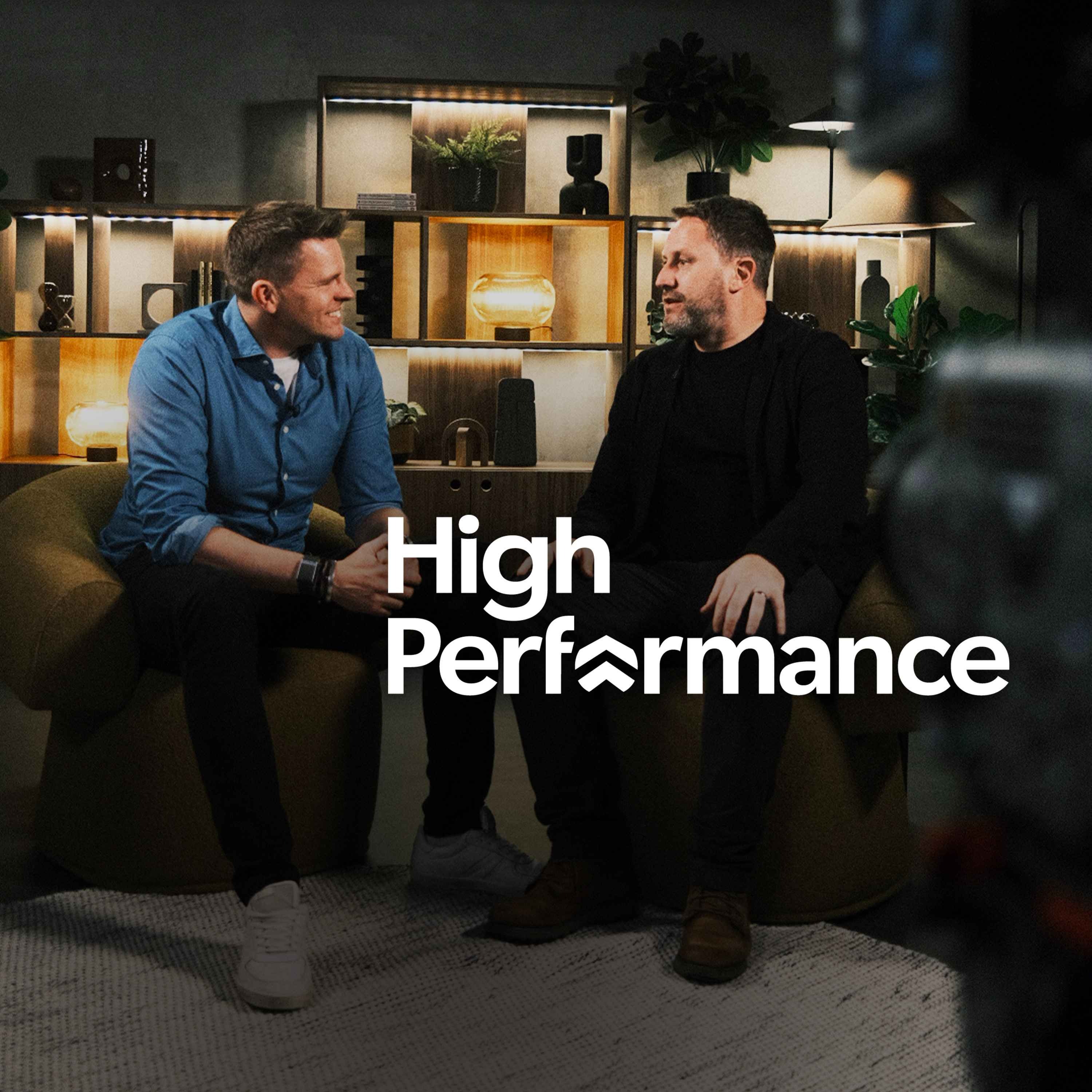
To the show, you're listening to High Performance with myself, Jake Humphrey and Damien Hughes. And this is one of the episodes where Damien and I share some of the sort of the clips really from the back catalog of High Performance that resonate with us. Things that we believe can hold some real lessons for your life. Instead of expecting you to listen to hundreds and hundreds of hours of conversations, we've distilled down some of the greatest moments of the last five years. And today we're actually going to tackle a subject that we know a lot of you struggle about. We see it on our DMs, we get emails about it. We've actually got a question that came in from one of our listeners on Spotify and the topic is all about being nice. Now obviously you can immediately think, well, surely being nice is the most important thing in life. But actually Joseph got in touch on Spotify and said, how do I stop being too nice to people? I suppose before we get going. Damien, I'd like to get your sort of instant reaction, if you like. As someone who has studied so much, lectured so many people about high performance, worked with so many high performing teams, when someone asks you, how do I stop being too nice to people, how does that make you feel instantly?
- [02:39]
Damien Hughes
Well, I think it's a brilliant question because I think, like you say, your instinct is you hear the word nice and assume, well, how can that be a bad thing? But my immediate reaction, though, because the interview we did with Shane Parish, the author of the Farnham street blog, who gave us a great definition that I found really helpful, where he said, make the distinction between being nice and being kind. And the example he offered, if you remember Jake, was when he said, if somebody's got spinach on the teeth, if you're being nice, you don't say anything because you don't want to embarrass them. If you're being kind, you might just say, oh, you might just want to have a look at your teeth there, because that could be distracting for somebody. So I think it's a tightrope in many ways. Being nice is a good thing, of course, but understanding that too much of it can leave its shadow side and can often leave us depleted ourselves, I.
- [03:28]
Jake Humphrey
Think that's the really important thing, actually. And we're going to go into a few clips from the show in a moment. But I think one of the key things right from my perspective is that there is a clear distinction and Shane Parrish was totally right about being nice and being kind. I think too often we use those two words interchangeably. You know, are they nice, Are they kind? But actually, I think being nice is about being polite and agreeable.
- [03:50]
Adam Grant
Right.
- [03:50]
Jake Humphrey
Kindness is so much deeper. Kindness is about a genuine care for people, it's about a concern for others. I think it's a much deeper level of empathy. I think it's about a willingness to act in a way that isn't necessarily the easiest, it isn't necessarily the most kind of immediately pleasant.
- [04:05]
Adam Grant
Right.
- [04:05]
Jake Humphrey
Being kind sometimes leads to some really difficult conversations. Being nice is about avoiding those conversations. And I think one of the other things, which is I would just like to say is that years and years ago, when I first started out working in television, I felt I had to be really nice to everybody. And one of my early bosses pulled me aside and he said, he said, you know, you're really nice to everybody. I said, right. And he goes, there's a problem with that. And I said, how do you mean? He said, how Much shit do you get given to do in a day? And I was at the bottom of the rung, like in television, so I kind of thought that was the way it should be. I said, well, basically my whole day's taken up doing other people's things and then doing my own work later. He goes, right, you've taught people, because you're so nice, you've taught people that you're putting them first, which means you've also taught them that you come second. And I think it was a really interesting moment where I was like, I still want to be a nice guy, but I want to be a kind person rather than a nice person. Does that make sense?
- [05:03]
Damien Hughes
Oh, definitely. And? Well, it actually correlates with some research that was done in the University of Toronto, Jake, a couple of years ago, where they found that people who are being nice are often suppressing their real opinion or their real emotion. And what that often means is that because you're avoiding conflict, you end up suffering burnout and decision paralysis because there's so much suppression taking place. I think there's an important distinction here. You know, they often say that if the oxygen falls in a plane's cockpit, put your own oxygen mask on first before you consider helping somebody else. And I think this idea of treating people kindly, well, it's got to start with treating yourself kindly. And sometimes that involves you saying no, challenging, pushing back, not just being agreeable.
- [05:51]
Jake Humphrey
It also is about authenticity. I think what's the point living a life where you're just saying the things that people want to hear because you're scared of what the truth is. And by the way, if you've come to this episode because you struggle with being nice to people or you feel you get a bit walked over, or you fear those difficult conversations joined the club. But Also, at almost 47 years of age, I know that every single time I've spent days worrying about a difficult conversation, it's never been as hard as I think it's going to be when I finally get round to having that conversation. So should we dive into a clip, Damien?
- [06:20]
Damien Hughes
Yeah, definitely. I think there's a really powerful one that captures exactly what you've just said, Jake. The conversation we had with the money saving expert Martin Lewis. So should we listen to him taking us into a scene in Downing Street's Cabinet Room?
- [06:36]
Martin Lewis
So I sat at an energy summit run by David Cameron when energy prices were going up. If only they were going up where they were then. Now, this is a fraction of what we have today. And one of the bosses of the big energy firms said, prime Minister, we need your help. People don't trust us and therefore we're not getting the information across that we need. And we need your help and we need everybody in this room to help make sure that customers trust their energy firms. And David Cameron nodded and said, yes, yes, absolutely, we need to look at that. And I put my hand up and I was at the end of the room. I wasn't quite as big as I am now, if you know what I mean. I was at the end of the room, put my hand up and I was ignored and I kept my hand up and nothing came on and I kept my hand up. And then eventually he turned to me and he said, yes. And I said, I just want to say, having heard the call on trust, I will do everything I possibly can to ensure that nobody trusts you because you are not trustworthy. The Latest data shows 56% or whatever it was, of people who come to your call centres are given incorrect information. I will not tell people to trust you until you become trustworthy. For me, you cannot market trust. Trust only comes from being trustworthy. It only comes from a track record of doing the right thing, or at least trying to do the right thing. And there is a differentiation between the two.
- [08:17]
Jake Humphrey
I think that's a great way to start this conversation, Damian. Look, as you know, I studied American politics at A level, and there's a quote that I remember hearing, but way back, I mean, I don't want to say how many years it was. It was a lot of years. But the third US President, Thomas Jefferson, is purportedly supposed to have said, honesty is the first chapter in the book of wisdom. And I think that is a really nice quote that really sums up what Martin was saying there, because I think that that kind of sums up the idea that honesty is foundational to trust. Like, if we can't have honest conversations with people, then we're building relationships that are fragile, that can't really be established. They can be undermined very easily. They're just simply unsustainable. I mean, I also studied English at A level, and I think it was William Shakespeare that said, no legacy is so rich as honesty. And I get it, I understand that it's really important to say how we really feel, but what can we. What advice can we offer people listening to this who think, yeah, but I'd still find it so hard to tell my partner, my parent, my colleague how I really feel?
- [09:18]
Damien Hughes
Again, I think a really simple distinction is don't make it personal. Make it professional in any context. So if you challenge somebody on their behavior rather than on them, you know, like I think the idea that when people are late and you go, oh, you're really disrespectful, that's making it personal. When somebody's late and you say, I find the behavior of you showing up late feels disrespectful for me, you're owning the emotion. So therefore you can challenge the behavior without somebody feeling that they've been personally challenged at the other side of it. So I think when you know what your values are and you're really clear about this really matters to me and you, you can communicate that then you allowed to stand for those values and challenge people when they try and transgress them.
- [10:05]
Jake Humphrey
I also think that it's important to remind ourselves, right, that honesty is more than not lying. It's like it's truthful living. So I think what we should be asking ourselves before we have those hard conversations is like, what's the motive? If you want to have a hard conversation with someone because you want to put them down, you want to undermine them, you want to make feel small, you want to make yourself feel big, then even if that conversation is a true conversation, you're going about it with the wrong mindset. The motivation is all wrong. If the motivation is about lifting others, helping others, improving others, improving a business, improving results, then suddenly even those difficult conversations are being had for the right reasons. I mean, can I play a quick clip actually about this? Because I think we both loved having Sara Davies on high performance, the sort of firebrand powerhouse from Dragon's Denver, or that's how she seems on the telly. She came in and spoke to us and was really humble and honest and self deprecating. And she spoke brilliantly, didn't she, about a radical candor about how giving feedback is really important. And actually she thought that she was good at giving feedback until she realized that she was offering people what they call a shit sandwich. The nice stuff and then the nasty stuff, then the nice stuff at the end and it didn't work. So let's hear Sara explain this really well.
- [11:21]
Sara Davies
So are you familiar with the concept of radical candor?
- [11:24]
Damien Hughes
Tell me, Kim Scott.
- [11:26]
Sara Davies
Yes, Kim Scott saw it's, it's a principle I follow in my everyday life and it's all, it's a way of giving feedback, right? And I always think people only ever get better in this world if they are constantly in pursuit of feedback and, you know, constructive criticism to keep improving. And a lot of my senior staff and the other entrepreneurs that I coach. And it's all about giving them feedback to make them better. Now someone once said to me, sara, how do you give feedback? And I said, oh, I'm brilliant at it. Yep, yep. I use the shit sandwich method. But the problem I think I have is I deliver a wafer thin slice of ham in a big fat stotty bread when what was needed was a steak and a pitter, right? And it was a leadership coach, Kirsty, that gave me that and she said, right, we're going to learn to deliver the steak and lose the pitter. And I was like, oh, I don't know about that, you know. And so she explained to me the concept of radical candor. And it's all about when you give feedback, it's about caring humanly, really caring about somebody deeply, but being very direct in what you're doing. And I learned that when you talk to people, if you flower it up, if you put a bit of, you know, if you put the, the pitter around the steak, it's just a load of waffly bs. And people know the stakes coming, they waiting for it, but they're having to fish through all of this other stuff that you're giving them that feels insincere to get to what is the crook of the feedback you're giving me. And the more that you give this fluff, the more insincere you feel and people don't trust you. So I've learned to strip back all of the fluff and all of the insincerity and just show people that I care about them so deeply. And as difficult as it is for me to give them this feedback, I'm doing it so that they can get better and progress in their career, in their job, in their business. And you build up that trust with somebody and you can give them that radical kind of feedback all the time. That is what's changed me from being a successful entrepreneur to a really successful entrepreneur.
- [13:28]
Jake Humphrey
So what we gotta do, Damien, is deliver the stake and sometimes to break down this advice into that kind of simple way of looking at things. I think it's really important, isn't it, just to liver the steak? It's good for the people you're delivering it for, it's better for you. There's no fluff or bouncing around here. And as long as you're doing it for the right reasons, then it's okay to deliver a steak. It might be the best thing that person's ever been given yeah, well, again.
- [13:52]
Damien Hughes
The Kim Scott book, the Radical Candor, talks about different types of feedback we give. And the one that sort of resonated most with me when I read it was the ruin of sympathy. The idea that you constantly seeing things from the other person's point of view. So it means that you pull your punches, whereas the, like you say, the idea of delivering a steak in a pitter rather than the wafer thin slice of ham in a big lump of bread is always better. Because we've spoke about this on the Essential Habits series of when you receive feedback, your instinct is that your brain takes three beats. The first one is you go fuck you to the person that's delivered it. Then you think, oh, that must mean that I'm shit. And then the third beat you get to is you go, okay, what can I do with this? And I think what Saura's talking about there is giving people the information so they can get through the emotional journey they need to. To then be able to take it, use it and apply it.
- [14:49]
Jake Humphrey
And I think one of the things we need to talk about here then, Damien, is not just delivering this information for people. I think it's the ability to. It's the courage to face that truth as well. Because I think if we're going to say just be honest with people, be kind, but be honest with people, then we also have to talk about the fact that as a human being, it takes a lot of cour to face the truth if it comes our way, because it comes with anxiety, it comes with disappointment, it might come with more responsibility. It can often be painful. It means we actually sometimes have to pull our heads out of the sand and do something that maybe we've been avoiding for a long time. We have to accept that we are responsible for dealing with our problems, that we're stuck with our families, we're not stuck on the outside of them, that holding onto grievances or criticism of other people isn't doing us any good. The future isn't predetermined. We're going to make mistakes. We've almost got to bulletproof ourselves in terms of dealing with these kinds of criticisms and truths, don't we?
- [15:45]
Damien Hughes
Yeah, definitely. And if you'll allow me, then, Jake, I think let's move on to another clip for somebody that picks up that very point really well. One of my academic heroes is Adam Grant. He's the organizational psychologist at Wharton University, but is the author of a number of brilliant books, including Rethink. But one of the papers that he wrote that he produced into a book was givers and takers, where he speaks around looking at some people that are disagreeable takers and some people that are disagreeable givers. And it's a Disagreeable givers, he argues, make a real difference in our lives, our communities, and our organizations. Let's listen to him explain what is a disagreeable giver.
- [16:33]
Adam Grant
Coaches and critics are people that I've come to call disagreeable givers. They don't want to rock the boat. They're trying to be, you know, sort of supportive and maintain harmony. And so I found that people who are disagreeable are much less likely to bite their tongues and more likely to tell me the truth, but their motives really matter, too. So when I've studied the differences between givers and takers, a disagreeable taker is going to maybe criticize me for personal gain or, you know, to try to feel smart. A disagreeable giver is going to ask, can I criticize in a way that actually makes you better? And they're, you know, they're challenging you because they care about you and they want to help. And so one of my favorite experiments showed that you could say about 19 words to dramatically increase people's openness to criticism. And those 19 words are roughly, I'm giving you these comments because I have very high expectations, and I'm confident that you're going to reach them. Completely changes the relationship.
- [17:27]
Jake Humphrey
Right?
- [17:27]
Adam Grant
I'm not. I'm not judging you. I'm not attacking you. I'm here to coach you.
- [17:33]
Jake Humphrey
Those 19 words, Damian, are probably the biggest takeaway for people listening to this. I'm giving you this feedback because I have high expectations and I'm confident you can meet them. Now, that's not being particularly nice because you're telling someone that you want more, but it's being kind. That's the whole point of this episode. It's about being kind. And we've heard these conversations many times over. You and I have sat in rooms and interviewed incredible guests about this sort of stuff. But if let's be really honest with our audience, I still think it's something that I struggle with. I actually still think it might be something that you struggle with. Is that fair?
- [18:07]
Damien Hughes
Yeah, it is. But I disagree about what you said about yourself because I'll often ask you, and sometimes it comes unsolicited, for feedback that you offer me. And I find it really, really useful because I know how. I know what a gift it is for somebody to want to give you that I'll share with the listeners. A really simple example where, you know, you'll sometimes talk to me about my body language when we're doing an interview where I might shift in the seat or I'll sort of become more animated when I ask a question and you say, just calm it down a little bit, maybe just ask your question and get out of the way. Now, I know that that comes from a place of you caring and wanting me to be able to do a better job. So I think you're really skilled at it, if I'm honest, Jake, that's really.
- [18:55]
Jake Humphrey
Nice of you to say. So I think if I've learned one thing in this space is that it's that, you know, I know that Sara says you should serve a steak and a pitter. And I think the pitter for me is just to say to someone before we start, listen, before I say this, a bit like Adam Grant. I don't say it as he does, but I do say, look, if I just can say a few things, and this is purely objective and professional, it is not personal. But I think one of the other ways that we can encourage people to be kind with us is also to give them that space. I think a lot of the conversation we've had so far is about how you're giving advice to people, about how you're being kind to people, about how you're being less nice to people. What about how we can make it easier for people to be kind to us? I would honestly say one of the most powerful things you can say to people at home and in the workplace is listening to, if I promise not to be offended, what could I do to be better? I mean, I think one of the things that you should often say to your partner is, you know, what have I done that has frustrated and annoyed you in the last month? And I think if you're asking them to tell you that, it's a lot better than not saying it and then going, can I just tell you something that really annoyed me? Because I think it leads to, like, a criticism and anger. I think once you say to someone, look, this is. This is not going to come back at you. I just want the truth. I want the honesty. I mean, again, I'll reveal something to the audience. About a year ago, we were looking at our audience numbers and weren't happy with them. We were like, why are they not where they were? And I sat in a meeting with some of the team and I said, look, please be totally honest. Could the interviews that me and Damian are doing be better? And straight away One of the team went, yeah. And that was brilliant. Because if no one had said that, we would have looked at the thumbnails and the titles and the set and the studio and the guests and all these other things, and nobody at any point would have gone. Jake and Damian, could you maybe be better at interviewing people? Like, that's so important for us. Because it was probably the golden nugget. Cause there's some amazing interviewers out there, and we need to be as good as them. So I think this idea of removing so much of the baggage that comes with these kinds of conversations for both the receiver of that information and the giver of that information is really important.
- [21:04]
Damien Hughes
Well, do you remember Gordon Ramsay sort of passed that very wisdom onto us, where the one line that I took away from that interview that. That he did with him was this idea of take it professionally and not take it personally. And I think if we can get into that mindset of how do we receive feedback in a way that makes us better, that helps us improve, that immediately gets your own ego out of the way and gets you focusing on how do we take this forward? So there's the research on this, Jake, that there's. A couple of psychologists looked at over 100 years of data on feedback and realized that feedback doesn't actually have that discernible an impact on performance. Feeding forward does. So giving people information that says, this is what I think you can do to get better in the future, rather than, let's go and revisit what you've failed to do in the past is the real distinction here.
- [21:56]
Jake Humphrey
That's so interesting. Should we play one more clip before we wrap up?
- [21:59]
Damien Hughes
Yeah, go on. Who do you suggest?
- [22:01]
Jake Humphrey
I would love to hear from Jameela Jamil, the actress and activist who came on High Performance and spoke to us about this very topic, about this idea of boundaries not being optional. Here she is.
- [22:14]
Jameela Jamil
Like, I remember being asked to be mean to a pop star because it would, you know, generate clicks and, you know, clickbait, et cetera. And he was much shorter than me, and I didn't want to belittle him for his height. I'm five foot ten and a half. I'm already taller than him. That's already considered to be somehow emasculating for some men. I'm not gonna now make fun of his fucking height on the television. And I said no. And my producer threw a chair across the room in rage. And I stuck to my guns, and I felt shaky and I felt weird, but I was like, I'm Just not gonna do it. And it's okay. It's just like little moments. Doesn't make me any kind of fucking hero. It's just little no's. Like, no, you cannot show up late, an hour and a half for me to a mate. No, you cannot treat me this way. No, to family members who have no fucking boundaries, where it's like, blood is thicker than water. Well, it's all right. Well, cum is thicker than blood and poo is thicker than cum. So it's like, we're gonna go down those metrics, we're gonna be in a real mess.
- [23:11]
Jake Humphrey
So that does sound messy.
- [23:12]
Jameela Jamil
Yeah. It's fucking disgusting. It's a disgusting way of measuring that conversation. But anyway, my point being is that I don't believe in that. I don't subscribe to the idea that anything, anything gives you permission to cross over someone else's personal boundaries. Doesn't matter how long you've known them, it doesn't matter how much you've done for them. It doesn't matter how close you are or how related you are, There are boundaries. And I think it's important to extend someone the invitation to meet you at your boundary. But if they continuously cross it, after that, they have to go.
- [23:49]
Damien Hughes
I think the message that we can take away from Jameela there is that you've got to surround yourself with people that do have your best intentions at heart, not people that are just there by default, whether that's through relatives or circumstances. You know, I'll give you an example. I remember once when I wrote my very first book, I gave a copy of the draft to my wife and I said to her, please just give me feedback on it. And we were flying somewhere. So she said, I'll read it on the plane. But she said, don't be bothering me. Don't be looking over my shoulders. Let me read it. And I kept sort of struggling because I could see her looking at it and scribbling notes on the. On the pages I gave her. When we landed, she said to me, I don't quite know how to give you this feedback. And I was like, go on, give it. I'm fine, I'm fine. Just tell me what you think. And she combined a lot of the wisdom of Jameela, Jamil, Adam Grant and the other guests that we've listened to today. When she said, I know what you're capable of and I know what you want to write, and this isn't it.
- [24:50]
Jake Humphrey
Oh, I love that. That was Geraldine.
- [24:53]
Damien Hughes
Yeah, I know what you're capable of, and I know what you want to write, but this isn't it. And what was really interesting was I sort of said I was giving out all the big chat, I can take feedback, and I didn't take it. I was really like, how can you not understand that that's a really easy point, and you fail to miss it. And what she asked me to do, she said, take 24 hours, let's talk about it again, and then let's discuss it when you're karma. And the reality is, 24 hours later, 80% of her observations were spot on. That made me sort of reflect on it. And I think this episode has sort of reminded me of that kind of wisdom, that one, we need to make the distinction between being nice and being kind. And being kind is far more effective. But just as importantly, we need to understand that we have to create an environment where people can be kind to us and give us that feedback in a way that helps us get better rather than helps us see ourselves as a victim.
- [25:48]
Jake Humphrey
And as we wrap up, can I just say to all of you listening to this, if you are doing all you can to try and have these conversations, if you're doing what you can to preface the conversation, if you think that you are going to all the lengths available to you to try and make those hard conversations as palatable as possible for other people and they still don't accept them, they still aren't able to come with you on the journey, then I think you really have to look at the people who are around you, because the people who love you, the people who care for you, the people who want to be on this journey with you, just like Damian and Geraldine, you will be able to do this together. Like, it's not something that just you can solve on your own. I think it's a. It's a duo kind of thing, right? It's something that it needs to happen with lots of friends. Do you not agree, Damo?
- [26:29]
Damien Hughes
Yeah, definitely. And that's Jamila's point in a nutshell, Jake, that you've got to surround yourself with people that lift you up, that want the best for you, not people trying to drag you down and point out your flaws.
- [26:41]
Jake Humphrey
Yeah, absolutely. And finally, a few things that we've spoken about over the last little while to help you, okay, first of all, identify what is important to you. Having hard conversations, although kind conversations, are sometimes challenging, so you have to know why you're having them. Remember to set those difficult boundaries, you know, communicate limits, respectively. As Jameela was just explaining there. Maybe set those boundaries out at the very beginning of a conversation. If the answer is no sometimes, which I know Damian struggles with, understand that saying no is not rejecting someone else, but affirming your own priorities and deciding on your own value. You know, decline requests that simply don't align with your priorities and you don't have to over explain why you sometimes say no. Remember the importance of cultivating that inner validation and that self compassion. You know your worth does not depend on the approval of others. It's important also to challenge your own inner critic by questioning and replacing those negative thoughts with supportive ones. And probably the most important thing when it comes to this conversation about being overly nice is try and detach yourself from other people's opinions. You know you can't control what they think of what you're saying or the decisions that you make, or your actions or your emotions. You can just be your own authentic self. And I promise you, if Damien and I have learned one thing in 400 episodes of high Performance, your value is not determined by how much you do for other people. And sometimes going through these processes is difficult. So maybe learn to embrace the discomfort that might come with changing how you are with other people. Damien, thanks so much.
- [28:14]
Damien Hughes
Thanks mate. I've really enjoyed this. I find it just as illuminating from a personal point of view as I do from sharing these ideas with listeners.
- [28:23]
Jake Humphrey
Same I should be the professor, but there you go. I loved it. Thanks a lot mate.
- [28:29]
Damien Hughes
Thanks mate.
- [28:30]
Jake Humphrey
And if you enjoyed it, please remember to hit follow on Spotify or Apple. You can also send this episode to a friend who might struggle with a similar thing. And Damian, myself and the rest of the team look forward to seeing you soon for another episode of High Performance.
- [29:05]
Sleep Number Advertiser
Why choose a sleep number Smart bed?
- [29:07]
Paige Desorbo
Can I make my sight softer?
- [29:09]
Jake Humphrey
Can I make my sight firmer? Can we sleep cooler?
- [29:12]
Sleep Number Advertiser
Sleep number does that cools up to eight times faster and lets you choose your ideal comfort on either side your sleep number setting Enjoy personalized comfort for better sleep night after night. It's our Black Friday sale Recharge this season with a bundle of cozy soothing comfort. Now only 17.99 for our C2 mattress and base plus free premium delivery price is higher in Alaska and Hawaii. Check it out at a sleep member store or sleepnumber.com today.
- [29:35]
Paige Desorbo
You know Hannah and I love a good bedrotting session. Reality TV snacks nearby and now I've leveled up with my self care game with this shark Beauty Cryoglow, the number one skincare facial device in the U.S. wait.
- [29:48]
Hannah Burner
I'm obsessed with it. I've had it for a while actually and it's the only mask that combines high energy LEDs, infrared and under eye cooling. I really need this because nothing wakes me up in the morning. You could do four treatments in one better aging, skin clearing, skin sustain, and my favorite, the under eye revive with Insta Chill ColdTech. You put it on and it just feels so good under your eyes. Like I actually feel like I got eight hours of sleep.
- [30:12]
Paige Desorbo
It's truly like a luxury spa moment while you're literally horizontal. It's perfect for post workout Sunday scaries or when you just want to glow while rotting.
- [30:21]
Hannah Burner
To treat yourself to the number one LED beauty mask this holiday season, go to sharkninja.com and use promo code Giggly Squad for 10% off your cryoglow. That's sharkninja.com and Use promo code giggly squad for 10% off your cryo glow.
- [30:34]
Paige Desorbo
Hey, I'm Paige Desorbo and I'm always thinking about underwear.
- [30:38]
Hannah Burner
I'm Hannah Burner and I'm also thinking about underwear, but I prefer full coverage. I like to call my granny panties.
- [30:44]
Paige Desorbo
Actually, I never think about underwear. That's the magic of Tommy John.
- [30:48]
Hannah Burner
Same. They're so light and so comfy. And if it's not comfortable, I'm not wearing it.
- [30:52]
Paige Desorbo
And the bras? Soft, supportive and actually breathable.
- [30:56]
Hannah Burner
Yes. Lord knows the girls need to breathe. Also, I need my PJs to breathe and be buttery, soft and stretchy enough for my dramatic tossing and turning at night. That's why I live in my Tommy John pajamas.
- [31:07]
Paige Desorbo
Plus they're so cute because they fit perfectly.
- [31:10]
Hannah Burner
Put yourself on to Tommy John.
- [31:12]
Paige Desorbo
Upgrade your drawer with Tommy John. Save 25% for a limited time at tommyjohn.comfort. see site for details.