← The High Performance Podcast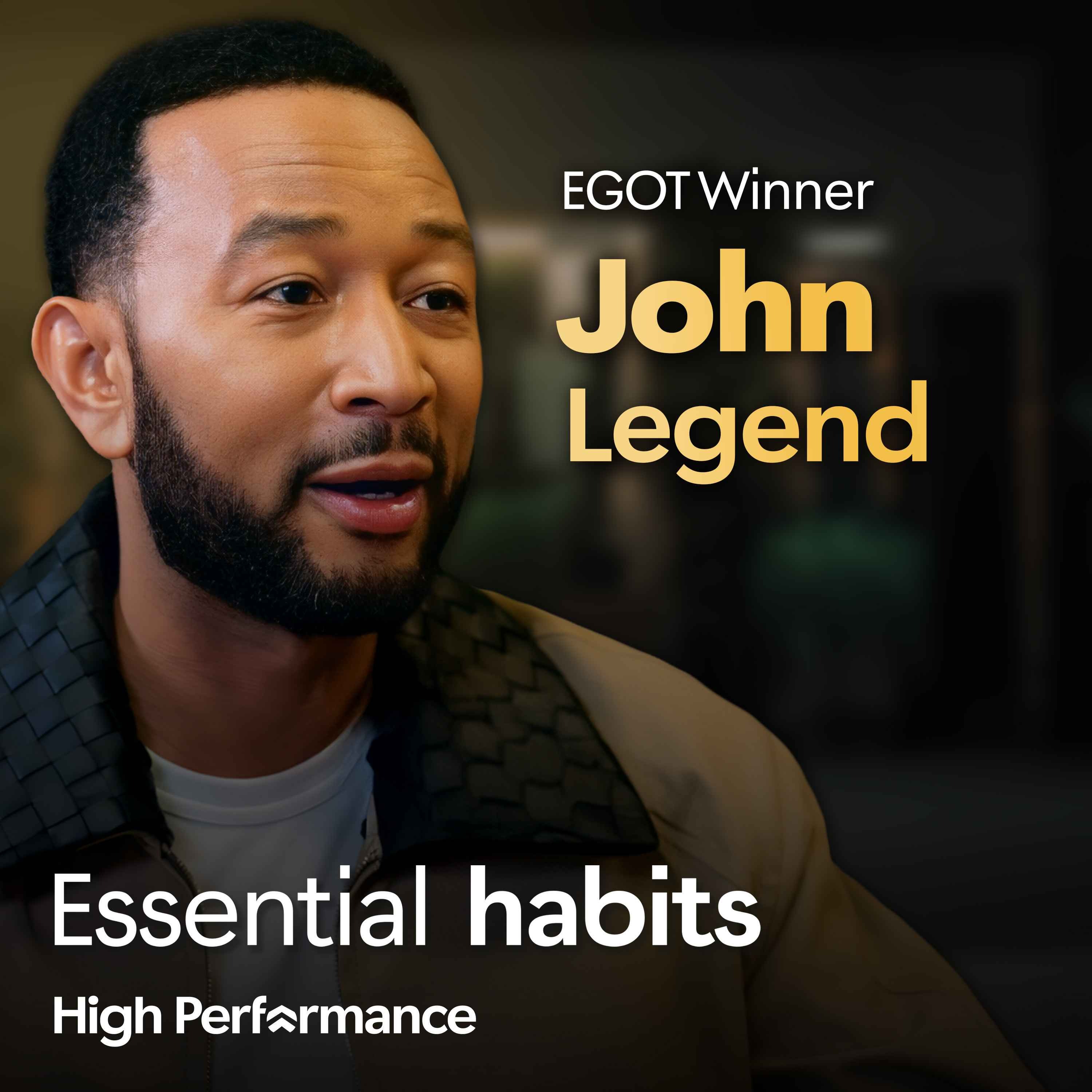
The High Performance Podcast
John Legend: Why He Chose an 'Audacious' Name And How It Changed Him
00:32:40
Loading summary
Transcript69 lines
- [00:00]
Verizon Ad Voice
This holiday, Verizon is helping you bundle up incredible gifts and savings. You'll get the latest phone with a new line on MyPlan and a brand new smartwatch and tablet. No trade in needed even on our lowest price plan. That's two gifts for your family and one for you. Or two for you and one for someone else. Or three gifts for you and only you. Either way, you save big on three amazing gifts at Verizon, all on the best 5G network. Visit Verizon today. Rankings based on RootMetric Truth Score Report dated one each 2025. Your results may vary. Service plan required for watch and tablet. Additional terms apply.
- [00:33]
High Performance Podcast Sponsor/Host
This episode of the High Performance Podcast is brought to you by Scrum alliance and their Agile in Sales Micro Credential. On our show, we often talk about what drives high performance, and adaptability is always at the core of it. The best people and the greatest teams know how to stay focused but also flexible in a world that never stops changing. And that's what Scrum alliance helps you do. Their Agile in Sales Micro Credential teaches you how to make your sales team more agile to respond faster to market changes, optimize pipelines, accelerate, accelerate customer acquisition and drive revenue growth. So whether you're a sales rep, a manager, a leader, this One Day Live course gives you practical tools to thrive in today's fast moving sales environment. You'll learn how to respond quickly to market changes and outpace the competition, lead your sales team to new levels of success, exceed sales targets, and expand market share. The course is six to six and a half hours long and pricing varies by instructor. Find out more@scrumalliance.org Are you a trailblazer? A risk taker? Maybe someone with countless tales of epic adventure? Well, I'm not quite there yet, but I'm working on it. Even the boldest among us started off small, right? Daring themselves to reach greater goals every day. And if you're looking to take on a challenge like that, the Defender is too. Now, I've driven a Defender for a few years. It's the best car I've ever owned. It's a vehicle built for drivers capable of great things, whether they're heading towards uncharted territory or just fancy a weekend getaw. Defender was engineered to meet challenges head on so you can explore with confidence. It's the legendary icon of adventure, reimagined through modern design, fit for a new generation of explorers. My kids love it as much as me. It also has a tough, rigid body, tested to the extreme, a modern functional Interior built for comfort. It's a vehicle that, like you, is capable of great things. And with next gen technology, from 3D surround cameras to clear sight ground view, it will help you embrace the impossible. Explore the full Defender lineup@land roverusa.com.
- [02:34]
Damien Hughes
He.
- [02:34]
John Legend
Just started calling me the Legend, which kind of morphed into John Legend. I didn't want to not take the name because I was afraid of it. I wanted to take that leap, take that risk and say, you know what? I'm betting on myself. I'm betting on my own success.
- [02:54]
Damien Hughes
Welcome to the Essential habits of High performance. This is a place where we explore the daily practices, the mindsets and those teachable moments that shape extraordinary lives and leaders. Today's question is, how does our identity shape our performance? And we're doing it in the company of John Legend. His story isn't just about fame or talent, but it's about the psychology of identity. How naming who you want to be can change how you show up. He didn't just become a legend, he decided to act like one long before the world would ever believe it. And that's our focus today, how adopting a bigger identity can stretch your own standards and change your behaviour. Hey, I'm Damian Hughes and I've worked as a visiting professor of organisation behaviour. I've been a trusted advisor to dozens of elite leaders, including the England football team. But above all, I've immersed myself in this world of high performance for the last 25 years. Because most importantly, I love understanding how it works and how we can all take the lessons from our guests and apply them into our own world.
- [04:07]
So what's in a name? For some, it's a label. But for John Stephens, it ultimately became a destiny. Back in the early 2000s, John Stevens was a 20 something year old session musician in New York. He was writing hooks and playing keyboards anywhere he could, in between working as a management consultant. And then one day something happened. A spoken word artist, a guy called J Ivy, noticed that John Stephens had an old soul voice and his gospel roots were strong. So he created an alter ego for his friend.
- [04:44]
John Legend
He just started calling me the Legend, which kind of morphed into John Legend. And he and Kanye and then a bunch of our friends in our crew started calling me John Legend. And I didn't think of it as a new stage name, I just thought of it as a nickname that they were calling me. But eventually it started to gather enough momentum that I had to make a real decision. Am I going to adopt this as my official stage name or Is it just going to be a nickname among my group of friends?
- [05:16]
Damien Hughes
His internal dialogue, which he shared with me when we spoke, revealed a massive psychological hurdle which he had to overcome.
- [05:24]
John Legend
It sounds pretty presumptuous to call yourself legend.
- [05:27]
Damien Hughes
Yeah.
- [05:30]
John Legend
And at the time, I'm not even signed yet, so I'm like, how are you gonna call yourself legend? You don't even have a record deal yet.
- [05:36]
Damien Hughes
John embraced the name, and in doing so, he embraced something far bigger, almost like a new standard. By stepping into this legend nickname, he set a bar that he would spend the rest of his career trying to live up to.
- [05:52]
John Legend
I said to myself, this name is going to announce my presence. It's going to be a bold statement of, like, intent and aspiration. And once I get their attention, that I'm going to deliver music that's going to justify that attention.
- [06:15]
Damien Hughes
This was identity priming. Now, that's a term that psychologists use for adopting a new identity and then letting that identity raise the bar for your behavior.
- [06:25]
John Legend
I knew it wasn't something I could live up to in one album or two albums. It was something that would have to be justified over a career. And I didn't want to not take the name because I was afraid of it.
- [06:42]
I wanted to take that leap, take that risk, and say, you know what? I'm betting on myself. I'm betting on my own success. I'm betting that this name won't be a punchline and it'll actually be something that will manifest. That's what I set about doing.
- [07:01]
Damien Hughes
The name became a script. Every song, every performance, every new idea had to answer the same question. Is this going to live up to Legend? And it did. Within a few years, John Legend went from playing in small New York clubs to winning 12 Grammys, an Oscar, an Emmy, and a Tony. He's one of just a few artists to achieve egot status. The name he once feared might be treated like a joke instead became a promise which he spent his whole life keeping.
- [07:36]
So why are we learning this? Well, let's dig into the research on identity priming. Back in 2007, a Stanford professor called Nick Yee asked a simple but I think a really probing question. What happens when you step into a new identity? To test it, he turned to what was then cutting edge technology, virtual reality. So imagine slipping on a headset, and in the blink of an eye, you are no longer you. You're looking out at the world through a new face and a new body. This is where it gets interesting, right? For some participants, Yee created Avatars that were tall, confident, and conventionally attractive. For other participants, he dialled the settings down a little bit. Their characters were shorter, less striking, and even a little bit awkward looking. Then he let them loose. And here's where it gets really fascinating, right? The changes didn't just happen inside the game. They started to spill out into real life. The people inhabiting the taller, more attractive avatars tended to stand straighter. They spoke with more assertiveness, they negotiated harder, and they did it even when the headset was eventually taken off. Whereas those that were given shorter, less conventionally attractive avatars, they behaved in the opposite way. They were more hesitant, they were less bold, and they were more likely to back down in the face of a disagreement. Now, Yi called this the Proteus effect, named after the Greek God who could shapeshift. And his conclusion was that the identities, which we assume even temporarily or even symbolically begin to shape how we act. When you think about it, you probably felt the same effect yourself. You put on a perfectly tailored suit and suddenly you walk into a meeting with a little bit more poise. Or you buy yourself a new pair of running shoes and your brain says, I'm an athlete now. Even before you've broken a sweat, hand a kid a Batman cape. And then watch how they transform. Get the shoulders back, the chest out, and they're suddenly braver than they were five minutes ago. That's exactly what John Stephens did when he accepted the name legend. He was stepping into an identity larger than his current reality. He didn't yet have the Grammys, the platinum records, or performing his sell out global tours. But the moment he took on the name, he created like a new avatar for himself, One that demanded he perform at a higher standard. And slowly, his behavior began to align with that. He started working longer nights in the studio. The boldness of his lyrics started to come out, and the ambition in his sound was evident to anyone who heard him. It wasn't that the world suddenly saw him differently. The important point here is he saw himself differently. Because once you put on the legend jersey, you can't just turn up like you're a newbie. Once you've stepped into that avatar, you can't start acting and behaving small time. The name was almost like a mirror. And John had to grow tall enough to meet his own reflection. That's the hidden strength of an audacious name. It doesn't let you settle. It creates a moving target where each performance is another chance to close that gap between who you are and who you really want to be. Maybe that's the point. The greatest performers don't pick names to describe their reality. They pick names that stretch it. This principle doesn't just apply to a world famous artist like John. It shows up in children as young as four. I love this experiment where psychologists designed a deceptively simple study. Picture this right, A group of kids sitting at computers and they're all being given a dull, repetitive task to do. Think. Like clicking shapes on a screen over and over again. Something boring enough that even adults had struggled to keep at it. But there was a brilliant catch in it. At any moment, the kids could stop and go and play a colorful, tempting game on a tablet in the corner. It was like the marshmallow test for the digital age. The researchers split the kids into three groups. The first group were told to ask themselves at regular intervals, am I working hard? The second group had to use their own name, so they'd go, is Damien working hard? And then the final group got the most fun assignment of all. They were invited to role play as if they were their favorite hero. So it might be Batman, Dora the Explorer or Bob the Builder. They even got props to match up with it. So it might be a cape, a backpack or a plastic hard hat. And they had to ask themselves the question, is Batman working hard? Now, the results from this exercise were remarkable. The first group, the ones stuck in the eye perspective, tended to give up the boring task quickest. The second group, those speaking to themselves in the third person, they lasted a little bit longer. But the Batman kids were unstoppable. They tended to work the longest, hardest, and stick at it most persistently. Why? Well, it seems that the moment they slipped into that costume, the task stopped being about a bored four year old and it became about Batman. And we all know Batman doesn't quit. The researchers called it the Batman effect. When you step outside yourself and into a larger Persona, your behaviour begins to align with that Persona's qualities. And once you see it, I promise you, you'll start to spot it everywhere. It's like when a child puts on a firefighter's helmet and suddenly they stand a bit taller and braver. Or a student starts calling themselves the scientist. And they then approach an experiment they've got to do at school with a little bit more curiosity. Even adults feel it. Think about how different you carry yourself if you were wearing your gym kit versus when you snuggled up in your pyjamas. For children, the Persona was Batman or Dora. But for Jon, it was legend. By claiming the name he created his own version of the Batman effect. He wasn't John Stevens anymore. He's now stepped into a role, an alter ego that demands more of him. More creativity, more daring and more ambition. John's decision to live up to this new identity might sound a little bit unusual, granted, but history is full of similar stories, moments where assuming a new name, a new Persona, or even a new alter ego doesn't just decorate a career, but has the potential to transform it. Take Cassius Clay in 1964, fresh from shocking the world by beating Sonny Liston. The very next day, he announced that he'd no longer be known by what he called his slave name. From that day forward, he became Muhammad Ali. That change wasn't just political. It was poetic, rhythmic, unforgettable. The name itself embodied boldness and destiny. And as Ali himself once put it, I don't have to be what you want me to be. I'm free to be who I want to be. His name became the manifesto and his performances rose to match it. But it's not artists and athletes. It's the business world is full of leaders who crafted identities to stretch themselves and their organisations. Steve Jobs built that whole identity of the visionary rebel. Close your eyes and I'm sure you can picture him in his black turtleneck. The stagecraft of unveiling a new product, the language of thinking different. That wasn't just marketing, it was Jobs himself, casting himself as an outsider who could reshape entire industries. And once that identity was claimed, well, seems like every product, every keynote speech you give, had to live up to it. Howard Schultz, the longtime CEO of Starbucks, has often described himself as the chief storyteller of that operation. That wasn't his job title, it was an identity that he chose. So it meant that every decision, from the smell of the coffee to the layout of the stores, well, it had to serve a larger story that he was trying to tell about connection and community.
- [15:49]
Each case seems to underline the same truth. Here, a new identity isn't cosmetic, but it can be catalytic. It can change how you think, how you carry yourself and how you're going to perform. When you come under pressure, it raises the standards of what's acceptable, what's possible and what is even demanded. And once that new identity has been chosen, for many of us, there's no going back. Muhammad Ali had to box like a man worthy of the name. Steve Jobs had to innovate like the visionary he'd projected to the world. That's the hidden power of an identity shift. It doesn't just describe you, it almost dares you.
- [16:31]
So how do we harness the principle in our own lives? Though you might never take on a global stage name, but you can still use identity as a leverage to enhance your performance. And here's three quick ways. One, choose an aspirational identity. So if you're feeling nervous before a negotiation, step in and call yourself the negotiator. If you're facing an exam, tell yourself, I am the scholar. If you've got a leader team through a crisis, you're the stabilizer. Have a bit of fun with this. The second idea is use identity language. Now, research shows us that shifting from I'm going to try to quit smoking to I am a non smoker, it doubles your chances of success because identity language creates a commitment. And the third idea is maybe adopt a few rituals that can reinforce it. Think about Rafa Nadal tugging his shirt and Serena Williams bouncing that ball. These are little small cues that can anchor you in a chosen identity. So you might have a phrase, a gesture or a piece of clothing that reminds you of who you are and who you're choosing to be.
- [17:43]
As always, I'm going to be joined by our brilliant producer here, Wil, and we're going to go back and have a listen to some of the other great lessons which John shared with us. These include how writing an essay at 15 predicted the course of his life, how music was a way to find common ground and find his own tribe of people when he first joined university, and why the work in the shadows that took place in New York City was essential to his eventual stratospheric success.
- [18:15]
We've just announced the latest book from High Performance Microhabits, which study the tiny changes that supercharge High Performance. Before the book's full release in January. We've got a really special opportunity for our listeners to win a behind the scenes experience here at High Performance on an upcoming record day. All you've got to do is submit your proof of pre order purchase of microhabits and submit it via the link in the description. If you do that, you'll also get an extra 20% off the price of the book too. Try it. We hope to see you joining us here in the studio soon.
- [18:52]
Wil (Producer)
I wasn't here for this one with John, but you know what? I didn't know until he recorded it.
- [18:58]
Damien Hughes
Go on.
- [18:59]
Wil (Producer)
Because I was away. I didn't know that wasn't his last name. Did you not?
- [19:05]
I know that sounds crazy. And now I think about, I'm like, why? How Did I not know that? I didn't. Didn't know what his name was.
- [19:12]
Damien Hughes
Well, nominative determinism is real in there. There's a guy who's the head of the Chelsea Flower show called Keith Weed.
- [19:20]
That's true. Look it up. So John Legend christened that and then he was always going to have to live up to it.
- [19:27]
Wil (Producer)
Have to live up to it. Yeah, I didn't know that. What was. What was your impression of him when. When you met him?
- [19:33]
Damien Hughes
Really quite a delicate, fragile man, if that made sense. He came in and, like a huge personality, but quite slight, you know, and he was sort of very gentle. So I enjoyed talking to him about. He's a father of a couple of kids. And we sat down and we chatted about how I said to him, do you still get phone calls, like, before you go on stage, off the kids, asking for, like, help with homework and things like that? And he. Yep, right up till the moment I go on there, I'll be getting phone calls to say, oh, can you just help me with this maths problem? And it made him really human. I really warmed to that.
- [20:09]
Wil (Producer)
Yeah, I like stories like that. When it humanizes people. He did. He. He seemed to have, like. Well, obviously, famously in his songs, he's got such a kind of smooth voice and it's just like, soulful and it's just kind of. Just calming. But even when he talks in Interview, he's quite. Quite quiet, quite slow, quite a thoughtful person. And that came through when, you know, when we started cutting it together.
- [20:33]
Damien Hughes
Yeah. And I enjoyed. But I enjoyed that because I find that sometimes things can be quite frenetic, you know, when you record and you're trying to get him in the room and we try to make sure that the cameras are working on, the sound is on, and it can feel like a bit of a blizzard of activities. And yet he was just operating at his own pace. We'll go when we're ready. This is fine. And I found that the sort of the emotional contagion of that and I found myself slowing down and relaxing.
- [21:00]
Wil (Producer)
You kind of mirror it, don't you? Slightly, yeah, definitely. For someone who's quite. Feels quite introverted when you talk to him, he's has this past that's actually, you know, he's done a few things to really lay some intent. I mean, obviously the biggest. But later on being. Changing his name, but, you know, actually he set down his marker quite early on of who he wanted to be and what he wanted to do.
- [21:25]
Damien Hughes
Oh, like his backstory was incredible. When I was doing the research before it, I knew, like, his hit songs, but I knew very little about, you know, the trauma he'd gone through of his mother leaving the family home, the fact that his father raised him and his siblings. And he almost poured the trauma of that experience into his music, like, just started to make perfect sense. But it was the bit when I found an old competition that he'd won for McDonald's, and it was associated with sort of Black History Month, where when he was 15, he wrote a piece about what he was going to do with his life. And most of it, when I asked him, I said, are you happy with how this has turned out? And he went, well, most of it happened, yeah.
- [22:17]
Wil (Producer)
Which is pretty unusual.
- [22:18]
Damien Hughes
Yeah. So it reminded me of. There's a psychologist called Hal Hirschfeld that talks about this idea of how you can almost write your future into reality if you really believe it, if you really feel and you can identify with what you're writing. And I think what he was talking about of being a spokesperson or like a great representative of African American young men, you know, he wanted to sort of make his mark in the world of music. He wanted to inspire the next generation. Let's listen to him explain it.
- [22:49]
John Legend
It says, John Stevens's essay, How I Plan to make an impact on Black History. And this was for a competition called Future Black History Makers. And in the US we have Black History Month in February. The question was, how do you plan to make black history? And I said, in an ever changing society, black America is in dire need of effective leadership that will be an enabling force in the struggle for advancement. Our predecessors used successful tactics in gaining equality through written law. However, the problems of the African American extend much deeper than those which can be solved through legislation. A new generation requires a modified approach to success. I feel that I possess a concern for my people and exemplary character and God given talents which will enable me to be a strong leader and an advocate for the African American people. And then, you know, throughout the rest.
- [23:41]
Damien Hughes
15.
- [23:41]
John Legend
Yeah, I wrote this when I was 15. And then in the rest of the essay, I talked about how I plan to be a successful musician and use that success to.
- [23:53]
Have this platform to speak out about things I cared about. Naming it at that age helped give me a sense of purpose and direction. Probably. You know, they say you speak things into existence, but I think naming it in advance gives you something to work toward. And I think I named it here and started to work toward it.
- [24:18]
Wil (Producer)
There's a few people who we've spoken to who might have done something similar. That kind of idea, the one that springs to mind, actually, I'm actually not sure. It was in our interview. Like, it's like someone like Tom Daly, I literally draw in the picture writing down that I'm, you know, I'm gonna be Olympic champion. And he was, you know, only started very young anyway, didn't he? But that's almost single focus, single mindedness. How do you think that? I guess that kind of neuroscience or that psychology of writing goals down helps.
- [24:49]
Damien Hughes
Yeah, well, the evidence says that you need to write it in sort of three levels. You first of all, the easiest level to get into is what John's doing there of like going to outcome goals, describing what the whole experience is going to feel like, what the experience is going to look like, how, what the emotions are attached to it. I remember another example was when we spoke to Dame Kelly Holmes on the podcast she shared with us like a page that she'd written 1 January 2004 where she spoke about her this is a year where my purpose becomes a reality. And you know, she went on to win double gold at the Athens Olympics that year. So you start with the outcome because that gives you the emotional investment to then want to get into the actions, the daily habits that you do that can make your outcome a reality. And I think that's what John's doing. He's describing what his world would look like, which is very different from the world that he was living in when he sat down and penned it.
- [25:50]
Wil (Producer)
I think there's almost, especially in those creative worlds and creative industries where, you know, the markers of success are slightly more, you know, opinionated than a time a medal, a goal or whatever it might be is for a sports person. But there's still that kind of element of trauma, of creating triumph. Yeah, still, you know what I mean? It's almost like coming from having so many issues and problems in your childhood can actually be a strong marker for some to go on and achieve. Whereas the comfortableness which you want to give everyone, especially your kids, sometimes doesn't provide that. And we've had many people who've gone on to be high performers in any kind of sport industry who have actually come from some element of trauma in their past, haven't we?
- [26:40]
Damien Hughes
It's a really good point you make, Will. I think that lends us to the second clip that we'll listen to in a minute where when his mother leaves the family home and you know, they've been, as John describes it in the Wider interview, like quite a tight family unit, Very dedicated to life in the church where and academia. And his father basically says to him, I want you to channel all that anger, that energy and that grief into two aspects of your life. I want you to dedicate yourself to music and dedicate yourself to studies. Now, those two things eventually lead him to go to university two years early, because he's sort of excelled in his academic studies. But he describes how emotionally he was still immature and he was a lot younger than his peer group. But the second thing, that he channeled his energy into the music, then gave him a way in to belong, to find his own tribe. Let's listen to him explain how music was his way in to belong him.
- [27:39]
John Legend
I always say music was my icebreaker. It was my way of making friends because I was in an acapella group and found ways to collaborate with other musicians. As a shy kid, as a younger kid, as a kid from a small town.
- [27:57]
As a racial minority, there were all these reasons why I would feel like an outsider. Like, you know, I didn't completely fit in. And I think music was always the thing that made me feel like I could strike up a conversation with anyone. Once they heard me sing, once they saw what I was passionate about, it just made it easier for me to relate to them on every level.
- [28:23]
Wil (Producer)
Yeah. Is that music is kind of social currency. Right. The idea that, you know, you find it's something you can all latch onto and that's where you can find your place. Where he didn't feel comfortable.
- [28:35]
Damien Hughes
Yeah. And music allowed him to almost articulate the emotions that he was incapable of doing. Whether that was the trauma, whether it was immaturity, whether it was just shyness, whatever it was. When he said, you know, people could hear me sing, and then he was writing his own music as well, he suddenly starts to find common ground. Rather than what divides us, you find the stuff that unites us. And I think there's something there for all of us and made me reflect on it, about how we often do this in our own way. It might be our football teams, it might be where we grew up, it might be people we have in common. We're constantly looking for the ground where we can meet each other in the middle on. And I think for John, you know, the wisdom that his dad gave him of focus on your studies and then focus on your music eventually became his saviour.
- [29:25]
Wil (Producer)
That passion is kind of universal. So people don't just respond to, like, competence. They respond when people have a genuine love of something yeah, of course it is.
- [29:36]
Damien Hughes
He's not playing at it. This matter to him, you know, the. The soulful nature of his. Of his voice isn't something that you can make up or you can sort of pretend is it's there. And, you know, that goes back to when he said to us as a young boy in church, you know, his grandma, who was a seminal influence, sort of get. Makes him get up and sing. And that being comfortable with the discomfort of making yourself vulnerable ends up becoming, you know, the voice that penned all of Me and all the other hits that he's synonymous with.
- [30:12]
Wil (Producer)
What's the last one we should listen to, mate?
- [30:14]
Damien Hughes
You know, anyone that listens to Essential Habits or high performance in general understands the work in the shadows is where real high performance exists. And John's own story of the work in the shadows, he leaves uni, gets a job working for Bain Management Consultancy Group. And he explains to us he could have gone anywhere in the world, and he asked them send me to New York. And the reason he does that is because he's got his plan of leading a double life in the evenings. Let's listen to him explain it.
- [30:43]
John Legend
It was a double life. I graduated in 1999, and my first job was at the Boston Consulting Group. And they do, like, strategic management consulting, and they have offices all around the world, including here in London. And my first year I worked in the Boston office, and then I transferred to New York, and my dream was to make music. So I was trying to find a way to get to New York, and so I asked them to transfer me to New York. And being there made it so that I could moonlight more effectively. So I was making PowerPoint slides and Excel spreadsheets by day and then going to the studio and writing and making music or playing little gigs around town at night. And I met a lot of different collaborators musically during that time, and I was able to make it work with very little sleep, but I was able to make it work, but I really was doing both things at once, and it was hard. People ask me, you know, about my schedule now, and I'm like, it was way harder back then. I feel much more in control of my schedule now, much more able to manage it, even with kids, even with, you know, the success we've experienced.
- [31:59]
Wil (Producer)
That very visual idea of John making PowerPoint slides and Excel sheets by day and then music by night, kind of with very little sleep. That hustle and that. That struggle made everything he does now, he said, as he said, is that that makes my life now. So Much more easier having gone through that.
- [32:21]
Damien Hughes
I remember listening to the guys that do, you know, innocent. The fruiting.
- [32:25]
Wil (Producer)
Yeah.
- [32:25]
Damien Hughes
These guys that originally created that. They used to talk about the EastEnders test when they recruited people. And the EastEnders test was that.
- [32:34]
Wil (Producer)
I'm already fascinated by this.
- [32:35]
Damien Hughes
Well, they say if you know what's happening and EastEnders, you're probably not the person to come and work for us. Because they were looking for the people that weren't watching telly at half past seven on a weekday night. They were the ones that were out there pursuing a passion, doing something that was of interest rather than just passively absorbing a television show. And I think if you'd have asked John Stevens, as he was then, what's going on in the news at this moment in time, or what's happening on this TV show, I'm fairly confident he wouldn't have had a clue, because he's working hard during the day, but then in his evening, he's got his craft that he's finding a place to go and hone it and learn it and meet and associate with. Yeah, imagine that in that little area of New York that he's operating in, he's meeting Kanye west, he's working with Jay Z. He's got J Ivey, the beat poet. You've got all these creative talents that are all meeting up in the evening, and he's managing to go and find them and plug in.
- [33:35]
Wil (Producer)
But he's got that belief that he's gonna make it. For some reason, it reminds me, remember, you ever seen Good Will Hunting?
- [33:40]
Damien Hughes
Yeah, yeah.
- [33:41]
Wil (Producer)
You know, and he takes the job as a janitor, so he's like, well, why did you. Of all the schools you could go to closer to you, why did you pick the one that's like an hour away? This happens to be the most prestigious mathematical college. You know what I mean? When he was talking to Robin Williams. Cause, like. Yeah, does that.
- [33:58]
Damien Hughes
I think he's called Jim Rohn. He's like an old motivational speaker that has that line that, you know, you are the sum of the five people you spend most of your time with. And there's plenty of science that validates that. Hanging around with people that are aspiring for more than what you are, or they've got standards that maybe are higher than what you're currently operating and eventually does start to rub off on you. And I think that's the bit that I wanted to share on John's story, that he chose to go to New York. He chose to go and seek out people that had a similar passion for music, and then he chose to take on the name Legend that he spent a lifetime striving to live up to. The question I'd encourage you to ask yourself this week is what identity are you stepping into? Hey, thank you for listening to this episode of the Essential Habits of High Performance. If this is an episode that's resonated with you, why not consider sharing it with someone that you work with, you live, or someone you love? My name's Damien Hughes. Thanks for joining us. I look forward to catching up with you again soon.
- [35:14]
Verizon Ad Voice
This holiday, Verizon is helping you bundle up incredible gifts and savings. You'll get the latest phone with a new line on MyPlan and a brand new smartwatch and tablet. No trade in needed even on our lowest price plan. That's two gifts for your family and one for you. Or two for you and one for someone else or three gifts for you and only you. Either way, you save big on three amazing gifts at Verizon, all on the best 5G network. Visit Verizon today. Rankings based on RootMetric Truth Score Report dated 2020 25. Your results may vary. Service plan required for watch and tablet. Additional terms apply. Holidays bring feasting, fluffy dinner rolls, tasty stuffing and your family's French toast bakes with Herobred. Indulge in your holiday favorites made with herobread, sliced bread, loaves, bagels, croissants, buttermilk biscuits and more. And don't forget their Hero Hawaiian rolls. With 4 grams of protein and 0 grams net carbs. HeroBread has you covered with 0 to 5 grams net carb and high fiber options so your holidays stay delicious and balanced like their 3 grams net carb pain au chocolat. Herobread is offering 10% off your order. Go to Hero Co and use code fall25 at checkout. That's fall25 at HERO CO. All figures are per serving of HeroBread contains up to 17 grams fat per serving. See the product nutrition panels on Hero Co. For more information. Call is from a correctional facility and is subject to monitoring and recording.
- [36:33]
Damien Hughes
In 2022, I started talking to the men and women inside America's toughest prisons.
- [36:37]
Verizon Ad Voice
I got life in 104.
- [36:39]
Damien Hughes
Hearing stories of guilt, innocence and everything in between, he said. You're the youngest kid in my prison ever be in one of my prisons, he said. I want you to fight.
- [36:46]
John Legend
From death row cells to wrongful convictions.
- [36:48]
Damien Hughes
These are the voices if you never heard, what was your first thing that you were planning on doing? Escaping. That was the first plan. 1 min remaining stories from the inmates. Wherever you get your podcast from.