← The High Performance Podcast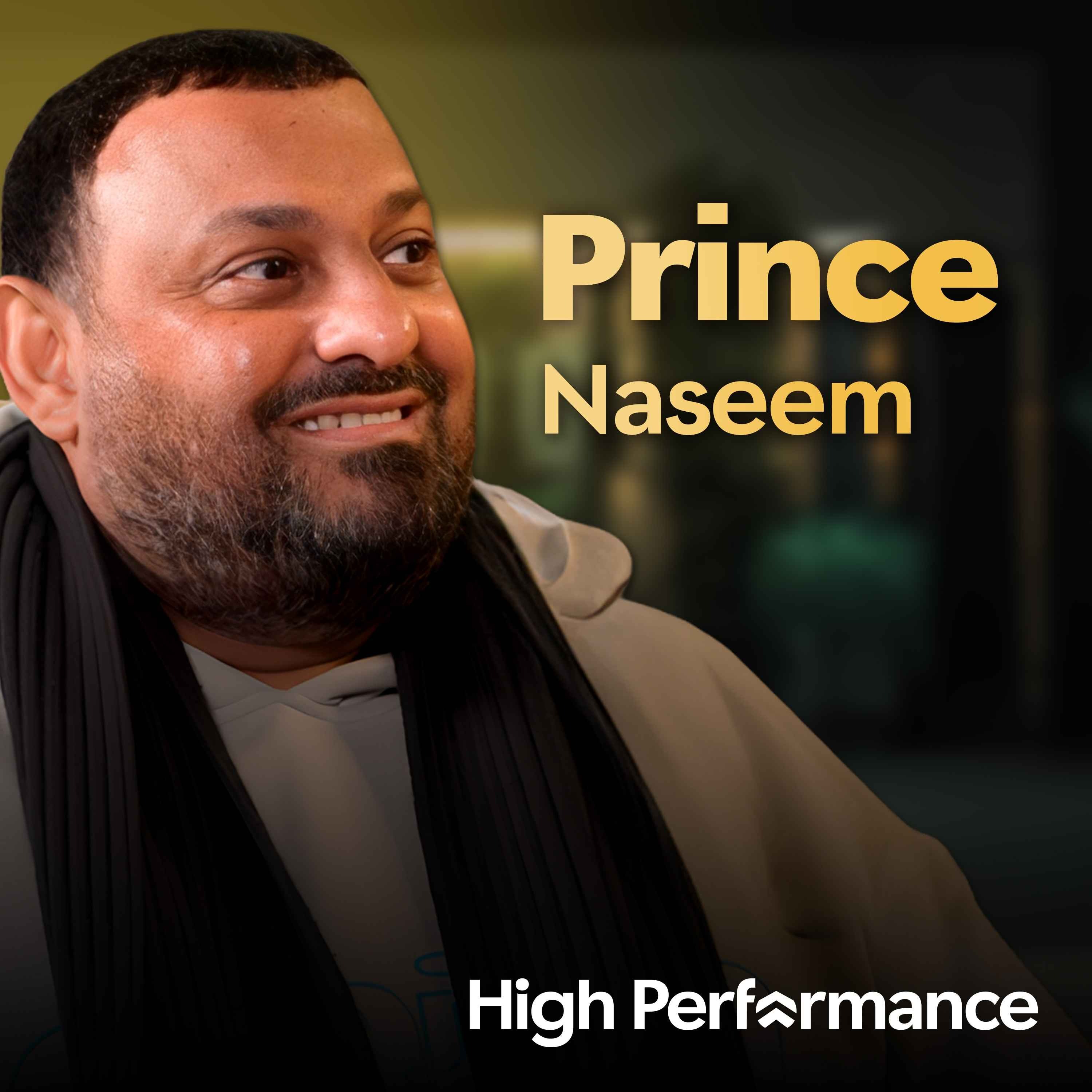
The High Performance Podcast
Prince Naseem Hamed: Boxing's Greatest Entertainer Who Broke Every Rule (E386)
01:03:36
Loading summary
Transcript171 lines
- [00:02]
Prince Naseem Hamed
I wasn't a public enemy. I was a public Yemeni. Made in Sheffield. I ripped up the whole script of how to box. I would have loved to win an Olympic medal. I think it's so iconic. I was done earning cups and medals. I want a dough. A pulverizing shot. A shot that comes from nowhere is the shot that they don't see. The shot that switches off the lights completely. By the way, I've never experienced that.
- [00:31]
Podcast Host (possibly Damien or Jake)
You're listening to High Performance. Thanks to everyone who's already subscribed. If you've not, right now is the time because you'll get new episodes the moment they drop. And your support helps us bring more world class guests onto the show. Tap. Subscribe right now and keep growing with High Performance. Nats. Welcome to High Performance.
- [00:53]
Prince Naseem Hamed
High Performance. What a. What a name. I love that. That's me all the way.
- [00:58]
Podcast Host (possibly Damien or Jake)
What do you think of when I say Prince Nassim? High Performance.
- [01:01]
Prince Naseem Hamed
Love it. That's the truth, baby. I like it.
- [01:05]
Podcast Host (possibly Damien or Jake)
And are you High Performance or is Prince High Performance?
- [01:08]
Prince Naseem Hamed
I would say I used to be. Now I'm top billing. I'm chilling. But I'm going to be coming back into the public domain in a big way now because it's time. And when they start making films about you, you've got to start. Wait, you've got to wake up then. And you gotta tell the real story too.
- [01:29]
Podcast Host (possibly Damien or Jake)
You weren't just a boxer though. You were a showman. For me anyway, having been born in 1978 and growing up watching you, you were the first showman I ever saw, really, as a boxer. When did you realize that people wanted more than a boxer in this world? They wanted a showman?
- [01:44]
Prince Naseem Hamed
Well, it wasn't really when I realized it was just what I wanted to do. It was I wanted to be different. It wasn't realizing, oh, we need this inboxing now. It was the fact that I wanted to put my stamp on the sport. I wanted people to know that there's somebody that's come that's completely different, that's done it in a totally different way. Not a conventional way at all. Nothing. Everything about me throughout my whole career was different. Hence, even training. Sometimes at 2 and 3 in the morning, getting up, the whole of training camp, everybody that's with me, get up. We're training. What do you mean? We're in bed with. No, we're gonna train now. What, at 2 in the morning? Yeah, I want to train now.
- [02:34]
Podcast Host (possibly Damien or Jake)
Was there a harder working boxer than you when you were at your peak?
- [02:37]
Prince Naseem Hamed
Oh, there'd be many probably, but I know I put that time in, but it wasn't even putting the time in. In big major world title fights. I put my timing in the 11 year before I even turned pro. That's why when I started at the age of seven, well, you can take yourself and advance to 11 years old before you could have your first fight as an amateur. Kids, that was becoming an amateur boxer at the age of 11 and just starting fighting and training then I, I was four years in advance. I was four years before them. So I was always in front. But what made me more in front is having this natural ability to know where they was going to be before they were there, to be able to see some things that people couldn't see. The eyes are an amazing thing in boxing, but there was times where I could look at the feet and know exactly where the chin is and take guys out while I was looking at the feet. No, I'm not lying to you.
- [03:49]
Podcast Host (possibly Damien or Jake)
I remember seeing you deliver knockout punches from like the most ridiculous angles.
- [03:53]
Prince Naseem Hamed
That's what, that's.
- [03:54]
Podcast Host (possibly Damien or Jake)
You would move out the way of a punch and you'd almost have your back arched and then bang from there.
- [03:59]
Prince Naseem Hamed
So what, what is that? That's going backwards, right? It wasn't just. Normally fighters knock people out going forward, but I was knocking guys out going backwards, sidewards, different angles, and that was the whole thing. How could you train? For me, it was hard for you to get a sparring partner to try and mimic that style. And that's why it was really, really hard to get a fighter to play me in a movie.
- [04:30]
Podcast Host (possibly Damien or Jake)
And why were your punches so devastating?
- [04:34]
Prince Naseem Hamed
Timing is a huge thing in boxing. If your timing is so precise, but you punch hard regardless. There was a natural within strength, a power that was from within, within a belief too, that whoever I hit properly would get knocked out. I honestly thought that. And I had this. It was like a secret weapon. It never went from me. When it really started is when I was 16 years of age and I had. We had a heavy, heavy bag in the gym and we used to call it, you're doing your blows and you'd have to hold these little dumbbells in weights and you'd have to do a sequence of punches for at least about 46 minutes. And once you've got your hands up and you deliver the punches and you're going back and forth all the time, you'd have to keep your hands up. And after a period of time, because of these dumbbells, they're not huge in weight, but they may be £2 and a half a kilo, whatever. But when you're holding them up and you're delivering knockout punches and you have to bring them back to your chest every time you throw them. That brought me to a stage after six months of doing that devastating power. So anybody that I hit, plus once you put down these dumbbells and you just put the lightest gloves on of 8oz gloves, of course it was going to be destruction and destroy.
- [06:27]
Podcast Host (possibly Damien or Jake)
What about the timing element? What does the perfect timing to knock someone out look like?
- [06:32]
Prince Naseem Hamed
Well, that is it. Listen, the most perfect time for anybody to get knocked out with any kind of shot that's a pulverizing shot, a shot that comes from nowhere is the shot that they don't see. The shot that switches off the lights completely and it's dark, by the way. I've never experienced that.
- [06:57]
Podcast Co-host or Interviewer (possibly Bobby)
But what you're describing, like you gotta laugh at that.
- [07:01]
Prince Naseem Hamed
Come on.
- [07:01]
Podcast Co-host or Interviewer (possibly Bobby)
No, well, no, he didn't.
- [07:02]
Prince Naseem Hamed
But what you described a few.
- [07:05]
Podcast Co-host or Interviewer (possibly Bobby)
But what you're describing is that you were breaking the rules. But to break the rules of boxing, you've got to know what the rules are in the first place. So what was it that you did that was probably distinguished you that made you the most unconventional fighter of your generation?
- [07:21]
Prince Naseem Hamed
My movement. My movement was. It was first, it was never the same. But let me take you back on something that you've just said. What do you mean about breaking the rules?
- [07:35]
Podcast Co-host or Interviewer (possibly Bobby)
Well, you were talking about fighting backwards, knocking somebody out backwards.
- [07:39]
Prince Naseem Hamed
But that's not breaking the rules. But I know what you're meaning. Regards. I ripped up the whole script of how to box. I couldn't even put a manual together of what I did. You couldn't actually teach what I was doing. You can try and describe it and show a bit of a feel to it and show it as a visual what it looks like. But it was, it was so different. And what made it different is that that movement. Like when you watch Manny Pacquiao, he does it well. He is fast on his feet. He's in and out. It made him so it's so effective when you see a fighter that's jumping from place to place. The hardest fighter to pin down is a fighter that's on a complete. His head is a moving target. It's just. It's never there.
- [08:45]
Podcast Co-host or Interviewer (possibly Bobby)
Yep.
- [08:46]
Prince Naseem Hamed
But when somebody can make you miss with a fraction and then deliver with a knockout punch, it's over.
- [08:58]
Podcast Host (possibly Damien or Jake)
And how much of what happened in a fight was instinct? Was just you reacting to the moment. How much was it a plan?
- [09:03]
Prince Naseem Hamed
All of it. I love that question because I wasn't a fighter that had everything planned and that wanted everything planned. Like, oh, I'm gonna do this, I'm gonna do that. And then, yeah, I've broke him down. I didn't care what they did. My plan was one plan. I see my opening. Check them out. You could go out there and think, you know what? This guy's gonna need to be broke down mentally and physically before he can be taken out. And systematically, because you can't just go in. Everybody's different. You, Everything's done in the way it should be. You can't rush a knockout or fast forward something or delay something when it's perfect. In boxing, it comes like everything else does.
- [10:06]
Commercial/Advertisement Voice
In a world where January is supposed to be boring, one staple of the holidays refuses to end. The great deal's at Verizon. The joy just keeps on coming. Right now you can save on four new phones and four lines. Critics agree it's the deal that keeps on giving. Come into Verizon and save on foreign users. Phones in four lines on unlimited. Welcome additional terms applied seeverizon.com for details.
- [10:35]
Podcast Host (possibly Damien or Jake)
Why does every recipe I try need 18 ingredients, including a jar of something paste I'll never use again but will sit in my fridge for nine months? I just want dinner in the oven fast.
- [10:45]
Prince Naseem Hamed
That's why I love Blue Apron's new One Pan Assemble and Bake meals. They send you fresh ingredients that are already chopped.
- [10:51]
Commercial/Advertisement Voice
All you do is put it all together and bake.
- [10:53]
Prince Naseem Hamed
That's it. No chopping, no weird leftovers.
- [10:56]
Commercial/Advertisement Voice
Just delicious, easy to make. Meals get 20% off your first two orders with code apron20.
- [11:01]
Prince Naseem Hamed
Terms and conditions apply.
- [11:03]
Podcast Host (possibly Damien or Jake)
Visit blueapron.com terms for more. Are you a trailblazer? A risk taker? Maybe someone with countless tales of epic adventure? Well, I'm not quite there yet, but I'm working on it. Even the boldest among us started off small, right? Daring themselves to reach greater goals every day. And if you're looking to take on a challenge like that, the Defender is, too. Now, I've driven a Defender for a few years. It's the best car I've ever owned. It's a vehicle built for drivers capable of great things, whether they're heading towards uncharted territory or just fancy a weekend getaway. Defender was engineered to meet challenges head on so you can explore with confidence. It's the legendary icon of adventure reimagined through modern design Fit for a new generation of explorers. My kids love it as much as me. It also has a tough, rigid body, tested to the extreme, a modern functional interior built for comfort. It's a vehicle that, like you, is capable of great things. And with next gen technology, from 3D surround cameras to clear sight ground view, it will help you embrace the impossible. Explore the full defender lineup@land roverusa.com.
- [12:10]
Podcast Co-host or Interviewer (possibly Bobby)
Talk about the mental breakdown then, because I still maintain that you were one of the best that went in the fight before the fight.
- [12:19]
Prince Naseem Hamed
See, a lot of people say that, but there's no truth in that. And I'll tell you why. When you fight guys from all over the world that are hungry to win, that have gone on full on training camps to knock you out, and they're world class and all the world champions, they don't walk in that ring and they beat before the, before the fight's done. No, it's not true. In regards to Mike Tyson, there's a story of a guy in the opposite room to him and he's punching the walls and his opponent can hear him coming through the walls and he's scared to death. Like blessing Frank Bruno. I love Frank. Frank was a national treasure, still is. But you go back and look how many times walking up to that ring, fighting Mike Tyson, he crossed his chest. Yeah, go and look and go and ask yourself why. Because when you get, when some fighters have got that, that fear, not just a fear of losing, that fear of getting knocked out, that fear of absolutely getting pummeled, that was not on my radar.
- [13:58]
Podcast Co-host or Interviewer (possibly Bobby)
I would disagree with you slightly about the impact that you would have.
- [14:01]
Prince Naseem Hamed
You can disagree before it, but I did it.
- [14:04]
Podcast Co-host or Interviewer (possibly Bobby)
But I'll give you the example though, when, when I.
- [14:06]
Prince Naseem Hamed
Did you do it?
- [14:07]
Podcast Co-host or Interviewer (possibly Bobby)
I watched.
- [14:08]
Prince Naseem Hamed
You were there, you were there. Go on.
- [14:13]
Podcast Co-host or Interviewer (possibly Bobby)
It was red. It was.
- [14:14]
Prince Naseem Hamed
When you've got Steve Robinson, that's a perfectly good one. I was going to mention that fight. So was he beat before he walked in? Let me answer that. Let me answer that.
- [14:26]
Podcast Co-host or Interviewer (possibly Bobby)
Go on.
- [14:28]
Prince Naseem Hamed
This was a guy that was a fully fledged featherweight that had been boxing at featherweight for all of his career, that at nine stone you'd never seen a body like his, that was ripped, he had muscles on his ears, and then the opposite of him was me. I'd never even fought at that weight category. I wasn't even in the rankings. I was a supermantumweight. But the night that we got in that ring, I knew I was gonna win and I knew he weren't gonna go the distance. But he honestly Thought. And he said it in interviews before, we're gonna outsmart him. I'm gonna out punch him. I'm gonna be too strong for him, I'm bigger than him, all of these things. But I knew I was gonna win that night.
- [15:28]
Podcast Co-host or Interviewer (possibly Bobby)
But do you remember what you did to him in the press conference before that final press conference?
- [15:33]
Prince Naseem Hamed
Was you there?
- [15:34]
Podcast Co-host or Interviewer (possibly Bobby)
Yeah.
- [15:35]
Prince Naseem Hamed
I might have said to him, if you're that confident in winning.
- [15:40]
Podcast Co-host or Interviewer (possibly Bobby)
Yeah.
- [15:41]
Prince Naseem Hamed
Is that what you're going to say? I know that you could say that you played him. That was mind games and that was psychological warfare.
- [15:51]
Podcast Host (possibly Damien or Jake)
What did you say to him?
- [15:51]
Prince Naseem Hamed
And see, I would have never done it because it was against my beliefs. But I said to him, if you're that confident you're going to win this fight. I did the same with Tom Boom Boom Johnson when it was the IBF belt against my WBO belt. I said to Steve, I said, if you're that confident in going to win this fight, I'll tell you what we do. We'll get all my money and all your money and we'll put it in one pot and win a take all. What about that? Then you get, you get your opponents thinking, then why has he just said that? Or how confident is he? That statement would have never been a statement to win a fight.
- [16:36]
Podcast Co-host or Interviewer (possibly Bobby)
No, no. But you jumped on him because it was that pause where he hesitated before he answered. And you went, I've got you, I've got you. You don't believe it.
- [16:44]
Prince Naseem Hamed
I'm so happy you mentioned this now because there were many times in my career where some Larry fighters come from America and wherever and from Mexico and South America. And they sit there in the press conference and they'd be like, who's this little guy with this big following in the UK and thinking is he's gonna knock me out and he's gonna do this and that and the other. And I was there listening to them saying, seeing what they were going to say they were going to do to me. But yet I was thinking, I'm liable to end your career. That's the level of confidence that I had when I first arrived to America at 23 years old in 1997. This is a classic one. I'm going to tell you now against Kevin Kelly, nobody would have ever thought that. I put a whole visual in his head what was going to happen. And I could see the cogs in his head moving to his eyes, showing that he was listening and this information had sunk in, telling him, do you know you're going to have to face all these reporters after this fight, and you're going to have to tell him how and why you got knocked out. You're gonna have to explain. And I could see him thinking. I said, are you gonna turn up to the press conference after the fight? That's all I want to know. I need you. There's a lot of fighters that don't want to come to the press conference after the fight. Are you gonna come to the. He went, yeah, why not? Why won't I come? Course I'm gonna come. But I could see in his eyes there and then him thinking, oh, my God. And that's what you're saying? That's. That's exactly what you're saying. So there's loads of fights. It's like you mentioned to me, the Billy Hardy fight earlier.
- [18:44]
Podcast Co-host or Interviewer (possibly Bobby)
Yeah, yeah.
- [18:45]
Prince Naseem Hamed
His trainer, not his promoter at the time, was Barry Hearn. And Barry Hearn said to me in the press conference, this is going to be a hard, 12 round, grueling fight. There is exact words, I never forget them. And I said, barry, you just got him knocked out in the first round. That's the worst thing that you could have said to me because I'm gonna go out and I'm gonna knock this guy out in one round in front of your eyes. He went, all right, let's see it then. Let's see. I said, you will see it. I says, but Billy, I blame him because of what he said. So there was loads of fights.
- [19:30]
Podcast Host (possibly Damien or Jake)
Why did that wind you up so much when he told you it was going to be a grueling 12 rounds?
- [19:35]
Prince Naseem Hamed
It's not that it wound me up. It's just the fact that I thought sometimes I'd like to put on a show and I'd like to show my skills in a round or two and then deliver a beautiful knockout and do it the way I want it.
- [19:52]
Podcast Co-host or Interviewer (possibly Bobby)
But.
- [19:53]
Prince Naseem Hamed
And then if you're telling me that your fighter is going to give me a hard, grueling fight for 12 rounds, I got news for you, baby. I got news for you. I'm taking you out in one round.
- [20:10]
Podcast Host (possibly Damien or Jake)
I want to show you something, right? Because this is 25 years old, and I want to know what you think when you see it again. And for people who are listening to this, not watching it, I suggest you hop straight onto YouTube or our socials to see this.
- [20:28]
Prince Naseem Hamed
I love this, Love this. This is the best entrance the whole career. Thriller was good on Halloween now, but.
- [20:49]
Podcast Host (possibly Damien or Jake)
So that is you on the magic carpet coming out ahead of the fight. So 25 years ago. How does that feel? Year 2000.
- [20:58]
Prince Naseem Hamed
Wow. That's one of my best performances too. How does it feel? Puts a smile on my face. I love it.
- [21:10]
Podcast Co-host or Interviewer (possibly Bobby)
It's.
- [21:11]
Podcast Host (possibly Damien or Jake)
Has anyone.
- [21:12]
Prince Naseem Hamed
That's an achievement.
- [21:13]
Podcast Host (possibly Damien or Jake)
Has anyone done a better ring walk than that before or since?
- [21:16]
Prince Naseem Hamed
Well, a ring walk is where you walk to the ring, isn't it? I'm on a flying carpet, yo, I'm on a fly. Who would have even a dreamt a fighter coming out on a leopard skin. My colors, a leopard skin, flying carpet wear. Guys were looking up, looking up in the arena thinking, he's there, he's above us. It was just so surreal. And then it just, just, it dropped nicely. And then, you know, make my way to the ring and then like I said to you before, the front somersault comes and sometimes when you get to them ropes, it's like, it's daunting. It's like the ropes are bigger than me, they're taller than me. So when the gloves are attached, the thumbs and the gloves so you have to balance. So it's a huge risk.
- [22:12]
Podcast Host (possibly Damien or Jake)
Was there any part of you that thought, this is too, this is too big, this too much, this entrance is.
- [22:19]
Prince Naseem Hamed
Too much, it's too big? No, never. I mean, I always thought, do what you want. As long as you've got in your.
- [22:34]
Podcast Co-host or Interviewer (possibly Bobby)
Heart.
- [22:36]
Prince Naseem Hamed
And you can visualize your seed, you're winning, just do it.
- [22:40]
Podcast Host (possibly Damien or Jake)
And what do you think those entrances did for your opponents?
- [22:44]
Prince Naseem Hamed
Some of them would dance to that music. Some of them get, get groovy. Some of them would enjoy it. Some of them would think, I don't want to be waiting for him coming out all this time. I felt the madness of some of them entrances was they'd last longer than the fight. So I didn't want to say before the fight, oh, you know, my entrance is going to be longer than taking you out. I wouldn't, I didn't do that. I didn't have said that, but deep down I knew. Listen, if you've got devastating power, concussive power, and it's like a spring coil that once you let it go. Cuz I used to call them rocket launchers. And you bring that with timing and it's, it's so precise, it's clean like a surgeon. I wanted it clean, clean cut, clinical. I didn't like messy stuff. That's why my favorite round was round two. I love round two because I always thought that impressing round one, show some skill, show your ability, then come out in round two and just KO complete knockout and enjoy round two because I knocked out 11 in round two. Plus I always had a favorite number that I still see until today everywhere I go and it's the number 23. So two and three. But two in boxing is my favorite round. Like I say, I didn't used to get paid no overtime, so, so why, why delay something to take longer when you could be like, I'd be on a plane with my wife. We'll be out, we'll be, we'll be on holiday.
- [24:59]
Podcast Host (possibly Damien or Jake)
And at this point we're going to leave you for a minute because you want to pray and then we'll carry on the conversation in a couple of moments.
- [25:05]
Prince Naseem Hamed
Yeah, thanks, Nas. You're 6 5.
- [25:09]
Podcast Host (possibly Damien or Jake)
Yeah.
- [25:11]
Prince Naseem Hamed
You know how I know?
- [25:12]
Podcast Host (possibly Damien or Jake)
How do you know?
- [25:12]
Prince Naseem Hamed
Have a guess.
- [25:14]
Podcast Host (possibly Damien or Jake)
Because you looked at me and thought, he's tall. No, go on.
- [25:17]
Prince Naseem Hamed
How would I know your height just by looking at you? Sat down?
- [25:23]
Podcast Co-host or Interviewer (possibly Bobby)
Fate.
- [25:23]
Prince Naseem Hamed
You know how many people I've knocked out? When you fight so many people at different heights, you get to know how they are not sizing you up. Don't worry.
- [25:38]
Podcast Host (possibly Damien or Jake)
How quick, how quickly could you knock me out if me and you went at it now?
- [25:42]
Prince Naseem Hamed
I couldn't do it quick. I'll tell you why. First of all, I never dream of doing it because I'm not getting paid. If you don't pay me millions, you're not fighting. I ain't fighting. I ain't throwing punches because I'm used to. I'm the one that opened the gateway to every little guy coming through it to get big money. Before me, little guys didn't get big money in boxing. It's the truth. Game changer.
- [26:16]
Podcast Host (possibly Damien or Jake)
You broke down doors for others to walk through. Well, after the record, we will just go for it. I'll just say something, no problem, and boom. And you will see the Humphrey right hander.
- [26:27]
Podcast Co-host or Interviewer (possibly Bobby)
Yeah.
- [26:28]
Prince Naseem Hamed
Do it.
- [26:28]
Podcast Host (possibly Damien or Jake)
Let's.
- [26:30]
Prince Naseem Hamed
I couldn't dream of doing.
- [26:32]
Podcast Host (possibly Damien or Jake)
Naz, you've just prayed.
- [26:33]
Prince Naseem Hamed
It was too nice. God, sorry.
- [26:35]
Podcast Host (possibly Damien or Jake)
Naz, you've just prayed as you do five times a day, every day. Yeah. At the absolute peak of your powers when the money was huge and the fame was incredible, did you ever, ever lose touch with your faith?
- [26:47]
Prince Naseem Hamed
I couldn't lose touch with my faith. That was, that was the thing that was able to give me that confidence to think. Just go and do your thing. Because like I said to you earlier, it's if you haven't got all of these elements of the faith and the self belief, and don't get me wrong, you have to put some serious training in, because you've got to do it before. You've got to do it in the gym to know you can do it.
- [27:19]
Podcast Host (possibly Damien or Jake)
Do you think you get the credit you deserve for the showmanship you brought to the sport and the devastating boxing?
- [27:26]
Prince Naseem Hamed
No, and I don't think they'll ever really realize it until probably a long time from now, but I don't mind it. There's a lot of people that are huge fans and appreciate it and go on about it, and some people don't understand it and. But with me, I just feel like that true recognition is never been given, and it's not just by the British public. I just feel it's like. I don't know. It's a weird one. I'm glad you mentioned this, because movies like this and movies that are going to come out and documentary series and all the stuff that's going to emphasize the true points of a full career that people can see right in front of their eyes is gonna bring a lot of things home for people to say, do you know what? This guy, man. I mean, dramatizing a story and watching something that wasn't anything to do with me bringing it out, but yet still, it's such a film for everybody to watch. And people are gonna. Some people are gonna love it. Some people are going to be like, whoa, did that really happen? So it's good that there is something there, but all that does is open up the biggest door for a documentary series made by Mark Wahlberg to do something very special, God willing.
- [29:00]
Podcast Co-host or Interviewer (possibly Bobby)
About what? About your life, your career, the highs.
- [29:04]
Prince Naseem Hamed
And the lows, the whole career.
- [29:08]
Podcast Co-host or Interviewer (possibly Bobby)
So what was missing from the film that you would want to be covered?
- [29:10]
Prince Naseem Hamed
Oh, man, where do I start, Bobby? Where do I start? It's just too much. I mean, there was loads of stuff missing. I mean, the truth of what really happened, of all the way, the, you know, the relationship between us, it barely scratched the surface. And there was so many scenes that I was looking at and thinking, where have you got that from? That's mad. But then there is. There is a few scenes that was true that happened, but the last closing scene, I don't know if you've seen the film, honest, I'm not just saying this, but I said to the director, I only wish that conversation happened between me and Brendan. And it was emotional, but watching that, because it was true.
- [30:06]
Podcast Host (possibly Damien or Jake)
So the film is about your life with Brendan Ingle as your coach, and you didn't ever reconcile after going your separate ways. If you had Brendan in the room right now. What would you say to him if.
- [30:18]
Prince Naseem Hamed
He was in the room right now? I just said what I wanted to say, that I was planning to say when he was alive and trying to get hold of him for over five years before he passed. And that would been. That would have been. Brendan. We're older now, we're wiser now. Don't hold anything against me of how much I upset you and I won't hold anything against you of how much you upset me. Let's clear the air. I was with you for 18 years as your best fighter, your memorable fighter that made that gym, that gave the name not only to the gym, but to Sheffield and to Yorkshire. I wasn't a public enemy. I was a public Yemeni that was born in Sheffield, made in Sheffield, the Steel City. But yet I'm the son of an immigrant, a shopkeeper that came from nothing, that could see, literally, the boxing club from his bedroom window. That one day my dad took me down there with my brothers to start boxing to learn how to defend ourselves. Because there was a lot of racism in the 80s and 90s with the National Front and thank God one of us came out of that and showed that we had a God given talent. So that arena is all over the world.
- [31:59]
Podcast Co-host or Interviewer (possibly Bobby)
Would you tell us about those early years then, about the racism that you experienced?
- [32:05]
Prince Naseem Hamed
So the film goes on about it a little bit from the beginning, but it wasn't as bad as it. Of the. As they make out it to be. I mean, I didn't face so much racism. There was racism there. And when it comes to officials in boxing as amateurs, it wasn't that they disliked me personally or anybody of colour. It was the fact that they had an issue with Brendan because Brendan was a professional coach training amateurs and amateurs and professionals was training together and they hated that. They hated that we was a mixed bunch of pros and amateurs. They knew we had. Because of that, we had an advantage of beating everybody in the country, hence me winning seven national titles as a kid. And so it was hard to know that the whole amateur system, I felt it was against me at the time, but mostly against the system that I was coming from, from Brendan and. But all of a sudden that runs its course. And then all of a sudden I'm 18 and I turn professional. But is he going to turn professional or does he wait out? Does he. The same year, 1992, do you fight in the Olympics or do you turn pro? And I chose Olympics. I would have loved to win an Olympic medal. I Think it's so iconic and amazing, but I was done earning cups and medals. I want a dough like every prize fighter does.
- [33:56]
Podcast Co-host or Interviewer (possibly Bobby)
But the bit that I'm intrigued about in your story, Naz, is that whether it was overt racism that you occasionally faced or whether it was the kind of bias from the amateur system, how did you turn that kind of negativity into a positive for you, to give you that fuel to go and prove them wrong?
- [34:15]
Prince Naseem Hamed
Because that's what it was. It was exactly what you've just said. It was the fuel. It was the fuel on the fire in the belly that drove everything to think, you know what? You guys are going to be like this. Oh, this is even better now. It's going to be sweeter. I remember coming out against out in Cardiff arms park at 21 years old, with a world champion that defended his title like seven times in Steve Robinson, and being just 21 and having it felt like the whole world was against me, whether it's 20,000 people or harmony was there that was just shouting, hamid. Hamid who? That is Hamid. And I'm thinking, I'm going to let you know who I am in a minute. Wait up. Let this silhouette, just this silhouette just burn out and let me come through it, let me get to that ring.
- [35:08]
Podcast Co-host or Interviewer (possibly Bobby)
But where does the. That kind of belief come from, though? That's what I'm interested in. For anyone listening to this that might be facing their own doubts or cynicism, where do you get that belief?
- [35:18]
Prince Naseem Hamed
I love this question, because I love the answer to this question. This belief that you're talking about, trying to find where it really comes from, can only come from one place. I'm a Muslim and I'm so proud and happy to be a Muslim. And I've always mentioned about my religion. I always did it in the ring. And the faith that's in my heart, when you've got the belief in Allah, you've got belief in yourself. Them two things there, belief in God and belief in yourself. That's a strong concoction right there. That whole thing of knowing in my heart that Allah's with me, God's with me. There's no negativity, it's hard to break. It's like, you watch these guys now that are fighting these Muslims from Chechnya and Dagestan in the mma. You'd never be able to see one of them, like the Habib, you'd never be able to see him get beat. And you can tell the huge part of their life is their faith that enables Them to get into that, whether it's a boxing ring or whether it's the octagon. The octagon. And for them to be so confident that they're going to win. Now, with me, there was more than even just the belief of winning and the belief of God. There was the belief of having knowing that I had a gift from God. There was a belief in knowing that I trained for 11 years as an amateur and done my whole apprenticeship and served that time to start from the age of seven and to try and master a sport where I was able to be that good that I could take the risk to come out on a flying carpet. I could take the risk to do a front flip over the top rope to make that entrance and land perfectly not over on my ankle, because that would have. That would have canceled millions and that would have canceled fights and. But winning a world title is one thing. Defending a world title 15 times in a row, it's like you saying to me, can you imagine England winning the World cup from 1966 when they won it and then 15 times in a row they defended the World Cup. And it's obscene, it's unheard of.
- [38:17]
Podcast Co-host or Interviewer (possibly Bobby)
But can I take you back earlier than that though? Cause I know like Brendan used to. So you go in as a seven year old with your dad, hoping that you and your brothers can defend yourself. And he's making some kids stand in the ring and sing a song. You choose to do something different.
- [38:33]
Prince Naseem Hamed
So again, you need to understand that there was a lot of dramatization with that whole movie and what people think, that singing song stuff, it came really after me, way after me, because as you know, my confidence was there. The whole reason he used to say to people after me about singing and dancing and doing whatever and coming out in entrances is to build their confidence up. And it was a great thing to do, even though it made a lot of kids embarrassed to sing because he couldn't sing. But the bit in the film where I must have sing and I says I'll do something else didn't happen. Like possibly 80% of the film or 90% of the film, it's all made up. But what I think does, it's a mover.
- [39:27]
Podcast Host (possibly Damien or Jake)
What does come across in the film is the unbelievable confidence that you showed as a seven year old walking into Brendan's gym, ready to go. And I just want to understand, like, of course your faith is important and your belief that Allah is gonna be with you in the ring and protect you and guide you, but there are many People who are Muslims, who wouldn't ever imagine they're gonna be a world champion boxer. What had you seen to give you the belief that this was written for you? Cause I don't think that you had hope that it would happen. I think you genuinely believed it.
- [40:02]
Prince Naseem Hamed
I knew it from what age. So bear in mind, I had something that I didn't believe anybody else had.
- [40:12]
Podcast Host (possibly Damien or Jake)
Which was.
- [40:14]
Prince Naseem Hamed
I had a vision, a visualization from a very young age that I was going to do in boxing what I did do, that I was going to be completely different. I didn't want to be the same. I wanted to have all of that flair, all of that confidence. I wanted it to show. I didn't want to come to the ring like everybody else does. I didn't want to get in the ring like everybody else got in the ring. I didn't want to wear the same shorts as everybody else. My name as a fighter was Prince. There was nothing but complete, iconic, like trademarks throughout my whole journey of success.
- [40:59]
Podcast Host (possibly Damien or Jake)
But what about fear? Because you're absolutely putting yourself out there.
- [41:03]
Prince Naseem Hamed
That's the best part of it. There weren't no fear. There weren't even no nerves that came from being so confident. Supreme confidence. And the only time that I've ever seen a glimpse of that confidence with anybody else in sport is I've seen a little bit, not even a fighter from Usain Bolt when he stand right at the beginning of that race and he knew. See, some of us have got the knowing of winning. It's that knowing and the visualization of seeing it before it happens. And that's why if you go and look back on a lot of these knockouts and these clips on YouTube right now, you'll see exactly what I'm talking about. Because when you can read a person so well that's in front of you that you've already manifested, you've already visualized for weeks on end what he's gonna do before he does it. And you're waiting in line for the exact trigger point to just pop, just for you to pull the trigger. And every time I pulled the trigger, out of 37 fights, 31 of them knockouts came, came true. But the best thing was not only could I see it before the fight and imagine it and picture was amazing that I could get in and make it happen, because that's the reality part of it. Because in my eyes growing up, I always said things happen twice. For me, the way that I see things, I make them happen twice, not three or four times. They need to happen twice. And the first is such an important thing. The first part of it is the visualization with sound, color and vision and everything in it. How. Exactly how you want it. This lacks with so many fighters and so many sportsmen. But you. It's not just about sport. You can do it throughout. Throughout life. But if you've got a belief on top of that, a belief that keeps you sane, you put your head on that floor five times a day that you are in Connecticut with the most High, you've got a connection with the. The creator of the heavens and earth and everything in between. That's another level, something else that's beyond your imagination. What we're talking about right now.
- [43:52]
Podcast Host (possibly Damien or Jake)
So Najma, who is our YouTube queen, she's amazing, but she's young and she was watching some footage of you today, and in some ways it was incredible to watch her seeing it for the first time, but also quite sad because she's like, he did that in the ring. And then she said, which I won't forget. She went, his face the minute he knocked someone out was amazing. And I think the point with that is no one is doing this now. Najma is not seeing modern fighters do this and going, oh, right. So it's Naz who set the tone for what a modern fighter does now.
- [44:23]
Prince Naseem Hamed
Like, is boxing boring thing? It's not. It's not that boxing's boring, but things are different today. And I'm not just saying it because I've done my thing and it was in. In such a colorful way and. And nobody's. Nobody's. It's not. I'm not saying it because of that. Look, we got YouTube boxing. Now we got YouTubers. The game has changed so much. The amount of. It's a numbers game.
- [44:51]
Podcast Host (possibly Damien or Jake)
What do you think of it?
- [44:53]
Prince Naseem Hamed
I'm happy about one thing. I don't mind people making money through the sport of boxing. I like for anybody to make an honest living. And if they can train and they come from a YouTube background, can come from any background and they want to do some boxing and they've got a name and it's like I said to you, it's a numbers game. You know, these fighters are getting put on Netflix and whatever, and I'm happy for them. Yeah, I'm not gonna be a guy that's. First of all, I've never been jealous. Jealous is one of the baddest, worst things. Envy and jealousy for me, I never ever think about it, and I thank God that it is a form of disease. That it destroys people from within, but that. That's not me. And I'm just. I'm happy for people. I want to see people do well. I want to see people earn dough.
- [46:00]
Podcast Host (possibly Damien or Jake)
So you like what someone like Jake Paul has done?
- [46:04]
Prince Naseem Hamed
It's not that I like what he's done because in a way, it shows that the sport is being taken in a different direction. And it takes away the beauty of the sport and, and the noble art of the sport because of somebody just coming in and earning more money than all of the world champions. But that's what's meant for him. He created that platform. I give it up for him. No problem. Am I interested in it? I've got no interest in it. I didn't watch him fight Mike Tyson. I didn't watch Andrew Tate's last fight. I want to watch unbelievable fighters that really want to win, that want a legacy in boxing that means. It means everything to them. Yeah, I want to see these guys win. I want to see these guys fight. I want to see these guys compete.
- [46:59]
Podcast Host (possibly Damien or Jake)
Andrew Tate and Jake Paul might claim that they are great fighters.
- [47:02]
Prince Naseem Hamed
They can claim what they want. But when you being on in the dizzy heights of boxing, when boxing was really like at the forefront of amazing fighters from an era, like, at the same time Tiger woods was doing what he was doing and Biggie was still rapping and Tupac and you got the best of the films and the best of the sport and I don't know, I mean, that's the 90s. Yeah, that's the 90s. That's my time.
- [47:43]
Podcast Host (possibly Damien or Jake)
Are you a trailblazer, a risk taker? Maybe someone with countless tales of epic adventure? Well, I'm not quite there yet, but I'm working on it. Even the boldest among us started off small, right? Daring themselves to reach greater goals every day. And if you're looking to take on a challenge like that, the Defender is, too. Now, I've driven a Defender for a few years. It's the best car I've ever owned. It's a vehicle built for drivers capable of great things, whether they're heading towards uncharted territory or just fancy a weekend getaway. Defender was engineered to meet challenges head on, so you can explore with confidence. It's the legendary icon of adventure, reimagined through modern design, fit for a new generation of explorers. My kids love it as much as me. It also has a tough, rigid body, tested to the extreme, a modern, functional interior, built for comfort. It's a vehicle that, like you, is capable of great things. And with next gen technology from 3D surround cameras to clear sight ground view, it will help you embrace the impossible. Explore the full Defender lineup@land roverusa.com now the holidays are over, you might be feeling a spending hangover. The events, the gifts, the food, it all adds up. And I started looking at ways I could cut back on spending in the new year and my phone bill was the place I started. And luckily Mint Mobile is here to help you cut back on overspending. This January I switched from a big wireless provider and the service has been just as good. Same phone, same number, same contacts, just a lot less money leaving my account every month. This January, quit overspending on Wireless with 50% off. Unlimited Premium Wireless plans start at $15 a month at mintmobile.com HPP that's mintmobile.com HPP Limited Time offer upfront payment of $45 for three months, $90 for six months or $180 for 12 months. Plan required $15 a month equivalent taxes and fees Extra initial plan term only above 50. Gig may slow when network is busy. Capable device required availability, speed and coverage varies. See mintmobile.com.
- [49:39]
Commercial/Advertisement Voice
In a world where January is supposed to be boring, one staple of the holidays refuses to end the great deals. At Verizon, the joy just keeps on coming. Right now you can save on four new phones and four lines. Critics agree it's the deal that keeps on giving. Come into Verizon and save on four new phones and four lines on unlimited. Welcome. Additional terms apply seeverizon.com for details.
- [50:14]
Podcast Co-host or Interviewer (possibly Bobby)
When we spoke to Tyson Fury, he said that some of his mental health challenges came when he struggled to uncouple the Gypsy king from from the father and the husband that he was as well. How did money and fame and the title of being Prince Naseem affect you?
- [50:33]
Prince Naseem Hamed
It didn't affect me, and I thank God so much. I'm that humble kid that came from that corner shop. It's never going to be forgotten that I'm the first man to say where I'm from. I'm the first man to say that my parents are from Yemen. I'm the first man to be proud that when I get mail from the Yemen, my stamp is on that envelope. I can see myself on an envelope when I get mail from. They made five stamps of me. I'm proud. But I'm still that son of an immigrant, a shopkeeper, and that's it. That's the be all and end all of it. I'm proud of that because we came from Nothing. We came, and I'm happy we came from nothing because there was no wealth in my family tree before me. It's just sweeter to be able and have. Your biggest achievement is not winning world titles. Your biggest achievement is not setting records and coming out with an amazing visual of setting a legacy, of knocking people out and doing it in a certain way that nobody will forget. It's the fact that you're able to take your whole family and buy them houses and to take the burden away of a mortgage and buy your parents houses all over the world and make them so happy and so proud and respect the fact that you have cousins that you hardly know, you've ever met, and, and they're in your bloodline, you know, from thousands of miles away, but yet you keep in touch with them and you, you help them. And for me, that's my biggest achievement.
- [52:26]
Podcast Co-host or Interviewer (possibly Bobby)
Nice. What was the fame like, though, when it was at its peak? What was the maddest moment?
- [52:31]
Prince Naseem Hamed
I never cottoned on to all of the fame thing. Chris Eubanks loved that and fighters like that. And I, I. As soon as my fight was over, I was with my wife in a hotel room. I didn't, I didn't care about going to all these glim and glamour lights and stuff of openings and. And like after parties and.
- [52:57]
Podcast Host (possibly Damien or Jake)
See, I think the image of you is different.
- [52:59]
Prince Naseem Hamed
Well, this is what I'm saying. I mean, I can't see what you see from your eyes. I can never see myself from anybody else's eyes. It's hard to see yourself. You never thought about this. But me, personally, fame, for me, it was never a big thing in my life where I thought, oh, my God, I'm famous. I'm nobody, man. I still feel I can say I'm a. No, I feel like I'm a grain of sand. I'm humble. I'm down to earth. I'm not. It's. I don't even want to be this what everybody, listen. Everything's about perception, isn't it? People can only think what they think of you.
- [53:47]
Podcast Host (possibly Damien or Jake)
See, there's two stories around this that I think of. The first one is when Brendan Ingle wrote a book and he said in that book, money had become your God.
- [53:54]
Prince Naseem Hamed
Yeah. So far from the truth, Right. Why did he say that, so far from the truth? Because that's the experience that he had. He was calling the opposite of how he felt. Yeah. And the reason why that was him, and he did do that is because he would spend all of the years that I was with him saying to everyone, and he probably heard this with his dad, he'd look at me in front of everybody and say, this guy, this kid's gonna be a world champion. He's gonna beat everybody, but he's gonna be my meal ticket for the next 10 years. And he could not stop saying that.
- [54:42]
Podcast Host (possibly Damien or Jake)
So it wasn't you then, that money become your God? Maybe it was his.
- [54:48]
Prince Naseem Hamed
Look at two things here. When I stopped boxing, I could have done what so many people do, chase the money, done loads of things in media, gone and done loads of things and earned loads of money. I didn't do that. No interest. The other thing was, for me personally, if you've made money and you, you're all right, you're secure, why has it got to be the biggest thing and the only thing, you know, the biggest blessing of my life is when you had to walk out of that room a minute ago and say, you've got your prayers to do, haven't you? And I said, yeah, you know, in my religion and in my heart and the way we are, one of the biggest punishments that God can give you is to deny you, to put your head on that floor or to worship him. I don't have that. I can stop in my day, five times a day. I can do my prayers. I've got that connect. It's a beautiful connection with Allah. I'm more happy about that than anything in my whole life, because one day I have to meet him and I have to prepare for that day.
- [56:19]
Podcast Host (possibly Damien or Jake)
I wonder what your faith did for you towards the end when you did lose fights. And this person who felt fights or fights.
- [56:29]
Prince Naseem Hamed
One fight, one fight.
- [56:30]
Podcast Host (possibly Damien or Jake)
But this per. But one fight was one fight more than you probably ever imagined that you would lose. Right.
- [56:35]
Podcast Co-host or Interviewer (possibly Bobby)
So this.
- [56:35]
Podcast Host (possibly Damien or Jake)
This kid who grew up believing that he was undefeatable is suddenly defeated. What does that do for your mindset?
- [56:42]
Prince Naseem Hamed
I mean, going into that fight against Barrera, Yeah, I already knew it was going to be such a uphill struggle, regardless. I already knew that I was weak weight drained. Eight weeks to lose two and a half stone. It was. Everything was impossible. Everything was against me.
- [57:01]
Podcast Host (possibly Damien or Jake)
Should you have taken the fight?
- [57:02]
Prince Naseem Hamed
No. But in my heart, I had to take the fight. And I wanted to take the fight because. Because of the fact that I didn't want him or anybody else saying, oh, he's delayed the fight or he won't fight now. I was chasing him for five, six years and I couldn't get him. I offered him the fight so many times, and he just waited and waited and waited and see me break my hand in a fight. And then out of the gym, fighters get to know what fighters are doing too. Oh, he's broke his hand, he's out, he's not in the gym. I was at the gym for seven months. So by the time I got that call that training camp finished, I was weak, I was weight drained. But I thank God so much for that loss because that was meant to happen. And it took the bad eye off a lot of people of wishing worse for me. I was one of them fighters that survived the embarrassment of getting knocked out and looking at your opponent above you, staring at you and little tweety birds and stars above your head. That never happened to me. I wasn't a fighter that got exposed and got knocked out and deteriorated. When you look at the greats of the sport, the super greats, forget about me. I'm nobody compared to Muhammad Ali, Sugar Ray Leonard, Thomas, Hitman Hearns, Marvin Hagler, Mike Tyson, these, Sugar Ray Robinson, even back in the 50s and 60s. And these guys got knocked out, they was on the floor exposed and embarrassed and terrible things. Not once or twice, some of them way more than that. And these are super greats, but that's what was written for them in over a hundred fights, amateur and professional. That didn't happen to me. So we always say when that pen's been lifted and the pages are dry, you can't change what's been written. I believe in FIT so much and I thank God that mine was a great career. When I look back, like he just said to me, do you have, you know, watching yourself on YouTube, all these reel of these clips and these entrances and this drama that you caused, it's. It's amazing.
- [59:51]
Podcast Co-host or Interviewer (possibly Bobby)
You know the two fights after barrera that you had, were you a different man?
- [59:56]
Prince Naseem Hamed
I had one fight. One fight, right. So I took about a year out.
- [60:01]
Podcast Co-host or Interviewer (possibly Bobby)
Yeah.
- [60:02]
Prince Naseem Hamed
And then I had one fight in 2002.
- [60:05]
Podcast Co-host or Interviewer (possibly Bobby)
Were you a different man when you came back for that fight?
- [60:09]
Prince Naseem Hamed
So I had a bit of, I had a few back problems before that fight. So I did again, I postponed that fight and things didn't look so well because I came at a time where non stop hand problems, non stop hands just always killing. And there were my guns, there was my rocket launchers. And when you've got brittle hands and you can't really hit the way you want to hit. I was constantly in them last so many fights, bringing in a doctor with a huge cortisone injection to numb my hand before the fights. So I Could hit and go full out and not feel the pain, right? But that wasn't doing me good having that injected into my hands before the fight, just before the fight. It weren't hard for me anyway, when that time came, it weren't hard for me to say, you know what? Alhamdulillah. All praises are due to Allah. Alhamdulillah. I've had an amazing 10 years in the professional game. 11 years as a kid, as an amateur, 21 years. I can't. I mean, if somebody would have said to me at the age of seven, you know, you're going to do all of this and you're going to. You're going to bring such a beautiful visual to the sport and, you know, you're going to be the one that a lot of people that are going to try and be like. And for me personally, that's what it's all about. I love to inspire people.
- [61:53]
Podcast Co-host or Interviewer (possibly Bobby)
Can I ask you one last question, though, about this? Because I think what's remarkable about the final act of your career is that you've again defied the convention of so many fighters by making a comeback. So what was it that stopped you wanting to be tempted even a few years later? Your hands feel better, maybe your back's healed up. What was it that persuaded you not to tarnish your legacy and not to come back?
- [62:19]
Prince Naseem Hamed
The impact I had on the sport was heavy. I did so much in the sport. I won so much. My legacy was set a long time ago. I mean, I like to, you know, be cheeky and say loads of things like, I'm coming back and watch out, guys and tease people. But the fact was I knew in my heart that I did what I needed to do in the sport to never, ever be forgotten. So it wasn't even about ruining a legacy. There was nothing to ruin. I'm. I did my stuff and I didn't need to come back. I've not been one of them fighters that have been stupid with money and not invested the money right in the right way. I was smart, man. We did things in the right way. And for me, upbringing is the foundation of life. I was brought up in the right way. My parents did a good job on me. I thank God so much for my parents and my brothers and sisters and the whole of my team and everybody around me. Everything blessed.
- [63:39]
Podcast Host (possibly Damien or Jake)
Nasi Mohammed, thank you very much for joining us on High Performance.
- [63:42]
Prince Naseem Hamed
Great to be with you guys. Hope you enjoyed it.
- [63:50]
Podcast Host (possibly Damien or Jake)
Damien, Jake. Well, that is up there with some of the most remarkable conversations we've had on this show. And Naz was completely right when he looked at me, didn't he, and said, you're intrigued by me. You're intrigued by what I am and who I am and what I've done. And I think the whole world is intrigued by this guy who had this incredible sense of self belief, this remarkable ability to entertain crowds and to demolish opponents in front of him. But then who did just disappear for, you know, a couple of decades. And I wonder what the future holds. I get the sense that he is. He's ready to go again in some capacity and for us to be talking about him again.
- [64:30]
Podcast Co-host or Interviewer (possibly Bobby)
Yeah, definitely. I think he's well, well merited here on high performance. I think he is. Like, my criteria for, like, a good boxing career is do you first of all come out with your health intact, then can you make a few quid and then finally, do you squeeze everything you can out of your career? And I think the fact that he's never come back, the fact that he's kept his health in the years since and the fact that he's, you know, I love the sense of contentment he spoke about, even the loss to Barrera, he was like, it was just meant to be. But I'd already. I'd achieved everything I wanted. I think that, to me is a definition of a life well lived, not just a career well spent. I think he was a lot more balanced than what I expected him to be.
- [65:08]
Podcast Host (possibly Damien or Jake)
And if you change your opinion of him, because when we were talking before and you come from a boxing background, you know, you. You kind of believed all those stories about the fame changed him and the money changed him, and he stopped running and he stopped working and the things that had made him great, he no longer did. And then he sits here and tells us none of that happened. And actually he was just a physically broken guy by 28, because of what he'd put himself through, I changed my view.
- [65:30]
Podcast Co-host or Interviewer (possibly Bobby)
But I also think some of his answers are, with the benefit of 20 years of hindsight, having stepped away from the sport. I dispute the fact that when you caught up in the maelstrom and of fame like he was, that it didn't have some effect on you. Do you know what I mean? And I do think that some of those relationships, whether it was with the Ingles in their Winkerbank gym or whether it was some of the people that he grew up with, like there's fighters such as Harold Graham or Ryan Rhodes that were in his sort of era, I'd be interested in what they perceived of him at that time. But I certainly think that he's a man now that's got another 20 years of experience in his life and has demonstrated real humility, real sense of perspective and a real contentment with where he is. He's obviously found a place of real contentment and I really admire him for that.
- [66:23]
Podcast Host (possibly Damien or Jake)
I think that's the biggest lesson for people that have listened to this, is that he's now grateful for the defeat, he's grateful for the hard times. And you can't live a great life unless there are moments of darkness. And he had those and, and he looks to me like he's either come through them or is on his way out of them. So it was a real pleasure to really be the first in depth conversation with Naz that I've seen in a very long time. So thank you, mate.
- [66:46]
Podcast Co-host or Interviewer (possibly Bobby)
Yeah, no, thank you. I loved it. I really, really enjoyed listening to him. Oh, Prince Naseem Hamed, what a story. I remember watching him knock out a guy called Sean Norman in one of his early pro fights in Manchester in the early 1990s. So to hear his reflections on the incredible career that followed from that was a real privilege. I mean, I find it amazing to hear about the unshakable confidence of a seven year old boy walking into Brendan Ingalls Winklebank Gym, and to hear that same confident boy then going into the mecca of world boxing, Madison Square Garden, and being pretty much the same character to me is an incredible story and I hope you've enjoyed listening to it just as much as we did. Above all, thank you to Naz and his team for giving up the time to come and chat. If you've enjoyed this conversation, make sure you hit subscribe. We release new episodes Every Monday on YouTube and every other podcast platform. I look forward to seeing you soon.
- [68:11]
Commercial/Advertisement Voice
In a world where January is supposed to be boring, one staple of the holidays refuses to end the great deals At Verizon, the joy just keeps on coming. Right now you can save on four new phones and four lines. Critics agree it's the deal that keeps on giving. Come into Verizon and save on four new phones and four lines on unlimited. Welcome. Additional terms apply@seeverizon.com for details.
- [68:40]
Podcast Host (possibly Damien or Jake)
Want to upscale in one of the most effective ad channels out there? With Acast Ads Academy, you can learn everything you need to plan and run podcast advertising campaigns completely free. Whether you're new to audio or ready to sharpen your skills, our self paced courses fit your schedule and finish with an industry recognized certification. So if you want to grow your expertise and stand out in a competitive industry, head to go Acast. Com Academy.