← The High Performance Podcast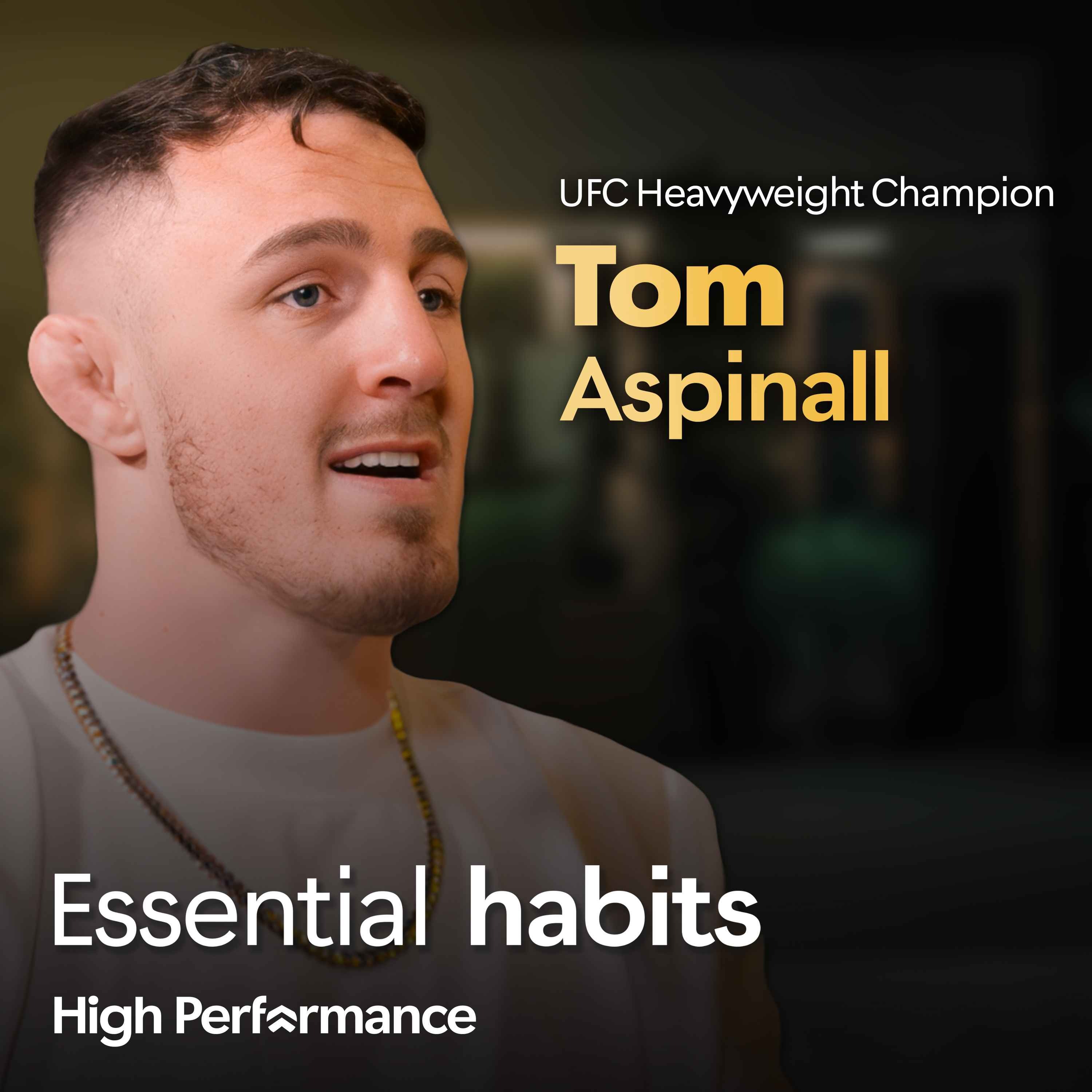
Loading summary
Transcript97 lines
- [00:00]
Narrator/Host
Unlock it early on the High performance app Gareth Southgate, England's former manager who opens up about life leading his country.
- [00:11]
Verizon Advertiser
This holiday, Verizon is helping you bundle up incredible gifts and savings. You'll get the latest phone with a new line on my plan and a brand new smartwatch and tablet. No trade in needed even on our lowest price plan. That's two gifts for your family and one for you. Or two for you and one for someone else. Or three gifts for you and only you. Either way, you save big on three amazing gifts at Verizon, all on the best 5G network. Visit Verizon today. Rankings based on Root Metric Truth score report dated 1 each 2025. Your results may vary. Service plan required for watch and tablet. Additional terms apply.
- [00:41]
Rubrik Advertiser
AI agents are everywhere, automating tasks and making decisions at machine speed. But agents make mistakes. Just one rogue agent can do big damage before you even notice. Rubrik Agent Cloud is the only platform that helps you monitor agents, set guardrails and rewind mistakes so you can unleash agents, not risk. Accelerate your AI transformation@rubrik.com that's R U B R-I K.com.
- [01:13]
Narrator/Host
Are you a trailblazer? A risk taker? Maybe someone with countless tales of epic adventure? Well, I'm not quite there yet, but I'm working on it. Even the boldest among us started off small, right? Daring themselves to reach greater goals every day day. And if you're looking to take on a challenge like that, the Defender is too. Now, I've driven a Defender for a few years. It's the best car I've ever owned. It's a vehicle built for drivers capable of great things, whether they're heading towards uncharted territory or just fancy a weekend getaway. Defender was engineered to meet challenges head on so you can explore with confidence. It's the legendary icon of adventure reimagined through modern design, fit for a new generation of explorers. My kids love it as much as me. It also has a tough, rigid body tested to the extreme, a modern functional interior built for comfort. But it's a vehicle that, like you, is capable of great things. And with next gen technology, from 3D surround cameras to clear sight ground view, it will help you embrace the impossible. Explore the full Defender lineup@land roverusa.com.
- [02:15]
Tom Aspinall
It'S very rare that like you'll get a UFC fighter who will talk about fear. Fear's there and I think the main thing that I do is I just try and embrace it and enjoy it.
- [02:29]
Damian Hughes
Welcome to the Essential Habits of High Performance, the podcast where we explore what some of the world's most successful performers do differently and what we can all learn from their habits. Now, today, I want to begin with a four letter word, one that starts with F. No, not that one. This one is fear. The one word that no UFC fighter ever wants to talk about. The one emotion that every fighter feels but very few are brave enough to acknowledge. Today's story comes from someone who does exactly that. A man from Wigan who has risen to become one of the most formidable heavyweights in the ufc and who has done so by not pretending to be fearless, but instead shaking hands and making friends with fear. This is Tom Aspinall. Hey, I'm Damian Hughes and I've been co hosting the High Performance podcast for nearly six years now. I've worked as a trusted advisor to dozens of elite leaders in sport, business and the arts who've been looking to create, curate and maintain high performing cultures. But above all this, I'm someone who just loves exploring how High Performance works and most importantly, how every one of us can take the lessons from our guests and apply them into our own world.
- [03:50]
Tom Aspinall
Well, I'm actually one of the rare fight, rare UFC fighters that I'm aware of that will sit here and look you in the eyes and talk about fear, because a lot of UFC fighters like to pretend they're not scared. Now, I've basically spent my life in gyms and backstage at events and in these changing rooms. And listen, I'm yet to see a person who isn't scared. But it's very rare that, like, you'll get a UFC fighter who will talk about fear.
- [04:17]
Damian Hughes
Think about that for a moment. In a sport that's built on bravado, where walkouts are choreographed like gladiatorial theatre, you've got a heavyweight fighter refusing to play the role of the invincible Alpha. Instead, what he's doing is something much harder. Being honest. Tom, put it plainly, I'm willing to.
- [04:38]
Tom Aspinall
Step in the cage with. We're talking about John Jones here, who is the most dangerous guy to ever fight in mma. So I'm talking about potentially the most dangerous man unarmed on earth, right? Who I'm potentially going to fight with now if I'm sat backstage getting my hands wrapped, knowing that he's over the opposite side of the arena getting his hands wrapped. We're both going to walk into the arena in front of 35, 000 people, with millions watch, watching around the world, and one of us is going to get separated from our consciousness quite literally, and you're not scared of that, then, like I said, you're either a complete idiot or you're just lying. So fear is extremely present in what I do.
- [05:22]
Damian Hughes
And what strikes me is not just his admission, but the courage of that admission. Cus d', Amato, the legendary boxing trainer of Mike Tyson and Floyd Patterson, had this great quote. Fear is like fire. It can cook your food and it can keep you warm, but it can also burn your house down. It's what you do with it that matters. For Tom Aspinall, for years, fear was his opponent as much as the man he was facing across the Octagon.
- [05:51]
Tom Aspinall
I used to have two fights. I say it all the time. I used to have, like two fights. I used to be fighting my opponent, but fighting myself, mainly trying to push that fear away. And I just realized after a bit like, this is never going to go away. Because pre ufc, when I was like, even pretty professional fighting, when I was like an amateur fighter and stuff, I used to, like, watch UFC fighters and think, I can't wait to get to that level because these guys, like, have no fear, and that'll just go away. But what you realize is the higher in level you go, the more pressure is on you. Like, the more's at stake now.
- [06:22]
Damian Hughes
The higher you go, the more pressure there is on you. There's more stake and obviously more to lose. Isn't that true of life in general? The student who once failed a classroom quiz now face the university finals. The junior manager who once feared giving feedback now fears presenting to the board. Or the athlete who once feared making the team now fears letting down their whole country. The more we grow, the more that is often at stake. Which means that fear doesn't vanish with success. In many ways, it grows alongside it. Tom described fighting not just for pride, but for his family, for their financial security, for the future he wanted to build. And the that weight of responsibility made fear feel heavier, not lighter. And yet, somewhere along the way, Tom changed his relationship with fear. He stopped wishing it away, he stopped pretending it wasn't there, and instead he began to see it for what it really was. It was a source of energy, a signal, a pillar of strength. If he used it correctly, fear's there.
- [07:28]
Tom Aspinall
And I think the main thing that I do is I just try and embrace it and enjoy it. Because when you like an older guy, like grandfather, age, whatever, I like to think that's what I'll be telling my grandkids about now. A lot of the times I was, like, wishing those moments away. The hand Wrap moments, the walking out moments, the stood in the cage waiting for the referee to get out the way and, and tell you to go like I was wishing all this away and just having the fight over with and the very, very special moments. And there's a very, very few people walking around on planet Earth who are privileged enough to be able to do that, to privilege enough to be able to sit in a chair and tell the grandkids about it one day in 20 years time or whatever, that this is what I used to do, so why not try and enjoy them?
- [08:17]
Damian Hughes
Evolution built fear into our wiring because it kept our ancestors alive. If you heard a rustle in the bushes, you. Your heart rate spikes, your muscles prime, your pupils dilate. Fear gets you ready for the lion, or in Tom's case, the opponent standing across the cage from him. Neuroscientists call this the flight fight freeze response. The amygdala, it's a small almond shaped part of your brain, triggers a flood of adrenaline and cortisol. Blood is pulled from the digestion and it's sent to your muscles. Your reaction time sharpens and your pain threshold rises. That's why, in Tom's words, a friend could suddenly lift a wardrobe off a child, even though moments later he realized he wasn't strong enough to shift it on his own. Fear can make us capable of extraordinary things. But here's the paradox. That same system that sharpens us can also sabotage us. If the fire of fear runs wild, it can overwhelm the prefrontal cortex, the part of our brain that controls judgment, tactics and composure. That's when a fighter freezes or over commits or just abandons their strategy entirely. So the message is clear. Fear is not your enemy. It's mismanaged fear, that is. Sports psychologists have long studied how elite performers cope with fear. One of the most powerful shifts is our ability to reframe it. Not as a weakness or not as a shame, but make it normal, even a useful companion to us. Alison Woodbrooks at Harvard Business School ran a fascinating study on this. She asked people to take on stressful tasks. But some of them were told to say, I am calm, while others were told to say, instead, I am excited. The result? Well, those who chose excitement performed significantly better. Why? Well, the excitement, it seems, used the same physiological arousal as fear, but directed it towards opportunity rather than perceiving it as a threat. And isn't that exactly what Tom Aspinall's doing? I want to feel that fear, he told us, because when I know that my senses are at the sharpest. Let me tell you about another fascinating study from the University of Bergen in Norway. It was led by a psychologist called Aslak Heightens. They worked with a group of 29 university students who all had one thing in common. They were crippled by exam anxiety. Now, we're not talking here about a few nerves the night before. We're talking about serious full on panic.
- [10:49]
Will (Producer)
Attacks before walking into the exam hall.
- [10:52]
Damian Hughes
Sleepless nights that started weeks in advance, and in some cases avoiding courses altogether because the fear of failure was so overwhelming. Now, what do you think these students have been trying to do with their fear up to this point? Well, if you've been listening carefully so far, you'll know they've been trying to fight it, push it down, pretend it wasn't there. And what they found is the harder they fought, the stronger it came back. So the researchers tried something very different. They put the students through an eight week mindfulness program. So instead of teaching them how to get rid of fear, they taught them how to sit with it, how to notice the racing heartbeat, how to observe the sweaty palms, how to let the nervous thoughts rise and fall without immediately judging them or running away from them. And here's what happened. At the start, most of the students spoke about fear as if it was something to be ashamed of, something that, that proved that they weren't good enough. But as the weeks went on, they began to make a subtle shift. They stopped seeing fear as an enemy that they had to defeat, and instead treated it as an experience that they could notice. One student, for example, described how instead of panicking before an exam, they caught themselves thinking, this is fear. My body's preparing me to get ready and focus. What if I could be curious about how it feels instead of terrified by it? Another student said they used to avoid even opening the textbook because the fear of failure was so strong. But after the training, they found themselves able to sit down, open the book and think, yeah, I feel anxious, but that doesn't mean I can't learn. The result was a profound shift from avoidance to curiosity, from panic to presence, or from shame to acceptance. Here's the key point for you. Their performance improved, not because they'd eliminated fear, but because they normalized it instead. It's like they took the sting out of it. Now why does that matter for us? Well, it matters because this is precisely what Tom Aspinall embodies. Fear never vanishes or goes away. It'll always walk into the arena alongside you. Now, whether your arena's a cage fight like Tom's an exam hall or a big meeting you've got at work. The question is whether you're going to run away from it or whether you can learn to sit with it and eventually transform your relationship with it. The context might change, but the physiology doesn't. In each case, fear is always the same. It's a rush of adrenaline, a racing heart, a sense of feeling exposed. The temptation is to suppress it, but the path to high performance is instead to acknowledge it, to normalise it and to use it. And this is why Tom's candor matters so much. In a culture that equates fear with weakness, he's showing us the opposite is true. Fear is simply proof that you care. Fear is the energy that we can harness. Fear, when we shake hands and make friends with it, can be our ultimate strength. So what can we learn from Tom Aspinall's story? Well, I'd like to share three habits that can help you turn fear into focus. The first one is Name it and don't numb it. Tom used to think admitting it made him weak. But when he finally said, yeah, I am scared, it lost its power. Labeling fear activates the rational part of your brain and puts you back into control. Next time you feel it, say it out loud. I'm scared because this really matters to me. The second essential habit is reframe fear as fuel. Fear and excitement feel the same in your body. The difference is the story that you tell yourself. Tom tells himself, this is the moment when I'm at my sharpest and research backs it up. People who say I'm excited before a challenge perform far better than those who try to calm down. Your nerves aren't the problem, they're the energy that you need. And our third habit. Practice the moment before the moment. Tom visualizes every step before a fight. The hand wrap, the walkout, the cage. And when it happens for real, his mind has already been there. Rehearsal makes the unknown familiar. Whether it's an exam, a speech or a tough conversation, you've got to have play it through in your head until it feels normal. So your challenge for this week is to think of one situation that makes you nervous and then say out loud what you're afraid of. Reframe it as excitement and then visualize yourself handling it with calmness. Do that and fear can stop being the enemy and instead it can become part of your preparation. Now I'm going to be joined by our brilliant producer, Will, and we're going to have a listen to Tom talking about how his dad's Belief in him has been absolutely pivotal to his success.
- [15:43]
Tom Aspinall
Why?
- [15:44]
Damian Hughes
Being prepared to die in a UFC octagon gives him an edge and what he believes is the key to his own High Performance. We've just announced the latest book from High Performance Microhabits, which studied the tiny changes that supercharge high performance before the book's full release in January. We've got a really special opportunity for our listeners to win a behind the scenes experience here at High Performance on.
- [16:12]
Will (Producer)
An upcoming record day.
- [16:13]
Damian Hughes
All you've got to do is submit your proof of pre order purchase of microhabits and. And submit it via the link in the description. If you do that, you'll also get an extra 20% off the price of the book too. Try it. We hope to see you joining us here in the studio soon.
- [16:32]
Co-host/Guest
I love Tom Aspinall.
- [16:34]
Will (Producer)
Yeah, brilliant.
- [16:35]
Damian Hughes
Great bloke.
- [16:36]
Co-host/Guest
Yeah, really good, wasn't he?
- [16:38]
Will (Producer)
Yeah, really decent man. I think that's a thing that I'd want to emphasize about him, that you know, given somebody of, of his size and his presence and his power, he's absolutely huge.
- [16:50]
Co-host/Guest
I didn't expect him to be as I think I've seen him on telly and he's not been as big as some of the other guys. He was massive.
- [16:55]
Will (Producer)
Yeah, yeah. But he carried it with grace, he covered it with gentleness.
- [16:59]
Damian Hughes
He was kind.
- [17:00]
Will (Producer)
He was, he was a really decent man.
- [17:02]
Co-host/Guest
He was. And really, really open about what it takes to succeed in that sport and how to get there. And had a, you know, had a lovely entourage with him, including his dad.
- [17:15]
Damian Hughes
Yeah, that was lovely that.
- [17:16]
Will (Producer)
To have his dad, that he's obviously got a relationship of him being his dad, but also being his coach as well. And he's confident and as we're going to hear, his cheerleader.
- [17:25]
Co-host/Guest
Yeah. I mean, he was actually on the podcast as well. So if you listen to the full app, you'll. His dad comes on at the end.
- [17:31]
Will (Producer)
Great, that one. Yeah.
- [17:32]
Co-host/Guest
And jumps into it. But yeah, watch the. The first clip really kind of tells a great story about the influence that his dad had on him.
- [17:40]
Damian Hughes
Well, it reminds me of the research of a guy called Robert Rosenthal that.
- [17:44]
Will (Producer)
In the 1960s this guy was a Harvard psychologist and he came up with this test called the Harvard Test of Inflected Acquisition, which sounds really grand. But he said if you apply it to kids at a certain age, you can find kids that are late bloomers that can flourish with the right conditions. And the education authorities were excited about it. He applied the test, found late bloomers and he proved that these kids outperformed the others on every metric. She wouldn't. And then he revealed he'd made the whole thing up.
- [18:11]
Co-host/Guest
Wow.
- [18:12]
Will (Producer)
He said, all that's changed in this classroom is the belief of the teachers because the teachers believed that these kids had this latent talent. He could prove that they changed the way that they interacted with the child and therefore he changed their perception and changed the results. So it's a great example of sometimes we need people to believe in us before we necessarily believe in ourselves. And Tom offers a really lovely example.
- [18:36]
Damian Hughes
Where his dad was the guy believing.
- [18:40]
Will (Producer)
In him and championing him and telling everybody about his potential, sometimes when he was blind to it himself. Let's listen to it.
- [18:48]
Tom Aspinall
I'm very lucky. So I started the journey with my dad. He's always believed in me, but not only has my dad believed in me, he's also convinced the circle of people around me that I'm going to make it as well. So, like, luckily my wife was on board, my family were on board, friends, like, everybody was convinced that, yeah, Tom might be struggling now, but he's gonna make it. And at some points I wasn't even convinced of that myself, if I'm being honest. But I'm very lucky that I have that. You know, my dad in the close circle who did believe in me.
- [19:22]
Will (Producer)
How lovely is that? That you've got somebody that sees who you could be and is relentless in championing that and reminding people and encouraging people, be patient here.
- [19:33]
Damian Hughes
We can't see the results today, we.
- [19:34]
Will (Producer)
Might not see it tomorrow, but we.
- [19:36]
Damian Hughes
Will do at some stage.
- [19:37]
Will (Producer)
I think we all need somebody in our life that can act as a cheerleader to us and I think that was a really moving example of the role of a dad and how important they can be for young men especially.
- [19:53]
Co-host/Guest
I know there's an element of maybe success story bias when you hear stuff like that and it's like, well, Tom made it and his dad believed in him. But there might have been a lot of people who didn't make it.
- [20:03]
Damian Hughes
Yeah, yeah.
- [20:03]
Co-host/Guest
But I think it's relating to that study you said earlier, of how powerful it is to have that people believing in you from. I can see that in grassroots sport a lot.
- [20:17]
Damian Hughes
Yeah.
- [20:17]
Co-host/Guest
With kids, isn't it? Is that.
- [20:19]
Will (Producer)
Well, your boys are active Sunday footballers.
- [20:21]
Co-host/Guest
Active Sunday footballers, I would say, you know, and they're young as well. And, you know, so the idea that anyone's a complete package of food that is completely, you know, over egged. I think at this age, the Idea of elite and academy and all this language being used for an eight year old. Yeah, I don't necessarily think that's very healthy, but you know, I might be wrong on that. It's just an opinion, but I definitely see the role of confidence and how that plays. It basically transforms people.
- [20:54]
Damian Hughes
Well, we've seen it so often. Well, haven't we?
- [20:56]
Will (Producer)
That it was Sigmund Freud who said that everybody that goes on to achieve a life of success, however we define it, needs somebody at an early enough stage to plant the golden seed, that golden seed of potential, to see something in you before you do. And Freud says it could be a teacher, it might be a parent, it might be a family friend, it might be a priest that he offers in.
- [21:21]
Damian Hughes
His case, but you just need somebody.
- [21:23]
Will (Producer)
That sees your potential and just reminds you of it. And I think there's a nice reminder for us all here that we can do that. We can plant the golden seed for people in our lives and question are we doing that enough? Are we telling people that we recognize them for their potential and we recognise that they've got the opportunity to flourish and go and be late bloomers?
- [21:47]
Co-host/Guest
Tom wasn't necessarily a late bloomer, but his dad believes in him and he keeps going and he becomes obviously the UFC heavyweight champion of the world. But the next clip we're going to talk about kind of was the thing that kind of not shocked me the most, but it's the most click worthy bit of this conversation is where he talked about being willing to die. Let's have a listen to this.
- [22:12]
Tom Aspinall
If you're passionate about something, you love something, that's the most important thing is that love for it. Like I absolutely love mixed martial arts, like more than, more than most people who are involved with it. I love it, everything about it, from the mental aspect to the physical aspect to the tactical aspect to the almost. I'm gonna get a bit weird and say the spiritual aspect, because there is a spiritual aspect to it. I love everything about it and it would be a shame for me to love something that much and walk away from it for financial reasons or whatever.
- [22:44]
Damian Hughes
What's the spiritual aspect?
- [22:46]
Tom Aspinall
It's quite difficult to speak to two quote unquote normal people and for you to relate to it, if that makes sense. But if I were, I'll try you. If I feel like if I was to speak to any other combat athlete and say, you need to get. When I talk about spiritual, I'm not talking about like God or any, you know, any religious stuff. I'm Talking about you need to get into a space mentally, and this is going to sound really brutal, where you're willing to die in there. People will be watching this and thinking, this guy is over exaggerating a little bit. But when that door closes, you need to be willing to die. I'm not saying it for clicks. I'm not saying it to be over exaggerate and make sure. Make me look like some intense person that I'm not. But that is the reality of it.
- [23:33]
Co-host/Guest
Why?
- [23:34]
Tom Aspinall
Because that. That's the. That's how bad you need to want it.
- [23:37]
Will (Producer)
Oh, that is special that I love that it reminds me of, you know, that there's a story like, you have to forgive me. I don't remember the name, but there's like a. I don't know if it's an apocryphal story of a Spanish invader in Mexico. When. When they landed on the coast of Mexico, the. The army was out fighting them. The locals were presenting difficulties, and they were sort of batting the way off the beach. And then they battled the way onto the. Onto the mainland. And when they turned around, they realized that all their ships that they'd arrived at had been set on fire. And it was a deliberate strategy from the leader that went, burn the boats. If we burn the boats, the only way out of here is we've got.
- [24:16]
Damian Hughes
To fight our way through this.
- [24:18]
Will (Producer)
And I love that idea that at some stage you burn your boats, you go, there's only one way out of here now, which is victory. There's no escape route. And I think Steven Gerrard told us that his whole philosophy of life was all in.
- [24:33]
Co-host/Guest
Yeah. Do you think, though, like, I mean, and you obviously, you have grown up in a, you know, combat sport environment in boxing.
- [24:40]
Damian Hughes
Yeah.
- [24:40]
Co-host/Guest
Written books on people. That level of commitment, that level of intensity, is that a unique thing to those sports? Is it even sustainable? Is it even healthy?
- [24:53]
Will (Producer)
Oh, well, that's a different question. Whether it's healthy, I don't think. I think it's. I think you do see it within that world. I remember I wrote a biography a few years ago on Marvelous Marvin Hagler. And when I interviewed his cornerman, a guy called Goody Petronelli, he was recounting to me when Hagler won the world title in London against alan Minta in 1980. Hagler had said to him, when they were in the corner of the ring, he said, whatever happens tonight, I'm willing to die in this ring. So I don't want you to interfere.
- [25:24]
Damian Hughes
I don't want you to stop the fight.
- [25:26]
Will (Producer)
I don't want you to protect me. I'm willing to die in this ring to win the title. And Goody Petronelli said it was one of those hairs on the back of your neck, stand up where you go, wow. Wow. The level of intensity, this is the.
- [25:37]
Co-host/Guest
Level of responsibility as well.
- [25:39]
Will (Producer)
Yeah. And I found that interesting when Tom.
- [25:41]
Damian Hughes
Was saying it because he's saying that.
- [25:43]
Will (Producer)
To his dad and his dad, ultimately, that sort of primitive paternal instinct. How do you switch that off to go, I'm. I'm going to allow my son to go in that ring and accept that he might not come out. But what it shows you is sometimes I think this is a level of obsessiveness that it sounds really impressive, but I don't think it is. Like Tom said to us, you know, it sounds weird telling, to quote, unquote, normal guys.
- [26:12]
Co-host/Guest
Yeah.
- [26:13]
Will (Producer)
I think he recognizes that. That does sound scarily dangerous. It's like that level of obsession of feeling that I have to win here and I'm willing to trade my life. You know, when he thinks of himself as a father himself or a husband or even the son for his dad, and he's still willing to trade all of that just for a victory in the ring, I think I can admire it to a degree, but also that lack of perspective. I suppose it's what you need to do if you're going to go to the extremes. But it does chill me a little.
- [26:49]
Co-host/Guest
Bit to hear it was chilling, definitely. And, you know, that level of commitment, maybe, you know, we're not saying it is necessary, that is necessary for everybody in what they do, but I think there is an element of high performance and. And a elite sport in that category where it is all in.
- [27:06]
Will (Producer)
For most of us, it's a case of we can look at it, we can sort of admire that level of commitment, but we can recognize that it's probably not worth it.
- [27:14]
Co-host/Guest
Where should we end this? I think there was a wonderful. It was the end of the episode when this came out.
- [27:20]
Will (Producer)
Yeah, yeah, let's include this. There's a great Woody Allen quote that says 80% of life is about just showing up.
- [27:26]
Co-host/Guest
Let's have a listen to Tom Aspinall's golden rule for high performance.
- [27:31]
Tom Aspinall
Well, I think you gotta show up. It's so underrated. So underrated. Sometimes just showing up beats anything else, especially these days. I mean, I am unlike my dad. I am on social media and I think people have a lot of resources to find the best way to do something, and they Can Google. What's the best way to be good at mma, for example, what's the best way, you know, put it in YouTube. How do I swim faster? Listen, swim faster by swimming. That's how you swim faster sitting there and YouTube it. Just show up, show up, get in the pool and swim.
- [28:09]
Co-host/Guest
That's one of my favorite rules in general on high performance, because I really, I. I relate, I can relate to that. I think in. In most things, you can talk yourself out of something very, very quickly or a reason not to do something. Why shouldn't I just begin? Yeah, just start. You gotta begin.
- [28:26]
Will (Producer)
Like, you don't have to be great to start, but you do have to start to be great.
- [28:29]
Co-host/Guest
Yeah.
- [28:30]
Will (Producer)
And I think that's the point into that. If you want to learn how to swim, swim, you can read about it in a book, but ultimately you've still got to jump in and swim. And I think for all of us, I hope that we can take that out of this lesson that whatever we want to go and achieve, if we've got a dream and aspiration, ambition, you've just got to get on and start it.
- [28:50]
Co-host/Guest
I do think there is sometimes we do have a bit of analysis paralysis. There's a lot of information, there's a lot of things of what's the best way to do something? How do I become the best at something which, you know, can stop you before you start. You're not going to be good at anything when you start. And we've had a lot of people come on and say that. So as a, you know, consistency always beats intensity.
- [29:15]
Will (Producer)
Absolutely. And I think that's an appropriate place to sort of wrap up this episode. I think we've heard some incredible insights there from Tom around how you manage fear, your relationship with your inner circle of people that believe in you before you believe in yourself, the willingness to go all in, and then the importance of showing up. They're lessons that we can take even if we never, ever consider stepping in the oxygen and fighting. Jon Jones. Listen, if you've enjoyed this episode and you think that it'd be a benefit to somebody in your life, why not consider passing it on to them and encouraging them to give it a listen, too? But above all, thank you for joining us and giving us your time on the essential habits of high performance.
- [30:09]
Sleep Number Advertiser
Why choose a sleep number?
- [30:10]
Damian Hughes
Smart bed. Can I make my site softer?
- [30:12]
Co-host/Guest
Can I make my site firmer?
- [30:14]
Rubrik Advertiser
Can we sleep cooler?
- [30:16]
Sleep Number Advertiser
Sleep number does that cools up to eight times faster and lets you choose your ideal comfort on either side. Your Sleep Number setting. Enjoy personalized comfort for better sleep night after night. It's our Black Friday sale, recharged this season with a bundle of cozy, soothing comfort. Now only $17.99 for our C2 mattress and base plus free premium delivery. Price is higher in Alaska and Hawaii. Check it out at a Sleep number store or sleepnumber.com today. Hi, this is Robert Mays from the Athletic this time of year always gets busy, but that's when having Peloton in my life really makes a difference. The new Peloton Cross Training Tread plus, powered by Peloton iq, helps me fit in great workouts no matter what's on my schedule. It's Peloton's most advanced equipment yet, giving you real time guidance and endless ways to move. Peloton IQ plans your workouts, tracks your progress, and corrects your form so you can train smarter and make the most of your time. Let yourself run, lift, flex, push, and go. Explore the new peloton cross training Tread plus@onepelaton.com if you're a maintenance supervisor at.
- [31:14]
Rubrik Advertiser
A manufacturing facility and your machinery isn't working right, Grainger knows you need to understand what's wrong as soon as possible. So when a conveyor motor falters, Grainger offers diagnostic tools like calibration kits and multimeters to help you identify and fix the problem. With Grainger, you can be confident you have everything you need to keep your facility running smoothly. Call 1-800-GRAINGER clickgrainger.com or just stop by Grainger for the ones who get it done.