← The History Podcast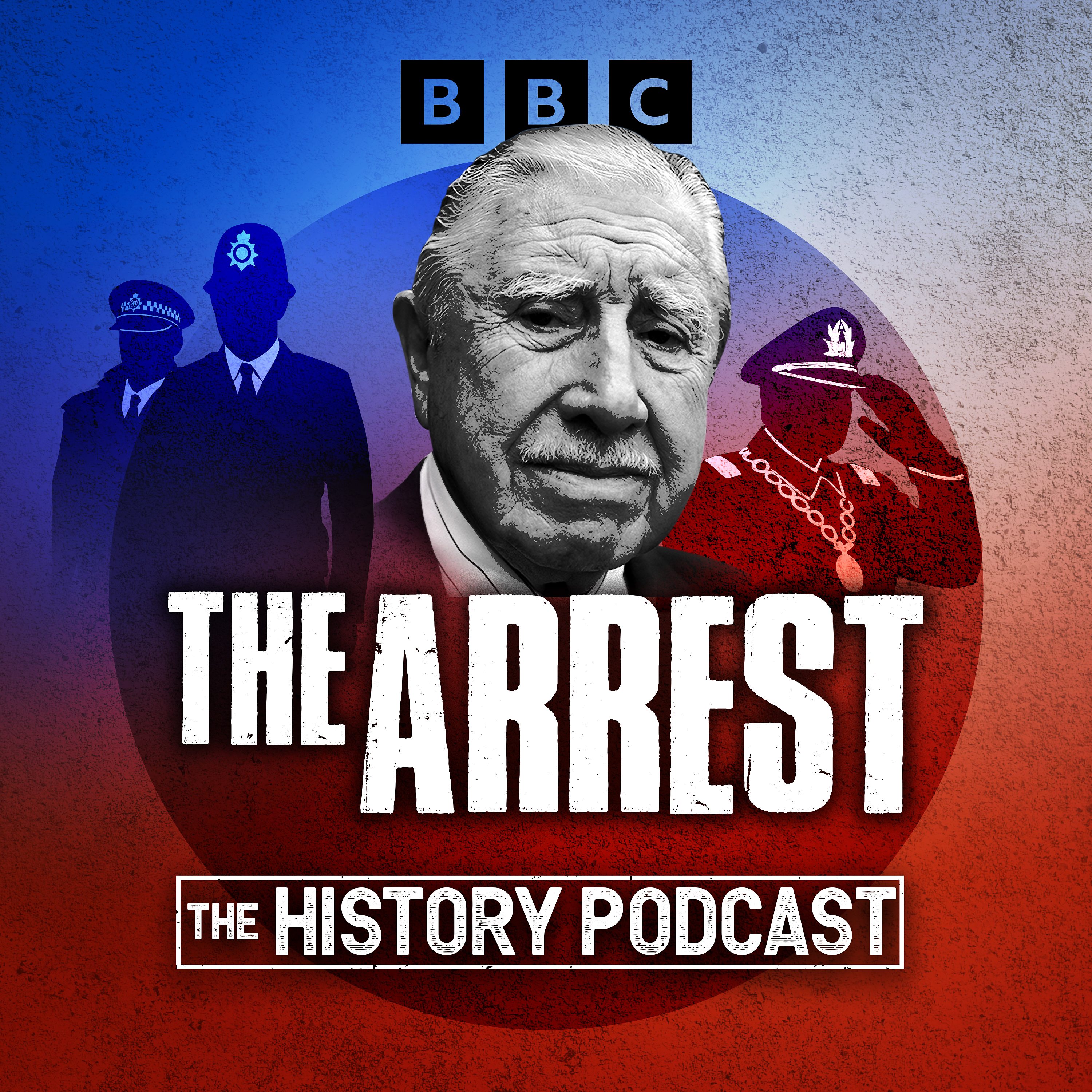
The History Podcast
The Arrest: 1. The Lawyer
00:14:30
The frantic final days of a long legal battle to apprehend a notorious dictator.
Loading summary
Transcript30 lines
- [00:00]
Narrator (Philippe Sands)
This BBC podcast is supported by ads outside the uk.
- [00:06]
Liberty Mutual Advertiser
Limu Emu and Doug. Here we have the Limu Emu in its natural habitat, helping people customize their car insurance and save hundreds with Liberty Mutual. Fascinating. It's accompanied by his natural ally, Doug.
- [00:24]
Juan Garces (Lawyer)
Limu is that guy with the binoculars watching us.
- [00:26]
Liberty Mutual Advertiser
Cut the camera. They see us. Only pay for what you need@liberty mutual.com Liberty Liberty Liberty Liberty Liberty Savings Ferry underwritten by Liberty Mutual Insurance Company and affiliates. Excludes Massachusetts.
- [00:36]
Shopify Advertiser
When it's time to scale your business, it's time for Shopify. Get everything you need to grow the way you want. Like all the way. Stack more sales with the best converting checkout on the planet. Track your cha chings from every channel right in one spot and turn real time reporting into big time opportunities. Take your business to a whole new level. Switch to Shopify. Start your free trial today.
- [01:07]
Narrator (Philippe Sands)
You're about to listen to the History podcast. The Arrest episodes will be released daily wherever you get your podcasts. But if you're in the uk, you can listen to the whole series right now first on BBC Sounds. It's Friday, October 16, 1998. Late at night, a car pulls up on a street in Marylebone, a wealthy neighbourhood in central London. A small group of plain clothed police officers step out. It's windy and there's a light rain. They make their way to a tall red brick building. This is the London Clinic, a private hospital that has counted many well known people among its patients. At the front desk, the officers show their ID cards and they explain why they have come. Visiting hours have long passed, but they're directed to the eighth floor. This is not an ordinary visit. The man they're coming to see believes himself to be above the law. Former Chilean President Augusto Pinochet arrived in London from Santiago a couple of weeks earlier. It's a place he loves. He dines at the River Cafe, browses his favorite bookshop on Piccadilly, looking for a volume on Napoleon Bonaparte. He shops with his wife Lucia, and he visits with his old friend Margaret Thatcher. On reaching the eighth floor of the London clinic, the men from Scotland Yard make their way to room 801. It's guarded by two Chilean security men. The patient is inside in bed. He's recovering from a minor operation on his back. The nurse tells the officers he's asleep and should not be disturbed. But the police officers have been told that he may be leaving the next day, heading back to Chile. One of them tells the nurse to wake the patient they need to see him now. The men from Scotland Yard have arrived with a document which has just been drafted by a duty magistrate in response to an urgent fax sent by a judge in Madrid. It is a warrant for the arrest of Augusto Pinochet for crimes committed long ago and far away. I'm Philippe Sands. As a lawyer specializing in international crimes and issues of immunity and human rights, I would become personally involved as a barrister in the legal proceedings that would follow. But more than 20 years would pass before I would learn exactly what happened in the days that led to that late night visit to the London clinic. Those events would give rise to the most important case in international criminal justice since the famous trials at Nuremberg more than half a century earlier. This is the story of what happened during Those Days from BBC Radio 4 and the History Podcast. This is the Arrest. Episode one the Lawyer. Monday, Oct. 12, 1998. Four days before the visit to the London clinic. It's a moment of great celebration in Spain. It's the country's national day. The capital is busy. That's a problem for the lawyer Juan Garces, who has work to do. Three days before Spain's national celebrations, just before the weekend, in fact, the lawyer had received a tip off from a friend in Chile. Pinochet is in London, he was told. London. The lawyer Garces knows that this offers an opportunity and it's not one that he intends to miss.
- [05:32]
Juan Garces (Lawyer)
So I immediately began to prepare a request for the court. I worked all of Saturday and Sunday in my office, in my home, all by myself.
- [05:41]
Narrator (Philippe Sands)
The request is to the authorities in the uk and it's to be allowed to ask Pinochet questions about his role in certain crimes that occurred after the coup. The request has to be sent to London by a Spanish judge. But the courts in Madrid were closed over the weekend and now they are closed for the public holiday. The problem is the lawyer doesn't know how long Pinochet will be in London. He thinks he has a little time, but not much. Maybe a few days, but certainly not weeks. Actually, he's been working on a legal case against Pinochet for years on behalf of thousands of people who were kidnapped, tortured, murdered or disappeared after the General seized power and his regime began to systematically attack opponents. He tells me all of this in 2018. We speak in French 20 years after these events, when I'm researching my book. 38 Laundret Street. He's a soft spoken and gentle man with a scholarly air and a warm face that's dominated by a fine grey walrus moustache. In September 1973. He was in his late twenties, a young Spaniard serving as a political advisor to Chile's then president, Salvador Allende. On September 11 that year, the day of the coup d', etat, which was led by Chile's army under Pinochet's command, the lawyer Garces was inside La Moneda, the presidential palace, as it was bombed by British made Chilean Air Force jet fighters. Years later, after living in France, he moved back to Spain and began his legal career working with Chilean refugees in their search for accountability for the crimes of the Pinochet regime. They would find no such accountability in Chile.
- [07:49]
Juan Garces (Lawyer)
The door was closed, absolutely closed. The informal association of all the victims who had been seeking justice in Santiago had formulated more than 20,000 lawsuits between 1973 and 1996. 20, 30,000. Only one or two had been accepted.
- [08:13]
Narrator (Philippe Sands)
Pinochet had ceased to be president of Chile in March 1990, when he stepped down after losing a referendum on his continued leadership. And a year after he left office, a new president had set up a National Truth and Reconciliation Commission to investigate the regime's most serious crimes and human rights violations. Its report had found that the military junta Pinochet lead was responsible for more than 2,000 executions, as well as disappearances leading to presumed death. The true numbers would later be shown to be even higher. Many of the victims had been tortured in clandestine detention centers set up by Chile's secret police. Places like 38 Laundres Street, a fine two story building on a pretty cobbled street in central Santiago. But despite all the evidence, not a single person had been prosecuted or convicted of any of the crimes committed on Chilean soil. At this point in 1998, the cases have merely been threatened. General Pinochet has taken steps to ensure that there is total impunity. In 1978, he'd signed an amnesty law. This exempted the military from all criminal liability in Chile for politically motivated acts committed after the coup. And Pinochet personally benefited from another layer of protection. According to a provision of Chile's constitution, which he introduced, any president who'd served for more than six years was appointed as Senator for life. And that title came with total immunity from criminal prosecution in Chile. But as the lawyer Garces prepares his request for help from the United Kingdom, he's hopeful. In Britain, the Labour Party has recently swept to power. The Conservatives are gone. They who offered Pinochet such strong backing, not least because of his support to Britain during the Falklands War in 1982. Could legal challenges now be made to Pinochet's? Protections outside of Chile. The beginnings of the answer to that question can be found in April 1996, two and a half years before Pinochet arrived in London. In Madrid, the lawyer Garces attended what he hoped would be a breakthrough meeting. He'd been gathering evidence and witnesses for a case against Pinochet.
- [11:01]
Juan Garces (Lawyer)
I was the one who led this case. Everything was focused on me. In the name of all victims, survivors of torture, relatives of missing persons or murdered persons. They all trusted me. Those who lived in Spain and those who lived in Chile, they trust me completely.
- [11:19]
Narrator (Philippe Sands)
This was very personal for him. He'd been leading an organization that honors the memory of his friend Allende, a foundation that has mobilized Pinochet's victims and their families. He believed that this could be the right moment to take the fight to the courts. The Cold War was over, and ideas about global justice were coming alive. New treaties had been adopted requiring states to investigate and prosecute the most serious international offences, like genocide, torture and disappearances wherever they were committed, based on a principle known as universal jurisdiction. The lawyer Garces had been exploring whether there might be a basis under Spanish law to start a case against Pinochet for crimes committed in Chile. To get a case before the Spanish courts and judges, he would need to find a public prosecutor willing to run with it. One possible candidate was Carlos Castrosana, and he too had been looking into these possibilities. Earlier that year, 1996, the prosecutor had made an important discovery.
- [12:34]
Carlos Castrosana (Prosecutor)
I began with Argentina.
- [12:36]
Narrator (Philippe Sands)
This was another South American dictatorship which, after seizing power in a military coup, began a campaign to wipe out left wing and other opponents Castrosana. The prosecutor concluded that universal jurisdiction had a basis in Spanish law. He started to think about how it could be extended. He explained to me during a conversation we had in May 2021.
- [13:02]
Carlos Castrosana (Prosecutor)
We wanted to establish another president to protect human rights. Tell him, well, terrorism, okay, but also genocide and torture, crimes against humanity.
- [13:13]
Narrator (Philippe Sands)
He'd gathered evidence and witnesses working with Argentine exiles in Spain, and in March 1996 had filed a first case at Spain's National Court. Most prosecutors were against the case, he told me, but Spain's attorney General had not stood in its way.
- [13:32]
Carlos Castrosana (Prosecutor)
He was a conservative man, but he was honest. And he said, well, we cannot go in history having been those who abandoned the Spanish victims. We need to do something.
- [13:47]
Narrator (Philippe Sands)
The case about the leaders of the Argentine dictatorship was filed and it took off. It was assigned to a judge in Spain's National Court. His name was Balthazar Garzon, a figure we will come back to.
- [14:01]
Carlos Castrosana (Prosecutor)
And then a couple of weeks later, someone came and said, well, I am a Spanish lawyer. I want to talk to you.
- [14:09]
Narrator (Philippe Sands)
This was Garces. This is Garces, the lawyer garces, who in April 1996 was had gone to Castrosana's office hoping to convince him to take up the case. The two men meet. The lawyer gives the prosecutor his ideas and his paperwork.
- [14:30]
Carlos Castrosana (Prosecutor)
And he told me, I've been 25 years waiting for someone to do what you have just done in Argentina.
- [14:37]
Narrator (Philippe Sands)
Will you do it in Chile?
- [14:38]
Carlos Castrosana (Prosecutor)
So please do it also with Pinochet.
- [14:40]
Narrator (Philippe Sands)
And so the lawyer Garces finds a key to the case against Pinochet. The question is, what door, if any, will it open? Listen to the whole series right now. First on BBC Sounds.
- [14:58]
Rory Stewart
I'm Rory Stewart and I want to talk about heroes. When I was a child, I imagined a heroic future for myself in which I would achieve great things and die sacrificing my life. Noble cause before I was 30. But my experiences in the Middle east and in politics showed me that there was something deeply wrong with my idea of heroism. From BBC Radio 4, my podcast the Long History of Heroism explores ideas of what it meant to be a hero through time. How have these ideas changed? Who are the heroes we need today? Listen to Rory Stewart, the Long History of Heroism first on BBC Sounds.
- [15:40]
Shopify Advertiser
Wherever you are, create a future around your artistry through fully online art and design programs at Rocky Mountain College of Art and Design. Immerse yourself and enhance your skills in an online creative community. Visit remcad at rmcad.
- [15:54]
Narrator (Philippe Sands)
Edu Limu Emu and Doug.
- [15:58]
Liberty Mutual Advertiser
Here we have the Limu Emu in its natural habitat, helping people customize their car insurance and save hundreds with Liberty Liberty Mutual. Fascinating. It's accompanied by his natural ally, Doug.
- [16:13]
Juan Garces (Lawyer)
Limu is that guy with the binoculars watching us.
- [16:15]
Liberty Mutual Advertiser
Cut the camera. They see us. Only pay for what you need@libertymutual.com Liberty Liberty Liberty Liberty Savings Fairy Unwritten by Liberty Mutual Insurance Company Affiliates excludes Massachusetts.