← The History Podcast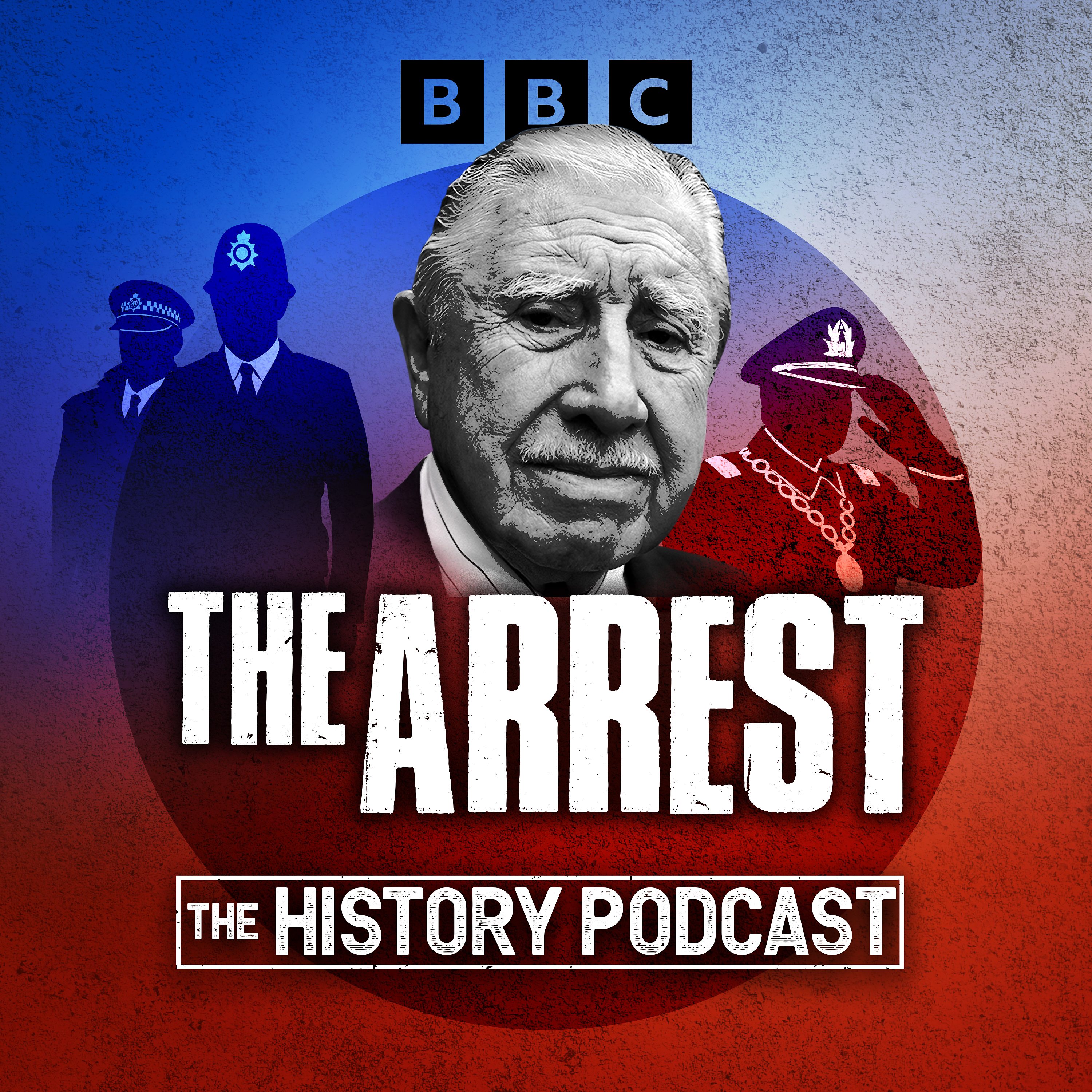
The History Podcast
The Arrest: 3. The Judge
00:14:36
The plan to apprehend Pinochet has stalled - can a bold new judge revive it?
Loading summary
Transcript41 lines
- [00:00]
BBC Announcer
This BBC podcast is supported by ads outside the uk. At the BBC we go further so you see clearer. Through frontline reporting, global stories and local insights, we bring you closer to the world's news as it happens. And it starts with a subscription to BBC.com, giving you unlimited articles and videos ad free podcasts, the BBC News channel streaming live 24. 7/Hi hundreds of acclaimed documentaries. Subscribe to trusted independent journalism and storytelling from the BBC. Find out more@BBC.com Join When It's Time.
- [00:37]
Shopify Advertiser
To scale your business it's time for Shopify. Get everything you need to grow the way you want. Like all the way. Stack more sales with the best converting checkout on the planet. Track your cha chings from every channel right in one spot and turn real time reporting into big time opportunities. Take your business to a whole new level. Switch to Shopify. Start your free trial today.
- [01:07]
Narrator (Philippe Sands)
You're about to listen to the History podcast. The Arrest episodes will be released daily wherever you get your podcasts. But if you're in the uk, you can listen to the whole series right now first on BBC Sounds. Spanish lawyer Juan Garces is about to make an unusual move. It is Wednesday, 14th October 1998. Almost a week has passed since he learned that Augusto Pinochet was in London. It presents an unexpected opportunity in his case against the former Chilean dictator. But there are those in Spain who seem intent on preventing him from seizing that opportunity to tell him it was.
- [01:58]
Lawyer Juan Garces
The prosecutor of the National Court of Justice, Mr. Fungarinho, who was a very conservative man, who had the honor of securing the end of the case.
- [02:09]
Narrator (Philippe Sands)
Fungarino sits right at the top of Spain's legal establishment and if he wants to, he can stop things from going ahead. And Carlos Castrosana, the prosecutor who started the case against Pinochet in the Spanish courts two years earlier, thinks he knows.
- [02:26]
Lawyer Juan Garces
Why Bungario was appointed and did nothing until he received the visit of General Silva.
- [02:32]
Narrator (Philippe Sands)
This is a reference to a Chilean prosecutor much admired by Pinochet who has recently visited Spain.
- [02:40]
Lawyer Juan Garces
General Silva come with the mandate of closing the case.
- [02:45]
Narrator (Philippe Sands)
Sent by who? By the Chilean government.
- [02:47]
Lawyer Juan Garces
By the Chilean government, By Pinochet, who knows that he comes in a very secret visit and then suddenly overnight the strategy of the prosecution office changes from being passive to being proactively pursuing the closure of the case.
- [03:07]
Narrator (Philippe Sands)
The lawyer Garces and the prosecutor Castrosana suspect that Pinochet may be behind this secret visit because he's worried their case against him will might just take off. It may be that his concern has been fuelled by a different case that the prosecutor has been pursuing against another South American dictator from Argentina. A year earlier, in 1997, the prosecutor had requested the issuance of an international arrest warrant.
- [03:40]
Lawyer Juan Garces
And to our surprise, Interpol accepted.
- [03:44]
Narrator (Philippe Sands)
Surprise, because there had long been a presumption that heads of state, current and former, were immune from foreign prosecution, except before an international criminal court. If Spain could issue an arrest warrant for a former Argentine president, then why could it not do the same thing for a former Chilean president? Perhaps then Spain's chief prosecutor, the one who's been trying to kill the case, wants to protect Pinochet. He's arranged for a hearing to be held at Spain's National Court in just a few weeks time, with the aim of shutting down the cases about the crimes committed in Chile and in Argentina. The lawyer Garces has one big chance to progress his case against Pinochet before then. But he worries his current judge will will not be bold enough to take that opportunity.
- [04:42]
Lawyer Juan Garces
So I wanted to prepare an escape route.
- [04:47]
Narrator (Philippe Sands)
And it is that rescue route that brings him to the office of another judge, one with a reputation for fearlessness. He is the judge in charge of the Argentine case, which is making much better progress. The lawyer decides he's going to ask this judge to find a way to take up the Chilean case too. It looks like it will be the only way for him to get the swift progress he needs. But will this second judge say yes? I'm Philippe Sands and from BBC Radio 4 and the History podcast, this is the Arrest, the inside story of the race to apprehend Augusto Pinochet and bring him to justice. Episode 3 the Judge. Judge Baltazar Garzon is in his office working on some of the many cases stacked in his in tray. At around 10 o' clock that morning, Wednesday 14th October 1998, he receives a visit. The judge, who is one of several at Spain's National Court, has been expecting it. He's aware of the lawyer, Garch says, and his work?
- [06:13]
Judge Baltazar Garzon
Not much, but on a professional level. I knew him since he was in charge of the case in Chile. He asked me to talk to him and I told him to come in. And then he says Pinochet is in London. I said to him, yes, I've heard about it. I understand it's for an operation. Then he says to me, I would like him to make a statement, to take a declaration.
- [06:43]
Narrator (Philippe Sands)
The lawyer says the situation is urgent. He explains that this is the perfect moment to question Pinochet and He thinks that the UK authorities might just accede to a Spanish request for help. Judge Garzon, though, in court number five, is working on the Argentine case with the prosecutor Castro Sana. El Caso, Chile.
- [07:09]
Judge Baltazar Garzon
No casso, but the Chilean case. Pinochet's main case is in the sixth.
- [07:15]
Narrator (Philippe Sands)
But the judge in court six isn't moving fast enough, the lawyer tells him. In Spain, judges have much more control over a case than their UK counterparts. They are also investigators rather than mere adjudicators with the power to call evidence and to question witnesses. I met Judge Garzon on numerous occasions while researching my book, 38 Londres Street. He is a short, squarish man with a strong sense of purpose and energy and a fine head of thick silver hair. He's become known as a fearless, some would say crusading investigator who has taken on drug cartels and even the Spanish government.
- [08:06]
Lawyer Juan Garces
I heard him in a conference at a university where he was talking about the work that was done on the Argentine crimes. And six months before, I had filed a complaint in the court of Judge Carson about Operation Condor.
- [08:23]
Narrator (Philippe Sands)
Operation Condor. It's crucial to the lawyer Garces thinking it was the campaign organized by Pinochet in November 1975 to work with several South American dictatorships, including Argentinas, to eliminate political opponents across the whole of the continent.
- [08:46]
Lawyer Juan Garces
At Chilean opposition leader was arrested in Buenos Aires and in a clandestine manner was transferred to Chile, where he disappeared, was tortured and disappeared. And indeed, the judge accepted this case. He also accepted the witnesses I gave him, showing him how the cooperation on Operation Condor was between the secret service of the Argentine dictatorship and the Chilean dictatorship.
- [09:17]
Narrator (Philippe Sands)
The lawyer wants Judge Garzon to examine that connection in greater detail, to look at other crimes committed by the Pinochet regime with a Chile, Argentina link. Judge Garzon appears to be intrigued, but he is wary. He doesn't want to tread on the toes of the judge appointed to the Pinochet case.
- [09:40]
Judge Baltazar Garzon
So at that moment, I started to think it over. So I told him, go and tell the judge that I am going to take that statement, and I am sure that if you say that, he will say he will do it.
- [09:54]
Narrator (Philippe Sands)
Judge Garzon is banking on a degree of professional rivalry between himself and his judicial colleague to move things along on the Pinochet case. The lawyer leaves to tell the judge in charge of his case that if he fails to act, Judge Garzon might well do so instead. For his part, Judge Garzon is not convinced that his colleague will act or would take any action before Pinochet returns to Chile. And there's something about the Pinochet case that is for him, irresistible.
- [10:32]
Judge Baltazar Garzon
I didn't have or couldn't establish the criteria to say no.
- [10:38]
Narrator (Philippe Sands)
So he starts thinking through what he might do and he takes a few preparatory steps. He contacts Scotland Yard, that's the Metropolitan Police in London, via Interpol. He wants to know whether Pinochet really is in London and whether he might be allowed to send him some questions about certain crimes alleged to have been committed on his watch. A day and a half passes by the morning of Friday 16th October 1998, Judge Garzon has decided that he will become formally involved in the Pinochet case. He will bypass his colleague. He has decided to make a formal request for legal assistance. Who? From the uk. He will prepare a series of questions that can be put to the former Chilean dictator while he's in London about Operation Condor. But he'll go further and address the cases that the lawyer Garces has presented to him, including that of the murdered UN diplomat Carmelo Soria. Judge Garzon is relatively confident that London might react positively, although he'd not had the best of starts with Scotland Yard a day or so earlier, when he'd asked them simply to confirm Pinochet's whereabouts.
- [12:03]
Judge Baltazar Garzon
I received, if I remember correctly, a rather guarded reply from Scotland Yard, more or less saying, we don't have to tell you. Why do we have to tell you? I read it and it pissed me off. Then I started writing a firm answer saying that I have an investigation. I already informed you. You tell me yes or no. That's what I was going to do. But at that moment, the political advisor of the British Embassy in Spain called me.
- [12:39]
Narrator (Philippe Sands)
This had been totally unexpected. It's one of those rare moments in life when everything suddenly changes. Judge Gazon had come to know the diplomat, whose name is John Dew, from work they'd done together on a matter that related to money laundering in Gibraltar. The British diplomat had heard about the judge's request and the initial negative response from London, and had called to smooth things over. You'll find Scotland Yard more cooperative from now on, Dew promised him. When I spoke with John Dew, he confirmed the account that Garzon had given me. And sure enough, the next communication Judge Garzon received from London was more cooperative. A fax from the Met.
- [13:36]
Judge Baltazar Garzon
In which they tell me, indeed, Pinochet is in London. He is in a clinic on the outskirts of the city. Tell us what you want. My only objective at that time Wednesday the 14th was to take a statement exclusively.
- [13:52]
Narrator (Philippe Sands)
Judge Garzon has told Scotland Yard that he's planning to fly to London on Monday to put his questions to Pinochet. Keep him there until then, he tells them. As he finalizes the draft. Wanting to make sure he has left no stone unturned, he is interrupted.
- [14:17]
Judge Baltazar Garzon
On Friday at 1:30, almost 2 in the afternoon, I receive a message in which a Scotland Yard tells me that Pinochet is leaving the next day.
- [14:31]
Narrator (Philippe Sands)
This message from Scotland Yard changes everything.
- [14:37]
Judge Baltazar Garzon
The statement is not going to be possible. We won't be able to stop him from leaving. Tell us what we should do.
- [14:45]
Narrator (Philippe Sands)
There's no way the judge can get there in time even if he leaves right now. And he knows that once Pinochet is back in Chile, the opportunity to question him will have disappeared, maybe forever. Is there anything else he can do? Listen to the whole series right now first on BBC Sounds.
- [15:09]
BBC Announcer
I'm Annabelle Dees and from BBC Radio 4. This is Shadow World, the Smuggler People coming to this country was making me successful. A year ago I met a people.
- [15:20]
Narrator (Philippe Sands)
Smuggler, a British man who joined an international smuggling gang.
- [15:24]
BBC Announcer
I uncover his motivations and his methods. I'm telling you now how easy it.
- [15:28]
Narrator (Philippe Sands)
Is and investigate whether his tactics are still possible. That does leave a really exploitable loophole.
- [15:36]
BBC Announcer
For individuals who want to do harm. Shadow World, the Smuggler Listen now on BBC Sounds. At the BBC we go further so you see clearer. Through frontline reporting, global stories and local insights, we bring you closer to the world's news as it happens. And it starts with a subscription to BBC.com giving you unlimited articles and videos ad free podcasts. The BBC News Channel streaming live 24. Seven plus hundreds of acclaimed documentaries. Subscribe to trusted independent journalism and storytelling from the BBC. Find out more@BBC.com Join When It's Time.
- [16:17]
Shopify Advertiser
To scale your business. It's time for Shopify. Get everything you need to grow the way you want. Like all the way. Stack more sales with the best converting checkout on the planet. Track your cha chings from every channel right in one spot and turn real time reporting into big time opportunities. Take your business to a whole new level. Switch to Shopify. Start your free trial today.