← The History Podcast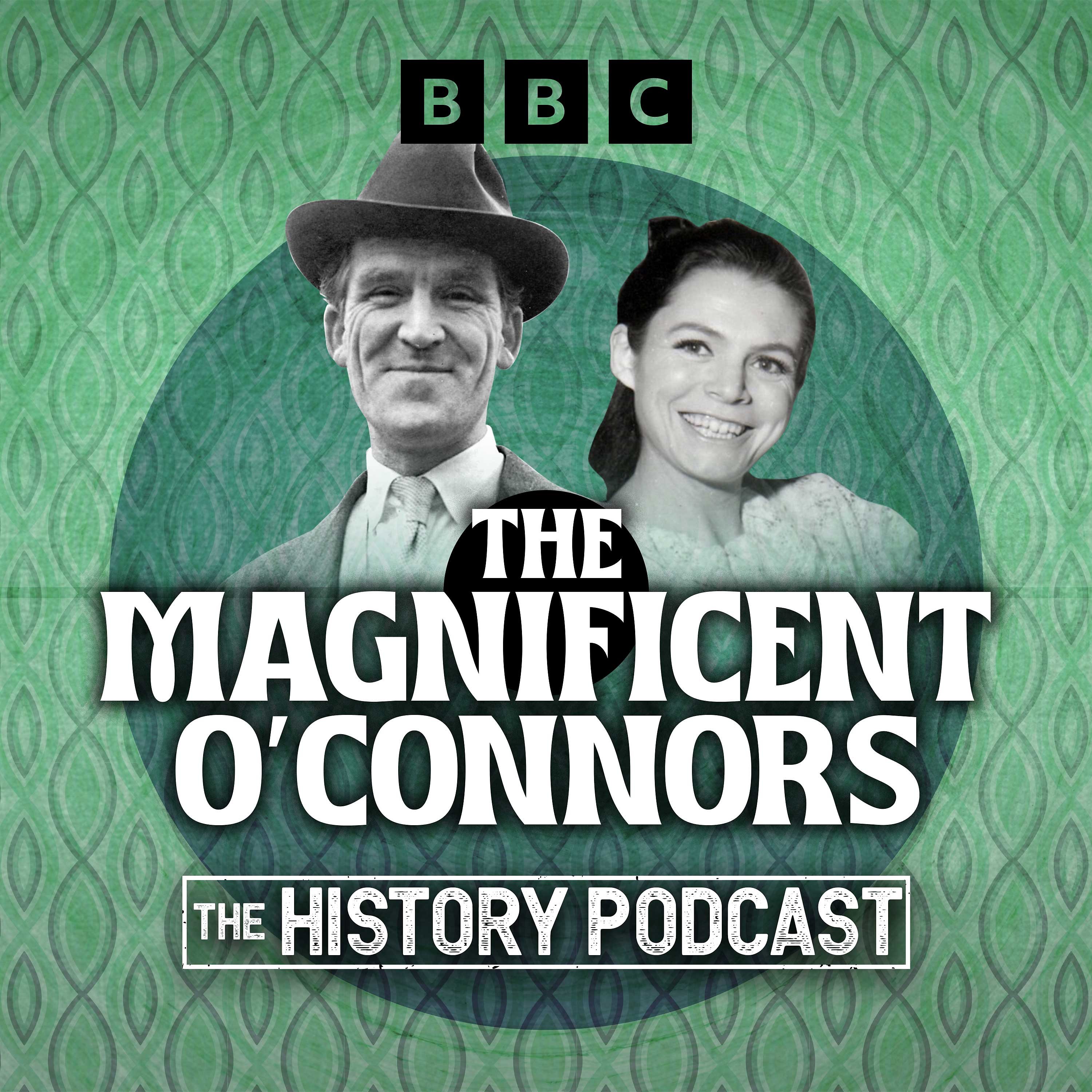
The History Podcast
The Magnificent O'Connors: 3. The Murderer and the Silk
00:29:08
A pardon arrives just in the nick of time. But what do you once you’ve cheated death?
Loading summary
Transcript127 lines
- [00:00]
Ragnar O'Connor
This BBC podcast is supported by ads outside the uk.
- [00:06]
Grainger Advertiser
This is the story of the One. As a maintenance supervisor at a manufacturing facility, he knows keeping the line up and running is a top priority. That's why he chooses Grainger, because when a drive belt gets damaged, Grainger makes it easy to find the exact specs for the replacement product he needs. And next day delivery helps ensure he'll have everything in place and running like clockwork. Call 1-800-GRAINGER Click grainger.com or just stop by for the ones who get it done.
- [00:36]
Asma Khalid
America is changing and so is the world.
- [00:40]
Tristan Redman
But what's happening in America isn't just a cause of global upheaval. It's also a symptom of disruption that's happening everywhere.
- [00:48]
Asma Khalid
I'm Asma Khalid in Washington, dc.
- [00:51]
Tristan Redman
I'm Tristan Redman in London, and this is the global story.
- [00:55]
Asma Khalid
Every weekday we'll bring you a story from this intersection where the world and America meet.
- [01:00]
Tristan Redman
Listen on BBC.com or wherever you get your podcasts.
- [01:08]
Ragnar O'Connor
You're about to listen to the history podcast the Magnificent oconnors. Episodes of this series will be released weekly wherever you get your podcasts. But if you're in the UK, the whole series is available right now, first on BBC Sounds. And this episode contains strong language.
- [01:32]
Jimmy O'Connor
Bentonville Prison, 1942. The only prisoner in this prison is the condemned man.
- [01:43]
Ragnar O'Connor
That's my dad, Jimmy o'. Connor. From a recording he made years and years ago, he's thinking back to when he was stuck in his cell, having been sent to prison for the murder of Don Cambridge, a crime he would always maintain he did not commit.
- [01:59]
Jimmy O'Connor
I don't murder people. I'm a thief and a fucking good one.
- [02:03]
Ragnar O'Connor
Regardless, the wheels of justice were turning and the date of his death was drawing near. Whenever he closed his eyes, he couldn't help but visualize the instrument of his destruction.
- [02:15]
Jimmy O'Connor
We see the gallows and a dangling noose slightly swinging.
- [02:20]
Ragnar O'Connor
But someone somewhere, for whatever reason, had taken an interest in the plight of Jimmy o'. Connor. Just two days before his execution, the cell door swung open. Standing there was the assistant prison Governor. In his hand, a letter from the Home Secretary, Herbert Morrison. It said, now know ye that we are pleased to extend our grace and mercy unto the said James o' Connor and to grant him our pardon in respect to the said convict on condition that he be kept in penal servitude for life. A decision had been made that final appointment with Hangman Albert Pierrepoint cancelled. Even though the letter mentioned the word pardon, it certainly wasn't that he was going to serve out his sentence in prison, the law still viewed him as a murderer, just not one it was going to hang. The relief must have been overwhelming. But Jimmy wanted more than just his life. Jimmy o' Connor wanted justice.
- [03:29]
Jimmy O'Connor
What are the extenuating circumstances that would allow any Home Secretary to reprieve any person of this age caliber? But they do.
- [03:46]
Nemeni Lethbridge
Why?
- [03:50]
Jimmy O'Connor
Because there's a doubt. If there is a doubt, he shouldn't.
- [03:55]
Ragnar O'Connor
Be there.
- [03:58]
Louise Shorter
At all.
- [04:00]
Ragnar O'Connor
And that doubt at the highest level that's always driven us, helped us keep going in our fight to secure justice for dad. I'm Ragnar O' Connor and from the History Podcast and BBC Radio 4, this is the Magnificent Oconnors. Episode three, the Murderer and the Silk. I've already explained that a big part of why our family decided to make this podcast was so we could try one more time to get Dad's conviction overturned. And it would mean a lot to us to get that done while Mum is still alive and kicking. She's 93 years old now, so realistically, this is probably our last chance. We need to get cracking.
- [04:56]
Louise Shorter
Tell me about the case and tell me how you think I might be able to help.
- [05:00]
Ragnar O'Connor
Me and Milo are in the kitchen of our family home in Lystrier Park. That voice you just heard is a visitor, an expert on wrongful convictions. Back in 1942, once he was saved from the noose, our dad tried to do the same thing we're doing now, get justice. We'll come back to what Jimmy did next and how that came to upend Mum's life later in this episode. Before that, I want to tell you about me and Milo's first meeting with the expert sitting across the table from us. Let me introduce you to Louise Shorter.
- [05:35]
Louise Shorter
I've worked on wrongful conviction cases in the past. You know, I worked on a series called Rough justice, which is on the BBC for 27 years. Got 18 murder convictions quashed.
- [05:45]
Ragnar O'Connor
When we first asked Louise if she could help us, she did a fair bit of reading up before coming to visit. She was particularly interested in the fact Dad's sentence got commuted from death to life in prison and why that had happened. Although we didn't know the full reason, we were able to shed some light on the matter for her. A few years ago, we got hold of some really old paperwork that was in the public domain and included correspondence from the Home Office about Jimmy, the letter that sort of explained why his life sentence was commuted. They basically said, look, effectively, we don't really Think he did it? We can't really hang him because we're not convinced it's him. So what we'll do is we'll just put him in prison for life. And that should kind of. That. That'll do it, right? Yeah, kind of thing. I'm paraphrasing massively.
- [06:28]
Louise Shorter
So are you now trying to get his conviction quashed?
- [06:32]
Ragnar O'Connor
That is what we've always been trying to do. It's been. That's all we've ever known. Louise outlines her process for us.
- [06:41]
Louise Shorter
If I was looking at a new case coming into me, and this is no different, I think, in the way that we go about it, and then I would review the case to understand where there might be lines of investigation, where we might gather new evidence, where there might be legal arguments. So that's the process that I think we should go through. Even though your. Your dad's no longer with us, the.
- [07:02]
Ragnar O'Connor
Path Louise is laying out could eventually lead us into making a submission to the ccrc. That's the Criminal Cases Review Commission. They'll decide, based on any new lines of investigation or legal arguments we uncover, whether there is enough grounds to warrant a proper review. But that's a long way down the road, potentially years away. For us, just finding something new to say about Dad's case would be a massive breakthrough. It would show us that after all these years, it's not a hopeless cause and we are not all wasting our time.
- [07:40]
Louise Shorter
I think what we've got to do is try and get to sort of an understanding of what was the basis on which your dad was convicted.
- [07:51]
Ragnar O'Connor
Yes, we're going to keep talking, but not here in the kitchen. Louise is keen to meet Mum, so we all trundle upstairs.
- [08:00]
Louise Shorter
It was very nice to meet you, Nemene, but I feel a little bit of a fraud with you because you're a proper barrister.
- [08:09]
Nemeni Lethbridge
Bit out of date in many ways.
- [08:13]
Louise Shorter
Well, maybe, but your. Your experience is very good.
- [08:16]
Ragnar O'Connor
We take Louise through the case, the discovery of Don Cambridge's body and the circumstances of how dad came to be arrested.
- [08:24]
Louise Shorter
Okay. Okay. And then did. Did any of you ever speak to your dad about.
- [08:31]
Ragnar O'Connor
Yeah, yeah, absolutely. And I would say to him, did you have anything to do with it? He said, I wasn't there. Nothing to do with me. I didn't murder him. Next we look at the trial. As we're talking through what happened in court, one of the things Louise focuses on is whether it was actually claimed during the trial that it was Jimmy who ended Donk's life.
- [08:51]
Louise Shorter
Do you know if the prosecution case was at trial was whether was whether or not he was the one who wielded the iron bar that hit the man. Or did they not who did what?
- [09:02]
Ragnar O'Connor
They didn't state who did what. We also take Louise through the dubious criminal backgrounds of some of the prosecution's star witnesses.
- [09:11]
Louise Shorter
For me, my little radar goes off thinking there is something seriously dodgy going on here. I don't trust this evidence.
- [09:18]
Ragnar O'Connor
Then Louise has a thought. She wonders if any of those dodgy witnesses went on to gain a conviction that would retrospectively cast even more doubts over their honesty. She makes reference to one guy, Bill Waterton. He was the bloke who claimed dad had been planning to burgle Donk for a while.
- [09:36]
Nemeni Lethbridge
We should see.
- [09:37]
Louise Shorter
We could perhaps look to see whether or not, you know, if Waterton was subsequently convicted of something around his credibility that might be quite.
- [09:47]
Ragnar O'Connor
That's a good idea. As we finish talking about what happened in court, we get onto discussing what we don't know about the case. Every time this family has tried to challenge Dad's conviction, there's been a battle to get hold of the evidence that we need. Unbelievably, some of the details are still withheld by the UK government. And then there's other stuff that seems to have just gone missing, like the full trial transcript. We tell Louise that we've never had it.
- [10:17]
Louise Shorter
Where have you looked to try and find it?
- [10:19]
Ragnar O'Connor
We've been to Kew. We've had a look at Kew. Milo's talking about the National Archives at Kew, where all of these sorts of documents are meant to be held. I just think maybe it's an admin error. It's always been missing all our lives. We've known there might be things in the trial transcripts that could be critical when people like Louise investigate miscarriages of justice. Stuff like how the judge summed up the case and how they directed the jury to consider their verdict are the sorts of things they look at first. Because those words in particular are really important. We do know that transcripts were definitely made, as they are referred to in some of the old paperwork we still have. We just don't know where they are now or if they even still exist. Back in the kitchen, Louise talks to me and Milo about the next steps.
- [11:08]
Louise Shorter
I'll probably need to call in friends, lawyers or whoever to be able to sort of help us eventually understand is there a legal base for trying to get the conviction quashed or is it legally sound, if not morally sound?
- [11:22]
Ragnar O'Connor
Gotcha. Gotcha.
- [11:23]
Louise Shorter
That sound alright?
- [11:24]
Ragnar O'Connor
Yeah, yeah. But for this to work, for us to make the most of Louise and her friend's expertise, we have to feed them information that they can use. And that's either going to be new evidence that changes the understanding of the case or new details about the trial that reveals how flawed it actually was. The most likely place we're going to find any of this is in the archive, both the one at Kew and the one beneath our feet. It's all pretty daunting, but we're not alone. In the following days, our podcast producer fires off a Freedom of Information request to the relevant bods in officialdom, asking if we can finally get the remaining papers surrounding Dad's case released to the public. We know it will take some time to hear back, but. But it's a good start. Meanwhile, Milo and I continue going through all of the material we've already got, sending anything of interest. We find documents, tapes, photos onto Louise and the BBC. For now, this all feels good. It feels like we're doing all we can to help get Jimmy justice. Because the thing is, dad never gave up battling his conviction, even when he was in the toughest of circumstances. Dartmoor has the reputation of being Britain's bleakest prison. It lies in the middle of a national park about the size of Greater London. Inside, life isn't exactly a paradise. After his sentence was commuted to life, Jimmy was sent to Dartmoor, an unheated, damp prison with inadequate food and an overpopulation problem. But he used his time to write letters, lots of them, to try and get the police to look at his case again. And it seems like he had some success. While making this podcast, we found a newspaper report describing Chief Inspector Thorpe, the man who'd led the original investigation, going to Dartmoor to interview a man who may be able to give information about the murder of Don Cambridge. This article appeared in the evening standard on the 20th of May 1943. But we couldn't find anything else about it. Nothing to say what came of this visit, who Thorpe had actually gone to see, or what he had been hoping to achieve. And we don't know how any of this affected Dad. A man still pretty much at the start of a life sentence.
- [13:51]
Jimmy O'Connor
What does a life sentence do to long term prisoners? Generally speaking, the first six months is a period of adjustment. Then during the next six to seven years, they enter fully into the corporate life of the prison.
- [14:07]
Ragnar O'Connor
When he wasn't pushing his case, dad worked as a prison librarian. That privilege gave him access to books and he started to read voraciously. But reading wasn't enough. He wanted to find a way to express himself and everything he'd seen over his young but extraordinary life.
- [14:27]
Nemeni Lethbridge
Dad did a creative writing course with Ruskin College, Oxford, and it was in his usual style, which is very cutting edge, and his tutor or supervisor at Oxford, it was done by correspondence, wrote back and said, unless you learn to write proper English, you can't possibly succeed. Then your writing is far too valid.
- [15:00]
Ragnar O'Connor
To the lecturer at Oxford, perhaps the gritty reality of Jimmy's prose was a bit beyond the pale. But he was writing about what he knew from his cell. Jimmy wrote scripts that reflected life as lived, a language that's spoken by real people. And he couldn't stop. Unsurprisingly, there was a theme running through all of it. Justice, or the lack thereof. Although writing provided an escape for dad, particularly as he moved from prison to prison, it couldn't blot out everything that had happened to him. During a stretch at Wandsworth, near the end of his sentence, Jimmy was given a job in the miscellaneous stores. There he came across boxes and boxes full of ropes, white caps and leather straps. All the apparatus you needed to hang someone. Wandsworth, he discovered, was a big distribution center for hanging kits.
- [16:02]
Asma Khalid
America is changing, and so is the world.
- [16:06]
Tristan Redman
But what's happening in America isn't just the cause of global upheaval. It's also a symptom of disruption that's happening everywhere.
- [16:14]
Asma Khalid
I'm Asma Khalid in Washington, dc.
- [16:17]
Tristan Redman
I'm Tristan Redman in London, and this is the Global Story.
- [16:21]
Asma Khalid
Every weekday, we'll bring you a story from this intersection where the world and America meet.
- [16:27]
Tristan Redman
Listen on BBC.com or wherever you get your podcasts.
- [16:36]
Jimmy O'Connor
I've been hung a thousand times. I've had thousands of nightmares where I've actually been trussed up like a chicken and being executed.
- [16:45]
Ragnar O'Connor
But dad clung on and did his time, perhaps fueled by the belief that one day he was going to get everything straight.
- [16:56]
Jimmy O'Connor
At nine o' clock last night, just 23 hours ago, Britain's day of decision was over. The last votes had been cast. The ballot boxes were sealed. Inside them was the secret of this election.
- [17:08]
Ragnar O'Connor
It's the 26th of October, 1951, the day after the general election. Jimmy has reason to feel despondent at the outcome. He believed his chances of getting released anytime soon relied on Labour staying in power. But in fact, it's on Churchill's first day back in office that the news is passed down. Jimmy is to be released from prison on 15th March 1952. Having served close to 11 years inside. But this is still not a pardon. No verdict has been overturned. In the eyes of the law, he's a guilty man and he's told in no uncertain terms. Make one wrong move when you're out and you'll be back inside. You walk out the gate, said all.
- [17:53]
Jimmy O'Connor
The things you must do, mustn't do. I'm under license, I'm like a dog on licence till I die, I don't belong to myself.
- [17:59]
Ragnar O'Connor
He emerges from prison still pushing his agenda to get his name cleared. The plan to create noise in the press and apply pressure to the powers that be. Of course, this was some years before Jimmy met Mum and way before me and Milo were born. So Jimmy had to do it all by himself. In the space of just a couple of weeks, Jimmy's story was all over the front pages. It turns out whipping up publicity was something he was born to do.
- [18:31]
Paul Fishman
I think it was april 52 is when they first met.
- [18:35]
Ragnar O'Connor
That's Paul Fishman. His dad was Jack Fishman, the news editor of a paper called the Empire News. He liked his stories to come with a healthy dose of intrigue. So when Jimmy walked through the door with a pitch for a newspaper investigation to find the real killer of Don Cambridge, Jack saw an opportunity.
- [18:55]
Paul Fishman
In a relatively short period of time, Jack became convinced of Jimmy's innocence.
- [19:01]
Ragnar O'Connor
Fishman ran the story on the front page. Another press clipping for Jimmy's bulging collection. Another signal to Chief Inspector Thorpe that Jimmy wanted his conviction overturned. And that signal was definitely received at Scotland Yard.
- [19:18]
Paul Fishman
Have you seen the. It was one of the documents I came across was a statement from Jack.
- [19:25]
Ragnar O'Connor
Well, there's the statement from Jack where the.
- [19:29]
Paul Fishman
The phone call to police.
- [19:31]
Ragnar O'Connor
So what Paul is referring to here is something that's a big story in both our families. Not long after Jimmy's press campaign hit its peak, he got a message from Scotland Yard asking him to give Inspector Thorpe a call. Jimmy used an office at the Empire News to place that call because it meant Jack could listen in on the extension phone and hear every word that was being said between Thorpe and Dad. Jack would later produce a written statement describing what he had heard. And Milo found a copy of it in our archive. I'd never seen it before. In his own words, this is how Jack remembers that phone call between Thorpe and Jimmy. As soon as I heard a voice at the other end of answer Thorpe, I signaled to o' Connor to speak on the other telephone. The two men's conversation was all about Jimmy Whipping up coverage in the press about his conviction and how Thorpe wasn't happy about it at all. Things got heated and Jimmy became angry. He blurted out to Thorpe, you know I'm innocent and I intend to prove it to me. What Thorpe says next sounds very much like a threat. I'm warning you, drop it or I will put it on you again like last time. And next time it will be for the rest of your life. The bone went dead. Jimmy came off the call completely taken aback. In fact, he was terrified. He believed that if he didn't shut up, the Chief Inspector would indeed see he ended up back inside with no hope of ever getting out. I think it was during the following week that o' Connor came to me and said he was not prepared to go on, as he did not want to go back to jail. Signed Jack Fishman. Holy what? Wow. I mean, what can you say about that? The threat of going back inside was just too much to bear. So Jimmy decided to pull back from the campaign to clear his name for a while, at least.
- [21:34]
Paul Fishman
My father wasn't the most normal of guys at the best of times.
- [21:39]
Ragnar O'Connor
Here's Paul again.
- [21:40]
Paul Fishman
So it's like finding two freaks and putting them in a pod, right?
- [21:46]
Ragnar O'Connor
I've never given it a lot of thought until now, but I wonder if stepping away from the battle to get his conviction overturned actually opened Jimmy up to other things, like forging a friendship with his fellow freak, Jack. And somehow they gelled so well, in fact, that he gave Jimmy a job at the newspaper. I think it was one of his first jobs out of prison.
- [22:10]
Paul Fishman
Yeah.
- [22:10]
Ragnar O'Connor
What was the job? Crime reporter. I know the irony. Dad's life began to change. His first marriage had crumbled pretty much as soon as his sentence finished. So Jimmy was a solo operator and able to throw himself into his work. A large part of which was getting people to talk to him. People who wouldn't usually open up to anyone.
- [22:33]
Jimmy O'Connor
You see, Guns are Born. Yes. There was about six revolvers. There was a Smith and Western Toad, automatic American tile.
- [22:44]
Ragnar O'Connor
And he learned how to pick up stories by hanging out in the right kind of boozers.
- [22:48]
Paul Fishman
He could charm his way into access.
- [22:52]
Ragnar O'Connor
Yeah. Backroom pubs, after hours places with a wide and interesting cross section of society.
- [23:01]
Paul Fishman
Criminals, police officers, royalty, politicians, celebrities. That's a really powerful thing when you can get people to accept you.
- [23:14]
Ragnar O'Connor
And whether it was a dingy East End bar or an upmarket West End nightclub, his ability to not only be accepted in any room, but to become the focal point in it was making Jimmy o' Connor a little bit famous. It's 1958, a Saturday night in London. Jimmy decides to stop by one of his favorite drinking holes. Upstairs at the Star Tavern. We've been here before. As ever, he's in his element, telling disgraceful stories about his exploits in the war. But then a young woman walks in. She catches his eye. He could tell she was a barrister because he recognised the bloke she was with. Sir Lionel Thompson. Jimmy was biding his time, but Sir Lionel came over with the young woman. Her name was Nemenie Lethbridge. Sir Lionel turned to Neme and told her she was about to meet the.
- [24:10]
Nemeni Lethbridge
Most fascinating man in London.
- [24:13]
Ragnar O'Connor
The two quickly fell into deep conversation.
- [24:16]
Nemeni Lethbridge
Jimmy was a very, very fascinating recorder. A very good one. Very funny.
- [24:24]
Ragnar O'Connor
When was the first time that dad mentioned his conviction and his past?
- [24:30]
Nemeni Lethbridge
Straight away.
- [24:32]
Ragnar O'Connor
Straight away. So in the pub that night or afterwards?
- [24:36]
Nemeni Lethbridge
No, in the pub, really.
- [24:39]
Ragnar O'Connor
When it came time for Namini to leave, Jimmy asked if he could take her for dinner. But Sir Lionel intervened, telling Jimmy, behave yourself.
- [24:48]
Nemeni Lethbridge
The next day, it was Sunday and I had been to mass and when I got home, Jimmy was on the doorstep. He said, I wish you was my wife. And I said, in your dreams.
- [25:06]
Ragnar O'Connor
Jimmy pursued Nemeni for about a year. He got himself a flat and started filling it with beautiful furniture. And this was his way of proposing to Mum.
- [25:16]
Nemeni Lethbridge
And he kept on saying, you love this when we're buried. But it just went on and on. And then the other day, I gave in.
- [25:24]
Ragnar O'Connor
Mum's reasons for marrying dad weren't just about love. There was a political dimension too.
- [25:31]
Nemeni Lethbridge
And I somehow felt that if I married him, it would show that somebody convicted of murder could still be a good and valuable human being.
- [25:43]
Ragnar O'Connor
Wow. Okay. And I wondered if she ever questioned whether his motives for marrying her were as equally complicated.
- [25:51]
Nemeni Lethbridge
I think he thought when he married me because he'd married a barrister, he'd hit the jackpot.
- [26:00]
Ragnar O'Connor
I mean, I don't doubt dad loved Mum, but I'm sure the boost to his campaign for justice, even though that seemed to be on the back burner at that time, hadn't completely escaped his attention either. And of course, this decision to get married was always going to create trouble. Sorry, Mum, can I ask you a question? When you accepted Dad's proposal of marriage, did you ever consider the effect that might have on your career?
- [26:33]
Nemeni Lethbridge
Yes. I knew it would be deadly. I thought I might just get away with it. But it's highly unlikely the two decided.
- [26:45]
Ragnar O'Connor
On a low key wedding far away from the Prying eyes of the London social scene.
- [26:51]
Nemeni Lethbridge
We decided to get married in Dublin so that there wouldn't be anything on the record at Somerset House. We got married in the cathedral.
- [27:04]
Ragnar O'Connor
So you were 27 and dad was 41?
- [27:06]
Nemeni Lethbridge
Yeah.
- [27:08]
Ragnar O'Connor
After her wedding, Nemeni went back to her chambers to continue carving out a name for herself. Did you wear a wedding ring?
- [27:16]
Louise Shorter
Yeah.
- [27:17]
Ragnar O'Connor
And no one noticed?
- [27:18]
Nemeni Lethbridge
Well, they noticed, but they didn't ask.
- [27:21]
Ragnar O'Connor
No one seemed to care who Mum had married. And then one day, everyone did.
- [27:29]
Paul Fishman
Your mum and dad were together for at least 18 months before the shit hit the fan.
- [27:35]
Ragnar O'Connor
This is Paul Fishman again. Yeah, that's right, yeah. They managed to keep the wedding secret for a couple of years. That all changed in 1962. Mum and dad were guests at a wedding and so was a lavishly brill creamed reporter from the News of the World. He clocked that they were a couple and that was it. Suddenly the press got wind that Jimmy and Nemenie were husband and wife. One referred to dad and Mum as the murderer and the silk. For Jimmy, it was a reminder that as far as the public were concerned, that was all he was ever going to be. A murderer. Nemele decided to take a short leave of absence and spend a few weeks in Greece, perhaps hoping things would die down. But when she got back, there was a letter waiting for her from her Head of Chambers.
- [28:29]
Nemeni Lethbridge
Dear Nemele, I've instructed the clerk to remove your name from the door and to return your quarters rent. I'm sure you won't want to go into the distressing details of why, but your continued tenancy is a source of embarrassment.
- [28:52]
Ragnar O'Connor
Holy moly. That short letter. Those handful of words which brought Mum's legal career to a shuddering halt. It still makes me mad. And I'm pretty sure it was a decision that had no basis in law. What did you do?
- [29:10]
Nemeni Lethbridge
Well, there was nothing I could do.
- [29:15]
Ragnar O'Connor
On the next episode of the Magnificent o', Connors, we get a major breakthrough in the case, and Jimmy's campaign to get his conviction overturned reaches an audience of millions. Wow. Wow, wow, wow. That was extraordinary. It's like finding the mythical dorky bird or something.
- [29:36]
Jimmy O'Connor
The whole secret of crime is straightening people. Straightening before, while and after. Action.
- [29:42]
Ragnar O'Connor
This is the statement John Andrews. Yeah. Oh, my God. The Magnificent O' Connors is a BBC Audio Scotland production for BBC Radio 4 and the History podcast. It was produced by Emily essen and Victoria MacArthur. Listen to the whole series right now. First on BBC Sounds.
- [30:10]
Rory Stewart
I'm Rory Stewart and I want to talk about Heroes When I was a child, I imagined a heroic future for myself in which I would achieve great things and die sacrificing my life for a noble cause before I was 30. But my experiences in the Middle east and in politics showed me that there was something deeply wrong with my idea of heroism from BBC Radio 4. My podcast the Long History of Heroism explores ideas of what it meant to be a hero through time. How have these ideas changed? Who are the heroes we need today? Listen to Rory Stewart, the Long History of Heroism, first on BBC Sounds.
- [30:52]
Asma Khalid
America is changing, and so is the world.
- [30:57]
Tristan Redman
But what's happening in America isn't just the cause of global upheaval. It's also a symptom of disruption that's happening everywhere.
- [31:05]
Asma Khalid
I'm Asma Khalid in Washington, D.C. i'm.
- [31:07]
Tristan Redman
Tristan Redman in London, and this is the Global story.
- [31:11]
Asma Khalid
Every weekday, we'll bring you a story from this intersection where the world and America meet.
- [31:17]
Tristan Redman
Listen on BBC.com or wherever you get your podcasts.