Podcast
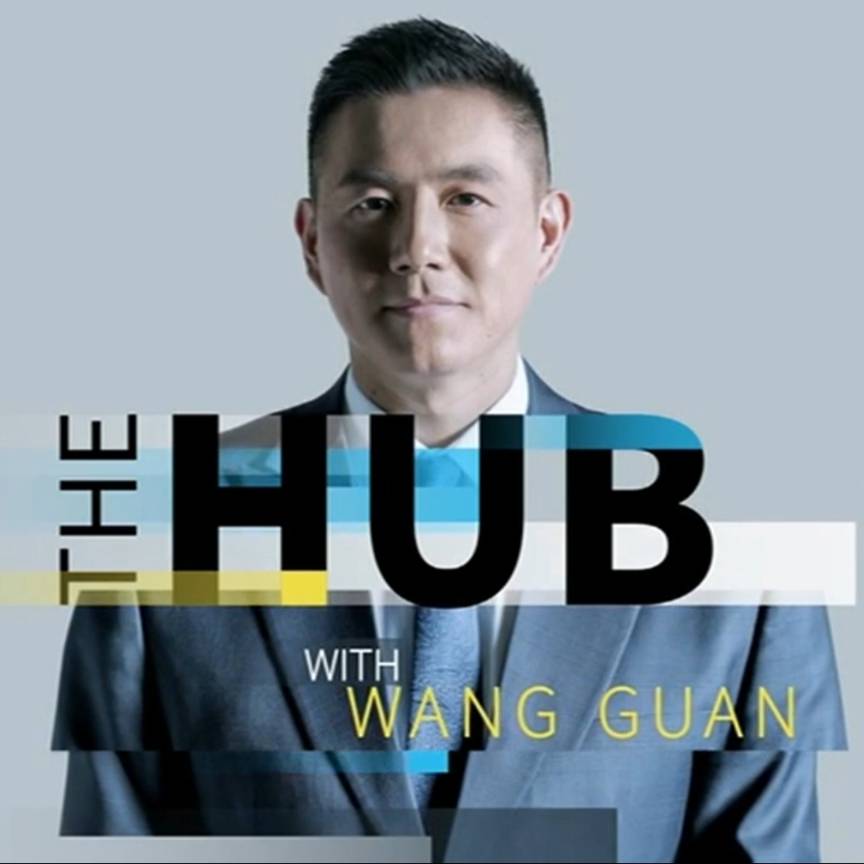
The Hub with Wang Guan
Hosted by China Plus · EN
The Hub covers hot-button geopolitical and economic issues, as well as interesting stories and trends in culture, education, technology and lifestyle. It aims to connect people, cultures and societies across the East and the West.
35episodes
Episodes
Newest firstAll episodes
Middle East conflict: Talks ahead – real diplomacy or tactical pause?
Apr 900:26:00Tap to summarizeA fragile ceasefire between the United States and Iran has raised urgent questions about diplomacy and the US-Israel alliance. As the truce appears to be unraveling, is this the start of real de-escalation, or simply a pause before renewed confrontation? And how might this moment reshape the global order? In this edition of The Hub, Wang Guan speaks to Anton Fedyashin, associate professor at the American University, and John Gong, professor of Economics at the University of International Business and Economics, to explore what drove the sudden shift from escalation to ceasefire and whether upcoming talks in Islamabad can produce lasting results, as Israel just launched its largest coordinated strikes on Lebanon since the war began.
Transcribe →Humanitarian crisis deepens in Iran and the Middle East
Apr 700:26:00Tap to summarizeEscalating conflicts across the Middle East are driving mass displacement and straining already fragile humanitarian systems. What happens when millions are forced from their homes faster than aid can reach them? And how can global institutions respond when crises spread across borders and resources fall short? In this edition of The Hub, Wang Guan speaks with Karolina Lindholm Billing, representative of the UN Refugee Agency in Lebanon, and Salvador Gutierrez, representative of the International Organization for Migration in Iran, to explore the growing scale of displacement across Iran, Lebanon, and the wider region, and examine how humanitarian agencies are adapting to meet urgent needs amid ongoing conflict.
Transcribe →US-Israel war on Iran: Trump declares victory amid ongoing conflict
Apr 200:26:00Tap to summarizeAs tensions rise and costs mount, questions are growing over whether the US can truly claim victory in its conflict with Iran. Can a war be ended by declaration alone? Are Americans beginning to feel the real price of prolonged conflict at home? In this edition of The Hub, host Wang Guan speaks with guests to explore what US President Trump implies in his Wednesday night's primetime address on the war with Iran. They discuss rising energy prices, shifting public opinion, and the strategic uncertainty surrounding the Strait of Hormuz.
Transcribe →Echoes of History: Combing through global trends
Mar 3100:26:00Tap to summarizeIs the world entering a new era of great power rivalry that echoes the years before World War I? What lessons from history can help today's leaders avoid a larger global conflict? In this episode of The Hub, Wang Guan speaks with renowned historian, Professor Odd Arne Westad, Elihu Professor of History and Global Affairs at Yale University. They explore how today's geopolitical tensions compare with the unstable decades before World War I. The conversation examines the risks posed by unresolved regional conflicts, rising great power competition, and a weakening role for international institutions. They discuss the importance of the United Nations, the growing complexity of nuclear deterrence, and why arms control remains essential in a multipolar world.
Transcribe →China's Development Opportunities for the World
Mar 2600:26:00Tap to summarizeChina's new development roadmap is shaping global opportunities in a time of uncertainty. What does China's next phase of growth mean for the world economy? And how can international partners engage in these emerging opportunities? In "China's Development Opportunities for the World," the special roundtable of The Hub, CGTN host Wang Guan sits down with Zhou Xing, head of Public Affairs at PwC China; Zhou Mi, senior research fellow at the Chinese Academy of International Trade and Economic Cooperation; Zha Daojiong, professor at Institute of South-South Cooperation and Development, at Peking University's School of International Studies; and John Milligan-Whyte, chairman of the America-China Partnership Foundation, to examine the global economic landscape as China advances its 15th Five-Year Plan, focusing on high-quality growth, stronger domestic demand, and the rise of new quality productive forces.
Transcribe →