Podcast
The Human Risk Podcast
Hosted by Human Risk · EN
People are often described as the largest asset in most organisations. They are also the biggest single cause of risk. This podcast explores the topic of 'human risk', or "the risk of people doing things they shouldn't or not doing things they should", and examines how behavioural science can help us mitigate it. It also looks at 'human reward', or "how to get the most out of people". When we manage human risk, we often stifle human reward. Equally, when we unleash human reward, we often inadvertently increase human risk.
To pitch guests please email guest@humanriskpodcast.com
To pitch guests please email guest@humanriskpodcast.com
22episodes
Episodes
Newest firstAll episodes
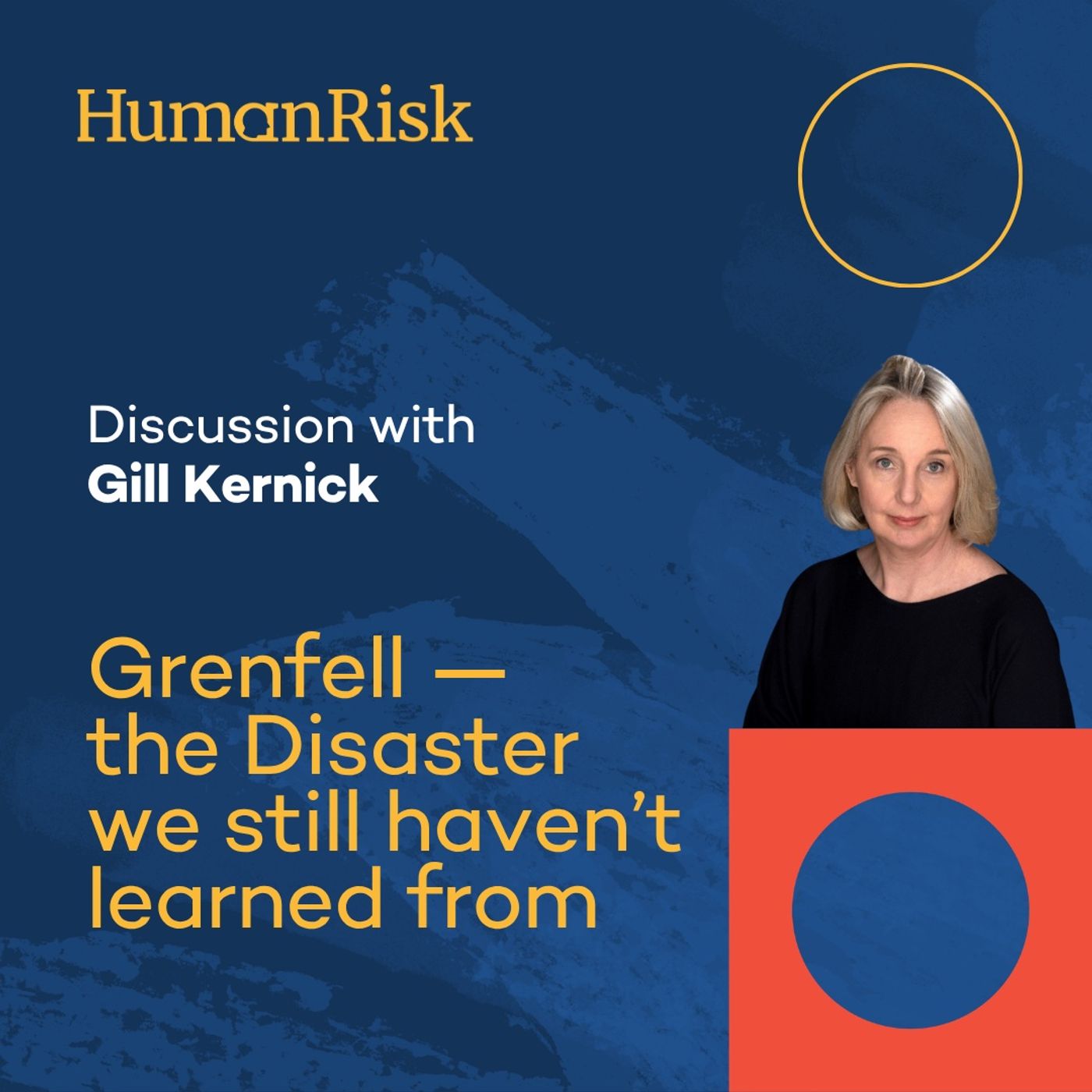
Gill Kernick on Grenfell - the disaster we still haven't learned from
2w ago00:57:48Tap to summarizeWhen something goes badly wrong, we investigate it. Reports are written. Recommendations are made. Lessons are identified. But do we actually learn them?Episode SummaryReturning to the show, Gill Kernick joins me to discuss the substantially revised second edition of her book about the Grenfell Tower disaster, following the publication of the Grenfell Inquiry's final report. Gill has a unique perspective on Grenfell. She lived on the 21st floor of the tower before moving out three years before the fire. Professionally, she has spent decades helping organisations in high-hazard industries understand leadership, safety and major accidents.When Gill first appeared on the podcast, the Inquiry was still underway. Seven years later, its conclusions have revealed an even more disturbing picture—not of one catastrophic mistake, but of systemic failure involving government, regulators, manufacturers, certification bodies and the construction industry.But this episode isn't just about Grenfell. It's about why organisations struggle to learn from failure, why compliance isn't the same as understanding, why we crave simple explanations for complex problems, and why genuine learning is much harder than writing another report. If you haven't already listened to Gill's previous appearances on the podcast, I'd strongly recommend doing so. Together, the conversations chart how understanding evolves as new evidence emerges.What you'll learn In this episode In a wide-ranging discussion, we explore:Why Gill decided to write a second edition after the Grenfell Inquiry concludedThe shocking scale of the systemic failures uncovered by the InquiryWhy disasters rarely have a single root causeThe hidden dangers of deregulation and "compliance theatre"Why organisations identify lessons but rarely learn themThe importance of understanding the spirit—not just the letter—of regulationWhy complexity requires different kinds of leadershipHow AI might help organisations learn lessons in real timeWhy hope is, as Gill puts it, "an act of resistance"AI-Generated.Timestamp Summary00:00 – Do we really learn lessons from disasters?02:45 – Gill's personal connection to Grenfell Tower05:15 – Why the second edition became necessary after the Inquiry 06:30 – The Inquiry's most shocking findings10:00 – When regulators knew the risks—but failed to act12:00 – Implicit trust and why we rely on systems we don't understand13:00 – Deregulation and the unintended consequences of political narratives17:00 – Compliance versus understanding the intent behind regulation20:00 – Why regulations struggle to keep pace with technology and complexity24:00 – Hope as an act of resistance 25:00 – Why we don't actually learn lessons 27:00 – Is a seven-year inquiry too long?33:00 – Why "post-Grenfell" reforms miss the real point37:00 – Communities of grief and change 39:00 – Why Gill rewrote the book instead of writing a new one44:00 – How the experience changed Gill's own thinking 50:00 – Speaking up in ways that actually get heard53:30 – Practical advice for learning in complex systems55:00 – "Lessons learning" instead of "lessons learned" 59:00 – Final reflectionsLinksGill's website, The Grenfell EnquirerHer book 'Catastrophe & Systemic Change'Gill's LinkedIn: Her previous show appearancesGill Kernick on the Grenfell Tower Disaster — Part OneGill Kernick on the Grenfell Tower Disaster — Part TwoTopics discussedGrenfell Tower Inquiry – Final ReportThe Grenfell Enquirer (articles and resources)Arup's Building Safety Change FrameworkPeople and ideas mentionedDave Snowden (Cognitive Edge)Cynefin Framework overviewBackground incidents referencedPiper Alpha disaster (Encyclopaedia Britannica)Lakanal House fire (Wikipedia)Deepwater Horizon oil spill (Encyclopaedia Britannica)
Transcribe →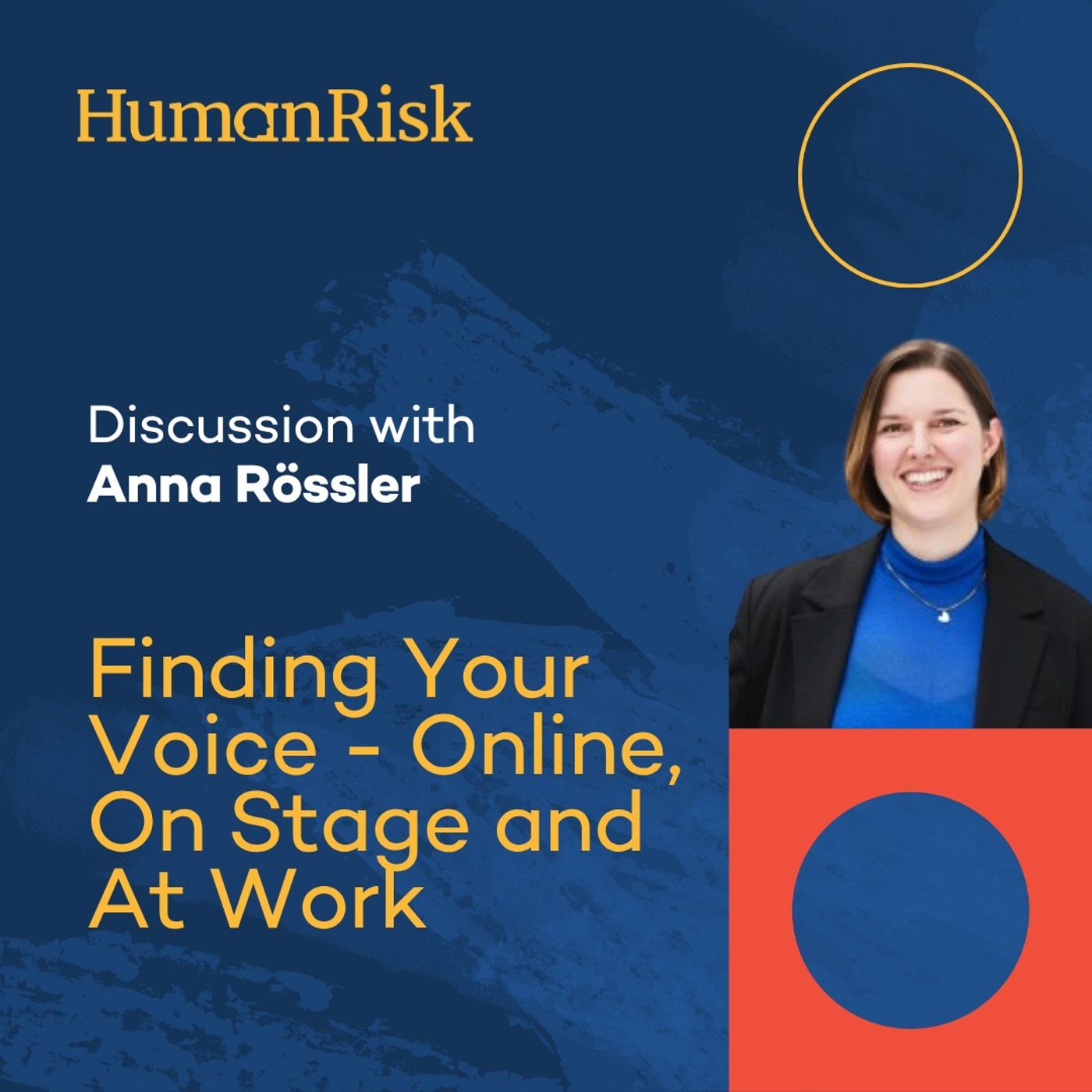
Anna Rössler on Finding Your Voice — Online, On Stage and At Work
Jul 501:01:12Tap to summarizeWhat does jazz singing have to do with LinkedIn? More than you might think. This week's guest, Anna Rössler, has built a career helping senior leaders find their voice online while simultaneously developing her own as a singer-songwriter. Rather than separating her professional and creative identities, Anna has found a way to bring them together, and in doing so offers some valuable lessons about authenticity, confidence and human connection. We explore why so much online content feels performative, how AI is changing the way we communicate, and why the best personal brands aren't really about branding at all. Along the way we discuss experimentation, creativity, stage fright, networking, and the importance of building a life around the things that genuinely energise you. Whether you're trying to communicate more effectively at work, build a presence online, or simply find more balance between your career and your passions, there's plenty to take away from this conversation. Episode SummaryOn this episode, we discuss:Why authenticity is more than simply 'being yourself.'How personal branding is really about building trust.Why social media should be treated as a conversation, not a broadcast.The hidden metrics that matter more than likes and impressions.How to use AI without losing your own voice.Why experimentation beats chasing algorithms.What performing music teaches us about confidence and communication.How side passions can make us better professionals.Why designing your environment is often more important than motivation.The value of creating a life that gives you energy instead of draining it.Guest ProfileAnna Rössler is a marketing and LinkedIn specialist who helps organisations and senior leaders communicate more effectively through content and personal branding. Alongside her marketing career, she's an accomplished jazz and pop vocalist, songwriter and performer. Her work sits at the intersection of communication, creativity and authenticity, helping people find a voice that genuinely sounds like them—whether they're posting on LinkedIn or performing on stage. Follow Anna on LinkedIn and on her personal website.
Transcribe →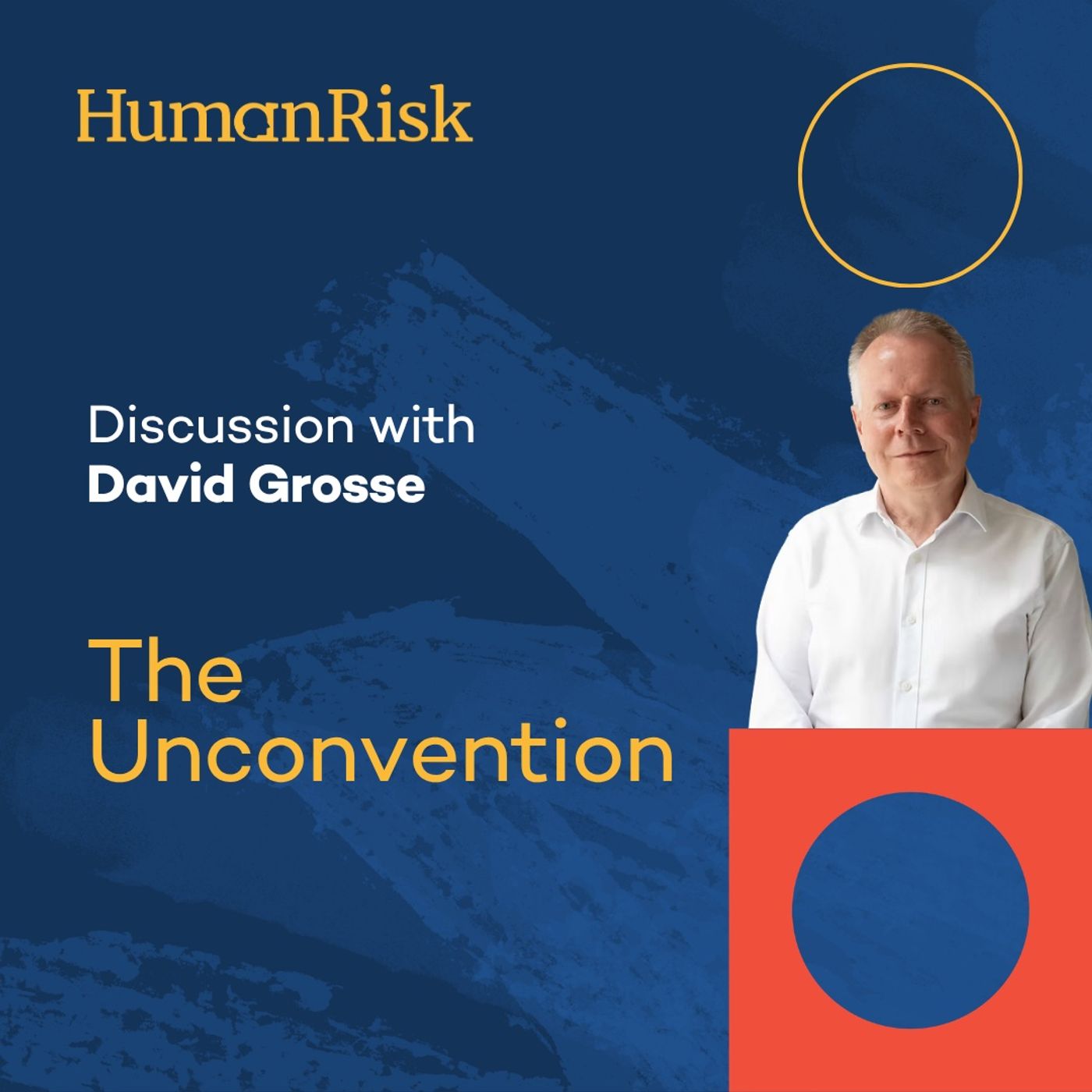
David Grosse on The Unconvention
Jun 2500:48:41Tap to summarizeWhat happens when two people who spend their careers thinking about human behaviour meet in a London pub and start complaining about conferences? Apparently, they decide to organise one.Episode SummaryIn this episode I'm joined by David Grosse, founder of behavioural risk advisory firm Behavor, to talk about The Unconvention, an event we're creating together that aims to rethink how conversations about risk, culture and human behaviour actually happen. But this isn't just an episode about an event.David and I explore why organisations continue to treat behavioural risk as a niche topic, despite human decision-making sitting at the heart of almost every organisational failure. We discuss why so many conferences on culture and conduct feel formulaic, why measuring culture through board packs can miss the point entirely, and why stories often reveal far more than statistics ever can.Along the way we touch on Silicon Valley Bank, Plato's Cave, behavioural science, organisational culture, productive discomfort, and why the best events might leave you with fewer certainties than when you arrived.If you're curious about The Unconvention, or simply interested in why we think there has to be a better way to have these conversations, I hope you'll enjoy listening.LinksDavid on LinkedIn David's company Behavor The Unconvention Website and ticketing site.AI-Generated Timestamped summary00:00 – Christian introduces the episode and explains how a conversation in a London pub led to the creation of The Unconvention.02:20 – David shares his journey from chartered accountant and banker to behavioural risk specialist, and explains why human behaviour became the focus of his work.05:30 – Why behavioural risk still isn't taken as seriously as other forms of risk, despite sitting behind so many organisational failures.11:30 – Christian and David discuss what's wrong with many industry conferences, from scripted panels to sponsor-led agendas, and why they rarely change anyone's thinking.18:00 – The conversation turns to culture, governance and why dashboards and board packs can never fully capture human behaviour.24:30 – Stories, rather than statistics alone, often provide the richest insights into how organisations really work.29:00 – The origins of The Unconvention and the principles behind creating an event that deliberately breaks with conference convention35:30 – Why attendees are being invited to help shape the event, and how behavioural thinking has influenced everything from the format to the ticketing model.42:00 – Christian and David discuss what they hope participants will take away: curiosity, productive discomfort and conversations that continue long after the event ends.48:45 – Final details on The Unconvention, where to find David, and the unexpectedly simple story behind the name "Behavor".
Transcribe →
Freewheeling on Human Risk with Thomas Ableman
Jun 1100:45:27Tap to summarizeWhy is it so hard to stop people playing vides, music or phone calls out loud on public transport — and what does that tell us about changing human behaviour? Show Summary This episode of The Human Risk Podcast is a little different. It is a cross-cast from The Freewheeling Podcast, hosted by Thomas Ableman, in which I join Thomas to tackle a problem raised by the show's most important listener: his mum.The issue? People using phones, videos, music and speaker calls out loud on trains and buses. What begins as a seemingly small transport etiquette problem quickly becomes a much bigger conversation about social norms, antisocial behaviour, customer experience, incentives, enforcement and the limits of signage. In our discussion, we explore why simply telling people to stop may not work, how reactance can make things worse, and why transport operators need to think more creatively about behaviour change.Along the way, we consider quiet carriages, “electronic entertainment carriages”, cheap headphones, better-targeted messaging, staff intervention, social media campaigns and the wider question of whether public transport operators are responsible for the behaviour of the humans they carry.The Freewheeling Podcast The Freewheeling Podcast is a show for transport change-makers. It explores how we can move forwards faster, bringing listeners fresh voices, new ideas and unconventional thinking.While it has a strong focus on transport and mobility, the show also ranges into entrepreneurship, politics, public policy, cities and how systems can be designed to work better for the people who use them.Links The Freewheeling Podcast - https://www.freewheeling.info/the-freewheeling-podcastThomas on LinkedIn - https://www.linkedin.com/in/thomasableman/
Transcribe →
Jill Wick on The Human Side of Cybersecurity
May 3001:03:16Tap to summarizeWhat if the best way to improve cybersecurity — or any other form of human risk — wasn't another policy, training course, or piece of technology, but a board game? That's the kind of question my guest, Jill Wick, loves asking.Episode Summary Jill is a cybersecurity awareness consultant, business psychologist, podcaster, and author. Her work sits at the intersection of psychology, marketing, behavioural science, and cybersecurity, and she is passionate about helping organisations understand that security is fundamentally a human challenge, not simply a technical one. Drawing on her experience in fraud prevention and her academic background in business psychology, Jill explains why traditional approaches to awareness often fail, why experimentation matters, and how a simple Snakes and Ladders-inspired game can create meaningful conversations about risk and decision-making. The discussion ranges far beyond cybersecurity. We explore creativity, curiosity, communication, organisational culture, social media, learning, and the challenge of measuring success when the outcome you're seeking is something that doesn't happen. Key TopicsIn this episode, we discuss:Why cybersecurity is ultimately a human problem rather than a technology problemThe psychology behind phishing, scams, and social engineeringWhy more policies and more training often fail to change behaviourHow unclear policies can create confusion instead of complianceThe role of curiosity, creativity, and experimentation in risk managementHow games can create psychologically safe environments for learningThe importance of conversation and peer learning in awareness programmesWhat compliance, safety, conduct, and operational risk professionals can learn from cybersecurity awarenessWhy awareness professionals should think more like marketersThe value of experimentation, iteration, and A/B testingHow social media can help build communities around important ideasWhy measuring engagement may be just as important as measuring failuresGuest BiographyJill Wick is a cybersecurity awareness consultant, business psychologist, author, and podcast host who specialises in the human side of cybersecurity. Drawing on a background in fraud prevention and behavioural science, she helps organisations build stronger security cultures through creative, engaging approaches that go beyond traditional training and compliance. Known for her innovative use of games, psychology, and marketing techniques, Jill is a passionate advocate for making cybersecurity awareness more human, effective, and enjoyableLinksJill's LinkedIn profile - https://www.linkedin.com/in/jill-wick/Jill's website - https://www.jillwick.com/Cyber & Psych, Jill's podcast - https://open.spotify.com/show/5uteiqHvCTGCVtCsKCzGJ6?si=322ef51fd6a3423c&nd=1&dlsi=c6d8309550784df9Security-Awareness-Tools, Jill's book - https://www.isbn.de/buch/9783658511111/security-awareness-toolsAI-Generated Timestamped Outline00:00 – Introduction02:15 – Jill's background: From fraud prevention and business psychology to cybersecurity awareness.05:30 – Understanding why people fall for scams, phishing attacks, and social engineering.06:00 – Why cybersecurity is fundamentally a human problem, not just a technical one.08:00 – The limitations of rules, policies, and traditional awareness training.12:00 – The origin of Jill's cybersecurity board game and why simplicity matters.14:00 – How games create psychologically safe conversations and improve learning.19:30 – The game as a conversation tool: building culture, peer learning, and engagement.22:00 – Creativity, curiosity, and the courage to experiment with new approaches.26:00 – What cybersecurity awareness can learn from marketing, advertising, and A/B testing.35:30 – Why awareness and technology must work together rather than compete.41:30 – New projects: workshops, events, games, and Jill's forthcoming book Security Awareness Tools.44:00 – Lessons for compliance and risk professionals: attention is a limited resource.51:00 – Measuring success: engagement, participation, reporting, and positive signals.
Transcribe →
Tobias Sturesson: from cult to corporate culture
May 2301:08:08Tap to summarizeWhat can businesses learn from cults?It might sound like an uncomfortable comparison: one involves strategy meetings, values statements and quarterly targets; the other manipulation, charismatic leaders and extreme behaviour. But perhaps the distinction isn't as clear as we'd like to think. Both create identities and shared beliefs. Both shape how people think and behave. And both can evolve gradually in ways that are hard to recognise from the inside.Unhealthy cultures rarely appear overnight. Small compromises become normal, difficult questions become harder to ask, and behaviours that once felt uncomfortable slowly become accepted.Episode Overview On this episode, I'm joined by Tobias Sturesson, culture advisor and author of You Can Culture, whose understanding of organisational culture comes not from business school, but from a deeply personal experience growing up inside a religious community that gradually evolved into a cult.Drawing on his own story — and his work helping organisations create healthier cultures — Tobias explains why good people can become part of unhealthy systems, why speaking up is often far harder than leaders realise, and why culture is shaped far less by mission statements than by the everyday behaviours people learn to accept.We also explore:How communities and organisations can slowly drift into unhealthy patternsWhy leaving damaging environments is often much harder than outsiders imagineThe role of sunk costs, identity and belonging in keeping people trappedWhy organisations often mistake symptoms for root causesThe difference between “tone from the top” and “example from the top”Why humility may be one of the most underrated leadership traitsThe dangers of leaders creating the appearance of listening without genuinely hearing peopleWhy culture initiatives often fail to create lasting behavioural changeHow everyday leadership habits shape organisational cultureWhy discomfort is often necessary for growthGuest Profile - Tobias SturessonTobias is a culture advisor, speaker and author focused on helping organisations build healthier cultures and develop more responsible leadership practices. His work combines personal experience with research and practical interventions designed to help organisations identify and address the root causes that undermine cultural health. He is the author of You Can Culture: Transformative Leadership Habits for a Thriving Workplace, Positive Impact and Lasting Success.Links Tobias on LinkedIn – https://www.linkedin.com/in/tobiassturesson/Heart Management - https://www.heartmanagement.org/Tobias' Book: You Can Culture – https://youcanculture.com/AI-Generated Timestamped Summary 00:00 — Introduction: What can cults teach us about culture?03:00 — Tobias's story of growing up inside a community that became a cult08:30 — How unhealthy environments evolve gradually11:00 — Why leaving can be harder than joining13:00 — The importance of people who help without judging16:00 — Turning personal experience into professional purpose19:00 — Why organisations often misunderstand their own problems23:00 — Humility as a leadership strength26:00 — The tension between expertise and curiosity29:00 — Why business systems often reward the wrong behaviours33:00 — The importance of listening and asking better questions38:00 — Why reflection matters in fast-moving environments42:00 — Culture as everyday conversations and habits45:00 — Leadership signals and behavioural norms49:00 — Building healthier cultures through leadership habits53:00 — Why changing culture is difficult but necessary56:00 — Creating a movement for healthier leadership
Transcribe →
Will Tarrant on Service: Closing the gap between brand promise and reality
May 801:00:59Tap to summarizeWhat makes great service? It’s one of those things we instantly recognise when we experience it, but struggle to define. And while organisations spend huge amounts of time trying to design seamless customer experiences, the reality is that service doesn’t happen in strategy documents or training manuals. It happens in real time, between real people, in messy and unpredictable situations where eventually the playbook runs out. Episode OverviewIn this episode, Christian is joined by Will Tarrant, CEO of Freeman Group, who focus on helping organisations close the gap between what they promise customers and what actually gets delivered in reality. Drawing on decades of experience across hospitality, aviation, healthcare and destinations, Will explains why compliance-based training can sometimes increase hidden risk, why empowerment without judgment can quickly become chaos, and why the real differentiator in service is rarely the process itself — it’s the human response when something unexpected happens. Along the way, the conversation explores:Why “making people feel a certain way” is the real job in hospitalityThe hidden risks created by over-reliance on scripts and SOPsWhy organisations often confuse solving problems with compensating customersThe psychology of customer perception and expectationHow hotels, airports and even destinations manage emotional experiencesWhy breakfast might be the best indicator of a hotel’s qualityThe tension between automation and human interactionWhy good service recovery is about judgment, not generosityAs Will puts it: “Compliance-based training reduces visible risk, but it increases hidden risk.” Although framed around hospitality and customer service, this episode is really about something much broader: how humans make decisions when the script no longer applies.Guest Profile - Will TarrantWill Tarrant is the CEO of Freeman Group, a consultancy that helps organisations design and deliver service cultures that align operational reality with brand promise. The company works globally across hospitality, aviation, healthcare, retail and tourism destinations. LinksWill on LinkedIn - https://www.linkedin.com/in/willtarrant/Freeman Group website - https://freemangroupsolutions.com/AI-Generated Timestamped Summary00:00 — Introduction: Why service failures create risk02:30 — Closing the gap between promise and reality07:00 — Hospitality is about making people feel something11:30 — The hidden risk of compliance-based training13:00 — What happens when the playbook runs out15:00 — Scripts, authenticity and service style16:00 — Measuring service quality19:00 — Perception is reality20:00 — Why empowerment needs structure22:00 — Seeing service everywhere24:00 — The timeless mechanics of good service26:00 — Automation versus human interaction29:00 — “The customer is always your customer”30:00 — Solving problems versus compensating customers33:00 — Inheriting other people’s problems36:00 — Hiring for judgment, not just experience39:00 — The changing status of hospitality careers43:00 — Humans as the source of unpredictability47:00 — Why hotel breakfast matters50:00 — Choice overload and decision fatigue53:00 — Applying service thinking beyond hospitality55:00 — The gap between marketing and operational reality
Transcribe →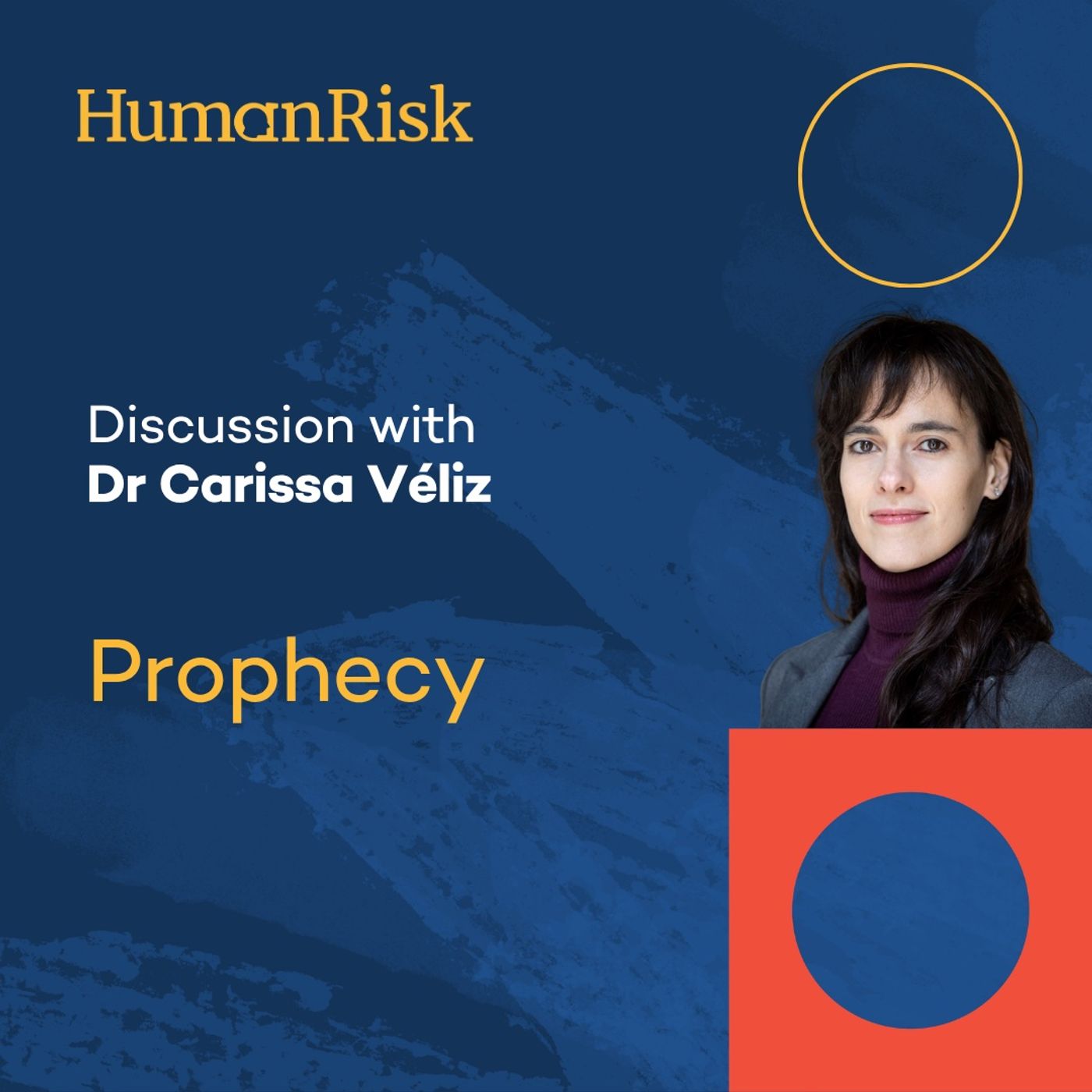
Dr Carissa Véliz on Prophecy
Apr 2501:02:31Tap to summarizeWhat if prediction isn’t about knowing the future, but controlling it? On this episode, I'm joined by a leading thinker on digital ethics, privacy and technology to explore the idea of prophecy.Episode SummaryMy guest is Dr Carissa Véliz and in our discussion, we talk about humanity’s long-standing obsession with predicting what comes next, and why today’s algorithms may be the most powerful (and dangerous) prophets we’ve ever created. From ancient oracles and court astrologers to modern AI systems and tech executives, we explore how prediction has always been less about knowledge and more about power. What becomes clear is that while the tools have changed, the underlying dynamics haven’t. We still crave certainty, we still look for authority, and we’re still willing to trust those who claim to see the future. The difference now is scale: predictive technologies don’t just forecast behaviour; they shape it. And the more accurate they appear, the less likely we are to question them. We then explore responsibility. If prediction influences reality, then our willingness to accept it matters. This episode is a reminder that the future isn’t something that simply happens to us, but something we’re actively participating in, whether we realise it or not.Guest BioDr Carissa Véliz is Associate Professor of Philosophy at the Institute for Ethics in AI and a Fellow at Hertford College at the University of Oxford. She is a leading thinker on digital ethics, privacy, and technology. She is the author of several books including her latest release 'Prophecy: Prediction, Power and the Fight for the Future, from Ancient Oracles to AI' and 'Privacy Is Power: Why and How You Should Take Back Control of Your Data 'Her work explores how data, AI, and predictive systems reshape society—often in ways that are invisible but deeply consequential. Drawing on philosophy, history, and real-world systems, she examines how power operates through technology and what individuals and institutions can do to resist it.AI-Generated TImestamped Summary[00:00:00] Opening: prediction as something that shapes—not reveals—the future[00:01:00] Why prophecy is a lens for understanding modern AI[00:04:00] Kings, prophets, and the risks of getting predictions wrong[00:06:00] Survival strategies of ancient astrologers[00:08:00] Why humans crave certainty—and who exploits it[00:10:00] The danger of mistaking wealth for wisdom[00:12:00] Prediction as a tool of power throughout history[00:14:00] Surveillance as the foundation of modern prediction[00:16:00] How predictions shape behaviour (self-fulfilling dynamics)[00:17:00] Publishing as a case study in manufactured success[00:21:00] The strange economics of pre-orders and attention[00:23:00] Insurance: from solidarity to individualised risk[00:26:00] The hidden systemic risks of personalised prediction[00:30:00] Why citizens need to reclaim agency[00:31:00] Laziness vs values: why we default to algorithms[00:33:00] Tech creating problems it then claims to solve[00:34:00] The role of humour as truth-telling[00:35:00] Why algorithms would have killed Seinfeld[00:40:00] Practical alternatives: preparation over prediction[00:42:00] The importance of serendipity[00:43:00] Rediscovering the analogue world[00:46:00] Algorithms shaping culture and environments[00:48:00] Optimism vs doom in thinking about technology[00:50:00] Writing as exploration, not predictionLinksCarissa's website - https://www.carissaveliz.com/Her new book, Prophecy - https://www.carissaveliz.com/prophecyHer previous book Privacy Is Power - https://www.carissaveliz.com/booksCarissa's faculty page - https://www.oxford-aiethics.ox.ac.uk/dr-carissa-velizCarissa on LinkedIn - https://www.linkedin.com/in/carissa-v%C3%A9liz-a5781555/
Transcribe →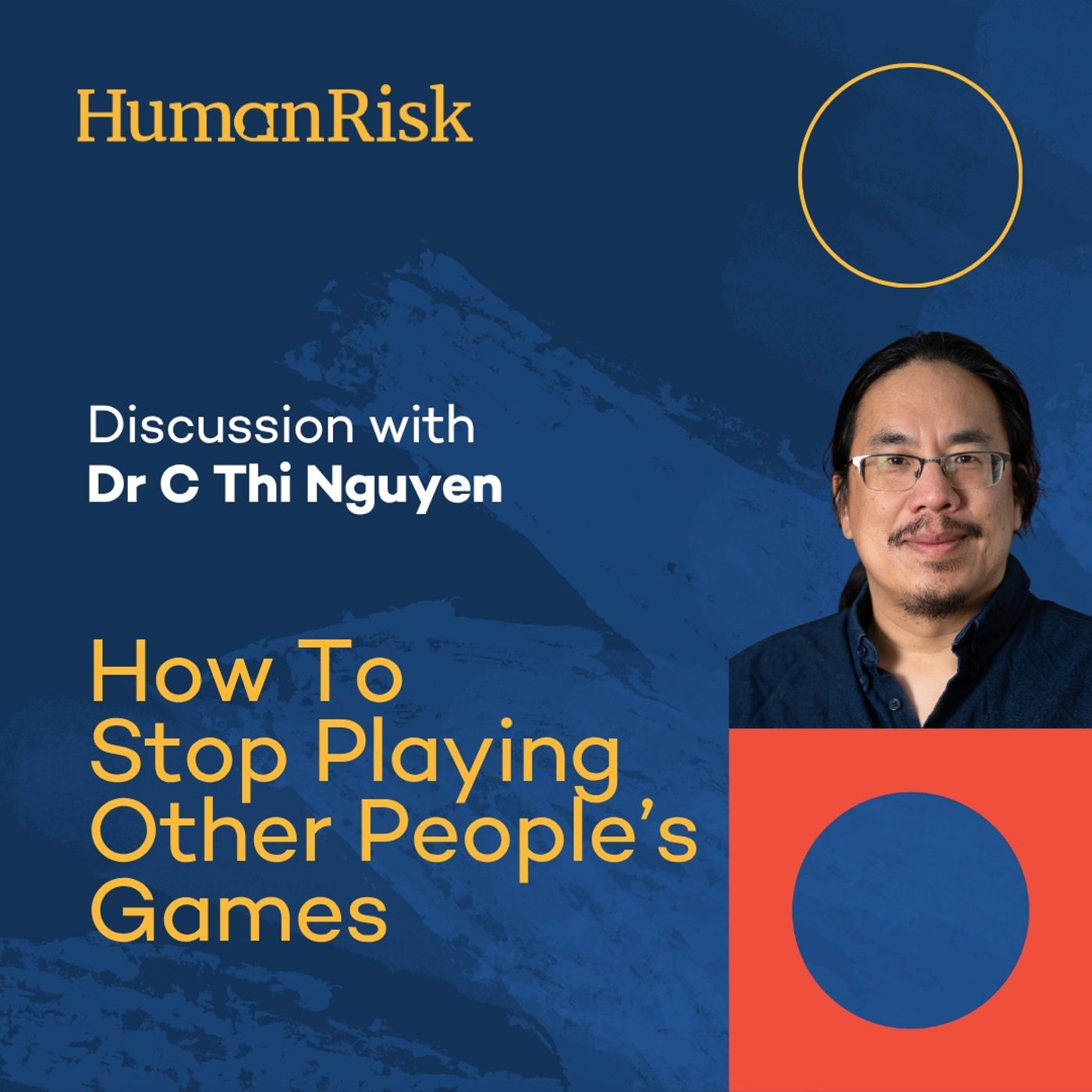
Dr C Thi Nguyen on How to stop playing someone else's game
Apr 1201:08:38Tap to summarizeWe like to think we choose what matters. But what if the goals we’re chasing… aren’t actually ours?Episode Summary My guest on this episode is Dr. C. Thi Nguyen, philosopher and author of The Score: How to Stop Playing Somebody Else’s Game, a book about how metrics, scoring systems, and “games” shape our behaviour—often without us realising it. Thi explains how his work on games led him to a deeper question: why do scoring systems make games feel meaningful, but make real life feel distorted? The answer lies in how metrics redefine success—quietly shifting us from what we care about to what we can measure.In a wide-ranging discussion, we explore the idea of “value capture”, why institutions rely on simplified proxies, and how the very features that make metrics useful also make them dangerous. We also discuss expertise, transparency, gamification, and why removing metrics altogether doesn’t solve the problem. This is a conversation about control: who sets the rules, who keeps score, and what happens when we stop questioning the game we’re playing. Guest BioDr. C. Thi Nguyen is a philosopher whose work explores how games, metrics, and social systems shape human behaviour and values. A professor of philosophy at the University of Utah, his research sits at the intersection of ethics, decision-making, and the philosophy of agency, with a particular focus on how the structures around us influence what we care about and how we act.Alongside his academic work, Thi is also a keen gamer, rock climber, and cook; interests that inform his thinking about play, challenge, and the richness of human experience beyond what can be easily measured.AI-Generated Timestamped Summary 00:00 – Introduction: games, metrics, and meaning03:00 – How Thi came to study games and philosophy07:00 – What games are (and why they matter)10:00 – Achievement vs striving play13:00 – Cheating and misunderstanding the point of games16:00 – Games, struggle, and meaningful activity18:00 – Cooking, recipes, and rules22:00 – Metrics as simplified rule systems25:00 – Value capture and how metrics reshape goals29:00 – Why institutions rely on measurement32:00 – Quantification and loss of context36:00 – Rules, algorithms, and expertise40:00 – Standardisation and the cost of consistency43:00 – Transparency, trust, and unintended consequences47:00 – Metrics and the loss of expert judgment50:00 – Ungrading and the limits of removing metrics54:00 – Designing better scoring systems58:00 – Gamification and why it misses the point01:02:00 – Choosing your own game01:06:00 – Final reflections and closingRelevant LinksThi’s personal website – https://objectionable.net/His faculty page - https://profiles.faculty.utah.edu/u6021584The Score: How to Stop Playing Someone Else’s Game - https://www.penguin.co.uk/books/457380/the-score-by-nguyen-c-thi/9780241653975Thi on Bluesky – https://bsky.app/profile/add-hawk.bsky.social
Transcribe →
Phil Dobson on Cognitive Leadership
Apr 401:09:30Tap to summarizeWe tend to assume that if we’re working hard, we’re working well. But what if that isn’t true?Episode SummaryMy guest on this episode is Phil Dobson, author of The Brain Book and founder of Brain Workshops, about what he calls 'cognitive leadership': using neuroscience and psychology to help people sustain performance, think more clearly, and navigate uncertainty. Phil explains how a broken ankle led him from music and sales into hypnotherapy, neuroscience, and leadership development, and why he believes most of us are never properly taught how our brains actually work.In a wide-ranging discussion, we explore the difference between productivity and effectiveness, why attention may be our most valuable asset, and how modern working life often undermines flow, creativity, and good decision-making. We also discuss stress, workload, digital distraction, the limits of measurement, and what organisations get wrong when they try to manage people as if more time always equals more value.Discover how leaders can create better conditions for thinking, resilience, creativity, and change; and why understanding the human brain matters far beyond the workplace.Episode Summaruywhy most of us are taught far too little about how our brains workPhil’s unusual route from musician to hypnotherapist to neuroscience-based leadership adviserthe difference between being productive and being effectivewhy self-employment sharpened Phil’s focus on impact rather than activityhow experimentation, iteration, and reflection shape better ways of workingthe distinction between fun and fulfilmentflow states and why modern life makes them harder to accessthe growing importance of attention in a world of distractionwhy stress management has to include workload management, not just breathing techniqueshow rest, breaks, and so-called “unproductive” time often drive insight and creativitywhy measuring people too narrowly can damage performancehow understanding the brain helps leaders navigate change and uncertaintywhy improving human decision-making matters not just for performance, but for reducing costly mistakesAI-Generated Timestamped Summary00:00 — Introduction: busyness vs effectiveness02:00 — Phil’s journey into cognitive leadership07:00 — Productivity vs effectiveness (and the 80/20 shift)12:00 — Experimentation, habits, and fulfilment17:00 — Flow, focus, and attention under pressure22:00 — Attention as a critical (and under threat) asset27:00 — Why knowing isn’t the same as doing31:00 — Rethinking productivity: energy, creativity, and insight36:00 — The neuroscience of better thinking (default mode network)40:00 — Measurement, management, and leadership challenges45:00 — Human performance beyond the workplace50:00 — Human error, decision-making, and risk55:00 — Evolving work: shorter weeks and smarter working58:00 — Leading change with a brain-based approach01:03:00 — Final reflections and closingRelevant LinksPhil's website - https://phildobson.com/Brain Workshops - https://brainworkshops.co.uk/Phil on LinkedIn - https://www.linkedin.com/in/brainworkshops/The Brain Book - https://www.amazon.com/Brain-Book-Smarter-Concise-Advice/dp/1910649732
Transcribe →