← The Human Upgrade: Biohacking for Longevity & Performance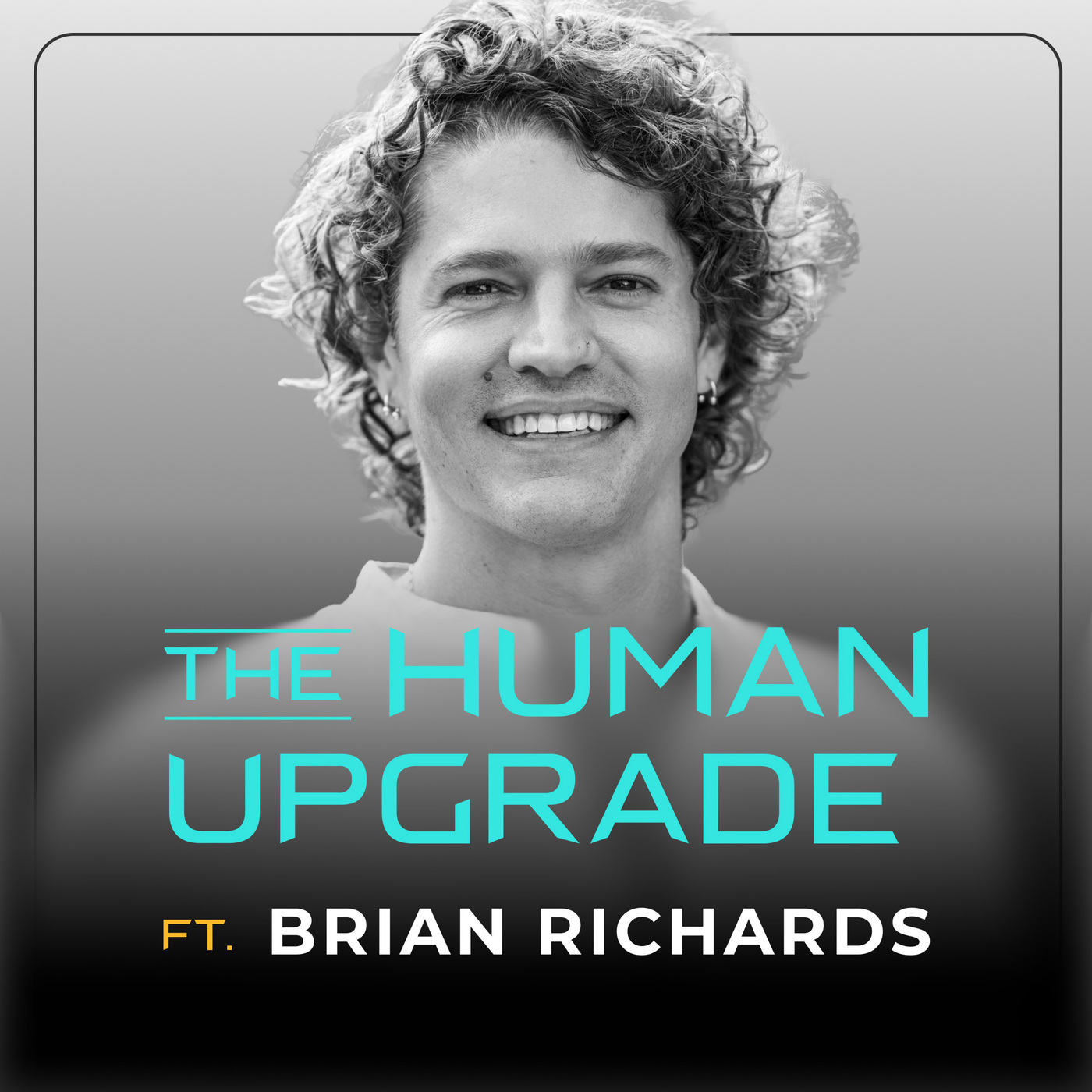
The Human Upgrade: Biohacking for Longevity & Performance
The 1910 Secret: How Light Turns Water Into Medicine | Brain Richards : 1497
01:00:11
Loading summary
Transcript136 lines
- [00:00]
Brian Richards
If you get blue light only in the morning, like you wake up, let's say you're like, oh, I'm not looking at my phone first thing of the day. But you go into your bathroom, flick the LED light on, because to go to the bathroom, you're programming your hormones to be stressed out and messed up. For men, if you get a lot of watch TV late at night, you can wake up the next day with half the testosterone level in your blood that you're supposed to have. And our mitochondria absolutely slow down in their efficiency when they get too much blue light. One day is okay, but you do that every day. Yeah, it's horrible for fertility and just everything. We don't have any built in biological protection really from it. And it causes oxidative stress.
- [00:37]
Dave Asprey
What's the antidote for this?
- [00:38]
Brian Richards
If you're really dark skin, you need more near infrared light than someone who's much more pale.
- [00:46]
Dave Asprey
You're listening to the human upgrade with Dave Asprey. Maybe you've got your nutrition right and you're sleeping well. You take the supplements. You do cold plunges, red light therapy, breathwork, and a full stack of biohacking protocols. But why does the same health challenge keep showing up? Tyler Watson studies this pattern. He says a missing piece isn't another supplement or surface level fix. Sometimes the issue is a hidden pattern in your body in something called cellular memory. Tyler made something called the cellular alignment technique, and he helps people identify what those patterns are so you can shift out of them and stop getting the same outcomes. So you're not chasing symptoms. You're chasing the underlying trigger of the symptom trigger. Want to understand what's driving you back into the same health? And save years of time, money and energy figuring it out. Visit fastest change.com that's fastest change.com. it's really interesting. Want to know which foods and supplements work best for your body? Viome takes the guesswork out of it. Their full body intelligence test reads your rna, not your DNA. So you see what's happening in your body right now. While standard Labs measure around 100 markers, Viome's AI analyzes over 10,000 and active pathways across your gut, oral and cellular health. Then it translates that into personalized food and supplement recommendations built for your unique biology. They'll tell you what foods to eat and which ones to avoid. They even create custom supplements and oral care products based on your results. So what you're getting is what will work for your body, not someone else's. Your results update as Your lifestyle changes, so your plan evolves with you. Check it out@viome.com and use code 10D A V E for 10% off. It's time to stop guessing and start knowing your body. You already probably figured out by now that I'm kind of a fan of light therapy. I started one of the first consumer light therapy companies that I'm no longer active with and I've been using it for almost 20 years. And you've also probably heard me talk about saunas and the benefits of heat exposure over the entire course of the podcast, including the first 10 episodes going. I think this is kind of a big deal, guys. Here's the, here's the data. And since then, biohacking has become a $36 billion industry. And you've heard newer biohackers on the scene talk about the incredible benefits of sauna that have been proven with old tech, like really old tech in Scandinavia and some newer studies as well. And for years we've talked about all the different ways you can get light into the body. But one of my favorite ways and probably the most important way other than sunlight itself, is good old fashioned incandescent. So I'm bringing an expert in incandescent light therapy, as well as infrared sauna engineering and just human performance onto the show to share some information with you about the differences in wavelengths of the type of sauna that you might want to get. And we're going to go in a deep dive on how does this stuff actually work inside your cells? His name is Brian Richards. He's the founder of Sauna Space. And I've got a sauna space set up, oh, about 20ft away from the studio where we are right now. Brian, welcome to the show.
- [04:16]
Brian Richards
Thank you for having me, Dave. So glad to be here. Grateful.
- [04:20]
Dave Asprey
Now, what made you get into incandescent light therapy?
- [04:25]
Brian Richards
Yeah, it starts with my mom actually, as so many things do. So I was dealing with some health issues. I had an adrenal fatigue and acne on my back and I was, I had a lot of insomnia, just kind of was kind of low energy, kind of lethargic. And my mom, who's, she's a naturopathic based physician, she's always been super avant garde. She was prescribing supplements and vitamins in the 80s in Montana where I grew up. Wow.
- [04:53]
Dave Asprey
Not a lot of those in Montana.
- [04:55]
Brian Richards
Yeah, no, she was really a rare bird back then. So, yeah, she said, brian, you probably just need to detox and you should use a sauna to do so, but she also said, specifically, you should try a near infrared sauna. And so I, I did my own research. I looked this up and it's really interesting. It dates back to over 130 years ago. It's called the electric incandescent light bath. So there was this right after light bulbs were invented. There's this guy, Dr. Kellogg, who started using it at his, at his, at a sanitarium in Battle Creek, Michigan. And he's a really weird guy, right? He was trying all this different stuff.
- [05:30]
Dave Asprey
This is the same Dr. Kellogg behind Kellogg's Cornflakes, right?
- [05:34]
Brian Richards
That's his, that's him and his brother. Yeah, but he, he did, he, he said, oh, male libido, masturbation, it's this big societal problem, right? We need to feed men Bran these
- [05:44]
Dave Asprey
boring corn flakes, right?
- [05:45]
Brian Richards
And his brother added sugar to it and created Kellogg's form flakes and like, went super commercial and corporate. But he was all about healing people and using natural approaches. He's a really weird guy. Really interesting. Anyway, he, he tested this on 50,000 chronically ill patients over a hundred years ago. Wrote this book called light Therapeutics in 1910.
- [06:05]
Dave Asprey
I have a copy of it.
- [06:07]
Brian Richards
Oh, it's. It's incredible. Yeah, I'm so glad you have a copy of it.
- [06:10]
Narrator/Host
It's.
- [06:10]
Brian Richards
He, he was able to heal pretty much every type of illness he confronted, whether it was chronic illness or even like trauma wounds, like snake bites, but cardiovascular issues, people with depression and mood stuff, people with autoimmune issues. And, and so this idea of using incandescent light bulbs to heat the body, I was really intrigued by. And so I was like, I, I can build one of these. I'm going to build my own. And so I did.
- [06:34]
Dave Asprey
That's so cool.
- [06:35]
Brian Richards
And, and, and yeah, that was the start of it. I used it right before bed and I slept really well. And I was like, whoa, there's something here. And so I continue to use bright
- [06:44]
Dave Asprey
light therapy right before bed.
- [06:45]
Brian Richards
And slept well.
- [06:46]
Dave Asprey
Yeah.
- [06:46]
Brian Richards
Yeah, well, I, I didn't understand anything about light therapy in the beginning for sure. But now I understand there's no blue light, so we're using red filtered incandescent bulbs.
- [06:56]
Dave Asprey
Okay. Yep.
- [06:58]
Brian Richards
So, so yeah, no, none of the blue, none of the ultraviolet. And it was this huge relaxation to my nervous system. And also there's some interesting research into sauna improving sleep as well.
- [07:08]
Dave Asprey
You've talked about sauna does improve sleep. And red light before bed is great, as long as it's not too bright in your eyes, bright on Your skin works really well. Okay.
- [07:18]
Brian Richards
Yeah. So it worked for me, and I continued to use it, and I was just really blown away. It was not just like a clearing of my acne and some other things. It was a big shift in my cognition. I realized I had some brain fog, and it cleared up, and I was sharp, and I was like, just focus and really mood. The qualitative mood. Like, I felt more myself. I felt more positive. And that was the start of it I was making for friends and family. And actually, really when it started is I was in rental real estate still. At the time, that was kind of my main thing I was doing, fixing up houses. And I got an early call from a customer, and she's calling me crying, but crying tears of joy. And she starts telling me, brian, I've used your sauna that you made for me for, like, three months. And when I started, I had lost my job and I couldn't leave my house because of all these severe autoimmune issues I was having. And her just. Her whole life was all wrecked, all messed up. And she said, I have to tell you, Brian, like, I got my job back. I got my life back. And. And it was only, like, a few months of using this, and I was like. It was. For me. It was. It was a message from God. I was like, what am I doing with these rental houses? You know, here's a person. I'm. I'm able to transform people's lives. There's. There's no collection of rent. You know, there's none of all of that.
- [08:36]
Dave Asprey
Right.
- [08:37]
Brian Richards
So I basically dropped my tools at that point and. And went and got a business loan, a small business loan, and. And started sauna space.
- [08:43]
Dave Asprey
Wow.
- [08:45]
Brian Richards
It.
- [08:45]
Dave Asprey
It's a very different feeling than a typical, typical sauna. It's more like being in sunlight. Right. You're there, and you feel yourself warming in a way that the closest would be just sitting in bright sunlight. But you get sunburned in the sun. You don't get sunburned when you're doing this. And it seems almost forgotten. You mentioned going back to 1910. Somewhere in the house, I have this 1920s device, they sold millions of them that uses plasma. And it looks like you're plugging in something that might be a curling iron, but the end of it is this hollow glass tube that's full of some kind of noble gas. And you plug it in, you run it over your skin, and sparks are coming. Yeah. A violet ray, they call it. And this was what everyone used for hair growth and all. And this is another kind of light in RF therapy. But these were commonplace and now you just don't hear about it or see it. But it's not like it ever stopped working. It's that the people were like, chemicals are the way they jumped in. I also have a book, not the one that you mentioned, about how in hospitals, not just one, but many hospitals, they were using colored light therapy. So they put filters in the windows and the sun would shine through and they would filter out some colors of light and then people would get better. So all that just went away. How did you just come across that so randomly? Like very few people understand this stuff.
- [10:11]
Brian Richards
When I started, there was a small number of people, it was very niche, I suppose, who were recommending using near infrared sauna because of this light therapy component, like bringing in this different, different feeling, this different therapy. 120 years ago, light therapy was all the rage. There was Dr. Gadi Ali that was doing his spectrochrome therapy where different, different color filters with a light bulb behind it shining on different organs. And there was Dr. Babbitt, Dr. Dinshaw, there was Dr. Kellogg. And they all, you know, as you know with the publication the Flexner Report and the rise of the ama, these people were persecuted to the ends of the earth. Dr. Gadiali was like jailed, relegated to, you know, his, his property, I forget where it was. At the end of his life after he died, like they came in and destroyed all of his machines, like the whole thing. But. But there's still like this. Yeah, sort of an undercurrent for a long time of people who are still very passionate about this.
- [11:06]
Dave Asprey
It's funny you mentioned the Flexon Report. So the American Medical association was funded by Rockefeller and the goal of this thing was to get rid of things that competed with anything made out of things that Rockefeller could control. Mostly petroleum derived chemicals and the amount of evil. Morris Fishbein was the guy who, who started it and he tried to buy something called rife technology. I've had a couple episodes of Biochargers based on that. And when he couldn't buy it, he's like, okay. Then he sent Jack booted thugs out and destroyed all the tech and all the lab records that they could and they still survived. And these technologies that are real, that have great science behind them, that are older and they're canceled. And since I don't really like cancellation, ever since Joe Rogan tried to cancel me, which was kind of ironic given the whole pandemic thing, I'm like, oh, I Know what that's like. And so I always, I always say if something's worth the AMA canceling it, it's probably really works.
- [12:04]
Brian Richards
Well, yeah, it's probably something we should check out.
- [12:06]
Dave Asprey
And if you're with AMA now and that offended you, dude, look in your history books, like this is actually what happened. And you may not be motivated that way, but your organization is. And you should probably get a mirror.
- [12:17]
Brian Richards
Yeah, most doctors were naturopath doctors and then the petrochemical doctors came in and. But even like 130, 140 years ago, you had the choice you could go to one or the other. But there's obviously, yeah, there's a concerted effort to basically wipe everything out. Chiropractics is wiped out. There used to be cancer spas all over the US they really understood quantum healing and frequency healing. Without all the microscopes and sort of the modern analytical tech that we had, they understood a lot better, many ways than today how to respect and harness and activate the built in healing power of the body.
- [12:54]
Dave Asprey
Yeah. And they also sometimes did weird stuff. I'm not convinced that drinking water that's been sitting in radioactive ore is probably the right healing modality. And so there's some stuff that probably needed regulation. It's just it was economically driven regulation and maybe some safety things. Although if it was, you know, the current crop of evildoers out there, they probably would have been like, yes, let's promote radioactive water. We can sell more drugs. So who the heck knows? But. But back to light therapy. So you got into this because you've looked at the history of it. You reminded me a lot of, of something happened when I was 18 years old, so I was already getting pretty close to 300 pounds. I bought an iguana and he was like 8 inches long. Like this would be kind of a cool pet. I didn't understand that he was going to grow to be about four, four and a half feet long. So I had this little dinosaur that would ride it around on my shoulder. But he grew that big because I went online and what would now be Reddit at the time was called Usenet and talked to other owners and they're like, look, if you don't have the right spectrum of light, he'll die. And, and if he doesn't have the right ratio of minerals, mostly calcium and magnesium, he'll die. I was like, wait a minute, why is it that this lizard needs all this stuff and I don't? And that was one of the things that stuck in my head. Like I'VE seen the effect on something where I have control of its environment. So what about me? It took me a little while longer to go, you know, this ultraviolet light thing would be important. And in one of the books I even wrote about the role of melanin on the skin and the eyes, on electricity and humans being photosynthetic and all the stuff that people are like. Humans are not photosynthetic, yet 10% of our, of our electrons can come from light. Now, if people are using sauna space, is that the kind of light that actually energizes ourselves?
- [14:34]
Brian Richards
Yeah, absolutely. If you look at the sun, it's a full spectrum emission. And people focus a lot on the ultraviolet light and the visible light because ultraviolet light tans you. So you get this like, immediate response. But actually that's really a minority of the power of the sun. Over 70% of the wattage we absorb is, is in what's called near infrared. So just beyond the visible range, just beyond red. It's really not a whole lot of red. It's mostly near infrared. Part of that is like the nature of the spectrum itself, that the peak is in near as close to near infrared from the sun. But it's also because near infrared light penetrates all the way through the body. It's the deepest penetrating of all wavelengths. So we have these mitochondria in our body that absorb these wavelengths of light, red and near infrared. And that's what light therapy is. But the light therapy from the sun is mostly near infrared. And that's most of our experience with the sun. When we're out there and we feel warm from within and we feel good, you know, there's something about it. It's just like, oh, this makes me feel good. It's really the near infrared that's nourishing us. It's not so much the ultraviolet light, even though there is a vitamin D response, it's because ultraviolet light is ionizing. So it is damaging our cells, is causing oxidative stress and, and, and damage like all the time. But with that little bit of stress, we get this huge, overwhelming big dose of healing. Near infrared.
- [15:55]
Dave Asprey
It's funny, all the studies that the industry used to, to justify sunscreen, they took isolated just ultraviolet light, not sunlight. And they said, look, it's bad for skin and cells. But if you take a tiny bit of stimulating UVB and a huge amount of infrared, which is in sunlight, the infrared actually causes the skin to heal more than the ultraviolet does. So UV becomes a stimulating thing. So the whole mechanism for sunscreen is based on just junk science where UVB itself, with nothing else, is toxic. But UVB as part of sunlight is not toxic. But you can get a sunburn after a while, especially if you don't know how to eat. But what you're doing with sun and space is interesting because you're getting the ultraviolet completely taken out. So you get just the near infrared. So when you sit in a sauna space, it feels different than a steam sauna, dry sauna, even a far infrared sauna, because it's this, like, intense. It feels like sunlight.
- [16:53]
Brian Richards
Yeah.
- [16:54]
Dave Asprey
And it, it definitely has a different effect on my body. And I believe at this point, infrared light is a nutrient. In fact, all light's a nutrient. And if you're in a typical environment where somebody who didn't understand light just said, well, you know, it would be cheaper if we had light bulbs that didn't have any infrared because you can't see it, it's useless. That's not how it works. There's a lot of things that you can't see that affect your body, like carbon monoxide. So things you can't see might matter because they could kill you or make you stronger.
- [17:23]
Brian Richards
Right.
- [17:23]
Dave Asprey
Or you can't see nitrous oxide either. But if you breathe some of that, it might make you laugh, right? That's laughing gas. So, duh, Even big powerful magnets, you can't see it. But somehow we, we think, oh, because we can't see this light, it doesn't affect us. But many things affect us. So if you're in a sterile light environment that's full of junk light where all the infrared stripped out, your body is getting the stimulating signal of blue light from LEDs and it's getting no repair signal at all. And here's my question for you. I know I'm getting a massive beneficial dose of infrared when I go into my sauna space. Does it kind of store up in the body? Am I undoing a day's LED indoor lighting harm when I spend 20 minutes in a sauna space?
- [18:04]
Brian Richards
It's a great question, I would say. Yeah, absolutely. So near infrared light has a photoprotective effect against ultraviolet and blue light, and that's why we're supposed to see the sunrise.
- [18:14]
Dave Asprey
Yes.
- [18:15]
Brian Richards
Not a whole lot of ultraviolet and blue, a lot of red and near infrared. It has those nourishing healing effects. And it also has this protective effect from future blue and future ultraviolet light that you get like later in the day when it's more powerful. So nowadays, right, we're in this weird modern indoor environment, all the light is blue. It's all LED based, most all of it, or fluorescent, which is all. Again, it's mostly like it's very blue dominant and we're missing that healing component that we normally had. So, yeah, if you, if you get into a sauna space in the morning, it's not just having those healing effects sort of in the moment, it's throughout the day. It's protecting you and keeping you vital for so many other. It's not just the things that we've talked about. There's also antioxidants that are produced. So glutathione and melatonin are primarily produced by light. It's near infrared light that creates these glutathione and melatonin antioxidants subcellularly, like most of our production of melatonin, which is the body's number one antioxidant in many ways. And glutathione is a great binder. Some people take glutathione supplement before the sauna, but in sauna space, your cells are producing natur, these very things that they need to support health and healing and vitality in the cells throughout the day.
- [19:33]
Dave Asprey
There are definitely studies that infrared will upregulate glutathione production. That's assuming you have the genes to make it and you have the raw materials to make it. So I don't have a hard time doing both. And in fact, I think it's a good idea to do that or maybe to take a binder like charcoal before, because your body will start excreting more toxins. Your joints have repair cells that rebuild your tissues constantly. But under enough stress or with enough time, those same cells are going to flip and then they start to break down instead. And once that happens, it just keeps going. The good news though, is your joint damage isn't permanent because it turns out those cells that repair your joints, you can switch them back into repair mode. And that's why the scientists at Calroy developed cardiogenics HP in a placebo controlled trial, the same kind used by big pharma people taking cardiogenics HP saw major improvements in joint regeneration biomarkers and they saw increased joint space on imaging. So this is groundbreaking because that means that the lab work says that the joints are better and the imaging shows that they're better. And an average of 67% reduction in pain scores and an average of 50% increase in the distance they could walk in 90 days of taking. Taking cardiogenics if you want a deeper dive into the science, check out the human upgrade episode 1338 where I interviewed a research microbiologist who advises Calroy about how they made this formula. Calroy also makes Arterasil hp which I've been taking for a decade because of the hardcore research behind Calroy, the lead with real science and it shows. Go to calroy.comdave to get the research. Get a discount and a 45 day money back guarantee. This stuff works. Have you ever promised yourself you would do things differently only to end up right back in the same pattern? The same relationship, the same habit, the same reaction, the same result? Predictive mind helps explain why you complete an assessment and then review the results in a one on one session. Their brain pattern mapping process reveals the hidden drivers behind your behavior and decision making. So you can finally see see what has been shaping your choices all along. This goes beyond personality tests and self help advice. Predictive mind maps the patterns that influence how you react, how you make decisions and why certain cycles keep repeating in your life. Once you can see the pattern, you can start changing it. If you've ever felt stuck, frustrated or confused by your own behavior, check this out. Go to predictivemind IO/dave and use code Dave for 10% off your brain pattern mapping session.
- [22:07]
Brian Richards
Yeah, binders are huge. I'm a huge fan of binders. Our sauna makes you uses radiant near infrared light to heat you up, so it actually heats you up so fast. The sauna sessions like the one you have, the supersonic, it's only about 20 minutes. So I usually take a binder actually right when I get in because smart by the time we're done. Yeah, not all the toxins are sweated out. Many go to the bowels and so having charcoal clay, different toxin binders, like things that have boron in it, are good. There's different ways to do that. But yeah, it's highly recommended to just take a binder to help accelerate the elimination.
- [22:43]
Dave Asprey
Okay. It's a good practice in general to take a binder on occasion. I don't think you want to take one every day because it can bind to some good stuff. But before doing a session it's a really good idea. Now there's, there's some other interesting water chemistry that happens and there's something else I do before I get in my sauna space and no one quite understood this. There's a guy named Gerald Pollock, you're probably familiar with him and he's in his 80s now and has spoken at the biohacking conference. He's probably eight years ago now. And I raised a bunch of money for his lab and made a $50,000 donation. And he went out and said, well, how do we make more of this thing called exclusion zone water in ourselves? This is in fact, if you say something like structured water, in fact we should probably beep that, then they literally won't let you talk about it. So exclusion zone water though is something that there's entire books he's written about it. You can see it on a microscope. Like this is an actual change in the viscosity of water. And in order to do it, in order to make it, what your body does is it takes some water that you drink and it holds it up against little droplets of fat called cell membranes and then it charges it with infrared light. And that combination of the droplets of fat plus infrared light changes water. And it turns out the kind of fat matters. So what he discovered was if you blend grass fed butter and MCT oil into, I don't know, say danger coffee. Although he didn't study danger coffee, I think he was using just generic hot water. It creates the highest exclusion zone he's ever seen in his career. And that was a direct quote he told me. And he published a paper on this with photos of it. So before I get in to my sauna space, I will make some danger coffee and I use espresso because it has tiny droplets of coffee oil in it that are anti inflammatory in and of themselves. And I add some butter and I add some MC and I blend it up and I drink it while I'm in there. And what happens there is that now my body's able to make even more energy. And all of the water in my body, that is bulk water, that hasn't been transformed to be the kind of water you use to fold proteins and make ATP, all of that gets transformed. So I'm supercharging my body's ability to make use of the infrared. A lot of people think, oh, infrared, it's just heating me up, heats off proteins. No, it's actually making the machinery of life the Krebs cycle, it's lubricating it. And is that a part of the teachings that you have about sauna space?
- [25:20]
Brian Richards
Yeah, absolutely. And really near infrared is the most interesting because this is the only wavelength that goes, for example, through your skull into your brain. So we want that exclusion shown, that structuring of water, basically making water more bioavailable so it can do its job better. There's two ways to do that it's vortexing water. Right. Or, or it's, it's light. And the only light that's going to go deep, not just into the brain, but the core of the body is, is near infrared. So yeah, it's a level up that's going on where water can just do its job. It's not just in the cells and moving nutrients around. There's like the whole myofascial system of the body and the lymphatic system of the body. These are, this is literally like a liquid crystalline matrix within your body that enter is part of the energy pathways of the body and the metabolite pathways of the body. And, and it all works better. The energy production, the delivery of nutrients, the conveying away of waste when water it's in its correct state. And here's something also really interesting. The water or the blood? Blood is mostly water, right. When the blood goes through the heart, the heart is shaped. The different chambers of the heart are shaped so that the water in the blood vortexes as it goes through the heart. And so that's one example of all these different ways in which our biology is designed to put water back into this state. And so also getting lots of near infrared light is a key component to having this work. Right. Even more than that, there's this concept of redox potential in the cells. This is a huge thing. So our cells are supposed to have negative 4 millivolts or so of electrical potential basically. And when that's charged up right. Negatively cellular signaling and everything like works really well. But as that drops because we have acidic lifestyles and we're stressed out all the time, that voltage drops and, and things don't work well. So the light is also the near for light is also coming in and repolarizing that electrical potential which is crucial for. For yeah. Optimal cellular function.
- [27:31]
Dave Asprey
Wow. It's everything you said. There passes my scientific understanding of how things work. Even the heart being a vortex. Most people, especially if you've been through med school, say oh it's a pump. Well it has a pumping effect but it actually works like a vortex. And if you take a heart and being a farmer you get to do this kind of a thing. You can actually cut it the right. And it kind of unfolds and it's coiled up as basically a V shaped funnel. And of course there are different chambers and things like that, but it has an effect on, on the blood. And every hardcore scientist and my grandparents were grandmother's a PhD nuclear engineer. If I said vortexing matters, they'd been like, no. Except my grandfather was a, a physical chemist who co invented the process for making plutonium we still use today. And so in physical chemistry, vortexes are used all the time. I'm not sure they even know why sometimes, but it's, you know, every time you're filtering from one into another through a filter, you are vortexing something and somet it makes a difference, but I'm not sure that they always measure it.
- [28:36]
Brian Richards
But yeah, I would, I would even go far as to say that the heart is an electromagnetic pump.
- [28:40]
Dave Asprey
Everything in the body is electromagnetic.
- [28:41]
Brian Richards
And so yeah, like when, when, when the blood is in that exclusion stone state where the, the water is in this more bioavailable like the charges are lined up state, it doesn't move mechanically through the vest the arteries. It's moving electrostatically with almost no energy loss.
- [28:57]
Dave Asprey
This is something that they just don't talk about much. Those micro capillaries, they're physically too small for a blood vessel to go through. So something is like them through and it's electrostatic potential and this exclusion zone water and quantum effects and what affects all of those infrared light. And it's one of the, one of the reasons that I almost feel like what you would have seen in 1970, let's say, where there was very few fluorescent bulbs at all, it was all incandescent or sunlight.
- [29:26]
Brian Richards
Right.
- [29:27]
Dave Asprey
People were, they were healthy in a very different way because anytime there was light you always got infrared.
- [29:33]
Brian Richards
Right.
- [29:34]
Dave Asprey
And it's where we are now, where people are poisoned by the typical light. Like when I was building out the 40 years of Zen space, don't use LED lights. And some contractor puts in a bathroom fan that has a built in LED light and you turn that thing on and it's like someone punched you in the eyes. And people live with this 6000K0 infrared and it's just bad. So if a lot of people live like that's all the light they have, I know that it destroys human fertility. I call them birth control lights. And so I haven't taped over that fan or replaced it yet, but I will, I'll get around to it. I think it's the only LED light in the entire facility. But it's hard to do this. And is it because it's too much blue or because it's lacking infrared? Do you have a point on that?
- [30:22]
Brian Richards
Well, it's, it's, it's both really. It's, it's the blue on its own is the blue is right next to ultraviolet light on the spectrum. So it's not quite ionizing radiation, but it does cause free radical formation in the cells. So it's, it's causing oxidative stress and it's, it's damaging us. And our mitochondria absolutely slow down in their efficiency when they get too much blue light. Because in nature we would always get incandescent light where we get a little bit of blue and a ton of near infrared. When we're indoors now, we're, we're, we're just completely blasted by this blue light all day long. And yet as humans are want to do, we get used to our environment. You know, we get, and we get numb to it. And we're also, we're also over mentalizing our health and we're thinking about things so much. But if we get into our body and kind of shut our mind down, however, we can do that and then go and turn on that blue LED light. You'll feel a visceral response like, oh, this is not good for me. This is damaging. And as you mentioned, it's just got such a bad cascade of effects on your health if you get blue light only in the morning. Like you wake up, let's say, you're like, oh, I'm not looking at my phone first thing of the day. But you go into your bathroom, flick the LED light on. Because to go to the bathroom, you're, you're programming your hormones to be stressed out and messed up. Really for the rest of the day, it's like. And then in the evening, after dark, we're not really supposed to get blue light after the sunset. Yeah. And when we get it, you know, for men, if you get a lot of watching TV late at night, you can wake up the next day with half the testosterone level in your blood that you're, you're supposed to have. And one day is okay, but you do that every day. And yeah, it's horrible for fertility and just everything.
- [32:04]
Dave Asprey
So here's the strategy. Listeners know I'm all about blocking blue light. I make the truedark glasses at First Circadian Biology Co. And the only one with a study published in a medical journal about what we're doing to brainwaves. Like it's a real thing. But what I haven't really talked about very much is what's the antidote for this. So I look at the net amount of blue light, which I'm going to call a cellular stressor that you get during the day, and you want to get some of it during, during the day because Otherwise, you don't make any dopamine, and it's bad. So blue light blockers are kind of a dumb idea because you'll never wake up in the morning. But it would be better if you went outside and got blue light and infrared light and the whole thing in the morning. But then if you're going to be under crappy lighting, you got to block the negative part of the blue, the most stressful part, and allow some through. So I think listeners understand that. But even if you do that, you're in an office building all day long. The windows are blocking out infrared, and they're blocking out UVB and letting in uva, which is really stressful on your skin with no healing signals whatsoever because there's no red, there's no infrared. So ideally we wouldn't do that. But let's face it, you probably have a job, right? And so that's how it's going to be. Or even when you drive in your car, right? What are you going to do? I guess you could tint the windows, but then you're still getting a bunch of light through. You're just filtering more out. So you would want to look at your daily consumption of infrared light the same way you'd look at how much vitamin D or vitamin C or how much protein you're getting. And I would say if you're listening to this right now, the odds are exceptionally high that you are incredibly deficient in infrared, just because it's not in your environment. And we've always had it as much as we've had oxygen. So even if you don't get to do it when you'd like to mix perfectly with red light, there's a really good argument for loading up on infrared at the beginning of the day and loading up on infrared at the end of the day. And here's my argument for that. Okay. What did people do anytime it wasn't super warm in the evening? This weird thing called a fireplace.
- [34:15]
Brian Richards
Right.
- [34:15]
Dave Asprey
And why in winter do people cluster around the fireplace? Oh, because it's cold. Well, yeah, also because the infrared light is giving them something they can't get from the sunlight. And as a former Canadian, I'm still Canadian, actually, and American, but I lived in Canada for 13 years. And one of the reasons I moved to Austin was the winter is so bad for your biology.
- [34:38]
Brian Richards
Right.
- [34:38]
Dave Asprey
And I didn't have a fireplace. I guess I could have just because of indoor air pollution and all. And so, like, it's warm indoors, but it's a sickly warm, like, oh, there's warm air blowing on me, but it doesn't do the right thing. And you come to somewhere sunny and it's like, ah. And this is why Canadians flee as soon as they can. They move to Palm Springs, they go on vacation in winter. Because it's not just depression from ultraviolet A, it's just lack of infrared. So this is a new idea. But if you were to sort of say I have to get a daily dose of infrared one way or the other, which means you've got to get probably two 20 minute sessions of sunlight or 20 minutes in a sauna space, and the further north you are, the more important it is. So it's not about vitamin D, it's not about a tan, it's not about ultraviolet, it's just about infrared and just make it like a nutrient. You ever think of it like that?
- [35:30]
Brian Richards
Yeah, absolutely. I'm so glad you brought that up. That's that kind of big misunderstanding with sunlight. Sunlight is amazing and most of sunlight is near infrared. So if we're missing sunlight in the winter and we're feeling seasonal defective disorder, we're feeling just energetically down, not in a good mood. It's not so much the ultraviolet light we're missing, maybe, but it's much more obviously the near infrared light that we're totally missing. So that's why I call my bulb that I've developed the firelight bulb, because we're mimicking the sun's spectrum of red and near infrared. And there is some mid infrared and far infrared as well, just like the sun. So it's, it's broad spectrum. But we're really emphasizing near infrared because like you said, that's what we're missing during the day. So when you're in the winter, you're not feeling good. And allopathic medicine for SADS recommends blue LED light at a very high like
- [36:27]
Dave Asprey
lux up your eyes.
- [36:29]
Brian Richards
And it's like crack for your, for your body, like, whoa. Okay, I feeling, feeling something. But your nervous system is, is really crying out for more and more near infrared. That's what's cool about our products too. It's not just our sauna. We have our therapy lamps like our glow, where you can have a lot of near infrared light throughout the day. For example, when you're working at your computer, you can have this right next to you. And the blue blocker glasses are helpful to minimize the blue light from your screen. But what is the antidote? What is the thing that can refuel and regenerate and replenish you in the near infrared can. So a lot of people basically have our lights with them whenever they're indoors. They're bringing that near infrared spectrum that we'd normally get from the sun indoors. And there's also something really cool about our lights. They cancel out the measurable blue light and flickering light from the screens. And so there's like, you can measure it with a meter, a spectrometer or a flicker meter. You can see that when you bring the firelight into the area, even if you have the LEDs on and around you, your body is not receiving them quite some, or much less, if at all. And so it's really a game changer for like screen fatigue and just being indoors especially. I grew up in Montana, so I totally feel you. Not quite as cold as, as, as Canada, but it was like seven month winters growing up and, and there's a lot of blue skies and it's beautiful out. But when are you getting near infrared light on your bare belly, you know, in your internal organs, and it's like, it's just not enough. And so those northern climbs, if there's a tool where you can get near infrared light, you know, indoors, in your home, it is absolutely like a core aspect of staying healthy.
- [38:12]
Dave Asprey
If I worked in an office still, like I did in Silicon Valley, with a hundred percent certainty, I would have one of your firelight bulbs there. And just like you said, the infrared is helping to undo the damage from your monitor and turn the brightness down. And the overhead LEDs that get worse every year, it's like the worst mounting location, the worst flickering. And the funny thing is, the more you meditate, the more you can see flickering. And there are actually studies of this that people who have more awareness of the environment around them actually can pick up the flicker. But if you're just kind of stunned and you're not paying that much attention, you're like, oh, it's light there, but I can see the flicker right away. And it, and it's, it's not good for you. Like if you're tuned into your body, like, ugh, this isn't good. But you really can't control that. What do you put cardboard above you? Yes, I've done that in offices before just to block the damn things. But if you have a bright infrared light source, it was some red in it as well. You imagine if on, off, on, off. So you're basically at a club with the strobe light and you don't see it, but your cells see it and it's kind of cool to be around a strobe light for a while. But if you, the concert had the strobe light on all the time, you'd probably want to punch the dj, Right? That's why they do it for a little while and then off. Well off. So if there was a strobe light, but there was also a light on behind it, you really wouldn't get much effect from the strobe because it's like constantly light with sometimes a little brighter, sometimes a little bit less brighter. Much less biologically disruptive. So that's something everyone can do. You put one of these next to your monitor and then suddenly you're taking less of a hit. Right. So a hundred percent you should be doing this. And if people at work are saying, what are you doing? You can just say, I'm keeping my brain warm.
- [40:04]
Brian Richards
Yeah, absolutely. And it's, it's beyond just like these obvious nourishing effects of deer infrared. It's our people like to call our nervous system that. I think it's maybe not the best term for it, probably a better term. And I think a less anxious, stressful term would be just our electrical system. Oh. So we have, you know, our bodies are electromagnetic fundamentally we're very much light beings. We have biophotons released from ourselves, we have auras. Everything is controlled by electricity and voltage in the body. And so when you have near infrared light with you during the day, it's very calming to your nervous system. And when you get your nervous system out of fight or flight, you have the capability, the ability to be embodied like you can, you're not just in your left brain trying to survive. You can really activate your more infinite side of, of your brain and your nervous system. And, and, and like you said, like really feel what is going on in my body and what's going on in the world around me and how is it affecting me? So that, that calming aspect of near infrared is, is not to be underestimated. We're also electrically stressed out nowadays. And, and when we're stressed out, we, we, we don't operate optimal function. But we also, we can't, we can't heal, we can't, we, we can't optimize at all.
- [41:24]
Dave Asprey
Your doctor said your labs look normal. Okay, then why don't you feel like yourself? Why are you exhausted all the time? Why has your body stopped responding to the things that used to work? That's why Gatlin exists. Gatlin is a physician led optimization program for people who know something is off. Even when the conventional system says everything looks fine, it's also for people who want more energy, better recovery, better sleep and long term performance. Because the current system often waits for disease, Most people get 10 minutes with a doctor, a basic blood panel and a vague everything looks normal even when they still feel off. Gatlin does things differently. You speak with a licensed medical provider, you get comprehensive labs and depending on your needs, your plan may include hormone support, thyroid support, peptide therapy and longevity focused care personalized around your actual biology. Not one size fits all medicine. Feeling off shouldn't be dismissed just because it's common. Start your journey today@gatlin.com Dave and use code Dave that's G A T L A N dot com Dave code Dave at Avocado, we know that not all mattresses are created equal.
- [42:32]
Brian Richards
While other beds trap heat, ours sets it free.
- [42:35]
Dave Asprey
Made without polyurethane foams and crafted with natural latex, cotton and wool. Breathable, comfortable and supportive. No overheating, just clean organic sleep that performs. Save 15% on our award winning mattresses. This July 4th sale, avocado celebrate organic shop@avocadomatress.com or leading retailers nationwide. It's one of the core tenants. In fact, it's in the definition of biohacking. When I wrote it, it's if I remember, it took like six weeks to come up with a sentence. Would have taken like five minutes with a good AI today. But it's like the art and science of changing the environment around you and inside you. So you have control of your state. And your state can be your physical state. It can be the state of your nervous system, your consciousness, your longevity, whatever. And it is around environmental control and recognizing that your body can be in get it done, make sure you don't die focus mode. Or it can be in an expansive it's time to heal mode. It would make sense that you'd want to be able to enter both states at will. And if you're stuck in one because you just loaded up on environmental stressors like blinking lights and EMFs and bad food and toxic relationships and all this stuff, you're going to be stuck there and then you don't get the recovery. Then you don't live as long and you aren't in control of your state. So you say, well, I'll just meditate. Try meditating. When your mitochondria are broken and you're under a strobe light, it's not going to work.
- [44:04]
Brian Richards
Yeah. We strive for harmony in our external and internal environment. It's Both those things. So light is like the. It's perhaps the number one nutrient that we have. It's the most. It's the thing that most affects our environment and most activates all this stuff that we have inside. All these divinely designed engineering that keeps us optimal, it keeps us healthy. And yet there's not enough awareness still of, like, what is my light lifestyle, what is my light diet?
- [44:35]
Dave Asprey
You know, I. I'm almost with you there. But if I had a choice between, like, sunlight is my primary nutrient or just eating ribeye in darkness, I think. I think I'm about the rib eye, man. I don't know.
- [44:46]
Brian Richards
Oh, I don't know, man. When it's. When it's hot out in the summer, I can just have some fruit and like, I'm just like on cloud nine. It's really. When I'm not getting enough light, I'm really more drawn to the. The ribeye and the. The dense stuff.
- [44:58]
Dave Asprey
It's funny you mentioned that. There's really clear evidence that when you're near the equator, you get more of this bright sunlight with all the infrared and red and all the stuff that your body can metabolize. More sugar and more fruit. And this is why tropical fruits are more sugarate. And you go up into Alaska or Canada or somewhere, Siberia, it's like you will. You will have some berries with no sugar and lots of polyphenols and wrap them in seal blubber or something. And so just we know that there's a dietary change based on where you are, and there's also a mitochondrial angle to it based on your history. It's a genetic thing. So, like, I'm a meaningful percentage Basque. And Basque is a weird part of the world. You know, it's a part of Spain, but they're genetically distinct and their language doesn't match any other language. They're probably aliens or something. But, you know, the, the quintessential soul food of the Basque.
- [45:57]
Brian Richards
What. What is it? It's ribeye. Ribeye?
- [46:00]
Dave Asprey
Yeah. So when people, when people challenge my desire to have ribeye twice a day, and I'm like, you're disrespecting my race. And. And at that point, they just back away slowly and give me the ribeye and I feel so much better. Yeah, it's part of my identity.
- [46:15]
Brian Richards
Oh, that's amazing. Yeah, you're definitely.
- [46:18]
Narrator/Host
We.
- [46:18]
Brian Richards
We definitely have a different makeups, you know, like, if you're really dark skin, you need more near infrared light than someone who's much more pale.
- [46:28]
Dave Asprey
Oh, you need more near infrared, you need more uvb. And it's, it's actually just tragic what happens if you have dark skin and you go far north and you live there and you're unaware of this, you have to actively manage your light exposure because your kids will get sick if you don't. And it happens multi generationally, so you end up getting kids with almost rickets. Right. So this is something. And there's lots of immigration to Canada and to northern Europe right now. And so if you have darker skin, you better get a UVB lamp or intentionally go outside and get sunlight because otherwise, especially over two or three generations, vitamin D deficient kids just don't do well. But no one talks about the infrared light deficiency that happens, which is broad mitochondrial decline. So kids without vitamin D, kids without functioning mitochondria, and kids with more toxins, you know what they get? Autism.
- [47:23]
Brian Richards
Autism. Yeah. And look at our classrooms, you know, and look at the hospitals. It's all LED light.
- [47:30]
Dave Asprey
Yeah, it's. It's kind of shocking you, you go to hospital, it's not just LED light. They leave it on all night long so the nurses can have an easier look at you or something. And I remember, I don't know, eight or, God, probably 10 years ago, I stepped on a rusty nail. Now it turns out tetanus doesn't live in rust. Tetanus lives in animal droppings. I stepped on a rusty nail on a farm. So, oh, about a week later I'm like, oh, that's actually infected. And the iodine I put on there probably didn't work. And my ER doctor wife at the time was like, you have tetanus? Like, you're kidding. And I was getting the pain in my jaw and she said, let's do this. You drive to the hospital and I'll call them and tell them what to do. So I drive to the hospital. Meanwhile, they're helicoptering in like the anti tetanus thing that they have, which is not a tetanus vaccine, it's actually the antibody. Yeah. And so they helicopter that in and they're like, oh, yeah, you probably would have died in another day or two. So you don't want to step on a rusty nail. But when I was at the hospital waiting for that damn helicopter, they just had me under strobe lights and I was wearing my darkest Tudor glasses and a hat. And the doctor's like, what are you doing? I'm like, I know my circadian biology. So they finally gave me like a waiting room and like turned the Lights off. And like, so I sat in darkness waiting for my tetanus.
- [48:50]
Brian Richards
Wow. Yeah.
- [48:51]
Dave Asprey
But, yeah, the hospital's so toxic, man. Just so toxic.
- [48:53]
Brian Richards
So toxic.
- [48:54]
Dave Asprey
So, yeah, tetanus is a real thing. In case you're wondering. Do you think if I, like, ate enough fruit, it would have protected me just messing with her.
- [49:02]
Brian Richards
I'm a big fan of fruit. Yeah. I do think there's something to be said about it's, it's, it's interaction with light, with sunlight, and so, like the opposite. Also, we should mention for. If you're darker skin and you're up north, you have this challenge. Also, if you're light skinned and you're very, you're very close to the equator. Oh, yeah, you want to get a lot of sunlight, but you want to avoid seed oils and you want to build up a sun callus. You don't just go out at 2pm
- [49:28]
Dave Asprey
Sun Callus is called a tan by everyone who's not following. A sociopathic influencer is not what we're talking about.
- [49:34]
Brian Richards
Yeah, you get used to the sun. When you get used to the sun, you don't, you don't burn as bad. But at some point you, you do get enough ultraviolet light. And the solution is not sunscreen. It's just put a hat on, put a shirt on.
- [49:46]
Dave Asprey
So I, I ran an experiment a while ago because endogenously produced vitamin D would be better for you. So I went to Hawaii for six weeks. Okay. And I've already. I don't eat any seed oils.
- [49:58]
Brian Richards
Right.
- [49:59]
Dave Asprey
I generally don't get sunburned. It's incredibly difficult to give me a sunburn, and it's because of what I eat and supplements I take. But in Hawaii, for six hours in the sun, you can get a. Not even a sunburn, really. I wasn't getting burned, but I did get UV damage to my skin without burning, and my vitamin D levels got up to 30 if I wasn't supplementing. So I have the genes where I'm just not gonna, I'm not gonna get there. Cause I use it. I don't make it that quickly, and I use it really quickly. So that was a failed experiment. But the point is, you can get damage from too much sun. And so what you do is you get, you know, an hour of sunlight or whatever and then like put on, put on long sleeves, put on a hat, and it's just fine. But sunscreen's dumb.
- [50:38]
Brian Richards
Well, and here's an interesting thing. Most people don't know if you wear white linen or white cotton. That's thin. It will predominantly block the ultraviolet light, but it lets the, the infrared, the near infrared through. So you can, you can actually still get benefit from that healing component of the sunlight, not get burned by just having, you know, light natural fabric clothing on.
- [51:03]
Dave Asprey
So I mean my favorite is, is like just recycled soda bottles woven into fabric.
- [51:14]
Brian Richards
Yeah, that's a whole nother conversation.
- [51:16]
Dave Asprey
It also blocks, well, it's not going to block the, all the infrared, but it blocks all kinds of things you don't want, including the electrical stuff that happens. Well, let's talk about electricity as well. It's cool that you're so well informed on this stuff. You can tell that's why you made the firelight bulbs. Just because like you have to know how it all works to do something that's effective like this. And there isn't anything else like this that I've, I've seen on the market where you know, you're, you're getting a powerful form of full spectrum infrared and some of the red that you need. So you can use this as a supplemental thing, as a detoxing thing and all that. But we haven't talked about em, so some of the lower quality sauna manufacturers out there have meaningful levels of EMF and sometimes like solvents and things that are in the wood or in the glue. And also I've been warning people for 20 years, like be a little careful of, you know, what's that sauna made out of? And does it have high EMFs? What have you found about EMFs and saunas?
- [52:13]
Brian Richards
Well, EMFs are man made EMFs because they're EMFs is electromagnetic field. So light is also EMF. But the real issue with our health is all this man made stuff. So we have like billions and billions and billions of times more man made EMF exposure than we had just a hundred years ago. We don't have any built in biological protection really from it. And it causes oxidative stress. And if you look at the literature, the closest association with the use of a phone and disease is brain cancer and throat cancer. And it's all right here. And people who are, you know, men who are wearing their phone in their left pocket.
- [52:53]
Dave Asprey
Yeah, I can put it right on my balls.
- [52:54]
Brian Richards
Yeah.
- [52:55]
Dave Asprey
Oh boy.
- [52:55]
Brian Richards
I mean that's going to lead to lesions on your prostate eventually. It's this real like dangerous thing that's out there. And any electrical device has the potential to leak voltage out of it. Sona Space has taken the approach of using electromagnetic shielding, basically metal and other electric field and Magnetic field shielding materials to like make sure that there's no electric or magnetic field coming out of the lamps. And so even the light bulb itself will. It's a big light bulb, it's 250 watts. It will emit an electric field like three or four feet out into the air in front of it. Except that we've created this Faraday guard that is part of the EMF shielding system. So you get all the benefit from the product and you don't have this like toxic sidecar of man made emf.
- [53:49]
Dave Asprey
No. So inside the bulb itself there's a Faraday cage.
- [53:52]
Brian Richards
Yeah. Outside of the bulb, the lamp guard, the stainless steel lamp guard itself. So yeah, anywhere where the electricity runs, there's voltage running. And electric fields like these are small electric fields. They can jump out into the air because it just takes the tiniest bit about of moisture for the electric field to be able to go somewhere. And the electric fields are always trying to go to ground, go to lower electrical potential. So they love going through human bodies. And in all of our residential homes, most residential homes anyways, we're using unshielded wiring. It's called Romex. So it's, it's, it can, you know, you can have carcinogenic associations at like 50 microamps of current. So it's not, it doesn't take a lot of this to like really wear us out and stress us out. So I was like, in the beginning I didn't know about any of this, but I actually met a guy named Brian Hoyer who's an EMF mitigation consultant expert, and we have a great relationship. And he introduced me to this concept and I was like, whoa, I need to develop some solution here for the product. So that started me on this journey that led to shielding the electrical panels. So Sona Space is not bringing any EMF issues to the party. And then I eventually was like, well, what can we do about the homes in emf? Like, can we keep it out of the sauna space session? So I developed the grounding mat. The bamboo mat is a grounding mat. It's electrically connected to the ground.
- [55:15]
Dave Asprey
I do. Is the one in my.
- [55:16]
Brian Richards
Yeah, the one in your sauna. Yeah.
- [55:18]
Dave Asprey
Okay, that's cool. My bed is also earthed the same way and my desk is. And when people go into. Even in Upgrade labs, or if you went into the first all grass fed, no seed oil restaurant in la, the Upgrade Cafe, formerly Bulletproof Cafe, the tables where you ate were all electrically grounded for the exact reason. Yeah. And people didn't know why they felt so good.
- [55:39]
Brian Richards
But yeah, it's, it's, it's, it's the thing where we're electromagnetic beings and all this, all of this voltage, it messes with that redox potential. It basically turns our bodies into positive voltage. That's why when you, you, you stand on a grounding mat or you have a grounding sheet underneath your sheet in your bed, it's. It's helping your body go back to a negative voltage. It's infusing you with electrons. And so that also, though in, in addition to having that earthing effect, it protects you from the electric fields in the house because they're, they're wanting to go to ground. So they go into the mat and they go away and they stay away from your body. So that was kind of the start of protecting the, the sauna space environment. And then we eventually came out with our silver lining, which you also have.
- [56:21]
Dave Asprey
So. So quick shout out to Clint Ober, the guy who invented earthing is, who came on the show. He's, he's around 80, as a guy first noticed there's an effect on that, and I'd been following for years, and then we finally connected and got to interview. So there's, there's these things that really prove we're electrical beings. We're also light beings and quantum beings and chemical beings all at the same time, and probably some vibrational beings. You know, all of those are communication mechanisms we have. So it's cool that you've built this in. And I'm curious, the silver shield is this Faraday cage sort of a thing or how does that.
- [56:55]
Brian Richards
Yeah, it's been through a few generations now. Now it's 35% silver organic cotton material, so. And it's also connected to the mat's ground. So the whole thing is a grounded Faraday cage.
- [57:07]
Dave Asprey
Wow.
- [57:08]
Brian Richards
So.
- [57:08]
Dave Asprey
So for people listening, a Faraday cage is essentially a metal box that's grounded to the earth. And when you're in a Faraday cage, it means that no electrical interference can get to you. Magnets still can, but the electrical stuff can't. My office used to be an entire Faraday cage, which was super cool. You go in the intern, all the electronics, and just sit and meditate, and it feels different, like there's something happening in there. I didn't realize, because I, I'm not the one who put together my, my sauna space, that it had a full Faraday cage in it. That's actually kind of badass.
- [57:46]
Brian Richards
Yeah, it's a real zen Den. Because the, like you. You wouldn't want to meditate in a polluted environment. By the same reasoning, when you get in the sauna space with the silver lining, it's just this total. You're. It's very quiet to the senses and your body's like, whoa, I can go into my healing state. I don't have this invisible electrosmog stress on my body. So for some people, it's like their first time, actually. Because when you live in the city, there's nowhere you can go where you don't have cell phone signal, which means that signal is constantly stressing you out on your body. So yeah, going in there, it's just, it's a beautiful layer in. It's not just like making the benefits better or accelerating the benefits. It's also just so quiet to the mind. Yeah.
- [58:30]
Dave Asprey
I noticed when I was using my asana space that I couldn't really get a WI FI signal in there. So I, I brought a little WI fi router in with me with the Ethernet cable. Was that the right thing to do? No, no, bro. That'd be the dumbest thing ever.
- [58:43]
Narrator/Host
You.
- [58:43]
Brian Richards
You. Yeah, you. If you bring your. If you want to bring some like, healing soundtracks, some. Some fre. Healing frequencies or something in there.
- [58:50]
Dave Asprey
Yeah.
- [58:50]
Brian Richards
You want to turn your phone on airplane mode, but also make sure your Bluetooth and WI fi are actually totally off.
- [58:56]
Dave Asprey
And how are you going to get it into your speaker then?
- [58:58]
Brian Richards
Well, you can either play from your phone or, or you have your speaker right outside the sauna.
- [59:02]
Dave Asprey
Yeah, that's probably easy.
- [59:03]
Brian Richards
That's the best thing to do. Just kind of. Honestly, I think like energetically, like just keeping the phone away from you since it's such a source of stress for people, is. Is ideal. But yeah, it's cool to listen to something while you're in there. You just keep it outside.
- [59:15]
Dave Asprey
All right, that. That makes so much sense. So you're getting an earthing session. You're getting all of the benefits of infrared and red and all of that. And you're getting the benefits of heat shock, protein and deto. It's kind of an effective use of 20 minutes of time right now. Do you do it once or twice a day?
- [59:34]
Brian Richards
Well, the longevity research, you know, is all about like a good three times a week. I personally use it almost every day, probably four or five days a week. I always use it in the morning because I love how it sets me up for success for the. It's just as this huge calibrating effect. Right. The whole rest of the day. Your mental function and your just your groundedness. Your presence for me is super amplified using in the morning. But when I started I was using it right before bed to help me with my sleep. So it's kind of like where you're at. What you could, whenever you can fit it into your day is amazing. But that's also what's cool about the sauna space approach. The radiant light means you don't have to preheat it. You just get inside, flip the lights on and 20 minutes later you're done. So I feel like most people can fit that 20 minutes in well.
- [60:19]
Dave Asprey
And also you can do something else. You could read if you want to. You can listen to this interview. There's all sorts of stuff. So one of the reasons I like sauna is it doesn't mean you have to stop and do only that. But if you know you're lifting things or something like that, you're probably just lifting. Right. So there are some biohacks that take your full attention and others where, okay, you know, you can meditate, right? So if you had meditate on your to do list and you had do Sona space energy to do list, well, you only took 20 minutes, not 40 minutes if you want to do some of each. So I like stacking what I do because otherwise like the, the thing no one talks about in the world of longevity, I learned probably by the time I was 35, is that I could easily spend all day trying to, trying to live longer. Right. And if you do that, let's see if eight hours a day is what it costs you to live longer. You're only awake for 16 hours a day, so you gotta live 50% longer just to get back the time you spent doing things you didn't wanna do. So yeah, it's like, how do you do it in a way that doesn't disrupt the joy of being human? And I see some people are just terribly afraid of death and they'll do anything. It's kind of a fear based thing versus like I'd like to have more life and more energy and more fun. How do I make it all happen with elegance and efficiency? And I think that this near infrared approach you got with sauna space is a way to do that.
- [61:44]
Brian Richards
Yeah, absolutely. It's also about being Dave. It's, you know, we're in biohacking. There's a big focus on doing, doing, doing, and there's a power in doing things and taking, taking control of your life. Right. It's, it's this is all very empowering and amazing, but humans are called beings for a reason. Where our default state is just to be. So that's what I love about, about the sauna space, is in this 20 minutes, you have all these different things you're doing, and you're not really doing much. You're just being. Yes, you can do breath work or meditation. You could read a book, but you're doing what we're supposed to be doing, which is being. And it's a really powerful thing to just be. When you just be and you relax your brain and your brain waves get out of beta, it changes how you function the whole rest of the day, 100%.
- [62:35]
Dave Asprey
And so when people have achieved the consciousness, things that you can do, and I like to use the word achievement there, because that's what people are looking for. But if you go to a Buddhist monastery, they'll also say, what level of meditation achievement do you have? Because they're working on regulatory control of themselves. So if you can switch between focus and relaxed effortlessly and at will, that's where the most peace comes. And that's when your phone isn't a source of cognitive stress. It might be a source of biological stress. But you're like, I don't care that people are trying to get a hold of me. And it's not that I don't say I don't care. It's that internally there is no measurable stress response from that. And it. It's where biohacking takes you. Like, look at the number of unread text messages on there. What. What do you see?
- [63:21]
Brian Richards
Thousands.
- [63:22]
Dave Asprey
Yeah. Whoa. 2,230 today. And I'm entirely not stressed about it, right? Because, look, I woke up this morning and I didn't want to look at my phone. And I do that every morning. And that's just how it is. And so I tell my. My good friends, you should probably tune in psychically and see if I'm looking at my phone and text me then. And otherwise, if I don't respond, sorry about that in advance, but I don't live by my phone. Right? And to be able to do that without stress, that's the level of mastery that I'm working to teach people. And it's just easier to do that if your cells work because you have exclusions on water, because you got some infrared light. So more mitochondrial energy equals more ability to control your state. And where do you want your state to be? A state of peace. Right? And so there's this cool elegance of sitting in a sauna. Whether you're sitting there just, just wondering or sitting there meditating or sitting there, if that's your, your jam, listen to the podcast on 2X. But I'll tell you, if you're always filling your brain with information, it will have an effect, right? But it might be an effect you want or you don't want. But like, you get to choose and that's a cool thing. You also get to choose to get 15% off sauna space Use Code Dave and you can pick up one of these. And I will tell you, even if you just get the light that goes next to your monitor at work, this can change your life. You'd be amazed how at the end of the day, just having working biology because your light nutrients matched what they should be, it's life changing. So if you're tired at the end
- [64:59]
Brian Richards
of the day, your eyes hurt, you're
- [65:01]
Dave Asprey
irritable, you should give that a try. Maybe that's your entry and maybe you're saying, no, this is it, I'm going to get the sauna. And one thing we didn't mention about the sauna space, it's not a big wooden box, it's made out of fabric. In fact, I went for the turmeric color. It actually looks cool in the room. So it's kind of like a tent, like a cool sort of Middle Eastern vibes tent. I would say, like if I was riding my camel around, I'd be really proud to have the. So it just, it looks cool and it's easy to set up and it's not, it's just not monolithic and it works very, very well. So give it a try. Sana Space Use Code Day. See you next time on the Human Upgrade Podcast.
- [65:46]
Narrator/Host
The Human Upgrade, formerly Bulletproof Radio, was created and is hosted by Dave Asprey. The information contained in this podcast is provided for informational purposes only and is not intended for the purposes of diagnosing, treating, curing or preventing any disease. Before using any products referenced on the podcast, consult with your healthcare provider carefully, read all labels and heed all directions and cautions that accompany the products. Information found or received through the podcast should not be used in place of a consultation or advice from a healthcare provider. If you suspect you have a medical problem or should you have any healthcare questions, please promptly call or see your healthcare provider. This podcast, including Dave Asprey and the producers, disclaim responsibility for any possible adverse effects from the use of information contained herein. Opinions of guests are their own and this podcast does not endorse or accept responsibility for statements made by guests. This podcast does not make any representations or warranties about guest qualifications or credibility. This podcast may contain paid endorsements and advertisements for products or services. Individuals on this podcast may have a direct or indirect financial interest in products or services referred to herein. This podcast is owned by Bulletproof Media.