← The Human Upgrade: Biohacking for Longevity & Performance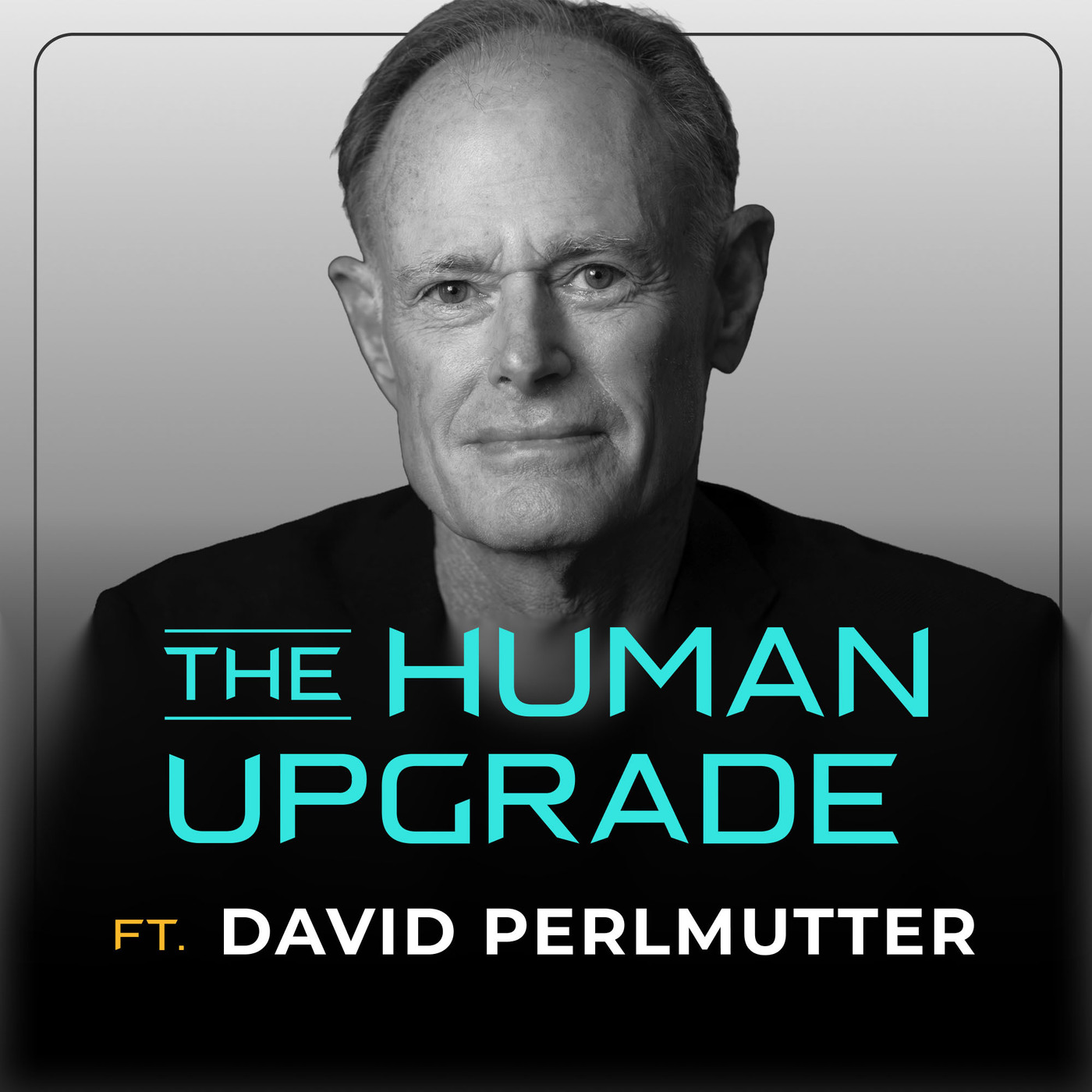
The Human Upgrade: Biohacking for Longevity & Performance
The Foods, Drinks, and Daily Habits Wrecking Your Brain (Surprising!) | David Perlmutter : 1498
00:53:04
Loading summary
Transcript245 lines
- [00:00]
Dr. David Perlmutter
What happens when there's inflammation in the body, anywhere in the body, and the brain knows that's going on? They're eating away at our synapses. They're creating an environment that is not good for neurons. These are the focal point in neurodegenerative conditions. Now, that's why you see that after head injury, people sometimes get worse, even mood disorders, even major depression, even PTSD. This is an issue that may affect 3 to 4% of the global population right now.
- [00:26]
Dave Asprey
You know how risky that is.
- [00:27]
Ben Greenfield
Your brain's inflamed, your love handles are inflamed. It's not a good place to be.
- [00:32]
Dave Asprey
Yeah, your risk of dying from everything goes up.
- [00:34]
Ben Greenfield
Are GLP1s good for brain inflammation or bad for brain inflammation?
- [00:40]
Dave Asprey
You're listening to the Human Upgrade with Dave Asprey. Every breakthrough in human performance comes down to one thing just changing your state. And right now, the science and the technology and the ancient practices are converging faster than you realize. For 50 years, bad policy and stigma blocked scientific researchers from studying some of the most powerful tools for the human brain. And that just changed. This October, the researchers, the clinicians, the guys pioneers in consciousness, tech and psychedelics are all going to be under one roof in Austin. And you can be there too. With me. For the first time ever, I'm hosting and operating beyond Wonderland. Two full days where you'll learn the science and the practice of changing your state. And you'll get to talk to the researchers doing it. You'll learn how these tools unlock a version of yourself you didn't know existed. You'll learn. You'll find talks about altered states with or without the psychedelics. A tech hall where you can try the tools yourself. Breakout sessions, breathwork, ceremony integration circles, and more. This field is moving really fast, and the people who are here in Austin on October 13th and 14th with me are going to be years ahead of everyone who finds out about this later.
- [01:50]
Ben Greenfield
Learn more.
- [01:51]
Dave Asprey
Get your ticket now@wonderlandconference.com you're losing hair on your head and collagen in your skin right now, even though you probably can't see it yet. And that process speeds up as you age, and it doesn't reverse on its own. But you can intervene at the cellular level. Studies show that specific wavelengths of red and near infrared light will stimulate your hair follicles, and that does support collagen production. Irestore has been making red light therapy devices that actually work for over two decades. And with their summer savings event, it's the perfect time to upgrade your hair in skincare. The Irestore Elite is their most advanced laser hair growth system using 300 lasers and 200 LEDs which helps you regrow thicker, healthier hair in about three months. And it is really easy to use. You can wear it while you're working, while you're reading or unwinding at night. And The Illumina Face Mask360 medical grade LEDs can turn red, infrared or even blue light at the same time to target all of your different skin concerns. Just 10 minutes a few times a week gives you brighter, smoother and healthier looking skin. I've been using the Eye Restore Elite and the Illumina Face mask while I work at home but not on video and they fit into my normal routine with no extra time cost. I really like it because I don't lose any time when I use it. Irestore is so confident you'll love their products that they give you a 12 month money back guarantee. That's because it actually works. You will see more hair. Irestore is kicking off their summer savings event with some huge discounts on their red light therapy devices. You can save on customer favorites like the Irestore Elite helmet and the Illumina face mask. Just head to irestore.com, use code Dave to take advantage of the sale. That's Dave. Restore.com Please support the show and tell them we sent you. Give your hair and skin the upgrade they deserve so you can feel confident and refreshed.
- [03:37]
Ben Greenfield
This episode of the Human Upgrade is recorded here in Austin, Texas at the 40 Years of Zen location because well, a dear friend and a legend in the field is on site and his name is Dr. David Perlmutter. Back in December he was on the show and we had just a profound interview that went in all kinds of places I didn't know it would go to. True. Yeah, since that time we hung out in the Antarctic together with our dear friend Alberto Viodo who's also been on the show and Christian Drepo from Simmerdin has been on the show. So we've just been hanging out in biohacker longevity functional medicine neurologist land. And we've got some new stuff for you because David Perlmutter, six times New York Times bestselling author as opposed to my four. So he's really an OG and just a gem of a guy but he's written Brain Defenders. David, welcome back to the show.
- [04:39]
Dr. David Perlmutter
Well, delighted and like you say, I'm here visiting you and had my first day at 40 years of Zen, first of the 40 years. I guess that'd be 10 years or whatever.
- [04:48]
Ben Greenfield
At 10 years of Zen.
- [04:51]
Dr. David Perlmutter
And it is. For those of you who don't know about the program, it is absolutely profound. I wasn't fully versed in terms of what to expect and so glad that both my wife and I are here. It's been an amazing day.
- [05:05]
Ben Greenfield
You wrote Brain grain back in 2013. I had started blogging two years before that. I started the biohacking movement. And it was one of those awesome books. I was like, I knew. I figured out this stuff in my own body. And you wrote a lot of great science about it. And because you do focus on the brain, I really value your take and your opinion. What's changed between 2013 and 2026?
- [05:31]
Dr. David Perlmutter
That's a great question. One thing that has changed is terminology. We didn't have the term in 2013 of ultra processed foods. Right now everybody's talking about it. It's common knowledge. We call them highly processed carbohydrates. But now I think the umbrella is a little bit larger because it's not just the processing of the carbohydrates leading to insulin resistance that seems to be the problem. It's the, the modified fats, the additives, all the things that constitute what's known as ultra processing. But you know, as it relates to the brain, I mean, we made the contention back with Grain Brain and there was pushback from the mainstream. I'll tell you one experience in a moment, okay? But there was pushback back then, less so now because there's so much data relating what we now call ultra processed foods. One study that came out in the Journal of Prevention of Alzheimer's Disease. The Journal of Prevention of Alzheimer's Disease. Think about that. This was 1375 people that they followed for 12.7 years. I hate to say elderly, because they were younger than me. As an average, they were 68 to 70. And these were people who were cognitively intact at the beginning, then when they were followed, but had some metabolic issues. And they had two groups. One group was given an intensive program and interfaced with the directors of this program 36 times in two years. The other group was given the program but had interface maybe two or three times a year over the two years. So they weren't really handheld. And what was fascinating was the group that had the intense intervention with the inter. With people working with them virtually. You expect people who are metabolically compromised to have cognitive decline over a two year period when they're My age when they're that age. But interestingly, these people not only stabilized, but they improved in their cognitive function. And you know, this is quite fascinating that, but you know, the, the real take home message I think is that that for that was actually from the Pointer study published in jama. But the real take home message from this other study, the is that in looking at diets of people over a period of time, 12.7 years, what they found was that one serving per day as an average of ultra processed foods, it's a handful of chips, increased your risk of Alzheimer's by 13%.
- [07:55]
Ben Greenfield
Just a handful of chips.
- [07:56]
Dr. David Perlmutter
Just a handful and 10 or more servings per day, which isn't necessarily out of the question for a lot of people, Translated to a 2.7 fold increase risk for a disease for which we have no pharmaceuticals treatment right now. The other study that I was referring to, the Pointer study that I mentioned just now, that was a study that did indeed was published in jama. And what they did was they simply did this intervention that we're talking about where they got supervised versus they got sort of unsupervised a couple times a year. And remarkably, during that two year period of time, the supervised group didn't have stabilization of their cognitive function. They had improvement. But what I find so fascinating about the other part of at least the Pointer study is that the unsupervised, unsupervised group had almost the same improvement. Can you imagine just giving them the information, say, do this, we're doing a study and they improved when they would have declined. So it just stands to support the idea that again, getting back to your question, what we talked about in grain brain, yeah, we talked about gluten. And since then so much information has come out about that, but it's about, it's about sugar and carbs and the effects that have, that they have on the brain, which are, you know, not boding well for what we're seeing going on around us.
- [09:22]
Ben Greenfield
Are all carbs bad?
- [09:24]
Dr. David Perlmutter
No. And then I think it's very important because first of all, dietary fiber is by definition carbohydrate. And people feel carb free. They're cutting out their broccoli and other vegetable sources of fiber. I mean, that's where fiber comes from anyway. So I think that there's value to complex carbohydrate even beyond, you know, the idea that it's a source of dietary fiber. And I never castigated grains in and of themselves. What I was calling attention to were the modified processed Grains that immediately spike your blood sugar.
- [09:58]
Ben Greenfield
Now, we may have a point of disagreement.
- [10:01]
Dr. David Perlmutter
Good. Let's do it.
- [10:02]
Ben Greenfield
So whole wheat spikes your blood sugar, and white flour spikes your blood sugar. And there's a modest difference, which could be resolved with a piece of. Piece with what? A piece of cheese.
- [10:12]
Dr. David Perlmutter
Okay.
- [10:12]
Ben Greenfield
On the bread. And they're going to be about the same, but whole wheat has a substantial amount of oxalate in it, and white flour doesn't. And whole wheat would increase lipopolysaccharide production in the gut, which is the bacterial
- [10:28]
Dr. David Perlmutter
toxin as a consequence of the elevator oxalates.
- [10:31]
Ben Greenfield
You're correct. Yeah. So that means we want to process the grains to make them into white flour if we're going to eat them, right?
- [10:36]
Dr. David Perlmutter
No, I can't go there.
- [10:40]
Ben Greenfield
I'm going there with sourdough. But you may not be there.
- [10:43]
Dr. David Perlmutter
No, I. I can't go there. No, I do go there on rare occasion. I'm thinking about a pizza back in Los Angeles from a week ago.
- [10:50]
Ben Greenfield
Right.
- [10:51]
Dr. David Perlmutter
I had two slices. Here I am. This is all about transparency. I talked about it this morning. Right. And it was delicious. And I'm grateful that I share that with my daughter.
- [11:02]
Ben Greenfield
Sometimes it's worth it.
- [11:03]
Dave Asprey
You bet.
- [11:03]
Ben Greenfield
I'm flying to Europe for 10 days. Two or three days from now. I'm bringing a lot of enzymes to break down gluten, and I'm treating my last year's worth of gluten deficiency disorder. I have no problem admitting that.
- [11:15]
Dr. David Perlmutter
Right.
- [11:16]
Ben Greenfield
And people say, but you're supposed to be perfect. I don't want to live for eight hours a day. Is quantifying and being perfect and being scared of living. I'm going to enjoy the hell out of that.
- [11:26]
Dr. David Perlmutter
You know, Dave Asprey, to say that on your podcast, that's very transparent as well, but very empowering, I think, for people. You know, you do your best, but live life a little bit, you know. And let's talk about alcohol. I mean, you know, that's a big sore spot for people right now because now the data has sort of changed away from, you know, the one glass of red wine per day for women, two glasses for men, actually associated with a. You know, it's good for your brain and maybe longevity. And I think they. That statement is made in the context of the blue zone data, which is unfair to tease that out from all the rest of the things going on in the blue zones, I will say. But, I mean, the newer data does really call out the fact that if perhaps wine. Because the polyphenols or what, for whatever reason, or the socialization might be good for you. It doesn't mean, therefore that, you know, drinking half a liter of Jack Daniels is the way to go. So I think, you know, we have to talk about, about context, but I think there's certainly a trend in the scientific literature indicating that alcohol is a neurotoxin in any way, shape or form. And we have other sources of polyphenols, if that's the issue.
- [12:38]
Ben Greenfield
You know, I was at Harvard with Jeff Bland and Christian Drupot about 2 days ago from when we were recording this and I mentioned this about alcohol. I was speaking to one of the graduate classes from years ago, a reunion, and just said, but we like wine.
- [12:58]
Dr. David Perlmutter
There's value. There's value to that, to what you just said. Right. You know, it's risk, benefit. And actually I did a podcast with Austin, our son, and we had this and he brought it up. He said, look, look at what the socialization does for a person. You know, dad as well as anybody. And he's right. And does that ease the, the ability to have these social interactions? It does. So I think the jury may still be out, but for. I, for one have. I'm pretty restrictive when it comes to alcohol. I might have a glass of wine every couple of weeks maybe at this point. And I used to have. I would have a glass maybe five times a week.
- [13:34]
Ben Greenfield
Oh, I don't think that anyone's sleep score would support a glass of wine every night five times a week. That's just going to ruin your sleep. Yeah, didn't for me, but no kidding, it didn't. Negative effects.
- [13:46]
Dr. David Perlmutter
No, not with one glass of wine.
- [13:47]
Ben Greenfield
I must have good Genesis.
- [13:49]
Dr. David Perlmutter
I have. I sleep well. I mean, I get plenty of. My HRV goes up, as it should. My deep sleep is one hour, 20 minutes a night. So I'm for my age. I'm in good shape.
- [13:58]
Ben Greenfield
Even with wine.
- [13:59]
Dr. David Perlmutter
Yeah, it's not as good. It's. It's slightly worse. I do note that. But I still. I'm in the envelope.
- [14:05]
Ben Greenfield
Cool. I have a rule that I shared at Harvard. It's. I'll drink alcohol if it's older than me because then I can't afford it.
- [14:15]
Dr. David Perlmutter
It's going to become more expensive with years.
- [14:17]
Ben Greenfield
Exactly.
- [14:18]
Dr. David Perlmutter
That's like playing golf and trying to shoot your make score. Be your age.
- [14:22]
Ben Greenfield
Exactly. So I, I do worry too, that alcohol helps these bacterial toxins, even the ones you wrote about.
- [14:32]
Dr. David Perlmutter
You mentioned lps. Absolutely. There's increased gut permeability with alcohol. So I think that less, you know, I, you know, our messaging was different years ago based on what the science was telling us. A U shaped curve. Right. And that one glass of wine for women per day was better than zero and, and better than two. So it was, you know, there sweet spot. But I think more data is coming out indicating that it's just not worth it. And in fact, I can't think back when I had my last drink. But I think you bring up a very good point about the gut permeability issue. People don't talk about the microbiome changes and therefore the gut permeability issue and the LPS liberation and how that augments inflammation in the body that makes its way to the brain. That brings us to our discussion today. What happens when there's inflammation in the body, anywhere in the body, and the brain knows that's going on? What happens is our supportive M2 immune cells in the brain, microglia they're called, which are normally nurturing our neurons, nurturing synapses, nurturing the growth of new neurons and synapses, and keeping the blood brain barrier functioning. When they are exposed to inflammation coming from even the gut, as well as innumerable other influences, they shift to being what I call in the book the evil twin. And they're now destructive. They're eating away at our synapses. They're creating an environment that is not good for neurons. These are the focal point in neurodegenerative conditions. Now it's not this beta amyloid accumulation that is just not so I can be very clear. Accumulation of beta amyloid is not the cause of Alzheimer's disease. If it were, then the drugs that are FDA approved might be effective.
- [16:12]
Ben Greenfield
Yeah. It's like treating the smoke. Smoke doesn't cause fire.
- [16:16]
Dr. David Perlmutter
No. Or getting rid of the firemen because they happen to be there. You know, it's interesting, about a month ago a Cochrane analysis was published that looked at 20,342 individuals in 17 studies. And the length of the studies were 18 months. Looking at the drugs that are these monoclonal antibodies designed to reduce beta amyloid in the brain as a treatment for Alzheimer's disease and the, I would say gold standard, a Cochrane analysis said that these drugs, their effectiveness is trivial and they are potentially very dangerous, if not life threatening. So when we look at risk benefit ratio, this just doesn't add up. There's no reason that we, I say we as a country should be spending $40,000 a year to treat people with these drugs because they do not work.
- [17:10]
Ben Greenfield
So if you had to take a statin that wasn't genetically compatible with you or one of these non functioning Alzheimer's drugs. Which one would you take?
- [17:17]
Dr. David Perlmutter
I can't tolerate statins. I've already tried. But I think we're talking hypothetically here. I would not go near one of these beta amyloid drugs because you have a 25% risk of developing ARIA amyloid related imaging abnormalities. As if it's just an abnormality on the image on the MRI scan. No, it is an amyloid treatment related brain hemorrhage or brain swelling. So it's not amyloid related, it's the treatment related. These people don't have these hemorrhages until they start the drug.
- [17:48]
Ben Greenfield
Wow.
- [17:49]
Dr. David Perlmutter
Call it like it is.
- [17:50]
Ben Greenfield
Yeah. That is the worst. Actually, it's the best pharmaceutical marketing, which means it's the worst for humans. That is a terrible name.
- [17:57]
Dr. David Perlmutter
Yeah, yeah. And I actually, I wrote a brief response to somebody in one of the trade journals. But I mean, when you look at a study that was published last year by, you know, Rudolph Tandy, I'm sure. Oh yeah, and Dean Ornish, they, they published a report, interventional trial, 54 or 57 individuals. I, I agree. A small study over a 20 week period of time. So not a long study, but the fact that it was short is impactful. When I tell you the results, these are individuals who were diagnosed with Alzheimer's disease. What are you going to do now? Mom, dad, spouse has Alzheimer's, what are you going to do? They said, well, we're not going to give you the Alzheimer's drugs. What we're going to do is we're going to change your diet and we're going to get you to exercise and put you in a stress reduction program. You know, that's Dean Orange's favorite thing to do. Yeah. And not only did 70% of these people stabilize, but they also of that 70%, many improved improves in their cognitive function. The Alzheimer's drugs target the rate of decline and don't even work. This intervention, a lifestyle intervention, showed that these people can either stabilize or actually improve their cognitive function.
- [19:12]
Ben Greenfield
Wow.
- [19:15]
Dave Asprey
Your doctor said your labs look normal. Okay, then why don't you feel like yourself? Why are you exhausted all the time? Why has your body stopped responding to the things that used to work?
- [19:25]
Ben Greenfield
That's why Gatlin exists.
- [19:26]
Dave Asprey
Gatlin is a physician led optimization program
- [19:29]
Ben Greenfield
for people who know something is off
- [19:30]
Dave Asprey
even when the conventional system says everything looks fine. It's also for people who want more energy, better recovery, better sleep and long Term performance. Because the current system often waits for disease, Most people get 10 minutes with a doctor, a basic blood panel and a vague everything looks normal even when they still feel off. Gatlin does things differently. You speak with a licensed medical provider, you get comprehensive labs and depending on your needs, your plan may include hormone support, thyroid support, peptide therapy and longevity focused care personalized around your actual biology. Not one size fits all medicine. Feeling off shouldn't be dismissed just because it's common. Start your journey today@gatlin.com Dave and use code Dave. That's G-A-T-L-A-N.com Dave. Code Dave. Have you ever promised yourself you would do things differently only to end up right back in the same pattern? The same relationship, the same habit, the same reaction, the same result? Predictive mind helps explain why you complete an assessment and then review the results in a one on one session. Their brain pattern mapping process reveals the hidden drivers behind your behavior and decision making so you can finally see what has been shaping your choices all along. This goes beyond personality tests and self help advice. Predictive mind maps the patterns that influence how you react, how you make decisions and why certain cycles keep repeating in your life. Once you can see the pattern, you can start changing it. If you've ever felt stuck, frustrated or confused by your own behavior, check this out. Go to PredictiveMind IO Dave and use code DAVE for 10% off your brain pattern mapping session.
- [21:17]
Ben Greenfield
This isn't the only research out there. Dale Bredesen has been on the show two times. Who's healed 10,000 people by reversing their Alzheimer's. And these are real medical doctors with real medical science. And people are not doing that as much as they're spending $40,000 of tax
- [21:33]
Dr. David Perlmutter
money or insurance money on and dramatically increasing their risk. Wow.
- [21:38]
Ben Greenfield
Do you think there's outright fraud from these drug companies?
- [21:43]
Dr. David Perlmutter
I think that if you look at how the original beta amyloid hypothesis was developed that's published that it was fraudulent.
- [21:50]
Podcast Disclaimer Narrator
Wow.
- [21:51]
Dr. David Perlmutter
That original study that appeared in Nature was the slides that they published were found to be altered. So the original data, these were some of the curves that showed the effectiveness. I mean the images were actually found to be altered and they had to retract the study. It was a big, it was a, you know, that was one of the foundational studies showing that amyloid causes Alzheimer's, which I think is preposterous. Anyway, one study demonstrated, I think it was 2019, that when you look at the brains of seniors who did not have dementia at the time they died, 75% of them had significant levels of amyloid in their brain. Oh. And they're cognitively intact. So it's an argument again against the fact that amyloid is a central player here. Is it a downstream consequence of the changes in the brain's immune cells? Might well be. But even beyond that, as Dr. Tansey has pointed out 20 years ago, amyloid is an antimicrobial peptide. Amyloid serves in the brain to rid the brain of viruses and bacteria. So getting rid of it may not be the right move. Again. Primum non ocer, above all, do no harm.
- [23:11]
Ben Greenfield
Wow. So how much of Alzheimer's and other dementia do you think is coming from microbes?
- [23:17]
Dr. David Perlmutter
I think a lot. I think when we look back work from around 22 years ago in England from a Dr. Ruth Itzaki, she demonstrated that the areas that are most involved microscopically have detectable will stain for herpes simplex virus type 1 antibody. We know that chlamydia pneumonia can be related and we certainly know that amount. Mouth bacterium called Porphyromonas gingivalis, as I'm sure Dale Bredesen mentioned to you, is strongly related. So what's the take home message for that for your viewers? Take care of your teeth. So this is the, the bacteria that's overgrown when you have periodontal disease. So step one in all the things we're going to talk about right now is take care of your teeth. Brush your teeth twice a day and get a water flosser, get a water pick and they make rechargeable USB that you could put your suitcase when you're traveling.
- [24:05]
Ben Greenfield
Wow. Yeah. I found this water pick like device that you take a mold of your teeth and it goes all of them at one time.
- [24:13]
Dr. David Perlmutter
I know, I know the company. I haven't done the molding part yet.
- [24:16]
Ben Greenfield
It's pretty badass.
- [24:18]
Dr. David Perlmutter
It's like three minutes, right?
- [24:18]
Ben Greenfield
Or not even three minutes. It's maybe 15 seconds.
- [24:22]
Dr. David Perlmutter
Yeah.
- [24:22]
Ben Greenfield
Because it's 15 seconds and all of the teeth all at once, which would take you probably 20 minutes to get in there.
- [24:28]
Dr. David Perlmutter
I actually, this sounds strange. I enjoy using the water pick.
- [24:31]
Ben Greenfield
Yeah.
- [24:32]
Dr. David Perlmutter
Especially when you brush your teeth and you think your teeth are clean. It's surprising. But I know that device you're talking about. I have an order for one. I just haven't done the imaging yet.
- [24:41]
Ben Greenfield
Yeah, I don't have any kind of relationship. I think it's called pro proficient probably or per deal or something.
- [24:48]
Dr. David Perlmutter
I've saved the email as unread. Yeah, I'LL get it.
- [24:52]
Ben Greenfield
It's pretty expensive and it's inconvenient to get because you have to do the imaging.
- [24:57]
Dr. David Perlmutter
Yeah, but they do that imaging. Most dentists are doing it now. I don't think it's a Panorax. I think it's an ultrasound imaging or something like that.
- [25:05]
Ben Greenfield
It's a little USB came they just work it around your teeth and it's pretty straightforward. And then the thing arrives in the mail. But yeah, that, that was. I. I'm an anti water pick guy and that. I'm like, I just don't have time. Like I'm not going to sit over those freaking water picks and floss. But now I have this thing and it just like turbo.
- [25:21]
Dr. David Perlmutter
You travel with that, right?
- [25:22]
Ben Greenfield
I don't travel with it, no. I just have floss when I travel. And peroxide.
- [25:26]
Dr. David Perlmutter
Well, I think peroxide might be aggressive. You know, you do have your oral microbiome to consider. You do have your nitrate to nitrite conversion bacteria on the dorsum of your tongue.
- [25:35]
Ben Greenfield
Absolutely. So I just like wipe all that, all the, those nasty things in there. God knows where my mouth has been that day.
- [25:40]
Dr. David Perlmutter
And then we don't want to go there.
- [25:45]
Ben Greenfield
And then I take a nitric oxide tablet and then I take a oral probiotic designed for the oral microbiome. Viome makes a really good one. And so I feel like I'm kind of mowing down whatever was there and putting back the good stuff. So I get my nitrate.
- [26:01]
Dr. David Perlmutter
Makes sense. So let me unpack a little bit further. This whole idea about. And you called it out, you know, don't castigate the firemen or blame the fireman who's at the fire. We want to be as upstream as we can. And it turns out that this shift of the brain's immune cells from being supportive to being destructive, two things are important. Many things important. Number one, we can control that. And we'll talk about how. Number two, it looks like this is the fundamental mechanism in all neurodegenerative conditions, whether it's frontotemporal dementia, Parkinson's, msa, progressive supranuclear palsy, Alzheimer's, you name it. Whatever makes the good brain go bad. It's playing a role in what makes head injury worse. It's what is activated in long Covid, in post traumatic stress disorder, in major depression. All of these things are associated with the shift of the M2 supportive microglia to the destructive form of microglia called M1. And you can even image the brain in living people to show that it has shifted.
- [27:05]
Ben Greenfield
Now guys, this is fundamental, foundationally important neuroscience and it's probably the most important piece of info in brain defenders if you're into longevity or biohacking and just brain function, because I'm going to say it's first, mitochondrial and second, neuroplasticity. Always. What happens to your mitochondria and neuroplasticity when you shift from M2 microglia to M1?
- [27:31]
Dr. David Perlmutter
Well, oddly enough.
- [27:33]
Ben Greenfield
Oddly enough, I know what you're going to say.
- [27:35]
Dr. David Perlmutter
Well, first of all, the shift from M2 to M1 is characterized by a drop in mitochondrial function. Exactly. In fact, the full on M1 phenotype is one that doesn't even have functioning mitochondria to any significant degree. Most of the energy is coming from a far less efficient process called glycolysis. So that's what happens once there's a stimulation of the M2 microglia, like from we mentioned earlier, from inflamma chemicals, from being diabetic, from being overweight, from being having hypertension. All of these things conspire to shift the microglia. Once they do, the mitochondria shift to glycolysis. So you're putting out much less ATP.
- [28:18]
Podcast Disclaimer Narrator
Right.
- [28:18]
Dr. David Perlmutter
And here's the corollary that I think is really interesting. You can have a healthy M2 microglial cell. If you threaten its mitochondria, then it will shift. So it can go either way. Oh, wow. Whatever shifts the M2 to being destructive will damage the mitochondria. And if you damage the mitochondria directly, it'll shift them to being destructive as well. As an example, MPTP was a contaminant in IV drugs that were some people in the early 1980s were using and they developed Parkinson's within one day. Right. And 13 years later, when one of them died, Dr. J. William Langston, who was the one who first discovered this, looked at the brain. And what did he see? He saw the whole area of the part of the brain that makes dopamine for movement called the substantia nigra was totally destroyed. And the microglia were digesting those cells. Thirteen years later, these were M1 active microglia.
- [29:12]
Ben Greenfield
So we really don't want those.
- [29:14]
Dr. David Perlmutter
Well, we.
- [29:15]
Podcast Disclaimer Narrator
Let's.
- [29:16]
Ben Greenfield
Okay. We want them when we need them.
- [29:17]
Dr. David Perlmutter
We want them when we need them. Acute infection, acute injury, but then they need to be put to rest. The fire engine has to come out of the firehouse. When the fire's put out, we need it to go back in and not keep spraying the Water.
- [29:28]
Ben Greenfield
Well, one of the things that happens when you get hit in the head is this chronic inflammation. You get a lot of problems. And I remember, oh, this is maybe eight, nine years ago, I took a titanium knee to the head at high speed and I had a small bleed in my brain. And we'll say I scrambled my eggs. So I hooked up my brain. Forty years was then to our, our clinical grade eeg. And I used to have a perfect meditator's brain and it was gone. And I was swearing all the time.
- [29:56]
Dr. David Perlmutter
I sent Tim Ferriss, you and Phineas. Yeah, right.
- [29:59]
Ben Greenfield
Phineas Gage's little skull replica is up there. And I, I sent Tim Ferriss an email for something he didn't do, like angry at him. I, like I was just out of my mind. And I apologized later when I came back to reality. But the kind of inflammation that happens are a lot of people hit their heads, especially in sports. You get these MMA guys. What's going on with M1 and M2 microglia? What could you do to make it?
- [30:21]
Dr. David Perlmutter
This is what a great question. And what happens of course, when you have an injury, the M2 microglia do need to shift to M1 as an emergency response. The problem is then they, as we mentioned earlier, we got to put the fire truck back in the firehouse. They need to stop. But what keeps them in their destructive condition in the M1 configuration? Well, if you had pre existent metabolic issues, for example, we know that, for example, in a large population set, a study demonstrated that type 2 diabetics across the board had longer hospitalizations with head injury and more protracted issues once they were discharged. In terms of the degree of injury, the injuries were pretty much stratified. So they were equal in both non diabetics and diabetics. But yet if you were diabetic, you had worse outcome. Why? Because that's a situation, a metabolic situation, over which we have control that keeps those microglia shifted in their destructive phenotype. Everything about getting over a head injury is about reverting the microglia back. It's why hyperbaric oxygen works. It's why higher levels of DHA work. It's why an anti inflammatory diet is the way to go, because you want to shift them back.
- [31:37]
Ben Greenfield
I've been using a bioenergetic model for all of biohacking and says any cell is gonna allocate the amount of energy it has based on how much energy it has. And if you can give it more energy, it's gonna be better off. So with type 2 diabetes your mitochondria are less effective.
- [31:53]
Dr. David Perlmutter
Yes. And that, that's interesting because in type 2 diabetics, maybe it's a little bit too early to unpack this, but one recent study looked at mitochondrial function in terms of free radical production and mitochondrial energy production and demonstrated that. Yes, that's true. And that there was significant improvement when they received a GLP1 drug. Ooh.
- [32:17]
Ben Greenfield
One of the many reasons that low dose GLP drugs, even microdose, might be longevity drugs. But the short term intervention, and this is one I've recommended for football players for many years, is raise ketones. And Nick Foles wrote about this idea of putting MCT oil and what is. Well today I call it Danger Coffee. My new company, but it was called Bulletproof Coffee back in the day. Back in the day, back when I worked for those guys. But it's to raise ketones and today I just say you can take kinetic, which is a ketone beverage that raises your ketones much more effectively. No, the salts cause mitochondrial harm according to.
- [32:54]
Dr. David Perlmutter
So what is kinetic?
- [32:55]
Ben Greenfield
It's a dial. It's a ketone dial. And the ketone.
- [32:58]
Dr. David Perlmutter
Did I drink that today?
- [32:59]
Ben Greenfield
You did.
- [32:59]
Dr. David Perlmutter
Oh, there you go.
- [33:00]
Ben Greenfield
That's part of our protocol here because I find people can get higher peak brainwave states when the neurons have the kind of fuel they want. But if you just rang your bell, then you'd want to make sure there's enough energy there for the M1, the repair microglia to come out, do their job and then go home. And so people who have ketones and enough brain energy are less likely to have this long term damage from the head injury. So pre treat with ketones.
- [33:28]
Dr. David Perlmutter
Yeah, that's true. And higher levels of dha.
- [33:31]
Dave Asprey
Yes.
- [33:31]
Dr. David Perlmutter
Joseph Maroon, head medical officer of the Pittsburgh Sealers has long been advocating that, but it's a big deal. And the problem is that these now shifted damaging. I call it the evil twin microglial cell brain immune cells spit out their own inflammatory cytokines such that you worsen neuro inflammation. If you don't check that. That's why you see that after head injury people sometimes get worse. You certainly see it after chronic traumatic encephalopathy has been diagnosed. These football players are not. They're retired. But they continue to decline because this feed forward process of brain inflammation isn't reduced, isn't arrested.
- [34:12]
Ben Greenfield
Before we get into GLP1s.
- [34:15]
Dr. David Perlmutter
Oh.
- [34:15]
Ben Greenfield
Or you're maybe the only guy I
- [34:17]
Dr. David Perlmutter
could ask this about.
- [34:18]
Ben Greenfield
So we talked a little while ago about how cavities and gingivalis the, the bacteria that causes it is directly correlated with Alzheimer's. Well, there's a drug that's been around for a long time called Periostat, which if you're listening and you know something about drugs, it's just low dose doxycycline, which is a very common antibiotic. And funny enough, taking 20 milligrams of this stuff for your basically receding gums strangely also shifts microglia back from M1 to M2. Why does it work?
- [34:53]
Dr. David Perlmutter
It really depends on how old a person is because most research has been done actually with doxy and also with minocycline. That monocycline can polarize the microglia to M1 or also, depending on how old you are, polarize, revert them back to M2.
- [35:08]
Ben Greenfield
Oh, it can go the wrong way.
- [35:10]
Dr. David Perlmutter
It's interesting, can be used for both ways. And there is a technique in dentistry where for recession they are actually putting little pellets or implanting doxycycline along the edges of the recession. Interesting. Hard to say what that's doing to the oral microbiome, what that's going to be like in the long run. I mean you're obviously going to, to dramatically reduce oral diversity. Are you affecting the bad guys, Porphomonas gingivalis, which isn't fundamental for cavity formation. And are you at the same time affecting what we unpacked earlier? Those bacteria that are involved in processing a nitrate to nitrite seems bad to
- [35:45]
Ben Greenfield
have it in the mouth all the time.
- [35:46]
Dr. David Perlmutter
I would agree with that.
- [35:47]
Ben Greenfield
I remember back when I first got really bad toxic mold poisoning. I was kind of sort of getting better. Lived in a house that, that I think now had stachybotrys in it. I found black slimy mold when I was moving out. It's a pretty good sign. And all the symptoms really, really bad. And I had a strep throat or something and the doctor put me on doxycycline and I remember having the week of oh my God, I have so much clarity. I remember what it was like to be, to feel this good. And it took me many years later until I came across this research that I realized the reason it probably worked is I had terrible brain inflammation as a result.
- [36:23]
Dr. David Perlmutter
It's interesting because minocycline is studied because of its, in its ability to inhibit the NLRP3 inflammasome. And what that means in English is to reduce inflammation in the brain. And in fact many have. There've been several studies looking at it as an interventional trial for, even for Alzheimer's. And getting back to the work I mentioned earlier of Ruth Atsaki identifying herpes simplex virus, there have been various recent interventional trials, trials using antiviral specifically targeting HSV type 1, but they were in a. They did not reach endpoints.
- [36:56]
Ben Greenfield
I've recommended minocycline, which is a. Like a tetracycline or like oxycycline. But the one that's more studied for this effect is some people with long Covid. And of course they went to their doctors. They would never order it from an online pharmacy in India because that would be wrong even if they had no money.
- [37:12]
Dr. David Perlmutter
But they it's been a great day.
- [37:18]
Ben Greenfield
When I say I recommend, I just said you should do the research on it. And they got some pretty profound relief because they were dealing with just this terrible brain fog. And there's more than just this thing. It's not a wonder drug. I think you need to treat mast cells, a bunch of other stuff. But when people are stuck with brain inflammation, it's all right to go to your doctor and say, what if I took this for three days at low dose, which it could be all it takes to switch it off. Right?
- [37:42]
Dave Asprey
Your morning routine sets the tone and energy for your entire day. And that's why I like Nandaka by Peak. Nandaka is a combination of fermented pu erh tea and ceremonial cacao and full spectrum reishi mushroom, which is also known as the mushroom of immortality. When you put those together, you get calm, sustained energy and sharper focus and long term resilience. And of course, you could have it on top of your danger coffee. It works all by itself or with other things. And Reishi is particularly interesting because scientists are studying its effect on longevity.
- [38:10]
Ben Greenfield
They're looking at how it could improve
- [38:12]
Dave Asprey
immune balance and cellular resilience and even preserved telomeres. And Peak is really serious when it comes to sourcing, which is why I like them. Peak exists because their team spent years traveling the world to some of the most pristine environments to source clean ingredients. And nadhaka makes you feel good after you drink it and it tastes good. So if you're looking for something new
- [38:32]
Ben Greenfield
that actually works for your morning ritual, give it a shot.
- [38:35]
Dave Asprey
Head on over to peaklife.com Dave they'll give you 20% off your order. That's P I Q U E-Life.com Dave
- [38:43]
Dr. David Perlmutter
yeah, and I think the broader picture is that brain inflammation is the fundamental mechanism. It incorporates this whole thing we're talking about the shift the immune cells in all the bad things going on in your brain. Yeah. Even mood disorders, even major depression, even ptsd. And certainly what you're talking about. Long Covid. This is a mitochondrialopathy. It's an acquired issue related to the mitochondria work by Dr. Amir Hadani. He studied as an intervention hyperbaric oxygen and has had really wonderful results. This is an issue that may affect 3 to 4% of the global population right now.
- [39:21]
Ben Greenfield
Big deal.
- [39:22]
Dr. David Perlmutter
Yeah. This, you know, the COVID really slowed things down quite a bit.
- [39:26]
Ben Greenfield
I have a lot of compassion because toxic mold exposure as almost identical symptomology to long Covid. Different cause, similar pathways. Mitochondria screwed up.
- [39:35]
Dr. David Perlmutter
It's exactly. And shift of the microglial cells. You're exactly right. And it's what I lived with all
- [39:39]
Ben Greenfield
through my 20s and early 30s. It sucks.
- [39:41]
Dr. David Perlmutter
Well, you know, as part of the the program of Dale Bredesen who looks at any possible inroad to inflammation and he's all over it and has written quite a bit about it.
- [39:50]
Ben Greenfield
One of the the big inroads to inflammation is this metabolic dysfunction that we talked about. And there are drugs like metformin that can help with diabetes. What about GLP1s? We talked about them earlier. Are GLP1s good for brain inflammation or bad for brain inflammation?
- [40:06]
Dr. David Perlmutter
If that's the entire question. All right. We haven't talked about. Well then what should we do? I think that it's clear that GLP1 is very likely dramatically improve brain metabolism and reduce inflammation via the fact that improved metabolism leads to less likely transformation of our brain's immune system. So I think then that's been demonstrated in animals and I think that the human data is really starting to be very compelling. Let me give you an example. In 2024, a study was published in the New England Journal of Medicine and it looked at 157 Parkinson's patients and divided the group in half. How you divided 157 in half. I'll let somebody figure that one out. I didn't say evenly.
- [40:50]
Ben Greenfield
Bandsaw.
- [40:52]
Dr. David Perlmutter
That one guy.
- [40:53]
Dave Asprey
You're that.
- [40:54]
Dr. David Perlmutter
I have the top half and half got a GLP1 agonist drug daily. The other half got a placebo daily. And they follow these people for a year. They follow them on what's called the Unified Parkinson's Disease rating scale UPDRS and well accepted scale used in studying Parkinson's. The group that received the placebo as one would expect over the course of a year declined. They were. They needed More medicine, they were less functional. The group that received the GLP1 drug actually stabilized, or if you look at the data carefully, had a tiny bit of improvement, not enough to say they improved. But if you look at the graph, it's slightly positive, but I don't. Even if it's stabilized, that's a huge run. That's targeting the fire, not the smoke. In Parkinson's, we have to target the smoke, the symptoms. We have to use drugs for rigidity and tremor. I get that, but to say that I'm using these drugs to treat Parkinson's is wrong. You're treating the symptoms. As an example, you're taking a blood pressure pill. For what? To treat your high blood pressure. Well, you're actually not. You're treating the symptom, which is the high blood pressure, like diabetes. Well, I take metformin every day to treat my diabetes. No, you're just treating your blood sugar. You know, stop your diabetes drug, whichever one it is, and two days later your blood sugar's sky high again. You haven't fixed the problem. And we know that, you know, a ketogenic diet can target the problem in diabetes as it can target the underlying problem in Parkinson's and in Alzheimer's as well. What do we have, what do we got then as it relates to GLP1? So the trial of oral semaglutide was just completed a couple months ago and this was a study done in multiple centers around the world. Give them an oral GLP1 drug. They did not reach their in treating Alzheimer's patients. They did not reach their endpoints as it relates to showing an improvement or stabilization. They did not. But what people, if you read the, the study closely, what you find is that in the treatment group, C reactive protein was reduced by 30%.
- [42:55]
Ben Greenfield
Well, that's a big deal. It's one of the big four markers I've recommended since the beginning of this show 14 years ago. Right.
- [43:01]
Dr. David Perlmutter
So inflammation's reduced, maybe given more time, who knows? So I think there's value in that. And it may be that oral semaglutide doesn't make it through the blood brain barrier. It may be the semaglutide in and of itself, health is too big a molecule. That's not what was used in the Parkinson's study. They used lixisenatide, which is a smaller molecule. They use it because it's more able to cross the blood brain barrier. But you know, we could talk about concerns of full on dosage of these drugs, what that might do in the long term, the answer is who knows?
- [43:32]
Ben Greenfield
Yeah.
- [43:33]
Dr. David Perlmutter
When you stimulate these receptors with a thousand fold greater levels than they've ever seen, I don't know that that's necessarily the right thing to do. Why I would be in favor of it it in Alzheimer's or Parkinson's because we know how it otherwise is going to end up. Right.
- [43:49]
Ben Greenfield
The risk is low. If you're going to not know your name, require care and put the cars in the refrigerator. Sorry. Put the car keys in the refrigerator. I think I would want to do things that had more risk than I would if I was 20. And that should be encouraged rather than illegal, which is often.
- [44:06]
Dr. David Perlmutter
Yeah. And I said it in the book. I said, you may be surprised to know that what's my feeling about all this? I said that if it proves that these drugs are efficacious and safe, I will be full on supportive.
- [44:19]
Ben Greenfield
I am today supportive of as low a dose as you need with enough protein and exercise and appropriate thyroid and testosterone. If you're obese, you know how risky that is. Your brain's inflamed, your love handles are inflamed. It's not a good place to be any risk.
- [44:36]
Dr. David Perlmutter
Yeah.
- [44:37]
Ben Greenfield
Your risk of dying from everything goes up. So you, you compare that risk to the risk of taking a six month course as low as the dose as you can. The math maths to use GLP1s.
- [44:48]
Dr. David Perlmutter
Yeah, I, I think so. And I do want to add though that in the Parkinson's study that about 48% of the people who received the drug had significant gastrointestinal side effects. I mean, you know, really big issues. But I think it. What does it tell us? We've got to work on it. We gotta work on dosage, we gotta work on formulation, we gotta work on selecting the right population.
- [45:08]
Ben Greenfield
I've tried one injection of semaglutide when the first study came out showing it worked for weight loss. And I. This is before it became a big drug. Just because I, I'm a futurist. So I found the head lead researcher. I got a prescription. I did it feel like I had morning sickness.
- [45:24]
Dr. David Perlmutter
Salt. I did it once.
- [45:26]
Ben Greenfield
Oh, it was horrible.
- [45:27]
Dr. David Perlmutter
I have to admit I did try. I think it was tirzepatide.
- [45:30]
Ben Greenfield
Yeah. Oh, this was different than just appetite.
- [45:32]
Dr. David Perlmutter
Yeah. And I took one shot just to see what it was like. And then I was going to try maybe low doses like you described. And I felt like I was my first trimester.
- [45:40]
Ben Greenfield
Yeah, it was horrible. And I did maybe last year I got tirzepatide which is a third generation GLP. I took 1/10 of the dose and I managed to avoid the nausea, but
- [45:52]
Dr. David Perlmutter
I just still felt like crap for three days.
- [45:54]
Ben Greenfield
I just think it was punching me in the metabolism and I didn't like.
- [45:57]
Dr. David Perlmutter
As it relates to brain health, what I talk about in the book, that, you know, a lot of it is, as you would expect, lifestyle. We cover supplements, but I leave the door open not only for repurposing current medications, but for what's on the horizon. In the end of the book, we talk about future technology. What, you know, it may be that 40 Hz light becomes a standard treatment. If the research done by Dr. Li Wei Tsai at MIT pans out, then there'll be Medicare coverage for getting a 40 Hz goggle that you would wear for an hour a day if you've been diagnosed. And. And, you know, if that works by reducing inflammation and keeping your microglia in their supportive form, I would use it. And matter of fact, I do. I have one at home.
- [46:38]
Ben Greenfield
You probably do. I have actually just used some at 40 years since then. That helmet you were wearing was doing 40 hertz.
- [46:43]
Dr. David Perlmutter
I have one on my desk at home.
- [46:45]
Ben Greenfield
It. It just makes so much sense. And I remember meeting Dr. Li Wei Tsai at the Salk Institute at an after party. Had a pajama dress code. Well, let's just say that I was wearing the Hugh Hefner red pajamas that my assistant sent me. Thanks for sending me those. That wasn't what I would have ordered.
- [47:04]
Dr. David Perlmutter
I think it would have been great.
- [47:05]
Ben Greenfield
Everyone else was in the unicorn onesie because they were all VCs. And then of course, there's the white lab coat only. Yeah, of course. No, not only. Dr. Liyue Tsai was dressed as a scientist, as scientists do.
- [47:17]
Dr. David Perlmutter
Oh, a costume party. Okay.
- [47:18]
Ben Greenfield
Yeah. It wasn't supposed to be a costume. Well, I think it was not a costume. That was just like. Like the normal look for an MIT scientist. But we sat and talked for two hours. One of my favorite nights, we talked for two hours about nerdy brain stuff. And at the end of the night, I was like, so what kind of brain? I'm not a brain scientist. I'm just kind of a fan. And the amount of. Since that time, the amount of research has come out around 40 hertz. It's just like a torrent of amazingness.
- [47:43]
Dr. David Perlmutter
Yeah. And you take your loved one to the doctor and he or she gets a diagnosis of Alzheimer's that would never come up. A light that would shine a 40 Hz light. And I'm mainstream, right. You know, I'm not exactly mainstream, but you know, above all, do no harm and risk benefit ratio. These are the tenets of how we practice medicine. And the risk benefit, there's no downside. I mean, if you maybe have photoconvulsive epilepsy, there are a few people that have that. You ask that question, it's shining a light. And her results have been nothing short of remarkable.
- [48:15]
Ben Greenfield
Sometimes this stuff can happen really fast with liaison and one of our patients in unlimited life, which is this concierge, Life Extension Medical Partnership. I'm in early 40s woman. We did the lab testing. Full blown Alzheimer's, all the symptoms and masses of mycotoxins from the toxic mold. And, and we caught it within six months of, of it happening. And what do you know? Of course, we reverse the microglial inflammation, we remove the toxins, and we're using 40 Hz light to break up the plaque. And I think that, that she's going to fully recover and that her family is going to be very grateful to have a mom. Why is 40 hertz, which is so cheap, just blinking red lights or infrared, I think is even better. Why is it not standard of care? Because Eli Lilly doesn't own it.
- [49:02]
Dr. David Perlmutter
Well, that's right. You know, people tend to be down on what they're not up on. And that's our mission is to get. I mean, there's a lot of stuff that comes across your desk and my desk.
- [49:11]
Ben Greenfield
Oh yeah.
- [49:11]
Dr. David Perlmutter
And to be fair, some of it doesn't hold water for sure. But once in a while, when you get a scientist of her caliber, I'll give you another. A couple other interesting things that are on the horizon now. Researchers doing microglial transplantation. Yes. And mitochondrial transplantation. Mitochondrial transplantation already, you know, is being refined by this microglial transplantation where people are receiving embryonic pluripotential that, that have then become microglial cells. They're getting those by after their bone marrow has been wiped out with something called alsp, which is not als. It's a leukocencephalopathy, a white matter disease of the brain. But it's uniformly fatal. And now they've arrested that disease by doing this process. That's what is on the horizon.
- [50:02]
Ben Greenfield
It's amazing. We have so much knowledge right now that it's really hard to get it out there way more than 10 years ago. And we're accelerating on our innovation.
- [50:11]
Dr. David Perlmutter
But I'm very pleased that people are backing away from this silly amyloid hypothesis and, and I don't know if I've called it on any other podcast silly, but now that I think about it, it's. No, I mean I'm just going to call it as I see it. It's ridiculous. When, when the first drug, monoclonal antibody was developed to get rid of the amyloid as a treatment for Alzheimer's, it was put before the FDA. There was a panel of 12. One person voted for it. One person was saying. And the rest, the 10 people voted no. You cannot approve this drug because the patients didn't improve and they didn't even slow their decline.
- [50:45]
Ben Greenfield
It doesn't work.
- [50:46]
Dr. David Perlmutter
It doesn't work. Then the drug manufacturer went back and said, doesn't have any effect on cognitive function. I know. Let's see if we can get it approved for getting rid of beta amyloid in the brain because as we all know, that's the cause of Alzheimer's and it does help lower the burden of beta amyloid in the brain. Hence it got approved.
- [51:05]
Ben Greenfield
It's like the cholesterol drugs that lower cholesterol but increase heart attack risk and diabetes.
- [51:09]
Dr. David Perlmutter
Yeah, yeah, yeah.
- [51:12]
Ben Greenfield
This is just drug company. Any rational, logical human being, including those who work for big pharma, they know this. This appears to be sociopathy to me. You just can't do this to people.
- [51:26]
Dr. David Perlmutter
It's greed. Call it like it is. And I would say that I am anything but anti pharmaceutical, anti drug. I mean I talk about the, the possibility that metformin is going to be useful here still being looked at. We talk about rapamycin medicine. I unpack the GLP1s by all means, whatever is going to work at a lower risk. I will consider. You bet. And it's not a question of thinking outside the box. It ultimately is an issue of making the box bigger.
- [51:53]
Ben Greenfield
Thank you for saying that. I've been that way from the very beginning. Some people get very mad. What do you mean drugs are okay? Everything has risk and reward. Do you think vitamin C is something that has no risk? It'll also raise your oxalate levels if you take too much of it. So everything has a good and a bad.
- [52:08]
Dr. David Perlmutter
I don't care if it's a dangerous supplement. It's a fine line between something that's available over the counter versus well drugs, even non prescription. But I mean health food store, you know, versus a full on prescription drug. I mean theoretically you could consider creatine to be something that had somebody done the work early on, could have been patented.
- [52:27]
Ben Greenfield
Oh sure. And then there's ghb, which was available at any health food store. Bodybuilders took it to raise growth hormone and get good sleep. Magically banned the day Ambien hit the market.
- [52:36]
Dr. David Perlmutter
It happens. Yeah. You know, I remember when tryptophan was taken out of the health food stores because. Because. And out of. Because there was a baby food study that they had put tryptophan in formula and there was this myalgic encephalopathy thing that happened. And it had nothing to do with the tryptophan. It was a contaminated baby formula.
- [52:56]
Ben Greenfield
Yeah. They just were looking for a reason to take competition out.
- [52:59]
Dr. David Perlmutter
Yeah. So again, I think it's very important to keep an open mind. Put out information about things that are potentially useful. And let's look at their safety profile. That's the mission here. It's a big problem. Seven million Alzheimer's patients in America right now. But the one that's growing the fastest by far is Parkinson's. Wow. And when I travel, I see it everywhere. In the airport. I see it all around the airport.
- [53:26]
Ben Greenfield
I really think the US Is suffering from air paraquat deficiency, don't you?
- [53:31]
Dr. David Perlmutter
Deficiency, Yeah, I do. Well, it's interesting you say that because you know that we had been using a lot of glyphosate.
- [53:39]
Ben Greenfield
Yeah.
- [53:39]
Dr. David Perlmutter
And the weeds have become glyphosate roundup resistance. So now 70 countries around the world have banned the use of what you
- [53:48]
Ben Greenfield
just described, including China.
- [53:49]
Dr. David Perlmutter
Right. But the U. S Ever increasing amounts. A known mitochondrial toxin that is used. Used in the animal laboratory to create Parkinson's in primates. We put it on our foods.
- [54:01]
Podcast Disclaimer Narrator
Yeah.
- [54:02]
Ben Greenfield
And we wonder why it's going up. And we wonder why China chemical makes paraquat. It's illegal to sell it in China, but they're happy to send it to us.
- [54:10]
Dr. David Perlmutter
And, well, we do that with ddt. We don't use DDT here, so we give ourselves a pat on the back. We just ship it over to India.
- [54:16]
Podcast Disclaimer Narrator
Really?
- [54:16]
Dr. David Perlmutter
Oh, yeah.
- [54:17]
Ben Greenfield
Sorry.
- [54:17]
Dave Asprey
India.
- [54:17]
Ben Greenfield
That's screwed.
- [54:18]
Dr. David Perlmutter
And Africa.
- [54:20]
Ben Greenfield
It's pretty good on mosquitoes from what
- [54:21]
Dr. David Perlmutter
I hear, but not good for the eagle's eggs.
- [54:24]
Ben Greenfield
Oh, right. So it's a confusing place. I got a couple more questions for you. Which is worse for your brain? Actually, this is even better. You're a top brain doctor. And what's worse for your brain? Small particle PM2.5. Air pollution or lead?
- [54:43]
Dr. David Perlmutter
Lead.
- [54:44]
Ben Greenfield
Lead is worse. Okay.
- [54:45]
Dr. David Perlmutter
Why? Well, it's rare, but if you're lead toxic, you're in big trouble.
- [54:50]
Ben Greenfield
Is it that Rare. I had high lead in my 20s.
- [54:52]
Dr. David Perlmutter
Yeah. And these days it's lead. We got rid of the lead based paint, we took the lead out of the gasoline. It's certainly much rarer. The PM 2.5 is a much more pervasive problem. So in terms of the number of people involved, you said your brains. That's one brain. I would rather have PM2.5 than lead, though. You know, you can chelate, but lead is super aggressive. But that doesn't say that PM2.5 exposure is necessarily benign. It is absolutely not. I mean, we recognize that research from Toronto years ago demonstrated a perfect relationship between your proximity in terms of where you lived to a major highway and risk of Alzheimer's based upon the PM2.5s. And nowadays people say, well, we don't have fires near us. Two years ago, the fires in Canada caused elevated PM2.5s all across Europe. So we live in the same airspace. Right. It's like being in a closet and
- [55:45]
Ben Greenfield
yellow submarine or something.
- [55:46]
Dr. David Perlmutter
Yeah, we all live in a yellow submarine. Ringo got to sing a few songs, didn't he?
- [55:52]
Ben Greenfield
Yeah, he did indeed. Anyway.
- [55:54]
Dr. David Perlmutter
And our friends are all around.
- [55:55]
Dave Asprey
All aboard.
- [55:56]
Dr. David Perlmutter
But I think paying attention to your home air quality. I know you do. Is fundamental. I mean, we have in our bedroom an air purifier that purifies the air, but also measures the air quality and changes its output based upon what it's seeing.
- [56:10]
Ben Greenfield
There's one in every room of the house.
- [56:12]
Dr. David Perlmutter
I see that.
- [56:13]
Ben Greenfield
Especially the kitchen.
- [56:14]
Dr. David Perlmutter
Yeah, yeah. And it really matters how you cook and what you're cooking with. And incense. Who knew? That's a big issue.
- [56:21]
Ben Greenfield
Follow question. David, you've done thousands of media and podcast interviews. What's one thing you've always wanted to say but haven't?
- [56:29]
Dr. David Perlmutter
I think what I haven't said is that at this stage of my life, I'm 71 years old. I am at a place where happy to stand up and be counted. Judge me if you will. We had this conversation earlier today. Judge me if you will, but this is who I am and love it or leave it. And I'm doing the best I can to give information out that's empowering, giving people the tools in this narrow lane of brain health, which I think is so fundamental. But I'm going to continue speaking my truth, and that's where it's at.
- [57:01]
Ben Greenfield
I think your truth is really valuable. You've done enormous good for the world. You've got my respect and my gratitude.
- [57:07]
Dr. David Perlmutter
And likewise, the more we know each other. Yeah.
- [57:10]
Ben Greenfield
You like today's episode. You know what to do. Brain Defenders. I started this whole journey because my brain was just screwed up. In my mid-20s, I would have fired myself. I couldn't remember anything. I got into smart drugs and I got myself well enough to fix my mitochondria and just go down this rabbit hole and learn from my elders, people 20, 30, 40, 50 years older than I was, mentoring me me just so I could be back to normal. And then I didn't stop. And my second big book was about brain function because it's so fundamental. If you're 20, your brain is not what it could be. And I've seen that my daughter is 19, works at 40 years of Zen and did the program and wow. And she also takes supplements for her brain that make a difference. And if you're 30, 40, 50, 100, it doesn't matter. You can always make your brain better. But it's not just supplements. There's all kinds of stuff. Stuff. So if I was to rewrite my book, Headstrong, Brain Defenders is the same
- [58:03]
Dr. David Perlmutter
stuff that I remember the COVID Yeah. Yeah.
- [58:05]
Ben Greenfield
So this is a good book.
- [58:06]
Dr. David Perlmutter
You know, you bring up. I know we're closing. It's a really good point because, you know, this is about doing the right things in your 30s and 40s, that's when the seeds are sown for Alzheimer's in your 60s and 70s. So it's really. That's when the metabolic issues begin. That's the target audience. If there is a target audience. You're right.
- [58:26]
Ben Greenfield
Right. Yeah. So get into your brain early. Become a brain maxer. And if you know what that means, you're someone who should probably read this book. And if you don't know what that means, you're probably someone who should read this book. Brain Defenders, Dr. David Perlmutter. And with good luck here, this would be your seventh New York Times bestseller from your mouth.
- [58:46]
Dr. David Perlmutter
All right. My 16th book.
- [58:48]
Dave Asprey
See you next time on the Human Upgrade Podcast.
- [58:57]
Podcast Disclaimer Narrator
A Human Upgrade, formerly Bulletproof radio, was created and is hosted by Dave Asprey. The information contained in this podcast is provided for informational purposes only and is not intended for the purposes of diagnosing, treating, curing, or preventing any disease. Before using any products referenced on the podcast, consult with your healthcare provider carefully, read all labels and heed all directions and cautions that accompany the products information. Information found or received through the podcast should not be used in place of a consultation or advice from a healthcare provider. If you suspect you have a medical problem or should you have any healthcare questions, please promptly call or see your healthcare provider. This podcast, including Dave Asprey and the producers, disclaim responsibility for any possible adverse effects from the use of information contained herein. Opinions of guests are their own and this podcast does not endorse or accept responsibility for statements made by guests. This podcast does not make any representations or words about guest qualifications or credibility. This podcast may contain paid endorsements and advertisements for products or services. Individuals on this podcast may have a direct or indirect financial interest in products or services referred to herein. This podcast is owned by Bulletproof Media.