← The Human Upgrade: Biohacking for Longevity & Performance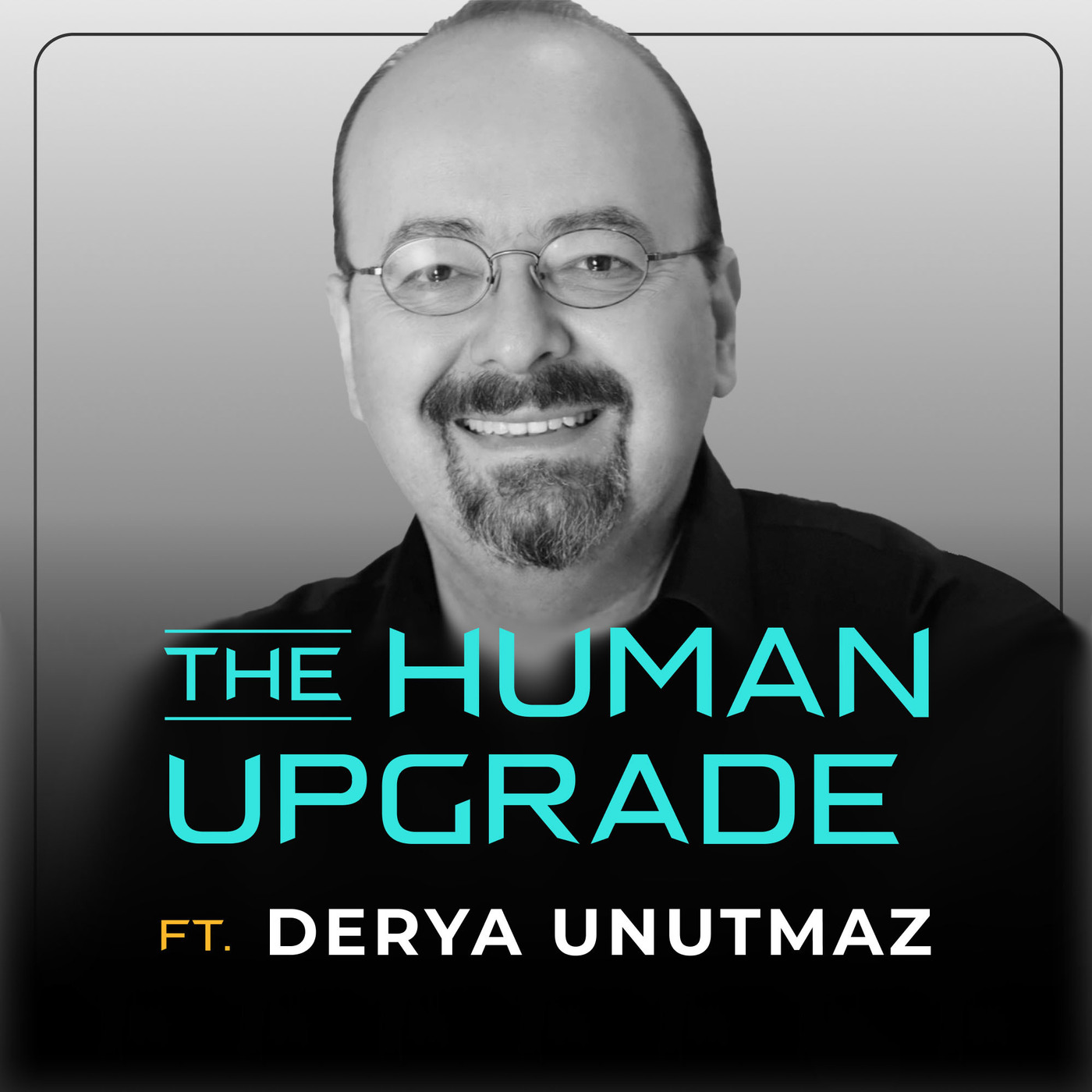
The Human Upgrade: Biohacking for Longevity & Performance
Digital Twins: The End of Human Drug Testing for Biohackers : 1342
00:50:25
Loading summary
Transcript71 lines
- [00:00]
A
It is right now unethical for doctors not to use AI. Even now AI is better than medical doctors. Eventually robots will be better than most surgeons. We have to cure the mother of all diseases which is aging. It will depend on how fast we can evolve AI and develop these digital twins. Because the real bottleneck is the clinical trials. Few scientists have pushed medicine further than Dr. Derya Unutmaz, a world class immunologist at the Jackson Laboratory. He stands on the front line of the EMERG Medical Singularity using AI to fuse biology, immunity and aging into a new blueprint for human longevity. Imagine having virtual cells, virtual tissues and in fact digital twins where I can make predictions based on running experiments literally digitally.
- [00:52]
B
Are we already at longevity escape velocity, that mythical date where we can make ourselves live for one additional day for every day that happens on the calendar?
- [01:01]
A
I don't think we are there yet, but I'm very confident we'll get there in years.
- [01:08]
B
You're listening to the Human Upgrade with Dave Asprey.
- [01:16]
C
Every time you reach for a healthy snack, you could be sabotaging your energy focus and long term health. That's because even if you think it's healthy, it probably contains seed oils which make up 20% of the average person's daily calories. And recent studies show seed oils can cause metabolic issues and inflammation in your body. Masa decided to do something about it. They created a delicious tortilla chip with just three organic nixtamalized corn, sea salt and 100% grass fed beef tallow and no seed oils. This is one of the few times I'll eat corn because this corn is nixtamalized, which is a process that removes mycotoxins and anti nutrients. Masa chips don't only avoid all the bad stuff, they taste incredible too. Snacking on Masa chips is nothing like eating regular chips. They're crunchier, tastier and sturdier than other chips so they won't break in your guac. With Masa, you feel satisfied, light and energetic with no crash, bloat or gross sluggishness afterwards. And an added bonus is that the beef tallow makes the chips much more satiating, so you won't find yourself uncontrollably binging and still feeling hungry afterwards. Ready to give Masa a try? Go to Massachips.com DaveAsprey and use code DaveAsprey for 25% off your first order. That's M A S A Chips.com DaveAsprey and Use Code DaveAsprey. You're going to love these chips. Your brain is probably underperforming right now. No judgment. Most brains are. In fact, you're probably not thinking as clearly, sleeping as deeply or preferred performing as well as you could be. Braintap helps you unlock your full potential. It offers More than 2000 in app audio sessions and an innovative headset that together deliver light pulses, binaural beats, isochronic tones, guided visualizations and 10 cycle holographic music to rewire your brain for higher performance. In just 20 minutes, you can achieve deep brainwave states that would take hours through traditional meditation. It also helps regulate your sleep wake cycle, making it easier to fall asleep, stay asleep and wake up refreshed. Refreshed without drugs or dependency. This isn't just some trend. Braintap leads with tons of real science. They've conducted multiple studies proving this works. From enhancing memory and focus to accelerating cognitive learning, managing stress and deepening visualization, Braintap is a holistic tool for peak performance in work, creativity and daily Life. Go to BrainTap.com Dave to get $100 off the BrainTap Power bundle.
- [03:55]
B
Hey guys, quick reminder. If you're listening to this on your favorite audio podcast app and you haven't been over to my YouTube channel, check it out. Just search for the human upgrade or find me under Dave Asprey bpr. I post full video versions of every episode and a bunch of other cool content outside the pod. It's a great way to go deeper into the content and connect with other biohackers like you. So leave a comment for me.
- [04:17]
C
Yeah, I'm actually going to read them.
- [04:18]
B
And poke around while you're there. There is a lot of stuff specifically for you. It really helps and it means a lot to me. You've seen incredible change over your career in our technology capabilities. And what's the most promising way that AI is going to extend our lifespan?
- [04:35]
A
There are several, but I think for me the most important thing is that AI will be able to simulate biological systems. What I mean by that is. And we can go deeper into that. You know, imagine having virtual cells, virtual tissues, and in fact digital twins where AI can make predictions based on running experiments literally digitally. I think that's really transformative because something that takes years, like clinical trials or, you know, developing new drugs, can literally take minutes or hours. So I think that will, that will change everything.
- [05:17]
B
Are we going to have to redes our approval frameworks in order to take advantage of this? Or is everyone just going to go to Abu Dhabi and Costa Rica where they don't bother with stopping you from doing things.
- [05:28]
A
This will be established as sort of the, the, the baseline because, you know, we're living through the same thing through medical community. I mean, I have a medical background, I don't see patients. But that's another area that, you know, takes a while for people to accept that even now AI is better than medical doctors. Eventually robots will be better than most surgeons. And so, you know, the society will demand that, you know, and if AI can run clinical trials better, faster and most importantly in a personalized manner. I think this is the biggest problem in medicine. In fact, 2000 years ago Hippocrates said you need to treat the patient, not the disease. But in medical school they teach you to treat diseases. So if you can personalize, you know, if you have your digital twin and AI can run drugs for you, and if it's going to save millions and eventually billions of lives, I don't think regulations can stand in front of that.
- [06:31]
B
I love that the demand will win over time and hopefully we'll vote out politicians who try to stop us from living a long time.
- [06:39]
A
And they will, they will benefit too. You know, if we can solve aging, yeah, we wouldn't want to live longer.
- [06:45]
B
That it's true. It seems like a win, win proposition to me. You've written more than 150 papers and you know so much about immunity and what's going on in the systems biology space. But I want you to put on your hat and say, let's assume that AGI rewrites the, the rules of immunology. What foundational assumption would it throw away first?
- [07:09]
A
That's a very interesting question. In fact, you know, I was just asking one of the models just the other day, you know, what are the Most, you know, 10 most important questions in immunology? And you know, so, so first of all, let me say this, this is something that I've been thinking for a very long time. We, we tend to think that, you know, our biological systems are just marvelous in a way. They are, but they are highly legacy systems. So they're not sort of a perfect engineering. It builds on top of each other. You know, something that was important, you know, 10,000 years ago or a million years ago is not important anymore and actually could be detrimental. But you can't just get rid of it, you just have to build on top of it and regulate it. So, you know, if you look at it from a very engineering perspective, it's not a very good system. In fact, immune system probably kills more than Saves, you know, most of our problems. Chronic inflammation that causes heart disease, Alzheimer's and autoimmune diseases. And not to mention, you know, in many infections that overreactions of the immune system kills more people. You know, we saw that during pandemic. You know, most people die because their immune system just worked too much too, too, too good. So it has to be very, very tightly regulated. And if you regulate it too tightly, then you don't get responses to cancer. So there the problem is just the opposite. So I would say, you know, to answer your question, I would sort of totally re engineer the immune system. I would call it AS immune system 2.0. And I think that will solve a lot of problem. And immune system is also involved in aging process. You know, it actually accelerates aging. We first saw that in HIV infection. I used to study HIV immunopathogenesis. And you know, what we notice is that as HIV infected people are living longer, their immune system was accelerated in aging, which in turn resulted in them getting heart diseases a decade earlier than they would normally. Because the virus was infecting sort of the genitals of the immune system. And it was really kind of causing it to be exhausted and so on and so forth. So there are many, many parts of the immune system that could be more simplified, re engineered, that could regenerate better, that could regulate better. So it's sort of a wholesome situation which, which I think eventually we'll be able to do.
- [09:38]
B
I cannot wait. My immune system has been problematic. I was diagnosed in my early 20s with chronic fatigue syndrome and fibromyalgia. I've had toxic mold exposures and I've been managing immunity and stress hormones manually ever since. And I'm abundantly healthy, but it's through a lot of careful balance.
- [09:59]
A
Speaking of which, I've been studying chrono fatigue syndrome for more than a decade. Um, as you know, it wasn't even considered a disease about, you know, 10, 15 years ago. And I, I got, I got very interested in it, exactly what you're saying. We, we, we saw that the immune system was really the, maybe the cause and the disruption that was causing chronic fatigue syndrome. And over the years we've actually shown that again and again. Actually we have a paper just coming out that really links the microbiome, the immune system metabolism that causes chronic fatigue syndrome. And you know, we see similar thing in Long Covid as well. So there, there's a very, very fine tuned balance. I mean immune system is sort of like the army, the police force, you know, the fire force. It could be very useful, but it could be very dangerous. So how do you keep the balance? Is. Is not so easy.
- [10:55]
B
Is chronic fatigue syndrome and long Covid. Are they really just mast cells misbehaving?
- [11:01]
A
I think there are a number of different things. The mast ce probably on mold, we think. You know, I'm a T cell biologist, so a little bit biased. T cells are probably at the center of the things because, you know, T cells sort of regulate or being regulated by the microbiome, the metabolites produced by these trillions of bacteria that live in your gut, which, by the way, really control a lot of our metabolism, our nervous system. You know, even depression could be caused by some bacteria that's living in your intestines. And they have a tremendous impact on the. On the immune system. So obviously, you know, many immune parts are sort of dysregulated, and mast cells being one of them. And, you know, one of the things about mast cells is that they produce huge numbers of cytokines, what we call these. These small molecules that actually control and regulate other cells. So this is a very networked interaction. And, you know, immune system is the most networked system in the body. There are dozens and dozens of different cell types. They all have to communicate, just like in an army. You know, you have so many different levels of. Of communication, and then you have. You have to discriminate these trillions of bacteria from the real pathogens. You know, most of them are beneficial for you. So how do you keep that peace, you know, and you have to make sure that they don't cross the border. And so when that is disrupted, the whole system starts to collapse and, you know, everything. Eventually that leads to a lot of the symptoms.
- [12:34]
B
When I was diagnosed with chronic fatigue back then, we didn't know a lot of things we know today. And I think if we'd have known all this stuff, would I have started with getting a microbiome analysis, an inflammatory cytokine analysis? Like, where would someone start saying everything doesn't work right? Even today? What are the first tests you get to figure out what's going on?
- [12:58]
A
Well, that's a great question. In fact, that has been the key issue where patients like you, they would go see a physician and the physician would do the regular test, which is like not even 0.1% of what's going on in the body, and say, oh, everything looks normal, or there's nothing particularly specific to your condition. But if you go deeper, this paper that's going to come out in Nature Medicine soon where we looked at thousand different metabolites in over 200 patients. And then we looked at it over three years period. We sequenced thousands of strains of bacteria in the gut and then we looked at hundreds of different cell types, the immune cell types and sort of we did a massive network analysis. Of course we used AI. I mean without the AI that was no hope doing that because we had millions of bits of data. So unless you do something like that, it's very difficult to figure out what's the problem. What was great about it is that we identified out of the thousand metabolites, you know, several dozen lipids, you know, certain amino acids and small molecules that are being disrupted. One of the, one of the major issues in a chronic condition like this is that again we come back to the personalization issue that not everybody has the same disruption. I mean the endpoint is the same. You know, you have the similar type of symptoms, but you have different disruptions. You know, some have disruptions in certain metabolites, some have disruptions in certain immune cells because the triggers can be different. You know, in long Covid we see something very, very different. Even though symptoms are, you know, obviously that was caused by COVID infection. So this very large scale multi ohmic analysis allows you to really personalize what's wrong with you. You know, you got, you know, these, these, these things wrong with you. But, but again, you know, without AI, how are you going to analyze that? And I can see that in, you know, in near future you get your whole genome analyzed, your metabolome, your microbiome, your immune system. Upload everything to AI in minutes or hours, you get a report, you know, well, you know, this is, this is your condition and this is, and in fact it also gives you actionable targets because you know, you can actually change your, even your diet could have an impact. There are certain bacteria that produce butyrates that go, that are lower in some patients and so on and so forth. So yeah, I mean we need a lot of data and we need AI to analyze that.
- [15:44]
B
There's a really good chance your non stick cookware contains toxins. A study from the Ecology center in California found 80% of non stick pans still contain Teflon. And a brand new study from the Science of the Total Environment Journal found that a single scratch on a nonstick pan can release about 9,100 plastic particles into your food. That's the food you're giving to yourself and your loved ones. And studies show that those toxins can cause liver, liver damage, thyroid dysfunction, fertility issues and more. So what do you do? Well, use cookware that doesn't have any of those chemicals. Our Place makes high performance toxin free cookware and I've been using it for about the last seven years. In fact I just bought another pan. They don't use any forever chemicals like PFAS or ptfes so you can cook confidently without wondering what's in your pan besides what you're cooking. The Our Place cookware set will upgrade your kitchen and one fell swoop you get two multifunctional always pans and two perfect pots in mini and full sizes and that replaces a bulky expensive stack of cookware with just four pieces. You can sear, saute, bake, fry, boil, roast, steam everything that you'd want to do in the kitchen. And buying the entire set saves a lot of money. $150 to be exact. This is what I cook on and what I have cooked on every single day for years. Our Place designed this cookware for performance and built it to last. It has over 80,000 five star reviews and I'm still using the same frying pan I bought seven years ago and it's so good that Michelin star chefs swear by it. Give it a try. They give you a 100 day risk free trial with free shipping and returns so you can experience this game changing cookware with zero risk. Stop cooking with toxic cookware and upgrade to Our place today. Visit fromourplace.comdave and get 10% off off site wide. Everybody wants less wrinkles, better hair, stronger immune system and to recover from anything life brings your way. Well, we all want it and the answer lies in your gut. Your gut's health affects everything including your immune system, your metabolic function, your mood, even how your skin looks invisible. Toxins from your environment or even from your body can silently ruin your health. Armora Colostrum is here to help. It contains over 4, 400 bioactive nutrients that work at the cellular level to help rebuild your gut health, strengthen your immune function and just turn your metabolism back on. Armor and Colostrum supports your entire gut wall system and your microbiome that can help your gut be more resistant to irritants that can trigger symptoms like bloating, constipation and inflammation. Armor also has growth factors, vitamins and regenerative peptides that help your hair grow strong and your skin glow from the end inside out. And you can see it. In fact, 60% of people taking armor colostrum notice less wrinkles and 79% notice thicker hair after 12 weeks. And if you're an athlete, check this out. Studies show that colostrum can improve fitness endurance by only 20%. That's big. Decrease recovery time by over 50% after intense exercise and it improves stamina and builds lean muscle mass. So it doesn't make a difference whether you're training for a race or just working to have better health. You just want to feel really good. Armor helps you operate at your highest level. And armor's worked out. A special offer for listeners of the human upgrade. Receive 30% off your first subscription order. Go to armor.comdave or enter Dave to get 30% off your first subscription Order. That's a R M R A dot com Dave. I'm an investor and advisor in a company that has a million people's gut bacterial samples now. And they just announced at my conference that they can now detect pancreatic cancer at the first stage with an FDA approved, I think it's early approval, but FDA approved thing just from looking at that. And it's so remarkable because that just blows my mind. And that's from a preventing disease perspective. But I'm really into longevity. So you're an immunologist. What is the single immune biomarker most underrated for longevity?
- [19:48]
A
Longevity is very close to my heart as well because I think ultimately we have to cure the mother of all diseases, which is aging. You know, people don't consider aging as a disease, but it really is the destruction of the whole biological system that results in many other diseases. And I think the immune system is sort of at the center of that. So your question again is a great one. We don't exactly know the answer cancer, but we know some things. Again, you know, in the immune system you have certain type of cells that we call exhausted, but in reality they're not really exhausted. These are, you know, I like like them to liken to mercenaries. You know, they're, they're battle hardened cells that fight war after war. For example, you have these cells that are specific to cme, which is a type of herpes virus that you can't get rid of out of your body. But you need your immune system to constantly fight it or suppress it. If you have immunodeficient, the CMV will come out and will kill you. And eventually in some elderly people, almost a third of your immune cells like T cells are dedicated just to keep that CMV under check. And what we observe is that these cells have this sort of the exhausted phenotype, but in reality it shows that they have Just fought a lot of wars, and they became very dangerous eventually. So they're being suppressed, but not sufficiently. And actually, because they're kind of like mercenaries, they will cause, with a slight of a trigger, they will release these cytokines that we call inflammatory cytokines, and that will damage just normal tissue, and that will cause chronic inflammation, and then it will block your arteries and so on and so forth forth. So I would say that that particular cell type, which we can define phenotypically, is probably the most problematic. In fact, we. We actually just wrote a grant application to sort of eliminate those dangerous cells. Because another problem is that as those cells accumulate, they occupy the niches. You know, it's like imagine a city. You have these guys living there. The new, what we call naive cells, the regenerative cells cannot come and populate. And so same thing happens in, you know, like skin. You know, you have these fibrotic cells that are senescent. They need to be eliminated so that new cells can come in. And then the extracellular matrix needs to be cleaned. You know, somebody has to collect the garbage. So, yeah, that. The. That's. I'm sorry, it was a long answer.
- [22:39]
B
It makes sense to me. I also write longevity books. I'm. I'm not an your level, but I've gone pretty deep on it. And we talk about zombie cells as the common thing for senescent cells. And I think a lot of listeners understand some cells that they're exhausted. They're not doing their job anymore. They're kind of floating around, taking up resources. So what do you do? You're. You're an expert in the field. Do you take senescent drugs? Do you do intermittent fasting? What's your personal strategy for dealing with this?
- [23:07]
A
I take some, some supplements. And in terms of drugs, I use medicine, metformin, even though I'm not diabetic. But, you know, the, the energy metabolism is very, very critical. You really have to control it. I think diabetes and, you know, high sugar levels is one of the worst things you can do to your metabolism. It really disrupts pretty much everything and it causes inflammation because it's kind of like a fuel, you know, mitochondrial. Love it. You know, when the cells are very, very active, but that results in, you know, lots of redox potential. And because, you know, that's their job, actually, and that damages the tissues and cells become more exhausted. You know, there's an entropy happening there. So if you could control energy metabolism, in fact, you know, drugs like rapamycin, that's what they do so the insulin pathway, the MTOR pathway. So metformin. I use it because, you know, it's a very safe drug. And there's study after study that shows, in fact, I think mortality from all causes are reduced by about 10, 15% for, for those who use metformin. In fact, diabetics who used metformin sort of lived longer than normal people. It was the first observation. Other than that, you know, I, I take omega 3 fatty acids, you know, sort of fish oil, which I think are important because you gotta really balance your omega 6 versus omega 3. Then I also take, you know, nicotinamide ribosite, nr. I won't give the name of the company because I don't want any replacement. You probably know NR is the precursor of nad. And so what happens is that as you age, especially after age 50, 55, the NAD level starts to go down and that, that you need to sort of replenish certain things. You need to make sure that, you know, you take them at certain ages. You know, you know, taking nr age 30 is not going to really help you very much. You know, I take urolithin A, which has been shown to have impact on immune system. Yeah, I mean, I take sort of some extracts, like broccoli extracts because I, you know, I hate broccoli. You know, I don't eat it but, but it's extremely useful for you. Garlic, for example. I, I like garlic, but I don't eat it very much. The other thing that I think, you know, besides supplements, you know, obviously your diet is extraordinarily important and one of the most important things for me is, you know, olive oil that has high phenolic acid components, you know, extra virgin. You know, I, I use one, a Greek olive oil. I make sure that I, I take olive oil every day.
- [25:55]
B
I think about 30 mils or what. What's that?
- [25:58]
A
Yeah, something like that. You know, like, you know, one spoonful either, you know, mix it with, with, with food or you can just drink it. And I actually like to, but, but, but also really limit your carb intake, I think. You know, like again, I, I, I wear a glucose monitor. Again, I'm not diabetic, but it's extremely useful because there are things that you don't notice that could really spike your glucose and you want to make sure that it comes down very quickly and it sort of provides a auto feedback. So I mean there are other things, but I think most things that you know, and we talk about, it's a.
- [26:35]
B
It'S a great list. It's helpful to know, you know, as an expert in the field, you're doing the same thing that a lot of us biohackers are doing now. I, I have determined that baklava is actually a longevity substance. Is that true?
- [26:49]
A
You know, without, without the sugar? Yes. You know, I'm from Turkey, so I.
- [26:56]
B
Know I was eating Turke baklava in Dubai last week with reckless abandon. So yeah, I might have blocked this as much as I could. What do you think about berberine versus using metformin?
- [27:09]
A
I prefer metformin. I think there's, there's definitely more data. Berberine has been, you know, might be useful for, for diabetics. I mean, the other thing is I've started to take small doses of the GLP1 receptor agonist. They're really miraculous drugs. You know, I, I had a little bit of weight problem that. It sold it, it was that. But, but regardless, I, I will probably continue taking that, you know, small doses the, you know, rest of my life as long as I can. Because it really has a sort of an anti aging effect and really kind of sort of normalizes the metabolism and it's, it's, you know, it's a natural hormone that your body makes. But, but some people don't make it enough. And so I think that's, that's very useful and I'm, I'm looking forward to drugs that will increase your muscle. You know, I think they're, they're, they're coming soon. I don't do too much, you know, strain exercise, which I should. That's also very, very helpful. Right.
- [28:09]
B
There's only so much time and effort in a day that you can invest. Do you block your CD38 cells when you're increasing NAD?
- [28:17]
A
That's an interesting question. You know, so C. CD38 can be, can be a good marker or bad marker. So it's not, it's not necessarily bad in the sense that if you, if your cells are like immune cells are activated, they will upregulate CD38 because they need to metabolize and intake NAD. I don't think I, I don't recall any study that shows that you, they. The receptor cell is blocked. Actually, I take it back because we did, we did try in vitro experiments where we added, you know, NAD to T cells. I don't think we saw any difference in their expression of CD38 per se. But, but you know, in, in some cases you, you, you may want to down regulate CD38 because you know, the cells that I mentioned that are overly active, sort of the exhausted, but actually overactive cells. In that case, that may not be a good thing.
- [29:14]
B
Got it. Because we know that CD38 loves NAD. So if NAD levels go up a lot, CD38 goes up, which can be inflammatory. And some of these are kind of in the weeds for new listeners going, what is going on? But if you've listened to a few of the episodes, there's an episode on each of these compounds. There's actually four or five on urolithin A and on nad. And what's really interesting here is we have someone who spent his career in the field, 100 plus papers doing the things that are most likely to extend longevity, even GLP1s. A lot of people are judgy about those because, oh, it's not fair to lose weight without suffering. But as longevity drugs at low doses, they're magical.
- [29:55]
A
They're magical. You know, for example, I used to have, you know, apnea totally, totally solved that problem.
- [30:03]
B
Wow. Just from, just from GLP1s.
- [30:06]
A
Yes, just from GLP1. It has so many different functions. It's really remarkable. You know, I think your, your listeners should realize, you know, biological systems are very finely tuned and you know, it can change from person to person. You know, some people really need GLP1 agonists because they, their body's just not making enough of it. You know, it's a hormone that our gut cells are making. And so you're literally reconstituting that or that its amount is dropping as you age, for example. Right. And so you need to reconstitute that. Doing too much of it may not be a good thing. Right. So for, for any of these supplements, I mean, you can't say, well I'm gonna take 10 grams of NR, so it's, it's all good. Well, there's, there's a limit, as you just said. You know, it could, you know, everything is like a double edged sword. It could work for your. And I think the other thing is that people should really analyze their metabolism. There's some companies now that looks at hundreds of different metabolites, different small molecules, lipids and so on. That's extremely useful. Or if you have deficiency in vitamin B12, you should definitely take vitamin B12. Or if your vitamin D is very low, you definitely need to take vitamin D. But if it's, you know, normal ranges, do you really need to take high doses of vitamin D? Probably not. So it's a very tightly fine tuned system that there's no all good or all bad.
- [31:48]
B
Thanks for saying that. And it is highly personalized. And the I look at when I started doing longevity stuff 25 years ago just for myself, it was very much, this is what everybody does. And over time you realize, well, that doesn't work for me, even though it worked for the guy next to me. And it feels like even now where AI is, mine's very well trained, but it's not a medical AI, man. The wisdom that comes out of that, even with the kind of knowledge that I have, I'm like, wow, I hadn't thought of that pathway. It's so profound that the personalization's happening. And what I'm a little bit concerned about is most laypeople don't know what questions to ask around longevity when they're working with an AI system. And not a lot of physicians we can go to are using AI at this level yet. Maybe they are themselves, but they're not interacting with patients that way. How do you talk to AI? Do you use GPT or GROK or something? Or do you have some sort of special university trained on PubMed kind of thing?
- [32:51]
A
No, I use ChatGPT and actually I was probably one of the first users since ChatGPT3. I also, you know, test new models. I'm testing one from OpenAI. I can't really talk about it, but, you know, it's. And they are just unbelievably good. I mean, I can tell you my mom, who asked me medical questions because, you know, if she gets sick, says, well, what should I do now? I tell her, don't ask me, ask ChatGPT, because ChatGPT knows better than I do. Even in cases where, you know, I'm an expert, you can't really compete with AI on these things. But, but the real power, I think, going back to your original question, because this is really, really important, the real power comes from personalization. Again, you know, something like ChatGPT has a memory now. It knows about you. And, you know, the more data you feed will sort of personalize suggestions to your age, your conditions and so on. And not to mention if you feed it with data, for example, you know, lab, lab data is very, very important. People have this notion, including many doctors, that, you know, if your glucose or cholesterol, whatever is in within a certain range, it's normal. If it's a little bit higher, it's not normal. But again, it depends on, on, you know, your set points. You know, cholesterol a little bit high for you could be normal, actually, or a cholesterol that is within the normal range could be abnormal for someone. You know, Statistically, I think 70% of people who get heart attacks due to atherosclerosis have normal cholesterol levels, or only 1 out of 10 or 1 out of 20 people who take statin actually benefit from it because we don't really know whom to give. Obviously, we give to everyone who has high cholesterol. You know, some do benefit, obviously, but many don't. And so I think, you know, to know your set points, your ranges. If you upload these data every six months or every year, whatever, the AI will learn and say, okay, well, you are now outside of your normal and will give you advice based on that. And they're just getting so incredibly powerful. I think you can just use ChatGPT or Gemini 2.5 Groq. They're all great. And the next models are going to be even better. Wow.
- [35:25]
B
So you're as excited as I am. Are we already at longevity escape velocity, that mythical date where we can make ourselves live for one additional day for every day that happens on the calendar?
- [35:38]
A
I don't think we are there yet, but I'm very confident we'll get there in 10 years, maximum 15 years. You know, that's the point where we have to be, you know, I think like GLP1 agonist probably is beginning to cross that. You know, there's some calculations that if everybody used GLP1 agonist, I think the average lifespan would increase by about between five to 10 years. Like you go from, you know, average 80 years old to 90. You know, so, so one drug can make a huge difference. You know, it will depend on how many of these type of drugs that we'll have in the next next decade. Especially, you know, the muscle drugs are going to be really important because this is a huge problem during aging. But, but I think we're, we're very close. In fact, I tell people, you know, try to stay alive for the next 10 years. Then you, okay, we're definitely getting, I mean, there, there's, there's. I would be very surprised if it's, if it's longer than that. And in fact, you know, it will probably happen very quickly. You know, we'll see that in the next five, 10 years there will be some advances, you know, maybe a couple of more drugs that will add few more years. But suddenly we'll see a massive jump. You know, you know, average lifespan 90 to. In one year, we'll jump to 95. Next year we'll jump to 100 and especially once we start to reverse the aging process, then, you know, we, we already escaped to longevity, escape velocity. It'll probably be only a few years, and then after that it will be, you know, into the space. So we're, we're, we're really getting there. And I think it will again depend on how fast we can evolve AI and develop these digital twins. Because the real bottleneck is the clinical trials. You know, if you're testing for something that will reverse aging, I mean, it's going to take years and years. Right. So we have to be able to do that and iterate on it very, very quickly. So once we get there and we just need the data, we need tremendous amount of data. We need a lot of compute, a lot of electricity. So that's why I think, you know, investing on data centers and energies is, should be top priority. Once we have that, then in matter of months or sometimes weeks will discover hundreds of new molecules. And we're approaching there. It's very exciting.
- [38:14]
B
So about five years is maybe you're aggressive and 10 years is your conservative.
- [38:20]
A
Yeah. The reason I'm saying 10 years, AI will be capable within five years. There's no question about that. I think we'll get to ASI artificial superintelligence in three, four years. The problem is that, you know, sort of the diffusion in the society has a lag period. You know, we see this in medical medicine right now. Right. So in my opinion, right now, AI is better than almost all doctors, including specialists.
- [38:57]
B
Wow. I think you're right.
- [38:59]
A
But it's going to take probably another five years before people can say, well, okay, AI will be my doctor. Right. They will completely trust for that. And I think that's the same thing will happen when can we trust AI to run clinical trials or that it will make decisions that this drug will work on these type of people. Even though it's going to be capable in the next three, five years, it probably will take another five years before all the regulations, all the, you know, all the stuff that society has to accept. So, so I think that's the, that's the limiting factor.
- [39:45]
B
Do you think that AI doctors should be allowed to write prescriptions?
- [39:49]
A
Absolutely.
- [39:51]
B
Wow. I do too.
- [39:53]
A
I wouldn't even blink on it. I mean, I, you know, because I, you know, I, I, I test this all the time and actually we're, we're benchmarks for various specialities, dermatology and so on. The imaging part still needs a little bit, a little bit more advanced, but it's actually almost getting there. As well. But otherwise, you know, something like O3 model from ChatGPT or O3 Pro is. I cannot imagine any highly specialized oncologist or whatever can compete with that because it thinks of every single, and it actually has an access to Internet, so it will pull up all of the information. You know, if there was a paper that's published yesterday, you will actually incorporate that. So, and this is, this is really an important issue. In fact, I said in Twitter several times that it is right now unethical for doctors not to use AI. Very soon it's going to be malpractice.
- [40:57]
B
Yeah.
- [40:57]
A
Because there are 12 million misdiagnoses in the US alone. About 700,000 people die or you know, severely harmed because of mistreatment, misdiagnosis. I mean, this is massive. So AI can reduce that to literally nothing because it will not make those mistakes. It's sort of like self driving cars. You know, if every car was self driving, we would have almost zero accidents. We'll save about 40,000 people. But in healthcare we can save, save hundreds of thousands of people. Not to mention we can lower the cost of healthcare by, by 10x at least. Because the AI will also predict what type of disease you will have, or whether a patient should be triaged, whether it should be in hospital for five days or one day or not in hospital at all. Most of this is, you know, doctors just do it, oh well, let's be safe, let's keep the, the patient, you know, three more days. They don't really know if it's necessary or not. But you know, one of the, one of the cool things about biology, even though it's extraordinarily complex, at the same time, it's very, very predictive. People get surprised about that. You know, there's millions of billions of reactions happening in your body and trillions of cells. But you can start from a single cell and you can recreate the same human being, you know, like in identical twins. Right. Everything can start from a single cell where there's trillions of things that happen and somehow nothing goes wrong, you know, or you can, you can just give an aspirin a out of thousands of metabolic interactions, that one molecule can actually heal you or, you know, fix you. So in a way, biology is highly predictable. We just need to see that. And we can't see that because there's billions of reactions that our brain cannot process. AI can do that. And so the impact of AI in medicine is going to be unbelievable. But unfortunately there's a lot of resistance, including from Some of our colleagues.
- [43:08]
B
Are you worried that AI systems are trained on bad data? I mean, PubMed can't be reproduced for the most part.
- [43:16]
A
This is a very important issue. In fact, you know, I mentioned about digital twins, digital virtual cells, a number of times. I think one of the things that I'm worried about is that we don't have high quality data to train AI to understand fully the biological system or simulate the biological system. Because even sort of, you know, data in the databases, like for example, proteins and RNA SEQ data and this and, or even microbiome data, not all of it is high quality. And so we definitely need to have better quality data sets. And I think, you know, some companies should definitely focus on that. But at the same time I'm hopeful that AI can discriminate between the bad and, you know, good data. And again, you know, there's a model that I'm testing right now which is an agentic model. So the very cool thing about AI agents is that they don't take things for granted. So if you ask ChatGPT, you know, it will go and find information, it will, you know, distill it and give it to you. But agents are not like that. So you can have an agent that will find some information. The second agent will criticize it. Well, it will say, well, how do you know that's true? And the first agent says, well, we made them. Your point as well taken. Let's go and find more, more data and more truth. And so by sort of interacting with each other, they can really sort of find what's, what's closer to truth. There's, there's never absolute truth out there. But I think, in fact, you know, one of the things that, that I love about using AI is to criticize papers, including my own, you know, so I uploaded some of my papers that I thought were, were great. You know, they were published, they were reviewed by reviewers, but AI found issues that I had missed and I was like, oh, oop, you know, fortunately it said that everything looks good, but if you had done this experiment, it would have been better supportive and things like that. So I think eventually AI should be the reviewer of all papers. Wow.
- [45:37]
B
Instead of peer review, imagine what that would do.
- [45:39]
A
Yeah, absolutely. I trust AI much more than human reviewers because, you know, as scientists, your, your knowledge is very narrow. You, you know, very restricted set. And you know, we're also biased. Right. Sometimes your papers get rejected or accepted based on conflicts and other things. AI doesn't have those problems unless its.
- [46:04]
B
Creators build them in as we're starting to see.
- [46:07]
A
Right, yeah, well, that you have to have some filters. Right?
- [46:12]
B
That's for sure.
- [46:13]
A
Sure.
- [46:13]
B
I'm interested in your take on wearables. I was a CTO and co founder of the first company to get a heart rate from the wrist years ago and an advisor to one of the CGM companies to levels and really have gone in on sleep tracking for almost 20 years now and all the normal lab tests and all that aren't wearable. Put on your five year hat with everything you've seen. What do you think we're going to be tracking with wearables?
- [46:40]
A
You know, I love variables. First of all, I think continuous monitoring of biological data gives you an incredibly rich data set that you cannot achieve by doing, you know, like if you're, if you're measuring your, your blood pressure once or twice a day, that, that's not, that's not really going to show you if something is wrong with your heart most of the time. So, so I think you know, heart rate and blood pressure and, and you know, with Apple Watch you can do your ECG and you know, your oxygen levels and all those things. But you know, I, I, I love these glucose monitors and I, you know, my dream is that we should have such sort of the nano monitors that can monitor your, your lipid levels, your glucose levels and you know, maybe a hundred different metabolites throughout, throughout the day. You know, then you can, you can decide, well, you know, I was supposed to go to bed because you know, you have circadian rhythms that completely will change your, your metabolism and so, so constant monitoring of, of your, your biology through metabolic activity and in some cases some proteins as well, you know, you might have, in your case where you have chronic fatigue, you know, there might be certain time of the day where certain, you know, there's more inflammatory cytokines being screened, which we know could happen or you know, like chronic fatigue patients are not supposed to do a lot of exercise, you know, but maybe, maybe at certain time of the day you can do exercise. You just don't know that. So I, the, you know, measuring actually biological molecules for me is the ultimate variable and especially if you link it to AI. Well, that's the holy grail of personalization.
- [48:34]
B
Let's talk about teaching. You say a lot online about how AI is going to change the world of teaching. I ran a program for the University of California on web and Internet engineering for five years. I spent a lot of time teaching working professionals and it's really hard work. And even if you're a great teacher. Seems like half the class is behind and half the class is a little bit bored. How is AI going to change that completely?
- [49:00]
A
I think the current education system has to be totally scraped. And I say that as a professor. I've taught medical students and PhDs. But as you said, you have to personalize education. And also learning is different than teaching. You can teach, but people you know will not learn everything you teach. So in order for our brains to keep something or learn something, it has to be two things. Either has to be a threat because you know, the brains are evolved to look for threats. If it's something dangerous threatening, you will remember that, you will learn that or has to be fun. It has to be like a game. In fact, you know, children learn everything through games, right? So playing, in a way, games are simulations of what might happen. You know, it's also predicting the future threats, you know, like, you know, I play a lot of video games. You know, I'm a big fan of, you know, some shooting games and you know, some parents don't like them. But actually those are kind of simulations of how, if there was a threat, how we would react to it. But, but you feel fun, you know, that's how you learn. And I think, you know, AI can do that. It will sort of teach you the way you can learn and make it fun. And actually, you know, I personally learned so much from AI. I mean in the last two years I probably learned more about topics that I'm interested in it, but it's too boring to go and read some textbooks or online, whatever, you know, I say, you know, like I don't know anything about this to chat GPT, you know, explain it to me like you would explain it to a kid or you know, about quantum mechanics. You know, it just, it's, it's really incredible. It really makes things very easy to understand and through analogies, metaphors. So I think it's no brainer that at least the higher education should be completely replaced with AI. You know, lower education. I think teachers still have a role because there's that personal touch that's important. But after high school I don't see a role for myself as a professor.
- [51:32]
B
Actually. Is it still worth it for an 18 year old to spend $100,000 plus on a 4 year college degree when everything is available, available for free on AI?
- [51:42]
A
Absolutely not. Absolutely not. I mean it's, it's, it's probably the worst investment of money and time you can do by going, you know, going to, to a college for four or five years. But you know, actually, you know, everything you learn is already obsolete in, in matter of months. Last year, about a year ago, I tweeted and, and as a warning to medical students or people who want to go to medical school, I tried to discourage them and there was a lot of pushback and said, well, we need a lot of doctors and so on. Yeah, we need a lot of doctors. But by the time somebody goes to medical school and becomes a resident, it's about a decade of training. So it's a very, very long process. Imagine how things will be in a decade. We have robots which are going to do surgeries better than human surgeons. So there's, there's really not. And you know, going to medical school is extraordinarily energy tiring and you know, expense is unbelievable. You're not going to get, get back your investment. So, so I think my suggestion to, to, to young people is that at the same time this is a tremendous opportunity, right? So instead of wasting 100,000, $200,000 in college or other schools, use that time to really learn how to use AI and have agency and curiosity. Those are, I think those are two important features. You have agency, you have curiosity. There's literally nothing you cannot do. I mean, I have a 10 year old son of my cousin who's a very high agency, really intelligent kid and we're actually working on starting up a robotics company together because he uses ChatGPT better than I do and he comes up with the name and how to build robots. And so if a 10 year old kid can do, anybody can.
- [53:55]
B
I am very close to, for my 18 year old daughter, just saying, look, do some deep learning with AI and let's take the money that we were going to spend on college and let's buy a small company so you can learn how to run it. Because it's a better investment. At least you get a return on it. And I do not believe that anyone spending four years in college is going to get their money back right now. It's just not how the world works anymore.
- [54:17]
A
Absolutely not. I mean I think people are either coping or delusional or have no clue what's happening. Know anything that can be done in computer is already be, will be gone in, in, in matter of years, if not sooner. In fact, you know, even physical jobs are, are going to be very hard to, to compete with robots that might last a little bit longer, you know, maybe in another five, 10 years. But at the same time, you know, you know, someone like your daughter, if she buys a company or starts a company just by herself. She can run a company. You know, you just hire AI agents. You can have an agent do your website, you can have an agent as your marketing personnel. And, you know, it's really remarkable how one person can do so many different things. And so I think we're going to see much more of that. People will really focus on, you know, personal. You know, if you think about it, throughout human civilization, jobs are a recent invention, right? We didn't have jobs until like 200 years ago.
- [55:27]
B
It's totally true. And that advice is tough advice for people finishing high school, thinking about going to college, but I think it's real. And I applaud you for being willing to say that. It's controversial and you're speaking as someone who's high up in the university education system. It's going to have to change rapidly and I really appreciate you being honest and truthful about that. And thank you for sharing all of your longevity knowledge and just your perspective. You've developed incredible wisdom of going so deep on all the systems of biology and it's refreshing to hear how you think about it. So I appreciate you and appreciate you being on the show.
- [56:07]
A
Thank you so much. This was a lot of fun and great pleasure. Thank you guys.
- [56:11]
B
If you would like to know more about Durya's work, go to jax.org where most of his research and is and well stay on the longevity bandwagon. See you next time on the Human Upgrade Podcast.
- [56:30]
D
A Human Upgrade, formerly Bulletproof Radio, was created and is hosted by Dave Asprey. The information contained in this podcast is provided for informational purposes only and is not intended for the purposes of diagnosing, treating, curing, or preventing any disease. Before using any products referenced on the podcast, consult with your healthcare provider provider carefully read all labels and heed all directions and cautions that accompany the products. Information found or received through the podcast should not be used in place of a consultation or advice from a healthcare provider. If you suspect you have a medical problem or should you have any healthcare questions, please promptly call or see your healthcare provider. This podcast, including Dave Asprey and the producers, disclaim responsibility for any possible adverse effects from the use of information contained herein. Opinions of guests are their own and this podcast does not endorse or accept accept responsibility for statements made by guests. This podcast does not make any representations or warranties about guest qualifications or credibility. This podcast may contain paid endorsements and advertisements for products or services. Individuals on this podcast may have a direct or indirect financial interest in products or services referred to herein. This podcast is owned by Bulletproof Media.