← The Human Upgrade: Biohacking for Longevity & Performance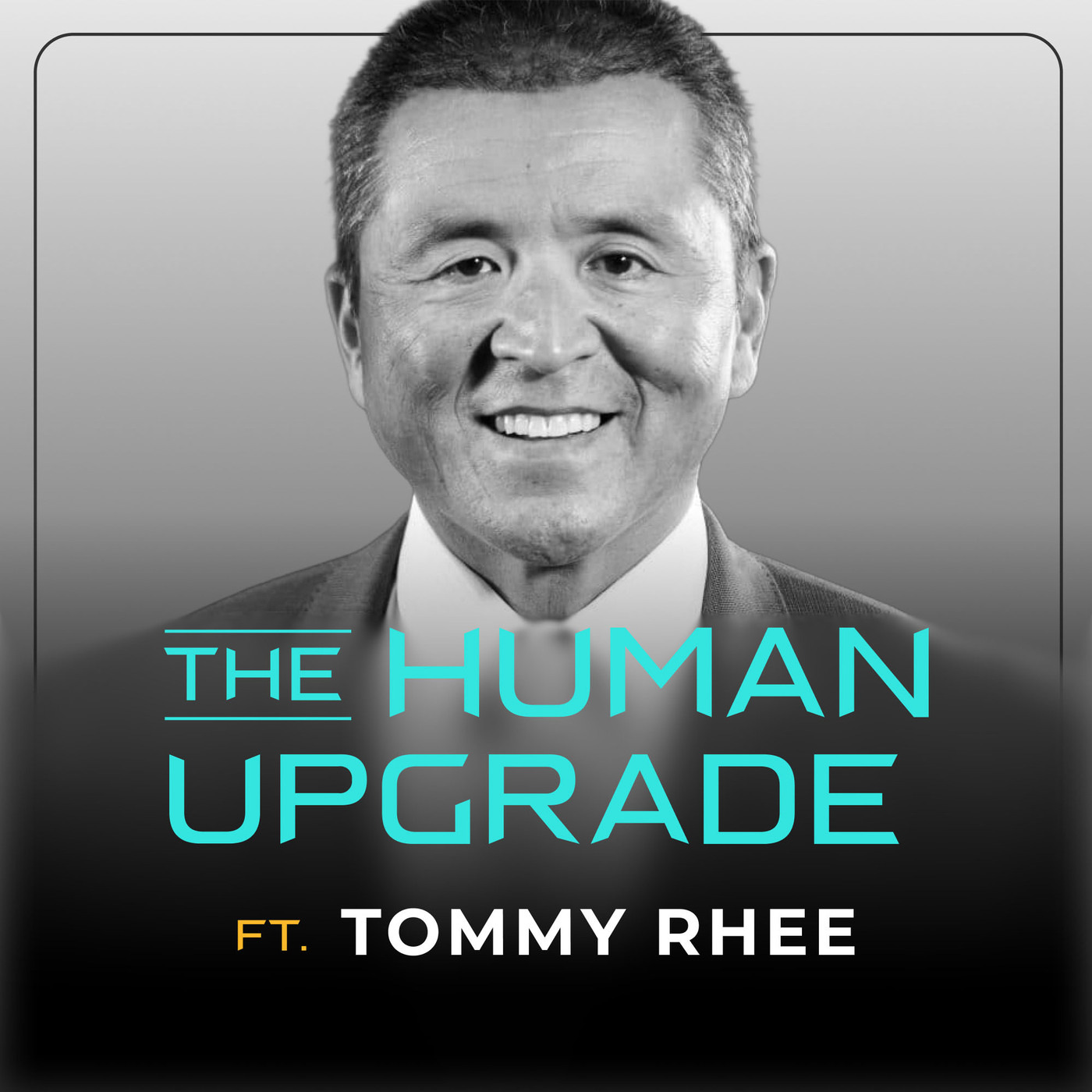
The Human Upgrade: Biohacking for Longevity & Performance
Get a Full Body Workout in 10 Minutes by Doing NOTHING | Biohacks : 1372
00:45:05
Loading summary
Transcript104 lines
- [00:00]
A
This sounds almost too good.
- [00:02]
B
This is like a cheat code. This is like a real secret in the sense of you can bypass all the exercise downfalls and go right into the outcome, which is that circulation, good health outcome.
- [00:12]
A
It's why at Upgrade Labs we have power plates in all of our locations because you get people to stand on it for five or 10 minutes and they're getting a lot of things that they don't get any other way, including microcirculation.
- [00:24]
B
Funny thing is that pro athletes, I think pretty much every pro team has the. It's a great thing for men versus women.
- [00:30]
A
What are the differences?
- [00:31]
B
There's a better benefit for females when it comes to the pelvic floor syndrome.
- [00:35]
A
Oh, wow. So you can stop sneeze peeing with a. Yeah, absolutely.
- [00:40]
B
We've heard of men that go on this thing that's like in the elderly age, you know, 80, 90 years old. And then they'll tell me like days later, hey, I'll be honest with you, I got an erection like, well, there you go, it works.
- [00:51]
A
It's simple. You just stand there and you're getting more benefits than going for a 10 minute walk. You're listening to the Human Upgrade with Dave Asprey. Dr. Tommy Rhee is a board certified chiropractor who worked for the Tampa Bay Buccaneers and he's one of these guys who understands biohacking in multiple levels. And I want to go deep in the episode today on something that I've taken a lot of hits for recommending actually over the past 12 years or so. It's whole body vibration and there's so much interesting stuff to understand about this and I'm a little disturbed because I've seen some, we'll say less than effective and probably harmful devices on the market lately. And I sometimes cringe when I walk past at certain trade shows. I'm like, oh, like I just want to get people off of these things. So this episode is everything you ever wanted to know about Whole Body vibration. And Tommy, thanks for taking the time to do it.
- [01:57]
B
Dave, thank you very much. I really appreciate that and yeah, I'm looking forward to this conversation.
- [02:01]
A
So what happens when someone steps on a power plate?
- [02:05]
B
Wow, there's a lot of things that happen but you know, like anything else in our life, we want to get the best benefit from something. Either it's from exercise, eating right or something. Well, you know, whole body vibration and really power play that really like gets you that benefit that what you're looking for from exercise or a good meal, you know, you want that? They call it biological activation.
- [02:27]
A
What does that really mean? Okay, I mean you work with professionals. Biological activation. I get that from smoking, right?
- [02:33]
B
Yeah. But think about the positive side of that, you know, think about what you're trying to achieve. You know, like when, you know, you go to a doctor and the doctor says, hey, you know, lose weight, go exercise. Or you go to the doctor and they say, hey, you know, your A1C is high or you have some type of cardiovascular issue, go exercise. Well, at a certain point in your life, you know, exercise is almost conducive to you, right, because you're going to have those side effects of like injuries and maybe you don't have that stabilization your core. So the outcome with exercising is going to be a soreness or an injury. But you want the byproduct, the aftermath, right? You want that good effect of that circulation and decreasing the blood sugar. Well, that's what you're trying to achieve and that's what the whole thing's about. It's shortening that goal at the end to achieve that. And that's what power plate, whole body vibration does.
- [03:22]
A
You know, we use power plates at upgrade labs and years ago when I was running bulletproof, we actually launched our own vibration plate as many years ago and people would just make fun of me online that like Dave's saying you should stand on these big vibrators, they can't possibly do anything like. But if you look at all the science behind seems like if you're not going to go walk 10,000 steps a day, which is a made up number anyway, maybe doing a few minutes of whole body vibration is going to give you many of the same benefits, but it saves you time. What are the specific benefits of using a power plate?
- [04:01]
B
Well, number one, circulation. You know, one of the things that we discover Here, you know Dr. Louis Nguarno, right, he's the Nobel prize winner of this compound is called nitric oxide. That is what you're trying to achieve now, the old way of thinking about exercise, right? No pain, no gain, maximize, do that long duration, go to that max. Well, you're trying to achieve that nitric oxide, you know that, that formation so you can increase the dilation of your vessels and then you get better circulation. So that's what this is all about, is really increasing that side effect of exercise, nitric oxide and its other, you know, biological activation. So when I think about exercise and where you want to go with exercise, it's that component of that circulation, it's that really like that Youthful sort of that energetic kind of motion you want from that nitric oxide.
- [04:58]
A
Okay, so standing on a power plate releases nitric oxide, but where?
- [05:03]
B
All right, so when you look at the vessels. So when we walk, we jog, we move. It's, it's that vessel that you're looking at, artery, vein and lymphatic system, and you're doing that motion. So as you walk, you're doing that vertical motion and your vessels are going up and down along that, you know, the epithelium or the lining of your vessels. Well, that's called shearing. So once you start cheering, it engages this activation of increasing nitric oxide and that's what increases the actual dilation of the vessels. So take that activity of walking, running, or even exercise and then place it on the power plate or whole body vibration. Now you're maximizing that vibration and a passive mode without, you know, compromising the joints. So the neat thing about that is that you're achieving everything you want from a power plate, that you have to go through a whole exercise motion to get that nitric oxide and that circumflex circulation increased.
- [05:59]
A
Okay, so you're getting whole body nitric oxide. How much power plate do you need to get that level of nitric oxide in your tissues?
- [06:07]
B
Well, the great thing about that is that it's 10 minutes, just 10 minutes of standing on a nitric, I mean, on the power plate for, let's say in a low level setting, and just stand there. And when you stand there, you're kind of shifting your weight from the heel to the forefoot, back and forth, and you can feel that vibration as you lean back towards your heel and it vibrates all the way to your thoracic, to even the, the brain or the right. And you go to your midfoot and it goes right to lower extremities. So it's just the activation through the whole body. It's about 10 minutes.
- [06:37]
A
And you don't need to do squats or planks or anything like that on it.
- [06:41]
B
No, you don't need to do that. You're just engaging that shearing effect on those vessels once that, that shearing effect is noticed. Now here comes the nitric oxide production and that's what you want, that's what you're trying to achieve. The whole, I mean, that itself does a whole cascade of other things, not only for the vasodilation, but we're talking about other things. You know, we're talking about from all the way from stem cell to even like increasing telomeres I mean, you're talking about a whole bunch of things that nitric oxide starts off.
- [07:08]
A
Couldn't I just take a nitric oxide supplement?
- [07:11]
B
Yeah, I mean, you could, but there's a whole other steps. You have to get involved with that, right? So if you do, you could do like, you know, like grainy vegetables and go with nitrates and turns into nitrite in your mouth and it goes into your stomach and turns into nitric oxide. You can do that, but the problem is that you need to constantly go because that, that particular gas doesn't last long, couple seconds and it depletes out. So if you want that for a long period of time, you're going to have to eat that long period of time. So you want to be on there for 10 minutes to simulate that type of exercise duration.
- [07:42]
A
10 minutes on a power plate is equal to how many minutes of walking.
- [07:46]
B
So now if you look at the frequency of walking, so when you do like a walk and you do maybe like maybe five, 50 steps per minute, right? But with power plate, you're doing 30 frequency, let's say 30, you know, 30, which is 30 beats per second, you're going real fast, right? So that's how much you're maximizing. You're maximizing that much more compared to just that one walk per minute.
- [08:09]
A
You brought up something called shearing force, which is something that a lot of people haven't heard of even in the world of biohacking. But it seems like shearing force, which comes from that impact is really important for your fascia as well as generating nitric oxide. And you just get a lot more shearing per second when you're vibrating versus walking.
- [08:28]
B
Right. In the case of nitric oxide, sharing is exactly what it is. So as you're walking, the blood vessels, you know, especially the venous, right. So it's from the lower extremities from your feet, trying to get back to the heart to oxygenate back up and push back out in the arterial stuff. So you're trying to push it up, but as you're walking or you know, moving, it goes up and a little bit down with power plate, you maximize it even faster, right? Because you're doing a frequency of 30 to 50 beats, right? So it's going that much more faster. And when you have that much more activation, it increases notch nitric oxide even more so. So that's why that is a better tool than actually doing the walk.
- [09:03]
A
So you would say whole body vibration is better than going for a walk?
- [09:08]
B
Oh, absolutely.
- [09:10]
A
Me too.
- [09:11]
B
Yeah. Well, think about what walking can do to you. Right. Let's say you have, you know, let's say, like for instance, I'm 57 years old, so I have arthritis in my body. So there's some things I can and can't do. And when you do a walk, you're having limited range of motion. You're not getting a full hip range of motion or your knee range of motion. You're doing little strides. So as you shorten your strides for a long period of time, your joints would decrease in its ability to have that elongation. And now you start feeling that tighter tissue around that joint. Now you're starting to get that arthritic situation worse. With power plate, there's no movement. You just stand there and you're getting that shearing, which is the nitric oxide activation. And that's what you're trying to achieve. Without that joint getting slowly decrease in its range of motion during a walk.
- [09:54]
A
It feels like there's neurological benefits from walking and from foot flexion and all that. But you could probably get some of those if you've just got up on your tippy toes or kind of moved your feet around on, on the power plate or is that even a good idea?
- [10:08]
B
Yeah, well, you know, activation, anything. When you activate a muscle tissue or the joint. Absolutely. But then when you compound it with a vibration at that speed. Absolutely. It engages those muscle fibers. And then of course, I think the big thing, when you think about nerves, you're looking at two pathways, right. Looking for the afferent efferent. Right. The information going or the sensory and then the actual muscle or the activation or the efferent. Right. So the big thing with that is that you want to help that side of the balance. Right. When you do balance, you have to know in proprioception where you're at in spatial arrangement. So as far as like thinking about exercise and then how to train your body, you want to tax that nervous system so you can make it difficult to do something. And as you adapt to it, it gets easier and easier. Well, your nervous system is giving you information faster and more importantly, the muscle neurons are sending it down faster to combat that mis imbalance. So it's that training period that you're trying to have during powerplay sessions that when you do a walk or anything else, your nervous system is used to that fast frequency. But now you're back to a walk with a slower frequency frequency and you adapt it so fast. So that's what's great about power plate with Balancings.
- [11:21]
A
One of the things I've really appreciated doing is just holding a plank on the power plate. What's the difference between planking on it versus standing on it?
- [11:29]
B
Now? Depends. Are you having the plank as a power plate platform on your feet or on your elbows?
- [11:35]
A
Usually on my elbows or just on my palms. I'll just do like a push up.
- [11:39]
B
Yeah. So that's, that's great. It's almost like doing a handstand. So you're doing the, so you're activating the upper extremities side of things and you're upper torso and not so much a lower extremity. So. And when you stand on it, you're doing the whole entire body. You're, you know, you're basically doing that tri planing action of the whole entire body to mimic all the way through your body and then back down. Whereas when you do a plank, you're really isolating the lower upper extremity and then kind of, you know, decreasing the lower extremity.
- [12:06]
A
What I'll, I'll do is I'll do like the bottom of a push up, like a chaturanga kind of a thing. So you're getting like chest opening and it feels like it's really chest and arms only, but I feel like it's getting more shearing force there than I get if I just stand on it. So I do, but I'll stand first and then I'll finish off with a couple minutes of just doing that. Any, any advice for holding different poses or stretching on it?
- [12:29]
B
I think you have the right idea. You know, if you want that particular muscle to be increased in number one in its activation and then the actual shearing of that type of vessels. Absolutely. So if you want to like attack your tricep, well, just get your hands closer as far as like a, like a real close hand grip push up and then you can. And then, you know, go to like a 30 degree, 45 degree and engage that trice. And it's about isometric. Don't go into any concentric or eccentric or any action. Just stay there and then, you know, hold it there for a minute too, because you want the isometric hold on there and then the shearing will maximize because you don't want to ride along with the actual vibration as you're doing your action. You want to be still and let the plate do the movement for you.
- [13:13]
A
Okay, got it. That's helpful. Can you talk for a minute about what vibration does for microcirculation and why.
- [13:18]
B
We care about when you hear about microcirculation, you're looking at the smallest vessels, like to your eyes, to distant end to your feet, the toes, and even around your heart. So when you think about those small vessels, you're thinking about those antagonizing things that we, you know, it moves into, like diabetes. The blood sugar's too thick, Something's getting too sticky in the platelet, right? So because of those factors, the blood is. The viscosity is getting too thick, and you can't get. Get inside or, you know, past that point of the small little vessels. So with power plate, again, going back to nitric oxide, you have to vasodilate. You have to open up those channels to allow that blood flow to go through those little teeny vessels. So it oxygenates that tissue on the other end.
- [14:01]
A
What about the lymphatic system? It feels like when I'm doing power plate, I feel like there's a lymphatic effect, there's a circulatory effect, there's a muscle effect, there's a bone effect, probably something in joints. Talk to me about lymphatic drainage. And does power plate work as well as walking? Because that's one of the reasons we go for walks.
- [14:21]
B
Yep. Great one. So that's the biggest thing, you know, you want to understand about that metabolic waste that you get from either something from a workout, trauma or some type of, like, systemic illness you may have that the lower extremity is basically holding this, like this, this, this. This high type of free radical bunch of junk down there. You have to get it out. So there's a process where you can get it through the system, but more importantly, it goes to the lymphatic system. It's that, like that, that slow kind of moving type of, you know, like a channel that goes from the distal and gets all the way into that big vein in our system there. So the problem with that is that if you don't move, it's hard to move that tissue. Right. You almost have to stand upside down to have the gravity pulled down. So as we stand, we don't really stand upside down. So we need something again, nitric oxide. You have to get that thing, dilate it, open up the vessel so it's allowed. Then when you stand on a plate, you're doing these micro contractions. So it's like a little pump. You're trying to pump everything up from your distal end, your feet, back up into the core of your body where you can dump it out. You know, we all know that free Radicals. We have anything that has that metabolic waste, it's bad for us, you know, then you get that stuff called interstitial fluitis and all that stuff. You start getting that leakage in your lower extremities body. You've got to get it out. Well, that has to go through that channel of the lymphatic system. So again, power plate increases that dilation and it contracts those little muscles that help pump that little, that vessels and all that junk that metabolic waste out of those extremities.
- [15:55]
A
Are there studies of lymphatic drainage and whole body vibration?
- [15:58]
B
Oh, absolutely. There's so much studies out there, studies whole body vibration has been around a long time. It is a big, it's. I mean, here, believe it or not, you know, I totally understand what you're saying about like, people kind of like, you know, look down on this whole type because it's too easy, it's too simple, it doesn't make sense. Right. You know, exercise in itself is about no pain, no gain. If you're not sweating, you're not doing it. You know, it's that whole, like you have to go more than 45. You can do everything in 10 minutes if you really want the secret, you know, 10 minutes, 10 minutes in its proper formation, understanding which equipment, what technique, what supplement. And then that's all it takes, knowing that secret. And that's what you want. You don't want to go in that long duration because then, sure, you may get that benefit, but what's the next thing happens? Joint cartilage gets destroyed, you know, you get damaged, you get that thing called doms. And then if you overtrain, you can start tearing muscles. And we all know about tearing those muscles, Achilles tendonitis and all that stuff. So that repetitive injury, because you don't give yourself that ability to rest. And as we age, we need more time to rest. With Powerplay, you can bypass all that. You can go right into the outcome, which is that good results from an exercise, except for don't deal with all that side effect from exercise.
- [17:13]
A
So I get it for people, you know, over 45, 50, you're starting to get lots of injuries. But if you're 25 and you're in good shape and you're probably going to go for a walk or even a run because you haven't figured out that running is not that great of a sport. But are you going to get additional benefits from doing whole body vibration or is it. You don't need to do it. If you're gonna go do A full workout.
- [17:35]
B
All right, so when you're young, especially if you're, if you are pushing yourself to like do that one max rep or something that really like, you know, maximizing your output, you want to think about, all right, I've got a warm up. I've got to increase everything I have, which is of course the vessels and then you gotta warm the tissue up. But you don't want to deplete your energy in that, that muscle that you want to do that one max rep. So again, a cheat code. Open your vessels up, get on power plate. That's your pre, that's your pre warmup. You want to do that, get everything warmed up and then start going into that one max. And then again with running, same thing. You know, a lot of runners, if you look at competitive runners, they run around the lap, around the track a couple times and then they warm up that way and then it goes, I'm ready to go. Well, guess what? Sometimes when you do too much of a warm up, you can really waste yourself before the competition. So when I was over there at the Olympic trials, I would, you know, they would have two tracks, they would have one track, which is the competition track, and there's a other side, which is the warm up track and the warm up track. You'll see everybody, you know, warming up, doing their event, doing their simulation and trying to like, you know, get their body temperature up, get everything going. What you typically see on these guys that are kind of new in this world, they will over warm up and then they just waste all their energy. So by time competition comes around, which is like in a matter of like 40 minutes to an hour, they're wasted, they can't perform to their best. So it's about like keeping your energy but warming up a tissue. That's what powerplay does. So when you think about you guys that are younger, that want to maximize some type of 1 mile run, or you want to recover easier. Powerplay is a secret weapon. You can bypass all that wasted energy before you run to get that, you know, that, that one max rep or that PR you're trying to do.
- [19:22]
A
That's interesting. So you recommend using power plate as a warmup instead of a normal warmup because you have more energy left for your max lift or for your event.
- [19:30]
B
Absolutely. That's the secret. There's so much in this vibration and power plate that people don't know if they really like grab this thing and used it correctly and not use it for just. I guess a lot of people think that Power plate is something to build large muscles or do something to bypass that, that, you know, that aggressive workout. Well, it has its market over there. But if you really understand about using this in a pre to a post world, in your event or your workout, that is where the secret sets.
- [20:08]
A
What are some of the problems with the different forms of vibration? You've got these cheaper machines that rock back and forth from one leg to the other and you got the power plate that goes more up and down. What are the pros and cons?
- [20:22]
B
Okay, well here's the pros and cons. What you explained are like in that two dimensional world, you know, it just only has that, that vertical kind of movement, maybe a little horizontal. But we live in a three dimensional world, right. We have that side that we have to mimic what we're trying to do in the real world. So in my practice I look at things in a sense of a controlled environment. So I have a patient that may have like a sprained ankle and I want to get them off that, you know, that, that sprained ankle acute and get into chronic and rehab and exercise. Well, the only way to start that process is, you know, decrease inflammatory world. Then you start, you know, working on a tissue and once they're able to, you know, be weight bearing, then they are going to stand on static. Then you get them on something that mimics their world. That's power play. It has a three dimensional stressor, right. It's gotten this vertical horizontal and the side to side. So with that it mimics active actively real world. And so that's what we try to do in our clinic is that have real world situations to kind of, you know, sample. And then once they come land that and they dominate that. Then when they go out there and they're walking on that bad ankle, it's very simple for them. So that's why I love power play. It has that triplanar activation of that movement.
- [21:35]
A
That's something that's really important to understand about whole body vibration is you gotta go up and down side to side and front to back. But I've seen so many people on these, these cheaper machines that rock back and forth from one foot to the other. It seems like that's just a recipe for screwing up your low back. I've, I've seen it over and over and like just don't use those would be my advice because that doesn't seem to support a healthy spine. Have you seen problems from people using just the wrong type of vibration?
- [22:08]
B
Yeah. The great thing about power plate the travel distance of power plate isn't extreme. It doesn't go in like, like five inches or anything. It's a very small movement, right? Just enough to engage those intrinsic muscles, muscles and those deep posture muscles. But when you see those large boobits and those teeter totter, I mean exactly what you said. You're doing a quick stress on one side of the body to the other side of body and your spine has to catch up quick. And if it's not able to catch up quick, then you're starting to do that little bit of wedging of the disc and then you'll start impinging on nerves. And it doesn't give you that proper core stabilization that you really are trying to achieve because it's moving in its, in its left, right, right vertical sense without it balancing correctly when people are.
- [22:52]
A
Using this triplanar motion that you've got built into the power plate. And by the way guys, you can tell I'm kind of a fan of power plate. After more than 10 years of manufacturing and working in the space and using a lot of different types of equipment. Now this is the one that I deployed at upgrade lab. So that's why we're talking about it so much. Just because not all vibrations the same. But I want to know what happens to proprioception. Am I getting better at knowing where my body is in space or do I need to do some other kind of cross body exercise for that?
- [23:25]
B
No, that's great. So going back to proprioception, so we talked about that sensory neuron, right? We want to know where we're at in space, right? So when you have a taxation of those triplanar actions, you know, from those movements, your body has to compete against that so you don't fall off the platform off of that whole body vibration power play. When you're moving, you have that motion that the power play is moving to your left. Well, you have to quickly send information to your body to push you back to your right. Well, by the time you get that information, you might go forward, backwards, side, side, up, down. You have to compete. So the information that's coming to you is coming fast. That means you have to send information, the muscle information faster down to your feet to catch that. So you're constantly giving yourself a good ability to stay, stay in a stationary position. So when you come to proprioception, you're really training it to get involved with the high velocity of the frequencies. Once you stationary at that high frequency, then stand on the ground and in your balancing, especially one Legged. Oh, it's so much better. So if you have those kind of balancing issues or something, you can't really feel the ground. It increases that sensory neurons where you can sense things. So there are some people that have a difficulty walking at nighttime time because they can't feel the ground. Power play increases that sensory neuron and say, hey, I can feel the ground now. I can see where I'm at. I can see if the level is off, up, down based on the information I'm getting real fast. And then I can combat that with the information going down to my foot to bounce me back.
- [24:55]
A
So it actually improves balance to just stand on it.
- [24:58]
B
Oh, 100%. Yeah. Okay.
- [25:00]
A
That's kind of cool. Do pro athletes really use the power plate for warming up and for these kind of drills?
- [25:07]
B
It.
- [25:07]
A
It feels like they almost wouldn't.
- [25:09]
B
Yeah. I mean, funny thing is that pro athletes every. I think pretty much every pro team has the power play. It's a great thing. They all use it for warm up. I think the big thing with, when you talk about, like when I was with the Bucks, I think the big thing with warm up is, to me, this is how I feel. Warming up is just like those track athletes. You warm up too much, you're going to waste your energy. You got a big game coming up. So, you know, when I was with the teams and I see guys warming up, I see a quarter team, they don't really warm up like you think they go warm up on the field and do all those, you know, like a skip, B skips and all that stuff. As you see in track athletes do what they do, they stay in the locker room and then they'll do some type of stretching and they'll do like a little pass stuff. But if it's a home game, absolutely, they do power play because they don't want to waste their energy. You want to warm your tissues up without wasting your energy. So these athletes, they know, but in my, this is what I think happens. These athletes, they want to get out in the stadium and they want to get their sensories kind of like, you know, adjusted to the stadium, see their family warm up and see the other team warm up and say hi to their friends. So I think it's one of those like those collective things that go out in the field before the game starts and say hi to everybody and get your mind right and then do that stuff. But you can really do the warm up if you had the power play in the locker room.
- [26:28]
A
Okay, that's pretty cool. And I still Laugh at all. Like the gym bros are like, oh, stuff doesn't work. I'm like, well, it seems to work for professional athletes all the time. And I've noticed profound differences, especially if I just sit. Sometimes I'll do six episodes in a day or I had 14 hour days pretty commonly on this trip I just got back from. So you just don't get that much standing time or walking time, even though I'd like to. And when I have access to a power plate, it feels like that kind of undoes the damage from sitting. Is that actually happening?
- [27:02]
B
You know, there's, there was big studies out there with, you know, that you were telling me you flew from, I believe it was Dubai, right? You ever heard of that thing called first leg? I mean, first class leg syndrome where you get that poor circulation, your legs swell up when you sit, long periods in the flight. Well, that's because you're stationary. You don't have those little contraction your muscles and the circulation gets kind of decreased and you get that collection of fluid down your lower extremity. Power plate can combat that. You know, if you can get off that plane, get on the power plate, increase the circulation, boom, get that out of there. Because the side effect of that, you'll get that thing called dvt. You don't want that deep vein thrombosis where it kind of occludes that venous flow. So you want to get that fluid back and forth. So if power plate was really like awesome, they should have that on the airplane. You know, just, hey, anybody stand that thing and get that thing going so they can get that circulation moving.
- [27:53]
A
That would be the most epic flight ever. What I do is I wear compression pants, like full on compression tights. Nick Foles convinced me to wear compression tights instead of just compression socks. And then the second I came home, I stood on my power plate just to get all the microcirculation moving again. And it seems to work pretty well because I feel completely normal today. Even though that was, I think, 14 hours of flying.
- [28:17]
B
You know, going back to what you're saying about those gym bros and then, you know how they talk about park, like I hear it all the time. You know, I think that the reason why it's a negative connotation is that they just don't know. They really don't know the signs or the feeling. And, you know, here's a great thing about powerplay that they don't know that sensation, that little buzzing feeling you have there in your legs when you're Standing on for that period of time. Well, that's. That's a good sign to biophobic. It says nitric oxide is releasing, and your vasodilation, that right there tells you that something is working. And when you talk to runners, when they run hard and they go into their period of time, you know, two, three miles, and you stop, it's the same sensation. So what's the difference? Except for one's with effort, one's just standing, and that's what the most important thing is. That power plate gives you that feeling that, you know, these guys are running for two, three miles out there.
- [29:11]
A
Is there a point to standing on a power plate, holding a couple kettlebells?
- [29:15]
B
Yeah, I think that's good. I mean, I think that's more for the advanced side of things. So you get more advanced, and you're able to do power plate and hold it for 10 minutes, and then, you know, do a little balancing here. You feeling really confident? Absolutely. You can even do that. It's almost like what they call them. Farmer's walk. Right? Farmer's walk is great for your posture, but now use it with power play. And it. It helps your posture because you have to stand straighter.
- [29:40]
A
So we just invented the. The farmer's vibe. Is that.
- [29:43]
B
Yeah, There you go. That's awesome.
- [29:47]
A
I'll do that sometimes. Or sometimes there's straps attached to my power plate. So I'll just stand. I'll pull on the straps, which kind of replicates that, but I don't have to go find kettlebells to do it. Similar effect.
- [29:59]
B
Yep, yep. More. More load. So when you have something very heavy, you know, you want to get up to that weight. Right. So if the straps are heavy enough, it should feel like I like to. When I do that type of scenario of the farmer's walk, I want to get a little heavy, right? 60 pounds, 70 pounds.
- [30:16]
A
Pounds.
- [30:17]
B
Because if you have poor posture, you will. It will show up on your upper extremities. So you have to get upright, stand tall, chest out, shoulders back, and then have that. That linear pressure right through the actual, you know, the midline or that what they call the plumb line. And then that keeps your posture right? And then all your posture muscles will work together with that. So that's why we want to load as much as possible. But once you get the power plate and that weight on there and you stand up, up. If you feel different type of sensation, like I feel like I'm too far forward or too far backwards, well, there's your imbalance and Then you have to work on that posture to get it corrected.
- [30:53]
A
So you would do the farmer vibe for posture. Now sometimes I'll also do like a one legged forward fold. You know, you kick one leg back and you're sort of bending over. So it feels like it's really concentrating just in one leg. And I'm getting a lot of core strength. Is that a good idea or a bad idea?
- [31:11]
B
Yeah. You know what? Again, if you're an advanced person like yourself, you know that's. You want to get dynamic. Absolutely. Just get to that range, open it up and feel that tissue that you would feel, you know, I always do this one step where you do this on the ground floor and just mimic that exercise. Then go on the power play. If you feel it, maximize that activation of the muscles, the nerves. Then you say, all right, I'm on it. Just mimic that same kind of feeling as if you're doing the static. But now when you go on the part. Play, play. Copy that and maximize that.
- [31:40]
A
All right, power plates for men versus women. What are the differences?
- [31:45]
B
Not much. I think the only difference in my eyes is there's a better benefit for females when it comes to the pelvic floor syndrome. You know, that's the big thing. There's, there's studies out there that talks about like, like there's these E stem devices or some type of like modality that sends like Tracy through your body and, you know, strengthen the muscles down there in the pelvic area. Well, if you do power plate, think about what you're trying to do. You're trying to activate those muscles. Well, then activate that. Learn how to do your Kegels and then get on power plate. It will actually maximize that activity. So it helps you get that pelvic floor raised up higher.
- [32:22]
A
Oh, wow. So you can stop sneeze peeing with a power plate.
- [32:26]
B
Yeah, absolutely. You just have to understand, take it into the first step, which is the, the standing on it. And then once you command that, then go into hold it Kegel, squeeze tight and go on power plate. And then you'll shift your body left and right.
- [32:40]
A
Yeah, that's a very affordable way because some of the therapies for that are quite expensive. So this is a low cost way. All right. I'm going to add do Kegels to my posters that upgrade labs in front of it. Because it's probably good for men too.
- [32:54]
B
Right.
- [32:55]
A
Because we also have pelvic floors that are kind of important.
- [32:57]
B
Yep. Men. And then don't forget the men's side of it. You're looking at the other thing that we deal with. It's just Ed, you know, and then with Ed, the secret is, is nitric oxide. Again, it's about increasing circulation. So we've heard of men that go on this thing that's like in the elderly age, you know, like 80, 90 years old, and they go on power play for the balancing side of it. And then they'll tell me like days later, hey, I'll be honest with you, I got an erection. Like, well, there you go. You know, I mean, it does increase the circulation. So, you know, don't tell your wife not to be angry with me, but there you go, right?
- [33:31]
A
You probably want to tell your wife to also get on the power plate because nitric oxide is good for all of us, right?
- [33:36]
B
All of us, absolutely.
- [33:37]
A
That makes, that makes so much sense. What about mood? Do people experience a difference in just how they feel when they get off a power plate?
- [33:45]
B
Oh, yeah. I mean, just like, it's like that you're trying to get that runner's high without the running. You know, it's the same thing, your nitric oxide opening up dopamine, all that stuff. It's the same thing thing. You know, you and I know what it feels like to get off the power play. That tingling sensation, especially when I'm stressed out in the daytime, I jump on power play and I just zone out. You know, number one, it's. It's giving me that chance of, like, stains consistent. And then, you know, it kind of shakes you around in the sense that I can't hear nobody. My hearing goes off, so I don't hear people ask me questions. But when I come off of that thing, it's like I'm a new person. It's like I feel that stress, stress decreased. It's that parasympathetic activation. You get the calming sensation. Like, okay, now I can clearly think and answer questions instead of in that stressful answering mold, which is always going to be wrong answers.
- [34:33]
A
If this sounds almost too good to be true, it is because I actually felt kind of silly talking about this at the beginning of the biohacking movement because there was so much pushback from people who just didn't understand the science. But there's a ton of science here. So if this has your attention, you know, if you listen to the show, you're going to get a deal. So powerplate.com Dave, you get 20% off and a massage gun made by Powerplate as well. So that's a good saving. And these are not the cheapest. You can go to Amazon and you can buy a $300 teeter totter style whole body vibration thing and it will trash your back. Like your sciatic nerves are going to hurt, your low back is going to hurt. I have done that and I've tested probably 10 different devices because we deployed these at all of our upgrade labs locations. And there's nine open right now, another 20 something being built. The reason I put them in there is because, well it works and because of the triplanar design. So just to save you guys from a lot of searching and maybe a certain amount of pain that I went through, there's a reason that I vet equipment the way that I do do. And I think the power plate works really, really well. And so you've talked a little bit about kind of what you do, but what's your daily power plate routine? I mean do you wake up, do you do it, do you do it before bed? How do you spread it out?
- [35:57]
B
My daily routine is the first thing I get into the office after I turn things on power plate. Power plate is my cup of joe. I have to have that in my morning routine. It really wakes you up up and it basal dilates and it activates a lot of things, especially in my brain. You know, it moves that, you know, CSF in my brain and it kind of helps me function and makes it clearer so lights get brighter. So when I do my activity it's, you know, that's power plates in the morning, but throughout the day, you know, when I'm stressed out, I'll jump on power plate. It just helps me kind of cope with some of these like difficulties and then you can do all you can to kind of decrease the stressors. But getting on power plates plate you don't have to do any type of like, you know, conscious thought. You just stand on a thing and it's going to do its job.
- [36:44]
A
One of the really important variables for whole body vibration is how many vibrations per second. So how do I know what the right number is?
- [36:54]
B
That's a good question. You know, starts in the low frequencies, right? You want to go as low as you can and then work your way up to a higher frequency. So if you're having a difficulty in, let's say balancing, start low, start low and then till you command it. And then, you know, when you feel that two legs are good, you're not using your hands, then you know, try one leg balance, one leg balance and then if that's your case, and then as you Command that for, let's say a one minute period. And you can do that on each leg. Then start increasing your hertz, your speed, and then go up to a maximum of 50. When you get to that point now you're getting pretty good. Now you're actually walking around with probably no balance issues. Use. And then when you come to like, other things, if you just want like easy, like, like circulation, put a low setting, 10 minutes, just stand there, you know, just feel it up. That's all you got to do. It's not that complex. And then when it comes to other things, if you want to do anything that helps, like, especially like if you want to increase like circulation or you have that pitting edema, you want to get the, the metabolic waste out of your legs. Low frequency, just low frequency. Start off that way and in 10.
- [38:00]
A
Minutes it really is that simple. Which is why this is one of those biohacks that it probably people just don't respect because they don't know about it. Compare using a power plate to getting on a mini trampoline. What are the differences?
- [38:15]
B
All right, so mini trampoline, the problem with that is that it's the frequency. You're looking at the hertz, right? So powerplay has 30 to 50, right? The frequency there. With a trampoline, you're doing maybe like 5 to 3 to 2. It's small on its frequency allowance. So you want the higher velocity, you want the higher frequency, number one. Number two, the safety issue you're doing, you're doing the concentric E section, you're coming up and when you get off the ground, you're doing like an open chain. You come back down. Well, you're prone to injuries. You can land on your ankle and roll your ankle if you're not properly like tuned up with your muscles. So that's another thing. So trampoline is like for more for advanced people that want to like get rid of their boredom, you know, start with power play, go to trampoline. Like you said, power plate is so simple. But the diversity of the plate is tremendous, from exercise to health. And the way I look at it is the health benefits, it's huge on them. And you know, we have those type of people that are not able to work out or they're scared to go to a gym or they're just like, they're just hesitant of doing something, something. Well, power plate gets you that first stepping stone and go into it. But that stepping stone moves you into the advanced stepping stones and just keeps on going. It's like it's like a necessity you need in your life.
- [39:30]
A
It feels like with the rebounder, you might have a slight advantage for some lymphatics because you're going down pretty far on a rebounder, but you're doing maybe one jump every two seconds. So you compare that to 50 of them, it's a completely different frequency. So I've certainly done both. But you feel very different on a power plate. But I would say, look, if you can't afford a power plate, doing a rebounder is better than going for a walk. But you might want to get a power plate when it's right for you. Just because it's just way more time efficient. You need to spend a lot more time jumping to get a similar amount of shearing force in the body.
- [40:11]
B
Yeah. Remember power plate. The best thing about power plate is the effort. Effort. There's no effort to stand there. And that's the benefit of this whole thing. And that's why I always look at this thing. This is a secret. This is like you're talking about. Exercise is not going to be around after people understand what power play really is used for. I mean, everybody knows that exercise is good for you. You know, hormones, muscle, lymphatic system, you know, vessel flow, circulate, all that stuff's good. Well, power plate does that. You know, it's 10 minutes and then you'll get the same outcome.
- [40:42]
A
I don't know that it's better than all forms of exercise, but I would say it's foundational and it's way more time efficient than anything else because it's going to take you a long time to take the number of steps to equal to the number of impacts that you had when you were standing on it. So it works. I've used it for a decade, so I'm into it. You could say, what about if someone's pretty ill, they've got a bunch of fluid in their legs, Liver cirrhosis or something like that that can they like sit in a chair and put their feet on the plate to get started or like, what's the minimum you could do?
- [41:15]
B
I think that's a big starting point right there. You know, you have to. Yeah. So I would start off exactly like what you said. No, have a seat, put your feet up there and then start with that process. Now, if they can stand on it, start them like a, you know, call it like, you know how you have those. What's that?
- [41:30]
C
The.
- [41:30]
B
The hit. Right. You know, high intensity interval training. Right. Well, call it light. Right. Call it like, like low intensity interval training. If you have someone like that and they can stand, well, just do one minute at a time. One minute, stop it. One minute, stop. You know, you want to, you want to get the full benefit, the whole body. So you know, absolutely. You can start them slow, you know, stand, you know, sit and put their feet on that thing, but you eventually want to get standing on that thing.
- [41:53]
A
You just invented another word. Live training, low intensity vibration. There you go. Just full of things like that today. So this is kind of funny. It's a single piece of tech. You put your kids on it because it's safe. It works for the elderly because you're getting a signal into the body even if you're not fully standing on it. Although it's nice to be able to stand on it, it works for professional athletes. And so I don't know anything else that's this time efficient with that level of safety profile that does this. And I think the effects on fascia, we don't fully understand everything about fascia, but gliding fascial planes past each other seems to have all kinds of benefits and this does that as well. So this is one of those technologies where I thought it'd be helpful to have you come on as a professional sports trainer. Chiropractors worked with a ton of pro athletes and done a ton of rehab just to share what it's like to use it because it's a thing. And I feel like in the world of biohacking, we don't talk about it enough because it seems so simple. But having manufactured or at least tried to manufacture something as good as the power plate, it was exceptionally hard to get the three planes. We never quite nailed that when I was doing that old stuff, which is why I swapped out to power plate and upgrade labs, because it just works. So I don't know that there's much else to share about it other than it is one of the most time efficient ways to do this. And if you're like me and you have times when you're on camera or you're just in meetings all the time, this is one minute on it between meetings. Completely seems to erase the effects of sitting. And yes, going for a walk is still good. But if I do one of the other walking for a minute or being on a power plate for one minute, hands down, I'm going to do the power play. I might do a couple squats, I might bend over, I might do a little bit of advanced movement or something just to shake my body up. But it's what I do and certainly it's what you do and I think it's what a lot of people who have their own office probably had to do. You work from home is a good plan. So thanks Tommy for coming on and just sharing your experience. Cause I just don't anything else this big.
- [44:02]
B
Yeah, like I said, I love this thing. This thing is a game changer when I have difficult patience that I need to move into an advanced scenario, especially when I try to make mimic real world scenario in my office. PowerPoint does that for me. It puts that tri planar, that three dimensional and I load them up and I increase that stressor in those directions.
- [44:24]
A
Beautiful Tommy. Thanks for coming onto the show and just sharing real world useful info about something that we all should have access to. And guys, it's powerplate.com Dave and they give you 20% off and a massage gun or come into an upgrade labs and you can try that out as part of your membership because it's one of those things. It just, it works. It's simple. You just stand there and you're getting more benefits than going for a 10 minute walk. Except maybe the sunshine, but you could put it outside so there's always that. Thanks Gennad. See you next time on the Human Upgrade Podcast.
- [45:07]
C
A Human Upgrade, formerly Bulletproof Radio, was created and is hosted by Dave asp. The information contained in this podcast is provided for informational purposes only and is not intended for the purposes of diagnosing, treating, curing, or preventing any disease. Before using any products referenced on the podcast, consult with your healthcare provider carefully read all labels and heed all directions and cautions that accompany the products. Information found or received through the podcast should not be used in place of a consultation or advice from a healthcare provider. If you suspect you have a medical problem or should you have any healthcare questions, please promptly call or see your healthcare provider. This podcast, including Dave, Asprey and the producers, disclaim responsibility for any possible adverse effects from the use of information contained herein. Opinions of guests are their own and this podcast does not endorse or accept responsibility for statements made by guests. This podcast does not make any representations or warranties about guest qualifications or credibility. This podcast may contain paid endorsements and advertisements for products or services. Individuals on this podcast may have a direct or indirect financial interest in products or services services referred to herein. This podcast is owned by Bulletproof Media.