← The Human Upgrade: Biohacking for Longevity & Performance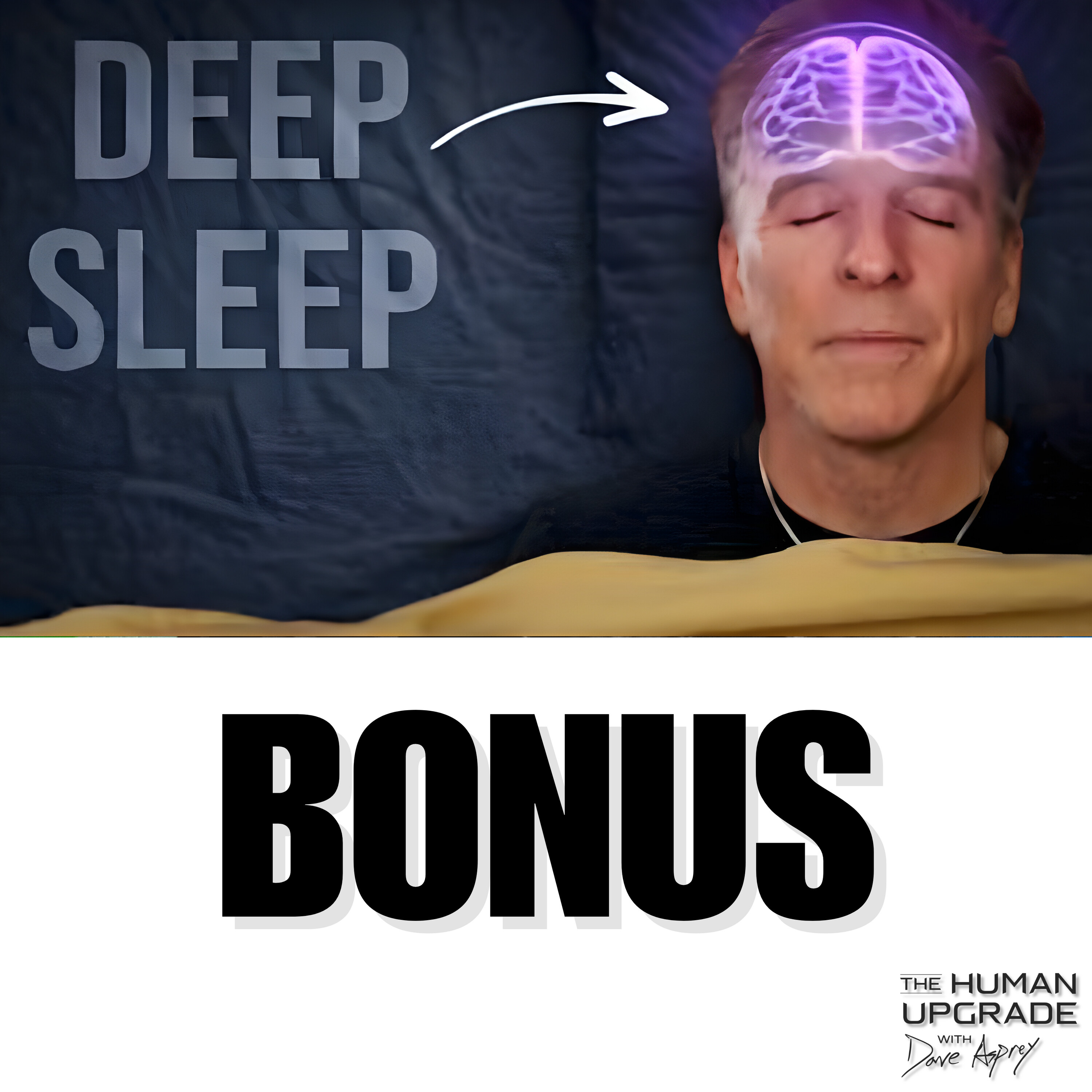
The Human Upgrade: Biohacking for Longevity & Performance
How I Finally FIXED My Terrible Sleep After 18 Years : 1428
00:09:42
Loading summary
Transcript3 lines
- [00:03]
A
Ready to unlock razor sharp focus, sustained energy and next level cognitive performance. It starts with understanding how to use one of the most misunderstood biohacking tools on the planet. The tool Nicotine. When you use the right form in the right way, it's a nootropic powerhouse. Most people are using it completely wrong or avoiding it entirely because of outdated propaganda and fear mongering. Most people hear nicotine and picture lung cancer Wrong. Target cigarettes contain 7,000 chemicals. Pure nicotine in low doses works completely differently. Clean nicotine enhances mitochondrial function, sharpens focus, improves reaction time and supports neuroplasticity. Numerous studies show that it improves cognitive performance and protects your brain. But you need the right form, the right dose and the right protocol. So I'm presenting this Clean Nicotine Roadmap. It's a five day program designed to help upgrade your brain and and performance the right way. For five days, I'll send you a power packed email each day. You'll learn exactly which forms of nicotine to use and which ones are toxic. How to dose for your goals and how to stack it with other nootropics for maximum effect. You'll get the science, the protocols and the resources you need to make nicotine work for you, not against you. By the end of the program, you'll have a roadmap to enhanced cognition, better focus and unstoppable mental energy. Enroll for free Sign up for my Clean Nicotine Roadmap and receive the information and biohacking resources you need to sharpen your focus and improve cognitive performance. Delivered straight to your inbox.
- [01:51]
B
Here's something even the most dialed in biohackers miss. You can look great and feel fine, but you could still be aging fast on the inside in one area but not another. That's because each of your organ systems ages at its own pace. And systemage from generation lab can show you exactly how each of your internal systems, your brain, your hormones, your mitochondria, your immune system are holding up over time. This goes deeper than just blood sugar or cholesterol testing. It tells you what's working and what's not. Is the daily supplement stack you're taking actually making you younger? Well, now you can know. And you don't just get raw data. They give you an action plan to improve. What nutrients is your body missing? What to eat more of, where your body needs extra recovery? Best part? It's a five minute pain free blood test you do at home. And it gives you a level of data most people never see. Even with the functional medicine team. Go to generationlab.com, use code DAVE20 to get $20 off and see what your body's really doing behind the surface. I used to think I had a sleep problem. It turns out I had a light problem. And you probably do, too. Most people think sleep is about how long you stay in bed. But I've tracked my sleep for 18 years now using some of the most advanced tools in the world. And I can tell you this. You can sleep eight hours and still wake up feeling like garbage. Why? Because your sleep quality has almost nothing to do with time and everything to do with light. What I'm about to show you challenges the typical advice about sleep. Because if you think the secret to feeling rested is just go to bed earlier, what you're going to learn next will surprise you. Most people are obsessed with the number 8. 8 hours of sleep, 8 hours of work, 8 hours of play, 8 glasses of water a day. We've turned sleep into a math equation. But here's the paradox. Millions of people do sleep for eight hours a night, and they still wake up exhausted. No energy. Brain fog, zero recovery. So what's wrong? Your body cares about when you sleep and how well you sleep. And that is entirely dictated by your circadian rhythm. Your circadian rhythm is your internal clock. And light and darkness hardwire your internal clock, and they're the most important signals. And this rhythm doesn't just control sleep. It governs your alertness during the day, your reaction time, your memory, your coordination, even your willpower. Every system in your body runs on this internal clock, which means if your rhythm is off, your performance is off, no matter how hard you try to push through it. NASA has extensively studied the effects of the circadian rhythm, and they'll tell you it's important to stay aligned with your natural circadian cycle if you want to perform well. Your sleep quality depends on how well you're aligned with your rhythm. If your circadian rhythm is out of sync, it doesn't matter if you sleep six hours or 10 hours. You'll still feel like you got hit by a truck. And it's not just about feeling tired. A misaligned circadian rhythm can wreck your performance, and in some cases, it can even cause disasters. NASA officials made the call to launch the challenger after working 24 hours straight. That mistake killed seven astronauts. Crew fatigue and disrupted sleep schedules caused the Exxon Valdez oil spill, which is one of the worst oil spills in history. Well, it was caused by circadian disruption and lack of good sleep. And in Britain, experts estimate that workplace accidents tied to sleep issues cost 100 million pounds every year, which is about $130 million today. They didn't mention it, but people probably also gained 100 million pounds because they didn't sleep well. But that's a different issue. This isn't just about sleep. It's about performance, safety, and the price we pay when we ignore our biology. Signals from your environment control your circadian rhythm. And the most important one is light, specifically the natural light dark cycles that we humans evolved to use. When those signals are off, like staying up late under artificial lighting or waking up to darkness and screen time, your internal clock goes haywire. You might fall asleep, but you don't hit deep sleep. You don't hit restorative phases that your body needs. And a misaligned circadian rhythm creates sleep inertia, that heavy, groggy feeling in the morning that feels impossible to shake. A broken circadian rhythm also disrupts deep sleep. It shortens rem, and it throws off your hormone cycles like cortisol and melatonin or even testosterone, which are the chemicals that manage energy and mood and metabolic function. So the quality of your sleep depends on when you sleep, not how long. At least not very much. And if you're not aligned with your circadian rhythm, even a full night of sleep can leave you more tired than when you started. The biggest problem is, is that you start your day indoors, scrolling through your phone, maybe sipping coffee in the dark, and ironically, wearing sunglasses when you finally step outside. But when you do that, you're skipping the single most important trigger for your sleep cycle. Your body isn't waking up, it's drifting. Your brain doesn't know it's morning. And when your brain doesn't know it's morning, it won't know when it's night later, either. Morning light cues reset your circadian rhythm. They're just as important as evening dark keys. I'm specifically talking about natural light hitting your eyes in the morning. When sunlight enters your retina, it sends a signal to your scn, the part of the brain that acts like your master clock. This natural light spike triggers a healthy surge of cortisol, the good and energizing kind that keeps your immune system working. And it starts the countdown for melatonin production to begin about 14 to 16 hours later. No morning light, no melatonin later in the day. And if you miss that morning cue or substitute it with indoor lighting or screen glare, you delay the entire rhythm. And that's why you might have a hard time falling asleep at night, or why your sleep doesn't feel refreshing. To be clear, indoor lighting is about 100 times weaker than direct sunlight. A walk outside in the morning, even for 10 or 20 minutes, activates the exact biological cascade your sleep system depends on later in the day. Sunglasses block this. Staying inside skips it. So getting 10 to 30 minutes of natural sunlight in the first hour after waking. It's so important if you want to reset your internal clock for deep, high quality sleep later that night. So let's fast forward to the other end of your day. You're winding down, but you're still in front of your laptop, your phone, your tv, and maybe all three. So you stare at screens until the moment you close your eyes. You think you're relaxing, but what you're really doing is telling your brain it's still daytime. And when your brain thinks it's daytime, it refuses to power down. Blue light from screens, LED lights, and overhead lights suppresses melatonin production by up to 85%. Melatonin is your brain's sleep hormone. It doesn't just help you fall asleep, it governs how long you stay asleep, how deeply you rest, and how refreshed you feel in the morning. Exposure to blue light after 9pm delays REM onset and reduces deep sleep. That means your sleep gets lighter, it's more fragmented, and it's less restorative. So you might think the solution is to live in darkness, but really it's about shifting the light. Warm tone bulbs, dimmer amber lights, and best of all, red lighting at night can signal to your brain that it's time to wind down. Blue light blocking glasses can limit melatonin disruption, but they don't help very much with sleep. You actually have to have something like the truedark glasses that block blue light and other colors in order to get the full benefits of changing the light. It's one of the simplest, most powerful changes you can make to radically upgrade your sleep quality. By now, you might be thinking, okay, Dave, I get it. Light matters. But I live in a digital world. I can't just ditch every screen and live like a caveman. And you're right. Avoiding tech is not realistic. And I don't do it either. But most people stop there and they do nothing. And that's a mistake. See, your environment can either hijack your biology or upgrade it. You don't need to unplug your life. You need to design it. Red bulbs in the evening don't disrupt melatonin. Turning off the overhead lights and using lamps at eye Level signals your brain to wind down. Because your brain is kind of smart. It knows that if the sun's directly overhead, it's the middle of the day. And it doesn't know the difference between a bright light above you and the sun. And blackout curtains. They prevent ambient street light from sneaking in. You might think that doesn't matter, but a study in Japan showed that ambient light from streetlights increased depression by 69%. This really matters. Even tiny device lights like your router or alarm clock can delay melatonin if your eyes catch them in the middle of the night. Screen filters and junk light blocking glasses give you guys control without cutting you off. And a simple wind down routine like no screens for 60 minutes before bed can dramatically improve your sleep quality. And you go to sleep faster too. The goal is to design your environment for maximum sleep efficiency. Now, you might think that you've optimized your evening for the most efficient sleep, but this is exactly where a lot of people go wrong. You stay disciplined all week, and then the weekend hits and suddenly you're going to bed at 1am and sleep, sleeping in until 10. You tell yourself you're catching up on sleep, but what you're really doing is throwing off your entire biological clock. Most people don't realize that changing your sleep and wake time, even by just a couple hours, is like giving yourself jet lag without ever leaving your zip code. Scientists actually call this social jet lag. And it's not just about being groggy on Monday. It wrecks your metabolism, it slows your reaction time, it breaks memory consolidation, and it'll disrupt your mood. So understand your circadian rhythm is not just a sleep timer. It regulates your hormone cycles. When you shift your sleep schedule on weekends, your body spends half the week trying to recalibrate. You're starting every Monday in recovery mode, not performance mode. So you need to go to bed and wake up at about the same time to feel well rested all week. We spend about a third of our lives asleep, yet most people never question how they sleep. We kind of think sleep is passive and it just happens. But your body recovers only in the right conditions, not just by waiting a long time with your eyes closed. Every signal you send your body after the sun goes down is either a reminder of ancient rhythms or a disruption of them. So tonight, when you reach for your phone under an LED light at 11pm, ask yourself, are you in charge of your environment? Or is your environment in charge of you?
- [12:32]
C
A human upgrade, formerly bulletproof radio was created and is hosted by Dave Asprey the information contained in this podcast is provided for informational purposes only and is not intended for the purposes of diagnosing, treating, curing, or preventing any disease. Before using any products referenced on the podcast, consult with your healthcare provider carefully, read all labels and heed all directions and cautions that accompany the products. Information found or received through the podcast should not be used in place of a consultation or advice from a healthcare provider. If you suspect you have a medical problem or should you have any healthcare questions, please promptly call or see your healthcare provider. This podcast, including Dave Asprey and the producers, disclaim responsibility for any possible adverse effects from the use of information contained herein. Opinions of guests are their own and this podcast does not endorse or accept responsibility for statements made by guests. This podcast does not make any representations or warranties about guest qualifications or credibility. This podcast may contain paid endorsements and advertisements for products or services. Individuals on this podcast may have a direct or indirect financial interest in products or services referred to herein. This podcast is owned by Bulletproof Media.