← The Human Upgrade: Biohacking for Longevity & Performance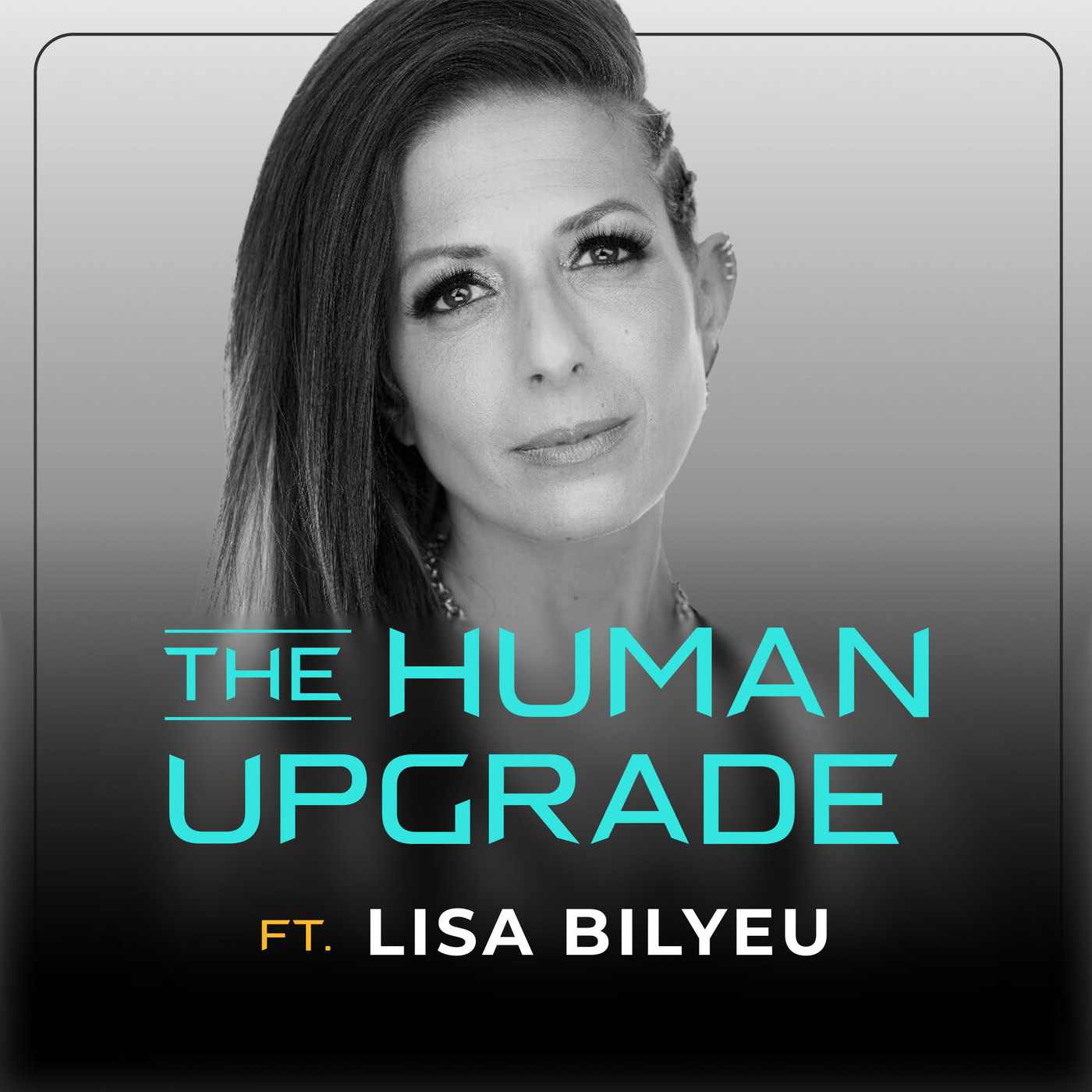
The Human Upgrade: Biohacking for Longevity & Performance
Lisa Bilyeu: How to hack confidence : 1331
01:09:25
Loading summary
Transcript95 lines
- [00:00]
Dave Asprey
A lot of people either don't have the confidence or the skills to run a 40 person team. That's actually really hard.
- [00:05]
Lisa Bilyeu
I was just like in this purgatory where nothing was bad, nothing was great, who am I to complain? So purgatory than mundane is where your life is just mundane enough. Like you don't hit rock bottom. They're just going with emotions where they're not asking am I living the life I want? Is this actually something that fulfills me? I went from one day literally shipping bars out of my living room floor to having a 10,000 square foot facility. We were shipping out over $80 million of product and I employees underneath me.
- [00:33]
Dave Asprey
So how did you have the confidence to do that?
- [00:35]
Lisa Bilyeu
I didn't have confidence. And that's what actually.
- [00:41]
EMR Tech Advertiser
If your light environment isn't dialed in, your biology isn't either. And if you're not using light as a performance tool, you're leaving results on the table every single day. The right light wavelengths unlock recovery energy and clarity in ways most people never tap into. EMR Tech's Krypton UV line puts that power in your hands with red near infrared, UVA and UVB all in one system. They have something for everyone. From the compact Krypton Micro and mini to the modular 606 watt and 1612 watt. Each device lets you choose your wavelengths, your timers, and how deep you want to go with your setup. I personally use the Ultron. It's a beast. Full body coverage, built in timers and high output light from premium components. Whether you're syncing your circadian rhythm or designing a pro level light environment, Emrtech lets you scale it your way with precise control. Go to emr-tek.com Dave and use code Dave for 40% off.
- [01:48]
Dave Asprey
So many people, even at the highest levels of business, they don't have confidence. And maybe it shows, maybe you learn to hide it. But you're going to learn today from Lisa Bilyeu, our guest, what it's like to be confident. You might have heard of Lisa, she's real popular on social media. She has this channel and she's just one of those women who radiates confidence and it's actually refreshing. And I've, I know her personally and her husband Tom Famous from Quest, the keto bar company. But she's written a book about confidence because she actually has lived it for a long time. And I like to read books from people who did it themselves, who actually went out and learned it and live it because there's usually something you can get from that. So that's what you're going to get about in this episode. How do you manage the voice in your head? I don't have a voice in my head the way I used to. How to have clear boundaries. And you might be listening, saying, I don't need any of this. I already have that. If that's what you're saying and you haven't done extensive personal development work, you're deceiving yourself. These are fundamental human problems. You'll learn how to make mistakes. Something that teach you instead of something that either torture you or that you just kind of bury and ignore. And how to stay focused and understand what your triggers are. So this is a big episode. Lisa, welcome to the show.
- [03:07]
Lisa Bilyeu
Oh, I'm so excited to be here. Obviously, we've had you on our show before, and just good to see you again. So thanks for having me.
- [03:15]
Dave Asprey
What is the current name of your show?
- [03:18]
Lisa Bilyeu
Women of Impact.
- [03:20]
Dave Asprey
Women of Impact.
- [03:21]
Lisa Bilyeu
Yeah. So Impact Theory is our company. And then I started my show, Women of Impact.
- [03:25]
Dave Asprey
Okay. I love it. You have. You've got your. Your own show. And are you still working with Tom on the main Impact Theory, the original show?
- [03:32]
Lisa Bilyeu
Yeah. So we basically run the company together. We've opened many divisions of the company since. So we started off as. That was our main show. It was about mindset. But our bigger goal was always to create content to impact people on a scale. And just like when we created the Quest bar when we first started, it was like, well, so many bar. If you remember, bars were either total, totally terrible, unedible, tastes like garbage, but they had protein in it, or there was protein bar B that tasted delicious because it had so much sugar in it, and they sprinkle a tiny bit of protein bar on top, and there you go. It's called a protein bar. So we were like, okay, what if we do a protein bar that actually tastes amazing? That is also good for you. Because when you look at people at scale, when you look at the fitness industry, when you look at the things, the challenges of. Why isn't the world fit? It's because it's difficult. It's because you're going against human nature. Human nature loves sweet things and they want to relax and do nothing. And so when you're telling someone to get healthy, you have to eat a certain way. It's very difficult. So our perspective was, how do you use what is instinctual to humans and leverage it to their advantage? And so with the protein bar, it was give something sweet that happens to Be good for them. Now. We didn't have to convince anyone. They tried it, they loved it, and they're like, oh, my God, this is good. Same with impact theory. What we realized was just like, content. These interviews and things like that, so powerful. But when you're talking about global scale, how on earth do you impact people on a global scale? And that is, what do people do? Entertainment, movies, music. And so me and my husband growing up in the 80s, we were massive 80s fan movie fans, and those impacted our lives. So we started with impact theory. But the bigger goal is to create entertaining content that is so fun to watch and happens to be good for you.
- [05:24]
Dave Asprey
You mean watching junk movies with a shaky camera to create stress where you're pretty much watching a series of grisly murders might be the mental equivalence of junk food?
- [05:39]
Lisa Bilyeu
No, I. Wow, that was interesting. I didn't even think about that. I think of it as like, did you ever watch Karate Kids?
- [05:45]
Dave Asprey
Oh, yeah.
- [05:46]
Lisa Bilyeu
Okay. It was so fun to watch. But when you think about it, wax on, wax off, so that you're preparing for. When you step in that ring and someone breaks your ankle, how do you get back up? It's because you've prepared. You've been waxing on and off for years. So when I think about mindset, when I think about everything we talk about and everything we do, it's all a practice. So that when those moments come, when you fall to your knees, when you find difficult times, you've already practiced. My husband loves Star Wars. He said Yoda was like his first teacher, you know? And obviously you look at Yoda's lessons, it comes from Taoism. So movies have amazing metaphors, but they're really entertaining. And so now if you can entertain people and also impact people on the global scale, that's what Tom and I have basically dedicated our lives to.
- [06:37]
Dave Asprey
You guys are good people, and I've known you for years, and I can definitely see that. And we share that. I realized if I was going to make some of the changes that I believe the world should have, that I was going to have to be a public person and create a bunch of content that's worth it. And so much of the stuff that we're consuming, whether it's food or whether it's entertainment, it's actually not helping. And there is a way to make it fun and helping. And you did it with food. And you guys are doing a great job with all of the different impact theories. And it's cool that you wrote a book on confidence because you describe Yourself as a housewife who's one day found yourself putting lots of protein bars in boxes. And I was actually the recipient of probably, in fact, the first Quest bar I tried was delivered in like a Tupperware kind of container. It wasn't even branded.
- [07:29]
Lisa Bilyeu
So remember this? Oh my God.
- [07:32]
Dave Asprey
Yeah, absolutely. Well, it was, it was really memorable because the guy who gave it to me, he is confidential, but he was an exceptionally famous CEO of a very powerful company. And we sat down at the Rosewood Hotel on Silicon or in Silicon Valley, on Sandhill Road, across from the VC where I worked. And he's like, you should try these new Quest things. And he's like, they told me I had pancreatic cancer, by the way, that's what killed Steve Jobs. Later, after this meeting. And he said, the day I found it, I didn't tell my board, I didn't tell my family. I said, f this, I'm going to fix it. And he went, keto. He did stuff his surgeons didn't like, like something called insulin potentiated therapy while in deep ketosis and eating the very, very first batches of Quest that came out, you probably know what I'm talking about. And he, and we sat there and he's like, well, I shrunk my tumor to make it operable. And I went in, never told anyone, had the surgery, said it was for something else, fully in remission, never slowed down. And he's like, you gotta be keto. You gotta, you gotta do it. So this is one of those, like, I do not accept reality. I'll make a new one. And that was literally the first time I had a Quest bar was at that, at that hotel, handed to me by a guy who literally, you know, he's like, I wanna be around for my kids, for my companies, know, for my mission. It's too soon. And it was very memorable. Way to have my first Quest bar, right?
- [08:54]
Lisa Bilyeu
Oh yeah, I'm so going to use that story. That's so touching. Like, that was. Really impacted me. Thank you for sharing that.
- [09:01]
Dave Asprey
Well, you guys have done some good work in the world.
- [09:03]
Lisa Bilyeu
Thank you.
- [09:03]
Dave Asprey
And at the time though you, that's when you describe yourself as, you know, a housewife turned entrepreneur. Were you really a housewife?
- [09:10]
Lisa Bilyeu
Yeah. So for eight years, Dave. So before we started Quest, we wanted to make movies. My background's filmmaking, studied film at college. So did Tom. So we met and we were like, we're going to make movies together. This is a dream come true. We're going to live in L. A. So we got married In London, moved to la and we both got jobs on movie sets and we both hated it. Like, I got so disrespected. One time I was on a photo shoot, on a shoot, and I had an actor throw a matchbox at me. Like, literally out of anger, he just threw it at me. And I was like, I had these dreams about Hollywood and, you know, movie making. And in those moments, Tom also had a terrible experience. And it was like, we either give up our dream, allow people to walk on us, or find a third door. And so I was like, I'm not willing to have someone walk on me, walk over me for my dream. Like, that doesn't sit well with me. That's not the life I want. And so we came to the conclusion back then in 2002, well, let's just make our own money. That should be really easy. Let's make our own money. We'll just films ourselves.
- [10:13]
Dave Asprey
How hard could it be?
- [10:14]
Lisa Bilyeu
Exactly. Oh, the naivety of the beginner. And so we did. We just. So Tom went as like, okay, I'm going to try and make money. We started all these side businesses. We started a photography business. You know, we just started a lot of things to see what would stick. And he met these two guys who were entrepreneurs and they were bodybuilders. And so they had said, hey, look, we've made a ton of money. We want to hire you to write a script. And so they hired Tom for a year. And we're like, this is the dream come true. After that year, we're like, oh, actually moviemaking is very expensive. Let's start a new business. It would just be for a year and a half. So we'll build a business in a year and a half, and then we'll sell it, we'll make our money, and then we'll go on. Now, in that moment, we played a game called no Bullshit, what would it take? So no bullshit, what would it take for Tom to join these guys, to start a business, to make enough money so that we can make film? And so we started to do research and Tommy just read an article talking about Steve Jobs. Just read an article on Steve Jobs. And he explained how he always wore black sweaters or black shirts so he never had to decide on anything else that he had to like, no decision other than business for that day. So Tom and I said, okay, well, no bullshit. What would it take, babe? What if I took all the decision making outside the business off your plate? You just focus on business, make enough money for a year and a Half, and we're good to go. So we agreed. So I stayed at home thinking it was just going to be a year and a half. Now, in that year and a half, I just convinced myself I'm doing it for the greater good. Come on, you can do it. Suck it up. Now, I was brought up as a Greek Orthodox, so being Greek Orthodox my entire life, I was told, oh, you end up getting married and having children.
- [11:52]
Dave Asprey
You don't sound Greek Orthodox. You sound like you should be a Spice Girl. What's up with that?
- [11:56]
Lisa Bilyeu
I'm from England. My parents are from Cyprus.
- [12:00]
Dave Asprey
Okay, got it.
- [12:01]
Lisa Bilyeu
That's amazing. Which Spice Girl?
- [12:05]
Dave Asprey
Well, I. I actually got a chance to hang out with Sporty Spice at the Upgrade Cafe or Upgrade Labs actually, recently. So I'm like, all right, I'm gonna go with Sporty.
- [12:15]
Lisa Bilyeu
All right, there you go. I'll take it. And so I really did think it was a year and a half. I had been basically told my whole life I was going to end up being a wife and a mother. So once I did, I was like, oh, I can do this. I can be a housewife for a year and a half. No big deal. Now, look, I had big, audacious dreams. So it's not even about being a housewife. It's about settling for something, for the greater good of something else. And then, of course, as we joked earlier, a year and a half to make enough money to make movies. Come on. And so what happened was my husband came home every time that kind of, like, ticker came to, like, the year and a half mark, and he was like, babe, I just need another year to 18 months. We're so close. I just need another year to 18 months. Now, what happened was, over that time, I started to think of myself as being the supporting role. And that time that I was going for the greater good. The greater good, I settled. And I never realized I could ask for anything else, because I thought asking for anything else meant that I was ungrateful for what I had. And so what ended up happening, Dave, was for eight years, I just went along, and the mindset and what the words I was saying into my mind over the time was, you know, who do you think you are? You can't ask for more. Like, you've got a roof over your head. You've got a husband that loves you. And in hindsight, it's that we use gratitude as a way, which I think is very powerful. Right. Gratitude can be so powerful to have a positive perspective. But what I realized is I was Using gratitude so much that it became detrimental to myself and who I wanted to be and my goals and my dreams. So I felt like I blinked. And eight years went by, Dave and I was a stay at home wife until it got to the point where Tom ended up just chasing money. And we all know money doesn't buy happiness. And so it got to the point he was coming home and he was like, don't ask me about my day. And so I called it my own personal fight club. Rule number one, don't ask him about his day. Rule number two, don't ask him about his day. And it became like our anthem. And then eventually it got to the point where I said, I love my husband so much. My relationship is my number one priority. I'm not conflicted in life. My relationship is my number one priority. And it got to the point where chasing money ended up affecting our relationship. And so one day I didn't even do it for myself. That's what's weird. Like, I didn't do it because I was unhappy. I did it because what was now happening was echoing a problem in our relationship because he was no longer happy coming home. And so in that moment, I said to him, I don't care about money. I don't care about business. I know we've just spent the last eight years of our life trying to build this tech company, because that is what it was, a tech company. And I was like, I don't care. Like, we metaphorically had like one or two million dollars in shares at the time. And we were like, I don't care. If you don't cross the finish line, you don't deserve a payout. So that's our, you know how we thought. And so I was like, yeah, I don't care. I don't care about the payout anymore. We need to change our lives. And that, that me telling him that was then what took him to go in. He quit. He told his business partners he was no longer happy. That's when his business partners admitted they were no longer happy. And so they sat down and said, what actually would make us happy? And at the time, we were all hand making protein bars. All the wives were hand making protein bars for our husbands. So, you know, it was like protein powder, a bit of water, some nut butter, mix it together and you're good to go. And so they said, what would we love to do every single day that's predicated now on passion? Something we actually care about that I can wake up to every day. And for my Husband and myself, we have both. Our mothers are severely overweight. My mom went from being severely, like, borderline anorexic growing up to obese. And so it was like, okay, I can fight for my mom every day. My husband can fight for my mom every day, for his mum every day. Day. And so the. His partners were bodybuilders. So everyone was like, oh, we should do a protein bar. Should be the one that tastes amazing and happens to be good for you. Now, of course, just like anything when something hasn't been done, so many people believe it's not possible. So everyone told us we need another protein bar. Like, we need a hole in the head. We actually got an expert, very, very expert in the field, turned to us and says, There's 1500 bars on the market. What the hell do you guys think you know about protein bars?
- [16:32]
Dave Asprey
Yeah, protein bars are hard to break into.
- [16:36]
Lisa Bilyeu
They were hard to break into, but it was just. We were bullish enough and we just said, no, no, we can figure this out. And it was that mindset that every time we hit an obstacle, we overcame it. But going back to. So I was 8 years. My husband now starts this company, and I go, how can I be a great, supportive wife? Because by then, I'd let go of all my dreams. I'd let go of everything I ever wanted in life. My dream of making movie, like, I just let go of it. And I had the mindset over time that my purpose was to be there for my husband. And so when he started this company, I was like, babe, how can I help? And he's like, oh, well, we're going to, you know, rent a kitchen by the hour, so please measure some ingredients and come along with a knife, you know? And so there we are in the rental kitchen with rolling pins and knives. And actually, you will appreciate this day. I've got this. After we sold Quest, the new CEO had this made for us.
- [17:28]
Dave Asprey
What was that? Like a stamp to make a bar?
- [17:30]
Lisa Bilyeu
That's the stamp, yeah.
- [17:32]
Dave Asprey
Oh, wow.
- [17:34]
Lisa Bilyeu
From the actual big mesh. So they cut it up and they put it in this frame. But that was how we made bars. It was all by hand. And we had this little pedal, like, protein bar sealer. And so I was just helping, and that was my job. And we just. What I didn't expect is for Quest to grow at 57,000%. And so I went from one day literally shipping bars out of my living room floor, just saying, hey, I'll help my husband, to. We blinked, and within two years, I ended up having a 10,000 square foot facility. We were shipping out over $80 million of product and I had like 40 employees underneath me. And all of that was because I just kept figuring out.
- [18:20]
Dave Asprey
So how did you have the confidence to do that? I mean, your book is Radical Confidence. You didn't just do that. Something was in there or you consciously built the confidence. Because a lot of people either don't have the confidence or the skills to run a 40 person team. That's actually really hard. Heck, I don't even like running 40 person teams. That's why I have people help me run teams, because I kind of suck at that. So how did you do that?
- [18:42]
Lisa Bilyeu
So, yeah, and that's actually, I love the question because confidence to me is feeling good about doing something. So people say, oh, I want confidence too. It's like you just want to feel good about it. But ultimately what is, what is the thing you really want? You want the end goal. And so for me, I was scared the whole way. I didn't have confidence. And that's what I actually call radical confidence. Which to me means you can be inadequate, you can be scared, you can lack the skills, you can have the fear, but you can do it anyway. Now when I say do it anyway, I don't just blindly mean go and do it anyway, you're fine. I mean, you need to actually figure out what are the things I'm going to do, what are the tools I'm going to use in these moments of fear. Because I have to keep moving forward. And that's what I did. People think it's confidence. It wasn't confidence at all. It was the fact, what I again call radical confidence. I was scared. I had no idea what I was doing. But every time I hit a hurdle, our house was up for collateral. So I was like, I just have to figure it out. And so even though I'm fearful, I have to do it. So as an example, for instance, to your point of a 40 team, 40 people team, it's insane. Now, our first office was in Compton. So we at the time, we really want to help the inner cities. Tom used a big brother for this inner city kid. And so that was just a big part, big mission of like, how do we give people opportunities that deserve a second chance? And so what we did is we opened up Quest on the very early days and we said, we'll hire anyone. We don't care if you've got a criminal record, as long as you're a good person now and you're willing to work hard and you're here to serve the company, and we will serve you in return. Then we'll give you a chance. And so we ended up having, like, a line around the corner of, like, all these people that's like, I can't believe they're giving us a chance now. What ended up happening was half of them ended up coming into my warehouse because I had a shipping department. So here I am. I'm five foot one, Dave. You know, you tower over me, and.
- [20:39]
Dave Asprey
I like to call you sample size.
- [20:45]
Lisa Bilyeu
So, okay, I'm a sample size. I'm five foot one. And honest to God, there's guys, they're six foot five, and they've got tats. Like, one of the guys had a teardrop tat. I'm not here to say what that teardrop tat means, but I've heard rumors. And now in those but amazing humans, though, I want to say, but very intimidating. Like, they don't mean to be. But I was intimidated, coming from being a housewife with two little dogs to now working with these really freaking strong people. And so in those moments, how do I show up? I was petrified. But I have a choice. Do I want to let my house, Do I want to lose my house? Or do I want to actually figure out how to connect with these guys and get the best out of them. Now, strategy number one was go in and say, come on, guys, do it faster. That didn't work. Dave wasn't very motivating, as you can imagine. So I just said, how the hell can I connect with these guys now, again, everything I'm saying isn't because I've got confidence. I'm just like, I have to figure it out. Because if I don't do it, what happens? The bars don't go out. If the bars don't go out, the company doesn't move forward.
- [21:51]
Dave Asprey
What you're describing sounds a little bit like desperation and also a lot like courage. Courage is being scared and doing it anyway. So how do you differentiate radical confidence, your new book, how's that different from back against the wall? I didn't have a choice versus I was afraid, and I did it anyway. Like, those are big questions for people.
- [22:14]
Lisa Bilyeu
Yeah, 100%. So everything became a stepping stone for me. So in hindsight, it was the threat, right? It was the like, oh, my God, my back's against the wall. I have to figure it out. Otherwise I'm never going to be able to do it. So that part of the figuring out is, you know, early days of quest ups guy Comes. He's like, you know, I can actually pick a lot more up if I. If you put it on a palette. I was like, okay, great. And I was like, what the hell is a palette? So, like, go and Google what's a palette? Like, all of those things is because of the desperation of not wanting to lose my house. But what ended up happening in the beauty of that is I started to realize that all the things I thought were obstacles weren't possible. Lisa's not good enough, or the voice in the head. They're saying, you have no idea to do that. You're not good enough to do that. Who do you think you are? Because my back was against the wall, I'd proven to myself, oh, I don't think I'm good enough. But I actually just did it.
- [23:07]
Dave Asprey
So the courage led to the confidence because, like, I was afraid I did it anyway, and I was like, oh, I got this. And. And over time, that built your confidence.
- [23:16]
Lisa Bilyeu
The courage led to me making sure that I always move forward because I end up getting the results. And so how on earth do you move forward? Okay, in moments where your back isn't against the wall? And now you just have to ask yourself, this is very fearful. So let me take my very first speaking gig. I was petrified to go on stage, right? Public speaking is, like the. One of the most scariest things, like, next to death. That's how scary public.
- [23:41]
Dave Asprey
The number one fear of people in North America is public speaking. Other than sharks and snakes on planes and everything, which is.
- [23:48]
Lisa Bilyeu
Which is insane. So now thinking about that, I want. I. My goal is impact. Tom and I have dedicated our lives to it. And one day, Tom turns to me, and he's like, you know, baby, you keep saying no to all these speaking gigs, and I just want to let you know it is holding you back. If you really want to impact people, no pressure, but it is holding you back. Now, me and my husband are very honest with each other. So I sat there and I processed it. With no judgment. I processed it, and I said, okay, do I. Would I rather not create impact and be comfortable, or would I rather step on stage, put myself out there, be uncomfortable, and create impact? No judgment. Because I actually think it's like, what life do you want? And now go live it. And so I looked, I sat there, and I said, you know what? I wouldn't be okay with not impacting someone because I'm scared to step on stage. That doesn't sit well with me. And so I said, okay, I've made The decision. But to your point, how on earth do you get on stage? You can tell all the things that you want, like, come on, Lisa, you got this. But to actually walk on stage when you're so petrified is a whole different ball game. And to tell people, no, no, just do it anyway, it doesn't work. So I actually had to say, okay, I know what my goal is. I have to actually just walk on stage. Like, forget about actually blowing people away. I just need to walk on stage now. What are the things I'm going to do to get myself in the right headspace to walk on stage? And that's where this is exactly what the book is about. Each chapter covers different tools that you can use in those moments. Because just wanting to isn't enough. Just saying, well, it's for the greater good of my family. The money, the lifestyle is not good enough. When someone's scared, that doesn't work. So I go to, okay, how do I change the chemicals in my body to feel good about myself? And so the hair is part of it. It's not accidental then. If you can see I'm wearing a Wonder Woman necklace, this isn't accidental. I've been wearing this now probably for three years. And I cultivated deliberately the meaning of this necklace so that it could give me courage. Because I need ways to give me courage to tell myself, come on, you can do it.
- [25:58]
Dave Asprey
Tell me that you've. Tell me you've dressed up as Wonder Woman for Burning Man.
- [26:02]
Lisa Bilyeu
I actually haven't, because here's the thing. Like. And look, I would find that super fun. And I've got Wonder Woman pajamas. I've got a Wonder Woman robe. I've got, like, I've got the whole Wonder Woman shebang. But that's like the playful side. But to actually get me on stage, I need those things. And so over time, I used to tell myself, as I was putting the necklace on, I would just repeat, yeah, you're a badass, like Wonder Woman. You're a badass like Wonder Woman. Repetition creates habit. Repetition creates habit. So we know. You repeat something enough, you start to believe it. And so I go, how do I cultivate my own mindset, even if it may be fake, quote, unquote? I just need enough until I get to the point where I believe it enough. So my hair, my watch, my. My necklace are always as I do. It becomes a ritual. And I feel like I'm suiting up. And then I have music. Music, to me, is so powerful. I have what I call my hype Song, I have it on like Easy Access, so I can play at any point. And what I did is just before I got on stage, I did my hair. I had like Supergirl underwear on. Like, because, because I don't know about you, but when you get nervous, like getting on stage, some people pee a lot. I peed a lot. So I was like, I just need subliminal messages. So when I talk about Dave, do it anyway. I mean, you have to cultivate that you have be, have to be so deliberate in your actions so that you can't back out so that you don't go, oh, no, no, no, I'm not good enough. I need something that is overpowering the negative voice in my head. And so those are just a little tips that I basically figured out along my journey. And to just get on stage and do the speech.
- [27:49]
Dave Asprey
Well, you'll, you'll love knowing this. Outside my upgrade labs, you know, where I do my work all the time, I have a parking placard that says invisible jet parking only. I actually have that. And it's there because superheroes like, look, what I'm about is building superheroes. But I also like it because it's kind of an IQ test. It's like, who's gonna park there, right? Because you know, it's not actually there. And it's a certain personality type was, I'm gonna park there. And the other one's like, I better not block the jet. And I'm always laughing.
- [28:21]
Lisa Bilyeu
I love that. But even just that, right, making it light hearted, having that fun, that's actually also deliberately why I use things like Wonder Woman. And I talk about like, how can I take my kryptonite and make it my superpower. To me, language matters. And if I took myself too seriously, I'd never get on on stage. So I use things like that, light heartedness, Wonder Woman, the hairstyle as a way to kind of have fun with it and bring the child out in us.
- [28:49]
Dave Asprey
So you've got a playful element is one of the things you're doing that's helping you have confidence. And I like that. But you have some real specific tools in your book too. Like you talk about the no BS game. Yeah, tell me about that.
- [29:02]
Lisa Bilyeu
So, yeah, no bullshit. What would it take? So many of us, at least for me, in fact, let me just take my eight years, it was just like, oh, I'll get to this, when this will happen, when? And so first of all, I just put my life on pause because I was waiting for the when. Then also it's the. I worry that I will beat myself up and have regrets in general in life. I wish I had done that. I wish I'd done this, you know, I wish I had achieved that. And I never want to regret. So I said, okay, how do we never regret things? And it really does become assess situations. So set a goal. For instance, right now. Set a goal. I want to. The thing that I like is actually me and my husband were watching a movie and there was a scene where someone was playing the piano. And I was like, I wish I could play the piano. And my husband turns me and he's like, babe, isn't it amazing to think that you could still be the best pianist in the world if you decided to be? And I was like, yes, yes, it is. But I decide not to. So that's an example. Now, I would play, if I really wanted to be the best pianist in the world, I would play the game. No bullshit. What would it take to be the best pianist? And that means with no emotion, laying out exactly what it would take for you to get to that goal that you have. And that may mean, Dave, you can't see your partner for three months. You have to play the piano for 18 hours a day, which means you can only get a couple of hours sleep. All those shows and movies you like, you can never watch. If you have kids, you can never see them because you still have to put in 18 hours because that's what it's going to take to get to be the best pianist. You love traveling. Sorry, you can't go on. You know, you can't travel because all your money actually has to go to buy a keyboard or a piano. And now you've laid out all the things in order to say, okay, if I did this, I'd be the best pianist now, no bullshit. Do I actually want to do it? And the whole point of that is to say, is the goal aligned with the life you want? And if not, then you can say, oh, I choose not to. And now there's no wishing. If you were about to build a business or something like that, and you've realized you play the no bullshit, what would it take? You're like, I've always had this dream to build a business. You know, what is it going to take? And someone's like, oh, yeah, I don't want to do that. And now the most beautiful. That's so freeing. It is so beautiful. Because now you never live a life of wishing or wondering. I wonder what I wonder. I really wish I'd Done that. No, you've actually consciously made this decision not to do it, or you've consciously made this decision to do it. So the no bullshit. What would it take for speaking on stage would be you'd have to put in a plan so that you have to overcome your fear and you actually have to speak to people in public.
- [31:46]
Dave Asprey
It. It's funny. You've got a tool there that's really dealing with life. Fomo. Like, I should do this. I should do this. And one day you wake up and you're like, I actually never did. And you're sad versus saying, I actually decided not to do this because I had something else higher on the list, which is, it's a really important thing about just setting values. I like the way you describe it in the book because a lot of times there's all these dreams that aren't really dreams. They're like. They're installed programs, something you should do. And it wasn't you who decided you should. It was society. It was a TV show. It was your parents. One of the things that really stood out for me, if you go to Burning man, they have this temple. I'm assuming you guys have probably gone. You seem like you've got the vibe. Have you been.
- [32:31]
Lisa Bilyeu
I've so wanted to. And we were going to go. We were going to go. And then I think it was like, right before COVID or the year before, I can't remember. But it never ended up happening.
- [32:40]
Dave Asprey
You'll like the story, though, because there's this big temple and people, like, leave notes and mementos, just things I want to let go of. And some person dragged all of the legal preparation, like, like $1,000 worth. Those books you study to get your LSAT and all, and just laid them all out on the ground. These all get burned at the end of the burn. And. And it said, you, mom and dad, I'm not going to. And, like, that's a person who probably should have read your book to realize, all right, that's not the dream. And kudos, whoever that person was, because, you know, they figured it out. Because a lot of people, this is what I should do is what I'm supposed to. I'm supposed to be a houselife. I'm supposed to be whatever. And so your tool for confidence there is actually sitting down and saying, is it actually a choice or is it just kind of momentum carrying you along? And so you did the choice, but it took you eight years to get there. When someone reads your book, how long is it going to Take them to get there.
- [33:37]
Lisa Bilyeu
And yeah, the point is, is that I honestly, like, if I, you know, like, I, again, love 80s movies, so if I could get in a DeLorean, you know, and go back in time and it's like, talk to that Lisa that first started. What are the things that I can say to her so that I don't then end up spending eight years? Because it's something that I call purgatory, the mundane. So purgatory, the mundane is where you've literally spent eight or not spent eight years, but where your life is just mundane enough, like, you don't hit rock bottom. You know, we. We hear so many incredible stories, birth from people having hit rock bottom, but I never did. Dave. So how do the people, where it's like, they're just going with emotions, where they're not asking, am I living the life I want? Is this actually something that fulfills me? Like, is this actually something that I love? Does this light me on fire? I never asked that because I was just, like, in this purgatory where nothing was bad, nothing was great. Who am I to complain? And so I've gotten a question, but.
- [34:39]
Dave Asprey
It was sort of like, how do you.
- [34:41]
Lisa Bilyeu
Oh, yeah.
- [34:42]
Dave Asprey
If you were to pick up your book, I mean, it took you a long time to come to these. These things. If someone picks up the book and uses the. No bullshit, what would it take? If they use that. That game or that tool, whatever you want to call it. I mean, is it a. A rapid change that comes from that or just a reassessment of life? Like, what happens? How does it tie back to confidence?
- [35:01]
Lisa Bilyeu
Yeah. So I'm not going to BS anyone. I don't think anything's overnight. Like, things ebb and flow. Emotions ebb and flow, Hormones ebb and flow. Personality is character. Right. It's just like when you think about the fact that just by not eating, you can get hangry. Right? It's like when you think about how beautiful humans are. It's so complicated. So, no, I'm never going to BS and say, yeah, read this, and you're good to go. Whole point is each chapter gives you a tool set. And the first chapter really is that enlightenment. Like this. I want to ask you a bunch of questions, and I'm going to tell you my story, and I'm going to try and get you to think about what life you currently have and what life you actually want. And I kind of take people through, I ask questions for them to think for themselves, and then the next chapter is like, okay. And this is how you build your mindset. These are some words you can use in moments where you're not feeling good enough. And then I take them through the next chapter. Okay, now's time. The first. Now you get started. But don't worry, you don't have the confidence. So here are some tools. If the voice in your head is getting in your way, what do you do? Here's a couple of tools on how to keep moving forward so it becomes these stepping stones of how you end up getting out of your own way and what you can do in moments throughout your entire life. So, like, I talk about managing your emotions, because let me tell you, when you're in a business meeting, I personally don't think it will serve me if I burst into tears. I just don't think it will serve my goal. But it doesn't mean that I'm not feeling emotion. So I say in one of the chapters, how do you regulate your emotions in order to move you towards your goals? Doesn't mean it's easy. It's never going to happen overnight. Give yourself grace. It becomes a stepping stone. Dave, how many times have you been with your partner and you got into an argument and you have a mad row and it's like a narrative entire day, and then like a day or two later, you're like, what on earth were we arguing about? Like, I wish we hadn't spent that entire day just arguing. We could have so much fun.
- [37:03]
Dave Asprey
I just usually drink a couple cups of coffee and then I'm so happy.
- [37:08]
Lisa Bilyeu
Well, then I'll use myself in moments where me and my husband have argued. It's in those moments, it didn't serve us. So I go, okay, once upon a time, it took an entire day to emotionally regulate. It doesn't serve the goal of having a great relationship or a great date with my husband. So now how do I increase incrementally, shorten that time? Because I do think nothing is one and done nothing is short. Nothing's your. You're good to go for the rest of your life. It's a wax on, wax off, back to the, you know, karate kid metaphor. So I give the tools of this is how I did it. This is how I emotionally regulate myself, where I was a real hot head. And then I got to the point where in real time, something could be so overwhelming and you would never know. And this is what I did. But I also say, hey, that doesn't mean next week I'm not going to mess up. And I still do. But that's okay. I just go, how do I just get better incrementally over time? So back to your point. It's not about going, oh, okay, and now I've got the confidence. It's about saying, to your point, actually about the kid who wrote that, like, fuck you, mom and dad. On, like, the paper, when someone says to me, lisa, want confidence? I say, you want confidence to do what? Like, what's that goal? And so it may be you want confidence to tell your parents, I know that I've spent hundreds of thousands of dollars on this education, and you have too. And I'm in year three. But you know what? I no longer want to be a doctor, and I actually want to go and be a comedian. That takes confidence to say that. Or people think it takes confidence to say that. But what I'm saying is, here's some tools that allow you to say that you still may not feel great about it, because that's what the confidence is, but you can do it anyway. And here's how. Now the next step is once you start to do that more and more, it becomes the wax on, wax off effect. And you start over time to build competence. So just like with me, with me at Quest, I had no idea what I was doing. I was fumbling my way through. But every time I had no idea and I figured it out, it became another notch on my belt of competence. And over time, the competence starts getting more and more, and then you end up being confident in that area.
- [39:21]
Dave Asprey
It's, it's interesting. One of the guys who's been on the show, Dan Sullivan, who's in his 70s and still going really strong, talks about a competence confidence loop in the stuff he teaches with his business mentoring. And it's interesting. You do it a little bit and then all of a sudden you get confidence. So then you do a little bit more and it's, it is a loop. And it seems like that's a part of what you're talking about. But the bigger message that I'm hearing is having a purpose gives you confidence if you know why you're doing something. But so many people, I hear this a lot. Even, like at 40 years of Zen, where it's my neurofeedback personal development thing. And it's very high end, very focused, and it's not something that a lot of people can afford yet. And even in that environment, like, I don't know my purpose, and they're sort of struggling. In fact, it's really common if you're under 30 like, I haven't figured out my life's purpose yet. And you feel this, like, discomfort because you're not really sure. So in order to have competence, you kind of have to figure out your purpose. How did you do that?
- [40:29]
Lisa Bilyeu
It was on the way, so it was. I completely stumbled into it. So, first of all, I think there's a lot of pressure now. I think in our world where people, like, if I don't have my purpose, I feel like I'm missing out. And that's also things, like, I just want to tell the audience, like, right now it's okay, like, if you don't have your purpose. Actually now if we can change the way that we think, instead of feeling the anxiety of not having a purpose, we should flip the language that we're saying to ourselves and say, I'm in a beautiful position where I can explore. Because that's what it is, right? Like, finding your mission, finding your purpose. My husband said this once, and I loved it so much. He's like, it's not like you just look under a cushion and you find it. He's like, it's not a architectural dig where you're, like, digging to see where it is. He's like, it's an architectural build. And I love that analogy because it really is. You have to try things. And that's what I would say to people. A, don't stress yourself out over that. You don't have it. Reframe how you think about it and now have the beauty of trying a bunch of things and seeing which one feels great. Great. Like, you have to allow your space to explore and go, oh, no, tried that. I hated it. Oh, no, tried that. I hated it. You have to give yourself that grace and that. That space. Now, for me, because I got thrown into Quest and I was helping out originally, I didn't have a purpose. Well, my purpose was saving my house. But like you said, that isn't a very comfortable place to be. It's not a mission. Right. It's like it's out of fear. Over time, with that fear, what I started to realize a is what I was capable of. That was just amazing because I had such a negative thought about myself and my competence in life. And so seeing that even if I didn't know something, oh, I can actually figure it out, that's kind of fun. It's like a game. So I felt better about myself over time. So that was a big thing. And then what I did was I just started to explore. Huh. This actually feels good over here. And How I ended up realizing impact was my mission and purpose was we started to get letters in the mail when Quest first started. And there's two letters and I'm talking. This is 10 years ago now, Dave. And I still remember it like it was yesterday. One woman wrote in and she said she was like £40 and anorexic on her deathbed. And she said, thank you for creating Quest because you made calories, you made me okay with calories again. And your, the community, the Quest community is so welcoming with no judgment because that was the company. We were very fun, you know, like all about our community. And she was like, I've now found a place where I can be accepted. And I mean, having a mum who was borderline anorexic and then having my own healthy, you know, my ill relationship with food, it was like, oh my God, what I'm doing right now, it's not just to save my house. It's not just about, oh my God, what skill set can I do? I'm actually saving lives. And I had to really sit with that with a minute, for a minute because it never, that was never part of my thinking. I was just like, oh, we're helping people lose weight, right? So it's like it totally shook me, took me off guard. It pulled at my frickin heartstring because immediately I was like, oh my God, that's my mum. Right? Immediately I could relate. And I was like, all these hard things. The fact that I just figured out what a pallet was, the fact that I figured out how to ship internationally, I may have just saved lives. Like that is no small feat. And now Lisa and I use that now every time you hit a hurdle, ask yourself with no judgment, are you so afraid to do this because you don't know how or would you rather save that person's life? And that wasn't like hyperbolic. We were actually saving lives. And so that then became my purpose, my mission. Every time I got stuck, every time I got frustrated or I thought I wasn't good enough or who the hell do I think I am? The imposter syndrome started to seep in. I just reminded myself that you're helping that anorexic girl you're helping. We had another letter that was about a kid who was diabetic, type 1. And the mum wrote in and said, for the last five years, my kid hasn't been able to eat any sweets. I have to take cake out of his, you know, out of his hands when he's at a birthday Party and we discovered Quest and it doesn't spike his insulin. And she said, you make me feel like a better mother.
- [44:49]
Dave Asprey
Yeah, that really goes deep when you're like, I, I helped out. I've had some similar experiences. Like one, one family pulled me aside in Austin and they had a card that was signed by all the family members and they brought me a grass fed steak to say thanks. And they had all lost tons of weight and there was their daughter who was either 14 or 16. They had. Here's when we started Bulletproof, you know, three months ago. And she was a pretty big kid and you know, bad skin and all. And like here's her picture now. And she was a normal weight kid with healthy skin. Like it was a rapid change. And they're like, our whole family's transformed just because we didn't. We were eating the wrong stuff. They just didn't know. And it feels really good. You have a chapter in your book that says validation is for part parking. Talk to me about validation and then rationalize what you just shared with your take on validation.
- [45:51]
Lisa Bilyeu
Absolutely. So this is my evolution. So the book really does say these are all the stages that I had to go through from being very, very stuck for eight years, not thinking that I deserve to go from my dreams to where I am today. So everything is this evolution of. That was the first moment that I realized purpose made a difference. Having a mission, having your. Why that was the first time I wasn't in the mindset space. This was early on. There isn't content like there now about mindset. So I really resonated with that. So making sure that people at home try new things. Because I wouldn't have known that, Dave. Right. If I hadn't have tried quest, if I hadn't have started, you know, the shipping department, if we then didn't get those letters, I never would have known that. Oh my God. Impact is my mission and my purpose in life. So that's. Just want to make sure that people here, like guys, honestly go and try a bunch of things and see which one pulls at your freaking heartstrings things. But then the validation. Yes, absolutely. If you're getting it externally, it now becomes your acting to try and please others. And I don't want to generalize, but so many women are people pleasers. We want to be liked. I'm sorry, I think you were going to say something.
- [46:58]
Dave Asprey
I think everyone on social media has some of that or another part of that. Oh, I got likes. Literally, you got likes. And so you do not Come across as a people pleaser in person or. Or online. Do you still have a voice in your head that says, oh, I'm not being nice?
- [47:17]
Lisa Bilyeu
Yeah, absolutely. When the literary agent approached Tom because she knew Tom, and she says, hey, would your wife be interested in writing a book? And this was about a year and a half ago. So at this point, I mean, Quest is a billion dollar company. We've sold that Impact theory, has half a billion views on our content. I mean, it's. You know, and so he comes to me and he's like, oh, hey, Celeste, you know, are you interested in writing a book? And I just literally was like, oh, that's nice. He's like, babe, why are you brushing this off? And I was like, well, who the hell would buy a book from me? And that was like the first thing that I thought of. And here's the thing. I just got. Oh, she's still there. Bless, like the negative Lisa the insecure. And so I don't judge myself. And that's the thing that I do with my negative voice now. I go, it's always going to. To be there. I can't shut her off. So I give myself grace when she speaks. And then number two, the chapter is make you know the voice in your head is the your bitch. And your BFF is that she's being mean. But what does a best friend do? They're honest with you, even if it hurts your feelings. So I had to turn the bitch in my head who was the my kryptonite. And I had to say, how on earth can I have this kryptonite work for me? Because right now she's paralyzing. How can I make her my superpower? And so I was like, okay, if she's mean to me, what if she was my BFF now? Friends, partners. Like with Tom, I expect him to be honest with me for my own good. I don't expect him to BS me or lie to me if it doesn't serve me or not. Even if it doesn't serve me, I don't want him to BS or lie to me. So I said, okay, what if that was the voice in the head? So maybe she's actually trying to tell. Tell me something. So when I first got in front of the camera there, I was petrified. I was like, I'm not getting in front of the camera. My voice was all quivery. Tom wanted us to do this IG live at the time. And I was like, I am not doing it live. There's no way. What If I mess up, I was petrified. So the voice in my head kept saying, like, you're no good in front of the camera. You're going to embarrass yourself. You're no good. You're in front of the camera. I decided to get in front of the camera, though, because it served my impact. Because remember, I'm very goal oriented. I knew my mission. It was impact, and you had to get in front of the camera. And so now I said, how on earth do I get in front of the camera? Because once I did it, after I got off set, I was like, oh, my God, I was so bad. I was so bad. And I've still got the footage. And I was so bad. And so in that moment when the voice is saying, don't you dare do that again. You're gonna embarrass yourself. I just said, what is she trying to tell you? She's your beef. She's your BFF right now. Give her a cup of tea and listen. And the things that she was telling me was, your outro sucked. You had no idea what you were doing. You were mumbling all the way. Lisa, what on earth were you doing? You embarrassed yourself. So I just sat there and I re watched my video, and I was like, oh, yeah, my outro does suck. And so I was like, okay, how do I use this to my advantage? Be prepared. Great. How do I get prepared? Have a line that you can use in leaving the interview as your security blanket. And now you know you're not going to mess up, up. So I said, okay, what's my last line? Be the hero of your own life. Let me write it down so I don't get anxious about forgetting it. I put it under my A camera, and I got back in front of the camera and I used that last line. And so now that is how after I did that, I was like, oh, my God, could this be genius? Could I actually be taking this thing that was so crippling that everyone keeps telling me, be nice to yourself. Be nice to yourself. And I couldn't have I now been able to flip it? And I did. And since then, going back to competence, I built the competence to realize every time this loud voice in my head speaks, I listen. So when I got the book offer and she spoke even now, recently, I was like, oh, what she's telling me is, Lisa, you have no idea how to write a book. And she's right. I haven't written a book before, so why on earth would I all of a sudden think I'D be amazing. But I didn't let the negative voice stop me. I just said, okay, thank you for letting me know. Now I need to learn how to write a book. So I hit up all my friends. I have New York Times number one, and I literally had a whole list of questions. And I just did my research and I got prepared.
- [51:27]
Dave Asprey
I appreciate that story because recognizing that the voice in your head is just trying to keep you safe is useful. But quite often you listen to it, and if it's saying mean things, it's your ego, it's actually not you saying that. And so I dealt with a lot of that. The first time I did a public speech, it was in my early 20s, and I don't even know what I said, but apparently people kind of liked it. And I realized I'm not good at this. So with what you're teaching here, the confidence, competent loop, well, I started teaching at the University of California, and after a few years of that, like, I simply just don't care if I'm in front of a crowd. In fact, at this point, I've walked on stage, you know, Tony Robbins, 15, 000 people. I don't think my heart rate changes. I'm just happy to be there. Just, I'm not nervous. But it's because the competence was built through competence over time.
- [52:20]
Lisa Bilyeu
Yeah.
- [52:21]
Dave Asprey
And with all the neurofeedback and various strange meditation practices over the years, I actually don't have like a critical, harsh voice in my head at all anymore. And a lot of people don't believe that. I'm like, I look for it. It's just. It's just not there. And it's not that things always, you know, really, you know, it's not always happy, everything for sure. But there isn't like a. Like a harsh critic in there anymore. And I don't know how much that relates to competence versus meditation, calmness, or some other thing. Have you noticed the voice in your head changed as you put the practices in your book in place?
- [52:56]
Lisa Bilyeu
Absolutely. Yeah. It changed in the sense of look, I've built the skills. So, you know, when I started 2010 quests, when we started, you know, and it's too. I've just learned a lot of skills over. Over time. So that's been very powerful is I've learned skills. I've proven to myself that when I set my mind to it, I can actually do it. So now when I don't have the confidence or feel like, oh my God, I can actually do this, I'll just Remind myself, yeah, but Lisa, you couldn't do that, and you couldn't do that, and you couldn't do that, and you couldn't do that, but look where you are now. So I just then remind myself of what I've done in the past in order to keep moving forward. And so I go to. Do I want to speak on stage? If so, what are the things I have to do to get there? Do I want to write a book? If so, what are the things I have to do to get there? I play the no game. What would it take? I set my goals in motion. I make sure that I know what that first step is. And so I never get in my own way anymore. And I think that that's a big thing. So literally, I went from the person, like what you said. You went from the person that was petrified to now. Like, you don't even think you have a negative voice. You can stand in front of 15,000 people and your heart doesn't race. It just becomes this evolution over time. And it has to be like, to me, it is a stepping stone and it is years in the making. Like, this isn't a one and done. Even with the book. Like, I even say the whole point of the book is to give the skills so that no matter what your goal is, no matter what you're facing, you have the skills or the tools, I should say, to build the skill you need. Need. But we're always evolving. And so maybe I'm really interested, actually, to hear from you. Do you think a big part of why you don't have the negative voice in your head is because you've experienced enough where you're like, you know what, a failure or something going wrong doesn't actually define you at all. Like, is there any part of that? Because that's how I think.
- [54:39]
Dave Asprey
Not for me. I went through and I identified every traumatic experience I could possibly think of and then turned off the emotional response to that. And it turns out a lot of the critic in your head is just unresolved trauma. So going through and just doing a lot of that deep work, usually with neurofeedbacks, but sometimes holotropic breathing, plant medicines, meditation and Tibet, you know, shamanic, whatever. But eventually it's like, if something like that popped up, I like, I wonder. I wonder what program that is. And then I would probably go find it and play Whack a Mole with it until. Until it shut the hell up. But I recognize I'm probably not normal that way. I just maybe had too Much of them. So, like, I'm. I'm just going to resolve. Resolve to. To deal with that whenever it comes up. But it's.
- [55:24]
Lisa Bilyeu
I'm actually going to say that's amazing, though. And I think that that's actually like, such a huge part of it, because so many of us, and I used to do this too, is that you don't even realize something is a part of you. Right? And you acknowledging it or you acknowledging the truth, trauma and then dealing with it and moving on is so powerful that it makes me wonder for me to move on, what are the traumas that I may not be addressing or acknowledging. And so if you're like your self awareness, right, where you realize it comes up and then you're like, okay, I have to address this, probably. I mean, like, I. I think that's hugely a part of why you're probably able to not have that negative voice anymore.
- [56:06]
Dave Asprey
I. I like that there's. It's a gift, but just recognizing that it's not you, that's. That's planning the voice. It's an automated defense system, like a firewall for your body. For me, it was a big thing because you can feel like, how could I ever think such a thought like that? And you're like, oh, that wasn't me. That was also something that let me really work on it versus it being an inherent flaw. And, like, it was just bad programming. You can fix that. I'm a hacker. I love that you say some other stuff, though, in the book that I really liked. Like, you talk about life not being a fairy tale. Tell me what that's all about.
- [56:39]
Lisa Bilyeu
So going back to something I said when, like, I'll do this when this happens. I'll be happy when my husband's happy. I'll be happy when we, you know, make movies. And so I was just waiting, and I was waiting every day for my husband to come home and, you know, quote, unquote, entertain me on his day at work. Because I. I basically just tried to film my days every day of, like, grocery shopping. And I would work out, but I would be obsessive and I would really focus on things because I didn't want to recognize how sad my day was, is the truth. And so I was looking outside myself for other things to bring me joy. And there was one day where I'd had massive gut issues and I was doing a photo shoot. This was about five years ago, six years ago, and I was doing a photo shoot. Massive gut issues. And in the middle of it, I get the worst stomach cramps. And I'm like, I'm so sorry. Give me a second. I'll be back in a second. I didn't tell why. I tell them why. I ran upstairs and I fell to the floor. And I was clutching my stomach with such excruciating pain that I could barely breathe. And as I'm on the floor, and I'm like, oh, God, I got a crew downstairs that are waiting for me. How the hell do I get up? How do I get up? And so I was like, I know I need my husband to come help me me. I need him to come save me. And this is the thought that I've got in my head. And so I'm repeating, I need him to come save me. Now, me and Tom have a rule in our relationship. If you need me, you can call once. I'm allowed to ignore you. If you really need me, you can call twice. But if I'm busy, I can still ignore you. If you call me three times in a row, it means come hella high water. I don't care what you're in the middle of, Even if you're in the middle of. I like to say Oprah. If I'm interviewing Oprah, you say, sorry, O. I gotta go because my husband's calling. Called three times. That means emergency. So I'm on the floor, I call him once, he doesn't answer. I call him twice, he doesn't answer. I'm like, okay, he's gonna pick up. I call him three times, he doesn't answer. And so I'm on the floor, I'm clutching my stomach, the crew's downstairs waiting for me. And I'm sitting there going, I need my husband. How on earth am I gonna get off the floor? I need him to come rescue me. And in that moment where I'm like, okay, well, he's not coming. So what are you gonna do, Lisa? Are you gonna stay on the floor? Are you going to get the f up and show yourself what you're made of? And in that moment, it was the most, like, it really hit me where I was like, oh, you don't need him to come and save you. You want him to come and save you, but you can do it on your own. And that was the first time I got up. And my. He actually breaks his heart when I tell him. Tell this story. Because he's like, I'm so sorry I wasn't there for you, babe. And I'm like, you don't understand. It's the most powerful Helpful lesson I've learned. I'm glad you weren't there for me, because I learned I'm my own hero. I'm here to help myself to your point of biohacking. Like, that was the thing. Once I got sick and I started looking for doctors to save me and they weren't, that moment of me realizing I'm my own hero pivoted the way I then thought about doctors and pivoted the like, oh, Lisa, you're waiting for a doctor to save you. You're waiting for a doctor to give you a pill. But if you're your own hero, what would you do differently? And immediately, I got an aura ring. I got one of those continuous glucose monitors. So I started to monitor where my. Where my blood levels were crashing. I was waking up all the time super tired. So I started to really take an account of, like, why was I. And I realized with my aura ring and my glucose monitor, that I was plummeting in the middle of the night. And so I was waking up, but I didn't realize I was waking up up. But all of this became knowledge that I started to gain by biohacking, taking ownership, realizing I was my own hero, and then acting on that idea that no one else is going to save you. And that's the most beautiful lesson you can learn.
- [60:28]
Dave Asprey
I love it. Yeah. I had a doctor years ago, and I was just noticing my brain was not working right. And I said, vitamin C seems like it helps, but. But something's wrong. And he said, stop. Vitamin C could kill you. And I'm like, these guys are not going to be able to hack this. I'm going to have to do it. That was one of the really formative experiences. I'm like, fine. For the next four years, I didn't see a doctor. I said, I'll just do it myself, right? And sometimes you have to hit rock bottom in order to do it, which you kind of did. You know, you're. You're clutched over. And you said something really impactful there. See what I did there? Impactful. But you said what you thought was a need was actually a want. And in. In my teachings, in my book Game Changers, I talk about weasel words. And in my house, you just don't use the word need. Need means you're going to die if you don't get it, and you're probably going to die now. And it's almost always a desire. It's a want or it's a program, a should. That's coming from that same nasty voice in your head. So now you didn't need to go to the store. You know, you could have sent someone. You just wanted to go to the store. And so it just becomes one of those things that needs. Almost always coming from an ancient program. It's never coming from reality. When you look at what words mean. And you, you figured that out. You had a, I need someone to save me. And like, oh, I guess there's another way. So it's. It's cool that you figured that out and that you built it into the book, which is. Which is really cool.
- [61:56]
Lisa Bilyeu
Thank you.
- [61:57]
Dave Asprey
Mean, you also talk about something that I've. I've worked on a lot, like, early in my own development is codependence, like having clean boundaries, not being responsible for other people's. Frankly, for all their. Even when they try to make you think you're responsible for it. So you sound like you didn't always have good boundaries, but how did you install good boundaries for yourself?
- [62:22]
Lisa Bilyeu
Well, oh, I think it all depends on the person, but it's been an evolution. It was always living my life for other people. Of course you can do. Oh, yeah, like, you know, oh, you want this? Okay, fine. Oh, I'm gonna get less sleep. Sure, I'll do that. I was very reactive because I was a people pleaser. And then over time, I started to realize it wasn't doing me any justice. It wasn't serving me. And as I started to grow and really work on mindset and really work on goals, and because I'm extremely goals oriented, because to me, the goals absolutely align with my mission. And I've dedicated my life to my mission, so I take my goals very seriously. So when I take my goals seriously, I look at the things that get in my way. And part of it is, is that people cross boundaries, and it's me that was allowing them to. And I used to get annoyed at them. Like, I used to get so mad at them. And I'd go to speak to Tom or even Tom crossing a boundary, and it's like, well, hang on a minute. Once I started to realize other people are getting in my way, right? Giving you power over again. And just like with my health, it's like, no, no, I'm responsible for me. And so I started to assess how I was showing up every day and how I was letting people cross boundaries. Now, I wasn't saying what the boundary was, so they weren't ever realizing they were crossing it. So going back to ownership, I started to realize I need to take ownership over where My lines are, and then I have to take ownership about articulating those boundaries. Now when you're talking about boundaries, sometimes they don't feel good. When you tell your friend, hey, you did something wrong, I didn't like it when you did this right. It becomes a very tricky thing. But to me there's different types of boundaries. There's the boundaries you set with your family and friends where you genuinely want to build a relationship with them and you're building boundaries in order so you can have a healthy relationship. There's other boundaries where it's like if it's, you know, a physical or mental one and someone's to crossing that, to me, that's just a non negotiable boundary. You do not get to say this to me at all. And like I have a non negotiable boundary with my husband. He's never allowed to hit me or cheat on me. I've told him that from day one. Now, while it may seem, well, yeah, that sounds reasonable, I've just made it very clear to him, babe, I want you to know I love you more than life itself. But you do these two things, I'm not going to stand around and even give you a chance to explain. It's so non negotiable to me that the second one of these two things happen. I'm out the door. No matter how much I love you, no matter how long we've been together, I'm out the door. That's a non negotiable boundary. And it's important actually for me to make it clear to him so that he actually knows that non negotiable boundary is actually in service of my relationship with my husband. Now of course there's other non negotiable boundaries for your own safety is that you should never let someone abuse you and things, things like that. So those are the non negotiables. So, but yeah, I just found that me setting them, me showing up, me being the person that is addressing, telling people where my line is, is my work that I need to do, not theirs. And that changed everything for me.
- [65:22]
Dave Asprey
It's a really healthy pattern in relationships to set your boundaries.
- [65:28]
Lisa Bilyeu
Yeah, it's, it's definitely imperative that you know who you need to set the boundary with. So for me, I kind of, in the book I break it down of like, what type of boundary is it? Is it material boundary, a physical boundary, identifying that type of boundary, then knowing who you're going to set the boundary with. So the example I give in the book was with my mum, because I love my mum more than life itself. And so those to me were the harder ones to set because it's kind of easy to set ones with people you don't like because you're like, nope, not answering your call, Nope, you've crossed the line. I don't want to speak to you. I. But when it's people that you really love, that's the difficult one. So I give the example of me setting a boundary with my mom in the book, but knowing those and then going into it with beauty and grace and knowing I'm doing it for the sake of both of our relationships allows you to choose certain language. Because let's face it, when someone comes at you and they're just like, hey, look, you've crossed this line. Well, the person's not going to be reciprocated, right? They're not going to be like, oh, okay, cool. Yes, of course I respect your boundary. So I try to say, when it's a boundary you're setting with someone that you love, go to them and say, hey, as a team, I really need your help with this. And so I actually give language as ways for you to be able to communicate with that person so that you can really build that relationship, because that is really difficult. And then I also touch on, though, boundaries that maybe you set that actually now don't serve you anymore more, you know. So let's say, for instance, you have an unhealthy relationship with food and you've just decided, I really love dessert and I can't have my fitness freak husband tell me every time I go to eat dessert that I probably shouldn't get it. So my boundary that I'm setting with my husband is he cannot comment when I eat dessert because right now I'm just too sensitive. But now let's say you've set that boundary and in a year later, you decide you actually want to be healthy and you're super excited. Well, you now have to assess the boundary you set and actually realize this boundary now doesn't serve me. So removing that boundary and asking your partner, hey, it'd be great if you could advise me. Now that change of boundary has actually served you, but you have to look at the boundaries you set, and some of them sometimes have to be demolished.
- [67:39]
Dave Asprey
It's also cool to just acknowledge that your boundaries can change.
- [67:43]
Lisa Bilyeu
Exactly.
- [67:44]
Dave Asprey
And my question for you is, do you, like, once a year sit down and be like, let's review our hard limits, or is it more organic? Like, how do you do that?
- [67:53]
Lisa Bilyeu
Yeah, it's more organic. Now Tom and I are about to celebrate our 20 year wedding anniversary. So I think that we have like an unspoken process. But it's so interesting. As you asked me, my mind went into, ah, it's interesting. I. We don't sit down, but we do. Like, if there's something wrong in our relationship or something is. We've got some friction. The first thing we do is assess what that friction is. Is. And when you assess what that friction is, we both have the same type of growth mindset. So we both come at it of like, what is my part in this? And so when we come together and look, I'm not saying we're perfect, we still have the like, no, this was you. And it's like, no, it was you. And then we're like, oh yeah, we're just trying to blame each other. That doesn't serve us. Where do we take ownership? But it really is like, what are the things that are, you know, rubbing us the wrong way? And so perfect example to your point of like, do you just butt heads or talk. Talk about it. I was starting to get frustrated that I kept not. I kept losing my charger, my laptop charger, and it was starting to get frustrating because when you're busy, every freaking second counts. And I'm such about like time management. And Tom kept stealing my charger. So eventually I literally had to sit him. I'm setting a boundary. You've got to stop taking my stuff. And that was like my material boundary. And it was like, like, like, I know that we live together, babe. You have your own charger. You wasting my five minutes of my time three times a day because you keep stealing my charger is a boundary now I'm gonna set. And so it. I realized I needed to set that boundary when the friction came.
- [69:19]
Dave Asprey
It's funny how communication solves problems like that, but I mean, you never know. We all kind of tell specific stories on Instagram and personal. But just from the interactions I've seen with you guys, you have a remarkably strong relationship. And I think some of this comes from radical confidence from your book. Just the fact that you guys consciously work on it instead of just getting pissed off. So I, I think you've done a good job of building a framework and a lot of cool tools. Stuff I haven't heard about before that you have in the book. So thanks for, thanks for writing it. Thanks for sharing with all of the listeners of the Human Upgrade and people, of course, if they order your book early on, I think you're given a bunch of freebies, which is a really good strategy. Oh yeah, radicalconfidence.com that's where they go.
- [70:02]
Lisa Bilyeu
Absolutely.
- [70:03]
Dave Asprey
Radicalconfidence.com and guys, this is concluding our interview with Impact Spice with Lisa Bilyeu.
- [70:14]
Lisa Bilyeu
Thank you so much for having me on. Obviously we've known each other for a good few years now and I so just really, really appreciate you having me on and taking the time. Such an honor.
- [70:25]
Dave Asprey
See you next time on the Human Upgrade Podcast.
- [70:33]
Podcast Disclaimer Narrator
The Human Upgrade, formerly Bulletproof Radio, was created and is hosted by Dave Asprey. The information contained in this podcast is provided for informational purposes only and is not intended for the purposes of diagnosing, treating, curing, or preventing any disease. Before using any products referenced on the podcast, consult with your healthcare provider carefully read all labels and heed all directions and caution that accompany the products. Information found or received through the podcast should not be used in place of a consultation or advice from a healthcare provider. If you suspect you have a medical problem or should you have any healthcare questions, please promptly call or see your healthcare provider. This podcast, including Dave Asprey and the producers, disclaim responsibility for any possible adverse effects from the use of information contained herein. Opinions of guests are their own and this podcast does not endorse or accept responsibility for statements made by guests. This Podcast this podcast does not make any representations or warranties about guest qualifications or credibility. This podcast may contain paid endorsements and advertisements for products or services. Individuals on this podcast may have a direct or indirect financial interest in products or services referred to herein. This podcast is owned by Bulletproof Media.