← The Human Upgrade: Biohacking for Longevity & Performance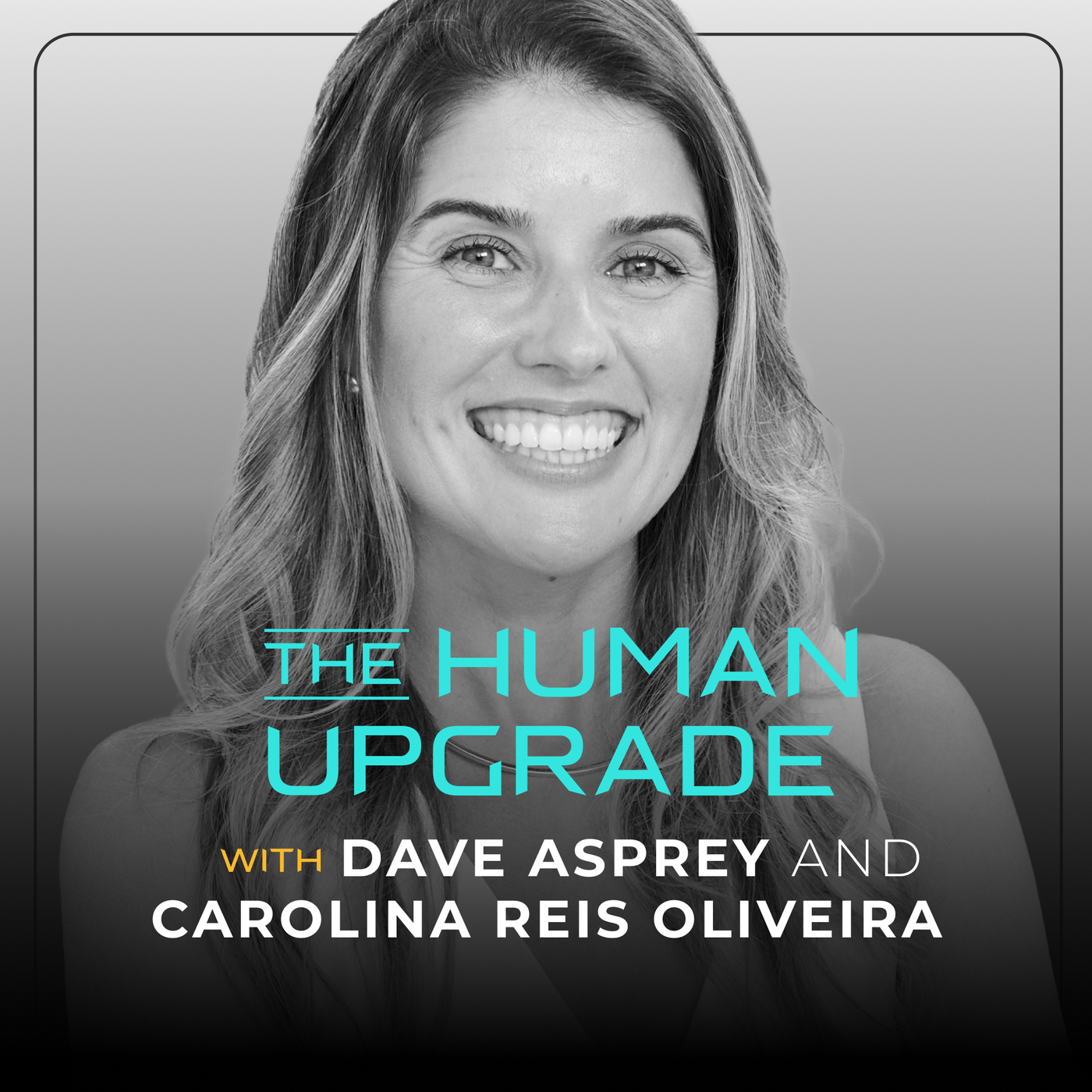
The Human Upgrade: Biohacking for Longevity & Performance
Longevity Scientists Discover a Breakthrough Peptide That Reverses Hair Loss | Carolina Reis Oliveira : 1269
00:59:55
Loading summary
Transcript150 lines
- [00:00]
A
The scalp of the skin basically has a similar structure of the skin in your face. So your hair follicles are basically embedded in the epidermal layer. And so a lot of the things that we see happening in the skin of our face also happens in our scalp.
- [00:16]
B
You don't notice it at first. A few strands here, a little thinning there, and then one day it's gone. Before you get wrinkled, before you start feeling tired, your hair starts whispering, you're aging. Is it hormones, genetics, or just a story that we've been told? Because no one looked deeper, hair loss feels inevitable. But what if one undiscovered molecule built in a longevity lab could flip the switch. Dr. Carolina Reis Oliveira isn't from the beauty world. She's actually a stem cell biologist with a PhD in immunology. She left Brazil for silicon valve to do something radical. Turn aging into a problem science could solve. She started by developing the first molecule proven to reverse sk biological age.
- [01:02]
C
Now she's turning that same science toward your hair.
- [01:04]
B
And what she's uncovered changes everything.
- [01:07]
A
I got to understand how much the science of aging has evolved in the past 10, 15 years.
- [01:13]
B
Zombie cells overlooked microbiomes, a new class of peptides that can restart hair growth. No drugs, no side effects, no guesswork. In a six month clinical trial, 86% of users saw an average of 40% more hair density. Thicker strands revived follic youthful growth re engineered from the root. This is a major breakthrough and one of the hardest things to change in aging. And it starts where most people stop looking your scalp.
- [01:43]
C
This isn't about vanity.
- [01:44]
B
This is about control over your biology. Because aging shows up where you hope it never will. But now, one product, one peptide, one shot at reversing what everyone else accepts.
- [01:57]
C
If people don't get enough protein or they suppress their metabolism and become metabolically less healthy as a result of using GLP1 drugs, at high doses, they are going to see thinning endless healthy hair. But how does a person know if it's DHT or mitochondrial dysfunction or lack of circulation or bad bacteria? How do you know what's causing hair loss?
- [02:17]
B
You don't just lose your hair. You can lose confidence. You can lose vitality.
- [02:22]
C
You can lose your edge. This is your chance to get it.
- [02:25]
B
Back, starting at the root.
- [02:28]
C
You're listening to the Human Upgrade with Dave Asprey. Hey, real quick.
- [02:35]
B
If you've only been listening on your favorite podcast app, you're missing half the fun.
- [02:40]
C
Head on over to my YouTube channel.
- [02:41]
B
I'm doing way more over there.
- [02:43]
C
Full video podcast episodes, weekly YouTube only.
- [02:46]
B
Videos, and some wild extras you're not.
- [02:48]
C
Going to hear here.
- [02:49]
B
Just search Dave Asprey on YouTube.
- [02:51]
C
See you there. All right, first question. Is aging optional for your scalp?
- [02:58]
A
That's. That's a great question. In many ways, aging is reversible for our scalp as it is reversible for the rest of our body. Some conditions that affect our scalp and hair are highly genetic driven, but some can be preventable, some can be reversible. And so I think what we are realizing as we have done for the skin is that the same way that we treat our skin to prevent wrinkles and to prevent, you know, all the signs of aging, we should also treat our scalp to prevent, you know, potential hair thinning, hair loss. And it is possible to reverse some of those conditions in many cases. Um, so, short answer. Yes.
- [03:56]
C
I've been a big fan of the research you've done with OneScan about the OSO1 peptide and just showing clinically what it does to the skin. And I've often wondered, should I smear some of the stuff on my scalp? Is the skin on the scalp different from your normal skin? Does it need different signals or different peptides in order to keep your hair?
- [04:17]
A
So the scalp of the skin is basically has a similar structure of the, of the skin in your face. So your hair follicles are basically embedded in the epidermal layer. And so a lot of the things that we see happening in the skin of our face also happens in our scalp. So same way that it will accumulate damage and those senescent cells, zombie cells in our skin, they also accumulate in the scalp in the epidermal layer, in the layer that's surrounding the hair follicles. And they also have a very important role in driving hair loss or hair thinning because they're secreting inflammatory signals. They are basically impairing the whole hair cycle, which is very important for us to make sure that the hair is growing, you know, normally if we don't disrupt their hair cycle.
- [05:19]
C
So that means the things that would work on my normal skin would also likely work on my scalp. But most of them are pretty oily. And if I tried to put facial serum on my hair, it's just going to be a big mess. What do I do about that?
- [05:34]
A
Yeah, so you need a different delivery system. So you need something that is suitable for you to use every day that's not going to cause, you know, your hair to feel greasy and can absorb well into your scalp. Also, the hair follicles, they have some different needs than your skin because obviously there is a need for protein to produce, you know, the keratin of the hair. But in general, some of the aging factors that affect your skin also affects your hair. But now we are developing, you know, a new solution that can deliver peptides to your scalp and prevent the hair the senescent cells in hair follicles. And we've seen that several conditions that are associated with hair thinning are also associated with the presence of senescent cells. And so that's what we are researching now.
- [06:36]
C
Is it senescent cells that cause people to lose their hair or get thin.
- [06:39]
A
Hair in some conditions. So there are different types of hair loss. The most common is called like the male pattern baldness. And that's mainly driven by genetics. So it's a condition that testosterone is converted in DHT or dihydrotestosterone. And DHT basically induces like hair follicle shrinking. So that condition, senescent cells is also a contributor to excessive bait hair loss for those who are experiencing this condition. Other conditions like age related hair thinning, that's mainly affect people over 50s, that's associated with aging. This is correlated with hair, with senescence. So this senescence is one of the main drivers of age related hair thinning and other conditions like stress associated hair loss. It's also associated with the presence of senescent cells. So one of the experiments that we've done in the lab was basically to induce, to show that this hormone CRH and its stress related hormone can induce senescence. And we showed that we could reverse the senescence induced with the peptide. So so because we know that stress, it's associated with a lot of, you know, in many situations, hair loss, we could reverse the senescent cells associated with stress and therefore help your hair to go back to the growth cycle faster. Also I forgot to mention there are like several conditions that are associated with, you know, hormone imbalance. So for uh, women, for example, postpartum, when you have a significant drop in estrogen or menopause, this is usually associated with a higher conversion of again testosterone to, to dht. So for women, for example, when you're pregnant, estrogen, keep your hair in the growth phase that we call like anagen and your hair, you know, it's beautiful, is full, it's fuller and as that estrogen drops, then a lot of the hair will enter in this phase that we call telogen that basically like the, the hair disconnects from the hair follicle and falls out and so there is a significant shift from this anagen, that's like the growth phase to the telogen, that's the, the phase that the hair is shedding. And, and that's why women experience a lot of like hair loss during postpartum and also during menopause. So menopause, what we also see is that there's a drop in estrogen, there is a drop in progesterone, and progesterone is also really helpful in preventing testosterone to be converted into dht. But when you don't have testosterone, you are going to see more production of dht. DHT basically induces that the hair follicle shrinking. That's related to hair loss.
- [10:01]
C
Is it estrogen that makes women not lose their hair?
- [10:04]
A
Yeah, estrogen basically keeps women, keeps the hair in the anagen phase. Anagen is the growth phase of the hair follicle. So usually the hair follicle goes through this cycle that's it can last like between 2 and 7 years. Anagen phase lasts 2 to 7 years and is the growth phase. And then there is the transition phase that's called catagen. And then there is the, you know, the fallout phase that's called the telogen and that can last like a few months. So basically the majority of our hair should be in antigen. 80 to 85% should be on anagen and about 5 to 15% on telogen. And so women, when they have high level of estrogen, this supports the antigen phases so they keep their hair in this growth phase for longer and that helps with, you know, hair density, hair, you know, thickness and overall hair health.
- [11:08]
C
Is there a case for low dose estrogen for guys just topically on their hair? As long as it doesn't absorb systemically.
- [11:17]
A
That's a great question. I have not, because I don't know if you guys have the same receptors for estrogen in terms of volume and you know, number or presence that women have. So I think for guys the most common treatment is to prevent the conversion of testosterone into dht. And that's mainly, you know, done by the drugs like finasteride and the testeride. But I'll take a look if there would be a case for low levels of estrogen, if that would also work in guys.
- [11:57]
C
And just to be clear, I'm not talking guys about taking estrogen, that's not going to end well. But if you can have just a local effect from it. I mean, there's a reason that women or pregnant women have glowy hair. As long as it doesn't go everywhere. I have seen some topical skin care preparations that are prescription, that have low dose estradiol, even for men, and lab studies that say it doesn't absorb because it's such a tiny amount. Like it doesn't go in systemically in Ray's labs at all. So I'm wondering, like, maybe that's a part of it. That would at least be a hair thickness hack, but not a hair loss hack. Right.
- [12:36]
A
I mean, it could be a potential hair loss hack, but again, we would need to know if the hair follicles in men have the same receptors for estrogen as we have in women.
- [12:49]
C
Should men and women who are looking for thicker hair, do they need fundamentally different products to do that?
- [12:55]
A
I think they could potentially use the same products. Men, women that are still in, in the reproductive phase, you know, they're trying to get pregnant, they should not use finasteride dutasteride, because they can have some, you know, implications on fertility. So if you have gone through, you know, all of your reproductive phase, you would be okay. These drugs also has some associated side effects. We know that mainly for men, like finasteride, it's related with potential erectile dysfunction and other side effects. And, and so all of these drugs, they, you know, they have results, but also they have some considerable side effects.
- [13:43]
C
You're a little bit calm about that. Being probably permanently chemically neutered because of a hair loss drug seems like a really poor risk. I'd rather be bald and have libido than have nice hair, but no libido to even take advantage of my nice hair. And I'm speaking from experience here. When I did a procedure to move 10,000 hair follicles from the sides to the front of my hair. There's a whole podcast about that. I tried a relative of finasteride for about three or four weeks, and at the end of that, I'm like, where did my. I think the morning kickstand is the right way to put it. Like, it totally. I was like, this is scary. It took me a little while to figure out that it was just topical application of this. So I stopped it. And it took probably nine months before things returned to normal. And that was after very brief usage. If I'd have taken a pill for six months, I. I might be like, permanently not in a happy place. So there must be peptide ways, There must be senescent cell waves, which is what you're focusing on. So I wanted to interview you today. What are you doing with peptides on the scalp?
- [14:53]
A
Yeah. So basically we have, you know, researched this novel peptide called OS1 for years. And the interesting thing about the west one is that it has this mechanism of increasing DNA repair capacity, decreasing inflammatory signal secretion, and therefore basically it shuts off senescent cells, but also prevents the formation of new senescent cells. And so as we were exploring this peptide for skin for so many years, and we were seeing a lot of other studies showing the implication of senescent cells in hair follicles or in hair growth, we were, you know, curious if our peptide would also work to prevent or, you know, reverse hair thinning, prevent hair loss in some instances. And so as I said, one of the models that we could replicate that's related to hair loss, it's stress induced hair loss. We showed in the lab in hair follicle cells that by stimulating the cells with a stress related hormone, when those senescent cells and OS one can reverse that profile. And so in conditions as age related hair thinning and also stress related hair loss, and also even, you know, in the most common, you know, male pattern baldness, there is an influence of senescent cells. And so we went on, we formulated this peptide into a topical, did the studies in hair follicles in the lab. We could see that we were, you know, stimulating the hair growth. And then we did the clinical studies for six months and we measure several parameters related to hair density, hair thickness, the number of hair follicles that are on the anagen phase. And we saw really incredible results with OS1. And so after six months, we saw over 80%, 86% of the participants increasing on average 40% on hair density. We also saw over 80% increasing on average of 42% hair thickness. And we saw over 70% of participants increasing the hair in the anagen faced by 40% as well, or 37% close to 40. And so these were or these were very impressive numbers and also showed that people that are still in the very early stage of hair thinning that you may not even notice you are still like on your 30s, you can already see an improvement in hair density. If we start using a product like this and it's going to work again to make your hair like fuller, but also to prevent, you know, potential hair thinning that's going to come with aging. So at least like, you know, more than 50% of men and women experience hair loss or hair thinning throughout their lifetimes. In men, actually this number, it's I think close to 70 or 80%.
- [18:19]
C
Why do some people have thick full hair when they're 70 and others don't.
- [18:24]
A
One of the main reasons it can be this sensitivity to dht which is mainly genetic driven. And so some people that are high sensitive to DHT they will experience more significantly hair loss and some people are less sensitive also there is a lot of, you know, lifestyle and your diet stress, your, your, your microbiome that influences how thick or how healthy your hair is. But for men I would say the, the major factor is still genetic driven.
- [19:05]
C
So probably genetic. If you could look at all the things you've done with tissue engineering and peptides and cell biology and just put on your 10 years in the future hat. What are we going to be doing about hair loss?
- [19:20]
A
I think we needed to find, I think hair loss similar to aging is a process that has multifacetets. So there is not only one way that you are going to target, you are going to target with many interventions. And so I would say trying to prevent the conversion of testosterone to DHT is one and finding you know, molecules that are more specific and has less side effects is one of them. I think increasing you know, blood circulation as you know, you can do today with like Rogaine or Minoxidil, it also has some side effects. But again how we can increase that, increase that blood circulation, you know, with ingredients or products that are, you know, more safe to your scalp. I think it's another very important way to, to prevent or avoid hair loss. Senescent cells has an important role as you were talking about. We are seeing that low levels of light therapy. It's also has shown to, to help with you know, the cellular health of the hair follicles and maintain again the dermal papilla. That's like the cells around the hair follicle really healthy and secreting the right factors to induce, promote the hair growth. And maybe there will be, if, if it's very genetic driven, maybe there will be a generic therapy that we can also you know, develop to, to combat like the, the, the results of people that are more genetically predisposed to the sensitivity to dht.
- [21:10]
C
That makes a lot of sense. I'm, I'm hoping that we have stem cell abilities to just plant follicles wherever we want and that we can just you know, grow. I could say I want my initials growing on my forehead and hair and we just like hit it with a laser or something. Is that ever going to happen? Just be able to turn on follicles like that?
- [21:29]
A
I would say what's probably more, maybe easier would be to reproduce a Hair follicle in the lab and implant it on yourself. You can already, you know, kind of do the transplant that you did. But I think to induce the same micro environment with the stem cells and all the, you know, growth factors in your scalp seems challenging.
- [21:56]
C
But we have 10 years. We have AI, we have all the stuff you're doing. You already tested 600 different peptides and compounds to see what caused skin regeneration. And that's how you came up with OS1, the peptide. And I like it. In fact, we talked about this on one of the previous episodes where you were on saying, how are we going to use this on the hair? Can I use it on my hair? And so you developed a different carrier so that I can deal with senescent cells and all. And I'm excited to be working with it. How long is it going to take for me to see results in my hair versus in my skin?
- [22:33]
A
Yeah, so hair usually takes longer. The clinical study that we ran, we measured six, three months and six months. We already see some significant improvement at three months. But all of the parameters improve after six months and they get more. More significant in terms of the improvement. And so we usually recommend six months of treatment. Treatment to see the best results.
- [23:06]
C
How many times a day do I have to use one skin on my hair in order to get results likely similar to what you saw in your clinical results?
- [23:15]
A
Yeah, from our clinical results was twice a day and once a day using a derma roller. We recommend at least once a day. And so if you can use twice, even better. But we know that it may not be so convenient for everyone. The product doesn't, as I said, doesn't leave your hair greasy. So you can, you know, blow dry your hair after you apply, or you can style in any way that you want. But yeah, so at least once a day.
- [23:48]
C
What percentage change in hair thickness or hair density did you find when people used OS1 on their scalps?
- [23:55]
A
Yeah, so for hair density, we saw on average an increase of 40%.
- [24:00]
C
40%.
- [24:01]
A
40%.
- [24:02]
C
That's kind of a big deal. Okay. Six months, smear some stuff on my head twice a day. That's insane.
- [24:08]
A
Yeah. In over, like 86% of the participants.
- [24:12]
C
And this is men and women.
- [24:14]
A
Men and women. Yeah, for men. Interesting. We only had the seven men in the group, but six out of 10, six out of seven showed an increase of like, 35%. And so more men showed an improvement. And 100% showed an improvement in hair density by hair thickness by 37%.
- [24:45]
C
37% hair thickness and 40% hair and.
- [24:52]
A
40% hair density overall, combining men and women. And when it's only men, it's 35%.
- [24:58]
C
Those numbers are insane. Are you worried about like the Rogaine or minoxidil or finasteride, people taking out a hit on you?
- [25:07]
A
I don't think so. I think the mechanism, the mechanism is very different. And actually you can combine them if you want.
- [25:16]
C
That was my next question. So if I can get a 40% improvement in my hair with one scan, if I also use topical minoxidil, which I do use, along with caffeine and some other stuff, there's no reason I couldn't mix them.
- [25:32]
A
Yeah, no reason. Yeah. Our product is completely safe and there is no cross reaction with any other ingredients.
- [25:42]
C
And I could also use red light therapy on my head at the same time, like the upgrade lab stuff. So if I do all this stuff and I end up with those changes in my hair, and I'll show this to you guys, you'll see this over the, the next six months and I start looking like a 25 year old TikTok influencer. Are people going to make fun of me now?
- [25:59]
A
I think you're going to look great. Even better.
- [26:04]
C
Okay. I've worked at, I have $5,000 lasers, I have done the full hair transplant where I moved 10,000 follicles. And these, these things are profoundly big numbers that you're talking about with one scan. So I'm interested in stacking all together. What happened with me is with all the longevity things I do, I did not lose my hair. And all the guys in my family were bald by 25 on both my mom's side, my dad's side. So I'm like, all right, this stuff is working. And then I got a testosterone pellet for the first time. And testosterone pellets raise your T and keep it high so there's no cyclical variation. And I've been on testosterone most of the time since I was 26 because I had less testosterone than my mom. So my body just wasn't making it. I had medical reasons for doing it. And I'm on testosterone therapy right now. I think you're crazy if you're over 40 and you're not on testosterone as a man or a woman. As long as your labs say you need it. If you're live, your labs are gonna say you need it in the world we've made. So that said, having up down cycles seemed important because with two pellets I lost an inch on my forehead and I'm like what just happened? So I stopped using pellets, but the damage was done. And that was why I decided to move the hair follicles. And there's I think one or two podcasts on that. I think I'm doing another one. And I. If I would have had this and my testosterone levels were too high and I took one skin and I was using that, would that help to stop the testosterone driven hair loss?
- [27:35]
A
Yeah, I'm afraid that we could prevent partially the hair loss that you experience, but not 100% our products, not directly. Again, preventing the conversion of testosterone to dht.
- [27:51]
C
And I would have had to put minoxidil on at the same time. Then it would have been okay.
- [27:55]
A
It would be okay. Again, minoxidil also doesn't prevent the conversion of.
- [28:00]
C
Oh, it doesn't?
- [28:02]
A
Does not. Yeah, yeah, only finasteride and dutasteride, which again, are potentially, you know, harmful. And so, but as I said, if your hair follicle is in a healthier, stronger state, it could be that you could have experienced less of those effects. And also minoxidil by again simulating the hair growth can prevent some of those effects.
- [28:32]
C
If I could go back in time, there's probably some nutritional things that I could have done in order to stop the DHT issue, or I could have just not done the pellets and stuck with more natural ways of restoring testosterone with bioidentical things. Any suggestions on what I could have done there? I know this is outside what you're doing with one skin, but you know a lot about this stuff.
- [28:55]
A
Yeah, I think for, for hair health, the, the nutrients that we see that is important, like obviously protein, you know, like carotene is, is. It's made of protein and it's super important for your, your, the main ingredient on your hair, other nutrients like vitamin D, biotin, iron, iron really helps again, maintaining the hair growth. You know, omega 3 fatty acids, things that are, you know, anti inflammatory. Um, all of this, you know, a very healthy diet will, will help with your. And you know, another important part is it's about your scalp and microbiome that not many people talk about. And that's actually one of the things that we studied in this study. So, you know, our scalp microbiome is composed of like, you know, this really diverse combination of bacteria and fungi. And you have the good bacteria that supports your hair growth and you have the bad bacteria that's associated with hair loss. And so in our studies we also saw that we collect the scalp microbiome at the baseline. And after six months. Yeah. And we sequenced the microbiome of the scalp and basically what we saw was a shift in some bacterias that are more related to hair loss. To bacterias. To a good bacteria that's related to, you know, hair growth. After the six months, we also saw some fungi that interesting enough, like, usually associated with dandruff, like decreasing its number. And so overall, we saw that our product, and one of the ingredients of our product is a. It's a prebiotic that not only helps with, you know, the balance of your scalp microbiome, but also helps with hydration and nurture your scalp. And so we saw that at the end of the study, your scalp microbiome, biome was more balanced and in a state that would be, you know, promoting better hair growth.
- [31:17]
C
Wow, that is a cool idea. Maybe a dozen years ago, there was a company on the show, I don't think they're around anymore, but they were making a special bacteria spray for your scalp to try and fix that problem, like a probiotic for the scalp. So your approach with one skin of just using a prebiotic so that you're feeding the good guys which support it, that is. That is super cool. I am, I'm actually really excited just this whole idea. Okay. Because I've done all the hair stuff that you can, that you can do at this point, and this is just an entirely new approach. If I could go back in time to when I used the testosterone pellet that caused me to have too much DHT and lose my hair, the natural things that I would have done to block DHT would have been saw palmetto, which a lot of guys take for your prostate. The problem is you need some DHT to put on muscle. Like DHT is not bad for you. Just too much of it isn't good for you. Reishi, mushroom, pumpkin seed extract. Even just having enough zinc. And I know for me, my genetics require much more zinc than the average person, so that would have been helpful. Maybe some nettle root. Like, these are all things that guys could use if you're having baldness or hair loss that's caused by dht. But how does a person know if it's DHT or mitochondrial dysfunction or lack of circulation or bad bacteria? How do you know what's causing hair loss?
- [32:40]
A
I think, you know, the best way is to get a diagnosis is obviously going through to a dermatologist. So the dermatologist can ask you or analyze your scalp, but also ask you, you know, some labs and, and try to identify if you have, you are deficient on any of those, you know, nutrients or even, you know, how more sensitive are you to dht, they can clearly see the pattern of hair loss that you are experiencing. And so, yeah, I think the best way is to see a dermatologist.
- [33:16]
C
When you're testing one skin, whether it's, it's for the skin or for the scalp, do you test this like in people in their 70s and their 60s and 50s and 40s, how do you do that? And do you see different results at different ages?
- [33:29]
A
Yeah, that's a great question. If, if I'm not mistaken, the age range varied like from 30 to 60 for this clinical study. I need to double confirm that. And so we had the participants that were in the very, that self perceived to be experience hair thinning. Even if you look in the pictures like their head is full of hair, but they potentially, they had more hair and they were experiencing some hair loss. And so up to participants that were like in the intermediate and more advanced, you know, hair loss tapes. So I think it's more about the stage of the hair loss that they're experiencing less so related to the age. Some people can experience hair loss at a very young age and some people again can be at their 50s and 60s. And so we saw an improvement throughout the spectrum of like very early, you know, hair thinning to, you know, a late stage. Obviously at the late stage we see not as a strong improvement in, because it's harder to reverse in terms of the density, in terms of the thickness, but we still saw significant improvement for the intermediate to late stage of hair loss.
- [34:55]
C
That is so incredibly cool. I'm just, I'm so blown away by 40%. To be honest, I didn't think the number would be that high. Okay, what if I use one skin three times a day? Is it going to grow faster?
- [35:08]
A
That's another great question. I think the only way to know is actually testing it.
- [35:14]
C
If I spill some on my back, will I grow more back hair?
- [35:19]
A
Not necessarily. So basically the senescence.
- [35:23]
C
Good.
- [35:25]
A
And people ask about their face. A lot of people don't want face hair. And so basically we know that, you know, senescent cells, it's whatever. Senescent cells are associated with aging. So if they are, you know, driving wrinkles, if they are, that's where their product's going to work. So it doesn't mean necessary. That's activating hair growth itself. It's mainly again targeting the senescent cells that are impairing your tissue, that being your skin your scalp to function well. And so you shouldn't be worried about having more hair on your face, on your back, or in other areas which you could experience with minoxidil. A lot of people that take, you know, minoxidil orally, they can experience more hair growth throughout their bodies.
- [36:14]
C
I see all these younger biohackers sometimes saying, I save so much money, I just take a minoxidil pill instead of using it topically. I'm like, you're not gonna like where the hair grows. So I'm a big fan of topical use of minoxidil and why have it work systemically when you don't need that? And besides, minoxidil doesn't have anywhere near the same statistical results that you're getting with your new one skin product.
- [36:40]
A
Yeah, we actually are running a parallel study with minoxidil and we don't have the data yet for the instrument measurement that we, I shared with you. But in terms of the consumer perception, we, we do see similar perception in terms of improvement with, you know, OS1 hair. Minoxidil.
- [37:01]
C
How long have you been using your own hair product?
- [37:05]
A
I've been using for six months, probably around six months. And I'll be completely honest because I experience a little bit of, you know, the androgen related hair loss. And so I've used minoxidil, but I stop it because, you know, it can. If you, when you're using minoxidil in the beginning, you can experience shedding and if you stop, you're going to experience more shedding. And because I'm still, you know, in my reproductive phase, I don't want to stop and like experience the shedding. And so I've been consistent with OS1 hair like for the past like six months. And, and even you can see, you know, some baby hairs around here, you.
- [37:49]
C
Really do have them, don't you?
- [37:50]
A
Yeah.
- [37:51]
C
Yeah. So that's really good evidence.
- [37:54]
A
Yeah. And I also say that I've done also PRP injection twice on my scalp. That's, that's another, you know, treatment.
- [38:05]
C
Not in the same time window or.
- [38:07]
A
No, in the, in the same time.
- [38:09]
C
Okay. So you are stacking the deck in your favor, which is what you should do.
- [38:12]
A
Yeah. Yeah.
- [38:13]
C
Okay. There's a certain mindset that mostly came out of big pharma, but some people just got infected with it that says I have to do things only one at a time in order to see if it's working. And you're like, dude, if you wanted to bake bread, you're going to have to have water, yeast, flour, the right temperature, the right time. It takes multiple ingredients to get results. And so I would do exactly that. If I was like I'm going to go on a hair kick. I would do everything.
- [38:39]
A
Yeah and honestly I mean I do rely on the clinical data from our studies on this study people are solely using OS1 hair but obviously if I have other, you know, interventions that will support again hair loss and hair growth. It's, it's a tough journey for those who are going through it and now it really can impact your, your self esteem and so you want to do everything that you can to you know, that's still safe to you know, remediate or reverse that. And so I have no problem, you know, in combining therapies just to be really straightforward.
- [39:19]
C
One skin products are very high end. Like they're not cheap. I use them because they work already on my face and things. It's not the only thing that I use. I stack things on my face as well. And your hair product is also not particularly cheap but could got 40% improvement. Do you have some kind of a deal? Just buy a six month supply all at once so that you just know what you're going to do?
- [39:41]
A
Totally, yeah we do. And you get like 20% off if you buy six months at once.
- [39:46]
C
Code Dave. So Carolina is going to give you an additional discount. So what I would do is pick up the six month package which gets you 20% off and then stack it with whatever other discount you guys are gifting to listeners. Like said we didn't plan this out of time so we'll just use Code Dave and if that doesn't work then we'll edit this part out.
- [40:07]
A
It's going to work, don't worry about that.
- [40:09]
C
How soon will it be until we look out at a crowd of people and no one is bald?
- [40:14]
A
Here comes Dave. Well, my hope would be, you know, between 15 in 20, 25 years.
- [40:28]
C
20, 25 years. That long? You seem skeptical.
- [40:34]
A
I'm a scientist so I'm, you know, I'm conservative because obviously there is a lot of things that can work but it can, you know, in terms of validating this safety we need like at least a few years to make sure that everyone can use it. And so I would, you know, lean around on the safe side and would say, you know, 15 to 20 years or so.
- [40:59]
C
I'm going to ask ChatGPT what it thinks.
- [41:03]
A
Let's, let's see it.
- [41:05]
C
I said predict how long it will be before less than 1% of people are bald. Oh, so they're saying gene editing, stem cell follicle regeneration therapies, and their best case prediction is 2035 to 2045. So you're saying that. They're saying 10 to 20 years, and you were saying a little bit above that. And they're saying by 20. Basically 2050. Widespread, affordable things. And. Oh, I like this. By 2060, less than 1% of people bald by choice, assuming no large systemic disruption. So that means no comets can hit the planet if we want to just permanently punch baldness in the face. You agree?
- [41:48]
A
I agree. Yeah.
- [41:49]
C
And already 40% hair growth in six months. Using one skin. That's already a huge step compared to what we could do before. Before this. Even the best things I've seen with lasers and topicals don't approach that. So this is a quantum leap here. Your trial, though, is pretty small. Like, how many people were in your trial?
- [42:07]
A
30. 30 for the group of.
- [42:10]
C
Oh, 30 is not too bad. I heard like seven or something earlier.
- [42:13]
A
No, seven was for male only. So the remaining was so 23 female and seven male in this group.
- [42:23]
C
That's weird because don't men lose hair more easily than women? Although women can't lose hair?
- [42:28]
A
Yeah, we basically recruited. I think our goal was to have around, like, 25% of men and. And mainly because men have other treatment options and women are more, you know, conservative in terms of the drug options that are available for men. And so a lot of our audience, it's women that, you know, are going through menopause, are going through, you know, some of those hormonal changes, and. And because they're already treating your face now, there is, you know, this awareness about treating your scalp as well as a way to prevent, you know, hair thinning that's going to probably affect most of us at some point in our lives.
- [43:11]
C
For women, what is the single most overlooked factor when it comes to reversing hair loss? I have a couple. Let's see if you want to shoot holes in them.
- [43:21]
A
Okay, let's go.
- [43:23]
C
Thyroid function, right? You're getting thin hair. You don't know why, like, oh, your thyroid levels are low and that'll cause it. And a lot of people just don't connect that. So that thin hair can be a major issue. And you'd see it first on the outside of your eyebrows. And like, I have. I don't know if you can see it in this. I have very thin outer eyebrows because I had Hashimoto's since at least my early 20s. Which meant my thyroid was low for long enough for me to get permanent thinning of my eyebrows. If I use the new one skin hair product on my eyebrows, does it make my eyebrows fuller?
- [44:00]
A
It could potentially. We have not tested for eyebrows, but we are testing for beard. A lot of the guys, you know, have some beard patches and so we actually on our second month and we already have a really interesting before and afters from the guys that are in this study. So we are collecting three months in a few weeks and we hope to show that that can, you know, improve your hair on your scalp, can also improve your beard and could potentially improve your, your, your brow. We have not studied on the brow though.
- [44:37]
C
I've never tried putting hair growth stuff on my eyebrows because I guess I just don't care that much because I'm a guy. But I know a lot of women are really into that. And then I know there's also Latisse, which is a compound that's meant for growing eyelashes, also put that on their eyebrows. Can you use one skin on your eyelashes?
- [44:58]
A
You could. Again we have not tested and but the product, it is safe. We needed to make sure to not get it inside your eyes just like, you know, on your eyelashes. But the product is safe for. Yeah, to apply in on your eyelashes.
- [45:16]
C
And if I painted it all over my eyelids, would I get like bushy eyelids? Because that'd be kind of cool.
- [45:23]
A
I don't think you're gonna get that bushy.
- [45:25]
C
Darn it. Okay. One day my fantasy will come true. Right? That'd be so odd. Close your eyes and there's like a little fuzz. Another thing that I think is overlooked when it comes to hair loss in men and women is levels of copper in the body. Right. Low copper can give you gray hair, but it can also give you thinning hair. And a lot of times post pregnancy women, you have this amazing hair when you're pregnant from all the hormones and then it just suddenly goes all to shit. And that's because when you expel the placenta, you've lost all the copper that the body had been stor. We don't typically reconsume that the way we used to. So that means you've got to be on enough copper to keep your hair thick, right?
- [46:08]
A
Yeah. No, that's a great point. Yeah.
- [46:10]
C
And that's part of Minerals 101. The formula that I make, I consider like the most fundamental longevity molecules that include your hair and everything. It's vitamin D and minerals 101. And yes, I make those. I Sell those guys, you know, full transparency, whatever. I make those because who cares if you take all the expensive stuff if you don't have the right minerals and fat solubles, it doesn't work. How important is basic nutritional status when people are going to be using the one skin products? Are they going to work even if I'm not taking my vitamins or do vitamins work better with them?
- [46:41]
A
Will definitely work better if you, you know, if you are in this, you know, balanced nutritional state. Because again, even though if we're fighting, you know, the senescent cells, your hair is follicle still needs like the nutri nutrients to you know, grow a new hair. And so if you don't have all of these nutrients will definitely impair the hair growth. So ideally you combine them.
- [47:08]
C
I think adequate animal protein consumption is really important because of amino acid availability. Plant based proteins just don't do that. And we've probably both seen vegans with very thin ratty hair. I know that my hair thinned substantially, not that I lost hair, but that the, the shafts were thinner when I was a vegan. It was profoundly bad for me because of mineral starvation caused by the plants. So if you are vegan and listening to this, number one, I love you, I may tease you very much, but that's just out of compassion and you can tease me back. But if you are vegan, you probably want to take extra good care of your hair and for God's sake take your mineral supplements, you're really going to need them. And take them away from the green juice already so they can absorb. What other things do people do that might make the one skin hair products absorb better or work better? Should I wash with a special shampoo? Like what else could I do if I want to stack the deck fully in my favor? Stop blow drying. Like what? Give me the whole list?
- [48:11]
A
Yeah, I mean we can think of the things that are causing, you know, damage in your hair. So a lot of the oxidative stress in terms of your, if you're in the sun too much, you know, if you're getting a lot of. Yeah. Damage directly into your scalp, that would definitely, you know, compromise your scalp health. I would say also the build up of products. So you know, if you're applying the product, you are not like washing it, you know, every few days with a shampoo that's like supposed to be very cleansing to remove the buildup, the product eventually won't penetrate as well. And so make sure that you, you know, you, you have a clean scalp as, as Often as possible to promote the, the absorption of the product. You know, things as you already said on, like, make sure that you have, you know, your nutrients in a good place. If you want to complement with red light therapy for women in general, like, your hair becomes very sensitive when you sleep, your wet hair. So, you know, try to avoid that.
- [49:25]
C
What about sunshine and hair? Is sun good for the scalp or bad for the scalp?
- [49:31]
A
So too much sun is bad. Right. The same way that can cause our skin age, it can also, you know, cause damage in your scalp. And so for people that are, you know, already have some kind of, you know, more like thin areas, if you're in the sun, you're, you're going to experience also like scalp sunburn. And again, you're just causing inflammation. You're causing the formation of more senescent cells and that can contribute. So try to use a hat or, you know, if you're in the sun for too long, you can even apply like sunscreen in some areas that are visible. But definitely we know that, you know, it's going to lead to free radicals and some damage and you want to avoid that. Also, you know, there is a lot of oxidative stress that happens during hair loss. And so our product also contains like, some very potent antioxidants like flavonoids like fisetine that can help combating, you know, the anti, the free radicals and make sure that your scalp is again, protected from the free radicals.
- [50:48]
C
There's evidence even for things as basic as ascorbic acid or vitamin C, using that topically on the skin. And quercetin is much more powerful than vitamin C. Are you also using ascorbic acid in it?
- [51:00]
A
No, we don't have ascorbic acid on the topical product.
- [51:04]
C
I haven't seen that for use on the scalp. I've just seen that for use topically. But it make, of course, it makes so much sense because you want to protect the mitochondria. And from what I've seen, adequate sun exposure increases hair thickness. It also increases collagen thickness. So zero sun on your hair ever is a bad strategy. Or at least on your scalp. You probably don't need it on your hair. But I don't know how you get it on your scalp without getting on your hair. But if you sunburn your scalp or overexpose it, that's going to be bad. Just like, you know, pale, ghostly vampire skin isn't healthy. And it's not a look you want either. The same will go for your scalp, right?
- [51:40]
A
Yeah. Yeah. 100%.
- [51:42]
C
How much sun do you expose your scalp to?
- [51:47]
A
I mean, I don't do it intentionally. I, you know, usually like to, you know, get around like 10 to 15 minutes morning sun. And so that's probably about it. And I'm out. You know, they're doing sports and so I have a hat, so I do get more sun. But if I'm on the beach and I know that I can potentially get some damage, I will, you know, definitely wear a hat or something that makes.
- [52:19]
C
It makes great sense as advice for everyone, like, wear a hat. And if you want to go out for even like a half hour or maybe at most an hour a day in direct sunlight, I think you're going to be fine. But if you're dyeing your hair, you're probably going to mess up your hair dye with that. And if you're dyeing your hair with synthetic products, that's probably bad for your scalp and certainly bad for your liver and your detox systems. And it's one of the big sources that and fingernail polish for women are really big sources of toxins. So if people are dyeing their hair using relatively harsh chemicals with cancer warnings on them, is that going to work against having a healthy scalp?
- [53:02]
A
Yeah, 100%. Everything that's again, really harsh on your scalp. And a lot of people that, you know, dye hairs or they use like the, the bleaching kind of, you know, ingredients up to your scalp, if you use only on your strengths is not, it's not bad. But if it's on your scalp and it's affecting like again the root of the hair, that's definitely gonna compromise the. Your scalp health. And so you want to be very careful with those harsh ingredients. And they're always, I mean, not for everyone. Depends how you, you know, you dye your hair, that it will not apply to the scalp directly.
- [53:44]
C
Works for me. Coffee, is it good for your hair or bad for your hair?
- [53:52]
A
Again, I have not studied specifically if I would assume, you know, coffee has a lot of properties in simulating like, you know, the, the circulation, blood flow. And, and in that sense, in our, in our ingredient, we have ginseng. Yeah. And that's again, is supposed to stimulate blood flow. And so I would assume that coffee could help in that sense.
- [54:24]
C
I guess there's two aspects of coffee and hair growth that would be important. The first one is caffeine. Is one skin using caffeine as part.
- [54:32]
A
Of your formula, not on the hair product. We do have on the eye cream.
- [54:40]
C
Caffeine under your eyes in the morning is profoundly effective. So I love it that you put it in there. For the under eye serum, you'll notice a difference, like if you wake up and you ate gluten or breathe mold or whatever and you're like, I'm puffy. Caffeine works really quickly. So I, I very much appreciate that in the eye cream. Sometimes I'll take a red eye and I'm on stage somewhere. It's very helpful to have that in the morning because you're not always going to look like you just got a good night's sleep when you didn't get a good night's sleep. And a lot of celebrities and people I've worked with, they will use one skin or they use a caffeine formula just because they know they have to be camera ready. So that's a neat hack, right? In and of itself. There's a ton of evidence for caffeine on the scalp. And you can get just straight up caffeine things that you could safely stack with one skin. And it actually reduces DHT in the scalp, which is kind of cool, right? It also helps with mitochondrial activity and it stops because it stops dht. It stops the miniaturization of follicles, which is pretty cool. So that's not coffee, though. That's just caffeine. And if you drink coffee, you get reduced inflammating just because of the polyphenols and improve microcirculation and you get something called chlorogenic acid and the polyphenols and they actually protect follicle stem cells. You can also, if you just don't like coffee, well, number one, you probably have tried kale. You didn't like it, but you learned to. You can just learn to like coffee. Damon John and I were just talking about that. He didn't like coffee, he started drinking it, now he likes it. So if you don't like coffee though, you could take chlorogenic acid as a, as a capsule for longevity purposes. But it's in danger coffee and even other moldy coffee. So that's fine. I have never seen evidence of putting coffee on the scalp, although I did try this years ago. I would take my used espresso stuff and I'd mix it up with MCT oil and I like smear it on my head. And all it did was make me smell good and look stupid. So I don't recommend that. But some caffeine might be helpful. And there, that's my whole caffeine, coffee hair story for what I know about it.
- [56:53]
A
No, that's super interesting. Again, the more natural ingredients that we can have that can prevent the conversion to dht, the better.
- [57:04]
C
Okay, very, very cool. I know that you just launched the new hair product from one skin and I think you guys are going to sell out of this because your clinical results are insane. And I know a lot of listeners, in fact some are reaching out during this are saying, well, I use the one scan topical stuff because it works really well. People see results with that with two or three months of consistent use. And you've gone deep on the science on other episodes. So we're not to go deep into that. But your reputation is that people keep using it because it works. And guys, you're listening to this. This is not the cheapest stuff that's out there. It just works much better than the cheap stuff which probably doesn't work at all and might even be bad for you. So this is a case if you get what you pay for. But I think you're going to sell out of the hair product because you have a history of having great clinical results that are truthful. So when people hear that 40% number, they're just, they're going to want to do the same thing that I, I do, which is get me on this stuff for six months and let's see what happens.
- [58:06]
A
Yeah, I mean I, I feel very confident on, you know, the research that we put into this product. We spent over two years just developing the formula and all these studies and plus like this six months clinical study. So it is again a very challenging condition that we are going after. But we feel really excited about this data and, and I hope a lot of people can see the benefits because I experience for myself, I know that, you know, it's kind of a tough journey and so the more than we can help everyone that's going through this, you know that that's, you know, our purpose here. And thank you, David for allowing me to share our research and supporting us and helping us to spread the word.
- [58:59]
C
Of course, you're such a deep nerd research scientist and I say that as a compliment and spending two years on clinicals before you launch it. Thanks for just doing the good science. And you've been very transparent with listeners on our previous interviews about exactly how you've gone through the process of identifying this new peptide and then now two more years of showing that it actually works. And man, I cannot wait to talk in six months when I have this even fluffier head of hair. It's gonna be awesome.
- [59:32]
A
Can't wait to see it.
- [59:33]
C
So go to Oneskin co, order the six month supply and save 20% and use code Dave and you'll get some more savings. And seriously, let's all meet in six months and just have massive crazy amounts of hair. It's gonna be so fun. See you on the Human Upgrade Podcast.
- [59:57]
D
The Human Upgrade, formerly Bulletproof Radio, was created and is hosted by Dave Asprey. The information contained in this podcast is provided for informational purposes only and is not intended for the purposes of diagnosing, treating, curing, or preventing any disease. Before using any products referenced on the podcast, consult with your healthcare provider carefully read all labels, and heed all directions and cautions that accompany the products. Information found or received through the podcast should not be used in place of a consultation or advice from a healthcare provider. If you suspect you have a medical problem or should you have any healthcare questions, please promptly call or see your healthcare provider. This podcast, including Dave Asprey and the producers, disclaim responsibility for any possible adverse effects from the use of information contained herein. Opinions of guests are their own and this podcast does not endorse or accept responsibility for statements made by guests. This podcast does not make any representations or warranties about guest qualifications, qualifications or credibility. This podcast may contain paid endorsements and advertisements for products or services. Individuals on this podcast may have a direct or indirect financial interest in products or services referred to herein. This podcast is owned by Bulletproof Media.