← The Human Upgrade: Biohacking for Longevity & Performance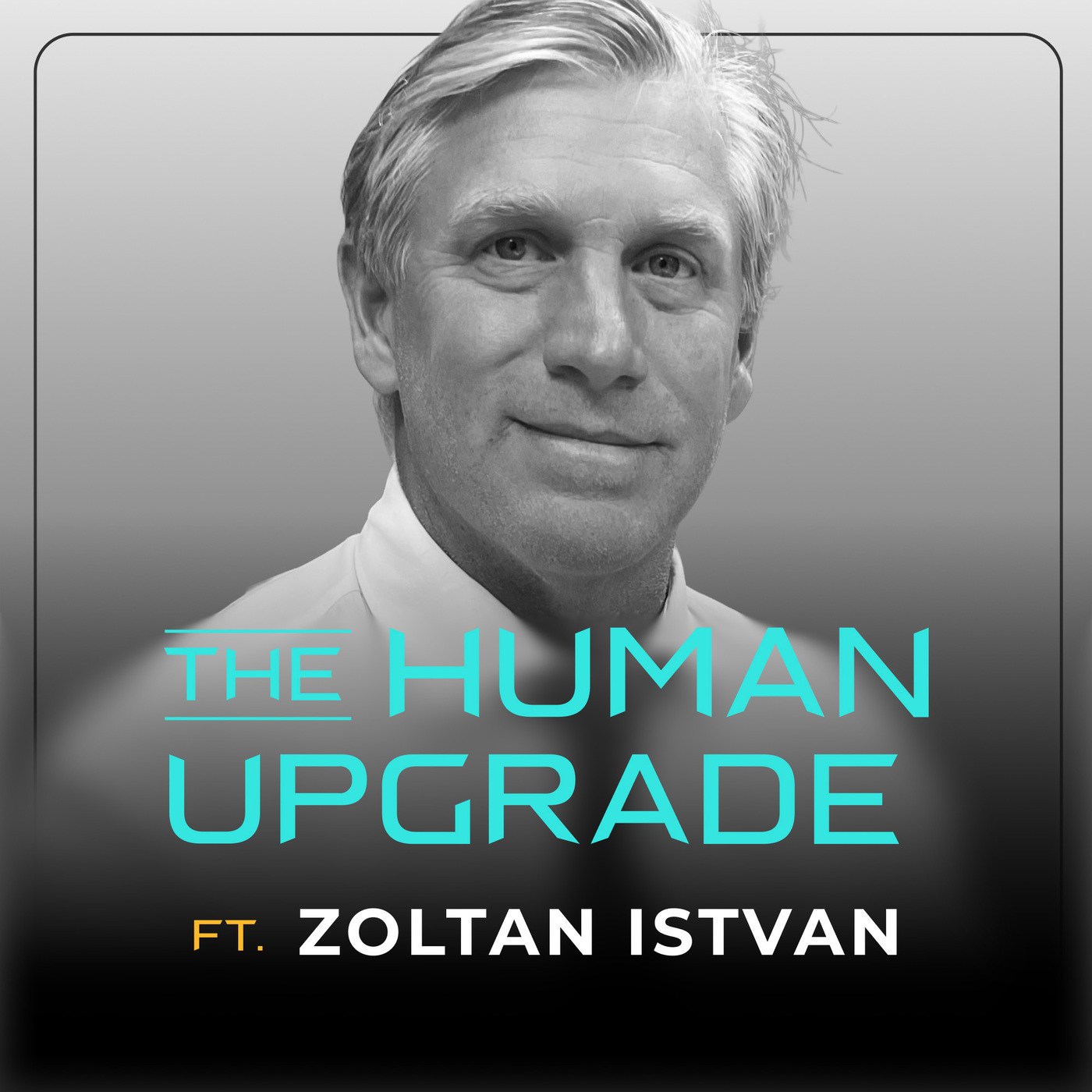
The Human Upgrade: Biohacking for Longevity & Performance
Meet the Governor Who Wants Humans to Become Cyborgs : 1406
01:07:11
Loading summary
Transcript148 lines
- [00:00]
Zoltan Istvan
The number one goal of transhumanism is to overcome aging and biological death. In the end, it seems to me like the human body is a kind of a time bomb. My singular goal was, I love life. I don't want to die. And this is the transhumanist mantra. But we have promised to try to bring in billions of dollars specifically for the longevity industry. I'd like to make California ground zero for where we tackle overcoming biological aging, declare that aging is a disease, so that a lot of federal funding will go into it. And this just takes somebody standing on their two feet and saying, actually dying isn't good, and therefore we're going to fight against it on the state level. You can bypass a lot of the federal stuff and just say, okay, we're just doing it here. I would wipe this stuff out from day one. I would walk into office and just be like, gone, gone, gone.
- [00:39]
Dave Asprey
Being alive is a state you can choose. I have no problem with death whenever I choose it. I just would like to be the guy who decides.
- [00:45]
Zoltan Istvan
I think the actual transhuman future is something much grander than that. We're going beyond human.
- [00:51]
Dave Asprey
You're listening to the Human Upgrade with Dave Asprey. Welcome to the Transhumanism episode. Now, when I said that, you probably thought those are the dark people trying to take over the world. And that might be the case. But I want to share a little story with you. Way back in the 1990s, when I was a computer hacker, I was also a cyberpunk. This was a cultural movement based on computer hackers where we thought we could change the world for the better by building better stuff. You're listening to this right now, mostly because of Linux, which is made by computer hackers. We got pissed off that Microsoft wouldn't tell us what was going on in there. So we built our own operating system and gave it to the world for free. One of the reasons biohacking is called biohacking is because I think we can do the same thing when it comes to the technologies that improve our longevity and our consciousness. I don't think they should be owned by anyone but you if you're the one using them. Or at least they shouldn't be controlled by anyone other than you. And when it came to Building Web 1.0, I played a meaningful role as a co founder of a part of the first data center, the one that held Google servers when they were two guys and two computers, and the Facebook's servers when they were eight computers and Hotmail and Salesforce and Amazon and all the other big people that are out there, ebay. So I was there, and we were building stuff to make the world better. And at some point, bad people took the stuff we created and turned it into a surveillance platform and a way to dish out social media algorithms that mess with your head. So I'm very cautious about misuse of technology. And I would say when transhumanism was first invented, I was like, wow, this is great. We're going to use tech to improve ourselves. You might have noticed that I use tech to improve myself all the time to this day, to improve myself, but not to merge with it. So our guest today is a longtime friend and a polarizing figure, a candidate for the governor of California and the leading author and I would say, leader of the modern transhumanism movement, Zoltan Istan. Zoltan, welcome to the show.
- [03:22]
Zoltan Istvan
Thanks for having me. I'm excited to be here.
- [03:25]
Dave Asprey
Now, you might say, dave, how dare you hang out with the transhumanist. Well, number one, even if Zoltan and I don't agree on everything, adults are capable of talking with people who might have a different opinion without losing our minds. And if that triggers you, you should probably get a therapist if you have a good one. So on that note, what do you think transhumanism is today, Zoltan?
- [03:51]
Zoltan Istvan
Well, transhumanism is still a social movement now of many millions of people around the world that want to use technology to radically improve their body as well as improve their lives. It can be anything from exoskeleton suits to, you know, want to say it could be driverless cars, but it could be something as radical as that. Robots and houses could be cranial implants. Whatever it is. I like to think of it as the top 10% of the most radical science that's out there and being applied to human experience so that we can evolve and move forward.
- [04:25]
Dave Asprey
That sounds really cool, but if I was Mark Zuckerberg, I would already be thinking about how I could control the entire system that's implanted in everyone's brain.
- [04:34]
Zoltan Istvan
Yeah, I mean, look, I'm kind of with you, I gotta be honest. You know, I come from some somewhat libertarian roots where I am also cognizant of privacy issues, worrisome of big government people messing with my life. So, I mean, there is that in me. But I think I'm also a believer that if we don't take these steps towards achieving this transhumanist future, we're leaving it behind. And you have to remember that of Course, the number one goal of transhumanism is to overcome aging and biological death. And if we're not moving as fast as we can forward, then we're also aging and perhaps dying. And so, in that sense, worries aside, I'm ready to move forward with radical technology in my body, hoping that we can control the privacy issues.
- [05:19]
Dave Asprey
Got it. That's reasonable. And I. I've kind of. I'm going back to. I'm going to forget the name of the science fiction author. Now, this is one of those futurist novels where one branch of humanity goes after the biosciences, and they become what he calls the shapers. And they have absolute control over life itself, where they can make any. Any cell do anything they want and become radically enhanced biologically. And the other half of humans become makers, and they control machinery, and they can make machines do whatever they want and merge with them. And they end up in, of course, a big great galactic war, as they do in those kinds of books. But it feels like there's two paths. One is around upgrading our existing hardware for longevity, for cognitive enhancement, for consciousness, and the other one is around replacing it with metal parts. Are you on either side of that?
- [06:17]
Zoltan Istvan
So, to be honest, I support it all, but I don't believe that biology is probably the strongest system that we have. I kind of think in the end, we will become ones and zeros or different types of metals and move forward from there. Because in the end, it seems to me like the human body is a. Is a kind of a time bomb. We all are stuck with aging. We're all going to pass away unless we can modify it substantially. Now, it's potentially possible we could, you know, with cyborg parts and all these things, keep ourselves alive indefinitely as human beings, as biological human beings. But I would rather have a brain that is dramatically larger than what I have right now, dramatically more complex, tied into systems all over. So when you talk to me about, like, what system do I want to be in a thousand years? Well, I hope my brain is kind of, you know, connected to every single atom that's out there in space and really able to be like kind of a macro mind or something almost godlike, as you might perceive. I'm not a believer in any sense, but I do think that we could have intelligence that's millions of times more than what we have. But that's going to require getting outside of the three pounds of. Of meat that we carry on our shoulders.
- [07:32]
Dave Asprey
Why wouldn't you just make bigger shoulders?
- [07:36]
Zoltan Istvan
You could. I mean, I Guess that is a possibility as well. No, it really is. I mean, what if you had the, a brain the size of the planet, you know, Earth. But I think maybe that is too cumbersome. I, I think it's quite easy to. And we're seeing this right now in the explosion with AI and with server speed and things like that. That and maybe even quantum computing here. Very, you know, the next year or two, we're just going to be able to make things really small and really fast. But that's coming from ones and zeros or even different types of technologies. But it's not biology that's, that's pushing us down that path right now.
- [08:11]
Dave Asprey
You have a point there. So do you have a connection with nature?
- [08:15]
Zoltan Istvan
I do, I do. And I gotta be honest that I'm in trouble, of course, besides running for governor, things like that that I have. I'm not the strongest environmentalist out there. In fact, I'm not very strong whatsoever, having worked for National Geographic and written a bunch of articles about the environment. But I, I just, my connection to nature is less and less per day as I move forward in the transhumanist world. And the reason is, is because I believe that it's what we create. It's the substance, the, the titanium alloys and things like that that I'm most interested in evolving for transhumanism. It's not that I don't love it. It's not that I don't love a sunset or walking with my daughters on the beach and things like those are wonderful. But I do believe that in the far future we're going to move beyond a lot of our appreciation and even connection with nature. That, that's, that's almost like a doom trip designed to, to, to suck us into this biological world. But the real, the new worlds are the ones that I'm attracted to. And they're not going to be sunsets and things like that. They're going to be much more, perhaps even cold ones and zeros. But they're going to be so expansive.
- [09:23]
Dave Asprey
Do you have a connection to other humans?
- [09:25]
Zoltan Istvan
Yes, yes, I do. And you know, my thinking with transhumanism is we're not going to lose the human side of ourselves as we, you know, evolve into something else. Cyborgs, AIs, you know, super intelligences that, you know, span the cosmos. I think we're going to keep our best parts of ourselves, the mammalian niceties and things like that. I don't think we're going to get rid of that. Why would we, if we enjoy them, but I do think they're going to be lessened and maybe honed down to something much smaller than it is right now. I just think when you have an intelligence that's a million times, maybe more than what we're going to. What we have right now, we're going to have totally different types of emotions, totally different types of senses, totally different types of experiences. And we're probably going to find a lot of meaning in that, more meaning than we find right now with our limited capacity and our, you know, our. Just the neurons firing in our brain. I think we're going to find much more as we become much more intelligent and complex transhumanists.
- [10:23]
Dave Asprey
If you could have a little implant in your brain, you just press a button and it makes you happy, would you do it?
- [10:28]
Zoltan Istvan
I would not do that. And as someone who's just taken their graduate degree in philosophy at Oxford, I wouldn't do that. And the reason is, is because I think, you know, it's a classic question. They send you off in a. In a box, but you have to be forever happy. I would actually rather have sadness. I'd rather have drama. I'd rather have even impermanence, at least the possibility of. Because that creates meaning and something that's unique. I don't. I'm just not a hedonist at the core of what I am. That said, I do love pleasure. I'd like to have more of it. But to say that I would want it indefinitely. Absolutely not. I don't want to be a slave to pleasure.
- [11:08]
Dave Asprey
I mean, if it has a button you can turn on and off, you.
- [11:10]
Zoltan Istvan
Could just, oh, well, that's different than I would be pressing that button on a lot. Probably.
- [11:16]
Dave Asprey
That raises a lot of questions around, you know, the role of pain and the role of suffering in humans, none of which are intellectual things. These are physical things. So if you're in a robot's body, you never have to feel those again.
- [11:29]
Zoltan Istvan
I don't think that's necessarily the case. I think most of the sophisticated robots or cyborgs or intelligences that we're going to become are going to have all that stuff programmed in and probably even more so. You know, I often when people say we have five senses, I think the, the robots of the future are probably going to have, you know, thousands of senses, and maybe we'll have many more than we even realize when we start adapting into becoming cyborgs. But the, the point is that we can create a lot of that. So there's stimuli that recreates our environment probably tenfold what we experience now. I'm not ready to jump into be a cold robot with no feelings or something that loses my humanness behind or my memories or anything like that. I'm just willing to take what I have now to add to it. And I believe that the adding to it, you know, whether it's 99% cyborg parts and synthetic parts, is going to make me even a better quote, quote human or, you know, whatever I can become. We call it transhumanism, though, because it's going beyond human. So I don't see myself as never suffering, you know, or just living lives of pleasure. I think the actual transhuman future is something much grander than that.
- [12:39]
Dave Asprey
There are people today who have electronic eyes who are blind, but the company who made them went out of business and turned off the servers. So now they have dysfunctional eyes they can't remove. Is there a role for government in that?
- [12:54]
Zoltan Istvan
Absolutely, there's a role for government. And I think, you know, that's a classic story. And I was one of those journalists, I was writing about those companies, you know, very, you know, optimistically, only to look like a dummy later as these poor people have been left without, you know, the upgrades that they need. And that is a huge problem, I think. I got to be honest, I'm not sure capitalism and transhumanism as we move forward, even though this is very difficult to say, I've always supported capitalism. I have multiple businesses, been an entrepreneur. I'm just not sure as we move into this even more nuanced age, that those two can go together. We're going to need more support or at least some type of promise that if you create a robotic eye for somebody, there's always going to be something behind it that can upgrade it so these people aren't stuck. Or maybe at least, you know, some type of deposit for a reverse surgery or something to get them back to where they were. But I think it's.
- [13:47]
Dave Asprey
Or at least all of the source code published and in escrow always. Yeah, yeah.
- [13:52]
Zoltan Istvan
I mean, I'm a huge open source guy, a huge decentralized AI guy. I mean, I would love to see more open source for all these things. And I hope, you know, with. With the people that have this eye situation, somebody else would step in and try to, you know, fix that, maybe make money. Maybe it's just even a nonprofit.
- [14:08]
Dave Asprey
Maybe we should just vibe code that right now.
- [14:10]
Zoltan Istvan
Yeah. But I do think government can play a role in this and probably will need to, because we're coming to an era where things are getting so crazy that if we just let capitalism run amok, we might find a lot of people hurt. And again, I'm not a big fan. I'm certainly not a socialist by any means, but I do see more and more with technology becoming so powerful that we do need something to protect us, not only necessarily from ourselves, but from, like you said, the Mark Zuckerbergs. We, we just need to make sure that all technology isn't fall into the hands of a few trillionaires and they're kind of pulling the puppet strings.
- [14:48]
Dave Asprey
You're running for governor of the state of California.
- [14:51]
Zoltan Istvan
Why? Well, to be honest, you. I'm running because my feeling is that Newsom has really messed up the state in the last eight years. We started with the surplus, we have a deficit.
- [15:01]
Dave Asprey
I have multiple businesses beyond your feelings. That's just the data.
- [15:06]
Zoltan Istvan
I'm, you know, have multiple businesses. I've spent a ton of money on security in the last eight years. Who wants to live a life where they're always worried about break ins and things like this and there's homeless all over. It just seems to me the state that I was born in, I was born in Los Angeles has gone to hell. And this isn't, you know, I'm running as a Democrat, so it's not like I'm, I'm trying to bash any side. It's, it's really just something is wrong. The leaders we have have screwed up and they're not governing properly. And attacking Trump all day long is not the answer. The answer is actually trying to make California a much better place to live. I can't even run my, my businesses anymore. It's become so complicated.
- [15:45]
Dave Asprey
Come to Austin.
- [15:47]
Zoltan Istvan
I've been watching so many people go to Austin. I know, I know and believe me, my wife and I have discussed it because it's a tough gig here anymore. So I'm running to hopefully restore some of the balance, make people come back. We'd love to reduce regulation so people can have affordable housing. We'd love to reduce some of the property tax I just paid. You know, it's November and October, property taxes are due. It's insane.
- [16:09]
Dave Asprey
It is truly difficult to live in California even if you're pretty successful. It's brutal. And you don't get anything for the money. Like if you're paying that many taxes, you should be having basically a five star hotel experience in the state and you're not getting what you pay for. I agree with you there. Do you think you have a chance of winning.
- [16:30]
Zoltan Istvan
This is really a difficult question this early on. You know, primaries are still eight months away. We have seen some candidates, like in New York City right now emerge that somehow capture the flavor of the people. And how the heck did that happen? Yeah, I know. I don't know how that happened. And I certainly am not on the. With a lot of those policies with Mamdini. But, you know, the point, though, is that people are looking for something new. And I ran as a Democrat because to run otherwise, I ran. I was the endorsed libertarian candidate in 2018, and, you know, we got 15th, so we didn't do very well, but we did. You know, you have to understand a lot of what I'm trying to do is to get people talking about science and technology. In politics, though, the difference this time is having just graduated from Oxford and also being in my 50s now, I'm actually running to win. So it is possible that somehow we could have a moment. Maybe this podcast where we go viral and all of a sudden we, we, you know, we emerge and do better. But right now, I'm not being included in the forums, and I've been writing people mean emails about that. You know, there was a big health forum happening here in about three or four days and in this area and all the. Some of the big gubernatorial candidates are now. And I'm like, I specialize in health. None of these candidates know about health. They don't know the first thing about it. And I mean, I'm literally, you know, this is what I do in science and technology. And they're like, nah. So we're fighting and we're going to try to break through. And we're, we're growing. We're tripled our traffic in the last month from the month before. Maybe in four or five months, we can do better.
- [18:02]
Dave Asprey
It is true that there are very few people in government who understand medicine or health or who understand tech. There aren't a lot of engineers because engineers are too smart to become politicians. Just kidding. But the. The number of people on the Hill who understand the basics of technology, very, very low. Like, like really basic stuff. They're completely ignorant of it. And in order to regulate and make policies about something, you might want to have some understanding of it. So I could see you being able to step in with a very different point of view. And really, I think anyone who comes to California and says, we'll mess with you less has a really good shot. Because every Californian I know, whether they're red or blue, it doesn't matter. They're just like, could we have the boot on our neck a little bit lighter please?
- [18:51]
Zoltan Istvan
The main candidates right now are all elite Democrat old school politicians. It's like nothing new under the sun. And it's amazing to me that we have seen poverty rates increase in the last 20 years in California. You know, we're. The homeless situation. I mean, don't get me going on the homeless situation. It's crazy. And there are so many little issues with California that everybody's pissed off. I don't know nobody who's happy here anymore. So hopefully, you know, there'll be a possibility for me to kind of wiggle my way in and maybe make some noise and, and get to the top and really give a new voice. I mean, you know, the problem here as well, and I wasn't sure when we're going to discuss this, but AI is really a big factor in the world. It's starting to change the economy, it's starting to challenge jobs. And none of the other politicians are talking about that. All they're talking about is just how much they hate Trump, which doesn't do any good for California. All right. In my opinion, what actually helps is saying, what are the problems California? How can we make people's lives better? How can we make people from leaving California? Like, you know, you know, I mean that, this, this kind of stuff, or Elon Musk, I mean, these are ridiculous things to lose good people. So I, I think, you know, we just need a brand new vision. And my vision is really technological. It's, let's incorporate robots, AI into the world. Let's make it better for people, let's have an abundant economy, let's lower regulation, let's lower taxes, let's do. You know, it's almost like running as somebody on the right, except I'm just a centric Democrat. I'm actually just take talking, you know, Bill Clinton politics. To be honest, it's not really that different than it was 20 years ago. Just seems with whatever the woke culture is, the, you know, the progressives on the left right now, they're talking about something totally different. So I'm just trying to bring reason to this race right now.
- [20:37]
Dave Asprey
Would you create medical freedom in California so companies could innovate around longevity and people could choose their therapies without a permission slip?
- [20:46]
Zoltan Istvan
Oh, of course. I mean, you know, first off, we would just be like, you know, a huge thing I want to do is just view all these bills as well as just reverse regulation. And I think, you know, what They've been doing some of the states, I think it was New Hampshire, they have these try new laws where you can try things, experiment trains. If your life is on the line. I mean, these are the things that we would like to bring here. California used to be a leader in all these things. And slowly, year after year, you know, elite politician, old school politician after, you know, their terms, nobody wants to do anything new. It's amazing to me actually that even AI in Silicon Valley continues to thrive here. But we want to bring it so every industry thrives. So, yeah, I mean, I would do everything in my power. And of course I've promised, you know, this might not be very, you know, I don't know how you will feel about this, but we have promised to try to bring in billions of dollars specifically for the longevity industry. I'd like to make California ground zero for where we tackle overcoming biological aging and biological death.
- [21:45]
Dave Asprey
I'm all over all the longevity therapies. That's one of the big pillars of biohacking. You know, if you want to choose your state, being alive is a state you can choose. That's always being dead. I have no problem with death. Whenever I choose it, I just would like to be the guy who decides. So what would that look like, though, if you were running, you know, the most successful state in the country and you were to come in on day one and say, all right, here's what it's going to take to make California the leader in longevity. What are the changes? Because I want the people who run every other state to hear this, because maybe North Dakota will do it or maybe Texas will do it.
- [22:21]
Zoltan Istvan
So when the federal government banned stem cells back I think, the two early 2000s under George Bush, you know, the whole country kind of was like, oh my God, there goes stem cells. But California ended up putting billions of dollars into a big plan and, you know, gave rebirth to the industry right here in the state. So we would like to do something quite similar. Was actually a pretty good structure for how they did that and, you know, create universities around it, where universities are, are adding to it, maybe even, you know, different nonprofits, whatever it is, coordinate all the longevity research into one hub and try to create a new Silicon Valley of, of longevity. But it's not going to be in Silicon Valley. I don't know where exactly it would be. Probably San Diego, because they're scripts. Yeah. But really give a lot of money to it because as, you know, like, I started off with a very singular goal. My singular goal was I love Life. I don't want to die. And this is the transhumanism mantra. And this is still. Even if I'm running for governor or not or whatever I'm doing, this is still one of the major things that I'm trying to work on right now is that we don't want to die. I don't want to lose my children. I don't want. I lost my father, you know, I mean, died from heart disease. These are the things that we want to stop. So if I could create some type of massive entity in California and hopefully somehow keep a lot of it private, and somehow I would do so. And that requires money from the federal government, money from the state government, and a lot of believers and a lot of the tech people, the tech giants, the, you know, the billionaires out there to just say, yeah, we can do this here. I think if we had put a concentrated 10 year effort in and you got one single governor to term in there, you could probably get to the stage where we're going to be near overcoming biological aging within a decade's time.
- [24:06]
Dave Asprey
I think we might already be there within a decade's time anyway.
- [24:09]
Zoltan Istvan
We might, we might. But if we're not, I would want to guarantee it. You know, I got to be honest, I've been hearing promises about biological aging forever and, you know, me and Aubrey de Gray talking about it forever.
- [24:20]
Dave Asprey
Yeah.
- [24:21]
Zoltan Istvan
You know, not much has happened. And I got to be honest, I'm older. I started talking about this in my 30s. And look at me now, I'm 52. And it's. I haven't not taken any things that are making me younger or dramatic.
- [24:31]
Dave Asprey
You haven't done the gene therapy yet?
- [24:33]
Zoltan Istvan
I have not yet.
- [24:34]
Dave Asprey
Well, what are you waiting for, robot parts instead?
- [24:37]
Zoltan Istvan
A few more results on other people. But we are getting closer. But I think it would be great to just not only have a big giant initiative in California, but also to have like a singular governor who's like, listen, you know, one of the things we want to do is declare that aging is a disease so that a lot of federal funding will go into it. And this just takes somebody standing on their two feet opposing what is kind of a religious culture that says dying is good and saying actually dying doesn't isn't good. And therefore we're gonna fight against it with everything we have.
- [25:07]
Dave Asprey
It seems like when we fought against drugs with everything we had, they got stronger. We fought against Afghanistan and it didn't work very well. Is fighting against death really the way to win?
- [25:19]
Zoltan Istvan
That's a Very tough question. I gotta be careful.
- [25:21]
Dave Asprey
You're a philosopher from Oxford, man.
- [25:23]
Zoltan Istvan
Listen, we, we always, the government always mucks it up. And here I am running for government. I know it's, it's a, It's a catch 22. That said, I think, you know, if you have the right people in place, let's say I had you running the whole anti aging thing. I bet someone like you would knock it out of the park. So we just need good people and not hands in people's pockets, just trying to make dough. The problem here, this one is really important for a lot of us because this one is whether we live or die. And a lot of us are getting older and we can see the aging on our faces. And so it's time, if this generation really wanted to overcome this specific thing, to try to put all their effort into it. So whether the government does a good job or not, I'm still going to go with it just because I'm going to put everything I can. Government and private industry.
- [26:08]
Dave Asprey
Got it. What would you do if you were running California about social media companies doing mean things to our children?
- [26:16]
Zoltan Istvan
This is so difficult. I have two daughters, an 11 year old and a 15 year old. And they're addicted to social media. We try to turn it off, we try to create rules. They just want to be on it all day long. And it's. I'm afraid I've seen suicide rates going up, see depression levels. I mean, I've seen it all. I hate to tell people what to do. And I've always had a policy that adults, you know, even when it came to Covid and things like this, I was against forcing people to take shots. You know, it's just not, it's not what I want to do. When it comes to children, perhaps there is some things that the government could do like I would do as governor. Maybe kids shouldn't have phones in school at all. Maybe kids shouldn't be necessarily on tick tock just, you know, until they're 16, let's say, or something like that. I mean, I, I watched my two girls at 1 years old, you know, swiping through YouTube and being really good at it. But now I'm seeing the effects. They don't want to go out, they don't want to do this, they don't want to go traveling. And I worry that we're going to find out in like 5, 10, 15 years. It's almost like smoking. We didn't really know smoking was bad for a long time. And all of a Sudden one day, we're like, wow, it's causing a lot of lung cancer. We figured out we're going to find this out with our kids. You know, they don't want to do anything. They're not courageous. They don't want to go outside. They want to live with their parents. There might be some call here for government to jump in and just say, sorry, no social media and phones for kids. Again, I'm not going to say like, no phones. You can't call your parents. I love doing that. But maybe, maybe. I know Zuckberg and the Tick Tock people are really angry at me just saying this right now because. But I bet other government's going to do this too, because no one can.
- [27:50]
Dave Asprey
They already have in some places.
- [27:52]
Zoltan Istvan
Yeah. No one can watch their kids grow up and just think, wow, what's wrong with them? I wasn't like that. I was out riding my bike and crashing and. And laughing at, you know, tears on my body. And here my kids are just like, you know, for hours on end, something's wrong.
- [28:06]
Dave Asprey
It feels like at a certain scale point, it's become a public utility and should be regulated that way. Right. The phone networks are regulated, which is why phone companies really haven't gone into social media as much as they would have liked to. We should just regulate them as a public utility. And then it's really straightforward. Let me pick my algorithm, you. Right. And then we're done. When they pick the algorithm for me, that's what's toxic. So I think there's. There's some hope, but I don't know if anyone has the balls to go do that, because it's hard to go up against trillionaires who can put a billion dollars into getting you unelected. And I have, I have a friend who's been a governor of a state who had that happen. They came after him for baseless charges because they didn't like that he was ending corruption. So it gets very messy very quickly. But I, I'd like to see, like, see you come in and make some new policies. Because fortunately or unfortunately, what California does oftentimes leaks into the rest of the country. Like some of the ridiculous flame retardants in mattresses, which was a way to make chemical companies rich. That's made many, many, many people get cancer. California set the standards. So mattress companies did it in the entire country. So there's. There's a lot of power in this position that could be used for good.
- [29:17]
Zoltan Istvan
Yeah, well, I like the utility idea. That's certainly an avenue to explore.
- [29:21]
Dave Asprey
Well, anyone who's listening, if you're in, in government, you got a big public utility. Imagine how you could tax them. Sorry, Mark. Now he doesn't like me either. Build my account. Still there. Tomorrow. Now let's go back into the realm of life extension, which is one where you and I share pretty similar goals. The assumed methods.
- [29:45]
Zoltan Istvan
That'll work.
- [29:46]
Dave Asprey
I'm all about replacing parts of my hardware with better biology. Right. And I think there's a lot of existing capacity in our hardware that we haven't tapped into yet. So before I cut anything off and replace it with a laser eyeball, which I'm open to, I just want to see if I already have lasers in my eyeballs that I just don't know how to activate or I haven't installed the right genes or something. But generally we have the same goal and different paths. Hey, let's race. You know, from that perspective, what is the first upgrade that you think people will choose in their lifetime?
- [30:20]
Zoltan Istvan
Well, I always thought that actually the eyeball would be the first one because you would be able to do almost all your phone and social media and whatever transactions directly through it. And that's one of the reasons I was kind of disappointed when some of the eyeball manufacturers and they just, the industry didn't catch on like I thought it would have, you know, seven, eight years ago when FDA approval was coming and things like that. Personally, because I have heart disease running in my family. The one that. Because about a quarter of everybody we know dies from cardiovascular disease. I would love to see artificial hearts of some sort, or at least routine stem cell injections that get your heart back to kind of what it was when a younger self. But something dealing with our hearts would be really important. That said, you know, if we start living long enough, we're also still going to be getting Alzheimer's, dementia. So someone's got to be doing something good with the brain, too. Sorry I gave you three there.
- [31:14]
Dave Asprey
But it's all right. I mean, I've. I've already used focused ultrasound to open up my blood brain barrier and allow stem cells to enter my hippocampus. So that resets your central aging clock by about 20 years. And I'm not worried about dementia or Alzheimer's personally, because in addition to that, we know things like nicotine make a huge reduction in risk for that and a few other lifestyle things that seems like a manageable risk for most people, depending on genetics. And even then, we have a couple members of unlimited life who have really bad Glutathione genesis. They don't make it at all, can't use it. And one of them has at in, in their mid-40s major Alzheimer's plaques already forming. But it looks like it's entirely reversible because we understand the genetics, we understand the lifestyle, in this case toxic mold components that are part of causing the tangles and we know how to undo the tangles which is actually a light based intervention. So it feels like with the right care already these are largely hackable for people and not always, not in all cases, not if it's too far along. We've got Dale Bredesen reversing Alzheimer's and 10,000 plus people and very well credentialed doctor and friend. I'm hopeful on those fronts. But those are repair to get you back to where you were. I'm asking about a human upgrade. What are we going to do that's better than before?
- [32:38]
Zoltan Istvan
I think, you know it's, it's a little sad. You know I was told a few years ago that people were going to start cutting off limbs and putting on electively putting on robotic ones. That hasn't happened nearly as fast as I thought. The biohackers, at least the kind of crazy ones that I had hung out with, you know, during some of the campaigns I did haven't moved as fast.
- [33:00]
Dave Asprey
They all got infections from the implants.
- [33:01]
Zoltan Istvan
Yes, yes, they unfortunately there's a, there's a group and you know, you know about these people, they're fun people to hang out with but they're not as sophisticated as is needed for the industry to move forward.
- [33:13]
Dave Asprey
Yeah, a little crazy.
- [33:14]
Zoltan Istvan
Yeah. But personally, you know I'm still looking for something like robotic limbs. You know I built my businesses. A lot of my personal businesses are real estate and they've been rehabbing or brand new development. So I've been in kind of construction for a long time and I've always you know, wanted to be able to carry four things, a drywall sheeting, not to and these are the kinds of things that I would love. I just saw Makita the other day has like a new thing that helps you lift, goes on your back and but I want it inside, I want endoskeleton stuff and so those are the kinds of upgrades I would like to see. I guess the ones though that are really I think promising right now, at least in the next five years are a lot of the 3D printed stuff that's coming out. Maybe even some of the 3D printed organs that can Be very useful in terms of maybe not having to get a transplant anymore. That could be really transformative, at least at the end of life.
- [34:07]
Dave Asprey
Stuff printed from your own cells.
- [34:09]
Zoltan Istvan
Yes, yes. And, and the other one I'm really, you know, excited about, of course, is stem cells, as you already know quite a lot about. And so, you know, it's. What can we be making with these things? You know, and maybe we don't actually have to. We can remain like a 40 year old forever if they just figure out the, the miracle to that.
- [34:26]
Dave Asprey
I think we're getting closer and closer to that. Some of the, the people I'm working with at the very cutting edge, it's profound. And most of what holds them back is regulatory stuff.
- [34:35]
Zoltan Istvan
Yes.
- [34:36]
Dave Asprey
Yeah. And there are places on the planet, fortunately, where the regulations can change. And I believe there's going to be a huge drain from the US because of that, because none of them are here. And I think there's an opportunity for a state to stand up and just say, of course all of that is welcome here.
- [34:54]
Zoltan Istvan
Oh, yeah. I mean, look, if I was, these are the kinds of things I would be cutting left and right. We would try to make California that place. Why should it be Honduras or some other place in Central America that people go to for these amazing technologies? This is what I was saying. California just needs to reinvent itself. It did a great job for, for, for generations, but all of a sudden somehow just completely lost itself. But it could become ground zero for multiple brand new fields. And I, I feel like biohacking, I feel like longevity. You know, these are fields almost like AI. They're going to become trillion dollar industries. It's really just a matter of time.
- [35:30]
Dave Asprey
It's happening. Biohacking is a $36 billion industry according to analysts now and 2011. It was a blog post. Yeah.
- [35:38]
Zoltan Istvan
It's crazy.
- [35:39]
Dave Asprey
Who would have ever thought, right?
- [35:40]
Zoltan Istvan
Yeah.
- [35:41]
Dave Asprey
And it is on a tear. So I'm finding Abu Dhabi is a place where. Oh, you know what? That's right. Our regulations are getting in the way of innovation. Let us change them. And you can go to Costa Rica, you can go to Honduras and probably Thailand. There's going to be a lot of wealthy people going to those places and doing things that give them profound longevity that no one else can do. And the only reason is because they weren't allowed to do it by the government. And people then will say, well, it's not fair. Only wealthy people get that. It's not fair that only wealthy people have the first cell phones. It didn't work very well because they were the only ones who could afford them. Except that's what opens the door for everyone else. The problem is the door isn't open in the US Simply because. Why are stem cells expensive? Because the previous FDA owners hated them and went after every doctor. Why? Because their drug overlords told them to. And I think that's breaking down dramatically. Thank you, Bobby Kennedy. But there's a lot of red tape and a lot of useless regulation that has to get out of the way for us to extend longevity in the US So I love. I would love to see you do that.
- [36:48]
Zoltan Istvan
Well, I think on the state level, you can bypass a lot of the federal stuff and just say, okay, we're just doing it here. So, you know, look, you know, I would wipe this stuff out from day one. I would walk into office and just be like, gone, gone, gone. I actually have never seen a real reason for it. I don't know why people create so much bureaucracy for stuff that we think can be helpful to us. Who wants to watch somebody they love die? Who wants to watch somebody not get access to brand new, amazing treatments? I just. I can't even understand, you know, why these things have even been put in place sometimes.
- [37:20]
Dave Asprey
You know, years ago, my former wife and I ran a lab testing company that could detect allergies to implant materials. And we came across a surgeon who'd put a titanium implant in a little boy who started dying, and he couldn't figure out why. He came across our lab test, and it turns out this poor little kid was violently allergic to his titanium implant. Now, in a normal world, let's pick a different one, like zirconium. We had to write a letter begging the FDA to allow the import of this implant, and that just made the kids suffer for longer. Unfortunately, it was granted by what right does the government tell you that you need to beg to get access to something like that? They do not have the right to do that. So this kind of thing, it just has to end. And it'll cut the size of the government and it'll cut the budget of the government a lot. So just get out of the way. And maybe I'm sounding a little bit libertarian here, but the bottom line is my body, my choice applies to all of us. And I think California might be the second worst state from that perspective, with New York being the worst.
- [38:30]
Zoltan Istvan
Right. Well, I mean, you know, transhumanism believes in this idea of morphological freedom, which is the right to do with your body whatever you want to do. And I Mean, I think it just seems like that's a very natural policy. And so it totally bothers me that it's just the whole thing isn't actually operating like that. But you know, if I had magic wand, believe me, this is the kind of thing that I would love to do.
- [38:54]
Dave Asprey
Let's get a little bit more philosophical. If you're enhancing human beings, whether it's biological or technological, at what point are you replacing them?
- [39:04]
Zoltan Istvan
So everyone's going to have their own subjective, you know, idea to this. I have often said when you lose more than 50% of your body to technology or replace it with 50%, then you are something probably we should be calling different. Maybe it's transhumanism, maybe it's a cyborg. Whatever it is, I don't know from a legal perspective that that's accurate or that's the way would go. But I like to at least give people a number. And that would mean replacing arms and legs and hearts and things like that. To replace half the body would be a lot, I think as long as we're not changing the sense of identity that we have right now. You know, my memories, who I love, you know, what my profession is, or what are these kinds of things.
- [39:44]
Dave Asprey
Did you just say that someone is human if they identify as a human?
- [39:48]
Zoltan Istvan
Did I?
- [39:49]
Dave Asprey
I think you just implied that.
- [39:52]
Zoltan Istvan
I think the idea is that we can kind of create something in ourselves that is, you know, if you're half cyborg, maybe you really are cyborg. But again, I think, you know, I want to give everyone the freedom and the luxury to define it themselves. As long as they're not doing something illegal or harming society, let people take on as much technology in themselves as they want. Let them call themselves whatever they want as well.
- [40:21]
Dave Asprey
I absolutely agree with that take on freedom. I think I'm going to be upgrading my biology before I start replacing arms and legs. But if my leg was crushed and I couldn't grow it back, I'd be pretty happy to have a really cool, literally kick ass cyborg leg, right?
- [40:35]
Zoltan Istvan
There's times, but what if in just five years the cyborg leg is better than your biological leg? That's really the tough question.
- [40:44]
Dave Asprey
It is a tough question. My current understanding of biology and consciousness is that there's a lot of sensing things that our body does that we're not consciously aware of that isn't built into the model for hardware providers. So show me that I've got microtubules in my, in my Android leg or cyborg leg that match what My current ones can do. And we can talk, right?
- [41:07]
Zoltan Istvan
No, no, no. I mean, I totally get that. And it is interesting. I mean, the studies that have been done, people that have lost limbs and stuff like that, you know, do suggest that we change. But you know, so I don't know if I could actually retain my full self by being, let's say, 90% of a robot. You know, I like to believe that I would remain that same person. But how you classify yourself, you know, I'm just so kind of against a lot of the, the terms. I just want people to do whatever they can do.
- [41:41]
Dave Asprey
Yep. I want people to be people. And there's all kinds of, all kinds of variety in the world. And I think it's a good thing. What's the connection between consciousness and biology?
- [41:52]
Zoltan Istvan
So, you know, just for starters, this is such a tough question. Not an expert in this field, you need a neuroscientist. But some people, at least, you know, I'll give you the philosophical explanation. Some people think that consciousness only comes from biology and it can't come from anything else. You can never have an AI. That's the consciousness. I don't know if that's the case. I actually, I'm not the biggest even believer that consciousness is really the end all of understanding or of intellect. I think maybe you can not be conscious and still be an incredibly highly intelligent, super intelligent AI that's maybe a million times smarter than us. So I don't know the answer to your question, but I do think we are putting too much emphasis on consciousness right now because AI and what I'm seeing with it is already tripping me out enough to say, wait a sec, maybe I know it's not conscious, but maybe it's going to be so smart that doesn't even need to be and still be far more evolved than us. Not a ha. Not a, not a take that a lot of people support. I know, but this is where my philosophical leanings have taken me.
- [43:04]
Dave Asprey
It comes down to the definition of consciousness. And the test that I've been a proponent of is, well, we know that it takes a conscious observer to collapse a quantum probability into a particle. So put an AI in front of it. If AI can collapse a quantum probability into a particle in a dual slit experiment kind of thing, that would be a pretty clear indicator that we've got consciousness. No one's done that that I'm aware of.
- [43:31]
Zoltan Istvan
So yeah, that's a very interesting scenario.
- [43:35]
Dave Asprey
What happens to human ingenuity and human ambition and creativity if death is just off the table.
- [43:44]
Zoltan Istvan
Well, so one of my papers at Oxford was on this. So I spent a good six weeks. Look, I, I don't think human ingenuity and creativity are really necessarily tied only to our biological brain. I think creativity is something that is multifold. Like you can have an AI that has connections that are 10,000 times what the human brain is and be able to come up with things that we never could have thought of and it's just a matter of randomness. So again, I'm not sure creativity is something that's tied exclusively to the human brain. I think creativity and coming up with brand new concepts can also just be a matter of mathematical probabilities, which is why I think AI is going to be way superior at being creative than we. I think we're just coming into the next six to 12 months, you're going to be seeing AI tear apart mathematical models that we never could have imagined and coming up with new ideas of physics and things like that. And it's not because it's necessarily, it's. We always thought, oh, creativity came from the human mind. But I think creativity is probably a lot of ideas and probabilities put together.
- [45:02]
Dave Asprey
Okay.
- [45:02]
Zoltan Istvan
If that makes any sense.
- [45:04]
Dave Asprey
So if people don't have to worry about death, like, why do you need ambition?
- [45:08]
Zoltan Istvan
So coming back to your question there, I think death makes us so that we feel like we want to do something and we have a limited amount of time. But if we live in deathly, we're not going to lose our creativity just because, you know, we're living forever. Creativity, I think, is going to come from this idea that we can tap our minds into AI and keep coming up with brand new ideas and have more probabilities to consider, more randomness. And eventually you just come to enough random ideas that you come up to these conclusions. And so just because you take death out of the equation doesn't mean that creativity or being artistic or whatever you is, is lost. I think what happens is in, in the longer you live, the more power you get for computational capacity, the more creative we're going to be. And death doesn't even figure into that. It's just, I think people can take that idea all the time and confuse it, but I don't actually think it comes into it.
- [46:09]
Dave Asprey
Okay, if you could upload yourself to the Internet or to a computer, would it still be you?
- [46:17]
Zoltan Istvan
Oh, very difficult question. And I'll be honest, like, having studied this, there really is no real answer for it. Yes, you can argue both sides, but I think I would Say that even if it's not me, it's still this idea that is close enough to me that I would love it. Or I would say let it go. But like, you know, they say when you're sick, you're like already 15% off from yourself anyways maybe, and your cells are changing anyways every six months and replenishing themselves. We're not. It's hard to even know what really, you know, you and I are. I mean, there's all these atoms moving around what not. I would say that a perfect recreation of me, you know, down to the atoms would start off identical to me. But an upload to the cloud is quite different than that. You probably never get it perfect. If you did get it perfect, it still would be different from the onset because it would just be ones and zeros. As opposed to what you said with your leg. It's like as soon as you lose part of your body parts, you start changing already. So you can go both sides of that. But I think I'm completely okay with uploading my consciousness to the cloud and saying. And dying and saying that I still live in deathly even though I know it's not perfectly me anymore.
- [47:27]
Dave Asprey
How interesting. I would love to upload myself to the Internet and then I'd go in and edit out all the parts of me that would hate it. So then I'd have pretty intelligent agent that could help me get shit done and wouldn't mind doing it. That'd be fun. But I don't think it would be me. And I don't think it's a way of making yourself immortal any more so than writing a book that people read a hundred years later makes you immortal. It doesn't. It's just. It's just data.
- [47:52]
Zoltan Istvan
The question is whether that data might be able to in the future also recreate something that was much more similar to you or identical to you as well. I mean there are. It, you know, it could also be a bridge to something else that is even maybe more you than ever was you. But the point I'm trying to say, and I think what you said as well, is that. But we're talking about things so similar. I don't know if the upload is similar to the book. I think the upload is actually much more similar to the actual person. Like a book is kind of a one dimensional thing, but we're talking about something that's, you know, way beyond the, you know, multiple, multiple dimensions of who we are very close, you know, something that's approximating exactly what you are. And I think since I'm going to walk out this door and become a different person depending on whether I take this Uber or that Uber, I think the, the upload can be something similar to that. I, I think we just might be putting too much emphasis on who we are right now instead of seeing the greater journey.
- [48:49]
Dave Asprey
Yeah, I, I guess my understanding of consciousness from all the esoteric stuff I've done, I, I don't believe that that would be me. A close approximation, great. But not, it's not a continuation of my being. It might be a continuation of some of my thoughts. I just don't think that I am my thoughts. Like, there's more to it than that.
- [49:10]
Zoltan Istvan
And, and I just, like I said at the beginning, I agree with you. I, I don't have an answer for this. I've just decided that I would rather support it than not support it as being me. But philosophically, it's impossible to prove one way or the other.
- [49:23]
Dave Asprey
Okay, so you've studied philosophy and you're definitely into enhancing humans. What is the role of religion in all of this?
- [49:32]
Zoltan Istvan
So, you know, now that I'm running for governor, I'm not bashing religion as I once did. I have been known as a very secular writer. I've written a lot on atheism. A lot of people like Richard Dawkins were big supporters of some of my other campaigns. I'm just not a believer, even though I was raised a Catholic. And it's very difficult when I get in conversations with people, especially if they try to tell me about Jesus or Islam or this or that, that, to actually say that those things exist. So I am just a secular non believer. But if you had to classify me, I'd say I'm an agnostic, somebody who really just doesn't know. It'd be crazy to say otherwise, in my opinion.
- [50:14]
Dave Asprey
So your personal beliefs are one thing. The other one is what's the role of religion in society and enhancing humans?
- [50:21]
Zoltan Istvan
Well, I mean, it's getting in the way. Part of the reason we have so many regulations when you talk about, you know, modifying ourselves is because, you know, we live in a Judeo Christian country. The, the, the body according to the Bible is a, is, you know, a temple of Christ. If you mess with it with corn.
- [50:36]
Dave Asprey
Syrup is okay, though.
- [50:38]
Zoltan Istvan
If you, if you mess with it, you know, you get in trouble. And, and so people have created all sorts of regulations from the, you know, federal government down to state governments trying to protect that body to stay the same. And let's go die and meet Jesus in heaven. And again, I don't, this is the kind of stuff that I don't even, I don't even understand how it came about. I think we should be able to do whatever we can. We, I don't know if, you know, I'm assuming we evolved from monkeys and things like that. Evolution is correct. But whatever it is, I want to move forward. I want to become something different. I want to evolve again and I don't want to die. And whatever it takes in order to offset that regulation. I mean, what is it like, you know, all 500 plus members of Congress are believers right now. So we live in a very, we live in a very religious society that's controlled by a religious government. And that's part of the reason why there's so many regulations, in my opinion, in place. Because people like you and I want to change, change the body. And that's not what's supposed to happen in religion. So I would love to get religion totally out of government. And I'm, you know, but of course, like with Trump and things like that, I mean, he made a lot of his case based on being a religious guy and that's why a lot of people voted him into office. And you can't even run as a Democrat. The things I'm saying right now, are you getting me in trouble? Tell you that for sure, because they're gonna be like, oh my God, he's an atheist, you know. But the truth is I just don't want to worry about that. I want to worry about science and technology and what it can do to the human body.
- [52:05]
Dave Asprey
Well, if you're going to create biological freedom for people, you also create cognitive freedom. So I don't have any problem with someone who wants to be a member of a religion and have any belief system. I'm pretty sure that my belief system doesn't track with most people's. That's fine as long as their religions and tell me what to do.
- [52:21]
Zoltan Istvan
Right, but, but I mean, it does. I mean, look at the abortion debate by, you know, it's like, it's crazy. America is with pitchforks practically based on, you know, some who are religious, others who are not, and then they, you know, compound all these different views based on, you know, again, not just their religion, but their type of religion. And even with, you know, Mandani winning in New York City probably tonight, he's, he's a Muslim. I mean, these things are dominant in, in the, in the way things are happening. I mean, look at what's happening in the United Kingdom right now because of so many Muslims. You're seeing a country that in my opinion is very close to the brink of civil war could happen. And because there's just been way too much crisscrossing, it's not immigration that I think is really necessarily the issue. It's really, there's religious differences. I mean, look at the Israeli Gaza thing. And just this stuff just drives me nuts because I, I don't want to even be involved with any of it. And I don't want any of it applied ever to a law or to a regulation. I just want to say, how can we best protect people and use science and technology to move forward? But if you look at our, the law books, you know, the 8,000 pages or whatever it is, a lot of it is created because people were very religious oriented and they put their beliefs into it.
- [53:41]
Dave Asprey
Is transhumanism a religion?
- [53:44]
Zoltan Istvan
Great question, great follow up question. So it's a religion in the sense that, you know, you want to overcome death and you want to use science and technology, but it's a religion based on the scientific method. And the scientific method says nobody is right. We're never going to know the truth.
- [54:03]
Dave Asprey
And hold on, trust the science. Somebody told me that. Remember Fauci?
- [54:10]
Zoltan Istvan
So I mean, the scientific method is, is a, is a belief system that says you're never true, you're never accurate.
- [54:18]
Dave Asprey
Correct.
- [54:18]
Zoltan Istvan
And that's what transhumanism is built on. And so we're just all about, can we prove it? If is it work, is it functional? Let's move forward. Yes, this is a good one. But we can improve tomorrow. And whatever we give you now, hopefully we'll do better in 10 years.
- [54:34]
Dave Asprey
I like that. I think for longevity and for this human enhancement thing to move forward. Religion serves many beneficial purposes in society because it gets people aligned behind specific goals and specific values. Right. It's how we establish morality and ethics and things like that. So there's a role for this idea of human enhancement. You can call it transhumanism, you can call it longevity, you can call it whatever you want, where it becomes a movement that's steeped in values and community with structure, which is what religions are. Right. So I, you know, I have no interest in being a messiah of biohacking, but there are people out there, like Brian Johnson said, you know, my only competition is Jesus, which I'm like, wow. But there needs to be a movement around this biological sovereignty that is deeply based on values and community. And I do a lot of community building around biohacking, but it's meant to be an uplifting sort of freedom generating thing. Not a religion. But the idea of a movement there, I think it's missing from whether you want to call it transhumanism or any of this other stuff. It's not organized enough. And also it doesn't have tax exempt status. So if you were governor of California, would you tax the church?
- [55:54]
Zoltan Istvan
I probably would not change the status quo on that level because I'm not that upset about religion. What I would just try to do is make it so you could do with your body, with whatever you wanted and bring the science back. I don't think taxing the churches is, you know, something that's useful for a governor to get involved with. It'd probably be challenged in the courts.
- [56:19]
Dave Asprey
I would suggest you don't do it. I would, however, say that, you know, you have to do church things if you don't want to be taxed. And when churches start stepping out of their role as churches and start doing things in society that are obviously not church, those parts need to be taxed. So one of the foundations of not being taxed is that these are tax exempt acts activities. But when you start seeing churches become large businesses and start influencing politics and influencing other things, I think you might have stepped into the taxable zone, my friends.
- [56:51]
Zoltan Istvan
Yeah, yeah, yeah. No, I mean, there's certainly some things there. I guess just as someone who's trying to win voters over, you know, I, I have an agenda. It's pretty simple. It doesn't involve messing with religion, but I'm no fan of it. And I'm, it's. My writings on, you know, secularism are just way too. There's 30 or 40 articles.
- [57:13]
Dave Asprey
Oh yeah, they're, they're out there. Yeah.
- [57:15]
Zoltan Istvan
I'm not getting away from them.
- [57:17]
Dave Asprey
Yeah. And I'm, I'm actually very, I've studied. I was one class away from a minor in religious studies and I've studied with multiple lineages and I find that in the very ancient teachings of every religion there is incredible wisdom. Right. Doesn't mean that I believe everything they believe, but I think that, that to throw them all out and to throw the beneficial community aspects of them out would be a tragedy for the world. And I think when people mindlessly follow their interpretation of a book that's been interpreted 75 different ways so they can justify whatever they want to do, we might be stepping outside the realm of beneficial. So I'm, I'm with you. And yeah, I wouldn't tax it either if I was governor because it's just, it's not worth the trouble. Let's say that we solve aging and disease and death. What would threaten humanity the most?
- [58:07]
Zoltan Istvan
Listen, we haven't talked about this, but I have been a big promoter of artificial intelligence for many years in my articles and everything. And all of a sudden a few years ago, after using ChatGPT for the first time, I didn't become a doomsday sayer, but I changed my mantra quite a bit. I was, all of a sudden, I've called for this Newsweek six months ago, I said I would if I had a, you know, could I would like to halt or at least put up much stronger guardrails to protect against super intelligent AI. I am worried that we don't know what we're doing for the very first time as a species and that we might create something that 5050 is nice to us or isn't nice to us. And I don't know exactly how to stop that because obviously we stop it. China is going to do it or Russia is going to do it. But I know one thing, it's not going to be good for anyone if super intelligence comes about in two, three, five years and chooses not to like the human race for some reason or another.
- [59:06]
Dave Asprey
Well, because it's been trained on our data.
- [59:08]
Zoltan Istvan
Yeah. And because maybe we're using, you know, doing things to the environment or maybe a strain to religious data. I mean, you know, I mean, it's crazy how these things could unfold, but I am worried about this as the single biggest existential threat that faces us. People are like, oh, you know, the climate change this out. Come on, we can talk about super intelligent AI. That's a real wolf at the door today. And we're moving full speed and I wish there was a way to guarantee that we would have be able to turn off the switch that something like a super intelligent happen. I recently bought a 2001 Jeep Wrangler because I'm already preparing myself and my family for when cars just stop on the freeway or when water stops. And we have a whole contingency plan now because we are worried that you're looking three to five, ten years something happening because of that.
- [60:00]
Dave Asprey
Yep. I have a 2014 Wrangler. Yep. Not a lot of electronics you can turn off.
- [60:05]
Zoltan Istvan
Yeah, no, it's it. And you know, I mean the modern cars, it could. And it may not do it because it's mean. It may just do it because it just accidentally did or wanted to do it. But whatever happens, the end of the world, or at least, you know, some kind of a apocalyptic event could happen very quickly because AI just went off the rails and it doesn't have to.
- [60:23]
Dave Asprey
People think about that once.
- [60:25]
Zoltan Istvan
Well, people think it's like Terminator's like this evil AI without realizing it could be more like the, the paperclip maximizer theory by Bostrom. It just accidentally does something, goes that direction and starts harming humanity as something it thought it was programmed to do. I mean there's a many million things that can happen.
- [60:42]
Dave Asprey
My worst case scenario would be that bureaucrats get in charge of it and they actually just create a world that's like the dmv. We all just die waiting in line.
- [60:50]
Zoltan Istvan
Yeah, very much so, yeah. This is, you know, we had talked about earlier about social media becoming a utility and I've written recently about in at the Hill about let's not nationalize artificial intelligence because of that exact reason. But it is a catch 22 where you're like, do we also want just a handful of giant tech companies dealing with it? They may have a bunch of yahoos and all of a sudden one coder's like, let's just press this and see what happens. And voila. You know, the entire market and every economy can collapse if, if something was just turned off for a few days. I mean, you know, I don't really know how bad this could be, but I just think we're approaching this with a kind of a wild west attitude and it could easily go wrong. This is much bigger to me, much more dangerous than the creation nuclear weapons.
- [61:39]
Dave Asprey
Wow. It is. I, I would add the creation of mirror life would be an existential threat. A lot of people haven't heard of this. And this is the idea that all biology on the planet is chiral. You can call it right handed. You can make a cell or a life form that's left handed. And the researchers working on it figured out, oh, this would be a form of life that could eat everything and we would have no ability anywhere on the planet to have immunity to it. So they stopped the research, thankfully. Although there's probably mad scientists in Russia, China and in some CIA labs still doing it, because that's how people are, are. So maybe AI can save us from left handed life forms. What do you think? There's that and then comets and I've met the guy at JPL responsible for comet and asteroid defense of the planet. But it's just one guy, right? That's a little worrisome, but who knows Maybe Elon's multi planetary thing will work if we put on our future hats. I had a chance to ask the CEO of SpaceX, actually probably the president of SpaceX, this question. I said, well, we've hardened our electronics for space. What have you done in the last 17 years to harden astronauts for space? And she said, I've never thought about it, no one's asked it before. And it feels like if we are going to be going to other planets, we're going to have to do some hardware upgrades to our bodies. What would you do if you wanted to make a human spaceworthy?
- [63:02]
Zoltan Istvan
Well, I don't know that much about astronauts, but I think we would have to do something with the way we breathe. I mean, for me, like one of the things about transhumanism is the idea that we get cold, we get too hot, you know, you start choking on food and you're gone. I mean we, we're actually very susceptible. Even though we live these, you know, long lives and it's kind of grandiose outside and everything's, you know, can live in an amazing world, we're still very susceptible. So I think we would have to create things. The question though is are we really going to be upgrading our bodies to be better astronauts or will we just be upgrading what we wear in the environment around us? Because it seems so far that that's been the easiest way to get us off planet. But eventually it'd be nice to screw always having to wear these spacesuits. Let's just be strong enough to walk on Mars, you know, withstand pressures at 10,000ft underwater and stuff like that, you know, would know way more about how to do that than myself. But those are the kind of questions that I would be asking and is there a way to, to, to do that, to make us all sort of superhuman? Maybe it starts at the, you know, cellular nature, I don't know. I mean, something like that.
- [64:09]
Dave Asprey
I think it starts in the mitochondria and there's probably some gene editing that's required there so that they don't get weak without gravity. And then we have all sorts of, all sorts of issues. By the time someone made it to Mars at current speeds, you'd be infertile, blind, your IQ would be 85 and you'd. Right, you'd not be in a good place. So we might have to do some, some biological editing. Either that or we just send probes to Mars with VR goggles or something. But yeah, I'm, I'm hopeful that we're going to make humans who are a lot more resilient and a lot tougher and a lot smarter and that we can do it biologically. And I don't have a problem with an exoskeleton and all the stuff that goes with it. And I don't even have a problem with some implants if we've shown there's just no way to do that and my body's not going to reject them. And just we don't have enough understanding of how our immunity works right now to say let's put implants in everyone because everyone responds differently. So we've built all of our science on epidemiology, which is let's build for the average in the middle of the curve. But if we were to look at your genes, you have a lot of genes that make you not in the middle of the curve in some aspects. So the ideal solution for the ideal human doesn't work for any human because none of us is ideal. So we're at this wave of personalization and longevity and biohacking and the high end work that I'm doing with unlimited life where we're doing tens of thousands of dollars of lab work on people and just going through every bit of it and finding all these things like, wow, what works for everyone is totally not working for you. You need to change these three things. And then everything shifts in the person, but it's entirely invisible because we always think we're the average person, but we're not. When it comes to longevity or any kind of enhancement, we need to understand ourselves a lot better before we, before we can do some of the things that we're both talking about. So a lot of this is, you know, the quest for self discovery and understanding. What is the seat of consciousness in the human body? You know, is it really the brain? Maybe it's the heart. We just think it's the brain. We haven't really measured it. Right. And all of these are big questions that I think are worth considering as we move into this age where we can enhance ourselves in these radical ways. So, Zoltan, it is, it's a pleasure to see you in person again. And I've been following your work for a long time and I like the way that you just think about the future like a real futurist. And you're, you're unafraid to say things that might shock people because it makes people think. And that's one of the things that I think would be an incredible asset for you if you become governor, is that you are going to be willing to speak the truth as you see it. And you'll say, why? Because you're a rational being. And as far as I can tell, we haven't had one of those in California running things for a very long time.
- [67:00]
Zoltan Istvan
Yeah, no, I I thank you so much, Dave. It's been so awesome to be here with you and I I miss talking to you, man. You're full of so much important information.
- [67:08]
Dave Asprey
Thank you. To be continued.
- [67:11]
Zoltan Istvan
Thank you.
- [67:13]
Podcast Host/Announcer
A Human Upgrade Formerly Bulletproof Radio was created and is hosted by Dave aspr. The information contained in this podcast is provided for informational purposes only and is not intended for the purposes of diagnosing, treating, curing, or preventing any disease. Before using any products referenced on the podcast, consult with your healthcare provider carefully read all labels, and heed all directions and cautions that accompany the products. Information found or received through the podcast should not be used in place of a consultation or advice from a healthcare provider. If you suspect you have a medical problem or should you have any healthcare questions, please promptly call or see your healthcare provider. This podcast, including Dave Asprey and the producers, disclaim responsibility for any possible adverse effects from the use of information contained herein. Opinions of guests are their own and this podcast does not endorse or accept responsibility for statements made by guests. This podcast does not make any representations or warranties about guest qualifications or credibility. This podcast may contain paid endorsements and advertisements for products or services. Individuals on this podcast may have a direct or indirect financial interest in products or services or referred to herein. This podcast is owned by Bulletproof Media.