← The Human Upgrade: Biohacking for Longevity & Performance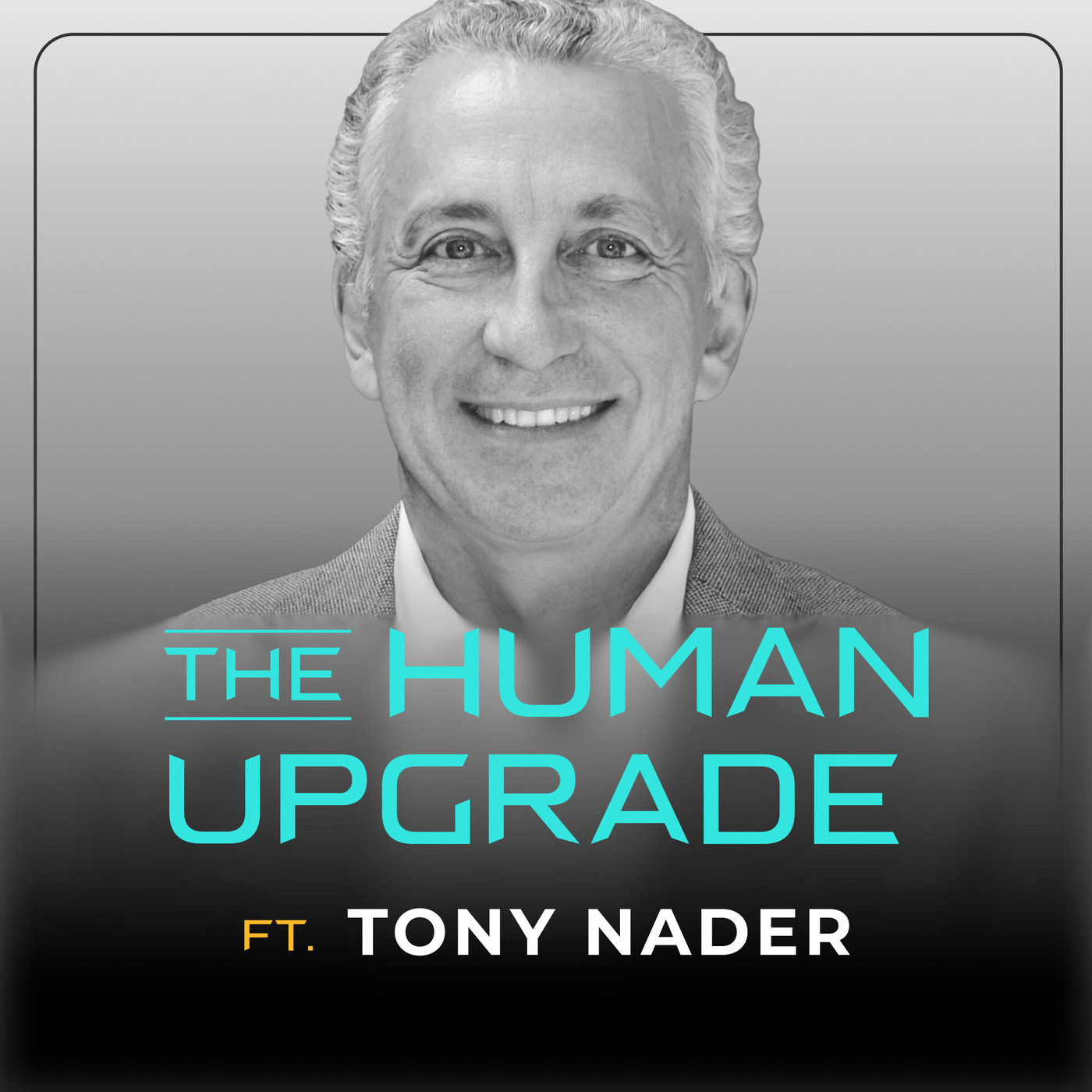
The Human Upgrade: Biohacking for Longevity & Performance
MIT Neuroscientist: The Ultimate Nootropic For Memory : 1326
01:03:58
Loading summary
Transcript54 lines
- [00:00]
A
If you're a founder or product creator in the biohacking and longevity space, listen up. Our industry will hit $100 billion in the next four years. Innovation is accelerating and someone is going to own your market. The question is, will it be you? That's why I created the Business of biohacking summit happening October 21st to 23rd in Austin. It is exclusive, it's interactive, we're talking hands on workshops, expert, expert led mastermind tables and real time pitching. You'll leave with an action plan because we want to see you succeed. If you're serious about scaling smarter, not harder and turning your mission into a movement the way I did, go to businessofbiohacking.com to apply to get in Now. Let's hack your business to billions. I want to teach you directly. I'll see you in Austin.
- [00:50]
B
When I talk about Transcendental Meditation, I know that there are hundreds and hundreds of scientific research studies that have been published in greatest journals that have demonstrated the importance of Transcendental Meditation. When you fully transcend, your actual default system is going into a very high alpha wave activity and that's how we get all the positive results. Better health, balance of the physiology, reduction of stress, clarity of thinking, and actually even the ability to focus even more. Tony Nader is a physician and neuroscientist trained at MIT and Harvard with expertise in neurology and the biology of aging. As the global leader of the Transcendental Meditation Organization, he has spent decades researching how consciousness impacts health and performance.
- [01:39]
A
It's very well studied. Do we have evidence that TM can increase brain volume of any structures that have maybe started to shrink because of toxins or trauma or other things like that?
- [01:51]
B
We have seen an increased blood flow to the prefrontal cortex.
- [01:55]
A
What's the minimum effective dose of TM per day to start seeing results? You're listening to the Human Upgrade with Dave Asprey. Hey guys, quick reminder. If you're listening to this on your favorite audio podcast app and you haven't been over to my YouTube channel, check it out. Just search for the Human Upgrade or find me under Dave Asprey bpr. I post full video versions of every episode and a bunch of other cool content outside the pod. It's a great way to go deeper into the content and connect with other biohackers like you. So leave a comment for me. Yeah, I'm actually going to read them and poke around while you're there. There is a lot of stuff specifically for you. It really helps and it means a lot to me, this is one of those episodes I've been looking forward to for a very long time. Because it's not that common that you get to sit down with someone who has the height of academic credibility in the West. We're talking about, oh, just mit, Neuroscience and postdoc at Harvard, little things like that. On top of this study of Eastern practices, Vedic knowledge, to the point where the leader of the Transcendental Meditation movement, which is a big movement with a very, I would say, respected history in the West. I've also been on this path of saying, how can I study different lineages and how do we apply it to neuroscience and to biochemistry and all these things? So this is going to be one of those things where this is going to be a fun interview and I'm excited to get going. So welcome to the show.
- [03:34]
B
Thank you, Dave. That's wonderful to be with you. Your work is amazing and it's a joy and has been also something I looked forward to have with your discussion on such a level.
- [03:47]
A
Oh, thank you. Okay. Meditation has become something like drinking water or exercising. Everyone says you should do it, but they don't really tell you the details. What's the difference between meditation and Transcendental Meditation?
- [04:03]
B
There are different kinds of meditation, whatever deals with the mind in general, like a technique from the mind level. Rather than, for example, eating, which is physical, not nutrition or exercise, which is physical activity. Something that is non tangible in terms of physicality, but which is real because we live our lives through our mind, through our experience, experiences, our joys, etc is through our consciousness, our mind. So whatever deals with this most abstract level of our reality, but which is most also real in terms of its importance in our life, is the mind and how you deal with the content of the mind, the thoughts with the content of the mind in terms of feelings, experiences are different ways and categories of meditation. Transcendental Meditation is a term that indicates we have to go beyond actually the thinking process. Which is very funny because how you would say you are dealing with the mind, which is a thinking organ, if you like, a thinking entity. And what do you mean by transcending? Transcending is to go beyond feelings, beyond mind, beyond thought, beyond any surface level of experience, and go to a level where consciousness awareness is free from any kind of vibration, perturbation, thought, memory, feeling, and experiences itself as a field of pure consciousness, pure being devoid of any thought. So there is a technique for that also, which is what we call Transcendental Meditation.
- [05:56]
A
Now there's no thinking because that's mind. But you also said beyond feeling, which is emotion. So what's left? If we're not thinking and we're not.
- [06:07]
B
Feeling emotions, we are experiencing still, you know, when we fall asleep, it's one kind of state of consciousness. And that state of consciousness, of sleep, there is no experience of anything. So we are. Our awareness is very limited. I say very limited. Because our body is still aware. You know, if you have a loud noise, the body will notice it and will wake up. Or if somebody pushes you or, you know, it gets cold, you. Even without waking, you cover yourself. This means there is a minimal level of awareness. So awareness is also something that is there at different levels. Different layers of awareness, different layers of consciousness. When we transcend, you experience what we call pure consciousness. Which is a state of being fully aware. Not like sleep at all. It's fully awake, fully aware. In fact, so sharp and so clear. That you experience awareness by itself. Pure being. That's why we call it pure consciousness, pure being. And that is what we call the transcendental state of consciousness. That which is beyond all activities of this ocean of mind or the ocean of being. And in fact, we can take this analogy. Which helps understanding or helps us to understand. That the mind is like an ocean. It's active on its surface. But as you go deeper and deeper in that ocean, it settles down, settles down and settles down. Until it is completely still. And that is where you transcend all those surface values.
- [07:56]
A
This is so fascinating because we're trying to use words which are of the mind. To explain a state that is not of the mind. And when people who've read my latest book may connect in this explanation. Where something happens in the world around you. And it might be something like a vibration or a sound. These are pretty easy senses. There's also the whole quantum reality that we're sitting in. That we don't see with our mind. But our body picks up in various ways that are provable in science. So if you have no emotional reactivity to that. And no thought about that. It's still there and you're still sensing it. Is that a good way of explaining this transcendental state?
- [08:42]
B
That's a very, very good way to do it. In fact, we say there is no feeling and no mind. But, of course, when you come out of it a little bit. You remember, you know, where you were there when you're in it. You're completely in an unbounded feeling of wholeness and totality. So there is a feeling, you know, and we can call that Feeling even bliss in terms of emotions, because you raised that point. It's a feeling of ecstasy, of epiphany, of, you know, moments where time stopped and everything became standstill. Time and space are no more there. And these experiences have been described by great saints and you know, people who have gone suddenly into that state. And that's a moment where you're beyond time. And to transcend, the term, to transcend is to go beyond, beyond everything, full transcendence. And so when I'm asked about mind and consciousness, there is a difference. And the mind is something that holds thoughts. The intellect is that which compares thoughts and analyzes situations, circumstances. And then there is the ego, the sense of self, which is when you know and you feel yourself, you're aware of yourself. So your consciousness is feeling its own existence. That is self awareness. When you are analyzing things and comparing thoughts and planning and discriminating. This is what we call intellect. When you are right, carrying thoughts, just experiencing them without judgment, without necessarily differentiating between one thought and the other. We call this the mind. And therefore here we are differentiating between the mind that carries thought, which is in the ocean of being, in the ocean of the mind, more on the surface level, and then consciousness itself, which is the platform that supports the sense of self, the ego, the intellectual, the mind and the senses. Because our senses project us outside. We see things, we experience things. And all of this is on the platform of consciousness.
- [11:07]
A
There's a part of the brain called the default mode network. And we used to believe that it was kind of on or off. And a study in Oxford came out 20 years ago or so that showed it's more like a slider switch. So you can be some on, some off. Is transcendental meditation something where you're either in it or out of it? Or is it kind of a you can be 3/4 in and 25% out?
- [11:33]
B
Yes, when you fully transcend, your actual default system is going into a very high alpha wave activity. And this we can also see in studying the electroencephalography of the brain. Yes, even the differences between different meditations. Because we started our thoughts and discussion about what is the difference between meditation as a whole and transcendental meditation. And here we see a difference that is important and fundamental even that we can discover and analyze through the electrical activity of the brain and also the coherence between different parts of the brain. So when you are concentrating, focusing, so this is one kind of so called meditation, you focus to train the mind as if to focus on things. When you focus on a thought, you focus on something intensely or even less like we are now focusing and discussing. What you find in the brain is a kind of waves which is called gamma wave. It's a higher frequency wave which comes into ranges of 20, up to 40 MHz, which means per second, fluctuations up and down per second. When you do mindfulness, which is what we call open monitoring, it's another kind of meditation which is now, of course, very popular. It's when you sit and you just observe your thoughts without judgment, or you observe your breathing, you observe what is happening, and you try to maintain that wakeful state, observing things without judgment, without being involved. And this is like a little bit of daydreaming. And what it does, it slows the brain down to a theta wave, kind of going to a very slow activity in the brain. And that is a very low frequency, which is the kind of frequency we encounter as we are falling asleep or we are daydreaming. But still you are awake when you transcend, which we call spontaneous self transcending, which means you are not trying to do it. And that is the difference in Transcendental meditation.
- [13:58]
A
It doesn't work if you try, right?
- [14:01]
B
Exactly, exactly. And so, because if you try, you go into the high wave, you know, you're starting to focus, you're forcing domain, and then you jump into the gamma and to the 20 Hz, 40 Hz kind of high frequency. When you come to the just sleeping and, you know, daydreaming, mindful kind of thing, which is. Has its own effect. Everyone has its own effect. Then you get into seta waves, which are really slow waves, you know, 4, 5, 6, 7, like very slow waves. When you transcend, and this is a technique of transcendental meditation, you actually enter into a state of alpha wave, and particularly alpha 1 wave, which is in the 8 to 10 Hertz hertz, not megahertz hertz per second, 8 to 10. And this is when you transcend through this technique, which actually uses a sound that has no meaning. It's not a sound that you hear, it's a mantra that you repeat. The mantra has no meaning for a good purpose. You know, if it had meaning, it would keep you on the surface because you'd be attached to its meaning or somehow try to analyze its meaning at a subtle level. So there is a sound which has no meaning and that you take and you learn how to use it. And the mind, guided by its own nature, which is to search for more. But instead of searching for more, usually as we do always search for more through our senses towards the outside. Now we are guiding the mind to look inside and find inner peace and harmony and satisfaction. And since the inside is the most fulfilling aspect of our reality, which is our pure consciousness. And there is a whole logic about that, about quantum mechanics, quantum field theory, unified field theory. I don't know to what extent we need to go into that, but I know you are an expert in that, Dave, also. So what we are going is actually to that unified field of being, which is pure consciousness. And since that is the source of all that is outside, then it gives immense fulfillment. And that's why the mind, guided by its nature to always want more, to dive within. So technique is natural. It doesn't require focusing, trying, concentrating. And it doesn't require analyzing, judging, or not judging or actually paying attention to anything specific. It allows the mind to settle down to its own self. And that is in this very special kind of the default mode network, being, in a way, very activated in a way, and the alpha waves with great coherence between different parts of the brain. And that's how we get all the positive results, all the effects on better health. Balance of the physiology, reduction of stress, clarity of thinking, and actually even the ability to focus even more. Because you are not buzzing inside, you are settling down. And it's like a sharp person who is very clear, as we sometimes experience in our life, moments where we are very settled, very clear, and then we are able to have great focus while maintaining broad comprehension.
- [17:44]
A
It's so beautiful to hear your description of this. One of the things that makes me really happy is when supplements kick pharmaceuticals ass. And I've got something for you. Is called C15 from a company called Fatty 15. And it's more effective than metformin or rapamycin. In fact, scientists are calling this newly discovered essential fat the longevity nutrient, because it's the first essential fat to be discovered in the last 90 years. C15 is unlike anything else out there because it's a true geroprotector, meaning it actually slows biological aging in studies. How does that work? By strengthening your cell membranes by 80%, activating AMPK and MTOR, which you've read about in my books. That means less inflammation and a reduction of oxidative stress by 45%. Scientists have found over 36 clinically relevant health benefits from fatty 15. Public estimates are that 1 in 3 people have low C15 levels in their bodies. And if you don't have enough C15, you have fragile cells and you age more quickly. Fatty 15 supports your cells better than omega 3s or fish oil, with three times more benefits for your cells. I use both. In clinical studies, 72% of fatty 15 users reported deeper sleep, better mood, healthier joints and better energy improvement in 16 weeks. It's a pretty incredible story and it's real. Better yet, they're giving you 15% off their 90 day subscription starter kit. Just go to fatty15.com Dave Alcohol hits your body hard, even though it's fun. And there's something you can do about it. It's called Zbiotics Pre Alcohol Probiotic. It's the world's first genetically engineered probiotic and that's a very good thing. PhD scientists invented it to tackle rough mornings after drinking. Here's how it works. When you drink, your gut converts alcohol into a toxic byproduct. Then it builds up. And it's that buildup, not just dehydration, that you can blame for rough days after drinking Zebiotics. Pre alcohol produces an enzyme that breaks that toxic byproduct apart so that it doesn't torture your cells. All you've got to do is remember to make pre alcohol your first drink of the night. And yes, drink responsibly. Remember, alcohol is not good for you, but you're probably going to drink it. You might as well not take the hits and then you'll feel better tomorrow. I don't drink alcohol very often, but when I do I have Zbiotics Pre alcohol before. In fact I put it out at parties. If someone brings tequila that way I know I'm going to wake up the next morning feeling good and so will my guests. This is even more important the summer when people tend to drink more and you sweat more. So use Zebiotics Pre alcohol and you will feel the difference. Go to zebiotics.com Dave that's Zedbiotics if you're not from the US and you can learn more and they'll give you 15% off your first order with code. Dave Zebiotics will give you 100% money back guarantee. So if you are unsatisfied for any reason, they'll give you your money back. My book Heavily Meditated that just came out hit that number one best selling meditation and philosophy book book on Amazon which which surprised me on philosophy but it was based on 10 plus years of looking at brain waves of high performing people meditating. And when you talk about this increase in the power and orderliness of this alpha brain state in combination with the gamma brain state which was first discovered in advanced Zen meditators years ago. I know that, you know that, but our. Our audience may not. And what I have noticed in this population is that when they have a transcendent experience, and some people say, I met a dead relative or an ascended master appeared to me, and people have profound spiritual experiences, and that is the hallmark. And there's a couple other markers in the electricity in the brain where I know that if I see that on someone's brains, that they're going to come out of their session, profoundly change, tears in their eyes, saying something, something transcendent and spiritual and divine happened. And the fact that we can measure brain waves, and we know if you do this to the brain, this happens, it takes it out of the realm of, you know, sitting at a monastery somewhere on the planet and living in a cave and all the things we've done saying, no, this is hard, hard science. Now, you've been studying this and talking about it for a very long time. And you and I both know 15, 20 years ago, I used to put meditation in my LinkedIn profile, and people would think I was crazy. So how did you academically overcome this bias in the west towards meditation being anti science?
- [22:34]
B
It came through science, actually, because science as a method is perfect. It's really great. Science as a dogma is something else. But science as a method of investigation is great. It takes controls, it measures. This is very important. It measures things. And measuring is a very important aspect of scientific validation of whatever you are trying to do. And so it wasn't always easy to measure changes in the past, but now we have such high technologies that are important, that can detect small molecules in the blood and small changes that can detect and analyze electrical activities in the body, in the brain, in a way that is more sophisticated, can localize things, can compare brain waves from different areas of the brain and see how they are either coherent or incoherent. And then added to that, the actual experience of the people, which, you know, used to be thought, okay, this is subjective, so why we can't rely on it. But if all the people tell you that they feel happier, you know they feel happier. If all the people tell you, I'm less stressed, I'm feeling better, I'm clearer, I make better decisions better. So subjectivity also is having its important value. So when you compare the subjective experience, which, by the way, is the most important aspect for our life, in a sense, you know, we live our life through how we experience it, you know, what does it matter if you are the wealthiest person in the world. But you are miserable on a subjective level. So objectively, you should be great. But subjectively, you're not feeling so good, Then what does it matter to you? What you want is to feel great, to be great, and to do things in a great way. So comparing subjective experiences with objective findings, through electroencephalography, through changes in biochemistry of the blood, through improved behavior, better relationship with other less crime, feeling more fulfillment in life, feeling that we are growing, we are expanding. And all of this together with biochemistry and longevity and rejuvenation of the body, reduction in biological age. So less age in the body compared to the chronological age, which means you are 50, but your body's working as if it's 40 years old. All of this convinces scientists. And I can tell you I've lived through this crazy label that we're given to people who practiced these techniques before. But as you started the show so beautifully or the discussion so beautifully, you said, you know, now everybody wants something because it has value and it has been proven. So when something is proven, science and true scientists are always there to say, well, it has value so we can use it.
- [25:50]
A
The fact you said true scientists makes me happy. When I started in the longevity movement 25 years ago, I realized there's two kinds of science. There's science with a capital S, which is a form of dogmatic religion, where they're saying, this must be true, therefore anything that doesn't agree with it must be crushed. And then there's small S science, which is the discipline that we're talking about saying, let's be curious, and anything that doesn't match our picture that's most interesting, why do you think science has been so hidebound and so restrictive and so opposed to exploring consciousness?
- [26:27]
B
I think, to be candid and honest, it's also because of the different systems of subjective knowledge that have also proposed ideas that were not found to be correct. Also, you know, there is an idea at the time, not now, of course, There was an idea that the cloud rains because somebody's sitting in the cloud and shaking that thing. And then water, you know. Yeah. People didn't know how the world worked in the past. They just imagined things. And so they created all these fantastic imaginary things. And then somebody finds that, well, this doesn't work like that. There is a law, there is a system that manages these things in an automatic way. There is laws of nature, there are laws of life, There is action and reaction, and therefore evolved a system of how do I know what is better, what is not? And so what this led to is the discarding of all that is subjective, all that comes from imagination or belief, and all of that. And the scientists run away completely from all the fields of the mind and consciousness and spirituality and all of that, because they felt it's a bunch of things which we, you know, when we analyze them, we don't understand the supernatural events and all of that. And so that is how scientists got away from this field. But they got so much away that they became dogmatic themselves. And they started to believe in some things that actually later science itself contradicted. There are so many things, even in medicine, and different understanding of how the universe works and how things are that were thought to be absolutely true, but that were discarded and found to be untrue by science itself. So what we need is enough modesty, but also enough candid, enough truthfulness, as you say, not to reject something that has not yet been fully elucidated or understood. And now the question comes between mind and body. What is mind? What is body? Relationship between consciousness and physicality and materiality. And there are more and more scientists, and even during the whole wave from hundred years ago until now of quantum mechanics and unified field theories, etc. A great wave of scientists that say that the universe is more like a great thought than a material energetic thing. And so, even using the scientific method today we have a great revelation of the power of consciousness, the power of the mind, the ability to make things happen. And this doesn't have to be supernatural. It's only when we don't know the laws that we call it supernatural. You know, if you see a plane flying now, you know, it's normal, it's natural. Why? Because, you know, it uses laws of nature, including speed and airflow and gravitational forces and powers to lift because the plane has such wings and it does that. But if you were to say this to somebody 300 years ago, much less even they would think you are crazy. This is supernatural. It's impossible to raise, you know, hundred tons and make them go from one place in the air to another place, or to just take a little machine, put it in your hand and speak to your friend who is 10,000 miles away and even see them and talk to them. This is unimaginable and this is magical and this is supernatural. But it's not. It's not. It is natural. Why it is seen as something supernatural is because of the ignorance of the laws that manage this universe. So the more we know the laws and understand that there are laws that manage the Mind that manage consciousness. And actually ultimately that consciousness is so fundamental that we can act from different levels of consciousness and therefore can produce things and do things that can appear to have been miraculous or supernatural in the past.
- [31:28]
A
What's something that most people believe is supernatural today that is actually scientific?
- [31:34]
B
If I want to take it to an extreme, I would think like people communicating without even talking has been considered supernatural. And it is not. It's just how clear is your mind and how much you're able to detect the feeling of the other, the thoughts of the other. And we all know, but people ignore that, that when you know somebody, you're well connected to somebody, you often have the same thoughts. Yeah, you often, when you have a thought, they'll pick it up and they'll say, you are like this, you're feeling like this. Or they share a thought. We know that a mother who is far from her child, if the child has something, she feels it when she's connected with herself and with her child. So this is considered esoteric and supernatural today. But I feel it is very natural because the way we can explain it is the mind again is like this ocean, just for the analogy. And if you are on the surface of the mind and it is an ocean that is agitated, you can take a big rock and throw it in that ocean and you will not see anything because of the agitation. If you have a settled pond and you even touch it, barely touch it, you can see the ripple and you can experience the ripple, the ripple. So if our mind is agitated, we can't see things. So if you want to do a study and take people who minds are agitated and say, what do you feel? They will not feel anything. So you can't conclude that you can't feel these things. But if your mind is settled in consciousness and awareness, go deeper and deeper into the self and experience pure consciousness, then you have that sense of intuition, that sense of connectedness. And you can feel more things around. You can feel others. You can feel the effects of their thinking, their fears, their, you know, their anxieties and all of that. And so this is not supernatural. It's that the feeling level, there are at different levels. So there are different layers of life. One is the gross level. You can see, you can hear. One is on a more subtle level and more subtle and more subtle level until the most subtle level where you can actually sense and detect other things. And you know, people who have great intuitions, even about business, about decision making, we say they are lucky. We say they, you know, made the Right decisions. Some people have just that clarity where they know what to do and how to feel and what to make as a decision. And that is because that level of the reality is more settled and it's not just chaotic and haphazardous.
- [34:41]
A
Intuition is definitely trainable. And my experience working with clients has been that it's hard to train intuition if you haven't conquered the state of TM or the ability to raise your alpha waves to a certain extent. And it's not just any alpha. They have to be coherent and in the right range. Like there's a lot of details in there, but once you get the clarity of that, intuition just settles in. And one of the things that has used to drive me crazy, I was a network engineer, so I understand how to transmit data over wires and fiber optics and all that. And I heard about smoke signals. This is how the Indians in the, in North America, they would use these to communicate. And I'm thinking, you can't communicate with puffs of smoke. That's the dumbest thing I ever heard of. There's no data in there. And then recently I came across, you know, some esoteric writings. And the only reason they had smoke signals was when the, the guys from the next valley over would do a smoke signal, all they were saying was, stop what you're doing and tune into the field so that you can receive the data that we are sending from our mind or from, from our consciousness. So it was a, pay attention signal, not carrying the data. The data was the things that you and I are talking about. Oh, you just know what they're thinking. Do we have scientific evidence now that we can actually know what our close friends or family are thinking? Has someone measured this?
- [36:10]
B
I don't think there has been a systematic study on that. You know, there have been systematic studies on some, you know, ideas about esp, extrasensory perception and all that, but the laborator set up and the people that were studied were not proficient enough to produce results that are reliable. So I would say there is not enough study. And maybe the conditions of the studies that have been done before were not good enough to actually prove or disprove in fact, this reality. And it's something that we experience in life very often and, and it can be discussed and thought of by scientists who are skeptical that this is a chance occurrence. And I would feel that it's necessary to actually start doing this research. But it has to be done, as you said, on the settled level of consciousness, on the settled level of awareness. And so people have to transcend and be settled and be natural and innocent. There are these important points because when you're attached to get a result, when you're attached to have a solution or to be able to prove something, you immediately jump on a more excited level of the thought process. It has to be truly completely innocent, not attached and just on the feeling level. And it comes this way.
- [37:46]
A
The closest research I've seen that looked valid was from Dean Radin and the Institute for Noetic Sciences. He's published a book on this. I've talked with him on the show. And people who have a regular meditation practice, including tm, have the ability to do these things like know what another person in their, in their world is thinking in a statistically significant way. But people who don't have a meditation practice have no evidence whatsoever they, that they can do this, which it's okay, we're touching on this from all these different scientific things. But then we switch from double blind trials to the other kind of evidence, which is direct experience or what we call clinical evidence. You know, if a doctor sees that this works, that's really important scientific evidence, even though it's not blinded. And one of my closest friends in the world has been through my neuroscience thing. 40 years is end five times. And if something's not right in my life, she will pick up the phone and call me. It doesn't matter where I am on the planet, she just knows. And same with, with and this is, you know, a soul friend. And in fact I have several friends like that now. And I look at that as just normal in the world that I live in. And I would have rejected that as being possible in my 20s. I would say this is stupid, I'm deceiving myself. And even my grandparents would have taught me that. My grandfather was a preeminent chemist who wrote for Encyclopedia Britannica, discovered some processes we still use today and just absolute atheist his whole life. Yet his biggest breakthroughs came in dreams. And he would wake up and just know how to do it. So there's even there some kind of mystical thing happening. What is the role of, of dreaming versus transcendental meditation and altered states work?
- [39:37]
B
Dreaming is processing information or you know, cleaning up the system. So it's a different state of consciousness where we can actually act upon things that normally during the day we cannot act upon because they are prohibited or inhibited. So there is that side of it. There is the side of cleaning up the system also and releasing some stresses. And there is the side where we analyze things that we are really interested in. And, you know, we get this experience. I personally have this a lot when if I have a problem or I want to solve a solution to a complicated situation, as I did, you know, when I was writing the book about mind and body, the book that is called Consciousness is all there Is, which actually is a New York Times best stellar. And it talks about how consciousness is primary and how we can connect on that. I had many questions that came to mind that were difficult to resolve. And I would just take the thought on a quiet level of the mind, and then I wake up in the morning and I have the solution. So in the night, we process things. If we are really desiring something from a subtle level of being, rather than, again, on an activated, attachment, excited level, but on a subtle level of simple desire to find something, solutions can come. And many scientists will tell you that in their quiet moments, they get a revelation, they get an understanding. This is what's called the aha experience that they talk about. So it can happen during dreaming, and it can happen during this moment of lucidity and clarity of the mind that comes from transcending.
- [41:33]
A
On this show. I've had a couple interviews around biocentrism, this idea that consciousness creates the world around us, that all of reality comes from inside of us, versus the other way around. Are you on that side of the theory of reality or somewhere else?
- [41:54]
B
I am partially on that side. Depending on your state of consciousness, you see different things. So consciousness is very important. And I describe in my book the three factors that influence any experience. There is the knower, that is the known, the object that we observe. And there is the process of knowing, which is that which connects the knower to the known. So every time we have an experience, it's not devoid totally of outside input. And it's not, of course, at all devoid from our filtering of the things based on who we are. So if you have a white paper and you wear yellow glasses, then the paper will appear yellow. But if it's red or if it's something else, that will be, you know, a mixed color. So the object itself has its own input, but the way the nervous system sees it is based on the nervous system state of consciousness. So what we say then is knowledge is different in different states of consciousness. So indeed, your personal experience of what is happening during that moment depends on you, depends on the object, and also depends on how you are connected to the object. So if the lighting, for example, the paper might be white, but the lighting might be red, and you're wearing yellow glasses. So you're going to get a different experience than somebody who has no glasses and where the light is white, so. Or whatever. Or red or whatever. So the outcome of the individual experience has these three components in them that are very important, and that's something we forget. So this biocentrism goes a little bit too far in the sense of, you know, you recreate the entire universe based on who you are, which is partially true. You know, we can't say it's not true. But there is also a universe in which you live with other conscious beings, individuals, or even, I would say, objects that are all vibrations of consciousness that are interacting with each other. And the way they interact with each other creates a novel experience which we call my experience. But when the cat is looking at me, the cat has its own experience. Obviously, it doesn't see me as I imagine it should, and I don't see the cat as it imagines I should, because I see things through my point of view, through my consciousness, through my nervous system. And it sees things from its consciousness, its nervous system, system, its point of view. We are both consciousness and conscious, but based on our quality of consciousness and how we're connected together, we have different experiences.
- [45:17]
A
There are those who would say that the cat is just a quantum fluctuation and that we only see it as a cat because our bodies are. Are making it look like a cat, like it's an icon for a cat. That's really just a bunch of quantum mush. And it seems pretty radical to go that way because you could say the cat does have consciousness. I don't know the answer to that, but I. I find myself drifting more towards biocentrism as I go deeper into things and understanding that I perceive my glasses as being yellow. And also that if I look at them really closely, there's nothing there because they're empty space. And, man, it's confusing. But the less I think about it, the easier it is. So maybe I need to do more.
- [46:04]
B
I really hope you will read my book.
- [46:06]
A
Oh, absolutely.
- [46:07]
B
All there is, really, because it really addresses these questions. These are some of the questions that I mentioned when I fall asleep and how to solve this problem and I wake up with solutions, or even thinking about them intellectually and analyzing them from common sense perspective and how to come to solutions. In fact, biocentrism, if we look at it like this, is very close to what I'm proposing, which is that consciousness is all there is, in fact. So there is one field which is a field of consciousness that has within it all possible imaginary things that it can imagine. How is that? See, we as humans, we have consciousness. The wider is our consciousness, the more things we can imagine. You can imagine things that don't exist. You imagine a unicorn, you imagine a goddess and a God, and you imagine, you know, entities. You can create movies that are absolutely fantastic. And beyond this world and universes and all of that. So our imagination is quite fertile. And the more we are or have broad consciousness, the more we can imagine things. Now think of a consciousness that is all there is, which is a unified field of one absolute, unlimited, unbounded field of being, which is pure being, pure consciousness. And now you say, well, what is its potential for imagination? It's much, much bigger even than our human imagination. And therefore it has within it all possible things that exist or could ever exist. All possible situations that exist or could ever exist. But they are all virtual in the sense that they are not manifest. They are just imagination in the same way as an author imagines characters before the characters become reality in a book or in a movie. So the imagination is infinite and fertile, and we are all already in that imagination because it's infinite imagination. So it must imagine every possible thing and its content contrary. Now, why does this infinite consciousness ever manifest as individual states of consciousness or individual beings? The reason is that its nature is to be conscious. It is its nature and it is consciousness of all these possibilities from an unbounded, unlimited perspective. It doesn't know what it is like to be conscious from a limited perspective, which means to be conscious like Tony or Dave or, you know, Miriam or whoever, whatever. And that is the reason why there is this emergence of individual consciousness, which, in fact, when we go back to our example of the cat and the human being, and I'm looking at it, the cat is consciousness. It's pure consciousness. It's an energy of consciousness appearing to me as a cat and me looking at it from my perspective as a human being. But I am also a bundle of consciousness looking at another bundle of consciousness and seeing it from whatever I can see. Because if my eyes were able to see longer frequencies than ultraviolet or to the other side, actually infrared we can see between red and violet. But suppose we can see infrared and even lower frequencies or higher frequencies or X ray and all of that, we could see something else. The universe will look completely different. It's only our eyes limit us to this particular perspective on reality. Now, if it wasn't a cat, I know the cat is consciousness, but it's that aspect of consciousness that limited aspect of consciousness. I am consciousness completely. That's all. I appear to myself also as a body and physicality, but I am consciousness, and I cannot see more than that. But still, I am one aspect of consciousness. The cat is another aspect of consciousness. Right when I come together with the cat, even though we are both consciousness, we see each other on the surface level as different entities than pure consciousness. Now, when we reach higher state of consciousness, that's why when we teach Transcendental meditation, we talk about higher states of consciousness, where we go beyond the sleep, dream and waking state to what we call transcendental consciousness, which is the state where we experience pure being, but even beyond that, to what we call cosmic consciousness, where an individual established in the self knows themselves to be pure consciousness. So they discovered the reality for themselves, but they haven't yet discovered it for all objects in their environment. So that's why it's only one level of consciousness. Now, when you reach higher and higher states of consciousness, you come ultimately to what we call unity consciousness. Unity consciousness is when you know that the cat, the tree, the stone, the other people, they are all that same field of consciousness, pure being appearing, manifesting as one aspect or the other. And you are seeing that aspect or the other, but you know within you that they are the unified field, that they are pure consciousness. And this is where we can, you know, rejoin biocentrism in a sense, but with a little bit of refined kind of additional detail. And that is, although it is the same SAP, we can take an analogy of a SAP and a tree. The SAP is the same, yet it appears as a flower. When it gets transformed, it's the same SAP. It appears as a flower, it's the same SAP. But now it modifies itself, appears as a leaf, it appears as a branch. It appears as, you know, a trunk or whatever, but it's the same SAP. So even science has discovered that the ultimate reality, even on the objective level, is a field, which is unified field. I mean, there are theories about that, and scientists discuss it. But all scientists look towards a unified field that actually manifests as the different forces of nature, the different, you know, particles, et cetera, that when they come together, they create the various universe, whereas within them, the inside of them, the essence of them, is that one field which we call. Which we are calling the field of consciousness.
- [53:47]
A
The fact that our bodies are designed to not really perceive this without a lot of work makes this so. It sounds esoteric. I have experienced in my own life and with lots of clients as you have with millions of people who do tm, that there is a set of instructions, there is a pathway for us to learn to perceive these things. It's just a long path. So talk to me about psychedelics and tm. Are they going to help?
- [54:16]
B
The way they will help is to let us know that there is some different kind of experience that's possible. However, as we know, they become addictive and they distort the system over long term. And therefore, if we can do it in a more holistic, nourishing way where we maintain our integrity of the physiology and our ability to act in society in a holistic way to support the growth and development and evolution of life, then that's the way to go. Otherwise, to get an experience just for a short time can be fine. Relaxing or you know, giving, opening up the awareness, which is wonderful. We have to be very careful about its long term effects and therefore I personally don't encourage people to follow that.
- [55:13]
A
I don't have a problem with using psychedelics to show you the door so that you can then learn how to go to the door without the psychedelics. And I actually feel empathy. There's a few people out there. I've done ayahuasca 87 times and I'm like, man, when are you going to notice it's not working right? And so there is risk from reliance on it. And then where I've ended up there are some things like ketamine, which is now an optional part of, of my 40 years of Zen neuroscience program. The doses are so low that you're not going through the door, but they're making neuroplasticity easier so that you can learn these states in the brain is more like, more pliable for you to go there. Any thoughts on low dose microdosing or any other ways of enhancing the brain's ability to change itself?
- [56:13]
B
I feel we should have more scientific research to be able to make an answer, to give an answer to that. And it's very necessary because what are the side effects over long term? How much does it help? We don't know. And so, you know, there are foods that are very important. So we have learned about foods that they are, some of them are necessary, some of them change our behavior and feeling also and experience. And so all of these natural things that happen and some of them have been chemically studied and the active ingredients have been extracted. And so are we targeting something that has a temporary effect or long term effect? So if I was to answer this, I would feel I would be working in A way that is more like on a dogmatic level, which means, oh, it's my opinion, I expect that. And it's not fair to give an answer that is not scientifically supported. So, you know, when I talk about Transcendental Meditation, I know that there are hundreds and hundreds of scientific research studies that have been published in the greatest journals that have demonstrated the importance of Transcendental Meditation, the importance of its effect on mind, body, behavior over a long period of time, health, wholeness and wellness. And so that I can talk about.
- [57:50]
A
It's very well studied. Do we have evidence that TM can increase brain volume of any structures that have maybe started to shrink because of toxins or trauma or other things like that are actually growing the brain from tm?
- [58:06]
B
There are studies that have been studied on, you know, the effects of meditation on. On the hippocampus, on memory aspects, on even the amygdala actually, not. Not growing, but actually being more under control, which is the place where we have, you know, anxieties and fight and flight response and all of that. And what we have seen also is an increased blood flow to the prefrontal cortex. And therefore all of these values are nourished and nurtured by Transcendental Meditation as compared to the part that deal with stress and strain, that actually make us react in an aggressive or violent way. And so they are more settled. And yet there is clear perspective and clear perception that allows us to make the right choices. It's not that we become lethargic or uninterested. To the contrary, interest and strength increases while there is clarity and peace and harmony within.
- [59:17]
A
Have you seen effects on the caudate nucleus, the part of the brain that's dopamine centric?
- [59:22]
B
I don't think it was studied really directly, but the effects of, you know, dopamine, which is to increase desire to do things, to increase the ability to perform, the desire to be more towards pleasure looking and all of that. The effects of it is seen in people with greater, you know, more regular practice of Transcendental Meditation. So you can see artists and actors and producers and directors of movies. They have greater imagination, greater clarity, they find solutions and they are motivated. So the motivation part, which is connected to dopamine, really increases and is very beautifully expressed. So we can imagine that it has such an effect. But whether it's been studied directly, I'm not aware.
- [60:20]
A
I haven't seen neuroimaging studies of volume. But certainly the behaviors associated with that healthy part of the brain, they do increase ADHD and OCD can get better from tm.
- [60:31]
B
Exactly.
- [60:32]
A
Can you summarize what you see in terms of memory, focus and reaction time? When people start doing tm, reaction time.
- [60:40]
B
Increases, which is very interesting, because when you wake up from sleep, for example, which is a different state of consciousness, and when you are rested, it takes you a while to be able to react quickly to things. And there are tests that are done that are very standardized. You know, when you see this on the screen, you press this button. When you see that, you press that button. And they calculate the time it takes for you to press the button. So they see if it takes you a longer time than your. Your reaction time is slow or et cetera, as we know. And when people practice Transcendental Meditation, as soon as they come out with meditation, they are very settled and they look fresh and, you know, like, oh, awake. But the reaction time is absolutely superb and very, very fast. And so that is really increasing. At one point, you know, the Swedish army, the pilots, they introduced Transcendental Meditation because they have found this, what we call broad comprehension, which is required for pilots to have what we call situational awareness. You know, you have to be aware of the surrounding, and yet you have to be focused and perform the right action very quickly. And so they found this very, very effective in people who practice Transcendental Meditation.
- [62:02]
A
Wow. Will TM make you biologically younger?
- [62:05]
B
Studies, again, have shown that for those who practice meditation for several months or years, they can have a biological age five to 10 years younger. And this is, you know, studying the parameters of biological age.
- [62:23]
A
What's the minimum effective dose of TM per day? To start seeing results, we have found.
- [62:29]
B
And suggest that 20 minutes in the morning, 20 minutes in the evening is the most effective timing for an adult, for children, because children can practice it even from the age of five or six, we give them lesser time. So from the age of 10 to the age of 18, 20, they'll practice one minute more every year. So when you're 12 years old, you do 12 minutes. When you are 15, you do 15 minutes.
- [62:57]
A
I've been working on ways to enhance meditation efficiency because I really don't want to spend 40 minutes a day meditating. In fact, I don't want to spend more than one minute a day meditating. If I could get all the results, I would do that, right? But I'm willing to do whatever is necessary. And I've noticed I can extend the amount of time I can meditate before I'm just blown out by about two and a half times with Supplements and with food and things like that, what do you do to prepare your biology for TM so you have the most powerful experience you can.
- [63:28]
B
You know, we have additional techniques to help, including what we call yoga asanas, which is positions and stretching the body properly, and pranayama, which is breathing exercises that help to clear up the surface tensions so that TM can focus on raising your consciousness rather than clearing up the tensions. Also, we advise, if people want, about diet, daily routine. This is based also on ancient knowledge of Ayurveda, which has different body types. So depending on your body type and the season and the qualities of the food that you eat, you can adjust this so you maintain a balanced physiology. And all of this helps so that when you sit to meditate, you don't have to take care of. So meditation doesn't have to take care of the surface values, and it gets you to dive deeper. But in any case, meditation makes you clean up the system also. But why spend the time cleaning up surface things that you can prevent, you know, by having the right diet, right nutrition, right daily routine, a little bit of breathing, exercise, et cetera. In terms of time, really, I have found that meditation gives me more time. It's an investment because when you meditate and you come out clear and able to perform things fast, as we have said, and effective, then you are saving time of wobbling around and being unsure and stressing and unstressing and anxiety and not feeling good and then trying all kinds of things to, you know, to get yourself going. Why not get the maximum and then go out and do things in a sharper way? When I was at medical school and I was meditating, there was a huge demand for studying and for taking care of patients and emergency room and all of that. And I found that it helped me really to be effective, to study well, to be clear and to be more productive. So the investment of the 20 minutes, for one thing, it's a pleasurable time. So it's not something you say, oh, my God, now I have to do this more. I should be good and I should do it. You don't say that. What? You say this. Oh, my God, it's the time for meditation. It's the best time of the day. And so therefore, it's an enjoyable activity that leads to effectiveness and great productivity during the day.
- [66:07]
A
I love that framing. You sound a little bit like Deepak Chopra, who's also been on the show. Yeah, I get to meditate versus I have to meditate. It's different than high intensity interval training or something and that's not that fun. Tony, I know that you are about to get on an airplane coming up here and I want to honor your time and thank you so much for your deep scientific curiosity, for your work in the world, for helping to study these very hard to study altered states from all the different lenses you do. So truly thank you for being on the show and for just being a light of curiosity around consciousness because the world needs more of that today.
- [66:48]
B
Thank you Dave. Thank you for your show. It is a light of consciousness. Your show is a wonderful exposure of possibilities and inspiration to so many. So thank you for having me.
- [67:00]
A
It's been an honor. And guys, go to drtonynader.com to learn more. It's easy to find things about Transcendental Meditation and we've got the guy who's done the most science and is leading this movement who's just taught you a bunch of stuff. So keep tuning into the show because there's a lot of stuff your body and your mind and your consciousness can do that you probably don't know about because you're not supposed to unless you talk to someone who is a master. And we just did. See you next time on the Human Upgrade Podcast.
- [67:37]
C
A Human Upgrade, formerly Bulletproof Radio, was created and is hosted by Dave Asprey. The information contained in this podcast is provided for informational purposes only and is not intended for the purposes of diagnosing, treating, curing, or preventing any disease. Before using any products referenced on the podcast, consult with your healthcare provider carefully read all labels, and heed all directions and cautions that accompany the products. Information found or received through the podcast should not be used in place of a consultation or advice from a healthcare provider. If you suspect you have a medical problem or should you have any healthcare questions, please promptly call or see your healthcare provider. This podcast, including Dave Asprey and the producers, disclaim responsibility for any possible adverse effects from the use of information contained herein. Opinions of guests are their own and this podcast does not endorse or accept responsibility for statements made by guests. This podcast does not make any representations or warranties about guest qualifications or credibility. This podcast may contain paid endorsements and advertisements for products or services. Individuals on this podcast may have a direct or indirect financial interest in products or services referred to herein. This podcast is owned by Bulletproof Media.