← The Human Upgrade: Biohacking for Longevity & Performance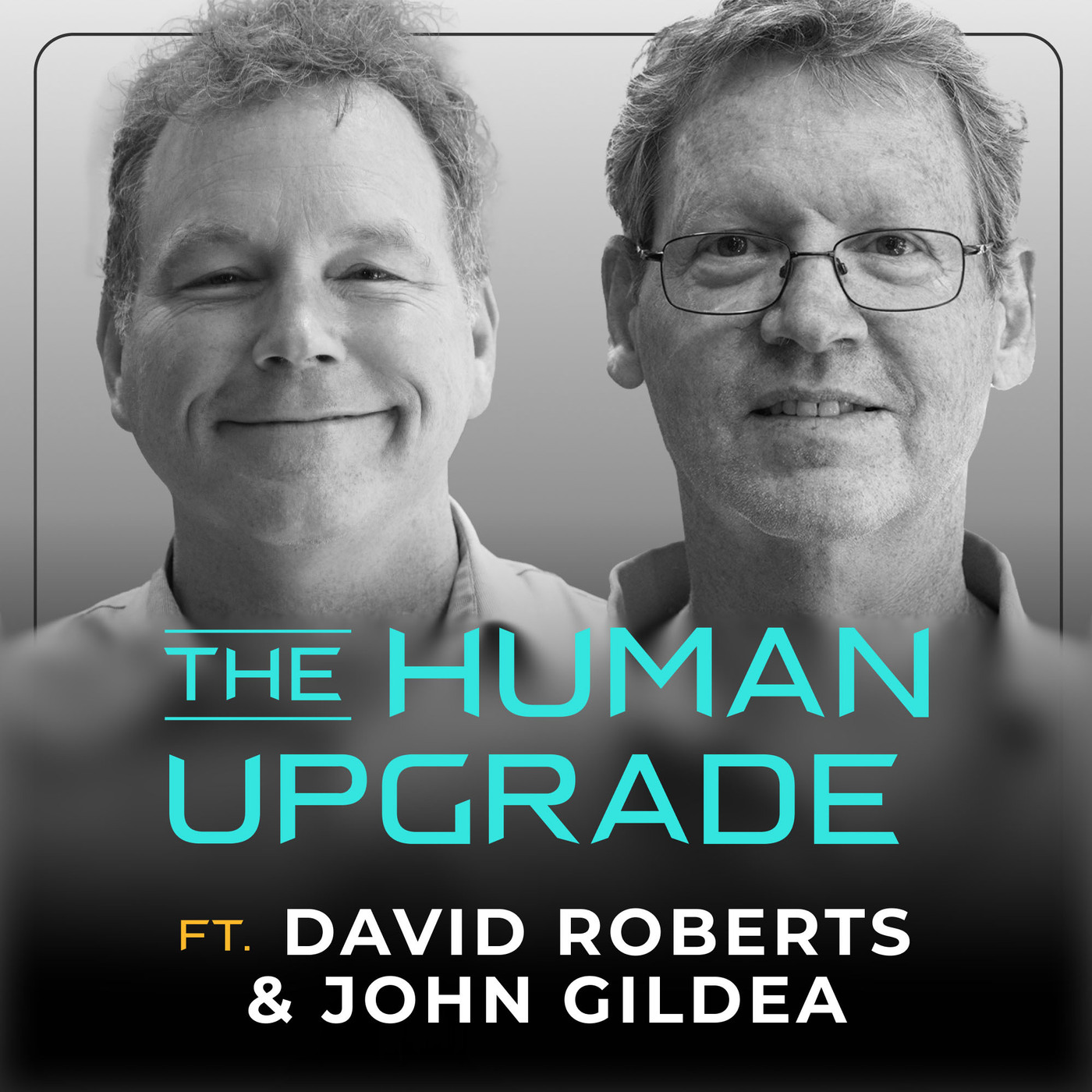
The Human Upgrade: Biohacking for Longevity & Performance
Sulforaphane, Curcumin, and NEW GLP-1 Drugs (Biohacking for Longevity) : 1323
01:02:41
Loading summary
Transcript337 lines
- [00:01]
A
If your light environment isn't dialed in, your biology isn't either. And if you're not using light as a performance tool, you're leaving results on the table every single day. The right light wavelengths unlock recovery energy and clarity in ways most people never tap into. EMR Tech's Krypton UV line puts that power in your hands. With red near infrared, uva and UVB all in one system, they have something for everyone. From the compact Krypton Micro and Mini to the modular 606 watt and 1612 watt. Each device lets you choose your wavelengths, your timers, and how deep you want to go with your setup. I personally use the Ultron. It's a beast. Full body coverage, built in timers, and high output light from premium components. Whether you're syncing your circadian rhythm or designing a pro level light environment, Emrtech lets you scale it your way with precise control. Go to emr-tek.com Dave and use code Dave for 40% off.
- [01:05]
B
On a per calorie basis. Broccoli is more expensive than red meat. I used to be a vegan, and then a raw vegan, and I would maybe eat two and a half pounds of broccoli in a day. And what I've since come to really believe is that most foods have some beneficial compounds. There's benefits and then there's a lot of toxins. And toxins are in plants. David Roberts and Dr. John Gildea are breaking new ground in cell science, revealing how overlooked foods like broccoli can unlock resilience and reverse damage.
- [01:35]
C
There are a lot of broccoli supplements, especially on Amazon, that say they have sulforaphane. But if you actually ask for their certificate of analysis, it's not sulforaphane, it's glucoraphane, the precursor.
- [01:44]
B
Purified sulforaphane is the only compound that activates all three of the detox pathways in your liver. What are the three? And why do people care? You're listening to the Human Upgrade with Dave Asprey. About a year ago, you guys came to the studio here in Austin and you schooled me on three different detox pathways. I always focus on two, but there's a third one, and you can do something for all three. And I've been doing it really reliably since then, and I think it's worked really well. So I thought it'd be helpful to have you come back on the show. You got a couple of Johns Hopkins guys who are really, really deep in biohacking biochemistry and pick your brains about what's changing, especially because we now have AI assisting the research you're doing. So you guys okay to go deep on some cool new stuff?
- [02:37]
C
For sure.
- [02:38]
B
Sounds great.
- [02:38]
C
Thanks for having us.
- [02:39]
B
Of course, everyone's heard that broccoli is good for you, and there's also a group of people who say no, it actually has some stuff in it you don't want. So what are the good parts of broccoli and what are the potential bad parts of broccoli?
- [02:51]
C
So, yeah, basically adult broccoli. There's a difference between adult broccoli. Sprouts, seeds. The adult broccoli actually has more molecules in it. I3c and dim. And you read papers or you. We always get the question, or often in our customer service, can, can your capsules cause hypothyroidism? The answer is no. With sprouts and seeds, that doesn't have the same issues as mature adult broccoli for that reason.
- [03:24]
B
So grown up broccoli, the stuff that everyone eats and that they think is healthy, has thyroid blockers in it. And it also can have some other various types of plant toxins. And there's thousands of plant toxins, some stronger than others.
- [03:38]
D
Right.
- [03:38]
B
So do you ever eat broccoli?
- [03:40]
E
We do eat broccoli. At least I do. And it's because of some of the known synergies. So adult broccoli doesn't have a whole lot, but it has DIM and I3C, these two compounds that tend to be associated with the thyroid issues. They're goitrigins. Arousin is another one. And it turned out to be somewhat of a farce because the only people that really stumble with that one are people that have low iodine. And so there were a number of studies afterwards that proved that if you had adequate iodine, sulforaphane itself actually helped thyroid diseases. So it was one of those bait and switch blame the whole complex when it was really just a couple of compounds.
- [04:31]
B
So the idea is, if you're gonna eat broccoli, make sure you have enough iodine.
- [04:35]
D
Right. Okay.
- [04:37]
B
Another thing that I've taught for a long time is if you're going to eat broccoli, you should eat something that has the enzyme to activate the good stuff that gets turned on by cooking. So when I ra that first grass fed restaurant in LA, no bad seed oils. This is more than 10 years ago, I opened it. Every single dish that had broccoli or cauliflower would have a slice of raw, usually watermelon radish. But any Kind of radish would do in order to unlock this because of myrceinase. Tell me about that.
- [05:08]
C
The cruciferous, the broccoli or the cauliflower needs that enzyme in order to convert, in broccoli's case, sulforaphane. And in cauliflower's case, a cousin molecule in cauliflower, it needs the enzyme in order to make it into the usable form, the good form. And so with broccoli, it's called glucoraphanin is the precursor. You take myrosinase, it cleaves a glucose, and you get sulforaphane. And so it's actually really smart to do that. In fact, we, because not everybody wants our capsules, we sell seeds on our site, but we also sell radish seeds. We sell broccoli seeds and radish seeds and say, you should buy both and grow both.
- [05:56]
B
For that reason, when you talk about capsules, you make broccolite, which is a purified sulforaphane, which is the only compound that activates all three of the detox pathways in your liver. What are the three? And why do people care?
- [06:10]
E
Yeah, so phase one, phase two, phase.
- [06:12]
B
Three makes it easy.
- [06:13]
E
Yeah. So they're, they're in these very easy to remember complexes, but as you, as you follow a toxin in your body, they make sense. In phase one, you have to first change this molecule into something that your body will recognize. So it's often adding a, oxidizing or, or changing it so that it, it's soluble and oftentimes soluble and then, say, soluble and water.
- [06:41]
D
Okay.
- [06:41]
B
So your body's going to take a toxin that you got from man or from nature. Right. Even a metabolic byproduct or something from your gut. Bacteria toxins come from everywhere. And the first thing is make it so you can mix it with water. That's phase one.
- [06:53]
D
Right.
- [06:53]
B
Okay. What's phase two?
- [06:54]
E
Phase two is conjugated to the shuttle system. So glutathione. Glutathione is the carrier for many of them. That's one that most people know about.
- [07:06]
B
And in the biohacking world, glutathione is something I, I introduced in the first year of the biohacking movement because it's such a powerful antitoxer. So that's what's going to stick to these toxins. So phase one made them sticky. Phase two provides something for them to stick to, which is glutathione.
- [07:20]
D
Yep. Okay.
- [07:21]
B
And what's phase three?
- [07:22]
E
So as you think about, how would you get rid of It. That's a tag. It's a. It's a handle that you then can grab and shuttle and move. And phase three is how you shuttle and move it out of the cell, move it into the extracellular space or lymphatics, and then get it out into feces or urine, get it out of your body.
- [07:43]
B
So this is when you're going through a forest to clear it, you put a big red X on the trees you want to cut down and take out of there.
- [07:49]
D
Okay.
- [07:49]
B
Or you hang a sign on the trash that says basura, which means trash. And yeah, you get it. You get it out. So somehow you flag it. That way the cell knows to remove it, and then the. You can pee it out or poop it out. And normally, people. You just take glutathione, right? You can. You can do that. I've been recommending it for years. In fact, I still think taking some glutathione is not a bad idea. But what you're doing is the only thing I've ever heard of, and this is in 20 years of doing this stuff that does all three of them in one compound. And it comes from broccoli seeds.
- [08:22]
D
Correct.
- [08:22]
B
How many pounds of broccoli seeds are in one capsule of broccoli?
- [08:26]
C
Well, we talk about in two and a half pounds of mature broccoli is the equivalent of one capsule.
- [08:32]
B
That's just one broccoli seed. Then. Because it grows into it, it can grow big.
- [08:36]
D
Yeah, yeah. So, yeah.
- [08:41]
C
And we also add the pluses. We add the good molecule from watercress, and it's called P EITC it has a phenethyl group on there. We read a paper. I showed that there's a, like a 5x synergy from just sulforaphane alone.
- [08:55]
D
Oh, wow. Do you amplify it?
- [08:57]
C
It's amplified. So it's.
- [08:59]
D
It.
- [08:59]
C
It activates nrf2 really well.
- [09:01]
B
Okay. And why would people care about nrf2?
- [09:05]
C
Well, nrf2 is at the center of phase two detox. Nrf2 is. Is really why you're taking sulforaphane. It's why there's a lot of research on it from Hopkins. But it activates also something called the antioxidant response element.
- [09:20]
D
And.
- [09:20]
C
And so when the sulforaphane goes into the nucleus of the cell, it basically turns on 200 different genes, basically, that turn on and produce 200 over 200 antioxidants, and they stand for 72 hours. So instead of, like, with vitamin C, you get one antioxidant and it neutralizes a pro oxidant. What happens is this system turns on, stays on, and just cleans up the antioxidants really well or the pro oxidants really well.
- [09:55]
B
NRF2 activation is tied to a lot of the longevity stuff that I've written about and just stuff in the field. So when I zoom out a level. I used to be a vegan and then a raw vegan and I would maybe eat two and a half pounds of broccoli in a day. And that was when I wasn't dating anyone because anyone who would eat you can't do it.
- [10:16]
D
Yeah.
- [10:16]
B
And what I've since come to really believe is that most foods have some beneficial compounds, except for kale. It's gross.
- [10:25]
D
I'm kidding.
- [10:26]
B
Even kale isn't beneficial stuff. So there's benefits and then there's a lot of toxins. And toxins are in plants. There are some in animals like scorpion venom and snake venom, but we don't normally eat those. So you don't see a lot of animal based toxins unless the meat is spoiled.
- [10:44]
D
Right.
- [10:44]
B
Or you've done something weird to it. But with plants you're like, okay, I got benefits. But the downside was meaningful and I think it's there with excessive doses of broccoli. If nothing else, just gastric distress, which increases a little bit of polysaccharides and decreases fertility. Not actual fertility. You just can't get a date because if you're someone who eats two pounds of broccoli, it's really not a good thing.
- [11:08]
E
Fertility.
- [11:09]
D
Yeah, exactly.
- [11:09]
B
It's room clearing. Infertility, we'll call it that way. So it's not reasonable to do that. And then there's all the other plants. So I ended up after a lot of soul searching and research and, you know, helping people lose millions of pounds is the plants that are worth eating are oregano, rosemary, thyme. The herbs that we originally traded on the spice trading routes are the most potent sources of good without as much of the bad. Compared to bulk vegetables, which frankly don't have enough energy to be worth eating. Unless we're in a kind of a famine situation. Like no one's like, oh my God, I'm starving, I just want broccoli. It's just not how it works. And my evidence for that is during hurricanes, if you go into the grocery stores, they've been picked clean, the vegan meat is still there because people like, I'd rather starve than eat that because, like, it doesn't matter. So what's left is, you want the good, you don't want the bad, and you can't eat enough of the bulk plants to get good out of them anyway. It's like, oh, look, watercress has this amazing power. Yeah, you don't know for that watercress, you're going to clog your kidneys before you get any of the good stuff. So it's our job in biohacking and something you guys do, you know, with Johns Hopkins level precision. But it's, let's get the good stuff and get the right dose that I could not get by eating right. And then let's make it easy to do. So I do four caps. I'm not saying this because of any commercial. I literally do 4 caps of broccoli, which is 10 pounds of broccoli, every day. Now, I know one of my buddies in the longevity field is like, oh, look, I'm cooking some broccoli every day and putting it in my mush. I used to do that maybe 10 plus years ago. I don't really do that anymore. If I need broccoli as a base for something, I'll eat some. But there's no point to it. There's not enough benefit compared to the work and even the cost. People are listening, going, well, I'm trying to economize. Everything's expensive now. You know what's really expensive? Broccoli. Yeah, because you like 50 calories of broccoli and they charge you 8 bucks for it or 6 bucks. Like, no, it's a terrible investment on a per calorie basis. Broccoli is more expensive than red meat. So what I would like to do is just say I got all the benefits. And that's why I've increasingly used extracts of plants to get the results I want for longevity and cognitive function and biohacking. And because my history includes major exposure to toxic mold and I had to detox from that and from heavy metals. My twenties, chronic fatigue syndrome and all. I actively manage my detoxing. I was just in Kenya and then Madagascar, literally two weeks ago.
- [13:53]
D
Okay.
- [13:53]
B
With my daughter. There's a lot of mold, especially in Madagascar. I couldn't find a room that was perfectly clean or even mostly clean. So I know I got mold exposure. Did I take extra broccolite actually and extra glutathione on top of that while I was traveling? Yeah, I did. And it totally worked. I didn't get sick from it, which is remarkable. So thank you for making it so I don't have to bring 50 pounds of broccoli through customs. You can do it. So I hope that helps people understand, like, why would you think about it this way?
- [14:24]
C
And we, I mean the origins of this were like, John's wife had cancer, my wife died from cancer. And so we made, I say we made broccoli sprouts for 10 families. So we juice them every day. Enough we used them for ourselves, but juiced them and, and it's just, it's a job. And so we, at the time we had one and three year old kids. And so it's just, you know, have we. And we did it. But having an option. So if you travel or if your crop spoils or gets moldy or whatever, you can, you know, fall back on it. And this one, we wanted to really activate NRF2, so that's why we threw in the, the watercress. But basically having folks have options to easily access the benefits.
- [15:12]
B
When I was really into the raw vegan thing, I would sprout broccoli and various other things. It turns out a lot of sprouts have things you don't want. Even broccoli sprouts.
- [15:22]
D
Right.
- [15:22]
B
They have isothiosin in them as well. But when you extract the good stuff, you have to worry about it. And what I found was even when I bought like the multi level sprouting trays with misters and all that crap, they mold. No matter what you do, it molds. And it's just.
- [15:39]
E
Among other things.
- [15:40]
D
Yeah.
- [15:41]
B
It's not sustainable to do it at home, even if you want to save money. I know some people are going to say, well, I live in a perfect environment with sunshine and I wear a sundress all day and cavort in the sun and I have no concerns in the world and I meditate over my sprouts with crystals. Fine, you're one in a million. Because it doesn't work even when you try to do it at home.
- [16:03]
F
You've probably heard that I've been taking Mitopure for years, ever since it first came out. It's one of the few supplements that actually moves the needle when you want your cells to work better and your mitochondria to perform best. Mitopure contains urolithin A, which is a clinically backed magic powder for your mitochondria. And it's backed by 10 years of research. But here's the fun part. It's now available in a gummy that actually tastes good. Yeah, a gummy that you want to eat. And it's not a sugar bomb. Pretending to be healthy, they're sugar free, they taste amazing and they deliver the same high dose bioavailable mito pure I've.
- [16:38]
B
Been using in their soft shells.
- [16:40]
F
And best of all, because I actually want to eat them, I take more and I feel better. So if you've been serious about your longevity stack or you just want an easier and better tasting way to get started, try the new Mitopure gummies. They're that good. Go to timeline.comdave and you get 20% off if you're over 30. Bad news. Your cartilage is breaking down. Cardiogenics HP supports cartilage regeneration so you can have joint flexibility and your joints don't hurt. Kalroy makes Cardiogenics and they lead with a ton of real science. I've trusted their products for years, including one called Arterosil HP you've heard me talking about in longevity, Cardiogenics has three published human trials backing it up. And two of them are randomized placebo controlled, the same thing big pharma uses. In the study, people who took cardiogenics HP saw a 67% average drop in pain scores, a 50% average increase in the distance they could walk and major improvement in cartilage regeneration biomarkers. And it all happens in just 90 days. So if someone ever told you that you can't rebuild cartilage, well, they were wrong. Go to kalroy.com Dave you'll find the real clinical research a great discount.
- [17:49]
B
And as always, they give you a.
- [17:50]
F
45 day money back guarantee. Kalroy.com Dave.
- [17:57]
B
So how did you manage to do this for 10 families? Did you like sit there and stare at them so the mold wouldn't come?
- [18:03]
C
Yeah, I got pretty good at telling which one's molded, so I just toss them and I could, I could just look at it and just kind of assess and then harvest it. It wasn't four tanks, it was enough, but we used them all ourselves, so we just used a ton.
- [18:18]
D
Got it.
- [18:18]
B
I used to use colloidal silver and grapefruit seed extract and I'd play with stuff in the water just so they wouldn't spoil. So now you've just got a process where you're doing it at scale and I don't have to worry about it. I literally just take a pill and it's the same thing, but better than what I did with all that work.
- [18:33]
C
And I will say it's expensive and the reason for that is it's really hard to make and there are a Lot of supplements, broccoli supplements specifically, especially on Amazon, that say they have sulforaphane. If you turn it around, they'll say sulforaphane on the ingredients list. But if you actually ask for their certificate of analysis, it's not sulforaphane, it's glucoraphan in the precursor, which doesn't work. It doesn't?
- [18:56]
D
Yeah.
- [18:56]
B
Which.
- [18:57]
C
Which may work if you have the.
- [18:58]
D
Right gut bacteria, but.
- [18:59]
C
But it's a crapshoot.
- [19:01]
B
So.
- [19:01]
E
Comment on something. I'm a slow thinker sometimes. So you're talking about iridition, California, where they made this dish. The beautiful part about that, that I think people don't realize is your source of myrosinase doesn't have esp. The reverse enzyme.
- [19:18]
D
Oh, what is that?
- [19:19]
B
Activates so my radishes don't have esp.
- [19:25]
E
Made you like, tell me more. So that your, your, your design for your experiment is. I think why I was sort of shocked into dumbfoundedness is that, is that. That is amazing that your source of the myrosinase that you're doing the conversion with actually doesn't have the reverse enzyme. So you're not doing the Rhonda, Patrick, do this at this temperature, do this at other temperatures and you're playing yin yang games. You're actually using the forward very process of enzyme. And I think no one probably knew it. They just came back a lot probably to that restaurant.
- [20:05]
B
You know, people did not know why they felt good with half the dishes. They also didn't know that I had electrically grounded all of the tables. We do have like a 20 foot spike or. Sorry. Yeah, 20 foot copper spike into the foundation underneath it. And then we had metal embedded on the edges of everything. So they're earthing while they eat. And the lighting was like. I just was like, I want you to know what biohacking really feels like. And I don't know why they're the way it all works, but it was carefully composed based on science. Yeah, that's super cool. And. And some of that carries forward into upgrade labs. My, my franchise, you know, it's designed a certain way when you come in and you feel good. And all the equipment works too.
- [20:40]
E
Yeah.
- [20:40]
B
So it's, it's a systems biology thing, which is where you guys are both experts in. And yeah, Rhonda's interesting where, you know, she got to be well known when she came on Joe Rogan's show. He was looking for an expert who would say mycotoxins didn't matter because he was Kind of trying to discredit the three times I've been on his show, but he was selling a competing product. So Rhonda came out, and I've invited her multiple times on the show to be like, let's talk about whatever you want to talk about, but let's maybe talk a little bit about mycotoxins, because when you tell people that they don't work, and I get it, there's a reason to tell Joe that mycotoxins are very important for what's happening with our fertility, for people who can't lose weight, even some of the GLP1 stuff that we're going to talk about. And if you want to detox mycotoxins, the vast majority of them need phase one, phase two, phase three. And so sulforaphane should be on the list for all the mold people right up there with glutathione and calcium D glucarate. And so sulforaphane is one where I knew it was important, but I didn't know how important it was until you guys taught me. And I've noticed a difference from taking it.
- [21:39]
C
So. And speaking of microtoxins, the whole glyphosate issue, that's sort of one of the big microtoxins, right?
- [21:46]
D
Yeah.
- [21:46]
B
Well, there's microtoxin, there's mycotoxin, there's, like, the mold side. And then what's confusing is mold toxins, microtoxins are also microtoxins.
- [21:55]
C
You're saying myco.
- [21:56]
B
I was saying myco.
- [21:57]
D
Yeah.
- [21:58]
C
Misunderstood.
- [21:58]
D
Got it.
- [21:59]
B
Yeah, I figured as much. And also for some of our listeners, mycotoxins just means toxins from mold. And penicillin would be a mold toxin. You know, it messes up all your gut bacteria, but it's useful. And then there's things like zearalenone. This is a thousand times more estrogenic than human estrogen. And in the ranching industry, we give it to cows so they'll get fat on 30% less calories. And so if this drug exists and there's a market for, you know, $100 million market or something for it, I'm pretty sure that guys like that Lane guy and others are like, it's all about the calories. I'm like, dude, if it's about the calories, this drug cannot exist. And it does. So this is why it's so important. I had exposure to that. So for me and for most people who in moldy schools, moldy workplaces, moldy homes, you need to be up regulating detox so that you can either heal or just not get sick in the first place. Which is why I think glutathione and broccoli just go together for mold people as something that I did not quite understand that phase one. So I appreciate that you guys shared it. But now glyphosate, a microtoxin, said they're at low levels. What happens with glyphosate and these three phases of detox.
- [23:11]
C
So the thing we've looked into specifically with glyphosate, and you know what with our physiology, is tight junctions. So the gut barrier, glyphosate opens it, and so it can cause leaky gut and intestinal permeability. So, and then also with gap junctions. So the communication network, cell to cell, which is how, like, if you get a cut, how do you. Like, how does your skin know to heal that cut?
- [23:41]
D
It.
- [23:42]
C
There's a communication. If you think about it, it's kind of cool. Communicates and. And then it heals. That's the. The communication network, the gap junctions. Well, glyphosate screws up tight junctions. Screws up gap junctions. And so. And so John created some series of experiments to show how the sulforaphane can be protective on glyphosates. Interruption of gap, tight junctions and gap junctions.
- [24:10]
B
That's incredible, because so much of aging and so much of just brain fog and just feeling like crap and being emotionally reactive, it's because something opens up the tight gaps in the lining of your gut. And zonulin or gluten are two common things that we hear of. Zonulins from gluten or from other grains. And corn has something called zine, so these are things that just poke holes in it. And if you have toxins called lipopolysaccharides, but basically bad gut bacteria toxins, we all have some of those that are normal, but the gut's supposed to stay sealed so that they can't come through. So then you get glyphosate, which is on all American wheat, and in fact, it's even in, like, American wine. You've soaked our soil in it in beer. Oh, and beer. It's everywhere. So if you're getting a dose of that and you know you're getting it, but enough to open that gap, then you wouldn't have had brain fog, you wouldn't have had inflammation, but now you do. So if sulforaphane is sealing that so that now these toxins can get through, that's a massive shift.
- [25:15]
E
Yeah, there's there's whole review papers on the connection between NRF2 and Gap, Gap and, and tight junctions. So we have the best NRF2 inducer in Sulforaphane. And so it doesn't have problems with bio, bioavailability. It, it's getting to that site at a dose that tightens the tight junctions. And we were really surprised to find out that the gap junctions also repair. It's a pretty sophisticated experiment with the high end microscope where you load up one of the cells with a dye that can go through the gap junction. Glyphosate ruined that. So you load up this one dye and put it next to its neighboring cells and normally it spills into the neighboring cells. You add glyphosate, they don't. It just retracts this little communication network between cells and then when you add sulforaphane, it repairs the D junctions and the gap junction and those cells start acting like an organ again. And so we for the longest time thought, you know, if you, if you wanted to start a cascade of things that could lead to bad, get all your cells acting like individuals.
- [26:25]
D
Yeah.
- [26:25]
E
And instead of not agreeing.
- [26:28]
D
Wow.
- [26:28]
B
So the real reason I wanted to.
- [26:30]
D
Chat with you today is that.
- [26:33]
B
Well, a few people that we know are using GLP1 drugs. I mean a lot of them actually. And I'm actually in favor of microdosing GLP1 maybe once a week, 10% of the normal dose tirzepatide for longevity. And there's pretty good evidence for that. But that's a very different use case than people who are weakening their bones of losing muscle mass. And I've done multiple episodes on what do you do to counteract those things, but it's still not so good. So I'm interested, what can we do with natural compounds to affect our GLP1 system? So maybe you don't need to spend a thousand dollars a month and maybe you could lose weight.
- [27:11]
C
One of our partners is a MD and we had originally said we'll never do a weight loss drug because. Or supplement rather. Because like you think about that and you think about, you know, used car salesmen or just like cheesy yucky sales tactics.
- [27:32]
B
Yes. All that matters is calories. And then they, you do what they say and you're stuck on it forever and it doesn't work and you hate your life.
- [27:38]
D
Yeah.
- [27:38]
B
I might have, might have run into.
- [27:39]
C
A few of those people yet. I mean, it's a huge issue, Right. Metabolic syndrome. One in three people. I just read a paper getting ready to come on, 66% of people over 50 have metabolic syndrome.
- [27:51]
D
Wow.
- [27:52]
C
So it's like massive. And so having. And that's probably in part why a lot of people are moving towards these GLP1s, which, as you said, you can lose up to 40% of your muscle mass is the weight you lose. It's 40% muscle. And so that's going the opposite direction. So having a product that is natural, that is actually healthy and gives you maybe it's not the same results, like these huge weight losses, but it's moving you in the right direction. We wanted to have a product that is an alternative and could really support people who are coming off because not everybody. Somebody may lose their insurance and they can't pay a thousand a month. And so what are they going to do?
- [28:39]
B
What is metabolic syndrome and how do you know if you have it?
- [28:43]
E
Yeah. So metabolic syndrome is the combination of hypertension, increased adiposity, so high blood pressure and your fat.
- [28:52]
D
Okay. Yep.
- [28:53]
E
Yeah. And that's, that's basically so, like in this.
- [28:56]
B
The study I referenced was 66, salt sensitive.
- [28:59]
C
66% of the people over 50 having the metabolic syndrome. The way they define it, you had to have three of five. I got two diabetes checks.
- [29:10]
D
Yeah.
- [29:10]
C
Check the box of three of these five. So blood pressure over 130 over 85. Waist circumference over 37 and a half inches. You had either fasting blood glucose over 100 or have had a diabetes or prediabetes diagnosis. Triglycerides high. I don't remember the exact number. And cholesterol high. Both, you know, or are abnormal. I can't remember the ranges of that.
- [29:39]
D
Yeah.
- [29:39]
B
And that last one seems we were talking about that. Absurd. Yeah, it's like the cholesterol statin lobby will insert stuff everywhere, same as they do. Like, red meat's bad for you. It's like, guys, you're studying lasagna. Like, I'm going to blame the noodles. Like, since we're not being scientific about it, I'm just going to just pick that one. Or we could just, you know, do real science.
- [30:00]
D
Yeah. Yes. Okay.
- [30:01]
C
That we're actually.
- [30:02]
E
We actually used to do high fat diet studies and I was always arguing, could we just be transparent about it because it's high fat and high carb.
- [30:11]
B
Oh, yeah, there's that.
- [30:12]
E
This, the chow you buy, you just say it's high fat chow, but they don't say unless you dig in this, you know, the deep part of the paper. Those are high fat, high carb, and.
- [30:21]
B
They Also never really tell you unless you dig deep, what kind of fat was it? Oh yeah, because it's so weird that this one fat that I made into a billion dollar industry, an MCT oil cannot be stored as fat and causes you to burn more calories. So you can't say fat if you don't know what kind of fat. It's like saying, I'm on a liquid diet. If the liquid is gasoline, you're going to die.
- [30:42]
D
Right.
- [30:42]
B
And if a liquid is water, you're not going to like, they're not the same just because they're liquid. So I just, I get so tired of that.
- [30:48]
D
Right.
- [30:48]
E
I can confirm that there's not C8 in any of the high fat diet studies.
- [30:53]
B
Yeah, that is 100% true. So you give the mice C8 and oh wait, they did do that about five years after I wrote the book Mice and Humans. Richard Cunain at ucsd, I think, did the human study and magically, this one fat raises ketones, but other fats don't. And stearic acid stops fatty liver, but canola makes it worse. Like there's all this stuff and so anyway, I guess we could. I go on a rant for a whole show about that. But when it comes to metabolic syndrome, the definition that I first learned was from a book called Syndrome X. And this is a researcher in the late 90s who first identified metabolic syndrome. In fact, it was Syndrome X before that. And it included insulin resistance.
- [31:36]
D
Yes.
- [31:36]
B
As a part of that. So you have high insulin levels that don't lower blood sugar because you can have people who have relatively high blood sugar, which probably isn't that good for you. But if your insulin is low.
- [31:45]
D
Right.
- [31:45]
B
Then you don't have that syndrome. You might just have high blood sugar, which isn't technically even diabetes. And no one talked about leptin until much later. And leptin resistance precedes insulin resistance. So the way people know though is you're fat, you're tired and you have high blood pressure for the most part.
- [32:03]
D
Yeah.
- [32:04]
C
I mean, and you can probably walk around the streets and say, guess pretty well who's metabolically compromised.
- [32:11]
B
You're also likely to fall asleep at 2 in the afternoon. Your mitochondria aren't making energy as much. You have energy dips and you're tired.
- [32:18]
D
Right?
- [32:18]
B
That's part of it, yeah.
- [32:20]
E
And circling back to one of the drivers of it we already mentioned was endotoxemia and ooh, what is that? So when you get the leaky gut and your LPS is coming off of the bacteria and going through this side of the walls. That is turning on a set of pathways that in the lab we known as the strongest inducers of NF kappa B. So inflammation.
- [32:50]
D
Wow.
- [32:50]
B
That's one of the inflammatory cytokines that are sign of inflammation. Just like different fats do different things when people talk about inflammation. Well, inflammation can be expressed through what, about a dozen common cytokines. And so what kind of inflammation do you have? Oh, you mean it might be different, but what's the uniting element? There can be environmental insults, it can be emotional or physical stress, like heat stress or whatever, and then this endotoxin thing. So when I was in Africa, there was one day where I definitely got something I didn't want to eat.
- [33:22]
D
Right.
- [33:22]
B
And there's a little known way to drop endotoxins in the gut dramatically. Orange juice?
- [33:29]
D
Yeah. Wow.
- [33:30]
B
Very strange. It's probably the called. Yeah, that's in it. And there's multiple, multiple studies about this. So even though orange juice isn't really a part of my life, Miguel have the orange juice and I did that with a handful of activated charcoal. I let it go through the system for a couple hours and then I took my broccolite, which is like, let's get all that toxin out. So I turned off the endotoxin production with the orange juice, I bound the toxins with the activated charcoal, and then I didn't barf like my daughter did, and I felt fine the next day. Like, whoa. Like, this is how powerful it is to understand these systems.
- [34:05]
E
That's a biohack. Yeah, barf too.
- [34:09]
B
Fine and interesting. With MCT oil, it turns out all saturated fats can escort endotoxins through the gut. It's one of the reasons people say high fat diets are bad for you, because if you have bad gut bacteria and you eat high fat, it can escort the fat through the lining of the gut. But strangely, MCT oil protects the liver from lipopolysaccharides or endotoxin induced damage. So you can take a protective thing, and you could also take a protective thing like broccoli, where, okay, now I have something that will bind to them. So you're going to take a hit. Every time you eat, you get some endotoxins.
- [34:43]
D
Right.
- [34:43]
B
So you might as well tune what you're eating so you don't get brain fog, you don't get tired, and you reverse this. Insulin resistance. Metabolic syndrome.
- [34:50]
D
Yeah.
- [34:51]
B
So how much of metabolic syndrome do you think is actually caused by endotoxins? These gut bacteria getting in.
- [34:56]
E
I think it's in, it's in the mix. I don't have any idea what percentage, but maybe it's a common component. I don't know to what level that, you know, when we do research, it's, it's, you know, you're always trying to, to simplify it. Do the model with the one inducer. So that's a lot more than what you ever see.
- [35:22]
C
But if you think about it like what are people eating that opens their gut? I mean it. Glyphosates everywhere, glasses everywhere.
- [35:29]
B
And yeah.
- [35:32]
C
Most people are probably, I mean it's probably most, but I think.
- [35:35]
B
It'S way more than we acknowledge. But I don't have hard science for sometimes your intuition, you have been studying it for years. Like it's probably pretty big. Well, everyone, you're very believable. Decades at Johns Hopkins and other places. Like if you, if you say that's likely, you're way more believable than the average person. And I think it's likely too. But we don't know the extent. But here's an interesting point and we'll get back to the GLP1s that affect all of these metabolic pathways. But there have been two studies of the plaque that's found in our arteries. The soft plaque, the dangerous stuff. All of the fat in the plaque is from fermentation in the gut, like all of it. And they're looking at isotopes to figure this out, going, oh my gosh, it's not from eggs. That was absurd and nonsense. And it's not from butter and it's not even from canola oil. It's from endotoxin producing bacteria that are making these sticky fats that go there. Isn't that weird?
- [36:32]
E
Man, talk about hidden gem.
- [36:34]
B
Yeah, it was. I was amazed when I said that and I, I brought it up in a debate with this probably the only vegan cardiologist left. There aren't very many of them because they keep falling down from dying. But sorry guys, but I raised like, but that's only two studies. I'm like, that's not how science works. It's not a democracy of studies. If they're well conducted studies. And these were very sol than what we believed was wrong.
- [36:57]
E
And, and they're even better when they're, they're blinded to their own results because they weren't looking for bad.
- [37:03]
D
Yeah, exactly. Yeah.
- [37:04]
B
No one would have expected that.
- [37:05]
E
That's amazing. One of the parts of the endotoxin world that I think a lot of people aren't aware of is that they're kind of like phospholipids. You know, when you talk about in biology, you, you, you draw on the membrane so that they all look the same, but there's hundreds of endotoxins are the same way. When we use endotoxins to stimulate inflammation, we use it from salmonella. And so there are a lot of different structures and they, they activate that, that cascade very differently and for different strengths. So what you have in your gut when you eat your glyphosate rich meal could, you know, send you one way or the other. And then if you have either a tight junction or good microbiome, it may be less or you would assume that it's less. So it's probably a good strategy to try and do both.
- [38:00]
B
If I know I'm going to go out to a restaurant and I know therefore I'm going to be getting glyphosate in my food, at least in the US Do I pre treat with sulforaphane, do I take it with the food or do I take it after the food before?
- [38:12]
E
For sure. At least in the, any amount of time. It's very fast. So getting, getting the tight junctions tight is definitely less than 15 minutes.
- [38:24]
B
Okay, so 15 minutes or more before you eat. You want to take a broccoli if you're going to be exposed to glyphosate in order to protect the tight junctions in your gut, according to the research that you've done.
- [38:33]
E
Yeah. And then the other way around is equally as astounding is, is if you get the, if you get the glyphosate and you disrupt the junction, it takes a number of days to repair it, even with sulforaphane.
- [38:47]
D
Yeah.
- [38:47]
B
Okay, so then you want to be on it before you get exposed.
- [38:50]
D
Okay.
- [38:51]
B
If you eat grains in the US or actually most of the food you find at restaurants, you're getting glyphosate. It is soaked into everything.
- [39:02]
D
Wow.
- [39:03]
B
And so how long is the effect? If I take your sulforaphanel activating stuff, the broccoli, if I take it, how long will my tight gap junctions be protected? Is this like a 12 hour, 24 hour effect?
- [39:16]
E
So we've done it in vitro in cell culture and it lasts for days.
- [39:23]
D
Wow.
- [39:24]
B
So if you take it every morning or every night, then you're protected.
- [39:28]
E
I think it's one of those things where you're bringing a big complex together. It's hard to bring it together, but when you have it formed, it's One of those principles where each one of the proteins wants to leave and it has that tendency. But once you get it really stable, one's trying to leave while another one's holding it together. So it's stable once you. Once you make it. And it's. There are very few things that can disassemble the whole thing, but glyphosate's one of them. So gluten.
- [39:56]
B
Yeah, I really don't think gluten's beneficial for anyone. But I did go through a period a few months ago where I ordered glyphosate free organic European wheat, which is a different species than American, much lower in gluten. And then I fermented the crap out of it.
- [40:12]
D
Yeah.
- [40:12]
B
And I made sourdough. And I actually ate it every day for a month. And at the end of the month, it was not good for me. My joints started hurting the way they did as a teenager, so I don't recommend that. But I could tolerate it a thousand times better because, like, 1 teaspoon of American wheat wrecks my gut and gives me pimples. Like, this is so bad. So you can reduce it. But I don't think gluten is a regular part of the diet for most of us if we want to live a long time. But it's better than starving, right?
- [40:37]
D
Yeah. Okay.
- [40:38]
E
We use the same principle. If we're gonna go out and have some drinks, we'll. We'll have sulforaphane to protect that basically formaldehyde that's gonna come no matter what. So taking it afterwards is not so great idea. I mean, you can do it, but before is obviously so much better.
- [40:59]
B
And alcohol also opens the gap junctions on the gut, so. So you might as well pre treat with sulforaphane. For years, I've been recommending a protocol. If you're going to drink, what do you do? In fact, it was one of my first very early popular blog posts way back when it was still bulletproof exec. And it was. What do you do to stop that aldehyde spike?
- [41:20]
C
It's.
- [41:20]
B
You take glutathione, or in this case, you could take sulforaphane, which is gonna benefit even more because it protects the gut in a way the other stuff doesn't. So since then, I've modified the protocols on the blog.
- [41:31]
D
Right.
- [41:31]
B
Say there's a probiotic you can take, but I will add broccoli to that because it's that important to protect the lining of the gut. Now, we've talked a lot about toxins because those toxins are intimately tied to metabolic syndrome, which is tied to being fat. The way I used to be, 300 pounds was not a fun place to be. So if someone's stuck at a fat loss plateau, what would you do?
- [41:59]
E
When we first started talking about this issue, we had in mind that we wanted something that pushed, pushed the right pathways, meaning we wanted to do something about satiety, we wanted to do something about hunger and we wanted to do something about mitochondrial function. And a strange one is dopamine. So that target was, was a little bit elusive at first in that it has to do with this whole area of non exercise thermogenesis. And so what is that? It's when what you see an athlete, they're burning energy more than an average person, their non exercise metabolic rate is higher. And so dopamine is one of the things that, that regulates that. And so we knew that from pretty early on that you can take egcg and because that inhibits the screen tea extract. That's the extract, exactly. And it will inhibit COMT catechol, O2 methyltransferase. And that's how dopamine is degraded. And so just a simple push in that area is helpful. And the other one, that's another catechol is noradrenaline. And so both of those, a gentle push pushes you into this non exercise induced thermogenesis. And those were a few of the targets that we were chasing. And a good reason to bring that up first after sulforaphane is that one of the targets of sulforaphane that we rarely talk about is this NQO one. People use it as the target because it's a really good marker for whether you turn on N or F2. And so NQO1 does this thing with quinhelation. So it's a new topic. But basically dopamine has gotten rid of by Quinn by quinilating things.
- [44:12]
B
Interesting. So if you get a dopamine surge, then it's going to break down quickly. If you're fast at quinolating, that's enough for me.
- [44:20]
E
Okay, yeah, quintellation. And so what's interesting about that is that sulforaphane doesn't just make these dopamine and norepinephrine longer, it's working together with, with EGCG because it's quinolated also. So it's making interesting EGCG longer lasting. EGCG is making an effect of sulforaphane better with dopamine.
- [44:49]
B
Oh, okay. So there's a rate at which your body can quintellate things. So you're stuffing your quintellation things with EGCG and sulforaphane so that they'll compete with dopamine. So dopamine lasts longer because the body's de quinilating all these things. That's a new word for me. I kind of like it.
- [45:06]
D
Yeah.
- [45:07]
E
Quintellation. And so any catecholamine. So norepinephrine, dopamine. And then it turns out that EGCG is a catecholamine, basically, and it's quinilated to be gotten rid of. So these two are talking to each other in a really kind of subtle and beautiful way, which I think it's hard to directly say that, you know, a happier person is less metabolically challenged.
- [45:33]
D
Why is it hard to say?
- [45:34]
E
I don't know. I just think biochemically I have a tough time with it because why I studied the kidney and the brain is just a big giant jumble of unknown to.
- [45:44]
B
I just look at it from a straight up mitochondrial effect. We know that mitochondrial function is very high in the prefrontal cortex, and we know that your ability to regulate your emotions is tied to that. So everyone who's ever been hypoglybitschy or hangry knows what happens when you're dealing with lower mitochondrial function.
- [46:01]
D
Yeah, right.
- [46:02]
B
Like this is a known thing. And I. I've multiple things. And let's see, what was that book that was head strong, which was my like Alzheimer's, Parkinson's cognitive enhancement book. Doesn't it make sense though? And, and now as a former obese person, when I was really fat, my ability to manage my emotions lower because so much of my mitochondrial output went into making fat and dealing with toxins instead of making dopamine, instead of making neurotransmitters, and instead of powering my brain. So it's an energetic imbalance. So. And there are actually studies out there and people ask me to cite them. I'm like, you go to chat GPT, same as I would.
- [46:40]
D
Right.
- [46:40]
B
But if you are carrying a lot of extra weight, it is harder to regulate your behavior, harder to regulate your cravings, and harder to regulate your. The way you treat other people, your emotional regulation. And it's not because you're a bad person. It's because there's a net amount of energy available and it wasn't going to your brain the way it should. And that's why fixing metabolism makes people happier, because, wow, I didn't yell at.
- [47:03]
E
My kids outside of my My science, like it rang so true to me is like, when am I'm pretty even person. Yeah. If my gut doesn't feel good, man, is that super obvious that my emotions get unruly? I am not a good patient.
- [47:21]
D
Right.
- [47:23]
B
I think it's true of all people. And it's funny because how many of us have said, I'm such a bad person, I can't believe I did that. Like, no, your gut integrity was off. You had toxins circulating that caused your brain to be inflamed. And your mitochondria have an issue making enough energy because you're metabolically resistant. So let's fix that. And one way is, oh, we could go, you know, inject a thousand dollar drug or we could address the breakdown of catecholamines, which you beautifully talked about. And your GL Perfect, which obviously GLP is in the title supplement suit, what you just talked about, you've got the BERB Elite, which is berberine, but actually we haven't talked about berberine, but it has berberine and it has EGCG and alpha lipoic acid. So what's working with these things? And why does GL Perfect not have sulforaphane from broccoli in it?
- [48:15]
C
One of the things to keep in mind is EGCG is fat soluble, not a lot of it. And when you drink just regular green tea gets through your gut barrier. I think it's a couple percent bioavailable.
- [48:28]
B
There's not very much in there. It's the same as broccoli. Two and a half pounds of broccoli to get one little capsule or drink ten glasses of green tea to get the tiniest dose of egcg. Oh, and no one talks about this. Green tea is full of oxalate, which clogs your kidneys. 70% of kidney stones. I think it's a major cause of aging that's under respected. Green tea also blocks your ability to use folic acid or folate, which is a problem. So you have to take more of it. You also, I think, need more biotin when you're taking it, if memory serves.
- [48:59]
D
Right.
- [48:59]
B
So, yes, one to two cups of green tea is correlated with living longer. It's good for you from polyphenols. But if you want to use green tea pharmaceutically like egcg, you cannot do it without overwhelming the system.
- [49:11]
D
Right.
- [49:11]
B
So, okay, so we're going to do this extract. By the way, I take EGCG every single day. I absolutely rely on it because I only have nine companies and I have this whole life and stuff. And, man, having my dopamine where it needs to be. And more importantly, you said norepinephrine, which no one even talks about. Noradrenaline is another name when that is low. People are depressed, they're anxious, they're low energy. But it's not even something that most biohackers talk about. And it rides with dopamine.
- [49:40]
D
Right.
- [49:40]
B
It's made in the same ways.
- [49:42]
D
Yeah.
- [49:42]
B
So what is Gl Perfect doing for noradrenaline versus dopamine? And why does it make such a big difference?
- [49:49]
E
So EGCG is. Is through that compt. Inhibition that was talking about, makes norepinephrine. And it's probably a good reason not to take it right before you go to bed and listen, the first part. Yeah. If you. You can, you know, muster your way through it. But some people are sensitive to having.
- [50:09]
B
Most people should take it at night.
- [50:10]
D
Yeah.
- [50:11]
B
So we were talking before the show, guys. I take tyrosine, which is stimulating and helps you make dopamine. And norepinephrine. It's a precursor. And I take EGCG and I take rhodiola before I go to bed. And it benefits me, but it should not. This is a bad idea for you. But I did that last night. I got two hours of deep sleep and an hour and a half of REM in. In seven total hours after doing that, which is a little bit better than average.
- [50:40]
D
Right.
- [50:40]
B
Why? Because I have low blood pressure, and I'm just keeping my blood pressure high.
- [50:43]
D
Wow. Right?
- [50:45]
B
So, like, there's a lot of nuance. And this is another reason why I will do this episode. We'll talk about why the stuff you make works and when to use it. But I will never tell anyone. Here's all the stuff that I take, because I know that you would go out there and you would go and you'd spend $3,000 a month on supplements like I do, and you would shit your pants and stay up all night. Because my biology is different. And so is. There's. Every person is different.
- [51:09]
D
Right.
- [51:09]
B
And if I did what you did, I wouldn't like it. And if you did what he did, he wouldn't like it. So personalization matters. That's why I teach ingredients. I teach pathways only because we have to make our own stack. Unfortunately, AI is making it easier. And we've got the Virtual Dave thing that's about to come out with one of these where I'm teaching people how to do all this because it has to be custom. That's why you'll never see me put 50 ingredients together. But what you're doing with GL, Perfect, you have basically three ingredients. You have bioavailable berberine, EGCG and alphalopoic acid. Now, bioavailable, you've done something that's not even really disclosed here. You've made it five times more available than normal stuff. What did you do?
- [51:53]
C
250 times more viable.
- [51:55]
B
Oh, 250. Oh, I was wrong a little bit. So you're saying that this dose of EGCG, which is 50 milligrams, relatively small. I think I take a hundred of regular stuff if I'm not using. You just sent this to me, so I'm switching over. This isn't 250 times more bioavailable. So this is like a massive dose of egcg?
- [52:11]
D
It is, yeah.
- [52:12]
B
I have yet to try this. You've literally just sent it to me, so I'm kind of scared to try it.
- [52:17]
D
Am I going to?
- [52:19]
C
Maybe not. Maybe not. This.
- [52:21]
B
I'll do it this one in the morning.
- [52:22]
C
Yes.
- [52:22]
E
Yeah.
- [52:22]
D
Try for the. The.
- [52:24]
B
The vibe, like, the mental. It's a feeling of wellness. Like, it's an. I've got this energy, which is the original, like. Like, ethos behind a lot of biohacking. If you just have enough energy, your stress goes down because you know you can handle whatever comes your way. And EGCG is way under respected for that. But if you're getting it in 250 times better, I could take a whole bottle of it and it wouldn't come in as much as one of these capsules.
- [52:49]
C
And so when I got to try this, one of the things that people notice pretty immediately when they take even one capsule is says to take two.
- [52:57]
B
As a normal dose.
- [52:58]
C
Yeah, I'll take four. Is they're. They're not hungry.
- [53:01]
B
And so they're TP for my pum.
- [53:03]
D
Oh, sorry.
- [53:05]
C
They're ghrelin. So basically, EGCG downregulates ghrelin, the. The hunger hormone. And so.
- [53:11]
B
I did not know that.
- [53:12]
D
Yes.
- [53:13]
C
And so, like, when we first made it, like, we're all taking it and everyone's like, are you hungry? I'm not hungry. Like, no hunger. Now, that's different than a GLP1, where you can not be hungry and it's hard to eat because your gut motility is slow. You may have. Your stomach acid may be kind of screwed up, you may be a little bit nauseous if you're having side effects, whereas with this, you're not Hungry. But if you eat, you can eat. Like, it's fine to eat.
- [53:43]
B
It doesn't make you nauseous. You just don't want to eat.
- [53:46]
C
You just yet aren't hungry to eat.
- [53:48]
B
I've said on another episode of the show the longevity benefits of low dose redatrutide, which is one of the GLP ones, like the most active on glucagon. A bunch of reasons to take it. Even at a 10% of the normal dose, I feel like crap for two days, I'm nauseous, my energy is low and I just don't like my life. So I am apparently a strong reactor. I cannot take that stuff and function the way I do, even though I know it might be good for me.
- [54:14]
D
Sure.
- [54:15]
B
So my only option would be to activate it the way you're talking about and just by getting my EGCG levels high enough, which apparently I can't do, or at least I wasn't because if I was taking 100mg of normal and you've got 50mg of 250x, how do you make it absorb so well? Like, that's totally like a. That's a big number. That's more than liposomes would do.
- [54:36]
C
Much more.
- [54:36]
D
Yes.
- [54:36]
C
So basically we have a patent pending on a carrier molecule. And so basically we have a protein that we attach a c. It's a plant protein that we attach a C based carbohydrate to and we make it kind of the unique molecule that we then attach the polyphenol. So in this case, EGCG and berberine are attached to that molecule.
- [55:01]
B
I don't see that molecule on here.
- [55:03]
C
How come we basically talk about the bioavailable.
- [55:07]
B
So that's what method.
- [55:09]
D
Yeah. Okay.
- [55:10]
C
It's the powder.
- [55:11]
D
Got it. Okay. Yeah. Cool.
- [55:12]
C
With that complex, basically it's we, we like to talk about it as like smuggling because it's actually hidden inside the protein. It's like smuggling it through the gut.
- [55:21]
B
The gut. And you recommend one capsule with your first meal and one capsule with your last meal. Even at dinner, it's not going to keep me up.
- [55:29]
C
It depends on when you eat dinner.
- [55:30]
B
So I grab a dinner.
- [55:32]
C
An early dinner.
- [55:33]
D
Yeah. All right.
- [55:34]
B
So I just took four of them on an empty stomach and I haven't eaten today. What's going to happen to me?
- [55:37]
C
I have no idea.
- [55:39]
B
May I talk really fast?
- [55:40]
C
I will say this. Like we have had two, like two of our, like one friend, one employee. Take, take it. And they have the opposite effect. And so it does actually.
- [55:50]
B
It makes them hungry.
- [55:51]
D
It does, yeah.
- [55:52]
C
And so the, the, the rationale there is the berberine drops your blood glucose. And this one, because it's so bioavailable, it drops it really well. And so, for example, my blood sugar is typically under 100. Measured it, I do a finger prick one day it was 115. I'm like, oh, crap. And so I take three and two hours later it was 70.
- [56:16]
D
Wow.
- [56:17]
C
John took his was like 95. He took one. I think he took one. And 45 minutes later it was 82. And so it's.
- [56:26]
D
It went up a little bit. No.
- [56:28]
C
95 days, really quick.
- [56:29]
B
Okay, got it.
- [56:30]
D
Yeah.
- [56:30]
B
So, so it.
- [56:31]
C
And that's no exercise. I was sitting at a desk.
- [56:33]
D
Okay.
- [56:35]
B
So I've been taking Berber Elite, which is your berberine product for a while. And I, I like it. I take it pretty much anytime I eat. Does this replace that? The Gl Perfect.
- [56:46]
C
So it depends on what you're going for. So it's a different form. So this one, the. The one in Berbolit isn't bound to the protein. We add the broccoli powder as the bioavailable mechanism.
- [56:56]
D
Okay.
- [56:57]
B
So I could take that and this.
- [56:59]
D
You could. Yeah, I do. I do. Got it.
- [57:01]
E
The way we, we separate those two, two products is berberine has a big effect on your microbiome.
- [57:08]
D
Yes.
- [57:09]
E
And so especially Akkermansia induction. Generally change the B to B to F ratio. You want to explain that, but the general designation is bacteria. Bacteria to firmicutes improves. And. And so by doing those kind of three big changes, berberine helps a lot of people.
- [57:30]
D
Yeah.
- [57:31]
E
And so when you have a very like in. In the very high bioavailable berberine, most of it's going in. You're delivering as much to your gut.
- [57:40]
B
So I take Gl perfect for metabolic effects, or I take berberole for microbiome effects and some blood sugar.
- [57:47]
D
Okay.
- [57:47]
C
And sleep. So basically there's a. One of our favorite papers is looking. It's a mouse study showing that berberine outperforms a Valium as a sleep aid. So that by increasing it increases serotonin 30%, increases dopamine 25%.
- [58:05]
B
I had no idea. As a sleep aid, berberine.
- [58:07]
C
In fact, I found that paper after I surveyed or use verbally users like what are you guys using it for? Thinking ketosis. 75% of the people who answered the survey were using it for sleep. And I'm like, what? And so went to PubMed, found this paper. I'm like oh my gosh, this is amazing.
- [58:24]
B
But it doesn't have valium like effects during the day at all. Berberine does now suppress your brain. Interesting.
- [58:30]
E
Yeah, I think it came up because we were, we were suggesting that in the original study I did, I looked at ketones as well as blood sugar and it would kick you into ketosis faster and I would take it first thing in the morning to get into ketosis a little bit deeper ketosis. But if you take it a couple hours after dinner, you can get into ketosis by the time you wake up.
- [58:54]
D
Wow.
- [58:54]
E
And so I think that's how people started getting really interested in, in taking it before bed. And then people were finding out that they're sleeping. And I think that happens simultaneously with paper basically.
- [59:08]
C
Yeah. And I'll keep, I'll take a couple. Burl eats a couple of broccoli before bed and they'll keep one of each by my bed. As well as our sleep product, we have a sleepily product that's mainly broccoli and berl. But if I take that one, if I wake up at the 3, inevitably that sleep from like 3 to 6, 3 to 7 is the best sleep. I will and I'll wake up, I'm like ah.
- [59:28]
B
So you wake up to pee, you take a couple and then you get that really good.
- [59:32]
C
Just amazing, amazing dreams.
- [59:36]
B
Well that would make sense because the first half of your sleep, especially if it was dark before bed or you were the true darks, you have an early dinner, you get all of your deep sleep pretty much before midnight, maybe before one or two and then after that you should switch into rem. But if you're having a metabolic crash, which a lot of people get, that's what wakes them up because their metabolism doesn't work. They're beginning to get metabolic syndrome. So they blood sugar crash body says ah, adrenaline cortisol and then they wake up but they can't go back to SL sleep. So if they take this is you take your sleep product then or you.
- [60:06]
C
Take one, One Sleep Elite, one Beverly, one broccoli.
- [60:11]
B
Okay. You do all three right there at like three in the morning.
- [60:13]
D
Yeah.
- [60:14]
B
And then you just get all the REM sleep you wanted. That's a neat hack. I will try that tonight. If I wake up at three, okay. I'll drink extra water. So I would wake up at three.
- [60:22]
E
Then waking up to take a sleep product sounds a little counter too.
- [60:25]
B
I'll set an alarm. One of the long standing supplements in longevity and biohacking is alpha lipoic acid. It's so good for mitochondria, I think I've written about it in three or four of my books. And you guys have an interesting perspective that it might work better with berberine than without it. Why berberine?
- [60:46]
E
One of its known targets is. Probably its best known target is AMP kinase activation. And so lipoic acid induces AMP kinase as well, but by different mechanisms. So they are both inducing this fasting mimic state.
- [61:05]
C
It's a master metabolic switch, really.
- [61:08]
E
And so the two of those together work really nicely. And I think one of the big reasons we put lipoic acid in there, of course, is to stimulate mitochondria. It's in the middle of everything. And, and, but the other one is this glucose sync idea where you, you. It acts a little bit like insulin in that in a person who's insulin resistant, you can get glucose to go.
- [61:36]
B
Into their muscles just by taking alpha lipoic acid.
- [61:39]
D
Yeah.
- [61:39]
B
So what do you stack it with? Berberine.
- [61:41]
E
And so the case of if you're trying to lower blood sugars, you're getting glucose out of the blood by going into your, into your muscles, that lowers your blood glucose. And then AMP kinase is this fasting mimic AMP kinase thing where you go into this state that is like fasting in that metabolically you are stimulating autophagy mtor all the, all those pathways that are classically AMP kinasentric. And why we fast the. The cleanup crew, the. As well as, you know, this, this lowering of glucose.
- [62:21]
C
And, and really, if you think about where we talked about metabolic syndrome, berberine and alfalic acid do the opposite. It's like opposite of each bullet point. So it's pushing against that syn. That the, the metabolic syndrome and promoting health. Metabolic health.
- [62:39]
D
Wow.
- [62:40]
B
Well, I, I think it's a really noble mission to say, all right, a lot of people can't afford GLP1 drugs. And if you're using them for weight loss, they come at a cost. I mean, there is substantial risk and I have no problem with using them for weight loss if. If that's what people want to do. I'm not judgy at all about it. Like, not being fat is a very important technique for living longer and just being more present in your body. Like I. Losing £100 is unfathomably important and by any means necessary, I'm into that. But not doing harm along the way would also be important. And your idea that you're going to push on all these pathways by synergistically, including like a system of things. I think it's. It's really cool. And one of the innovations that's most important in supplements, it's not about taking something, it's about getting it into the body. And you've got a 250x delivery system here, which is really phenomenal. I kind of like to make fun of the calories in, calories out. People, they're like, well, it's calories. And they go, great. Eat a gram of uranium, that's a million calories, you're gonna get fat. They go, well, you can't absorb that. I go, exactly right. So a lot of people waste money on supplements because they either are they don't work synergistically or you just can't get it in right. Because only a tiny amount crosses. So you've stacked them the right way and you just shared a whole bunch of knowledge. Some things I didn't know about. I didn't know I was a quintilator.
- [64:07]
D
Now I am.
- [64:08]
B
So this is something that if you're looking to lose weight or just get your energy back as well, trying and because you're cool, 28% off. For listeners, it's Mara M A R A Labs Dave. And 28% off. Try jail. Perfect. I just tried four of them. An empty stomach, maybe more than you should. I'll tell you what happens. But look, this is, this is just cool. This is well formulated. It's why I like having you on. Because there's a lot of 25 year olds who are saying, well, I read a couple things. I asked ChatGPT and I went to white label manufacturer and I threw this stuff together and put it up on Amazon and made some nice labels. It's not how it works. It's hard to do this kind of science and you guys are just, you know, decades of experience. So thank you for just really bringing it, guys. Mara Labs mara-labs.com Dave and you can.
- [64:58]
C
Get broccoli on that link as well. We do have 100 day unconditional money back guarantee. So that encourages people just to give it a try.
- [65:06]
B
There you go, guys. Try, try the sleep stuff. Try this. If it doesn't work, send it back. And how many people send the products back?
- [65:15]
C
Between 1 and 2%.
- [65:17]
D
There you go.
- [65:17]
B
So that's hard science about whether it works or not.
- [65:20]
D
So cool.
- [65:21]
B
Thank you for coming to Austin again. Thanks for just continuing to do the weird hard research and just being deep supplement nerds. My favorite kind of people.
- [65:30]
C
Thanks for having us, David. It's been good to be here.
- [65:32]
B
See you. Next time on the Human Upgrade. Podcast.
- [65:41]
G
The Human Upgrade, formerly Bulletproof Radio, was created and is hosted by Dave Asprey. The information contained in this podcast is provided for informational purposes only and is not intended for the purposes of diagnosing, treating, curing, or preventing any disease. Before using any products referenced on the podcast, consult with your healthcare provider carefully read all labels, and heed all directions and cautions that accompany the products. Information found or received through the podcast should not be used in place of a consultation or advice from a healthcare provider. If you suspect you have a medical problem or should you have any healthcare questions, please promptly call us. See your healthcare provider. This podcast, including Dave Asprey and the producers, disclaim responsibility for any possible adverse effects from the use of information contained herein. Opinions of guests are their own and this podcast does not endorse or accept responsibility for statements made by guests. This podcast does not make any representations or warranties about guest qualifications or credibility. This podcast may contain paid endorsements and advertisements for products or services. Individuals on this podcast may have a direct or indirect financial interest in products or services services referred to herein. This podcast is owned by Bulletproof Media.