← The Human Upgrade: Biohacking for Longevity & Performance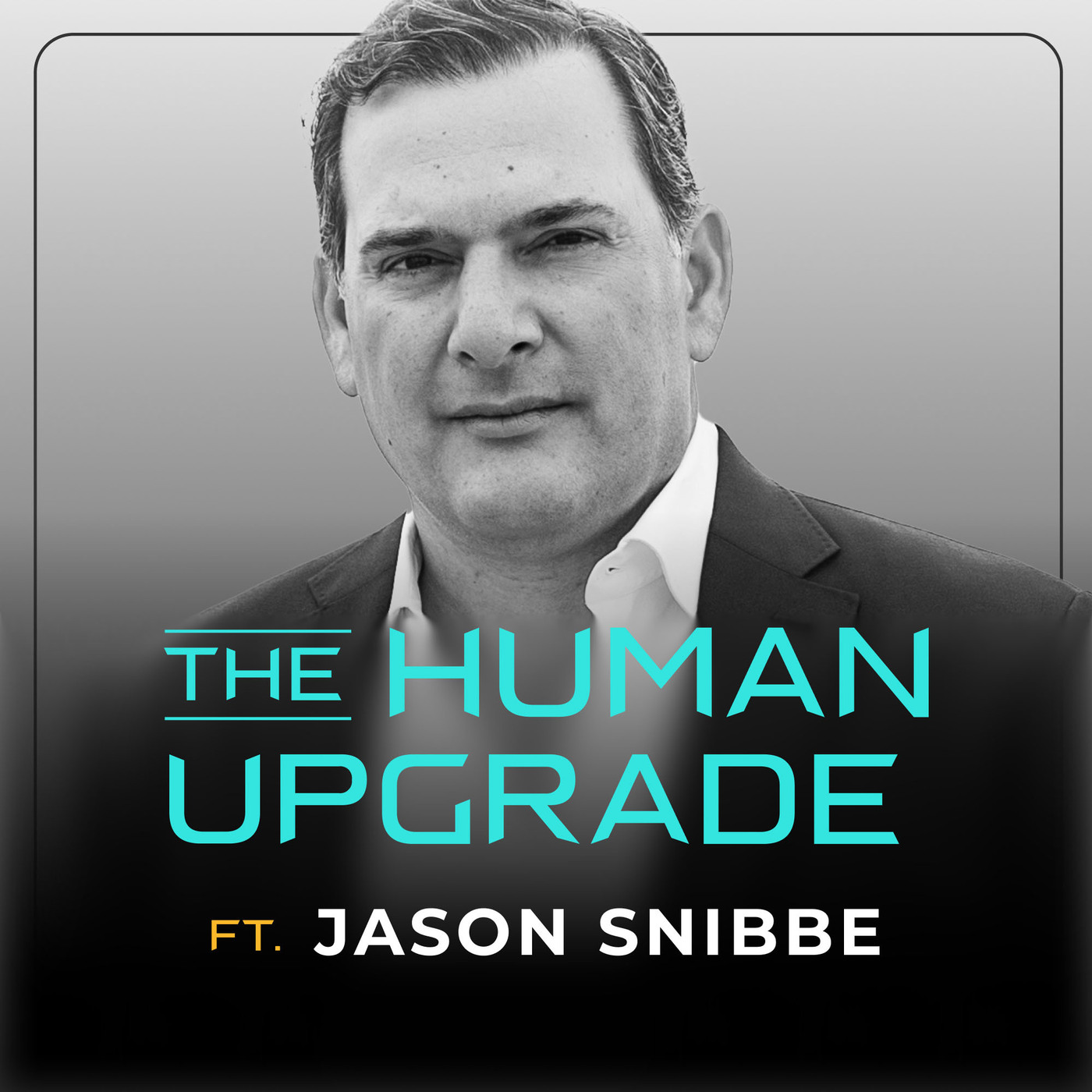
The Human Upgrade: Biohacking for Longevity & Performance
The Hidden Key to Pain-Free Joints (Longevity Tips) : 1341
01:02:39
Loading summary
Transcript119 lines
- [00:00]
Dr. Jason Snibby
The number of people between 30 and 60 that are ending up with joint replacement is astronomical. The curse we have as a person is we're sleeping every night. Every night we're falling asleep and we're still. For however long you sleep five hours, eight hours, seven hours, your body's still. So you wake up in the morning and your body is stuck. It is so critical to stretch your body, work on your flexibility.
- [00:22]
Dave Asprey
Dr. Jason Snibby is a leading orthopedic.
- [00:25]
Podcast Host / Interviewer
Surgeon and sports medicine innovator.
- [00:27]
Dr. Jason Snibby
He's pushing the limits of joint care.
- [00:28]
Podcast Host / Interviewer
And helping elite athletes recover faster and stronger than ever.
- [00:32]
Dave Asprey
His innovative approach is redefining how we.
- [00:34]
Podcast Host / Interviewer
Heal, recover, and get back in the game. I had a total knee replacement done by Dr. Jason Snibbe, absolute artist. I mean, the best of the best.
- [00:45]
Dr. Jason Snibby
I can't tell you how many patients I've done a hip replacement on who have had foot and ankle injuries where they say, you know what? I was walking down the street, I sprained my ankle and then I was limping for a while. I was in a boot for three months, and then all of a sudden my hip went out.
- [01:00]
Podcast Host / Interviewer
What are the top three, three most important exercises for core stability that are going to stop them from needing a joint surgery later?
- [01:08]
Dave Asprey
You're listening to the Human Upgrade with Dave Asprey.
- [01:15]
Podcast Host / Interviewer
If you're a founder or product creator in the biohacking and longevity space, listen up. Our industry will hit $100 billion in the next four years. Innovation is accelerating, and someone is going.
- [01:27]
Dave Asprey
To own your market.
- [01:28]
Podcast Host / Interviewer
The question is, will it be you? That's why I created the Business of biohacking summit, happening October 20th through 23rd in Austin. It is exclusive. It's interactive. We're talking hands on workshops, expert led mastermind tables, and real time pitching. You'll leave with an action plan because we want to see you succeed. If you're serious about scaling smarter, not harder, and turning your mission into a movement the way I did, go to businessofbiohacking.com to register to get in now hack your business to billions. I want to teach you directly. I'll see you in Austin. Alcohol kills your sleep and ages your brain every time you drink it. If you want to relax and connect but still feel clear the next day, there's a better way. And that better way is Tru. Kava Kava calms your nervous system and enhances social connection by increasing gaba, dopamine and serotonin activity. In the South Pacific, they've used kava for over 3000 years. For relaxed mental clarity, social connection and resilience, all while supporting brain health and longevity. I'm excited because Tru Kava just released their new instant powders. For the first time. You can get the authentic whole food kava experience in a clean mix and go sachet format. I travel with these powders because they actually deliver all of the relaxing social benefits I want without destroying my sleep.
- [02:54]
Dave Asprey
Score or metabolic health.
- [02:56]
Podcast Host / Interviewer
If you want the relaxing effects of alcohol without the downsides, this is the upgrade. Go to trukava.com and use code DAVE10 for 10% off. That's T R U-K-A-V A.com for 10% off. I'm really excited to talk about joint damage because it's personal for me. I had arthritis in my knees starting when I was 14 years old. I went to the doctor and I came out and he's, he's like, you have arthritis. And I was just going, isn't that what old people get? And I'm only 14 and I didn't understand what it was, didn't understand why. And it took me a lot of time. I didn't even know I could walk without pain until I was 23 and I got some orthotics that helped. And since the time, I've done so much work, I can squat, I can do all sorts of things I couldn't, I couldn't do when I was young. In fact, after my third knee surgery at 23, the doctor said, don't worry about running, just be glad you could still walk. And I'm like, good God. Like all I did was play some soccer. Like, this isn't, this isn't okay. So I look at me as a worst case scenario, but I know so many young people who just destroy their joints with injuries. And then I know so many people are middle aged who just had this idea that if I just get on a stair stepper or some kind of spin thing, and I just do that for a long time. They think they're somehow burning calories to be healthy, but what they're probably doing is just setting themselves up for having new hips. Am I right about that?
- [04:25]
Dr. Jason Snibby
Yeah, I mean, I think that you, you know, it's, it's an interesting concept. You know, when people, I was just thinking about this the other day, like when people talk about heart disease, right? They say people should be thinking about heart disease younger when you're 30, when you're 40, in your early 50s, and kind of be a little bit more, you know, mindful about what they're eating and how they're exercising and trying to maintain their, their heart health. The problem with joint disease is that when you have these young kids, they're playing sports, they're running, you are playing soccer. No one talks about joint health. Starting from the young age, we need to think about the overall impact of sport and exercise and really think about recovery and keeping your body as healthy as possible, even from a young age. Because right now, in my business, the number of people between 30 and 60 that are ending up with joint replacement is astronomical. So many people are ending up with joint replacement because they're beating up their joints. No one's talking to them about maintaining healthy joints, minimizing impact, minimizing injury, like, let's say in the weight room by lifting too heavy a weight with bad form and bad posture. You know, like you said, nicely thinking about the foot. Your first, your first contact with the world is your foot. And if your foot is, let's say, pronated or supinated or not aligned properly, it's going to go into your knee, go into your hip, go into your lower back. It's all part of that kinetic chain. So we really have to think about how people move and how all the parts of the body affect, you know, the movement. Really important.
- [06:19]
Podcast Host / Interviewer
You talked about a kinetic chain. What is that?
- [06:23]
Dr. Jason Snibby
So when we think about movement, so when you take a step, you take a step onto the ground, there's energy that's, that travels through your foot, your ankle, your knee, your hip and your lower back. It goes all through your body. And it's that kinetic chain that's very important to think about how we do things, how we, we throw a ball, how we hit a tennis ball, how we hit a golf ball. And we used to think that, oh, you know, if you're a baseball player, just work on your arm. But it's really your legs that are pushing your, your core that's rotating, that's throwing that ball as hard as you can. And now when we think about movement and we think about the way people do things, you know, we try to think about like, for example, weightlifting, you know, strength training, maintaining muscle mass. You don't just lift your biceps with your arms still and your whole body still. When you're in the real world, you're lifting something, you're bending your back, you're bending your knees. We're using your whole body to lift something up. And so how do we train a human being to be strong in the, in movement? Because you're moving constantly through the world, whether it's in sport, whether it's, whether it's just living your life. So I think that thinking about that kinetic chain and training for it and also making sure that you're mindful of your body's position so you don't. You're not prone to injury.
- [07:49]
Podcast Host / Interviewer
Those are words that I did not understand kinetic chain until sometime in the last 10 years when I started studying functional movement.
- [07:56]
Dr. Jason Snibby
Yeah.
- [07:57]
Podcast Host / Interviewer
Friends like Kelly Starrett have been on the show who's, you know, the subtle Leopard book is a pretty famous one in the space. In fact, it was Kelly who coined the term disaster pants. Longtime followers know what happens. You have too much MCT oil also. Thanks, Kelly for that.
- [08:14]
Dr. Jason Snibby
Yeah, yeah. And right.
- [08:16]
Podcast Host / Interviewer
And even when I wrote the Bulletproof diet, which was more than 10 years ago, I talked about functional movement, the basic screens you stand on a box. What percentage of people by age 30 have completely wrecked functional movement?
- [08:31]
Dr. Jason Snibby
It's a great question. I mean, I, I think it's, it's probably much higher than we think it is. And I think it's probably, I would assume it's probably in the 70th percentile. 70%, 75%. I think very few people are lucky enough to have people like yourself or, or, or, or people in their community that can explain to them and educate them on how to move and how much movement is important. And I, and I see it in my own life. I mean, when I'm treating patients, they'll go to a physical therapist. I'm like, what exactly are they doing with you? And they'll explain to me the things that they're doing. And you're like, that doesn't help you in any way. They're just focusing. You know, I think that we, we kind of have this focus like you just had a knee surgery. Let's just focus on that one knee. But they don't realize that their hip is so, so weak that their knee is collapsing every time they try to exercise. Or they realize their, their hips are stiff and that's making all the movement of their body difficult. And they're compensating by overdriving their lower back over driving their core. There's all this compensation related to that. And I think that, I think that the most. I think what I learned so much from the therapists that I've been exposed to is, is, you know, we always say as doctors, the best doctors are the best listeners. And I think the best therapists are the best lookers. The people that can look and visualize someone movement. So they make the patient walk and move and go upstairs and reach for something off the ground and watch them move through the world. And you get educated so much about how someone moves and where their deficits are. And I always think it's funny, like when I, with my kids, I'm always pointing out when we're like a mall or someone, a public place, showing them what it looks like to have a limp. Like they asked me, daddy, what's a limp? And I go, that see that person walking. That's what a limp is like. So watching eight patterns, you really educate yourself a lot about what people's problems are.
- [10:33]
Podcast Host / Interviewer
I'm just thinking back. I, I was duck footed as a kid and my feet are still mostly flat. They're better than they were. I, my toes used to just do this weird crunchy thing and I would wear out the outside of my shoes because I was over pronating and like all the worst things and no one ever said any. They tried some orthotics that didn't work and it was like, oh, that's just how you are. And all of those are just about training the nervous system to be aware of the body and to move it properly. And so my gait is totally different and I have almost no pain in my joints the vast majority of the time, unless I do something dumb that causes inflammation. But it's taken a lot of work from biochemistry, from neurological, from functional movement. What should my parents or coaches or doctors have done differently when I was 5 years or 10 years or 20 years old to maybe change that direction?
- [11:31]
Dr. Jason Snibby
I think probably the most critical thing that people can do is focusing on the core. Focusing on your abdominal muscles, your obliques, your transverse abdominis muscles, and also on your glutes. You know, one of the things I tell many young men is that, you know your girlfriend that goes to pilates class all the time and is using those bands and doing those exercises, you need to go with her. You need to go with your wife or your girlfriend or your husband. Go with your husband. If your husband does Pilates. Somebody that's doing core exercise and really focusing on the glutes and the core is probably the most critical thing because where we see injury in people is when the core is weak, when the glutes are weak, that's when, that's when someone tears their acl. We learned that about women. For example, women, young women have a very high propensity for non contact ACL injuries. And why is that? Because when you look at a young woman, sometimes they're Very knock knee. And that's because their hips are so, so weak. And so they're running around the basketball court knock kneed in that, we call it a valgus position. And that valgus position puts stress on your MCL and your acl. So they're running down the core without getting contact with anybody. They blow off their acl. The other thing is, you know, if you're a throwing athlete or using your arm, let's say tennis or baseball or golf, you know, working on the muscles of your upper back, you know, doing rows and hold downs, that is the, your scapula and your upper back is the foundation of your whole arm. So you have young athletes blowing out their elbows, blowing out their shoulders because they have so weak scapular stabilizing muscles that they just can't stabilize themselves. So it's, it's going back to the central portion of the body and making sure that area is very, very strong. And we're fortunate some places have excellent training and athletic trainers and strength people that will focus on those things. But it's very, very rare that that happens. And I think that if we really focus on some of these core exercises, we would have less injuries in young athletes, we'd have less joint damage. And I think another important thing next to strengthening is recovery. Like, we need to talk about recovery. We need to talk about how your body recovers. And, you know, you know, it's getting controversial now, but cold plunging, getting in a cold bath, you know, decreasing your inflammation, sauna, heat, warmth, increasing blood flow to your body. And then the one thing that nobody does, and I'm preaching this all the time in my clinic, is stretching. Like, you know, every decade, I think you get older. The length of time that you stretch in a day or in a week should just astronomically increase. It is so critical to stretch your body and work on your flexibility.
- [14:36]
Podcast Host / Interviewer
I gotta ask this question. I see a bunch of functional movement people talking about fascia, and some of them are to the point of saying stretching is really not good for you. Just lengthening the muscle, you need to lengthen it under load. And you've got to do like a twisty exercise and take a deep breath and, you know, hug yourself while chanting a mantra. How much of that, like using the muscle throughout its full range of motion under load is important compared to just stretching. I mean, because I didn't get a lot of relief. I'm pretty bendy. I can, you know, put that wool above my head and all that stuff. I learned, I learned the stretchy thing.
- [15:16]
Dr. Jason Snibby
Pretty well here and I can wiggle my toes and.
- [15:18]
Podcast Host / Interviewer
But it didn't fix my problems. Right. So like walk me through fascia stretching, load. What's the real deal there?
- [15:26]
Dr. Jason Snibby
Yeah, I think that the fascial, the stretching and the working on the flexibility can be done. I think it can be done in both ways, and it should be done in both ways. You should be doing some load where you're like, let's say lunging down and stretching your body. But it doesn't always have to be under load. I mean, you can lay on your back and do rotational movement, but with your body, rotational scapular movement, you can do all of that. But I think sometimes isolating your body, like for example, keeping your, your, your waist and your lower body still to work on, thoracic mobility is important. So you're technically under a little bit of load to try and stabilize that portion of your body. So you can stretch specific areas of your thoracic spine or your lumbar spine. So I think that's important. I think that keeping things like your iliotibial band, the bands on the side of your thighs really flexible, your hamstrings really flexible, that's very important. And working on mobility of your spine is really critical because people that have tight spinal, tight spine, there's tons of injuries that happen because of that. But I also think that there's another aspect to it that's important. Important to say is that you're really flexible and there are people out there that are hyper mobile. So we, it's more common in women than men, but we, But I see those people all the time in the office where they're like, I can touch my toes. Like, I'm so flexible. I think that subset of patients is probably, they can stretch beyond what anyone else can stretch. Those specific subsets of people, in my opinion, should just focus on strengthening because they are, they, they're already super flexible. They wake up in the morning after sleeping eight hours and they're like Gumby. So I think that those people should just focus on the muscles because their ligaments are so loose that their joints become damaged because of that. So much instability. So all they have to keep their joints stable is their muscles and, and the tone of their muscles. So that's a specific subset that is.
- [17:39]
Podcast Host / Interviewer
Such incredibly good advice. And like, I don't have ehlers downloads. Like there, there's a test people can do where you stretch your thumb if it'll touch your arm, your elbows touch behind your back, which is a collagen. Malformation, genetic thing. But a large number of people have it who don't know. And if you're listening to this and you have problems with pots, this low blood sugar thing, you're mold sensitive. You're having problems with all these food sensitivities. There's a much greater chance that you have a collagen disorder in the EDS family than you might know. And for some people, just hearing that will change your life. If you go into your AI engine and ask about that, go, oh, my God, I could go get diagnosed with this. And for that group, yeah, you need to have really good muscle control. I don't fall into it, but I am right on the edge of hypermobile. I'm very mobile. So that could be a possibility.
- [18:31]
Dave Asprey
If your hair is looking thinner, weaker, or just less dense lately, you might think it's just something that happens because you're aging. The good news is that that's the type of aging that you can now reverse. It's caused by senescent cells. You might have heard of them as zombie cells if you read my big book of longevity. These are just old, damaged cells that don't die when they should. They accumulate with age, and they don't do anything useful, but they take up energy. That means they're not growing thick, vibrant hair. When they sit in your scalp, they send out stress signals, and they damage the healthy cells around them as well. And that's where OneSkin's OS1 hair comes in. It's a daily scalp serum that targets those senescent cells. It helps your scalp work more like it did when you were younger. Two months after I started using OneSkin OS1 hair, my barber asked what I was doing because my hair had changed that radically. In a clinical study, people using OS1 hair saw a 40% increase in hair density after six months, and 75% noticed new hair growth in three months. It contains the same OS1 peptide that OneSkin uses in their skin and sun care formulas. This is the first ingredient shown to reduce your skin's biological age by getting rid of those zombie cells. I've been using Oneskin products on my skin for years, and it really works. And OS1 hair is clean and light like water. I just put it in every morning and every night, and my hair doesn't just look better, it actually is better. It's not greasy. There's no residue, and it doesn't mess with hair styling. And for a limited time, you can try one skin for 15% off using code Dave. Just go to oneskin co. Dave 15% off. Oneskin co. Use code Dave. It turns out that pushing yourself harder might not be the way to become stronger and more resilient. Recovering after stress is how you do it. I spend so much time on airplanes and moving around and running different companies and recording this show for you that I'm always looking for ways I can incorporate recovery into my day without spending.
- [20:28]
Podcast Host / Interviewer
A lot of time.
- [20:28]
Dave Asprey
And there's a new way to do this. It's Bon Charge's infrared sauna blanket. It uses infrared heat to penetrate deep into your body, which helps you recover, detox, and relax. And if you've heard multiple science podcasts I've done about the benefits of infrared or read it in any of my books, this is real science. The Bonjour Charge mat lets you enjoy the benefits of sauna sessions at home. It heats up in exactly five minutes. And you don't need a dedicated space. You can put it on the couch, put on your bed. That means it's comfortable, it's convenient, and you don't have to have a room dedicated to infrared. So after a busy day, you can get your sweat in. It's really comfortable, it's very easy to clean.
- [21:04]
Podcast Host / Interviewer
And if you want to enhance your recovery, you don't have a lot of space.
- [21:06]
Dave Asprey
Check it out.
- [21:07]
Podcast Host / Interviewer
Go to boncharge.comdave and use code Dave to save 50, 15%. So if you're super bendy strength, if you're super stiff, stretch is kind of what you're saying.
- [21:20]
Dr. Jason Snibby
And I think the curse, the curse we have as a person is we're sleeping every night. Every night we're falling asleep and we're still for however long you sleep, five hours, eight hours, seven hours, your body's still. So you wake up in the morning and your body is stuck. And so really getting heat on your body, a hot shower, sauna, steam, loosening, spending time stretching, just get on the floor and stretch and work on your flexibility. I think patients, when my patients do that, they notice that their day is better. They have less back pain, they have less discomfort, their neck is flexible. They just feel better throughout the day.
- [21:58]
Podcast Host / Interviewer
So sleep is bad for you is what you're saying?
- [22:00]
Dr. Jason Snibby
Yeah, I mean, no sleep. What do they say? It's that it's the most important life hack is sleep. Right? It's the most critical thing you can do. I tell that to my wife all the time when she's on her phone in bed reading emails and stuff. I'm like, you got to get your sleep. You got to get Your sleep.
- [22:19]
Podcast Host / Interviewer
Okay, well, let's talk a little bit about sleep. So you're an orthopedic surgeon. Weighted blankets, good or bad?
- [22:24]
Dr. Jason Snibby
I have gone down that rabbit hole to figure out if that's good or not. I honestly, there's so much data, both sides of the fence. I think that, that, to me, that's one of those things that if you like it, it makes you feel good and you like the weighted blanket, go for it. But I don't think there's, I can't see any benefit to it. I just can't. I can't see. I think it's more of like, dealer's choice.
- [22:49]
Podcast Host / Interviewer
There's, there's a vagal tone and an HRV difference in a lot of people. But I've also seen some people say, especially for kids, if you put like a 30 pound heavy weighted blanket on a young, bendy skeleton, that's probably not a good idea. So it's 10 or 15 pounds. And for kids with ADHD or autism, it can have a really profound calming effect. I sleep with a 30 pound weighted blanket, but I have the bone density of wolverine to the point that when it tried to cut through my bone last time, like, the saw wouldn't do it. I'm like, yes, I never thought of this, but what if my bed, like, gently vibrated all night long? Would that help my joints?
- [23:24]
Dr. Jason Snibby
Yeah, I mean, I, I think that I, I think it's, it's. To some people, it's annoying. You know, it's like it keeps them up at night. But I think that the vibration, you know, there's a lot of info, there's a lot of information out there and research looking at vibration and how it affects people and, and calms people. I think that there is some, there is, I think there is benefit to that, to calm people, to help people sleep and get a little bit deeper sleep. And I think that. But again, there's some people that can't deal with that. They can't deal with the irritation of it or the bother. Some people feel that soothing. Some people ate it.
- [24:02]
Podcast Host / Interviewer
What about whole body vibration platforms? Are those good for the joints, bad for the joints, good for the bones.
- [24:07]
Dr. Jason Snibby
Bad for the bones? I think, you know, the vibration plates are, are, are definitely beneficial. I think that that's, that's the part that I was talking about, about increasing the strength of your core, like making the core of your body strong and stable. And that that type of instability that it creates is really important to work on, especially neural feedback to your legs from your central Nervous system. I think that's something that as we know, deteriorates over time as we age. So, you know, I have a lot of my patients who are elderly, you know, they're 70 and older, who are using vibration all the time. They bought the plate at home, they take classes with it. They do, they do some modification of Pilates and yoga on it. I think there's a lot of benefit to that.
- [24:56]
Podcast Host / Interviewer
I've been using whole body vibration for 15 years. We have it in the stack at upgrade labs. And one of the things on this is a facility where there's AI longevity built into all the things you do. About 80% of the tech is on recovering. It's not about more stimulation, but we have an AI powered functional movement assessment. It's nowhere near what you would do if you're working with a client, but it's just starting. So we have people stand there and do shoulder mobility, hip mobility, knee mobility, jump, all while measuring force and looking at them with a camera. And that way we can say this side's weak, that side's strong, and we can tune the recommended exercises for them. But most people don't have that or a functional movement expert to work with. So if someone, you know anything about them, what are the top three most important exercises for core stability that are going to stop them from needing a joint surgery later?
- [25:55]
Dr. Jason Snibby
My opinion that the, the key for core stability is, is I love planking. I think planking is very, is incredible. And I think that sometimes, you know, the, the where you take your pelvis and you rock it side to side. Were you doing some kind of rotational movement with your pelvis? I think that's great. Also doing any type of extension based exercise of your hips. So where you're moving, let's say you have a band around your legs and you're standing and you're kicking back, you're kicking back. And so you could do that in a plank position where you're doing leg lifts in the plank position. Or you can put bands around your legs or weights on your ankles and extend your leg back, which activates your glutes. That's an incredible, incredibly powerful glute.
- [26:44]
Podcast Host / Interviewer
So you're planking and your leg goes.
- [26:46]
Dr. Jason Snibby
Up or it goes out, it goes up. So you're lifting, you're basically, you're lifting your toes off the ground and that's it there. You're engaging your glutes and also you're engaging your glutes. If you have a band around your legs and working on your glutes I think that another great exercise in my op, there's many different exercises to activate your glutes. And sometimes a lunge can be great. A lunge exercise, as long as you don't go too deep, which is not great. Deep lunging is really hard on your hips sometimes. So I like lunging and I also really like step ups, where you're stepping up. You just want single leg step ups, and you're really isolating your glutes and your core to do that. And then the other thing, I mean, probably get into the four exercises. I like rotational exercise, where you have a cable and you're pulling the cable across your body and you're maintaining that core strength. I think that's great. Either it can be a cable or some people take a kettlebell and pass it around their body. And while you're maintaining a lot of core strength, I think those are probably the best exercises, in my opinion, for that.
- [27:58]
Podcast Host / Interviewer
Yeah, I've got a kettlebell shaped like Joe Rogan. I mean, like, all kettlebells are shaped like Joe Rogan, let's face it. But I just circulate that thing around me. I feel better about myself, so. So I do. I do love the cable things. There's something about that inner core. And one of the things that I think I was unaware of was all these knee problems I had came from my feet. And then I had a yoga injury from doing crow pose, kicking back to plank. And I did an episode about four or five years ago where my right big toe started to fuse because I just landed on it wrong, and I ended up having to have it rebuilt. So I did an episode on why and how all the biomechanics work and how to recover from surgery faster. But I think that directly led to a very small lower left hernia on the left side because of that kinetic chain. And I'd been actually limping for a while because I just couldn't. It didn't matter how many stem cells. No matter what I did, the. It wouldn't bend the toe because there was calcium in the bone or in the joint. So I had the hernia repaired, which, of course, then without enough pt, it turns off the glute on that side, which then screws up. My right shoulder was high, and so, God, like this little thing from a stupid yoga trick 10 years ago, it amplified and I've got it all actually under control. I've got better functional movement now than before. But if I hadn't have gone on top of that, I probably would have needed a Hip replacement at some point or like, more surgeries and more like, this is how most people go downhill, right? What's your advice about? I mean, everyone has stuff like that that happens. Old injuries, whatever. What are we supposed to do about that?
- [29:46]
Dr. Jason Snibby
Yeah, I mean, I can't tell you how many patients I've done a hip replacement on who have had foot and ankle injuries where they say, you know what? I, I was walking down the street, I sprained my ankle, and then I was limping for a while. I was in a boot for three months, and then all of a sudden my hip went out. And I now geared with you to have my hip replacement. It happens all the time. And I think that, that, you know, when we, when we talk about, you know, ankle, foot and ankle injuries, no one ever thinks about normalizing their gait. Like, let's watch somebody walk and see how they're moving through space and watch that. That compensation and try to make sure that they're not compensating in different ways. And it sometimes takes an external person that's smart to look at you and say, you're walking so badly that you're, you're. And. And. And. And then doing muscle testing and analysis to figure out where the deficits are. And I think that's the, that's the most important thing. I think that what you touched on, a hernia, is such an important thing to talk about, because in the center of your body, where your two parts of your pelvis come together, your abdominal muscles attach, and then your adductors, the muscles on the inside of your thighs attach, and that is the center of your body. And we know that people will get tendinitis of their adductor and tears of their abdominal muscles when they have a bad hip, when they have a bad knee. And a lot of the word gets thrown around called sports hernia, or another term for it is aortic pubalgia, where you get this pelvic pain because you're not moving properly. And it's by strengthening your glutes, it's by working on your flexibility to help you get better. But a lot of it, you know, especially with a stiff great toe, like you're talking about your ability to, To. To the, The. The gentle push off that you have with your foot goes away. And now you're. Now you're throwing your back and your whole hip and your whole. And your shoulder out because you're compensating so much. And I think that when somebody has an injury like that, it's important for Them to. The most important person is your either either chiropractor or physical therapist, your body working person. Get in front of that person and have them watch you walk and make sure that you're not compensating. It's just like, like it just like anything in life. You know, I always joke like, I'm a golfer. And when you, when you learn how to golf and they teach how to golf, they video you so you can see how your body's moving. But when you have an injury, nobody videos you. How come someone's not videoing you watching you walk? You do it for tennis, you do it for all kinds of sports. Someone should be videoing you watching you move. And that's so important.
- [32:32]
Podcast Host / Interviewer
Well, it's time for an AI gait assessment tool.
- [32:35]
Dr. Jason Snibby
Oh, wait, we have one.
- [32:37]
Podcast Host / Interviewer
I've done this. You can go into your favorite tool. It's probably GPT, but others will do it. Turn on video and literally say, I want you to act like a functional movement expert and watch me walk and tell me what's wrong.
- [32:50]
Dr. Jason Snibby
And.
- [32:51]
Podcast Host / Interviewer
And I am not even kidding. It does a eight and a half out of ten job.
- [32:56]
Dr. Jason Snibby
Wow. Wow, that's incredible. I've never even thought that I could do that. It's crazy. It's totally.
- [33:01]
Podcast Host / Interviewer
This is untrained. This is just based on all the knowledge that's out there from everyone who's ever written anything about functional movement. And it's not going to be perfect, but it's going to be enough to go, maybe I should make an appointment with Dr. Jason here, right? Or maybe I should do whatever.
- [33:18]
Dr. Jason Snibby
P.T.
- [33:19]
Podcast Host / Interviewer
Even if you don't have an injury, you can still go to a physical therapist. I need to strengthen this thing. And it might not be covered by insurance. It might be. But my biggest wish, if I go back in time, aside from fixing my mitochondria in my brain, would be that when I was very young, someone sat down and told me, you will learn how to walk. And if they had just done that, it would avoided three surgeries before I was 23. You know, carbon fiber, knee braces, all the weird stuff with soccer. And, you know, as I am now, I'm remarkably healthy and I have less pain than I did when I was 15, but I'm still coming from behind, like I am on a lot of things. And it would have been so cheap and so easy. But no high school coach knows how to do this.
- [34:06]
Dr. Jason Snibby
It's so rare.
- [34:08]
Podcast Host / Interviewer
And so I appreciate that you're bringing this out there as a surgeon going, I shouldn't have to do these surgeries because it's, it's pretty cool.
- [34:14]
Dr. Jason Snibby
Yeah, I mean, I think that you were learning so much about how movement affects the whole body. And we're, we're, we're so less focused on just one little part of your body than just your knee or your ankle. We're thinking about your whole body and how it, how it compensates and it affects things like, you know, now we do robotic surgery and when we do robotic surgery, we get an analysis and we get a CAT scan from the pelvis all the way to the front foot. So at all times I'm aware of the entire alignment of that leg. And by understanding the entire alignment of the leg, we get such a better understanding of kind of what we're dealing with and how we affect the whole body. And we never did that. We would just focus on the little joint. You know, we wouldn't even worry about all that other stuff. We just say we just can't figure it out. And that's such a small minded way to think. And we're better than that. With all this AI and all this technology we have, we are better than that. And that's why I'm such a big proponent of robotic surgery, because it really allows me as a surgeon to see everything and to really help people with their entire alignment of their body. Where before you just could not.
- [35:26]
Podcast Host / Interviewer
What percentage of joint surgeries are robotic now?
- [35:30]
Dr. Jason Snibby
It's steadily increasing now. It's probably in the, I want to say about 40%, you know, maybe 35, 40% is robotic. It's, it's growing as we speak. You know, it's, it's expanding. It's, it's much more prevalent obviously in America than the rest of the free world. Europe is slowly getting into it, but, but it's, it's becoming more and more popular in America and it's, it's the most in my career. I've been in orthopedic surgeon now for almost 22 years. And for me it's probably the most, most incredible career changing event that ever happened to me. And if you would have told me 15 years ago I'd be operating with a robot, I'd be like, it's impossible. What robot like isn't? But it's so transformative. It makes us better than we ever could possibly be be. And, and I use an analogy of if you make a, if you, if you, if I tell you to draw a circle 10 times, every circle is a little bit off. You tell a robot to draw a circle 10 times. It's perfect every single time. So the ability for us to understand things like, for example, depth, like when you have a, when you're cleaning out bone, you have no idea how deep, you know, how deep the bone is. You can look at it on a screen, you can look at, on a, on a CAT scan. But when you're live in the surgery, how do you know if you're taking 8 millimeters, 2 millimeters, 10 millimeters, 15 mil, you have no idea. You just kind of guess it. But the robot knows exactly where you are at all times. So you're like, I just want to take 5 millimeters from his socket. And that's going to be perfect. It will allow me to do that perfectly every single time. You can, you can balance a knee replacement. You can feel your ligament. So the sad part to say, I would say, is that, well, we used to do knee replacements. We used to do the same knee replacement for everybody. Now your ligaments behave different than my ligaments. So we test your ligament during the surgery, and we say, how is Dave's ligaments behaving? How loose are they? How tight are they? Where, where is the, where's the give here? And we can adjust the implant to fit the way your ligaments behave. And the results are incredible. I mean, we have patients flexing their knee so much better. The function is better, they're recovering faster. I just had a lady in the office this week, yesterday, and she was, she was adamant, I don't want to have a knee replacement. We gave her every injection under the sun. She's like, I want to try every single day. I don't care how much it should cost, I'm going to do it. I gave her every injection and it didn't work. And she did her knee replacement. And she looked at me and she goes, if I knew it was this easy, I would have done it 10 years ago. She goes, I feel so good. She was, she was in my office, two weeks from surgery, walking up and down the hall with no assisted device. And I told her, I said, listen, I like to, you know, I like to take all the credit, but I'm telling you, the robotic technology is transformative, and that's why I'm such a big proponent of it. And I think that it's also something that, where AI will come in to some degree, where it will say, you know, based on this patient's morphology, based on his ligament behavior, this is the best position to get the best outcome. There's going to be that type of Technology and feedback for a surgeon, it's not there yet, but it's coming.
- [39:02]
Podcast Host / Interviewer
If you were 18, would you go to medical school now, knowing what you know?
- [39:07]
Dr. Jason Snibby
A great question I'm the worst person to ask, because for me, this is. In my life, this is everything. I knew I wanted to be an orthopedic surgeon when I was around 10th, 11th grade. I knew that was my destiny. I mean, if you ask all my friends I grew up with, they said Snibby wanted to be a doctor from the very beginning. That's all he talked about. And so for me, it was. It was my fate. I. I love it so much, and I. And I love my job, and I love what I do so much. It was what I wanted to do. I think that where it's not a great situation is people that are sometimes forced by their parents or the society or whoever say, you have to be a doctor. This is the best thing you should do, and you should go into it. And a lot of them go in for the wrong reasons. And I think that that's. That's not a good thing. And I think that for me, also, I'm a people person. Like, I love people. I love talking to people. I love hearing stories. I love hearing their experiences. I love that interaction. And so I love the technical aspects of the surgery, but I also really enjoy people and meeting eclectic people. And so it's a perfect job for me. But I think if it. If you don't love it, you shouldn't do it. You gotta love it. You really have to. It's gotta be in your heart, you know?
- [40:31]
Podcast Host / Interviewer
I absolutely believe that. I. I was interviewing another guest recently who's an expert in AI and top medical doctor researcher with 150 papers, and he's like, nope, don't go to college. You know, by the time you get out of med school, there won't be any need for your skills because it's all robots and AI, and I. I think there's a healer component to it that's around mindset and coaching, but it feels like it's been more and more hands off, doesn't it?
- [40:57]
Dr. Jason Snibby
Yeah. Yeah. I mean, I think that there's parts of medicine, I think they're gonna start really changing, and a lot of that is in primary care. You know, if you have a cold, you know, you're probably not gonna go to a doctor. You're gonna sit in front of a. You're gonna go to Walgreens. You're gonna sit in a booth. It's gonna do an Analysis of you. It may take your blood, may take your temperature, blood pressure, and then it will say, there's a 99.9% chance you have bronchitis. Here's an antibiotic. Go home. You know, or.
- [41:25]
Podcast Host / Interviewer
Or I think most followers of this show already just go into chat GPT and say, here's all my symptoms. Give me a stack rank list of what it most likely is. And they get in 99.9%. And then they probably just order the drugs from India or something because it's just less work than going into the office at this point. Like, we're gonna have to have a sea change in American medicine because there's so much friction in the system because of insurance companies, not because of doctors, that people are just giving up. Like, I'd rather not go in. And now that I know what's going on, it's probably not deadly. You know, I'm just not gonna. Not gonna do it. So it's a. It's a difficult time.
- [42:05]
Dr. Jason Snibby
I hear it all the time. I mean, I. I would just. I was. I was in Europe with a friend. He's an attorney in New York, and he was telling me about. He wanted to get these special cholesterol tests, like apo. Apo. A Apob. Like, I'll do all that kind of fancy testing. And he goes to his doctor, he goes, we don't do that. He goes, listen, I'll pay for it. I'll write. I'll give you money. I want to just have that test. Like, can you just do it for me? Sorry, we don't do it here in this. We don't do it. We don't do it. And then he called me and I said, go to a concierge doctor in New York, in the city. He went to a concierge doctor. He goes, of course, no problem. You can have any tests you want. I run like a hundred tests on you. No problem. And so there's just a disconnect in. In. In helping people. And I think that we try to be proactive and help people in advanced techniques and stay ahead of things. But I'm in private practice. Like, I'm. I have a private practice, and I can make a left turn or right turn whenever I want. I have that freedom. I consider myself very lucky to be able to provide the care that I provide for my patients, and I can give them the best care, and no one is guiding me. But in a hospital system or someone's insurance, run programs, they're guided by the insurance companies and they're just telling you how you have to treat the patient every single clock. So they'll say, you know what, he may have bad feet, but insurance doesn't cover his orthotics, so he's not going to get orthotics. You just can't get a period. And so it just, all of that, all these blockades to providing, you know, high level care.
- [43:41]
Podcast Host / Interviewer
Yeah. I think the insurance industry is going to collapse under its own weight. So part of my goal is to get the pharmaceutical industry fighting with the insurance industry so they can just take each other out and then we'll come and just clean up the debris and make us works. I don't know what else to do there.
- [43:58]
Dr. Jason Snibby
We need that. We need a, we need an overhaul. Big time overhaul indeed.
- [44:03]
Podcast Host / Interviewer
All right, you're an orthopedic surgeon. You fix joints all the time. What are the three biggest mistakes in footwear that people make?
- [44:12]
Dr. Jason Snibby
So I think the biggest mistakes in footwear is what you touched on earlier is that most, most shoes that you see in this world don't have arch support. Okay. So the most shoes that you buy, whether it's a, you know, all the name brands, Nike, A6, all these kind of shoe brands, they don't have proper arch support. So it is important. You can buy the best shoe in the world. You have to have a separate arch support inside your shoe that is so important. You need to go, you can buy ones off the counter. There's many different brands out there that people use that can give you some arch support because it just really doesn't provide the arch support that you need. And it's not if you're flat footed. It's not to make you have a big arch. It's just to support your foot in the position that you have.
- [45:03]
Podcast Host / Interviewer
Why do we need support though? Like, I was just hanging out with a Maasai two weeks ago and man, those guys don't have any arch support in their sandals. They're bouncing around. They seem just fine. Like, isn't our sport gonna make, make me weak? Like wearing a knee brace all the time would make my knee weak?
- [45:18]
Dr. Jason Snibby
No, no, I, I think that the, the Maasai are, you know, the genetics of those guys are different. You know, the, it just like everybody in this world, you know, some of us are blessed with great genetics. Some of us are not.
- [45:31]
Podcast Host / Interviewer
And so I, they also train pretty differently too. Like, you know, they do this weird bouncing jump thing. I'll, I'll publish the video. I did too. But it, it's like they don't even bend their knees. They're just like bouncing off the tips of their toes. I don't even know how they do it.
- [45:43]
Dr. Jason Snibby
I mean, those guys are ripped. I mean, they're just like, they're specimens of people. They're just, you know, zero. I mean, very low body fat, very lean, incredibly. You talk about core. Those guys have intense core muscles. Most of us mere mortals that are sitting at a desk all day or like, you know, in front of a computer, you know, there's a lot of weakness in our body. And so one of the. The muscles that. The tendons in our foot, called the posterior tibial tendon, which is on the inside of your ankle, that's what maintains your arch. And for a lot of people, that tendon runs out of gas at some point in the middle of the day, it's tired, and that's. It can't support your arch enough. And so if you go. If you walk around the world and you observe people, you'll see that how many people wear their. Their. Their entire arch is collapsing inside their shoe. They just completely collapse down because they have a shoe that basically has no arch support because they make shoes for all kinds of feet. You know, whether you have a wide foot, narrow foot, low arch, high arch. But you have to have something that gives you some medial support so you don't collapse down. Because if you collapse down in your. Collapse in where your arch collapses, now your knees are coming closer together. Now your hips that are disadvantaged, now your legs are. Are off alignment, and now you're hurting your back. So it just change. It creates that, like we talked about earlier, it makes that entire kinetic chain collapsed.
- [47:18]
Podcast Host / Interviewer
Got it? Okay. So number one mistake in footwear is. Doesn't have arch support. What's number two?
- [47:23]
Dr. Jason Snibby
Number two is. Is time. So the sole of a shoe only lasts so long. It's somewhere between maybe three, four months, maybe that if you're using a shoe on a daily basis, the cushioning of a shoe will wear out. So I tell my patients to buy whatever shoe. If you love a Nike, let's say buy two pairs. And every six months, buy two pairs. So you're going back and forth, maybe one shoes for working out, one shoes for the weekend. The cushioning of that shoe will wear out where it doesn't give you the support that it needs to give you.
- [48:03]
Podcast Host / Interviewer
So hold on. Support is from the arch, but a whole bunch of foam under your foot, that's not support, is it? That's just padding?
- [48:09]
Dr. Jason Snibby
Well, it's. But that's what I mean, it's a cushioning, right? It provides you some cushioning to take some stress off your joints, right? But that cushioning wears out. It's not made to be resilient, right? It's made, made to maybe last maximum six months. And so like, I can't tell you how many times I see a patient walk in the office, I'm like, how old are those new balances that you're wearing? Oh, these are five years old. You're like, there's nothing left there. There's zero. It's not giving you any benefit. And so I think that that's, that's the second thing I think is really important about, about shoe wear to, to have that, that important support, support there. And I think lastly is that if you are, if you are, have a lot of collapse on your shoe, like for example, you have a lot of medial collapse where your arch is really collapsing. I think in people like that, in addition to orthotics, sometimes you can buy a shoe that has more medial support. There's these shoes that have more density on the inside to prevent the whole foot from collapsing down. And I think that's, that's really important for some people that have medial collapse. And I also think that people have certain width of, of of feet, right? And I think that it's important for them, especially if they have problems with their toes. Like you said, you had trouble with your toes or problems with their foot. That's, that needs more space. Need to make sure you have more space for your foot. Because if you have too tight of a toe box where the toes are, you're going to get neurological issues, pain in your foot, you're going to get weird swelling patterns and maybe stress injuries in your foot. So those are to me, those are the real critical things about shoe wear.
- [49:59]
Podcast Host / Interviewer
I would say from my experience, the wide toe box, like your barefoot, pretty much inside your shoes, completely changed how I walk, how my hips feel. It was really important. Those like, like those cramped, pointy, like, like your feet are the same. I don't think that's natural, but I mean, are there studies I've had a few people on who are really proponents, like Mark Sisson, you know, like, let's teach the foot how to work. Let's, let's get the, the spread toe box. But let's not have too much padding, because if you have too much padding, you can't feel the world. But you have no padding, you get bruises and stuff. How are we supposed to know what like what's best. It feels like it's kind of a dark art at this point point.
- [50:38]
Dr. Jason Snibby
I think if you're, you're training, let's say you're working out, you know, having a shoe with some minimal cushioning where, where you're just kind of doing bodywork, you're lifting weights, you're doing some lunging, you're not really doing long, long distance walking, you know, like that. I think there's some advantage to being attacked closer to the ground. We have more interaction with your foot or, or sometimes like I know for myself, sometimes I've done working out where I like take my shoes off where I try because my foot is a little more as lack of support from the shoe. And you can really use those tiny little muscles in your foot and ankle to really support and balance yourself when you're doing certain exercises. So I think there's advantages to that with working out or gym work, stuff like that. But I do think that if you're going to go on a five mile walk, it's better for you in the long term to have a supportive shoe with cushioning on the bottom because you're going to get a stress injury of your foot. You can get all kinds of problems with your foot because there's no support there. And I think that, and it's just better for your joints to have that cushiony, soft support for your body. It's great. And I think that people use I. And you know, there's, there's companies like Hoka that have these big thick, you know, cushiony shoes. I don't think you necessarily, if you like it, great.
- [52:05]
Podcast Host / Interviewer
You couldn't pay me to wear those because I, I wear minimalist shoes and man, if I were this, I would just fall over. Like I couldn't even feel the ground anymore. But there's a neurological thing that's part of that.
- [52:17]
Dr. Jason Snibby
I think so too. And I think that you also, if you watch people walk in some of those shoes, it's almost like, remember those shoes that had the rocker bottom, the curved bottom, it, it made you walk in this funny way and people were getting knee pain and back pain from it because it was changing the way your gait patterns are. So there's some issues with that. But I do think that having a supportive shoe and replacing it on long distance walking or hiking is really important.
- [52:44]
Podcast Host / Interviewer
I was surprised you didn't say high heels are bad for you. Well, just because you, you're wearing them on weekends or what's the deal here?
- [52:52]
Dr. Jason Snibby
I mean, you know, I joke with my wife. You know, my wife buys these like massive high heel shoes and she wears them for like an hour and she can't wear them anymore. Like she has to take them off. I'm like. So I, I go, I go, which. So I joke with her, I say, which unwearable shoe? Are you picking this tonight? You know, you know, it's not that.
- [53:11]
Podcast Host / Interviewer
Different from, you know, supercars. People get these, you know, million dollar cars. Well, they decline in value enormously for every mile you drive them. And they're uncomfortable anyway. Like, buy a BMW if you want to drive fast.
- [53:24]
Dr. Jason Snibby
I don't know. Yeah, exactly.
- [53:25]
Podcast Host / Interviewer
That's my dream. One of the biohacking things that had me really excited was this idea of like a force measuring insole. And someone sent me one several years ago, but it was an early prototype, didn't work very well. It seems like we're going to have wearable things that track exactly where our foot goes to get our biomechanics. How close to that are we? Does somebody make it? You use them, like, what, what's the deal?
- [53:50]
Dr. Jason Snibby
I mean, there, there's a lot of really fascinating technology out that, that, that hasn't hit, I think, mainstream yet. But, you know, we have a lab here. You know, the way they make all the satellites and rockets, jpl and I was, I had a dinner once with one of the scientists there where he was telling me there's a, they can make an, an accelerator like an accelerometer the size of a grain of sand. And so one of the things that's very interesting is like, we talk about, like one of the classic things we talk about is that, okay, you do a joint, you do a knee replacement on somebody. How much, how active are they? Truly, how active are they? And so you could be, you could put it, one of those little things inside the implant and then put it a knee replacement in somebody and that. And then five years, ten years from now, you can do an analysis with your computer and say, okay, mister, these five knee replacements that we did, guess what? Those people are 10 times more active or they're 5 times more active than they were prior to the surgery. But I think that is the next step. I mean, I think the next step is that there's going to be little monitors in your feet that will analyze how your feet are. And it's important, important to look at that because sometimes in the morning you're walking great, your muscles are strong, you're, you're loose, you're kind of. But then at the End of the day, you're compensating in all these different ways because your, your glutes run out of gas, your quads run out of gas, and how does that affect your gait and movement? So I think we're close. I think, I think that those monitories are coming. We, we do have currently some technology where you can put monitors on the body to measure the, the range of motion of a knee or the range of motion of a hip to see how much range of motion you're getting. But those are wearables. Those have to, have to, have to, to, to stay on the leg or you have to, you know, there's, there's, there's tape involved and adhesive involved and stuff like that. So I think it's going to happen more and more. There's probably going to be clothing that will have it. There'll be much more technology that we'll have in the future that will allow us to be able to monitor so many different things.
- [56:13]
Podcast Host / Interviewer
This is a little bit dark, but about seven years ago, I got on the phone with a group of.
- [56:23]
Dr. Jason Snibby
AI.
- [56:23]
Podcast Host / Interviewer
Researchers from China and I was looking.
- [56:26]
Dr. Jason Snibby
At, is there a way to use.
- [56:28]
Podcast Host / Interviewer
This was like early AI on brainwave data so that I could analyze altered states of consciousness at 40 years, as in.
- [56:39]
Dr. Jason Snibby
And they said, oh, we don't know.
- [56:40]
Podcast Host / Interviewer
Anything about brainwaves, but we know a lot about gait analysis and facial recognition for obvious reasons. Now, most listeners, I think, have heard about this idea that we all have a fingerprint that's unique. We all have a gait that's unique. The way we walk, there's that many variables, right? So that's one of the richest sets of training data we have, but known, to my knowledge, has correlated it with biomechanics and health impacts. But since we have so much data, we already should be able to, with very little work to be able to say, you don't need sensors all over the body, we're just going to have you put on tight pants and walk and we're going to tell you every little thing like we have an X ray. And I think we're closer to that than we think.
- [57:27]
Dr. Jason Snibby
We just need to stop looking at.
- [57:29]
Podcast Host / Interviewer
How to use technology for oppression. And this is not a comment about China. The US does the same damn thing. It's how do we use technology for human flourishing? And this would be an easy way to take something that's been perverted into an oppressive tool and put it into a hey, everyone can be in less pain kind of a tool. So I'm on that side of things.
- [57:52]
Dr. Jason Snibby
And I think that, you know, we're not far from like, for example, having a patient come into the office and before they come into the exam room, they go in a room and they walk and there's a hundred cameras around them and it analyzes the way they move. And we can say, hey, listen, Mrs. Smith, you're limping because of this, because of that, because of this. You know, a lot of the, the, you know, a lot of patients will come in with, with bad disease or bad injuries and they'll say, oh, I'm fine, I'm totally fine. And that the, their loved one looks them like you're fine, like you could, we were at Disneyland last week, you could barely walk, you know, 10ft, you know, and so it just, it's just getting some real, you know, objective data on the way people move and their gait patterns. Like I was saying earlier, you know, using emotion analysis, using videos. We have all that ability to do that. And, and I agree. There's so much technology out there. A lot of it, you know, a lot of the stuff we get in this world is, is military technology. You know, there's so much money spent on the military to do all these wild things, you know, we can do. Use some of that to help us be better people.
- [59:03]
Podcast Host / Interviewer
We're so aligned there.
- [59:04]
Dr. Jason Snibby
The good news is that for all.
- [59:07]
Podcast Host / Interviewer
The negativity there, military quite often does drive technology innovation. There's really only two things that do it. It's the porn industry and it's military. Bad commentary on humans. But we're only able to do video online because of pervs. So let's assume that some good stuff comes out of military. A lot of surgical procedures were pioneered on people with holes in them for military reasons.
- [59:32]
Dr. Jason Snibby
100% modern day trauma care came from Vietnam. That's how, that's how all of the. When we, when they talk about when you get in a car accident and how you are managed in a hospital, all of that technology is from Vietnam. It's all from that.
- [59:48]
Podcast Host / Interviewer
That's actually really cool. I haven't thought of that, but it makes so much sense. Some of the veterans I've worked with, they're using exosomes and peptides and stem cells and things like that. And I've seen some really remarkable results in myself from stem cells. What's your take on incorporating those in orthopedics?
- [60:08]
Dr. Jason Snibby
My take is that it's all wonderful. I think it's all incredible. I mean, I am a big proponent of using what we call biologics in my practice. And so some of the simple technology we use is prp, platelet rich plasma taken from the peripheral blood, fun down the white blood cells, red blood cells out, just the platelets. I'm also using bone marrow. We take the marrow from the pelvis and that down, inject that into joints and tendons and then we're starting to do. You know, the talk of stem cells has, has, is very controversial for us as physicians because most of the stem cells that's done is done in Panama and Colombia and Dominican Republic, those places where they're taking, you know, umbilical cord tissue, placental tissue, amniotic fluid and using them in joints with active cells. And in America we're starting to have a. Several companies that are, that are FDA approved. They go through a different pathway, almost a pathway of allograph. So like you know, you have a cadaver tendon in your body or cadaver. They use that kind of FDA approval system to use it. And there's a lab that, that we've been working with called VD labs, V I T T I and they have a placental and umbilical tissue that's flash frozen and they have different kind of concoction, different cocktails for different things. For example, some for more arthritis, some for tendinitis. That's really fascinating and it's, it's compelling. It's, it's, it. We've used it on some patients that are sometimes not healthy enough to have a joint surgery. We use on some people that fail PRP or fail bone marrow. We use it on them and we get, we get pretty good results. I mean I would say 70 to 80% of the people get a positive result from those injections. I think that, I think that's the way the world is going. I mean I think that using like if you're a patient, one of the most common injuries in orthopedics is a meniscus tear. Right. In my practice, you are never going to get surgery for a meniscus tear unless the knee is locked or you have crazy mechanical symptoms or something really compelling. Every single patient's going to get PRP or bone marrow or a stem cell injection, something like that to help them get better. And the majority of them get better. They do, they like. I'm so good because most of the people that get a meniscus surgery, it's a one way ticket to a knee replacement.
- [62:46]
Podcast Host / Interviewer
I've had three meniscus surgeries when I was 23 along with ACL and another tendon replacement thing. And I'm not going to get a knee replacement in that knee. I'm pretty darn sure. But I've done enormous things to prevent it. And now I've seen the recent studies looking at just a meniscus repair. It has the same efficacy as a placebo. They took people, they knocked it out, they sliced the outside of their skin, bandage them up, didn't even touch the meniscus. And they had the exact same outcome as going in. And like, that's crazy.
- [63:22]
Dr. Jason Snibby
Crazy. And that it always. And I tell patients, and I can't tell you how many times this happened where I tell the patient, listen, you don't need a surgery. I'm going to give you prp. And they say, I'm going to get a second opinion. They go, and a doctor will say, we'll operate on them. And then they'll be back in my office four months later. They're like, you're right. I need my knee replaced now. I can't walk. I can't walk 10ft. I was not even like this when I had my meniscus care. So it just. And I say, tell people I'm 52 right now. I said, if I tore my meniscus, I wouldn't let anybody touch it with its surgery. I would have every stem cell injection. I'd have everything done. The interesting thing is there's a. There's a cool company that I got introduced to called Acorn. Like a, like an acorn falls out of a tree. They're out of Canada, and they found that in the follicle of your hair, there's algae stem cells. And I've done it.
- [64:18]
Podcast Host / Interviewer
I. Yeah. And I've had my, My hair taken off. Raycorn. I actually had the growth factors, custom ones grown and put back in. Yeah.
- [64:24]
Dr. Jason Snibby
Oh, you did it. Oh, that's cool. That's cool. So. So I'm. I'm helping them with the kind of orthopedic arm of their, of their, of their business. And, And I think that is one of the most exciting things because think about it. Like, I have a. My oldest kid is 13 years old. Like, I'm going to have her pluck her hair at 13 years old and store it, because when she's 30 and she has a meniscus care, she can grab those stem cells from when she was 13 and grow them in a lab and shoot it into her knee, and she has her own tissue. And that's, that's the one thing that I think is the One controversial thing about stem cells coming from somebody else is that you just never know what kind of reaction your body will have. And so, you know, so there's. We've seen patients, I've seen patients in my own practice where they have immune reactions and big swollen joints from having a stem cell injection. So it's still on the cusp. And I think ultimately a company like Acorn or another type of company where they'll draw your blood or they'll draw your bone marrow and they'll put it in a lab and they'll enhance it and treat it, and then you'll come back a week later and they'll shoot it all around your body and you'll be better than wool.
- [65:41]
Podcast Host / Interviewer
I've done both of those, had my marrow taken out twice and my fat four times and banked and all that. And it does work. And I've also, I'm very skeptical of stem cells in the US from random donors, but I have been to single donor locations out of the country and it does work. And I think, like you said, there's a lot more customization coming. Jason, this has been just fascinating to get to talk to a real orthopedist about some of the stuff that I think most of us don't know about. Even if you're, you're lifting, you're doing whatever, going for a hike, if you're not moving with precision, it's going to catch up with you at some point. So you might as well just learn how to do it. And if you are in your early 20s, we got a lot of listeners in their early 20s just like, oh, I can do this to my biology. Well then, seriously, take some effort. This is not about growing a bigger bicep. That's easy to do. Learn to walk with precision and ask AI for help. Ask a coach for help. If you do that and you focus on it for six weeks, you're going to spend hundreds of thousands of dollars less over the course of your life on pain treatments and on joint stuff and like, it's just an easy thing to get right when you're young. If I could go back, that's what I would do. And thanks for educating us all. Website Dr. Jason Snibbey S N I.
- [67:00]
Dr. Jason Snibby
B B E.com thank you very much. Thank you for having me. It's been incredible just to talk to you and, and such great topics you brought up. It was really fun. I enjoyed it.
- [67:10]
Podcast Host / Interviewer
Ah, thanks, sis.
- [67:12]
Dave Asprey
See you next time on the Human Upgrade podcast.
- [67:20]
Podcast Disclaimer Narrator
The Human Upgrade, formerly Bulletproof Radio was created and is hosted by Dave Asprey. The information contained in this podcast is provided for informational purposes only and is not intended for the purposes of diagnosing, treating, curing, or preventing any disease. Before using any products referenced on the podcast, consult with your healthcare provider carefully, read all labels and heed all directions and cautions that accompany the products. Information found or received through the podcast should not be used in place of a consultation or advice from a healthcare provider. If you suspect you have a medical problem or should you have any healthcare questions, please promptly call or see your healthcare provider. This podcast, including Dave Asprey and the producers, disclaim responsibility for any possible adverse effects from the use of information. Information contained herein, opinions of guests are their own and this podcast does not endorse or accept responsibility for statements made by guests. This podcast does not make any representations or warranties about guest qualifications or credibility. This podcast may contain paid endorsements and advertisements for products or services. Individuals on this podcast may have a direct or indirect financial interest in products or services referred to herein. This podcast is owned by Bulletproof Media.