← The Human Upgrade: Biohacking for Longevity & Performance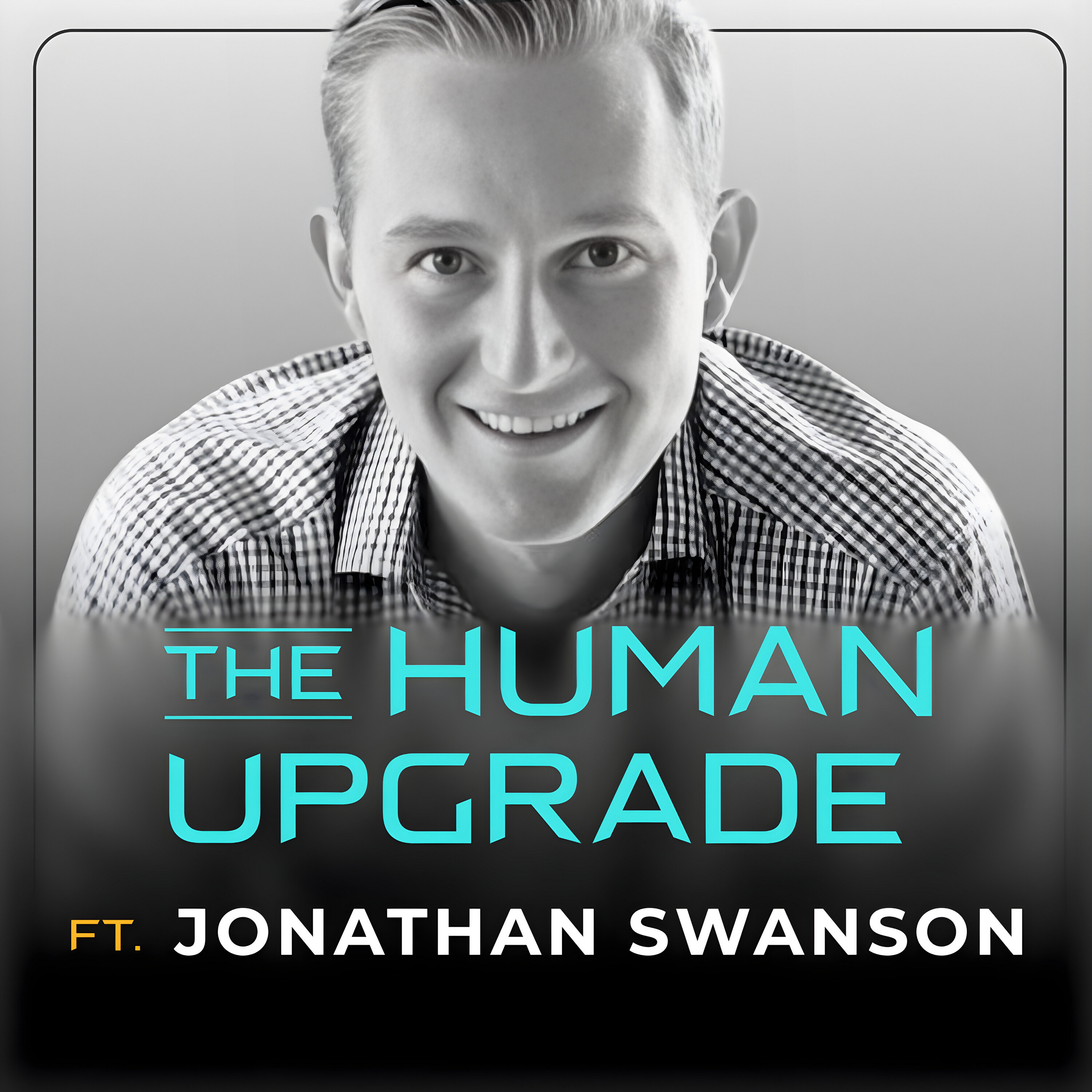
The Human Upgrade: Biohacking for Longevity & Performance
The One Thing Everyone Thinks They Can’t Afford… Until They Try It : 1379
00:52:20
Loading summary
Transcript91 lines
- [00:00]
Jonathan Swanson
I want to be a time billionaire. I want to have time to do all the things in this world that are worth doing. I've been focused on how do I have not one more hour in a day, but 20 more hours in a day or 100 more hours in a day. And the only way to do that is via delegation. My wife and I have an internal joke in our family. We say, never lift a finger. Like, if I'm lifting a finger, I didn't delegate. I didn't build a system. I didn't automate. People think is that you have success. You get getting is what creates the ambition. Until you take that first step of getting more, it's hard to even dream. The cardinal sin of delegation is thinking it will be faster or better to do yourself. And the reason it's the cardinal sin is because it is faster or better to do it yourself once. But once you've trained your then they get to do it a thousand times. The very best delegators unlock a level I call clairvoyant delegation. The first time you hear about a task is when it's done. It's like, hey, Dave, there's a car in your driveway. And your like, wow, I didn't even know that project was in flight. The way I think about it is do less or do more. Do less of minutia of chores, of things you hate, and do more of the things you love.
- [01:16]
Dave Asprey
You're listening to the human upgrade. With Dave Asprey.
- [01:24]
Sponsor/Advertisement Voice
You spend a third of your life in bed. If you're sleeping on a toxic mattress, you're sacrificing quality sleep and recovery. Bad sleep isn't just about feeling tired. It weakens your immune system, raises inflammation, and accelerates aging. I don't risk that. I use an essentia mattress. I've been sleeping on an essentia for years. And that's why I teamed up with them to create the Dave Asprey upgrade, an enhanced EMF protection upgrade built right into their performance mattresses. This is next level biohacking for your sleep, protecting your body from emfs. Delivering outrageously comfortable beyond latex organic foam that outperforms memory foam and doing it all without petrochemicals or chemical flame retardants. The Essentia team designed this to help you spend more time in those crucial REM and deep sleep cycles so your body and brain can perform at their peak. This mattress works. I've tracked it. If you care about recovery, cognitive function, and longevity, your mattress is one of the biggest upgrades you can make. Just go to myessentia.com Dave and use code Dave for $100 off to experience the upgrade for yourself. Your brain is probably underperforming right now. No judgment. Most brains are. In fact, you're probably not thinking as clearly, sleeping as deeply or performing as.
- [02:44]
Dave Asprey
Well as you could be.
- [02:45]
Sponsor/Advertisement Voice
Braintap helps you unlock your full potential. It offers More than 2000 in app audio sessions and an innovative headset that together deliver light pulses, binaural beats, isochronic tones, guided visualizations, and 10 cycle holographic music to rewire your brain for higher performance. In just 20 minutes, you can achieve deep brainwave states that would take hours through traditional meditation. It also helps regulate your sleep wake cycle, making it easier to fall asleep, stay asleep and wake up refreshed without drugs or dependency. This isn't just some trend. Braintap leads with tons of real science. They've conducted multiple studies proving this works. From enhancing memory and focus to accelerating cognitive learning, managing stress, and deepening visualization, Braintap is a holistic tool for peak performance in work, creativity and daily Life. Go to BrainTap.com Dave to get $100 off the BrainTap power bundle.
- [03:47]
Dave Asprey
Today's episode is something you probably haven't heard before. This is a guy who has started a couple different companies with, oh, a thousand employees each and raised 700 million in venture capital. And he makes something that my team uses every day. And the reason I'm doing this is I want to talk about ways you can save time and energy. And this might not be for everyone, but this is something that's been really transformative for me. And it's just in the area of focusing your attention where you want it to go and not breaking the bank while you're doing it. We're going to talk about a company called Athena and how you can actually work with people in order to get the things that are important for you done so that you can have more time. Because of things like AI and because of things like outsourcing, it's just much easier than it's ever been. And it's one of the things that helps my team do what it does. So, with no further ado, Jonathan Swanson, welcome to the show.
- [04:52]
Jonathan Swanson
Thank you for having me.
- [04:53]
Dave Asprey
All right. You built different billion dollar companies and then decided that time, not money, was a thing that you wanted to give people back. You've kind of done it all even more than I have. Congratulations, by the way. What made you decide to do this?
- [05:07]
Jonathan Swanson
I mean, some people want to be billionaires, make Lots of money. Other people want to acquire power. I want to be a time billionaire. I want to have time to do all the things in this world that are worth doing. You know, I sometimes hear you talking about living to 180 or longer. I want to do the same. But I also want to have time today to do all the things I want not 100 years from now. And I think you and your audience think a lot about kind of biohacking, how to break the constraints of the body. And I just think about how to break the constraints of the clock, because there's more in this life than you can ever do in a day unless you learn how to get more hours. And so I've been focused on how do I have not one more hour in a day, but 20 more hours in a day or a hundred more hours in a day. And the only way to do that is via delegation and personal leverage. And so that's how I've dedicated my last decade of my life to.
- [06:08]
Dave Asprey
I love that angle. Yeah. If you are into longevity like I am, it's really because you want more time. And I find that people who are into consciousness work or longevity work. And those are both aspects of biohacking. We also care about efficiency. We don't want to spend two hours taking our supplements in the morning. We'd rather spend two minutes. And we don't want to spend 40 years meditating. We'd rather spend five days like anything like that. And you just have a very different take on this. And you and I have both been CEOs of sizable companies. How many hours a day did you typically work when you started building your first billion dollar company?
- [06:47]
Jonathan Swanson
So when I started thumbtack, I was working 16, 18 hours a day. I started doing polyphasic sleep, which you probably.
- [06:57]
Dave Asprey
Yeah, I did too, actually.
- [06:59]
Jonathan Swanson
You know, I would go to bed at midnight, wake up at three, and was just running myself to the ground because that's the only way I knew how to do it. And then as we were scaling thumbtack in the early days, I hired someone in the Philippines, and she really changed my life. And because I'd never worked with someone outside of America before, and, you know, this woman grew up in Manila without much money. Her dad earned a dollar a day. And I interviewed a number of people around the world for a certain job. And this woman in the Philippines beat the others in terms of her work ethic, quality of her work, and this really blew me away. And so I hired her and we partnered, and she started helping me accomplish more at work and in my personal life than I ever dreamed possible. Just on a personal note, she then went on to manage hundreds of people at our company. And so it was a life changing event for her. But she came in and helped me first manage my calendar, my inbox, take things off my, my slate. And then at one point as we were scaling up the business, I said, hey, you know, I'm spending all my time at work. I don't even have friends outside of work. Can you help me make friends?
- [08:13]
Dave Asprey
And I was like, you outsourced your friend to selection? I love this.
- [08:18]
Jonathan Swanson
And so I had her plan dinner parties for me every other week. And her name's Marnie, I still work with her today. She invited founders of Airbnb, of Uber, of other startups at the time to my house. And I would show up after work having done no, no effort on this. And there was a chef and a bartender and eight new potential friends. And from those dinners, I made all my best friends in the world. I even made a friend named Catherine who became my wife. And then fast forward, Marnie's helping plan our wedding and now she helps us with our kids. And so over this decade long journey, I've learned how to offload more and more things through delegation so that I, yeah, I can break the chains of time and do more.
- [09:03]
Dave Asprey
Today I had a different experience. I graduated from Wharton and I got my first, you know, post MBA job working at a tech company based in the uk. And my CEO wouldn't pay for an EA for me and I suck at managing travel and calendars. It's a kryptonite for me. Like, I, I believe if something, if you hate doing something and it sucks your energy, that's when you need help the most. And for me, that's kryptonite. Like, don't make me do calendaring because it takes all day for me to set up three appointments. So I paid out of pocket for, for an assistant in the Philippines, but I didn't get the right one. She was very, very dedicated, but I didn't quite have enough work for her, so I told her, look, I'm fine. Watch a movie, I don't care as long as you're there when I need you there. But then all the other people in her call center got jealous of her. And her boss called and was like, I can't have her working because she's not suffering enough. And I'm like, this sucks. So I ended up not doing it. And my coworkers were outraged. Like, how dare you hire your own ea. I'm like, how dare you not hire an ea? Because I want to focus on things that matter for me. And so since then I've gone through a handful of EAs and I work with just a wonderful EA I have for years who lives in another country, she's up in Canada. But the problem is it takes a long time to find someone who's trustworthy to be able to decide who comes in your home and things like that. It's also expensive for most of us. And I came across your company Athena, oh maybe two and a half years ago because some of my friends in venture capital where I used to work were using your company and you did something that no one has ever done that I've seen. You, you just came up with a militant process for screening and training assistant. And because you're doing it offshore, it's quite affordable. And I'm like, well, let's put it this way. How much do people pay to have a full time EA working their hours who's fully trained even on AI?
- [11:08]
Jonathan Swanson
Yeah. So traditional EA in SF or New York City is now 150,000 plus a year. Yeah, it's crazy and out of the budget for most people. And our goal at Athena is to make it much more accessible. So it's $3,000 a month. We have a special deal for your listeners@athena.com upgrade if they want to check it out. And we want to make it as affordable for as many people as possible. We know $3,000 a month is even more than some people can afford. And so eventually we'd like to have an even more mass market offering. And we think our investments in human plus AI, which we can talk more about, will allow this to be even more accessible. But yeah, for $3,000 a month you get a full time person dedicated just to you whose sole focus is helping you, Dave or me. Jonathan, hit my personal goals, spend more time with my wife, you know, work out more, accomplish things at work. Not spend time doing passport renewals or going the DMV or scheduling or the things I don't want to do. And yeah, if you can afford it, it's the highest leverage thing you can do in your life.
- [12:20]
Dave Asprey
I coach hundreds of entrepreneurs on how to build biohacking companies. I run something called the Business of Biohacking Conference. It's coming up this year right after my main biohacking conference at the end of May. Guys beyond conference.com if you're interested. But I always ask people, how many people wash your socks and half the hands in the room go up and I'm like, shame, shame. Unless you have a sock washing fetish, it's just, it's not highly leveraged time. And like you said, if you're not working out because you're dealing with something where you could ask for help, a lot of people still don't ask for help. And you've clearly mastered this. What's your advice for people who feel shame about getting help with things?
- [13:06]
Jonathan Swanson
So we have these principles of delegation that are the main things that unlock world class delegators. And one of them is not being ashamed because lots of people do feel bad about asking someone else to help them. And I think the answer here is everyone we hire and everyone we worked. I'm sure you've had this experience, Dave, like they desperately are excited for this. For you. It's offloading the things you hate doing for them. It's the best paying job they've ever had. It's an opportunity to work with an entrepreneur where they get to see behind the scenes of this interesting, exciting life and they get to be part of your success. And so my reframing is this is not shame of pushing this off to someone else, but it's actually you are giving a gift gift. You're getting a gift of employment, of a good job, of an opportunity for them to grow and learn. And meanwhile you get a life of freedom. You get to give, stop living life on hard mode, doing all these difficult things. And that is the beauty of the model. Both sides win.
- [14:16]
Dave Asprey
So many listeners either are entrepreneurs or thinking about it. And I tell people over and over, the first hire that you get is you get NEA because it cleans up your brain. There's just so many open folders and the issue for has just been finding someone you trust who's not going to steal your stuff, who's not going to flake on things like that. How do you go about finding whether someone is trustworthy?
- [14:43]
Jonathan Swanson
So first of all, what you just said is right. It's like chronic inflammation damages the body, but chronic to dos damages your mind. And having an assistant you can offload these menial tasks to opens up your mind, lets you sleep more, lowers your cortisol, does all the good things that we want to accomplish. So you know what I say is if you don't have an assistant, you are the assistant. And so the first thing is to find a way to get leverage and delegation through someone else. If your budget is only $20 a month, then you can use ChatGPT and it's a limited assistant, but you can get a lot done by becoming really an expert at that. If you have a budget for, you know, $5 an hour, then go off to upwork or to these other sites and go hire someone directly like you did. Now if you do that on your own, you're gonna have to interview hundreds of people, do lots of practice tests, do lots of training. But if that's all your budget, what I tell people is like, don't use us, go do that. And you work down this ladder over time as your budget increases. And if you can afford $3,000 a month, then you come to a company like Athena. And we have a huge funnel of talent. So we attract 50,000 assistants to apply at our company every month. We've built in person training centers in multiple countries around the world. Four story training centers are beautiful startup offices. People come in person, they interview, they spend weeks getting trained there. This Athena academy is actually developed by the former head of the University of Michigan business school. So they're getting real training and then we actually offer them accredited MBA degree if they stay with us for five years. So you hire an assistant, they help offload things from your life and you're helping fund them. Get a life changing degree on the house from us. Now if you have budget for $150,000 a year, then also hire an in person assistant and you have an Athena assistant often work beside them. And then kind of the finer ladder in this, in this is what I call the like billionaire budget. And you know, I know people we've worked with who have a chief of staff for half a million a year, a dozen in person assistants who you know, graduated from Princeton.
- [16:57]
Dave Asprey
Rio, I think I know the person you're talking about. He's a friend.
- [17:01]
Jonathan Swanson
Yeah, and that's the, that's the. You know, I've been kind of working my way down the list. I started with nothing, you know, I hired directly. Now I'm building this business that provides as a service and you know, ultimately this 10x, this 10x budget is what we all aspire to. But you just start with what you can.
- [17:21]
Dave Asprey
Here's something even the most dialed in biohackers miss. You can look great and feel fine, but you could still be aging fast on the inside in one area but not another. That's because each of your organ systems.
- [17:32]
Sponsor/Advertisement Voice
Ages at its own pace.
- [17:34]
Dave Asprey
And system age from generation lab can show you exactly how each of your internal systems, your brain, your hormones, your mitochondria, your immune system, or holding up over time, this goes deeper than just blood sugar or cholesterol testing. It tells you what's working and what's not. Is the daily supplement stack you're taking actually making you younger? Well, now you can know. And you don't just get raw data, they give you an action plan to improve. What nutrients is your body missing? What to eat more of where your body needs extra recovery. Best part, it's a five minute pain free blood test you do at home and it gives you a level of data most people never see even with a functional medicine team. Go to generationlab.com, use code DAVE20 to get $20 off and see what your body's really doing behind the surface.
- [18:18]
Sponsor/Advertisement Voice
VRBO Last minute deals make chasing fresh mountain powder incredibly easy. With thousands of homes close to the slopes, you can easily get epic pow freshies, first tracks and more. No need for months of planning. In fact, you can't even plan. Pow Powder is on its own schedule. Thankfully somewhere in the world it's always snowing. All you have to do is use the last minute filter on the app to book a last minute deal on a slope side private rental home. Book now@vrbo.com.
- [18:50]
Dave Asprey
I grew up without tons of money. My parents, I would say middle class, but they were just outraged that someone in the neighborhood had a maid. Like, how dare they? Who do they think they are? And my parents have a house cleaner now and it's really helped them a lot. And they're like, we wonder why we, we thought that. So for people listening, this is especially if you're, you have a side gig or something. Like this is something that's, that's profound. And whether it's working with ChatGPT, I just, I feel like I don't talk about this enough on the show. It's freedom over your attention that's most important. And I do not have a to do list anymore in my life. Do you have one?
- [19:34]
Jonathan Swanson
I have a to do list but I've been able to free myself from calendar and lots of other things. Tell me how you do it without a to do list.
- [19:42]
Dave Asprey
Anything that I would put on a to do list I send to my assistant and say put it on the calendar. And she says there's no, there's no space on the calendar. Then I'm not going to do it right. So then we bump something off the calendar and there's before 10am most mornings. I'm like, don't mess with me. Like this is time I'm going to think I'm going To be in the sauna. I'm going to biohack. I'll meditate or do neurofeedback, all the different things that give me expanded abilities. Because if I don't do that because I'm calendaring, it just doesn't work. And I imagine some listeners are saying, well, Dave, you're a CEO. You have a bunch of people on your team. You have a bunch of companies. Yeah, I do, but this is how I do it. And when I started Bulletproof, I was a VP at a publicly traded company without an assistant. And I had a team too, so lots of work there. And I started what became $140 million a year business by staying up late at night and working my ass off. My very first hire was an assistant. And I wouldn't be where I am today if I hadn't done that. So I feel like we got to talk about this. 3000 is. It's a meaningful amount of money for a large number of people. But if you're starting a business and your business is making $4,000 a month, spend $3,000 on the assistant, and then in two months, you'll be making $10,000 a month because you can actually do your job instead of doing an assistant's job. Right. And so this is just a hidden thing for scale.
- [21:10]
Jonathan Swanson
Yeah. I think something that people think is that you have successful, and then from success you get leverage, and that lets you have more ambition. But what we've discovered from coaching thousand plus clients, Athena, is actually getting leverage is what creates the ambition. Ambition follows from that leverage. Because when you're drowning in a sea of things to do, you can't dream about how much better your life could be. But once you offload all the things that you don't want to do, you then open up your ambition. Say, oh, maybe I could be more ambitious with this company. I could start a new project, I could start a new company. I could spend more time with my kids. And until you take that first step of getting more leverage, it's hard to even dream because you're weighed down by all of the things you have to do to day to day. And I couldn't agree more with. You know, I grew up in the Midwest. My parents grew up on farms. We. I never expected to have a single assistant, let alone. I've got a half dozen now, so it feels a little surreal. But the way I framed it to feel so good about it is they're like, every person I hire gives me leverage, and it creates a job and an Opportunity for someone else. And so I get to live this life I want and accomplish more. And I get to give, put money in the pockets of people who are good hearted and talented and working hard. And that's an amazing gift for both of us.
- [22:40]
Dave Asprey
I'm so intrigued that you built this massive infrastructure to train and screen people who want to be assistants. And I, I think that's an enormous amount of work. And I, I'm. Yeah, I'm just, I'm excited by this thought. What causes you to not say that someone's going to be a good assistant?
- [22:59]
Jonathan Swanson
A hundred things. So, you know, before I started this business, people would say, hey, how can I have an EA like you? This is obviously life changing. And I'd say, go off to upwork, go interview a hundred people and good luck. And the reality is it's 1 in 400 that work out. So we have this huge funnel and only one out of this 400 do we hire. And it's everything from personality traits. You have to have high conscientiousness, you have to have lots of drive to skills, you have to be able, you know, speak English well, have to communicate well. You also have to have curiosity and flexibility because I think being assistant is one of the most interesting and ver. And high variety jobs. Right. You have no idea what Dave is going to ask you today. I'm sure you've asked your team to do some outrageous things and that's the case of all of our clients. And so we have to find people who are excited and kind of driven and have energy by having a wide variety of different projects. So it's, there's not really one thing. We have a whole battery of dozens of tests and people fall out in every stage. And it's just those rare few that are smart, capable, driven, excited by variety, and want to take on, you know, the crazy job of helping someone accomplish their goals.
- [24:15]
Dave Asprey
All of my direct reports have the opportunity to have an Athena assistant because it just makes everything so much easier because then the people who work for me don't drop balls. People drop balls because they're overwhelmed with things that aren't important. They're just overwhelmed. And like as an example, I just bought 40 years of Zen's new home here in Austin, so acquired a sizable property with luxury stuff on it so people would come in and train their brains. I didn't really do anything. I said, I want to buy this place. And my assistant was like, okay. And then I ended up signing some docs and wiring some stuff. But I Spent very little time, very little on that compared to anything I've ever done. I said, you know, my Jeep is too loud for me to make phone calls when I'm driving, even though I like it. I want to get a Ford Raptor. And then I found one online, said that one, and magically the truck appeared on the back of a flatbed truck a week later. And I still don't know how that happened because I didn't have to know. All I know is like, I got the truck at the price and somebody did something. And I honestly, I have no idea who my car insurer is. I know it's in the glove box if I need it. Like, that's like the kind of freedom that that gives you. It's hard to put words to it.
- [25:32]
Jonathan Swanson
And, you know, you are obviously an advanced delegator. Most people start off at very basic of kind of delegating a task. Then the next level is you delegate a project. Then eventually you delegate by goal and you say, you know, this is what I want to accomplish in my life. But the very best delegators unlock a level I call clairvoyant delegation, where mediocre delegators don't think this exists. But I know it does because I've spent time with people like you. But you get so good at delegating that things the first time you hear about a task is when it's done. It's like, hey, Dave, there's that car in your driveway. And you're like, wow, I didn't even know that project was in flight. It's incredible. But you have so mind mounded with your team, and you've given them so much feedback and train them so well that they can anticipate your goals and needs and then deliver outcomes almost like it's magic. And that is that. That is the. That's the nirvana that every delegator aspires to and that we, we want to train our clients to get to. Now, most people take years to get there. This is not something you turn on overnight, but that is the nirvana that you want to drive towards.
- [26:39]
Dave Asprey
I have this mindse that human laziness comes from mitochondria. And people really are repulsed by the idea of lazy because it's morally bad. In fact, I wrote a book where I talked about the power of lazy, and people didn't want to read it because, like, I couldn't. So all innovation on earth comes from laziness. Like some guy says, you know, I'm really tired of pushing the plow myself. I think I'll hook it up to a horse or an ox or whatever. And I don't want to walk. I'll build a bike. And like everything good we've ever done, even AI, it's like, I didn't want it, right, that I'll have something, write it for me, right? And so for me, I. I've embraced every second of every day. Can someone else do this instead of me? And I also know my hourly rate. And for anyone who has a job or anyone who's an entrepreneur, you need to calculate your hourly rate. And it might be 50 bucks an hour. And that means that if you spend, I don't know what, 3,000 works out. Was that like 12 bucks an hour or something somewhere around there? So you're like, okay, I can actually do this. But then you're saying, but I still don't have the money. So then you have to be able to scale your income to cover that. But it turns out that that arbitrage where every single thing you're doing, it's not adding value at the level that you get paid. So for me, I just became very militant, and it's the only way. I have nine companies, and they're all growing, and I write books, and I have this podcast, and I am doing all this stuff, and I'm busy, but I never waste a minute, and I have time for my health, and I could not do that without a combination of AI and trustworthy assistance. And my biggest challenge has been finding trustworthy assistance over the last 15 years. So when you came along, I'm like, this sounds too good to be true, but after a couple years of working with Athena, I was like, let's have you on the show. You've. You've achieved a lot in your life. I want to pick your brain and maybe reframe for our listeners that, like, it's okay to ask for help and that it's part of biohacking, is to say, what are the things that suck my energy the most? And how do I get those off my plate? And Athena's away.
- [28:50]
Jonathan Swanson
If I told you that you could hire another Dave on your team, there was a digital clone of you, how much would you spend on that? So much.
- [28:58]
Dave Asprey
Oh, yeah, I would hire 10 of them right away. Of course, if they were true digital Daves, they would tell me to fuck off. So there's that.
- [29:06]
Jonathan Swanson
But, yeah, if you hire an assistant to take things off of your plate, you're effectively hiring more Dave. You have more Dave to do the things that you're best at and that you don't want to do. And I think your point about laziness is hilarious because it's definitely the case. My wife and I have a internal joke in our family. We say, never lift a finger. Like if I'm lifting a finger, I didn't delegate. I didn't build a system. I didn't automate. And you know, she recently asked me to do something, setting up a camera or something for a baby's room. And I was like, you want me to delegate that to myself? And she, she gives me a hard time about this. She's like, you mean do something? And I'm like, I don't know. That's not how I think. I think about everything coming in. How can I give it to someone else to do so I can get more leverage? I empower them. They get a learning opportunity and I get to do higher level things that drive the business forward or spend more time with my family or spend more time in the sauna. All the things we want to do.
- [30:10]
Dave Asprey
I had dinner with my kids every single night when I wasn't on the road. Probably more than, more than any other CEO I know at the scale that I'm at because of the ability to delegate and made you be a personality thing. Or maybe I was just overwhelmed with just, I had a lot of growth all at the same time. And I just realized it's the only way I can keep my head above water. But I'm, I'm really grateful because every minute that I would have spent doing something that I could have asked for help with, it's literally I didn't get to parent or I didn't get to practice self care. And how many entrepreneurs do you know who've blown up because they didn't sleep and they didn't take care of themselves? And like, you hit a wall, right?
- [30:49]
Jonathan Swanson
I mean, you have someone who is dedicated just to think about you and your time, your health. And their focus is helping you be successful. And you know, in your company you might have people doing projects for you, but you don't have someone who's just thinking about you. And that's the moment that is really an unlock for lots of clients is they have an assistant, they're doing the tasks, but then the assistant says, hey, I saw you're flying this long flight tomorrow. I booked you a massage because I know you'll be tired. And that moment of just like, wow, someone else is caring for me, taking, taking good care of me is just like, is so powerful.
- [31:29]
Dave Asprey
It is do you have like wealthy couples who just hire an Athena assistant for them that aren't even running a business?
- [31:38]
Jonathan Swanson
Of course, yeah. I mean the most common clients are startup founders, SMBs, small business owners, but yeah, then just families where, you know, running a family is a full time job. Homemaker is a, is a, is a hard work and organizing the house, the kids, schedules, passport renewals, all these things. So we have lots of clients who have an assistant that effectively manages the home. I have a half dozen personally and one of mine manages the home, another helps with kids schedules. That is, these are in person though.
- [32:10]
Dave Asprey
Or are these remote?
- [32:11]
Jonathan Swanson
Remote.
- [32:13]
Dave Asprey
Wow.
- [32:13]
Jonathan Swanson
And they, they coordinate with someone in person. And so you know, as an example, I might have a house cleaner take a photo of what's in the fridge and in the pantry and then that goes to an assistant and then assistant knows what to order to keep everything stocked. And so you have a digital assistant who can do everything digitally and then, you know, to the extent you can have eyes and arms and legs on the ground, that combination is obviously even more powerful.
- [32:41]
Dave Asprey
There's probably 50,000 entrepreneurs listening to the show right now, I would guess. I don't get that kind of demographics, but we get a lot of listeners almost, almost about, across 600 million downloads on the show. So I know not everyone is an entrepreneur, but this, this is one of those things where the mindset that you're transmitting here around like how do I get help? It does work with AI and like you said, if you have 20 bucks, that's where you start. And it feels like working with AI and with Athena would be even more powerful. Where, you know, I could ask ChatGPT to do something and then it would tell my assistant something. Is, is that part of the plan?
- [33:22]
Jonathan Swanson
Exactly. We think the most powerful assistant is not going to be human only or machine only, but the merger of the two, and that's what Athena is building, will launch and share some things next year. But the high level vision is you'll have a human assistant who's the ux. Humans are good ux, but behind that human there'll be a machine assistant who will help automate and accelerate the work that the assistant is doing. And so just like when you get in your Tesla, it didn't go from 0 to 100% self driving driving overnight. It had autosteer and brake and lane control. Athena's assistant AI will play the same role. It will start automating 1% and then 2, and then over time your system's just going to get faster, better More capable than ever. But it will still be a human, but it just be supercharged by AI. And I think this is the magic. If you just use AI, it's brittle, it can't accomplish everything. And if you just have a human, it's of kind. Humans need to sleep, but the combination will, will be a beautiful thing. And that's, that's what we're building.
- [34:27]
Dave Asprey
There's something else too that you said earlier that that's human relationships are important. And knowing they have a person who's watching out for you is very different than having a process watch out for you. I, I don't know if that's a energetic or a spiritual thing, but I think that human connection is, is critically important.
- [34:45]
Jonathan Swanson
Absolutely. I mean, I worked at the White House out of school and I sat next to some assistance to the president as my first interactions with assistants. And those assistants were really freaking good. But one of the things I noticed was not just that they were capable, but at the end of the day, the president or his senior advisors would kind of sit down, lean back in their chair and they would ask their assistant to come over and be like, just talk to me, what's going on? And it was a trusted ear, it was their closest confidant. It's the person who saw all the ups and downs, who knew the hard things they were going through. And that's certainly been my experience. Like my assistant seen my inbox, seen, you know, when thumbtacks about to run out of money, saw when we raised $100 million. Saw when there's lawsuits and all sorts of things. And she's like, hey, Jonathan, I know you're going through a tough day. It's nice, you know, you want to talk about it. And so having that person is, is really nice. And I think there's also some tasks that you wouldn't delegate effectively to a machine. So one of the health, one of the health related things that I've delegated historically has been helping track my workouts, my meditations and kind of other basic health stack. And I just had my assistant send me an email or a WhatsApp and it's like, did you meditate, did you work out? Did you etc.
- [36:09]
Dave Asprey
And accountability to another person's a big deal, Right?
- [36:12]
Jonathan Swanson
Exactly. And I just say, yes, no, yes, now. And then she puts in a spreadsheet and then she sends the spreadsheet to me, some friends, and we compete on who can do better. But if ChatGPT was doing that, I'd be like, whatever. But it's that human accountability that really adds a personal touch.
- [36:33]
Dave Asprey
Do you ever get like groups of people hire an Athena assistant. Like three startup founders all get together and each put a thousand bucks in and say, we want to kind of share an assistant. Does that work?
- [36:44]
Jonathan Swanson
So we've, when we started Athena, we had a shared program where you could have a part time assistant pay 101,000 bucks a month. The challenge with the model was one person would like the assistant a lot and would want to take the assistant full time. And then you had to take that assistant from the others. And then the other thing we learned was basically everyone, everyone who has a budget for 3,000 can utilize an assistant full time. There is an unlimited amount of work. And so start. People want to start small and like take the small step. But what we say is you got to go all in. And going all in lets you train one person, compound the learnings over time. If you're splitting across multiple people, that one person has to think about three people. It's hard for them to really, really take care of you in the right way. So we do have founders who may like one person hires and they share the assistant with someone else. But what we say is, you know, assistants should have one boss, not five bosses. And as long as there's one boss and maybe a little sharing underneath, that's okay. But we want someone to go all in.
- [37:49]
Dave Asprey
That makes so much sense because you're saying it's only going to end in pain relatively quickly because someone's going to poach them from the other team. Okay, I, I actually think that makes that, that's the best answer I think you could ever come up with. Because, like, because it doesn't work.
- [38:04]
Jonathan Swanson
Yeah, we understand why people want to, you want to, you want to just take a little step. And what we just say is you got to make the commitment. You got to go. And you know, there's a. In venture capital, they could talk about J curves of venture funds. They typically performance goes down because the early investments fail and then the winners take a few years to compound. And so there's this J curve. There's a similar J curve with working with assistance. Like on day one, your life is not going to be transparent formed. In fact, on day one, it's actually a little more work because you have to teach someone something new. You have to tell them what you want. And this, I call it the cardinal sin of delegation is thinking it will be faster or better to do yourself. And the reason it's a cardinal sin is because it Is it is faster or better to do it yourself once, but once you've trained your assistant to do it, then they get to do it a thousand times. And so, you know, I don't put my credit card in the Internet, haven't done that for years. I don't RSVP to parties, haven't done that for years. It only takes a couple clicks. But I taught my assistant how to do it once and she's now done it thousands of times. And cumulatively, that saves me an enormous amount of time. So we do tell people, this will change your life and it can unlock a whole new life for you. But you have to be willing to put in the time and you gotta invest and it takes months of investment and then over time, it gets better and better, and a year later it will be really moving the needle. And a decade later, like I've been working with Marnie, completely transforms your life.
- [39:36]
Dave Asprey
One of the concerns that I had when I hired my first EA all those years ago was it's going to take a lot of my time to delegate and manage. How do you teach people to effectively delegate without taking all their time micromanaging an assistant?
- [39:51]
Jonathan Swanson
When we started Athena, we thought, we will recruit and train. Cop assistants have this big training program and then we'll just match them with the client and then we'll be done. But it turns out not all of our clients are like you, Dave. And most clients need much more training and coaching on how to delegate. And so we, very immediately after starting the business, started building a delegation coaching program where we actually give clients coaching on how exactly to delegate. And so we have playbooks for how you might delegate, you know, raising a financing or how you might delegate recruiting executive, or how you might delegate running your house like a hotel. So some of his playbooks we've created that you can, you know, copy from other successful entrepreneurs. And then some of it's just best practices. It's, you know, you should meet with your assistant once a week, offload all of your ideas, let them give them access to your calendar inbox so they can see your life. We have coaching around how to delegate. So kind of mediocre delegators would say, hey, will you plan this dinner party for me? Whereas a more advanced delegator like you might say, will you plan a dinner party for me? Let me export my personal algorithm from my head to you right now. My personal algorithm for how I organize a dinner party is I want people who've raised X amount of capital, this amount of, you know, gender Variety people from this stage. I look at recent funding rounds and you basically create an algorithm that that person can fall. And I think this is very natural for some people, especially kind of more engineering or structured thinkers for others. It takes practice. You got to learn how to take your ideas and your thoughts and export that into this other human who is going to help you, but has to know all your nuances of your preferences. And that just takes time.
- [41:41]
Dave Asprey
I think that's because I was a systems engineer and a. If you write code, you know how to think and structured thoughts.
- [41:48]
Jonathan Swanson
So engineers are always better at this.
- [41:51]
Dave Asprey
Yeah. Everything to me is a process, including all of our mitochondrial decision making and it's actually mirrored in our psychology. And I don't know, everything's a process. Maybe that's an illness. It does feel though, I guess if people have training on how to delegate that, that would get rid of that cognitive burden from having to worry about your assistant. I've worked with assistants who didn't last that long where it felt more like I'd fall into a pattern where they wanted me to manage their emotions. And I had one that just went sideways. And when finally we let her go, she's like, it feels like I'm breaking up with someone. I'm like, that is the creepy vibe. Like, that is not how this works.
- [42:30]
Jonathan Swanson
Is not what you want.
- [42:31]
Dave Asprey
No. Like, yeah. And so how do you, like, how do you have appropriate boundaries when you're working with an assistant who really gets to know a lot about your life?
- [42:41]
Jonathan Swanson
This is a professional relationship, fundamentally. And so, you know, I think it's. You're sharing openly about the, your goals, personal and professional, your tasks, but it's focused on accomplishment, taking things off your plate, getting things done, you know, And I think like most relationships, they should get more intimate gradually over time. You know, if someone ever shares with you at a dinner on the first meet, then that's not socially appropriate. And so it starts very professional. And then, you know, months go by and you can get more intimate, you share more information. You know, my, my wife and I do something called a life board of directors meeting once a quarter where we meet and we run a board meeting about our relationship because we're nerds. And I even share the results of that with my assistant now because we are so close and she's so key to helping me have the best marriage possible. Now, I would never do that with a first time assistant. I have other assistants I work with that I wouldn't share that with. But you know, for the one who's been with me for a decade. Yeah, I, I open the curtain fully and so I, we, we just recommend that clients, you know, give trust and give access, but you do it gradually and at a pace that feels comfortable for you. And some people, you know, take a little longer and some people ramp very quickly.
- [43:59]
Dave Asprey
I've heard of like horror stories where people hire someone off of upwork or something who steals their social media accounts or other things like that. If you're working with someone in another country, how do you handle protecting all this information about yourself?
- [44:15]
Jonathan Swanson
There are other companies that are more fly by night that just hire contractors or hire people illegally. And in those scenarios, if someone takes your stuff, there's really no recourse. And so one of the reasons we have gone so hardcore of setting up legal entities in every country, hiring people the right way, building buildings, four story buildings where people come in and train, is that we have all the rights and protections of hiring someone in the United States. And so, you know, could an assistant that I hire in San Francisco do something inappropriate? Of course, but we have contracts and we have courts and it doesn't happen very often because there's repercussions. And so we hire and build a system that has all that same protections in place. And so yeah, I think you, if you don't have the budget for an Athena or a similar service and you do hire on your own, I would just recommend that you, yeah, you give, you give access carefully and you, yeah, you build trust slowly because you don't have the same sort of leverage that you have if you're hiring someone in the United States.
- [45:22]
Dave Asprey
And do you use things like virtual credit card numbers that change or password vaults or some kind of security framework that's part of Athena for this?
- [45:30]
Jonathan Swanson
Yeah, we have default recommendations on one password and other sort of things that we recommend. End. We have kind of a, a tool stack that we think is best practice, but we let clients kind of pick and choose what they want. If you're using something else, we can adopt it. But yeah, we, we have a, you know, we actually, I'm an investor in Mercury the bank. I don't know if you know them, but I, I gave the CEO some feedback on what we would like to see in terms of wire transferability. And so they built something specific for assistance and we have a partnership with them so we can set up an account and basically you can firewall a certain amount of cash into a sub account and you can set very specific guidelines where it's like my assistant can send up to X, but I have to approve it. If it's, you know, below Y, I don't even have to approve it. And so you just have total fine grained controls. And so we recommend people use services like that to, to, to give access and control in just the right way.
- [46:32]
Dave Asprey
Okay, so there's tools for that. I, every time I send a wire, even a small amount, my fricking bank calls me and wants to talk to me. I'm booked for 14 hours today. I'm not going to give up half this podcast to talk to a call center operator who's probably an AI. It drives me insane. So I think you just got a Mercury customer there.
- [46:51]
Jonathan Swanson
Yeah, you should use it. It's great.
- [46:53]
Dave Asprey
I'm pretty sure that no one here loves their bank anyway. You also built a full record of your health history and what did you learn from doing that with an assistant?
- [47:03]
Jonathan Swanson
This is fun. So I've always wanted a full record of my health history, but it's impossible to get because, you know, government's broken. And so I asked my assistant to go into my calendar and my inbox and find every doctor's appointment for the last 20 years. And then, and yeah, I delegate some insane things and then reach out to the doctor's office because I've lived, you know, dc, California, all over the place. Reach out to the doctor's office from my inbox and request the health records. That way she doesn't have to sign anything, it's me requesting it, and then collect all of it. This took many months, but over many months she collected all these things, blood draws, all these things, put it into one database. And you know, at first I actually didn't do much with it. I was just like, this is nice to have. But now that we have ChatGPT, I just created a ChatGPT folder where I have all of my health records in it and I now query it like a doctor. And so I'm personally working on lowering my ldl. It's my top health goal. And I give it the supplements I'm taking, give it recommendations from Biograph, which is executive health program. I do, and then it looks through my history and its recommendations are as good or better than my doctor because it knows everything. And my doctor just doesn't have the time to look over 20 years of history. But what the AI does. And so now it's all in one place and I will just continue to add things to it and query it. And it's like I have, you know, a million dollar concierge doctor on demand. But, you know, I'm paying, you know, ChatGPT a couple hundred bucks a month.
- [48:42]
Dave Asprey
That is something that so many people have done. I, I wouldn't say I have my complete medical history because, same as you, I've done all the weird stuff, but I have the majority of it. Yeah, as long as you know how to query it and set it up right, you can get incredible knowledge. And I've trained a GPT project that's actually part of one of the apps for upgrade labs that has all of my research and recommendations in it as well. And man, it's good. It's better than most doctors. And you have to know your goals and you have to know your state, and with those two things, you can change radically. But I've never thought of having someone call every doctor I've ever seen. But no, they're making me think I need another Athena assistant.
- [49:24]
Jonathan Swanson
There's always more. I mean, people laugh at me because I have so many assistants. And I do know it's kind of comical, but the more you have, the more things you see that you can do. You know, on one of the more ridiculous things I've done, my wife's mom was having a 75th birthday and we wanted to give her a thoughtful gift. And my wife and I were like, what if we pinged all of her Facebook friends and everyone in her email list and asked for a touching story about her or a thank you note for something she had done? And we had this thought and the thought took us maybe 10 seconds. And then we're like, we're going to give this to an assistant and it's going to take them two months, but it's going to be the most insane gift that she's ever gotten. And assistant did that. Had to DM a thousand people on Facebook. Go. You know, we, we stole her emails, broken her email, and we emailed her contact list. And then on her birthday, we said, for the next 365 days, you're gonna get a text message that's a note from one of the people in your life from the last couple decades with a thank you or touching story. And then for 365 days in a row, she got all these stories and these notes from some of her best friends as well as some random person she emailed 10 years ago. And it was, you know, one of the best gifts she'd ever received. And for us, it was just like we wanted to show her all this love and appreciation. And we are able to do that through our Assistant. We just could never have done it on our own otherwise.
- [50:55]
Dave Asprey
That's profound. What an amazing gift, especially at 75 years old. One of our live studio audience from the Upgrade collective is saying, can you use an assistant to watch your kids on cameras while you go out? Maybe as teenagers? And I know you did night monitoring for babies. How do you use a remote assistant to do sleep monitoring for kids?
- [51:14]
Jonathan Swanson
Now this, I'll just say this is Black diamond delegating. So delegate at your own risk with all the usual caveats, but yeah, my wife is an amazing delegator as well. And she was like, wait, we're, we have these newborns, we have a baby monitor. When they cry at night, we're listening to them cry. But what if someone else was listening?
- [51:37]
Dave Asprey
And so you can sleep okay.
- [51:40]
Jonathan Swanson
Exactly. And so we set up a night watch camera system where our A team in the Philippines, we actually hired ex nurses for this specific one, watches our kids sleep at night on a baby camera. And if they cry or need help, then we have a protocol and it's, you know, at first, give them a minute. If they still need help, sing them a low low by. If they still need help, ask them, you know, can I help you? You know, I'm here. Night nanny's here, time to go to bed. And about 90% of the time they wake up, the night nanny is able to intervene, calm them, help them get back in bed.
- [52:17]
Dave Asprey
Even though she's remote?
- [52:19]
Jonathan Swanson
Yeah, even though she's remote, she's in, you know, she's in the Philippines. And then, you know, if the kids need us, of course we have a phone and they call through and then we go in and jump in and help the kids. And you know, if our boys wet his bed or something, then the Filipino night nanny can't help with that. But for 90% of stuff, yeah, the, the night nurse is there and helps the kids sleep at night.
- [52:44]
Dave Asprey
Part of me is like, that feels a bit, I was like, well, don't they need to co regulate with a hug? But I think what you're saying is that when they need that, that's when you get the alert. But most of the time it's not strategic or impactful. They're just making noises.
- [53:01]
Jonathan Swanson
Yeah. Half the time it's just a little cry for 10 seconds and they go back to bed. And if they need dad or mama, we run in there, we snuggle them and help them get back to bed.
- [53:10]
Dave Asprey
Of course, the first two years of having kids, for me, man, it's like you don't get to sleep. So that's incredible. I would have never thought about doing that.
- [53:19]
Jonathan Swanson
Yeah, and sleep's the foundation of everything. I mean, Brian Johnson talks about this, like, if you don't sleep, you don't exercise, and if you don't exercise, you don't eat well. But if you sleep eight hours a day, you've got willpower. You exercise. And if you exercise, then you're motivated to eat well, and then you're really on track for a healthy life.
- [53:38]
Dave Asprey
This is a profound way of thinking about it, and I'm hoping that this episode helps everyone just understand it's okay to ask for help. And that delegation, whether it's with AI or something like this, that it's beneficial. And it does cost 100 to 150,000 for someone in a major city to be an EA, which is a lot of money, and there's benefits to being in person. As a small founder, I couldn't have swung that. I mean, heck, my execs weren't making that when I started. But at this new price point where it's tried and tested and interviewed in a way that I wish I could do, this is a breakthrough for anyone running even a very small business on the side, which is why I wanted to talk about this. But it's more the mindset. It's like, if I don't have to do that, can I get help? And is it okay to get help? And I think you've just made the point really well that every minute it goes into your health or your family or things that provide meaning for you. If it wasn't something that only you could do at work, that has certainly been behind all of the ways I've scaled. And it sounds like it's the same for you.
- [54:49]
Jonathan Swanson
Absolutely. The way I think about it is do less or do more. Do less of minutiae, of chores, of things you hate, things that drain your energy, and do more of the things you love, of exercising time with kids, family, friends. And if you do less of the things that drain you and more of the things you love, then life is better and you have this freedom to chase your bigger goals and do things that maybe you thought weren't possible because they're not possible by yourself, but if you got help and you got a team, you can do a lot more.
- [55:25]
Dave Asprey
Well, that's. That's beautiful. And guys, because Jonathan's awesome. Athena.com upgrade and there's a $2,000 discount in there if you're at a place in your life where you want to give this a try. This is 95% as good as having someone in person at a tiny fraction of the cost. And so if, if you want to grow your business, I hope this is really helpful for you or maybe just make your life simpler. If, if this is within your budget and if it's not, think about how you can just take some things off your plate via any means necessary. Because I think the quality of health and the quality of life you get is absolutely worth it. Thanks again, Jonathan.
- [56:02]
Jonathan Swanson
Thank you so much.
- [56:04]
Dave Asprey
See you next time on the Human Upgrade Podcast.
- [56:12]
Podcast Disclaimer Narrator
The Human Upgrade, formerly Bulletproof Radio, was created and is hosted by Dave Asprey. The information contained in this podcast is provided for informational purposes only and is not intended for the purposes of diagnosing, treating, curing, or preventing any disease. Before using any products referenced on the podcast, consult with your healthcare provider carefully, read all labels, and heed all directions and cautions that accompany the products. Information found or received through the podcast should not be used in place of a consultation or advice from a healthcare provider. If you suspect you have a medical problem or should you have any healthcare questions, please promptly call us. See your healthcare provider this podcast, including Dave Asprey and the producers, disclaim responsibility for any possible adverse effects from the use of information contained herein. Opinions of guests are their own and this podcast does not endorse or accept responsibility for statements made by guests. This podcast does not make any representations or warranties about guest qualifications or credibility. This podcast may contain paid endorsements and advertisements for products or services. Individuals on this podcast may have a direct or indirect financial interest in product or services referred to herein. This podcast is owned by Bulletproof Media.