← The Human Upgrade: Biohacking for Longevity & Performance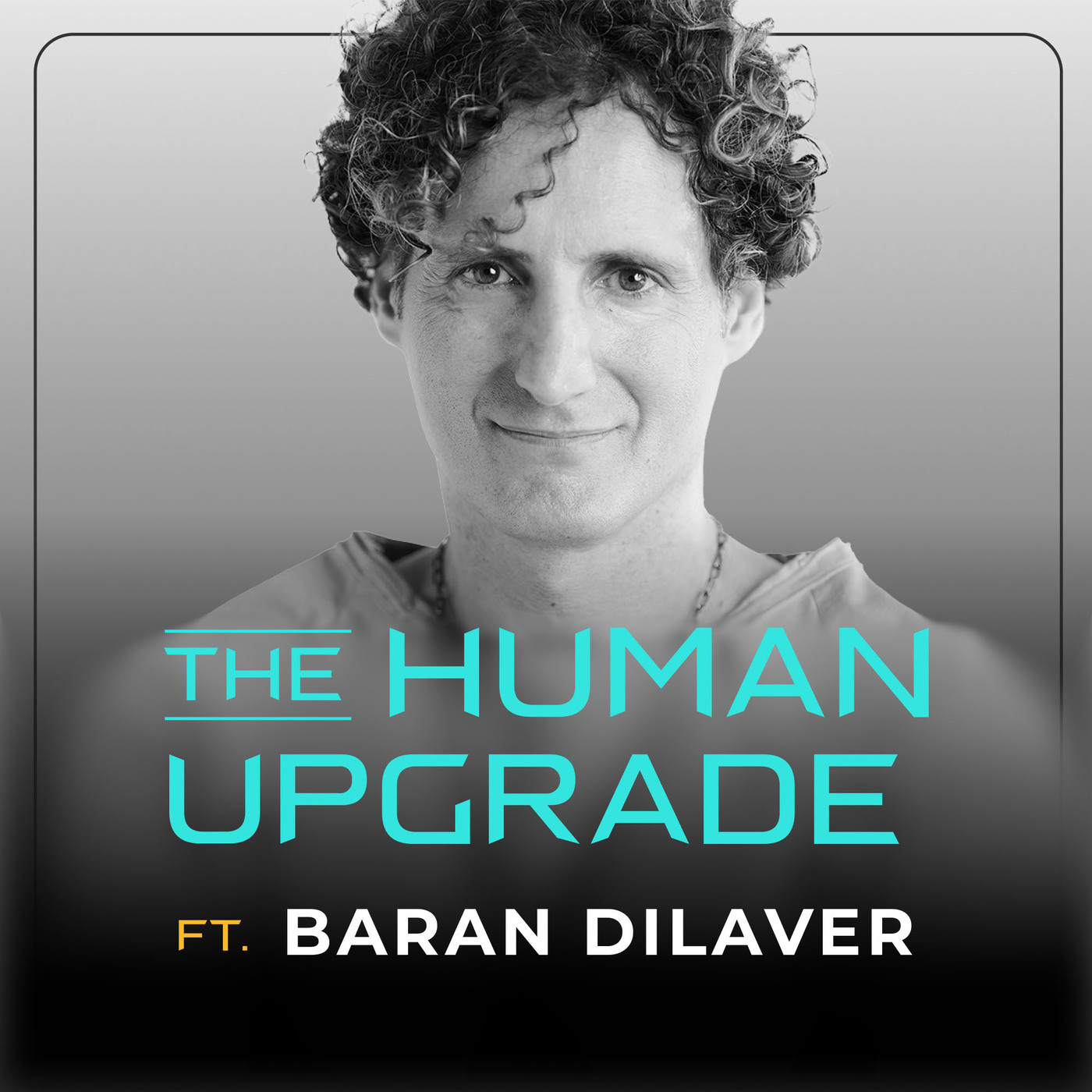
The Human Upgrade: Biohacking for Longevity & Performance
The Secret to Looking Younger is in Mushrooms (And Chocolate?) : 1417
01:06:53
Loading summary
Transcript219 lines
- [00:01]
A
Is so essential to the biochemistry. Without it, you'll be dead in 10 seconds. Think about it as the water source that feeds a valley. One year, apple orchards might not give as many apples. Somebody has, like, some liver issue. His skin is not doing that.
- [00:15]
B
I've learned about the body. It very elegantly allocates every electron of energy you make. The body says, do I really need to let the brain do everything it could do? Nah, like, let's make the heart beat. Most important for survival of the species, not your survival.
- [00:30]
A
The ones that really surprised us were the ones about more cosmetic changes. People will say, after like, eight months, my gray hair is turning back to its original color. This woman, she has lost most of her eyelashes, is like, wait a minute. So her eyelashes started growing. My friend's mom suffering from severe Alzheimer's. One of the professors recommended they will feed her a lot of. And sure enough, when they feed her a lot of porc, she would behave really well.
- [00:56]
B
I don't have any plaque in my arteries. It's kind of weird. I'm leaner, stronger, faster, smarter, to the point that it's almost absurd. You're listening to the Human Upgrade with Dave Asprey. This episode is about one of my favorite topics in longevity, which is nad, but about a bunch of other things that you haven't heard of, Other longevity compounds, and just a story of making really good tasting foods that contain them, as well as things like creatine. So you're going to get a lot of information here from my friend Boran, who is the founder of Wonderfeel. Wonderfeel is a company that makes a variety of products, a lot of nad stuff, and a lot of other really innovative things. So we're going to go deep on why and how these things work. Bharan, welcome to the show.
- [01:52]
A
Well, thank you. It's great to be here. Thanks for hosting us.
- [01:56]
B
You got it. And thanks for making the trip out to Austin to the studios. Coming in from the Bay Area. Really cool. All right. For people who haven't come across you before, who are you? What do you do?
- [02:06]
A
Who am I? I'm the CEO and co founder of Wonderfield Biosciences. That's the work that defines me these days. Work with some incredible scientists. I think you enjoyed meeting Dr. Sussman, hosting him here. One of the geniuses. And I have a quick story for you, actually. All right, let's do it. Yeah. After he came and visited you, he comes to San Francisco and he's like, baran, this guy is crazy. But he's also a genius, and he was very sincere about it. Why? He makes the most random associations. It only takes a genius to make it. And most of the time, he's actually onto something.
- [02:50]
B
Oh, wow, that's a great compliment.
- [02:51]
A
So he was impressed and not my compliment, his compliment. I'll give you a compliment. First time I met you, I have to say, I was a little intimidated because, you know, you know so much about.
- [03:02]
B
I thought it was my bike.
- [03:05]
A
You know, and we listen to you, we learn things from you. And the first time I met you, I was really astonished how humble you were, how modest you were, and how curious you were. So that struck with me.
- [03:21]
B
I appreciate it. One of the things I learned over the years, including reversing the Asperger's syndrome I used to have, is that if you don't want to be afraid, being curious is really a good idea. Right. Because curiosity, well, if it doesn't kill the cat, at least makes the cat not afraid. So, yeah, I don't know how to not be curious because I think my life would suck, so. Well, thanks for noticing that. And it's weird.
- [03:46]
A
I.
- [03:47]
B
Growing up, you know, I'm. I'm 6 4, right? I'm tall. And when you're really fat and tall, I'm usually the biggest guy in the room. And because we're still primates at some level, especially if our mitochondria aren't working, we default to limbic system behaviors. And then there's an automatic intimidation just because of my presence. And then you combine that with. I know a lot of weird stuff on longevity and all. Yeah, some people can be intimidated, but I don't know what to do about that. So I just kind of stopped worrying. If they're intimidated, they should get a therapist. You think that's a good strategy?
- [04:21]
A
No, I think you're wonderful. I mean, I.
- [04:23]
B
Thanks, man.
- [04:24]
A
And that's what I wanted to share with your audience. But, but. But the question that you asked. So I think I would say we do a lot of research at Wonderfield. Yeah, you do, but there's not much to show for. A lot of the research gets stuck in the lab. We learn a lot, and I can't wait to get some of those results to be published. But in order to get published, we have to be able to repeat the same great results, and it's not that easy.
- [04:52]
B
I don't think that's necessary anymore. I mean, The British says 70% of studies that are published and peer reviewed can't be repeated anyway, so it feels like, that's the old way of doing science. You just slap some stuff out there and people just believe it.
- [05:07]
A
Not when you work with Andrew and Luis.
- [05:09]
B
I'm only halfway kidding. A lot of the bad nutritional stuff that we have going on now came from terrible studies that didn't have the quality.
- [05:18]
A
True.
- [05:18]
B
And you could have called it Wonderfeel supplements and you called it biosciences because you guys are going really deep. That's why I wanted to have you on the show, because we can talk about maybe NAD first, but then I want to go into some of the other novel ingredients and you're working with one of them that is just an unsung hero for detoxing and for mitochondrial resuscitation that I've been fascinated with for years, but no one talks about. So that'll be really fun to get into.
- [05:45]
A
Yeah.
- [05:46]
B
Your hero product today is an NAD product. What's in it?
- [05:50]
A
There's nmn, nicotinamides, mononucleotides. We have ergothioneine, which is the active ingredient in some of the select mushrooms, like Porcini's lion's mane. We have hydroxytyrosol, which is a polyphenol from really good olive oil. And it's an extract, actually. So hydroxytyrosol is the proxy for some of the other polyphenols that comes with it, resveratrol and the good old vitamin D3.
- [06:19]
B
Well, let's start on the NMN front and those other two ingredients. Man, I'm just excited by this because hydroxytyrosol is also an unknown ingredient and it may be why olive oil is good for you. It's one that I actually used back when I was involved with Bulletproof. I don't think they even make that product anymore. But I put hydroxytyrosol, as far as I know, it's like the first big commercial supplement to use hydroxytyrosol. But since I was removed from the company, they've changed a lot of the stuff. We'll get into that. But first you can take NAD directly. It gets digested so it doesn't work. So then for years, kind of the path of NAD has been 30 years ago. Let's do niacinamide, which is a form of niacin that mildly elevates your levels of nad. So this old school longevity. And then we came out with NR and then nmn. So walk me through each of those things and why you landed on nmn.
- [07:13]
A
Niacinamide is kind of more upstream, so it's not as effective.
- [07:18]
B
Yeah.
- [07:18]
A
And people do report some side effects, so it was not interesting for us. And between NR and nmn, they're both great precursors. I don't think we can firmly say one is better than the other one. And they don't need to be. They both do a good job raising the NAD levels.
- [07:37]
B
That was very political. I kind of thought. I went niacinamide to NR to NMN to nad. There's like kind of stack ranked.
- [07:44]
A
So a lot of people think NMN is better than nr, but we, we are. Unless we see really hard data showing one of them is much better than the other one. I think it's better to be open minded because they both have good results.
- [07:58]
B
They both work.
- [07:59]
A
They both work. And there are more and more clinical preclinical trials coming out showing both of them do a good job with certain good benefits. We think NMN is a little bit more effective because there is a specific receptor outside of the cell that grabs it and brings it inside. But overall the biochemistry is complex. It doesn't go 1 to 2 to 3. So there's a lot of back and forth transitions between nmn, nr, but NR turns into nmn, NMN turns into nad. That's the reason we like nmn. But again, NR is really good too.
- [08:38]
B
We've had some issues with NMN recently, so longtime listeners will know about this. And if you're new to this, NAD is a primary longevity molecule. David Sinclair published a lot of research on this. And it's funny because in the world of longevity, there's usually a few eccentric scientists out there who figure something out and they talk about it for 20 years before everyone catches up. And the very early days, niacinamide was the only way to raise this. But it was a small raise, but they were seeing results. So then NR just took everything by storm. And then nmn. When the first paper came out, I bought a kilo of it from China and had it lab tested. And I had this kind of bag of suspicious looking yellow powder that Canadian customs finally let in. And I used it the first time it was commercially available, but it was a pain in the butt. And I think it does work better than nr, but they both work very similarly. And since that time, a bunch of companies launched NMN products. But then something happened with the fda. What was that?
- [09:42]
A
Oh yeah. So FDA really muddied the waters. First they claimed they accepted NMN as a dietary supplement. And for the first time ever they reversed that decision. They said, oh wait no, this should be a Pharmaceutical. So then they made NMN pharmaceutical, or they said it will be studied as a potential pharmaceutical, which is great. NMN has a lot of potential to be a pharmaceutical or a combination with some other things. But then people were like, wait, so does that mean nmn is NMN illegal? So we were very confused ourselves. So we actually ended up talking to the former director of the supplement division at fda and he kind of explained to us, he said, no, I don't think that they really intend to do they intend to take NMN off the market. But pharmaceutical lobby is very strong, so that's why they call it a pharmaceutical. But then recently, only a few months ago now, they reversed that decision again. They said now NMN is an nutraceutical and it could be still studied as a pharmaceutical. So it really confused the customers and the public. And people are already really confused about nad. When you say nad, even my close friends get confused. Like, can I take nad? I mean, your audience is much better. But how am I supposed to take nad? Should I take shots? So with the FDA now calling it a pharmaceutical nutraceutical, and nutraceutical again confused people.
- [11:10]
B
About a month ago, from when we're recording this, I had a chance to interview the head of the FDA.
- [11:15]
A
Oh, you did?
- [11:16]
B
Yeah. On stage. Yeah. Dr. Marty Mackere. And man, my first question, what big pharma company are you going to go to work for when you're done here? And to his credit, he actually laughed and he said, I'm a surgeon and an author. I've never worked for big pharma. And I took an oath that I'm not going to. And I took this job. We're here to fix things. And for the next half hour, I was blown away.
- [11:41]
A
That's beautiful.
- [11:43]
B
And also on stage was a guy who controls about 80% of the U.S. food supply. And I got to ask him all the questions. The welcoming of supplements, of nutraceuticals, the desire for innovation, for fast tracking new drugs. Why does it take 10 years to approve a drug that would stop cancer? Maybe we just needed to do this a lot faster. It was one of the things you go in, I'm like, I really don't know how much trouble I'm going to get in here. Bobby Kennedy asked me to do the interview. Okay.
- [12:16]
A
Do you know who I am? Right.
- [12:18]
B
I have to say, I came out of that. My head was spinning because there was a genuine desire, not just from Marty, but from his deputy directors who I spoke with backstage. They're all in on supplements and they get it and they want to fix really broad problems in the agency. So I suspect that NMN will be welcome at least for the next three years.
- [12:41]
A
Well, they did welcome it, so that's a good sign. That's great to hear.
- [12:45]
B
Okay, so I would have never predicted I would say this. In fact, the least likely thing ever to happen for me would be to be in a magazine with my shirt off because I used to be a 300 pound computer hacker and that happened. But the next unlikely thing is that they would ever let me on stage with the FDA or that I would hear the things I heard. That, that really filled me with optimism. So I was literally, I went to bed that night, my head was kind of spinning, going, wow. I think they're actually on the right side.
- [13:12]
A
That's crazy.
- [13:12]
B
At least the leadership. Yeah. So maybe that'll be helpful for NMN because they'll just provide more clarity and I think a level playing field with big Pharma. Another thing that's intrigued me, in our space, there are a lot of companies who say, well, if I want to do a drug trial, it's going to cost $100 million, it's going to take a long time, but I have a supplement and I can sell it right now and I could sell $100 million of it and help a lot of people and then I can turn it into a pharmaceutical if I want to over time. So it's way more efficient use of funds and it gets products on the market much faster. So what's your take on starting with a supplement but also having a pharmaceutical version of it?
- [13:51]
A
You're talking about us? Actually, that's.
- [13:53]
B
I didn't that.
- [13:54]
A
But yeah, no, that's exactly what we are working on as well. And the reason is not because we are in love with pharmaceutical by any means. It's because what is it like 80%, 90% of the medical fields, they only believe in pharmaceuticals if you tell them a nutraceutical is going to take care of something. First of all, it's really difficult to make any claims.
- [14:18]
B
Right.
- [14:19]
A
And the second of all, they just don't believe that supplements can do the same thing. So that's the beauty. Actually, I was fortunate to grab Dr. Sausman, a pharmaceutical genius who has invented so many drugs and you know, he's written so many papers that we managed to bring him to our world. And one of the main reasons is because of exactly what you're talking about, he doesn't have to spend 10 years before he can put something into the market that's beneficial. So we are. We are also following up with our pharmaceutical preclinical work. And one of our goals is to be able to make products that is, that addresses medical conditions almost as affordable, if we can, as our supplements, because that's the only way the doctors will prescribe them.
- [15:08]
B
There's also our corrupt insurance industry where people are saying, I'm not responsible for my health, my health, Daddy is responsible. It's my insurance company, and they get to tell me everything I do. And if you can get insurance coverage, it does make it more affordable. Even though I think we should blow up the insurance industry in the US entirely. Like health insurance is gross. The way they do it.
- [15:27]
A
Our goal is not to make our products expensive. We don't have to maximize profits. That's, you know, there's. There's enough to share if you have a good product that helps people.
- [15:36]
B
Okay.
- [15:37]
A
That's our belief.
- [15:37]
B
I like that. And I think this is the modern path for any natural compound versus we'll say synthetic compounds and even those. I think we need to back off. And, you know, it's my decision whether I take a compound. I didn't ask permission from the government, and it's not in the constitution. I didn't ask permission from, you know, my employer. I am my employer. I didn't ask permission from anyone because it's my body. Yeah, right. Same thing. If I want to stay up late, I don't need to get permission to stay up late, even though it's bad for me. It's like a fundamental right. Let's go back to nad. And NAD powers mitochondria. I am a public mitochondrial fetishist. First book, even starting back in the late nights. Mitochondria are. That's where it's at for everything, right? And more and more evidence is coming out that mitochondria are behind even consciousness. My latest book. They're behind so many of the diseases, so much of aging, not the only thing, but they're the primary thing that makes the energy that gets allocated to fixing or not fixing. And NAD is a core part of how mitochondria work. But since it powers everything, when people get their NAD levels up, what do they feel first and why?
- [16:48]
A
That's a great question. And if you don't mind, I'm gonna have to answer that with an anecdote. Go for it. Because again, a lot of my friends have hard time sometimes understanding when we talk about mitochondria, the ce, cellular energy, DNA repair, enzymatic processes. So NAD Is so essential to the biochemistry. You know, it's. It's. Without it, you'll be dead in 10 seconds. But what. What does that really mean to, like, how. How do people feel about it? Think about it. My analogies think about it as NAD is the water source that feeds a valley. A valley where there's towns, there are orchards, there are farms. People use the water source, the river, for fishing, for transportation. So it supplies the life into that valley and comes from this wonderful source up in the hills. What is happening is your nad production in time slows down, but the effects of it is not that straightforward. One year. So, for instance, your apple orchards might not give as many apples the other year. It might be the strawberry fields. You might not have as many good strawberries. So think about those as your organs. Maybe somebody has some liver issue. Maybe somebody's skin is not doing that well. That could be the apple orchard. Or there's not that much fish to fish from, or your water gets a little polluted. So that's why we have so many different ways of people reporting the benefits, because we are all different, right? But if I have to pick some of the. At least from our customers, who mostly take or formula, that's not just nmn. Surprisingly, to me, actually, a lot of people support better sleep. But most of the benefits we hear are energy and cognition because your brain uses so much energy. And the older the people, the more they feel the benefit with their focus and their mental clarity.
- [18:52]
B
And that's because nad goes down linearly with age. So we know that you have low NAD, especially if you're over 40, you're going to be feeling it, but it's not like you fell off a cliff. It's one of those slow declines. You know, you wake up one day like, wow, I'm 20 pounds heavier than I was. I wonder when that happened, because it has to be enough of a gap for you to notice. And so I noticed that, too. When I first really got serious about raising my nad levels, sleep went up, and I went through this unfortunate phase. This was years ago. I really like sake, right? And I don't drink. Maybe I drink once a year if it's older than me is my general rule. So, you know, if a friend brings a $2,000 bottle of wine, I'm gonna have a glass and I'll take the hit, right? But I was like, wow, my alcohol tolerance went through the roof on NAD. So I would have, like, 2 ounces of sake every night for a month. And I looked at my sleep Score. I'm like, this is still not good for me, but I'm not feeling crappy the way I would. That was a big noticeable change, right? And what I've learned about the body is that it way below our consciousness, it very elegantly allocates every electron of energy you make and it has a stack ranked list of things that are important and it's constantly juggling those like an AI system, although it's just real biological intelligence. So what it's doing is it's saying, okay, I have this electron and I could put it towards mitophagy, towards cellular repair, towards energy production in the brain. But it says, okay, I had 20 things asking for this one electron. How do I pick the right one? And it'll pick the one that's most important for survival of the species, not your survival, because it doesn't care about you. It cares about whether there's other petri dishes walking around to hold mitochondria. And that's why even if you're dying, you're going to be thinking about, man, she has nice legs. I mean, it'll literally make you, it'll make you do stuff. And so if you can say, well, okay, now I have all 20 electrons available instead of just one. So then your stress levels go down, but about 20% of energy and sometimes less goes into cognitive function. And the body says, do I really need to let the brain do everything it could do? Nah, like let's make the heart beat, like, let's do some other stuff. But when you get enough of those electrons, it's thinking doesn't require work the way it normally does. So things are, are frictionless. And I mean, there's almost all of my work. It's like, how do I waste less electrons and how do I tell them where to go so that I'm in charge of where they go instead of mother Nature putting them towards just natural processes in a way that doesn't serve my biology. So NAD give me more electrons, man, and then I'll allocate it better. Yeah, right. So that's, that's why I'm such a fan of ed. Is there a downside to having too much nad?
- [21:44]
A
We haven't seen excess amount of NAD being or the precursors being taken. I know that people who take the shots and the iv, some of them don't feel good. And that has not been studied well. So I don't have much to say about it. But as far as the precursors go, the study that has given the clinical trial that has given the Most, has been 2 grams of NMN per day for two months. And they haven't seen any side effects, any serious side effects. And David Sinclair, he does a lot of lab experiments, right? His claim is he hasn't seen any red flags, given excess amounts to rats. But as we know, if you give too much water, you can be poisoned. So there's a limit to everything.
- [22:29]
B
Okay. Even in the case of water, if you put electrolytes in the water, the risk of too much water goes down. It's only drowning instead of dying from lack of electrolytes. Like a lot of microbiome, marathon runners do so with nad. With the injections, especially intravenous, it's pretty intense for most people. And that's because NAD requires methyl donors. So, and this is just a, an alert for you, if you're still doing NAD IVs. Number one, you don't really need to do that because the supplements work. But if you're going to do it, you need methyl donors so you don't turn red and feel like you're going to die. And to do that, you can take trimethylglycine before a high dose, and you take about 2 grams of this stuff in water, and then all of a sudden, NAD IVs don't hurt, but they're still expensive and they put NAD outside the cells and they don't enter the cells very well. So I'm actually a fan of supplements over NAD IVs today. Although eight years, nine years ago, NAD IVs were all the rage. They're just kind of not necessary right now. The second concern with Nadia is that when you raise NAD for the first two months in your studies, you're going to feel really, really good. But there's a specific type of cell called CD38, and CD38 is pro inflammatory, and it eats NAD way more than regular cells do. So if you were to take just a pure NMN without other things to protect that inflammatory side, you might over time feel a little bit more inflamed than you normally would be. But you have some interesting ingredients that come alongside the NMN and Wonderfeel that elegantly counterbalance that effect, which is pretty cool. So those would be my only concerns about it. And for anyone, if you're young and you're building your career, you're starting a company, you're trying to find a boyfriend or girlfriend, you're probably stressed with social media and all the other stuff, so you need an id. It's, it's depleting earlier than it should because of stress. Because, let's see, stress uses mitochondrial energy, which consumes nad like, it actually makes sense. And then if you're over, I'm 35, 40, we just know that even if you weren't stressed, that it's just this straight linear decline as you age. So you gotta do something about it. Just like you would take care of your testosterone levels, which also decline with your age. So I look at that. They're equally important. Well, maybe testosterone is more important. You gotta have both. That's why NMN is important at different ages. One is to power the work you're doing in the world, and the other one is because you don't want to get old and tired.
- [25:03]
A
Right.
- [25:04]
B
They're both important. And starting early, so you never experience the decline is the best strategy. What I've learned from people in their 80s, when I was in my 20s, is that it's relatively cheap to not get old, and it's relatively expensive to get young if you're already old. Right. So that's why I'm like, start on NAD early. So you just don't experience the decline. You won't feel the decline, but it reflects throughout the body, and it does it very slowly. So then you just wake up one day like, wow, I'm not as resilient as I was. I wonder when that happened. That's the overarching perspective I have on nad. We've already talked about why you're using NMN as the primary way to raise it. But first, what are some of the things, Just anecdotes that you've noticed from people increasing their NAD levels using wonderfill.
- [25:49]
A
So we talked about some of the main ones. The better cognition, focus, better sleep, more energy. But the ones that really surprised us were the ones about more cosmetic changes. So people will say, after like, eight months, nine months, my gray hair is turning back to its original color. Wow. Like, wait a minute. Like, what's going on here? One of my favorites is this woman has been using it for a long time. And, you know, she's in her late 40s, and she has lost most of her eyelashes, and her eyebrows are thinning. That's the thing. Apparently, that happens to women in their 40s, 50s. And this is after Covid, and she's putting makeup on, and she's like, wait a minute, I have eyelashes. So her eyelashes started growing back. And, you know, nobody's doing any clinical trials on eyelashes. This is something completely surprising to us. And, you know, we are taking credit for it. We Are not sure if that's us. But then more and more people are talking about their hair is getting thicker, their hair is getting healthier. So that's been wonderful to hear. And just this year, finally, there was one clinical study that came out showing that why. And MN is actually helping with hair. And. But I think we think our combination is really also helping for the hair.
- [27:10]
B
Yeah. Your combination has other ingredients that are going to help.
- [27:14]
A
Yeah.
- [27:14]
B
And when it comes to. To the gray hair, better handling of free radicals, which comes from better mitochondrial function. It's one of the causes of gray hair. If, if you're getting gray hair because you're lacking copper, it's not going to help. But if you're getting gray hair because of hydrogen peroxide and inability to make antioxidants in your mitochondria, then it's going to help. And we do know that hair growth is driven by mitochondria like everything else. So fix the mitochondria, get better hair. Makes good sense.
- [27:42]
A
Yeah.
- [27:42]
B
Okay.
- [27:43]
A
Maybe that's why, you know, compared to everybody in my family, I'm in my 50s and I still have less white hair than them.
- [27:49]
B
Doing pretty well. I'm just happy I have hair. All my family's bald, at least all the guys. But I've done a lot of stuff to make that happen.
- [27:56]
A
Another interesting one. Okay, so we do work with quite a few OBGYN specialists, and they talk about how our product helps with the success rate of fertility.
- [28:09]
B
Oh, of course. I mean, mitochondria are the most dense in ovaries. There's about 600,000 mitochondria per cell in ovaries versus 15,000 in your brain and heart. In fact. Yeah, Even going back to my very first book on fertility, that was the thesis, and so it makes so much sense. So what we don't talk about. My friend Dr. Ann Shippy's coming on the show shortly. Environmental doctor turned fertility. She's saying, how do you prepare the man and the woman who are going to have a baby for the three to six months before they have a baby? So their biology is really strong to have a really healthy baby, which is interesting. And it also comes down to get rid of toxins and get better functioning mitochondria. So for anyone out there who's looking to have babies, number one, thank you. We kind of could use some young members of society. Number two, have really strong, healthy babies. And nad I think is a part of that before you conceive. And I'm guessing, does Wonderfeel have a Sticker that says don't use if you're pregnant.
- [29:11]
A
We do, yeah.
- [29:12]
B
And so I'm just going to say this. Every supplement company on earth is going to say, don't take it if you're pregnant. And the reason is because they don't want to get sued. Right. And I run a supplement company too, and it's on our labels as well. And this has to do with legal and excessive attorneys. And there are lots of things that are very safe and even beneficial during pregnancy that have a label on them that says don't take it, because, quote, we're not sure. And there are some things that are actually not advisable. For instance, green tea. Green tea depletes folic acid. So maybe you shouldn't have that green tea that you think is healthy, or at least you should be taking folic acid when you do it. So there's all kinds of. Even food things like, oh, yeah, don't eat oxalates when you're pregnant. It's dumb, but people do it. So my advice for anyone listening is go to a functional medicine practitioner if you can afford it. If not, do a very deep dive with multiple AI engines about the mechanisms and pros and cons of taking something when you're pregnant. And don't take more than you need. But I think having mitochondrial function when you're pregnant's a really good idea, and nad might be a way to do that. But we cannot advise you to do or not do that on the show because big bad attorneys who. Who don't have anyone to sue over asbestos or tobacco anymore are on the hunt. How's that? Did I violate any regulatory stuff there?
- [30:31]
A
Yes.
- [30:35]
B
And it's actually an anti science, anti free speech thing. You should be able to say it looks like this is a good idea during pregnancy, but there aren't studies. You should be able to say that. But I'm not saying that, because that would be wrong. What kind of world do we live in? I swear, parallel with nmn. And you mentioned a couple ingredients earlier. Let's start with hydroxytyrosol. What is it? Why do you use it?
- [31:00]
A
Polyphenol. It's found actually in really good olive oil. Not every olive oil has a lot of great polyphenols. And the way we ended up actually discovering it was because Dr. Sosman's connections to a lot of researchers in Mediterranean universities, and they were looking at why are people healthier in certain regions, specifically in Mediterranean as well. And they were doing research on olive oil and the beneficial ingredients of Olive oil. There were actually a couple that we really wanted to put it in there that are really not well known. They're rarely known and of course we couldn't find them. But hydroxyrosol is one of the most powerful antioxidants. But you have to consume quite a bit of olive oil in order to be able to get so much hydroxyrosol. So but the extra extract we get does have some of the other beneficial polyphenols and it's associated with great cognitive function. They are very powerful antioxidants. They do have anti tumor properties, et cetera.
- [32:10]
B
Olive oil kind of pisses me off. So going back into like the late 90s in the longevity world, before you were allowed to say you wanted to extend human life because they thought you were crazy. A lot of the older people I was working with who were mentoring me in, in the field, we're all saying, okay, olive oil is good, but just because something is good doesn't mean more is better. And there's great research that says 2 ounces or so of olive oil, if it's high quality olive oil and actually real olive oil, it's good for you. And it's actually good for aging and longevity. And we know it's because of the polyphenol content. And hydroxy tyrosol is the most present, probably most magical of the polyphenols. But some people then take that. Well, if some is good, more is better. And what's not known in the world is that when you have too much oleic acid, the primary fatty acid in olive oil, oleic is the name olive. It radically increases the amount of oxidation of the omega 6 oils in your cells. So if you make the mistake of over the last four years, consuming restaurant food that has omega 6s that become incorporated into your cells and then you go, I'll just do only olive my oil. You're going to drive free radicals throughout the body. So the right dose of olive oil is good, but it has a very low level of hydroxy tyrosol. And it's kind of like resveratrol. You have to drink 10 bottles of wine to get enough and then it punches you in the liver. So what do you do? Well, you just take straight hydroxytyrosol. Do you know how many bottles of olive oil equivalent are in Wonderfeel?
- [33:45]
A
We did calculate that. I don't remember. That was a lot.
- [33:47]
B
It's a lot.
- [33:48]
A
Two bottles, maybe?
- [33:49]
B
Yeah. So and that's in each bottle of Wonderfeel or in each dose.
- [33:53]
A
Talking about you have to, like, consume 2 liters of olive oil to get.
- [33:55]
B
That much hydroxyrosol, the amount that's in one Wonderfield pill.
- [33:59]
A
Yeah. Which is 150 milligrams.
- [34:02]
B
Right. So it's basically two bottles of olive oil and a pill. Yeah. From the good stuff. So this is why hydroxy tyrosol is a great ingredient.
- [34:10]
A
And it's also a CD38 inhibitor as well.
- [34:12]
B
Exactly. So that problem with NAD that I talked about before driving CD38 inflammatory stuff, you're gonna shut that down with hydroxy tyrosol, which is really cool. So you've got an elegant formula here that balances those out. Wonderfeel is also using something that I have been kind of obsessed with for a while. So let's go back 25 years ago, the first liposomal glutathione product on the market. I helped to launch it, actually. And it was created by a physician friend of mine who since passed. And so I've been into glutathione because, well, I had toxic mold and I had all kinds of problems that needed extra detoxing. And I've made glutathione like a foundational part of the biohacking thing you do. But it has almost a sister molecule, which is called ergothioneine. Tell me about ergothioneine, how you guys decided to work with it.
- [35:07]
A
I did not know that story. That's fascinating. So we came across ergothioneine. This is about maybe 12 years, 13 years ago. And it was anecdotal. So one of my friends, mom still suffering from severe case of Alzheimer's, and the family did not want to put her in a caretaker's house. They wanted to keep her in the house. And how can they? They just looked everywhere, trying to figure out how to make her feel better. And one of the professors from Penn State recommended that they will feed her a lot of mushrooms in the morning port. She needs to be specific. Porcini is not easy to find to start with. I mean, you have dry porcinis. And sure enough, when they feed her a lot of porcinis, she would behave really well. Wow. And they told me the reason was ergothioneine.
- [35:55]
B
Well, that worked for my kids, too.
- [35:58]
A
Sorry. Probably. But that's what triggered us. We started looking into it, and the more we looked into it, the more fascinated that we became. So another interesting connection to it is it's actually prevalent in mother's milk. And we all have receptors for it. Especially babies have a receptor for it. Because if it did not have a receptor. Ergothioneine is so unstable. And that's one of the reasons or preclinical work is not that easy to perform. It will immediately dissolve. So why do we have a receptor for something we don't know?
- [36:36]
B
So you're recommending, you're recommending adult breastfeeding? Is that what I'm hearing? No, I'm kind of joking, but there are bodybuilders who are buying human breast milk. And because I'm not advocating this, because they're saying there's something in there, I don't think it's just ergothioneine, but there's a bunch of stuff that apparently is really rejuvenating for adults. And so I would just say let's have mother's milk for babies first. But if you have some leftover and a bodybuilder wants it, you know, actually does that make it vegan?
- [37:05]
A
Ergothione is not something our body produces. It does not come from animals.
- [37:11]
B
It doesn't breast milk. It's producing breast milk.
- [37:13]
A
Yeah, but it has to come from food source.
- [37:15]
B
Oh, so the mother eats, concentrates it.
- [37:18]
A
Yeah. Oh, so. And here's here, Here are the. Like, there hasn't been enough research, unfortunately. So one of my backstory is like, during our research, we, Dr. Suzman loved the antioxidant properties. For instance, it collects in the body for up to 30 days where there's tissue damage, there's nothing like it. Like it really goes in there. And like it's, it's, it's part of our system. And one of the theories is it was more prevalent in the food supply, like in what the things we were growing. And as you know, we have changed our agricultural practices. There's not as much anymore. That's why mushrooms still have more than any other food source. So while we are looking into it, one of our biggest challenges was it was so expensive. It was $100,000 a kilo. And we're like, well, what's the right amount to put it in there to work? And we couldn't necessarily figure it out. So we, you know, we were talking to different scientists and we ended up talking to Barry Hallowell, an Oxford University professor who was nominated for his work on antioxidants and vitamins back in 90s. So he's, he's a little older and, you know, he's not media friendly, but he was so happy to hear from us. And he's like, hey, all the work I've done, it brought me to ergothioneine. So he's so excited about it. He's like, I'm doing actually a clinical trial. You know, I'm raising public funds because no pharma will back it on Alzheimer's. And the results, the preliminary results just came in, and it showed really promising, great results. Wow. So he told us the minimum amount that we should be putting. Put in there, what amount that should be. And in the last few years, the price has come down dramatically.
- [39:00]
B
Like 10x, right? Or no, 100x.
- [39:03]
A
Yeah, yeah, it has come down dramatically. So, you know, it's. Now we are able to afford it, to put it in there. And people are taking more and more ergothioneine. But, you know, one easy way to solve that problem is, you know, if you can eat a lot of good mushrooms, I think you're in a good shape.
- [39:17]
B
That's going to be really expensive, though.
- [39:19]
A
It could be. I mean, or you can go forage. Yeah.
- [39:23]
B
If you live in a part of the world where you can do that. Yeah. Mushrooms as a food source are shockingly expensive for the ones that have any medical benefit bits. And strangely, for sure, the white button and brown mushrooms are not good for you. The most common ones, Paul Stamets talked about this, and they actually increase smooth cell proliferation when you eat them. Maybe cooking them to death helps, but if you're going to get porcinis or lion's mane or anything, they're 20 bucks a pound. And they don't have that many calories compared to ribeye, which is 20 bucks a pound. So I kind of favor ribeye with two mushrooms. And then I'll take a little capsule, Wonderfeel, which gives me 10 pounds of mushrooms worth of ergothioneine anyway. Yeah. Okay. So it's kind of the same.
- [40:07]
A
Little less. A little less.
- [40:08]
B
A little less. Okay, a little less.
- [40:09]
A
We don't have excess amounts. And, you know, I'm not promoting this earlier. Go. Thionine in our capsule. Like, I think more people should look into it. There should probably be, like, higher dose of ergothioneine that people take. And I'll be very curious to hear the results. It's just our food supply, we don't think has enough ergothioneine. And it's really difficult to change the entire food supply, as you know. Really? Well.
- [40:32]
B
I'm still looking at this as if I was going to buy and drink two bottles of olive oil and I don't know how many pounds of mushrooms, but a lot, probably pounds. Yeah. Number one, you couldn't have that much olive oil. Number two, if you did, you're spending 25 bucks a bottle on real olive oil with high polyphenols. So you're looking at, you know, $50 of olive oil and whatever, 50 bucks of mushrooms, and it's all in a little pill. Right. And of course, you're not getting the energy that's in that. You're just getting the beneficial compounds.
- [41:02]
A
Yeah.
- [41:03]
B
So my strategy for the last 15 years is that I eat 2 ounces of olive oil or less per day. The rest of my fat is saturated fat, and I take all of these protective compounds that are in Wonderfield, and I don't have any plaque in my arteries. It's kind of weird.
- [41:18]
A
Amazing.
- [41:19]
B
And my. Like, I'm leaner, I'm stronger, faster, smarter. Like, all the things to the point that it's almost absurd. And who knows? There's probably optimization of levels of various things. I'm not doing that. I haven't figured out yet. But the idea that ergothioneine is critically important, I think it's real. And if I can just say Alzheimer's disease pisses me off because there's so many things you can do for it, and people like, oh, it's the end of the world. It's not reversible. Dale Brezin is a friend who's been on the show twice. He's reversed 10,000 patients with Alzheimer's disease. I was like, there's seven causes, and most of them are toxin related and a couple are metabolic related. It's like, oh, what would happen if your nad worked? Would your metabolism get better? Yes. What would happen if your detox pathways worked better? Oh, ergothioneine and hydroxytyrozole are gonna help you with that. Especially with. So I'm not saying Wonderfield treats or prevents it. I'm just saying that there's a recipe for reducing Alzheimer's disease that is dramatically effective. Oh, and then Dr. Nicotine came on the show back, I think in 2016. I've had 1400 episodes. If I got that right, that's a sign my cognitive function stack is working. Vanderbilt University professor who showed that nicotine is preventative for Alzheimer's. If you were to say, I want my brain to work really, really well. Well, I'm gonna address my mitochondria, I'm gonna address antioxidants. Right. Well, you're doing all that stuff with Wonderfield, and then you're gonna do the other. Get some sleep, get some sunshine, get some darkness. Don't eat a lot of seed oils and all the other things and reduce toxin exposure. Alzheimer's should drop off the list of the top four killers. And since women get Alzheimer's twice as much as men, this is a big deal for women in particular. And that leads me to a question. Have you seen any research about healthy hormones? We talked about fertility already, but women have dramatically different energetic needs at different parts of the month. It feels like NAD would reduce PMS for a lot of people, but not all of them. Have you noticed that I am not.
- [43:28]
A
Sure about the pms? Okay. I just don't remember. But I know that perimenopause post menopause symptoms get much better. And now there are three clinical trials of nad, nmn, specifically, how it will help women.
- [43:45]
B
Beautiful.
- [43:46]
A
Yeah.
- [43:47]
B
A few years ago, when I wrote Headstrong, my big cognitive function mitochondria book, I was the largest donor to the women's Alzheimer's movement that Maria Shriver runs. Because we don't want that to happen. It's just not necessary. And so this idea that there's nothing we can do about aging or Alzheimer's, it's irritating because there's so much we can do. And I think you've got a. A pretty potent stack here between hydroxytyrosol, orgothioneine, and nmn. And you said you also had some vitamin D in there?
- [44:14]
A
Yes.
- [44:15]
B
Okay, so why isn't there some K2 in there as well?
- [44:18]
A
So at least our belief is that you should be able to get a lot of K2 from your food. Hopefully you eat well.
- [44:23]
B
Got it. Well, hopefully you guys are taking vitamin D because you definitely wanna make sure that you balance out your K and your D3.
- [44:30]
A
Yeah, let's do a recommended dose of D3. Ours is the 800IU. That's the FDA's daily recommended dose. So if you feel like that's, like, the minimum you should get. I'm just curious about your take.
- [44:42]
B
It's 1,000 IU per 25 pounds of body weight.
- [44:46]
A
So you want more?
- [44:47]
B
I want more. And that comes from the Vitamin d research institute, Dr. Cannell's work. And the problem is, unless you get your blood tests, this is the issue with epidemiology in general. We, like, let's measure a million people, and, like, let's look at the middle of the curve, and let's cut the curve here, and this is what you need. But if you're one of the people on either end of the curve, you're screwed. So for me, My body consumes vitamin D much more rapidly than most genetics. And you can call it vitamin D resistance. Like it. It's harder for my body to use vitamin D. So for me to get my levels up to the 70 to 90 range, which is what we want for longevity, I need 15,000 IU for my biology. But if you took that, it would be overdose. And if you took it without K2, it would drive tissue calcification. That would be bad for you. 800ius though. Everybody needs that. That's a very safe dose. And I don't worry about K2 at those doses at all. So I would say, guys, take your vitamin D at the same time and just make sure you've got enough of those because they're cheap. Yeah, right.
- [45:49]
A
Yeah.
- [45:50]
B
And they're, they're necessary in something like 70% of Americans are deficient.
- [45:54]
A
Split up to no brainer vitamins. It's supplements that you should take. So. But most people don't. So that's why we have that little amount.
- [46:02]
B
Yeah.
- [46:02]
A
That's, you know, you should at least get that much.
- [46:05]
B
And let's talk about packaging. I still use bottles for the stuff that I make because the whole industry is set up for bottles. Right. And they're recyclable, but they do use more plastic. And Wonderfeel is in these.
- [46:21]
A
Bio simulative.
- [46:22]
B
Yep.
- [46:23]
A
It's basically in two years, everything in there will completely dissolve. No microplastics.
- [46:31]
B
No way. What's it made of?
- [46:33]
A
Where the first. It's a special. I forgot what it's called. Might be in there.
- [46:38]
B
Eclipse technology.
- [46:39]
A
Eclipse technology. Yeah. So. And it took us so long trying to like being able to find it. And when we found that of course it was not FDA approved. Should probably not say that.
- [46:49]
B
Why do we, why do we need FDA approval for our bags? Like not a food or a drug.
- [46:55]
A
Well, there's supplements in it. So I, I understand that things need to be safe, but this is safe. And, and so we do still sell you a bottle.
- [47:04]
B
Okay.
- [47:05]
A
Glass bottle. Which is good for the environments. And we print everything on biodegradable ink. Really?
- [47:11]
B
So there's no plastic even in the ink on your bottle?
- [47:13]
A
No, no.
- [47:15]
B
And just refill the bottle with this.
- [47:16]
A
And just refill the bottle. Yeah, yeah.
- [47:18]
B
That is, that is the best way to do this. There's a couple other companies who've, who've started doing that. Awesome.
- [47:25]
A
And we're happy to share the source. I mean we want everybody to use it. It's not, we don't want to be the Only ones who uses this.
- [47:30]
B
I feel guilty sometimes. I. I spend. Well, we'll say I take. I don't always buy them, but I take about $3,000 or supplements a month. I finally did a spreadsheet and added it all up and was like, oh, that's a lot. But. But man, my recycling bin by my supplement room is full of plastic. I don't like this.
- [47:51]
A
That's why you recognize that so quickly.
- [47:53]
B
Yeah. So thank you for taking even the little step. You're probably the only company in the world that says, oh, we have no plastic in the printing on our glass bottle. That's a little obsessive, but I appreciate it.
- [48:05]
A
Well, that's to our. Thanks to our co founder or designer. She's obsessed.
- [48:09]
B
It sounds like it's it. And you know, for, for listeners every time you're making a, A supplement product or a food product. And I, I know this because, you know, I've built $750 million of sales in, in that space. Every little decision you make, you. You want to make the right decision. And sometimes it's hard. Like, I, I looked at natural flavors and I went to my natural flavor providers and I said, you need to tell me if there's genetically modified anything that's a food stock or that's part of the creation of this, because I want no GMOs at all. And it costs, like, tens of thousands of dollars and dozens of hours of arguing with people just to find out what's really going on in there. And so you can have this level of detail and nobody knows. Right. And it's not like you can charge more for it. So it's money that goes in because you give a shit. Right. And the fact that you did that with your packaging, I actually didn't know that until you just told me. That is, Is admirable. So thank you for, for that level. And if you guys are wondering, you know, what's the difference between, you know, whatever knockoff, probably inactive Amazon thing you're buying and, and the real stuff, it's, it's caring. So you make these incredible bars. The Wonderfeel, Choco Creatine. So you put creatine in a bar, which is kind of cool. What people don't know about creatine is that if you buy cheap creatine, it may not actually be creatine, and it may be up to 4% contaminated with things that are bad for you. If it's Chinese creatine. So you gotta have a good quality creatine, that's Tested. But then if you just mix it with water the way most people do, you get little rocks kind of floating in the bottom, or you put in your smoothie a little rock suspended in your smoothie, it doesn't absorb very well and that's where people get nausea from. But if you can make it very, very small and incorporate it into a food or into a hot beverage, I add extra creatine to my danger coffee in the morning because the heat drives the, drives the level of creatine in your plasma. And the higher it goes into your plasma, the more it goes into your brain because you need to have a pulse of it. So putting creatine in something the body's going to absorb, like a delicious chocolate bar with single estate chocolate and just all kinds of obsessive ingredient things. That's cool. And these are called choco creatine. I just tried one. And your first flavor is peanut, which isn't my favorite ingredient, but people love it because it tastes really good and you're coming out with ones with other nuts over time.
- [50:40]
A
Yes.
- [50:40]
B
Just to have different flavors. So these are, you know, single origin, ethically sourced cacao. So I'm, I'm actually really excited about that because it's nice to have a snack. And these are really good. I felt like I was eating kind of like a Reese's, but not too sweet.
- [50:55]
A
The biggest challenge was to make it diabetic and keto friendly.
- [50:59]
B
Oh, because you have allulose.
- [51:00]
A
That's right.
- [51:00]
B
Let's talk about allulose for a sec.
- [51:02]
A
You're the expert on that.
- [51:04]
B
Okay.
- [51:05]
A
Well, it's something we've been obsessed with for five years, but five years ago, it was almost impossible to find it. And it's. The beauty of allulose is, unlike the other sweeteners, your brain does not think it's sugar, but your taste buds, it's almost as sweet as sugar, 70%. So it doesn't taste different like stevia. It tastes like sugar if it's made properly in a food product and you just dismiss it.
- [51:35]
B
So here's the deal with, with artificial and natural sweeteners, okay? There's like honey and palm sugar and regular sugar and maple syrup and they kind of all do the same thing, but they're slightly better than regular sugar. But they're going to raise your blood sugar, raise your ldl, triglycerides, all that kind of stuff. So we don't wanna eat a lot of that stuff unless you're exercising a lot, maybe. So then we go into the stuff like Stevia. And I'm of two minds about stevia. It's probably. Well, I can tell. Not probably. Stevia is much less harmful than eating large amounts of sugar. However, there are some interesting use cases where it breaks up biofilms. Okay, that could be good. Or if it disrupts your microbiome. I haven't seen good research on that. It's a theory.
- [52:20]
A
I just don't like it.
- [52:22]
B
So about 20% of people just hate stevia. And the other problem with stevia is that in some cultures, they use stevia to reduce fertility. And I don't know how real that is because not all of our ancient activities actually work. We just have a belief they work. Just like we have a belief that exercising more and eating less makes you lose weight sustainably, which it doesn't. So we can believe something that's not true. So, so I, I eat stevia. I don't eat huge amounts of it, and I don't worry about it very much, but I wouldn't want to live on stevia. And then we have things like sucralose and nutrasweet, slash aspartame, slash amino Sweet. They keep renaming it so people, they can fool people into eating it. That stuff is really bad for your brain and your gut. Microbiome. Sucralose poisons your microbiome. Not a good choice. So we throw those out and what's left is sugar, alcohols. Yep. There's maltitol. Now, maltitol and sorbitol actually are the two that you'll see in ingredients. They're generally bad for you. A little bit of malt salt, not that big of a deal. A little bit of sorbitol, same thing. But if you're eating large amounts of sorbitol, it increases some GI risk, I think, of cancer, if I remember right. So, okay, trace amounts, who cares? But you can't use those as primary sweeteners. Plus you'll fill your pants. So there's that. So then we go, okay, we get xylitol. And I've been a fan of xylitol in the past. The thing about xylitol, if you eat too much, you'll get the runs, so you'll get disaster pants. Problem is xylitol, we've learned since that time it raises oxalate in the body meaningfully. And oxalate is very bad for longevity and aging and drives kidney stones and just systemic inflammation. So xylitol isn't a great source. So we say, okay, let's do erythritol. Now, erythritol, it is not diarrhea fuel, it is fart fuel. And if you mix it with xytol, that's just bad. So problem with erythritol is. This is last year's research. We found that erythritol increases cardiovascular risk meaningfully because first we just noticed that people had more erythritol when they had cardiovascular problems, and we thought that was from sugar metabolism. But since then they've done studies. If you just take erythritol orally, it raises the amount in the blood and it's correlated with damage to the lining of arteries. So erythritol is out because no one wants to fart and because no one wants to get cardiovascular stuff. So then what's left is allulose and allulus. Man, I have been a fan of this for 10 years. And this is a crazy sugar alcohol, because it lowers your blood sugar. It in, it actually raises your GLP1 levels. That's like taking ozempic. Not to the same degree, but it's the same pathway, but it's a more natural way of stimulating a pathway that you have. Anyway, I just did a big YouTube video on how to raise GLP1 with, you know, the right bacteria in your gut. So what's the downside of allulose? I haven't found one and I've looked pretty deeply.
- [55:12]
A
If you eat a lot of foods, you might still, like, have some GI issues.
- [55:16]
B
It's like 40 grams plus 40, 45.
- [55:18]
A
I mean, I've taken 50, 55. Nothing happened to me, but, you know, might be an anomaly.
- [55:23]
B
The other thing about olives, it's the only one that tastes like sugar and it's the only one you can cook with because it'll actually caramelize, like real sugar. So sometimes I'll take, like, pear, I'll cut up pears, and I'll cook them in a pan with butter and I'll add allulose towards the end, and it actually forms like a caramelized sauce. And it actually forms like a caramelized sauce that is just delicious. So it's a very versatile sugar replacement that's metabolically good for you. And to my knowledge, no one's ever made an allulose chocolate. But that's what you did with the Wonderfield chocolate.
- [55:55]
A
Very excited, yes. And I would love to see more allulose, just like more argothyinine being researched and being more consumed, not just from us, but from others. As well.
- [56:06]
B
I looked at using allulose back when I was involved with bulletproof. And, guys, Danger Coffee is my new coffee company. I have nothing to do with bulletproof, if you haven't heard the news. Problem was I couldn't get clean allulose because it was all made from GMO corn. And since that time, now there's multiple manufacturers making clean sources of allulose. Are you guys.
- [56:27]
A
I can't believe that you were even looking for it 10 years ago. It was impossible to find it 10 years ago.
- [56:32]
B
That's why I didn't use it.
- [56:32]
A
I couldn't buy it way too early.
- [56:35]
B
Yeah, even.
- [56:36]
A
Even five years ago, it was very difficult to find.
- [56:37]
B
Okay, so things have changed and I haven't.
- [56:39]
A
Things are changing.
- [56:40]
B
I haven't formulated with allulose in the last five years, so I wouldn't know. So if this got too nerdy for you guys, this is what happens inside my mind. Like, these are important. I just want to know what's going to work. And I want it to taste good. I want you to feel good when you eat it, and I want you to live longer, and I want you to have enough cognitive energy that you can regulate your emotions. So even if this conversation triggered you, you're not swearing right now that you're just calling your therapist. Therapist to, you know, figure out why you're getting triggered by ergothioneine or something. So that's. That's the goal. But it's actually really hard. Like, there's so many little variables, and you guys just have great clinical research, and I. I think you're, you know, you're working for the good guys. Your packaging is insane.
- [57:22]
A
Right? You're.
- [57:22]
B
You're.
- [57:22]
A
We have a narrow lane that we work really hard in that narrow lane. And I can't wait to publish some of our findings, too. We learn a lot, but we cannot share everything until world More Science is proven.
- [57:34]
B
Is that real? Why can't you share it?
- [57:36]
A
I mean, because the quality of papers Dr. Salzman publishes. Right. So that needs to have a certain standard. And that standard means that, yes, you do have to be able to repeat your findings, but hopefully next year. Like, we look forward to publishing some. Some. Some of our innovations next year. We'd love to get out there.
- [57:56]
B
And I'm going to encourage you.
- [57:58]
A
Okay, right.
- [57:59]
B
To just say we have preliminary results.
- [58:02]
A
Yes.
- [58:03]
B
That show this, and we're not making a claim yet. We're just saying this is our preliminary results. We're validating this, and regulatory people are fine with that. If you say, this is a direction of our research, and this is one of those things where companies become too cautious about saying, well, we think this works. As an example, when I was making C8MCT the gold standard for MCTs, it was because I could feel the difference. And then I looked at the biochemistry and said, I think this works. So I said, this is the one that works better. Right.
- [58:33]
A
That's why. Because you're Dave Asprey. That's how you do it. And I admire it.
- [58:37]
B
Oh, thank you.
- [58:38]
A
And you're a little more ahead of science most of the time. Science is catching up with some of the things you discover is what we see.
- [58:45]
B
The thing is, though, I was able to write about this and I was able to say, I don't have a study, but my observation is this. And then five years later, Dr. Kinane at UC San Diego publishes a study going, Look, C8MCT raises ketones way more than the others. And C12, the stuff that companies like ONIT were trying to. To pawn off as actual MCT, is C12 doesn't do anything, even though it's legally an MCT. So C8 was the most expensive one, but I'm like, I'm going to do that one. And now there's phase 2 clinical trials showing C8MCT also reverses Alzheimer's. Right. So that said, it's okay to talk about what you're working on? Okay, yeah.
- [59:21]
A
Okay. This one, actually, I talked about it before, so it's to combinate. But how does the combination work better? So we looked into lung cells, human lung cells, and we injured them. So a lot of inflammation in these lung cells.
- [59:34]
B
Did you like, inject them with COVID vaccine or something else?
- [59:37]
A
What was it? I think I just pissed a lot of people off. Sorry, I forgot what we put.
- [59:43]
B
Probably peroxide.
- [59:44]
A
Yeah, Peroxide.
- [59:45]
B
Yeah, yeah.
- [59:46]
A
And then we used a really powerful. Or something. Yeah, hydroximetasone. And it reduced inflammation by 50%. Sure enough, like, but, you know, as it should. But you don't want to necessarily use steroids to bring your inflammation down. So these were the IL6 markers. And then we used NMN, we use hydroxyrosol. We use all of our little ingredients, trying to see how it affects inflammation. And none of them really moved the needle. But when we combined them, especially the NMN or glynine, it reduced it by, at one of the experiments, 37%.
- [60:22]
B
Almost as good as.
- [60:23]
A
Close enough. Right. Like, it's incredibly powerful.
- [60:26]
B
And if you did that with steroids, you might get an additive effect.
- [60:30]
A
Right, right. So you can have a little bit of steroids, but, you know, that's, that's the one. Like, we need to be able to repeat it before we can go out. And.
- [60:37]
B
Yeah, that's not a claim. You're saying we observe this in the study, we're validating it, but thank you for sharing that. So for people who are dealing with inflammatory lungs, lungs, there is no evidence that this combination will be harmful for you. And there is some preliminary evidence that we can't rely on, that it might be good for you. And, like, that's within the realm of controlled speech. Yeah, no, yeah. When I say controlled speech, I wasn't.
- [60:59]
A
Worried about necessarily the legal ramifications. It was more about, you know, being able to go out with good data that we can confidently talk about over and over and over. It.
- [61:11]
B
It's important, and I, I want to share a little bit with, with listeners just about how it works in supplement companies and get your, your take on it. So we all desperately want to comply with FDA regulations. It's just that the FDA regulations are, by design, very gray. You don't really know. And so we hire FDA compliance consultants, and they say, you can do this, you can say this, you can't do that. But if you hire another consultant and they say something different. So we're all doing our best, and no one wants to get a warning letter. And if you get one, you're like, sorry about that. Let us fix it. Right. And I think, in fact, I know now the FDA is shifting its stance on supplements in a really beneficial way. God, I can't believe I'm saying that. But the other. And people say these are unregulated. No, they're highly regulated. We're not even allowed to talk about some things if we don't talk about it in the right way. The real thing that's controlling supplement companies, and I think this is a really good thing, is the ftc, right? And this is a government body that basically says you're not allowed to lie. And if you lie, then they have the ability to say you have to refund every customer who's ever bought anything from you. And that kills most companies, right? So we know, like, why would we want to lie? Right? And so if you were to make an ad campaign based on a preliminary study, you'd be crossing into FTC territory. And nobody wants to do that.
- [62:33]
A
That.
- [62:34]
B
But you can talk about it. You just can't say what it. You can't say that it will fix your lungs, right? Because we don't know that it fixes your lungs. Right. So when you read a label on a supplement, we typically say things, let's see, what do you say? You're very clean on this. You say it's a patented NMN formula for your long healthy life. Now there's probably a lot of things you'd like to say on here that you don't. Right. And so all of my supplements that I've ever made, even when I was at Bulletproof, it's like the claims on the label are absurd. Like supports, you know, a happy gut. It's not that we want to say that, it's that we're afraid to say what it does because, number one, nobody wants to overstate the case. Because I'm very respectful of the ftc and I think like when they approach a company that's actually done wrong, that's a good thing. Right. Because companies lie. I just wish the FTC would go after Big Pharma occasionally with their hundred billion dollars in fines for lying. And then no one wants to piss off the FDA because they do regulate 80% of our food and, and the supplement industry. Even though pharma says that supplements are unregulated, they are regulated. We just talked about it.
- [63:45]
A
Right.
- [63:46]
B
So what's your take on that situation? Do you think we'll have more free speech for supplements?
- [63:50]
A
That's a good question. I think the, the finest line, the hardest one, is there are bad actors.
- [63:56]
B
Out there a ton.
- [63:57]
A
And they put products in there and, you know, what's in the product doesn't match what's on the label.
- [64:02]
B
Oh, yeah.
- [64:03]
A
So now it's up to the consumers trying to make sure that, you know, they find like a third party certification on their website. It's not easy to find it. And is it like a real third party certification? But FDA does not regulate that anyways. It's not like they go out there and test each product.
- [64:19]
B
So they don't go and test each product. But if you say it's in there and it's not in there, now you've made an FTC claim. Right, Right. So I'm hoping that we see a lot of the companies selling on Amazon just get kind of taken down from a regulatory perspective because half of the supplement products on Amazon don't have the ingredients in it or they're knockoff counterfeits or.
- [64:42]
A
Yeah, what about like all the pollutants in there? Right. Like that's, that's not easy to detect even with a third party lab. But you know, it's at least a. It's a big, big step towards having clean supplements. Yeah. So, great question. I think we should be able to talk about some of the indications that. Some of the medical indications. It's a tricky one. We talked about sleep, but sleep could be also in that gray area that you could get. You know, FDA can apparently come after you. And I did talk about inflammation. We did talk about CD38 being pro inflammatory. So potentially we are actually crossing that line. But we have to be able to talk about a few things at least.
- [65:22]
B
And you know, talking about mechanisms of action, I think is for an ingredient. You're not saying that your combination necessarily does it, but it's a delicate dance. So if you ever see me kind of sounding wishy washy, it's because I'm making sure that all of the people who are, who are really in charge of what you're allowed to say, that I'm meeting their requirements. And I know you do the same. So I just want listeners to understand every supplement you buy on the label is weak sauce compared to what they want to say. They're just playing it really safe. I do think, just as a biohacker, the ingredients you've chosen, the mechanism of action, where they come from. Like, this is really cool stuff in Wonderfield, and that's why I like to use it. So thank you. Thank you, guys. As you know, go to getwonderfield.com Dave and you get a discount, which is as it should be. And what I do with these episodes is when a company founder comes in and says, yeah, I want to be on here. They're sponsored episodes. Right? Because I've got a team of three people in here and I spend tens of thousands of dollars a month on getting media out there. So it helps me to cover the cost of the show and it helps people to know about really good stuff. And I say no to the vast majority of requests to be on the show because people don't have anything to say. So thanks for having something to say for really caring and thanks for supporting the show.
- [66:43]
A
Thank you for having us. We really appreciate it and I appreciate what you do.
- [66:47]
B
See you next time on the huge Human Upgrade podcast.
- [66:56]
C
A Human Upgrade, formerly Bulletproof Radio, was created and is hosted by Dave Asprey. The information contained in this podcast is provided for informational purposes only and is not intended for the purposes of diagnosing, treating, curing, or preventing any disease. Before using any products referenced on the podcast, consult with your healthcare provider, carefully read all labels and heed all directions and cautions that accompany the products. Information found or received through the podcast should not be used in place of a consultation or advice from a healthcare provider. If you suspect you have a medical problem or should you have any healthcare questions, please promptly call or see your healthcare provider. This podcast, including Dave Asprey and the producers, disclaim responsibility for any possible adverse effects from the use of information contained herein. Opinions of guests are their own and this podcast does not endorse or accept responsibility for statements made by guests. This podcast does not make any representations or words about guest qualifications or credibility. This podcast may contain paid endorsements and advertisements for products or services. Individuals on this podcast may have a direct or indirect financial interest in products or services referred to herein. This podcast is owned by Bulletproof Media.