← The Human Upgrade: Biohacking for Longevity & Performance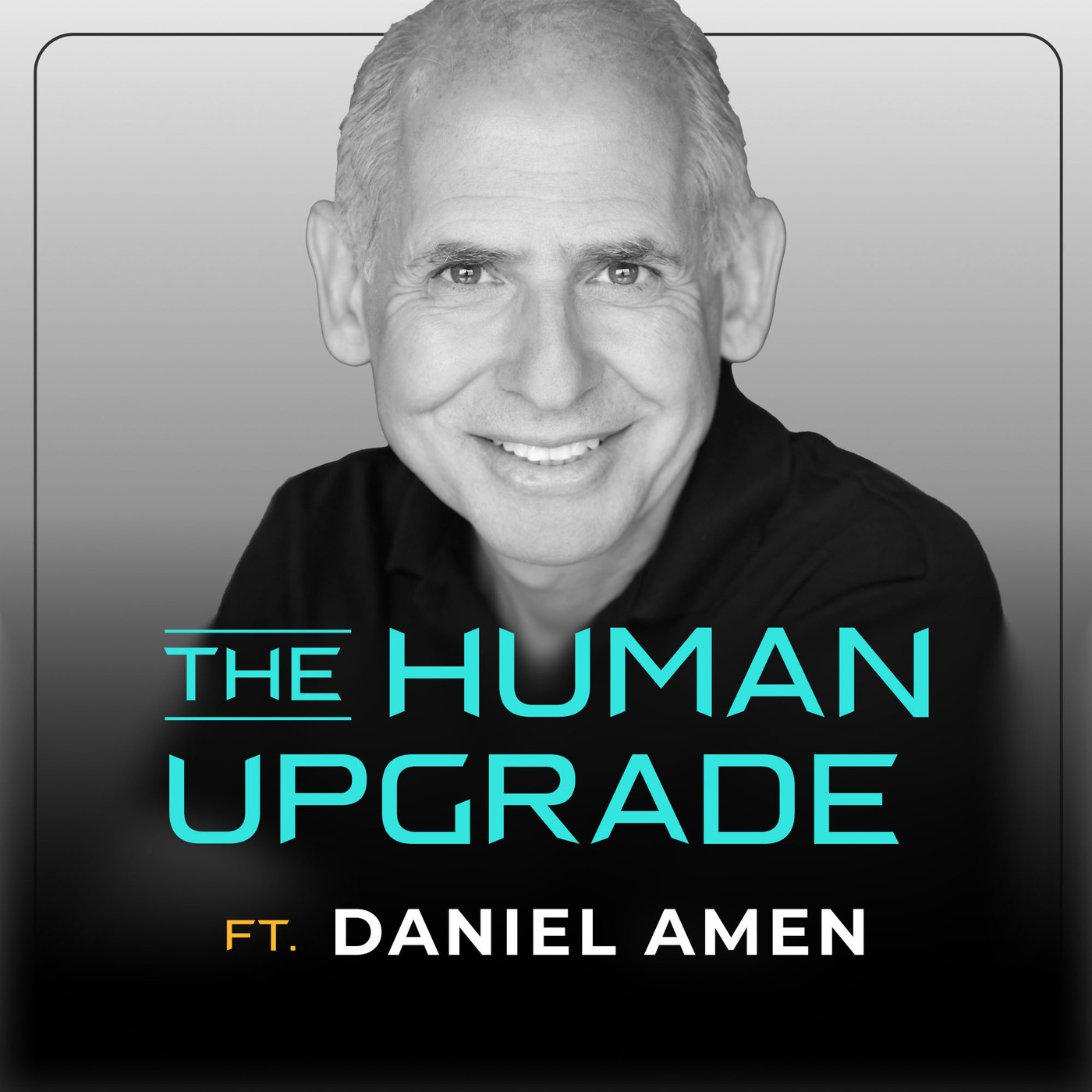
The Human Upgrade: Biohacking for Longevity & Performance
The Strange Science Behind Tylenol and Heartbreak | Daniel Amen : 1358
01:00:08
Loading summary
Transcript106 lines
- [00:00]
Dave Asprey
You've analyzed nearly 300,000 brain scans.
- [00:04]
Dr. Daniel Amen
There's a brain component that we need to be serious about because 50 million Americans struggle with chronic pain.
- [00:14]
Sponsor/Advertisement Voice
Dr. Daniel Amen is a celebrity doctor and 12 time New York Times best selling author who has studied traumatic brain injuries in professional athletes, advised the NFL on post concussion care, and built one of the largest brain scan databases in the world. He delivers a rare blend of scientific clarity and practical insight on pain, trauma and healing.
- [00:34]
Dr. Daniel Amen
20% of children struggle with chronic pain. Physical pain and emotional pain run on the same circuits. When you get your brain healthy, when you balance these three pain circuits that we'll talk about, the pain goes away. There's a very simple psychological technique that just seems to calm your nervous system.
- [01:01]
Dave Asprey
Teach people how to. You're listening to the Human Upgrade with Dave Asprey.
- [01:11]
Sponsor/Advertisement Voice
Do you know what's in your water? You can eat clean, train hard, and take all the right supplements. But if you're drinking water that has pfas, microplastics and heavy metals, your body spends all day fighting invisible toxins. Most filters make water look clean. Aqua Tru truly purifies it. Their patented four stage ultra reverse osmosis technology removes 84 verified contaminants. Contaminants, the stuff most filters can't touch. That includes forever chemicals, fluoride and other toxins that disrupt your hormones and your mitochondria. Your water quality affects everything. Gut health, hormone balance, hydration, even how your brain functions. If you're drinking water with loads of contaminants, you're adding stress your body doesn't need. Start drinking water that supports your biology. Go to aquatruewater.com daveasprey and upgrade one of the most essential inputs in your life. That's a Q U A t r u water.com daveasprey.
- [02:13]
Dave Asprey
Daniel, you've been on my show four or five times now and you're one of the very few guests to do that because your work is so expansive. I'm such a fan. I'm always so honored to be on the board of Amen Clinics because your work has, has truly changed my life. Getting a brain scan, seeing what was wrong with my brain years ago really set me on a path. And at this point, you've analyzed nearly 300,000 brain scans and when I first read your book, the number was probably closer to 10,000 or something. So you've got this enormous data set. Just incredible and I would say very hard to argue with. What have you learned about pain versus all the other things you've talked about.
- [02:57]
Dr. Daniel Amen
Well, that's actually why I wrote change your brain, change your pain. The question was, why does Sami or Cymbalta, a really good antidepressant, why is it FDA approved for pain? And what we discovered was that physical pain and emotional pain run on the same circuits in the brain. And that so many people who are in physical pain, their mind goes to this dark place. I'll never be better. I'm broken. And I'm like, wait, wait, there's a whole neuroscience piece to this. And when you get your brain healthy, when you balance these three pain circuits that we'll talk about, the pain goes away or it's dramatically more manageable. The one study that just blew my mind was that people my age, so I'm now 71, 80% of us, have abnormal backs. So abnormal lumbar spines with no pain at all. So no pain at all. But you look like you have a crushed disc or there are arthritic changes. And I'm like, well, then where's the pain? If the pain is not just there, it's in your brain. And I was very excited to write this book because one of my very first SPECT patients. So the study we do at Amen Clinics is called Brain SPECT Imaging. And I opened the book with his story was a police officer who had been in two high speed crashes at work, and he had six back surgeries. And I met him the night he tried to kill himself by turning on his old Jeep in his garage. And thankfully his wife realized he wasn't in bed and screaming. Ended up taking him to the hospital where I was on call. And when I scanned him, the emotional suffering part of the brain, in large part, it's the anterior cingulate gyrus was just on fire. And when I calmed that down, what he said, he said, I still hurt, but I don't think about it all the time. And I'm like, there's a brain component that we need to be serious about. Because 50 million Americans struggle with chronic pain. 20% of children struggle with chronic pain.
- [05:57]
Dave Asprey
So the pain of a. Of a rough breakup or getting fired or something like that is the exact same pain as breaking your leg?
- [06:07]
Dr. Daniel Amen
Yes, that. It works on the. It's called the medial suffering pathway in the brain. Medial just means this circuits are toward the middle of the brain. And if that's already active because you have a high ACE score. Adverse childhood experiences. I don't know if I told you. We published a study earlier this year on 7,500 patients who had adverse childhood experience questionnaires. What we found is if you had more than four of them. So it's on a scale of 0 to 10, physical, emotional, sexual abuse, neglect, hostility, witnessing domestic violence, having a parent with an addiction, a mental health disorder, or incarceration. So of those 10 things, how many did you have? Tana, who you know, was an 8 out of 10. Our nieces who we adopted were both nines. So the more early childhood trauma, the more it activates this suffering circuit. And so if it's on a baseline of overactivity and then you go through a breakup, it can be tremendously painful for you. And Tylenol, which has made all sorts of news lately, helps with pain, but it also helps with emotional pain that if you're going through a breakup, a little Tylenol can actually be very helpful.
- [07:49]
Dave Asprey
No kidding. That blows me away. I would just warn if you're going to do that, you might want to take some glutathione along with it to protect your liver, right?
- [07:58]
Dr. Daniel Amen
Yes, indeed. Also, that's incredible.
- [08:01]
Dave Asprey
This is not something that's well known. How long have we known about this?
- [08:05]
Dr. Daniel Amen
Only the last decade. There's research on pain medications and emotional pain and it's why people get hooked on opiates, because they feel better emotionally. Now the problem is opiates will actually make the pain worse in the long run. I actually quote this study in the book where they looked at white blood cells on opiates and it pissed them off, it made them agitated and angry. So short term benefit, but ultimately makes the pain worse.
- [08:45]
Dave Asprey
So physical pain is there to stop you from using that part of your body while it heals. And emotional pain is there to help you pay attention to something and figure out you got an issue to work with. Isn't avoiding pain also avoiding evolution?
- [09:00]
Dr. Daniel Amen
Well, sometimes it gets stuck, right? I mean there's is normal anxiety and there's normal pain and they teach you something. But another reason I wrote this book, it was my knee and then my neck and then my back and then my hip. It just seemed like pain was playing tag. Your it And I wasn't learning anything except I was just feeling old. And then I'm like, oh no, I have to study this. And as I was writing the book, my pain went away and I was just like in no pain anymore because I don't take the pain seriously. And so what happens? And in the book I talk about the doom loop. That and pain HQ is the acronym to help people remember it. So the P is you have Pain for any reason. You break your foot, you burned your finger, you lost your job, you had a fight with your spouse. So pain for any reason. And that activates the feeling pathway in your brain, which is the thalamus, which is a sensory gateway sort of deep in the middle of your brain and your parietal cortex, cut back part that has the sensory cortex where we feel things. So pain for any reason, which then activates this medial pain suffering pathway, anterior cingulate, insular cortex. And that colors the pain with fear, which then goes to triggering negative thoughts. I'll always hurt. This is terrible. I'll never be okay. I won't be able to do this or that. And so it initiates this negativity, which then triggers muscle tension. And as this tension goes, it accelerates the pain. And one of the most interesting parts of the book is when I talk about tension, I also talk about John Sarno's work. And Dr. Sarno was a pain doctor at NYU. And what he often said is that your body wants to heal, but it's often repressed emotions, especially rage, that keeps the pain going. And I'm like, well, how do you get the rage out? And it took me down this.
- [11:48]
Dave Asprey
Rabbit.
- [11:49]
Dr. Daniel Amen
Trail of different rage therapies. And in the book I talk about them and I talk about, well, how do you get it out? And there's a psychotherapy, I don't know if you've heard of it. It's called intensive short term dynamic psychotherapy. It's actually a rage therapy. It's so you're feeling anxious. If the anxiety could come up, where would it go? And often people defend against it, but when you get around the defenses, what you realize they're really angry at somebody. Could be their mom, their dad, their spouse, their boss. And when you can actually tap in to the rage, the pain dissipates. It's so interesting, so powerful. And I remember when I was writing that part of the book, I tend to be like Pollyanna. My wife calls me Pollyanna because I'm positive. And I look on the bright side of things. You know, I've been brutalized, as you know, by my colleagues for decades. You know, they call me a charlatan and snake oil salesman because I want to look at the brain.
- [13:09]
Dave Asprey
And shame on you for looking at the brain.
- [13:12]
Dr. Daniel Amen
And so I'm like, well, they just don't understand. And. But that contributed to my pain because I was furious at that.
- [13:21]
Dave Asprey
It's very painful to have your colleagues come after you when you didn't do anything.
- [13:25]
Dr. Daniel Amen
Wrong. Yeah. But by writing it down, expressing it. So I'm like, pollyanna needs to be friends with Hannibal Lecter. We need to have some visual imagery of torturing those people. Of course, in real life, I wouldn't do it, but I can imagine it. And it's just so freeing. It's like a patient made when she went to a rage room and just like broke dishes that she just felt so much better. So the repressed rage, finding a way to get it out, it then leads the ancient pain H2 is harmful habits. Because what happens is pain then leads to suffering, negativity, tension, alcohol or marijuana or sugar. And those things just accelerate the doom loop. And so there's a healing loop. And I love it so much because relief is recognize the pain and start learning from it. And I say this to my patients, must be every day. Every day. We win or we learn. We win or we learn. There's no failure. Do you have more pain today? What did you eat? How did you sleep? What motions are you holding in? There is no failure. And then we have to calm down that suffering pathway. And you do that. Yes. Sami could help. Cymbalta can help, but diaphragmatic breathing can help. Or a term I don't know if you know about havening, but havening is a very simple psychological technique that just seems to calm your nervous system.
- [15:34]
Dave Asprey
Very interesting share about havening. We talked about it when we went for a drive last time, but not on the show. Everybody wants less wrinkles, better hair, stronger immune system, and to recover from anything life brings your way. Well, we all want it. And the answer lies in your gut. Your gut's health affects everything, including your immune system, your metabolic function, your mood, even how your skin looks. Outlooks invisible toxins from your environment or even from your body can silently ruin your health. Armora Colostrum is here to help. It contains over 400 bioactive nutrients that work at the cellular level to help rebuild your gut health, strengthen your immune function, and just turn your metabolism back on. Arm brown colostrum supports your entire gut wall system and your microbiome that can help your gut be more resistant to irritants that can trigger symptoms like bloating, constipation, and inflammation. Armor also has growth factors, vitamins and regenerative peptides that help your hair grow strong and your skin glow from the inside out. And you can see it. In fact, 60% of people taking armor and colostrum notice less wrinkles, and 79% notice thicker hair after 12 weeks. And if you're an athlete, check this out. Studies show that colostrum can improve fitness endurance by only 20%. That's big. Decrease recovery time by over 50, 50% after intense exercise and it improves stamina and builds lean muscle mass. So it doesn't make a difference whether you're training for a race or just working to have better health. You just want to feel really good. Armor helps you operate at your highest level, and armor's worked out a special offer for listeners of the human upgrade. Receive 30% off your first subscription order. Go to armor.comdave or enter dave to get 30% off your first subscription Order. That's a R M R A David.
- [17:19]
Sponsor/Advertisement Voice
Thousands of toxins enter your body daily. Pfas, viral proteins, mold, toxins, heavy metals and more. Most of it stays in your blood for years. As these toxins build up, they drive fatigue, brain fog and inflammation. Neuroveda Health in Seattle can help. They offer the only program in the world combining therapeutic plasma exchange with 10,000 year old rejuvenation practices from Ayurveda and traditional Chinese medicine. Therapeutic plasma exchange, also known as TPE or plasmapheresis, clears your bloodstream at the molecular level, removing the toxins, immune debris and inflammation that block energy and clarity. You can do a longevity plasmapheresis week at Neuroveda Health. You'll get two rounds of TPE plus daily restoration after each session. They rebuild your body with mitochondrial IVs, cognitive support support and personalized Ayurvedic bodywork therapies that deeply restore your body and brain. Whether you're dealing with long Covid, autoimmunity, neuroinflammation or simply want to support your longevity, Neurovada Health delivers results no one else can. This is precision immunorestoration. East meets west, tech meets tradition. Go to neurovedahealth.com asprey to learn more and book your week. That's the N E U R O V e d a health.com asprey. You can thank me later.
- [18:42]
Dave Asprey
It turns out that pushing yourself harder might not be the way to become stronger and more resilient. Recovering after stress is how you do it. I spend so much time on airplanes and moving around and running different companies and recording this show for you that I'm always looking for ways I can incorporate recovery into my day without stress spending a lot of time. And there's a new way to do this. It's Bon Charge's Infrared Sauna Blanket. It uses infrared heat to penetrate deep into your body, which helps you recover, detox and Relax. And if you've heard multiple science podcasts I've done about the benefits of infrared or read it in any of my books, this is real science. The Bon Charge Mat lets you enjoy the benefits of sauna sessions at home. It heats up in exactly five minutes, and you don't need a dedicated space. You can put it on the couch, put on your bed. That means it's comfortable, it's convenient, and you don't have to have a room dedicated to infrared. So after a busy day, you get your sweat in, it's really comfortable, it's very easy to clean. And if you want to enhance your recovery, you don't have a lot of space. Check it out.
- [19:40]
Sponsor/Advertisement Voice
Go to boncharge.comdave and use code Dave to save 15%.
- [19:48]
Dave Asprey
So teach people how to haven.
- [19:49]
Dr. Daniel Amen
So Ron Rudin, who's internist in New York, discovered, and it's very similar a bit to emdr, that whenever you're anxious, angry, upset, do some form of bilateral hemisphere stimulation. And it's either sort of stroking your face, both shards, or rubbing your hands together like this, or hugging yourself. So I think of it as the butterfly hug. And what you do for the first 20 seconds is you just go into the pain. It's whatever is bothering you. And then after about 20 seconds, keep doing it. But shift your mind to something you like, the mountains, the lake, the Disneyland, the beach. And repeat that up to six times, and you'll just be stuck, stunned. How helpful that is to relieve negative emotion. And my favorite example is about five years ago, my dad died right at the beginning of COVID and, like, the worst day. And a couple of days later, I'm at my mom's house and somebody put a picture of my dad, dead dad, in the mortuary in a random stack of papers. And, you know, and I was sad and. But I was just pissed off. It's like, what idiot would do that? You know, it's so insensitive. I just found myself spinning on the picture and how angry I was. And later in the afternoon, I'm at home, I'm in my office, and I'm like, you treat people who have this problem. I was like, what would you tell them to do? So I sat down in a chair and I thought about the picture for about 20 seconds. And then I took myself to the beach and I did that for a minute, and I could just feel the charge go out of me. And I did that three times. I fell in love with the picture because it was the last picture of my dad on Earth. And it just calmed my nervous system. So how exciting is that something so simple can decrease that fight or flight response that only makes pain worse. And then. So recognize it, soothe the suffering pathway, stop believing every stupid thing you think, and train positivity. Right. Because I am a fan of Pollyanna.
- [22:43]
Dave Asprey
You're incredibly Pollyanna.
- [22:46]
Dr. Daniel Amen
You really.
- [22:46]
Dave Asprey
You're one of the most positive guys I know. And that's, you know, that's a good thing, right?
- [22:51]
Dr. Daniel Amen
Well, and I put in the book, a new study I did on negativity. So in the testing we do, we get how positive or negative you are. It's called conscious negativity bias. And for the people who are negative. So of the 300 clinical questions we ask people, negativity is associated with two thirds. So if you're negative, you're more likely to be in emotional distress. And so there's a whole section on training positivity bias. Like, start every day. Today is going to be a great day. End every day. And I've done this now 15 years. What went well today? You know, I say a prayer and then I go, what went well? And I start at the beginning of my day, and I just go hour by hour looking for what I liked about the day. Now, what I do I don't like will show up, but I just imagine a broom sweeping it away, and I'm like, I'll deal with you tomorrow. The point now is, what went well today? So powerful people who do that one exercise shows an increase in their happiness in just three weeks.
- [24:15]
Dave Asprey
How is that different than a gratitude practice? Or is it the same thing?
- [24:18]
Dr. Daniel Amen
It's different in that, you know, people write down what they're grateful for and know what went well today. And it may be something I'm grateful for, or it may be the sea lion I saw at my house because I live on the bay. Or this morning it's raining, like, terrible, but there were pelicans flying, and they were so pretty. It's just. It's learning to train your mind to look for what's right. Now, I also like gratitude, but what I like more is appreciation. It's appreciation. I love you. You've been very helpful to me in my life. I appreciate you. Well, that's gratitude squared. It's because you're feeling grateful, and then you build a bridge to another person. And the happiest people are those people who are not focused just on themselves, focused on being useful to others. So after we work on positivity. Oh, and I have another study that's about to come out soon on hope. So we give everybody who comes to see us at amen clinics. I now have 11 clinics. We give them the ACE questionnaire, the negativity bias test, and a HOPE questionnaire. And if you have low hope, you actually have low frontal lobe function and low insular cortex function, which I think is just so interesting. And so what is hope? Hope is tomorrow can be better, and I have a role in it. So ultimately, hope is about agency. And our patients in pain who have no hope have way more pain because they're a victim of their pain rather than, I can do this, I can do that. I can watch what I eat. I can go to bed early. I cannot believe every stupid thing I think I can haven when I'm upset, and I love that. And then initiating muscle relaxation. So important. I'm a huge fan of hypnosis and progressive muscle relaxation, and I'm also a fan of rage journaling. In fact, there's a technique in the new book called emotional freedom journaling. I think you'll like this. What you do is take. So I'm 71. So make a page for every five years of your life. So that's what, 14 pages? And draw a line down the middle of each page. And on the left side, write down all the things you remember that were awesome about those five years. And on the right side, write down all the things that were awful. And I do it specifically so that you'll get a balanced look at your life. Too many people go to therapy and. And they just talk about the crap in their life, which makes them feel crappy. And I want them to really look at their life in a balanced way. But when you do it, you begin to get an idea of what you're really angry about. And so for zero to five. For me, for example, I'm one of seven children. I'm third. And all the early home movies. I'm being beaten up by my brother. In fact, When I was 50, I asked my dad because he took home movies of this. I'm like, why didn't you stop him? And he's like, well, somebody had to take the movies, which was complete. It was complete nonsense. But there's a lot of early rage for me or, you know, being less than and then being pummeled. Now he and I made up later, and we were best friends. I'm not okay with it. And I think that's actually why I'm able to take sort of the punching bag I've gotten from my colleagues over the years, Realizing they just don't see the light. Although last year, I don't know if I told you this, the American Psychiatric association named me a thought leader, made a video about me and my work, and when they presented it at the conference, they played it, like, over and over again.
- [28:55]
Dave Asprey
Wow. Well deserved. Daniel, you've changed the field, but, man, sometimes changing a field, you take the hits. But you are genuinely a happy, good human being. I mean, I know you pretty well.
- [29:08]
Dr. Daniel Amen
And.
- [29:10]
Dave Asprey
You'Ve suffered greatly, and you're still positive. And that's a thing about resilience that I think a lot of people don't see that going through that kind of public stuff, it's incredibly crushing. I've been through some as well, and you're there, you know, and so I'm. I'm so pleased to hear that. Yeah. Wow. Well deserved.
- [29:34]
Dr. Daniel Amen
I was in the White House last week talking to RFK Jr about our work, and I'm like, just so excited that people want a new way of doing psychiatry. And so at least, you know, and when I posted about it, because if I post anything on the White House, I get so much hate. I'm like, grain and mental health are not political issues. They are sacred human rights. And anybody that wants to help me, I'm talking to them.
- [30:11]
Dave Asprey
Well said. I'm in exactly the same camp. Don't poison me doesn't have a party. And if people want to criticize me for supporting any politician that poisons me less, they can be very full of hate, and they'll probably have more pain in their life as a result of it. And then they get to feel all the pain, and I'm just going to not care because they needed that pain so they could learn. Does our immune system manage pain? Whether it's because you spoke truthfully during the pandemic or you stub your toe. How much of that is immunity versus brain?
- [30:43]
Dr. Daniel Amen
Well, brain and immunity, you really can't separate, because if your immune system is underactive, your brain is more likely to be impacted by the infections we all carry in our body. If your immune system is overactive, then you're going to have brain fog, and your brain will be inflamed. So if we just stay on Covid for a little bit. I have hundreds of COVID brains. We have thousands of COVID brains because almost all of us had Covid. But what we. I had them before COVID and then.
- [31:23]
Dave Asprey
After they got Covid with imaging.
- [31:26]
Dr. Daniel Amen
With imaging. And what we saw is their limbic brains became inflamed. And so I was on the Kardashians because Kendall Jenner came to see me and she had post Covid anxiety, said she was never anxious despite, you know, her pretty intense life, she was never anxious. Then she got Covid and she was terribly anxious. And you can actually see it on her scan that her basal ganglia and her amygdala were just on fire. And so what do you do? Well, you do strategies to decrease the inflammation from curcumin to quercetin to omega 3 fatty acids to an anti inflammatory diet. And I don't know if you know, but if you got Covid, you had a 25% increased risk of having a new onset psychiatric illness within the next six months. And that kind of inflammation affecting the pain circuits, especially the feeling pain circuit and the medial pain suffering circuit, it's very bad for you.
- [32:41]
Dave Asprey
That's 25% chance if you're not doing anything protective like the things you just talked about. Like if, if you're a biohacker and you're controlling inflammation, managing mitochondrial function, your risk is probably lower than average. But there's still an increased risk.
- [32:55]
Dr. Daniel Amen
Correct. And one interesting statistic you'll like because I know you know how the, how important teaching about the mitochondria is to you is 49 of the tracer we use for SPECT is taken up in the mitochondria.
- [33:13]
Dave Asprey
Oh, wow. So when you map metabolism in the brain, you're mapping mitochondria in the brain.
- [33:17]
Dr. Daniel Amen
Right. Which is energy production. And when I first scanned you and it was lao is because your brain was being poisoned.
- [33:24]
Dave Asprey
Yeah. And God, I'm so happy that you showed me that because I just thought I might be turning into an idiot or that I just wasn't trying hard enough and finding that, oh, I just had a hardware problem that unlocked a lot of biohacking. So I also though my whole life. So I had a good number of adverse childhood events, traumatic birth and lots of bullying and other stuff. And I've had really strong pain throughout my body up until probably my mid-30s. And it got better. And I did some rage therapy stuff. I still feel dumb that hitting things with a wiffle ball bat at a 10 day retreat did something, but it did. Yeah, probably let some of that out and my own wiring. I learned from bullying that people would push me far enough and then I would snap and I would beat the living out of them because I was fat. I was always bigger than they were. So I'm like, I don't really want to hurt people and I'm probably going to. So I would like hold it in which probably contributed to the pain. And then I have all the mold and all that stuff. And so today I have an exceptionally high pain tolerance. I don't normally have pain, but I eat the wrong stuff or whatever and I get muscle tension throughout the body and I get some pain but I don't really notice it until like a massage therapist works. And like do you notice this is tense? I'm like, ah, I hadn't thought about it. So I'm not normally in the pain state that I was always in, but it's probably there. So what's going on with that? Like am I getting this muscle tension because I still have some old rage to process or is this biological? Like how would I know?
- [34:57]
Dr. Daniel Amen
Well, I think you go after it in a biological, psychological, social, even a spiritual way. And in the book I talk about moral injury. There's so much moral injury. I think the country had a moral injury with the lockdowns and Covid there are so many of my patients that were just furious about what they thought of as a heavy handed response from the government. If you think of I grew up Roman Catholic and you think about the pedophile scandal, that's a moral injury because it caused so many people to like not go to church, not be part of their spiritual community. And we just have to recognize that all of us are flawed. Right? So not attach your belief in God or belief in a higher power to humans that are flawed. So moral injury is big. I think we're always, and I always want people to just inventory all four of those circles. When you were overweight as a child, that was harmful to you in all four of those circles. But you know, I have an acronym called bright minds want to keep your brain healthy or rescue it. You have to prevent or treat the 11 major risk factors that steal your mind. And D is diabesity, high blood pressure and or being overweight. If you have that, you have all 11 because the fat on your body decreases blood flow. I published a study on 33,000 people show as your weight goes up, the size and blood flow to your brain goes down, which of course should scare the fat off anybody. And when I figured that out, I lost £20. I was sort of always a little chubby and I'm like not going to be chubby anymore. Ages, your brain increases inflammation, turns on disease promoting genes. You're more likely to get a head injury if you're overweight. It's fat stores toxins, puts you at risk for Depression alters your immune function, changes your hormones, and gives you problems sleeping. And so given that 75% of us are overweight or obese, it's just the biggest brain drain in the history of our country. And. And it's not just calories, although I think they count. It's. It's the toxins in our bodies that prevent us from losing weight. And I like the focus on, well, let's at least assess and start getting rid of as many toxins out of our food supply as we can.
- [38:03]
Dave Asprey
So if someone eats food that's toxic and then they feel pain in their body, and maybe it's oxalate in a joint or muscle tension or whatever, should they just go straight to Tylenol or should they, like, hug themselves and start havening? Like, what do you do here?
- [38:20]
Dr. Daniel Amen
Well, you always stop the toxin first.
- [38:23]
Dave Asprey
Oh, that'd be a good plan. Okay.
- [38:24]
Dr. Daniel Amen
That's the first thing you do, is you stop the toxin. And then you support the four organs of detoxification. So you drink more water, but not out of plastic bottles. You eat more fiber to help flush them through your gut. You stop alcohol. I'm just not a huge fan of alcohol because it makes it harder for your liver to detoxify things and is associated with eight different cancers. Now, saunas, like, I'm a huge fan of saunas because the people who take the most saunas have the lowest incidence of Alzheimer's disease.
- [39:11]
Dave Asprey
Yeah. I think saunas help on so many detoxing levels. I think they help on a mitochondrial level. And there's just so much evidence for them with perfusion and everything else. So that's going to help with pain. And there's now sauna blankets. There's a one person saunas, and there's saunas that fit in your bedroom or whatever, so they're more accessible than ever before. But it's still a big investment. And so that's a thing to do. But I kind of want to know, like, give me the step by step. Okay. I woke up this morning feeling stiff and pain in my body. It wasn't there before. It's probably something I ate. I don't know what it is. I don't want pain today.
- [39:52]
Dr. Daniel Amen
Well, so step number one is if we just think of relief, it's recognize it and then go. Win or learn. What can I learn from this? What did I last night? You know B.J. fogg, right?
- [40:10]
Dave Asprey
Oh, yeah. He's been on the show. He's a friend.
- [40:12]
Dr. Daniel Amen
Yeah. He helped me develop a whole bunch of tiny Habits, you know, what are the smallest things you can do today to have a better brain? And, and he stopped drinking when we were working together. And he's like, I just have to thank you. I'm like, well, why? He said, well, I wake up 100% every day. So if you can be curious and not furious about your pain, it's. The first step is every day you win or you learn. And if you woke up and you were drinking the night before, you had a hot fudge Sunday or whatever, it's like, okay, have to learn from this. So pain is sort of like burning your finger a little bit. It's like, oh, I don't put my hand on the stove. And then you want to go to calming your medial pain suffering pathway, whether that's diaphragmatic breathing or omega 3 fatty acids. My favorite of all the supplements, the one I never miss is saffron. Because saffron has been found in now 28 randomized controlled trials to be equally effective to antidepressants. So saffron boosts mood, but how does it boost mood? It calms the.
- [41:36]
Dave Asprey
Wow, 28 trials. Now, I, I formulated something with it about 10 years ago. There are only two trials, so it's now proven to be better or as good as antidepressants.
- [41:47]
Dr. Daniel Amen
So there's a new study that's actually a review of 192 studies on 17,000 people looking at supplements and antidepressants. And which supplements had the biggest efficacy. Saffron was number one, Sammy was number two. And what was interesting, we make happy saffron that has saffron, zinc and curcumin. And what was really interesting in that study, if you added zinc or curcumin to an antidepressant, they work significantly better. So when I created happy Saffron, I didn't know that, but I knew they would enhance the antidepressant effect of saffron. And so nutrients to help calm the suffering pathway. And then what am I thinking? You know, am I being negative? Am I believing all the automatic negative thoughts that pop into my head? You could pop on a hypnosis audio, which I dearly love, or progressive muscle relaxation. And then you go, who am I pissed off at? And in the book I talk about forgiveness, but also rage. It's like, don't deny the feeling, right? If the rage could come up, where would it go? But holding on to it is sort of like drinking poison and expecting the other person to die. And so I talk about the reach method of forgiveness, but I Think in the morning, just go, all right, who am I mad at?
- [43:33]
Dave Asprey
That?
- [43:34]
Dr. Daniel Amen
And odds are it's what you ate or drank the night before. Right. If pain's not usually your thing and you wake up in pain, it's like, oh, I was really hungry and I ate the burgers and fries, which I usually don't do, and I woke up the next morning, my joints hurt. Right? So it's win or learn. And then make sure your habits are what they should be. And hold the Tylenol because it's going to decrease your ability to detoxify. I'm a huge fan. If you're going to use something for pain, use a combination of curcumins and omega 3 fatty acids.
- [44:13]
Dave Asprey
I double down on that. I'm not opposed to Tylenol in all cases. I do think there's great risk of lowering glutathione in pregnant people. There's also a great risk of extreme fever in pregnant people. So if you did use it, you could take some glutathione and probably take away whatever risk there is of something. But I wouldn't go to it on a regular basis. I think that's just probably bad. And what about things like ibuprofen and other painkillers? They all have side effects, but do those work as well?
- [44:44]
Dr. Daniel Amen
Well, so my go to if I need a painkiller would be ibuprofen or aspirin. You know, aspirin was the superstar for decades until the early 80s when a couple of kids develop rise syndrome with aspirin. And then all of a sudden everybody stopped using aspirin. Everybody started using acetaminophen or Tylenol. And then in the early 90s is when we saw that spike of autism beginning to grow. Now, I don't believe it's just Tylenol, but I believe it's one of probably 80 chemicals, including aspartame. So did you see this new study on aspartame and mice? So they gave mice aspartame, the sweetener in Diet Coke or Diet Pepsi, and the mice became very anxious, and then they gave them Valium and the mice calmed down. So what it caused? Aspartame caused amygdala hyperexcitability. So the amygdala, that part of your brain that responds to thread well, all of a sudden, aspartame makes you see everything as a threat. And obviously we're not going to give people value to calm it down. It's like, stop the aspartame. But the horrible thing about this study the thing that you will never forget when I tell you this is their babies were anxious even though they never had aspartame. And their grandbabies were anxious even though they never had aspartame. That aspartame caused an epigenetic change that impacted generations. So when we look at the mental health crisis In America, with 57% of teenage girls report being persistently sad, is it possible that the aspartame that's in 5,000 products is having a generational negative impact? And then if you add. So we talked about Tylenol and aspartame phthalates. Moms born with high cord blood of phthalates, which is common in personal care products and makeup, had five times the risk of having an autistic child. Five times the risk. And so if we look at that and bisphenol A and all the other environmental toxins, it's like we should always be detoxing. And I have an app that I'm sure you know, think Dirty, which allows you to scan your personal products and it'll tell you on a scale of 1 to 10 how quickly they're killing you, that we're living in a toxic soup. And the more we can recognize it, not put toxic things on or in our bodies, the healthier and longer and less pain we will be in.
- [48:01]
Dave Asprey
It's so accurate. It matches everything I know my first book was a fertility book. And you want to get pregnant and have a healthy, powerful kid, you get rid of every toxin you can and provide all the nutrients you can. And I did not know about the NutraSweet connection or the aspartame connection. So when someone wakes up and they have pain in the morning and you had some Diet Coke last night, it could be related. Maybe you should double blind test that. And I used to be addicted to Nutrisweet in my early 20s. I would just take it all the time. And one day I drank a Big Gulpful of it and I just felt my brain melt. Like I couldn't focus in class, like. And I just realized, you know, this stuff is toxic. And I just quit that day. I had cravings for it. But then my brain really did improve. It was affecting me at such a fundamental level. But if you chew gum with it every day, you're never going to know how you're supposed to feel.
- [48:53]
Dr. Daniel Amen
So in the new book, I actually, I opened it with the story. I. I open it with the story of when I was 35. I couldn't get off the floor because I had Arthritis in my hands and feet. And one of my patients said I stopped aspartame and my pain went away. And at the time, I was drinking 32 ounces of diet Pepsi at lunch.
- [49:16]
Dave Asprey
There you go.
- [49:17]
Dr. Daniel Amen
And so I stopped and my pain went away. And I'm not that smart, so I had to try it again, and it came back okay.
- [49:24]
Dave Asprey
I learned there may be something you're doing that's causing your pain, and it's either environmental or nutritional or toxin, or it's a thought form. Right. Or I guess it could be something that happened to you. If you got hit by a truck, that's probably what caused your pain. And the lesson is, don't get hit by trucks anymore. But the amount of pain you feel from the truck hitting you is a function of how you manage rage. How does that work?
- [49:53]
Dr. Daniel Amen
Well, your body wants to heal. So let's say you got hit by a truck and your body wants to heal. But you go to the hospital, they give you crappy food, you see a future of. Of pain rather than a future of healing. And so they give you opiates, which are necessary early on, but if you don't discipline yourself to get off of them as quickly as possible, they're going to steal your soul, and they make the pain worse over time. I mean, they're. They hook you. So we have to be so thoughtful, but always believe that your body is an amazing healing organ and always put it in a healing environment.
- [50:50]
Dave Asprey
You talk about three pain switches in the book. What are the switches, and what do they do?
- [50:56]
Dr. Daniel Amen
So there's the feeling pathway, there's the suffering pathway, and there's the calming pathway. And the calming pathway is actually your prefrontal cortex and an area in the top of your brainstem called the periaqueductal gray area that actually produces opiates. And when you take opiates, you turn that off. You turn off your natural opiate producer. And this is why hitting soccer balls with your head is really stupid. Because what it does is it damages the calming pathway in the brain, and ultimately, it's loving your brain. I'm actually working on a national Brain Health Revolution initiative with the White House, and it's all based on one question. Is what I'm doing now good for my brain or bad for it?
- [51:51]
Dave Asprey
Yes. That makes me happy.
- [51:54]
Dr. Daniel Amen
And if I just get everybody to answer that question with good science and love. Love of yourself, love of your family, love of the reason you're on Earth, people just start making better decisions.
- [52:08]
Dave Asprey
That's so beautiful. Now this as a biohacker, makes me wonder, so the calming switch, it's in the prefrontal cortex. So couldn't I just use red light therapy to encourage blood to go to my prefrontal cortex and that would help me calm down?
- [52:25]
Dr. Daniel Amen
Yes, but that would be the strategies. If you find ways to activate, and often in ADD or adhd, the prefrontal cortex is lower in activity and so they're going to suffer with more chronic pain. They're also going to make more impulsive decisions, which is going to give them more social pain, more psychological pain and more physical pain because they'll be in more accidents. So being finding ways to strengthen your frontal lobes and red light therapy, nerve feedback, hyperbaric oxygen, all of those can be helpful.
- [53:10]
Dave Asprey
It's so beautiful and it's so within people's ability to control. It doesn't take a lot to get a red light therapy device. Even a lower cost one on the front of the brain can really help. I used some clinical grade lasers and very early on, even just infrared LED lights really helped my brain and my pain. This is 15, 20 years ago. And I was kind of blown away that it had such a profound effect, which is what led me to start one of the early light therapy companies. Just because like, wow, how does this work? Why though? If I put red and infrared light over a sore muscle, why does that pain go away?
- [53:49]
Dr. Daniel Amen
Because it's decreasing inflammation locally. So that will help because there's always a dance of what happens locally and centrally.
- [53:59]
Dave Asprey
How would I target the calming pathways other than putting it on my forehead? So if I wanted to stimulate blood flow in the brain so that I could have that calming thing, what would I do there?
- [54:11]
Dr. Daniel Amen
So hypnosis has actually been found to activate the prefrontal cortex. So going into a hypnotic trance, it also calms the posterior cingulate, which is sort of the self referential part of your brain. It's why people use mushrooms to sort of calm down the noise, the chatter, like psilocybin. And I'm, I'm a bigger fan of hypnosis to do that just because it's not likely to unbalance you. People going to the emergency room for psilocybin psychosis has gone up 300% in the last three years. So, you know, I think under really good supervision, psilocybin can be helpful. But that's not what's happening in the United States. What's happening is they're having mushroom pries for 18, 17, 18, 19 year olds that are disrupting brain function.
- [55:12]
Dave Asprey
What about ketamine?
- [55:13]
Dr. Daniel Amen
You know, I've not been terribly impressed with ketamine for depression. There is studies showing it decreases suicidal behavior. I think our collective experience at amen clinics, when we refer someone for ketamine treatment, it works like 10% of the time that it's. It's not wildly effective and people have to sort of go back over and over and over again.
- [55:40]
Dave Asprey
For depression.
- [55:41]
Dr. Daniel Amen
For depression, yeah.
- [55:42]
Dave Asprey
I think addressing the underlying things with saffron might be a really good idea. Getting mitochondria working at all. I like ketamine for neuroplasticity and learning new patterns, even for forgiveness and learning to not have a fearful pattern. But it's different than anxiety.
- [55:56]
Dr. Daniel Amen
Well, I think it's one of the big reasons I wrote the book. It's being afraid puts you into the doom loop. And it's so important to get out of the doom loop. By not predicting the pain is going to limit your life and make things worse. Now when people hear that, they go, well, you think the pain is in my head. And I'm like, well, ultimately it's in your brain, which is not the same as you're making it up. Is that actually get stuck in the patterns of your brain. But if we know that, if we can see it on scans, then we can help it. And let's just make sure we're doing all the right things. You're not making it up. It's there and it hurts. It's just not what you think it is. Which, it's. It's that spot in my back. Because a whole bunch of people have that spot in your back that have no pain.
- [57:04]
Dave Asprey
So does that mean that thought patterns by themselves can cause actual pain in the body?
- [57:10]
Dr. Daniel Amen
Yes. That you can have excessive activity in the feeling or the suffering pathway and then you begin to feel pain. So you know fibromyalgia, Right, I had it. Fibromyalgia is just diffuse pain. So you have, I think, 19 trigger points. It's like, well, that's not in all those places. It's in your brain. And the early imaging work I did with fibromyalgia, it's. That feeling pathway is way overactive. And so we need to find what's the cause of that. Is that an infection? Is that an autoimmune problem? And if you see the word autoimmune, the next thing you should be thinking about is leaky gut. You know, is your gut not right, which is driving your immune system to be overactive? Because 60% of your immune system is Actually in your gut.
- [58:11]
Dave Asprey
So dysfunctional gut equals pain in the body. Because the dysfunctional gut causes brain inflammation on the pathway that would allow you to just let go of the pain and calm it down.
- [58:26]
Dr. Daniel Amen
Right. And very few doctors think about that, even that. I think for functional doctors, it's the.
- [58:31]
Dave Asprey
First thing they think about that is really profound. So this is why reducing inflammation helps so much. And I've had the pleasure to consult with a few functional pain docs and saying, guys, when it's not working, give them charcoal and use red light therapy on that nerve pain that just won't go away. And one guy called me the next day and he's like, what the hell? Like, why does this work? Like, well, the charcoal bound to the lipopolysaccharide in the gut and then you decrease inflammation, increased blood flow in the part of the body that was hurting, and magically dropping the toxins that cause brain inflammation and nerve inflammation throughout the body should help pain logically. So what do you know? It did. And I just wish all doctors knew this, because if there's chronic inflammation because of the gut or because of what you're eating or doing, it kind of feels like you're screwed. But here's the question, though. If we have stuff sprayed on our food without our consent, like glyphosate, that causes chronic inflammation, are we all just going to be stuck in pain until we finally make it legal to sue Monsanto for this stuff? How do we deal with persistent environmental stuff without getting stuck in a fear loop?
- [59:42]
Dr. Daniel Amen
Well, I think the first thing you do is you recognize that it's there, and so you buy organic stuff when you can. Otherwise you're just eating things that poison you. And you should always be detoxing, which means avoiding things that hurt you and then supporting those four organs of detoxification. I think awareness is the first thing. And then we have to stop labeling people because whenever we label someone as an anti vaxxer or as a conservative or a liberal, we lump them with all of the conservatives we've ever known. And we can never deal with them because it's just such lousy thinking. And yeah, we have to be better at listening to each other, but also telling the truth. Neurotoxins on our food give us illness that everybody in the country pays for.
- [60:51]
Dave Asprey
It's one of those chicken and egg problems. Because neurotoxins reduce mitochondrial function. When you have low energy in the brain, it's very hard to do complex thinking and it's hard to be truthful. Because it takes too much energy. So you do simple thinking, and that makes you get stuck in these fear loops because you can't even see what's happening. You just don't have enough energy to do it.
- [61:12]
Dr. Daniel Amen
And then you spend more time on social media, which is steering your attention to things that make you mad and sad.
- [61:24]
Dave Asprey
If someone's stuck in a triggered state, what do you tell them to do?
- [61:27]
Dr. Daniel Amen
Havening.
- [61:28]
Dave Asprey
Havening first. Okay.
- [61:29]
Dr. Daniel Amen
And whenever you feel sad, mad, nervous, or out of control, write down what you're thinking. Ask yourself whether or not it's true. Is it absolutely true? I'm working on a new program. It's going to be released in churches early next year. It's called the Eban Hole 4. Where we really teach people biological, psychological, social, spiritual strategies. Be healthy. There's a verse in the New Testament, it's about renewing your mind. And then you can test to see if it fits God's good, perfect and pleasing will. And whenever you feel sad, mad, nervous, or out of control, write down what you're thinking. And then just test it. You know, does this fit God's good, perfect and pleasing will for my life? And so often the nonsense we believe, it just doesn't fit, right? You would never talk that way to your friends or you wouldn't have any friends. You never talk that way to a child or you would damage them. And so why do we talk that way to ourselves? Be transformed by the renewing of your mind. And I just, I love that so much. But if your brain's not right because your gut's not right, the negative thoughts. The ant population can overwhelm you and often getting your body healthy. But it's these four things that work all together. Getting your brain and body healthy, disciplining your mind, reconnecting all. All with a sense of meaning and purpose.
- [63:14]
Dave Asprey
You know, it occurs to me you have the perfect last name to be doing work in churches.
- [63:20]
Dr. Daniel Amen
Yeah. Imagine growing up with my last name, going to a Catholic school.
- [63:25]
Dave Asprey
Oh, my gosh.
- [63:26]
Dr. Daniel Amen
At the end of every prayer, my friends would always look at me, so. Amen. So good.
- [63:32]
Dave Asprey
Maybe mine were less kind. They would say, ass spray. So I. I think Amen's not a bad one to have. Dr. Amen, your new book, it's groundbreaking, like all of your books. And there are very few authors and change makers and leaders in industry who stay relevant for two decades and continue evolving and continue improving the way you have. And it is, it's so impressive and it's. It's so magical. So I just want to truly thank you for writing this book. This is a new take on pain and it's different than Dr. Sarno's work, which is also impressive. And you have very low cost or even free techniques that are in your book that teach people, hey, here's what to do. Because there's nothing worse than someone stuck in chronic pain because they're going to act like a jerk to everyone around them because of the pain, because of the low energy. So there are some amazing, I would say, biohacking technologies and just some amazing other psychology and psychiatry techniques in the book. So thank you for writing it, thank you for sharing and just always being curious and hopeful and, and even playful in the way you do these things. I. I genuinely appreciate you.
- [64:42]
Dr. Daniel Amen
Well, I love you. Thank you so much. It was great to see you.
- [64:46]
Dave Asprey
Books out to change your brain, change your pain.
- [64:48]
Dr. Daniel Amen
Change your brain, change your pain.
- [64:50]
Dave Asprey
All right, guys. You know, I recommend a lot of books on the show, and no one gets on the show if they don't have a good book that's got new stuff in it that you haven't seen before. Dr. Amen is in a different category, so read his book. Totally worth it. See you next time on the Human Upgrade Podcast.
- [65:14]
Podcast Disclaimer Narrator
The Human Upgrade, formerly Bulletproof Radio, was created and is hosted by Dave Asprey. The information contained in this podcast is provided for informational purposes only and is not intended for the purposes of diagnosis in treating, curing, or preventing any disease. Before using any products referenced on the podcast, consult with your healthcare provider carefully read all labels and heed all directions and cautions that accompany the products. Information found or received through the podcast should not be used in place of a consultation or advice from a healthcare provider. If you suspect you have a medical problem or should you have any healthcare questions, please promptly call or see your healthcare provider. This podcast, including Dave Asprey and the producers, disclaim responsibility for any possible adverse effects from the use of information contained herein. Opinions of guests are their own and this podcast does not endorse or accept responsibility for statements made by guests. This podcast does not make any representations or warranties about guest qualifications or credibility. This podcast may contain paid endorsements and advertisements for products or services. Individuals on this podcast may have a direct or indirect financial interest in products or services referred to herein. This podcast is owned by Bulletproof Media Media.