← The Human Upgrade: Biohacking for Longevity & Performance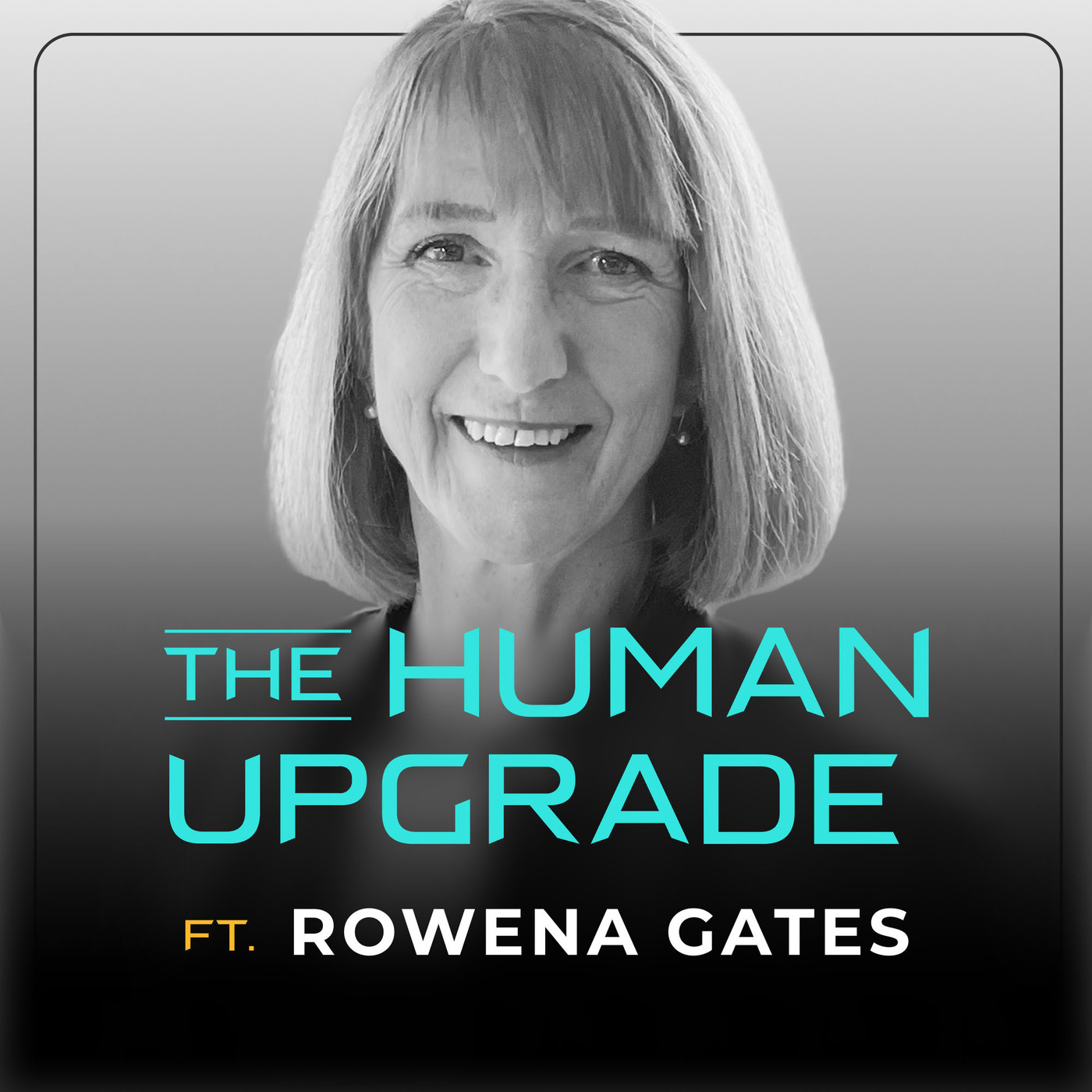
The Human Upgrade: Biohacking for Longevity & Performance
The WATER Hack That Boosts Mitochondria by 11%! : 1343
00:59:53
Loading summary
Transcript276 lines
- [00:01]
A
Hey guys, quick reminder. If you're listening to this on your favorite audio podcast app and you haven't been over to my YouTube channel, check it out. Just search for the human upgrade or find me under Dave Asprey bpr. I post full video versions of every episode and a bunch of other cool content outside the pod. It's a great way to go deeper into the content and connect with other biohackers like you. So leave a comment for me. Yeah, I'm actually going to read them and poke around while you're there. There is a lot of stuff specifically for you. It really helps and it means a lot to what the heck is a Nano V?
- [00:34]
B
The nanov is a medical device that influences the water in the cells in a way that supports protein activities and specifically protein folding.
- [00:47]
A
So it hydrates is water in the cells.
- [00:49]
B
It changes the nature of it, the energy state into an ordered water surrounding the proteins. So a layer of EZ water on the proteins.
- [00:58]
A
Okay, is this that magic fairy charged water blessed by angels or something different?
- [01:04]
B
No, this is science. Both the water droplets themselves are measured and the impact on humans and on proteins are measured.
- [01:12]
A
Okay, so what are we measuring?
- [01:15]
B
So in the water, we're looking for the ordered nature of it, meaning the water molecules are pressed closely together in a different energy state and that is transferred into the body across the mucous membrane. And in the body, we look for every outcome you might normally measure. And in proteins, we look at damaging them and seeing what happens if they use the nanov versus a placebo device or a sham device.
- [01:41]
A
Now I'm feigning ignorance because I've used a nanov for what, eight years or something like that?
- [01:47]
B
At least eight years. Religiously. Yeah.
- [01:50]
A
You can feel that it's doing something. And your studies show last I looked at 10% increase in mitochondrial function.
- [01:58]
B
Yeah, there's different measures of it and we just have some new MI screen results, but the mitochondrial function is just indicated by respiratory exchange ratio, which was 11%. And then VO2 max is also an.
- [02:13]
A
Indicator and you improve that as well.
- [02:15]
B
7.8% in. These are one session.
- [02:19]
A
Okay, so one session of breathing special water, we'll talk about what's the science behind special. But 7.8% increase in VO2 max. Now, a 12% increase in VO2 max is equal to two additional years of life expectancy. So 7.8 is probably around a year and a quarter. So how often do I have to breathe the nanov in order to get those kind of benefits?
- [02:43]
B
That's one session that was one session. And it would suggest you just use it regularly would be best.
- [02:48]
A
What does regular.
- [02:49]
B
I think you do. I have it. I use it pretty much daily. But even if it's only used once, most of our studies are done before and after one session.
- [03:01]
A
Okay.
- [03:01]
B
So you know, it was impactful and it was helpful just using it once.
- [03:05]
A
Okay.
- [03:06]
B
But really it's something like good nutrition or, you know, breathing well or whatever, where you want to kind of do it regularly.
- [03:13]
A
That sounds like a non answer. Like what does regular mean?
- [03:16]
B
Like often. Okay, let's just say if you're going to a gym or a wellness center.
- [03:22]
A
Like maybe upgrade labs.
- [03:24]
B
Upgrade labs go two, three times a week, you know, and use it, use it each time you go.
- [03:29]
A
Okay.
- [03:30]
B
And then if you don't have your own, if you have your own, of course you're just going to use it whenever. Like doing emails, you know, before sleep and so on. Okay.
- [03:39]
A
Now when we say use it, what we're talking about is a device that sits on your desk. I've actually had mine in here on my desk, but I have it downstairs next to my big squeeze, the upgrade labs tech. So I just sit there in the evening and then I'll do some compression and I'll do the nanobee. And what that doing it means is you have a little hose that either goes into your nose cannula or just blows. This kind of hydrated water. Yeah, but it's not just hydrated. You said ordered water. I think most of us are like, what do you mean ordered water?
- [04:12]
B
That makes no sense.
- [04:14]
A
Yeah, tell me more about that. I mean, I funded some research in this years ago. I know what it is, but it's hard to explain. So tell me how you explain it. Because you do this all the time.
- [04:22]
B
So we use the term ordered water because that's what's used in the scientific literature.
- [04:26]
A
Okay.
- [04:28]
B
And so basically where that comes from in the device is we bombard humidity. So water droplets with wavelengths that can be absorbed by water.
- [04:40]
A
These are wavelengths of light?
- [04:42]
B
Well, it's the part of the electromagnetic spectrum. Whether you call it light or not is kind of definitional, but they're wavelengths that change the nature of the water droplet because they're absorbed. And so all your other lasers and red light and everything, they go through the water, they hit the biomolecules and they have an impact. Ours is the only device that's designed to be absorbed by the water. And so we have it absorbed into the humid airflow. It changes the structure, the order of the water droplets, molecules press together, and when that hits the mucous membrane, the energy state is transferred across the water in the body, which is most of the molecules in there are water.
- [05:25]
A
Now, there are a bunch of people listening to this who have an education in science or medicine are going, that is the biggest of bunk I've ever heard. How do we know this is real?
- [05:34]
B
Well, it's biophysics, which not every, you know, scientist or biochemist or doctor is really looking at biophysics, although it is coming on more and more. But the key is that you have to study it down to the point where it can't be disputed. And so what we've done is we've got multiple different indicators of the impact.
- [05:58]
A
You mean like vaccines can't be disputed? No, I think we should dispute structured or ordered water because it's totally fine to be like, I don't believe it.
- [06:07]
B
Yes.
- [06:08]
A
And then to talk about the actual evidence, because there is abundant evidence behind what you're saying. Just most people don't know about it. It's like, let's question it and let's teach.
- [06:17]
B
We should be super skeptical, especially, you know, in. In the current world where all this information and stuff's available all over the place. And how do you know what is real and what is not? And so my answer is you look at the study results, look at summaries of the stud at who did them, and then go from there because there's just so many things that are not verified.
- [06:46]
A
Basically, they're totally not. And I'm going to try something I haven't tried on the show before.
- [06:51]
B
Oh. Oh, dear.
- [06:53]
A
Hey, chatgpt. Is ordered water scientifically valid?
- [06:59]
C
Yes. Ordered water is a concept that's been explored in some scientific circles. Essentially, it refers to the idea that water molecules can form more structured or ordered arrangements under certain conditions, rather than being completely random. While it's a bit of a debated topic and not universally accepted, there is some research in areas like biology and material science that looks at how water structures can be influenced by surfaces, solutes, or electromagnetic fields.
- [07:25]
A
All right. And by the way, thank you for not telling me. I'm a genius and kissing my ass before you answered it. You did a really good job. I appreciate you. Okay, so if even ChatGPT, which has been polluted by big medicine, let's just be really clear if it'll say that, yes, structured water or ordered water is real, and this is interesting, I'm going to ask my team to beep when I say structured water because a certain well Known company run by a man whose last name starts with Z will censor anything that contains the words S, T, R, U C, beep, beep, beep, R, E, D. Water, literally. So why is that? Maybe because they just don't like people. I don't know. But anyway, it's real. That's all I'm saying.
- [08:15]
B
Yeah, human garage got basically taken down and what they got called out on was structured water. Yeah, it was. It's amazing. But anyway, structured waters, like, there's lots of different ways to order. We say ordered because it's a very specific way of doing it. And it's a certain coherence which she met my friend here mentioned, can be initiated by electromagnetic energies. And those are the ones we use. So we're much higher in the electromagnetic spectrum than all of the other lights, lasers, and so on.
- [08:49]
A
The way I learned about this was through my old company, Bulletproof Coffee. To be clear, I have nothing to do with Bulletproof, nothing to do with their standards. Danger Coffee is my new coffee company, just for if you're like David Bulletproof. Nope, not anymore. So I wanted to understand if I ate a couple big bites of butter, which I've done, and then I drink some coffee, it doesn't work. I do not get the energy that I want. And so I finally tracked down this famous in nerd circles, guy named Gerald Pollock. I know you guys have worked with him, and he's in his 80s now, and for decades he's studied basic water in biology at the University of Washington. And I was so intrigued that I actually funded his lab with $50,000 of research funds. And he explained, oh, the reason that it works, when you blend butter into something like, I don't know, danger Coffee, that you get a different effect than if you eat it and you drink it, because it's changing the structure of the water in a different way than nanovie is. But it's hard science. And the reality is your body cannot make ATP without ordered water in your cells. And your body spends so much energy and time trying to order water and that energy and time, you don't have to waste it. So that's why this is such a fascinating device. And I just have to say, if we compare nanov with, say, an hour of cardio. An hour of Cardio Every day, five days a week, that will give you 2% improvement in two months. One breathing session of nanov gives you 7.8% VO2 max improvement. And that's, on average, it might be higher or lower for someone, but that's really an amazing, amazing result. And how long is the session?
- [10:44]
B
That might have been a 20 minute session.
- [10:46]
A
Okay.
- [10:46]
B
But it's in there somewhere. Mitochondria love it.
- [10:49]
A
They really do. So now when you're doing nanov, you have to hang upside down from a bar, right?
- [10:53]
B
Yeah, exactly. It's fitness.
- [10:55]
A
That's the thing. You don't have to do anything. You can literally be on a call. It'll look like you're talking to a different microphone with air coming out of it. Or you can be on the phone or you can just read or meditate or do whatever you're doing. So it doesn't come out of your day. It's just additive, Right? Right. So I like to do it if I'm meditating. I've. Would it work if I, I guess if I'm in a sauna.
- [11:17]
B
Best to do it after or before. Probably after.
- [11:20]
A
Yeah. When you have lots of blood flow.
- [11:22]
B
Right. You don't want to overheat the device itself and you don't want a long connection to the sauna. So.
- [11:27]
A
Okay, I can have like right outside the door and just be like breathing.
- [11:30]
B
It right by the door or when you're chilling afterwards.
- [11:35]
A
Now I want to address one thing. This is not a consumer grade device. It's a therapeutic grade device. Right. Like it's expensive.
- [11:42]
B
It's a medical device and it is expensive. But it's amazing. Now more than half our sales are made to consumers because people invest in their health and well being in ways that they didn't used to even 10 years ago.
- [11:58]
A
And it's slightly north of $10,000.
- [12:00]
B
No, Dave, they are the most expensive one is north of $10,000. But we also have a couple models below that. And so they're going to be just a little around where a molecular hydrogen machine comes in or something.
- [12:14]
A
Okay. So they're a high end device, but they aren't as expensive as I thought, of course, because we have, we haven't some of our upgrade labs locations. I'm always thinking the clinical, the big dog number.
- [12:26]
B
Yeah.
- [12:26]
A
So yeah, it's expensive. And if you look at the fact you're going to use it every single day while you're doing something else and get. Well, if we believe the association of VO2 max and longevity, just another year, year and a half or so of additional lifespan is. It's a, a correlation, not a causative thing. But I know because I wrote a major New York Times book on it. Increase mitochondrial function and you decrease inflammation and you increase all of the healing things like the body's ability to get rid of zombie cells, the senescent cell cleanup, the ability to make hormones, and specifically cognitive function is driven directly by mitochondrial function.
- [13:05]
B
We have been looking at that. And so some of the mitochondrial function we've looked at with MI screen in pilot studies to specifically measure mitochond and that showed improvements in mitochondrial respiration, in cell membrane voltage, mitochondrial membrane brain voltage, and in mitochondrial connectivity, which was really. That was a 12% increase in mitochondrial connectivity, which I didn't know this before, but you knew. I know, but the mitochondria are not little power plants. They're actually a power grid. And so they have to communicate. And that connectivity is what will increase their ability to boost and to be resilient. And so that was a good one.
- [13:55]
A
There's so much science in that. And if you're new to the show, a while ago we had a PhD from University of California, San Diego, Dr. Hamel Patel came onto the show and he talked about something that for me has been a holy grail in the longevity and cognitive enhancement space. I just want to know how my mitochondria are doing. So throughout all of history, if you wanted to do that for real, you could maybe look at, like, the exhaust fumes. It's called urine organic acids. But it's not very accurate and you don't really get percentage of function. So what you'd have to do is slap a mask on, be fasted, and exercise at high capacity for like an hour in the morning. And it sucked. And no one was going to do it. So that was a problem. And I'm like, how do I measure this for people? And he came on the show and said, well, in fact, I went down to his labs before he came on the show and evaluated what they were doing. And he came up with a new way to look at mitochondrial function in a lab test called Me Screen. And I went down and I got mine and was like, okay, here's where I can improve. I don't remember the score off the top of my head. And they launched at the biohacking conference a couple years ago. So this is now the gold standard for mitochondrial function. And you used that gold standard test with nanov, and what were the results there?
- [15:13]
B
There are three things that showed. So this was a small pilot study, and Henle is just absolutely great, and so it's a delight to work with him. But those. Those were the three areas that showed up in the pilot that we had. And he recommended we study people over the age of 60 because they were more likely to show mitochondrial changes.
- [15:36]
A
You mean mitochondrial dysfunction is a hallmark of aging? Oh, my gosh. Rowena. Yeah, of course.
- [15:41]
B
And so what that study was was 30 days daily use, highly compliant people. Okay, that was 20 minutes a day for 30 days.
- [15:50]
A
Wait a minute. My parents are over 60. They're not highly compliant.
- [15:54]
B
I know, but we wouldn't want them.
- [15:55]
A
Okay, take them.
- [15:57]
B
All right.
- [15:58]
A
You found some people who are really motivated in longevity, and there's a ton of people are. And I'm just kidding, mom and dad.
- [16:04]
B
And then we measured a whole slew of other things with these people because they had the device for one month. And Hemmel thought that was sort of at the short end of what you'd expect to see an impact on mitochondria. And so in retrospect, we should have run the whole thing again after two months because you've more improvements, and some of the adjustments that people made, they could take longer to see the full impact. And so that's something we learned. But now it's a matter of returning to that and. And building on it. So.
- [16:36]
A
That'S an incredible result. Because my understanding of mitochondria over the last 25 years, when I first developed my mitochondria fetish because I had a chronic fatigue syndrome and fibromyalgia, like, well, I have no energy. Maybe I should work on my energy plants. I'm just a dumb computer hacker. What do I know? It turns out that was a good guess. So I've just looked at them. First, they're the power plants. And what they do is they're computers and their environmental sensors. So each individual mitochondria, it's looking at the environment, whatever signals it can get. And then it says, based on all these things, what do I do? And if you've read heavily meditated, I talk about all the F words, you know, fear, food, fertility, friend. And then they're driving your emotions and your behaviors. But before they can do that, they look at the environment go, okay, am I stressed? Am I not stressed? Do I need more energy? Should I be repairing all the different stuff? And goes, okay, now let me try to do it. When it tries to do it, if it can't make enough energy, it says, oh, I needed to do something and I couldn't do it, therefore, I'm sad, or I'm stressed. I'm anxious, right? And eventually you feel that, right? And then they don't just do it as a single mitochondria. They're a distributed consciousness. And they talk to each other and they vote and they break off little pieces and send them to the other one. And they have this whole complex social life that's really incredible. And if you're saying, Dave, you're crazy, no, look at Martin Hall's work. He's written some beautiful papers on this. Mitochondria are social creatures. So there's this crazy ass group of bacteria running your reality that you don't know about. And if you breathe Nanov for 20 minutes a day, they can talk to each other better so they better sense reality. And if you want to be a meditator, you want to be more conscious, ultimately, consciousness is just about sensing reality better. And they're your frontline sensors. So that idea that mitochondria talk to each other better with nanov is really foundational. So I don't care if you're a meditator or if you're a longevity person, you're going to end up being both if you're a biohacker. But whatever your goal is, this mitochondrial communication enhancement is, nobody knows about it. And it's such a big deal. So I'm glad you brought it up.
- [18:45]
B
And so that's pilot, we're exploring that more. But what also relates, because you mentioned the brain earlier, and I think you'll appreciate this, is you can measure the prefrontal cortex and it's. What is it? Near infrared spectroscopy.
- [19:05]
A
Okay.
- [19:06]
B
And so they're looking at blood flow in the brain and looking at the oxygen metabolism, blood oxygen metabolism in the brain. And so those were 9% improvement in metabolism, blood, oxygen.
- [19:21]
A
Wow.
- [19:21]
B
And a 12% improvement in cerebral blood flow.
- [19:25]
A
Okay.
- [19:26]
B
And so those are also these kind of these indicators of, you know, the brain is this huge user.
- [19:32]
A
Now you got me excited because biohacking is really a way of making neuroscience and cognitive function and meditation and longevity really cool and accessible. I mean, that's kind of what's behind the why for it. And one of my books was called Head Strong, and I think that, yeah, that's the one that was on the science bestseller list, which is kind of an honor because I am both a science author, but I'm more of an advice how to author. And so this is my only book that was sandwiched between Homo deuce and sapiens on the top 10 monthly best selling list. Like this. That big of a book.
- [20:12]
B
Oh, I love those books.
- [20:13]
A
And it's like, here's how to not get Alzheimer's and raise your IQ and make your brain work better. And one of the massive variables There is cerebral blood flow. In fact, Dr. Daniel Amen is the one who influenced me the most there. And I'm now on his board of directors. And he's been on the show many times.
- [20:28]
B
I want to ask him to, you know.
- [20:32]
A
Well, we'll send him the study for sure. But I know because 20. Geez, 23 years ago, when I was really struggling, I actually was about to fail out of Wharton, my business school. And I went and I got my first brain scan with Dr. Amen's tech called the spec scan. And I had. This is from memory, something in parts of my brain. 5 standard deviations less blood flow than average. That's bad.
- [21:00]
B
Oh, I didn't know that. That was the. I thought you had a concussion or something.
- [21:04]
A
And I had a concussion later. I had poisoning from toxic mold. In fact, I had brain damage from mold toxins and maybe some heavy metals and massive mitochondrial dysfunction. And what they don't talk about is that low blood flow in the brain. If you have that when you're young and you have it consistently for a long time, that's what gives you Alzheimer's. It's not the only cause. And Dr. Dale Breslin's been.
- [21:28]
B
You can't detox without the.
- [21:30]
A
So low blood flow in the brain equals dementia or Alzheimer's or maybe even Parkinson's much later in life. So you're saying what percentage improvement did nanov.
- [21:39]
B
The blood flow was 12%.
- [21:41]
A
That's insane. You take some nitric oxide stuff and we had a couple episodes on that. Like the Vascanox tech, you could do that to get the blood flow up. And then you do nanov and you're stacking these things.
- [21:51]
B
Yeah.
- [21:52]
A
And the cool thing is you can get it at home and some of our upgrade labs locations have it. You can come and you can try it and see if you like it. But this is one of those foundational longevity biohacking technologies. I just. I wish you guys would make it prettier.
- [22:06]
B
It's not. Well, no comment.
- [22:10]
A
And you'll see in the video we'll cut in for it. It looks like a piece of medical tech because that's what it is. Right. I just want it to look like a spaceship because I'm a nerd.
- [22:18]
B
Yeah. Let's just say you're investing in the guts of this device that does remarkable things for the body and the brain rather than. You're not investing in aesthetics. You can just look at the bubbling water and it's really pretty.
- [22:35]
A
I never asked you this before. I know. There's a lot of mitochondria in skin. Is there like a nanovie face mask or something that would get the water vapor into my skin?
- [22:44]
B
We really need to go water to water. And the skin's too much of a barrier.
- [22:48]
A
Oh, it's not. It's because it's oil. So you need like, you could be.
- [22:51]
B
Transferring an energy state across the water.
- [22:53]
A
Okay.
- [22:54]
B
And the skin is, you know, gotta breathe that. Yeah, it can't move through there.
- [23:00]
A
And you can't drink nano bee water. Right.
- [23:03]
B
You need the surfaces inside the cell. So no, it's not like you could do it into a glass of water, because the ordered water only forms on surfaces.
- [23:13]
A
Exactly.
- [23:13]
B
And the glass of water has very little surface area.
- [23:16]
A
And to visualize this, some people have heard about activated charcoal. I put that as one of the first supplements ever made.
- [23:22]
B
Forever ago. Yeah.
- [23:24]
A
And it's a very interesting compound because you have this little capsule, but it's so wrinkly. The surface area is so high that if you took that little capsule and you spread it out, it's as big as like a football field. That's how big the surface area is. So you can have tiny little particles with massive surface area, or you can have a glass of water. And the surface area is the edges of the glass and the top. So by making these micro droplets of water and charging the water, you're getting the most surface area, which is why it can go into the mucous membrane and transfer the. The energy that it's transferring.
- [23:54]
B
Yeah, we need the humidity because droplets have a lot of surface area.
- [23:58]
A
Okay. And you say it's transferring energy or. I said that. Is it. That it's change? Is it transferring the structure of the water or is it actually electron flow?
- [24:06]
B
It's a coherence.
- [24:07]
A
Okay. So it's a structure. So it's a state transfer.
- [24:10]
B
And so it's entropy. It's going from it's ordering chaos to order, order to chaos.
- [24:15]
A
Okay.
- [24:16]
B
And the protein does the reverse. So if the water's ordered and the protein's kind of chaotic, it needs to fold into a 3D shape. It needs energy to do that. And it gets it from the water so it becomes highly structured. The water loses that order and needs to be recharged all the time. Naturally in the body, that comes from a reactive oxygen species that emits at a certain wavelength that we copied.
- [24:44]
A
You copied something in biology to be able to upgrade it.
- [24:47]
B
That was Hans Eng, the person behind this. That's where he was like, wait a minute, I can now do this outside the body and emit that wavelength to humidity. And so it became possible to do it technically. And then it also became possible to upgrade it even further with wavelengths that are more readily absorbed by the water.
- [25:11]
A
One of the things that traumatized me years ago was the state of California, actually. They've traumatized everyone just by their mere existence. Sorry. I was a Californian for a long time. It was the state franchise tax board. Just kidding, guys. Please don't say anything mean about me. But what they did, they decided that they didn't want water to evaporate from reservoirs, so they took black ping pong balls and they floated millions of them over the surface.
- [25:41]
B
They didn't clean the water reservoir anymore.
- [25:43]
A
Sunlight contains all the frequencies, and it does change water. So they created dead water for everyone to drink. And it's like, man, if you lined up everything that makes people sick, that's what they're recommending.
- [25:54]
B
And critters grow in there?
- [25:57]
A
Yeah. So they kind of create these lifeless pools. And sunlight interacting with water does things that are necessary for life.
- [26:02]
B
Correct.
- [26:03]
A
And you can say, dave, that's BS because you can drink water from a well that didn't get. Except that water was in sunlight. And then when it comes out, if you take it and you put it in a blender, you swirl it around, you put it in the sun for a little while, it will help to change the water. But there's no surface area to speak of versus what you guys are doing. And there's something else in biohacking that is just so incredibly important. It's that the body has enormous amounts of communication capacity. So, like, if I make a fist, right? Or I flex my arm. Okay, well, Dave, your nerves are transferring stuff from your skin and your proprioceptors and all that. And that's all that's going on. But that's not actually all that's going on. That's what we perceive.
- [26:46]
B
Right.
- [26:47]
A
If we measure it, there's actually stuff happening in the fascia of the body. And the fascia makes a little bit of electricity when it moves. Oh, if there is ordered water present.
- [26:57]
B
Correct.
- [26:57]
A
Right. And when it does that, there's cell level signaling, there's subcellular signaling, there's hormonal signaling, there's stress signaling, there's vibrational signaling. So a lot of biohacking is just saying, well, what are the signals inside the body? And how do we go in and create signals to tell the body do what we want? It's the very definition of biohacking. Change the environment around you and inside of you. So you have control of your state. Right. That's what's happening. And so what you're doing with nanov, okay, we figured out that the body, the cells need this specific thing in water. And they can make some of this, because if you drink water, the body has to go to a lot of work to transform that water into structured water. And if you do that, the body's like, oh, less stress. I got what I need. Let me go do my thing. So it makes sense.
- [27:42]
B
And the body's creating this ordered surfaces on the proteins constantly. We wouldn't live a day without that because the proteins wouldn't work. And when you clench your fist, every single thing you do is a protein function. There's no biochemical reaction in the body that's not involving proteins. Somehow this is. And so it's pretty fundamental.
- [28:05]
A
Wow. All right. You showed me another study that really blew me away. And if you're brand new to the show, you didn't see the recent episode with Roland McCready from the heart Math Institute. But we went really deep on what is heart rate variability. And it's not just what you get from your aura ring or your whoop or your ultra human or one of those. It's a fundamental stress signal on the body. You guys looked at heart rate variability, and what happens when people breathe the nanov. Ordered water.
- [28:35]
B
What happens when they breathe the nanov for 15 minutes? Testing before and after showed a 45% drop in the stress index and a 19% growth of the parasympathetic system.
- [28:51]
A
Wow.
- [28:52]
B
And the way it was measured was continuous monitoring. So there. Okay.
- [29:00]
A
So people, you let them sit, so they were chill. You knew what was going on in their nervous system. They breathed for 20 minutes this nanov, and then they saw a 45% reduction in stress.
- [29:12]
B
Their stress index dropped. And in our continuous monitoring, we show that that takes place at about minute seven or eight for most people.
- [29:21]
A
Wow.
- [29:21]
B
And then at about minute 13 or 14, then you see the parasympathetic building.
- [29:27]
A
Okay.
- [29:28]
B
So even 10 minutes is going to drop a person out of stress mode pretty effectively.
- [29:34]
A
I have definitely noticed that, like, if I come back from a flight, I am highly resilient at this point in my life. I do everything when I fly. I've got compression pants on, I'm doing my ketones, I've got EMF blockers, I've got my true darks, like noise canceling. I'm dialed in and I could fly anywhere and I'm good. But it still takes, it takes a toll. And you get back. And then I breathe it, usually 15, 20 minutes while I'm doing something else, usually probably on my phone. And then you feel better. And it's that stress of circadian disruption and travel and altitude change and all that. And then you feel better. But here's my question. If you exercise like you say, you lift heavy or you do some kind of high intensity interval training after that, don't you kind of want a stress response? Is it a bad thing to breathe nav after training?
- [30:27]
B
If you want that hormetic response, yeah. Wait another couple hours probably. If you're trying to kind of overtax the body, really stress it. And then when you get to the recovery point, that's when you use the nanov.
- [30:41]
A
Do you have data that supports what you just said? Because I don't think you're right.
- [30:44]
B
I don't have data. Okay, but I think you don't want to use it right away if you're trying to kind of upregulate yourself. For most people, they want to recover faster after they've overexerted and then they just use it right away and it's great. And we have a double blind, placebo controlled study on that recovery in athletes.
- [31:08]
A
People recover faster when they use nanophase.
- [31:10]
B
It kicks in the immune system and they recover faster.
- [31:13]
A
So the way that I do use it, and from my understanding of just biological pathways, if you train hard and you want to improve, you should use nanov right away afterwards.
- [31:25]
B
Oh, really?
- [31:26]
A
Because NANV is not an antioxidant. You don't use antioxidants because antioxidants block exercise response. You need free radical production. What nanov is doing is it's increasing cellular efficiency.
- [31:38]
B
Yes.
- [31:38]
A
And, and it's making the cells be in a recovered state. So I've looked now at exercise as a signal and when people come to upgrade labs, there's now 10 years of data. We get 187 million data points from a client when they come through per year. So I think this is based on some pretty good understanding. But I haven't structured all the data to be perfectly quantitative or I'd tell you that. So if the body is stressed and then you put it in a state of lack of stress, it will transform. But if the body is stressed and it stays stressed, the amount of transformation goes way down. As an example, we have this thing called the, the, the AI bike that's a part of our stack at upgrade labs. And if you do two 20 second intervals of this Rehit training. There's a couple episodes about that. You can improve your VO2 max by 12% in a couple months. It's like 15 minutes a week that you spend enough great labs to. But if you do four intervals instead of two, you do not get the same improvement. It goes down. And so what I found is 80% of the tech at Upgrade labs recover faster so you can transform. And I use nanov at Upgrade Labs. Yeah. Go do our AI cheat machine where we're just blowing out your muscles.
- [32:55]
B
It's hard.
- [32:56]
A
Yeah, it's hard, but it takes very little time. And then you're putting on your muscles and then do the nanovy, right?
- [33:02]
B
Yeah.
- [33:03]
A
And not every location has nanov. It's an optional thing. But where we have it, people really like it. And it's because. Oh. Stress signal safety equals transformation. Stress signal lasts for a long time, much less transformation because all the time the body was stressed it wasn't improving.
- [33:20]
B
Interesting.
- [33:21]
A
Do you have any studies that say that's not real?
- [33:23]
B
I don't.
- [33:24]
A
Okay, Just making sure.
- [33:25]
B
I could be wrong because we haven't looked at that. But what we find with trained athletes is they just use it right after and they get it's pretty measurable performance differences.
- [33:36]
A
And trained athletes know they can tell. Yeah.
- [33:39]
B
And most of us can tell when they use the nanov. Just, you know, it's often apparent when people feel less stressed or more. Mental clarity is really common. But for athletes it's just 1 or 2% and they'll notice it.
- [33:52]
A
Yeah, they're running right at the edge there.
- [33:54]
B
Yeah.
- [33:55]
A
Another thing that's super cool. You know the TrueDark glasses, the ones for sleep? One world famous trainer observed a 6% increase in people's max power lift when they're wearing the glass glasses that TrueDark designs for sleep because it reduced stress on the body. So then you could funnel the stress into picking up the bar 6% max lift improvement just from TrueDark. Now what I would say if I was a competitive power lifter or something, I would be breathing NANOV and heck, put on the TrueDarks. Right. And then go hit your PR or go into competition. You'll look a little weird in your red glasses, but. But that combo, more mitochondria, more muscle output. It's how it's going to be.
- [34:40]
B
And depending on what you're going to do. If lactate's an issue, we have again, double blind placebo controlled the reduction in lactate when they were Pre treated with nanov was 17%. That 17%. I mean, it's huge.
- [34:58]
A
That's incredible.
- [34:59]
B
Yeah. So if there's the opportunity to use it right before performance, how long does that last? Well, we don't know some of those details. We did it for an hour and we kept taking blood for an hour and it lasted the whole time. So there was a statistical, significantly, a statistically significant difference for the full 60 minutes. But that's after exertion.
- [35:26]
A
So could I mount a nanov? Actually, I don't do chronic cardio, but if I did and I was a cyclist like I used to be when I was really, when I was really fat and in my teens and early 20s, I would do long distance cardio to try to lose weight. It never worked. But when I was doing that, I would want to nano be matter into my handlebars so I could breathe it. They're too heavy for that.
- [35:44]
B
Well, that, along those lines, it's one of the only things out there that's not doping, because even if you add hydration, it's doping. But this isn't.
- [35:56]
A
They're allowed to drink water.
- [35:57]
B
No, but you can't. You can't IV in hydration and so on.
- [36:02]
A
We're going to destroy all those rules. The Enhanced Games. Aaron, the head of the Enhanced Games was on the show. I'm an advisor to them. And we're like, let's take the gloves off. So any Enhanced Games athlete could use NANAV if they want to.
- [36:15]
B
Yeah. We had a swimmer. I have a swimmer out of Australia that was going for the games. Oh, yeah? Yeah. And I need an update on that one.
- [36:24]
A
Okay. That's super cool.
- [36:25]
B
Wow.
- [36:26]
A
Rowena, there's more benefits that we've never talked about before that you're kind of blowing my mind.
- [36:31]
B
There's other ones we've done that you'd probably be interested in and we're going to do more along these lines. But we've looked at self reported sleep, fatigue, pain, mood, which is depression, anxiety, stress, and that self reported difference over the course of a month was 53% in these mood variables.
- [36:57]
A
So people were less anxious and less depressed when their mitochondria worked because of nanov. Shocking.
- [37:02]
B
It's like if you think about it, every single one of these, including pain, because your body can better adjust and normalize and get rid of inflammation and all this stuff if the mitochondria is working better.
- [37:15]
A
Wow.
- [37:15]
B
And so all of those indicators are pretty remarkable differences. And we did also studies where we cross checked surveys, so they reported in a few different ways. And so it Was pretty compelling and we want to do more.
- [37:31]
A
Do you ever look at cell phase angle as a variable?
- [37:34]
B
We have looked at it and it wasn't something we expected to see a difference in, and I don't think we saw a difference in it.
- [37:42]
A
Okay, I'll explain what that is. Really quick for listeners. Cell phase angle is a. A very little known measure of how well your cell membranes are working. And I could see why with nanov, that's not the pathway that it uses. The reason I was asking is that the specific types of minerals in danger coffee will typically raise people's phase angle.
- [38:06]
B
All right, that makes sense.
- [38:07]
A
Which makes sense. It's because of the, the electrolyte and because of the ionic minerals that are.
- [38:12]
B
There in danger coffee and all that gating is all. Yeah, that makes sense.
- [38:17]
A
I stack that with nanov, different pathways all around mitochondrial performance and around lowering stress in the body by having better cellular function.
- [38:26]
B
Yeah. And one of the things Hemel showed was the mitochondrial membrane, that, that does improve. Right. And that was. It was 5%, so it wasn't enormous. But that was over the course of the month.
- [38:37]
A
I mean, I've written whole books about mitochondrial enhancement and there's a lot of nutrients. Are there any specific supplements that are likely to make Nanov work better? Like, what's Dax? Well, is this Coq 10? Is it L carnitine? Like, give me some, give me some biohacking juice here.
- [38:50]
B
This is. I'm gonna bail on this a little bit. But it's so individual. It's like, what are you missing? What do you need? What's helpful to you? You know, and so it's really hard to generalize. I will say that getting the right stuff in there, which becomes more and more important as you get older, because you really aren't producing all the, the stuff you need as well as you used to, is key. And a device like nanov can't make up for that. And good nutrition, exercise, breathing, some kind of a mindfulness practice or whatever, all those things, this is kind of. In addition, they're complementary.
- [39:28]
A
I respect that answer a lot. People have given me so much crap over the years. Because, Dave, you take 150 supplements a day. Give me the list.
- [39:37]
B
No.
- [39:38]
A
And exactly. I have never published lists. And people have offered me a lot of money for it. Even I'm like, no. If you copy me, unless you have exactly my biology and lifestyle and my history of being obese and autoimmune and all that stuff, you're going to take what I take and you'll get a headache or fill your pants or maybe both at the same time.
- [39:55]
B
Nobody is like you, Dave.
- [39:56]
A
It's personalized and no one's like you and no one's like anyone listening to the show. So it has to be personal, personalized. So I love your answer and there's some things that are likely to stack with it.
- [40:05]
B
Yes.
- [40:06]
A
So I'm going to provide that list because I'm the mitochondria guy and we.
- [40:09]
B
Know the really basics. If you're low in vitamin D or magnesium and some of these things, it's like you need those calcium channels, you need all these different things in there. They're foundational and they're foundational for the mitochondria and everything else. And then in addition to that, we have pretty good evidence that CoQ10 is good for heart health long term. Pretty well studied.
- [40:32]
A
Yeah.
- [40:33]
B
But the thing that's better studied than anything on the planet is exercise.
- [40:39]
A
Yeah, getting some stimulation in there is good.
- [40:41]
B
It's just like exercise will improve, you know, all kinds of things. And so it's do all that stuff.
- [40:47]
A
My top list of things, supplements I would take that would stack with with nanov would be things like timeline. There's 10 years of good data behind that for mitochondrial enhancement. And what I'm looking at is I want my mitochondria to work better. And you've just had amazing data about nanov. And I would also look at fatty 15, it's another one that's really good. And of course the foundationals, there's vitamin D and this one I make vitamindake.com very affordable. And the reason that the fat soluble vitamins like that are so important is that they direct minerals into the cells. So of course then you need minerals 101 and you need trace minerals. And so there's a reason that I'm selling the least sexy supplements on the planet, which is vitamin D and Minerals 101. And then you know, danger coffee has amazing minerals in it, but minerals aren't sexy. But if you don't have minerals, you can do your nanov. You do your exercise and the body's like, I needed to make something. Now I have the right ordered water to make something, but I didn't have zinc. Oops. And then you just get cell stress. So malnourishment or lack of nutrients stops everything from working, including nano V from working as well. And the body's like, at least I got some ordered water here. But I'm stressed because I can't respond to the inputs of exercise or emotional stress because I needed energy. And that's where nanov comes in. Right. And then I needed building blocks. And for that you need minerals, you need adequate protein, the right amino acids, some fatty acids. And I'm just thinking of all the other things that might be beneficial. Acetyl L carnitine is usually a good mitochondrial enhancer, but not everyone needs it.
- [42:18]
B
It.
- [42:19]
A
And then I'm just going through the list on my. My shelves. Certainly Coq 10 we talked about what else would be really powerful here. There's some more esoteric ones that are out there and I probably have a whole episode on that. And certainly I think that the summary of those is in Superhuman, my longevity book. So for people listening, yeah, I think.
- [42:40]
B
There'S lots of good things you can do with supplementation, good quality supplements. And that's so complementary. And I want to say that about everything, because nanov works at such a base level and to give people an idea of how fundamental that is, the DNA has. The purpose of the DNA is to be the blueprint for proteins. And that's where nanov intervenes. So it's at such a basic level that everything else is on top of that. And therefore it's complementary with all of these other things. There's no possibility of contraindications. It can't override anything. It lets the body's wisdom prevail.
- [43:23]
A
There you go.
- [43:24]
B
And it just supports whatever else you're doing. And so that's why you see it used with lymphatic drainage or red light or PEMF or molecular hydrogen. And the clarity there, because they both have bubbling water. So that's highly confusing.
- [43:41]
A
Oh, yeah. Some of the hydrogen machines have bubbly water.
- [43:43]
B
Molecular hydrogen is a really, really great antioxidant. It scavenges free radicals, but it won't do anything to repair the damage that the free radicals do. Yeah, and that's where nanov comes in. It repairs the oxidative damage.
- [43:57]
A
There's no reason that you can't have the cannula from nanov going and have molecular hydrogen running at the same time. You just have a double cannula. I might have done a video.
- [44:05]
B
I do double cannulas all the time. And it's a time thing. And you're sitting there anyway and it's actually not uncomfortable. You don't even notice, I think.
- [44:14]
A
So, yeah, if you're going to do it, you might as well. And you just might look a little interesting if you're doing it on camera. But hey, with that, but it's nanov.
- [44:21]
B
That I use every single day because I'll do that before I go to sleep as well as during the day.
- [44:27]
A
I have a question. This is new information about nanov putting you in a parasympathetic state. And we know that getting deep sleep in that first half of the night is really, really critical. And going into a parasympathetic state earlier in the night equals more deep sleep. And that's where a lot of people are deficient. Do you have any data showing nanov affecting deep sleep levels?
- [44:49]
B
We have not done that. I've talked to Dave at Heads Up Health about it because it's such an obvious one to do because people get. They have an aura ring, they have a nice history, and then they add the, the nanov device, then that would be the time to start measuring. Right. And looking at that difference. But we haven't constructed the whole thing. It's just a matter of priorities, like.
- [45:13]
A
Aura or eight Sleep or something like that.
- [45:16]
B
It's just like the stuff with Hemel Patel is. So that's hardcore biology, fundamental science that we're trying to get those pieces in place. But one thing we are doing is more consumer oriented, is we have a lot of nanov devices in medical centers or fitness centers or so on. And so this is just a very short survey before and after one time. But when we can accumulate enough data from different centers, it's HIPAA compliant and it's validated so that you can collect data all over the place and combine it. And that way we will capture the experience in one session. Because so many people, regardless of how good something is for you, they want to feel it.
- [46:02]
A
Oh, yeah.
- [46:02]
B
It's like, well, it's not cocaine.
- [46:04]
A
You know, I see a lot of supplement companies now adding something. I'm. I'm just highly skeptical. It's a caffeine metabolite.
- [46:13]
B
Oh, yeah.
- [46:14]
A
Called paraxanthine. And right in love. Like, no caffeine. I'm like, dude, there's 300 milligrams of metabolite, which is 500 milligrams of caffeine. Caffeine. And no wonder people feel that. It's because it's legal to say no caffeine, but I don't think paraxanthin is, is something that you want to do, you know, and if it works for you, great. But I, I just feel like sometimes I want to feel it right now. Some manufacturers will do things that maybe make it so you're not feeling what you think you're feeling even methylene blue. Like, do a high dose methylene blue, congratulations, you have an antidepressant, you do a low dose, you have methyl mitochondrial enhancement. And you're only going to feel it if your mitochondria were already weak. And so if someone does nanov and like, oh my God, my whole life changed, congratulations, you are totally wrecked. That's why you felt it so much.
- [46:58]
B
But it's interesting because the high performers also, they're so tuned in, they'll notice it in the brain and the body. And Panoe, the company that measured the VO2 Max, found that people that were more fit actually showed bigger gains than people that were less fit because they thought that the mitochondria is more tuned up to work better when people were already paying attention to it.
- [47:24]
A
I do notice most things in my brain first. Sometimes I'll feel like in the chest area, like more shamanic, energetic, Taoist kind of stuff. So when I first used nanovi, I'm like, oh, look at my brain. That's interesting. But I also have a history of very bad mitochondrial function. So I know what it's like to be running, running at, you know, 10 or 20% and just any slight improvement would just be like, wow, the lights are coming back on.
- [47:49]
B
Yeah.
- [47:50]
A
Everyone with long Covid or chronic fatigue, which are pretty much the same thing. Mast cell activation syndrome, pots, ebv, toxic mold, heavy metals. Yeah, all of those people have mitochondrial dysfunction and they're going to feel nanov very, very quickly, most likely.
- [48:07]
B
And that month long study looking at fatigue, I think it was, it was 38% reduction in fatigue, reported fatigue. Wow. Because over the course, using it daily, people are just kind of coming back online.
- [48:22]
A
Okay.
- [48:23]
B
And we also did an intermediate point and usually they showed some improvement at 15 days and then more at 30 days. But some things took a little longer for them too to register, like pain. In 15 days, they may not have showed something significant, but after 30 days, then they would feel it.
- [48:42]
A
Makes sense. One of the longevity and biohacking strategies for performance enhancement and living longer is reducing stress in the system. And not all stress, but just useless stress, like metabolic stress. That wasn't what doesn't kill me, makes me stronger. It's like, like walking around dragging a bowling ball all the time. It's not a good thing. You do drag it some of the time and then rest. Right. So I look at all the technologies that can take you out of a stress state. So your body can better be in the world, let's say, and there's things like vagal nerve stimulation, like Zenbud, little ultrasonic thing. There's psychedelics, there's HeartMath Institute, HRV Feedback. How does Nanov compare to those? If you have any data just around reducing stress because you have a big stress reduction from an anav, we haven't.
- [49:33]
B
Compared it directly with any of those. So you'd have to look at their results over, you know, over, over time as well. And generally they're going to be complementary. But some of the things for stress, like breathing is free and so then if you do it together, it's even better.
- [49:56]
A
So if you read heavily meditated my book that just came out as we're recording this, it became the number one best selling philosophy book in the country. Which is weird because I was writing a book about meditation and what else you can do. So that's cool. It's based on 40 years of Zen, 10 years of putting executives through this really high performance brain training where you're just pushing your brain to the, the very limits. And I use everything, they're all the mitochondrial enhancers, special diets, ketones, everything, just so people can get enough input to their brain to really transform. It's like a marathon with your brain every day around reprogramming, resetting things. So of course I have nano V there because I want people to be able to drop out of stress and to be able to increase their heart rate variability. And I didn't know that, that, that you did it quantitatively, but I could feel the difference and I could measure. People can go longer in the training when they're doing nav. So now we understand why. Because when your heart rate variability increases, which is a marker of parasympathetic function, your alpha brain waves also increase. Now some people fetishize alpha brain waves like, oh my gosh, I got alpha, guys. If you want to get alpha, here's how to do it. Close your eyes and focus on the middle of your forehead. Congratulations. You tripled your alpha brainwaves. They're not that hard to do. It's like I play the C note on a guitar. I just held it. Doesn't matter. But what's interesting is if you're playing the right song on the guitar now you've got something and you want to be able to play it louder. And what I believe is happening with nanov and with these changes in HRV is that we're able to increase the size of the brainwaves, but you still have to know what you're doing. So it's not just having alpha, it's that I have have more ability to play a certain type of note, to play it loudly and cleanly. And that comes from mitochondrial function and from heart rate variability, which is why nanov is a really cool thing, Especially if someone's blown out. I'm like, oh, you can't meditate anymore? Go do that. And then they can meditate.
- [51:55]
B
I think it's a great compliment there for all the reasons you're saying, but I think there's one more piece of it because you use it during or 40 years of Zen, which I loved.
- [52:06]
A
That's right.
- [52:06]
B
You win my best.
- [52:08]
A
So good.
- [52:09]
B
They use it during cap training where they're really stressing the brain and everybody who goes says, that's the hardest part. You know, I never liked that part.
- [52:17]
A
Let me explain what that is, just so people don't get confused. So this is a specific type of training. We have a 3D printed custom cap and you sit and you look at this thing. It's like a picture of your brain and you hear some sounds and you think, this isn't that hard. And then five minutes later, like, the world is spinning. Like, what is going on? And it's not an effort based training, it's we're putting a signal right into your brain and you get to pick the signal. But it is so tiring. And when you hit the wall, you're like, I can't even. Like my eyes are on the back of my head. I can't do anything. But with nanov, they don't do that. They go longer.
- [52:52]
B
Correct. They go way longer.
- [52:54]
A
Yeah.
- [52:54]
B
And that brain endurance is what we see with better brain function, less oxidative damage, because when you're concentrating, you're burning more oxygen and then you're going to have more oxidative damage. So if you can clean that up on the fly and improve that whole environment, you've got more endurance.
- [53:14]
A
You know, I've worked with two World Series of Poker champions at 40 years of Zen, and I just realized that's one of the most cognitively demanding things. So if you can grind all the other people down because they want to go to bed, you're like, no, I've still got this. I know one guy who won. We worked a lot on that. So he's like, nope, until everyone agrees that we're done, we're, we're done. So he would just grind him down and he made a lot of money. So what I would do if I was a professional poker player is I would do nanov for 20 minutes before a session. So you'd come in with more cognitive resilience.
- [53:50]
B
Absolutely.
- [53:51]
A
That's cool.
- [53:51]
B
It's the last five minutes of a football game or something. Everything else can wash out. But it's the really critical part where people need focus. And we have had mixed martial arts fighters that say that they can go into the ring, like dead calm, high energy, high alert, you know, all the ability to anticipate all of that just in overdrive, but they feel settled and calm and instead of agitated.
- [54:17]
A
One of the things that happens with traumatic brain injury, and I study this both because I have a neuroscience company, but also because I took a titanium knee to the head at high speed, I don't know, like seven years ago, and I swore all the time and couldn't play go fish with my kids. Like I scrambled my eggs, let's put it that way. And I looked at my before and after brain scans, and it was atrocious. I had to go back and retrain my brain. So not a good situation. But before that happened, had my mitochondria been better able to communicate, you know, what nanov does, I would have taken less of an injury from that. Because one of the biggest things that's happening with a brain injury, like you get punched in the face or a car accident or something fall and hit your head, is that the mitochondrial networks need to be able to communicate with each other. And the communication is disrupted and. And then you have a direct. It's called ischemic injury. But you get a huge wave of oxidative stress. So I would need to do other things that block oxidative stress, and then.
- [55:16]
B
You get inflammation and you cascade.
- [55:19]
A
And I guess what I'm saying is if someone's going to get hit in the head, so hockey, football, soccer, mma, you probably want to pre treat with.
- [55:31]
B
Nano V. It's a great idea. I think all of those things, it just sort of comes together, that you're preparing yourself for whatever is to come. And I used to think of nanov as this for recovery. People bounce back from illness or injury or exertion, and it's really about repair, regeneration, and recovery. But I've realized, partly with some of the testing that was done on proteins, that it's a resilience machine. The resilience is huge. And some of that testing on proteins showed that pretreatment followed by damage had significantly less damage afterwards to the proteins. They were viable even pre treatment. And so that suggests they were more stable and more resilient to damage. Wow. And so they also showed that if it was treated after that it was beneficial, which we would assume. But the pre treatment was really interesting. And the one type of damage that it didn't make any difference on was heat damage.
- [56:39]
A
Okay. So Nano V isn't going to help with burns necessarily pre treating, but it.
- [56:44]
B
Definitely helped a dramatic improvement over 45% improvement of post.
- [56:49]
A
Oh, yeah. You're going to heal from everything faster.
- [56:51]
B
So you want to, you want to. You always use it after, but in most cases is before. Made the, made you more resilient.
- [56:58]
A
Got it. So nanova resilience generator. And I fully support that just from pathways.
- [57:03]
B
Yeah.
- [57:04]
A
And a while ago I did a documentary, a free one. It's@davas.com heal and this is how do you recover twice as fast from surgery as you're supposed to? So I went and I did all this stuff and nanav is part of the stack.
- [57:18]
B
Oh, that's right.
- [57:19]
A
Right. And for that one, they cut, cut the bone in my foot in half, took 3 millimeters out, and then I've had to heal from that. And the surgeon. In fact, there's a whole episode about that a while ago, Dr. Ali Sadria down in Beverly Hills, who just specializes only in toe surgeries, and he was like, I remember he came up to my hotel room at the Beverly Hilton and he took the bandage off after two days and he's like, what is going on here? It doesn't even smell like a wound. Like, like, like I've never seen this. And it was really kind of it. And it's a stack of all the things resilience to pre treat before you go in for recovery or before you go in for surgery. And then how do you recover right away? And isn't it weird that having ordered water that facilitates protein folding would make you heal faster? Of course it would. You don't have to be a PhD to know that.
- [58:09]
B
And nothing heals you if it's not protein functions, though.
- [58:12]
A
Exactly. Well, Rowena, you've got a really interesting piece of biohacking tech with nanov. And thank you for sharing all this new research with me. The stuff about stress recovery is particularly interesting. But the most interesting thing that you've shared is that nanov is a resilience generator. It's the pre, using it before an event, before a stressful day, before a big talk, all that kind of stuff. And then it's, you do need to recover, use it for recovery. But I really like that perspective.
- [58:42]
B
Yeah, you really want to do both. And we just can't build enough resilience given the current environment. There's stressors all over the place.
- [58:50]
A
It doesn't matter what the environment is. More resilience is always a good thing, right? It makes you live longer, it makes you happier, it makes you more functional in your community. It's really what it's all about. So thank you.
- [59:00]
B
It's so fun to be here. Thank you.
- [59:02]
A
Now if you wanted to try nanov, you could do it, but you're going to have to Remember the world's second worst URL and it's E n G3 the number3.com Dave so imagine you're spelling in wrong Eng, because in English it'd be ing. So it's eng and it's the the number three not typed out three and if that confused the hell out of you, it's E N G3.
- [59:33]
B
Like engineering or English.
- [59:35]
A
Exactly. So you could go to eng3.comdave or if you can't find that, just go to daveasprey.comnanov that's nanovi and I'll redirect you there. See you next time on the Human Upgrade Podcast.
- [59:55]
D
The Human Upgrade, formerly Bulletproof Radio, was created and is hosted by Dave Asprey. The information contained in this podcast is provided for informational purposes only and is not intended for the purposes of diagnosing, treating, curing, or preventing any disease. Before using any products referenced on the podcast, consult with your healthcare provider carefully, read all labels, and heed all directions and cautions that accompany the products. Information found or received through the podcast should not be used in place of a consultation or advice from a healthcare provider. If you suspect you have a medical problem or should you have any healthcare questions, please promptly call or see your healthcare provider. This podcast, including Dave Asprey and the producers, disclaim responsibility for any possible adverse effects from the use of information contained herein. Opinions of guests are their own and this podcast does not endorse or accept responsibility for statements made by guests. This podcast does not make any representations or warranties about guest qualifications or credibility. This podcast may contain paid endorsements and advertisements for products or services. Individuals on this podcast may have a direct or indirect financial interest in products or services services referred to herein. This podcast is owned by Bulletproof Media.