← The Human Upgrade: Biohacking for Longevity & Performance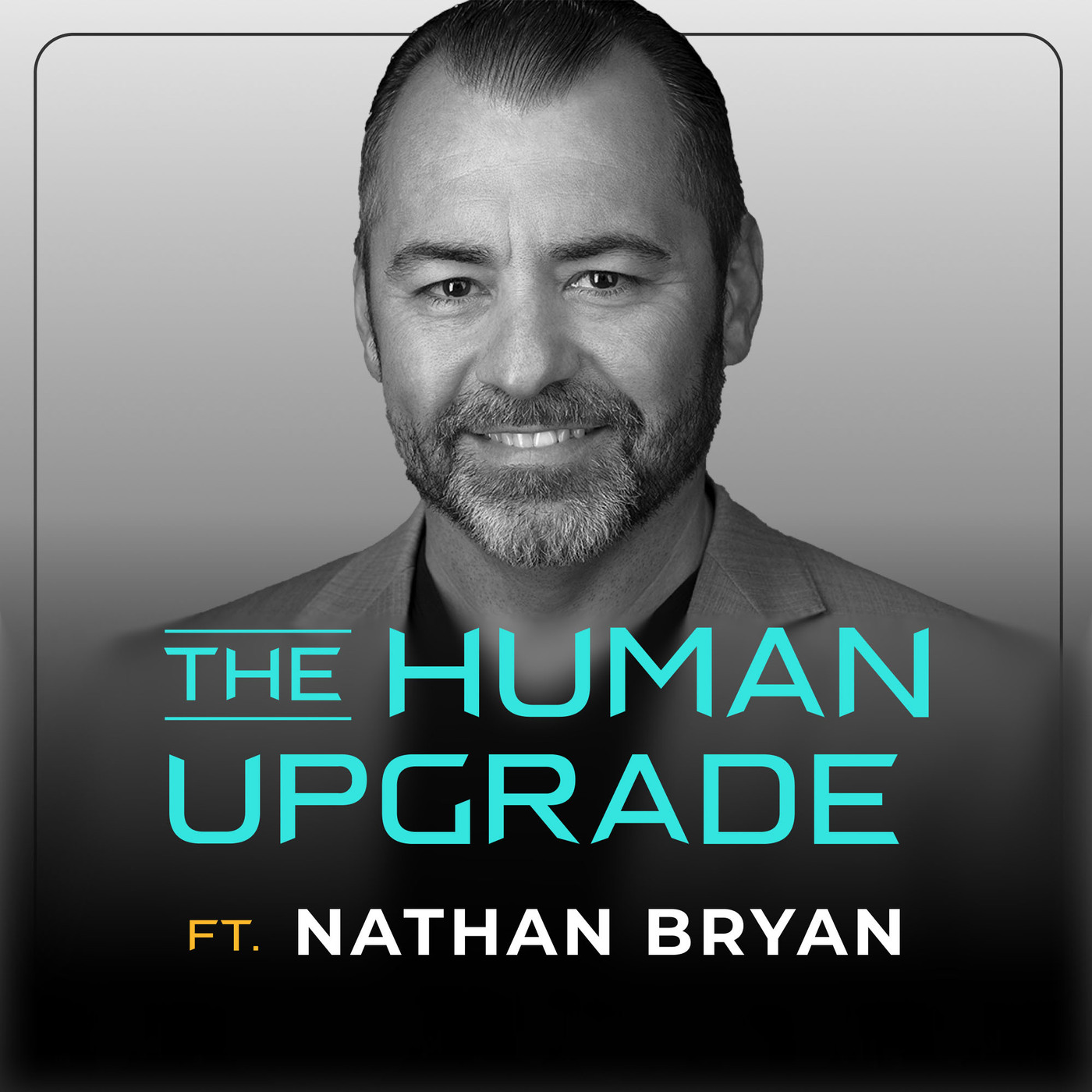
The Human Upgrade: Biohacking for Longevity & Performance
Why Big Pharma Hates Nitric Oxide (And How to Use It Anyway) : 1302
Loading summary
Transcript282 lines
- [00:00]
A
You've talked about nitric oxide at things like libido, things like energy, brain function. Is it one of the master switches for our metabolism?
- [00:08]
B
If you want to heal and regenerate and optimize your human performance, nitric oxide is really at the top of the list.
- [00:14]
A
Dr. Nathan Bryan is one of the world's leading experts on nitric oxide, a molecule your body can't live without. He's the scientist behind hundreds of studies, multiple patents, and game changing breakthroughs that are reshaping how we think about heart health, energy and performance.
- [00:28]
B
We know that 50% of the men that are given Viagra for the past 26 years don't respond with better erections because these drugs aren't affecting nitric oxide production. If we give nitric oxide restore the body's ability to produce nitric oxide, blood sugar comes down, insulin comes down. Because we're potentiating the effects of insulin and overcoming insulin resistance.
- [00:47]
A
Do we have any evidence that increasing nitric oxide helps in real time with brain fog, or does it take a while? You're listening to the Human Upgrade with Dave Asprey. I'm looking to define the master switches in biohacking. And I look at things like mitochondrial function and I look at things like blood flow or electrical capacity and things like that. And you've talked about nitric oxide at things like libido, things like energy, brain function. Is it one of the master switches for our metabolism?
- [01:20]
B
It's what we call foundational. It's not a panacea. It's like an end all, be all, cure all. It's not a silver bullet. But what we do know is that it regulates blood flow, improves circulation, improves libido, it activates your mitochondria. So your mitochondria become more efficient at utilizing oxygen, less oxygen to make more cellular ATP. Interestingly, it induces mitochondrial biogenesis. So now we have if you have adequate nitric oxide, you have more mitochondria generating more ATP, cellular energy more efficiently. But you know, it controls cognition, improving blood flow when one recall memory, it improves glucose uptake and insulin signaling, it prevents telomeres from shortening, it mobilizes our own stem cells. So if you want to heal and regenerate and optimize your human performance, nitric oxide's really at the top of the list.
- [02:09]
A
I believe it. And I've looked at all these things. You have CO2, you have oxygen, and I manipulate those levels. At upgrade labs, you can go in and do a carefully scripted switching between breathing those things and it causes Widespread effects, right? You could do just breath work to become hyperoxic and you start tripping balls, right? And those are relatively easy to understand. But nitric oxide only lasts for a brief period in the body. How long does it last and how do we make it?
- [02:39]
B
Well, if we look at the physical chemistry of nitric oxide, so once it's produced, if it's produced in the lining of the blood vessels, then it's gone in less than a second, about 2 milliseconds or 1 fifth of a second. If it's produced in a cell outside the blood vessels, it sticks around for a couple of seconds. But what I like to say is it, it, it's a, it's a signaling molecule, right? It activates second messenger systems. So if you've got a string of dominoes, right, and you want to knock over that last domino or you want to start that cascade, I would say nitric oxide is that first domino. So once you generate nitric oxide gas, all those second messenger systems, everything that's downstream of no takes place.
- [03:16]
A
So it's fundamental. How do I get nitric oxide?
- [03:20]
B
Well, there's a couple of ways the body makes nitric oxide. And so that was really what I was trying to do for the past 25 years, right? Because in late 90s, early 2000s, once the Nobel Prize was awarded, I had a conversation with Lou Ignaro, Dr. Ignaro, who won the Nobel Prize for nitric oxide, for the discovery of nitric oxide. And he told me over dinner, he goes, nathan, if anybody can figure out how to restore the production or safely and effectively deliver nitric oxide, it'll change the world, it'll change the face of the landscape of medicine. So I go, wow, that's a pretty bold statement. So you can't even think about developing rational therapies or improving someone's nitric oxide. If at first you don't understand how the human body makes it naturally. So that was the road I went on 25, 26 years ago. How does the human body make it? What leads to a loss of nitric oxide production? And then once you've answered those two questions, and only then can you start to develop rational therapies. So number one is produced by an enzyme called nitric oxide synthase. That enzyme is found in our blood vessels, it's found in our brain, it's found in our immune cells. In fact, most cells in the body have a functional nitric oxide synthase. In fact, now evidence showing that even red blood cells have their own nitric oxide producing enzyme. So that enzyme converts arginine to nitric oxide through a very complex five electron multi step oxidation reaction. So you gotta be able to count electrons in order to understand. So that's number one. Over time, that enzyme becomes dysfunctional and less, it produces less nitric oxide. Okay, that's due to really a western lifestyle, right? A diet high in sugar, refined carbohydrates, processed foods, sedentary lifestyle, exposure to toxicants.
- [04:58]
A
Like a lack of coffee, probably lack of perhaps.
- [05:01]
B
I'm just kidding. And then the other pathway is through the diet, the foods we eat, the oral microbiome and stomach acid production. And so we can this completely independent but compensatory, what we call a redundant pathway to make nitric oxide. So then we can fuel nitric oxide through our diet, maintaining healthy oral microbiome and maintaining sufficient stomach acid production.
- [05:22]
A
What is the worst food to lower nitric oxide production?
- [05:26]
B
Sugar. Sugar, without a doubt, anything that leads to an increase in blood sugar or glucose. Because glucose, as the name implies, is glue, Right? It sticks everything together. So it not only locks these enzymes in a specific conformational state and doesn't allow it to transfer electrons and basically leads to a number of enzyme deficiencies and dysfunction, but it completely changes our microbiome. You eat a high carbohydrate, high sugar, it changes the gut microbiome, changes the oral microbiome, and completely shuts down nitric oxide production.
- [05:58]
A
How much sugar do I have to eat to shut down my nitric oxide?
- [06:01]
B
You know, I don't know if that's ever been quantified, but certainly anything that leads to an increase in, in blood glucose, hemoglobin A1C, if you have insulin resistance, then you're completely devoid of nitric oxide.
- [06:14]
A
Wow.
- [06:14]
B
Because in order to get glucose into the cell, for insulin to do its job, the cell has to be able to produce nitric oxide. And we published that in 2011.
- [06:22]
A
Does that mean that if people can take N101, your nitric oxide stuff that works very noticeably, is that going to change? HBA1C.
- [06:31]
B
Here's what we know. We know that if we give nitric oxide restore the body's ability to produce nitric oxide, blood sugar comes down, insulin comes down. Because we're improving, we're potentiating the effects of insulin and overcoming insulin resistance. But how long does it take? You know, typically if you don't change your lifestyle? Look, if you continue to be sedentary and you continue to eat a poor diet enriched in carbohydrates, it's like you Know, you continue overwhelming the system. And nitric oxide is a powerful. As a molecule. It is. It's not. It can't overcome, you know, lack of discipline and poor lifestyle choices.
- [07:06]
A
What can? Because I would like to have less discipline in my life.
- [07:09]
B
Look, it takes the discipline. I mean, as you and I both know, it's hard work staying healthy and not getting sick, but I think it's harder work getting healthy if you're sick. I mean, I think you experienced it, right?
- [07:20]
A
Absolutely. And very strangely, increased blood flow in the brain get more willpower, increase mitochondrial function, get more willpower. So it takes less discipline if your cells work, right?
- [07:32]
B
Correct.
- [07:33]
A
So, all right, what is the best food for raising nitric oxide?
- [07:37]
B
Anything that doesn't lead to an increase in blood sugar. For me, it's about steak. No, I. Look, I think the data on. I'm not a big fan of these carnivore diets personally, or the extreme diets, straight keto and then straight vegan, vegetarian. I think different people require different. Different things.
- [07:56]
A
I do have to say, though, there are some very angry carnivore people, but they're still less angry than the strict vegans. I mean, can we just call a fact a fact?
- [08:05]
B
That's probably right. Now, look, I think good protein with good fats, a combination of, you know, I think we need some antioxidants. Some, some. A balanced diet in moderation.
- [08:16]
A
But for me, it's high protein balanced in moderation. It's like French fries. What are you talking about?
- [08:20]
B
Probably not. Maybe French fries. Fried and beef tallow.
- [08:23]
A
Right. I'm still not going to recommend this. I've heard there are these weird vegan kale fetishists who are just into that. But it feels like a little bit of celery or eating some beets or something that has nitrate in it, some kind of plant is a good idea. Is it necessary?
- [08:38]
B
Well, when we look at kind of what feeds nitric oxide production in the body, one of those comes from a molecule called inorganic nitrate, which is found primarily in green leafy vegetables. And so this molecule is inert in humans. Right. Humans do not have a functional nitrate reductase enzyme.
- [08:54]
A
So we just can't use it.
- [08:55]
B
We can't use it. So we rely on the bacterium in and on our body to do that. So if you eat a straight vegetarian diet, or vegan diet, green leafy vegetables, but you have fluoride in your toothpaste, or you have fluoride in your drinking water, or using antiseptic mouthwash, or you're Taking antacids, then you get no nitric oxide benefit from that. You just, you sweat it out, you, you poop it out and you pee it out. Nitrate is completely unchanged in the human body unless it's activated by the bacteria.
- [09:24]
A
Got it. So do I need probiotics for this or just eat some stuff regularly that has nitrate in it?
- [09:29]
B
We're still trying to understand the ecology of the oral microbiome, but what we found is there's really no commercially available prebiotic or probiotic to restore these. You know, I filed patents on this years ago because we identified the specific bacteria that we've identified that are responsible for regulating systemic blood pressure.
- [09:49]
A
Are you sure there's no prebiotic? Because I take your N101 tablet at night before I go to bed. Then I put in a bite guard so I don't lose the height of my molars as I age. And then I tape my mouth closed, which is good for my relationship and nitric oxide in the brain. But when I do that, I have now filled my mouth with nitric oxide. Therefore it's a prebiotic for the bacteria that. Like that.
- [10:14]
B
No, I completely agree with you. 100. When you look, when I'm thinking prebiotics, things that are sold as a prebiotic, they're classified.
- [10:22]
A
You don't sell your thing as a prebiotic. But it is because.
- [10:24]
B
No, it is. I mean, when we get into the weeds of that I tell people, because our lozenge does something that no other technology does. Number one, if your body can't make nitric oxide, we do it for you. We recouple the enzyme in the lining of the blood vessel. And because it's an orally disintegrating tablet, this generating endo in the mouth, it's killing the pathogen, overcoming the dysbiosis and restoring these nitrogen denitrific denitrification or denitrifying bacteria. So yeah, in that sense it's completely acting as a prebiotic.
- [10:52]
A
I definitely have noticed. We'll just say the beneficial changes in the morning kickstand as a result of N1 01 and I have not seen that from the vast majority of nitric oxide. All this beet stuff out there doesn't seem to do anything.
- [11:06]
B
Now that's, you know, you mentioned earlier, am I frustrated? And so part of my frustration is with, you know, kind of the, the adoption of what we're doing in, in basic standard of care, western medicine. But my greatest source of frustration is dealing with these companies out there that are selling so called nitric oxide products. And these companies don't have a scientist on staff that understands the enzymology and the biochemistry and the production pathways. So they really have no business making nitric oxide products because it could kill an entire industry.
- [11:35]
A
Right, because people sell stuff that doesn't work. Right?
- [11:37]
B
Yeah. So the best, the most common response, you talk about nitric oxide. I heard you on Dave's podcast. But I've been taking nitric oxide for many years and it doesn't help my blood pressure, it hasn't helped my libido. So nitric oxide doesn't work for me. And that's a very dangerous interpretation. Nitric oxide always works. That product didn't work for you.
- [11:58]
A
I have tried over the years, citrulline peptides and arginine and citrine, and there isn't a noticeable difference in blood flow. And again, I'm using that morning kickstand.
- [12:09]
B
As that's your best dosimeter.
- [12:11]
A
I'm not so motivated to measure my nighttime erections. I just, I have better things to measure and I'm just not worried about it. But in the morning you notice things are, things are very, very working well. So there's a correlation between taking N101 and just the amount of blood flow. It's pretty obvious. And I don't get that from arginine.
- [12:32]
B
Here's the problem when you look at the enzymology, we have excess arginine and citrulline in our blood, in our cell, than what we need to saturate the enzyme to make nitric oxide. So there's already an excess. We're never deficient in these amino acids, so it doesn't make sense to supplement what's not missing.
- [12:51]
A
So what's the problem then? Why isn't it working?
- [12:53]
B
Well, because the enzyme that typically converts the arginine to nitric oxide, when you get citrulline as a byproduct, by the way, citrulline is not a precursor, it's a byproduct of nitric oxide production. So the dysfunction of that enzyme isn't able to convert arginine to nitric oxide.
- [13:07]
A
Why is it dysfunctional?
- [13:09]
B
Well, the rate limiting step in that is the oxidation of tetrahydroboptrin. So it's oxidative stress that leads to oxidation of BH4. And then you get NOS uncoupling. And now if you give arginine to an uncoupled enzyme, you're generating superoxide. So now you're exacerbating an oxidative stress. And superoxide production cycle.
- [13:27]
A
And sod, or superoxide, is tied to gray hair and all kinds of aging. It's a nasty free radical, Right?
- [13:33]
B
Well, superoxide dismutase is what detoxifies superoxide radical, converts it to hydrogen peroxide. And then we got an enzyme called catalase that takes that to water. But as we know, there's single nucleotide polymorphisms in sod, in catalase. So if you can't detoxify these oxygen radicals, you age very quickly. So it's best to mitigate the production of oxygen radicals, overcome the oxidative stress, and nitric oxide does that.
- [13:59]
A
Okay. And then you make the nitric oxide lozenges that are going to prevent the problem that arginine would cause.
- [14:05]
B
That's right. So we address root cause. Right. So we fix the enzyme. So within taking one lozenge, within 20 minutes, we see already a 20% improvement in the function of that enzyme.
- [14:19]
A
The latest research in quantum physics proves, using math and hard science, that the world around us is actually made up out of quantum energy. We just can't see it because we're in human bodies that aren't supposed to see it. But it does make up all of life force. And that's something that can be interrupted by EMFs. Stress, even toxins, disrupt your body's ability to interact with the quantum reality all around us. Leela is a company that infuses quantum energy and frequencies into physical products. And I was a little skeptical when I first heard this, but then I looked at their 48 plus placebo controlled studies, and this is very real. One study found that that their technology increases ATP by 29%, and it neutralizes the negative effects of EMFs on our biology, improves heart rate variability, which is a hard measure of resilience, and it improves blood flow in minutes. They make clothing, they make the heal capsule, which is a pendant that you see me wearing, and they make the quantum block which I have in my living room. You don't have to believe in quantum energy to feel it or to measure the results in 48 studies. So go to leelakue.com Dave and get 10% off your first purchase. That's L E-E-L-A Q.com Dave, you've probably heard that I've been taking Mitopure for years, ever since it first came out. It's one of the few supplements that actually moves the needle when you want your cells to work better and your mitochondria to perform best. Mitopure contains urolithin A, which is a clinically backed magic powder for your mitochondria. And, and it's backed by 10 years of research. But here's the fun part. It's now available in a gummy that actually tastes good. Yeah, a gummy that you want to eat. And it's not a sugar bomb pretending to be healthy. They're sugar free, they taste amazing and they deliver the same high dose bioavailable mitopure I've been using in their soft gels. And best of all, because I actually want to eat them, I take more and I feel better. So if you've been serious about your longevity stack or you just want an easier and better tasting way to get started, try the new Mito Pure Gummies. They're that Good. Go to timeline.comdave and you get 20% off. Why is eating beets stupid?
- [16:32]
B
This all started in London in the 2012 Olympic Games because there was some early data coming out. I mean, everything has a reason, right? There were data coming out primarily from some UK investigators showing that if you drink beetroot juice that contained a standardized amount of nitrate that the body would convert this into nitric oxide and you can hand and improve physical performance even in well trained athletes. So during that time, most of these Olympic athletes, in fact I think the, the UK Olympic team won more medals than the 2012 Olympic Games than any other time in history. And they attributed that to the beet juice. So then the market was flooded with beetroot products and then I started testing them because we were, we were making nitric oxide or contemplating making nitric oxide based product technology then. So what's in beets? Most of these beets products are what we call dead beets. All they do is turn your pee and your, your poop red and cause a lot of anxiety. So there's no nitrate in them. In fact, we've used a lot of these commercial beet products as placebos in our randomized placebo controlled clinical trials for nitric oxide active products.
- [17:34]
A
Wow. So they truly don't work. And I've been to your labs and seen your, your $65,000 piece of gear. Like, look, there's no nitric oxide. Just.
- [17:41]
B
Yeah, no, we measure it and we, we hold these, these products to the account.
- [17:45]
A
The other reason beets are stupid is they're very in oxalate. So you're drinking a bunch of beet juice, you're just clogging up kidney stones and getting some gout and some sore joints and muscle pain and bad skin. And there's a lot of foods you can eat if you're a peasant, to get enough calories to stay alive. They just come with toxins. Beets would be peasant food. Sorry, guys.
- [18:05]
B
And the third least like vegetable in the world.
- [18:07]
A
What are the other two?
- [18:08]
B
I don't know, but they got to be pretty bad to beat beets.
- [18:10]
A
Kale nasty.
- [18:14]
B
No, but I think here's. I mean, to address that, because it's a huge problem. So when people are looking, when biohackers or consumers are looking for beets because they see the commercials and they see them, the media out there, then I felt I had an obligation. If you're looking for beets as a source, as a way to deliver nitric oxide, then we know how to do that. So we ferment beets. We start with a premium product, we ferment them. So we pre convert it. We take out the oxalates, we take out the beet pulp, the beet fiber, the beet taste. And so our no beets powder is a white powder. Doesn't look or taste like beets. No oxalates. Nitric oxide delivery electrolytes. And we put in mitochondrial ATP. So you want to optimize nitric oxide, improve performance and turn on your mitochondria. The nobeats products is a killer.
- [18:58]
A
You know, this is kind of off the topic for what we're talking about, but having ATP circulating as a signaling molecule that's not inside mitochondria has all kinds of beneficial effects because mitochondria, like a mitochondria, must have popped and released ATP. Therefore, let's get stronger.
- [19:13]
B
Yeah.
- [19:14]
A
So, yeah, the climate of that product.
- [19:15]
B
Is, you know, lean muscle mass, sports performance, cognitive performance. I mean, 10 to 12 clinically proven claims on improving mitochondrial HP.
- [19:26]
A
Speaking of blood sugar, what does nitric oxide do to my blood sugar?
- [19:31]
B
It's going to improve fasting glucose levels. Okay, so we're going to potentiate the effects of insulin. So how insulin signaling works?
- [19:37]
A
Right.
- [19:37]
B
Insulin secreted by the pancreas. It hits the circulation. It binds to the insulin receptors primarily on muscle cells, fat cells, and liver cells, and then tells that cell to bring glucose in. Right. Glucose transport. There's a protein, a transporter, called GLUT4. And GLUTE4 is what goes to the membrane, binds glucose and brings it in. Well, that Signal to tell GLUT4 to translocate and bring in glucose is nitric oxide. So when insulin binds and it tells that cell to make nitric oxide to activate GLUT4, translocation, that's insulin signaling. If the cell can make nitric oxide, we call that insulin resistance. So insulin resistance and type 2 diabetes is a symptom of nitric oxide deficiency.
- [20:23]
A
If I wanted to eat a whole lot of sugar tonight, for some reason, we'll say cheesecake. Should I just take like three N101 tablets first to protect myself or to lower the blood glucose more quickly? Like, I would take berberine.
- [20:35]
B
I've never done that experiment. It's time to try it. Makes sense. No? So I would take it like immediate, but maybe even immediately after because it takes time to see the spike in glucose. Okay, so maybe give it 15, 20 minutes, take a lozenge. And now you're going to clear that glucose much quicker.
- [20:49]
A
That's a cool hack. I think a lot of people are going to try that because I'm actually not opposed to carbs. And if you have a zero carb diet, it's actually stressful over time.
- [20:58]
B
And I. You can. You need glycogen, you need glucose, you need an energy source, and if you're physically active, you need that fuel. Right? So it's. Everybody's different. If we're, you know, especially professional athletes, Olympic athletes, they have to feel on carb. But the couch potato, eating potato chips, that's not active. The worst thing he can do is eat carbs, because you can't.
- [21:20]
A
He's going to store this fat 100%. When people don't eat carbs over time that their gut biome gets disrupted. And there's all kinds of like angry people who are saying that's not true. Like, I did a full almost a year of what we now call carnivore when I was testing the edges of the bulletproof diet and I looked at my gut microbiome and it happens. And you see actually declines in testosterone and increases in cortisol that also correlate with ED with very low sleep quality, with less growth hormone. And I eat about 2 pounds of red meat a day, so I'm protein centric, but I eat some carbs. And if you're lean, you can eat more carbs. But when I do eat carbs, I would like my blood sugar to go up, but not to go up super high and not to stay up for too long. So I take berberine if I'm gonna do that and sometimes some other stuff. But it's interesting, I'm gonna start adding N101 when I do that. So then I can literally have my cake and eat it too.
- [22:17]
B
That makes Perfect sense. And that's the beauty of biohacking, right? You can customize it to your physiology and to increase or to meet your own metabolic demands and how to optimize your performance because everybody's different.
- [22:28]
A
Is there a drug or a medical procedure that just decimates nitric oxide?
- [22:33]
B
The drug is, there's two primarily proton pump inhibitors. Completely shuts down systemic nitric oxide production.
- [22:40]
A
Wow.
- [22:40]
B
And we now know that people who've been on these drugs for at least 3 years have up to 40 higher incidence of heart attack, stroke and Alzheimer's.
- [22:48]
A
It's really dumb because you can take an H2 blocker that does the same thing. You know, you take pepcid AC and you'll turn off your stomach acid. Right.
- [22:56]
B
Well, I don't think it's never a good idea to shut down stomach acid production. Right. You need stomach acid to absorb selenium, chromium, iodine, zinc, B vitamins. You need stomach acid to break down proteins into amino acids.
- [23:08]
A
Wait a minute. Didn't you go to medical school? You're not supposed to know this stuff.
- [23:13]
B
We have, we. Our stomach is designed to make hydrochloric acid, but the PPIs are the other worst. And then the other cholesterol lowering medications.
- [23:20]
A
Okay, so statins, I like to call statins the ATIA molecules. Sorry, Peter, maybe you shouldn't put those in your longevity book. You know, nitric oxide.
- [23:31]
B
Yeah, no, it's awful.
- [23:32]
A
They're awful drugs like those. I'm not saying there's never a case for them, but. So statins. No, for obvious reasons we've Talked about for 10 years on the show. But then when it comes to the other drugs, stomach acid. There's a very interesting connection between salt intake and stomach acid. So if you get enough salt, you can make enough stomach acid. And most people are terribly salt deficient. And So I do 8 or 10 grams of sodium a day. And it absolutely is life changing. In fact, I couldn't take N101, your nitric oxide thing, because it causes vasodilation. If I don't get enough salt, my blood pressure drops, I feel the drop, my brain gets dumb. If I take an N101 and I don't have enough sodium, right. Because I have low blood pressure. Anyway. So just looking at that, get enough sodium, then your body can make stomach acid and then you can digest your food. You get your minerals and all that stuff in.
- [24:26]
B
Well, that chemo, that biochemical reaction, that reaction that happens in the pyloric cells of the stomach, it's very well defined. You need sodium chloride for sure. You need zinc, you need iodine, you need sodium bicarb and you need B vitamins. Actually, you can't make bicarb.
- [24:44]
A
Doesn't have to be sodium.
- [24:44]
B
Could be. It could be bicarb. Yeah. If you want to increase your sodium. So if you're taking an antacid. Yeah, you can't absorb B vitamins, you can't absorb Z, you can't absorb iodine. So there's no way your pyloric cells can make hydrochloric acid. We have to give the body what it needs. Let the body do its job and get the hell out of the way.
- [25:01]
A
For the long COVID protocols that I've shared, I do recommend that people take Pepcid AC for six months. And that's because you need to block H2 histamine receptors. But you always take betaine HCL, which is stomach acid with your food. Otherwise it doesn't work. Because if you take stomach acid, you can still do all the downstream things that you need. Right? Okay.
- [25:22]
B
Well, the signaling is when the. When the. When the stomach empties that acid load into the duodenum and you get that acid load right in the duodenum. That's what signals the exocrine pancreas to secrete bicarb. And that's your acid based buffering in the system.
- [25:36]
A
If you have bicarb available, if you.
- [25:38]
B
Never get the acid dump, you completely become acidotic. In fact, that's what leads to acidosis in long coveted patients. Especially when you put them on a PPI when they're admitted for long Covid and especially when you put them on a mechanical ventilator, they become acidotic and they die.
- [25:53]
A
It feels like it would just be cheaper and less cruel to just drop them off the top of the hospital, wouldn't it?
- [26:00]
B
Perhaps. I mean, look, I'm sorry.
- [26:02]
A
If you have a recipe to kill someone. You just said what it was.
- [26:04]
B
Yeah. Now look, I looked at this as a biochemist and physiologist, thinking that's the absolute worst thing I could imagine.
- [26:11]
A
Yeah.
- [26:11]
B
How to treat a patient.
- [26:12]
A
I mean, it's.
- [26:13]
B
It's exactly against. It goes against everything we know about physiology.
- [26:17]
A
And so when I see that sort of stuff like, man, your job is to not go to the hospital.
- [26:22]
B
No, stay out. Stay out of the hospital for sure.
- [26:24]
A
That's one of the reasons I drive a heavy vehicle.
- [26:29]
B
Good strategy.
- [26:30]
A
It's part of my longevity strategy. Right. And that said, I'm very grateful there are hospitals when you really need it, you know, they can absolutely save your life. But this kind of nonsense, that is not systems biology based. It ignores nitric oxide, it ignores obvious pathways like, why do they do it? Well, an insurance company told them to. It's all I can tell, right?
- [26:49]
B
It's the best financial model in the world, man.
- [26:52]
A
Well, we're going to fix it because biohackers are right now disrupting a lot of medicine, especially chronic care. And it's really straightforward. I could hire a general contractor to do everything in my house, or I could go to Home Depot and do it myself. And everyone knows you get what you want if you do it yourself. And if it doesn't work, then you hire the contractor, you hire the expert, Right? Or if you have something that's really wrong, okay, I don't know what's going on, you hire the electrician. But having agency to take care of your physical environment around you or even inside of you, I think it's shifting things. So people do go to the doctor less and when they do go, it's to actually take advantage of the knowledge the doctor has instead of to come in and just, well, I don't know. The insurance company said to take a.
- [27:36]
B
Proton pump inhibitor, turn your health over to them. I mean, we have to take control of our own health.
- [27:41]
A
And from what I'm hearing from doctors, and I want to hear your opinion on this, they're actually liking that because yes, you get sometimes angry patients who went to Dr. Google and think they know everything. But quite often you get someone who's actually handled all the easy stuff.
- [27:55]
B
Right.
- [27:55]
A
So you have to, well, maybe you should try to sleep and go for a walk every day. And they're like, well, doc, I'm doing all these things, I took these supplements, like, oh, you have a real problem. Let's go in. So it allows real care and real medicine the way it used to be versus this three minutes per patient thing. So I'm actually feeling like it's positive for medicine, it lowers healthcare costs and it's positive for people because now we're in charge of ourselves for sure.
- [28:17]
B
When you start peeling back the layers of the onion, you can actually get to the root cause of because people are so sick and multi system disease, multiple symptoms. Doctors call it idiopathic fibromyalgia.
- [28:28]
A
Yeah.
- [28:28]
B
When they don't know what it is, they call it idiopathic something or a syndrome. So then they can treat it with a medicine. But a syndrome means they have no freaking idea what the hell's going on.
- [28:39]
A
When I hear idiopathic fibromyalgia, I just think about it, I go, yeah, that's just incompetent, doctor. Because if you're not looking at mast cells and you're not looking at mold and the other known contributors that are well known, and even if a doctor's not trained in that, you could ask an AI agent or Google and it'll just tell you right there. Like, like there's patient advocacy groups trying to get doctors to know about these things and what's the uniting element in all of them? Mitochondria. And what else is nitric oxide?
- [29:05]
B
Right.
- [29:05]
A
Because mitochondria fail if you don't have blood flow.
- [29:08]
B
That's right.
- [29:09]
A
So I think the big problem with nitric oxide, as we talked about last time you're on, it only lasts for microseconds. So no one could see it. Right. I want to go back. What made you interested in a signaling molecule that barely exists before it's used?
- [29:28]
B
The irony of this, when I was a biochemistry major at University of Texas here down the road at Austin, the last, when I graduated, I said I never want to deal with nitrogen based chemistry again. But then I was in, I was in a PhD program in LSU School of Medicine working on a PhD in molecular and cellular physiology. And a Nobel Prize had just been awarded. And Lou Ignaro came and presented this kind of story of discovery and the Nobel Prize. And again, that conversation kind of inspired me and he was very supportive. And look, he goes, we have to figure this out. There's still so much we don't know. So I trained under a pharmacologist who had been in the nitric oxide field for the previous probably 20 years, come from industry. So he was, had the mindset of understanding, figuring out and solving complex biological problems to the extent that you could start to develop rational therapy. So that was really attractive to me that we could, if we could understand how the human body makes nitric oxide, what leads to a loss of it and then how to fix it. Then as Lou said, we would change the world. And I've witnessed that over the past 15 years. We've certainly changed people's lives.
- [30:31]
A
So straight from a Nobel Prize winner. It's inspiring you. Beautiful. How bad is mouthwash again?
- [30:39]
B
Mouthwash is one of the things, it's a really bad thing to do. But anything that says antiseptic, I don't watch tv, but I see sometimes, you know, I'm in airports or hotel rooms or lobbies and it goes this, this antiseptic mouthwash kills 99.99% of the bacteria in your mouth. And companies are advertising.
- [30:55]
A
That sounds like a dumb idea.
- [30:57]
B
No, it's an awful idea. I mean, would you, would any. Let's just take physicians, any physician out there that told you it was a good idea to take an antibiotic every day, sometimes twice a day for the rest of your life would be negligent and subject to malpractice. Because we know that destroying the microbiome, the gut microbiome, through overuse of antibiotics, causes systemic disease. Dysbiosis is contributing to most, if not all, chronic disease.
- [31:24]
A
Wow.
- [31:25]
B
So by the same argument, why would you throw an atomic bomb in your mouth two to three times a day killing all the bacteria? The good, the bad, the ugly. Because it's causing dysbiosis. We've shown and others have shown that it causes lack of nitric oxide. Your blood pressure goes up and you lose the protective benefits of exercise. I mean, I couldn't think of a worse thing to do.
- [31:44]
A
And nitric oxide is way more important than washing your mouth out with Lysol, basically.
- [31:50]
B
Well, it's like if you, if you want to have freight breath so you won't have a day to become intimate, but yet if you have fresh breath because of mouthwash use, you're not going to be able to get an erection because you don't have any nitric oxide. So you're really defeating the purpose of trying to get fresh breath.
- [32:01]
A
I think I just realized how to create the perpetual motion machine of business. We can start a company that makes mouthwash and Viagra plus N101. So you create the problem, sell the solution.
- [32:13]
B
Sounds like Bayer buying Monsanto.
- [32:15]
A
It's already been done. Oh, wait, yeah, exactly.
- [32:17]
B
It's a multi trillion dollar business.
- [32:19]
A
What should people do instead of mouthwash?
- [32:21]
B
You know, certainly brush twice a day with a non fluoride toothpaste. You know, we've talked about the, the harm of fluoride in drinking water. Fluoride in toothpaste lowers IQ by as much as 7 points in kids, shuts down your thyroid function and it's a neurotoxin. So we still need to brush our teeth, right, to maintain good oral hygiene.
- [32:41]
A
You know what I like to do? I like to take the fluoride out. I just like to put lead and mercury in because they're also antimicrobial. Right? Is that a good idea?
- [32:49]
B
I mean, you probably get the same effect. Well, if you look at the back of a Colgate toothpaste, it says if you Swallow this, call poison control and only use a pea sized amount because it's poison.
- [32:58]
A
It's insane. And by the way, guys, please don't put heavy metals in your mouthwash or in your toothpaste. But seriously.
- [33:04]
B
Or in your teeth.
- [33:04]
A
Yeah, putting fluoride in is the same thing. It's that bad. So, and that's going to disrupt it. So we want to brush with toothpaste that's, you know, natural, probably baking soda, stuff like that.
- [33:15]
B
You know, I can, you know, my frustration was trying to find a good toothpaste and I could not find one, so I developed one myself. Number one, that was fluoride free. Number two, there was hydroxyapatite based that could remineralize the teeth, lead to strong teeth and then could restore the oral microbiome.
- [33:33]
A
And so that is, have prebiotics in it or is this.
- [33:37]
B
We're restoring, we're, we're targeting the oral microbiome.
- [33:39]
A
Okay.
- [33:40]
B
And the, the thought process was this. So we showed that if you destroy the microbiome, you shut down nitric oxide production and blood pressure goes up.
- [33:48]
A
Right.
- [33:49]
B
So the question was if we target the microbiome, restore the ecology of the micro, oral microbiome, we improve nitric oxide. Can blood pressure come down? Okay, and what we're finding is early on, people who switch their toothpaste from their crest Colgate fluoride toothpaste to our cardio smile, their blood pressure becomes normal. Think about this. 50% of the people that are treated with a prescription medication for high blood pressure don't respond with better blood pressure. ACE inhibitors don't work. ARBs don't work. Calcium channel blockers don't work. And why? Because their hypertension is a symptom of oral dysbiosis. It's the wrong target. If we target the microbiome, we enhance nitric oxide production. And now for the first time in the history of western medicine, you have a conversation. How do we get people off of drugs?
- [34:35]
A
Wow. So my new protocol apparently is I'm going to use the N101 toothpaste.
- [34:41]
B
The cardio smile Breath of life is.
- [34:43]
A
Cardio smile is what I call it. Okay, I'm going to use that. Then I'm going to chew up one of the N101 lozenges. And I already chewing up every night after I brush my teeth anyway.
- [34:50]
B
Let it dissolve.
- [34:51]
A
Okay. You're not really supposed to suck on it.
- [34:53]
B
Suck on it for five to six minutes because we want a controlled release of it.
- [34:56]
A
Yeah, that's a lot. Can I just, like, tuck it up in my cheek and go to sleep.
- [34:59]
B
You can do that. If you chew it, you're still, you're still going to get the nitric oxide. You're going to compress the pharmacokinetics.
- [35:04]
A
Okay.
- [35:05]
B
You're going to get a spike. It's still going to work for you.
- [35:07]
A
Okay. I could just chew two of them, do the same thing.
- [35:09]
B
Just make sure you don't lose an unsafe. You have an unsafe drop in blood pressure and you'll get lightheaded.
- [35:13]
A
I'll be laying down. Who cares?
- [35:14]
B
Okay. You drag blood flow to other parts of the body.
- [35:18]
A
Exactly. And I will say I. You know, people talk to me on all kinds of health stuff, and I've had a few friends here in Austin who are in their 30s, like, hey, Dave, like, things aren't working the way this. Dude, you're in your 30s. Like, what the hell? But we have this testosterone drop everywhere. So I'm like, okay, measure your levels on testosterone. In the meantime, I've literally given them bottles of your N101 products. Just do this before a date, and it works very well. And I also take microdose Cialisab for several years because better blood flow in the brain really, really makes a difference.
- [35:52]
B
Well, those, those drugs, the. The Viagras, the. We call the PD5 inhibitors Lotus Cialis, they're downstream of nitric oxide.
- [35:59]
A
Yep.
- [36:00]
B
Right. So they potentiate the effects of nitric oxide.
- [36:02]
A
I do both.
- [36:03]
B
So here's the problem. Clinically, we know that 50% of the men that are given Viagra for the past 26 years don't respond with better erections because these drugs aren't affecting nitric oxide production. So if you don't respond, that tells us you're not making any nitric oxide.
- [36:18]
A
Oh, so then if you give them one of your lozenges, you give them.
- [36:20]
B
A lozenge, you can turn the non responders into responders and you can lower the dose, making it safer, more effective. So the combination of low dose Cialis with the lozenge is killer combination.
- [36:30]
A
All right, I'm going to add this to my. My protocols. Yeah, I imagine that you just totally made this podcast go crazy amongst, like, swingers and people.
- [36:38]
B
Well, the Pfizers and the companies who are selling the PD5 inhibitors should be sending us royalties because now, because they only have 50%, 50% of their customers get a benefit now they throw in our nitric oxide, they're going to get more sales. Because now those 50% that didn't respond are now going to respond. So thank you very much.
- [37:00]
A
Since we're talking about that kind of stuff, what happened with nitric oxide during.
- [37:05]
B
COVID There was a lot of promise around nitric oxide and Covid. And there were lots of published. Well, lots, several, maybe half a dozen, maybe even a dozen of published papers showing that patients in critical care, low blood oxygen saturation that didn't get better on supplemental oxygen, they would give them inhaled nitric oxide, their blood oxygen saturation would improve, and they seem to get better. Symptomology. The challenge was people were already critical in that stage. And In June of 2020, we filed an IND, which is an investigation new drug application with the FDA for an early therapeutic around using our nitric oxide delivery system for an early treatment for Covid. Because we knew the people that were getting sick and dying from COVID were the people who were nitric oxide deficient. The elderly, people with high blood pressure, diabetes, previous heart attack, kidney disease. These were the people who got sick, those of us who were healthy. I've never had Covid. I was exposed to Covid, but I never got sick from COVID So the healthy people respond to viral infections. Right. So we got an IND approved in July. We mobilized a global force to have drug manufactured. We had drug manufactured, I think, by September.
- [38:15]
A
Wow.
- [38:15]
B
We had an IRB approved by November. And we were treating patients with COVID in December of 2020 with nitric oxide, with nitric oxide lozenge.
- [38:24]
A
And what happened?
- [38:25]
B
The first hundred patients were what we considered a phase one safety study. So we would treat them, and these were patients within 72 hours of diagnosis. So if we caught you within 72 hours of a positive COVID test or onset of symptoms, we can enroll you in our study and either give you a placebo or nitric oxide lozenge. And then our goal was to prevent hospitalization because you remember, the problem was the hospitals and ERs being overrun, couldn't see patients well.
- [38:51]
A
And the strategy they saw, they just killed with ventilators. There was that.
- [38:54]
B
Well, the previous, the first Trump administration were really champions of what we were doing.
- [39:00]
A
Oh, okay.
- [39:01]
B
Because we were trying to prevent the hospitalization. And then when the administration changed and they become hell bent on putting a needle in every arm around the world, early therapeutics were no longer priority. So the goalposts were moving. And within 100, in the first hundred patients, we, we already saw a statistically significant difference in the two groups. We didn't unblind it, but we pretty confident that the placebo group wasn't performing better than the drug group. We went to the FDA and go, we want emergency youth authorization for this early therapeutic. Because even in 100 patients, we're seeing benefit. And they told us, no, complete the study. Because had we had an early therapeutic that was on the market, they could not legally mandate vaccines.
- [39:47]
A
It has to be frustrating to you too, because you're a physician, a researcher, you understand pathways a lot of people don't like. We have an answer, right? And I was so naive. I thought, oh, you know, this is going to be the moment for ozone therapy, because ozone therapy helps as well. So finally it's going to go mainstream because this can just fix everyone. And I realized the motivation wasn't to fix everyone. It was to make sure people were sick so they could sell one treatment even if it didn't work. And man, that makes me mad now for sure.
- [40:14]
B
And they sell us the bill of goods, right? They said, it's going to prevent transmission, which it didn't. It's going to prevent illness, which it didn't. It's going to prevent hospitalization, which it didn't. It's going to prevent death. It didn't. It accelerated all of that.
- [40:25]
A
Oh, it's so disgusting. A lot of people who had Covid got brain fog. In fact, a lot of people who didn't get Covid have brain fog. It's kind of a thing that happens when you're under lighting and bad food. Just the world we built, right? Do we have any evidence that increasing nitric oxide helps in real time with brain fog, or does it take a while?
- [40:44]
B
Well, yeah, I mean, brain fog is really hypoperfusion. We call that focal ischemia. So if you take patients who report brain fog or mild cognitive impairment, any neurological disease, and do spec SCANS or functional MRIs, you can demonstrate through non invasive imaging. There's reduced blood supply to that part of the brain, different regions of the brain, focal ischemia, hypoxia and all. That's because your blood vessels can't produce nitric oxide to dilate to improve perfusion. When we look at Covid, the COVID related effects. So the spike protein binds to the ACE2 receptor. If your body can't make nitric oxide, you get an upregulation of the ACE2 receptor. So there's more target for the virus to bind to the spike protein. If your body makes efficient nitric oxide, you downregulate the H2 receptor. So there's no target for the spike protein to bind to. That's why people who Are repleting nitric oxide, are resistant to Covid, resistant to flu, resistant to rsv really any respiratory virus. And then if it attacks and binds, what does our body's innate immune system do? Mobilize an immune response. We go to the site of attachment, we produce nitric oxide, biomarker phages and neutrophils, and we shut down viral replication. If you can't make nitric oxide, the virus attaches, replicates in the body, propagates throughout the body. Now you have spike protein all over your blood vessels, clogs up the arteries, platelets start to stick, you get blood clots, you get d dimer formation, heart attack, strokes, brain fog. Wow, there's your mechanism.
- [42:07]
A
So how many lozenges a day is it going to take to keep my nitric oxide levels where they need to be?
- [42:12]
B
We know everybody's different. It's hard to prescribe a one, one size fits all. But I developed that lozenge for a very specific reason, Based on the known pharmacokinetics and pharmacodynamics of once nitric oxide is produced, where does it go? What does it become? And so based on that, we know that the pharmacokinetics have, you know, twice a day, one 12 hours apart if I want to treat kind of proactively or prophylactically to maintain optimal nitric oxide. But we know some people, and we published on this in 2011, a 15 year old kid with a very rare genetic disorder needed one every four hours.
- [42:47]
A
Oh, wow.
- [42:47]
B
To manage his blood pressure because he was resistant to all prescription medications. And when we saw him, his blood pressure was 200 over 115. In the pediatric intensive care unit, we dosed him with the lozenge. Within four hours it was 130 over 80.
- [43:01]
A
Wow. Completely restored it.
- [43:02]
B
Completely restored it. And within five days we reversed his kidney disease. Within five months, we reversed his heart disease simply by giving nitric oxide and we got him off prescription medication. So here's what we know. We know that one lozenge every four hours is safe in a 15 year old kid. So beyond that, we just don't have any clinical data. But if you want to take it prophylactically and be proactive, think one lozenge twice a day is sufficient.
- [43:27]
A
Okay. Now, I do live in Austin and couldn't I just go out and do some whippets, you know, nitrous oxide?
- [43:34]
B
Well, I think that's isoamyl nitrite. The, the whippers whip.
- [43:38]
A
It's, it's, it's just nitrous oxide.
- [43:40]
B
Nitrous, yeah. So nitrous oxide is N2O.
- [43:44]
A
Yep.
- [43:44]
B
Right. That's the dental anesthetic. Laughing gas.
- [43:47]
A
Yeah. People like to use that at parties.
- [43:48]
B
Yeah. So nitric oxide is. No. So they're both gases, but complete physiological. Different physiological functions.
- [43:55]
A
Exactly. That was what I was hoping it would say because there will be people listening who hear nitric oxide and they think nitrous oxide. So do you know the metabolic damage that comes from using nitrous oxide? I don't know if that's part of your science or not.
- [44:10]
B
No, it's not. I mean, we've certainly familiar with the denitrification pathway from. From ammonia or from nitrate all the way down to elemental nia. And nitrous oxide is part of that denitrification, but haven't studied a lot.
- [44:23]
A
So using nitrous oxide can have really profound negative effects on the brain especially. People get hooked on it, just do it all the time. Big areas of inactivation. And it's also a mitochondrial toxin at those levels. So you do not want to be doing that.
- [44:38]
B
Yeah, don't confuse the two.
- [44:39]
A
And I think it also probably makes peroxy nitrate at high levels, if I remember right. But. So, guys, nitric oxide good, nitrous oxide bad. And what about nitrate that's in food like the celery powder and bacon and all the green stuff. You're saying we can't use that, right?
- [44:57]
B
No, that's. I mean, it's a cardioprotective molecule. So this whole story, this myth, similar cholesterol causing heart disease, a myth perpetuated in the medical sciences that nitrite cured bacon and hot dogs would cause cancer. Right. That started in the 1950s. And then the nutritional epidemiologists had a. They were looking for biologically plausible mechanism. Right. So nitrite, what form Nitrosamines. Nitrosamines cause cancer, therefore nitrite causes cancer. If A equals B and B equals C, then A equals C. The problem is, and we started on this about 25 years ago, if that were true, vegetarians would have 10 times higher rates of cancer than meat eaters.
- [45:39]
A
Yeah.
- [45:40]
B
And we know it's just the opposite. Right. If you look at epidemiological data, they have lower.
- [45:44]
A
It's because vegetables are full of nitrate. So nitrate isn't the cause.
- [45:47]
B
85% of our nitrate and nitrite burden comes from vegetables.
- [45:50]
A
Exactly.
- [45:51]
B
5% comes from cured meats. The other 10% comes from swallowing our own saliva.
- [45:55]
A
So you can't Blame the bacon for that anymore.
- [45:59]
B
Bacon makes everything better.
- [46:00]
A
There you go. And I went really deep on this because I used to cure my own bacon, because I raised organic pigs on my regenerative farm. And carrying on bacon is like way better than sourdough for all you weird fermentation people. Not that I'm opposed to a good sourdough, but you know what I'm saying, You put bacon on it, it's better. So I use pink salt, which is just nitrate.
- [46:21]
B
Yeah.
- [46:22]
A
Because that's what the evidence says.
- [46:24]
B
Well, nitrite is the curing salt. Right. If you go back thousands of years ago, before refrigeration, the early cavemen would use sea salt.
- [46:33]
A
Yeah.
- [46:33]
B
And they would put it on the muscle of the. The meat. Right. And then there was bacteria on there. So the bacteria would reduce the nitrate to nitrite. Nitrite would bind to the iron of myoglobin and form this nitrozyl heme pigment, which is the color of cured meat. So you need bacteria to utilize nitrate, hence the microbiome, or you just use the nitrite salt and it, it's the curing agent.
- [46:58]
A
So there you go, guys. It's not the bacon that's the problem. And saying that it's nitrate free but has celery powder, that's called wishful thinking. Because celery powder is nitrate. Right.
- [47:10]
B
We published in 2010, we published a paper showing that no nitrite added bacon had three times more nitrite than nitrite cured bacon.
- [47:19]
A
Ah, I love it. There is one thing that commercial bacon has, and my bacon had. You put a tiny amount of vitamin C in there and it completely blocks nitrosamine formation. So you don't, you have to worry about it. So that said, I think you gotta be careful on the quality of the pig your bacon comes from. But that's a different animal.
- [47:36]
B
That's right.
- [47:37]
A
So to speak. Okay, so we talked about all that confusion between nitrous and nitric and nitrate. What about nitrite versus nitrate? What's the difference in those?
- [47:47]
B
Nitrite is a two electron reduction product of nitrate. Right. Nitrate is inert in humans. Nitrite is biologically active.
- [47:54]
A
Okay.
- [47:54]
B
So you don't need bacteria to utilize nitrite because when nitric oxide is produced in the body, it forms nitrite and actually forms nitrate from the reaction with oxyhemoglobin in the red blood cell. So when you produce nitric oxide, your body's naturally producing nitrite and nitrate. So these are naturally occurring naturally Produced molecules.
- [48:15]
A
Perfect. So you don't have to worry about that stuff.
- [48:17]
B
No. And look, our kidneys reabsorb it because it's so toxic. Yeah. I mean, 25% of our nitrate that we make in our body is reabsorbed in our kidneys. And then 25% of that is concentrated in our salivary glands, and that's meant to recycle these very important metabolites so we can. Our body can continuously make nitric oxide.
- [48:35]
A
Wow. Okay. So it's a beautiful system.
- [48:38]
B
The body's a lot smarter than we are, Dave.
- [48:41]
A
I think you're right about that. What does a carnivore diet do to nitric oxide production and why should we care?
- [48:47]
B
Well, number one, you're getting amino acids to make nitric oxide through the nitric oxide synthase enzyme. But I think most importantly, it's the elimination of sugar that leads to dysfunction of the nitric oxide synthase enzyme. And without sugar, you're maintaining oral microbiome as long as you're not using fluoride and antiseptic mouthwash. And so I think the. The carnivore diet, it's not so much as what it is. I mean, it's good protein.
- [49:11]
A
Right.
- [49:11]
B
Good fats, but it's what it's not. It's not sugar, it's not refined carbide. It's going to lead to an increase in blood sugar, increase in insulin.
- [49:18]
A
But earlier you said carnivore diet wasn't something you recommended. But it sounds like it doesn't harm nitric oxide production.
- [49:24]
B
It doesn't harm nitric oxide production. I'm a fan of a carnivore diet, of a keto diet. I eat probably similar to you.
- [49:31]
A
Yeah.
- [49:32]
B
I eat a lot of red meat. I do eat some carbs, Limited carbs.
- [49:36]
A
Yeah.
- [49:36]
B
I didn't see insulin spike.
- [49:38]
A
Yeah. Okay, so you're a general fan of it. And if people are eating a standard American diet, which probably does just completely destroy nitric oxide production.
- [49:47]
B
Absolutely.
- [49:48]
A
Then doing a lozenge twice a day would be, I think, necessary. Right?
- [49:53]
B
It's absolutely necessary because it's probably going to be the only source of nitric oxide their body's getting. Because if you're in the standard American diet, you're sedentary and living in standard American lifestyle, your body can't make nitric oxide. That's why you high blood pressure. That's why you have ed. That's why you have metabolic disease.
- [50:07]
A
Wow.
- [50:08]
B
And so if you, if you're doing. And you're taking an antiseptic, and you're taking an antacid, and you're on a cholesterol lowering medication.
- [50:14]
A
Okay?
- [50:15]
B
The only source, because people leave me all the time. Well, I'm on a PPI and I've been taking it for 20 years. So I can't take your lozenge. And I go, no, you. You absolutely have to take my lodging. My lozenge overcomes all that. Your body can't make it because you're on. You're taking the mouthwash, you're taking a cholesterol or medication or you're taking an antacid. That lozenge delivers nitric oxide the same in every single person. It's not dependent upon your bacteria. It's not dependent upon stomach acid. If you can't do it, we do it for you.
- [50:41]
A
That's really powerful. So if you're on a proton pump inhibitor number one, you're listening to the show for a while. Why are you doing that? There's better ways, right?
- [50:49]
B
If you've learned one thing.
- [50:51]
A
Yeah. And if you're on a statin, then you're probably not on a longevity program. I hate to tell you that for sure. You might want to fix that by going off of it and eating some goddamn butter. And if I just made you. If I just made you angry and you're a physician, well, here's the better physician. I'm kidding. But here's a very well qualified physician in the room who's saying there's a point to that. And I would just say, if you're worried about it, do what we're talking about. Take some nitric oxide and eat a keto diet high in fat, all that stuff. Go off the statins and measure what's going on in the lining of your arteries. LP PLA2 is my favorite lab marker to tell you. Is there inflammation of the lining of the arteries? So if the. The scary cholesterol is the problem or if the statin was helping, well, then you should see an increase in problems. And you won't.
- [51:38]
B
Yeah. And your vitamin D levels will be better, your testosterone levels will be better, and you'll feel better. Wow. Your cell membrane will actually be better and healthier.
- [51:46]
A
Okay, so there's a pretty strong argument for this. I'm. I'm working on this problem. I take 150 supplements a day. I have the world's most expensive pee. More expensive even than my friend Brian Johnson. Right. You know, it's a race to have expensive pee, I guess. And I don't mind people Say, well, you might pee some of it out. I'm like, great, then I had sufficiency. And it was probably good for my kidneys anyway because I know what I'm taking and most people are not willing to do that. It costs around three grand a month for me to do that. Depending, depending on whether I'm taking some of the real expensive stuff like some of the peptides and whatnot, it could be up to five grand a month. So people are saying, what is the minimum set of really important things I should do? And I haven't published a, like a post on that. And I'm putting a lot of that knowledge in the app for Upgrade Labs, the AXO app that anyone can get where you match with the blood test. But it really feels to me like the N101 lozenges that you make ought to be on that list because the more foundational it is, the more I'm going to recommend it. Like, I make a broad spectrum mineral formula, you know, the, the minerals 101 and I put it in the coffee. A different type of things because those are things that affect almost every pathway via mitochondria, protein synthesis and things like that. But nitric oxide seems to be equally important.
- [53:06]
B
Well, if you want to deliver nutrients and vitamins to every cell in the body. Yeah, but yet those cells aren't getting adequate blood supply because you have microvascular dysfunction.
- [53:15]
A
Right?
- [53:15]
B
You can, it's a, it's like i35, right? You got a traffic jam, you can't, you're not, your cargo is not going to be delivered. So if you take the N101 before you start taking your supplements, we're going to dilate the blood vessels, we're going to open up the microcirculation.
- [53:28]
A
Not before, after. You should swallow your big handfuls of pills and then take it. Because by the time the capsules open in the stomach, the nitric oxide should be there, right?
- [53:35]
B
I mean, either immediately before or after. Yeah, but you know, we see the blood pressure, the vascular compliance effects last, you know, tens of minutes, hours after.
- [53:45]
A
Okay? So it doesn't really matter. So basically take it before or after. Whichever one.
- [53:48]
B
That's right. And now we're going to take, you know, traffic jam on 35 and clear it out. Now you got a four lane highway and we're going to better deliver that Cargo.
- [53:56]
A
All right. Dr. Nathan Bryan, you've done some incredible research work. Just years and years of major discoveries on this. You have a very clear scientific picture of how this works. We know the mechanisms, we know the pathways. It's well established, it's been proven. There's been a Nobel Prize in this field and medicine has yet to catch up. So just consider me a fan of the stuff you do and thanks for supporting important in the biohacking conference and for coming on the show multiple times. And I'm serious. I actually take that lozenge every night when I go to bed, and if I don't, I notice the difference. So.
- [54:31]
B
Well, look, you look great. I think you feel great. So whatever you're doing, you know, I always tell people, keep doing what's working.
- [54:37]
A
I do. And we didn't talk much about it on this episode about topical. But I use the.
- [54:43]
B
The N101 serum.
- [54:44]
A
You call it a serum? I was like, it's a. What do you call it? It's got two pumpy things you mix together, but basically dual chamber serum. You do the dual chamber and mix it up and put it on my face. You can see it turn red. Not because there's any red coloring there, because it's blood that just goes right there.
- [54:58]
B
So you can see it. It's the. It's a game changer in skincare and beauty. It's. You don't have to wonder if this product's working for you. See it working before your eyes.
- [55:05]
A
Well, here's the question just to end the show. So what if I was to accidentally spill some of that, another area within skin that can expand a little bit?
- [55:14]
B
It'll get the wrinkles out.
- [55:19]
A
You heard it here first. So it does work topically for intimate activities.
- [55:24]
B
Well, there's a. There's a limit of diffusion of no gas into the tissue. So it's not going to penetrate deep into the corpus cavernosimally. The massive. But here's what we're finding through maybe self experimentation, maybe, maybe feedback that if you, if you have good erection, it's going to amplify the erection. If you have severe ed, it's not going to raise the dead.
- [55:44]
A
You're going to need to do it orally and probably.
- [55:46]
B
That's right. But yeah, we say, you know, hit it from the inside out. Take the lozenge, open up the microcirculation internally, apply it topically, dilate the superficial blood vessels, and you're off to the races.
- [55:55]
A
It's time to party. All right, thanks again.
- [55:58]
B
Thank you, Dave.
- [56:00]
A
See you next time on the Human Upgrade podcast.
- [56:08]
C
A Human Upgrade formerly bulletproof radio was created and is hosted by Dave Asprey. The information contained in this podcast is provided for informational purposes only and is not intended for the purpose of of diagnosing, treating, curing or preventing any disease. Before using any products referenced on the podcast, consult with your healthcare provider carefully, read all labels and heed all directions and cautions that accompany the products. Information found or received through the podcast should not be used in place of a consultation or advice from a healthcare provider. If you suspect you have a medical problem or should you have any healthcare questions, please promptly call or see your healthcare provider. This podcast, including Dave Asprey and the producers, disclaim responsibility for any possible adverse effects from the use of information contained herein. Opinions of guests are their own and this podcast does not endorse or accept responsibility for statements made by guests. This podcast does not make any representations or warranties about guest qualifications or credibility. This podcast may contain paid endorsements and advertisements for products or services. Individuals on this podcast may have a direct or indirect financial interest in products or services referred to herein. This podcast is owned by Bulletproof Media.