Podcast
The IBJ Podcast with Mason King
Hosted by IBJ Media · EN
A weekly take on business news in central Indiana from the Indianapolis Business Journal. The IBJ Podcast is brought to you by Taft.
34episodes
Episodes
Newest firstAll episodes
Downtown barbershop owner anticipating Final Four, new hotels, 'big boom ahead'
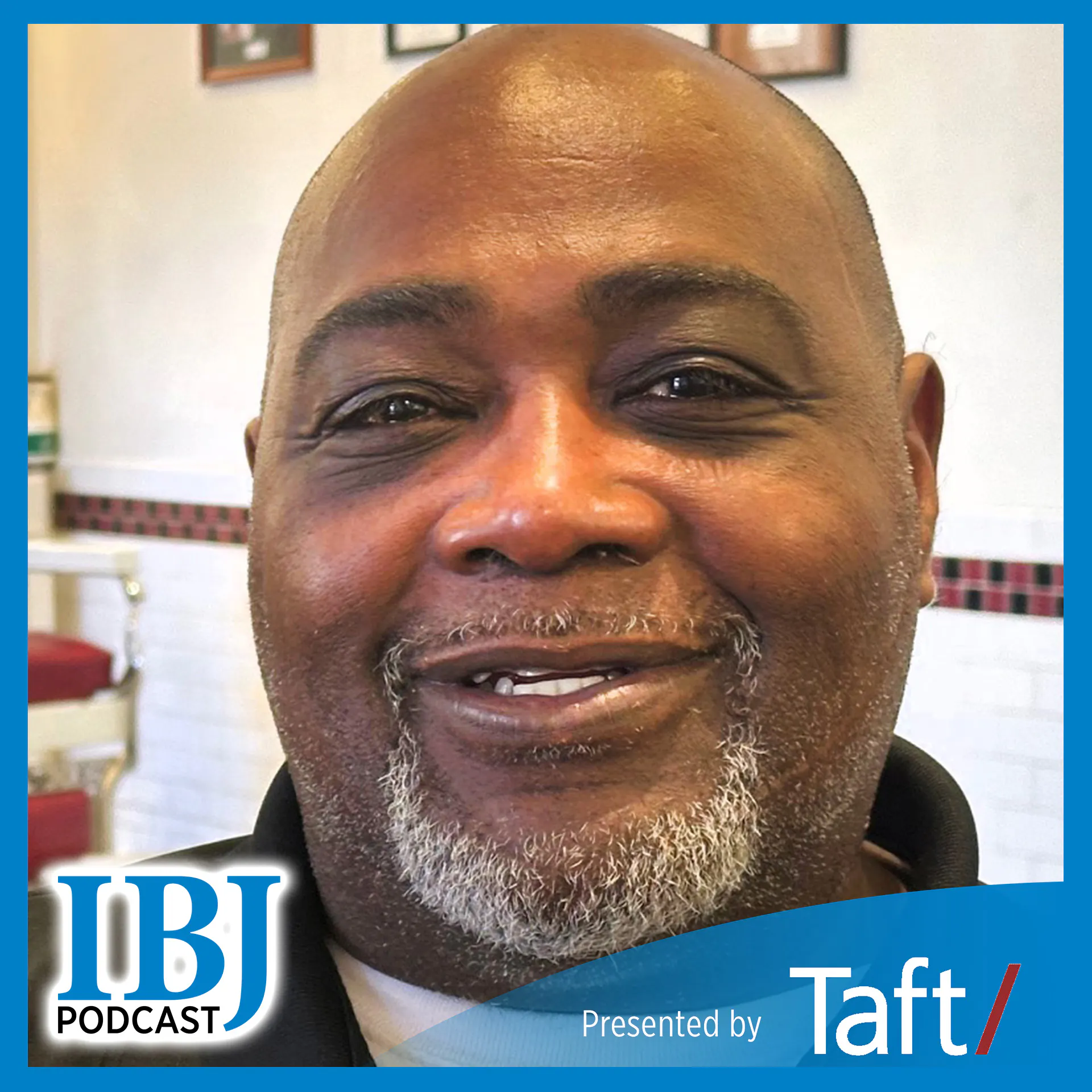
Mar 2300:37:44Tap to summarizeAlthough it looks like a time capsule from the 1930s, Red’s Classic Barber Shop in downtown Indianapolis was founded in 2007 by Alexandra Ridgway, Michael Ridgway and Roy Stevenson. They wanted to transport customers back to the era of traditional gentlemen’s barbering, populating it with antique furniture, equipment and supplies. In 2022, Red’s was purchased by William Hogg, a barber who has been managing the shop since its early days. He sometimes can be seen cutting the hair of prominent Indiana politicians, and his client list has included our four most recent governors. For this week's podcast, Hogg took a break between appointments to discuss how Red’s benefits from downtown’s big tourism events (including the upcomning Final Four), as well as the recent surges in residential and hotel development. He also digs into the value of the shop’s location at the literal crossroads of the Midwest as Red’s claws its way back from the pandemic years. And he shares his street-level perspective on the growth of downtown over nearly two decades and whether it’s as dangerous as some have persistently portrayed it.
Transcribe →
What are the opportunities for humans as AI impacts workforce?
Mar 1600:52:07Tap to summarizeJamie Merisotis, president and CEO of Indianapolis-based Lumina Foundation, is one of the nation’s top experts on providing access to higher education and the ways higher education can prepare the future workforce. Several years ago, he realized how the rapidly accelerating development of artificial intelligence could profoundly impact these two vital currents of American life. In 2020 he published a book titled “Human Work in the Age of Smart Machines,” warning that the roles of workers will radically shift and spotlighting the need to redesign education, training and the workplace as a whole. Today, he admits he underestimated the speed of change due to AI. Last month, he delivered an address to the Economic Club of Indiana about what it means for jobs, education and the economy. On this week’s episode of the IBJ Podcast, Merisotis and host Mason King dig deeper into his conclusions. Number one: AI is here to stay. We humans need to focus on how we can complement AI and excel at work best handled with human traits and skills as AI begins to encroach on the turf of even C-suite executives. In the meantime, higher education must go undergo radical transformation.
Transcribe →
Originally on path to be preacher, Damar CEO leads efforts to aid thousands per day
Mar 900:53:47Tap to summarizeJim Dalton grew up in Indianapolis in a devout, church-going family. He entered college thinking he would become a preacher, but another career path made itself clear – one in which he’d be able to serve and guide children to healthier and happier lives. He didn’t know at the time that he eventually would be able to have an impact on thousands of people every day. Today he is just the third president and CEO of Indianapolis-based Damar Services, a 59-year-old nonprofit that provides essential support for adults and children with intellectual and developmental disabilities. He joined Damar as chief operating officer in 2002 and became CEO in 2013. Over that 24 years, the organization’s annual budget has grown from about $4 million to more than $140 million, and its employee count has grown from 67 to about 1,400, directly serving about 1,800 clients per day. It recently expanded from central Indiana to East Chicago and just launched operations in Richmond. Dalton is our guest this week to talk about his evolution from child psychologist to chief executive of one of central Indiana’s largest nonprofits. He also explains the aggressive strategy behind Damar’s expansion, which in a sense boils down this: “If there are still people who need our services, we should expand to meet them.” Here’s our conversation.
Transcribe →
Inside Christel House’s plan to expand its global network of schools
Mar 200:44:04Tap to summarizeLet’s go back about three decades to the mid-1990s when Indianapolis businesswoman Christel Dehaan sold her company Resort Condominiums International for $825 million. With a new focus on philanthropy and education, DeHaan created Christel House International, a global network of schools with a mission to not only educate its low-income students but to provide the necessary nutrition, health care and career mentoring – even after graduation – to help them break the cycle of poverty. DeHaan established Christel House schools in Indianapolis, Mexico, South Africa, Jamaica and India before her death in 2020.Today, the network is entering a new era of growth. David Harris, probably best known in Indianapolis as the founding CEO of education reform group The Mind Trust, became Christel House’s president and CEO in 2024, succeeding former Indianapolis Mayor Bart Peterson. Harris soon established a new plan for expansion that calls for boosting Christel House’s presence in countries where it already operates while opening new schools in Colombia and Nepal. In this week’s episode of the podcast, Harris discusses the challenges of continuing Christel House’s mission without its founder, how it now finances its mission, the organization’s process for establishing schools from scratch in new countries and the expansion of a global program that’s now helping students from four Indianapolis high schools succeed after graduation.
Transcribe →
How Mom Water got hot, and the answer to, 'Am I the best person to be CEO?'
Feb 2300:49:35Tap to summarizeThe canned cocktail known as Mom Water, created by a husband-and-wife team in a small Indiana town, sounds like one of the purest mom-and-pop success stories in state history. The only part of the narrative that doesn’t seem to fit is that Mom Water doesn’t pop, per se—it’s non-carbonated, which set it apart from alcoholic seltzers. Jill and Bryce Morrison created the beverage and the brand several years ago, and it hit the shelves of a few local retailers in March 2021. It's now available in 40 states at retailers including Target, Walmart, Meijer and Whole Foods. The Morrisons didn’t set out make this their careers, but Mom Water’s quick success persuaded them to quit their day jobs. A couple of years later, Bryce decided he needed to step aside as CEO and install a new chief executive to handle day-to-day operations while he and Jill looked at bigger-picture strategy while gathering input from customers face-to-face. They are our guest on the IBJ Podcast this week, and, as they tell it, they’re more of a seat-of-your pants enterprise run by gut hunches than one that invests in megabytes of market research. They also discuss their leap of faith, the wisdom in handing over the CEO reins, and the creation of their new product based on unsweetened tea.
Transcribe →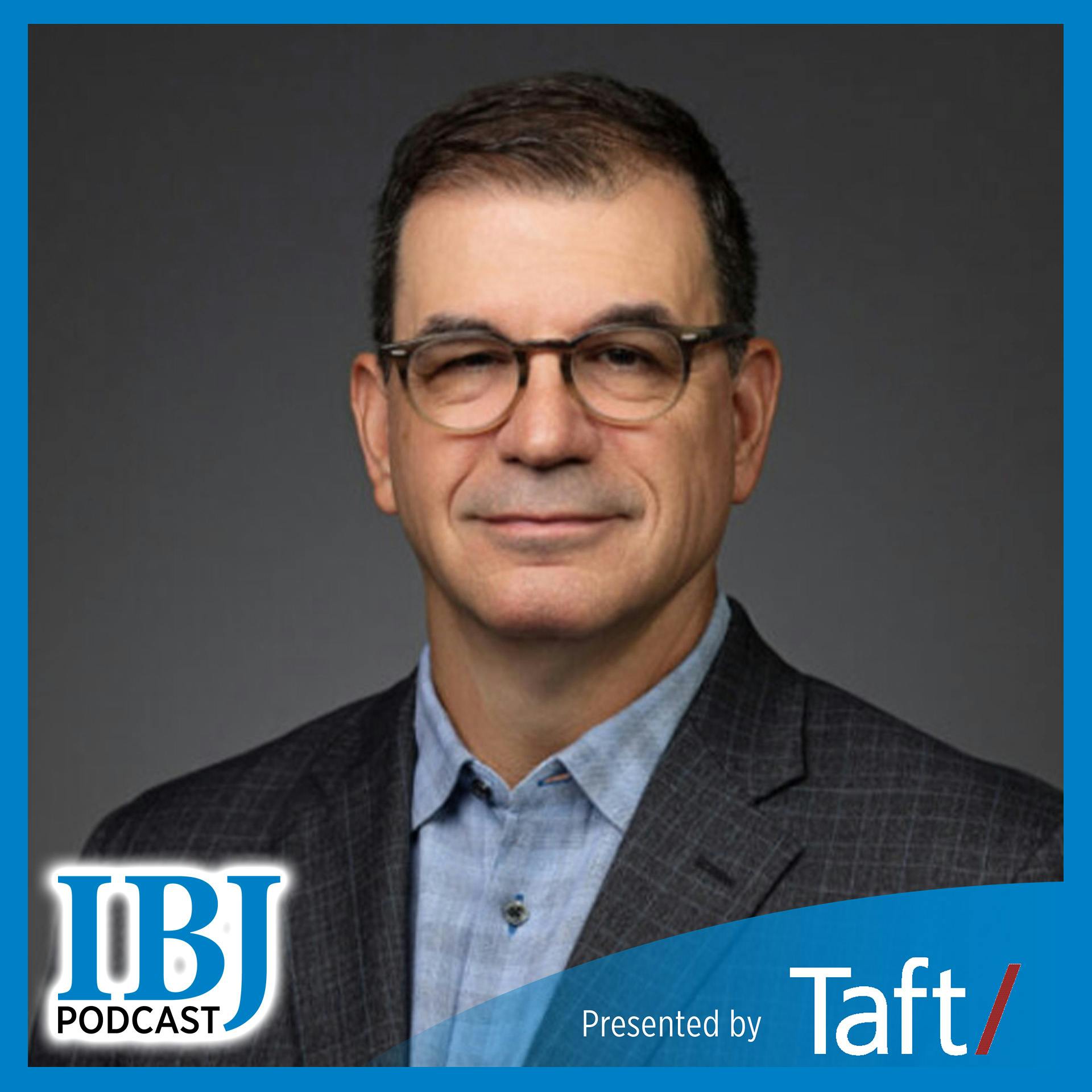
BiomEdit CEO offers peek behind $18.4M fundraising round
Feb 1600:38:22Tap to summarizeFishers-based BiomEdit — a startup that spun out of Elanco Animal Health in 2022 — last year raised $18.4 million in a series B round. That’s despite what was a tough year overall for fundraising — nationwide and in Indiana. In this week’s episode, BiomEdit CEO and founder Aaron Schacht talks about the strategy behind the round and the changes the animal health startup had to make to secure the money it needed to bring its first product to market, which should happen this fall. You can find similar conversations and information about VC funding in The Deal, IBJ’s newest weekly newsletter covering venture capital, mergers and acquisitions, private equity, government contracts and the people who make those deals happen. Sign up for the newsletter at IBJ.com.
Transcribe →
City-County Council’s new chief of staff on role models, soft power and public policy
Feb 900:42:36Tap to summarizeDoran Moreland grew up in Indianapolis, fell in love with politics and public policy at a relatively young age and became the special assistant for Mayor Bart Peterson after studying political science at Indiana University. That’s a pretty good introduction to how politics and policy work on the local level. Fast forward a quarter century or so: On Monday, Feb. 2, Moreland returned to the City-County Building for the first day of his new job as chief of staff and chief policy officer for the City-County Council. The 25-member council dominated by Democrats has new leaders, including President Maggie Lewis, who have said they want to emphasize policymaking, collaboration and transparency after instances of internal infighting last year.Moreland’s new job has nuts-and-bolts aspects like budgeting, managing staff, maintaining community access and helping push the council’s initiatives across the finish line. It also entails supplying higher-level policy guidance on topics like data centers, inclusive growth, the city’s built environment and maintaining competitiveness. In this week’s episode of the podcast, he discusses the lessons learned from his father as a small business owner, his own foray into business, the administrative and public policy experience he’s gained since then and what he expects from his new position. [Editor's note: This text has been changed to reflect that Moreland did not receive a degree from Indiana University in 2000. His degree ultimately was conferred in 2024.]
Transcribe →
Pete the Planner: 'Stocks are at all-time highs, so why am I terrified about the future?’
Feb 200:56:47Tap to summarizeAccording to the latest federal data, the U.S. economy is chugging along at a strong clip, unemployment is under control, the prices of consumer goods are increasing at a fairly typical rate, and interest rates for mortgages are steadily dropping. Plus, the stock market is regularly hitting all-time highs. What’s there to worry about? The Consumer Confidence Index, which is used to measure how consumers feel about their expected financial situation, is at its lowest point since 2014. Specifically, Americans’ short-term expectations for their incomes, business conditions and the job market have fallen well below the marker that could signal a recession. The misalignment of the big picture numbers and how consumers feel might indicate that not everyone is benefitting from the positive economic indicators. Throw on top of that the amount of anxiety Americans feel about polarized politics, a recent wave of five-figure layoffs at large U.S. firms, and data pointing toward a bear market, and you can appreciate any undercurrent of pessimism. On this week's edition of the podcast, Pete the Planner and host Mason King discuss the role that our feelings can play in our financial decisions even when we’re presented with cold, hard data. To that point, they discuss the return of the vibecession, a term describing the disconnect between positive economic indicators and the public's negative perception of the economy and how they’re doing. Fear can inspire some people to eliminate all risk in their investments, which isn’t necessarily a good idea.
Transcribe →
IBJ owner Nate Feltman, reporter Dave Lindquist talk IU championship
Jan 2600:47:38Tap to summarizeIt has been a week since Indiana University won the College Football Playoff national championship and Hoosier fans are still celebrating. On the podcast this week, guest host Lesley Weidenbener talks with two people with different perspectives on the game between IU and the University of Miami at Hard Rock Stadium in Miami. First up will be Nate Feltman, the owner and publisher of IBJ Media. He’s an IU graduate—with three degrees, in fact—and very active with the university. He went to the Rose Bowl in California, the Peach Bowl in Atlanta and the title game in Miami. Nate tells us about those experiences and explains why he decided that IBJ should send a reporter to Miami. And then Lesley talks with that reporter—Dave Lindquist—about his experiences at the game. Dave is not an IU grad and has not been to IU football games. But he has covered the hoopla surrounding many of the biggest sporting events that have taken place in Indianapolis. So he has an interesting perspective on the events in Miami. Click here to see some of the photos that Dave took during his trip to Miami. And here’s the link to the video Dave mentions that shows IU coach Curt Cignetti on the Big Ten Network’s Postgame Show. You can spot Dave in a dark jacket in the background of the shot at the beginning of the video.
Transcribe →
Explaining the blitz of news about the Bears’ potential move to Indiana
Jan 1900:39:22Tap to summarizeThe Colts are done for the year, but news is heating up about the potential for the Chicago Bears to move their stadium to Indiana, Here’s the scouting report: The Bears want a new stadium. They say Soldier Field isn’t cutting it anymore. They’ve purchased a huge site in one of Chicago’s suburbs that formerly was home to a racetrack. The team says it's willing to pay for stadium construction, but the team needs the Illinois Legislature to help pave the way with about $855 million in infrastructure improvements and by approving a bill that would enable a long-term property tax deal. In December, Bears President and CEO Kevin Warren announced that the team wasn’t getting anywhere with the Illinois Legislature and that it was expanding its search for a new stadium site to include northwest Indiana. Indiana Gov. Mike Braun and local officials in the area immediately jumped at the opening and the chance to get the ball rolling. There was a healthy amount of skepticism that the Bears were namechecking Indiana simply to get leverage with Illinois. But several surprising developments in the last two weeks show that Indiana is moving quickly to lay the groundwork for a stadium, the Bears are giving the state serious consideration and that some Illinois officials are seriously concerned about losing the team. In this episode of the IBJ Podcast, we’ll review the moves made by the Bears and Indiana officials that have brought us to this point. We have two guests: We’ll first hear from Marc Ganis, a consultant for pro sports teams who has lived in Chicago for three decades; and then we’ll hear from Mickey Shuey, who covers real estate and sports business for IBJ.
Transcribe →