← The Incerto Podcast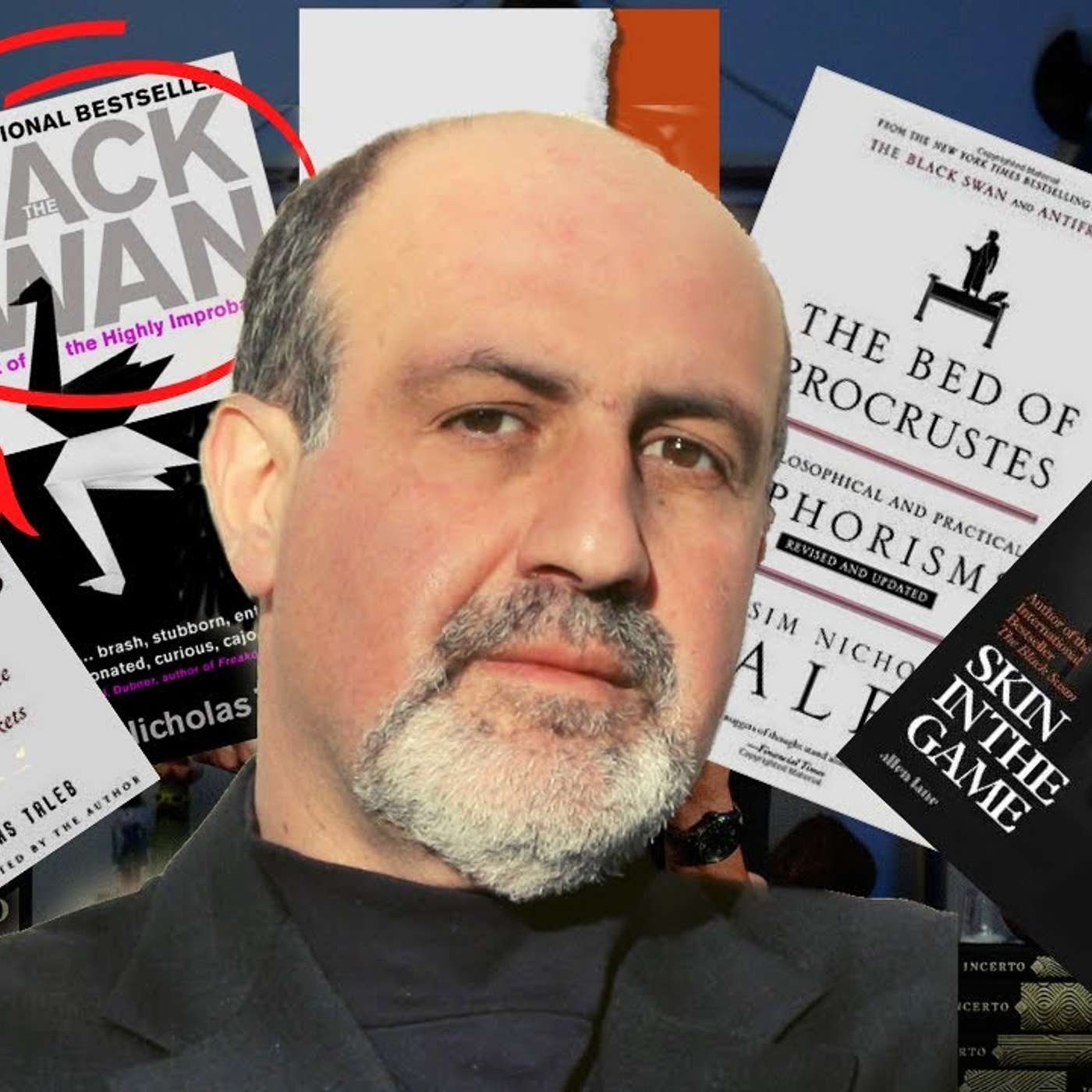
The Incerto Podcast
Brian Klaas | How Can We Predict A Future Of Infinite Possibilities Based Off A Finite Experience Of The Past?
00:36:29
Loading summary
Transcript35 lines
- [00:00]
A
This podcast is right up your alley. It is a book straight ripped from the television worldview. It is magnificent. It is called Fluke. Brian Klaas is the author. He is someone I admire for so many reasons, principally because he is the host of himself, a really good podcast, the creator of a huge substack, and as well, a professor, a professor in global politics, author of several books. We met in person in his kitchen in Winchester to discuss Fluke, randomness, Chance, Nassim Taleb, and why all these things are worth thinking about. Brian's research is absolutely wonderful. So I think this is right up your alley and you're going to enjoy it. And with absolutely no further ado, here is the great and powerful Brian Klaas. Soren Kierkegaard. Life can be understood backwards, but it must be lived forwards.
- [00:51]
B
This is true. I mean, I think this is something where, you know, when we think about that, the way that the world works, we can only control so much. And when we think about the pathways of our lives and how they sort of end up where we are at now, you know, we look backwards and we can see lots of pivot points. What we can't see are what I call invisible pivot points. And those are the things that shaped our lives that we're completely unaware of. And that's most of, I think, what creates our present, our future, et cetera, are a series of very small changes that add up to very profound consequences.
- [01:27]
A
Invisible pivot points. So Fluke is about making sense of the random walk, forks in the road, impossible to predict. What are these invisible pivot points that you've personally experienced to get to where you are now?
- [01:41]
B
Yeah, so, I mean, there's a few that I talk about in Fluke, some more indirect than others. The one that I often tell people is this story from 1905 in Wisconsin where a woman decided to. Well, she didn't decide to, but she snapped. She had a mental breakdown, and she murdered her four children. And the oldest, I think, was five years old, really young kids. And then she killed herself. And the reason I mentioned this is because this is my great grandfather's first wife. And he came home and discovered his whole family dead in this farmhouse in Wisconsin in 1905. And I didn't know about this until I was in my mid-20s. And the reason this is important, obviously, for me, is because my great grandfather remarried to my great grandmother, and I'm the descendant of the aftermath of that mass murder. And so, you know, one of the things that struck me about that, okay, first, there's this weird thing that happens where, you know, all these factors that are, you know, going to create this endless trajectory of history, creating the present do add up. But there's also this moment for me where I was, like, for the first 20 odd years of my life, I was totally unaware that my existence was predicated on this moment 119 years ago. Right. This pivotal moment for me. And I think that's the stuff where, you know, when I talk to people about Fluke, they always say, you know, they relate to it because they say something like, oh, yeah, like I could have gone to a different college or I could have done something else and not met my spouse and so on. The point I make is there's so many things you don't know that diverted your trajectory. And I, I, that's the way I struggle to answer that question a little bit, because it's the one where I think the honest answer is I literally don't know what caused these diversions. There's lots of big choices I've made. I moved to England, you know, 13 years ago, and I didn't know I would still be here, you know, 13 years later. But it is the kind of stuff where I think, you know, you do end up having an appreciation for the unbroken thread of causality that does ultimately create your pathway through life.
- [03:33]
A
You were just telling me about how your podcast was actually done off your own initiative to your own sunk cost, for the hope that it would then get a book deal. And now here you are, I mean, riding Fluke. That's another thing that wouldn't have happened had you not taken the risk with corruptible. Power corrupts.
- [03:53]
B
Yeah. You know, so this is one of those things where it's not even, it wasn't even with an intention. Right. I mean, I, Basically what happened was I was, I was sort of bored with some of the things that I was working on professionally. I had a little bit of extra time. I thought, maybe I'll make a podcast. Right? And I made, I decided to. I thought I'd make like four or five episodes, just like sort of a novelty project. And it happened to go better than I expected. I talked to a person who worked with podcasting. It didn't pan out on the podcast, what he was hoping to hook me up with, and so on. But then he connected me to a book agent that ended up in a book deal. There's lots of stuff, I think, whenever I talk to someone about Fluke, they can see these moments, right? Like, they think about the alternative pathways. But the problem is there's only one world. So, you know, the really odd thing about this is maybe there's a much better version of my life in which I didn't make the podcast, right? I think it's very good, but maybe it's even better if I didn't. And that's the thing that's so bewildering. It's like, you know, you start to think about questions of historical causality. For example, and in Fluke, I talk about this thought experiment involving, you know, would you. If you could travel back in time, would you kill baby Hitler? Right? And the question on its face is like a straightforward question about morality, like, would you kill a baby in order to save millions of people later on? But what it's really a question about is historical causality. Because the question about, if you eliminated Hitler from the story of history, does that mean Nazi Germany doesn't happen? Right? And, like, we don't know. And there's this. There's this very disturbing but plausible, you know, novel by Stephen Fry where he imagines something similar. He says, you know, you imagine that you travel back in time and Hitler's dad becomes infertile, right? So Hitler's never born, but in his version of events, it's actually worse because the person who ends up in charge of what then is basically Nazi Germany is far more disciplined and less erratic than Hitler. The Germans get the atomic bomb before the Americans, and they win the war, right? Now, obviously, we don't know if that would happen, but it's not impossible. And I think that's the stuff where we have this assumption that when good outcomes occur, it's. It's always for the best, and when bad outcomes occur, it's always for the worst. I mean, I am the byproduct of a mass murder. So every good thing in my life has been derived from that. It couldn't have been otherwise. And so, you know, I think there's this aspect of when we think about why things happen, we have a simplistic narrative. We tend to retroactively apply to the past, and the real answer of what reality is is unknowable. And I think that's the thing that truly boggles my mind as I was writing this book and talking about it.
- [06:30]
A
Does it give you more empathy for those struggling?
- [06:34]
B
Yeah, I mean, absolutely. I mean, one of the things that I realized, and this is towards the end of the book, is I. I personally don't believe in free will. I think there's growing scientific evidence to lead us to that conclusion. But even aside from that, right. There is an infinite number of things that I cannot control that have shaped who I am. I didn't control who my parents were. I didn't control when I was born. I didn't control where I was born. I mean, the lottery of birth, even just that. Let's just focus on the geography, right? If the exact same me was born in a country that I spent a lot of time in, Madagascar, my life chances would be severely curtailed. Right. The average person There lives on $1.80 a day or so, and 40% of the country has electricity. So if I'm born in rural Madagascar, where starvation is a constant threat, there's no electricity, I could be the exact same person. I don't think I would end up here, you know, sitting and talking to you. So when you start to have an appreciation for that, it's not to say that there's no agency in life or anything like that, but it is to say that we have these. These sort of layers that, you know, do divert our trajectories that we're unaware of or take for granted. And so, yes, I mean, I think that I have much more empathy having thought about these concepts because it makes me think, you know, when I. When I see someone who's behaving, really. There was. There was an example of this that I found really jarring how I was interpreting the world differently from other people. Where there was this horrific, horrific shooting that happened in the United States where this young man targeted gay people. And they went to his dad's house and they. They interviewed him, and the dad said something horrific. He said, you know, oh, thank goodness he was the shooter. I was worried that he was gay. Right. I mean, it's like, you know, it's just. This went viral on social media because. Just so atrocious, this viewpoint. And what I thought my first reaction is like, what a sad story that this person has ended up in this position. Right. Like, society has failed this person. I'm sure, you know, I would judge them. I would judge them the same as anyone else. In the sense like that, you can't say that it's unacceptable. But I also think, like, that person's life has been such a social failure to get to the point where the education levels, the. The outlook, the upbringing, probably abuse all that type of stuff, you know, much of. And I don't know in this specific case, so I'm inferring a lot of this, but very often it's the case that people who do Horrible things have these life histories that are horrible themselves. Right. And I don't. So I tend to think like, you know, I'm very lucky that I ended up in the place that I did. And of course I've tried to make the most of that luck and so on, which, you know, has panned out in various ways. But I do think that it's important to understand those hidden background factors that affect our trajectories in life.
- [09:19]
A
There was another example in the book of a mass shooting of this person who had something wrong with their brain.
- [09:25]
B
Yeah. So this is a story of this horrible. It's one of the earliest famous mass shootings because they've obviously become much more common these days in the U.S. but this is at the University of Texas. And this guy basically started hearing voices in his head that told him to kill people. And he was resisting this. Like he was aware that he didn't want to do this, but he, he had this really strong impulse. And so he ends up killing two family members. I think it's actually his, his wife and his mom. And then goes to the clock tower at the University of Texas and guns down a whole bunch of people. But before he does this, he leaves this note where he says basically like, look, could you please, like I'm going to die. Because he knew he was going to die, he says, could you please do a, you know, an autopsy of my brain afterwards? Because I don't know why this is happening, but you know, I have to do this like a self awareness of something going wrong in his head. And sure enough, they do an autopsy and there's a, there's a tumor. And the amygdala which regulates emotion in the brain is basically being pressed upon by this tumor and it's, it's making it all out of whack. Now if I told you the story without the amygdala, without the sort of aspects of the brain tumor and so on, then it's just like, okay, gosh, this is a terrible, evil person. The second that the brain tumor comes into play, people start to say, oh well, he couldn't help it. And the puzzle that I pose in Fluke is I say why is healthy brain tissue, which is just to say, brain tissue that follows the bell curve of standard distribution models of what a normal human has. Why do we say that healthy brain tissue equals choice, but unhealthy brain tissue doesn't? And the reason I pose that question is because I can't control my brain tissue. If I want to stop my brain from Chemically reacting the way it does. I can't. So, you know, he couldn't either. And I think there's something there where you have to think, you know, a lot of, a lot of neuroscience is grappling with these questions and I suspect it will be. One of the great philosophical debates of the 21st century is as we understand the mechanics of the brain much better, I think there's going to be an increasing belief that the level of code control we have of top down processing from what we call mind to brain is going to be relatively limited. And that that creates real philosophical problems.
- [11:36]
A
Oh, absolutely. I mean, that brings up the question of agency. You know, if you now, having written this book, absorb this worldview completely, having said what you just said, do you feel like you have more or less agency?
- [11:48]
B
So I, it's funny because, like, I did realize in the writing of this book that I don't believe in free will, which is a rather profound revelation. Right. It's like, I mean, I've often said to people this is the only book I've ever written. It's the only professional research I've ever done that changed the way I see the world. I mean, everything else was sort of podcast. No, it was. This is, it's been the highlight of my professional life by far. Oh, that's amazing. And, and it's because it's just like I thought differently about the world while I was researching and writing the book. Now one of the areas was free will. And this created a strange, you know, sort of question where people say, like, oh, have you like lost a sense of purpose or whatever? And I think the free will question to me is to an extent, it's a question about the origin of causes, right? Like, am I independently from my physical body causing my actions or is my physical body causing my actions? I think the latter. I think my. I think that the series of chemical reactions in my body are causing me to behave the way I do. Which is to say, you know, succinctly, that I don't think there's a difference between the mind and the brain. I think they're the exact same thing. Right. Now this thing raises the question, oh, do you have less agency? No, I think I have exactly the same amount. I just think that the origin story of my behavior is not written by some disembodied soul. I think it's written by my chemical brain. Right. And the rest of the physical experience. Exactly. There's a physical basis to my behavior. Now what I think is really interesting about this Is it does give you a question. And I will say this explicitly where I believe there is no cosmic purpose to my life. I don't mean that in some dystopian, nihilistic way, right? I just think that, like, when I was writing about Fluke, there's a great example in the book where, you know, one of the reasons why mammals evolved in the way that they do with live births is because this single shrew, like creature got infected with a retrovirus 100 million years ago, right? And this, this gives rise to placenta, which gives rise to live births. And, you know, it's why humans are not part of the kind of creatures that lay eggs and so on. Now that is totally arbitrary and random. And so I sort of think that, like, humanity is a basically an evolutionary accident. That means I am too, right? But, but the cool thing about that is, like, how unbelievably lucky that I'm alive and I have consciousness. Like, you know, I think we have advanced consciousness in a way that most creatures don't. And so to me, like, I derive meaning from, from a sense that, like, I get to be part of this unbroken history of 13.8 billion plus billion years of the universe. I get to affect the future. I think that one of the things that, you know, is very strong viewpoint I hold that comes through in the book is that all of our actions have consequences that reshape the future. So, you know, and I get to spend so much time on the planet, you know, interacting with cool people and doing cool things and enjoying the experience of life and so on. And for me, that's enough, right? And I think there's a lot of people who, like, when they get, you know, confront the idea that maybe there's no cosmic purpose to life and find it really dystopian and so on. I say, I don't know, like, I enjoy existence. I enjoy being part of this bizarre thing, even if I can't totally divert the trajectory because I'm this physical being and so on, to me, that's enough. And so I don't feel a loss of agency. I still act exactly the same way. I mean, I just have more of an appreciation, I think, for the uncertainty and sort of majesty of, of life and existence.
- [15:11]
A
So it sounds like in the face of coming to grips that there is no cosmic purpose. Rather than turning nihilistic, nothing I do matters anyway. It in fact gave you the opposite, where you feel like what I do actually can make a difference is either important or, if nothing else, just interesting and maybe Just doing something interesting is a life well lived.
- [15:32]
B
Yeah. And you know, I think the analogy that I try to use, I use, you know, various motifs and fluke and like one of them is this thread, thread and the tapestry, right where I said like, you know, if you pull, you can imagine your life as a thread, as part of a, you know, a tapestry of 8 billion threads, 8 billion people. And if you're actually being accurate, it'd be trillions because it's all the organisms and matter and all that stuff in the universe, etc. But whatever, let's start with the humans. So, you know, we like to think, okay, you can just pull one thread and it'll be fine. Actually, if you pull one thread out, the tapestry image changes slightly and we don't know how much it changes. Right. But I mean, I can tell you that the world would be different in my opinion, if the thread of Donald Trump had been pulled out. Right. Or if the thread of Hillary Clinton had been pulled out, there would be a different world. I mean, so some people might have more short term impact than others, but every thread is important in making the image of the tapestry. Now the thing that's odd about this is that it means that all of our actions are important. And I, you know, like the last third of the subtitle is why everything we do matters. And I, I worried that people would think this was some like, BS self help, you know, thing. I mean it literally. I, like, I, I'm not trying to shy away from, I mean that every, I think the word I choose right now is important. I think that every action, the snooze button, whether I hit it in the morning matters in the trajectory of my life and in the future of, of the world in some way. And I don't know what way that will be, but the clearest example, this, the highest level of contingency that can exist, I think is, you know, without going into graphic detail the moment a baby is conceived. Right.
- [17:01]
A
If this is the graphic detail.
- [17:02]
B
Yeah. So, so, but if, but if it's a microsecond difference, right, Like, I mean, I mean a trillionth of a second difference, a different human is born. And so when you think about. Okay, that makes sense now, okay, let's imagine that, that, that day, that exact day unfolds slightly differently. Right? You stopped to take a sip of coffee when you weren't going to. Now a different person is born, right?
- [17:23]
A
How crazy is that?
- [17:25]
B
Yeah, but it's true right now. But the really wild thing, and this is the thing That I think is amazing is it's not just that day, because for that exact instant to happen exactly as it did, everything had to be that way. I mean, like, literally everything, right? Like. Like, you know, chimpanzee like, creatures mating 7 million years ago. The exact ones had to have, you know, had to mate at exactly the right time for human evolution to occur in exactly the way it did for you to be in existence, for you to arrive at the moment of conception in exactly that instant. And so, you know, if you think that way, it's like, okay, well, hold on. Is this different for other things? No, it's not like there's something special about making babies. It's just that it's. It's a very visible illustration of this point. And so, you know, the other. The other way I describe it to people, that I think makes intuitive sense because I did struggle to sort of convey, you know, I say to people, oh, everything is important. And they say, well, not something truly aren't, right? And I'm like, no, no, like everything. And I say, okay, like, you know, there's all these things, fiction, movies, etcetera, that grapple with time travel. And like, we intuitively accept this idea that if you travel back in time and you change something about the past, even, you know, squishing a bug or talking to someone, you can change the future, right? And there's all these sort of fiction tropes where it's like you might talk to someone who knows your parents and write yourself out of the. Out of existence. The world doesn't have two forms of causality, right? So if that is true in the past, that is also true in the present. And that means that squishing a bug now will have some ripple effects. Now, they might not be important ones that we can sense in the, you know, 50, 80, 90 years that we grace the planet. But maybe in a million years, this is giving rise to a different track in evolution and we don't know. Right? And I think this is the stuff where I find this so unbelievably uplifting because I think part of the malaise of modern society is tied to a feeling of interchangeability and sort of disposability, right? Like AI is going to put this on steroids. You know, I. You talk to people who, like, work in an Amazon warehouse and what they say is like, yeah, like, I mean, I feel like a robot, right? A robot.
- [19:28]
A
Meaningless.
- [19:29]
B
Yeah. And I think that's the antidote to that is not to constantly try to say, oh, you know, actually if you had a high status job, everything would be better. It's instead to say, like, look, you know, I can totally sympathize that you're not enjoying your day to day life, which you should probably change, but, or try to change, but it is something where the flip side of it is that everything that that person is doing is shaping the future in some way. And you know, that to me is so uplifting. So a lot of people, they look at a book that's about randomness or chance and they find nihilism. I'm trying to make a very strong case that the opposite is true, that this gives us new meaning that's different from what we tend to, you know, think about with the world, but that it's, it's a kind of meaning that is very, very worthwhile.
- [20:15]
A
It's such a call to action in the face of this impossible randomness is in fact the call to adventure really like the, the opportunity of a lifetime. Are you familiar with Nassim Taleb's blindfold metaphor?
- [20:29]
B
No, I don't remember this one. No.
- [20:31]
A
Okay.
- [20:31]
B
I've read lots of his work, but I can't remember.
- [20:33]
A
So this, this comes from either Black Swan or Fool by Randomness. And he responds to this question, okay, so everything's random. Should I just stay at home and does my life mean nothing? No. Imagine you're crossing the road. You're standing with a bunch of people. Everyone's got a blindfold on some, and you just cross the road. Some people will be taken out by the traffic. One lucky person will make it to the other side and they'll say to the rest, this is how I did it. It was sheer luck that got them to the other side. Remove your blindfold to the world. Accept that there is impossible randomness at play here. Try and dodge the traffic on your own. You still might not make it to the other side, but you've at least embraced the randomness rather than pretended like it didn't exist.
- [21:16]
B
Yeah, so this is, there's, you know, I often get asked, how will you live your life? You know, knowing that everything that you do is important and whether you hit the snooze button will change your trajectory in life and so on. And, you know, it might have a big effect, it might have a small effect. You can't always tell the. The answer, I think, is that you still just sort of behave as best you can according to your own ethics and your beliefs about the world. Right. And the reason why you do that is because you, you don't want to internalize the lesson. Like for, for me, I am the byproduct of a mass murder. So. Okay, that is a strange thing to think because you think everything good about my life is derived from this terrible tragedy. Should we go around murdering people? No. Right. Obviously not. Like it's, it's something where there's an unforeseen consequence of a tragedy 119 years ago. Is this conversation great? But the flip side of it is like you can't, you can't, you know, you can't anticipate the randomness. So you just try to live your life according to a set of principles that inflict the least amount of harm on people, try to make the world a little bit better and so on. Some of those positive intentions will create catastrophe. Right? I mean, this is the nature of randomness and ripple effects is like, you know, there are things that people do, random acts of kindness which will help someone in the short term but could lead to immense trauma down the line. Maybe the person who benefits from random act of kindness has a different child. That person turns out to be a serial killer. Does that end up meaning that the random act of kindness was stupid? No, of course not. Right. So this is the, it's like there's a pragmatic side of like, what do you do on the day to day existence? And I think that we, you know, you don't have to live your life profoundly differently. I think there's some stuff I talk about in the book, like experimentation that you would do a bit more of, but it's more about the appreciation for, for the importance of human action, basically.
- [22:55]
A
And I think at the core of the book as well is an insistence on the fallacy of predictability that to pretend like you can predict into an infinite set of possibilities of the future is built on a bed of sand. And there's another Taleb quote, but he says, how can we predict a future of infinite possibilities based off a finite experience of the possibility past?
- [23:22]
B
Well, and I think I'd add to that right. As well. And he talks about this dynamic as well. I'm not inventing a new idea, but it's, but it's, you know, if the past and the present have different forms of causality in the sense of different drivers of change, then the past experience might actually be worse than nothing. Because if the world is changing, there's a point, I started grappling with this problem as a political scientist a long time ago when I was thinking about the Arab Spring because I did research Field work in Tunisia. And I mean, this is like, it's a great example for the book, even though I very, very, very briefly touch on it in the text, just because I didn't want it to, you know, to boil down in the weeds too much. But first off, you have a guy in central Tunisia who lights himself on fire, and this is why the Arab Spring happens. That's the initial trigger for it. Of course, there's unrest and so on, but there's lots of places that have unrest, and they don't end up having, you know, civil wars and uprisings and dictators getting toppled all the time. So the immediate cause is this person who just somewhat randomly lights himself on fire and sparks this uprising, and the Middle east goes on fire as a result. Now, the other thing about this is in political science, there's this work that talks about how all these Middle Eastern dictatorships are basically super stable. And this is like, stuff that's coming out in 2009, 2010, right before the Arab Spring happens, and they're explaining, oh, here's why they're so stable. Well, then the Arab Spring happens, and you're like, okay, all the theories were wrong. And the question is, is that actually true? There's two ways of thinking about this, and this is something that I think people don't always appreciate the difference between them, but it's very, very important. One is that the theories were wrong and they were falsified by what happened in Tunisia and the rest of the Arab Spring. The second possibility is that the world changed and the X to Y relationship, the simplified version of reality, did actually accurately explain the past, and now it doesn't explain the present. And the problem is, functionally, we can never tell the difference. So when you have a theory falsified, it could be the case. I mean, in science, there's a, there's a principle. You know, if you mix baking soda and vinegar together, it's going to fizz whether an ancient Roman did it or whether I do it. And it's going to fizz whether someone does it in Malawi or whether they do it. And, you know, in, in the uk that's not true for social relationships. The time, the place, the exact moment of causality can shift outcomes, right? So you can have stuff where it's highly predictive in the short time period in the past and then falsified in a different context doesn't mean the theory is wrong. It might just mean that the, the, the, the sort of aspects of this are different. And so, you know, I think There's a lot of stuff we don't appreciate. I'd also say about predictability. I mean, you know, to my mind, there's a serious problem with modernity, which is that the way that the world works is not the way that we're told the world works. And I'm not some, like, crackpot who thinks that modeling is useless. Right. I think we should model. I think for, like, the pandemic, it was useful to model and so on. It's more that we have to remember that the model is not the world. Right. Or the. The saying is often, yes, and. And the map is not the territory. Territory, Right. This sort of idea. And the reason for this is because when you think that the model is the world, you start to have this illusion of control. So if you think that there are five variables that are important to predict outcomes and you can manipulate those variables, then you start to think, oh, well, okay, all I have to do is tweak this and tweak that, and that's the recipe for a positive outcome. And we always end up with disaster when we do that. Right? I mean, there's unintended consequences, there's complexity that we're ignoring, and so on. So I think there's been an internalization in modern society. A lot of businesses, a lot of politics, a lot of economics, et cetera, internalize this false lesson that, you know, if we just had a slightly better model, we would be fine. It's a fundamental misunderstanding of reality. Models can be useful in short time frames to try to tame some level of risk, but there are some uncertainties for which models are completely useless. And it's not just, you know, a problem. It's actually downright dangerous to base decisions on models that give you a false sense of control and a false illusion of certainty.
- [27:28]
A
Each behavior is informed by an unknowable amount of variables, which then changes the future behaviors of every other variable in that system. And therefore, like you say, looking back on something, you can accurately model, but. But projecting forward, you can't. And there's a fantastic part from the book which explicitly highlights this, so I'll just read it out. In 2016, the Economist analyzed 15 years worth of economic forecasts from the IMF covering 189 countries. During that period, a country entered a recession 220 separate times, a crucial economic downturn with serious consequences for millions. The IMF produces forecasts twice a year. Once in April, once in October. How often do these forecasts correctly predict the onset of a recession? How often do our Best minds get it right. Out of 220 cases, the answer was zero.
- [28:24]
B
Yeah. And I think, you know, this is the kind of stuff where the way that people usually respond to that and I think is. Is somewhat unfair, as they say, oh, these people must be morons. Right. I think there is a lesson there that is stupid, which is we haven't changed our outlook on whether we can actually predict these things, even though we continue to fail them. So that is stupid. But the reason why they fail is just because of huge amounts of uncertainty that exist in the real world of a complex system of modern economy. I mean, trying to understand 8 billion individual people interacting in a system that has some level of order but a significant amount of disorder within it is just fundamentally impossible. Right? And I. I always say this to people where it's like, you know, you think back on, like, the past 24 years, right? So we're going back to the turn of the millennium. I mean, all of the geopolitical forecasts were invalidated by 9, 11, right? So in 2000, all that is wrong for a long time. Then you have all the economic forecasts just totally invalidated by the financial crisis, all the political forecasts invalidated by. In the Middle east, by the Arab Spring, then by the rise of Brexit, Trump, et cetera. Then you have the pandemic. I mean, imagine making a forecast in 2019. How accurate was that? I mean, it's just the point is this is not an aberration anymore. Like, this is just the way the world is. And I think a lot of people, what they do is they look at shocks, right? And this is the point that Nassim Nicholas Taleb also makes very, very well is he says, look, you know, these shocks, these black swans, are not like things that are aberrations. They are part of the system. And so if you. If you. And very often I see this where it's like, you look at a model and they're like, we have removed the outlier. And you're like, but the outlier is part of the. It's part of the data that's really, really important, right? It's like. It's like, how well is the US Doing at stopping terrorism? Oh, we're gonna. We're gonna take data from, you know, 1990 to September 10, 2000, 2001. I mean, to anyone who's looking at that, it sounds ridiculous, but very often, you know, a lot of quantitative modeling does this because the outlier messes up their regression. So, you know, what I always say is I think, and this is part of the book where I talk about things like the sandpile model and self organized criticality and some of these ideas where we have designed systems that don't just guarantee black swans, but they make them more likely. In other words, we have built systems that are more contingent and more prone to flukes. So if I, if I were trying to describe the history of the world in a very broad sense around contingency, which is the idea that, you know, Flute can change everything, what I would say is that the world has become far more contingent over time because of the social systems we've engineered which have very, very little slack. And you know, Taleb talks about this with resilience and so on in his work. But it's the same sort of problem where it's like, you know, the sand pile model in physics basically talks about how if you add one grain of sand to a pile, eventually the pile gets tall enough where an additional grain of sand can cause the collapse. So every grain of sand is causing the collapse. If you take some of them away, it will be less likely. Right? But then the one that's at the top is actually the trigger for it. And I use this analogy to say, okay, well if you think about the history of humanity, our sand piles used to be a lot lower. They just, they weren't that tall. So like every additional grain wasn't going to cause a problem because like you live in these simple hunter gatherer societies or you live in these empires, but they're not tall that, you know, I mean, they're not hyper optimized to the point of no resilience, no slack. Today we have so much optimization in systems that we falsely believe we can control that a single boat getting stuck in the Suez Canal, according to one estimate, caused $54 billion of economic damage. Right? And like that just wasn't possible 40 years ago. Like you just. A boat gets stuck in the Suez Canal, it would be like annoying, but like it would, it wouldn't, it wouldn't destroy a huge amount of global trade. And so this is why the modeling is so important to understand it's not the same as reality. Because if you believe that you can control these things, you optimize to the absolute limit and that creates contingency on steroids. And that's what I think is happening right now.
- [32:25]
A
And just to compound on that same effect, how interconnected we are across cultures, how much our population is getting bigger and bigger day on day, and then as well how interhinged our entire global Economic system is from financial markets all the way down to half the stuff in this kitchen is probably almost certainly actually from another country. And yeah, like you say, amazing with that sand metaphor. The bigger it gets, the harder the fall.
- [32:53]
B
Yeah. One, and also the more frequent it is because the, when it, when it collapses, it never collapses to zero. Right. It collapses to a still very large sandpile. So it's messy. Yeah. And it's. Well, exactly. But it's also on the, it's on the precipice of this sort of, you know, sometimes using physics, this term of edge of chaos. Right. This sort of tipping points become much more likely when you're on the edge of chaos. I mean, the thing is that I find interesting intellectually here is that the world is substantially more interconnected. But if we're talking about it from like a physics or chaos theory point of view, it's not different in how it's actually operating in reality in the sense that, you know, there were ripple effects when somebody in ancient Egypt did something. It's just that they like, took a very long time and had very modest impacts. And what, localized? Yes, exactly. They were very localized. I mean, they might have had, you know, they could have global impacts over the long run. Who knows, you know, how long it would take. And sometimes, you know, you invent a new technology and it might take 400 years for it to spread globally, whereas now it's in four minutes. Right. I mean, somebody can, if it works, people adopt it. And I think this is the kind of stuff where it's not like the nature of reality has shifted. It's more just that we have designed systems in which contingencies are amplified. And that's a fancy way of saying when stuff goes wrong, it goes wrong really fast and has much bigger outcomes for a larger proportion of the population. The pandemic's the perfect example. Right. I mean, there's debate about the origin story of the pandemic, but whether it's a lab leak or whether it's a zoonotic transmission, one virus infecting one person upended the lives, the daily lives of billions of people for years. I think that is the. I was thinking about this during the pandemic. I think that event is the event that affected the largest proportion of the population of any event in human history in terms of their daily lives. I don't think there's any other event that has literally changed how almost everyone on the planet lives on a day to day basis other than the modern pandemic. And even compared to previous pandemics in the Spanish flu affected lots of countries, but it did not cause total shifts in governance, economics, daily life, behavior, behavior for pretty much everyone alive. And that's. That's an extraordinary thing.
- [35:04]
A
So Nassim Taleb echoes throughout the whole book. I just wonder when he came into your life and how he shaped your worldview.
- [35:12]
B
Yeah, I think I read. I don't know exactly, but I read Black Swan slowly shortly after it came out. And I think one of the things that I like about that book, you know, there are some things where I disagree with him on or, you know, take issue with how he presents ideas sometimes. But for the most part, I think he's. His work was a brilliant corrective to a lot of thinking and what is.
- [35:36]
A
Okay, guys, you've heard me all talk about a curious worldview before. It is my primary podcast. It's where I've been posting every single week, interviews exactly like this one. So it's the top link in this podcast description. Click on it and it'll take you directly to the original feed where this was posted and you'll be able to finish the episode there. All I'm doing is transferring you to another podcast. I'm not taking through any paywalls, nothing like that. Just click on the top link and it'll take you directly there and you'll get to hear a little bit about extremistan mediocrity and the minority rule. Why experimentation is wise. This is a super original point from Brian. I really liked it. The idea of lock in serendipity. Brian's take on the media landscape in the next 20 years. Brian's favorite authors. An ode to Madagascar. An explanation of geographical determinism. There is so much left in this podcast. So it's the top link in the podcast description. Click it and I'll see you over there.