← The Incerto Podcast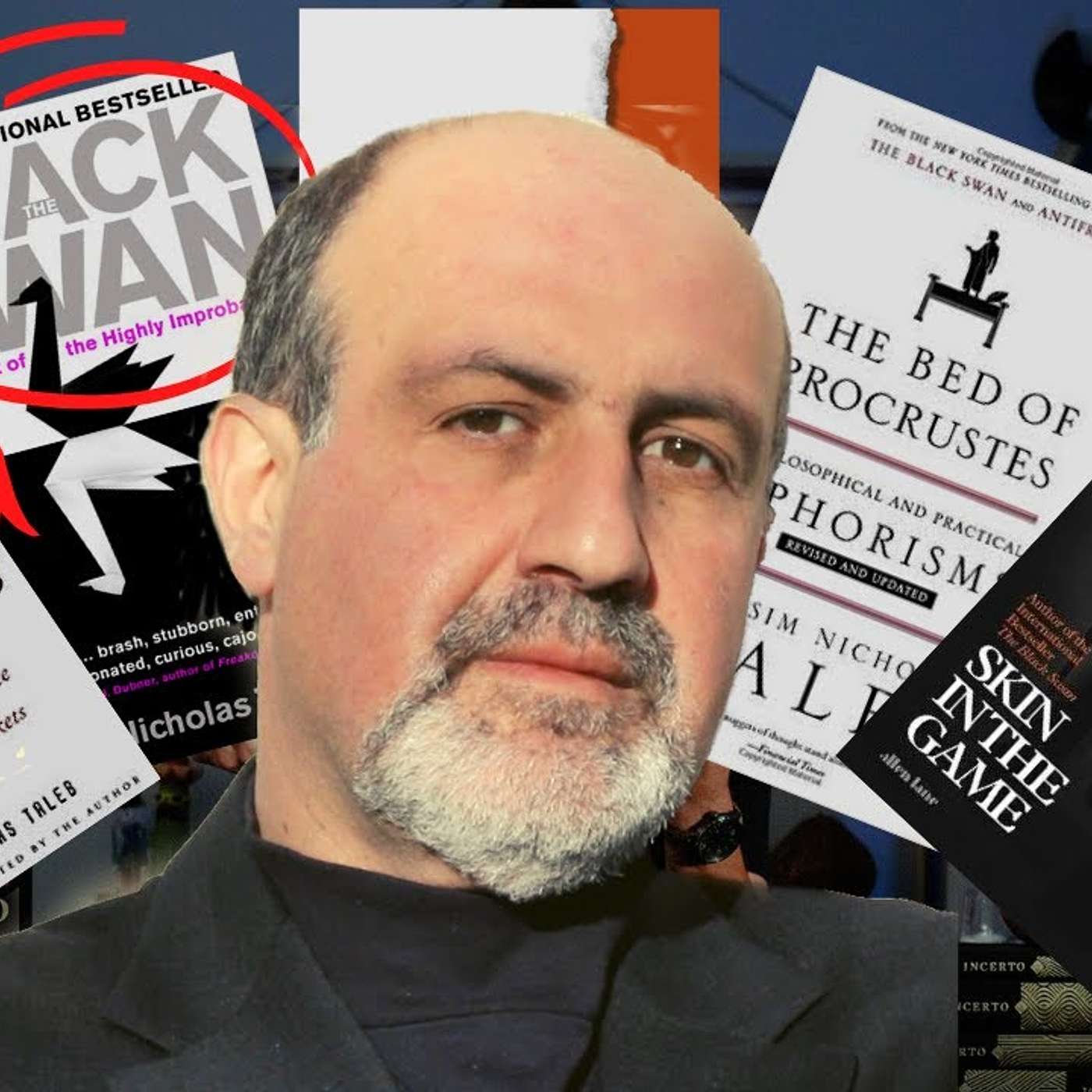
The Incerto Podcast
Scott Patterson | Inside The Worldview Of Nassim Taleb And The Chaos Kings
01:03:23
Loading summary
Transcript64 lines
- [00:01]
A
The following podcast is with Scott Patterson, who is the author of Chaos Kings, this wonderful book that goes deep into the world views of these various Chaos Kings, the most notably of which for you and I, Nissim Taleb. But as well, he looks at Nassim Taleb's partner at Universa, the hedge fund that he advises for Mark Spitznagel. He looks at a sort of contrary figure to Nassim Taleb, Didios and many, many, many others. He also goes into Bill Ackman's Covid trade, one of the greatest trades of all time. But basically Scott wrote this book, Chaos Kings, which its central thesis which is coming to grips with the worldview of these people, where a small number of significant events significantly outweighs the small impact of the majority of the events. There's a great quote from Vladimir Lenin that there are decades where nothing happens and then there are weeks where decades happen. This type of quotation isn't from the book, but it is directly to the core thesis of what the book is about. So I think right up the alley of the Nissim to Lebanon Soda podcast listenership, you my dear listener. But I wanted to just bring this to your attention that this podcast has actually already been on a curious worldview for two weeks. And just to remind you all, the curious worldview is my main podcasting ambition. Basically I have a weekly episode that goes up there for three years now and occasionally I'll siphon one off that has some relevancy to Nassim Taleb or the inserter or you know, generally the worldview that Scott discusses here. But I think, and I want us to go out on a limb and agree that we have more interest in common than simply Nassim Taleb. So I encourage you to click on the top link in this podcast description and just go and suss out a curious, well do podcast. If you think there's something interesting in there for you, then a subscription and a review would just be absolutely amazing. But I wanted to bring that to your attention before we get into this podcast, just because this episode's been up there for a while and I am really confident in making the assumption that you and I have more in common than simply Nasim Taleb. But in this podcast you can expect to hear about how Scott broke the news that launched Spitznagle and Taleb's hedge fund all the way back in the pre Black Swan days. The core of the Chaos King's worldview. A lot about Nassim Taleb, a lot about Serendipity but then as well, anecdotes for days that just give you a deep insight into Scott as both a journalist and an author, and what he's learned from having spent so much time around these individuals. So there's absolutely nothing more for me to say. I mean, pump your good juice into this algorithm if you feel like it. Five star reviews. But I would implore you to check out a curious Worldview podcast, which is my primary podcasting ambition. And here is the great Scott Patterson. How is spending time around and then also researching these Chaos Kings affected the way that you think about luck and serendipity in your own life?
- [03:08]
B
Well, one of the things that you realize looking into, you know, games of chance and gambling, which is kind of, you know, behind all of the thought and research that they do, they are very meticulous in the way they invest, but behind it all is chance. And it really does kind of highlight how much chance and flukes play a role in our lives. You know, when you think about it like, you know, some random thing that happened in your life, you know, maybe you decide to, you know, stop off for a coffee someplace or, you know, go visit somebody that you hadn't been planning to, and something comes out of that that creates a, you know, massive change in your life. That's. That's one of the things that it kind of made me think about a bit more. People know call is contingency. It's. It's something that you can find throughout history where random things create a fork in history that changes everything. So, and that's what, you know, Nassim is very attuned. Nassim Taleb, who I write about in the book, is very attuned to these things, that it's impossible to really predict what's going to happen because the world is contingent and these random events come along and change the pathway of what's going to happen. And, you know, it's. I guess one of the main things behind the Black Swan concept is these huge events just come out of nowhere. They're unpredictable, but we like to look back after they happen and say, oh, yeah, I saw it coming all along, when in reality, it was entirely unpredictable.
- [05:12]
A
And in your own life, luck and serendipity.
- [05:17]
B
Yeah. You know, I was talking with my editor of the book about this the other day, how he's working on a book that's kind of oriented around this concept. And it made me think about something that happened to me when I was a teaching assistant in graduate school. One day I by chance Stopped off my office to, I think, pick up some papers or something. I forget exactly what it was, but I had actually had set up a meeting with some people from New York University who had a summer magazine camp. And I thought, oh, that might be interesting. But I had totally forgotten about it, and I wasn't gonna go. And somebody in the office said, hey, weren't you gonna go meet with those NYU people? And I said, oh, yeah, yeah, you know, So I went, and I actually ended up going to this NYU summer school and got. That's how I got into the writing business in New York. So it's complete. A complete fluke, complete contingent. If I hadn't stopped off in that office, my life would have been completely different.
- [06:38]
A
I absolutely love that as such a succinct example of exactly that point. It's largely randomness, and it has created the most divergent fork ever, maybe so far that's happened in your life. The way you commit the majority of your time going forward from that. That. That moment. So such an incredible example.
- [06:59]
B
Yeah, I mean, you know, if you hadn't decided to go to that bar that night, you wouldn't have met the, you know, the woman that you ended up marrying. Yeah, so many of these things happen to us, but we, you know, I think people like to think that their life is orderly and they're planning and they're in control when it's actually just a bunch of random things. But, you know, I actually. I write about this in the book how Nassim likes to. You know, he calls this the narrative fallacy that we, you know, we like to say that it's a story that we're in control of things that we already always knew was going to happen. And I think that, you know, the black swan has become this concept for extreme chaos. But in a way, Nassim is violating his own rules by call, you know, by putting a name on this thing. And I think it sort of bedeviled him a bit because people are always saying, what's a black swan? Is this, you know, was 9, 11 a black swan? Was, you know, the global financial crisis of Black Swan. And it's, you know, I think it shows how it's really difficult to grasp this, you know, the nature of chaos, which is, you know, my book is Chaos Kings. It defies logic. It's not something that we can really, you know, you try to grasp it, and it slips away. You put a name on it, you call it a black swan, and you're actually trying to put it in a box. And you can't do that with chaos.
- [08:47]
A
I think this little data point would be hopefully particularly interesting to you. But this is now maybe the 150th episode I've recorded, and in over 100 of them, I've asked the guest, right at the end, the last question, the role that serendipity has played in their lives. And I've sort of framed the questions so they. So they aren't totally fooled by the narrative fallacy coming into it. And it is uncanny, Scott, how every single person, the most. Some of the most pivotal things that ever happened to him, whether it's the wife, whether it's the job, you know, whether it's just the tap on the shoulder, hey, the opportunity of a lifetime has just swept by. You got to go take it. Everybody has it. And it is, you know, obviously, Taleb, such an amazing communicator of these ideas, or the best takeaway from his ideas, is actually how it is applied to real world, to regular people, not to financial markets, you know, or not to any, like, highfalutin intellectual ideas, but just realizing the role of chance and luck and then therefore trying to optimize for it, if possible.
- [09:54]
B
Yeah, I mean, it's one of the things that Nassim is. He's constantly talking about, or you're reminding me of when we talk, is that he doesn't want to be known as a thinker about financial markets or a trader. He wants to be known as a philosopher, somebody whose ideas can be applied to life in general. And I think that he's largely succeeded at that. And it's also an interesting contrast with Mark Spitznagel, his colleague. You know, they founded Empirica, the first hedge fund that made these bets on extreme events, in 1999, who could care less about being thought of as a philosopher and just wants to be known as a great trader. And it's one of the real sort of interesting mixes and how they work together. But, yeah, I mean, Naseem's books are. I think that's why they're so popular, is they aren't just for financial markets. You can really see how the trading and the strategies that they created are behind the ideas in many ways. I think that's one of the most fascinating things when you really dig into, you know, the books and, you know, where he came from. So his book Antifragile, his third book, is about how things are resilient in chaos. Some things can be very resilient in chaos, in times of disorder and stress and behind that is the trading strategy of Empirica and the second hedge fund that Mark founded, Universa, because there's nothing that's more anti fragile than these put options that they buy that become extremely valuable when the market crashes. And it's, it is the definition of antifragile.
- [12:10]
A
Just to test, I think Taleb actually says explicitly the reason these books do sell so well is because he sort of talks about these old ideas. And as a real measure of the Lindy effect, Naval Ravikant said that Taleb's books will be still read thousands of years from now. Do you agree with that?
- [12:31]
B
I have no idea. It wouldn't surprise me, especially the Black Swan, a thousand thousands of years from now. It's, you know, I would side with Nassim saying that we can't predict things I say 100 years from now for sure. I mean, obviously I, you know, have a great love of his books and his ideas and I have for a long time. His first book, Fooled by Randomness, you know, was. I was a sort of a young reporter at the Wall Street Journal covering hedge funds. And that's how I heard about this book was these hedge fund managers. It was kind of a cult classic to them, even though it was talking about early 2000s. And it's interesting because the book is very critical of most hedge fund managers because he's basically saying these guys are mostly just lucky. And, you know, they flip the coin and it's come up, well, you know, tails for them 52% of the time if they're betting on tails. But eventually it's going to, you know, come up heads against them and they're going to blow up. Obviously most of these traders thought that they weren't the, the lucky ones, that they had skill. So I, you know, I really liked that book. And you know, this is before the Black Swan came out. And, you know, talking to the hedge fund managers, there was a rumor going around that Nassim had shut down his hedge fund, Empirica. And it was kind of interesting, like, okay, here's a guy who's, you know, kind of famous for talking shit about other hedge funds. And he, you know, did something happen? Did he blow up? So, you know, I talked to a bunch of different people. I finally tracked him down in 2007 and got the story about what happened with Empirica, that they had shut down in 2004. And it's an interesting thing in the hedge fund world. They're very secretive. So a hedge fund can just shut down and you don't even know. It just kind of disappears. So Nassim confirmed for me that they had, in fact, shut down. And he also said, oh, I've got a new book coming out. It's called the Black Swan, and my partner, Mark Splitznagel, is launching a new hedge fund. It's called Universa. So I talked to Mark, and I wrote a story for the Wall street journal in 2007 breaking the news that Empirica had, in fact, shut down, that a new hedge fund was starting up, and that Taleb has a new book coming out called the Black Swan. And that's where my relationship with them started, was with that story. And it's also kind of funny that when I first pitched that story to my editors, they didn't want to run it. They were like, oh, who are these guys? They shut down a couple years ago. They're no big deal. And I was like, actually, Nassim Taleb is kind of a big deal in the hedge fund world. He's very well known. And it's got this other element to it that they're starting a new hedge fund. So my editor was like, why don't we just write a short blog about it? This is back when blogs were a thing. And I said, no, let's run this in the paper. I finally convinced them, and then we did run the story, and it was. It became the most read story in the website for, you know, several days.
- [16:24]
A
Wow, nice one. How has it been witnessing, particularly to labs, but also Spitznagall's rise of almost fame and popularity in the last 15 years?
- [16:39]
B
Yeah. You know, obviously, when they started Universa in 2007 was very small. It was this weird strategy that nobody else was doing. And, you know, I encountered a lot of flack, actually, from people who criticized me for writing about them because they thought it was bogus. Some people did that. This is a bogus strategy that's not going to work. And I'm helping them to raise money by elevating them in the pages of the Wall Street Journal, which is something we're very. We try to be very careful about in the paper, is to, you know, not give air time to things that can be sketchy. I never thought it was sketchy. I thought it was fascinating what they were doing. And, you know, I mean, one of the things that, you know, really spoke to me about what, you know, Nassim's approach to finance is, you know, when I came into, you know, writing about Wall Street, I don't come from a finance Background or an economics background. I studied literature in college and you know, when I first started, you know, I went to New York. I, you know, in the 90s, I could tell you a lot about 17th century English novels, but virtually nothing about economics or finance. I didn't know the difference between a stock and a bond. I had no interest in it. So as I started covering Wall street and reading up on finance and economics, I came across this notion that kind of ruled on Wall street, that everything is ruled by self interest and rational self interest. So this is sort of the central idea behind modern economic theory, is that it's very rational and prices are always reflecting what the current thought is about where markets are supposed to go. And it's very orderly. Okay. Nassim comes along and says, you know, that's bullshit and it's random. People are fooled by randomness. This is his first book, says. And that, you know, that really spoke to me. And because I thought, you know, I look at humanity as a kind of a stew of emotions and, you know, fear and greed. And when I look at markets, I see lots of fear and greed. I don't see rationality. And to me that's kind of what rules how, how things go. And you can see that. And you know, why do we have bull markets? Why do we have bubbles? Why do we have crashes? These are because of fear and greed. So that, you know, and the empiricist strategy, or what became the universe's strategy, is meant to capitalize on that, that we have bubbles. And we don't really, really know when it's a bubble or when it's going to crash, but it's there. Designed to capitalize on the chaos, on the crashes. And at the time when it launched, most investors didn't think that this was an effective strategy because it's, according to most approaches to finance, it's kind of stupid because it loses money virtually all the time. It only makes money in very discreet periods when there's a huge move, a huge downturn in the market. And that's, that's not very attractive to most investors who want to be making money steadily with very low volatility as much as most of the time as possible. So they had, as I write in the book, they had a lot of trouble raising money after they launched in 2007 for full year practically, they raised nothing aside from a little seed capital they had when they first launched. They pitched the strategy all over the place. No one wanted it. And this is 2007 and early 2008. This is not a very calm time in the market. Frothy. Yeah. I mean, everybody could see that something big was coming. Nobody, of course, knew that it would be as catastrophic as it was. So they did get a little bit of money in around mid 2008. And then comes along September, October 2008, market crashes and they make about a billion dollars on a very small amount of money that they had. So it was, it was good timing for, for both Nassim and Mark because Nassim had come out with the black swan, which is saying crazy things happen.
- [22:12]
A
Perfect timing.
- [22:14]
B
Yeah. For both of them.
- [22:17]
A
To expand on that point, you've just made the forces such that one rare extreme event could be more valuable than the accumulated gains from years and years of daily iteration. That's the universe sort of in a nutshell. But that you only feel that at this great zoomed out perspective, you know, that you've got looking at a 15 year history of, of, of university. And I think they've had something like two big windfalls or something. So, like looking at it over a long period of time, it makes sense. But on the day to day, it must be so unbelievably demoralizing. So, you know, what are the principles that allowed Taleb and Spitznagel to just keep taking loss day after day?
- [23:04]
B
Yeah, well, it's interesting. That's why Empirica shut down in 2004. At least one of the reasons is Nassim couldn't take it. It was too stressful for him. He, you know, he wanted that rush of, you know, victory. Nassim is, I think it's not, you know, the surprising thing to say that he's, he has an ego. What, you know, he wants to be proven right. And in financial markets, that's one of the, you know, things that draws people to it is you're, when you're right, you're really proven that you're right because you make a lot of money. And this was, you know, 2002, 2003, the Fed was injecting a lot of money into the markets post 9 11, post.com crash. So the markets were very, you know, calm. And he just, he couldn't take it. He thought it was making him sick. He was worried that he might relapse in cancer. He had a throat cancer issue the previous decade. Mark, on the other hand, loved what they were doing and believed in it. He had been, you know, as, you know, I write in the book, when he was a cub trader on the Chicago Board of Trade, he was mentored by this veteran commodity trader, Everett Klipp, who had this mantra that he taught him to. You know, in order to survive in this business, you need to do something that is very contrary to human nature. You need to love to lose. And he beat this into Mark and all his other traders that he trained. Mark really, you know, it really sunk in with him. And what it means is if you have a position and it starts moving against you, sell it just right away, immediately sell, just get out of it. Lose and love that you did that. And you know, he would say it's against, you know, how most of us think, because you believe in your position, there's a reason you got into it. And you know your mind is going to tell you to stick in, stick with this trade because it's going to turn around. But that's not how markets work. Markets are, as I was saying, greed and fear, irrational things drive prices. So if you can discipline yourself to take that loss and live to trade another day, then you'll be around and you'll make money. So Mark had it beaten into him that taking these daily losses was actually the right thing to do. And he had that discipline. He had that they worked out a methodology, protocol to keep the portfolio in a place that is going to have maximum gains when there is a crash that's inevitably going to happen. And he could just do it. It's definitely one of the tougher things about the strategy. You know, I think most people on Wall street have pretty short term incentives to, you know, yearly incentives because they're aiming for an annual bonus. So that's the big thing on, you know, in finance and Wall street is the annual bonus. That's where most of your money comes from. But if you lost a lot of money that year, no bonus, no bonus year after year after year, you know, and I asked Mark, you know, how do you, how do you get your traders to deal with that, you know, the fact that they're not going to get a bonus. And he said the way that they look, they, what they tell their employees is thinking about, think about it as a stock option in a startup company that you're not going to be able to monetize for years and years. Sorry, my phone went off. You're not gonna be able to monetize for years and years, but when you do, it's gonna be a huge payoff and that's the way they think about it. So, yeah, it's tough. And I think it's also why they're kind of unique. I mean, there's not a lot of these strategies on Wall street. And Spitznagel doesn't think he'll ever really face a lot of competition. You do see little spurts after the global financial crisis you saw, you know, universe was so successful, so copycats launched, but they don't stick around for long. They'll still, you know, be around for three or four years and then they're like, screw this, we're losing money all the time.
- [28:01]
A
You know, as I was listening to the book and you explained those dynamics and then now have explained it again, it makes me think that could it be that even Spitznagel has more self confidence than Taleba? Someone who definitely presents an ego of elite self confidence.
- [28:22]
B
That's kind of funny that you mentioned that. You're definitely dealing with two very self confident people with egos in Mark and Nassim. They both have tremendous respect for one another. They're totally different people in many, many ways. You know, I write about this how, you know, Nassim likes to, you know, go to. Yeah, Nassim calls himself a flaneur, which, you know, I kind of associate with silk scarves and, you know, patent leather shoes and, you know, books, bookstores and.
- [29:04]
A
Oxford intellectuals whose work is significantly more important than whatever else anyone else is doing.
- [29:11]
B
Right. Reading poetry. You would never ever hear Mark Snagle call himself a flaneur. He, you know, he likes to, you know, skateboard and you know, engage in kind of, you know, risky activities. And Nassim, I mean, the riskiest thing he'll do is get on a bicycle.
- [29:32]
A
You know, Scott, I cannot make sense of this. Can you enlighten me? So Martha Spitznagel and then a character we haven't introduced yet, Didius Ornet, both expose themselves to extreme physical risk. Yet they are probably two of the most educated people on risk maybe ever. You know, top 0.0001% of people of all time, they have analyzed, understood and internalized risk to the core. Yet Didier Sonet is flying his motorbike from Zurich to Rome in you couldn't do something more risky. So how did you come to terms with that? How did they rationalize it in their own heads, being so aware of the risks they are taking, Especially risk of ruin too. I mean, you're riding a motorbike at 150 clicks. There is zero margin for error there. So. Yeah, could you try and rationalize that?
- [30:25]
B
Yeah, it's a good question. I think with Didier, he's also a very, extremely self confident person. This Comes across in many ways and I've had multiple conversations with him. I think for him it's a measure of the control of risk and that he can subject himself to something that is so potentially fatal and, you know, risk of ruin and, and master it.
- [31:02]
A
So it's again, a self confidence thing.
- [31:04]
B
Like self confidence, belief in the, in the, you know, ability to control, you know, random events. Of course I, I told Naseem about what Didier did and he said, that guy's gonna kill himself.
- [31:20]
A
That was my reaction.
- [31:23]
B
He, you know, I mean, Nassim would never get on a motorcycle and, you know, drive it 25 miles an hour, much less 175 miles an hour. But Didier's made it so far. He's been doing this for decades on these, on these superbikes. And Mark, Mark recognizes the contrast. I mean, he, he, I think he himself has some curiosity about, you know, why he likes to do these things. And I mean, one of the things I write about is how when he was, when, when they were based in Los Angeles, he got into this activity called soaring, which to me sounds terrifying.
- [32:04]
A
Sounds terrifying.
- [32:05]
B
A plane flies a motorless glider up into the sky and then drops it. And then you navigate the glider down to the earth with no engine whatsoever. And you're obviously very high up, you're flying over mountains and it sounds fun, but it also is pretty dangerous. And yeah, with somebody who, you know, is running a strategy based on the idea that you can never see what's going to happen around the next corner, it's, it's a little curious somebody would do that.
- [32:44]
A
You know, this is kind of supporting the observation that perhaps Spitznagel and Didier are actually more self confident, have more hubris than the SIM to lab, because they are. Maybe. It sounds like they're so confident of their ability to judge risk that they can almost, you know, discount all of the potential risk of ruin that come to them. Like, Didier is so good at riding his bike that, you know, he can, he can see far enough down the road to dodge the guy who's run the red light. X, Y and Z. Example. You know, Spitznagle is so talented at flying the Sora that if a gust of wind does blow him off course, you know, he can land back safely to ground. But Taleb saying, no, look, on a long enough timeline, all these activities you're doing, you're exposing yourself to too much risk of ruin. Maybe Taleb is the least arrogant of them all. Could that be possible?
- [33:41]
B
Yeah, I think there might be different kinds of arrogance we're talking about here, because I think Nassim would say he has a better understanding of risk and the uncertainty that people are facing. And, you know, I mean, it's. For him, it's almost a radical uncertainty that very few people can embrace because it is kind of, if you do believe that the world as you are living, it is completely chaotic and uncertain, that that's kind of unnerving. And I think it's probably true, but it's not something that we like to live with day to day. So I think what we're sort of getting at here, what you're getting at is how extreme Nassim embraces the idea of uncertainty in our inability to control things. And he really is. He really does believe that and embrace that.
- [35:02]
A
Scott, I just really want to make the most of the time we have remaining. So I wanted to ask you about this line from the book, which I think gets to the core of the Chaos King's worldview so perfectly. And the line is that a tightly connected global system implies a single deviation will eventually dominate the sum of their effects. That's the end of the quote. So can you explain why? Because we are more connected than ever before. The chance of extreme events increases, as does the consequences and effects of those extreme events.
- [35:36]
B
Yeah. So this is sort of about, you know, why the subtitle of my book is important to look at. I, you know, it's how Wall Street Traders Make Billions in the New Age of Crisis. And that second part, New Age of Crisis, is what I'm trying to explain with what you talked about. There is we live in. What Nassim talks about in his books is we live in a world that's more connected than ever in many, many different ways, economically, financially, socially. The machines that we're building, the planes that fly us all over the place, the supply chains that we rely on. We saw this in the pandemic where there was breakdowns in very discrete parts of the automotive supply chain or the computer supply chain that rippled throughout the globe. So these are little discrete events in a place like in China, that is a node in a network that the entire network relies on. So again with the pandemic, you saw it with flights. The previous way of looking at pandemics was that if you had a very virulent outbreak, something very deadly, it would usually burn itself out, like in a small village in Africa, because it killed people so quickly, it couldn't break out of the village. But with travel, with increased travel and flights and people have looked at this mathematically that is coming to an end. And we're looking at a world where these very deadly viruses can break out and spread very rapidly. So this is another thing that's changed. We're living with this new dynamic because of travel and flight. Travel has really, I looked at the numbers, I mean, it really has accelerated a lot in the past decade or so. Another part of this new age of crisis is climate change and global warming. And we're obviously all seeing it now all around the world with these heat waves. It's accelerating, it's unpredictable, it's affecting every part of our economies. And so we're in this race to try to mitigate it and change our entire energy system. And that's entirely unpredictable. And it's going to have all these different impacts on where we get our energy from, who is creating the energy. Petro states are going to go into decline. This is a very, very chaotic situation that we're in on many different levels. One of the interesting things about me writing about climate change in this book is like I see it in Amazon reviews. People are accusing me of being very political and I think that is so bizarre and wrong headed because this is not a political. But anyway, yeah, I mean, so you have many overlapping things going on in the world now that are creating what I, you know, I call this major crisis. And it means that these extreme events in, you know, finance and economies and in the world around us are accelerating. And I, I don't want to, you know, come off as somebody who's, you know, hair on fire saying we're all doomed and you know, you know, shouting fire in a theater. What I really wanted to get at in this book was how to think about this and how to prepare for it. And I thought, you know, with Nassim and Mark, it would be interesting to look at how people who have really perfected a strategy and way of thinking about extreme events in financial markets, how that worldview and that approach to things can be applied to this other broadening, widening world of extreme events that we're all dealing with.
- [40:39]
A
So the dynamics around these extreme events, which if we look back have always happened through time, are accelerating because more people are more connected than ever before. And therefore the consequences of a bad event affects therefore more people.
- [40:57]
B
Yeah, they can magnify all of the crisis. Adam Tooze, an economist, calls this the poly crisis. And what he means by that is you have more and more of these extreme crisis events happening around the world and they, by overlapping, they magnify the effect of the crisis, they become worse. So you have things like, you know, climate change, political polarization, economic turmoil, and these can magnify themselves. So, like in the United States, we see this extreme political polarization happening and, you know, threats to democracy. And this is not just happening in isolation to these other things that are happening in the world. We're talking about climate change. This is something that is added to political polarization in the U.S. when I started writing this book, it was in 2020, when there really was a palpable sense of things unraveling and getting out of control and that the leaders of the world actually weren't in control, were actually extremely dysfunctional. Especially felt that in the US And I lived in the UK for five years just before that happened, and saw Brexit up close, actually reported on that. And, you know, there was just, you know, that's kind of what the birth of the book was in 2020, seeing things unraveling. And, I mean, you talk about a new age of crisis that definitely felt like things were out of control. Things have calmed down since then. But I think that it's worth at least to it a little bit. The climate stuff is getting worse, but I think it's worth, you know, remembering the lessons of 2020 and how we dealt with the pandemic or bungled it, especially in the United States.
- [43:30]
A
Just to take the other side of that observation, you said there for a moment about how it feels like it's all getting more worse and the poly crisis feels like you have identified a lot of different things over time. Political polarization in the US you saw Brexit as well. We get more and more news about climate change every day. Just take the other side of it for a second. And I think Taleb as well, writes about this explicitly in one of his books. Is that it? It all might feel like we're getting worse for the same reason. We're more connected than ever, because we happen to see more than we ever would have before. And say in the 1970s, when there is all types of crazy political stuff happening all over the world, you would only ever see maybe a fraction of it. Whereas now, because we're so digitally connected, we see so much more of it, and therefore our impression of it might therefore be inflated. And we can easily start drawing lines between all these other nodes where beforehand the nodes weren't around for us to draw the lines between.
- [44:27]
B
Yeah, I mean, definitely, you know, we're more plugged into the world now than ever before through social media and Twitter or X or whatever they call it now. And you know, if it bleeds, it leads. They like to say with news. So you know, the news, the news that's pushed to us is always about something bad that's happening. And I can say as a reporter for a newspaper that yeah, stories about bad shit are going to get more ink. So it's true. It's hard to separate that dynamic from and trying to understand what's really going on. But I would say that there are some, especially with climate hard data showing that things are getting more chaotic and unpredictable. You see it with the insurance industry and this is something I get at in the latter part of the book is I looked at in 2020, 2021, the insurance industry was really grappling with how to deal with what they call systemic risk. And it was especially the pandemic. But it was also major storms in the US hurricanes worsened by global warming, that they were beginning to realize that they did not understand the nature of this risk and couldn't quantify it. So you know insurance companies, they are based on quantifying risk actuarial tables, how many people die at what age with these new risks. They are not quantifiable, they can't put a number on it. And you need to be able to estimate that risk to price the risk to know what you're going to charge your customers. So I would say that's just one example of how just pure hard data is showing that we are facing a new age of crisis in the world because of these overlapping issues. I mean pandemics, it overlaps with climate because you have places like the tundra in Russia, you're in Sweden, they're melting, they're thawing out. And there's this big concern that ancient viruses are going to be released as that permafrost melts. So that's just one place where you have potential overlapping risks. And these things are the nature of climate change is it changes. And when you have an entire global climate changing, you have unquantifiable risk.
- [47:42]
A
Yeah, I mean absolutely. I'm completely echo everything you say about climate change. The point was more just that on the poly crisis being so exposed to so much more information than before, you might be able to draw more lines between more nodes, whereas the node might just be a red herring, it might just be noise and therefore you could then overestimate what the poly crisis might be. But there was a point that he made about insurance which, I mean, it's a shame we don't have more time, but I Feel like, whether it's Taleb, Spitznagle, Didier, I would love to hear someone do like a, you know, this style type of writing about the insurance industry. I just had a podcast with Luca Delana, who wrote a book about ergodicity, and he made the most fascinating point about insurance in there. And you just made me think about it then as well. I'm afraid that it would eat up all of our time if we did it now, but maybe we can bookmark it hopefully for a future conversation. Let's see how far Scott, we can answer these last few questions since We've only got 10 minutes left. Do you come more down on the Telebian worldview or the DDS on that worldview?
- [48:49]
B
I don't want to tip my hand too much, but I think that you read the book, you probably can figure out where I stand on that.
- [49:01]
A
Okay. Is anyone currently in the process of writing a biography about Nassim Taleb?
- [49:09]
B
Not that I'm aware of. He actually was pretty resistant to doing this book with me initially because he was saying he's writing his own autobiography.
- [49:20]
A
Is he great?
- [49:23]
B
Yeah. If he actually is, I don't know. But that's what he told me. He didn't want somebody else writing a story and he, he, he was like, I don't want to. I want to be in some fucking Michael Lewis book, you know, where people are telling stories. And he was like, I'm against the narrative fallacy that you're going to tell a story about things and people are going to confused about it. But eventually he, he gave in.
- [49:52]
A
So it could be a timing in cheek way of also just saying that the continuation of the insert though, is his autobiographical journey since as you pointed out in the book, which I thought was hilarious, like he created a fictional character which is, which is essentially him.
- [50:09]
B
Yeah, yeah. Nero Tulip is, you know, nt. It's not, he's not being too subtle about it.
- [50:18]
A
What do you think about Chamath Palihapatea?
- [50:22]
B
I have to pass because I don't really know.
- [50:25]
A
Okay, okay.
- [50:28]
B
I know the name.
- [50:29]
A
Fair enough. Absolutely no problem at all. Quickly, you're an author. Sorry? You're an author. Maybe you could quickly explain the role of extremist Stan in the distribution for authors. But as well, I wanted to explicitly ask you about how as a journalist, you're optimizing for tail risks, both the good and the bad.
- [50:57]
B
Yeah, Yeah. I guess the extremistan phenomenon with books is some sell wildly and are, you know, in the millions and a lot. Sometimes like my own books don't sell a lot. And that's the nature of the publishing industry. I think movies are similar. They just, you know. Movies, yeah, some things just take off and they have sort of, you know, these self reinforcing effects. They get bigger and bigger, you know, like a snowball, you know, rolling down a mountain. It's compounding, you know, it's definitely something to seem. It's one of the core ideas of this seems books as you have Extremistan, which is, you know, the social world, the financial world and then there's Mediocristan which is, you know, like. I think it derives from observations of the movements of stars and our limp things are limited by the physical world. Like you know, how much people weigh. You know, if you have 100 people in the room and you know they're gonna, there's gonna be an average of like 150 or 180 pounds. But that's not like the financial world. Like if you have 100 people in a room and you look at their average wealth and then Bill Gates walks in, it's gonna change a lot just because of one person. And that's the world of extremistan. So sorry, what was the second question? Or part of the question?
- [52:46]
A
As a journalist, having now absorbed all the chaos King's worldview, how do you think about tail risk in your own line of work? How do you hedge against it and then optimize for it?
- [52:57]
B
Yeah, well, it's kind of funny, you know, as a writer who kind of specializes in writing about financial crisis, which my two previous books, the Quants and Dark Pools were focused on. I feel, you know, I remember this financial advisor I used to talk to writing stories about what was going on in the markets. He would say, your long volatility as a reporter writing about, know the markets when things get bad. And you're, you're a writer who specializes in writing about, you know, market crashes. It's, it feels kind of like a hedge against market crashes because when things go, go wrong, people want to read about it. And that was my, my book, my first book, the Quants. I was really lucky in the timing of that because I had started working on it in 2007 after I had written a page one story for the Wall Street Journal about the secretive Morgan Stanley quant trading firm. The book idea wasn't about markets crashing and catastrophic financial trades. It was just about this secretive world of quants and how a lot of them knew each other and they all like to play poker together and, you know, their luxurious lifestyles. And I was putting this book idea together. And then in early 2008, Bear Stearns collapsed. And the very next week, I pitched the book through my agent. And there is this suddenly this extreme interest in the publishing industry and writing about. And publishing books about financial markets. So it got a lot of interest. It also created a lot of difficulty for me writing that book because the people that I had been interviewing, who were very eager to talk to me and tell me their stories, over the course of 2008, very bad things happened to them, and they no longer wanted to have somebody writing a book about them, and they stopped. They cut me off. So that complicated the reporting of that book a lot.
- [55:26]
A
What about your children? You mentioned earlier you have a son. How do you teach him to optimize for serendipity in his life?
- [55:37]
B
That's a good question. You know, I think my approach with him, he's nine years old, very precocious, is to just not push things on him, not try to get him to do it. You know, I like to play tennis, try to get him into tennis, but he's not, you know, he's. He's not that into it. He likes soccer. So I try to, you know, have a soft touch and just let him do what he likes. And I think that's, you know, if. If you allow anybody to just pursue what they love, they're gonna enjoy it, they're gonna be successful at it. And I don't want to push my own interests on. On him or would on anybody.
- [56:30]
A
Finally, Scott. And again, forgive me for sort of rushing through the end here. I don't know if you got the sense, but I. I do. It's such a deeply fascinating series of topics that you just explore in Chaos Kings. It's such a good book as well. We haven't touched on, like, Bill Ackman's trade. We barely touched on Didius on that barely spits nagel. So, yeah, there's so much for the audience to. To pick up on if they. If they pick up the book. But if you were bullish on one particular country, which one would it be?
- [57:13]
B
I gotta think about this. I am. This is gonna be. This might sound strange, but I'm bullish on China. I think that China has been very smart. I do not like the government, the totalitarian government, and the horrific things, you know, the genocide that they're perpetrating. But China has been extremely smart in their preparation for climate change. And I think this comes out of what was going on in the country in the 2000s when they had a very bad pollution. And we all remember this, the images of Beijing covered in smog. And I think they realized they had a big problem. They needed to diversify their economy. I don't think they did this specifically because of climate change. I think they did it because of. They realized that they could not rely on coal power to generate all the energy that they needed. They needed other forms of energy. So around 2010, they launched this huge initiative to diversify their energy supply chain. And you could see it in, you know, they now dominate solar panels, wind batteries, all the supply chains that go into those things. This is why we are now scrambling in America to try to catch up to them. But they have such a huge head start and EVs, I mean, we have Tesla, but they have multiple EV companies and EVs are taking off in China. So I don't like the government at all. I don't want to say, you know, but they did something very smart and we all need to kind of be thankful for what they did. Because by scaling up the production of solar wind batteries, they've caused the cost of those things to drop dramatically. 90% in a decade. Cheaper for batteries. When now solar is the cheapest source of energy that we've. The world has ever seen. And that's going to, you know, that is going to have huge economic impacts because even natural gas is going to become uncompetitive with solar. And that's going to allow us to decarbonize the global economy. Whether we do it fast enough remains to be seen. Now America is in the game. And I'd say I'm bullish on what we're doing here with the attempt to catch up, but we're a decade behind. Europe is a bit ahead of the U.S. in its attempt to transition its energy supply. But we're all in it now. And China just has a big advantage in that they got in this before us. I actually got into reporting about this stuff when I was based in London covering the mining industry and was noticing around 2016, 2017, that there was suddenly this huge demand for cobalt for some reason. Some companies I covered had a lot of cobalt and their profits were going up. I went to Congo a couple times to report on the problems with cobalt mining there with child labor. And when I went there, I saw a lot of Chinese people, they were involved in buying the stuff, selling it. They had these big markets. There was just a bunch of Chinese companies that you could go to and they were very involved in this. It's like, how is it that the Chinese are so involved in the cobalt trade in Congo? What is going on here? And the reason was the batteries. Cobalt is a big component of lithium ion batteries. So that just shows you how deeply they were involved in this, you know, this nationwide effort to ramp up their renewable efforts and, you know, it's paid off for them.
- [61:57]
A
What a fascinatingly contrarian take. We haven't had much bullish on China so far. You're not concerned by everything Peter Zion saying and.
- [62:09]
B
I don't know, Peter Zahan, so.
- [62:12]
A
Oh, it's, it's mostly demographic related.
- [62:16]
B
Oh, yeah, no, that's obviously a problem. And I'm probably just coming at it from my, you know, little corner of the world and looking at climate in the energy transition so much so I've got a bit of a distorted view. They have huge, huge problems in China, but they also have this big advantage and in this one, in the entire global energy system is transitioning to renewables and dominating that is a pretty good place to be.
- [62:55]
A
Is geothermal on your radar?
- [63:00]
B
Yeah, yeah, I, I know some companies in the US that are getting into that. It's still pretty small, but yeah, it's a good firm source of, of renewable energy. But yeah, I gotta, I gotta jump, Ryan, because I'm, I'm absolutely late for this call.
- [63:17]
A
Scott, you're a legend. Thank you so much.
- [63:22]
B
Thank you, Ryan. Thanks a lot.