← The Indicator from Planet Money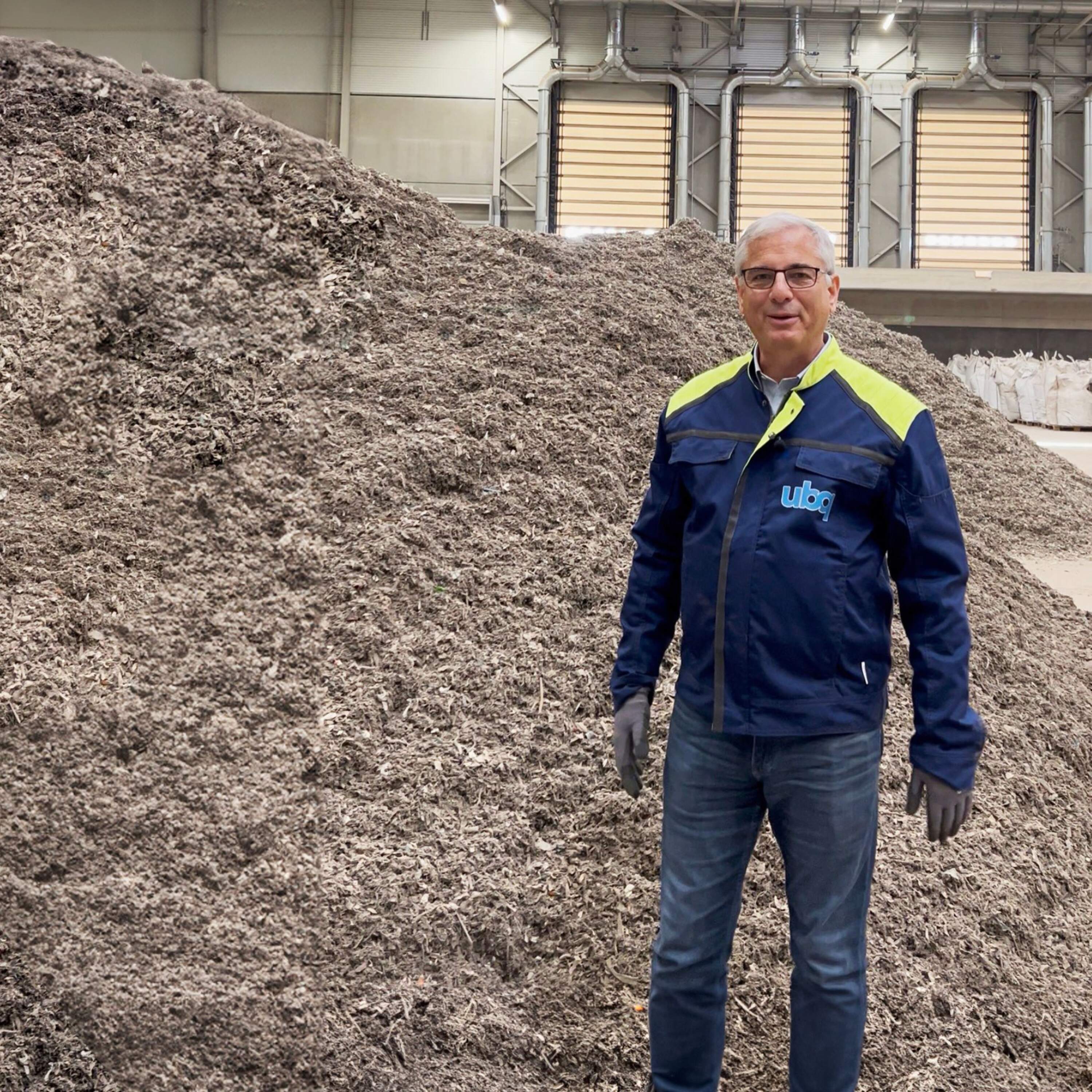
The Indicator from Planet Money
A trucker, a farmer, and an entrepreneur walk into a global supply shock
00:08:54
Loading summary
Transcript54 lines
- [00:01]
Forrest Atkinson
Npr.
- [00:12]
Darian Woods
This is the indicator from Planet Money. I'm Darian Woods.
- [00:15]
Ricky Mulvey
And I'm Ricky Mulvey. The US Israel war with Iran has a grave human cost. And all across the world, there's a growing financial cost, too. Higher gas prices, delayed international flights. This is what economists call a supply shock.
- [00:29]
Darian Woods
The fossil fuels that power our factories, ships and planes are suddenly a lot more expensive. So we wanted to hear from the people in America whose economic livelihoods are particularly sensitive to the war in the Middle East.
- [00:43]
Ricky Mulvey
Yeah, oil and gas are inputs into so many things around us. Plastics, fertilizer, even medicines.
- [00:50]
Darian Woods
So today on the show, we'll hear from a truck driver about rising transportation costs. We're ask an Iowa corn farmer about what he's doing as fertiliser prices shoot through the roof. And we'll speak with an entrepreneur who's got a few words for you. An alternative to plastics.
- [01:10]
Wix Harmony Advertiser
This message comes from wix. Nothing beats seeing your ideas turn into cold, hard cash. Well, if you use WIX Harmony, you better get used to it. WIX Harmony makes it unbelievably easy to create a fancy new website that's built to sell. Get the perfect blend of AI and drag and drop tools that puts you in control of every detail, plus an AI agent to help you every step of the way. Try it for free@wix.com Harmony.
- [01:39]
Darian Woods
We're on a tour of economic ripple effects from the U.S. israel, war with Iran, especially as they touch America. And maybe the side effect that's most in our face when we're driving anywhere is what we see on gas station signs. The price of fuel is particularly important for truckers like Forrest Atkinson.
- [01:58]
Forrest Atkinson
I live full time out of this truck, so it's my home and I just get to go out and have adventures.
- [02:04]
Ricky Mulvey
When we spoke, she was just delivering some packaging to a factory that makes cheese.
- [02:08]
Forrest Atkinson
Can I get you to sign it?
- [02:10]
Ricky Mulvey
Yeah.
- [02:10]
Forrest Atkinson
Or I can make a coffee for you.
- [02:11]
Okay.
- [02:13]
Darian Woods
And yeah. As she drives around, the US Forest is facing higher diesel costs. Diesel prices were up about a third on March 9 compared to a month earlier before the war. And that could mean hundreds of extra dollars each time she fills up her semi truck. Last week, diesel was $4.86 a gallon.
- [02:32]
Ricky Mulvey
Her employer does pick up the tab, but she says when prices get really high, they might become choosy about which stations she's allowed to refuel at.
- [02:41]
Forrest Atkinson
When things do get really bad, they'll like, literally, like, send us a message on our our tablets or E logs and say, like, like you. You're not allowed to like fuel here. Like you're just not allowed driver. And you could get in a little bit of trouble if you do do that.
- [02:56]
Darian Woods
As of yet, the company hasn't blacklisted more expensive gas stations and maybe that's one indicator that energy prices aren't at red alert levels right now.
- [03:06]
Forrest Atkinson
We'll see if that's true. I hope that it is in this case because I do love my job, I do love long haul trucking and I hope that the prices do get lower because if fuel prices rise, the consumers will probably end up eating that bill right now.
- [03:23]
Ricky Mulvey
Forrest is relieved. She's an employed truck driver, not someone who owns their own truck and pays for their own fuel costs.
- [03:29]
Forrest Atkinson
There's just too much unpredictability in the trucking world. Like especially in 2026, things are just changing every single week with like freight patterns and tariffs and now fuel prices. It's definitely probably not a good time to be an owner operator.
- [03:44]
Darian Woods
So higher diesel prices, that's a pretty direct increase in costs from the war and going down. Another link in the chain, you get higher fertiliser costs.
- [03:54]
Ricky Mulvey
Mark Mueller is a corn farmer in Iowa. He uses a lot of fertilizer.
- [03:59]
Forrest Atkinson
It is the single biggest expense I had for raising corn.
- [04:02]
Darian Woods
Nitrogen fertiliser is most commonly made with natural gas. The problem with natural gas, though, is a lot of it is stuck in the Persian Gulf, which makes 20% of the world's supply of liquefied natural gas. That's pushing up natural gas prices, which is pushing up fertilizer costs.
- [04:21]
Ricky Mulvey
Even though the US Is a net exporter of natural gas, that doesn't help nitrogen fertilizer prices domestically. Fertilizer is traded globally. So countries like, say, Brazil or India, which might have previously bought from fertilizer plants outside the US Would now push up US Or Canadian fertilizer prices if they were to buy from North America.
- [04:40]
Darian Woods
And it's bad timing for Mark. Corn planting season starts in a month, right when he needs to buy fertilizer.
- [04:47]
Forrest Atkinson
The price would be cheaper if I'd bought it months ago, but I didn't know that.
- [04:51]
Ricky Mulvey
That leaves Mark with few options.
- [04:53]
Forrest Atkinson
The fertilizers that I need for growing a corn, I can't do without. I'm pretty much a captive audience.
- [05:00]
Darian Woods
Mark says he could defer his spending on big equipment like tractors.
- [05:05]
Forrest Atkinson
In fact, I haven't bought a new tractor in decades.
- [05:08]
Ricky Mulvey
He could also plant soybeans instead of corn. Soybeans get their nitrogen from the atmosphere, not fertilizer.
- [05:14]
Forrest Atkinson
You can make your money back on soybeans, but then you've got another crop coming from Brazil in six months.
- [05:19]
Darian Woods
Mark reckons that Brazilian competition means soybeans won't pay as much as corn. Plus, you've got all kinds of geopolitics there too, with China's on again, off again demand. Depending on how that trade war is going.
- [05:31]
Ricky Mulvey
Along with his own farming, Mark is also the president of the Iowa Corn Growers Association. So he's been monitoring the fertilizer industry as it consolidates. He says when he started farming, decades ago, there were about 20 fertilizer companies. Now there's four. And he worries that less competition means higher prices.
- [05:50]
Forrest Atkinson
The fertilizer industry has us hostage. They know it.
- [05:54]
Darian Woods
Mark is really squeezed here, and he's seeing other farmers threatened with losing the bank loans they depend on. Mark's not there yet himself.
- [06:05]
Forrest Atkinson
Maybe I choose to retire. I'll tell you right now. I'm 67 years old and I probably could retire. But up to this point, I've made money farming. I enjoy what I'm doing, and I'm not quite sure what I would do if I wasn't farming.
- [06:19]
Ricky Mulvey
In contrast to Mark, some people are actually positioned to profit from the turmoil, not because of anything nefarious, just because they're likely to have people wanting more of what they're selling in this crisis.
- [06:32]
Darian Woods
Yeah, so the higher cost of oil is popping up in less obvious ways. One example is plastic. Because most plastic is made from oil, the cost of that is higher. The price of the plastic we use, polyethylene, shot up about 30% in the war's first couple of weeks. Albert Dewar is the chairman and CEO of UBQ Materials.
- [06:53]
Albert Dewar
Oil, in some way or another, touches every single facet of our material development.
- [06:59]
Ricky Mulvey
Albert's company makes a plastic alternative. Mercedes Benz uses it in its car components. PepsiCo uses the material in its packing crates. And importantly, it doesn't use oil as an input.
- [07:12]
Albert Dewar
What we're talking about is a material made out of chicken bones, vegetables, fruit. Okay. All of the dirty paper and cardboard that you throw away in your garbage bin together with all of those mixed plastics that no one knows how to recycle.
- [07:26]
Darian Woods
The process basically slowly melts the garbage and turns it into a plastic like material that's called ubq.
- [07:33]
Albert Dewar
A lot of products that, that we were always used to extracting materials from the planet, we're now able to make from our own waste.
- [07:41]
Ricky Mulvey
Albert says the material is already cheaper than plastic. But with the spike in plastic costs due to the us, Israel, Iran, war. The relative cost looks even better.
- [07:52]
Albert Dewar
Clearly it's made us a lot more competitive. You know, the more that these other materials get expensive, the easier it is from an economic point of view to make the switch over.
- [08:02]
Darian Woods
Albert says he has not had a rush of companies knocking on his door. You know, there are some downsides to this plastic alternative, like it's not as flexible with how you can colour it. The company's also relatively young and still scaling up.
- [08:16]
Ricky Mulvey
When companies make a switch to a more affordable alternative, that's called substitution. And the more substitution happens, the more we can adapt to the oil crisis.
- [08:25]
Darian Woods
What we learnt talking to Forrest, Mark and Albert though, is that there's not a lot of great short term options for businesses. You can make some changes, like maybe a trucker can avoid the priciest refueling
- [08:37]
Ricky Mulvey
station, but if the war drags on over more weeks and months, the economy will change. A farmer could avoid pricey fertilizer by switching to soybeans. A manufacturer using plastic might substitute to Albert Dewar's alternative.
- [08:49]
Darian Woods
Some businesses will even go bankrupt, replaced by firms that have factored in higher energy prices from day one. So when trying to predict how bad the oil crisis will be for the economy, don't count out human ingenuity. This episode was produced by Cooper Katz McKim with engineering by Robert Rodriguez. It was fact checked by Tierra Juarez. Julia Ritchie edited this episode. Cake and Canon edits the show. The indicator is a production of N.
- [09:24]
NPR Announcer
At this year's Oscars, one battle after another took home the award for best picture. Michael B. Jordan won for lead actor, and the telecast had plenty of jokes at Timothee Chalamet's expense. Listen to a recap on pop culture happy hour via the NPR app or wherever you get your podcasts.