Loading summary
Transcript52 lines
- [00:01]
Darian Woods
Planet Money is going on a book tour. Come see us live and hear stories from the upcoming Planet Money book and the making of it. Each stop has a special guest, economists, business owners, other podcast friends. It'll be a night of smart conversation and celebrating this book that we're really proud of. And we've got a giveaway going. You can get a limited edition tote bag with your ticket purchase while supplies last. Details on that and how to get tickets in our show notes. Hope to see you in Bassin soon.
- [00:32]
Robin Wigglesworth
NPR.
- [00:43]
Darian Woods
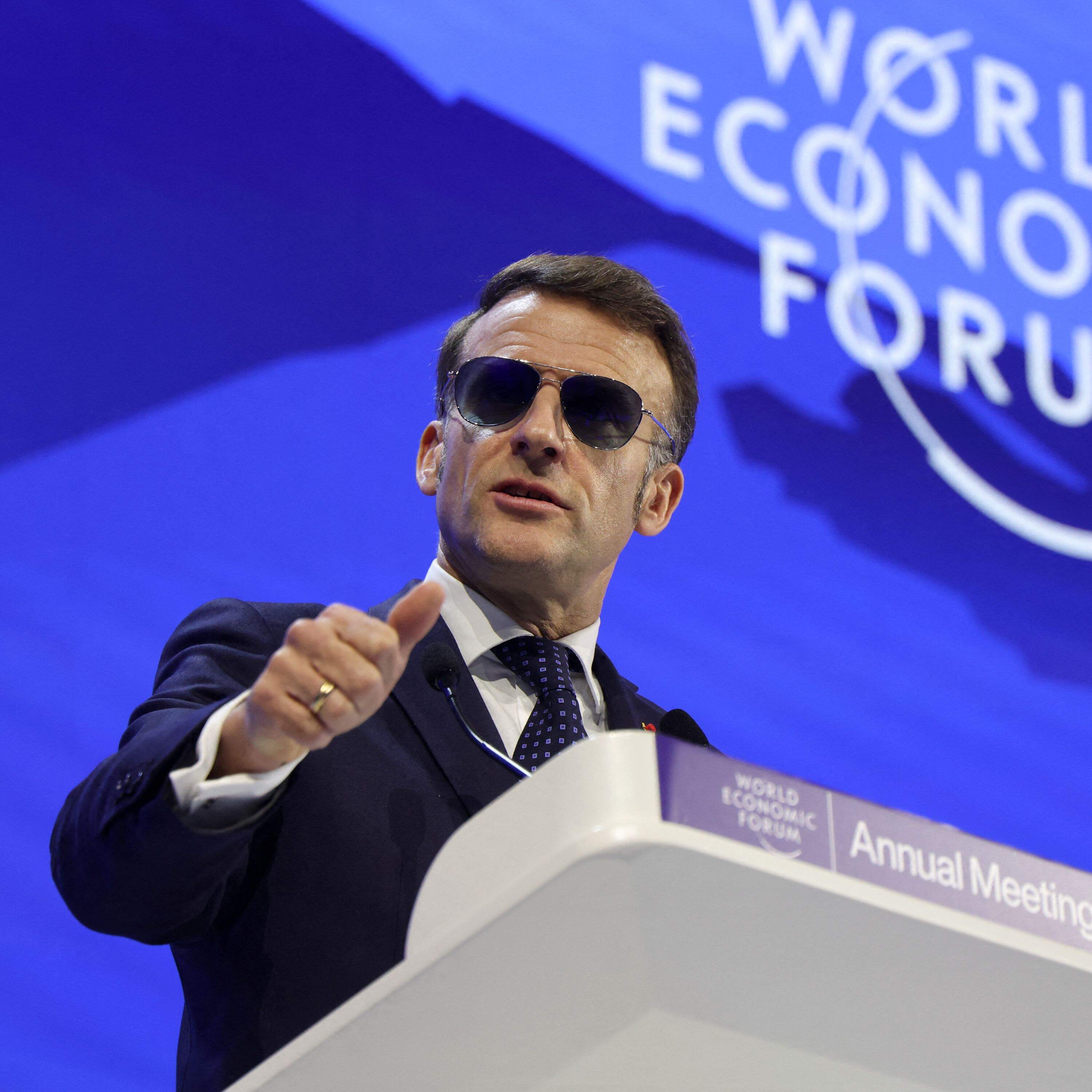
The boiling of tensions in Europe over US President Trump and Greenland have subsided to this somewhat uneasy simmer, but Europe is still on edge. Let's start with French President Emmanuel Macron last week on stage at Davos in his aviator sunglasses.
- [01:00]
Waylon Wong
The sunglasses are for an eye condition, by the way.
- [01:03]
Darian Woods
Okay, yes, we need to be clear about that. And Macron talked about the ways Europe could respond to bullying by other countries.
- [01:11]
Scott Besant
Europe has very strong tools now and we have to use them when we are not respected and when the rule of the game are not respected. By the way, the anti coercion mechanism is a powerful instrument and we should not hesitate to deploy it in today's tough environment.
- [01:27]
Waylon Wong
The anti coercion mechanism, sometimes called the EU's bazooka, this is a legal tool that the European Union could use to economically hit back at a country.
- [01:37]
Darian Woods
Even without the anti coercion mechanism activated, some in Europe are already changing their behaviour. Last week, a Denmark teachers pension announced it would sell off about $100 million of U.S. government bonds. Down the hall in Davos, where U.S. treasury Secretary Scott Besant was speaking, he.
- [01:55]
Scott Besant
Answered a question about this Denmark's investment in U.S. treasury bonds, like Denmark itself, is irrelevant.
- [02:02]
Darian Woods
Though the Danish Pensions fund's chief investment officer claimed it wasn't directly because of Greenland friction, the mood is clear to many Europeans. Sell America. This is the indicator from Planet Money. I'm Darian Woods.
- [02:17]
Waylon Wong
And I'm Waylon Wong. Today on the show, what economic weaponry does Europe have? Europe is moving from friends to frenemies with the US and so the continent is figuring out how to best pack a financial wallop that could lighten Americans wallets.
- [02:37]
Sponsor/Ad Voice
This message comes from LinkedIn ads. One of the hardest parts about B2B marketing is reaching the right audience. That's why you need LinkedIn ads. You can target your buyers by job title, company role, seniority and skills. All the professionals you need to reach in one place. Get a $250 credit on your next campaign so you can try it yourself. You can just go to LinkedIn.com nprpod that's LinkedIn.com nprpod Terms and conditions apply only on LinkedIn ads. This message comes from Serval AI. With Servl, you can cut 80% of your help desk tickets. Serval AI writes automation in seconds. Your IT team describes what they need in plain English and Serval generates production ready automations instantly. Servil powers some of the fastest growing companies in the world. Get your team out of the help desk and back to the work they enjoy. Book your free pilot@servil.com indicator to walk.
- [03:37]
Darian Woods
Us through how Europeans are thinking through their financial firepower, we spoke to a Norwegian finance reporter.
- [03:44]
Robin Wigglesworth
My name is Robin Wigglesworth and I'm the editor of FT Alphaville, the FT's finance blog.
- [03:48]
Darian Woods
The Financial Times the beautiful salmon coloured.
- [03:51]
Robin Wigglesworth
Paper Salmon bisque pink. We've heard many shades over the years.
- [03:57]
Waylon Wong
So last week Robin published an analysis of Europe's financial arsenal. He and his co author were responding to a research note that came out of Deutsche Bank. Somebody at Deutsche bank had pointed out how much the US relies on foreigners lending to it. The note described how Europe is America's largest lender. And so the note pondered why Europe would want to be supporting the US financially when it was being strong armed around issues like Greenland.
- [04:22]
Darian Woods
We asked Robin his assessment of whether Europe could inflict financial pain on the us. We started with trying to understand exactly what this anti coercion mechanism means.
- [04:32]
Robin Wigglesworth
Well, it's essentially sort of measures that can go beyond just trade tariffs so they can be individual measures on companies, maybe banning access altogether, like maybe an extremist saying that Amazon can no longer operate in Europe, for example. So that's why they like to call it a bazooka. But of course, you know, the bazooka is only useful if you actually far. And that's the question with Europe, whether it has the willingness to really sort of go nuts with the anti coercive measures.
- [05:00]
Darian Woods
It's like a bazooka that has a big ricochet because it would also affect Europeans.
- [05:05]
Robin Wigglesworth
Yes, I mean the idea behind them is that it should maximize pain on the other side and minimize pain in Europe. But of course you can't minimize the pain entirely. It has an impact. For example, if you were to let's say ban X or Twitter as it used to be called, from operating in Europe, you know, Europeans lose service, then there's obviously the danger of retaliation. With a face of erratic president in the White House, Europeans are wary of escalating things in a way that, you know, might Backfire in a very violent way.
- [05:42]
Waylon Wong
So the anti coercion mechanism can go further than tariffs. But to my ear, Robyn seems a little skeptical that Europe's actually going to use it to great effect.
- [05:51]
Darian Woods
I think that's fair. And that leads us to other ways Europe could squeeze the U.S. like Europe could sell off its U.S. treasury bonds. We asked Robin how big a deal this could be.
- [06:02]
Robin Wigglesworth
Well, Europe, it's an old wealthy continent, we forget this, but it's super rich and they've saved up a lot of money, they export a lot, so they're invested in bonds and stock markets around the world, but nowhere more so than the United States. Around 3 trillion or so is in the treasury market. So that probably makes Europe the single biggest holder of Treasuries in the world outside of the us of course.
- [06:30]
Waylon Wong
Mainland China, by the way, holds less than 700 billion worth of U.S. treasuries, at least according to the official statistics.
- [06:37]
Darian Woods
That's interesting because historically, sometimes there's been chatter around, you know, could China weaponize its U.S. treasury holdings? Never really crossed many people's minds that could Europe weaponize its U.S. treasury holdings? But you're saying it's actually of comparable, if not bigger size?
- [06:53]
Robin Wigglesworth
Yeah, we're through the looking glass here. These are things that we really didn't think we'd need ever to contemplate. But yes, as Europe kind of flails around for ways it can gain leverage in negotiations with the U.S. one of the things that some people have highlighted is this financial vulnerability in the United States that the US is constantly dependent on money coming into the country, you know, from Europe and Asia, but especially Europe. So could that be weaponised?
- [07:22]
Darian Woods
So let's look at that as a broader picture. Stocks, bonds, direct investment. Could Europe hurt the US by divesting from the US economy?
- [07:32]
Robin Wigglesworth
It could.
- [07:33]
Darian Woods
Robin says it's helpful here to think about divestment. That could happen in two separate ways. One, European investors just generally get less enthused about investing in the us more.
- [07:44]
Robin Wigglesworth
Pension plans, insurance companies and so on. Private investors think, do I really feel comfortable lending all this money into the us? Maybe not. Maybe I won't sell. Maybe I'll just stop buying more Treasuries. And that could be a problem in itself.
- [07:57]
Waylon Wong
The second way Europe could sell America would be a big dramatic law mandating this.
- [08:03]
Robin Wigglesworth
That's kind of the nuclear weapon. I'm skeptical just because it's immensely complicated. These US stocks and bonds aren't owned by the French government or the German government. Mostly it's like private Banks in Switzerland, Dutch pensions plans, insurance companies in the uk it's held in private sector hands, thousands if not millions of investors. And the only way to get them to forcibly dump American Treasuries or American stocks is by fairly draconian enaction of laws and regulations across the European Union. And that's why it's very complicated. And the danger is, of course, by doing so, you'd be cutting off your nose to spot your face. It would trash the value of these American assets and hurt, of course, European investors in the process. Now, that might be feasible or even worth swallowing if hostilities keep rising, but right now I think that's very far fetched.
- [09:01]
Darian Woods
Mutually assured destruction in Cold War terminology.
- [09:04]
Robin Wigglesworth
Basically, yes.
- [09:06]
Waylon Wong
So, Darian, it sounds like Robin basically poured cold water over the more extreme scenarios that were outlined in that Deutsche Banknote.
- [09:13]
Darian Woods
Yeah. And so Robin found it a little odd when he heard Treasury Secretary Scott Besant lump him in with the Deutsche Banknote later in that Davos talk.
- [09:23]
Scott Besant
This notion that Europeans would be selling US Assets came from a single analyst at Deutsche Bank. Of course, the fake news media led by the Financial Times, amplified it.
- [09:38]
Sponsor/Ad Voice
Well.
- [09:39]
Robin Wigglesworth
Well, it's obviously great to hear that the US Treasury Secretary is reading our articles, but I thought it was a little bit weird for him to call us the fake news media when in this case we actually happen to agree with him.
- [09:50]
Sponsor/Ad Voice
Right.
- [09:50]
Waylon Wong
Because Robin did not think it was a major threat that Europeans would be selling a lot of US Treasuries.
- [09:56]
Darian Woods
The subtitle of Robin Wigglesworth's article was Nipping an Outlandish Idea in the Bud.
- [10:01]
Sponsor/Ad Voice
Oof.
- [10:01]
Waylon Wong
Well, that public dressing down might explain why Deutsche bank declined to comment to us.
- [10:11]
Darian Woods
Now, I don't usually make light of people's names, but on your social media you have. So tell me about your last name.
- [10:18]
Robin Wigglesworth
So I am Norwegian. I'm born and raised here in Oslo, Norway. But my father's English and Wigglesworth is an outrageously English name. I mean, even British people think it's a bit weird.
- [10:28]
Sponsor/Ad Voice
It's.
- [10:28]
Darian Woods
So it's more British than Britain.
- [10:30]
Robin Wigglesworth
Exactly.
- [10:32]
Sponsor/Ad Voice
This message comes from NPR sponsor Charles Schwab with its original podcast on Investing. Each week you'll get thoughtful, in depth analysis of both the stock and the bond markets. Listen today and subscribe@schwab.com oninvesting or wherever you get your podcasts. This message comes from NPR sponsor Capella University. With Capella's flexpath Learning format, you can set your own deadlines and learn on your schedule. A different future is closer than you think with Capella University. Learn more@capella.edu.
- [11:08]
This message comes from Bombas. When you're playing sports, you're focused. Your socks should be too. Bombas engineers socks to fight sweat and cushion impact for every sport. Visit bombas.com NPR and use code NPR for 20% off your first purchase.