Loading summary
Transcript53 lines
- [00:00]
A
Thanks so much to everybody who pre ordered our new Planet Money book. It's in stores now. The poster for pre orders will ship soon, but to get it you need to fill out a form on our book website so we know where to send it. If you pre ordered, send us an email to planetmoneypr.org and we'll send you a link. Email planetmoneypr.org by Friday, April 17th. And thanks for the support.
- [00:25]
B
NPR.
- [00:36]
A
A lot of us have probably been in a position where we don't love our work. Last year, about a third of American workers aged 25 to 54 were not satisfied with their jobs. That's according to a survey by the Conference Board. Often we work for a paycheck, not passion.
- [00:54]
C
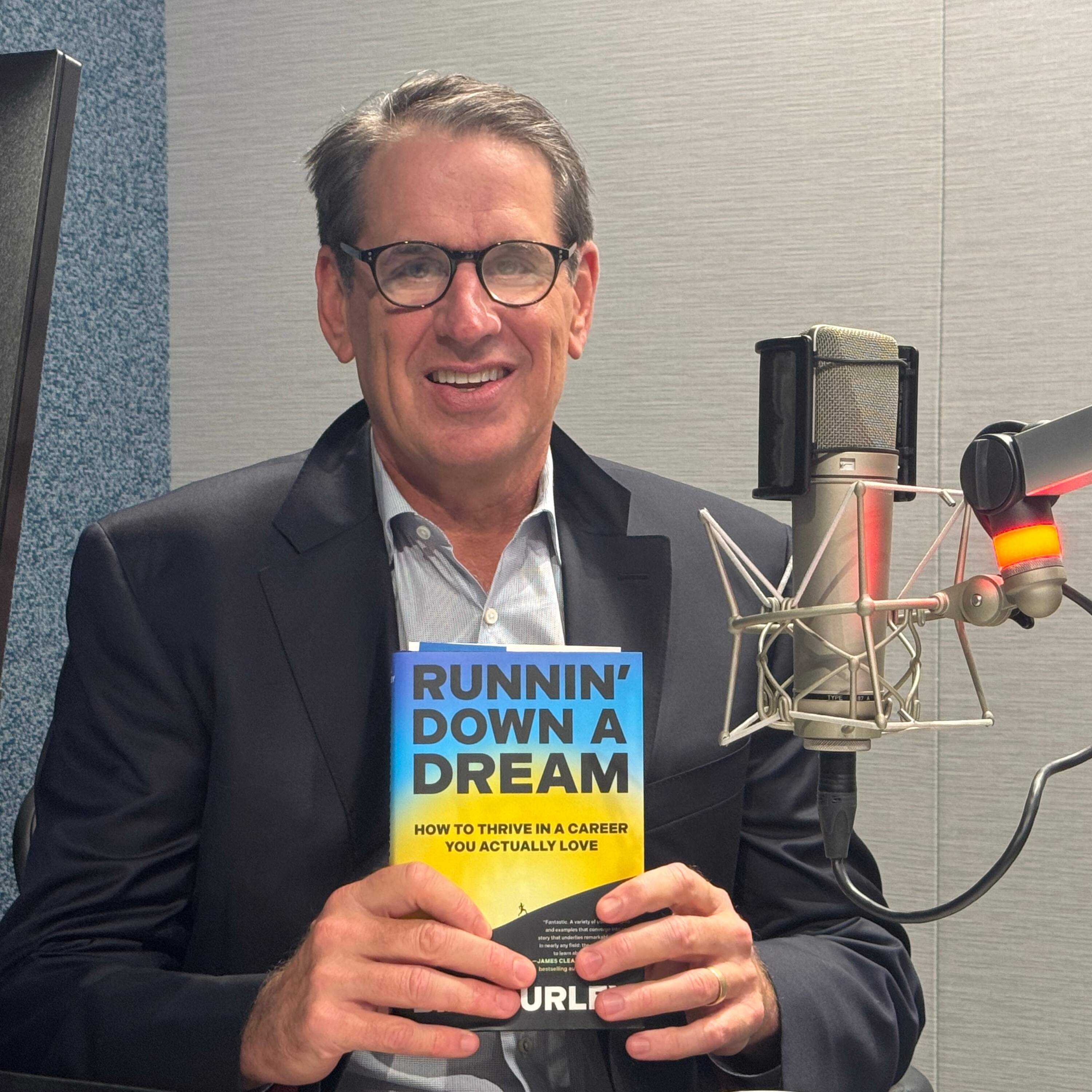
Yeah, a lot of people have a career they hate because for them it was the safe option, the sure thing. Bill Gurley is a renowned former venture capitalist who sees this and thinks we've got to stop pressuring young people into chasing predictable, high paying jobs like, you know, lawyers or management consultants just because they seem secure.
- [01:14]
B
It is both possible and can be probable to take whatever it is you love to do in your life and turn it into a career.
- [01:26]
C
This is the indicator from Planet Money. I'm Adrian Ma.
- [01:29]
A
And I'm Darian Woods. Today on the show, can everybody do what they love? We learn about the ingredients needed to make passion pay, and we ask whether it's truly possible for everybody.
- [01:41]
D
This message comes from Granger. This is the story of the one As a procurement manager for a hospital system, she keeps every facility in her network stocked and ready. That's why she counts on Grainger to be her single source for thousands of products from disinfectants to lighting, air filters and more. And with fast, dependable delivery, Grainger helps her keep every facility stocked, safe and running smoothly. Call 1-800-GRAINGER Click grainger.com or just stop by Grainger for the ones who get it done. This message comes from Progressive Insurance. Insurance isn't one size fits all. That's why drivers have enjoyed Progressive's name your price tool for years. Now. With the name your price tool, you tell them what you want to pay and they'll show you options that fit your budget. So whether you're picking out your first policy or just looking for something that works better for you and your family, they make it easy to see your options. Visit progressive.com, progressive Casualty Insurance Company and affiliates. Price and coverage match limited by state law. Support for NPR and the following message come from Edward Jones, a a rich Life isn't always a straight line. Unexpected turns can bring new possibilities. With a hundred years of experience navigating ups and downs, Edward Jones can help guide you. Let's find your rich together. Edward Jones Member, SIPC Bill Gurley loved
- [03:06]
A
computers as a kid. He had a Commodore Vic 20 which he plugged into his TV. He then went to work as a computer scientist on onto Wall street, later analyzing tech companies. And finally he did what he really loved, working as a venture capitalist, investing early in companies like Zillow, OpenTable and Uber.
- [03:26]
B
There were two stops before I made it to the place that was my dream job.
- [03:32]
C
And in 2018, Bill was asked to give a speech at the University of Texas at Austin.
- [03:36]
B
So if you only got one shot and then it's all over, why not do what makes you most happy?
- [03:42]
C
In this speech, Bill told stories of how people like Bob Dylan and Shake Shack founder Danny Meyer made it. And he pulled out some common threads which he put in his book Running down a dream.
- [03:54]
B
Chase your curiosity. So find this thing that you love and then become a continuous learner.
- [04:00]
A
Danny Meyer had a very well paying job in sales and he was preparing to become a lawyer, even though he didn't like law. And, and the night before his lsat, his uncle asked him why he didn't just do what he had been thinking about doing his whole life, opening a restaurant. In his world, doing what he loved was totally foreign. Bill says Danny's peers at the private Trinity College were all going into insurance, banking, medicine or law. Predictable, high paying careers.
- [04:30]
B
If you're gonna go study this thing and just love it to, you know, forever D that can't feel tedious, that has to feel free almost.
- [04:40]
C
Danny Meyer quit his job and took an eight week course in restaurant management. Which brings us to Bill's second piece of advice, finding mentors. In Danny's case, he worked under experienced chefs.
- [04:51]
A
And Bill's third principle is embracing your peers.
- [04:54]
B
I think a lot of people, when they're climbing the career ladder, they feel like they're just competing with every single person that's around them. And I think if you can let go of that mentality of competition, you will find that having a group of people that all share the same goal, constantly sharing ideas, constantly sharing their network and providing emotional support for one another in a way a mentor couldn't because you can be a lot more vulnerable with peers.
- [05:24]
A
Yeah, like I went to a monthly podcast meetup group early on in my podcasting career and that was pretty helpful.
- [05:31]
C
But to find that peer group to to get exposure to opportunities, often you have to move, which is Bill's fourth point.
- [05:38]
B
If you can't go to one of these places that is the epicenter of that field, you know, songwriters in Nashville, film business in Hollywood, like, it's remarkable the number of chance meetings you can have and where those chance meetings can lead.
- [05:56]
A
Bill's final piece of advice is to give back, like mentoring others.
- [06:01]
C
So let's recap. Bill's career advice is to find what you're really curious about and then continuously learn. That means going to where the action is and finding mentors and finding peers and giving back. I gotta admit that I wasn't convinced by Danny Meyer's story about becoming a restaurateur. Because here's an important thing. Danny went to prep school and a private college. He had a high paying job and could borrow from his wealthy family.
- [06:28]
A
Yeah, I asked Bill about this. What about people who don't have the luxury to be able to fail?
- [06:33]
B
Yeah, if you simply can't move, if you can't leave your job because you're living right on the edge of that paycheck, I mean, that's a scenario where, you know, I'm not sure I can be helpful. But if you have a little bit of flexibility, I think you may find that you have a passion for something else and you may be able to slowly work your way towards it.
- [06:55]
C
Now these ideas, like moving to the epicenter, are common themes in a lot of successful people's lives. But many people might have worked just as hard and failed. Not everyone can be, say, a successful movie scriptwriter. Robert Frank is an economist who co wrote the Winner Take All Society. Why the few at the top get so much more than the rest of us?
- [07:17]
E
More and more technology enables people to extend their reach. So if you were a good storyteller, maybe you had a group of friends that like to listen to you.
- [07:31]
A
Now though, if you're a good storyteller, you might have to be among the very top script writers for anyone to watch your movies.
- [07:39]
E
There really is no need to watch second rate films once the film's in the can. It doesn't cost any more to to show a good film than to show a bad film.
- [07:51]
A
The best films get screened all over the world, but movies that are just so, so barely get watched.
- [07:57]
C
Robert says if you choose to work in a winner take all industry, like entertainment or as a software entrepreneur, then just being average won't have much of a payoff. So is it just a matter of working harder than everyone else to succeed?
- [08:11]
E
The answer is no. But it's even more extreme than the question implies. Let's suppose you're the very best among all the world's population at what you do and you work harder than anyone else. Will you succeed? And the answer there is not necessarily.
- [08:30]
A
Robert has modelled simulations where someone is at the top 99.9 percentile of talent and effort, but only at the 50th percentile of luck.
- [08:40]
E
He's not going to win that contest because there'll be somebody else who's almost as talented, almost as hardworking and is luckier than he was.
- [08:50]
C
So we pose this to Bill Gurley.
- [08:53]
A
Do you think luck might play a role in people's careers? That maybe should be added as an extra principle?
- [09:00]
B
Well, there's a famous phrase that luck is when preparation meets opportunity. I think you maximize this luck. So the broader your network, the more peers you have, the more you've read. If you're in the epicenter, all those things tend to increase the probability of a chance meeting that you might not have if you weren't doing all those things right. And I think you can put yourself in a position to be more exposed to luck.
- [09:29]
C
Now, there is something we should talk about here called survivorship bias. You know, the people who give commencement speeches are people like Bill Gurley, the ones who've succeeded at doing what they love. But the ones who didn't succeed, the ones who failed, they aren't being asked to give speeches.
- [09:47]
A
What do you have to say about survivorship bias and whether we should temper people's expectations that they may be able to succeed in doing something they love?
- [09:56]
B
Yeah. The area that I'd say I think I have confidence, has broad applicability, is that if you can get in the lane you love, you're gonna be more fulfilled in your life.
- [10:09]
C
So should you choose a career you love? Economist Robert Frank actually agrees with Bill on this.
- [10:14]
E
I think choosing the task that you like makes it more likely that you'll get to be the best at what you do. Doesn't guarantee it, obviously, but if you're doing it because you like it, then have you really lost?
- [10:29]
A
So, Adrian, where do you sit on this?
- [10:31]
C
I mean, I guess that's a pretty glass half full way of looking at it.
- [10:34]
A
Yeah. I think what Bill says is totally necessary, but it may not be sufficient for everybody.
- [10:41]
C
I think I'm with Robert Frank, where I feel like luck has a lot more to do with success than just choosing your passion.
- [10:48]
A
Yeah, totally. But we've gotta have agency, we've gotta start trying to make our luck. You know what? I found a four leaf clover earlier this year and then we won Best Business Podcast Coincidence Causation Correlation this episode
- [11:01]
C
was produced by Julia Richie and engineered by Kwesi Lee. It was fact checked by Vito Emanuel. Kick and Canon edits the show and the indicators of production of npr.
- [11:13]
D
This message comes from Capital Group In a world full of noise, long term thinking stands out. On the Capital Ideas podcast, Capital Group leaders explore the decisions that matter most in investing, leadership and life. It's a rare look inside a firm that's been helping people pursue their financial goals for more than 90 years. Listen to the Capital Ideas podcast from Capital Group published by Capital Group Inc.
- [11:38]
B
This message comes from EasyCater making it easy for organizations to order food for
- [11:43]
D
meetings and events from favorite restaurants, set
- [11:45]
B
up meal programs for their employees and manage food. Spend all in one place@easycater.com.