Loading summary
Transcript74 lines
- [00:01]
Waylon Wong
Npr.
- [00:12]
Julia Richie
This is the Indicator from Planet Money. I'm Waylon Wong and I'm joined today by producer Julia Richie.
- [00:18]
Angela McLaughlin
Hello.
- [00:19]
Waylon Wong
I came to talk about something most of us have had but not always enjoyed, school lunches.
- [00:25]
Julia Richie
You know what I did enjoy in middle school? Getting the nachos. Basically just corn tortilla chips with like reheated Cheez Whiz.
- [00:32]
Waylon Wong
That is basically my midweek meal still. So, yes, delicious.
- [00:35]
Julia Richie
It's a classic.
- [00:36]
Waylon Wong
We recently covered the federal government's new inverted food pyramid on the show. Among other changes, it places meat and dairy alongside fruits and veggies. Public schools are supposed to follow these dietary guidelines in the meals they serve students.
- [00:49]
Julia Richie
And school lunches are part of the Trump administration's broader Make America Healthy Again agenda. US Agriculture Secretary Brooke Rawlins told Fox News that officials want to raise standards for school lunches.
- [01:01]
Angela McLaughlin
Brooke A lot of our schools don't even have an oven anymore. You know, back when I was growing up, the lunch ladies were back there cooking the meals on the stoves and then serving it. So how do we completely and fundamentally change the system to go back to where we're serving that healthy whole food and nutrients to these kiddos?
- [01:19]
Waylon Wong
On today's show, do schools need another menu overhaul? We go back to the cafeteria to see what kids are actually eating and whether school districts on tight budgets can afford the latest changes.
- [01:34]
Sponsor/Advertisement Voice
This message comes from BetterHelp. As a dad, BetterHelp President Fernando Madera relates to needing flexibility when it comes to scheduling therapy.
- [01:43]
Angela McLaughlin
I have kids under 18, so, like,
- [01:46]
Julia Richie
time is very limited. That's why at BetterHelp, our therapists try
- [01:50]
Angela McLaughlin
to have sessions, sometimes at night, depending
- [01:52]
Julia Richie
on the therapist, or during the weekend.
- [01:54]
Angela McLaughlin
So I think that's what we need
- [01:56]
Julia Richie
to tell the parents.
- [01:57]
Angela McLaughlin
You're not alone. We can help you out.
- [01:59]
Sponsor/Advertisement Voice
If a flexible schedule would help you, visit betterhelp.com NPR for 10% off your first month of online therapy.
- [02:09]
Waylon Wong
This message comes from NPR sponsor Charles Schwab with its original podcast on Investing. Each week you'll get thoughtful, in depth analysis of both the stock and the bond markets. Listen today and subscribe@schwab.com oninvesting or wherever you get your podcasts.
- [02:26]
Sponsor/Advertisement Voice
This message comes from Fisher Investments Senior Vice President Michael Hosmar reflects on one of their core values.
- [02:33]
Angela McLaughlin
We want to empower our clients with knowledge.
- [02:37]
Waylon Wong
In fact, Fisher is built on that idea.
- [02:39]
Angela McLaughlin
It comes straight from our founder, Ken Fisher, who believes the more our clients
- [02:43]
Waylon Wong
understand about the plan we've built for them, the more comfortable they will be
- [02:47]
Angela McLaughlin
with their personal financial situation.
- [02:49]
Sponsor/Advertisement Voice
Learn more@fisherinvestments.com Investing in securities involves the
- [02:54]
Waylon Wong
risk of loss the debate over how to make school lunches healthier isn't new. You might remember former first lady Michelle Obama's push to get kids to eat more veggies more than 15 years ago.
- [03:06]
Julia Richie
Yes, I remember she enlisted Elmo to help.
- [03:09]
Angela McLaughlin
So how do you guys feel about
- [03:11]
Waylon Wong
getting kids pumped up and excited about eating healthy?
- [03:14]
Julia Richie
Oh, well, it's wonderful.
- [03:16]
Angela McLaughlin
Elmo loves healthy foods that Emma thinks
- [03:19]
Waylon Wong
that fruits and vegetables are delicious. As part of her efforts, the U.S. department of Agriculture did a major overhaul of its school lunch guidelines in 2010, putting limits on calories and reducing fat and sodium, and the Biden administration released a big Update again in 2024.
- [03:37]
Julia Richie
But it takes a while for these changes to make their way to school trays. For example, schools this year now have to limit added sugar and milk, stick cereal and yogurt. By 2027, they'll have a weekly limit of the amount of calories that come from added sugars for all breakfasts and lunch.
- [03:55]
Waylon Wong
This is the sound of school lunch at Johns Island Elementary School near Charleston, South Carolina. Like most public schools, they participate in the National School Lunch Program, which reimburses them per pupil.
- [04:07]
Julia Richie
Lunch starts at 11am Kids go through the line in single file and get to choose their lunch. Like, can I ask you what you
- [04:15]
Waylon Wong
got to eat today?
- [04:17]
Julia Richie
I have teriyaki chicken with rice.
- [04:22]
Waylon Wong
What other kinds of lunches do you like to get here?
- [04:25]
Angela McLaughlin
Pizza, macaroni and chicken nuggets.
- [04:29]
Waylon Wong
Ah, the holy trinity of school lunches. At John's island they have a hot meal option today. It's orange or teriyaki chicken with broccoli. Then there's what's called the cold option of a PB and J uncrustable and a pack of goldfish crackers, which another kid named Jackson was drawn to.
- [04:46]
Angela McLaughlin
I might just get some of this
- [04:47]
Julia Richie
cold lunch right over here because it has goldfish.
- [04:52]
Angela McLaughlin
Cause goldfish is so good.
- [04:55]
Waylon Wong
Goldfish is so good.
- [04:57]
Julia Richie
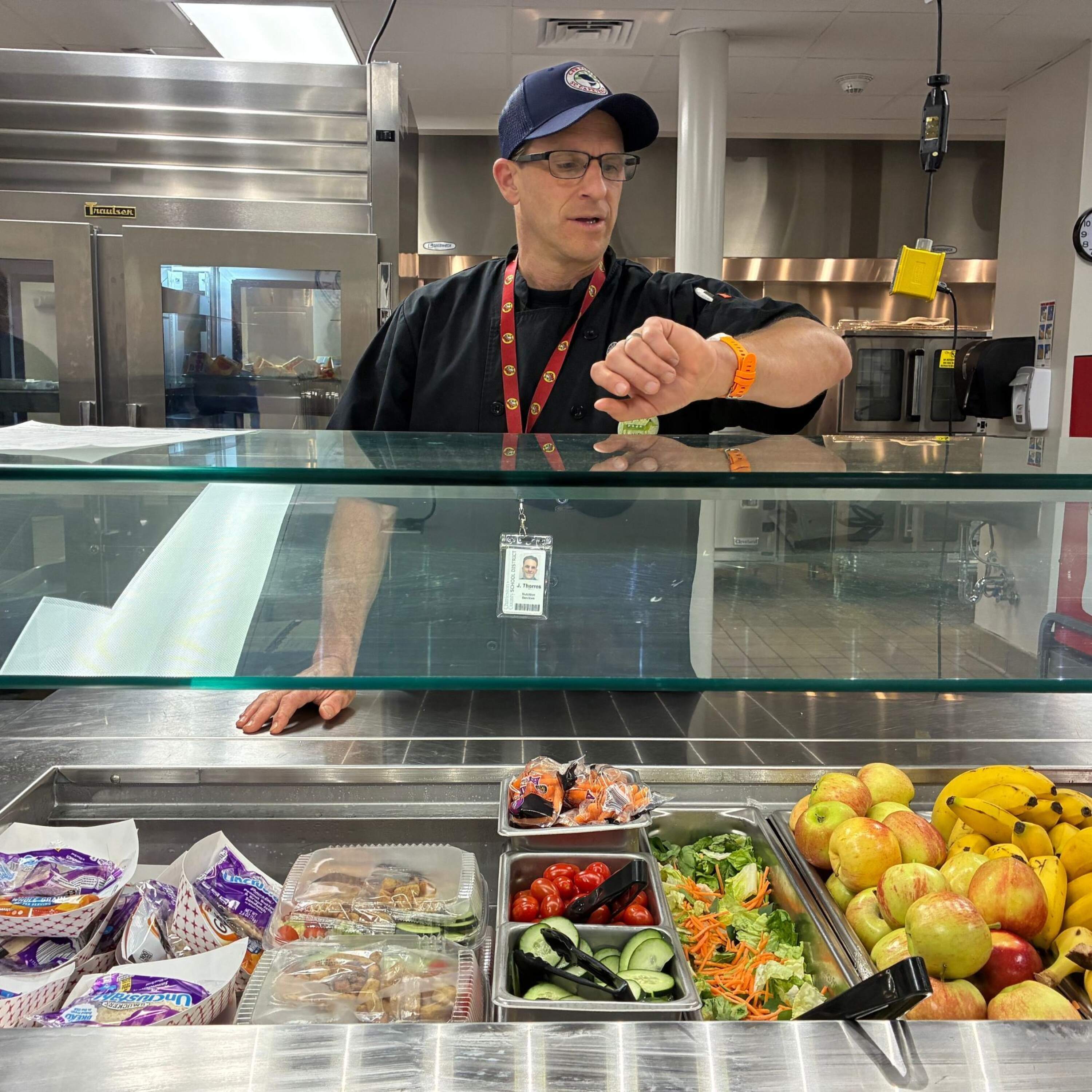
Plus one Goldfish is so good. I have a Costco sized box of it in my pantry. They even have a salad bar, which Angela McLaughlin is especially proud of. She's executive director of nutrition services for the region's schools.
- [05:10]
Angela McLaughlin
It's really exciting when you see a five or six year old gravitating toward a side salad instead of corn.
- [05:19]
Waylon Wong
On any given day, Charleston county is serving about 16,000 kids for breakfast and 30,000 students for lunch across about 80 schools.
- [05:29]
Angela McLaughlin
It's not what people remember we're running 80 restaurants every single day and we're serving a great breakfast and a really wonderful lunch every single day.
- [05:38]
Waylon Wong
We Their meal program is self operating. It's funded through a combination of reimbursements from the federal government and special sales, not its general operating fund for the school district. And that means every penny counts for
- [05:51]
Julia Richie
a student who qualifies for free lunch. The USDA will reimburse Angeles schools up to $4.71 per lunch. The rate is less for children who pay full price. It's only 44 cents per lunch. When Angela creates their meal plans for the year, she wants their cost per meal to come in lower, ideally around $2.50.
- [06:12]
Angela McLaughlin
When you're looking at your budget overall, you're looking at 40 to 45% on your food and supplies, and then you're looking at 40 to 45% for labor and staffing. And then the rest is indirect cost, direct costs, things like that.
- [06:28]
Julia Richie
In order to get those federal dollars, schools have to follow the USDA's Dietary Guidelines. They must provide kids a fruit, a vegetable, a protein, a whole grain and milk. Although they can't require kids to eat, in Charleston, kids have to pick three out of five components and one has to be a fruit or vegetable.
- [06:48]
Waylon Wong
The key here, Angela says, is they're giving students options. She says this system teaches kids to cultivate their palates. It also cuts down on food waste and lowers food costs for the school.
- [06:58]
Angela McLaughlin
We're not just saying here's your trade, take everything on it. We're letting them pick and then that affords them more buy in to the process and they can get what they want. So that really does impact the the food cost.
- [07:11]
Waylon Wong
On the day we visited, the price of that hot plate of chicken, brown rice, broccoli and fruit cost about $1.64, well within their budget. But other times the district splurges like at over $3. Bone in chicken wings do not come in under budget. So the district serves that with other less expensive things to average out costs.
- [07:29]
Julia Richie
And remember, like we said earlier, it takes a long time for new guidelines to go into effect. As the Biden administration's rules are still playing out, the Trump administration is suggesting new ones. Among the proposals, increasing protein portions, reducing the number of ultra processed foods, and putting an emphasis on making more foods from scratch instead of reheating items.
- [07:51]
Waylon Wong
Diane Pratt Hevner with the School Nutrition association is skeptical. Her group represents 50,000 K through 12 nutrition workers, including Charleston's.
- [08:01]
Angela McLaughlin
Schools have for a long time been trying to increase the amount of scratch and fresh prepared foods that they're serving students. But they're very limited in terms of budgets, staffing, equipment and infrastructure. So they will always rely on food companies to supply some of the items that they're offering with school meals.
- [08:23]
Waylon Wong
Nearly 900 school districts and school nutrition professionals wrote an open letter to the administration this month with their concerns. It's not just the funding for upgrading kitchens. They're also worried about how the new Trump administration guidelines focus on costly meat but limit fiber.
- [08:40]
Julia Richie
Furthermore, Diane says school lunches often get a bad rap, but that's an outdated stereotype.
- [08:46]
Angela McLaughlin
You know, schools are already meeting these calorie sodium added sugar and fat limits, so they've done a lot of the work. And there's research showing that school meals are actually the healthiest meals that Americans are eating today because they're already meeting these standards.
- [09:03]
Waylon Wong
We emailed the USDA to ask about rising costs and if schools could see a bump in those reimbursements. A spokesperson said these rates are adjusted annually and keep pace with food costs.
- [09:13]
Julia Richie
School districts are doing a lot to increase healthy foods on their own. Like Angela in Charleston says, they do something called speed scratch with pre made and fresh ingredients for the rotini sauce.
- [09:24]
Waylon Wong
But even if they do make more food from scratch, kids may not want it. Ask any parent. It takes some convincing to get them to try new things. Angela says that's her biggest challenge to keeping kids healthy and fed in 2026.
- [09:37]
Angela McLaughlin
I think it's keeping them engaged and making sure that we are treating them as the very intelligent consumers they are.
- [09:47]
Waylon Wong
Waylon I tried the orange chicken at John's island and it was pretty good, I'm not gonna lie.
- [09:53]
Julia Richie
Did you get the little milk cartons too?
- [09:55]
Waylon Wong
Oh, I swiped two chocolate milks. Some habits die hard. No one else was taking milk, so I was like, I'm gonna. I'm gonna help myself here.
- [10:06]
Julia Richie
This episode was produced by Vito Emanuel and Engine. Robert Rodriguez was fact checked by Sierra Juarez. Kicking Cannon is the show's editor and the indicator is a production of npr.
- [10:26]
Waylon Wong
This message comes from NPR sponsor Charles Schwab with its original podcast on Investing. Each week you'll get thoughtful in depth analysis of both the stock and the bond markets. Listen today and subscribe@schwab.com oninvesting or wherever you get your podcasts.
- [10:43]
Sponsor/Advertisement Voice
Support for NPR and the following message come from Edward Jones. A rich life isn't always a straight line. Unexpected turns can bring new possibilities. With a hundred years of experience navigating ups and Downs. Edward Jones can help guide you. Let's find your rich together. Edward Jones Member, SIPC.