Loading summary
Transcript55 lines
- [00:00]
Darian
Hey everyone greetings from the indicator for the next week we're running some of our favorite shows from this year and today's episode explores whether we're living in what some historians consider a second gilded age npr.
- [00:25]
Adrian
Darian has anyone ever asked you this hypothetical if you could go back to any decade in the past.
- [00:31]
Darian
What would you pick probably like eighty thousand ten bc i want to know about the neanderthals what was up with them smile in us were we marrying.
- [00:42]
Adrian
Them i don't know personally i don't think i want to go back to any period before now like i'm good with the present i don't want to.
- [00:49]
Darian
Stay there to be clear i would have to come back but maybe for.
- [00:53]
Adrian
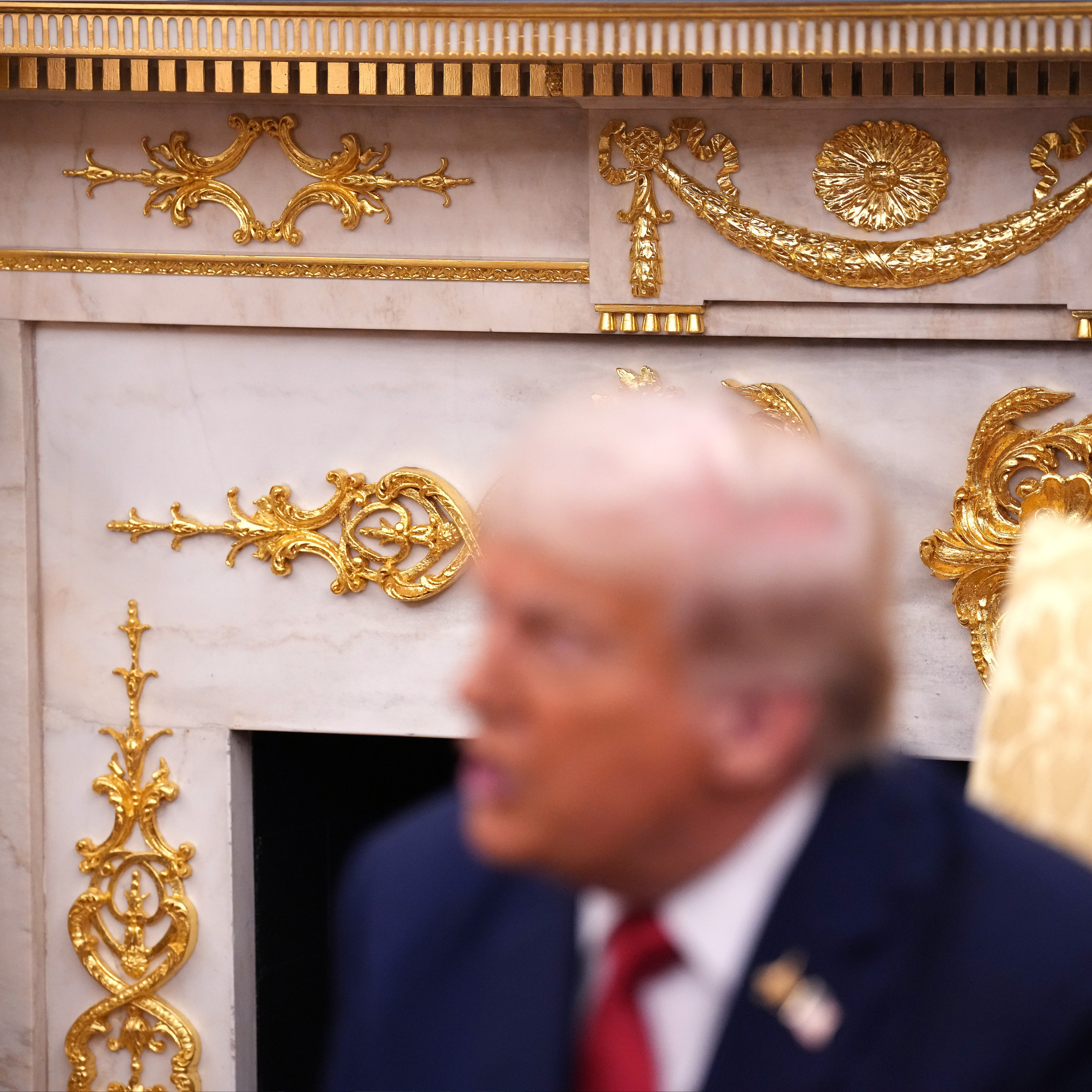
Three days well if president donald trump were playing this game i think i know what he would pick and we.
- [00:59]
Darian
Were actually probably wealthiest of any time.
- [01:03]
Edward
Relatively speaking at any point in the.
- [01:05]
Darian
History of our country in the eighteen nineties we were so wealthy we had commission eighteen ninety that is in the late eighteen hundreds a period that historians know as the gilded age.
- [01:20]
Adrian
But trump is not the only one nowadays thinking about the gilded age in recent months some have even argued that living through a second gilden age and they say that's not a good thing this is the indicator from planet money i'm adrian.
- [01:34]
Darian
Ma and i'm darren woods what was the us economy like during the gilded age we ask a couple of gilded age historians and we ask could history be repeating itself.
- [01:51]
BetterHelp Sponsor
This message comes from betterhelp as a dad betterhelp president fernando madera relates to needing flexibility when it comes to scheduling therapy i have kids.
- [02:01]
Edward
Under a team so like time is very limited that's why at betterhelp our therapists try to have sessions sometimes at night depending on the therapist or during the weekend so i think that's what we need to tell the parents you're not alone we can help you out.
- [02:16]
BetterHelp Sponsor
If a flexible schedule would help you visit betterhelp dot com npr for ten percent off your first month of online.
- [02:24]
Other Sponsors
Therapy this message comes from amnesty international when the world is breaking apart but you refuse to look away amnesty international is the place to start donate today to defend human rights and your gift will be matched at amnestyusa dot org podcast this message comes from mint mobile starting at dollar fifteen a month make the switch at mintmobile dot com switch forty five dollars upfront payment for three months fifteen five gigabyte plan equivalent to fifteen dollars a month taxes and fees extra first three months only see terms.
- [02:59]
Darian
Talk of the gilded age seems to be very in vogue at the moment google searches for the gilded age spiked right before trump took office there are a lot of think pieces too i.
- [03:10]
Adrian
Noticed there's even a hbo tv show called the gilded age have you seen.
- [03:15]
Edward
This yes yep i have some catching up to do i have to say in the in the i was a little bit underwhelmed by the series the first season i think everybody was ouch.
- [03:24]
Adrian
I mean in fairness edward t o' donnell is not the typical audience member for this show edward is a historian at the college of the holy cross in massachusetts and he's been studying the gilded age for years what makes the.
- [03:37]
Edward
Gilded age so fascinating for me and i think for lots of people is it's really the birth of modern america.
- [03:42]
Darian
It starts around the eighteen seventies you.
- [03:45]
Edward
Know the civil war is in the rearview mirror and suddenly just america explodes.
- [03:50]
Darian
Between eighteen seventy and nineteen hundred the population basically doubles thanks in part to a mass influx of immigrants meanwhile millions of people are moving from rural areas into cities and in these decades big business booms like never before we had.
- [04:06]
Edward
Factories and manufacturing before the civil war but after the civil war we start to have gigantic you know factories that have thousands of workers and industries like the railroad that are spread all the way across the country people start talking about a place called wall street because it now is part of the engine of the new booming industrial economy and.
- [04:26]
Adrian
Fueling this boom were gigantic leaps in technology from buildings made of wood to skyscrapers made of steel from horses to trains from the telegraph to the telephone from oil lamps to electric lights the world is literally becoming bigger faster and brighter and this change is so rapid that the very concept of time changes.
- [04:50]
Edward
Too with new technology we now can create really accurate watches and clock towers and then we can begin to impose that time on people so you don't just show up for work anymore in the morning it's you know eight am by the final stroke of eight if you're not at your place at the factory you are late and by nineteen.
- [05:11]
Darian
Hundred edwards says the us economy has gone from seven or eight in the world to number one but all this.
- [05:18]
Adrian
Growth also came at a cost for.
- [05:21]
Edward
The average american the gilded age does produce a fair amount of wealth a fair amount of you know upward mobility what we now call the middle class does expand but there are millions of americans who are feeling left behind and you know data shows that they're left.
- [05:36]
Rebecca
Behind there's definitely a growth in the gilded age of what we might call the one percent you know the very very super rich and ostentatious ways of speaking spending money and displaying that wealth.
- [05:48]
Adrian
Rebecca edwards is our other gilded age expert she's a historian at vassar college.
- [05:53]
Rebecca
In new york another thing that happens is that people begin to measure wealth inequality people begin to talk about wealth.
- [06:00]
Darian
Inequality there's a growing feeling that the economy is rigged farmers are losing money to new kinds of financial middlemen factory workers are exploited and subjected to dangerous working conditions conflicts between employers and unions were incredibly common and often turned violent.
- [06:17]
Adrian
And then there was also the widespread problem of government corruption which took a lot of forms from politicians doling out plum government jobs to their supporters to corporations giving out freebies and kickbacks to government officials in exchange for friendly treatment.
- [06:33]
Rebecca
One thing that strikes me is that a lot of corruption in the era was not exactly illegal but in a rapidly developing economy that was becoming much more complex and financialized there were a lot of opportunities for for self dealing that weren't outright illegal but you could look at them and you could sort of say no that should be against the rules we just haven't made a.
- [06:57]
Darian
Rule yet wealthy business tycoons were not shy about using their money to shape power in washington in eighteen ninety six the oil tycoon jd rockefeller and the financier jp morgan reportedly each spent a quarter million dollars to help elect william mckinley president this was a lot of money in those days and i mean.
- [07:18]
Adrian
It'S a lot of money today yeah.
- [07:20]
Darian
What'S two hundred fifty thousand dollars between oligarchs and to review the late eighteen hundreds economy it's defined by disruptive technological change it's defined by discontent among the working classes wealth inequality and the unseemly tangle of money and politics wait a.
- [07:37]
Adrian
Second are we still talking about the.
- [07:39]
Darian
Gilded age sounds familiar right you can see why many would say in many ways we are living in a new.
- [07:46]
Adrian
Gilded age i mean just look at the news you have elon musk the world's richest man who spent hundreds of millions of dollars to help elect trump and then joined his administration and also consider how trump himself has not exactly been shy about enriching himself and his family through selling meme coins and doing real estate deals and like the gilded age there doesn't seem to be any legal guardrails preventing them from doing that.
- [08:11]
Darian
So what do our historians edward and rebecca think do these comparisons mean we're in a new gilded age there's a.
- [08:18]
Edward
Quote attributed to mark twain it doesn't really matter actually if he said it which is that history doesn't repeat itself but it does rhyme you know many chapters of history seem to resemble previous chapters but they're not the same what we look for though are themes and.
- [08:31]
Rebecca
Questions the world that people inhabit now is very different than it was in the eighteen eighties and eighteen nineties but there's that same sense that the average american worker can't get a fair shake.
- [08:45]
Adrian
Yeah by one estimate in the eighteen nineties the wealthiest one percent of americans held about half the country's wealth today it's estimated they hold about thirty percent so maybe we're not in a second gilded age but maybe gilded age light.
- [09:00]
Rebecca
I think i would say it the other way around that actually this gilded age is in some ways more severe than the first one in terms of people's difficulty getting ahead because the american economy was expanding like crazy in the late nineteenth century and there were whole new fields opening up like traveling salesmen or pink collar work for women who were starting to work office jobs and it's hard to see today new fields opening up like that that provide people with better wages and better working conditions.
- [09:35]
Darian
Not to mention today there are fears that ai threatens to make a lot.
- [09:39]
Adrian
Of jobs obsolete now even with all these echoes of the gilded age it is worth noting that at some point it did come to an end for the first couple decades of the nineteen hundreds this is an era that historians call the progressive era this is a coalescing of movements in response to what a lot of people felt were the excesses of the gilded age it's a time when the government passed laws to protect workers and the environment to curb political corruption and corporate monopoly power and it was in this progressive era that the country first officially institutes an income tax which was actually targeted at the.
- [10:15]
Darian
Wealthiest americans so if we're living in a second gilded age could we see a second progressive era in at some.
- [10:22]
Edward
Point maybe but any good historian will tell you there's no guarantee that that.
- [10:27]
Adrian
Will happen hmm darian why are historians so focused on the past can't they make a prediction about the future i.
- [10:34]
Darian
Think you're looking for a soothsayer this.
- [10:42]
Adrian
Episode was produced by julia richie with engineering by jimmy keeley it was fact checked by sierra juarez cait concannon is our editor and the indicators of production of npr.
- [10:52]
BetterHelp Sponsor
This message comes from mint mobile at mint mobile their favorite word is no no contracts no monthly bills no hidden fees plans start at dollar fifteen a month make the switch at mintmobile dot com switch that's mintmobile dot com switch upfront payment of forty five dollars for three month five gb plan required equivalent to fifteen dollars a month new customer offer for first three months only then full price plan options available taxes and fees extra see mint mobile.
- [11:20]
Other Sponsors
For details support for npr and the following message come from rosetta stone the perfect app to achieve your language learning goals no matter how busy your schedule gets it's designed to maximize study time with immersive ten minute lessons and audio practice for your commute plus tailor your learning plan for specific objectives like travel get rosetta stone's lifetime membership for fifty percent off and unlimited access to twenty five language courses learn more at rosettastone dot com npr.