Loading summary
Transcript44 lines
- [00:01]
Sponsor/Ad Announcer
Npr.
- [00:12]
Waylon Wong
This is the Indicator from Planet Money. I'm Waylon Wong and guess who's back. Adrian Ma. Welcome back, Adrienne.
- [00:20]
Adrian Ma
What's up? Good to be here.
- [00:21]
Waylon Wong
It's so nice to see you again. And you know what? You are back right in time for the Olympic Winter Games, which officially kick off tomorrow in Italy. That means it's once again time to get obsessed with niche sports like luge and biathlon and to be chatting casually about triple salchows and twizzles and figure skating.
- [00:40]
Adrian Ma
I know what all of those things are.
- [00:43]
Waylon Wong
Yeah, you do.
- [00:43]
Adrian Ma
And of course, this is a time of comparing how many medals the US gets versus other countries. After all, athletic prowess has long been a measure of soft power in geopolitics.
- [00:54]
Waylon Wong
For the US this desire to prove American superiority was really strong during the Cold War. The Soviet Union sponsored their Olympic athletes. Americans wanted to build a system for producing Olympic champions that was based on free enterprise.
- [01:09]
Adrian Ma
And this Cold War search for a winning business model ended up in a very American place. Although not the one that policymakers were expecting.
- [01:17]
Victoria Jackson
College football has been paying for Olympic development Olympians hopes and dreams for the past half century.
- [01:24]
Waylon Wong
Today on the show we explain how college football is the engine that actually powers Olympic development in the US and why the system might be in jeopardy.
- [01:43]
Sponsor/Ad Announcer
This message comes from adp. ADP knows any new technology, any old competitor, any trendy thing, even a trendy thing that everyone knows isn't a great idea, but management just wants us to give it a try for a bit can change the world of work. So whether it's a last minute policy change or adding a new company holiday, ADP designs forward thinking solutions to help businesses take on the next anything. ADP always designing for people. This message comes from wix. Nothing beats seeing your ideas turn into cold hard cash. Well, if you use Wix Harmony, you better get used to it. WIX Harmony makes it unbelievably easy to create a fancy new website that's built to sell. Get the perfect blend of AI and drag and drop tools that puts you in control of every detail plus an AI agent to help you every step of the way. Try it for free@wix.com Harmony.
- [02:42]
Waylon Wong
Ty Danko first got into luge as a college student in the 1970s. This is a sport where you lie down on a sled that travels over 90 miles per hour on an icy track.
- [02:53]
Ty Danko
If you do it right, you should be able to put the sled within an inch of where you want any time. But obviously when you begin that's not what happens.
- [03:02]
Adrian Ma
But Tai stuck with it. He figured it out and he actually made it to the US Olympic team for the 1980 Winter Games. Now, at the time, Soviet controlled East Germany dominated in luge. The Americans were the underdogs and Tai says even their gear wasn't as nice. He remembers bartering with the Europeans at competitions and Americans trading stuff like blue jeans, electronics and even Playboy magazines in return for things like helmet visors and footwear.
- [03:31]
Ty Danko
I spoke a little German and therefore I was the intermediary in a lot of these swaps. So I got a bit of a reputation early on as a guy to see if you wanted to sell something. And I got the nickname Banco Donko, you know, the Danko Bank.
- [03:49]
Adrian Ma
That is American free enterprise at work right there.
- [03:52]
Waylon Wong
I know. And you could argue it was this spirit that the US government wanted to power the whole Olympic athlete pipeline. A few years before Tai competed 1975, President Gerald Ford had set up a presidential commission. Its purpose was to study how to better field amateur athletes for the Olympics and financially support them.
- [04:12]
Adrian Ma
And remember, this was during the Cold War, so it was important to the US that financial support did not come from the government. That would be like the Soviets. And President Ford said in a 1976 speech that Americans had a different approach to developing Olympic athletes. Our belief in the independence of the athlete and the importance of the amateur tradition has held us back from all out government support.
- [04:37]
Waylon Wong
The commission's work resulted in a 1978 act that put the U.S. olympic Committee in charge of all Olympic related activity in the country. The legislation also also helped create national governing bodies for individual sports.
- [04:50]
Adrian Ma
Victoria Jackson is a sports historian at Arizona State University. She says the committee had the government's blessing, but it did not have federal funding. And the US never created a minister of sport position like a lot of other countries had.
- [05:04]
Victoria Jackson
It lent itself really well to kind of doubling down on a free market, free enterprise, private funding only approach to Olympic development in the United States.
- [05:16]
Waylon Wong
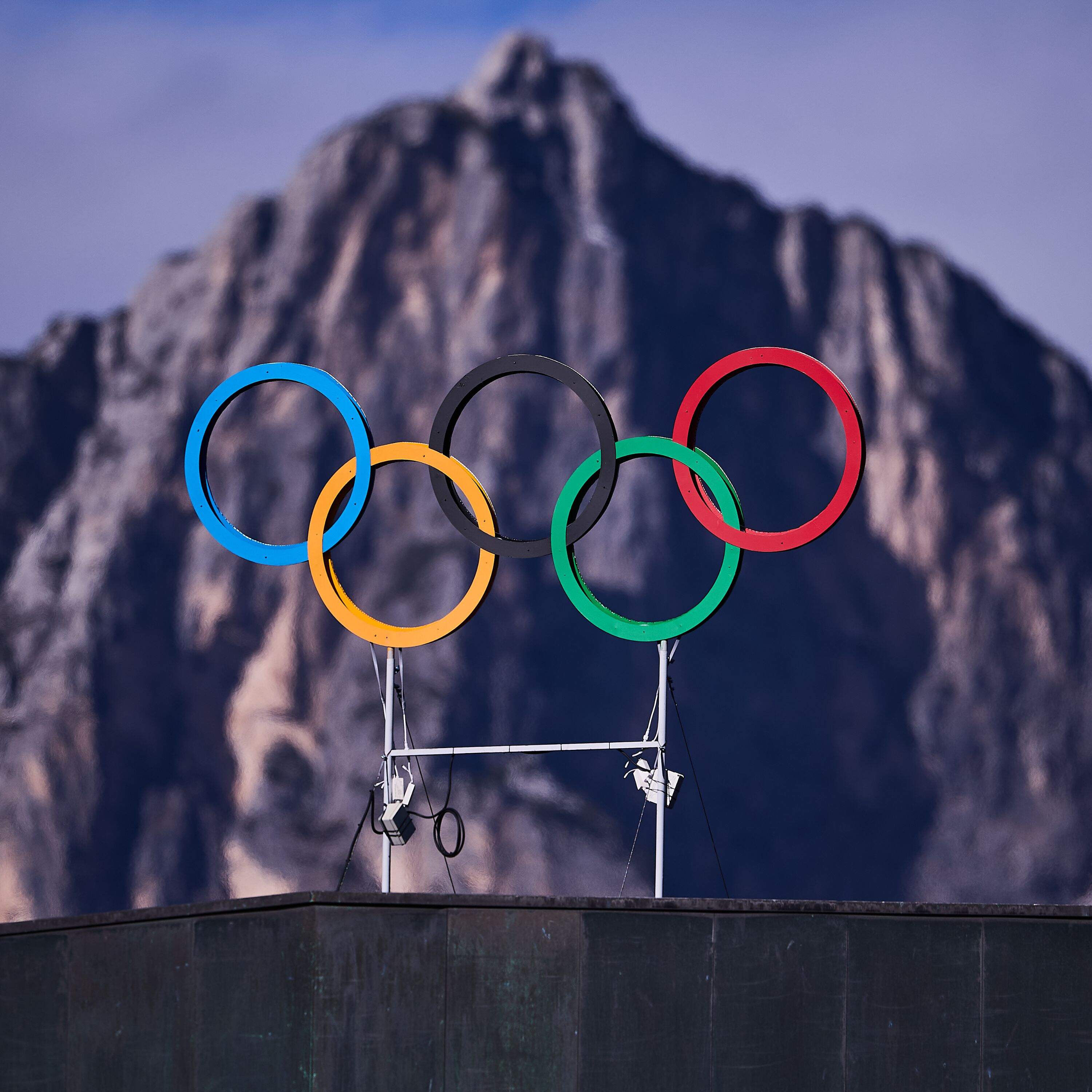
The 1978 legislation gave the U.S. olympic Committee exclusive rights to words like Olympic as well as symbols like the Olympic rings. This meant that the organization could make money by licensing that intellectual property to corporate sponsors like Coca Cola, Nike.
- [05:31]
Adrian Ma
Gerald Ford's commission had also envisioned that American companies would step up in other ways. Like they could fund training programs or they could hire athletes and give them paid time off the train.
- [05:42]
Waylon Wong
Victoria says that vision did not turn into reality. And this is where college football comes in. This sport was getting huge in the US today. Division 1 football programs bring in hundreds of millions of dollars in annual revenue. The money comes from broadcast rights, corporate sponsorship, donations, and ticket sales.
- [06:00]
Adrian Ma
Those dollars pay for football coaches and recruitment efforts, but they also subsidize other college sports that aren't moneymakers. Victoria says the funding has turned American colleges into epicenters of recruitment and development for all kinds of top athletes.
- [06:14]
Victoria Jackson
We have elite sport development within our schools, and that's paid for by a sport that's really only played in the United States, which is football.
- [06:23]
Waylon Wong
Today, around two thirds of American Olympians are NCAA athletes. American colleges also produce a huge number of international Olympic athletes that train in the US and and then compete for their home countries.
- [06:35]
Adrian Ma
However, this business model is coming under strain. For most of its history, the NCAA college athletes were not allowed to be paid directly. Then a few years ago, the NCAA allowed athletes to make money by licensing their name, image, and likeness.
- [06:50]
Waylon Wong
Then last year, a landmark legal settlement made it possible for schools in the NCAA's top division to directly pay athletes. Victoria says these big shifts are a worry for the national governing bodies for Olympic sports.
- [07:03]
Victoria Jackson
There's, believe me, extreme anxiety among the people at the top of those organizations because all that college football money that used to go to pay for all the other sports, more of it is staying with college football players now.
- [07:17]
Adrian Ma
Now, in 2020, Congress set up a new commission to study the state of US Olympics and Paralympics. Dionne Kohler co chaired this commission. She's a law professor at the University of Baltimore. And one thing this commission did was was it surveyed Americans on how they felt about the Olympics.
- [07:33]
Dionne Kohler
We set up this system where, you know, government involvement was considered absolutely terrible because we wanted to contrast with the Soviets. But that time has passed and we now know with the development of sport that there can be some really smart ways that government can be involved. And in fact, shouldn't government be involved? Because the truth is, our survey showed on the commission, Americans are not opposed to some taxpayer dollars being to support Olympic and Paralympic athletes because we in the United States like winners.
- [08:08]
Waylon Wong
We should know governments in other Western countries, from Australia to the UK to Canada, do provide financial support to their Olympians. The American model is fairly unique and has led to some difficult financial circumstances for a lot of athletes.
- [08:22]
Adrian Ma
About a quarter of Olympians and Paralympians earn less than $15,000 a year, and only around 12% of Olympic athletes have any kind of sponsorship deal.
- [08:32]
Waylon Wong
Dion says a lot of athletes have to rely on family support, and that means athletes with fewer resources can get excluded all the way down to the youth level.
- [08:41]
Dionne Kohler
Youth sports is now getting so expensive that it's really going to exacerbate issues with our Olympic pipeline. We don't want our Olympic and Paralympic movement to be sort of only for the upper middle class, the wealthy. We want it to be that truly the best kids can grow into those athletes.
- [08:59]
Adrian Ma
And now both Dion and sports historian Victoria Jackson say there are different ways the government could support Olympic athletes. For example, it could offer a kind of Medicare program so athletes could get better access to health insurance.
- [09:13]
Waylon Wong
Or the government could set aside some revenue from federal taxes on sports betting. Victoria says this money could fund athletic facilities at American colleges with the condition that they be opened up for community access. That way, people who aren't students can still use those facilities to train.
- [09:31]
Adrian Ma
So I could like go to my local luge facility.
- [09:34]
Waylon Wong
Oh yeah, luge facilities for everyone.
- [09:41]
Sponsor/Ad Announcer
This message comes from Capella University. That spark you feel? That's your drive. For more. Capella University's flexpath learning format lets you earn your degree at your pace without putting life on pause. Learn more@capella.edu.
- [09:56]
This message comes from Bombas. You need better socks and slippers and underwear because you should love what you wear every day. One purchased equals one donated. Go to bombas.com NPR and use code NPR for 20% off.
- [10:14]
This message comes from BetterHelp. During February, it can feel like everyone has it all together in their love lives, but the truth is, most people are still figuring it out. Take the pressure off and feel lighter in therapy. Visit betterhelp.com NPR for 10% off.