Loading summary
Transcript32 lines
- [00:01]
Waylon Wong
We have a book coming out, Planet Money a guide to the economic forces that shape your life. It's packed with stories and graphics that illustrate economic principles that can help you make smarter decisions. That's why we have special incentives for people to pre order the book. I'll explain at the end of the show or go to planetmoneybook.com for details.
- [00:26]
Darian Woods
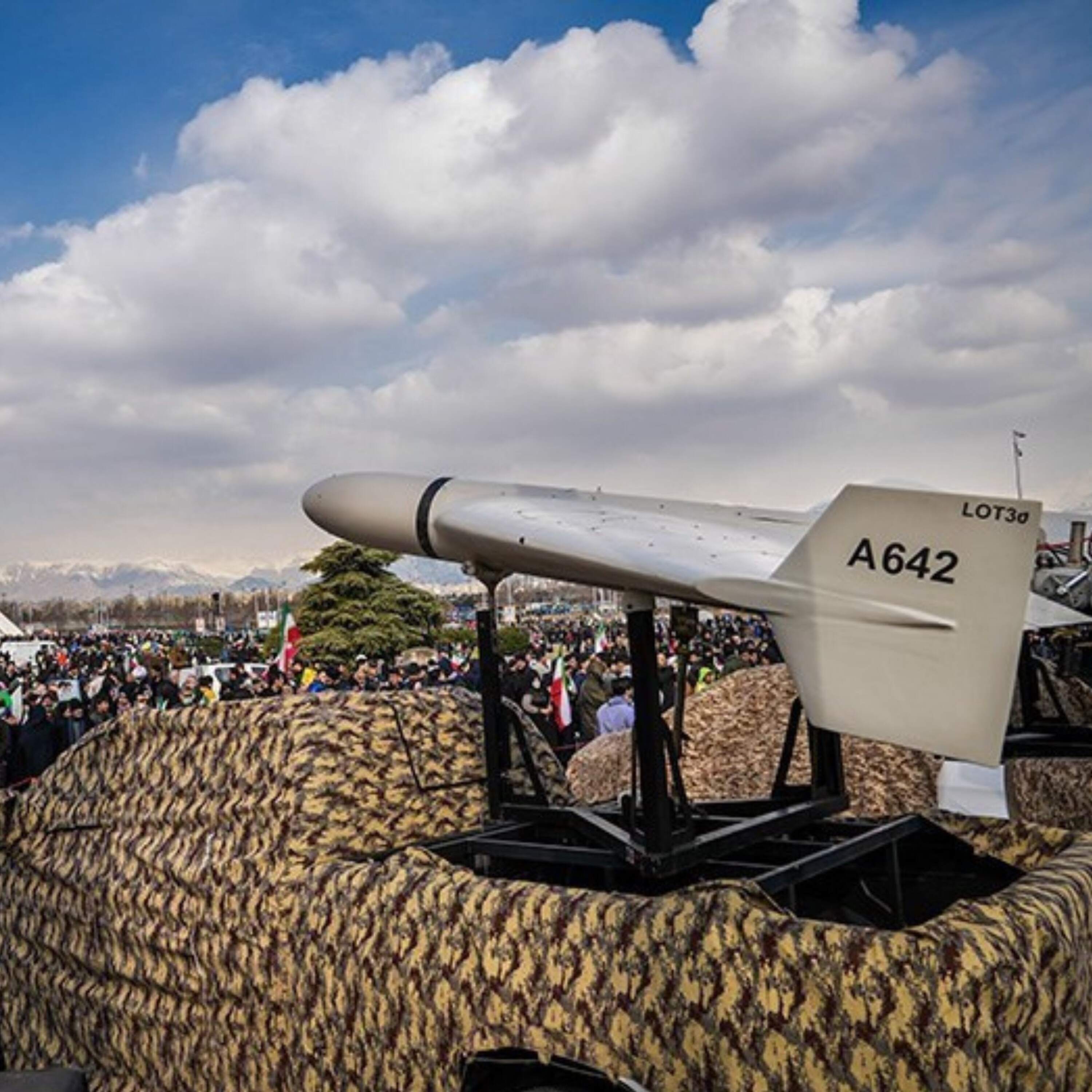
Npr. The US and Israel War with Iran has exposed a fascinating economic imbalance. The US has been launching big multi million dollar missiles at Iranian targets. Iran has fired back with wave upon wave of inexpensive drones costing only three thousands of dollars. And these drones don't look anything like your hobby drone that you might use to take photos on a hike. In the language of the military, the word drone basically means an unmanned aircraft.
- [01:06]
Waylon Wong
Iran's Shahed 136s are typical of these low cost drones. Picture a short missile with wide wings and a propeller at the end. It's about the size of a go kart and buzzes like a moped scooter. It uses GPS to find a target and fly into it, blowing it up.
- [01:23]
Darian Woods
Jerry McGinn is an expert on military supply and he says this wave of drones is a deliberate strategy by Iran.
- [01:30]
Jerry McGinn
They launch a lot of drones to try to have the US kind of use their more exquisite weapons to knock them down and deplete our stores.
- [01:40]
Waylon Wong
Last year, U.S. defense Secretary Pete Hegseth was already concerned about the pace of the US producing new munitions. This asymmetry in battlefield spending risks we worsening the weapon supply further. This is the indicator from Planet Money. I'm Waylon Wong.
- [01:56]
Darian Woods
And I'm Darian Woods. Today on the show Drone Warfare Economics, we learn about why the US spends so much on munitions and how it's starting to learn from Iran.
- [02:10]
Capella University Announcer
This message comes from Capella University. You know that feeling when there's a spark building inside you that you were meant for more? That's your own drive pushing you towards what's next. Capella University gets that with their flexpath learning format, you can set the pace and earn your degree without putting life on pause. You've built experience and know what you're capable of. Now this is your time to turn that momentum into more. The only real question is what can't you do? Learn more at Capella. Edu.
- [02:44]
Darian Woods
There is a mismatch between the US and Iran in how they're fighting. It involves drones. The US has a lot more firepower, yes, but Iran has figured out how to make the war expensive for the
- [02:55]
Waylon Wong
US now the estimates vary, but it Appears Iran has fired more than 2,000 traditional missiles in the current war. Most have been intercepted according to Israel and Gulf countries. But what sets Iran apart is its intensive drone making industry. Iran makes these drones in local factories, each with two backup sites in case they get bombed. According to Iranian authorities, Iran has exported the drones to countries like Russia and Sudan. Estimates of how much they cost to make vary. It's anything between $4,000 and $50,000. That is a wide range. But the basic point remains that these drones are incredibly cheap compared to US guided missiles.
- [03:37]
Darian Woods
Take the Tomahawk missile or the Patriot, which is used to defend against missile or drone attacks.
- [03:43]
Jerry McGinn
They are very exquisite weapons. They can cost a couple million dollars or more depending on the weapon to produce.
- [03:49]
Waylon Wong
Gerry McGinn is director of the center for the Industrial Base at the center for Strategic and International Studies. And that's a military term he's using. Exquisite weapons means top of the range.
- [04:01]
Darian Woods
The term really took off in the late 2000s when then defence Secretary Robert Gates critiqued the Pentagon for buying too many high end ships and jets. Jerry says the inventory of exquisite weap takes years to build up.
- [04:16]
Jerry McGinn
They take some time because they are very, very kind of almost handmade in some ways. So producing them at scale is, is kind of hard to do.
- [04:25]
Waylon Wong
Go to a Tomahawk factory and you'll see workers in white lab coats drilling screws manually. Jerry says the US has a sort of bias towards these types of weapons.
- [04:35]
Jerry McGinn
The challenge is, is that presidents like to use them. This is not just President Trump, but you know, they're very precise so they limit collateral damage. They're very effective and they really destroy targets and they don't create a lot of threats to our military forces.
- [04:52]
Darian Woods
Of course, the missiles only limit collateral damage if the correct target is entered. Videos of the strike on the Iranian girls school indicate that a US Tomahawk missile was used. According to an NPR interview with a U.S. official who was not authorised to speak publicly, this killed at least 165 civilians, most of them children.
- [05:13]
Waylon Wong
In this war, the US has fired a lot of Tomahawks and Patriot missiles, billions of dollars worth. In the first three days of the war, the US drained an estimated 10% of its tomahawk inventory. This gutted supplies so much that according to the Washington Post, the Pentagon is moving parts of its missile defense system from South Korea and its patriots from the Indo Pacific to the Middle East. This is the weapons supply shortage defense analysts like Gerry McGinn have been raising the alarm about for years, worsening the
- [05:44]
Darian Woods
situation for the US is the changing nature of warfare. Since the war in Ukraine, drones have become more prevalent. The Pentagon has taken notice. It's now deploying anti drone systems that don't require launching those exquisite missiles. These are basically cannons that can shoot down those Iranian drones.
- [06:03]
Jerry McGinn
They've been quite effective in the sense that very few of the Iranian drones have gotten through.
- [06:09]
Waylon Wong
And the US is trying to fight drones with drones. Last summer the Pentagon announced what it called the Lucas drone. It's a $35,000 drone built by copying the Iranian drone we talked about at the start of the show, the Shahed 136.
- [06:25]
Darian Woods
The Lucas drones are being used by the US military for the first time in the current war in Iran.
- [06:31]
Waylon Wong
Last year the Pentagon also announced what it calls its drone dominance initiative. It wants to buy 200,000 drones by 2027. That's firepower. That's not prioritizing the stealthy, highly precise, exquisite weapons. So the US is revving up its drone capability, but Gerry says the US is starting a little on the back foot.
- [06:52]
Jerry McGinn
Our level of maturity and the use of kind of the, particularly the smaller shahed type drones is much is less mature than the Iranians.
- [07:00]
Darian Woods
Gerry's advice for the military is to focus more on quantity and less on the highest, most exquisite quality. Get multiple companies making these low cost munitions and allow Congress to pay for them over multiple, which currently can only do for the higher value munitions.
- [07:17]
Jerry McGinn
Mass munitions I think is a really good way to, you know, help build kind of significant mass and civic and producibility capabilities.
- [07:26]
Waylon Wong
This would cost more in a typical year. But Jerry views it a bit like insurance paying for extra capacity now so the country can scale up as needed in future conflicts.
- [07:37]
Jerry McGinn
Doing that would enable the Department of Defense or Department of War to do longer range, longer term contracts with companies so then companies can invest more and you have an ability to produce faster and at larger scale. So the more of those kind of things that we can do I think would help us overall.
- [07:58]
Darian Woods
Regardless of the approach the US takes, the military is financially bleeding right now. And to staunch the blood, it'll need to figure out how to deal with thousands of whirring drones. This episode was produced by Cooper Katz McKim with engineering by Robert Rodriguez. It was fact checked by Sierra Juarez. Cake and Cannon edits the show and the indicator is a production of npr.
- [08:25]
Waylon Wong
Waylon here again with more about our book and incentives. The book's called Planet Money, A guide to the economic forces that shape your life. And here's one incentive that shapes our lives as authors of the book. Pre orders. They matter so much because every pre order counts as a sale on day one. So if we can get a lot of you to pre order, then we get a huge first week that maybe gets us on bestseller lists and it signals to bookstores to put us in the window which we hope creates a snowball of sales. So that's our incentive. Now what's yours? If you pre order before April 7, you get a free poster and if you come to one of our live events you get a tote bag with your your book while supplies last. So the high impact way to support us and get the book if you're planning on it is go to planetmoneybook.com now choose your pre order incentive and help us out early. Thank you planetmoneybook.com or click the link
- [09:26]
Capella University Announcer
in the show Notes this message comes from Capella University. You know that feeling when there's a spark building inside you that you were meant for more? That's your own drive pushing you towards what's next. Capella University gets that with their flexpath learning format you can set the pace and earn your degree without putting life on pause. You've built experience and know what you're capable of. Now this is your time to turn that momentum into more. The only real question is what can't you do? Learn more@capella.edu this message comes from Apple Card. You could be earning 2% daily cash back on that purchase. That's because Apple card users earn 2% daily cash back on every purchase, including everyday items you buy online or in store when using their Apple Card. With Apple Pay, not an Apple Card customer, you can apply in the Wallet app on iPhone subject to credit approval. Apple Card issued by Goldman Sachs Bank USA Salt Lake City Branch Terms and more at Apple Co Benefits Support for NPR and the following message come from Warby Parker the One Stop Shop for all your vision needs. They offer expertly crafted prescription eyewear plus contacts, eye exams and more for everything you need to see. Visit your nearest Warby Parker store or head to warbyparker.com.